I hope you have been enjoying the photos and blog pieces from 2023. I hope to more productive in 2024 and look forward to sharing more pieces. Please leave any comments/feedback about the Blog below.
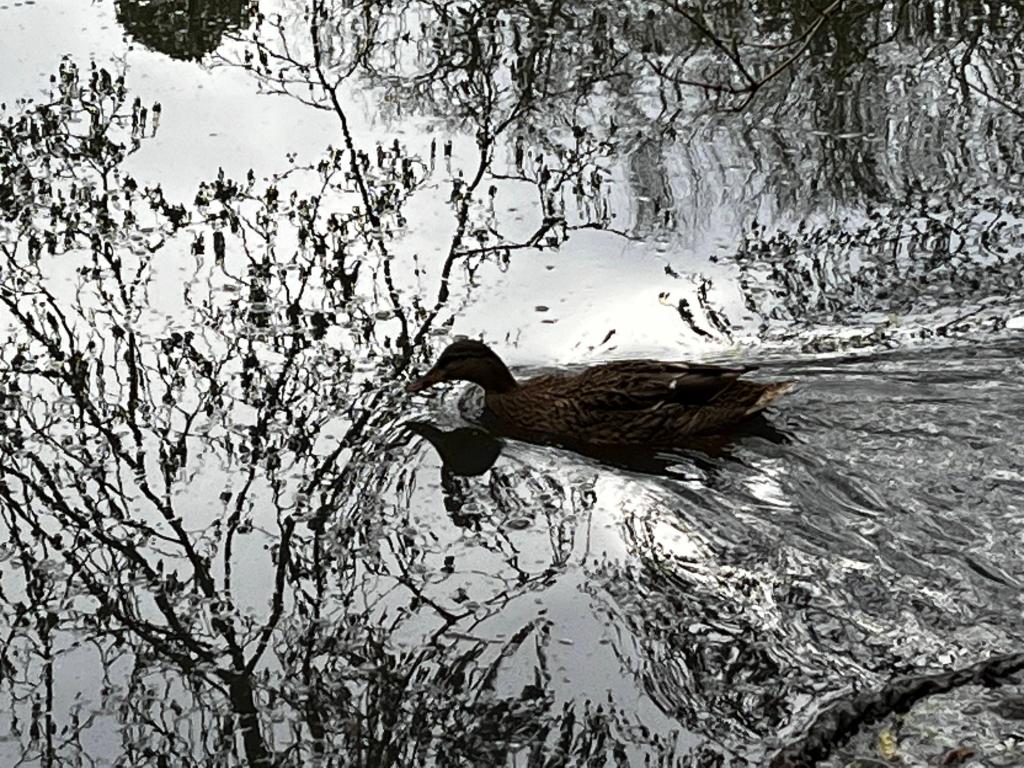
“Hope” is the thing with feathers
By Emily Dickinson

“Hope” is the thing with feathers -
That perches in the soul -
And sings the tune without the words -
And never stops - at all -

And sweetest - in the Gale - is heard -
And sore must be the storm -
That could abash the little Bird
That kept so many warm -

I’ve heard it in the chillest land -
And on the strangest Sea -
Yet - never - in Extremity,
It asked a crumb - of me.
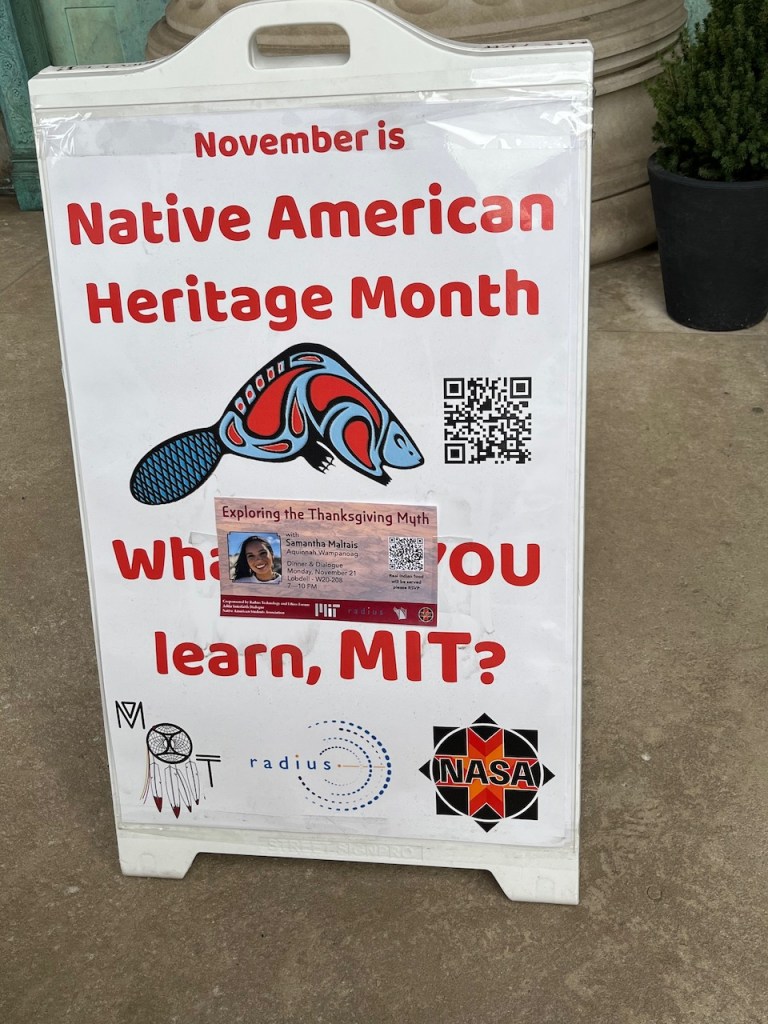
In 1990 President George H. W. Bush approved a joint resolution designating November 1990 “National American Indian Heritage Month.” Similar proclamations, under variants on the name (including “Native American Heritage Month” and “National American Indian and Alaska Native Heritage Month”) have been issued each year since 1994. Read more about this.
At the same time I can’t help but notice that more detailed demographic data emerges from the ONS, in which ‘Leicester and Birmingham have become the first “super-diverse” cities in the UK, where most people are from black, Asian or minority ethnic (BAME) backgrounds, according to the 2021 census’. Read further ‘Diversity is a beautiful thing’: the view from Leicester and Birmingham. As I’m based in Leicester, I hope to explore some of the recent changes in the city in more detail.
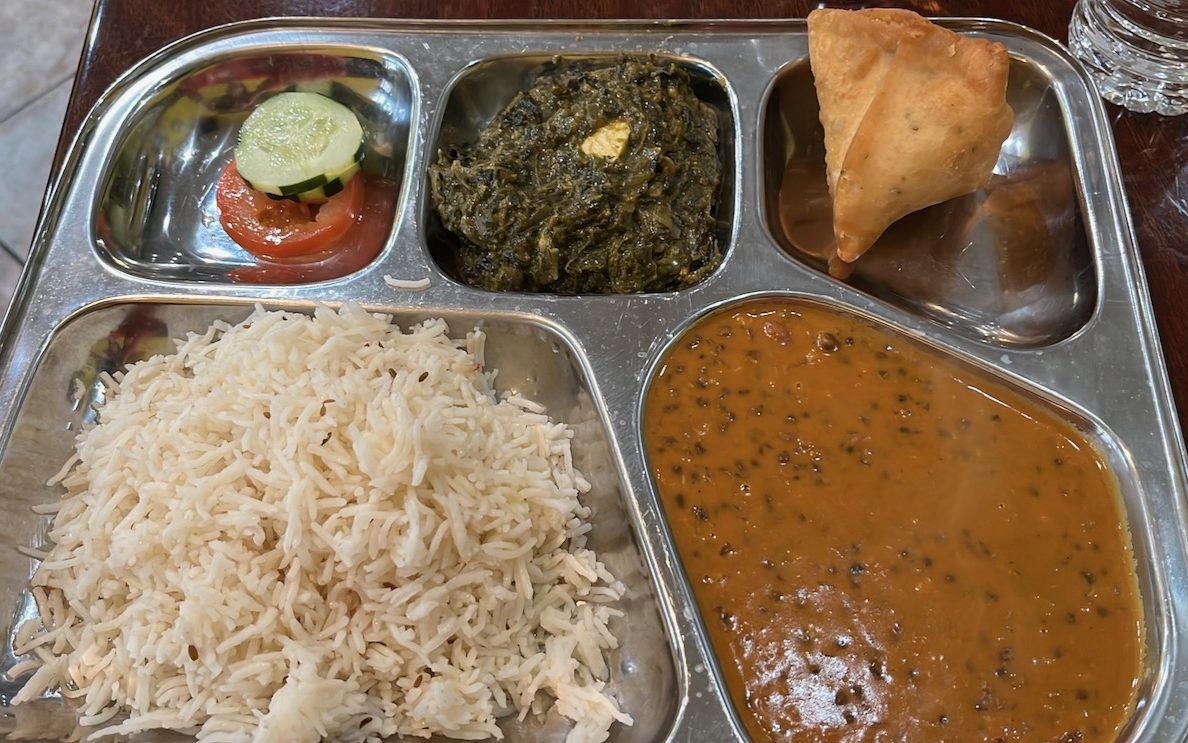
A basic thali with palak paneer, daal and rice.
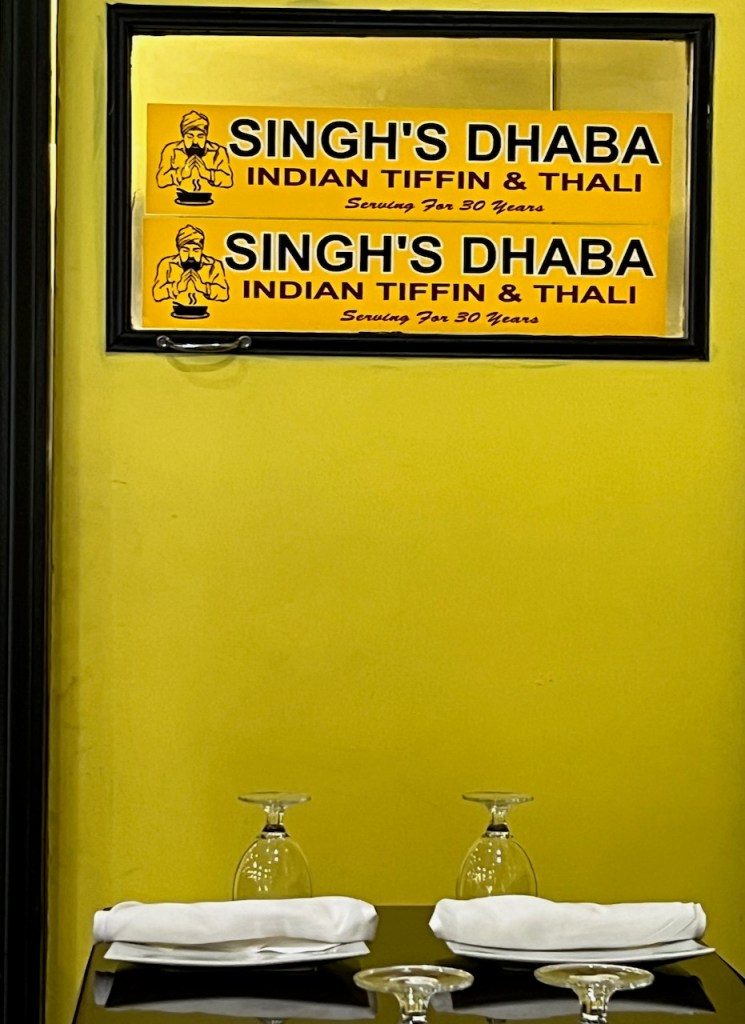
In the meantime, I indulge in the desi ‘home made’ food offered by Mr Harpreet Singh at Singh’s Dhaba. He established his business in 1990 and like many other diasporic Sikhs he came from Virk, a village near Phagwara, in the Jalandhar district.
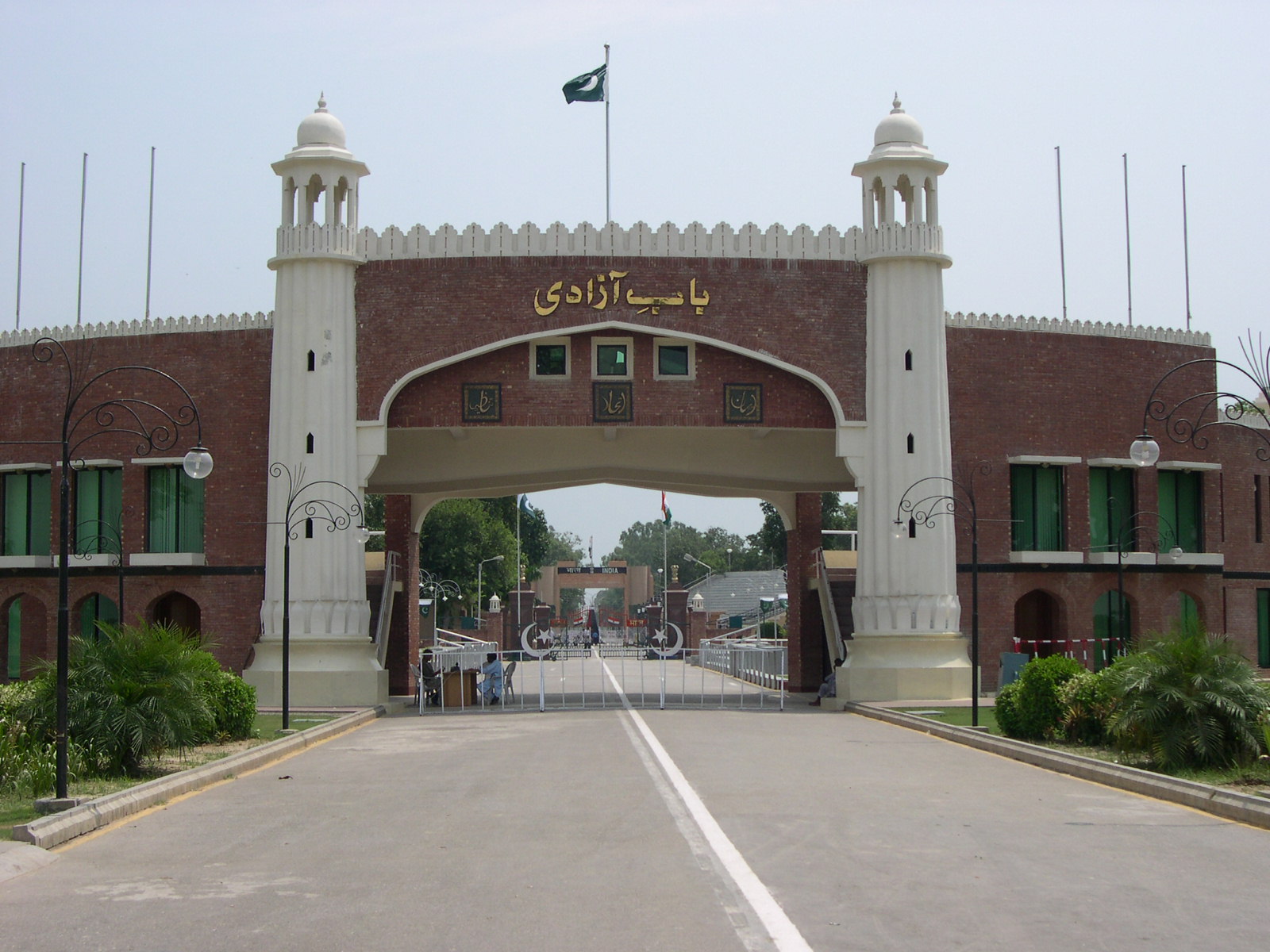
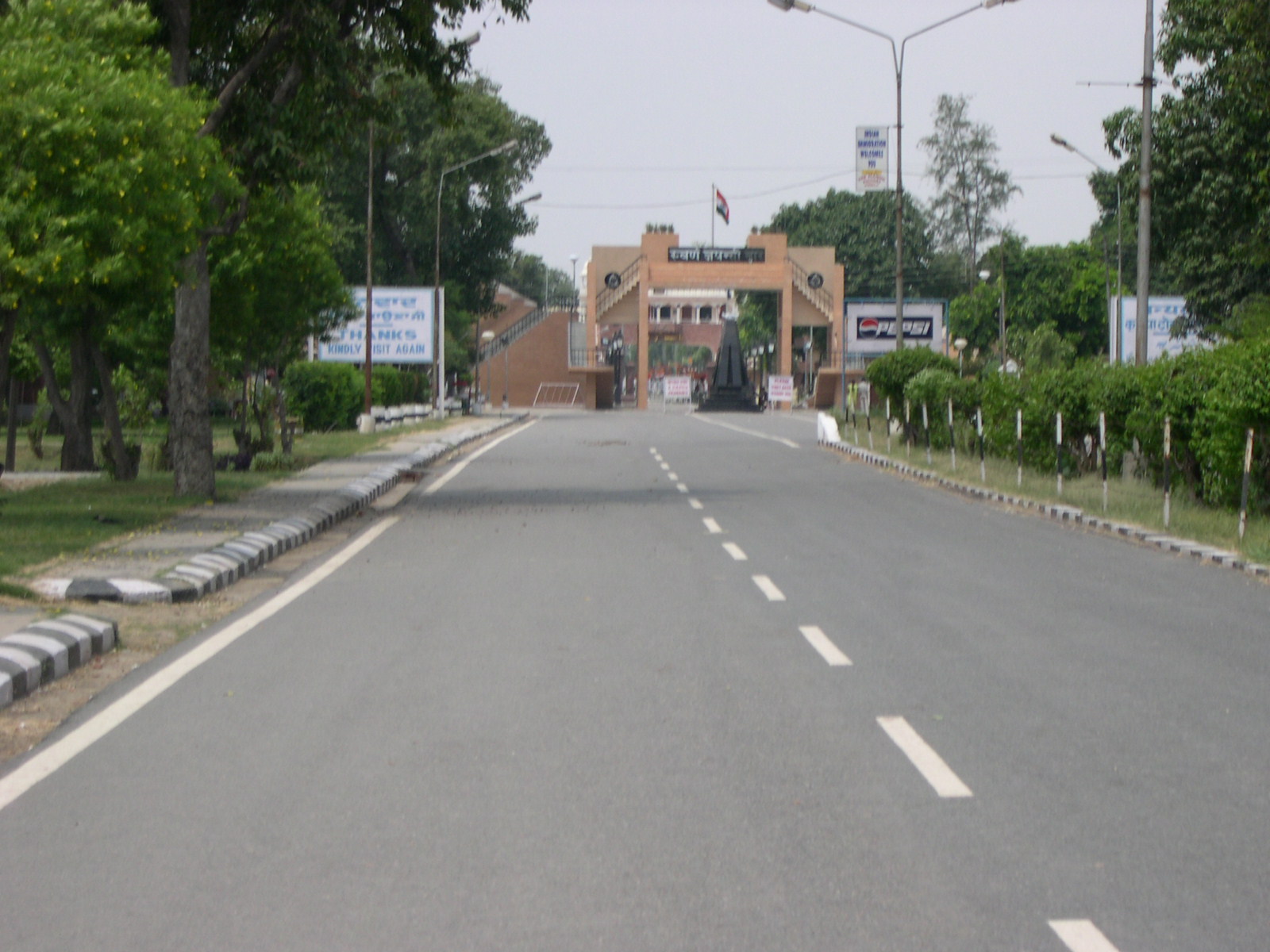
In 2001, I crossed the Wagah-Attari border for the first time. Since then, I have used this official land crossing between India and Pakistan numerous times, in the process seeing the border undergo multiple changes. It used to be the Grand Trunk Road split in half, with a few meters of “no man’s land” to separate them. I could literally walk from one side to the other, while remaining on the GT Road. Then, the authorities decided to uplift, gentrify, and replace the colonial bungalows. Gone was the quaint and informal space with scattered flower beds and plants and in came the flashy buildings, followed by the airport style security, customs, and immigration; culminating eventually in the hideous and expensive battle for who can hoist the largest flag and keep it flying high!
To be fair, the development of the check post at Wagah-Attari was probably a response to the expectation that relations between the two countries would improve, and with that the foot traffic would increase. The bungalows were not equipped to deal with high volumes of people. Hence, they first established the goods/transit depot on one side of the border, so as to divert the trucks carrying the items of import/export. This separated the trade traffic from the people traffic. Whilst the establishment of a goods depot offered signs of improved trade between the two countries, even this was subject to cordial relations.
With numerous crossings since then, I have seen the border change, not just physically but also its ambience and vibes that the place gives. Indeed, the new buildings and transit buses which take passengers from one side to other have functioned to create further distance between the lines of control. These were not there previously, and the cool formality evokes the illusion of being remote and separate. Borders do not have to be harsh and austere.
These moments and emotions are difficult to capture on camera, but they can be felt when encountering the staff and officials. When I first crossed the border, I had the compact Canon Sure Shot AF-7, which was a popular model in the 1990s and gifted to me. I enjoyed taking photographs, but cameras were not cheap then, and the 35mm film was expensive too, both to buy and to develop, so photos were taken sparingly. When I embarked on my doctoral research, taking my camera was essential for my trips to India and Pakistan, as it was an instrument to visually document my journey. I would normally pack 1-3 rolls of ISO 200 (sometimes also ISO 400) speed film, usually 36 EXP, good for general photographs. But one was never entirely sure until the film was taken back home, handed in for developing, which then produced the joy of physically going through the photographs a week later! Time had passed between undergoing the actual trip and now feeling those photographs in my hands, and the images allowed me to recreate and relive those moments again.
Today everything is instant. In a moment I can be taking a photograph at the border, and then share it with the wider public around the world via social media. The only caveat here is that, generally the phone signals are non-existent within 1-2 kilometres of the border area, so you would probably need to wait until you were able to pick up the phone signal. More importantly, this also disrupted any arrangements one had made to meet people on the other side. If I was crossing the border, I might contact my friends/family beforehand and say, I’m crossing at X time (keeping in mind the 30 minutes times difference between the two countries), so I estimate that I will be out at Y time (usually 60 minutes from one side to the other). But if things didn’t go to plan, there is no way of contacting the person to alert them of the delays. And when you did finally make it to the other side, there were always a small number of people anxiously waiting and looking to see when their friends/family will pass through those doors.
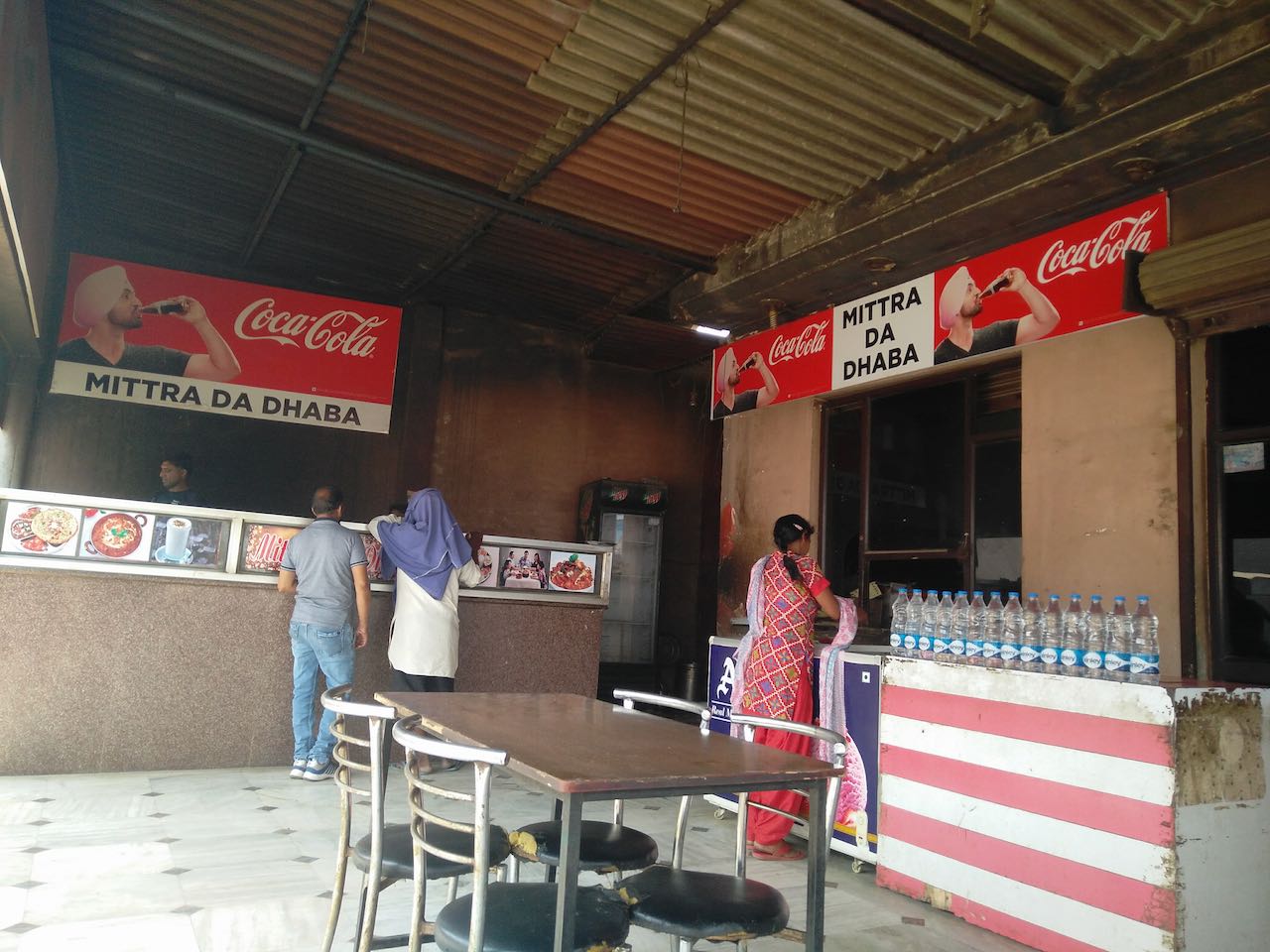
There are many other stories of this rather strange and intriguing no man’s land but to end with a more positive story, I share a picture of a dhaba at Attari, Mittra da dhaba (literal translation – friends’ roadside restaurant) is located close to the entrance to check post, catering to travellers and tourists who come for the daily lowering of the flag ceremony. I have gone there many times, but on one occasion in 2017, I asked the owner to pack some food for me, food which I planned to take across the border and share with my friends in Lahore. He took great care to make it extra special and pack the food tightly, so that it wouldn’t spill. I could see that it also brought him great joy to know that his food would travel to the other side. As we parted, he said come back and tell me if they enjoyed it!
Alas, these stories are in the past tense, and with Covid the border faced further restrictions and closures. I have no idea if my friend is still there, I hope so. We need more friends in these otherwise hostile spaces.
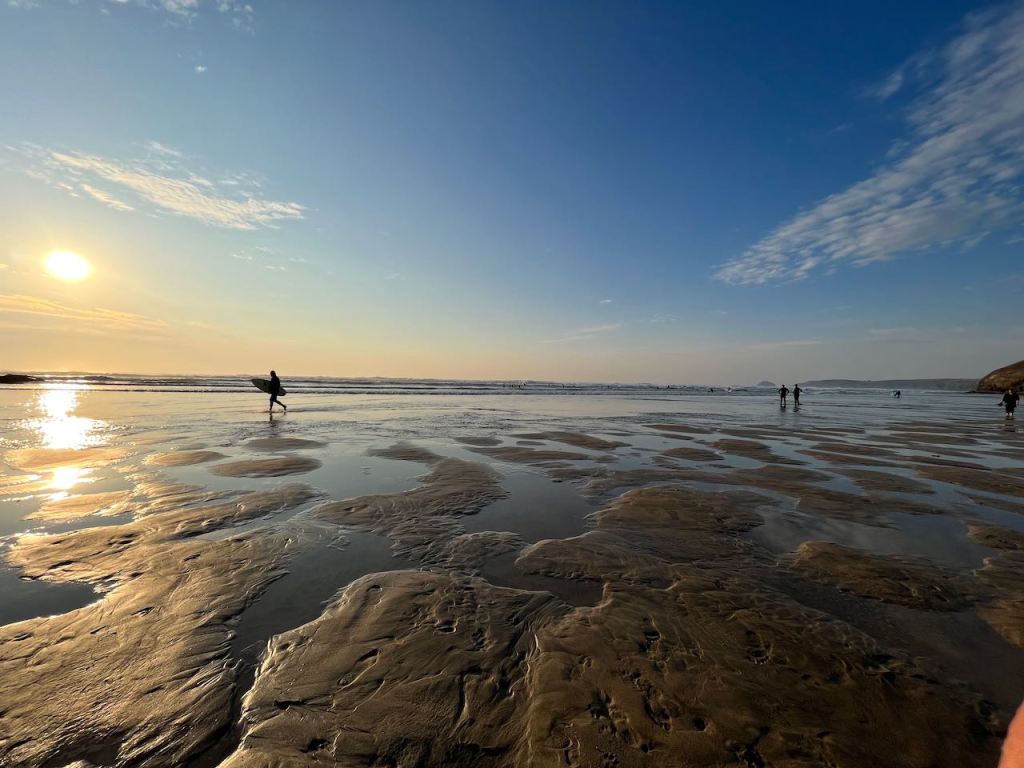
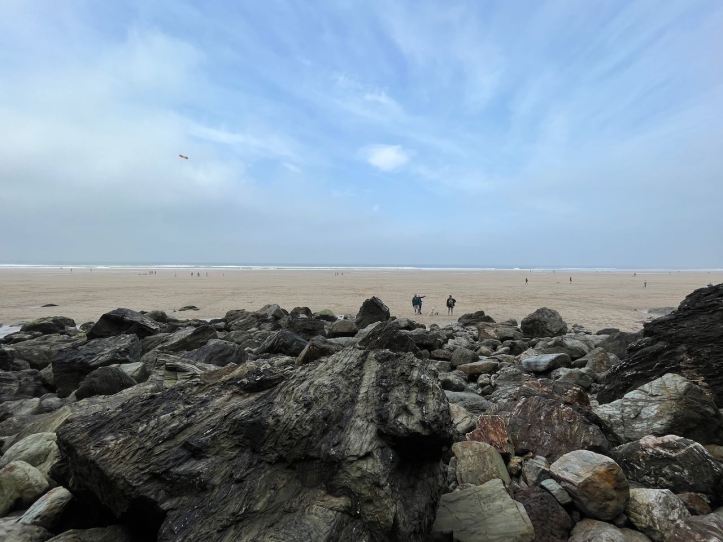
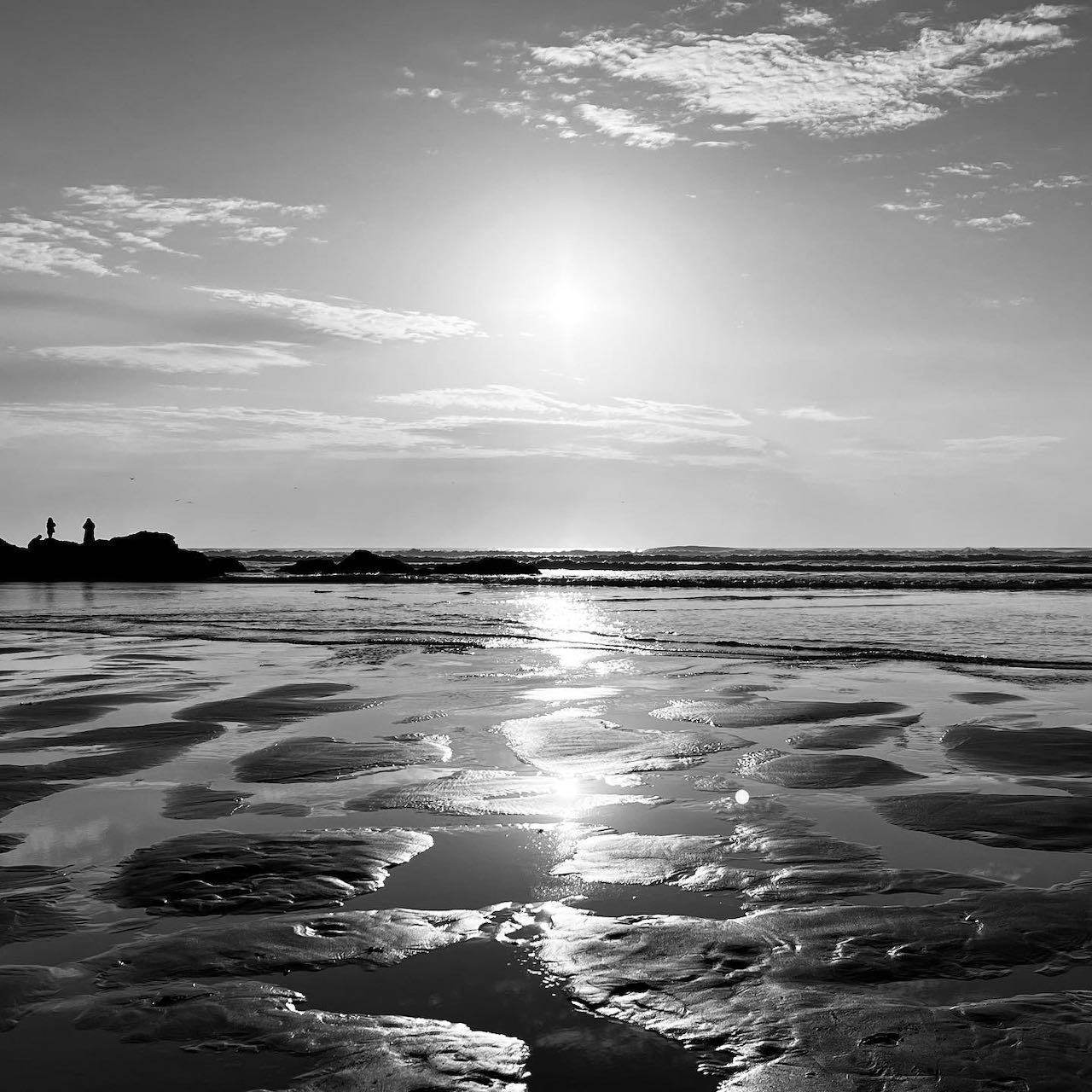
Cornwall, Cornwall every day Bright sun and fresh feelings Simple pleasures by just being here Forward thinking into old age dotage All our lives waiting, hoping, wishing
Never believing it could be Out of mind with secret longing Filling up with atmospheric air Sensing that emotional rush Deep breaths swallowing cliffs and sea
Wild flowers and cows here Hedgerows and windblown trees Lopsided branches pointing inland As cool salt air combs their twigs The winding tracks disappear
Love is here all around, so strong Heart wrenching and stomach churning Soul and body filling up with Cornish… Cornish, as long as it’s Cornish It’s good!
Give us a chance to stay Give us the chance to live Ever on the hard granite pathways Sounds of mewing gulls and thunder of surf Beating on the windswept rocks and beaches
Cornish light familiar and so bright Invading our eyes and warming our hearts Gently massaging our faces with soothing fingers Lifting our spirits as breaking through the clouds It charges us with love
Fulfilled and whole Our lives and minds gratefully feasting The armfuls of wonder as we carry our hearts Together, through eternity, watching As the sun sets in a blaze of Cornish light
I came across this picture in The Pakistan Times, it had caught my imagination, and with little thought for how it might fit into my research I just took a picture of it and then, continued to explore the newspaper for stories on, of and by women. This remained in my photographic archive until recently, when I began to go through the material. The picture still does not fit into the wider project, but it remains striking. It is evidently from the Miss Universe competition, but I knew little of the pageant competition, other than then perhaps how it still continues to resonate with people.
Further probing revealed the Indian representative as the-then Madras-born and intriguingly named Indrani Rahman (1930-99). What could be the (fragmentary) story of this Indian beauty queen appearing in the pages of The Pakistan Times, as a participant of the Miss Universe Pageant held on 28 June 1952, at Long Beach, California? Straightaway her name intrigued me, Indrani is a Hindu name and Rahman is Muslim, yet on the pictures from Miss Universe contest, she appears to wear a bindi on her forehead. Her hair is adorned with the traditional scent of the jasmine flower. These are traditionally worn by married women, especially Hindu women. In total thirty women entered the competition, including the 22-year-old, married and mother of two, Indrani. The competition was eventually won by a 17-year-old Armi Kuusela from Finland. This is what the very first Miss Universe pageant looked like 67 years ago.
The title “Miss Universe” was first used by the International Pageant of Pulchritude in 1926. Subsequently the contest was held annually until 1935, when it was interrupted by the Great Depression and then the Second World War. The current competition was established in 1952 by Pacific Knitting Mills, a California-based clothing company and manufacturer of Catalina Swimwear. The company had sponsored the Miss America pageant until 1951, when the winner, Yolande Betbeze, refused to pose for publicity pictures wearing one of their swimsuits. The ubiquitous swimsuit has remained the source of much discussion, with accusations of objectifying women. Finally recognising the shift in wider attitudes, in 2018 the Miss America contest decided to end the Swimsuit element and focus more on the achievements of the contestants. (Miss America Ends Swimsuit Competition, Aiming to Evolve in ‘This Cultural Revolution’ – The New York Times)
Indrani was the daughter of Ramalal Balram Bajpai (1880-1962) and Ragini Devi (1893-1982) (nee Ester Luella Sherman). Ramalal, a chemist by training, had been an Assistant editor of Young India, a magazine established by the Punjabi nationalist politician, Lala Lajpat Rai, and, after India gained independence, he was appointed as Consul General at New York. Ragini on the other hand, became increasingly passionate about Indian classical dance, and championed the revival of Kathakali.
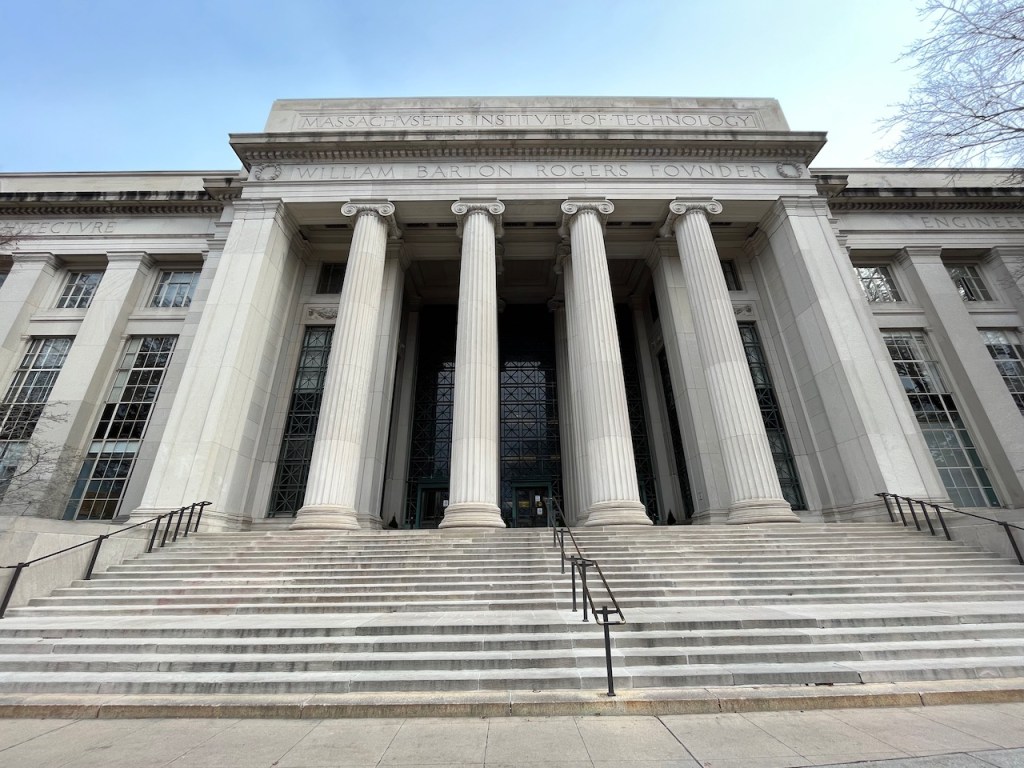
Already then Indrani’s family were unconventional. Few people in India grew up in mixed-race backgrounds, and indeed even in contemporary India. By the age of 15, in 1945 Indrani herself had eloped and married Habib Rahman (1915–1995), a well-known Indian architect. Soon after her son Ram Rahman was born followed by a daughter, Sukanya Rahman. Habib Rahman worked on iconic places such as Delhi Zoological Park, Gandhi Ghat, and Rabindra Bhavan. He studied at MIT and was the first Indian to complete his Masters in Architecture there in 1944. Rahman was the recipient of the Padma Shri (1955) and Padma Bhushan (1974). Likewise, Indrani was awarded the Padma Shri (1969) and the Sangeet Natak Akademi Award (1981).
This upbringing and early experiences show that Indrani grew up in a much more cosmopolitan milieu that was possibly perhaps only for those in positions of power or the privileged class. Her mother, though Ragini by name, would certainly not have discarded her own cultural upbringing in America. This most likely also played a part in Indrani having fewer inhibitions in participating in beauty contests.
Before Indrani entered the Miss Universe contest, she had already been crowned Miss India, 1952. As side-note, the famous actress of Hindi cinema, Nutan, also started out by entering and being crowned Miss India in 1951 and Miss Mussorie in 1952. The first Miss India was Pramila (Esther Victoria Abraham), from Calcutta, who won in 1947, interestingly the same year that India got Independence.
A news report about this appeared on April 5, The New York Times in 1952 reads thus: “Indian traditionalism was further shocked by the fact that a married woman, Mrs. Indrani Rehman [sic] of Calcutta, was chosen as the winner. As Mrs. Rehman is a Moslem, her participation was especially defiant of custom, since old-style Moslem women, particularly wives, are even more secluded than their Hindu sisters. Emphasizing the departure from Indian tradition even further, the first Miss India is half-American,” (Sara Hussain , 21 Jul 2016)
Besides having the accolade of being the first Indian to take part in the Miss Universe, Indrani was and remained an accomplished classical dancer. She travelled with her mother around the world performing and taking the passion of Bharata Natyam, Kuchipudi, Kathakali and Odissi, to the West. A passion which she passed on to her daughter, and indeed, Sukanya Rahman Wicks had also danced on stage with her mother and grandmother.
Further Reading:
Lightfoot, Louise. Louise Lightfoot in Search of India: An Australian Dancer’s Experience. Cambridge Scholars Publishing, 2017.



















 BAGICHA