While trawling through archives I came across some time ago, I found the following piece of writing in The Folio. Forman Christian College, Lahore dated April 1960. I was intrigued by this short, two-page article on what it was like for female students at the time. What stands out, of course, is how the boys regarded girls as being from “another sphere,” and how this sense of difference is reinforced across the college’s different staff and spaces.
BEING A GIRL STUDENT IN F.C.C. Merel Bhan, VI Year (English)
How well I remember the first day when I told a group of my older acquaintances that I had decided to join FC College for my MA classes. A short silence followed this statement, then a sudden burst of speech.
“You must behave in a most prim and proper way,” advised B-
“Never must you smile or laugh unless you are in the classroom, and except for a few necessary enquiries do not even try to speak with the boys,” declared S-
“But,” I protested, “how will I ever enjoy the next two years if I am not even allowed to speak or discuss a subject with my classmates?”
“Study and only study must be your aim,” said J- with great emphasis. “Always keep your eyes down and look straight ahead, never around you”.
Ah well, it was farewell to all the gay carefree days I had had as a student. From henceforth my college days were to be suddenly very dull, and I tried to resign myself to the fact.
At last the dread day approached and I arrived at the college half an hour earlier than classes were due to start. I wore a very carefully practised sober expression and carried a notebook and pencil – items which I had hitherto been inclined to ignore. My brother conducted me to my classroom. I stood outside, looked around at first, but then, seeing a huge bunch of boys staring at me as if I was a creature from outer space, fixed my gaze upon a spot on the wall immediately above me and so waited. At last another girl came up to me. We both greeted each other enthusiastically but then hastily checked ourselves.
We had both previously studied amongst three hundred of our own species, now we found ourselves suddenly flung into the midst of the very boys who had every day passed the Kinnaird College bus-stand, whistling to the girls and calling out loud remarks, or who had been most vociferous in disconcerting speakers at the various inter-collegiate debates. The advice we had received was the same. Now that there were two of us, reinforced by each other’s company, we entered the classroom.
A steady silence and blear of faces greeted us as we made our way to the closest bench. As our vision cleared saw boys of all shapes and sitting in the class and smoking. Then the inevitable question followed.
“From which college did you do your B.A.?” We replied, and that was the last chance for speech as great deal of information was volunteered to us about courses of study and the professors. Even our monosyllabic answers were not allowed to emerge in the face of that information. We were told how hard we would have to study to pass the December examination, the books we were to read and the books we should have read to provide us with a background. The professors, we were told, were miserly as far as doling out marks was concerned, and then were enlightened about what appealed to which professor. The first conclusion we drew was that we were now firmly in a trap. Not only was the M. A. to be dull, and also very difficult, but it seemed, according to the information we received, that our stay in the college would probably last only until the December examination.
Then we had our first lecture, which was very interesting and that, as well as what the senior girls told us about our college, did much towards toning down the earlier picture. We were told that the time-table was on the noticeboard, and all the girls, in a good, firm group, went to look at it. The notice-board was surrounded by boys of all kinds – bearded boys, chubby cherubie little boys, tall boys, bespectacled boys, fat boys, thin boys, boys with a poetic temperament who had quarrelled with their barbers, and boys sporting the Yul Brynner style. We could not peer over them or around them. We failed even to glimpse the time-table. A girl’s height was great disadvantage, I decided, particularly in a boys’ institution. I made a mental memorandum to buy a pair of high heeled shoes at the first opportunity, but even these, as I have since discovered, have failed to supply a remedy.
At the first lecture we had been supplied with a lengthy book list, and so after a week or two we went to the library to take out some of the books. All of them were out. The librarian told us that we had been very lazy and warned us to be quick next time. The next time, as soon as the book list was handed out, we decided to proceed immediately to the library. However, as the last book was named we heard the squeaking of chairs and a hustle behind us. We saw two boys flash through the door. This occurrence was explained when we walked into the library. All the book were drawn out. From then on we became part of the great “Scramble for books.” This was a great race to decided who would get a particular book first or at least be first on the reservation list. We girls whispered and planned now to get books on a particular subject a week before we were due to start work on it. We wrote down the names and numbers and very confidently handed it to the librarian. He look at it, shook his head, and said, “Sorry, Madam, they are out. However,” he added, “You can take this book.” He drew out the book and gave it to us. We were indeed the first to get it, but, we wondered, would it be worth reading if no one else had wanted to take it?
As we were such a large minority we believed in the maxim, “Unity is Strength,” and we would always sally forth in a group of eight. We would go first to the library or the class or the common room. As time went on and we began to feel more at home, we broke up into smaller groups, and instead of going to the common room to relax we started sitting the lawns. We began to pay visits to the tuckshop as we now regarded this college as ours as well. Thus we girl students were slowly emancipated. We began to have hilarious times here without feeling self-conscious.
Having now been in the college over a year I observed a few things which should prove to be invaluable precepts for girls hoping to join this college.
A girl student must always walk from one place to another at a moderate pace. To run is unforgivable. Even with the rain coming down at its heaviest she must keep up a stately pace, to avoid raising a laugh from the boys.
She must always consider herself as being from another sphere, as that is how the boys regard her. She is a curiosity, not a person belonging to the earth, and because of this she should not mind if the boys stare at her in the same way every day for two years. She is an alien being in their domain.
A girl is the Weaker Vessel. She must always keep that in mind only then can she bear the treatment meted out to her. Thus she can fully make use of the advantages of “Ladies First” — no waiting in queues for her. She must also always be willing to receive information on books and study as she is incapable of finding out for herself. Even if somebody hands her book on the sixteenth century to study Wordsworth from, she must not object. She can never know as much as a boy.
The only topic on which girls and converse is study, and that is usually in the form of much advice on the boys’ part. The girl student must receive unquestioningly.
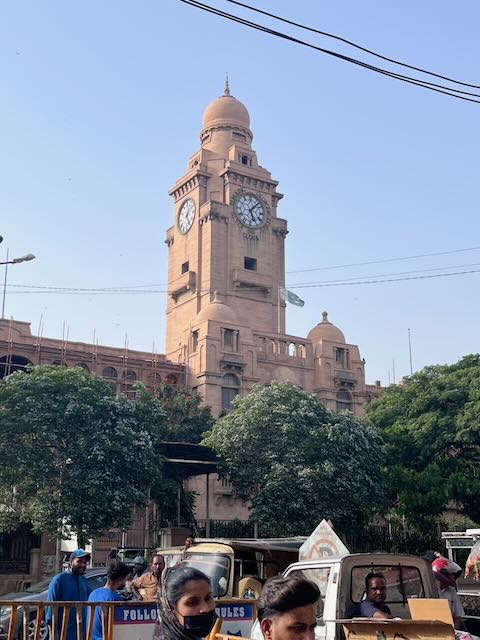
Overlooking the entrance is this commemorative clock tower. HM King George Silver Jublee, 1935The main temple complex
In April 2020, I wrote a blog post on the Swaminarayan Temple in Karachi. Calling it a “blog piece” was something of a stretch, it was really a set of fragments from the archive: letters exchanged between Liaquat Ali Khan, Prime Minister of Pakistan, and Gopalaswami Ayyangar, Minister for Transport and Railways in the Government of India. These letters concerned the Temple and a dispute over the land it sat on, who it belonged to, Hindus or Muslims.
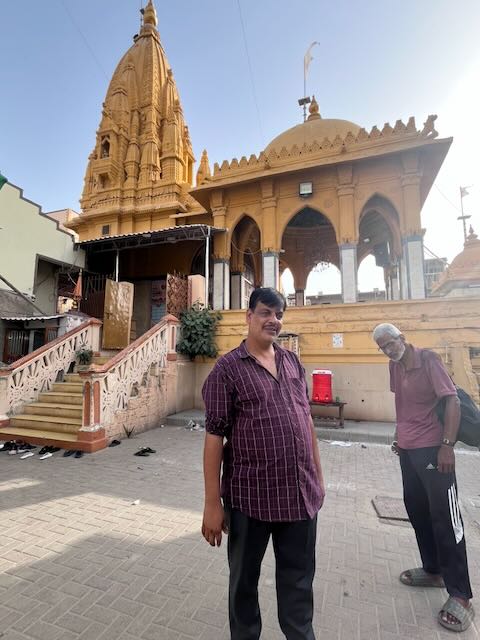
In April 2026, six years later, I finally visited the place I had visited only through those archival documents.
An Impromptu Return
I was in Karachi, visiting the Aga Khan University, but in the back of my mind was a quieter wish: to find the Temple I had read about and see what had happened to it. So, on a day spent exploring the layered history of this remarkably cosmopolitan city, we made an impromptu stop on M. A. Jinnah Road, formerly Bandar Road, a six-kilometre artery running through central Karachi. The location sits at the heart of what was once an old Hindu neighbourhood, not far from the city’s historic civic centre.
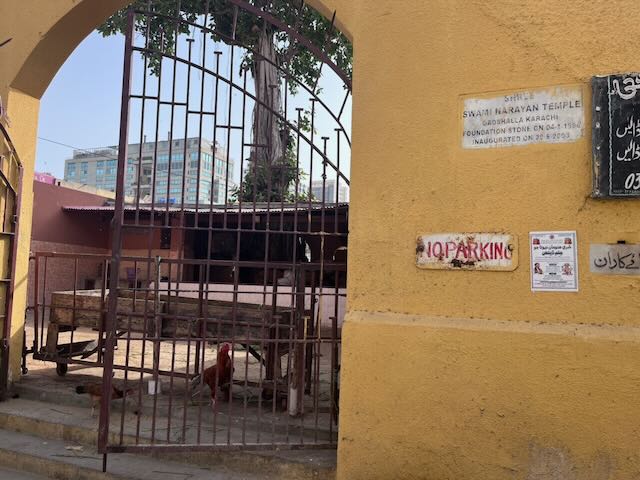
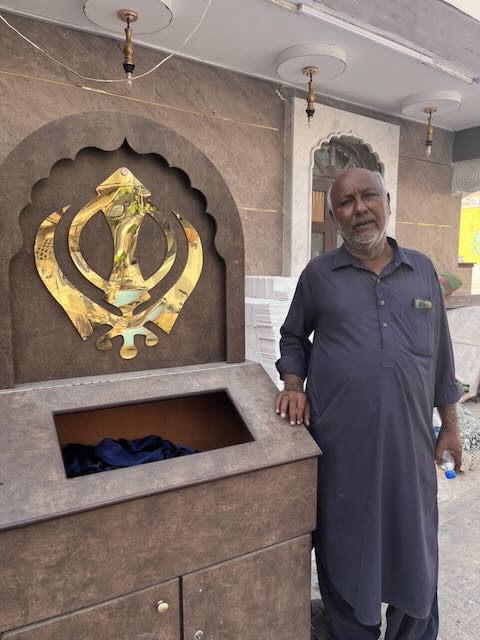
Tucked between the noise and clutter of the bustling commercial road, we found it: a small, unassuming archway, easy to miss unless you were looking for it. This was the entrance to the Temple, with a guard monitoring those entering. For security reasons, the complex doesn’t admit strangers or casual visitors, but after speaking with the staff and learning that I was Sikh, they were satisfied the visit was made in good faith and let us in.
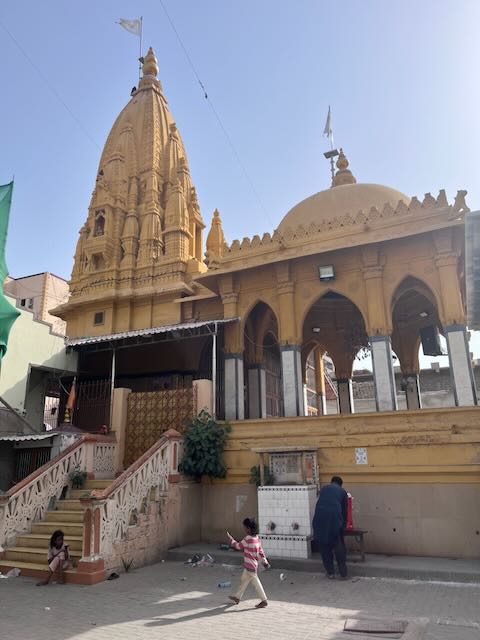
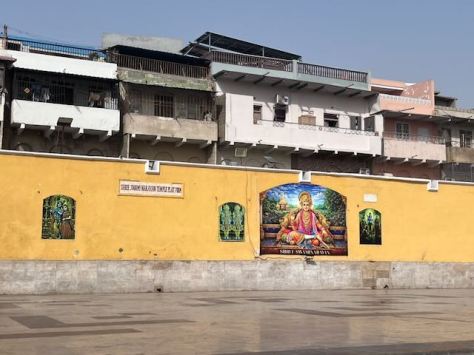
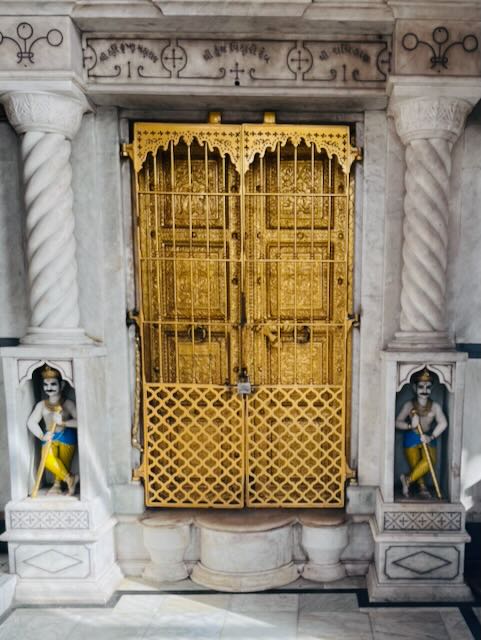
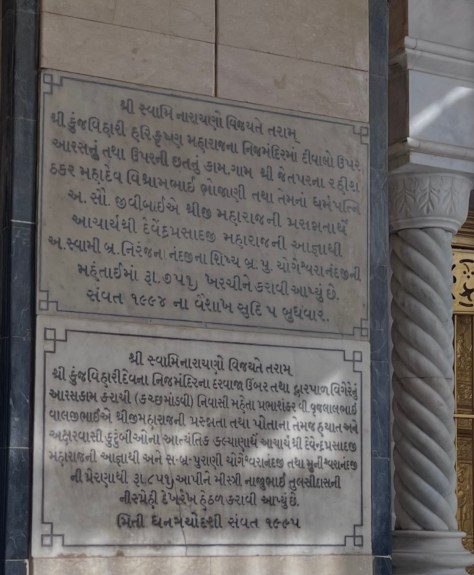
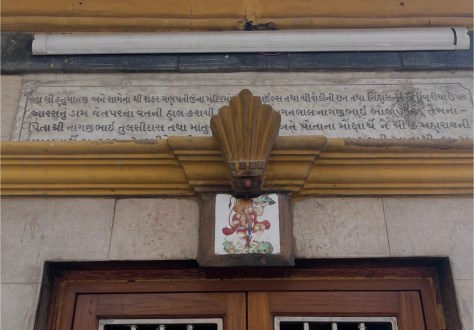
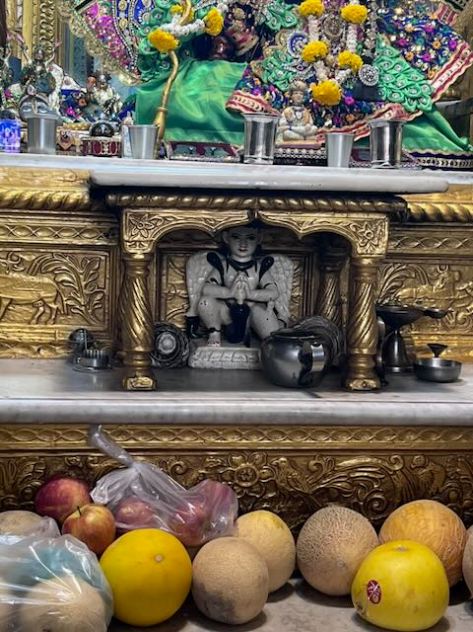
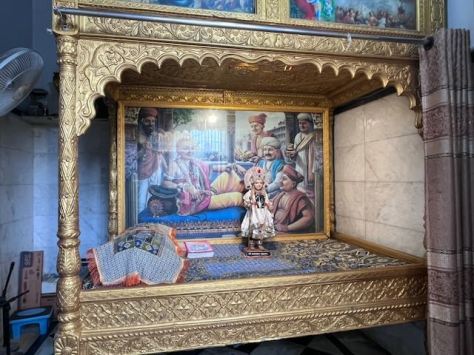
Inside, the complex opened onto a large courtyard, exactly as it had been described in the letters I had read years earlier. At its centre stood the Temple and the Gurdwara, side by side, with homes belonging to Sikh and Hindu families arranged around the courtyard’s edges. This question of residence — who had the right to live there — was precisely what Ayyangar and Khan had argued over in their correspondence, with Ayyangar pressing for the space to be reserved for Hindus.
Karachi Before Partition
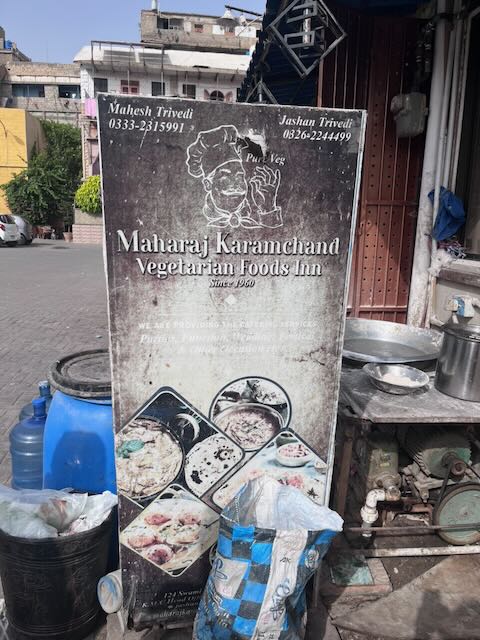
The dhabawalla
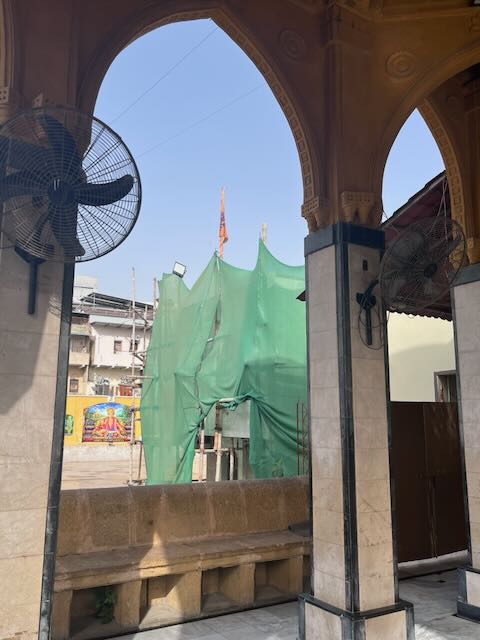
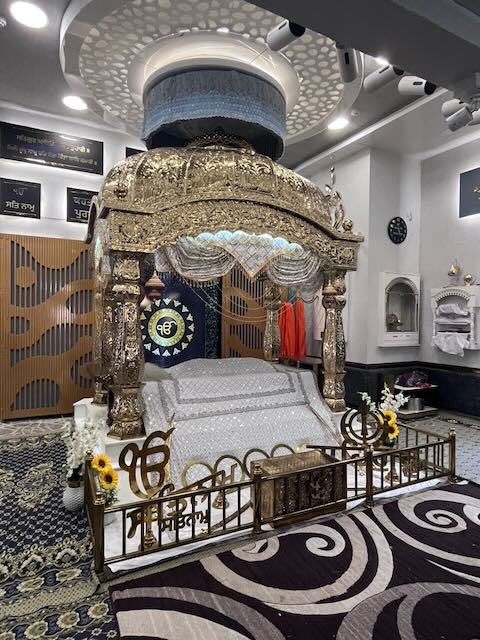
The Gurdwara is currently being renovated
The Gaoshalla, which was inaugurated on 20 August 2003.
Before Partition, Karachi was a major port city, one that had grown from a small fishing village into a vibrant, multi-religious urban centre. Hindus and Sikhs dominated its industrial and commercial life, prominent in banking, education, retail, and local business. Muslims, Christians, and Parsis were equally woven into this cosmopolitan fabric. Traces of all these communities from the pre-Partition era survive today as part of the city’s inherited heritage.
Partition in the Punjab tore the province apart and forced millions to flee from the communal violence. Karachi’s experience was different, and its rupture more drawn out. With limited infrastructure to begin with, the city also became the new capital of Pakistan, and the Muslim League leadership, with its ideological and political roots in Aligarh, relocated there to begin the work of building a homeland for the Muslims of British India.
As the historian Sarah Ansari writes, Sindh was, in relative terms, spared the worst of the violence that convulsed the Punjab. With a population roughly 75% Muslim and 25% Hindu and Sikh, the province “managed to keep a fairly clean record” through the difficult weeks around independence, even as communal sensitivities grew (Ansari, p. 53). Even so, the authorities eventually judged that rising tensions required admitting more refugees into Karachi.
What followed still confounded observers. Unlike the Punjab, where the mass departure of non-Muslims was seen as tragically inevitable, Sindh had been marked by comparatively few communal clashes, thanks to what Ansari calls a “peaceful imprint” in relations between communities, reinforced by the authorities’ firm early efforts to maintain order (Ansari, p. 54). That relative calm did not hold. By January 1948, a serious outbreak of communal violence, instigated by Muslim refugees, first targeting Sikhs travelling through the city and then turning on local Hindus, signalled how far Karachi’s demographic and political character had shifted. By this point, Ansari notes, the city had become heavily “impregnated” with Muslim refugees (Ansari, p. 56).
This violence triggered a rapid exodus of non-Muslims from Karachi, with thousands leaving for India. The economic consequences were immediate. Commercial firms and banks were already short-staffed lost much of their remaining workforce, and, as Ansari puts it, “business virtually ground to a halt” (Ansari, p. 57).
This produced a real dilemma for the provincial government. Ansari records that Sindh’s Chief Minister, Khuhro, and his colleagues recognised that the province’s best interests lay in retaining as many Hindus as possible; Khuhro accordingly moved to cap refugee numbers, with any surplus to be removed from the city (Ansari, p. 57). This put the Sindh government directly at odds with the central Pakistani administration, which was simultaneously trying to resettle the huge inflows of refugees arriving from the Punjab.
At the heart of this stood a genuine contradiction: the instinct of “Sindh for Sindhis,” bound up with a desperate need to preserve Karachi’s economic life, pulled against the equally urgent need to absorb refugees who had uprooted themselves in search of a promised homeland. It was within this contest of high politics that small, local places, like this Temple and the community around it, became caught up in questions far larger than themselves: who could stay, who could leave, and who a piece of land, and the city itself, ultimately belonged to.
The Communities Today
Karachi’s Hindu community is now a small fraction of what it once was. Hindus make up just over 1% of the city’s population today, around 244,689 people, according to the 2023 census, a steep fall from the majority-Hindu city Karachi had been before 1947. Estimates of how many temples remain vary widely, from a handful of prominent citywide institutions to dozens of smaller neighbourhood shrines; what’s clear is that only a fraction of the pre-Partition total survives.
A few, like the Swaminarayan Temple, the Ratneshwar Mahadev Temple, and the Lakshmi Narayan Temple at Native Jetty, remain architecturally and historically significant, while others are modest sites serving small, localised pockets of the community; Tamil Hindu families in Madrasi Para, for instance, still gather to worship the goddess Mariamman. Sindh remains home to the great majority of Pakistan’s Hindus, making the community, alongside Sikhs, one of the last visible threads connecting Karachi’s present to its pre-Partition past.
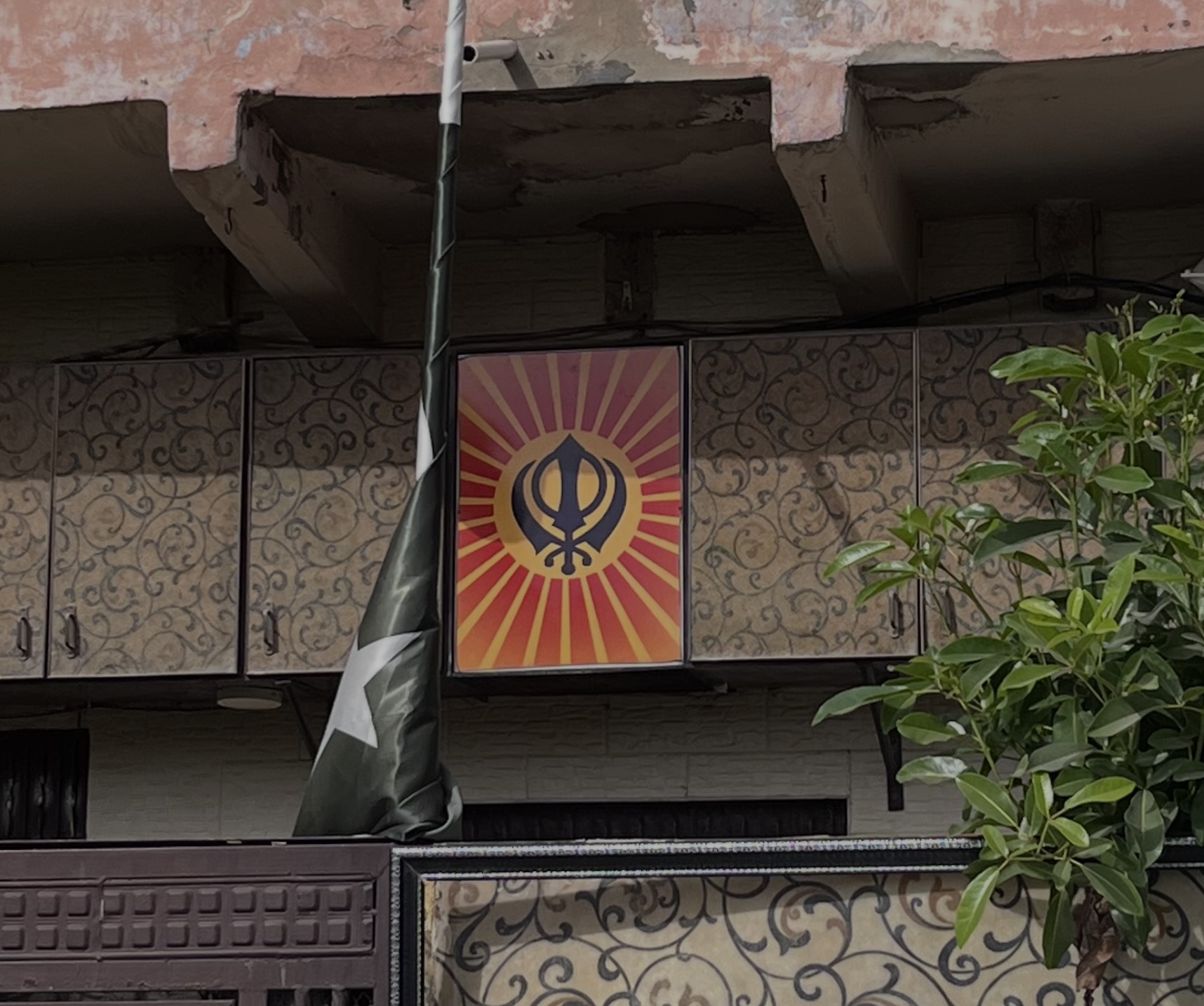
By comparison, Karachi’s Keshdhari Sikh community is smaller still. More prominent are the Nanakpanthis, who live in larger numbers in Thar and practise more syncretic traditions. The Gurdwara, dedicated to Guru Granth Sahib, sits on the ground floor of the complex and, at the time of our visit, was undergoing renovation. It’s a modest, functional space, serving what remains of the city’s Sikh community. There are thought to be around three other gurdwaras in Karachi, together serving a population estimated at somewhere between 2,000 and 4,000 people. The population of the Nanakpanthis, on the other hand, numbers perhaps closer to two million in Sindh Province.
Inside the Complex
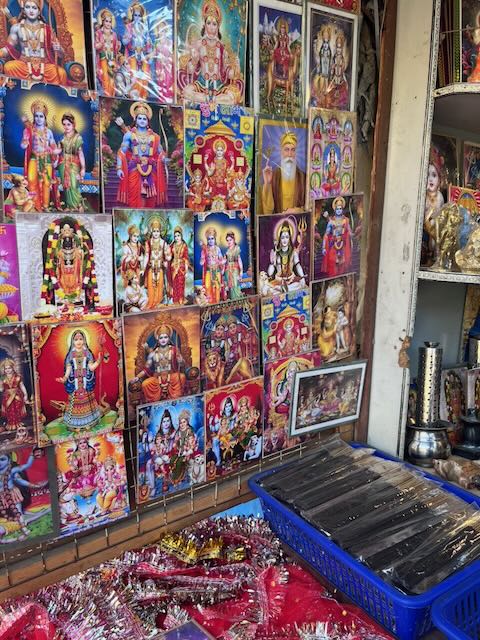
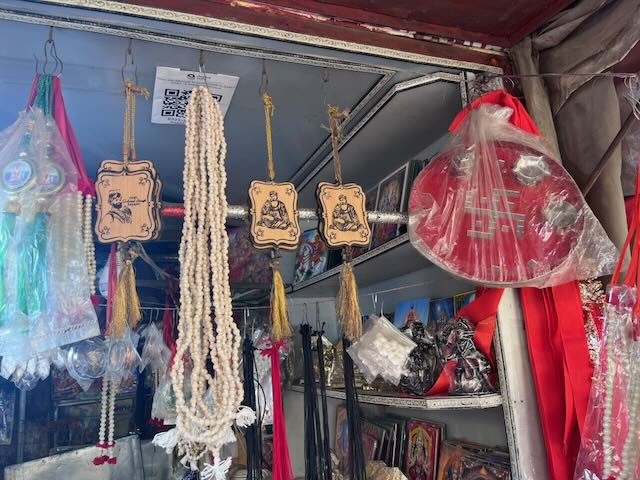
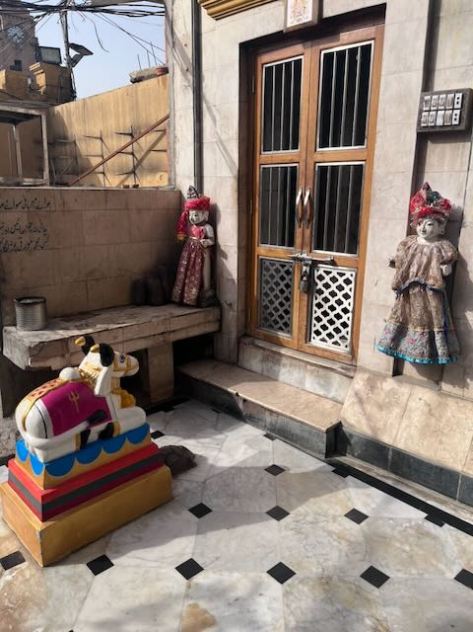
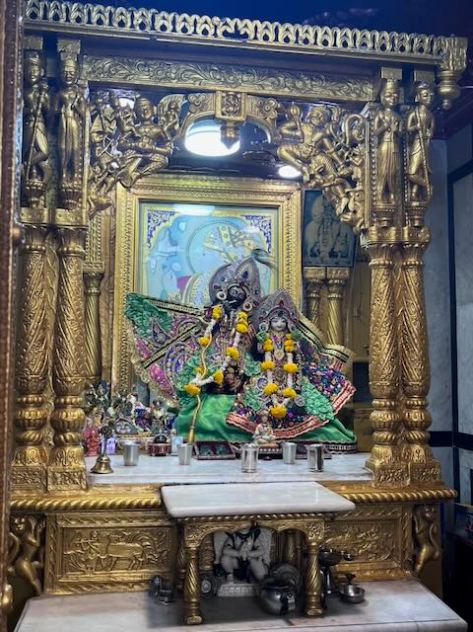
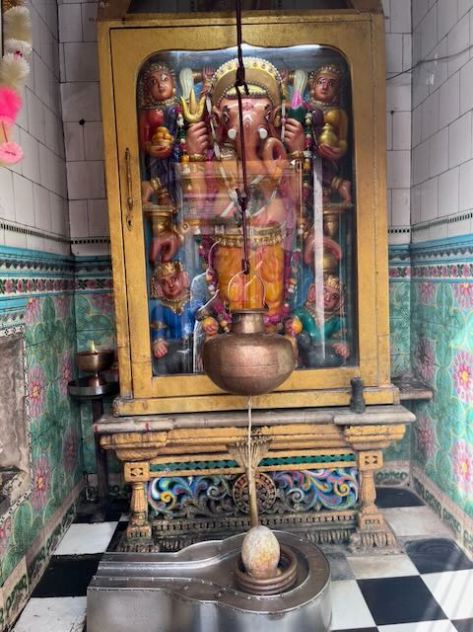
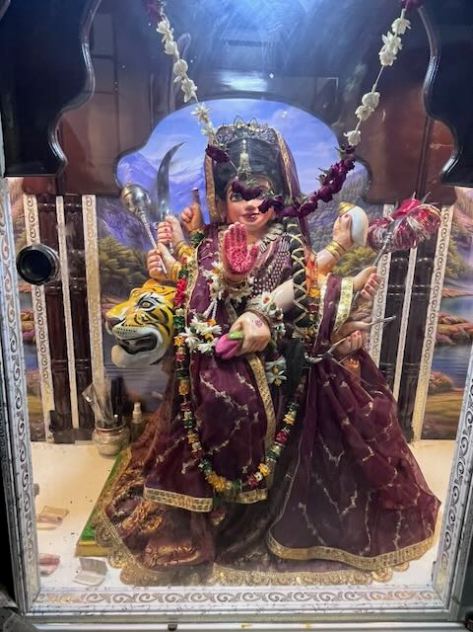
Walking through the complex today, that layered history is still visible, if you know to look for it. There’s a vegetarian restaurant-cum-dhaba, shops selling religious items, and a shared sacred space that houses both Temple and Gurdwara — a small, living trace of the pluralism that once defined the city.
The tour of the Gurdwara and the Temple was a genuine pleasure. It offered a glimpse of what shared sacred space can look like, of coexistence without enmity, worked out not in the abstract but in the daily rhythms of a shared courtyard. And yet that same courtyard is also a haven, in the truest sense: a refuge for residents who now form a minority in a city their communities once helped to build and run. What was once simply home has become something closer to a sanctuary, but it is also a marker of how much has been lost.
Postscript
Reading the Ayyangar–Khan letters in 2020, I saw this Temple only as a set of claims and counter-claims on paper, an argument about land, rights, and belonging, conducted at the level of Prime Ministers and Ministers. Walking into the courtyard in 2026 closed a strange loop: the same space, no longer an abstraction in an archive box, but a living, if diminished, community still holding on, quietly, amid the noise of Jinnah Road.
These places of worship survive because of the generosity of those who serve the community.
References: Sarah Ansari, Life After Partition: Migration, Community and Strife in Sindh, 1947-1962 (OUP, 2005)
Brace yourself, this is a longer-than-usual blog piece, and one that is close and personal.
Recently, I came across a report from the Sutton Trust that reignited an old debate: is university education still worth it? A new survey found that the proportion of people who believe a degree is not worth the time and money has risen from 14% in 2005 to 34% today. As my own journey in this field keeps changing shape, I find myself constantly reflecting on why I came into it in the first place.
Where it started
I was the first person in my family to go to university, and as a recent migrant to the UK, I hardly understood the significance of a degree. And yet a few moments stand out clearly.
I had a difficult time adjusting to a grey, dull, cold country, and I struggled at school until my A-levels. That was when I discovered the power of studying and the possibilities that education could open up. My preference had actually been art, but Thatcher’s Britain left an indelible mark on me, and on my politics. It taught me how much history and politics mattered, so much so that I abandoned the idea of studying art at university. Even so, influences from the art world, such as William Morris, remained with me.
And, like the 1983 film Educating Rita, directed by Lewis Gilbert and starring Julie Walters, I wanted something else. Having grown up in working-class Coventry among people with few aspirations, I found it hard to want something different, something beyond marriage and children. I took my cue from a few of the “clever girls” at school who were applying to university, and since my A-level results were decent enough, I thought: I too can do this!
My mother
While Educating Rita was the external inspiration, the real one was right at home. My single mother, who never benefited from formal education herself, constantly encouraged me to educate myself and make something of my life. She struggled throughout her life, but she was remarkably resilient and strong, rebuilding and reinventing herself every time life threw another challenge at her. I drew strength from that then, and now when she is no more.
She would have preferred that I became a doctor, a lawyer, something “respectable,” but she supported my decision to study politics and history anyway, despite pressure from other family members who looked down on these subjects. I decided to stay at home rather than leave her alone, which narrowed my choices to Coventry and Warwick. I had offers from both, and to the dismay of my teachers, I chose Coventry.
Coventry, not Warwick
I would have started in 1992, the year 35 polytechnics became universities but, after deferring, I began in 1993. With little guidance or mentorship, I had almost no sense of the difference between Warwick and Coventry. Had I known, I might have made a more calculated choice. Instead, it was an emotional decision, based on instinct and on a course on India and Pakistan that caught my eye at Coventry, taught by someone who would go on to become my PhD supervisor.
Looking back, I think it was also a choice about fitting in. I simply sensed, as someone from a working-class background, that I did not belong at Warwick. Unlike Susan in Educating Rita, who studied English, I read International and Political Studies, a combination of politics, history, and international relations. Interestingly, this kind of combined degree has now made a comeback, partly as a result of rationalisation across the sector. Single-honours degrees are difficult to sustain in today’s market, and a combined programme can be an attractive package in the age of austerity.
Degrees then and now
Returning to the Sutton Trust report: the big difference today is that a degree is now intrinsically tied to employability. Students increasingly come to get a degree, rather than to get an education, and that distinction matters. I was incredibly fortunate to study without the financial pressures students face now. Had those pressures existed then, I probably wouldn’t have gone to university at all.
My undergraduate years were instrumental in opening up my world and my life. They transformed my ability to think, to articulate, to reason, and to question what I thought I knew. I left university without much clarity about what I wanted to do next, but that didn’t matter, because the three years themselves had taught me so much. Far more than the rigour of eight courses a year, each ending in a three-hour exam meant to prove I’d learned something. There were essays too, handwritten at first, typed by my final year, but the ratio was 25% coursework to 75% exam. Everything rested on those three hours at the end of the year. We thankfully now have much more diversity in assessment, but with the challenges of AI, the classroom exam is also making a comeback.
Like Susan, I left university a different person: more confident and genuinely surprised at how much I’d enjoyed the experience. So much so that I decided to keep studying part-time while working. I wouldn’t have made it through my undergraduate or postgraduate years without paid work on the side, even though fees were nowhere near today’s levels. During my MA, I worked first in academic bookselling until I was made redundant as the early tremors of Amazon (which launched in 1998) began shaking the book trade and then in banking, which simply didn’t fulfil me. Interestingly, I was working at a major high-street bank that was closing down branches at the time. The signs were all there in the late 1990s about how innovations in technology were changing our high streets and retail habits.
A turning point
I eventually decided the private sector wasn’t for me and chose something that felt more virtuous instead: the public sector. Of course, I quickly realised that this wasn’t any better! At the same time, I continued with my part-time MA, operating on something close to a pay-as-you-go model. That kind of flexibility barely exists today, outside perhaps the Open University, yet with the support of my tutors, it was possible then. In today’s system, I would likely have been terminated from the programme for missing coursework deadlines. But in a more generous era, when academics still had some autonomy and personal relationships mattered, you weren’t just a number.
Then, one day, a letter arrived with an advert for a PhD studentship. It was from Professor Ian Talbot, Coventry University. I saw it and dismissed it almost instantly; truthfully, I barely knew what a PhD entailed. But the seed was sown, and the rest is history (pun intended).
The studentship, covering fees and maintenance for three years, had been established by the nephews of Sir Penderel Moon (Indian Civil Service). They wanted someone to examine the violence and casualties of Partition; a subject long mired in debate about the true scale of loss at the time of British departure from India. Penderel Moon had produced his classic study Divide and Quit in 1961, drawn from his postings in Punjab, and afterwards edited volumes 5 to 12 of the Transfer of Power (1970-83) documents.
The PhD years were a constant exercise in pinching myself and thinking, is this really me? Am I really doing this, meeting these amazing people and minds? Some of that, I think now, was lacking what Bourdieu meant by cultural capital: the sense that certain ways of speaking, certain reference points, certain forms of ease in a room, are themselves a kind of inherited wealth, one I hadn’t been given. And some of it was what Appadurai calls the capacity to aspire: the idea that aspiration itself is unevenly distributed, that some of us have to learn, almost from scratch, how to imagine a future different from the one we were handed.
The Sutton Trust puts it plainly: graduates from non-graduate families often don’t catch up with graduates from graduate families, because higher education improves social mobility but doesn’t erase the effects of family background. While meritocracy in education is a wonderful idea, and it has helped to uplift many, the internalised habits, manners, language and style that come from our background remain with us. That feeling of being an impostor is directly related to what Bourdieu and Appadurai describe, not a personal failing, but a structural one. But through my academic journey, and in my first monograph, I turned to Catherine Hall, who writes:
For the most part, however, in all sectors of higher education we remain on the margins. But the margins can be a very productive terrain — a space from which both to challenge establishments and develop our own perspectives, build our own organisations, confirm our own collectivities. The hopes for feminist history in the 1990s cannot be the same as they were in the 1970s, for we are living in a very different political world, and some of the harsh lessons we have learned about both exclusivity and marginality must inform our practice in the future. The dream remains — a kind of history that excites and engages, that retains its critical edge, is open to new voices, and always in a dynamic relation to the political world in which we live. Catherine Hall, White, Male and Middle Class: Explorations in Feminism and History (Cambridge: Polity Press, 1992), p. 34.
I felt more at “home” in a post-92 institution, and the opening up of education was crucial for me, both as a student and eventually in my professional capacity. But since then, so much has changed in Britain. The optimism of the Blair years and “Cool Britannia” has given way to a “Global Britain” that is anxiously searching for a place in the world beyond Europe. We are on our way to having a seventh prime minister in the past ten years; the longevity of Thatcher and of Blair as her true successor seems like a different age in this era of musical prime ministerial chairs.
This rise and fall in political and national fortunes are being mirrored, brutally, in the education system itself, and post-92s have been absorbing the impact longest. As far back as 2015, the withdrawal of the teaching grant from non-STEM subjects hit post-92s hardest, prompting warnings that humanities provision would shrink back to “a narrower and narrower social circle of those who could afford to indulge their interests.”
A decade on, that warning reads less like a prediction than a description. Modern foreign languages provision has nearly halved since 2011; English studies have fallen by close to the same margin. In 2026, the University of Hertfordshire, a post-92 institution built on access and employability, suspended recruitment to its undergraduate history, philosophy, English, linguistics and creative writing degrees outright. As John Holmwood of the Campaign for the Public University has put it, post-92s have long been the “heavy lifters of social mobility,” the institutions through which working-class people bettered themselves through higher education. It is precisely that function that is now being dismantled.
Specific discipline studies, such as the Royal Historical Society briefing, confirmed that 88% of history departments in post-92 universities have seen explicit staffing cuts, compared to a lower (though still severe) 68% in pre-92 universities.
What makes this a class story, not just a funding story, is where the losses land. A 2025 British Academy report found large parts of the country are already humanities’ “cold spots,” with no provision at all within a commutable sixty kilometres, a divide that falls hardest on students who cannot simply relocate to wherever a course still survives. A student in a well-off city with three universities on their doorstep has choices. A student tied to a single local institution by money, family, or circumstance does not.
It would be wrong now to pretend Russell Group universities are exempt from the above; they are not. The UCU’s tracker recorded 105 institutions pursuing redundancies, restructures or closures as of late 2025, with Russell Group members accounting for 41% of the sector’s £303 million severance spend in 2024–25 despite being a smaller and wealthier cohort. Nottingham seeks to cut 150 posts, mostly in the humanities, and has withdrawn language degrees. Exeter is consulting on cutting a similar number, 85% of them in humanities, arts and social sciences. Sheffield cut 614 jobs in a year. Bristol pushed voluntary severance specifically at its humanities faculty. Leicester closed Film Studies and Modern Languages entirely, rescinding around 300 offers. A small example in a pool of many.
The consumer vs public good
So, the crisis has widened. But it has not reversed the underlying pattern: market competition means students increasingly gravitate to the universities with the strongest reputations, which makes closures disproportionately likely at exactly the lower-tariff institutions that working-class and first-generation students are more likely to attend. Post-92s were hollowed out first and hardest; the Russell Group is now losing humanities jobs too, which are largely at the margins of institutions that remain, on the whole, intact. Peter Fleming makes a good case for linking the neoliberalisation of HE and its ultimate decline in Dark Academia: How Universities Die.
That distinction matters because it is the same distinction Bourdieu and Appadurai pointed to. The people most likely to need the humanities to develop the cultural capital, the confidence, the capacity to aspire that I stumbled into almost by accident, are the people increasingly least likely to have local, affordable access to them. A degree in history or politics did not just give me a qualification; it gave me a way of thinking that money and background hadn’t. Strip that access away from the institutions serving people like the one I was, and you are not trimming a subject choice. You are closing a door that, for a certain kind of working-class kid, was the only door going.
The current implosion taking place across the sector does not seem to concern people; there is an almost visceral lack of trust and faith in “experts” and universities. This, of course, is not accidental. People who question, challenge, and think critically are inconvenient in a populist, post-truth world increasingly shaped by AI. Education should be a safe space in which we can teach and debate ideas freely. Except, right now, it is not. History itself is contested ground.
What lessons should we be learning? How do we make sense of the present through the past? Everything we experience, personally or politically, has a historical context, and that context is the key to understanding now. History gives us the tools and the language to articulate our thoughts and make sense of the world around us. I went to university as an idealist. I left with some of that idealism intact, but with a good deal of cynicism too, the kind that teaches you to always ask questions, never assume knowledge, apply reason, be critical, seek evidence, and fact-check your sources. This is why history matters, and why we must defend it. And more so in the age of AI.
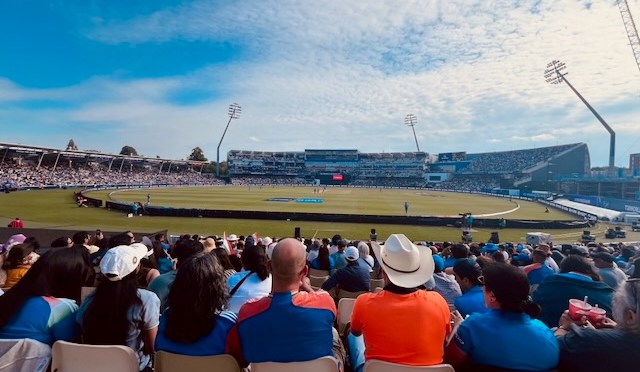
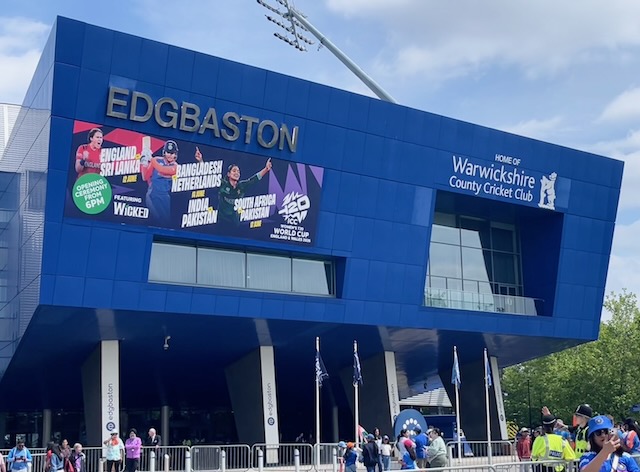
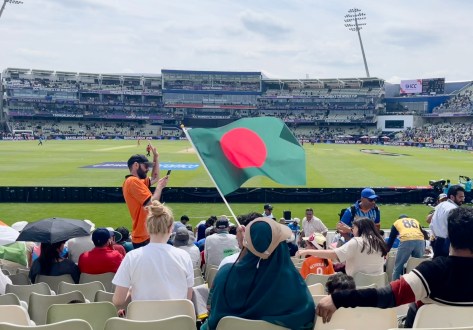
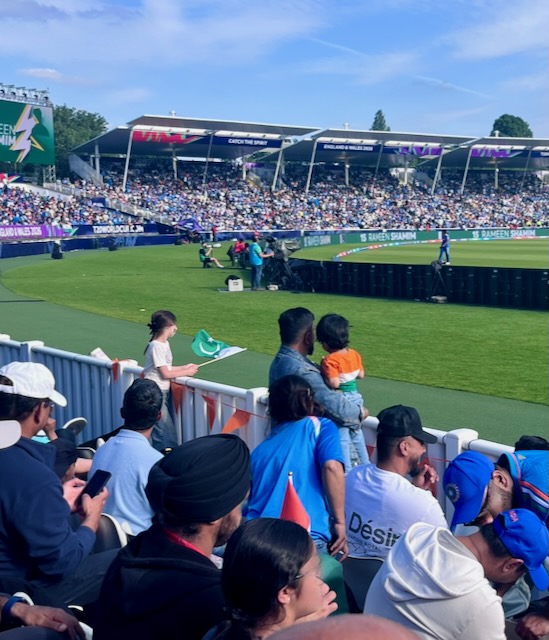
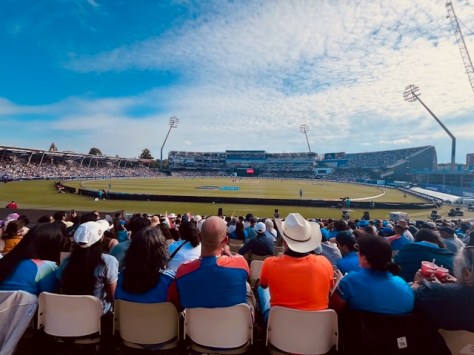
Last week, I indulged in some cricket. Not just any cricket match, but a South Asian feast at Edgbaston, for women’s T20. The morning match, like the morning itself, was relatively mild in temperature, and resulted in Bangladesh winning against the orange army, the Netherlands. But by the afternoon, the temperature was considerably higher during India’s match against Pakistan.
I’ll be honest — I’ve only been to one “proper” cricket match before, which was last year when India were playing England. The prospect of watching this old rivalry play out on the cricket pitch was enticing and irresistible, despite knowing how heated and at times even how ugly the audiences can be. It was also women’s cricket, which has come a long way, and determined to show some gender solidarity, I went along to the historic grounds.
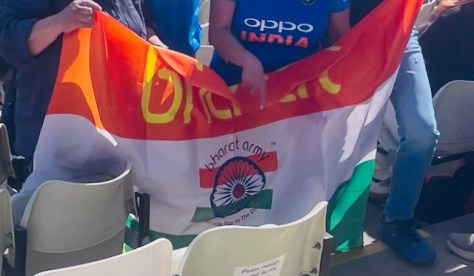
As I arrived at the ground, I could already sense that this match was going to draw large crowds. Indian blue dominated the space, with a few patches of green. Inside, I caught the tail end of the morning match and was in time to see Bangladesh seal victory against the Netherlands. The atmosphere was pleasant and inviting, reflecting the sportsmanship we associate with sport at its best. The Dutch team was incredibly obliging, posing for selfies and engaging warmly with supporters despite their loss.
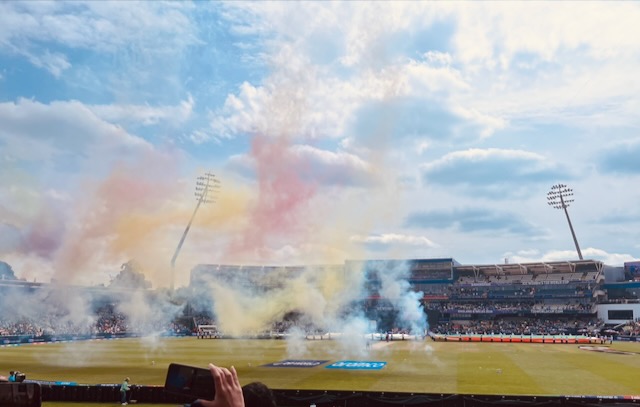
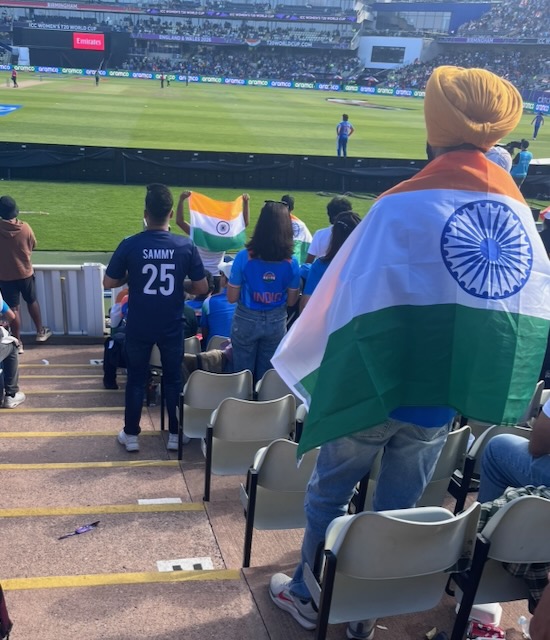
As the ground transformed between matches, the audience shifted, the tension changed, and crowds began to fill their seats. The ICC T20 match began without a handshake — mirroring the precedent set by the men’s teams and undeniably bringing politics into the sporting arena. As national flags were unfurled across the pitch and audiences rose for the anthems, I noticed the people in the row behind me did not stand for Pakistan’s anthem. From their mutterings, it was clear this was a deliberate decision. I was intrigued and irritated in equal measure. The crowd itself was multi-racial and British-born (Gujarati and East African heritages), yet they chose to imbibe and perform a fierce subcontinental nationalism thousands of miles away from home. This stood in sharp contrast to the joy of Bangladesh’s victorious chase against the Netherlands with the sudden, sharp shift in gravity when India and Pakistan took the field.
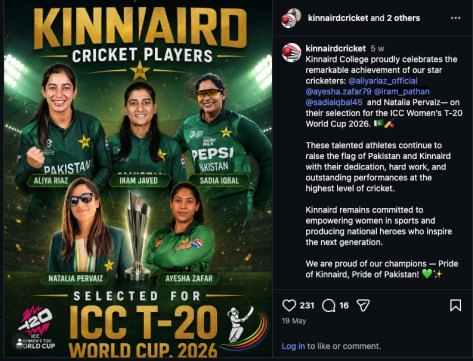
I had also been warned not to expect much from the Pakistan team, given how significantly India has invested in women’s cricket in recent years. I therefore found I was decidedly with the underdog; no one really likes a one-sided affair. Also, some years ago, I spent time at Kinnaird College for Women in Lahore for research, and while there, I was impressed by how important an institution it was, as many fine female cricketers have emerged from there. Five players in the current Pakistan squad have ties to the college, including Aliya Riaz, Ayesha Zafar, Iram Javed, Sadia Iqbal and Natalia Pervaiz.
However, despite a few glimpses of determination from the Pakistani side, the match was largely dominated by India’s women. The crowd was loud, raucous and seemingly oblivious to the fact that this one-sided contest was itself displaying the more unattractive face of nationalism. The problem with sport, of course, is that it forces you to pick a side — there is very little room to sit on the fence. As spectators, the crowd creates its own dynamic within the stadium.
Despite the crowd being very multi-racial and multi-religious, the vibe and the chants were distinctly Hindu, with the most popular in my vicinity being ‘Ganpati Bappa Morya’. This was among the sold-out crowd of 18,814, setting a new Women’s T20 World Cup attendance record for a group-stage double-header. While historic rivalries like these are great for drawing crowds and promoting women’s cricket, the flip side is that the political rivalry is imported as well.
I slipped out of Edgbaston before the final ball was bowled, once it was clear that Pakistan’s fate was sealed. The Pakistani supporters were also gradually slipping away, as they were outnumbered by the Indian supporters and defeat was certain. I wanted to avoid the crowds, who were already in high spirits — literally and metaphorically. And yet, leaving early also meant carrying away a cleaner impression of the day. Because for all the noise in the stands, the tribalism, the political point-scoring, the refusal to stand for another nation’s anthem, it was the earlier match that offered a different story. The Dutch women who smiled and posed for photos despite their loss. The Bangladesh crowds pleasantly mingling with the Dutch spectators. The Pakistani team who played with dignity in front of a crowd that had largely already written them off.
The last three days have been an uncomfortable reminder of how far we have slipped — or perhaps how far we never truly moved — in our relationship with hatred and bigotry. Yet within that discomfort, I also found unexpected moments of beauty and hope, each one a small act of resistance against the noise.
A Sufi Voice in Leamington Spa
On Saturday, I visited the Gurdwara in Leamington Spa to hear Dr Asma Qadri, a scholar of Punjabi language, literature, and culture, speak on Punjabi poetry and the Sufi tradition. Her focus was Baba Farid (1173–1268), a figure of remarkable spiritual and literary stature. In the Guru Granth Sahib — the sacred scripture of Sikhism — there are 112 shaloks (couplets) attributed to Baba Farid, and at their heart is a message of interfaith harmony, compassion, and non-violence. That a Muslim saint’s words were enshrined in a Sikh scripture centuries ago speaks volumes about a pluralism that many today seem intent on dismantling.
Farid, if you are maltreated
Do not react with violence and projection
Visit the Other
And kiss his feet in humility and affection!

Source: Harjeet Singh Gill, Sufi Rhythms, Patiala University, 2007
Baba Farid was born near Multan, his lineage traceable to Kabul, from where his family had migrated to the Indus Valley. He later moved to Delhi, where he received spiritual instruction from Khwaja Qutbuddin Bakhtiar Kaki, a saint of the Chishti Order. He eventually returned to Punjab and settled in Ajodhan (present-day Pakpattan), from where he led the Chishti Order until his death.
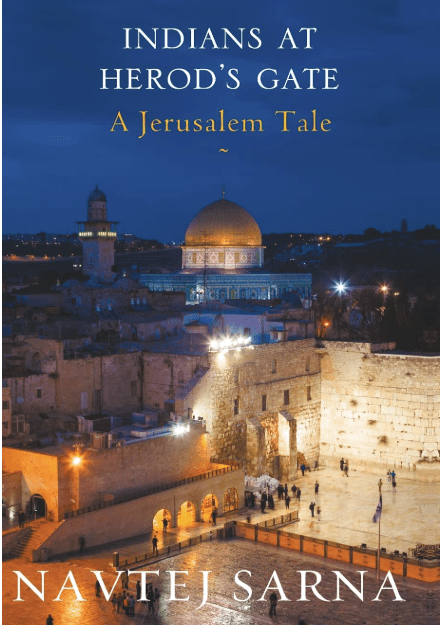
What is perhaps less widely known is that Farid is believed to have travelled to Jerusalem around 1200 CE — not long after Saladin had recaptured the city from the Crusaders. A small shrine there, still accessible, is said to mark his presence. Navtej Sarna, a former Indian Ambassador to Israel (2008–2012), writes about this connection in his book Indians at Herod’s Gate: A Jerusalem Tale (Rupa, 2014) — a quiet, often-overlooked thread linking the Indian subcontinent to the Holy City over eight centuries. Read further: Indians Herods Gate and Jerusalem’s 800-year-old Indian hospice
After the lecture, our group of three — drawn from different faith backgrounds — sat together for langar, the community meal served at Gurdwaras. There is something deceptively simple and profoundly radical about langar. The act of sitting together, regardless of religion, caste, or status, and eating the same food dissolves hierarchies that societies expend enormous energy to maintain. It is a challenge that remains genuinely difficult in parts of India, where communal and caste taboos still govern not just what people eat, but with whom and where. In that shared meal, something ancient and necessary was quietly affirmed.
The Descent into Dystopia
The following day, I made the mistake of listening to a News Agents podcast: Why MAGA Hates Britain. I say mistake not because the journalism was poor — it wasn’t — but because the content was genuinely dispiriting. The podcast drew on interviews conducted at the Conservative Political Action Conference (CPAC), where the blatant hostility toward Muslims was on full display. What struck me was not just the bigotry itself, but the absolute self-assurance with which it was expressed — the sense of a parallel world, hermetically sealed from doubt or nuance, in which hatred had been fully normalised and even celebrated.
It is worth noting that CPAC is not a fringe gathering. It draws senior politicians, media figures, and policymakers, including Britain’s shortest-serving prime minister, Liz Truss, who has found the political validation that eluded her at home in MAGA circles. When hatred is mainstreamed in those spaces, it travels outward with authority and legitimacy. The podcast was a sobering record of that.
A Fragment from 1947
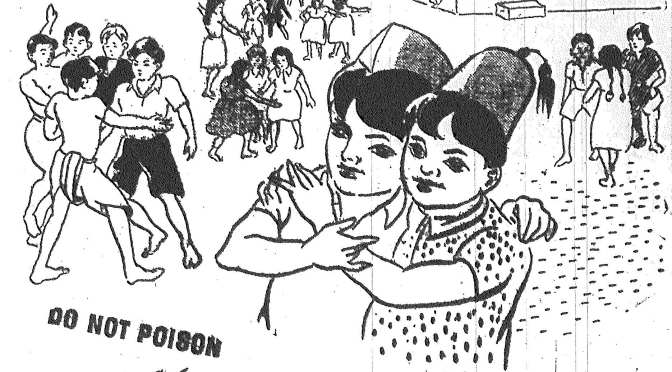
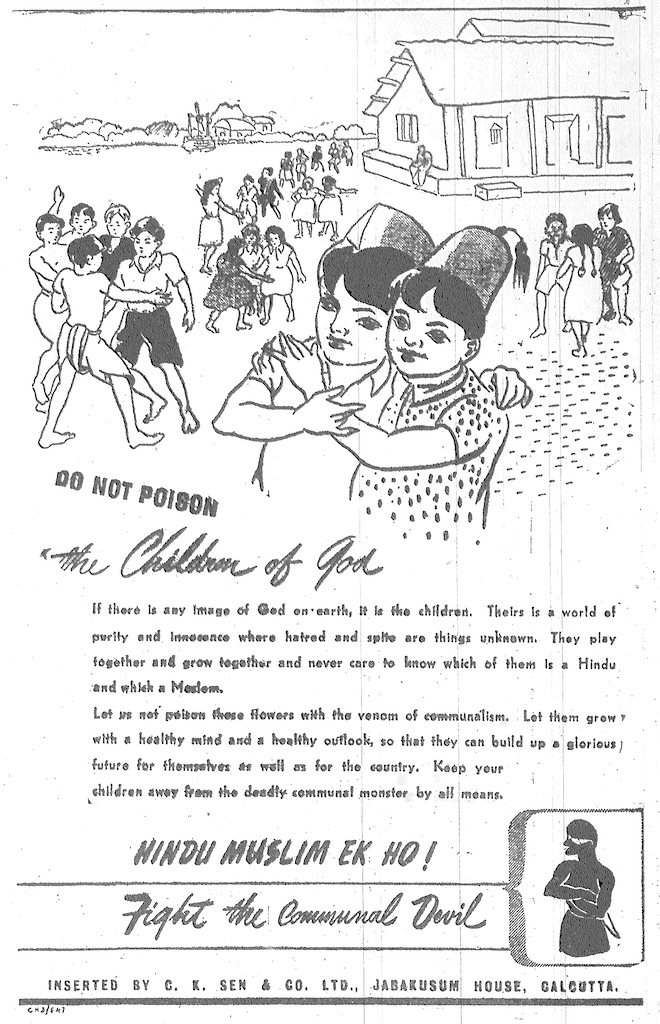
Turning away in revulsion, I returned to my own research — a space in which I can explore the ideas that still feel worth holding onto. Almost serendipitously, I came across an advertisement from September 1947 in the Bombay Chronicle, published just weeks after Partition had carved the subcontinent into India and Pakistan, leaving 1-2 million dead and over 15 million people displaced. The advert’s message was striking in its urgency and its pathos: the violence and bloodshed that had torn communities apart must now be put aside. The “children of God” must be taught how to live together rather than being “poisoned” by the hatred that had consumed the preceding years.
The text reads: If there is any image of God on earth, it is the children. Theirs is a world of purity and innocence where hatred and spite are things unknown. They play together and grow together and never care to know which of them is a Hindu and which a Moselm. Let us not poison these flowers with the venom of communalism. Let them grow with a healthy mind and a healthy outlook, so that they can build up a glorious future for themselves as well as for the country. Keep your children away from the deadly communal monster by all means. Hindu Muslim Ek Ho! Advertisement inserted by C.K. Sen & Co. Ltd. Bombay Chronicle 26 September 1947. Photo taken by Pippa Virdee from NMML, Delhi.
What moved me most was the implicit admission within that language: that society had already been poisoned, and that the antidote required active, deliberate effort. It was a call not to innocence but to conscious repair.
The Distance That Grows
That advertisement also stirred a more melancholic reflection. There was a time, however brief and fragile, when greater openness between India and Pakistan seemed imaginable — when the possibility of travel, communication, and even reconciliation had not yet been foreclosed. The Wagah-Attari border crossing, for decades a symbol of that flickering possibility, remains closed following the Pahalgam attack of April 2025. Yet that closure is not merely a consequence of one incident. It reflects a deeper estrangement — one that has steadily worsened since the BJP came to power in 2014, as the distance between the two countries has grown not just diplomatically but also culturally, emotionally, and imaginatively.
When borders close, it is not only people who are separated. It is stories, families, histories, and the ordinary human exchanges that quietly resist the narratives of enmity.
On Connecting the Moments
What struck me, looking back across these three days, was how tightly these experiences were bound together — the lecture on a 13th-century Sufi poet, the langar table, the CPAC recordings, the 1947 advertisement, the closed border. They form a kind of map of where we are and where we might yet go.
We are constantly surrounded by voices that insist conflict is natural, that difference is danger, that the world is a zero-sum competition between faiths and peoples. But Baba Farid’s couplets, preserved across centuries and across religious traditions, suggest otherwise. The langar meal, served to strangers, suggests otherwise. Even that desperate 1947 advertisement, placed in the shadow of catastrophe, suggests otherwise — because in the middle of all that devastation, they still believed it was worth trying to preserve unity over enmity.
Conflict has never resolved anything. It only plants the seeds for the next generation’s hatred. What endures are the moments when we chose differently — when we visited the Other, and sat with them, and ate.
It remains up to us to remember our neighbours — not as symbols, threats, or abstractions, but as people, first and foremost. This message is a recurring theme in advertising campaigns that, while not so distant in time, feel increasingly remote in spirit. The YouTube clips, from just a decade ago, speak a language of interfaith harmony that the intervening years — and the political choices made within them — have done their best to drown out. That they once existed, and were made for mass audiences, is itself worth remembering.
Hindu Muslim Unity: Best Creative and Inspirational Indian Ads | Part 1 | Creative Ads
Hindu Muslim Unity: Best Creative and Inspirational Indian Ads | Part 2 | Creative Ads
Humsaye Maa Jaye by Bushra Ansari and Asma Abbas – Official Video
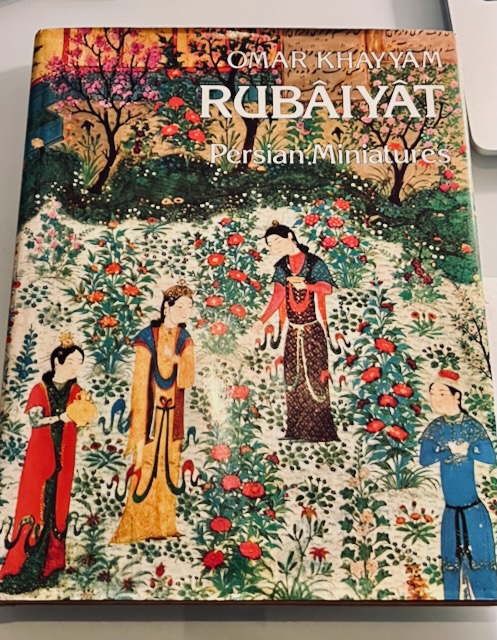
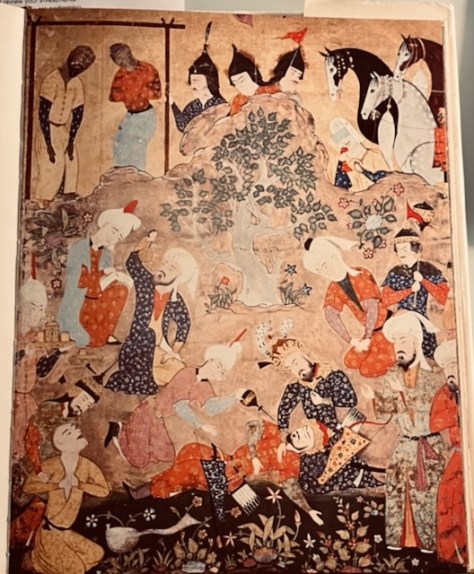
Some time back, while browsing a second-hand bookshop — the name and place now lost to memory — I stumbled upon a copy of Omar Khayyam’s Rubaiyat, translated from Persian by Edward FitzGerald. Published in 1981, it is a beautifully illustrated edition, adorned with miniature paintings. Time-worn as it is, the book carries a warm and inviting feel, and I always thought I would one day find the right words to write about it. It usually sits on the bookshelf directly in front of my desk, front cover on full display — a small splash of colour and beauty against what can otherwise be rather dry academic reading. The richness of the text and the miniature paintings breathe both life and warmth into the room and, on occasion, inspire me to write.
Omar Khayyam (1048–1131) was a Persian poet and polymath of remarkable range — a mathematician, astronomer, and philosopher as much as a literary figure. Born in Nishapur in present-day Iran, he flourished during the Seljuk era, a world away in time and place from the Crusades unfolding to the west. Though celebrated in his own time for his scientific and philosophical work, it is his poetry that secured his enduring fame in the modern world — largely thanks to Edward FitzGerald’s celebrated English translation, first published in 1859. FitzGerald’s Rubaiyat of Omar Khayyam is a loose but inspired rendering of quatrains drawn from the Bodleian manuscript, and its success was extraordinary: a bibliography compiled in 1929 listed over 300 separate editions, with many more appearing in the century since.
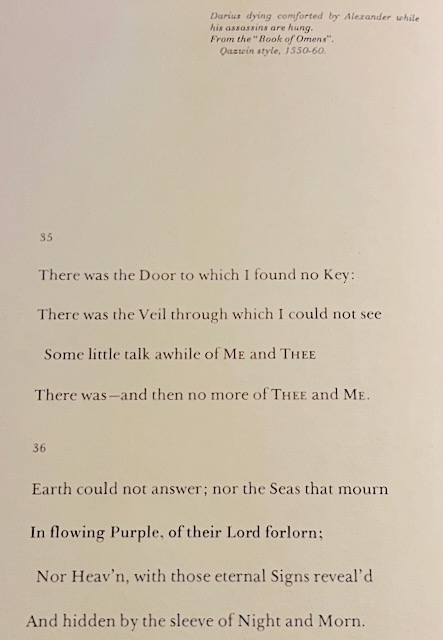
There is, of course, much to be said about FitzGerald and the liberties — and brilliance — of his translation, but that is a conversation for another time. For now, it was the events of the past few days that compelled me to lift the book from the shelf and turn its pages. Two quatrains, in particular, stopped me in my tracks.
35
There was the Door to which I found no Key;
There was the Veil through which I could not see
Some little talk awhile of ME and THEE
There was—and then no more of THEE and ME.
36
Earth could not answer; nor the Seas that mourn
In flowing Purple, of their Lord forlorn;
Nor Heav'n, with those eternal Signs reveal'd
And hidden by the sleeve of Night and Morn
Darius dying comforted by Alexander while his assassins are hung. From the “Book of Omens.” Qazwin style, 1550-60
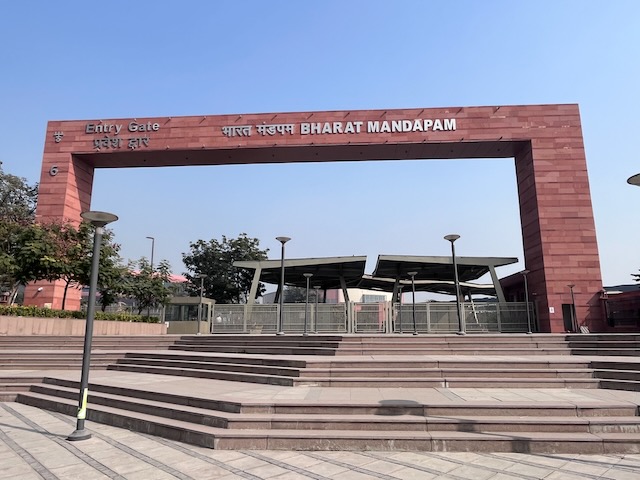
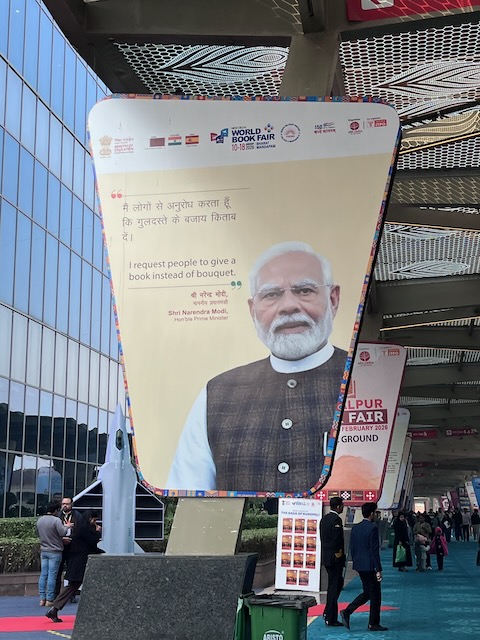
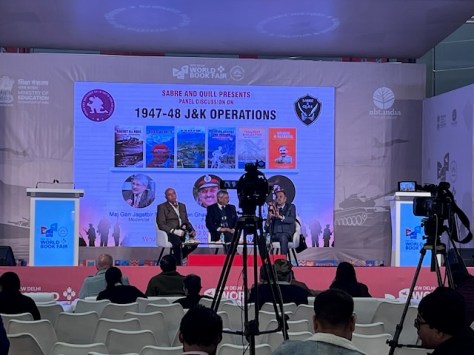
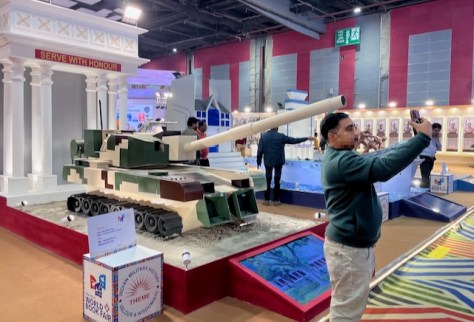
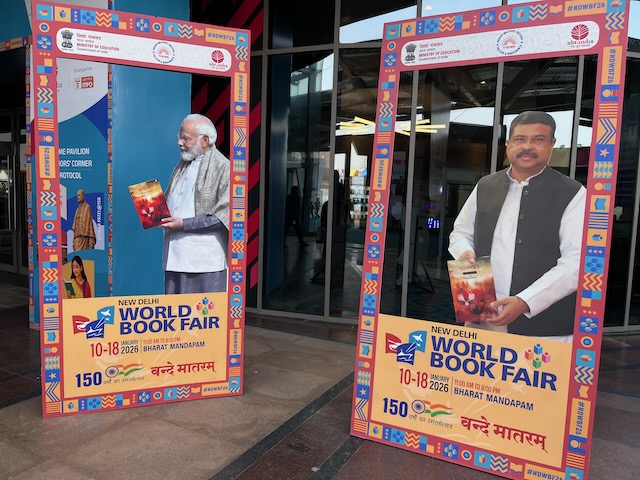
My latest visit to Delhi luckily coincided with the World Book Fair, held from January 10-18 at the Bharat Mandapam Convention Centre (Pragati Maidan), which was unveiled in 2023 ahead of the G20 summit. The book fair has been held for over half a century, and I was looking forward to it, as it was going to be my first time. Once there, I felt a suitable sense of awe, amidst the sets of huge halls and the throbbing atmosphere around them.
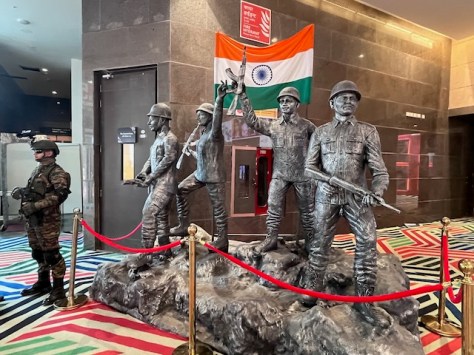
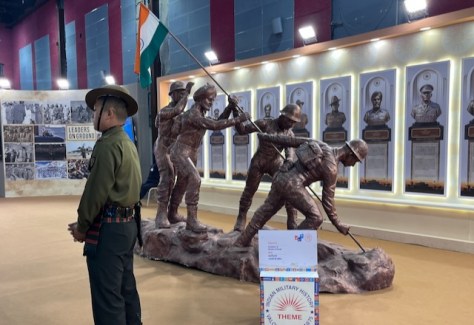
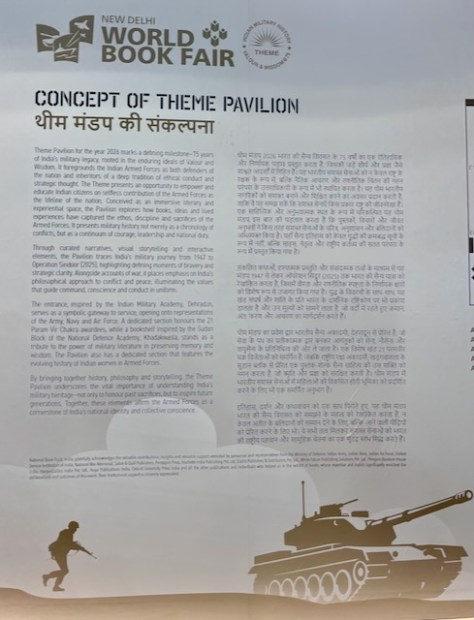
I was told this was the first time the fair had ‘free entry’, and the crowds were substantial, particularly around the stalls of major publishing houses. Secondly, this year’s theme was ‘Indian Military History: Valour and Wisdom@75.’ Book fairs are especially popular with schoolchildren and university students, and these young visitors were enthusiastically taking selfies with statues, exhibits and soldiers positioned there.
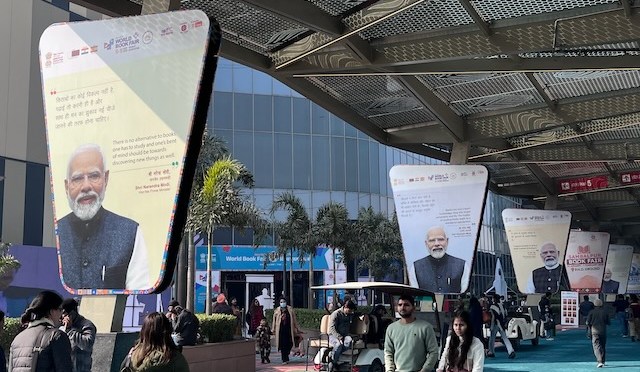
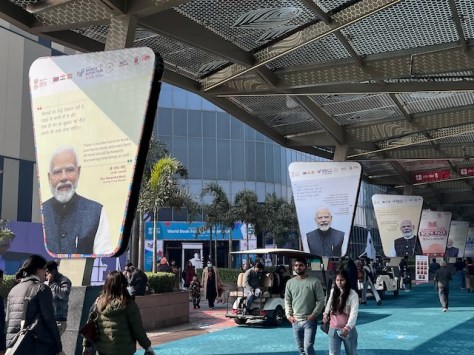
As I approached the entrance to the main hall, I was greeted by large posters encouraging young people to read and urging people to gift books, as the Fair is organised by the National Book Trust (Ministry of Education, Government of India) and the India Trade Promotion Organisation. Once inside, the presence of the military was immediately noticeable, as were the recent conflicts with neighbouring countries.
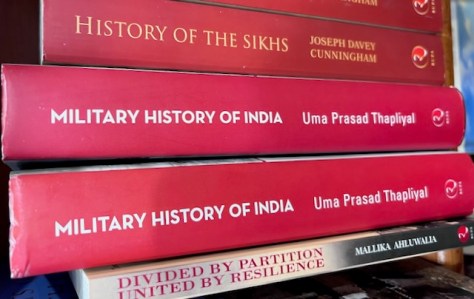
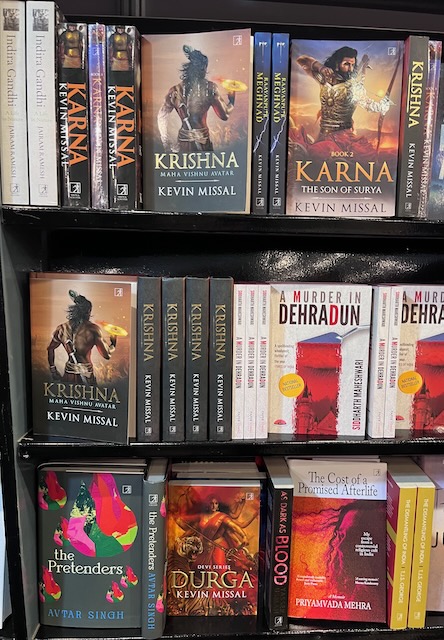
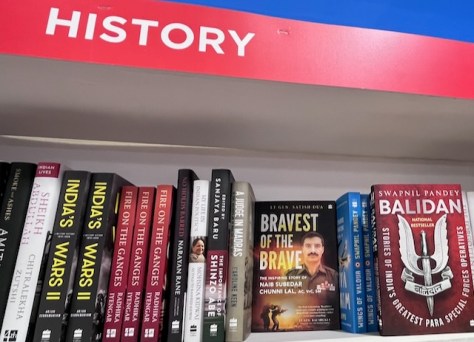
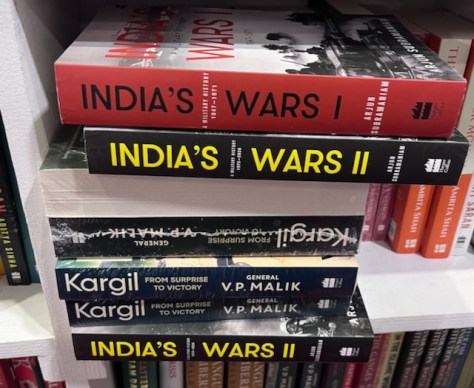
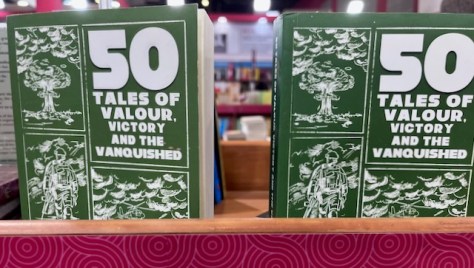
Having visited several bookshops in Delhi and Chandigarh on the trip, what had come into sharp focus was an abundance of material on military history and security studies by retired military personnel, commentators, and journalists. Popular history writing and their shelves in bookshops were never so narrowly dominated as they appeared to be now. Trends come and go, of course, and perhaps this is simply that, or perhaps something more.
The Machinery of Nationalist Discourse
In his seminal work, Imagined Communities: Reflections on the Origin and Spread of Nationalism (1983), Benedict Anderson argued that nations are socially constructed communities, imagined by people who perceive themselves as part of a group despite never meeting most of their fellow members. For our purpose here, Anderson also demonstrated how ‘print capitalism’ fuelled the rise of nationalism.
For instance, are publishers actively creating a market for narratives of conflict and war, or merely responding to demand for them? The reality is likely a mixture of both impulses. Print capitalism works by maximising circulation, leading publishers to print books designed to reach the broadest possible audience. The current surge in military history books and nationalist themes is neither coincidental nor has it emerged in a vacuum.
This trend is especially clear in India’s publishing scene. Since the 2010s, nationalist-revisionist history-writing, reshaping historical narratives, and revising textbooks have been major themes. The bookstores I visited showed this change: where history sections once had a variety of socio-cultural views on India’s multi-layered past, they are now filled with books highlighting post-1947 military bravery and intelligence activities.
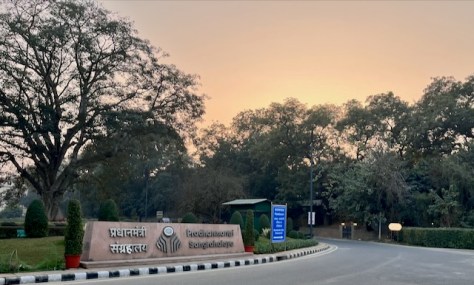
Alongside my visit to the book fair, I attended a seminar at the PMML/NMML (Teen Murti), which also featured a spirited assertion of nationalism, while confining narratives of peace to nostalgic readings of the past. It was argued that these readings offer little evidence to support these sentiments, in this case regarding the Partition’s impact in Bengal. These discussions align with a global rise in populist nationalism, which privileges narratives of conflict.
Cinema as Nationalist Pedagogy
The Book Fair and the seminar are part of the same cultural milieu as the current hit film Dhurandhar. A review in The Caravan magazine has argued that the film exemplifies what happens when public discourse is consistently fed propagandist narratives. The review noted that if the goal is to serve nationalist propaganda to the masses, few mediums work better than a slickly produced, multi-starrer, action-packed spy thriller.
Conversely, an alternative to this swashbuckling sensationalism is the film Ikkis. Writing on the Scroll website, the reviewer noted that the film is based on Arun Khetarpal, who was posthumously awarded India’s highest gallantry award, the Param Vir Chakra, for his actions during the 1971 war. As Khetarpal’s deeds are well documented, Ikkis aims higher, seeking to understand what unites men sworn to kill each other.
The review added that the film eschews any vengeance-fuelled hyperbole, with scene after scene revealing the director’s efforts to resist jingoism. This sensitive reading of conflict and war has not resonated with audiences in the same way as Dhurandhar, which already has a sequel in the works. The Indian Express, describes Ikkis as a thoughtful exploration of masculinity and bravery that avoids Dhurandhar’s stylised machismo.
What do the divergent fortunes of these two films reveal, if anything important or long-term, about contemporary India’s cultural moment? Just as the book fair collection and the PMML/NMML discussion suggest a renewed contest over complex, layered narratives of identity, these two films capture two sides of the same coin. They represent the mixture of giving people what they want and offering them what their makers want them to want!
The Missing Voices
If Anderson’s ‘print capitalism’ helps us understand how mass media manufactures and disseminates narratives that shape national consciousness, it also reveals what is missing here: where are the voices of those who speak for peace and friendship? The current publishing industry, mirroring the broader political trend, seems to suggest that conflict is not only inevitable but desirable, a necessary component of national identity.
Yet surely, we do not all consider conflict the solution to our problems? When families feud, we try to keep talking and reach some form of amicable coexistence. Why should the same not apply to the family of nations? Instead, the religious-nationalist approach to history and politics, leisure and entertainment, which has gained prominence since the 1990s, aims to reduce content to a commodity and sentiment to profit.
The book fair’s public relations emphasis on military history and policy, then, reflects not only the sidelining or suppression of multiple voices but also an element of advertising to buyers and sellers of different kinds, enhancing familiarity and enabling involvement and investment. When every other book celebrates civilisational value and military valour against perennial ‘others’, alternative voices are drowned out not only by outrage and censorship but also by business.
A Reimagined Community
What I witnessed at the World Book Fair, across bookshops, at the Teen Murti seminar, and what I read about the contrasting fates of Dhurandhar and Ikkis show a nation-state actively reimagining itself. If nations are ‘imagined communities’, shaped by those who control the means of communication, then, as that act of imagining is never neutral, it can always be reimagined as well. They are shaped by choices, and those choices remain ours to make.
The question facing urban, middle India today is which version of itself it will choose to recall and reimagine: one defined primarily by categories, conflicts, and eternal revenge, or one that acknowledges complexities, accepts diversities, and accommodates differences. The contested marketplace of bookshops, cinemas, and talking shops (and their digital counterparts) will play a determining role in answering that question.
References:
Benedict Anderson, Imagined Communities: Reflections on the origin and spread of nationalism, Verso Books, 1983.
Nandini Ramnath, ‘‘Ikkis’ review: In tribute to a war hero, a rare plea for peace and empathy’, Scroll, 1 January 2026
Surabhi Kanga, ‘The Mob Comes For Film Critics’, The Caravan, 1 January 2026
Marie Lall and Kusha Anand. Bridging Neoliberalism and Hindu Nationalism: the role of education in bringing about contemporary India. Policy Press, 2022.
As we approach another year-end in this season of merriment and reflection, and on the shortest day of the year, when daylight is most precious, many of us find time to catch up on projects long left pending. For me, this has meant returning to research into the city of Coventry.
While working on a chapter that uses photographic history to explore migration patterns, I’ve been reading Life and Labour in a 20th Century City: The Experience of Coventry, edited by Bill Lancaster and Tony Mason (1986). The chapter on ‘Migration into Twentieth Century Coventry’ revealed two significant threads: the presence and influence of the Irish Catholic community, and Coventry’s emergence as home to a South Asian community. At the same time, it also revealed the prevalence of racism then, which is comparable to the anxieties that are expressed today. Pages 71-76 are particularly illuminating in linking the political discourse and public fears of the post-war generation to contemporary shifts in British society.
The Myth of 1930s Cosmopolitanism
Coventry in the 1930s was often described as cosmopolitan, but this characterisation was somewhat misleading. Although the population was mixed, with migrants rising to 40% by 1935, most of these newcomers came from other UK regions. This trend continued throughout the war and the immediate post-war period. By 1951, while the overwhelming majority of Coventry’s citizens were of UK origin, some change was also evident.
Lancaster and Mason, page 71
The Irish Presence
The 9,993 Irish residents counted in the 1951 census marked a significant new wave of migration after the war. Although Irish regiments were often stationed at Coventry barracks and contributed labour during the early 20th century, the local Irish community remained small—only 2,057 in 1931. Nevertheless, this population grew rapidly during the construction boom of the 1930s.
Lancaster and Mason, page73
By the end of the Second World War, the streets around St. Osburg’s and St. Mary’s churches had taken on a unique Irish character. These inner-city neighbourhoods, filled with lodging houses and multiple-tenant buildings, and close to Roman Catholic churches, became popular stopping points for itinerant construction workers or individuals looking for factory jobs.
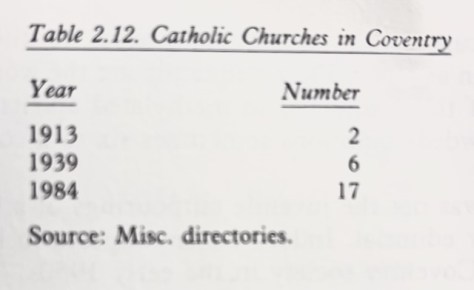
The growth of Catholicism in Coventry during the 20th century reflects both the expansion of the Irish community and their commitment to preserving their religious identity. Interestingly, two current Catholic churches in Coventry cater specifically to European congregations: the Polish and Ukrainian communities.
The South Asian Community and Racial Prejudice
By 1954, the small wartime Indian community had grown to about 4,000 people. Described as a “quiet, peace-loving ethnic minority,” they mainly settled in the older, rundown housing around Foleshill Road. Like many other migrants, they sought to preserve their culture and identity. In October 1952, Muslim members of the community submitted a request to the Planning and Redevelopment Committee for dedicated burial grounds and land to build a mosque.
Although small in numbers, Coventry’s Indian community was nonetheless affected by the growing racial prejudice across Britain. In October 1954, reports emerged that local estate agents were enforcing a colour bar. The week prior, the Coventry Standard published a troubling editorial — not the work of a biased junior reporter, but the newspaper’s primary editorial position:
The presence of so many coloured people in Coventry is becoming a menace. Hundreds of black people are pouring into the larger cities of Britain, including Coventry, and are lowering the standard of life. They live on public assistance and occupy common lodging houses to the detriment of suburban areas. They are frequently the worse for liquor, many of them addicted to methylated spirits, and live in overcrowded conditions, sometimes six to a room.
Lancaster and Mason observe that by the early 1950s, this racism had spread across a wide range of Coventry society. The Standard also reported that a branch of the AEU had contacted Elaine Burton, Labour MP for Coventry South, about the issue. This hostility is particularly notable given that the “coloured minority” made up less than 1.5% of Coventry’s population and, as Stephen Tolliday demonstrates elsewhere in the book, did not threaten the employment of local factory workers.
A City of Newcomers
By 1951, Coventry was mainly a city of recent arrivals, with estimates suggesting that only 30-35% of its population were born there. Many of the newcomers quickly left due to difficulties in finding housing or employment. A study noted that in 1949, 18,000 new residents moved to Coventry, while 17,000 people left.
Moreover, Coventry was hardly a melting pot. In addition to racial prejudice, residents were often unwelcoming to newcomers. Friendships and social networks usually aligned with regional and ethnic backgrounds, with clubs, pubs, and religious groups serving specific migrant communities. Ironically, Coventry’s long-standing identity as a migrant city since the early century may have reinforced the aloofness of the remaining native population – the latter is still palpable in the city’s streets and people.
Lancaster and Mason, page 75
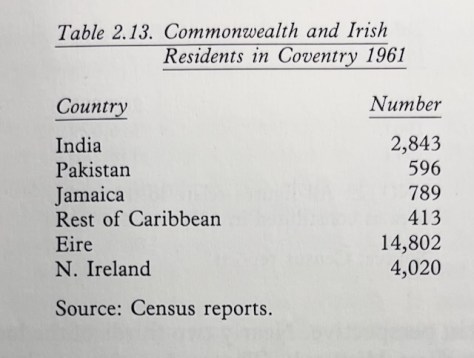
The 1961 census revealed that the 1954 estimate of Asians in Coventry was inflated. New Commonwealth migrants made up only 1.5% of the population, whereas 6.1% was from Eire and Northern Ireland. The flow of migrants from the new Commonwealth was minimal rather than overwhelming. However, between the 1961 census and the so-called mini-census of 1966, significant shifts in migration into Coventry occurred, shifts that would help shape the political rhetoric around immigration for decades to come.
Lancaster and Mason, page 75
Echoes of the Past
Reading the 1954 Coventry Standard editorial today, with its language about people “pouring in” and becoming a “menace,” makes it impossible not to hear echoes that resonate in British political discourse. Just fourteen years later, on April 20, 1968, Enoch Powell, Conservative MP for Wolverhampton South West, gave his infamous “Rivers of Blood” speech at a meeting of the Conservative Political Centre in Birmingham nearby. Powell heavily relied on letters and anecdotes from the West Midlands, predicting that communities would be “foaming with much blood” because of Commonwealth immigration. His apocalyptic language gained traction in a region that was experiencing real demographic change, even though the scale was often exaggerated by fear and prejudice.
Coventry’s history shows a striking pattern: a persistent disconnect between perception and reality regarding migration. In 1954, ‘coloured’ migrants made up less than 1.5% of Coventry’s population and were described as a menace and a threat to living standards. By 1961, the actual numbers were even lower than the overestimated figures. Despite this, anti-immigrant sentiment gained strength, reaching a peak with Powell’s speech, which appeared to validate fears that years of evidence had shown to be unfounded.
This kind of hostile and often racist political rhetoric continues to thrive today. When Nigel Farage displayed his “Breaking Point” poster in 2016, depicting a line of refugees, or when he claims to feel “like a foreigner in my own country” and warns that migration levels are “unsustainable,” he uses a similar approach: heightening anxiety about cultural change while often distorting the scale and effects. Words such as invasion, being “overwhelmed,” and threats to “our way of life”—these expressions form a continuous thread from that 1954 editorial through Powell to Farage.
Coventry’s historical record is particularly valuable because it allows us to compare predictions with actual outcomes. The threat predicted in 1954 never came true. There was no bloodshed or violence. Despite the panic, racial barriers, and inflammatory editorials, and despite migrants constituting less than 1.5% of the population, Coventry’s diverse communities—Irish, South Asian, Polish, Ukrainian, and others—became an integral part of the city. They did not pose the threats to jobs or living standards that were claimed. Indeed, the post-war boom would not have been possible without this labour migration into the city.
Coventry’s history shows that demographic change is neither easy nor without real challenges. However, the most provocative rhetoric often surfaces during times of economic uncertainty. The true story of Coventry, a city that has been profoundly shaped by migration as it continues to evolve and develop.
As we enter the new year, with migration remaining one of the most contentious political issues in Britain, Coventry’s history offers a lesson worth heeding: our fears of newcomers have consistently proved more destructive than the newcomers themselves. How can we learn from the past without repeating the same anxieties and prejudices?
References:
Ewart, H. (2011). “Coventry Irish”: Community, Class, Culture and Narrative in the Formation of a Migrant Identity, 1940–1970. Midland History, 36(2), 225–244.
Lancaster, Bill and Mason, Tony (eds), Life and Labour in a Twentieth Century City: The Experience of Coventry. Coventry: Cryfield Press, 1986.
Virdee, Pippa. Coming to Coventry: Stories from the South Asian Pioneers. The Herbert, 2006.







 BAGICHA