Category Archives: Poetry Corner

Between Worlds: On Hate, History, and the Possibility of Belonging

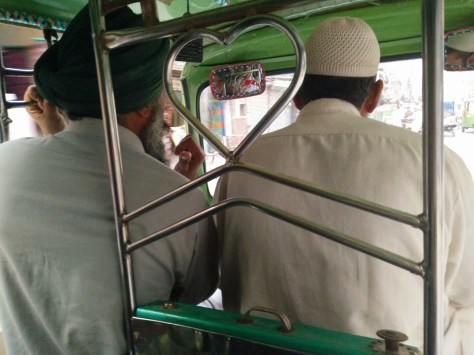
Peshawar © 2017 Pippa Virdee

The last three days have been an uncomfortable reminder of how far we have slipped — or perhaps how far we never truly moved — in our relationship with hatred and bigotry. Yet within that discomfort, I also found unexpected moments of beauty and hope, each one a small act of resistance against the noise.

A Sufi Voice in Leamington Spa

On Saturday, I visited the Gurdwara in Leamington Spa to hear Dr Asma Qadri, a scholar of Punjabi language, literature, and culture, speak on Punjabi poetry and the Sufi tradition. Her focus was Baba Farid (1173–1268), a figure of remarkable spiritual and literary stature. In the Guru Granth Sahib — the sacred scripture of Sikhism — there are 112 shaloks (couplets) attributed to Baba Farid, and at their heart is a message of interfaith harmony, compassion, and non-violence. That a Muslim saint’s words were enshrined in a Sikh scripture centuries ago speaks volumes about a pluralism that many today seem intent on dismantling.

Farid, if you are maltreated
Do not react with violence and projection
Visit the Other
And kiss his feet in humility and affection!

Source: Harjeet Singh Gill, Sufi Rhythms, Patiala University, 2007

Baba Farid was born near Multan, his lineage traceable to Kabul, from where his family had migrated to the Indus Valley. He later moved to Delhi, where he received spiritual instruction from Khwaja Qutbuddin Bakhtiar Kaki, a saint of the Chishti Order. He eventually returned to Punjab and settled in Ajodhan (present-day Pakpattan), from where he led the Chishti Order until his death.
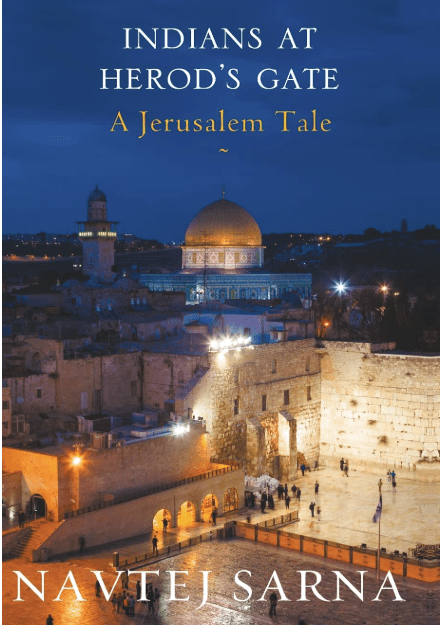
What is perhaps less widely known is that Farid is believed to have travelled to Jerusalem around 1200 CE — not long after Saladin had recaptured the city from the Crusaders. A small shrine there, still accessible, is said to mark his presence. Navtej Sarna, a former Indian Ambassador to Israel (2008–2012), writes about this connection in his book Indians at Herod’s Gate: A Jerusalem Tale (Rupa, 2014) — a quiet, often-overlooked thread linking the Indian subcontinent to the Holy City over eight centuries. Read further: Indians Herods Gate and Jerusalem’s 800-year-old Indian hospice

After the lecture, our group of three — drawn from different faith backgrounds — sat together for langar, the community meal served at Gurdwaras. There is something deceptively simple and profoundly radical about langar. The act of sitting together, regardless of religion, caste, or status, and eating the same food dissolves hierarchies that societies expend enormous energy to maintain. It is a challenge that remains genuinely difficult in parts of India, where communal and caste taboos still govern not just what people eat, but with whom and where. In that shared meal, something ancient and necessary was quietly affirmed.

The Descent into Dystopia

The following day, I made the mistake of listening to a News Agents podcast: Why MAGA Hates Britain. I say mistake not because the journalism was poor — it wasn’t — but because the content was genuinely dispiriting. The podcast drew on interviews conducted at the Conservative Political Action Conference (CPAC), where the blatant hostility toward Muslims was on full display. What struck me was not just the bigotry itself, but the absolute self-assurance with which it was expressed — the sense of a parallel world, hermetically sealed from doubt or nuance, in which hatred had been fully normalised and even celebrated.

It is worth noting that CPAC is not a fringe gathering. It draws senior politicians, media figures, and policymakers, including Britain’s shortest-serving prime minister, Liz Truss, who has found the political validation that eluded her at home in MAGA circles. When hatred is mainstreamed in those spaces, it travels outward with authority and legitimacy. The podcast was a sobering record of that.

A Fragment from 1947

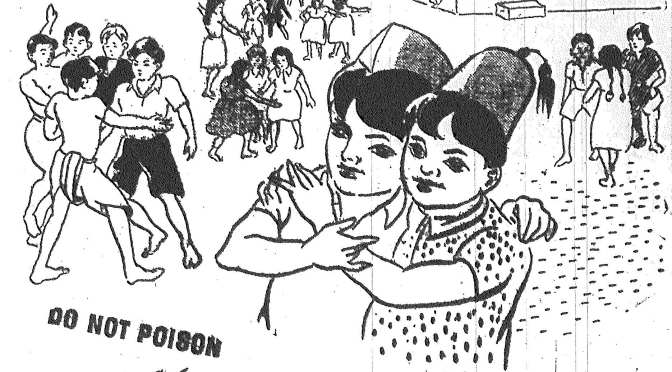
Turning away in revulsion, I returned to my own research — a space in which I can explore the ideas that still feel worth holding onto. Almost serendipitously, I came across an advertisement from September 1947 in the Bombay Chronicle, published just weeks after Partition had carved the subcontinent into India and Pakistan, leaving 1-2 million dead and over 15 million people displaced. The advert’s message was striking in its urgency and its pathos: the violence and bloodshed that had torn communities apart must now be put aside. The “children of God” must be taught how to live together rather than being “poisoned” by the hatred that had consumed the preceding years.
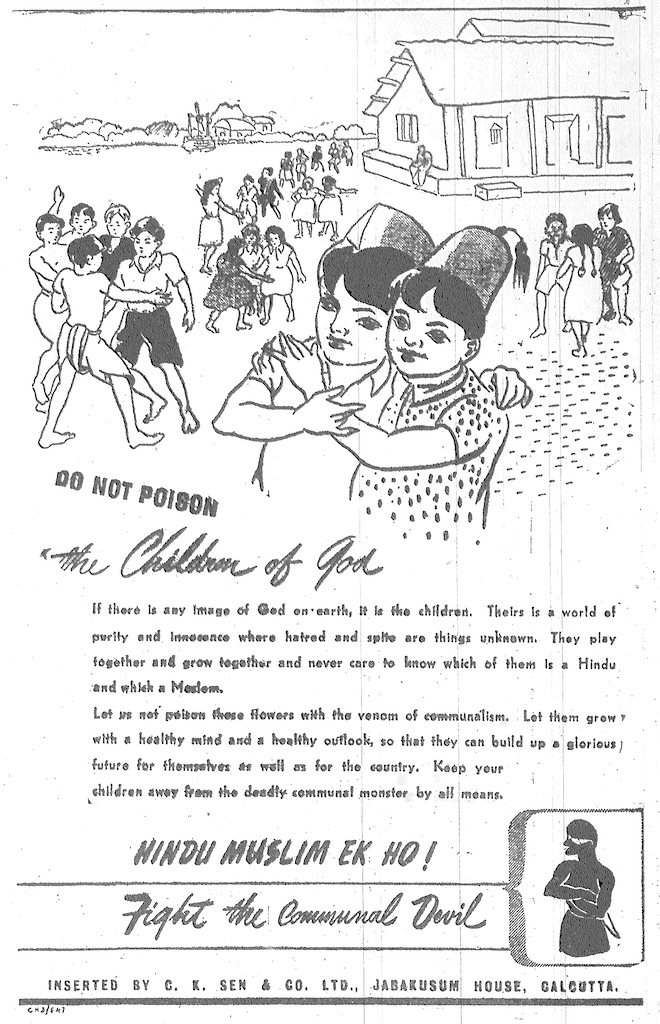
The text reads: If there is any image of God on earth, it is the children. Theirs is a world of purity and innocence where hatred and spite are things unknown. They play together and grow together and never care to know which of them is a Hindu and which a Moselm. Let us not poison these flowers with the venom of communalism. Let them grow with a healthy mind and a healthy outlook, so that they can build up a glorious future for themselves as well as for the country. Keep your children away from the deadly communal monster by all means. Hindu Muslim Ek Ho! Advertisement inserted by C.K. Sen & Co. Ltd.
Bombay Chronicle 26 September 1947. Photo taken by Pippa Virdee from NMML, Delhi.

What moved me most was the implicit admission within that language: that society had already been poisoned, and that the antidote required active, deliberate effort. It was a call not to innocence but to conscious repair.

The Distance That Grows

That advertisement also stirred a more melancholic reflection. There was a time, however brief and fragile, when greater openness between India and Pakistan seemed imaginable — when the possibility of travel, communication, and even reconciliation had not yet been foreclosed. The Wagah-Attari border crossing, for decades a symbol of that flickering possibility, remains closed following the Pahalgam attack of April 2025. Yet that closure is not merely a consequence of one incident. It reflects a deeper estrangement — one that has steadily worsened since the BJP came to power in 2014, as the distance between the two countries has grown not just diplomatically but also culturally, emotionally, and imaginatively.

When borders close, it is not only people who are separated. It is stories, families, histories, and the ordinary human exchanges that quietly resist the narratives of enmity.

On Connecting the Moments

What struck me, looking back across these three days, was how tightly these experiences were bound together — the lecture on a 13th-century Sufi poet, the langar table, the CPAC recordings, the 1947 advertisement, the closed border. They form a kind of map of where we are and where we might yet go.

We are constantly surrounded by voices that insist conflict is natural, that difference is danger, that the world is a zero-sum competition between faiths and peoples. But Baba Farid’s couplets, preserved across centuries and across religious traditions, suggest otherwise. The langar meal, served to strangers, suggests otherwise. Even that desperate 1947 advertisement, placed in the shadow of catastrophe, suggests otherwise — because in the middle of all that devastation, they still believed it was worth trying to preserve unity over enmity.

Conflict has never resolved anything. It only plants the seeds for the next generation’s hatred. What endures are the moments when we chose differently — when we visited the Other, and sat with them, and ate.

It remains up to us to remember our neighbours — not as symbols, threats, or abstractions, but as people, first and foremost. This message is a recurring theme in advertising campaigns that, while not so distant in time, feel increasingly remote in spirit. The YouTube clips, from just a decade ago, speak a language of interfaith harmony that the intervening years — and the political choices made within them — have done their best to drown out. That they once existed, and were made for mass audiences, is itself worth remembering.


Hindu Muslim Unity: Best Creative and Inspirational Indian Ads | Part 1 | Creative Ads

Hindu Muslim Unity: Best Creative and Inspirational Indian Ads | Part 2 | Creative Ads
Humsaye Maa Jaye by Bushra Ansari and Asma Abbas – Official Video

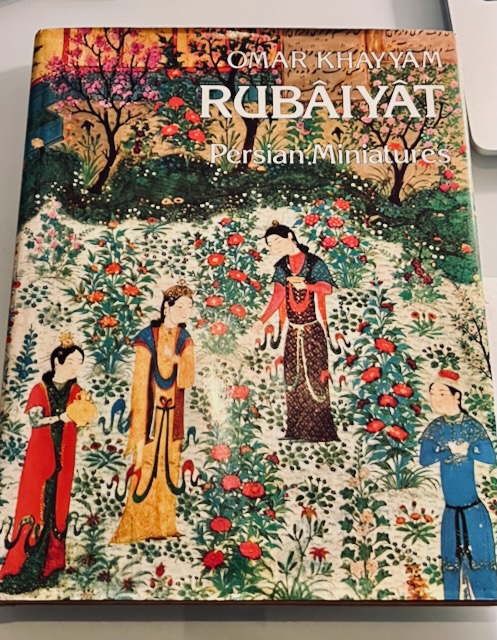
Omar Khayyam’s Rubaiyat

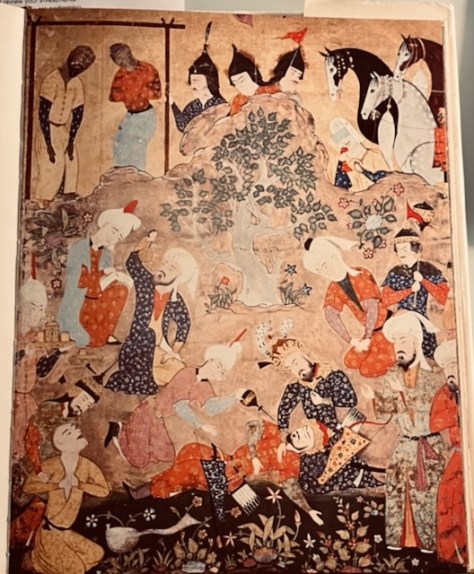
Omar Khayyam Rubaiyat Persian Miniatures

Some time back, while browsing a second-hand bookshop — the name and place now lost to memory — I stumbled upon a copy of Omar Khayyam’s Rubaiyat, translated from Persian by Edward FitzGerald. Published in 1981, it is a beautifully illustrated edition, adorned with miniature paintings. Time-worn as it is, the book carries a warm and inviting feel, and I always thought I would one day find the right words to write about it. It usually sits on the bookshelf directly in front of my desk, front cover on full display — a small splash of colour and beauty against what can otherwise be rather dry academic reading. The richness of the text and the miniature paintings breathe both life and warmth into the room and, on occasion, inspire me to write.

Omar Khayyam (1048–1131) was a Persian poet and polymath of remarkable range — a mathematician, astronomer, and philosopher as much as a literary figure. Born in Nishapur in present-day Iran, he flourished during the Seljuk era, a world away in time and place from the Crusades unfolding to the west. Though celebrated in his own time for his scientific and philosophical work, it is his poetry that secured his enduring fame in the modern world — largely thanks to Edward FitzGerald’s celebrated English translation, first published in 1859. FitzGerald’s Rubaiyat of Omar Khayyam is a loose but inspired rendering of quatrains drawn from the Bodleian manuscript, and its success was extraordinary: a bibliography compiled in 1929 listed over 300 separate editions, with many more appearing in the century since.

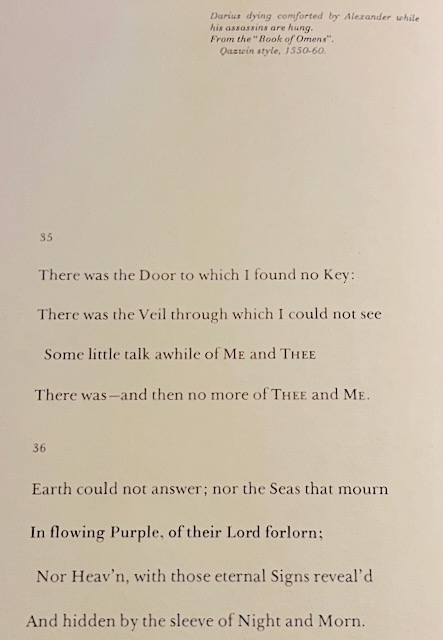
There is, of course, much to be said about FitzGerald and the liberties — and brilliance — of his translation, but that is a conversation for another time. For now, it was the events of the past few days that compelled me to lift the book from the shelf and turn its pages. Two quatrains, in particular, stopped me in my tracks.

35

There was the Door to which I found no Key;
There was the Veil through which I could not see
Some little talk awhile of ME and THEE
There was—and then no more of THEE and ME.

36

Earth could not answer; nor the Seas that mourn
In flowing Purple, of their Lord forlorn;
Nor Heav'n, with those eternal Signs reveal'd
And hidden by the sleeve of Night and Morn
Darius dying comforted by Alexander while his assassins are hung. From the “Book of Omens.” Qazwin style, 1550-60

Reimagining Punjab Through Ustad Daman’s Poetry

Model Town, Lahore. © 2017 Pippa Virdee

During the writing of my book, “From the Ashes of 1947: Reimagining Punjab,” I endeavoured to incorporate some of the poetry and literature that encapsulated the emotions and sentiments of the aftermath of the Partition of Punjab. My intention was to highlight the contributions of Ustad Daman, a lesser-known figure in certain regions of South Asia but a significant figure for many, particularly in Lahore, the city of his birth. As another year passes and we inch towards the 80 years of the Partition, his work assumes a heightened relevance in the contemporary context.

Ustad Daman, whose real name was Chiragh Din, hailed from Lohari Gate within the historic old city of Lahore. His father was a tailor who owned his own small shop. His elder brother, Feroz Din, joined his father in managing the business, but young Chiragh had no inclination to pursue the family trade. Instead, he harboured aspirations for education and a clerk’s position. He attended school, but this did not result in a clerk’s job. Disappointed, he returned to tailoring and established his own shop. However, his heart was truly captivated by poetry. He would abandon his shop to attend poetry readings. Inspired by his mentor, Ustad Hamdam, he adopted the pseudonym Damdam, but later changed it to Daman. (Source: Apnaorg)

The pivotal moment came when he received his first payment for reciting poetry in a public gathering. This marked the commencement of his journey as a poet. Initially, Daman composed poetry on conventional subjects, such as matters of the heart. However, as the independence movement gained momentum prior to partition, political themes began to permeate his poetry. Daman was a member of a group of traditional Punjabi poets who would recite poetry extemporaneously, while their pupils maintained the records. This tradition earned them the title of Ustads (mentors). (Source: Apnaorg)

Below are some references and material that highlight the significance of Ustad Daman.

Folk Punjab has a digital archive of his poetry including ‘Es mulk di wand kolon yaro’.

Ustad Daman, ‘The Poet Laureate of the Twentieth Century Punjab’ Fowpe Sharma, Revolutionary Democracy

Ustad Daman lived and wrote poetry as someone always on the wrong side of the establishment By Dr. Afzal Mirza, Apanorg.

Rammah, Safir. “West Punjabi Poetry: From Ustad Daman to Najm Hosain Syed.” Jounral of Punjab Studies 13, no. 1&2 (2006): 216.

Below the opening of Chapter 10, Virdee, P., 2018. From the Ashes of 1947. Cambridge University Press.

Leap of faith

It has been a while since I’ve had a chance to post something substantial on my Blog, for the pressures of term-time mean that there are few opportunities to sit down and ponder. However, today was 29th February and I wanted to post something, even if something small. I got my inspiration this morning, when I opened my email to find an editorial on the various Lit.Fests taking place in Pakistan recently, but hidden within this was a lament about women’s position in Pakistan and their battle against “suffocating patriarchy”. On the other hand, here in the UK, I was always told that on the 29th February, women can propose marriage! 

While there are hardly any bars on women proposing marriage on any other day of the year, traditionally this was considered here the “man’s” job/role. To be honest, I had never looked into where this myth came from, until today, when to my surprise, I discovered that this comes from a 5th century Irish tradition, also known as Ladies’ Privilege or Bachelor’s Day. The legend is that Saint Brigid of Kildare complained to Saint Patrick that women sometimes had to wait too long to marry because the men were too slow! In response, Saint Patrick decreed that on the extra day of a leap year, women could propose to men.

As we bid farewell to February, and welcome March, we will also celebrate international women’s day. The lived reality is that wherever you are, there is discrimination, oppression, intolerance, and worse. Take a leap of faith and believe in yourself, be the change you want to see. 

Leap Year Poem
BY MOTHER GOOSE
Thirty days hath September,
April, June and November.
All the rest have thirty-one,
Excepting February alone,
And that has twenty-eight days clear
And twenty-nine in each leap year.

“Hope” is the thing with feathers

“Hope” is the thing with feathers
By Emily Dickinson

“Hope” is the thing with feathers -
That perches in the soul -
And sings the tune without the words -
And never stops - at all -

And sweetest - in the Gale - is heard -
And sore must be the storm -
That could abash the little Bird
That kept so many warm -

I’ve heard it in the chillest land -
And on the strangest Sea -
Yet - never - in Extremity,
It asked a crumb - of me.

Bahar ayee (It Is Spring Again) by Faiz

bahār aa.ī to jaise yak-bār

lauT aa.e haiñ phir adam se

vo ḳhvāb saare shabāb saare

jo tere hoñToñ pe mar-miTe the

jo miT ke har baar phir jiye the

nikhar ga.e haiñ gulāb saare

jo terī yādoñ se mushkbū haiñ

jo tere ushshāq kā lahū haiñ

ubal paḌe haiñ azaab saare

malāl-e-ahvāl-e-dostāñ bhī

ḳhumār-e-āġhosh-e-mah-vashāñ bhī

ġhubār-e-ḳhātir ke baab saare

tire hamāre

savāl saare javāb saare

bahār aa.ī to khul ga.e haiñ

na.e sire se hisāb saare

Source: Rekta.org

English Translation by Agha Shahid Ali

It is spring, And the ledger is opened again.
From the abyss where they were frozen,
those days suddenly return, those days
that passed away from your lips, that died
with all our kisses, unaccounted.
The roses return: they are your fragrance;
they are the blood of your lovers.
Sorrow returns. I go through my pain
and the agony of friends still lost in the memory
of moon-silver arms, the caresses of vanished women.
I go through page after page. There are no answers,
and spring has come once again asking
the same questions, reopening account after account.

Listen to Tina Sani and Shabana Azmi’s rendition of the poem.

All pictures © Pippa Virdee, Lahore, Spring 2023

Mein Tenu Phir Milangi – I will meet you yet again by Amrita Pritam

Amrita Pritam’s poem recited by Gulzar
Main Tenu Fir Milaan Gi
Kithey? Kis Tarah? Pata Nai
Shayad Terey Takhayul Di Chinag Ban Ke
Terey Canvas Tey Utraan Gi
Ya Khowrey Terey Canvas Dey Utey
Ikk Rahasmayi Lakeer Ban Ke
Khamosh Tenu Tak Di Rawaan Gi

I will meet you yet again
How and where? I know not.
Perhaps I will become a
figment of your imagination
and maybe, spreading myself
in a mysterious line
on your canvas,
I will keep gazing at you.

Yaa Khowrey Sooraj Di Loo Ban Ke
Terey Rangaan Wich Ghulaan Gi
Yaa Rangaan Diyan Bahwaan Wich Baith Ke
Terey Canvas Nuu Walaan Gi
Pata Nai Kiss Tarah? Kithey?
Par Tenu Zaroor Milaan Gi

Perhaps I will become a ray
of sunshine, to be
embraced by your colours.
I will paint myself on your canvas
I know not how and where –
but I will meet you for sure.

Yaa Khowrey Ikk Chashma Bani Howaan Gi
Tey Jeevan Jharneyaan Da Paani Udd-da
Main Paani Diyaan Boondaan
Terey Pindey Tey Malaan Gi
Tey Ikk Thandak Jahi Ban Ke
Teri Chaati Dey Naal Lagaan Gi
Main Hor Kujh Nai Jaandi
Par Aena Jaandi
Ke Waqt Jo Vii Karey Ga
Aey Janam Mairey Naal Turey Ga

Maybe I will turn into a spring,
and rub the foaming
drops of water on your body,
and rest my coolness on
your burning chest.
I know nothing else
but that this life
will walk along with me.

Aey Jism Mukda Hai
Tay Sab Kujh Muk Jaanda
Par Chaityaan Dey Dhaagey
Kaainaati Kana Dey Hundey
Main Onhaan Kana Nuu Chunaan Gi
Dhaageyaan Nuu Walaan Gi
Tey Tenu Main Fair Milaan Gi…

When the body perishes,
all perishes;
but the threads of memory
are woven with enduring specks.
I will pick these particles,
weave the threads,
and I will meet you yet again.

Poetry in Punjabi by Amrita Pritam
Translation in English by Nirupama Dutt

Read further: Mein Tenu Phir Milangi: Remembering Amrita Pritam through Her Life, Love, and Works by Kartikeya Shankar. The Times of India, 17 July 2021

I Come From There by Mahmoud Darwish

I come from there and I have memories
Born as mortals are, I have a mother
And a house with many windows,
I have brothers, friends,
And a prison cell with a cold window.
Mine is the wave, snatched by sea-gulls,
I have my own view,
And an extra blade of grass.
Mine is the moon at the far edge of the words,
And the bounty of birds,
And the immortal olive tree.
I walked this land before the swords
Turned its living body into a laden table.
I come from there. I render the sky unto her mother
When the sky weeps for her mother.
And I weep to make myself known
To a returning cloud.
I learnt all the words worthy of the court of blood
So that I could break the rule.
I learnt all the words and broke them up
To make a single word: Homeland....

Find out more about Mahmoud Darwish