Tag Archives: Sikhism

Top Posts in 2024

I hope you have been enjoying the photos and blog pieces from 2024 and rather belatedly I’m sharing the top posts from last year.

  1. Mein Tenu Phir Milangi – I will meet you yet again by Amrita Pritam

2. Ajj Aakhaan Waris Shah Nu By Amrita Pritam

3. Sahir Ludhianvi and the anguish of Nehruvian India

4. Poetry Corner: Lahore

5. “My spiritual guru is Nanak Dev and my trade guru is Baba Vishvakarma”

6. 23 Sir Ganga Ram Mansion: The house of Amrita Sher-Gil

7. 70 years ago: extracts of the Sunderlal Report, Hyderabad 1948

8. (Inhabiting) the Space between Black and White: Indian/Sikh Community in Kenya

9. How the Photographs of Margaret Bourke-White became the Images of Partition.

10. 1881: the first full census in British India

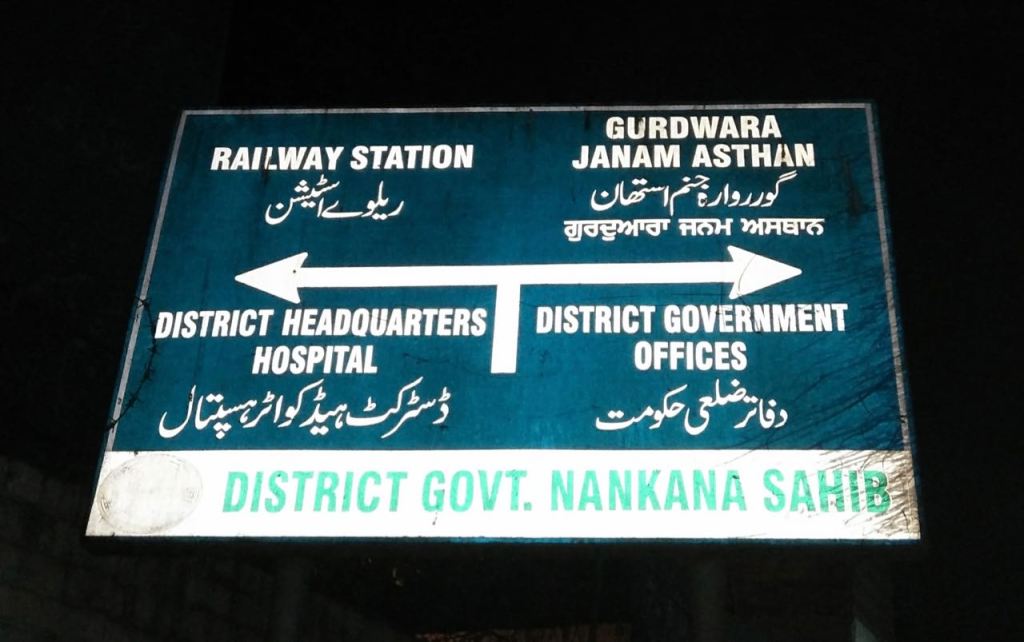
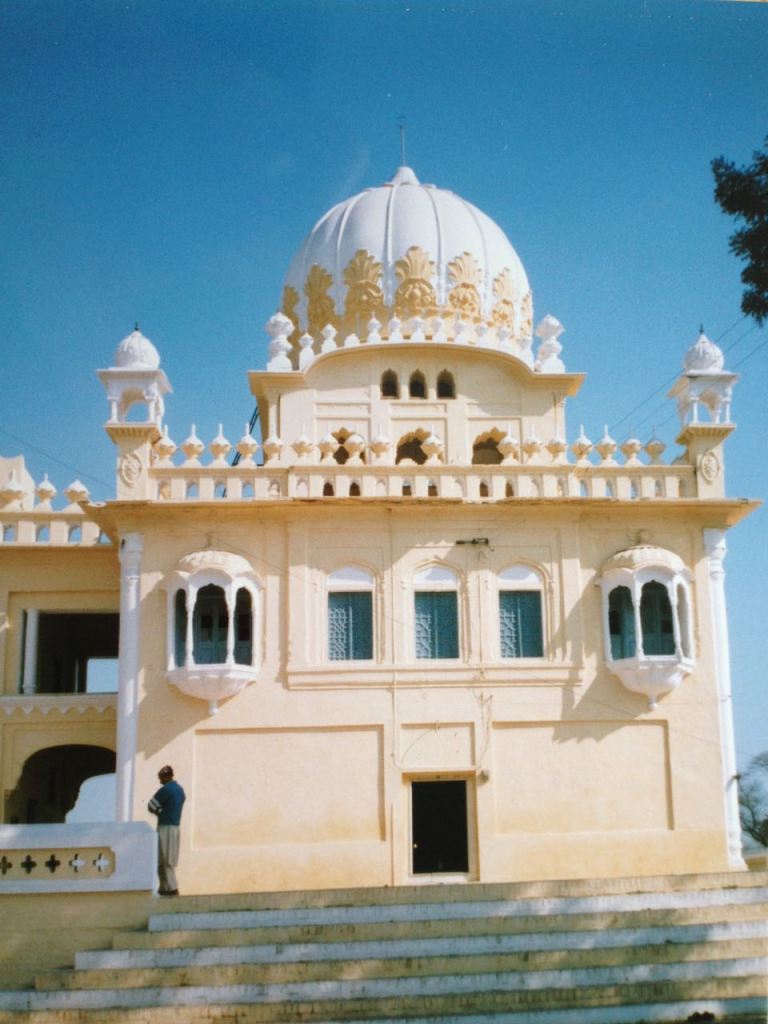
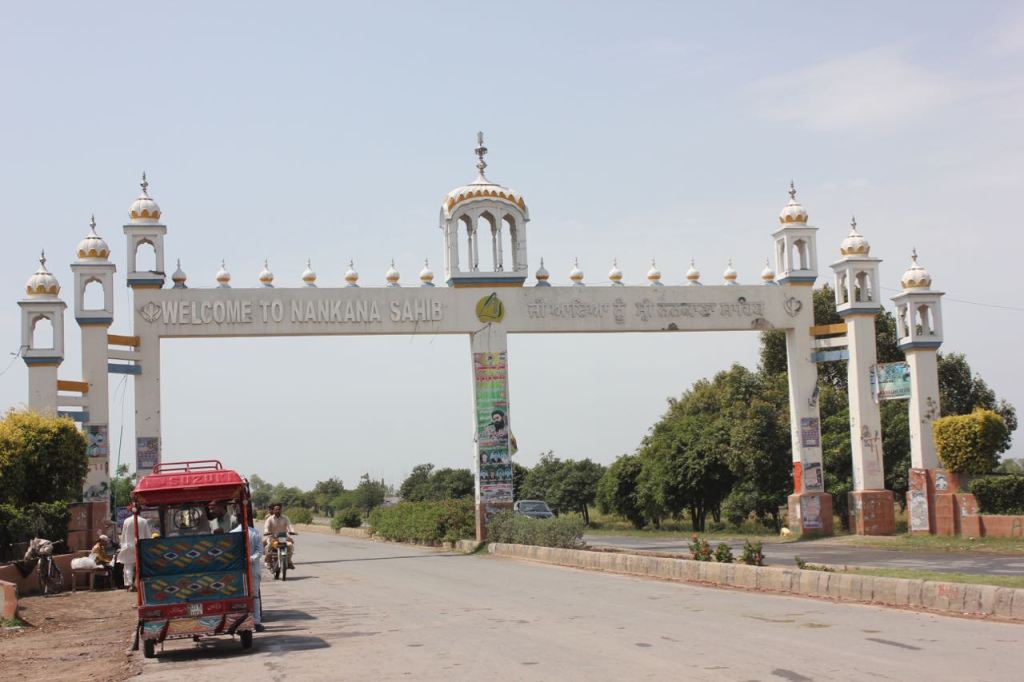
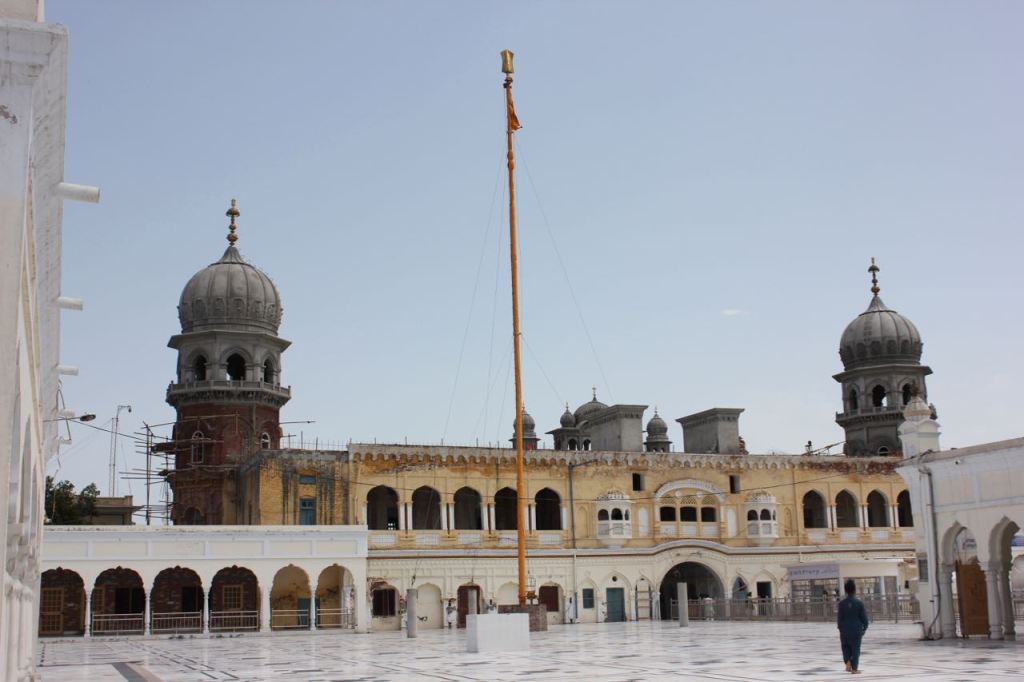
Welcome to Nankana Sahib

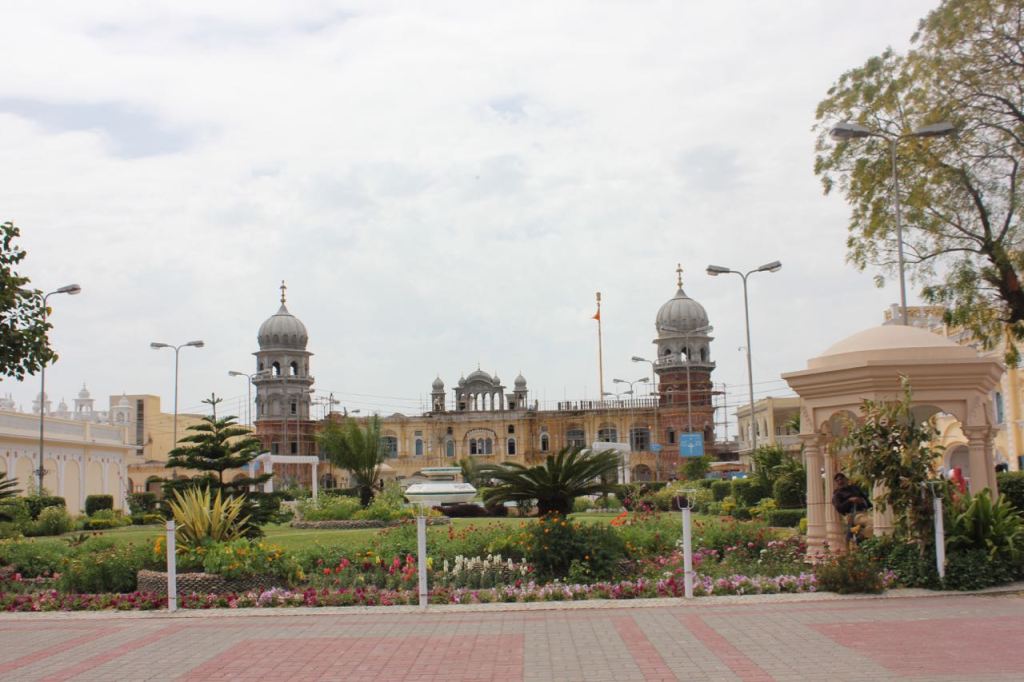
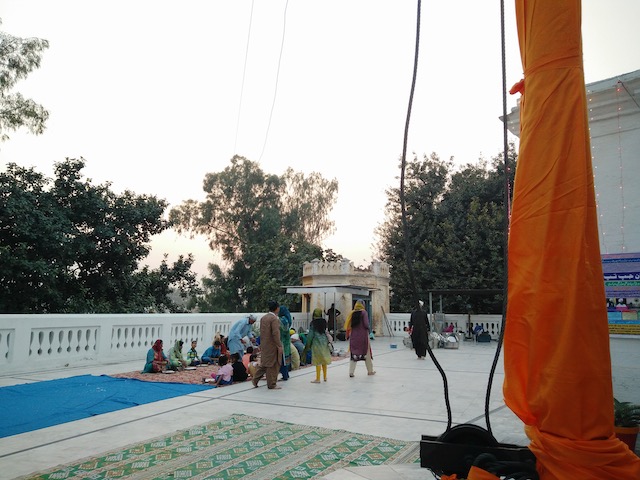
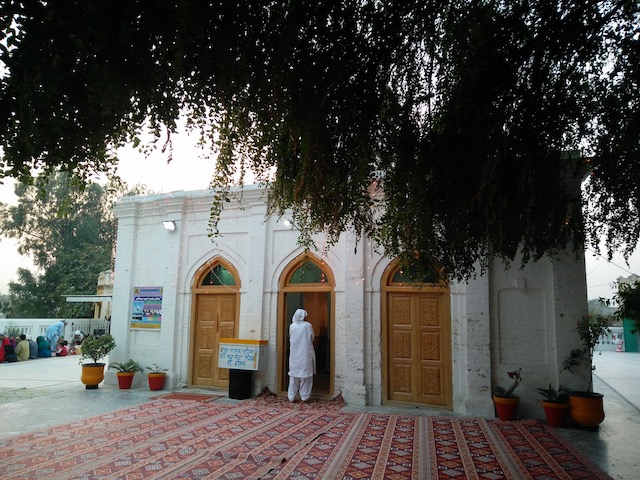
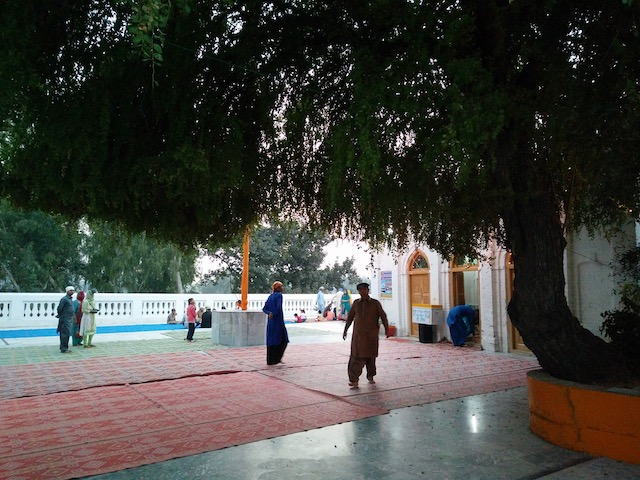
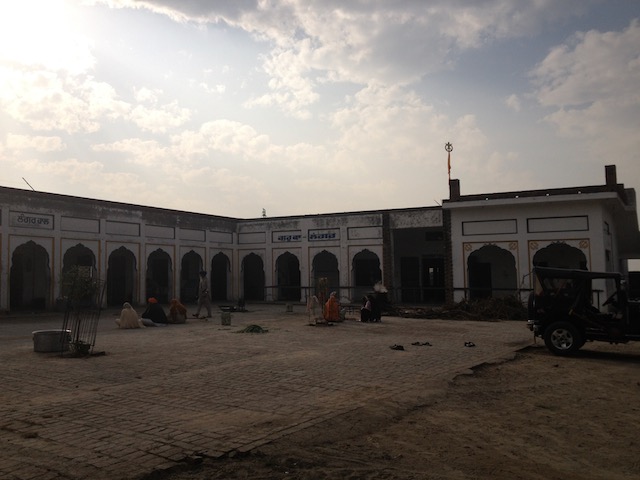
Nankana Sahib is the Birthplace of Guru Nanak. This town was originally known as Talwandi of Rai (Rai Bhoi di Talwandi) and today it forms the core of the small Sikh community in Pakistan. Every year on Guru Nanak’s birthday (Gurpurab), Sikhs (and others) gather around Nankana Sahib to remember the founder of the Sikh faith. Over the years the Gurdwara complex has grown considerable. I first went there in 2003 when it was a small gurdwara with a largely Pathan Sikh community of about 50 families who lived there. The last time I went there was on Gurpurab in 2016, and the small town was transformed into a mela of 20-30,000 people from around Pakistan, including the Nanak Panthis (mostly from Sindh) and Sikhs from around the globe (including India). The area now has district status and attracts the Sikh diaspora, who come here in huge numbers on pilgrim visas. The growth in the pilgrims and tourism is one of the main reasons for the growing investment in places like this and hence the transformation of this area.

I leave you with the voice of Nusrat Fateh Ali Khan – born in Lyallpur (Pakistan) with ancestral roots in Jalandhar (India) – who is performing/reciting Koi Bole Ram Ram Koi Khuda (Some call the Lord ‘Ram, Ram’, and some ‘Khuda’) at the Ramgarhia Sabha Gurdwara (Slough, UK) for the Sikh Diaspora in 1989 – many of whom appear to be from East Africa. But the words of the Guru and music know no borders.  

Ustad Nusrat Fateh Ali Khan Live in Slough Gurdawara, 1989 by Oriental Star Agency

If you are interested more in the shabad, the translation and the meaning, please click here.

Guru ka langar

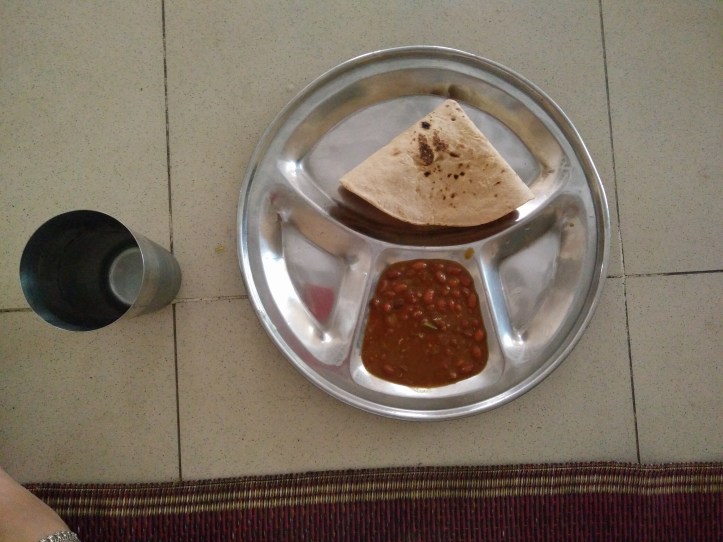
Langar at Gurdwara Pehli Patshahi, Lahore, Pakistan.

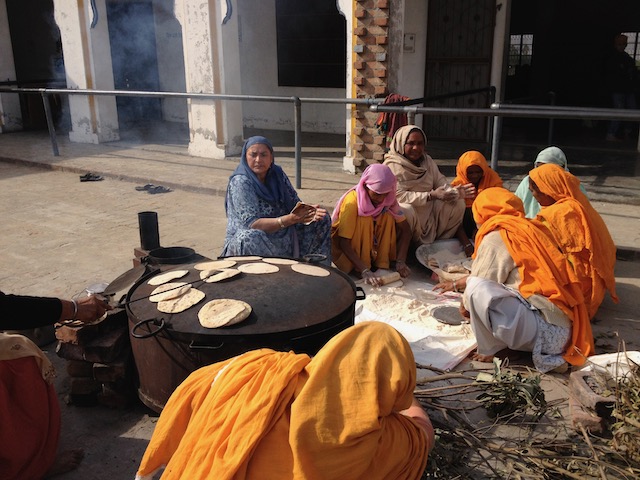
One of the earliest pieces I started with on this blog was with this picture of Guru ka Langar (or food for the congregation) in Lahore. The simplicity of daal (lentils) or in this case rajma (kidney beans) with roti (bread) is the basis of most langar served in a Gurdwara. As a child, I remember most children enjoyed going there in part because of the karah parshad (sweet halwa made from whole wheat flour) given at the end of the service and followed by the (free) food, which had its own distinctive divine taste, impossible to recreate at home. 

Langar is the communal partaking of food when visiting Gurdwara. The concept has in recent years been popularised globally by Sikh organisations such as Khalsa Aid, which plan, produce and distribute langar to people across the crisis-ridden world, be it to the truckers stranded in Dover over the ongoing Christmas period or in recent war-torn Syria. With Langar spreading so does knowledge about and experience of the Sikh community. Currently, closer to the home of Sikhism in Punjab, Langar has been making headlines via the ongoing farmers’ movement against new farm laws in India. Communal kitchens have been set-up by the roadside to feed the thousands gathered on the borders of capital, Delhi.

Origins

The word ‘langar’ (meaning ‘anchor’) is thought to have come into the Punjabi language from Persian (Nesbitt: 29); although the idea was not unique to the Sikhs, as ‘both the Sufis and the Nath Yogis have a system of collective eating (langar khanah and bhandaras). The Sikhs, however, used it as venue for both service and charity and provided the food themselves [unlike] the Nath Yogis, who begged for food, and the Sufis, who often accepted land-grants to run their kitchens’ (Mann: 27).

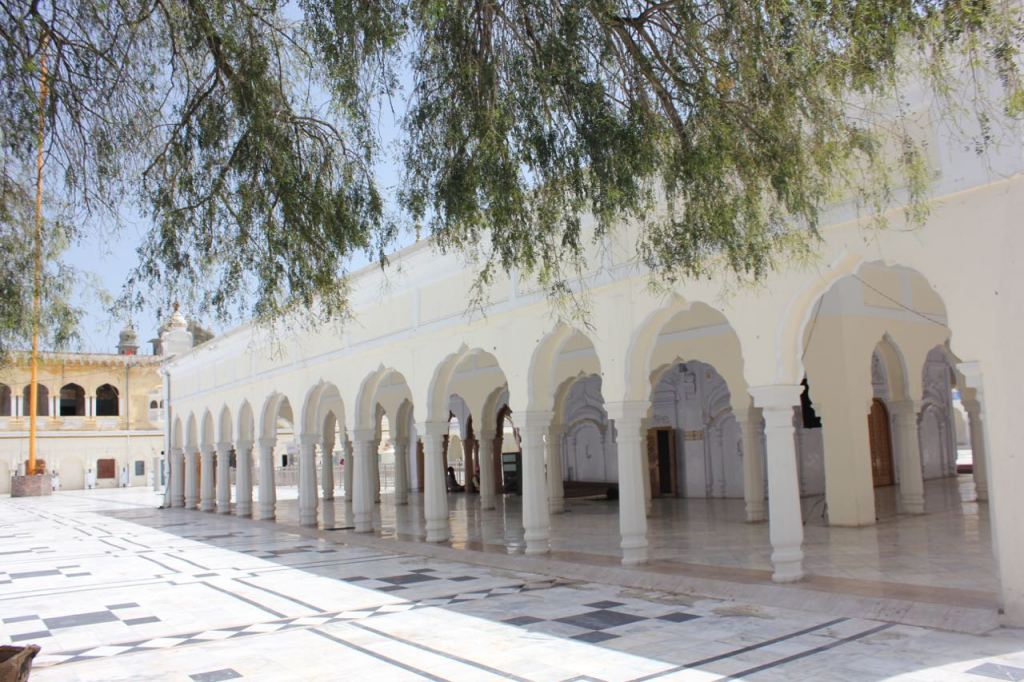
Pictures are of Gurdwara Sacha Sauda, Farooqabad, Pakistan and about 37 miles away from Lahore. This gurdwara is revered with the origins of the langar and is situated not far from Nankana Sahib, the birth place of Guru Nanak.

Baba Farid (1170s-1260s), a Sufi saint from the Chishti order, living in the Punjab, would distribute sweets amongst his visitors; a precursor to langar-khana near shrines, a practice documented in Jawahir al-Faridi (1620s) by a descendent of his. The khanqahs of the Chishti and other Sufi orders kept a langar open for the needy, but also others. It is said that ‘Khwaja Muinuddin established the tradition of an open kitchen for all who came…in an age of feudalism and violence’ (Talib: 6).

There is, of course, a much older practice of the alms house or dharmshala/sarai to feed travellers and poor for free, which is thought to have existed through the Gupta and Maurya (esp. Buddhist) times that is on either side of the BC/AD divide.   

Faith

The connections between the Sufis and the Bhakti (devotional) traditions are well documented, inspired as both were by the idea of feeding the poor, the pilgrim and thereby removing divisions/discrimination among people. The idea concretised with the rooting of faith in the region and by early 17th century, it had become a recognised Sikh fixture (Desjardins).

Eleanor Nesbitt notes that, ‘in institutional terms, it was the third Guru, Amar Das [1479-1574], who gave prominence to the langar… [integral as] sharing food [was] to Guru Nanak’s Kartarpur community…it was Guru Amar Das who particularly emphasised the requirement for everyone to dine side by side, regardless of caste and rank’ (Desjardins: 29).

There were two women, who especially, ‘nurtured the development of the langar tradition in its formative period: Mata Khivi (1506-82) and Mata Sundri, the second and tenth Gurus’ wives’. The Guru Granth Sahib notes that ‘Khivi…is a noble woman, who…distributes the bounty of the Guru’s langar; the kheer—the rice pudding and ghee—is like sweet ambrosia’. After the death of Guru Gobind Singh (1666-1708), ‘his widow Mata Sundri worked hard to continue the free community kitchen service. Records show her active role in fundraising for this purpose when the very survival of Sikhism was in question… (Desjardins).

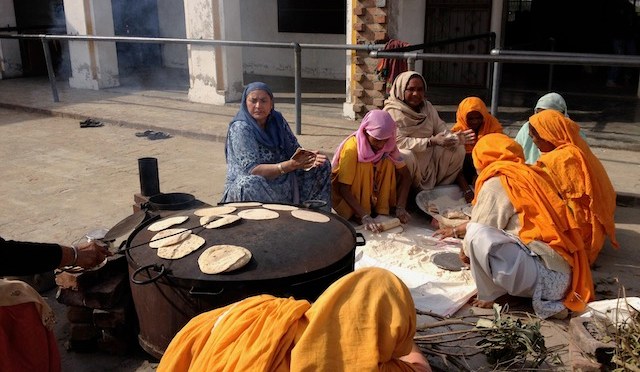
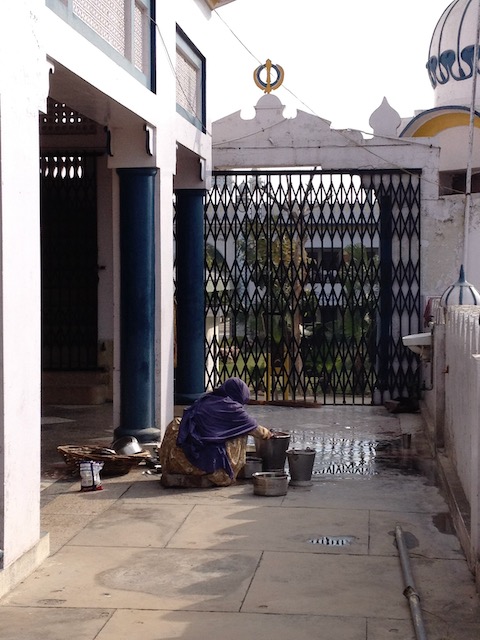
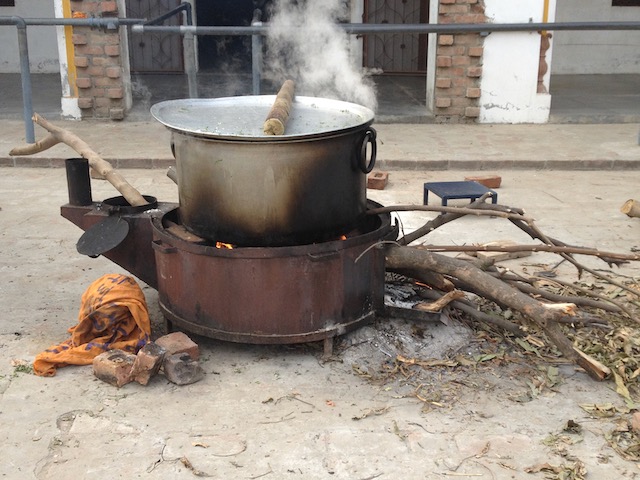
The langar since is thus an integral part of the faith/religion, its compassion through the concept of Seva (self-less service); essential for all practicing Sikhs. Donating food or money is not as important as the practice of giving one’s time and service. Today the most famous community kitchen serving langar has to be the Golden Temple (Amritsar), where around 100,000 people are served on a daily basis. However, most Sikhs grow up visiting and worshipping at small local gurdwaras, where everyday worshippers and volunteers prepare food on a daily basis. These photos are taken from the local gurdwara at Mao Sahib (my father’s village, Jalandhar district), where the congregation prepare, serve, consume the langar and then clean afterwards. As the gurdwaras become more institutionalised, and as the historic gurdwara Mao Sahib (associated with the fifth Guru Arjan and his consort Mata Ganga, d. 1621) has come under the administration of the SGPC (the Sikh body responsible for the management of gurdwaras), voluntary seva has been added to by paid sevadars.

The pictures are of Mao Sahib, 2012, when the langar hall was undergoing a renovation and some of the langar preparation was taking place outside.

Equality

The idea of sitting and sharing food together is fundamental among Sikhs because it demonstrates the abolition of caste and dramatically asserts humble equality amongst all the people; regardless of their religious or caste background. The food is generally simple and vegetarian, to appeal to all and offend no one. Four core Sikh principles are enshrined in the langar: equality, hospitality, service, and charity.

Eleanor Nesbitt writes about how, ‘the Gurus were reformers who abolished the caste system or that caste is Hindu, not Sikh’. It is important to remember how revolutionary this was/is in a caste-ridden society. Nesbitt notes how, ‘the langar subverted Brahminical rules about commensality, according to which only caste fellows could eat together’ (118). Instead, it was proclaimed that, ‘a Sikh should be a Brahmin in piety, a Kshatriya in defence of truth and the oppressed, a Vaishya in business acumen and hard work, and a Shudra in serving humanity. A Sikh should be all castes in one person, who should be above caste’ (117). The Gurus, like the Bhagats Namdev, Kabir, and Ravidas, proclaimed the irrelevance of people’s inherited status to their spiritual destiny. In Guru Nanak’s view:

Worthless is caste (Jati) and worthless an exalted name,

For all humanity there is but a single refuge (Adi Granth 83)

Quoted in Nesbitt: 118

Similarly, according to Guru Amar Das:

When you die you do not carry your Jati with you:

It is your deeds which determine your fate. (Adi Granth 363)

Quoted in Nesbitt: 118

References

Bowker, John (ed.), The Concise Oxford Dictionary of World Religions (OUP, 1997)

Desjardins, Michel, and Ellen Desjardins, ‘Food that builds community: the Sikh Langar in Canada’, Cuizine: The Journal of Canadian Food Cultures/Cuizine: revue des cultures culinaires au Canada 1, no. 2 (2009) https://www.erudit.org/en/journals/cuizine/2009-v1-n2-cuizine3336/037851ar/

Mann, Gurinder Singh, Sikhism (Prentice Hall, 2004)

Nesbitt, Eleanor, Sikhism: A Very Short Introduction (OUP, 2016)

Talib, Gurbachan Singh, Baba Sheikh Farid Shakar Ganj (NBT India, 1974)

More about Gurdwara Sacha Sauda: http://pakgeotagging.blogspot.com/2018/02/084-gurdwara-sacha-sauda-farooqabad.html

Sikh shrines in India and Pakistan – why construction of visa-free Kartarpur corridor is so historic

IMG_1333
© 2017 Pippa Virdee

Read my piece on the Kartarpur corridor in The Conversation

Three kilometres from the Indian border, in the tranquil green plains of the Narowal district of Punjab in Pakistan is an unassuming sacred shrine: Gurdwara Kartarpur Sahib. It’s the final resting place of Guru Nanak (1469-1539), founder of the Sikh faith.

On the other side of the river Ravi, about a kilometre inside the border in the Gurdaspur district of Punjab in India, is the bustling holy town of Dera Baba Nanak. Here stands Gurdwara Shri Darbar Sahib, associated with the life and family of the same first Sikh guru.

On a clear day, both are visible to each other. But the Radcliffe Line, drawn in August 1947 between Pakistan and India, ensures that travel for the average Indian or Pakistani is impossible across this international border. India’s Sikh community is roughly around 20m people – under 2% of India’s population of over a billion. More than half of them live in the Punjab, India and are cut off from the most significant shrines associated with the founder of their faith, all located in Punjab, Pakistan.

Reportage: 1 Nov 84

Army Controls Kanpur. Paris AFP 0628 GMT 1 Nov 84

Army troops took control of the industrial city of Kanpur in northern Uttar Pradesh state early today following violence triggered by Prime Minister Indira Gandhi’s assassination by two Sikh members of her security guard yesterday.

Earlier, authorities clamped an indefinite curfew on four districts of the city or nearly four million people, PTI said.

PTI, quoting official sources, also reported a number of cases of arson and looting, but no further details were available.

Sikhs came under attack from angry Hindu crowds in several Indian cities, including New Delhi, yesterday as news of Mrs. Gandhi’s assassination spread.


Sporadic Violence in Country. Delhi Domestic Service 0837 GMT 1 Nov 84

There are reports of sporadic violence in some parts of the country following the assassination of Mrs Gandhi.

In Delhi, arson and violence have been reported from several areas. According to agency reports, curfew has been imposed in some places including Jammu, Kanpur, Patna, Sagar, Varanasi, and Raipur.

In Bombay, shops and business establishments have closed down as a mark of respect to the departed leader. In Trivandrum, people are wearing black badges to mourn the passing away of Mrs Gandhi.


AFP on Violence, Arrests. Paris AFP 0936 GMT 1 Nov 84

The authorities today imposed a curfew on the Indian capital as angry Hindus went on a rampage of burning and looting, seeking fresh revenge for the murder of Prime Minister Indira Gandhi by Sikh gunmen yesterday

A police announcement said the decision was made to stop the violence which last night left at least three Sikhs dead, according to eyewitnesses, and 200 injured, according to police.

Army troops patrolled the streets, amid reports of sporadic gunfire between police and unidentified gunmen holed up on rooftops.

Prime Minister Rajiv Gandhi, son of assassinated leader Mrs. Gandhi, held an emergency Cabinet meeting to review the situation. officials said.

In other parts of India, the Army reportedly took control of the industrial city of Kanpur in Uttar Pradesh while police in Bihar State were under orders to shoot troublemakers on sight.

Curfews were in force in most states.

Para-military forces fanned out across this city of six million people today as mobs armed with choppers and clubs set fire to houses, cars and other properties belonging to minority Sikhs in retaliation for Prime Minister Gandhi’s assassination, eyewitnesses said

“It is terrible, they are setting fire to houses, stopping vehicles and looking for Sikhs… it appears that we are in a jungle”, said a panicky resident from the southern district, where foreigners generally live.

One Sikh was found dead here, police said, but witnesses said they saw at least two bodies near the one recovered by police.

Police sources also said 200 people, mostly Sikhs, were injured and half of them were admitted to hospitals here as buses, trucks, cars, scooters, shops and Sikh temples were set on fire last night by outraged Hindus.

Security was tightened around New Delhi’s Sikh temples, which had come under attack yesterday.

Authorities banned the assembly of more than five people in public places were, but there was no report of any arrest.

There were no reports of any new casualties, as Sikhs here appeared to have gone underground for fear of reprisals.

Police this morning also reported cases of arson and looting in Ahmednagar, in the western coastal state of Maharashtra, where police had to open fire to disperse rioters, injuring three of them.

A total of 64 people were arrested following the incidents, in which about 30 shops and 13 vehicles were burned, police sources added.

In the central city of Jabalpur, police also burst tear gas shells to disperse looters and arsonists and similar incidents were reported in other localities, press reports said.


BBC on Worsening ‘Violence’. London BBC World Service 1200 GMT 1 Nov 84

Dispatch by correspondent Tim Llewelyn

There is no doubt that this worsening violence and uncontrollable anger is aimed at the Sikh community. Even as the Army took to the streets, backing up the police and paramilitary security units, large tracts of Delhi were the preserve of the mob. I saw taxis, taxi ranks, smart stores, and small shops and kiosks – almost exclusively Sikh-owned – set alight and burning furiously. Crowds besieged Sikh temples, though the police and Sikhs themselves mostly managed to prevent casualties or damage, the Sikhs brandishing their swords and clubs.

The violence has spread all over the city – residential areas as well as working class and commercial. Casualty figures are vague, but we know of at least five dead in Delhi over the past day, two of the policemen in an exchange of shots involving a mob outside a Sikh temple, and two Sikhs burned alive by frenzied attackers. In one incident, I watched a crowd surrounding a house and finally stuffing blazing wicker chairs to the windows to act as fire torches. Eventually the Army showed up, bayonets fixed, the crowd evaporated.

It is not just Delhi by any means. A similar pattern of anger harassment, and then burning and stealing has brought the Army out onto the streets in at least five other towns – Calcutta, Allahabad, Indore, Varanasi, and Kanpur. Curfews are being imposed in uncountable towns and districts in north and central India.

Sikhs I talked to in Delhi are not satisfied with the protection offered in the capital, and it did look in some incidents as if the police could have done more.


‘Large Scale Violence’ Reported. Paris AFP 1603 GMT 1 Nov 84

At least 65 people were killed, several hundred injured, and thousands rendered homeless today in an orgy of violence that swamped India in the wake of yesterday’s assassination of Prime Minister Indira Gandhi by two Sikh members of her security guard, local news agencies reported.

Large-scale violence hit 18 towns across India, forcing the administration to call out the Army and impose an indefinite curfew in certain parts of the capital. Curfews were also imposed in most other states.

The PTI news agency said that as many as 65 people, mostly Sikhs, died in the clashes. UNI put the death toll at 60.

An official government spokesman put the nationwide toll at 10.

In two cities of Kanpur and Patna police were given shoot at sight orders after Hindu mob violence against Sikh communities erupted. Earlier similar shoot-at-sight orders were issued in eastern Bihar State.

Source: all daily reports are from the Foreign Broadcast Information Service Archive.
The Final Resting Place: Gurdwara Kartarpur Sahib

This slideshow requires JavaScript.

In March 2017, in an impromptu adventure, I had the opportunity to visit Kartarpur Sahib in Pakistan. It came amidst an amazing road trip, which took me from the Radcliffe line to the Durand Line (almost). The trip was full of surprises – monuments (old and new) in situ and people on the move – and their discussion, especially of religious spaces and their historical significance. During one of these conversation, Dr. Yaqoob Khan Bangash (ITU Lahore) asked why the Sikhs never demanded Kartarpur Sahib during the discussions of the 1947 Radcliffe Boundary Commission.

Kartarpur is located in Narowal District in Pakistani Punjab. It is about 120 kms/2 hours away from Lahore and is located only 3 kms from the Indo-Pakistan border by the river Ravi. Indeed, Dera Baba Nanak is located about 1 km from the border, on the other side, east of the river Ravi in Indian Punjab. Both are visible to each other on clear days. The Gurdwara is the historic location where Guru Nanak (1469-1539) settled and assembled the Sikh community after his spiritual travels around the world. It is on the banks of the River Ravi and even today there is a nomadic and unkempt, wilderness feel to the place. Guru Nanak spent eighteen years living in Kartarpur, during which he spent time preaching to a growing congregation; the appeal of Nanak spreading from nearby areas to beyond and drawing the first Sangat to the area. Many devotees remained and settled in Kartarpur, dedicating their lives to the mission of Nanak.

The informal led to the formal, with the establishment of the first Gurdwara (the house of the guru) being built circa 1521-2. Here, free communal dinning (langar) was started, feeding all those that came and the langar remains a defining feature of Sikhism – providing free food to everyone without any prejudice. The food is simple and usually vegetarian. It is not a feast, nor does it offend anyone due to their dietary preferences. Everyone, rich or poor, sits together; equal in the house of the guru.

However, for Sikhs, Kartarpur is an especially significant place, as it marks not only the beginnings of Sikhism but also the final resting place of the first guru. The original Gurdwara complex was washed away by floods of the river Ravi and the present-day building was built with donations from Bhupinder Singh (1891-1938), Maharaja of Patiala. More recently, the Government of Pakistan has been contributing to its maintenance. The most fascinating thing about Kartarpur is the appeal of the Gurdwara to all communities. Baba Nanak is revered as a Pir, Guru and Fakir alike.

My trip to Kartarpur was during the “off-season” period and so, mostly Muslims were visiting the shrine/Gurdwara to offer their duas/prayers. Legend has it that when Guru Nanak died, his Hindu and Muslim devotees disagreed about how his last rites should be performed: cremation or burial? During this ruckus, Nanak appeared as an old man before his devotees and, seemingly, suggested delaying the decision until the following day. The following morning, the shroud covering the body was found with flowers, in place of the body. These flowers were divided, with the Hindus cremating theirs, and the Muslims buried theirs. And so, in the courtyard of the Gurdwara is a shrine to symbolise this story. Outside the Sikh tourism that takes place, which is limited, this shrine is mostly frequented by Muslims.

In August 1947, Kartarpur was in Gurdaspur district, which had all (almost) been delineated to be in Pakistan, until the late, controversial changes to the boundary line, which meant that parts of Gurdaspur went to India. Thus, at the last minute, Kartarpur ended being in close proximity of the international border. After Partition, the Sikhs were negligible in their numbers in Pakistan and Kartarpur remained closed and abandoned for over fifty years. More recently, there have been attempts to get a connecting corridor between the communities in India and Pakistan today, but this has not materialised. Going back to the question of why Kartarpur never figured as a specific request before the Boundary Commission, perhaps part of the answer lies in the fact that Sikhs believe in reincarnation of the soul and, therefore, death of the body is not the end of life’s journey.

‘Corridor connecting India with Kartarpur Sahib Shrine in Pakistan ruled out’ by Ravi Dhaliwal:

http://www.tribuneindia.com/news/punjab/community/-corridor-connecting-india-with-kartarpur-sahib-shrine-in-pak-ruled-out/400962.html

‘Visit to Kartarpur Sahib (Pakistan)’ by Dalvinder Singh Grewal: https://www.sikhphilosophy.net/threads/visit-to-kartarpur-sahib-pakistan.49707/

‘How Nanak’s Muslim followers in Pakistan never abandoned Kartarpur Sahib, his final resting place’ by Haroon Khalid: https://scroll.in/article/857302/how-nanaks-muslim-followers-in-pakistan-never-abandoned-kartarpur-sahib-his-final-resting-place

Everyone’s Guru by Yaqoob Khan Bangash: http://tns.thenews.com.pk/everyones-guru/#.WxAxiakh3OQ

Gurdwara Panja Sahib

Gurdwara Panja Sahib, Hasan Abdul, Pakistan, 2004. The gurdwara is revered because it has the presence of a rock believed to have the hand print of Guru Nanak.

This slideshow requires JavaScript.

Gurdwara Rori Sahib, Eminabad

Gurdwara Rori Sahib is two km from Eminabad and about 55 km north of Lahore. It is located not too far from Gujranwala and the Grand Trunk Road. The Gurdwara marks an important site, where Guru Nanak after the destruction of the town had stayed with Bhai Lalo. The plaque at the gurdwara reads, ‘This is the holy place where Guru Nanak Dev ji came in his first pilgrimage. Guru Nanak dev I came here at Bhai Laalo ji’s home (Eminabad). It was a beautiful and silent place away from city, this’s why Guru Nanak ji sat down here and was prayed the almighty god regularly.’

The gurdwara was originally constructed on a large estate of nine marabbas. This has gradually been reduced down now. The land was originally endowed to the gurdwara during Maharaja Ranjit’s period and the gurdwara’s architecture is also from this period. The location and size of the gurdwara attracted large crowds of Sikhs, particularly during the Vaisakhi festival in April. There used to be a week-long fair during this period and attracted people from all the surrounding areas. The estate left today is a reminder of the old grandeur that would have existed when there was a sizeable Sikh population prior to 1947.

The entrance to Rori Sahib is grand, imposing and awe-inspiring, with the beautiful exposed red brick. The dome work and the columns are all in cut brick work. Accompanying the gurdwara is a large sarovar, which when I revisited the gurdwara ten years later, the water had evaporated.

Below are some of the pictures from when I first visited the gurdwara in 2006 and then most recently in October 2016.

Rori Sahib pictures from 2006.


Rori Sahib revisited in 2016.