Tag Archives: people

Manmohan Singh Bedi (1924-2014): the first Sikh Mayor of Bombay

Caption from The Times of India, April 5, 1983. “The new mayor of Bombay. Mr Manmohansingh Bedi, cheered by Bhangra dancers in a victory procession in the Fort are on Monday. Photo by Girish Dikshit.”

On 30 October 2014 Manmohan Singh Bedi, the first Sikh Mayor of Mumbai (then Bombay) died, weeks short of his 90th birthday. He was a restaurateur and the founder of Sher-e-Punjab Restaurant chain in Bombay in 1937, and the President of Hotel & Restaurant Association of Western India. But it was his Bombay mayoral victory in April 1983 that caught my eye. Below are three articles from The Times of India. They cover the victory of Bedi. 

Bedi is city’s first Sikh mayor By A Staff Reporter, April 5, 1983.

R. Manmohansingh Harnamsingh Bedi of the Janata Party today became the first Sikh mayor of Bombay, amid unprecedented scenes of jubilation. Mr. Bedi polled 102 votes, the first time that a mayoral candidate crossed the 100-vote mark, against 32 of his lone opponent, Mr. Rameshkumer Mataprasad Dube of the Congress-I. No sooner was the 58-year-old Mr.Bedi declared elected by the outgoing mayor, Dr. P. S. Pai, than the house broke into thunderous cheers. Councillors and scores of supporters who had waited in the public gallery surged on to the dais with garlands end bouquets. A large number of Sikhs bad turned up to greet the new mayor, whose election was a foregone conclusion,

GARLANDS GALORE

Dr. Pai was the first to embrace and garland Mr. Bedi, followed by the municipal commissioner, Mr. D. M, Sukthankar, Mr. Dube, leaders of civic political groups, other councillors and the general public. Slogans hailing the Janata Party and the ruling Progressive Democratic Front (PDF) were raised to the accompaniment of the chant, “Bole So Nihe! Sat Sri Akal”. Security men, who had initially screened visitors to the corporation hall, relented in the face of popular enthusiasm and threw open the gate for streams of visitors carrying bouquets and garlands. As the crowds surged forward to greet him, Mr. Bedi was pushed back and the security men held on to the ornate mayoral chair to prevent it from toppling over the dais. Mr. P. H. Sehgal, a councillor, appealed to the crowd in Punjabi to disperse quickly. The new mayor was garlanded on behalf of a host of organisations, including the Guru Singh Sabha, the Punjab association, taxi-men’s unions and the association of automobile spare parts traders. The candidature of Mr. Bedi was submitted by the Janata Party last Thursday, after the party got the mandate from the PDF’s six-party constituents comprising 76 members in the house of 138. Of these, the Janata Party’s councillors total 40, followed by 20 of the BJP, 11 of the Congress-S, three of the Muslim League (Bukhari group) and one each from the CPM and the RPI. Mr. Bedi got the support of the Shiv Sena, a non-PDF group, with 20 members. The Sena decided support Mr. Bedi to prove its bonafides as “a truly anti-Congress-I organisation”.

“UNHAPPY FINANCES”

Two Muslim League councillors from the Banatwalla group, three from the CPI and an independent voted in favour of Mr. Bedi. The election was boycotted by three other independents-Mr. B. K. Boman-Behram, former mayor. Dr. (Mrs.) Bhaktawar Mahajan and Mr. G. B. Dutia—who said they resented the “bargaining” of the mayoralty and chairmanships of committees. Mr. Dube’s 32-strong Congress-I group stood firmly behind him. Delivering his first speech as mayor Mr. Bedi said the city of Bombay had honoured the Sikh community by electing him to the position. Hailing the old ties between Maharashtra and Punjab, he recalled the visit of Sant Namdeo to the Punjab region and the establishment of Sikh Centre at Nanded in Maharashtra by Guru Gobind Singh, the tenth guru. Mr. Bedi described the financial condition of the corporation as “not that happy” and said inflation was to blame. The corporation’s wage bill which was Rs. 39 crores in 1978-79. had risen to over Rs. 100 crores for 1983-84. The financial resources available to the corporation were limited and almost static. The new mayor called upon both the Central and state governments to assist in slum clearance. He said the state government was in arrears of Rs. 9.13 crores in the matter of slum improvement dues. He reminded the house that slum improvement formed part of the government’s 20-point programme. He also focused on water supply projects and said the government had yet 10 fulfil its commitment of Rs.23 crores for the first phase of the Bhatsai project which has been completed. Mr. Bedi pleaded for the implementation of the middle Vaitarna project for augmenting the water supply. He also called for the release of surplus lands under the Urban Land Ceiling Act to co-operative housing societies to ease the city’s housing problem.

Born on December 27, 1924 at Sargodha, now in Pakistan, Mr. Bedi’s family migrated to Bombay before the partition. Educated at Bharda New High School in Bombay, Mr. Bedi’s academic career was cut short by the “Quit India” movement. A councillor since 1957, Mr. Bedi represents the Bori Bander (VT) Constituency. He has served as the chairman of the markets and gardens committee (1961-62), of the works committee (1963-64), improvements committee (1967-68) and the BEST committee (1980-81). Now a treasurer of the state Janata Party, Mr. Bedi was a prominent Congressman in the past, holding the position of general secretary of the BPCC in 1968. A successful hotelier, owning a chain of restaurants, Mr. Bedi is a soft-spoken man, but a popular member of the house.

Moments after his maiden speech as mayor, which was delivered in English, Mr. Bedi garlanded the statues in the corporation hall, including those of Mahatma Gandhi, Shivaji, Sir Phirozshah Mehta and Dr. Babasaheb Ambedkar. He was taken in a procession to Hutatma Chowk where he paid a floral tribute at the Martyrs memorial. The procession included Bhangra dancers. Mr. Manohansingh Bedi is the third Janata Party mayor in the present house, after Mr. Raja Chimbuikar and Dr. A. U. Memon. Mr. Baburao Shete, who served as the first mayor in the present house was elected on the Congress-(S) ticket but later joined the Congress-(I). Dr.P. S. Pai whom Mr. Bedi succeeded, is a BJP councillor.

Vasantrao – was for unanimous election of mayor By S. T. Almeida, Bombay April 6, 1983

The chief minister, Mr Vasantrao Patil, was in favour of the Congress (I) candidate withdrawing from the race for the mayoralty as a gesture to enable Mr. Manmohansingh Bedi to become the first Sikh mayor of Bombay unopposed, it is reliably learnt. Mr. Patil had conveyed his feelings to the Congress (l) candidate, Mr. Rameshkumar Dube. saying that he was sure to lose and that gesture towards the Sikh candidate would be well-appreciated. Mr. Bedi had intimated to chief minister his wish that he be elected unopposed. But Congress (I) members in municipal corporation felt that mayoral election was too politicised an affair and that such a gesture would have been appropriate if Mr. Bedi was an independent candidate. They disapproved of Mr. Patil’s logic in supporting a candidate from minority community by recalling that when Congress (I) put up Mr. Zail Singh for presidency. Janata party went ahead in its support for Mr. Justice H. R. Khanna opposition candidate. Ironically, Mr. Bedi had lost the mayoral election to the Shiv Sena’s Mr. Wamanrao Mahadik in 1978. At that time. Mr. Bedi was a Congressman, but Mr. Vasantrao Patil, who was chief minister then, had instructed Congress (l) councillors to vote for Mr. Mahadik. Mr. Patil’s action had offended Mr. Bedi and other Congressmen, prompting them to leave the party.

Electing a mayor, by a Staff Reporter, April 11, 1983

Close on the heels of the election of the country’s first Sikh President, the city fathers voted Bombay’s first Sikh mayor and 54th in line, Mr Manmohansingh Bedi (59), at one of the noisiest mayoral polls in recent history. A huge gathering of the turbaned fraternity had ridden in their beflagged cars to the venue of the corporation meeting and rolled out three-metre-long chai crackers to announce the Sikh leader’s triumph. Not even the police could dampen their enthusiasm after warning them of the likely danger the crackers could cause to nearby cars and offices. The lane between the two MBC buildings and the main thoroughfares were choked with a major traffic snarl as vehicles continued to stream towards the civic building, reflecting the popular esteem in which Mr Bedi is held by a vast cross-section of the people. A troupe of bhangra dancers bedecked in their colourful regalia of bright yellow salwar-kameez topped by black tunics pirouetted to do a jig or two to celebrate the mayor-elect’s victory. The proceedings were redolent of the feisty nature of the Punjabis, extroverts to the core with their earthy style of living.

Epilogue

The dominant party in present-day Maharashtra, the Shiv Sena, was established in 1966 and in 1971 the party had its first victory under the mayoral candidature of Dr H. S. Gupte. Since 1985 the Shiv Sena has more or less dominated the mayoral seat of Bombay. In 1983 the BJP, the present ruling party in India had barely any presence, having only been established in 1980. This was also the year before Operation Blue Star in Amritsar, Punjab, when under PM Indira Gandhi the Indian security forces were sent into the Sikh’s sacred Harmandir Sahib to remove Jarnail Singh Bhindranwale in June 1984. This eventually culminated with the assassination of the prime minister, followed by the anti-Sikh pogroms in Delhi in November 1984.  

Ajj Aakhaan Waris Shah Nu By Amrita Pritam

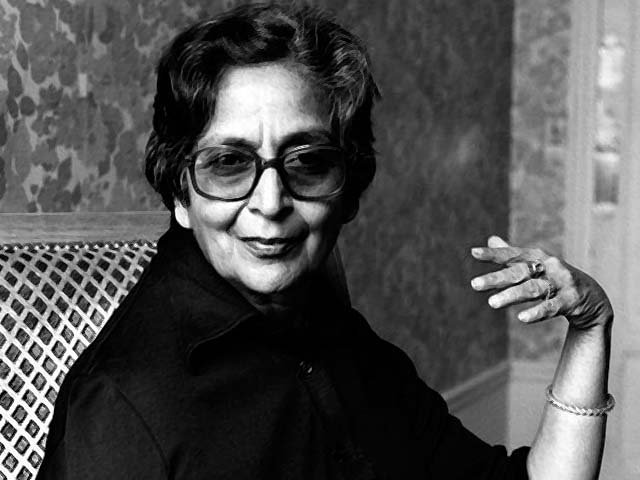
Amrita Pritam (1919-2005) was one the most distinguished Punjabi poets and fiction writers. She was born in Mandi Bahauddin, Punjab and was living in Lahore when in 1947 she, along with the millions others, was forced to migrate during the partition of the Punjab.

Her first collection of poems Amrit Lehrcm was published in 1936 when she was barely 17 years old. Starting as a romantic poet, she matured into a poetess of revolutionary ideas as a result of her involvement with the Progressive Movement in literature.

Ajj Aakhaan Waris Shah Nu (Today I Say unto Waris Shah) is a heartrending poem written during the riot-torn days that followed the partition of the country. (Apnaorg.com). The poem is addressed to Waris Shah, (1706 -1798), a Punjabi poet, best-known for his seminal work Heer Ranjha, based on the traditional folk tale of Heer and her lover Ranjha. Heer is considered one of the quintessential works of classical Punjabi literature.

Her body of work comprised over 100 books of poetry, fiction, biographies, essays, a collection of Punjabi folk songs and an autobiography that were all translated into several Indian and foreign languages

Ajj Aakhaan Waris Shah Nu (Today I Say unto Waris Shah – Ode to Waris Shah)

Translation from the original in Punjabi by Khushwant Singh. Amrita Pritam: Selected Poems. Ed Khushwant Singh. (Bharatiya Jnanpith Publication, 1992)

 To Waris Shah I turn today!

Speak up from the graves midst which you lie!

In our book of love, turn the next leaf.

When one daughter of the Punjab did cry

You filled pages with songs of lamentation,

Today a hundred daughters cry

0 Waris to speak to you.

O friend of the sorrowing, rise and see your Punjab

Corpses are strewn on the pasture,

Blood runs in the Chenab.

Some hand hath mixed poison in our live rivers

The rivers in turn had irrigated the land.

From the rich land have sprouted venomous weeds

flow high the red has spread

How much the curse has bled!

The poisoned air blew into every wood

And turned the flute bamboo into snakes

They first stung the charmers who lost their antidotes

Then stung all that came their way

Their lips were bit, fangs everywhere.

The poison spread to all the lines

All of the Punjab turned blue.

Song was crushed in every throat;

Every spinning wheel’s thread was snapped;

Friends parted from one another;

The hum of spinning wheels fell silent.

All boats lost the moorings

And float rudderless on the stream

The swings on the peepuls’ branches

I lave crashed with the peepul tree.

Where the windpipe trilled songs of love

That flute has been lost

Ranjah and his brothers have lost their art.

Blood keeps falling upon the earth

Oozing out drop by drop from graves.

The queens of love

Weep in tombs.

It seems all people have become Qaidos,

Thieves of beauty and love

Where should I search out

Another Waris Shah.

Waris Shah

Open your grave;

Write a new page

In the book of love.

NOTES

Waris Shah (1706 -1798) was a Punjabi poet, best-known for his seminal work Heer Ranjha, based on the traditional folk tale of Heer and her lover Ranjha. Heer is considered one of the quintessential works of classical Punjabi literature.

Qaido – A maternal uncle of Heer in Heer Ranjha is the villain who betrays the lovers.

The Punjab – the region of the five rivers east of Indus: Jhelum, Chenab, Ravi, Beas, and Sutlej.

When Amrita Pritam called out to Waris Shah in a heartrending ode while fleeing the Partition riots by Nirupama Dutt

I say unto Waris Shah by Amrita Pritam – Poem Analysis

Pritam, Amrita, and Rama Jha. “An Interview with Amrita Pritam.” Indian Literature 25, no. 5 (1982): 183-195.

Butalia, Urvashi. “Looking back on partition.” Contemporary South Asia 26, no. 3 (2018): 263-269.

Miss Universe – Indrani Rahman (1930-99)

The Pakistan Times, July 1952.

I came across this picture in The Pakistan Times, it had caught my imagination, and with little thought for how it might fit into my research I just took a picture of it and then, continued to explore the newspaper for stories on, of and by women. This remained in my photographic archive until recently, when I began to go through the material. The picture still does not fit into the wider project, but it remains striking. It is evidently from the Miss Universe competition, but I knew little of the pageant competition, other than then perhaps how it still continues to resonate with people.

Further probing revealed the Indian representative as the-then Madras-born and intriguingly named Indrani Rahman (1930-99). What could be the (fragmentary) story of this Indian beauty queen appearing in the pages of The Pakistan Times, as a participant of the Miss Universe Pageant held on 28 June 1952, at Long Beach, California? Straightaway her name intrigued me, Indrani is a Hindu name and Rahman is Muslim, yet on the pictures from Miss Universe contest, she appears to wear a bindi on her forehead. Her hair is adorned with the traditional scent of the jasmine flower. These are traditionally worn by married women, especially Hindu women. In total thirty women entered the competition, including the 22-year-old, married and mother of two, Indrani. The competition was eventually won by a 17-year-old Armi Kuusela from Finland. This is what the very first Miss Universe pageant looked like 67 years ago.

The title “Miss Universe” was first used by the International Pageant of Pulchritude in 1926. Subsequently the contest was held annually until 1935, when it was interrupted by the Great Depression and then the Second World War. The current competition was established in 1952 by Pacific Knitting Mills, a California-based clothing company and manufacturer of Catalina Swimwear. The company had sponsored the Miss America pageant until 1951, when the winner, Yolande Betbeze, refused to pose for publicity pictures wearing one of their swimsuits. The ubiquitous swimsuit has remained the source of much discussion, with accusations of objectifying women. Finally recognising the shift in wider attitudes, in 2018 the Miss America contest decided to end the Swimsuit element and focus more on the achievements of the contestants. (Miss America Ends Swimsuit Competition, Aiming to Evolve in ‘This Cultural Revolution’ – The New York Times)

Indrani was the daughter of Ramalal Balram Bajpai (1880-1962) and Ragini Devi (1893-1982) (nee Ester Luella Sherman). Ramalal, a chemist by training, had been an Assistant editor of Young India, a magazine established by the Punjabi nationalist politician, Lala Lajpat Rai, and, after India gained independence, he was appointed as Consul General at New York. Ragini on the other hand, became increasingly passionate about Indian classical dance, and championed the revival of Kathakali.

Already then Indrani’s family were unconventional. Few people in India grew up in mixed-race backgrounds, and indeed even in contemporary India. By the age of 15, in 1945 Indrani herself had eloped and married Habib Rahman (1915–1995), a well-known Indian architect. Soon after her son Ram Rahman was born followed by a daughter, Sukanya Rahman. Habib Rahman worked on iconic places such as Delhi Zoological Park, Gandhi Ghat, and Rabindra Bhavan. He studied at MIT and was the first Indian to complete his Masters in Architecture there in 1944. Rahman was the recipient of the Padma Shri (1955) and Padma Bhushan (1974). Likewise, Indrani was awarded the Padma Shri (1969) and the Sangeet Natak Akademi Award (1981).

This upbringing and early experiences show that Indrani grew up in a much more cosmopolitan milieu that was possibly perhaps only for those in positions of power or the privileged class. Her mother, though Ragini by name, would certainly not have discarded her own cultural upbringing in America. This most likely also played a part in Indrani having fewer inhibitions in participating in beauty contests.

Before Indrani entered the Miss Universe contest, she had already been crowned Miss India, 1952. As side-note, the famous actress of Hindi cinema, Nutan, also started out by entering and being crowned Miss India in 1951 and Miss Mussorie in 1952. The first Miss India was Pramila (Esther Victoria Abraham), from Calcutta, who won in 1947, interestingly the same year that India got Independence.  

A news report about this appeared on April 5, The New York Times in 1952 reads thus: “Indian traditionalism was further shocked by the fact that a married woman, Mrs. Indrani Rehman [sic] of Calcutta, was chosen as the winner. As Mrs. Rehman is a Moslem, her participation was especially defiant of custom, since old-style Moslem women, particularly wives, are even more secluded than their Hindu sisters. Emphasizing the departure from Indian tradition even further, the first Miss India is half-American,” (Sara Hussain , 21 Jul 2016)

Besides having the accolade of being the first Indian to take part in the Miss Universe, Indrani was and remained an accomplished classical dancer. She travelled with her mother around the world performing and taking the passion of Bharata Natyam, Kuchipudi, Kathakali and Odissi, to the West. A passion which she passed on to her daughter, and indeed, Sukanya Rahman Wicks had also danced on stage with her mother and grandmother.

Further Reading:

Lightfoot, Louise. Louise Lightfoot in Search of India: An Australian Dancer’s Experience. Cambridge Scholars Publishing, 2017.

Rachel Mattson, The Seductions of Dissonance: Ragini Devi and the Idea of India in the United States, 1893-1965 (PhD Diss, NYU, 2004): Selected Publications | rachel mattson (wordpress.com)

Architect Habib Rahman and the making of New Delhi in Nehru’s vision by Vijayta Lalwani, in the Scroll.

See the tribute issue of Architecture + Design on the work of Habib Rahman.

Read more about Ragini Devi, Indrani Rahman and Sukanya Rahman – Dancing in the Family. The Extraordinary Story of the first family of Indian Classical Dance.

Know Thy Dancer – Indrani Rahman | Bharathanatyam and the worldwide web (wordpress.com)

Indrani Rahman – First Miss India to Participate in Miss Universe Contest… (beaninspirer.com)

The first enchantress (asianage.com)

Pictures of Indrani Rahman India Times, 15 Jul, 2016.

City Monument – Masjid Mubarak Begum, Chawri Bazar

Like a wounded fairy tale. It is among Delhi’s most melancholic souvenirs. One of the domes no longer exists. The missing portion is wrapped in a …

City Monument – Masjid Mubarak Begum, Chawri Bazar

“Zameen nahi, per zameen hai”

The farmer’s thali.

The Patna Twins: From the Ganges to the Doon River.

© Pippa Virdee 2021

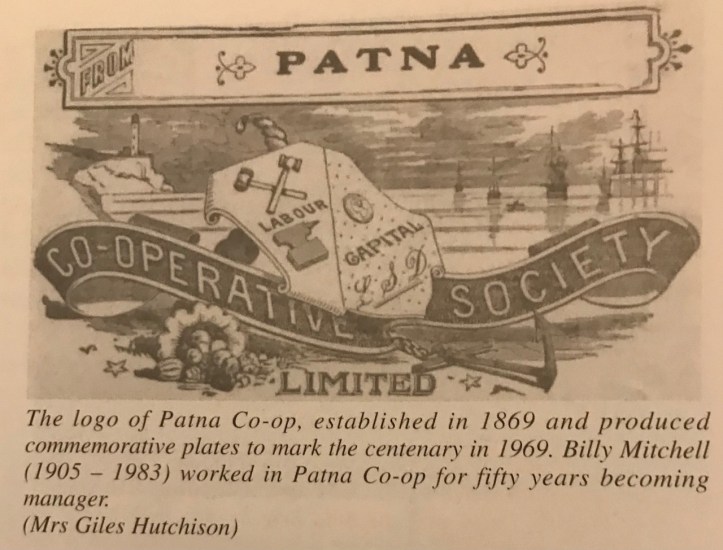
In late-summer I went to Ayr – of Robert Burns fame; a seemingly random but ultimately delightful choice determined by the compulsions of the Pandemic year. After going to Alloway with its Burns Cottage (and ‘cottage industry’ of Burns Tourism), I started exploring the region and came across a place called Patna! To the Indian and historian in me, the connections and curiosities thereof were irresistible, that is a village of a few thousand souls and the Indian city of some millions carrying the same name. From Ayr, the smaller Patna  – by the river Doon – is located about 10 miles away; the other, bigger Patna – capital of the state of Bihar and sprawled by the banks of the mighty Ganga River – is some 8000 km away [https://www.bbc.co.uk/news/av/uk-scotland-20504111].

Patna, or ancient Patliputra, was the capital of the Mauryan (4th-2nd c. BC) Empire and its short-lived successor, Shunga dynasty, and remained a prominent place under the Gupta (4th-6th c. AD) Empire and its eastern successor, Pala kingdom. From the 13th century, it emerged as a provincial seat under the Delhi Sultanate and the Mughal Empire. In-between and not far, was Sasaram, where the soldier-administrator Sher Shah Suri (1470s-1540s) had his brief imperial reign. Afterwards, for the Sikhs, Patna emerged a great place of pilgrimage, for it was there that the 10th and last Guru, Gobind Singh was born in 1666. With the decline of the Mughal rule, Patna came under the influence of the Nawabs of Bengal and thereafter the English East India Company from 1765. Trading factories had been started in Patna – as early as the 1620s-30s by the Dutch East India Company, the Portuguese too had traded there even earlier, given its location by a navigable river, proximity to the Bay of Bengal and production of textile around. This thriving fortune was taxed by the British, following their victory over the Nawab of Bengal in the Battle of Buxar of 1764, and Patna (and Bihar) – along with the rest of Bengal – passed into (mal)administration of the Company. The region had begun the journey towards its colonization, during which time many Europeans, including the Scots were attracted by the east as a ‘career’, whereby hands the thread connecting the two Patna(s); as can be read below:

The Scottish Patna “was founded in the early years of the 19th century by William Fullarton, whose family had a close connection with the Bihar State. Fullarton’s uncle, William Fullarton, in 1745, was in the service of the East India Company as surgeon at Fort William, Calcutta [now Kolkata]. After a mixed career as soldier and surgeon, he returned eventually to Scotland in 1770 where he bought the estate of Goldring (later Rosemount), near Kilmarnock. He died in 1805 with no family. This William Fullarton had a brother, Major General John Fullarton, of Skeldon. General Fullarton was also in the service of the East India Company and died in India in 1804. He was succeeded by his second son, William, then aged 24”. (Moore, Gently Flows the Doon, 1972)

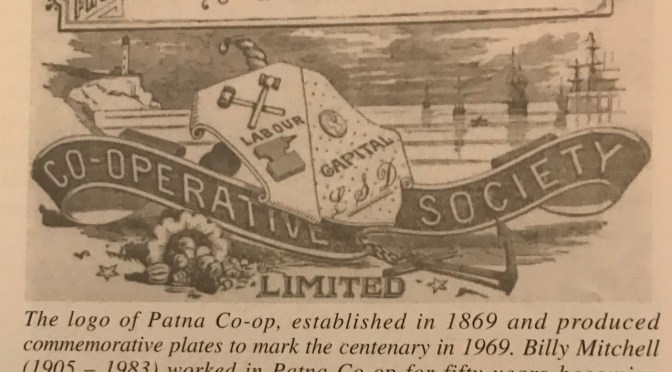
Source: Donald Reid, Yesterday’s Patna and The Lost Villages of Doon Valley, 2005

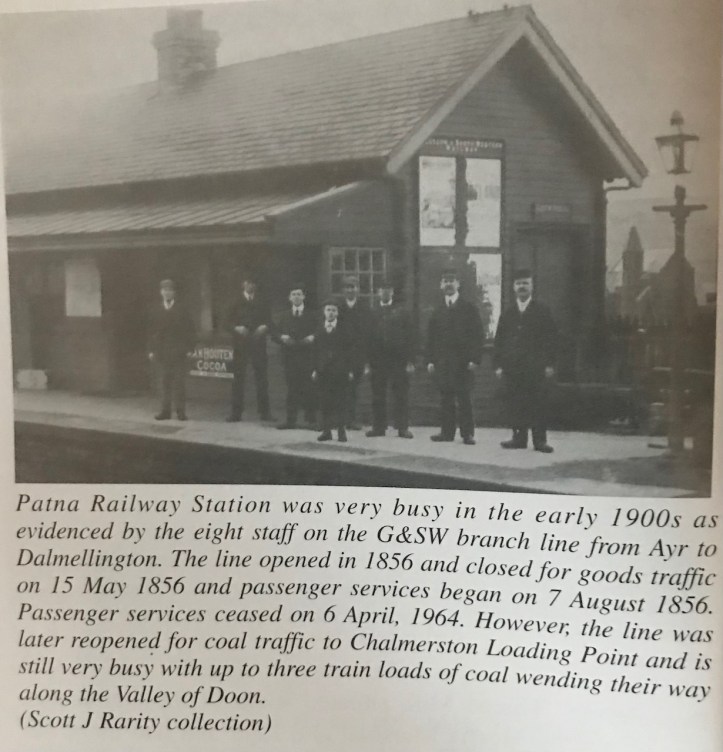
The Patna in East Ayrshire is among the many villages in the Doon Valley, which have been associated with a history of coal, ironstone, and limestone mining. Hence, it once also had a thriving railway station on the Glasgow & South Western branch railway between Ayr and Dalmellington. The station opened in 1856, moved location slightly in 1897, and eventually its passenger service ended in 1964, as part of the brutal Beeching cuts. Coal continued to be carried but even this has now declined and the track lays unused. Indeed, there is an air of a place that once was proud, prosperous, and prolific. Today, it is a sleepy village of barely 1000 families with population declining and unemployment increasing, with which the following words are difficult to square: 


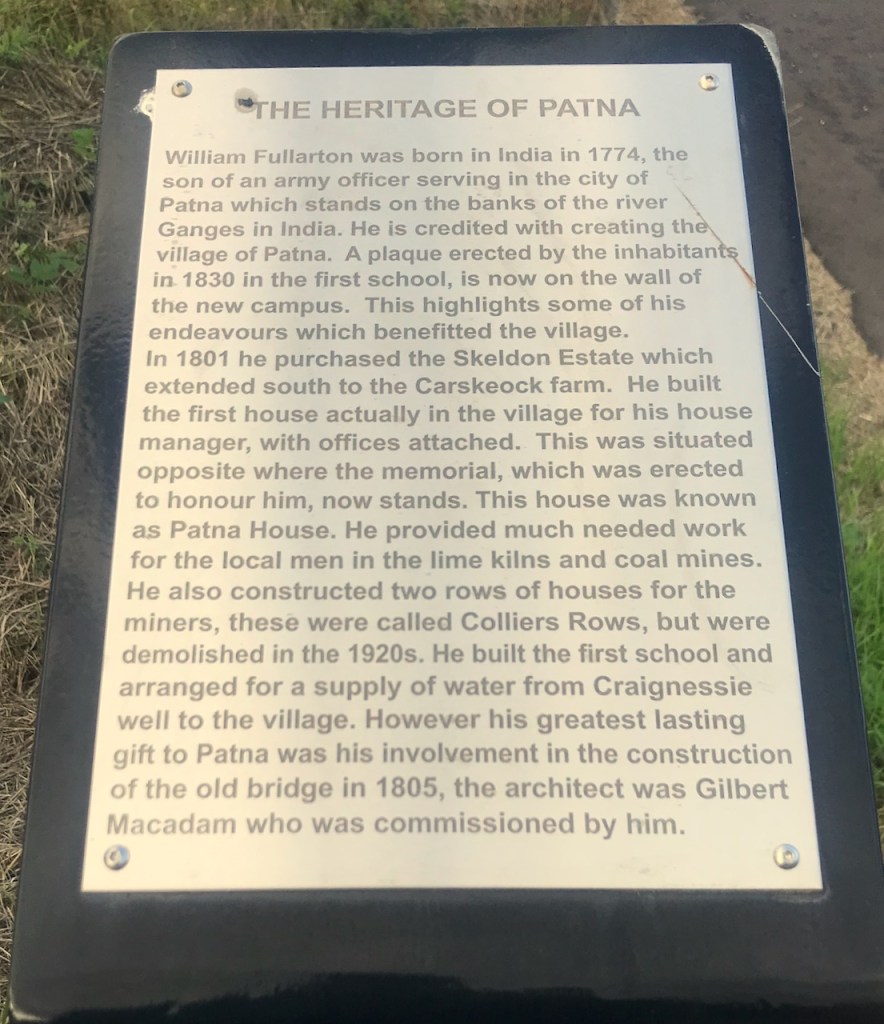
It was in the early 1800s when William Fullarton, an enterprising young man, began mining for coal and limestone on the banks of the Doon. He built houses nearby to accommodate his workers and he decided to call the hamlet Patna after the city in India where his father and uncle had such close associations. William Fullarton later sold the estate at Skeldon and moved to Ayr where he had a successful career in local politics, twice becoming Provost, around 1823-1825 and 1830-1834. He died in 1835 at the age of 60 and is buried in the cemetery of Ayr Auld Kirk. Fullarton proved himself to be a kindly benefactor to Patna. He built the first house in the village to house the manager of his coal mines. This, with offices attached, was to become known to later generations as Patna House.

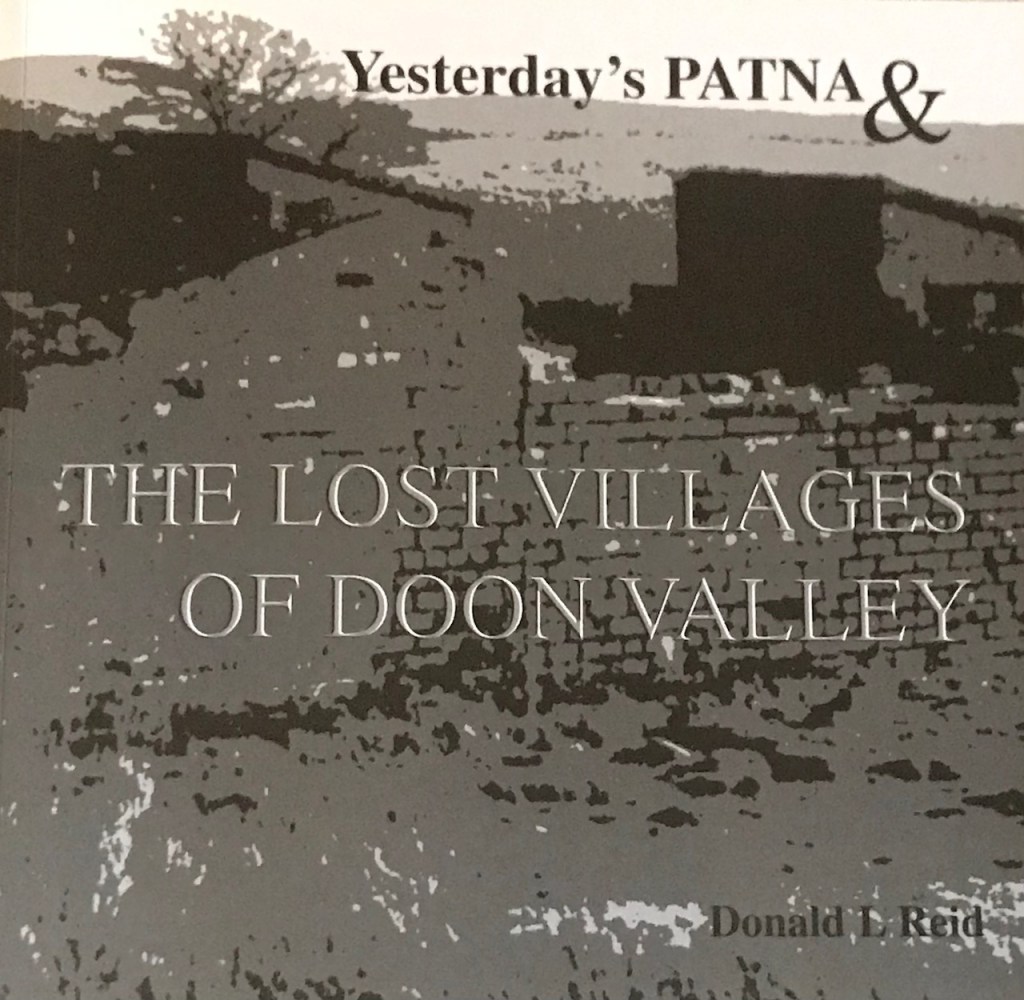
Donald Reid, Yesterday’s Patna and the Lost Villages of Doon Valley. 2005
Source: Donald Reid, Yesterday’s Patna and The Lost Villages of Doon Valley, 2005


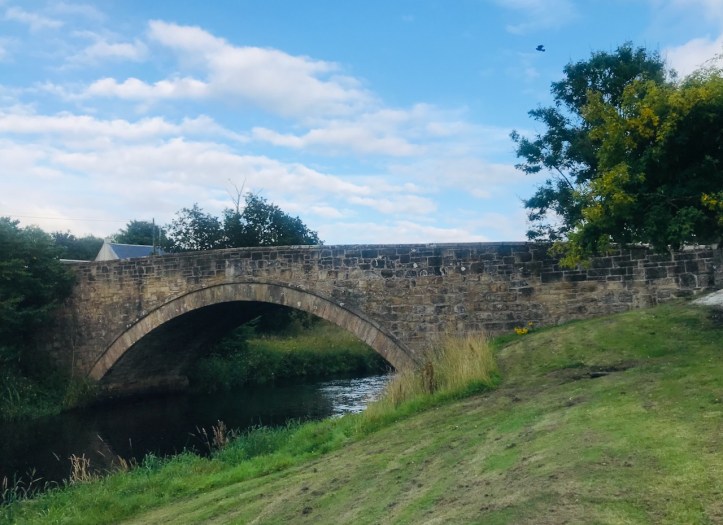
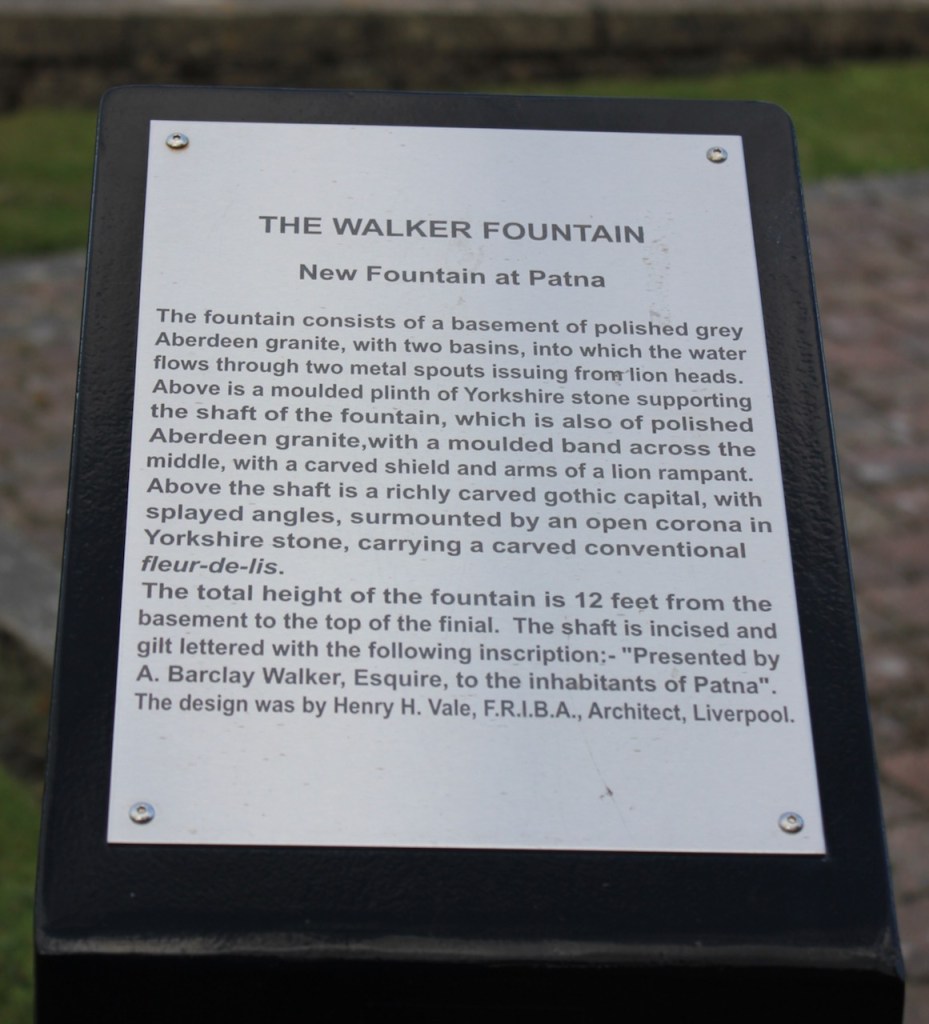
Fullarton is remembered kindly, having created many local amenities for the small and then-growing area. Mining led to home and hearth, work and schools and the stream – a crucial water source – saw the building of the Patna “Auld Brig” in 1805, which functions as a gateway into the village, adding character to it. By 1837, there was a Church building, which is now known as the United Free Church Hall and serves as another reminder of that age. As for the following twentieth century, it has left in its wake the two, ubiquitous, war memorials and a cemetery. There is the obligatory “local” and the imperative “clinic”, but otherwise few streets, some houses and a bus-service connects Patna’s past to its present. As for its bigger “cousin”, once in a while, a visitor comes, like in 2012 [https://timesofindia.indiatimes.com/city/patna/bihar-minister-visits-patna-a-village-in-scotland/articleshow/17755117.cms] and in 2018 [https://www.hindustantimes.com/world-news/when-two-patnas-met-in-scotland/story-G6uILtSL3bvvjJn6GLNOPP.html]. 

With my sincerest thanks to David Rarity of Patna, who took the time to share his memories and material collected over the years on the history of Patna.

From Blighty to Patna: Objections to the building of railways

Pakistan Quarterly, 1962, 11, 1, Page 23

I came across this fascinating article on ‘The Origin and Growth of Pakistan Railways’ by M. B. K. Malik in Pakistan Quarterly, 1962, Vol 11, No. 1. It provides a brief history of building the railways in British India, especially the motivations and impact this had on the two outer regions of Bengal and Punjab. What captured my interest was actually the objections put forward in the initial days. The first one is from the British perspective, but the second one is from a high-caste Hindu, who obviously envisages multiple problems for those guided by astrologers. Both however, express suspicion and concern at this new system of transport and the wider impact it will have on society and the environment. Of course the railways went on to be built in both Britain and British India, and became pivotal to colonial rule. The economy of empire, with key towns and port cities, coupled with the ability to swiftly move the colonial army from cantonment towns was only made possible because of the railways in British India. But that’s another story. Read below the extract from pages 22-23.

Pakistan Quarterly, 1962, 11, 1, Page 23

The earliest proposals to build railways in India had been made to the East India Company in England in 1844 by Mr. R. M. Stephenson and others. But the time was not propitious. The land had not yet recovered from the effects of the Sind Wars, and the British power and the Sikhs in the Punjab were on the verge of an armed conflict. Nor were the Court of Directors of the East India Company convinced of the feasibility of railways in India. Even in England and Europe railways had met with opposition. In 1835 John Bull had denounced the railways as a menace:

“If they succeed” wrote the paper, “they will give an unnatural impetus to society, destroy all the relations which exist between man and man, over-throw all mercantile regulations, over-turn the metropolitan markets, drain the provinces of all their resources, and create at the peril of life, all sorts of confusion and distress. If they fail, nothing will be left but the hideous memorials of public folly”. It further remarked : “Does anybody mean to say that decent people …. would consent to be hurried along through the air upon a railroad, from which, had a lazy schoolboy left a marble, or wicked one a stone, they would be pitched off their perilous track into the valley beneath; …. being at the mercy of a tin pipe copper boiler, or the accidental dropping of a pebble on the line of way?…. We denounce the mania as destructive of the country in a thousand particulars …. the whole face of the kingdom is to be tattooed with these or a odious deformities …. huge mounds are to intersect our beautiful valleys; the noise and stench of locomotive steam-engines are to disturb the quietude of the peasant, the farmer and the gentleman; and the roaring of the bullocks, the bleating of sheep and the grunting of pigs to keep up one continual uproar through the night along the lines of these most dangerous and disfiguring abominations”.

Objections by Hindus
The orthodox Indians had religious objections. A civilian District Officer, posted in the province of Bihar during the sixties of the last century, has recorded an interesting story showing how orthodox Hindus regarded railway travelling in those days. The officer questioned a nobleman, who had just returned from his first journey by rail, about his views on railway travel. The nobleman replied that it made great noise and that it would be difficult for persons of his high caste to travel at all by such means:

The trains only go at stated times; now I cannot commence a journey except at the minute decided upon by my astrologer as a favourable moment for starting. This makes it very difficult for me to travel at all. Tomorrow I have to go to Muzafferpur, and the astrologer has decided that I must start at 1 A.M. Now my cousin Gadahur went by railway the other day with his wife, and daughter of six years old, and a baby. He started at an unfavourable moment. His wife and two children and a maid-servant were put in a palanquin, which was placed on a truck, which prevented their being seen; and he went in an ordinary carriage. Somehow or other a spark from the engine flew into the palanquin and set fire to some of the linen in which the baby was wrapped; and the servant in her confusion, thinking it was only a bundle of clothes, threw it out. The moment it was done she found out the mistake and they all shrieked. This was only a mile from the Patna station and the train soon stopped. The station master was very kind and did his best, but the palanquin was on fire, and the wife in getting out was seen by many persons. It is not a fit subject even for conversation”.

But all the objections came to naught. England was just entering the age of ‘railway mania’ and it was decided to construct railways in India through Guaranteed British Companies.