Sharing a screen grab from the last page of my book From the Ashes of 1947. Balraj Sahni captured the human tragedy of Partition in this poem, the spectre of which still continues to haunt us everyday. We seem to be unable to be human first.

Sharing a screen grab from the last page of my book From the Ashes of 1947. Balraj Sahni captured the human tragedy of Partition in this poem, the spectre of which still continues to haunt us everyday. We seem to be unable to be human first.


While the present nation-states of Pakistan and Afghanistan are Islamic Republics, there was a time when the religion of Buddha registered a strong presence in areas, now part of these states. Back in 2001, when the ‘Buddhas of Bamiyan’ were blasted by the Taliban in Afghanistan, the visuals were received with astonishment and horror across the world. These ancient, iconic carvings were UNESCO protected monuments and represented the classic syncretic style of Gandhara art. The Taxila Museum in Punjab province of Pakistan is home to the largest collection of ancient Gandharan artefacts in the country dating back to the time from the 1st to the 7th c. AD. Most of these were excavated at the nearby ruins of the ancient city of Taxila. The museum itself dates back to 1918.
John Marshall (1876-1958), was one of the most famous directors of the Archaeological Survey of India and excavator of the city of Taxila. Marshall began the excavations at Taxila in 1913, which carried on for another twenty years, apart from laying the foundation stone of the museum in Taxila. Later, he produced An Illustrated Account of Archaeological Excavation of Taxila in 1951. This 3-volume work details the Taxila excavations of 1913-1934 and opens with an apt description of the importance of topography in situating ancient Taxila:
‘The remains of Taxila are situated immediately to the east and north-east of Sarai-kala, a junction on the railways, 20 miles north-west of Rawalpindi. The valley in which they lie is a singularly pleasant one, well-watered by the Haro river and its tributaries, and protected by a girdle of hills – on the north and east by the snow mountains of Hazara and the Murree ridge, on the south and west by the well-known Margalla spur and other lower eminences. This position on the great trade route, which used to connect Hindustan with Central and Western Asia, coupled with strength of its natural defences, the fertility of its soil, and a constant supply of good water, readily account for the importance of the city in early times’.
While Buddha (5th-4th c. BC) did not venture to Gandhara, growth of Buddhism in this region happened under the Mauryan Empire (322-185 BC). Gandhara was a province of the Persian Empire under Darius I. In 327 BC, Alexander advanced as far as Taxila in his conquests, but shortly thereafter, the region was consolidated with the territorial reach the Mauryan dynasty. It was Chandragupta’s grandson, Emperor Ashoka, who converted to Buddhism in c. 263 BC, following the especially bloody Kalinga War.
It was under the Kushans’ (people of Scythian origin) rule that the Gandhara region assumed its important place in the history of Buddhism and especially its art. Under ruler Kanishka in the 1st c. AD, ‘Buddhist sages made Gandhara a sacred region by the compilation of texts associating local sites with previous incarnations of the Buddha’ (1956). The Kushans’ ‘greatest contribution of Gandhara to the art of Asia was the invention of the Buddha image. The first anthropomorphic representation of the Great Teacher was probably related to the emergence of the devotional sects of Buddhism and demand for the portrayal of the object of worship in an accessible human form in place of the entirely symbolic portrayals of the master in the art of early Hinayana Buddhism’ (1960).
Great Stupas were subsequently built in the region, of which some still survive and are preserved in the Taxila Museum. In Takht-i-Bahi (Mardan, KP province), there is a large Buddhist monastic complex, which forms an important site of this period in the region, representing the Gandhara school of art and architecture. Dating from 1st – 2nd c. AD, Buddhism flourished here, leading to a new, syncretic Greco-Buddhist art/architecture & culture. Mediterranean and Persian influences gave Gandhara sculpture characteristics, which distinguishes it from other Buddhist art notably the Mathura school (1956).
While the archaeological evidence of the extent and importance of Gandhara only came to light in early-20th c., textual evidence and knowledge about it was available through accounts by Chinese Buddhist pilgrims. They recorded and left behind incredibly detailed descriptions of their travels, for example, the stories of Fa Hsien’s journey in c. 400 AD, the journey of Sung Yun in the 6th c., and the most detailed of all, Hiuen Tsang’s Hsi Yii Chi, Records of the Western Countries, composed in early-7th c. (1960).
Sources:
Marshall, John. Taxila: An Illustrated Account of Archaeological Excavations Carried out at Taxila under the Orders of the Government of India between the years 1917 and 1934. 3 Volumes. Cambridge University Press, 1951.
Rowland, Benjamin. Gandhara Sculpture from Pakistan Museums. Asia Society, 1960.
Gandhara Sculpture in the National Museum of Pakistan, published for the Department of Archaeology by The Department of Advertising, Films and Publications. Printed by Ferozsons, October 1956.
Further Reading:
Asif H., Rico T. ‘The Buddha Remains: Heritage Transactions in Taxila, Pakistan’. In: Rico T. (eds) The Making of Islamic Heritage. Heritage Studies in the Muslim World. Palgrave Macmillan, (2017).
Van Aerde, M. E. J. J. ‘Revisiting Taxila: A new approach to the Greco-Buddhist archaeological record.’ Ancient West & East 2018 (2018).



Habib Jalib was born in 1928 in Hoshiarpur, East Punjab. He migrated to Pakistan after partition and worked as a proof reader in Daily Imroze, Karachi. Read further about him: https://www.letsstartthinking.org/Pakistan/personalities/habib-jalib.php. All his poetry is available via Rekhta. Below is the poem Bagiya Lahoo Luhan-The Garden Is A Bloody Mess. The poem is about the oppression in East Pakistan in 1971 but unfortunately it continues to resonate, even today.
Bagiya Lahoo Luhan
Haryali ko aankhen tarsen bagiya lahoo luhan
Pyar ke geet sunaoon kis ko shehar hue weeran
Bagiya lahoo luhan

Dasti hain suraj ki kirnen chand jalaye jaan
Pag pag maut ke gehre saye jeewan maut saman
Charon ore hawa phirti hai le kar teer Kaman
Bagiya lahoo luhan

Chhalni hain kaliyon ke seeney khoon mein lat paat
Aur nahjaney kab tak hogi ashkon ki barsaat
Dunya walon kab beeteinge dukh ke yeh din raat
Khoon se holi khel rahe hain dharti ke balwan
Bagiya lahoo luhan
The Garden Is A Bloody Mess
Our eyes yearn for greenery
The garden is a bloody mess
For whom should I sing my songs of love
The cities are all a wilderness
The garden is a bloody mess

The rays of the sun, they sting
Moonbeams are a killing field, no less
Deep shadows of death hover at every step
Life wears a skull and bone dress
All around the air is on prowl
With bows and arrows, in full harness
The garden is a bloody mess

The battered buds are like a sieve
The leaves drenched in blood smears
Who knows, for how long
We’ll have this rain of tears
People how long do we have to bear
These days and nights of sorrow and distress
This oppressor’s blood bath is a frolicsome play
For the mighty of the world, a mark of their prowess
The garden is a bloody mess

Source: Revolutionary Democracy











“In 1949, while in Lahore, Sahir Ludhianvi wrote a revolutionary poem, ‘Avaaz-e-Adam’ (The Voice of Man), in which ‘hum bhi dekhenge’ remains a memorable phrase. It ended on the optimistic – and one could say provocative – assertion that the red flag of communism would fly high. Pakistan had already decided to become a frontline state in Western attempts to contain Soviet Communism. It was trying desperately to convince the US that it could be a strong ally in its anti-Communism policy. Pakistan also wanted to portray itself as a trusted ally for the West, not just in South Asia but also in the Middle East. But after the poem was published, Sahir was threatened by intelligence agencies and he migrated to India. In effect, ‘hum bhi dekhenge’ came to symbolise Sahir’s farewell to Pakistan, which he felt would be a puppet of the West, and his search for sanctuary in Nehru’s India.” Source: The Wire.
aavaaz-e-aadam
Dabegi kab talak aavaaz-e-Aadam hum bhi dekhenge
rukenge kab talak jazbaat-e-barham hum bhi dekhenge
chalo yoonhi sahi ye jaur-e-paiham hum bhi dekhenge

dar-e-zindaan se dekhen ya urooj-e-daar se dekhen
tumhen rusva sar-e-bazaar-e-aalam hum bhi dekhenge
zara dam lo maal-e-shaukat-e-jam hum bhi dekhenge

ye zoam-e-quvvat-e-faulaad-o-aahan dekh lo tum bhi
ba-faiz-e-jazba-e-imaan-e-mohkam hum bhi dekhenge
jabeen-e-kaj-kulaahi ḳhaak par ḳham hum bhi dekhenge

mukaafaat-e-amal tareeḳh-e-insaan ki rivaayat hai
karoge kab talak naavak faraaham hum bhi dekhenge
kahaan tak hai tumhaare zulm mein dam hum bhi dekhenge

ye hangaam-e-vidaa-e-shab hai ai zulmat ke farzando
sahar ke dosh par gulnaar parcham hum bhi dekhenge
tumhen bhi dekhna hoga ye aalam hum bhi dekhenge


The Voice of Man
We too shall see till when one can suppress the voice of Adam
We too shall see till when can be stopped the angry emotion(s)
We too shall see, sure, just like this, the constant oppression.

Whether we view from the door of the dungeon or the elevation of the scaffold
We too shall see you dishonoured in the marketplace of the world
Just take a moment’s breath, we too shall see the consequences of the grandeur of Jamshed.

You too behold this vanity of power
We too shall see this by the kindness of the firm belief’s fervour
We too shall see a bend upon the dusty face that wears the jaunty headgear.

Retribution is a tradition of human history
Till when will you amass the arrows, we too shall see
We too shall see how far will you persist with your tyranny.

O sons of darkness this is the time for departure
We too shall see the morning shoulder the flag of red colour
We too shall see, you too shall have to see this clamour.

Source: ‘We Too Shall See, You Too Will Have to See This Clamour’: A Tribute To Sahir Ludhianvi by Raza Naeem, NayaDaur
Read/listen to Sahir on Rekhta
Sahir Ludhianvi – Making of Dreamer – Freudian Poet of the Indian Cinema by Anil Pundlik Gokhale. CounterCurrents.org


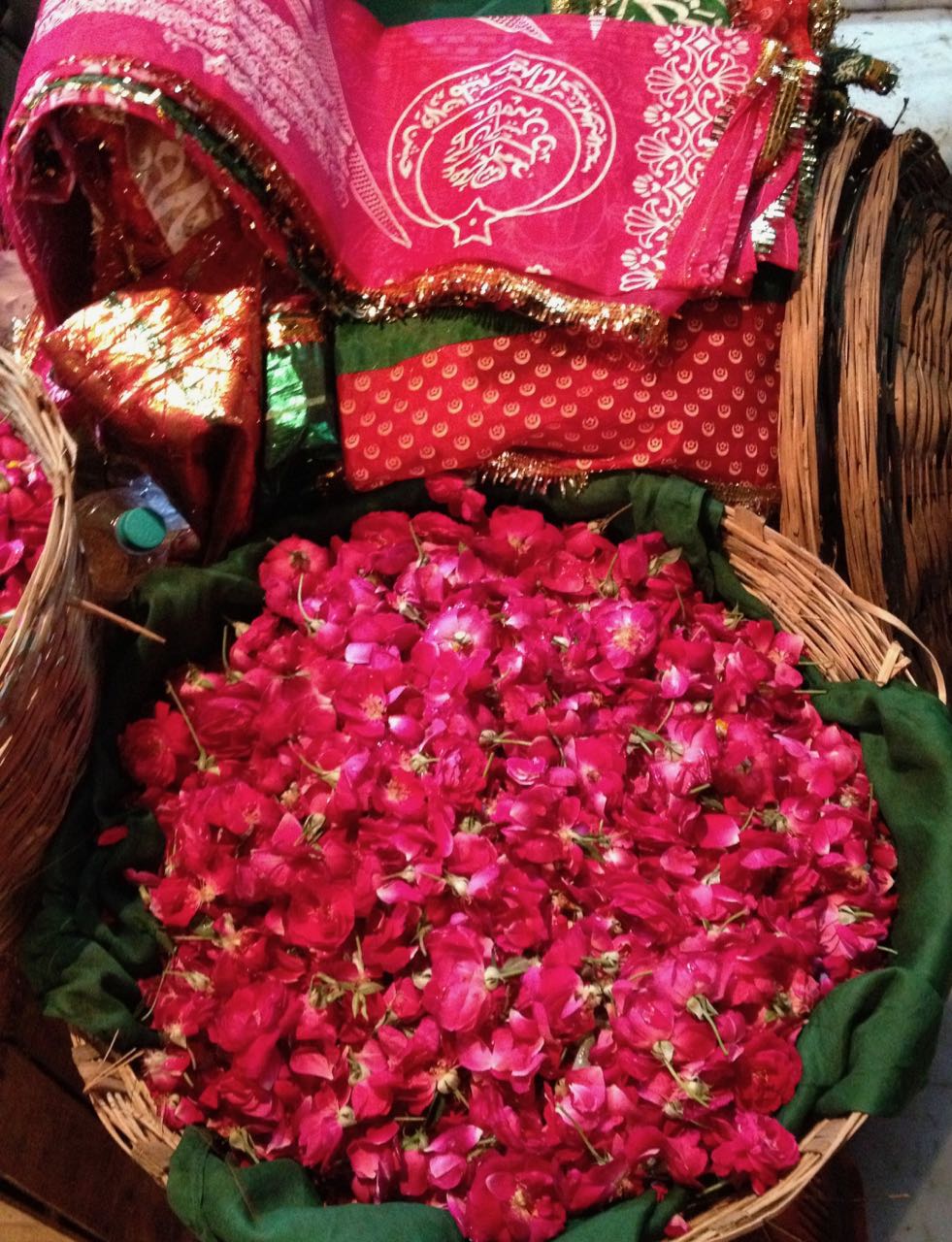




Originally published 5 Sept 2012 but relevant today.
If you want to read further also see this article in The Friday Times by Muhammad Asif Nawaz, The old world charms of Mian Salli, originally published 25 July 2014.


Faletti’s Hotel is the oldest colonial hotel in Lahore. It opened in 1880 in the old walled city. Back then, it claimed to be one of the finest hotels. By modern standards, this is not a big place, but it is certainly one of the most sought after. It retains the colonial architecture along with a matching attitude. One of the reasons that Faletti’s continues to attract so much attention is to do with the famous guests that have stayed there, over the years.
Read about the origins and owner, Giovanni Faletti on Faletti’s website.
A fascinating account in Dawn about the owners changing hand:
According to tales recounted by old hotel employees, Faletti’s Hindu clerk, Oberoi, offered to buy some shares, and Faletti was so impressed and delighted that someone whose job was to haul coal for the rooms had saved enough to buy the shares of his hotel that he allowed him to become his trusted employee. When Faletti finally left Pakistan, he gifted Oberoi all his hotels on the condition that he would not change the name of Faletti’s. Oberoi stayed true to his word and earned so much from just Faletti’s alone that he invested in a hotel in Delhi, the famous Oberoi, following which he established more hotels in India…After the 1965 war, Oberoi decided to move to India and sold majority shares of the hotel to PTDC — again on the condition that the hotel name would not be changed.
Everyone from the great Quaid-i-Azam to Hollywood actors have stayed at the hotel. Ava Gardner and Stewart Granger stayed here for three months during the filming of Bhowani Junction, which took place in 1955. The room in which she stayed is now known as the ‘Ava Gardner Suite.’ Marlon Brando stayed here when he was visiting the country on behalf of UNICEF. One of the Chief Justices of Pakistan, A.R. Cornelius, took up residence at Faletti’s and stayed at the hotel for over 40 years until his death in 1991. Whereas Mohammad Ali Jinnah stayed at Faletti’s when he came to Lahore to argue the appeal of Ghazi Ilm-ud-Din Shaheed before the Lahore High Court in July 1929.
Other guests have included the cricketer Sir Garfield Sobers, Jawaharlal Nehru, Dilip Kumar, Raj Kapoor, and Mohammad Rafi.


When Faiz passed away at the age of 73, Dawn described him as:
The greatest Urdu poet of his time, Faiz became a legend in his lifetime for his intrepid struggle against what he himself once described as “the dark and dastardly superstitions of centuries untold”. He understood the agony of the dispossessed and the disinherited and he sang of them and for them to the last.
While these songs and poems need no introduction, he also wrote enduring prose. On his 35th death anniversary, pasted below are some selections:
‘The Role of the Artist’, Ravi (Lahore) 1982:
‘Who are we – we the writer, poets and artists and what can we contribute, if anything, to avert the moral calamities threatening mankind? We are the offspring, in the direct line of descent of the magicians and the sorcerers and music makers of old…They found for the hopes and fears of their people, for their dreams and longings, words and music that the people could not find for themselves. And by blending their collective will to a desired end, they would sometime make the dream come true…In our part of the world through long centuries…the magician of old became the post-mystic or the mystic poet, the forerunner of the modern humanist, who defied both emperor and priest to articulate the ills and afflictions of his fellow beings, to expose the injustices of their masters and their master’s collaborators, who taught them to believe in, and fight for, justice, beauty, goodness and truth, irrespective of personal loss and gain…So that is who we are, inheritors of this magic…And never was the power of this magic more devoutly to be wished than in the world of today when so many powerful agencies are at work to deny the validity of all ethical human values, to obliterate all refinements of human feeling…by extolling cynicism, insensitivity and brutishness as the hallmark of a he-man and a she-woman…’
Source: Coming Back Home: Selected Articles, Editorials and Interviews of Faiz Ahmed Faiz, compiled by Sheema Majeed, introduction by Khalid Hasan, Karachi: OUP, 2008, pp. 40-1.
‘The Writer’s Choice’:
‘Literature like science is a social activity…Literature unfolds in a similar fashion…the unexplored or dimly lit complexities of social reality, the given human situation of a given time. The impact…however, more insidious, more subtle and at the same time more direct…. The writer is directly manipulative and formative of the consciousness of the audience…He cannot plead, therefore, that he is unaware of, or unconcerned with, social implications…A writer may be tempted, coerced or bribed [by] vested interests to ignore, emasculate, or pervert the basic realities of social existence under various specious pretences, ‘pure’ literature, art for art’s sake, ‘pure’ entertainment etc., a mechanistic repudiation of these ‘purities’, however, poses another danger. In creative writing to ignore the demands and essentials of artistic creation can be inexcusable, although perhaps not as reprehensible, as the moral and social imperatives of reality. It is but another form of escapism…There is still considerable confusion in most African and Asian countries regarding the function of literature, the role of the writer and the modalities of literary expression. This confusion is partly a legacy of the colonial past, partly a recent import as a product of neo-colonialism…Whatever his social status, his intellect and education will automatically place him in the ranks of the elite minority…He will be called upon to make a choice of his audience – to write for his own class or to transcend the class barriers…’
Source: Coming Back Home: Selected Articles, Editorials and Interviews of Faiz Ahmed Faiz, compiled by Sheema Majeed, introduction by Khalid Hasan, Karachi: OUP, 2008, pp. 43-4.
‘Decolonizing Literature’:
‘When the process of colonial occupation got underway in Asia and Africa the literature and languages of the subject peoples were among the first victims of foreign cultural aggression. Its impact hit different communities in different ways depending on their level of social and cultural development, thus confronting each one of them with a different set of dilemmas in their quest for identity after liberation…(1) The study of Asian and African literatures should be incorporated in the relevant schemes of higher learning…Even language teaching in European languages need no longer be confined to European authors. (2) …publication and marketing of important Afro-Asian writings in still the monopoly of a few Western publishing houses…such publications are only marginal to their main business interests…The high cost of Western publications is another inhibiting factor…Efforts are needed for a re-orientation of the publication trade in Asian and African countries. (3) For many Asian and African writers, ‘international recognition’ still means some notice by the Western media. Some of them are thus induced to set their sights while writing on Western rather than their national readership…There are enough nations in Asia and Africa to make any writer ‘international’ without any Western certification…This needs some rectification not only in the outlook of the writer, but also of his readers’.
Source: Coming Back Home: Selected Articles, Editorials and Interviews of Faiz Ahmed Faiz, compiled by Sheema Majeed, introduction by Khalid Hasan, Karachi: OUP, 2008, pp. 49-52.
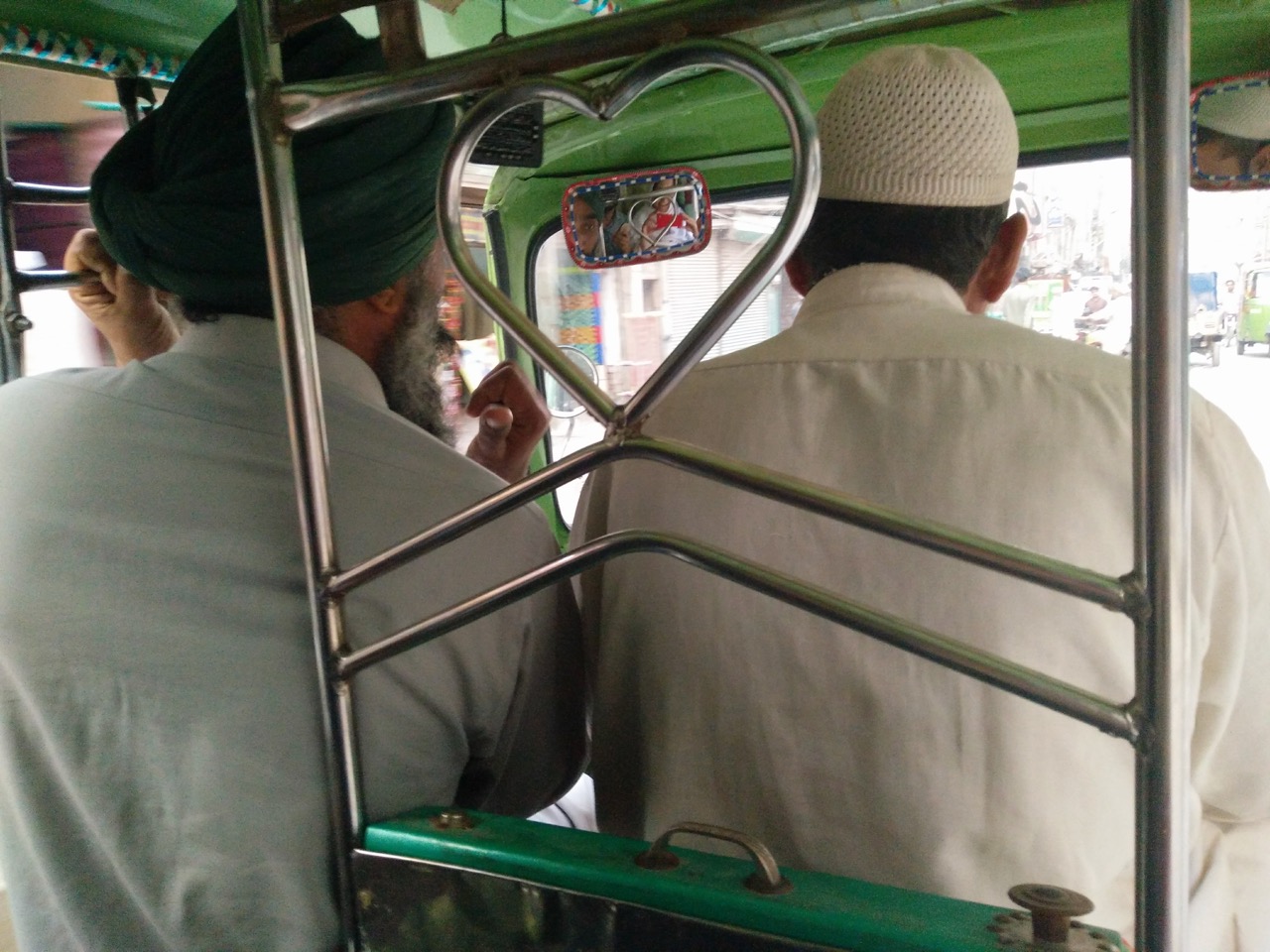
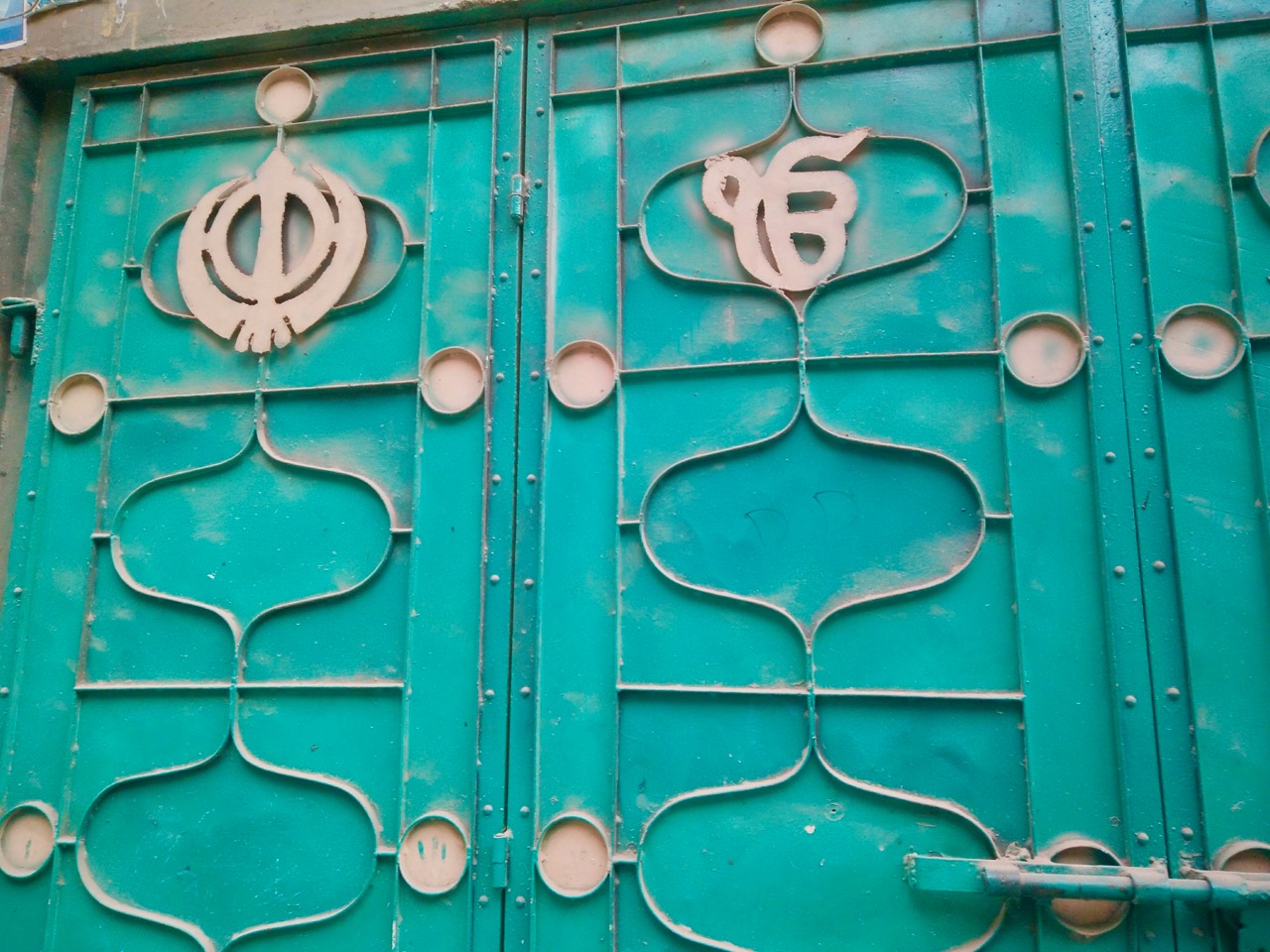
This picture was taken by me during one of the most memorable tuk tuk rides in Peshawar in 2017, when I was exploring the city and trying to find a gurdwara in the narrows lanes of the congested city. Along came this sardar ji who jumped on the tuk tuk and navigated us to Gurdwara Bhai Joga Singh. As the sounds and sights gather momentum around the opening of the Kartarpur corridor, I share this moment that speaks silently for the hopes of many.


