Nothing has captured contemporary adjectives around India more than its seemingly inevitable and irresistible MIDDLE-CLASS; a cursory survey yields an expansive collection of studies on the subject. The key question in them often is how to define this broad category.
According to Abhijit Roy and based on data by “the World Bank and the Organization for the Economic Cooperation and Development (OECD), for those in the middle classes, the earnings typically lie in the range of US $10 to $100 per day, as expressed in the 2015 purchasing power parities”. Using the India Human Development Survey II (2011–12), Maryam Aslany reveals significant findings about the Indian middle class:
“(1) It calculates the size of the middle class to be 28.05% of the urban and rural population. (2) It demonstrates that despite the occupational diversity that exists, a large proportion of the middle class are salaried employees. (3) It demonstrates that contrary to common assumptions, a considerable segment of the Indian middle class resides in rural areas. (4) The fastest growth is in the lower middle classes, who spend between US $4 and $6 per day. This group includes carpenters, street vendors, decorators and drivers”.
Statistical evidence aside, one of the key elements of a middle class is how this class shifts from need to want – a key component of the capitalist model, which creates the desire to consume something, even when it is not required. This is an aspirational desire and in India, the strong connection to society/samaaj ensures that this “want and desire” has a strong market, from whose epicentre – Bombay/Mumbai – economists have defined the middle class as “consumers spending from US $2 to $10 per capita per day. By this definition, approximately half of India’s population of 1.3 billion is in the middle class” (Roy).
Employable education is often seen as one of the key routes to this upward mobility. But once successful, there is also potentially a “tussle between individuality and community: seeking novel self-expression in new jobs and leisure or taking risks with autonomy (the divorce rate is growing, from a low base), but also attempting to keep a sense of community, with dutiful support of parents (a high number of IT professionals buy cars for their parents) and strenuous attempts at maintaining a social circle (oriented around alcohol, movies, resorts and restaurants)” (Ram-Prasad).
One of the challenges with understanding how class works in India is the overlaps with caste. It is often difficult to disaggregate the two. “Upper-caste elites have, in recent decades, become used to those below them in the hierarchy accruing economic power, especially since liberalisation in the early 1990s. The new middle class argues that since it had no help from older elites, its success is self-made and ought to be the model for the poor. But the poor are still usually from castes traditionally lower than those of the new middle class—and this acts as an obstacle to their advancement” (Ram-Prasad).
One of the key things that I have observed over my three decades of travelling to India is the shift in people’s attitude after the liberalisation of the economy. Over a period of time, an airy sense of arrogance, importance and arrival at the global stage has replaced the grounded humility, self-reflection and non-aggression that had wider traction. In part, these attitudes can be traced back to the freedom movement and it is interesting to reflect back to when India had only recently gained independence.
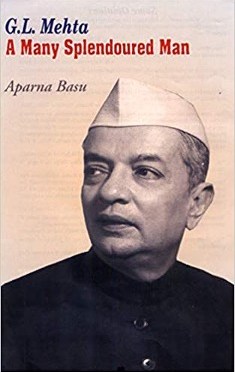
The following extracts from G. L. Mehta, a long-serving Indian Ambassador to America in the mid-1950s, highlight the then- “numerical insignificance” of this ubiquitous group of the middle classes:
“In India, government officials, professional men like lawyers and doctors, technicians and teachers, shop-keepers and clerks are all part of the inchoate group, which goes by the name of “middle classes”. Although merchant classes and officials in medieval India were a group, the middle classes are of a comparatively recent origin. In a society, where caste and status determined the social structure, the middle-income group did not wield any political power nor did they enjoy any social prestige…
…the rise of the middle classes has been due as much to the advent of foreign rule as to the impact of economic forces…There is no gainsaying the fact that our national movement has had its origin and impulse from the middle class. Indeed, the leaders of the labour movement have also been drawn mostly from the middle classes. These classes have largely helped to make India what it is, both in its strength and in its weaknesses…
…the striking fact, however, is their numerical insignificance. An examination of the income-tax statistics shows that in the Indian Union, the numbers of those earning between Rs. 300/- and Rs. 2000/- per month add up to only a little over 3 lakhs. Allowing for 5 dependents to every income earner, it would appear from this that the core of the middle classes in India consists of less than 2 million out of 350 million people…
…in 1938-39, their share of the national income was roughly 5%; today their share is more 3 ½-4%. While the rising prices of the last decade have created higher incomes and pushed up people, it is only a few in the upper income groups, who have stood to gain. Those earning between Rs. 500/- and Rs. 1000/- per month had an annual income of Rs. 80 crores in 1948-49 compared to Rs. 50 crores in 1938-39 but those in Rs. 1000/- and Rs. 2000/- group had Rs. 100 crores in 1948-49 compared to Rs. 30 crores in 1938-39 and those with incomes of Rs. 2000/- per month shared nearly Rs. 160 crores in 1948-49 compared to Rs. 30 crores in 1938-39…
…these distributional changes, together with the general stagnation in the economy, have created a situation of great stress and strain. The middle classes have, on the whole, stopped recruiting from below. Unless the middle classes can improve their economic condition in pace with the growth in their numbers, they are bound to suffer frustration and disillusionment, in proportion with unemployment and inflation. As the London Economist said recently commenting on the situation in India, “when the shop-keeper flourishes and the clerk starves, revolution is round the corner, for the educated middle class will tolerate only so much” (!)…
…but the future of a class, which is not allied to any special interest in uncertain. Equally, if the middle classes are to maintain their leadership, they should avoid freezing into a static group. They will have, therefore, to absorb continuously waves of people ascending from the ranks of peasants, artisans and labourers. At the other end they would have also to discard those whose stakes in the system are so great that they become an impediment to change…because the middle class, and its professional core in particular, can check the acquisitive instincts of the Economic Man. Perhaps it may be the role of the middle-class, to show us the middle way between freedom and order, enterprise and social security”.
References:
Above extracts from an All-India Radio talk, 14 January 1951 by G.L. Mehta (A Many Splendoured Man, Aparna Basu, 2001)
Maryam Aslany, ‘The Indian middle class, its size, and urban-rural variations’, Contemporary South Asia, 2019, 27:2, 196-213, DOI: 10.1080/09584935.2019.1581727
Abhijit Roy, ‘The Middle Class in India: From 1947 to the Present and Beyond’, Spring 2018. https://www.asianstudies.org/publications/eaa/archives/the-middle-class-in-india-from-1947-to-the-present-and-beyond/
Ram-Prasad Chakravarthi, ‘India’s middle-class failure’, 30 September 2007. https://www.prospectmagazine.co.uk/magazine/indias-middle-class-failure
Brant Moscovitch, ‘A Liberal Ghost? The Left, Liberal Democracy and the Legacy of Harold Laski’s Teaching,’ The Journal of Imperial and Commonwealth History, 2018, 46:5, 935-957, DOI: 10.1080/03086534.2018.1519245









 BAGICHA