Tag Archives: Ludhiana

Ludhiana and Lyallpur: A tale of two cities

I was preparing for a forthcoming History conference in Lyallpur when I started browsing and jumped from one rabbit hole to another. Sometimes research is like that, you need to explore and get lost in the lanes of history to find something. I did get the inspiration I wanted but I also ended up with more information than I needed. Amongst all of this is a list of some well-known people who were born in Ludhiana or Lyallpur. I was more interested in the direct links between these cities and the people that migrated between these two, as my I have a long-standing research and personal interest in both cities. However, those links were not always present, but it is still interesting to see the kind of people who emerged from these localities and migrated following the Partition.

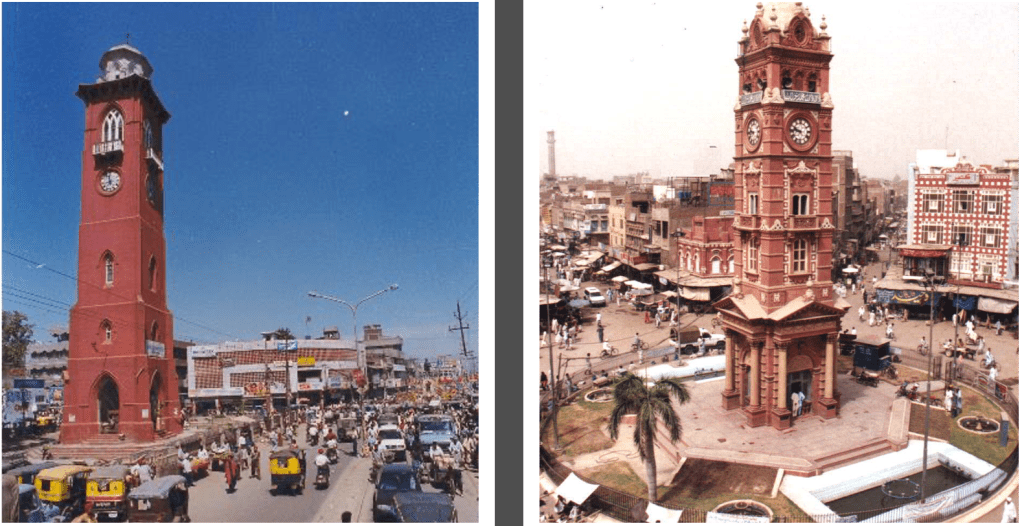
Ludhiana and Lyallpur were in fact only small towns before Partition, and interestingly both have iconic colonial clock towers in the town centre; both are important industrial textile hubs in the region; both had 62% ‘other’ populations prior to 1947 (according to the 1941 census, 62% Muslims lived in Ludhiana and 62% Sikhs/Hindus in Lyallpur); and finally, both function as important diasporic cities in contemporary Punjab(s).

Typically I tried to find women, but sadly the list of people is mostly male bar two! I hope to continue adding to the list as I find more people or please leave a comment if you know any other people with Ludhiana-Lyallpur links.

Note: the source for the information below is mainly through browsing and do not claim it as my own work. I have only selected a people I was interested in and that were born before 1947 and migrated following the Partition.

From Ludhiana…

Abu Anees Muhammad Barkat Ali Ludhianvi (1911 – 1997) was a Muslim Sufi who belonged to the Qadiri spiritual order. He was the founder of the non-political, non-profit, religious organisation, Dar-ul-Ehsan. Abu Anees’s followers spread all around the world and especially in Pakistan. He was born in Ludhiana where his father was a landlord.

Agha Ali Abbas Qizilbash also known as Agha Talish, (1923 –1998) was a Pakistani actor who made his debut in 1947 and was mostly known and recognized in Pakistan for playing character actor or villain roles. Talish was honoured by a Pride of Performance award, by the Government of Pakistan in 1989. Talish was born in Ludhiana, and his breakthrough film in Pakistan was film producer Saifuddin Saif’s Saat Lakh (1957) where his on-screen performance for this popular hit song was widely admired, Yaaro Mujhe Maaf Rakho Mein Nashe Mein Hoon.

Ajaz Anwar (1946-) is a Pakistani painter. He was a gold medalist at Punjab University, and he completed his M.A. in Fine Arts from Punjab University. Later, he went to teach at National College of Arts Lahore. His watercolour paintings show the grandeur of the old buildings and the cultural life in Lahore. Born in Ludhiana in 1946, his father was a cartoonist who apparently had stirred his passion from childhood and from whom he drew his inspiration.

Anwar Ali (1922-2004) was a Pakistani Editorial Newspaper Cartoonist in Pakistan Times based in Lahore. Anwar Ali was the creator of famous character Nanna, was the first newspaper cartoonist associated with The Pakistan Times. He was born in Ludhiana, where he spent his childhood. He did his BA from Government College Ludhiana.

Chaudhary Abdul Hayee Gujjar (1921 – 1980), popularly known by his pen name Sahir Ludhianvi, was an Indian poet who wrote primarily in Urdu in addition to Hindi. He is regarded as one of the greatest film lyricists and poets of twentieth century India. Sahir was born in Karimpura, Ludhiana to a Punjabi Muslim Gujjar family.

Habib-ur-Rehman Ludhianvi (1892 – 1956) was one of the founders of Majlis-e-Ahrar-e-Islam. He belonged to an Arain (tribe) and was a direct lineal descendant of Shah Abdul Qadir Ludhianvi, the freedom fighter against British Colonial rule during the Indian Rebellion of 1857. He chose to stay back in Ludhiana to continue representing the thousands of Muslims still remaining there after the partition in August 1947. The ancestral masjid in Field Ganj still exists today.

Hameed Akhtar (1923 – 2011), was a newspaper columnist, writer, journalist and the secretary-general of the Progressive Writers Association in Pakistan. He was also the father of TV actresses Saba Hameed, Huma Hameed and Lalarukh Hameed. He finished his basic education in Ludhiana and was a childhood friend of renowned poets Sahir Ludhianvi and Ibn-e-Insha

Munawar Sultana (1924- 1995) was born in Ludhiana and was a Pakistani radio and film singer. She is known for vocalizing first ever hit Lollywood songs like, “Mainu Rab Di Soun Tere Naal Piyar Ho Gya” (Film: Pheray 1949), “Wastae Rab Da Tu Jaanvi We Kabootra” (Film: Dulla Bhatti 1956),and “Ae Qaid-e-Azam, Tera Ehsan Hay, Ehsan” (Film: Bedari 1957).

Saadat Hasan Manto (1912 – 1955) was a Pakistani writer, playwright and author who was active in British India and later, after the 1947 partition of India, in Pakistan. Saadat Hassan Manto was born in Paproudi village of Samrala, in Ludhiana district to a Muslim family of barristers. Ethnically the family were Kashmiri.

From Lyallpur

Grahanandan Nandy Singh (1926 – 2014) was an Indian field hockey player who won two gold medals, at the 1948 and 1952 Summer Olympics. There is a documentary film on the team by Bani Singh titled, ‘Taangh/Longing’. Singh began playing hockey while studying at the Government College in Lahore, serving as captain of their hockey team in 1945 and 1946. After the Partition, he moved to Calcutta and played for Bengal when he was selected to the 1948 Indian Olympic team.

Harnam Singh Rawail (1921 – 2004), often credited as H. S. Rawail, was an Indian filmmaker. He debuted as a director with the 1940 Bollywood film Dorangia Daku and is best known for romantic films like Mere Mehboob (1963), Sunghursh (1968), Mehboob Ki Mehndi (1971) and Laila Majnu (1976). Rawail was born in Lyallpur and moved to Mumbai to become a filmmaker.

Inderjeet Singh (1926 –2023), also known as Imroz, was an Indian visual artist and poet. He was the partner of the poet, novelist, and writer Amrita Pritam, and they lived together until Amrita’s death in 2005. Inderjeet Singh was born in Chak number 36, Lyallpur.

Jagjit Singh Lyallpuri (1917 –2013) was an Indian politician. He was the oldest surviving member of the founding Central Committee of the Communist Party of India (Marxist). Prior to the Partition of India, Lyallpuri’s family owned roughly 150–180 acres in Lyallpur. The family moved to Ludhiana following the Partition.

Jaswant Rai Sharma (1928 –2017), popularly known by his pen name Naqsh Lyallpuri, was an Indian ghazal and Bollywood film lyricist. He is best known for the songs “Rasm-e-Ulfat Ko Nibhayen” (Dil Ki Rahen, 1973), “Ulfat Mein Zamaane Ki” (Call Girl, 1974), “Tumhe Ho Na Ho” (Gharonda, 1977), “Yeh Mulaqaat Ek Bahana Hai ” (Khandaan, 1979), “Pyar Ka Dard Hai” (Dard, 1981), and “Chitthiye Ni Dard Firaaq Vaaliye” (Henna, 1991). He was born in Lyallpur to a Punjabi Brahmin family, where his father was a mechanical engineer.

Lal Chand Yamla Jatt (1910 – 1991) was a noted Indian folk singer in the Punjabi-language. His trademark was his soft strumming of the tumbi and his turban tying style known traditionally as “Turla”. Many consider him to be the pinnacle of the Punjabi music and an artist who arguably laid the foundation of contemporary Punjabi music in India. He was born to Khera Ram and Harnam Kaur in Chak No. 384, Lyallpur. After partition, they relocated to the Jawahar Nagar, Ludhiana.

Prithviraj Kapoor (1906 –1972) was an Indian actor who is also considered to be one of the founding figures of Hindi cinema. He was associated with Indian People’s Theatre Association as one of its founding members and established the Prithvi Theatres in 1944 as a travelling theatre company based in Bombay. He was born in Samundri into a Punjabi Hindu Khatri family. His father, Dewan Basheshwarnath Kapoor, was a police officer in the Indian Imperial Police. His grandfather, Dewan Keshavmal Kapoor, and his great-grandfather, Dewan Murli Mal Kapoor, were Tehsildars in Samundri near Lyallpur.

Romesh Chandra (1919 – 2016) was a leader of the Communist Party of India (CPI). He took part in the Indian independence struggle as student leader of CPI after joining it in 1939. He held various posts within the party. He became president of the World Peace Council in 1977. He was born in Lyallpur and got his degree in Lahore and another one from Cambridge.

S.D. Narang (1918-1986) was born in Lyallpur. He was a director and producer, known for Dilli Ka Thug (1958), Anmol Moti (1969) and Shehnai (1964). He graduated in Biology from Government College, Lahore and did his MBBS from King Medical Collage, Lahore.

Sunder Singh Lyallpuri (1878 – 1969) was a leading Sikh member of the Indian independence movement, a general of the Akali Movement, an educationist, and journalist. Lyallpuri played a key role in the development of the Shiromani Akali Dal, and in the Gurdwara Reform Movement of the early 1920s and also founding member of Central Sikh League.

Teji Harivansh Rai Srivastava Bachchan (1914 – 2007) was an Indian social activist, the wife of Hindi poet Harivansh Rai Bachchan and mother of Bollywood actor Amitabh Bachchan. Teji was Born into a Punjabi Sikh Khatri family in Lyallpur.
“My spiritual guru is Nanak Dev and my trade guru is Baba Vishvakarma”

While reading the news from India, the celebrations of Baba Vishwakarma Day caught my imagination. Not least because as I was speaking to my sister earlier on, who had mentioned that the electricity went off due to heavy rains, and the local ‘bijli walla’ won’t come to fix it today. Why I asked? Well because it’s Baba Vishwakarma Day!

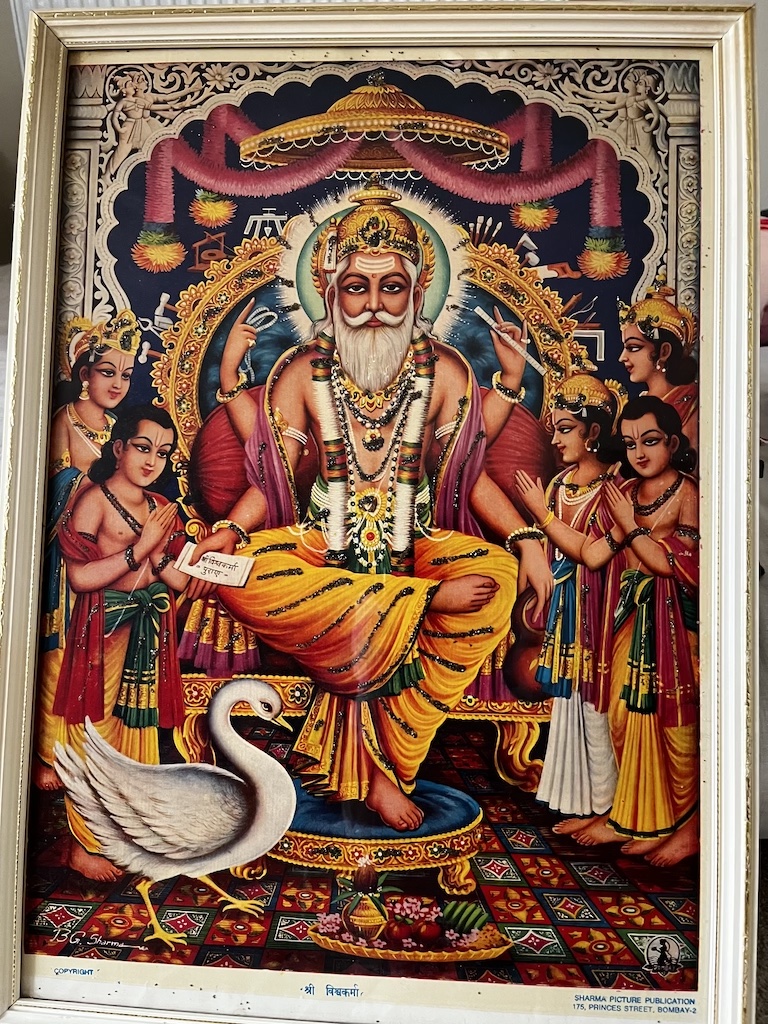
The discussion inevitably led us to reminisce about the past and we started talking about Baba Vishwakarma and what it meant to us, especially when growing up. I recall my mother having a photo of Baba Vishwakarma in her prayer room, but the day after Diwali was especially important because this is when we celebrated Vishwakarma Day. She would offer special prayers with prasad (offering) consisting of sweet boondi, that was bought for this purpose. The conversation with my sister prompted me to go and find that picture, which I had kept as a keepsake for many years.

My mother stitched clothes, mostly salwar kameezes, to make ends meet, a talent that she was well-known for in the local community. She was meticulous, everyone who had clothes made by her was aware of her fine cutting and stitching skills, and how well presented her clothes were when she delivered them. I helped when I was able to, but my standards were never high enough! The sewing machine was at the heart of her (our) survival and also how she was able to reinvent herself from a housewife to a single parent with young daughters in a new place.

So why are the Ramgarhia community associated with Vishwakarma? This is because the deity is associated with machinery, technical work, tools and is often described as the God of carpenters, goldsmiths, blacksmiths, and those who work in skilled crafts. The Ramgarhias were originally a community of artisans who worked in these professions, and adapted and upskilled to mechanical work during the 19th century, but the old associations and traditions remain, at least for some.

These stories are now a part of my memory and history, even though the narrative today may be different. My parents belonged to a generation that was more open, less prescriptive and the religious boundaries were more porous. I went to gurdwaras, I took a dip in the Ganges, and we went to Sufi shrines, it was part of the collective identity. Although Punjab witnessed some of the most horrific communal violence in the 1947 Partition, the region is also ironically one of the most pluralistic. For a devout Sikh, my mother was perfectly at ease with the presence of Baba Vishwakarma and indeed Baba Balak Nath in her prayer room, both of whom have a strong presence in Ludhiana amongst the Ramgarhia Sikhs.  

So, while doing some research for this post, I came across a PhD from the University of Leeds by Sewa Singh Kalsi (1989). It made interesting reading and I share some key extracts, which provide a glimpse into the history and transformation of the Tarkhan/Ramgarhia Sikhs. Kalsi’s study focused on the city of Leeds (UK) but the extracts below show the emergence and transformation of this small but important community.

“The entry of the Tarkhans into the Sikh Panth can be traced to Bhai Lalo, a carpenter of the village Aimnabad, now in Pakistan. On his first travels (udasi) Guru Nanak stayed with Bhai Lalo where he composed his celebrated hymn enunciating his mission. He addressed this hymn to Bhai Lalo, condemning the mass slaughter by the army of Babur, the first Moghul emperor of India. Commenting on the status of Bhai Lalo within the Sikh Panth, McLeod says that “Even higher in the traditional estimation stands the figure of Bhai Lalo, a carpenter who plays a central part in one of the most popular of all ianam-sakhi (biography) stories about Guru Nanak” (1974:86). Gurdial Singh Reehal in Ramgarhia Itihas (History of the Ramaarhias) (1979) notes the names of seventy two distinguished Punjabi carpenters who worked closely with the Sikh Gurus and made valuable contributions to the development of Sikh tradition. He says that “Bhai Rupa, a prominent Tarkhan Sikh officiated at the wedding of the 10th Guru, Gobind Singh. His descendants known as Bagrian-wale (belonging to the village of Bagrian) were the royal priests of the Sikh rulers of Phulkian states. They administered the royal tilak (coronation ceremony) and officiated on royal weddings” (Reehal 1979:162). It seems plausible that the entry of Tarkhans into the Sikh Panth took place under the leadership of distinguished Tarkhan Sikhs over a long period.” P 104

“Most prominent among the followers of Guru Gobind Singh were two Tarkhan Sikhs, Hardas Singh Bhanwra and his son, Bhagwan Singh, who fought battles under his command. After his death in 1708, both leaders joined forces under Banda Bahadur to lead the Sikh Panth. Commenting on the position of Bhagwan Singh Bhanwra within the Sikh Panth, Gurdial Singh Reehal says that “Bhagwan Singh was appointed governor of Doaba (Jullundar and Hoshiarpur districts) by Banda Singh Bahadur” (1979:209). Jassa Singh Ramgarhia was the eldest son of Bhagwan Singh. He inherited the skills of his father and grandfather and became the leader of Ramgarhia misl (armed band). Jassa Singh built the fort of Ramgarh (this means literally the fort of God) to defend the Golden Temple, Amritsar. McLeod notes that “In 1749, however, he (Jassa Singh) played a critical role in relieving the besieged fort of Ram Rauni outside Amritsar. The fort was subsequently entrusted to his charge, rebuilt and renamed Ramgarh, and it was as governor of the fort that he came to be known as Jassa Singh Ramgarhia” (1974:79). The title of Ramgarhia was bestowed on Jassa Singh by the leaders of the Sikh misls. According to the Dictionary of Punjabi Language (1895), the word “Ramgarrya” means a title of respect applied to a Sikh carpenter. Describing the position held by Jassa Singh among the leaders of Sikh misls, Saberwal in Mobile Men says that “We have noted the part played by Jassa Singh Ramgarhia in the 18th century; though a Tarkhan, by virtue of his military stature he sometimes emerged as a spokesman for all twelve Sikh misls in relation to other centres of power” (1976:99).” P 105

“In order to understand the emergence of Ramgarhia identity, we must locate the processes which have enabled them to move in large numbers from jajmani relationships in the village to urban-industrial entrepreneurship both within India and East Africa. The extension of British rule to the Punjab opened up enormous opportunities for the Punjabi Tarkhans. They channelled their energy and resources into going abroad in search of wealth and towards participating in the urban-industrial growth in India. Their technical skills were harnessed to build railways, canals and administrative towns both in India and East Africa. The Ramgarhias were the majority Sikh group, approximately 90 per cent of the whole Sikh population in East Africa (Bhachu 1985:14; McLeod 1974:87). In East Africa, they established their social and religious institutions like the Ramgarhia associations, Ramgarhia gurdwaras and clubs. By the 1960’s, the Ramgarhias had moved from being skilled artisans, indentured to build the railways, to successful entrepreneurs, middle and high level administrators and technicians. Bhachu argues that “Support structures developed during their stay in East Africa have not only helped manufacture their ‘East Africanness’ but have also aided the perpetuation of their identity as ‘staunch Sikhs’ in the South Asian diaspora, independent of the original country of origin” (1985:13). In East Africa, the Ramgarhias demonstrated a remarkable capacity for maintaining the external symbols of Sikhism, which is a clear indication of their commitment to the Khalsa discipline.” P 107

“The Ramgarhias achieved a noticeable measure of economic success in the urban-industrial sector, both in India and in East Africa. They were able to discard the low status of a village Tarkhan by transforming themselves into wealthy contractors and skilled artisans employed in railway workshops and other industries. In cities they were associated with the Khatri Sikhs, the mercantile group in urban Punjabi society. In the Punjab, the distinctive feature has been the concentration of Ramgarhia Sikhs in particular towns i.e. Phagwara, Kartarpur, Batala, and Goraya. These towns are known for car parts industries, furniture, foundries and agricultural machinery owned by the Ramgarhia Sikhs. This newly achieved economic status was one of the factors which encouraged them to build religious, social and educational institutions belonging to their biradari. In the town of Phagwara, they have built an educational complex which includes a degree college, a teacher training college, a polytechnic, an industrial training institute and several schools.” P 108

And finally, a line from where I take the title of this piece. One of the people interviewed notes: “My spiritual guru is Nanak Dev and my trade guru is Baba Vishvakarma. Many Ramgarhias feel ashamed to be associated with our trade deity.” P 117.

Further references include my own book, in which I discuss the community in relation to the transformation of Ludhiana.

Bhachu, P. (1985). Twice migrants: east African Sikh settlers in Britain (Vol. 31100). Tavistock Publications.

Kalsi, Sewa Singh (1989) The Sikhs and caste : a study of the Sikh community in Leeds and Bradford. PhD thesis, University of Leeds.

Kaur, P. (2017) The dynamics of urbanisation in Ludhiana city. International Journal of Advanced Research and Development, Volume 2; Issue 6, 547-550.

McLeod, W.H. (1974) Ahluwalias and Ramgarhias: Two Sikh castes, South Asia: Journal of South Asian Studies, 4:1, 78-90, DOI: 10.1080/00856407408730689

Virdee, P. (2018). From the Ashes of 1947. Cambridge University Press.

Remembering Partition in the Punjab – podcast

Earlier in the summer I recorded a podcast with Realms of Memory. There are two episodes for those interested in understanding more about the history of Partition, especially how it impacted the Punjab. The talk was based on my book, ‘From the Ashes of 1947: Reimagining Partition’ published by Cambridge University Press (2018). In the podcast I also discuss some of the recent changes that have taken place in the study in Partition.

You can listen to the podcast via most streaming sites, or via Realms of Memory

Remembering Partition in the Punjab: Part 1

Remembering Partition in the Punjab: Part 2

Top posts in 2022

As I prepare to wind down for this year, here are 10 of the most popular posts of 2022.

  1. Ajj Aakhaan Waris Shah nu by Amrita Pritam
  2. How the photographs of Margaret Bourke-White became the images of partition
  3. 70 years ago extracts of the Sunderlal report Hyderabad, 1948
  4. The Status of Punjabi after 1947
  5. Sahir Ludhianvi and the anguish of Nehruvian India
  6. Two villages, two nations: Ganda Singh Wala-Hussainiwala
  7. Ludhiana’s Clock Tower (Ghanta Ghar)
  8. The ‘Jingle Trucks’ and the emergence of Truck Art
  9. 1881: the first full census in British India
  10. 23 Sir Ganga Ram mansion – the house of Amrita Sher-Gil

Goodbye 2021, Hello 2022

Thank you to all the followers and readers of BagichaBlog. I started this Blog in 2016 and I am so pleased that despite having a full-time job I have managed to keep this Blog going, with the humble aim of posting at least once a month. I hope you have enjoyed reading and viewing some of these posts and pictures. Please do leave a comment. Wishing for a more tolerant and peaceful 2022.

Here are the top 10 posts of 2021:

  1. Ludhiana’s Clock Tower (Ghanta Ghar)
  2. The Status of Punjabi after 1947
  3. 70 years ago: extracts of the Sunderlal Report, Hyderabad 1948
  4. How the Photographs of Margaret Bourke-White became the images of Partition
  5. Fatima Sughra 1931-2017: A Forgotten heroine
  6. Durga Mandir/Juma Masjid
  7. Two Villages, two nations: Ganda Singh Wala-Hussainiwala
  8. 23 Sir Ganga Ram Mansion: The house of Amrita Sher-Gil
  9. Sahir Ludhianvi and the anguish of Nehruvian India
  10. The ‘Jingle Trucks’ and the emergence of Truck Art

Mottled Dawn – Subh-e Azadi

© 2020 Pippa Virdee

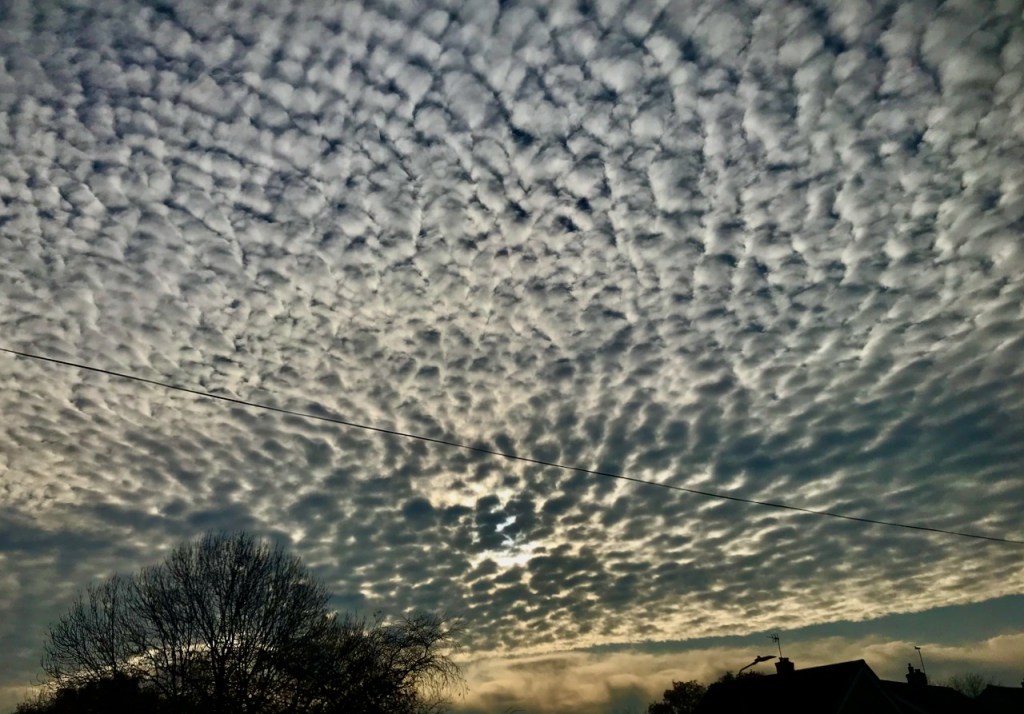
This post is inspired by the sky outside, which immediately reminded me of Manto’s Mottled Dawn. Saadat Hasan Manto, born in Samrala, Ludhiana, is considered one of the most iconic Urdu writers of the twentieth century. He lived in Bombay until 1948 and worked as a successful screenplay writer for the film industry, but even he finally relented and left India for Pakistan. Khalid Hasan writes, “Manto left Bombay, a city that he loved and a city that he yearned for until his dying day, soon after Partition. He felt deeply disturbed by the intolerance and distrust that he found sprouting like poison weed everywhere, even in the world of cinema. He could not accept the fact that suddenly some people saw him not as Saadat Hasan but as a Muslim.” Mottled Dawn: Fifty Sketches and Stories of Partition (Intro. Daniyal Mueenuddin and trans. Khalid Hasan, Penguin Modern classics), brings together stories of dark humour and horror, powerfully capturing the tragedy of Partition. The book begins with the opening lines of Faiz Ahmed Faiz’s Subh-e Azadi – Mottled Dawn.

Below is the full poem by Faiz, courtesy of Penguin.

Subh‐e Azadi
Yeh daagh daagh ujaalaa, yeh shab gazidaa seher
Woh intezaar tha jiska, yeh woh seher to nahin
Yeh woh seher to nahin, jis ki aarzoo lekar
Chale the yaar ki mil jaayegi kahin na kahin
Falak ke dasht mein taaron ki aakhri manzil
Kahin to hogaa shab-e-sust mauj ka saahil
Kahin to jaa ke rukegaa safinaa-e-gham-e-dil
 
Jawaan lahu ki pur-asraar shahraahon se
Chale jo yaar to daaman pe kitne haath pade
Dayaar-e-husn ki besabr kwaabgaahon se
Pukaarti rahi baahein, badan bulaate rahe
Bahut aziz thi lekin rukh-e-seher ki lagan
Bahut qareen tha haseenaa-e-noor ka daaman
Subuk subuk thi tamanna, dabi dabi thi thakan

Suna hai, ho bhi chukaa hai firaaq-e-zulmat-o-noor
Suna hai, ho bhi chukaa hai wisaal-e-manzil-o-gaam
Badal chukaa hai bahut ehl-e-dard ka dastoor
Nishaat-e-wasl halaal, o azaab-e-hijr haraam

Jigar ki aag, nazar ki umang, dil ki jalan
Kisi pe chaaraa-e-hijraan ka kuch asar hi nahin
Kahaan se aayi nigaar-e-sabaa, kidhar ko gayi
Abhi charaag-e-sar-e-raah ko kuch khabar hi nahin
Abhi garaani-e-shab mein kami nahin aayi
Najaat-e-deedaa-o-dil ki ghadi nahin aayi
Chale chalo ki woh manzil abhi nahin aayi
 —Faiz Ahmed Faiz

The Dawn of Freedom, August 1947
This light, smeared and spotted, this night‐bitten dawn
This isn’t surely the dawn we waited for so eagerly
This isn’t surely the dawn with whose desire cradled in our hearts
 
We had set out, friends all, hoping
We should somewhere find the final destination
Of the stars in the forests of heaven
The slow‐rolling night must have a shore somewhere
The boat of the afflicted heart’s grieving will drop anchor somewhere
When, from the mysterious paths of youth’s hot blood
The young fellows moved out
Numerous were the hands that rose to clutch
the hems of their garments,
Open arms called, bodies entreated
From the impatient bedchambers of beauty—
 
But the yearning for the dawn’s face was too dear
The hem of the radiant beauty’s garment was very close
The load of desire wasn’t too heavy
Exhaustion lay somewhere on the margin
 
It’s said the darkness has been cleft from light already
It’s said the journeying feet have found union
with the destination
The protocols of those who held the pain in their
hearts have changed now
Joy of union—yes; agony of separation—forbidden!
 
The burning of the liver, the eyes’ eagerness, the heart’s grief
Remain unaffected by this cure for disunion’s pain;
From where did the beloved, the morning breeze come?
Where did it go?
 
The street‐lamp at the edge of the road has no notion yet
The weight of the night hasn’t lifted yet
The moment for the emancipation of the eyes
and the heart hasn’t come yet
Let’s go on, we haven’t reached the destination yet
—Translated by Baran Farooqui

History and History Writing

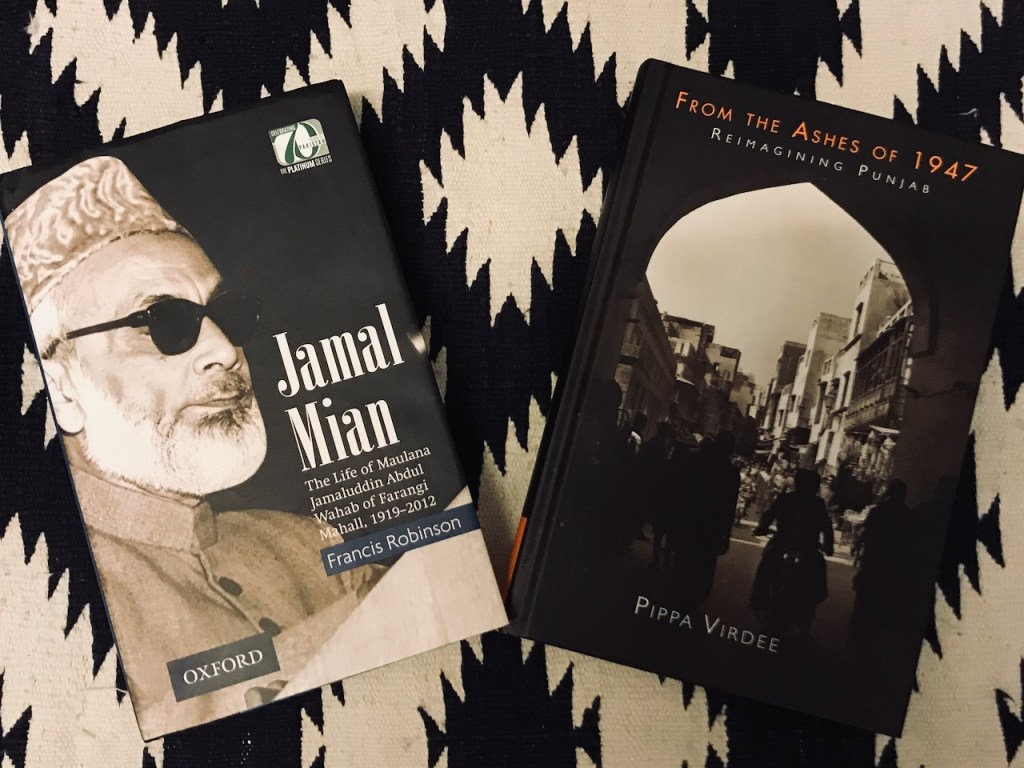
TWO books reviewed of A time BYGONE

The two books are placed on a traditional handmade dhurrie/dari by my mother.

ONE is the biography of Jamal Mian (1919-2012), a life across British India, independent India, East Pakistan and Pakistan. The kind of life, which would be unimaginable to most people of the subcontinent today. At the core, this is a detailed history of the changing political landscape of North India told through the life and times of an extraordinary life. The story unfolds with authority and simplicity, the kind of old-fashioned narrative history writing that barely exists. Stories and history writing are barely written like like because they do not command the short-term impact and they take years, generations to unfold through the relationship of the historian and his subject. But importantly it brings together the life and times of an individual and his milieu – showcasing the kind of “Hindustan” that no longer exists, other than in history books.

Pippa Virdee, FRANCIS ROBINSON. Jamal Mian: The Life of Maulana Jamaluddin Abdul Wahab of Farangi Mahall, 1919–2012, The English Historical Review, ceaa186, https://doi.org/10.1093/ehr/ceaa186

TWO is an account of the province(s) of Punjab; rising From the Ashes of 1947 but simultaneously being reimagined. This too is about a political landscape that has been transformed and only exists in the history books, kinder memories and sepia imaginations of some of its people. It is about the shorter, shocking and longer, hardening consequences of dividing the land of five rivers. It too has been written over a long period and reveals the changing nature of my understanding of Partition, from the beginning of my doctoral work in 2000, to the point of this publication in 2017. It has changed further still because history is about engaging with the past through the unfolding present and “reveals how far nostalgia combined with the lingering aftershocks of trauma and displacement have shaped memories and identities in the decades since 1947.”

Sarah Ansari, PIPPA VIRDEE. From the Ashes of 1947: Reimagining Punjab, The American Historical Review, Volume 125, Issue 2, April 2020, Pages 635–636, https://doi.org/10.1093/ahr/rhz695

Across Three Continents with a Sewing Machine in Tow


© Pippa Virdee

A fragment of my personal history in celebration of International Women’s Day and in memory of my own mother, who played such an important part in shaping my ideas. Visit the Indian Memory Project to read the full piece which I wrote in 2013.