I hope you have been enjoying the photos and blog pieces from 2023. I hope to more productive in 2024 and look forward to sharing more pieces. Please leave any comments/feedback about the Blog below.
Thank you to all the followers and readers of BagichaBlog. I started this Blog in 2016 and I am so pleased that despite having a full-time job I have managed to keep this Blog going, with the humble aim of posting at least once a month. I hope you have enjoyed reading and viewing some of these posts and pictures. Please do leave a comment. Wishing for a more tolerant and peaceful 2022.
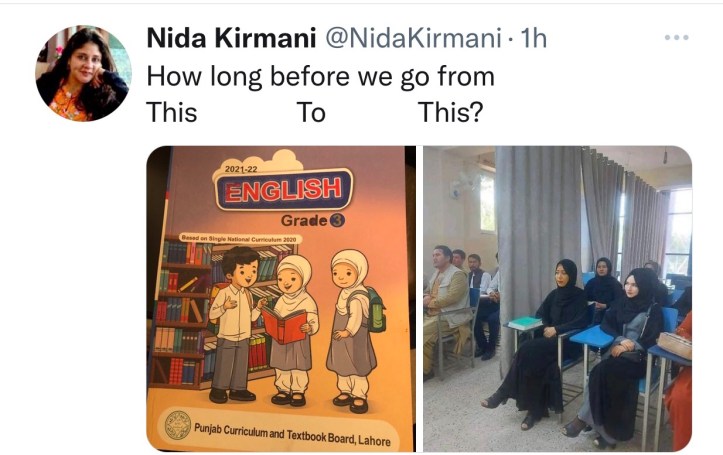
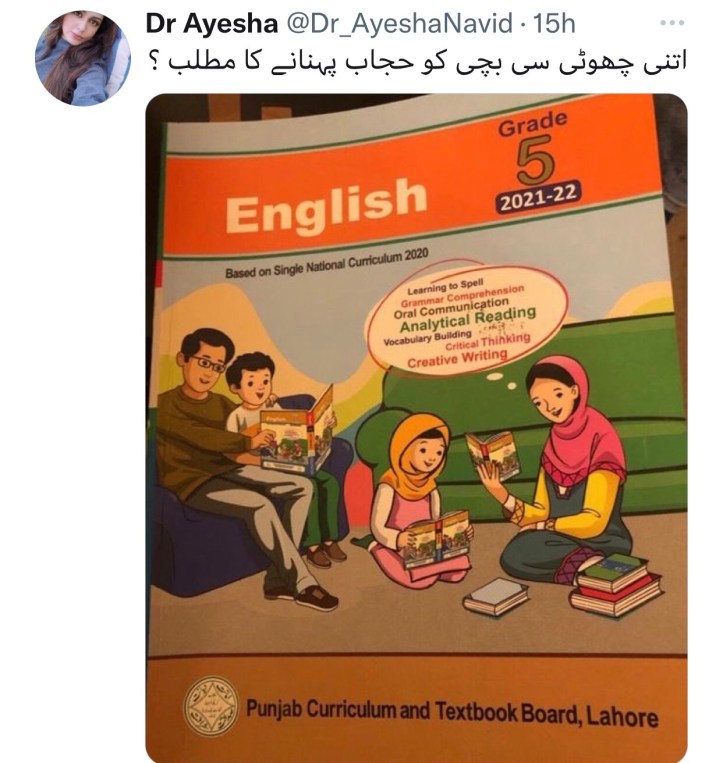
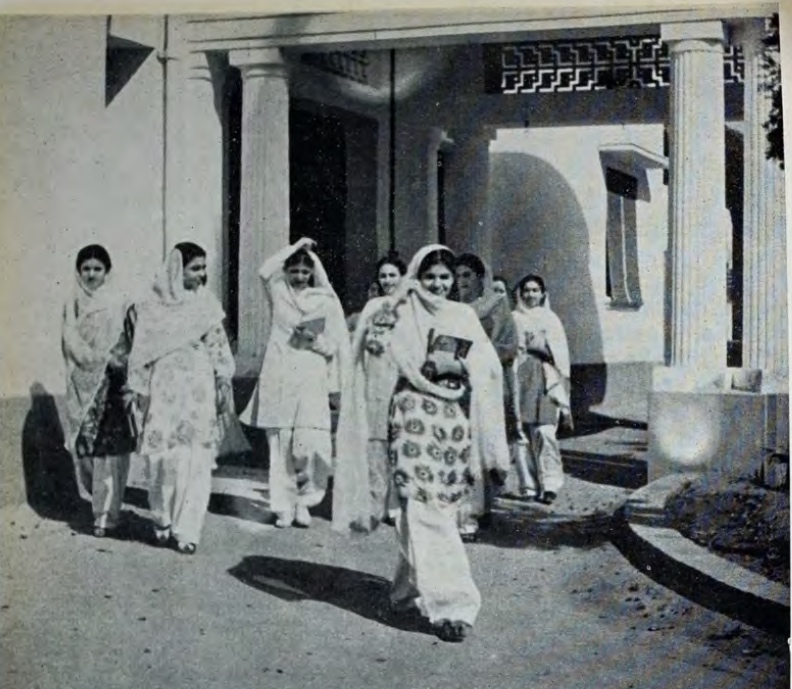
Yesterday morning started with a few tweets that I saw regarding the new Single National Curriculum being introduced in Pakistan. It has generated plenty of discussion and criticism, and rightfully so. The pictures and discussion in these tweets immediately took me back to the day before, when I was in fact going through the pages of Pakistan Quarterly, from the 1950s. I’ve been looking at the formative years of Pakistan and the role played by women, which is far too often side-lined or a footnote in support of the main body.
Below are extracts from two articles, which illustrate some of the discussions that were taking place on the importance of education in the making of a “new Pakistan” and the role of religion (especially girl’s education). Julian Duguid was a journalist, writer and wrote his article while posted in Pakistan. The second article though is by the Vice-Chancellor of Peshawar University, Raziuddin Siddiqi. Dr Siddiqi was born in 1908 and educated in the newly established Osmania University, Hyderabad. Indeed, he was from the first batch that graduated from there and later went on to serve as the Vice-Chancellor of Osmania. In 1950, however, Dr Siddiqi migrated to Karachi and joined Karachi University, at the request of the Government of Pakistan. There was a serious skills shortage in Pakistan following the Partition, and the development of educational institutions and an educated workforce was key to future prosperity.
Lifting of the Veil by Julian Duguid
Pakistan Quarterly, Vol. 2, No. 3, 1952
After hearing the story of the chaos, so bravely met and overcome, I watched with a special interest the young girl students whom it freed. A few still went in burqas, but most of them walked and bicycled as if they’d never heard of purdah. At lunch time, they passed Zam-Zammah, the gun on which Kim used to sit; and in the evenings they did athletics or played tennis. There was nothing whatever to distinguish them from any other healthy young students. Yet, even four years ago, many of them could hardly have dreamt of such freedom.
Of course, liberation on this scale has not gone quite uncriticised. Now and then, a fanatical old mullah, his beard abristle with zeal, will creep behind a girl and cut her hair off to teach her not to be shameless. When this happens, he is taken to the police-station and lectured on the new Pakistan and kept in jail for a few days to cool his ardour. He leaves unconvinced, and muttering; but his generation will pass, and then the veil will be lifted more and more widely among the middle-class city-dwellers as it is among the labouring village people whether in town or country.
It may take many years, but it will come.
Education in Pakistan by Raziuddin Siddiqi, Vice-Chancellor, Peshawar University.
Pakistan Quarterly, Vol. 3, No. 4, 1953.
Immediate steps were, therefore, taken in all Provinces to rehabilitate the old schools and Colleges and establish new ones. Classes were held in several shifts to cope with the enormous increase of students. Adequate measures were adopted for training school teachers in large numbers. Education was given high priority along with defence and law and order in the Central and Provincial budgets. A number of new Universities were established in order to provide suitable teachers for the schools and colleges. Educational materials, such as books, journals and scientific equipment, was imported in a large quantity from Europe and America. Young men and women were sent in considerable numbers for training abroad. A six years Plan was formulated to give effect to considered policy of all-round educational development.
It would not be out of place to give here a short account of our policy in this scheme of educational development. The fundamental aim before the authorities in this matter has been ensure to that each and every individual gets the best and highest education and training commensurate with his capabilities. Islam lays down the acquisition of knowledge as an integral part of the duties of every individual Muslim of either sex. It is a unique and distinguishing feature of this religion, which enjoins its followers to think and know for themselves. It has been explicitly stated in the Holy Quran that “God exalteth and elevates to higher ranks only those who are believers, and who have been accorded knowledge”.
Islam does not allow the sharp division of an individual’s existence into a religious and secular life, as believed necessary by the people following other religions. There is no priest-class among the Muslims. Non-observance of this essential principle of Islam, has been one of the main factors in the deterioration of our condition in the past. On the one hand the general body of Muslims were educated in secular schools, and knew very little of the fundamental principles of their religion. For even a little bit of information about their faith, they were entirely at the mercy of the ‘Mullas’. On the other hand, the ‘Mullas’ studied in religious institutions which were completely divorced from all modern knowledge. This was affecting adversely the national life at both ends. The educated young Muslims were generally absorbing atheistic or agnostic tendencies more and more, and instead of proving a source of strength to the community, were undermining its very existence. The ‘Mullas’ were becoming more and more ignorant, fanatic and narrow minded, thus bringing the religion itself into disrepute and contempt.
It was necessary, therefore, to evolve a new system of education, or rather to revive the older system of the early days of Islam in which all knowledge was one, and there was no artificial distinction between religious and non-religious knowledge.
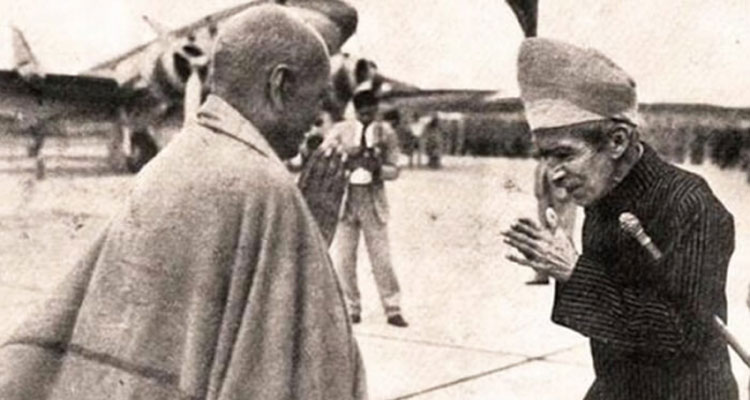
The Nizam of Hyderabad receiving Sardar Patel after Operation Polo
Extract from the Sunderlal Report
Operation Polo is the code name of Hyderabad “police action” in September 1948. On Day 5 of this operation, 17 September 1948, the Nizam announced a ceasefire which ended the armed action. The operation led to massive communal violence and violations by the police. This prompted Jawaharlal Nehru to appoint a commission, led by Pandit Sunderlal, to investigate the situation. The findings of the report remained buried until 2013 when it was finally released and was accessible from Nehru Memorial Museum and Library (New Delhi).
Subject File No. 2. Sunderlal Papers, NMML.
We were asked by the Government of India to proceed to Hyderabad state on a goodwill mission and beg to submit our report. The delegation consisting of Pandit Sunderlal, Qazi Abdul Ghaffar and Maulana Abdulla Misri arrived in Hyderabad on 19th November and left for Delhi on 21st December 1948. During this period, we toured through 9 out of the 16 districts of the state, visiting 7 district headquarters, 21 towns and 23 important villages. In addition, we met over 500 people from 109 villages which we had not visited. Further, 31 public meetings and 27 private gatherings…were addressed by the members of the Mission.
At all these meetings, the main problem discussed was that of the creation and maintenance of cordial relations between the communities. Appeals were made to the people to forget the past and to work unremittingly for the establishment of peace and harmony amongst themselves….special emphasis was laid on the objective which was the established of a secular government…Ours was not a commission of investigation or enquiry into events proceeding of following the police action…All the same we feel it our duty to bring to your notice what we saw and gathered in our two weeks.
Killing and Looting
Hyderabad State has 16 districts comprising nearly 22,000 villages. Out of them only three districts remained practically free of communal trouble which affected the state during first the activities the Razakars and then during the reprisals that followed the collapse of that organisation. In another four districts the trouble had been more serious but nothing like the havoc that overtook the remaining eight. Out of these again the worst sufferers have been the districts of Osmanabad, Gulbarga, Bidar, and Nanded, in which four the number of people killed during and after the police action was not less than 18,000. In the other four districts viz Aurangabad, Bir, Nalgonda and Medak, those who lost their lives numbered at least 5,000. We can say at a very conservative estimate that in the whole state at least 27,000 to 40,000 people lost their lives during and after the police action. It is a significant fact that the four worst affected districts had been the main strongholds of Razakars and the people of these districts had been the worst sufferers at the hands of the Razakars. In the town of Latur, the home of Qasim Razvi, which had been a big business centre, with rich Kuchchi Muslim merchants, the killing continued for over 20 days. Out of a population of about 10,000 Muslims there, we found barely 3,000 still in the town.
Other Crimes
Almost everywhere, communal frenzy did not exhaust itself in murder, in which at some places even women and children were not spared. Rape, abduction, loot, arson, desecration of mosques, forcible conversions, seizure of houses and land, followed or accompanied the killing. The sufferers were Muslims who formed a hopeless minority in rural areas. The perpetrators of these atrocities were not limited to those who had suffered at the hands of Razakars, not to the non-Muslims of Hyderabad State. These latter were aided and abetted by individuals and bands of people, with and without arms, from across the borders, who had infiltrated through in the wake of the Indian army. We found definite indications that a numbers armed and trained men belonging to a well-known Hindu communal organisation from Sholapur and other Indian towns as also some local and outside communists participated in these riots and in some areas actually led the rioters.
The Army and the Police
Duty also compels us to add that we had absolutely unimpeachable and independent evidence to the effect that there were instances in which men belonging to the Indian army and also the local police took part in looting and even other crimes. During our tour we gathered, at not a few places, that soldiers encouraged, persuaded and in a few cases even compelled the Hindu mob to loot Muslim shops and houses. At one district town, the present Hindu head of the administration told us that there was a general loot of Muslim shops by the military…Complaints of molestation and abduction of girls, against Sikh soldiers particularly, were by no means rare…unfortunately there was a certain element in the army that was not free from communal feelings probably because some of them could not forget the atrocities committed elsewhere on their kith and kin. Before concluding this summary of atrocities committed we would like to affirm that we have not made any of the above statements lightly or without realising to the full our responsibility in making them…we are prepared to place before you all the relevant material collected.
The Razakar organisation, had in the Muslim mind stood as an effective barrier against the establishment of a Hindu Raj, the latter being synonymous to the average Hyderabadi Muslim with the demand by state Congress of a responsible government as it would in effect be based on the will of the Hindu majority. Barring a microscopic minority, the Muslim masses generally were unable to realise that their sufferings were the inevitable reprisals of the Hindu masses to the atrocities committed on the latter only a few weeks before by the Razakars, who had the active sympathy if not the actual support of practically every single Muslim in Hyderabad from the Nizam downwards. There were some exception of course, but it is doubtful if they number more than a few dozen. Such of them as dared to publicly oppose the Razakars’ activities paid heavily for their temerity. Even those Muslims who traced their happenings to their original cause, the Razakars, considered the police action as their immediate cause for which they held the Indian government responsible. Like the Razakars, the perpetrators of these crimes against the Muslim actively encouraged and nurtured the belief that they had the backing of the administration of the day.
Colour was lent to this belief by some actions and omissions of such people in authority as had been unable to purge their minds of the communal virus. The doubts and suspicions as regards the good faith and the absolute impartiality of the Indian government as between the Hindus and the Muslims, however baseless, were thus not the unnatural outcome of the indiscriminate sufferings of hundreds of thousands of Muslims in which tens of thousands lost their lives…in this campaign of retaliation at least a hundred were made to suffer for the sins of each guilty individual. Unfortunately, the conduct of some of the congressmen added to the distrust of the Muslim population…it was reported to us during our tour that at some places, persons claiming to be congressmen took the law in their own hands and adopted various devices of extracting money from panicky Muslims…such persons were going about approaching Muslims who had not left their homes or those who had returned extracting money from them against promises of so-called protection…Congressmen had auctioned cultivatable land left behind by Muslims on condition that half the crops were to be handed over to the Congress.
Doubts and suspicions in the minds of the literate Muslims were aggravated by yet another factor, namely the complaints of those who had been in state service before the police action and had lost their jobs. We have received a long list of names of persons dismissed, degraded, suspended or otherwise penalised in various departments…we are quite prepared to believe that some of these were men who could not be allowed to continue in the best interest of the administration but we have reasons to believe that a large number have suffered and are suffering for no fault of theirs. There may be cases of mere suspicion or false accusation. In fact, we have incontrovertible evidence of the innocence of some of these men. We are sure these men can be depended upon for their loyalty to the new regime. The fact also remains that these readjustments have landed a large number of Muslims families in considerable difficulties…the fact is that bitter experience has brought home to the Hyderabadi Muslims the dire consequences of communalism. Naturally they now want to live and let live. We believe that they would be perfectly happy and contented if they can be taken out of the present atmosphere of distrust and frustration.













 BAGICHA