Originally published 5 Sept 2012 but relevant today.
If you want to read further also see this article in The Friday Times by Muhammad Asif Nawaz, The old world charms of Mian Salli, originally published 25 July 2014.
Originally published 5 Sept 2012 but relevant today.
If you want to read further also see this article in The Friday Times by Muhammad Asif Nawaz, The old world charms of Mian Salli, originally published 25 July 2014.
In this age of electoral nationalism, a reminder of how a different ideology exists at the periphery of the public imaginary. Memento Park, Budapest.


Faletti’s Hotel is the oldest colonial hotel in Lahore. It opened in 1880 in the old walled city. Back then, it claimed to be one of the finest hotels. By modern standards, this is not a big place, but it is certainly one of the most sought after. It retains the colonial architecture along with a matching attitude. One of the reasons that Faletti’s continues to attract so much attention is to do with the famous guests that have stayed there, over the years.
Read about the origins and owner, Giovanni Faletti on Faletti’s website.
A fascinating account in Dawn about the owners changing hand:
According to tales recounted by old hotel employees, Faletti’s Hindu clerk, Oberoi, offered to buy some shares, and Faletti was so impressed and delighted that someone whose job was to haul coal for the rooms had saved enough to buy the shares of his hotel that he allowed him to become his trusted employee. When Faletti finally left Pakistan, he gifted Oberoi all his hotels on the condition that he would not change the name of Faletti’s. Oberoi stayed true to his word and earned so much from just Faletti’s alone that he invested in a hotel in Delhi, the famous Oberoi, following which he established more hotels in India…After the 1965 war, Oberoi decided to move to India and sold majority shares of the hotel to PTDC — again on the condition that the hotel name would not be changed.
Everyone from the great Quaid-i-Azam to Hollywood actors have stayed at the hotel. Ava Gardner and Stewart Granger stayed here for three months during the filming of Bhowani Junction, which took place in 1955. The room in which she stayed is now known as the ‘Ava Gardner Suite.’ Marlon Brando stayed here when he was visiting the country on behalf of UNICEF. One of the Chief Justices of Pakistan, A.R. Cornelius, took up residence at Faletti’s and stayed at the hotel for over 40 years until his death in 1991. Whereas Mohammad Ali Jinnah stayed at Faletti’s when he came to Lahore to argue the appeal of Ghazi Ilm-ud-Din Shaheed before the Lahore High Court in July 1929.
Other guests have included the cricketer Sir Garfield Sobers, Jawaharlal Nehru, Dilip Kumar, Raj Kapoor, and Mohammad Rafi.


Jawaharlal Nehru to Baldev Singh, 23 November 1948 (JN SG File No. 15 Pt.-II):
‘[Your] note about the Sikh position in East Punjab…I was surprised and depressed to read it. I entirely agree with you that we should help the Sikhs wherever possible. But [your] proposals seem to me basically opposed to the very things we proclaim and stand for. Our government as well as the Constituent Assembly have declared themselves to be totally opposed to communalism. We may not be able to put an end to [it], but in all governmental activities we can give it no place…The Constituent Assembly [came] to certain decisions last year in regard to minorities which are applicable to all of them…no government can apply one principle to one community and totally different principle to other communities…This means joint electorates, reservation where desired by the minority, but on the basis of population only and no weightage.
Regarding the carving out of a new province or transfer of Gurgaon district to Delhi, I have been opposing suggestions for provincial redistribution or division…I believe that something of this kind will have to be done but [not] I at this particular time when we are grappling with very difficult problems…Let this matter be considered dispassionately somewhat later. The Punjab, as you remind us, is a frontier province now and we cannot allow the situation in the East Punjab to deteriorate. Nor will it be desirable to think in terms of communal provinces when refashioning our provincial areas…Any untoward development in East Punjab might have serious repercussions on the Kashmir situation…As for the formation of constituencies, any attempt made to gerrymander in favour of this or that group would also lead to bitterness and conflict.
I would very much like to do something to convince the Sikhs that their fears are groundless. Indeed, I do not myself see why a progressive and enterprising community like the Sikhs should be afraid of the future…It would be doing an ill-turn to the Sikhs to treat them as the Muslim League wanted the Muslims to be treated before the Partition. What I have been specially distressed is the strained similarity between the present demands of some of the Sikh leaders and the old Muslim League demands…Can we not learn from bitter experience? You have rightly complained of some articles and cartoons in the few Delhi papers. But whatever these papers may have written, it pales into insignificance before the speeches and statements of Master Tara Singh…extraordinarily irresponsible…open incitement to war and to internal conflict…upset me a great deal’.
Tara Singh (District Jail, Banaras) to Nehru and Patel, 19 April 1949 (JN SG 23 Pt.-I):
‘Since I read in the “Statesman” that the consideration of formation of linguistic provinces in northern India has been indefinitely postponed, I have been deeply thinking how to convince you that the Sikhs are in urgent necessity of maintaining Panthic entity in order to protect their religion…the Sikhs in order to exist, must have a home in the Indian Union where they have some power to practice and advance their culture, religion and language according to their own light…Why should the Congress yield to the communal demand of the Hindus of the Punjab and be a tool in the hands of the communalism of the majority? The vocal section of the Hindus in the East Punjab wish to dominate us and use us as chowkidars…it was the Hindu press which was the first to write that the Hindus cannot live in a province where the Sikhs be in majority…this is the mentality of the so-called nationalists…if the Hindus who have majority in the central government cannot stay in a province where the Sikhs may have majority, how can the Sikhs stay in a Hindu-majority province when they are in hopeless minority in the centre also?…It is of course easy for those in majority to pose as purely nationalists, for best nationalism and worst communalism coincide here…
I feel I am the person responsible for bringing the Sikhs to the present position…In 1929, when [Motilal] Nehru report was published, the Sikhs as a community went out of the Congress…I, with some colleagues, [persuaded] the leaders of the Central Sikh League to come to a settlement…I, with others, came back to the Congress. If the Congress now forgets its promise, I am not going to shirk my responsibility…I may give an example. A [Sikh] deputation met Sardar Patel some time ago and put some demands. He did not agree to any one of them. One of the demands was that while granting certain privileges and concessions to depressed classes, no distinction on religious ground be made…at present, if a Hindu of a depressed class embraces Sikhism, he is deprived of these privileges and if a Sikh of a depressed class embraces Hinduism, he gets the privileges…Congress leaders had [said] that if that distinction was removed, some of the depressed class Hindus would embrace Sikhism. This is how cat was let out of the bag…
Most of the Punjab Hindu leaders [are] communalist at heart…a Sikh protects every religion…Guru Teg Bahadur sacrificed himself to protect Hinduism…so I claim that the Khalsa Panth is not communal…most Hindus do not realise it…independence to them appears Hindu domination…I do believe in the fundamental oneness of the Hindu and Sikh religions, but I do not call myself a Hindu…I wish to save the Khalsa Panth which will prove a pillar of strength of the country, as it did in the past…Sardar Patel does not seem to realise this…my only hope and my only weapon is righteousness of my cause and my faith in Him who saved Prahlad…I make the following two demands: 1) Sikhs and Hindus of the depressed classes should have the same privileges and concessions; 2) a Punjabi-speaking province shall be created so that the bulk of the Sikh population shall not live under Hindu domination on provincial basis…I have never demanded and do not demand now an independent Sikh State…I do demand a self-governing unit within the Indian Union…we are a religious minority in dire need of protection…if my above two demands are not granted, I shall start my fast unto death…Kindly do not enter into technicalities while replying…’
Read further:
J.S. Grewal, Master Tara Singh in Indian History. Colonialism, Nationalism, and the Politics of Sikh Identity, (OUP, 2018)
J.S. Deol, Baldev Singh (1902-1961), Oxford Dictionary of National Biography (2004).
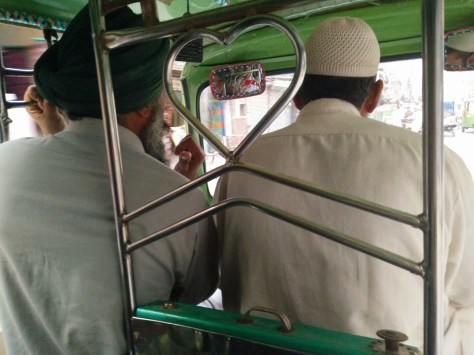
This picture was taken by me during one of the most memorable tuk tuk rides in Peshawar in 2017, when I was exploring the city and trying to find a gurdwara in the narrows lanes of the congested city. Along came this sardar ji who jumped on the tuk tuk and navigated us to Gurdwara Bhai Joga Singh. As the sounds and sights gather momentum around the opening of the Kartarpur corridor, I share this moment that speaks silently for the hopes of many.


What Made the East India Company So Successful? Analysis Goes Missing in Dalrymple by Rudrangshu Mukherjee, The India Forum, 11 Oct 2019
William Dalrymple’s book on the East India Company is written very well and has a great deal of detail. But the writing of good History needs more. It calls for a consideration of all relevant facts and a comprehensive analysis. This is unfortunately missing.
The Anarchy: The East India Company, Corporate Violence, And The Pillage Of An Empire By William Dalrymple, Bloomsbury, Rs 699.
LSE Blog: Long Read Book Review: Masala Shakespeare: How a Firangi Writer Became Indian by Jonathan Gil Harris
In Masala Shakespeare: How a Firangi Writer Became Indian by Jonathan Gill Harris, Harish Trivedi (Former Professor of English, Delhi) finds a book that examines the similarities between India and Shakespeare. Taking the author’s understanding of the word masala (in this case meaning something hybrid, mixed or more-than-one), Trivedi explains the problems of such a comparison and literary interpretation of Indian society and culture.
Masala Shakespeare: How a Firangi Writer Became Indian. Jonathan Gil Harris. New Delhi: Aleph, 2018. 282 pp.
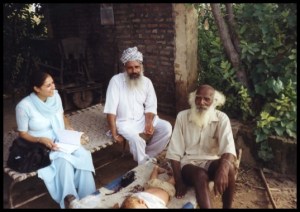
Sharing my piece from a commemorative edition on Gandhi in the National Herald. It revisits my doctoral research on the former Muslim princely state of Malerkotla and recalls attempts at communal harmony by that state, sandwiched between its famous Sikh princely brethren & British Indian apparatus, but on this occasion, more sensible than both.
3. That a life of labour, i.e., the life of the tiller of the soil and the handicraftsman, is the life worth living.
 BAGICHA