Category Archives: Videos

Looking for Kabir

Kabirdas was a 15th century Indian mystic poet and is revered as a saint by many, across regions, communities, castes, and, now, nations. A disciple of Ramananda (in Banaras), his writings fed the syncretic Bhakti movement, which in turn influenced the development of Nanak and his teachings, to the extent that Kabir’s immortal verses are included in Adi Granth. Kabir was critical of all organised, institutionalised, hierarchical faiths, and their rites and rituals, sanctioned by sanctimonious and exploitative clergy. For Kabir, the Truth was not in these trappings, nor in their egoistic traders.

chadariya jheeni re jhini (Kabir)

Read this wonderful explanation and translation: https://www.petervis.com/gallery/web/bollywood-translations/chadariya-jhini-re-jhini-english-translation.html

Kabir and The Kabir Panth by Rev. G.H. Westcott, Fellow of Allahabad University (Cawnpore, 1907) https://archive.org/details/KabirAndTheKabirPanth_466/mode/2up Page 1-5

It is generally allowed that of all the great Reformers, Kabir (1440-1518) and Tulsi Dass (1544-1624) have had the greatest influence for good among…Northern and Central India. Kabir has been described…as the Indian Luther (1483-1546)…

Among those who acknowledge their indebtedness to Kabir as a spiritual guide are Nanak Shah (1469-1538) of the Panjab, the founder of the Sikh community; Dadu of Ahmedabad (1544) founder of the Panth that bears his name, and Jag Jiwan Dass of Oudh (1760) the founder of the Sat Nami sect. Among religious teachers whose doctrine is said to be largely based upon the teaching of Kabir are Bribhan, founder of the Sadh community (1658), Baba Lal of Malwa and Shiva Narain of Ghazipur.

In modern days the number of those who have in one way or another come under the influence of Kabir is very great. In the Census Report of 1901, the number of Kabir Panthis alone is returned as 843,171 and the actual number is probably considerably larger, as in the United Provinces many Kabir Panthis seem to have been returned as Ramanandis and the figures for the Panjab are not included.

The hymns of Kabir are still sung by many a wandering minstrel, while his pithy sayings are frequently employed to win the attention of a dreamy audience or to clench a lengthy argument.

Unfortunately, the material for a life of Kabir is miserably scanty. It is admitted by all Kabir Panthis that Kabir was brought up as a child in the house of Niru, a weaver. In the Adi Granth occur these lines: By caste a weaver and patient of mind: utters Kabir with natural ease the excellences of Ram.

One Hundred Poems of Kabir, translated by Rabindranath Tagore, assisted by Evelyn Underhill (Macmillan, 1915) https://archive.org/details/OneHundredPoems/mode/2up?q=kaaba Page XV

It does not need much experience of ascetic literature to recognise that boldness and originality of this attitude in such a time and place. From the point of view of orthodox sanctity, whether Hindu or Mohammedan, Kabir was plainly a heretic; and his frank dislike of all institutional religion, all external observance – which was a thorough and as intense as that of the Quaker themselves – completed, as far as ecclesiastical opinion was concerned, his reputation as a dangerous man. The God whom he proclaimed was “neither in Kaaba nor in Kailash.”

 Mo ko kahan dhunro bande
 O servant, where dost thou see Me?
 Lo! I am beside thee
 I am neither in temple nor in mosque:
 I am neither in Kaaba nor in Kailash:
 Neither am I in rites and ceremonies, nor in Yooga and renunciation.
 If thou art a true seeker, thou shalt at once see Me: thou shalt meet Me in a moment of time.
 Kabir say, “O Sadhu! God is the breath of all breath.” 

 Santan jat na pucho nirguniyan
 It is needless to ask of a saint the caste to which he belongs;
 For the priest, the warrior, the tradesman, and all the thirty-six castes, alike are seeking for God.
 It is but folly to ask what the caste of a saint may be;
 The barber has sought God, the washerwoman, and the carpenter –
 Even Raidas was a seek after God.
 The Rishi Swapacha was a tanner by caste.
 Hindus and Moselms alike have achieved that End, where remains no mark of distinction.  

HAD ANHAD (Bounded Boundless): Journeys with Ram & Kabir (103 min, English Subtitles) A film by Shabnam Virmani – Kabir was a 15th century mystic poet of north India who defied the boundaries between Hindu and Muslim. He had a Muslim name and upbringing, but his poetry repeatedly invokes the widely revered Hindu name for God – Ram. Who is Kabir’s Ram? This film journeys through song and poem into the politics of religion, and finds myriad answers on both sides of the hostile border between India and Pakistan.

Further Reading see Purushottam Agrawal: Kashi ka Kabir and Akath Kahani Prem Ki: Kabir Ki Kavita Aur Unka Samay (An Ineffable Tale of Love: Kabir’s Poetry and his Times) (Rajkamal Prakshan, 2009).

Revolution in their blood

Harinder Bindu and Sonia Mann have become prominent faces at the ongoing farmers’ movement. Both Bindu and Mann’s fathers were gunned down by Khalistanis during the militancy in Punjab, in the early 1990s. “What does this society think of women? This society’s Manusmriti, its religious institutions, and its other institutions, they think that ‘Women have no wisdom. They should be kept under our shoes,’” Bindu said. “But we say ‘No.’ Women are equal to men and they too have the right to struggle. For a life of equality, for a good life, they should fight.” “They [the government] are the ones operating like terrorists,” Mann said. “They are the ones shooting cold water [from water canons] at us and our elders, throwing tear gas at them, and hurting them [elders].” Shahid Tantray reports. Camera by CK Vijayakumar and Tantray. #FarmersProtest

Safed/White

It is the first post of 2021 and I start with the colour white/safed. White is often associated with a sense of peace, purity, innocence, a new beginning, of wiping the slate clean, a blank canvas and opportunity for you to do/write your own acts/words. Some people find white serene, tranquil and pure, while others may feel it is stark and cold; lacking any “colour”. In the occident, the colour white is often associated with weddings, hospitals, and angels and is used to convey a sense of purity and cleanliness. On the other hand, in the orient, white is symbolically linked to a colour of mourning and sadness, but underlying this is also a sense of nothing and renewal.

Here I share the words of poet Benjamin Zephaniah and boxer Mohammad Ali on what happens when you invert black for white…

White Comedy by Benjamin Zephaniah
  
 I waz whitemailed
 By a white witch,
 Wid white magic
 An white lies,
 Branded by a white sheep
 I slaved as a whitesmith
 Near a white spot
 Where I suffered whitewater fever.
 Whitelisted as a whiteleg
 I waz in de white book
 As a master of white art,
 It waz like white death.
  
 People called me white jack
 Some hailed me as a white wog,
 So I joined de white watch
 Trained as a white guard
 Lived off the white economy.
 Caught and beaten by de whiteshirts
 I waz condemned to a white mass,
 Don't worry,
 I shall be writing to de Black House.
   

The Punjab Peasant: past & present literature

The Trolley Times has been launched recently by a group of four youngsters at the Singhu border. The idea was conceived by Ajaypal Natt from Mansa, along with Surmeet Mavi, Gurdeep Singh and Narinder Bhinder. The YouTube interview provides an insight into how the idea was developed, its purpose of reaching out and communicating with people who do not have smart phones and are not connected to social media. Moreover, telecom signals around protest areas are typically suppressed to slow down exchanges and mainstream electronic/print media in India is better known as “godi media”, not just unsympathetic to the thousands currently protesting against the farmers laws brought in September but simply the government’s voice. The first issue of the Trolley Times “carried Bhagat Singh’s quote on struggle; photographs from the centre of the struggle; story of a woman farmer, Gurmail Kaur, who died during the protest; some works of art and the lead article gave the message of unity, struggle and victory. ” The Tribune

The list below provides some references for reading further about the Punjab peasant in a historical context, focusing on some of its radical moments. The region was one of the last to be annexed by the British in the subcontinent in 1849, and subsequently underwent phenomenal transformation with their development of the canal colonies from 1885 onward. Punjab was divided and sub-divided following the Partition of 1947 but agriculture has remained at the core of Punjabi culture and identity.

  1. Ali, Imran. The Punjab under imperialism, 1885-1947. Vol. 923. Princeton University Press, 2014.
  2. Barrier, Norman G. “The formulation and enactment of the Punjab alienation of land bill.” The Indian Economic & Social History Review 2, no. 2 (1965): 145-165.
  3. Bhardwaj, Ajay. Filmmaker and Artist – http://ajaybhardwaj.in/films/
  4. Chattha, Tohid Ahmad, Abdul Qadir Mushtaq, Sumera Safdar, and Khizar Jawad. “Historical Perspective of Kirti Kisan Party and its Politics in colonial Punjab.” Journal of the Research Society of Pakistan 55, no. 1 (2018).
  5. Chopra, Radhika. Militant and Migrant: The Politics and Social History of Punjab. Routledge, 2012.
  6. Darling, Malcolm Lyall. Punjab peasant in prosperity and debt. Humphrey Milford, London, 1925.
  7. Deol, Amrit. “Workers and Peasants Unite: The Formation of Kirti and the Kirti-Kisan Party and the Lasting Legacy of the Ghadar Movement.” Journal of Sikh and Punjab Studies, 26, no. 1&2: 250.
  8. Gajrani, S. “Role of Kirti Kisan Party in Agrarian Movement (1927-35).” Constitutional Schemes and Political Development in India: Towards Transfer of Power 2 (1994): 463.
  9. Gill, Sucha Singh. “The farmers’ movement and agrarian change in the green revolution belt of North‐West India.” The Journal of Peasant Studies 21, no. 3-4 (1994): 195-211.
  10. Highfield, Jonathan. “Finding the voice of the peasant: Agriculture, neocolonialism and Mulk Raj Anand’s Punjab Trilogy’.” Journal on Interdisciplinary Studies in Humanities 1, no. 2 (2009): 115-133.
  11. Islam, M. Mufakharul. “The Punjab land alienation act and the professional moneylenders.” Modern Asian Studies 29, no. 2 (1995): 271-291.
  12. Jodhka, Surinder S. “Beyond ‘crises’: rethinking contemporary Punjab agriculture.” Economic and Political Weekly (2006): 1530-1537.
  13. Josh, Sohan Singh. Baba Sohan Singh Bhakna: Life of the Founder of the Ghadar Party. New Delhi: People’s Publishing House, 1970.
  14. Kalra, Virinder S., and Shalini Sharma, eds. State of Subversion: Radical Politics in Punjab in the 20th Century. Routledge, Taylor & Francis Group, 2017.
  15. Kalra, Virinder S., and Waqas M. Butt. “‘In one hand a pen in the other a gun’: Punjabi language radicalism in Punjab, Pakistan.” South Asian History and Culture 4, no. 4 (2013): 538-553.
  16. Kessinger, Tom G. Vilyatpur, 1848-1968: Social and Economic Change in a North Indian Village. Vol. 19. University of California Press, 1974.
  17. Mukherjee, Mridula. “Some Aspects of Agrarian Structure of Punjab 1925-47.” Economic and Political Weekly (1980): A46-A58.
  18. Mukherjee, Mridula. “Peasant Protest in Punjab: Forms of Struggle and Mobilization.” In Proceedings of the Indian History Congress, vol. 59, pp. 812-823. Indian History Congress, 1998.
  19. Mukherjee, Mridula. Colonizing agriculture: the myth of Punjab exceptionalism. Sage, 2005. 
  20. Raza, Ali. “Provincializing the International: Communist Print Worlds in Colonial India.” In History Workshop Journal, vol. 89, pp. 140-153. Oxford Academic, 2020.
  21. Sharma, Shalini. Radical Politics in Colonial Punjab: Governance and Sedition. Routledge, 2009.
  22. Singh, Nazer. “The Anti-British Movements from Gadar Lehar to Kirti Kisan Lehar.” PhD Diss., Punjabi University, Patiala, 2011.
  23. Talbot, Ian. “The Punjab Under Colonialism: Order and Transformation in British India.” Journal of Punjab Studies 14, no. 1 (2011): 4.
  24. Tandon, Prakash. Punjabi Saga:1857-2000. Rupa, 2000.

This is not an exhaustive list, so please do share any other references in the comments.

Koi bole Ram Ram, Koi bole Khuda.

Thought for the day.

Kala/Black

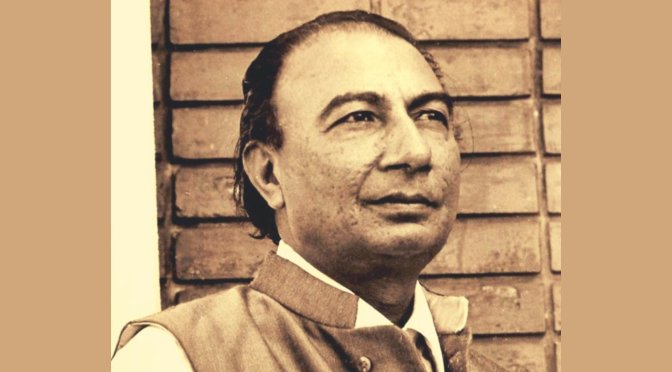
Saifuddin Saif was born in Amritsar in 1922. He wrote some very powerful poems during his college days. He was always inclined towards writing for films, but the films for which he had written lyrics before partition were not released due to the unfavorable conditions in the subcontinent. Saif penned songs for Teri Yaad (1948) which was the first film to be released in Pakistan and received admiration for the freshness of his poetry. (courtesy of Rekta: https://www.rekhta.org/Poets/saifuddin-saif/profile)

For the lyrics of Chandni Raat: https://www.rekhta.org/ghazals/chaandnii-raat-badii-der-ke-baad-aaii-hai-saifuddin-saif-ghazals

Read about Ali Sethi’s version of Chandni Raat, which has the lyrics plus a translation in English: https://dilliwaliblog.wordpress.com/2019/03/03/chandni-raat-ali-sethi/

The ‘Jingle Trucks’ and the emergence of Truck Art

TurckArt - 3
© 2017 Pippa Virdee

Earlier in June, I shared a piece about Pakistani Truck Artist Haider Ali and his homage to George Floyd. It resonated with many people. At the same time, I was also writing a separate piece around the cultural landscape and art scene in Pakistan. Originally, I had planned to include something about Truck Art, which I have always been intrigued and charmed by. I even wrote about it but in the end, I had to exclude it from the final version. But words are never wasted, and here I share some of that in an extended version.

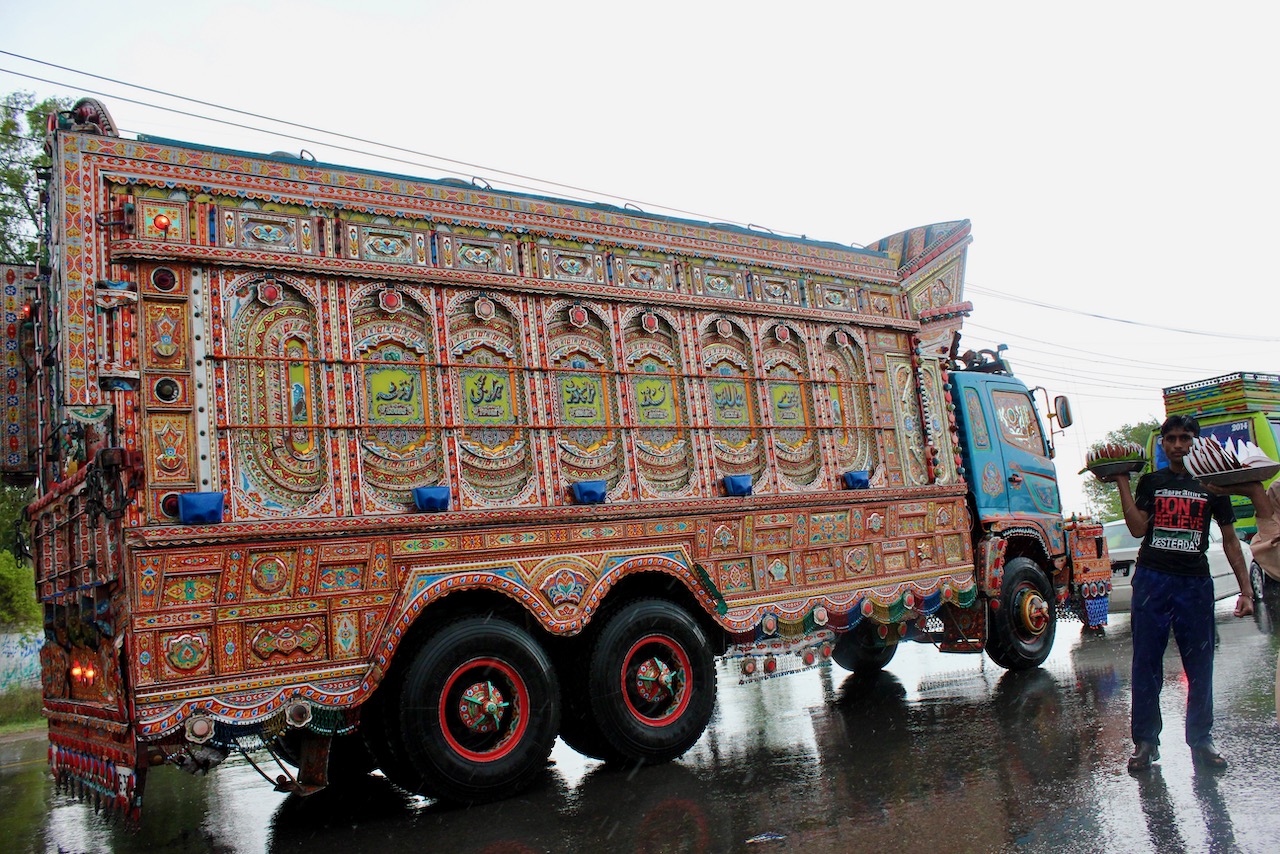
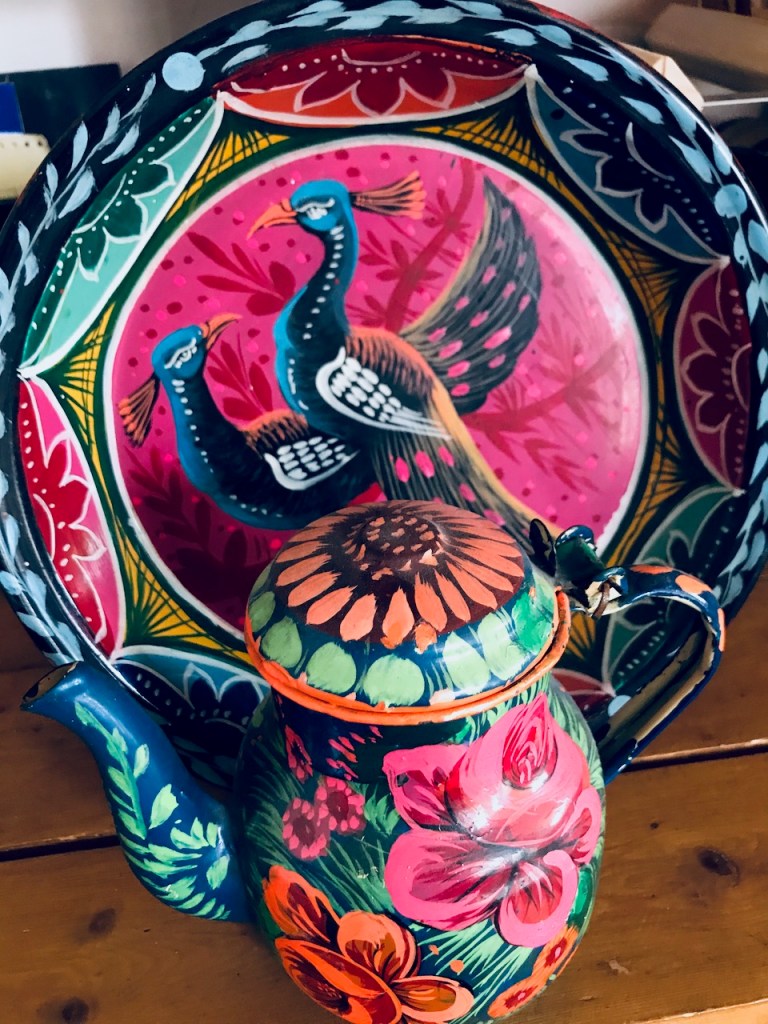
Anyone who has visited Pakistan, seen it on screen or in pictures, would have encountered the vibrant, highly distinctive, and perhaps even outlandish, painted trucks. This form of decorating and customising trucks is popular in South Asia, but the designs and passion displayed are quite exceptional in Pakistan. Over the years these truck designs have transformed and evolved from depicting religious iconography and Sufi saints to a much more dynamic art-form. The lively and loud paintings incorporate animals, fauna and flora in a psychedelic array of colours. The artwork is paired with poetry, calligraphy, popular idioms, and popular iconography to represent an individual expression of the trucker’s identity and background. On the surface, they may appear the same but deeper inspection reveals the regional identity and character of the person and the location. Although it is thought that specialism in truck art was prevalent in NWFP/KP, it has travelled through migration of labour to the port city of Karachi, where it has found fertile ground and flourished.

History

The exact origins of this kind of art-form are unknown, but it does date back to the early 20th century. According to Paracha, a more restrained version of this art-form was present in the subcontinent in the 1940s. That of course would also have something to do with the lack of accessibility to the materials used to paint and decorate these trucks. Paracha suggests that, “It first appeared on trucks and lorries driven by Sikh transporters who would paint a portrait of their spiritual Gurus, or those who helped form the Sikh religion. The portraits were painted with the loudest of colours. Simultaneously, Muslim transporters and drivers began to paint portraits of famous Sufi saints on their trucks and lorries.”

On Pinterest there is a popular quote suggesting that “In the 1920s, the Kohistan Bus Company hired Ustad Elahi Buksh, a master craftsman, to decorate their buses to attract passengers. It was not long after that truck owners followed with their own designs. Within the last few years trucks and buses have been further embellished with full lighting systems.”

TurckArt - 6Another source elaborates and suggests: “This extraordinary tradition has its routes in the days of the Raj when craftsmen made glorious horse drawn carriages for the gentry. In the 1920s, the Kohistan bus company asked the local Michaelangelo, Ustad Elahi Buksh, a master craftsman to decorate their buses to attract passengers. Buksh employed a community of artists from the Punjabi town of Chiniot, whose ancestors had worked on many great palaces and temples dating back to the Mughal Empire.”

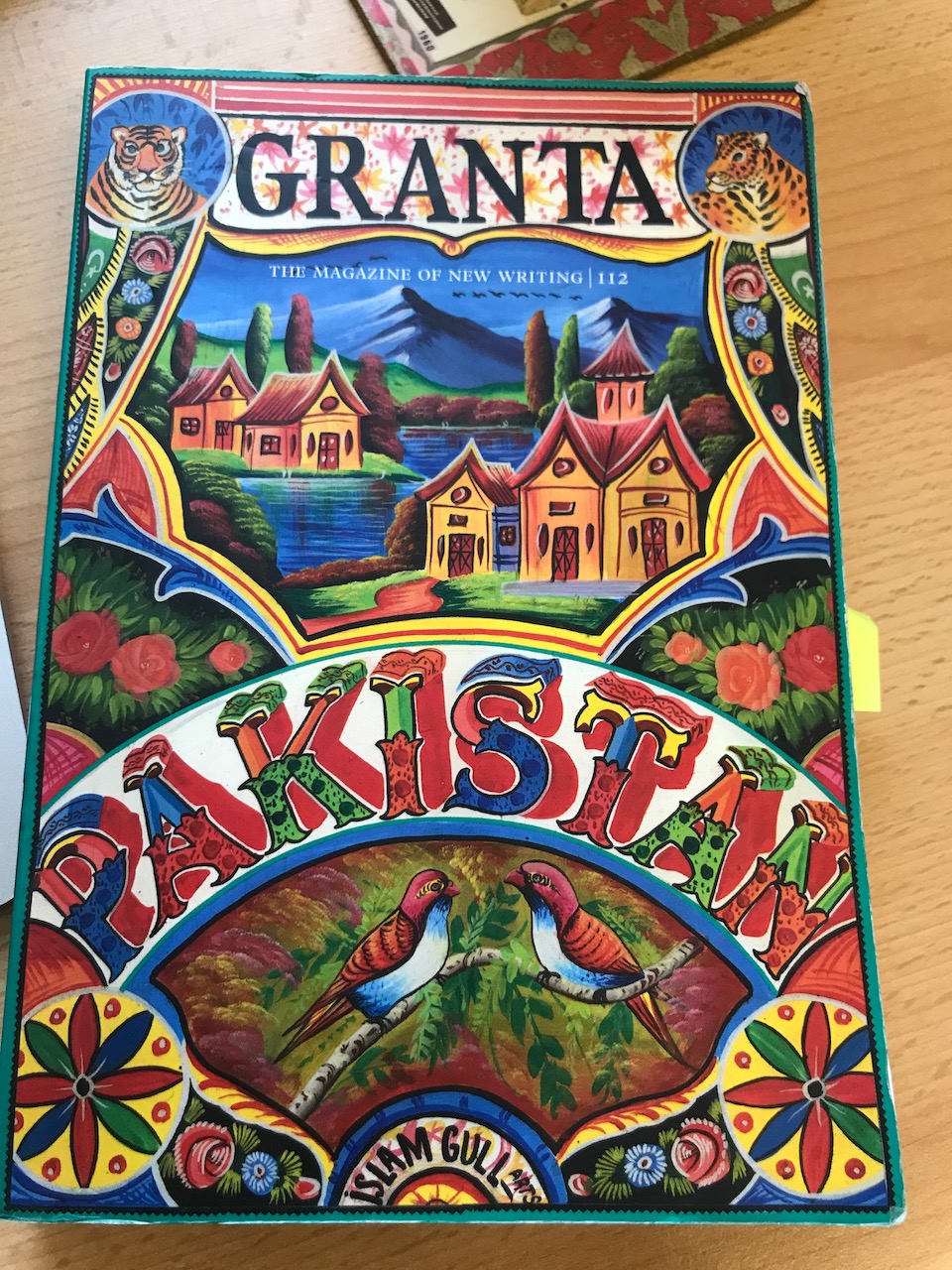
The special edition of Granta in 2010 also suggests that there were links with the “ornate horse-drawn carriages of the Raj to the pioneering craftsmanship featured on the Kohistan Bus Company’s fleet in the 1920s.”

TurckArt - 4
© 2017 Pippa Virdee

Design

The vast majority of the privately-owned Pakistani trucks are decorated with any combination of paint, wood carvings, mirror work, hammered metal work. They are heavily decorated and most often highly personalised to driver’s vision or interests. No one truck is the same. The truck drivers spend large sums of money on customising their trucks, which are not just “painted” but also involve structural work to modify the interior and exterior. According to Jamal Elias, in 2007 the cost of customising these trucks could go up to Rs. 400,000 (US$7,000 at the time), which included having the “coachwork completed on a Bedford truck, the iconic vehicle of Pakistani truck arts. In contrast, the cost of decorating a triple-axle unibody vehicle such as a Hino or Nissan in the Balochistan style was between US$12,000 and US$16,000.” (Elias, 2012). The vast majority (96%) of freight in Pakistan is carried by trucks for transporting goods and this art-form by extension then generates livelihoods for many households.

Samina Zia Sheikh (2018) writing about the expansion of truck art as popular culture notes how, “Decoration of these trucks gives us clear idea of competition between owners of these vehicles in execution of outrageous and daring images, designs and ornamental patterns. These aesthetically adorned vehicles are pleasure for the eyes of observers. Truck art represents a truck driver’s journey that drives this vehicle for long hours.”

The ‘jingle trucks’ as they are referred to sometimes play an important function for the drivers. Sheikh notes that the, “Hanging chains on the front and back-fenders with different shapes like bell, hearts, pīpal leaf or pān kā pattā attached with ghungrū, give off delightful jingling sound whenever vehicle hits furrows or ditches on road. Nazir Hussain is an expert in this field and, working since sixteen years, tells that this work is not only an element of embellishment but has its significant importance in decoration and otherwise. Jingling sounds of chains on rough roads works well on the psyche of truckers and helps them concentrate on driving more watchfully. He said, the sound of ghugrū and zanjīr keeps the driver active and awake during long routes of driving.”

Master of Truck Art “Haider Ali”

Profile of Haider Ali

Karachi based artist, Haider Ali, has played an important part in taking this art-form to an international audience with his first exhibition in 2002 at the Smithsonian Folklife Festival. The festival was important because, for the first time, it allowed international markets and artists to see and experience this work first-hand, as painter Haider Ali and bodywork expert Jamiluddin shipped a truck from Karachi to Washington DC. For Haider, who has worked for many years, it is important that young artists are trained properly, especially if this craft is to carry on and grow.

Haider Ali’s family originally belonged from Jullundur before the 1947 Partition of Punjab. His family migrated and settled in Karachi, which has become a hub for Truck artists. The whole neighbourhood around Garden Market in Karachi is devoted to truck decorations. Haider recalls that the market started around 1955 and gradually grew as the usage of trucks started growing in the 1960s. He recalls how truck owners would come and request that they paint images often associated with their own homes, villages and interests. These moving visual memories of home would travel with them while they criss-crossed the land and breath of Pakistan.

Haider Ali Truck Artist – Profile

At the same time Elias suggests that, “Pakistani truck is a cultural vehicle in the sense that it carries in it and on it an array of cultural messages and expectations…It is also the most widespread expression of visual material culture in the country, saying more about the visual regime of Pakistan than other forms of art and visual expression that are traditionally treated as legitimate windows into the beliefs, practices, and dispositions of members of Pakistani society at an individual and a collective level.” (Elias, 2012)


© 2020 Pippa Virdee

This unique form of self-expression has today taken on a completely new life in popular imagination. It has carved out a space in the re-branding of modern Pakistan and usage now extends far and beyond the world of Trucks. Popular amongst tourists, keen to take a little piece of Pakistan, the world of Truck art is also very reminiscent of Canal Barge art.

References

Jamal J. Elias. ‘Truck Decoration and Religious Identity: Material Culture and Social Function in Pakistan.’ Material Religion 1 (1): 48–70. 2005.

Jamal J. Elias, ‘The Politics of Pashtun and Punjabi Truck Decoration.’ In Bashir, Shahzad, and Robert D. Crews. Under the Drones: Modern Lives in the Afghanistan-Pakistan Borderlands, Harvard University Press, 2012. Pp. 192-214. Ebook.

Samina Zia Sheikh, ‘Impact of truck art, as popular culture on Pakistani society’, International Journal of Multidisciplinary and Current Research, Vol. 6, Sep/Oct 2018.

Nadeem F. Paracha, ‘The elusive history and politics of Pakistan’s truck art’, Dawn, 19 August 2016.

Pakistan’s Truck Art by Matthieu Aikins, for the Pulitzer Centre, May 2013.

GRANTA 112 Pakistan, 2010.

Anna Schmid, ‘Truck Art as Arena of Contest‘, Journal of Social Sciences, 4:4, 235-241, 2000.

Moving Museums: The Art of Pakistani Trucks, RadioFreeEurope.


© 2017 Pippa Virdee


Sahir Ludhianvi and the anguish of Nehruvian India

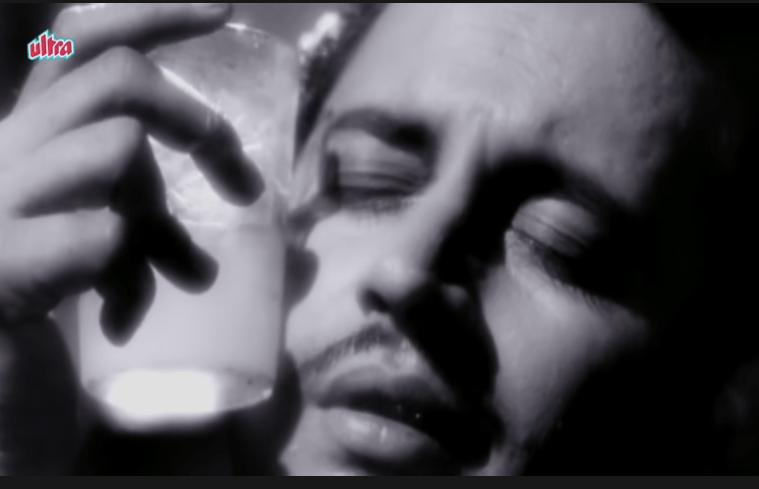
This song/poem written by Sahir Ludhianvi for the film Pyaasa, starring Guru Dutt, has as much relevance today as it did in 1957 at the height of the Nehruvian age. The lyrics and translation below are courtesy of Proud Indians, Are We? – Jinhe Naaz Hai Hind Par – Pyaasa By Deepa.

It is also worth reading the broader article, which is on Guru Dutt, “a man clearly ahead of his time.” Follow link for the song via YouTube. Make sure if you listen to any other versions that it has the last Antara of the song, which has been cut in some versions.

Ye kooche ye nilaam ghar dilkashi ke
Ye lutate huye caravan zindagi ke
Kahaan hain kahan hain muhafiz khudi ke
Jinhe naaz hai hind par wo kahaan hain
Kahaan hain kahaan hain kahaan hain

Look at these lanes, alluring houses which are up for sale/auction everyday. Look at these robbed caravans of life. Where are those protectors of self respect and pride? Where are those who say we are proud Indians? What are you exactly proud of?

Ye purpech galiyaan ye badnaam bazaar
Ye gumnaam raahi ye sikkon ki jhankaar
Ye ismat ke saude ye saudon pe taqraar
Jinhe naaz hai hind par wo kahaan hain
Kahaan hain kahaan hain kahaan hain

These complicated streets, these defamed, scandalized markets. The unknown pedestrians who walk in anytime with bagful of money. This trade of honour and chastity followed by the bargains of the same. Are we Indians proud for this? Where are those who say this?

Ye sadiyon se bekhauf sehmi si galiyaan
Ye masli huyi adhkhili zard kaliyaan
Ye bikti huyi khokhli rangraliyaan
Jinhe naaz hai hind par wo kahaan hain
Kahaan hain kahaan hain kahaan hain

These lanes which for years have been under pressure of fear, distress, angst. This place where the pale half blossomed buds are crushed (referring to young girls who fall prey to the flesh trade). The hollow festivities which are sold in this market. Show all this to those who say, they are proud of this country. Where are those people?

Wo ujle darichon mein paayal ki chhan chhan
Thaki haari saanson pe table ki dhandhan
Ye berooh kamron mein khaansi ki thanthan
Jinhe naaz hai hind par wo kahaan hain
Kahaan hain kahaan hain kahaan hain

The sound of the trinkets, anklets which come from the shimmering windows. Those tired, ill heartbeats which try to keep pace with the pace. This soul less room which filled with the unpleasant sound of coughing. For those who say they are proud Indians, please come and see this.

Ye phoolon ke gajre ye pikon ke chhinte
Ye bebaak nazrein ye gustaakh fiqrein
Ye dhalke badan aur ye bimar chehre
Jinhe naaz hai hind par wo kahaan hain
Kahaan hain kahaan hain kahaan hain

The flowers, the garlands, the stains of betel juice. The bold stares, the blunt, audacious comments. The deteriorating, decaying bodies and weak faces. Look at them, those who say, they are proud of their country.

Yahan piir bhi aa chuke hain jawaan bhi
Tanaumand bete bhi abba miyaan bhi
Ye biwi bhi hai aur behan bhi hai maa bhi
Jinhe naaz hai hind par wo kahaan hain
Kahaan hain kahaan hain kahaan hain

The ambassadors of religion, the young and the old, the sons and the fathers, all are regular visitors to this place. Here you will find someone’s wife, someone’s sister or mother too. Come and have a look at this place. Will this place make you proud?

Madad chaahti hai ye hawwa ki beti
Yashoda ki hamjins Radha ki beti
Payambar ki ummat Zulaykha ki beti
Jinhe naaz hai hind par wo kahaan hain
Kahaan hain kahaan hain kahaan hain

The girls, women here need help. They are no different from Eve, Yashoda, Radha, Zulaykha who are seen with regard and respect. Come and help them, they need you.

Zara mulk ke rahbaron ko bulaao
Ye kooche ye galiyaan ye manzar dikhaao
Jinhe naaz hai hind par unko laao
Jinhe naaz hai hind par wo kahaan hain
Kahaan hain kahaan hain kahaan hain

Someone please call the so called guides, leaders of the country. Show them these lanes, show them this miserable scene. Call them those who say they are proud of their country. Where are they?