Category Archives: Short Essays

Miss Universe – Indrani Rahman (1930-99)

The Pakistan Times, July 1952.

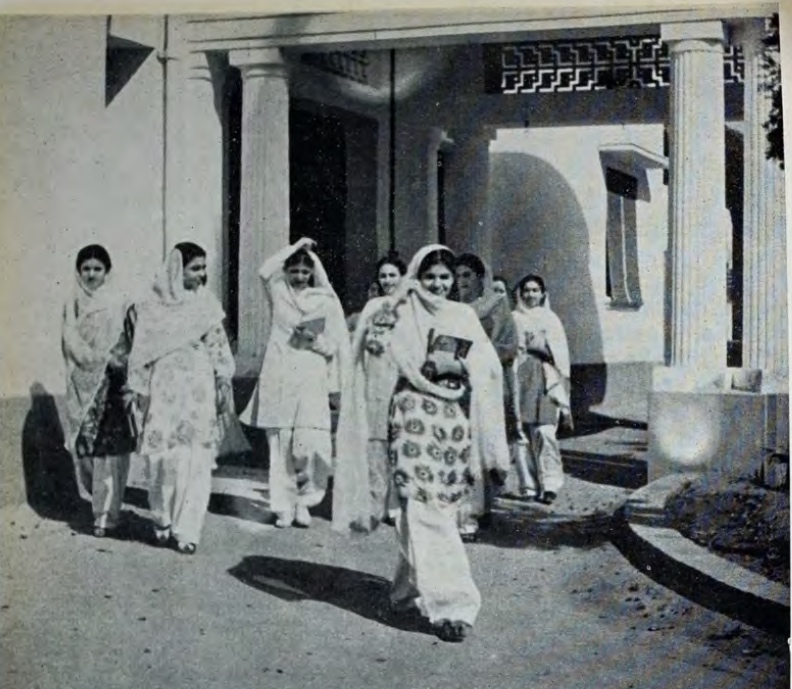
I came across this picture in The Pakistan Times, it had caught my imagination, and with little thought for how it might fit into my research I just took a picture of it and then, continued to explore the newspaper for stories on, of and by women. This remained in my photographic archive until recently, when I began to go through the material. The picture still does not fit into the wider project, but it remains striking. It is evidently from the Miss Universe competition, but I knew little of the pageant competition, other than then perhaps how it still continues to resonate with people.

Further probing revealed the Indian representative as the-then Madras-born and intriguingly named Indrani Rahman (1930-99). What could be the (fragmentary) story of this Indian beauty queen appearing in the pages of The Pakistan Times, as a participant of the Miss Universe Pageant held on 28 June 1952, at Long Beach, California? Straightaway her name intrigued me, Indrani is a Hindu name and Rahman is Muslim, yet on the pictures from Miss Universe contest, she appears to wear a bindi on her forehead. Her hair is adorned with the traditional scent of the jasmine flower. These are traditionally worn by married women, especially Hindu women. In total thirty women entered the competition, including the 22-year-old, married and mother of two, Indrani. The competition was eventually won by a 17-year-old Armi Kuusela from Finland. This is what the very first Miss Universe pageant looked like 67 years ago.

The title “Miss Universe” was first used by the International Pageant of Pulchritude in 1926. Subsequently the contest was held annually until 1935, when it was interrupted by the Great Depression and then the Second World War. The current competition was established in 1952 by Pacific Knitting Mills, a California-based clothing company and manufacturer of Catalina Swimwear. The company had sponsored the Miss America pageant until 1951, when the winner, Yolande Betbeze, refused to pose for publicity pictures wearing one of their swimsuits. The ubiquitous swimsuit has remained the source of much discussion, with accusations of objectifying women. Finally recognising the shift in wider attitudes, in 2018 the Miss America contest decided to end the Swimsuit element and focus more on the achievements of the contestants. (Miss America Ends Swimsuit Competition, Aiming to Evolve in ‘This Cultural Revolution’ – The New York Times)

Indrani was the daughter of Ramalal Balram Bajpai (1880-1962) and Ragini Devi (1893-1982) (nee Ester Luella Sherman). Ramalal, a chemist by training, had been an Assistant editor of Young India, a magazine established by the Punjabi nationalist politician, Lala Lajpat Rai, and, after India gained independence, he was appointed as Consul General at New York. Ragini on the other hand, became increasingly passionate about Indian classical dance, and championed the revival of Kathakali.

Already then Indrani’s family were unconventional. Few people in India grew up in mixed-race backgrounds, and indeed even in contemporary India. By the age of 15, in 1945 Indrani herself had eloped and married Habib Rahman (1915–1995), a well-known Indian architect. Soon after her son Ram Rahman was born followed by a daughter, Sukanya Rahman. Habib Rahman worked on iconic places such as Delhi Zoological Park, Gandhi Ghat, and Rabindra Bhavan. He studied at MIT and was the first Indian to complete his Masters in Architecture there in 1944. Rahman was the recipient of the Padma Shri (1955) and Padma Bhushan (1974). Likewise, Indrani was awarded the Padma Shri (1969) and the Sangeet Natak Akademi Award (1981).

This upbringing and early experiences show that Indrani grew up in a much more cosmopolitan milieu that was possibly perhaps only for those in positions of power or the privileged class. Her mother, though Ragini by name, would certainly not have discarded her own cultural upbringing in America. This most likely also played a part in Indrani having fewer inhibitions in participating in beauty contests.

Before Indrani entered the Miss Universe contest, she had already been crowned Miss India, 1952. As side-note, the famous actress of Hindi cinema, Nutan, also started out by entering and being crowned Miss India in 1951 and Miss Mussorie in 1952. The first Miss India was Pramila (Esther Victoria Abraham), from Calcutta, who won in 1947, interestingly the same year that India got Independence.  

A news report about this appeared on April 5, The New York Times in 1952 reads thus: “Indian traditionalism was further shocked by the fact that a married woman, Mrs. Indrani Rehman [sic] of Calcutta, was chosen as the winner. As Mrs. Rehman is a Moslem, her participation was especially defiant of custom, since old-style Moslem women, particularly wives, are even more secluded than their Hindu sisters. Emphasizing the departure from Indian tradition even further, the first Miss India is half-American,” (Sara Hussain , 21 Jul 2016)

Besides having the accolade of being the first Indian to take part in the Miss Universe, Indrani was and remained an accomplished classical dancer. She travelled with her mother around the world performing and taking the passion of Bharata Natyam, Kuchipudi, Kathakali and Odissi, to the West. A passion which she passed on to her daughter, and indeed, Sukanya Rahman Wicks had also danced on stage with her mother and grandmother.

Further Reading:

Lightfoot, Louise. Louise Lightfoot in Search of India: An Australian Dancer’s Experience. Cambridge Scholars Publishing, 2017.

Rachel Mattson, The Seductions of Dissonance: Ragini Devi and the Idea of India in the United States, 1893-1965 (PhD Diss, NYU, 2004): Selected Publications | rachel mattson (wordpress.com)

Architect Habib Rahman and the making of New Delhi in Nehru’s vision by Vijayta Lalwani, in the Scroll.

See the tribute issue of Architecture + Design on the work of Habib Rahman.

Read more about Ragini Devi, Indrani Rahman and Sukanya Rahman – Dancing in the Family. The Extraordinary Story of the first family of Indian Classical Dance.

Know Thy Dancer – Indrani Rahman | Bharathanatyam and the worldwide web (wordpress.com)

Indrani Rahman – First Miss India to Participate in Miss Universe Contest… (beaninspirer.com)

The first enchantress (asianage.com)

Pictures of Indrani Rahman India Times, 15 Jul, 2016.
The Patna Twins: From the Ganges to the Doon River.

© Pippa Virdee 2021

In late-summer I went to Ayr – of Robert Burns fame; a seemingly random but ultimately delightful choice determined by the compulsions of the Pandemic year. After going to Alloway with its Burns Cottage (and ‘cottage industry’ of Burns Tourism), I started exploring the region and came across a place called Patna! To the Indian and historian in me, the connections and curiosities thereof were irresistible, that is a village of a few thousand souls and the Indian city of some millions carrying the same name. From Ayr, the smaller Patna  – by the river Doon – is located about 10 miles away; the other, bigger Patna – capital of the state of Bihar and sprawled by the banks of the mighty Ganga River – is some 8000 km away [https://www.bbc.co.uk/news/av/uk-scotland-20504111].

Patna, or ancient Patliputra, was the capital of the Mauryan (4th-2nd c. BC) Empire and its short-lived successor, Shunga dynasty, and remained a prominent place under the Gupta (4th-6th c. AD) Empire and its eastern successor, Pala kingdom. From the 13th century, it emerged as a provincial seat under the Delhi Sultanate and the Mughal Empire. In-between and not far, was Sasaram, where the soldier-administrator Sher Shah Suri (1470s-1540s) had his brief imperial reign. Afterwards, for the Sikhs, Patna emerged a great place of pilgrimage, for it was there that the 10th and last Guru, Gobind Singh was born in 1666. With the decline of the Mughal rule, Patna came under the influence of the Nawabs of Bengal and thereafter the English East India Company from 1765. Trading factories had been started in Patna – as early as the 1620s-30s by the Dutch East India Company, the Portuguese too had traded there even earlier, given its location by a navigable river, proximity to the Bay of Bengal and production of textile around. This thriving fortune was taxed by the British, following their victory over the Nawab of Bengal in the Battle of Buxar of 1764, and Patna (and Bihar) – along with the rest of Bengal – passed into (mal)administration of the Company. The region had begun the journey towards its colonization, during which time many Europeans, including the Scots were attracted by the east as a ‘career’, whereby hands the thread connecting the two Patna(s); as can be read below:

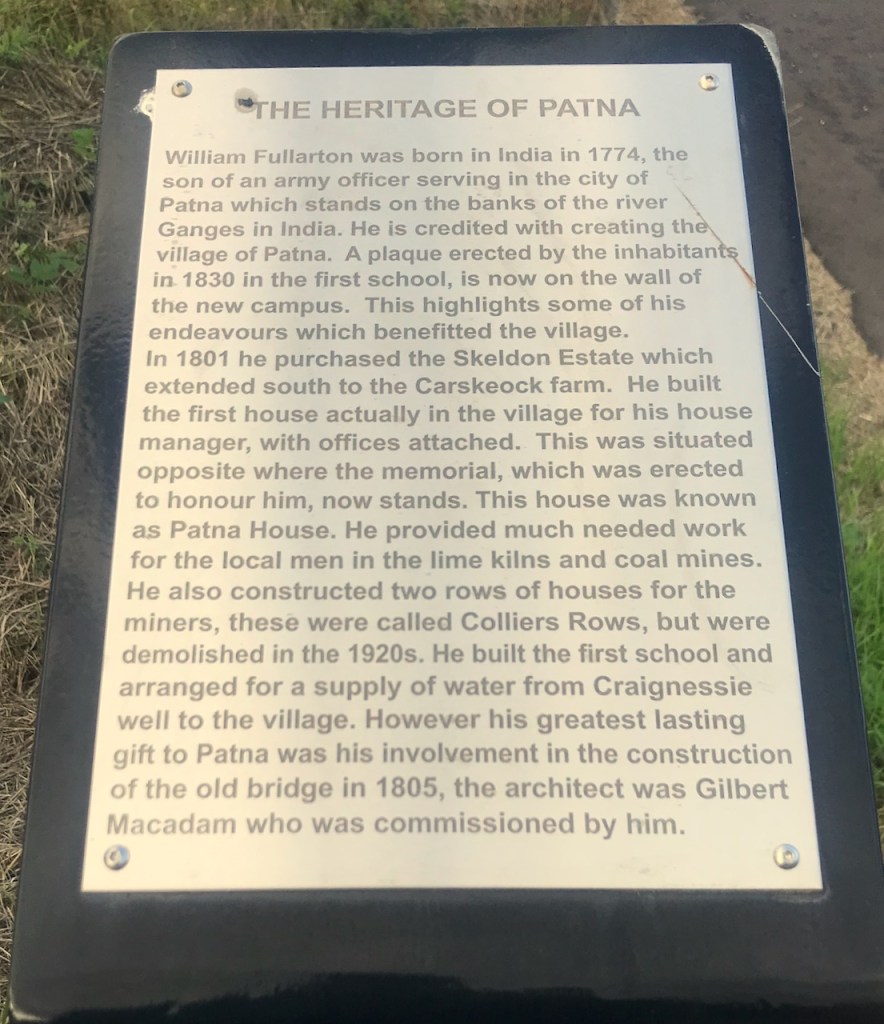
The Scottish Patna “was founded in the early years of the 19th century by William Fullarton, whose family had a close connection with the Bihar State. Fullarton’s uncle, William Fullarton, in 1745, was in the service of the East India Company as surgeon at Fort William, Calcutta [now Kolkata]. After a mixed career as soldier and surgeon, he returned eventually to Scotland in 1770 where he bought the estate of Goldring (later Rosemount), near Kilmarnock. He died in 1805 with no family. This William Fullarton had a brother, Major General John Fullarton, of Skeldon. General Fullarton was also in the service of the East India Company and died in India in 1804. He was succeeded by his second son, William, then aged 24”. (Moore, Gently Flows the Doon, 1972)

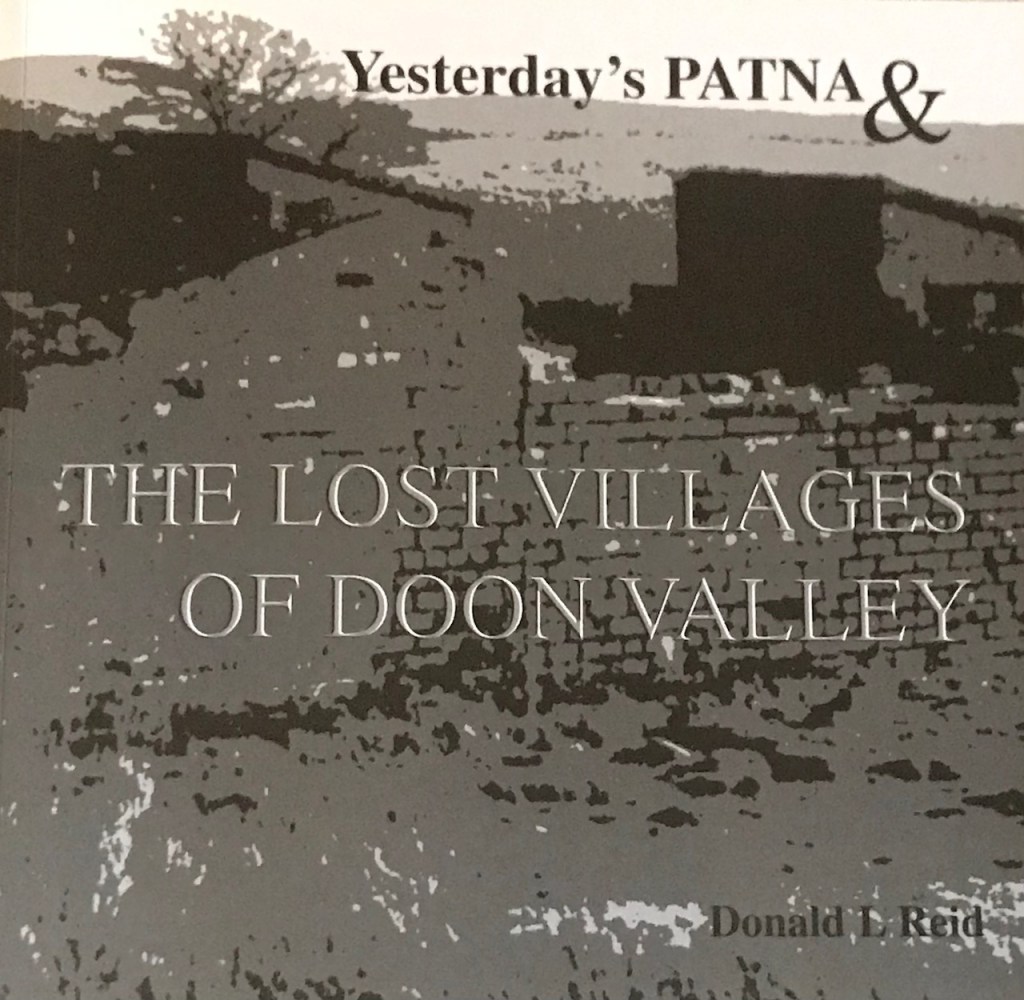
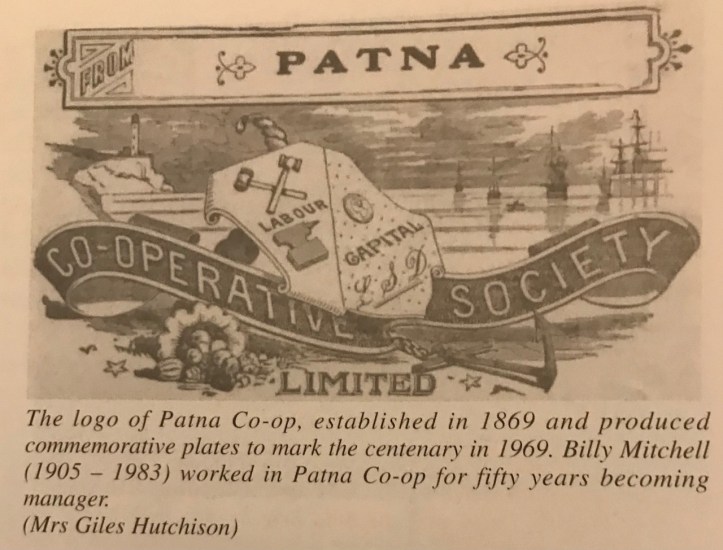
Source: Donald Reid, Yesterday’s Patna and The Lost Villages of Doon Valley, 2005

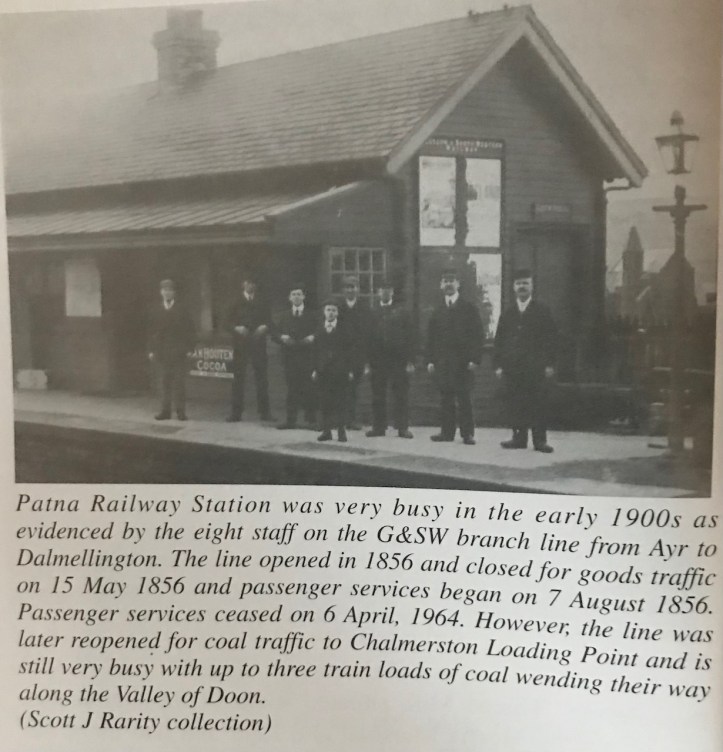
The Patna in East Ayrshire is among the many villages in the Doon Valley, which have been associated with a history of coal, ironstone, and limestone mining. Hence, it once also had a thriving railway station on the Glasgow & South Western branch railway between Ayr and Dalmellington. The station opened in 1856, moved location slightly in 1897, and eventually its passenger service ended in 1964, as part of the brutal Beeching cuts. Coal continued to be carried but even this has now declined and the track lays unused. Indeed, there is an air of a place that once was proud, prosperous, and prolific. Today, it is a sleepy village of barely 1000 families with population declining and unemployment increasing, with which the following words are difficult to square: 


It was in the early 1800s when William Fullarton, an enterprising young man, began mining for coal and limestone on the banks of the Doon. He built houses nearby to accommodate his workers and he decided to call the hamlet Patna after the city in India where his father and uncle had such close associations. William Fullarton later sold the estate at Skeldon and moved to Ayr where he had a successful career in local politics, twice becoming Provost, around 1823-1825 and 1830-1834. He died in 1835 at the age of 60 and is buried in the cemetery of Ayr Auld Kirk. Fullarton proved himself to be a kindly benefactor to Patna. He built the first house in the village to house the manager of his coal mines. This, with offices attached, was to become known to later generations as Patna House.

Donald Reid, Yesterday’s Patna and the Lost Villages of Doon Valley. 2005
Source: Donald Reid, Yesterday’s Patna and The Lost Villages of Doon Valley, 2005


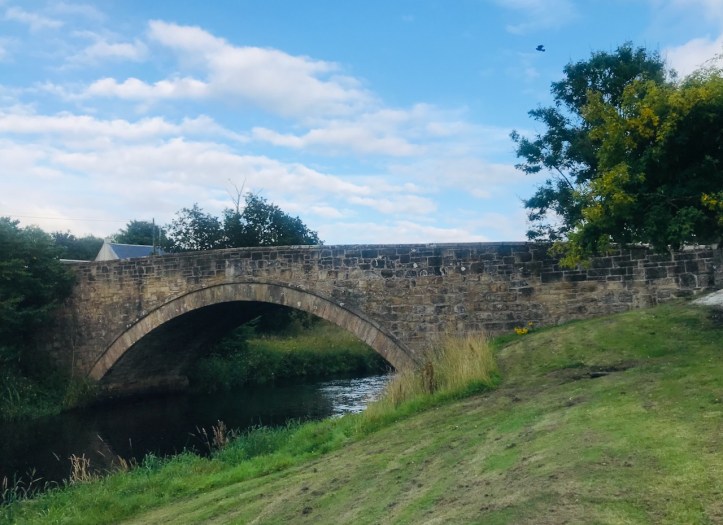
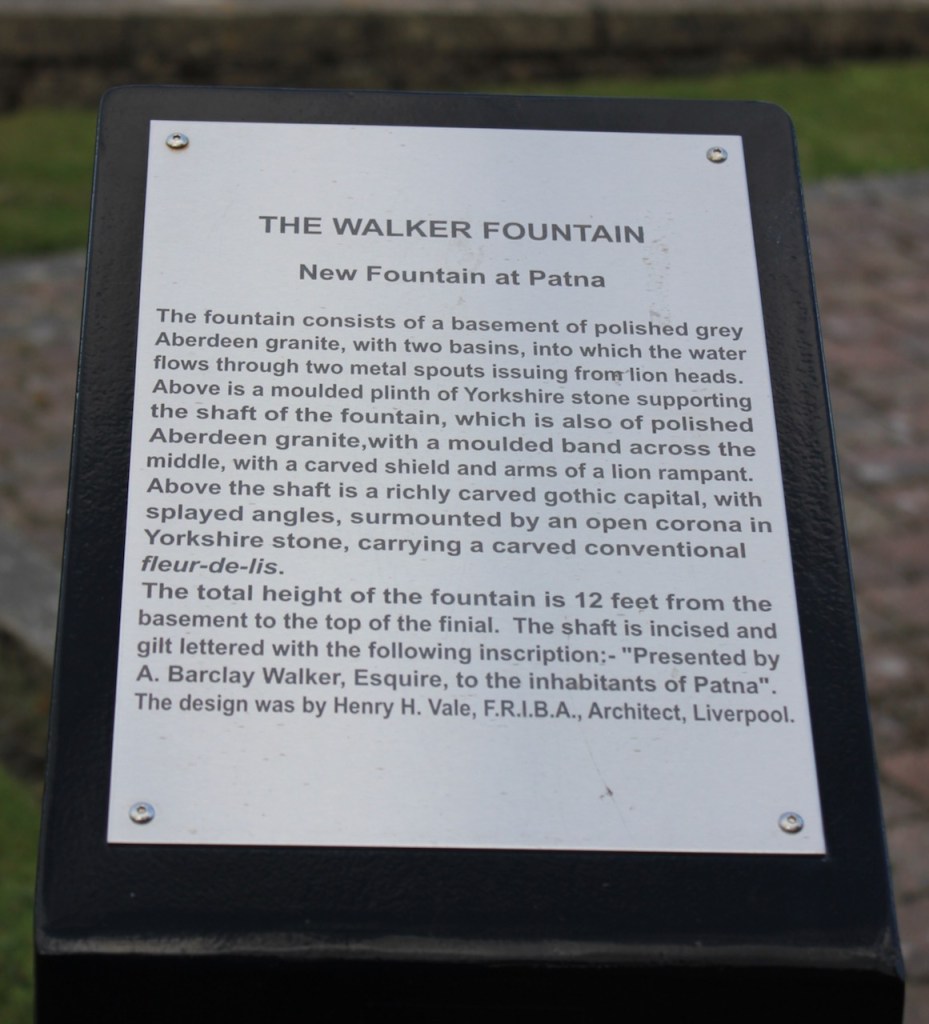
Fullarton is remembered kindly, having created many local amenities for the small and then-growing area. Mining led to home and hearth, work and schools and the stream – a crucial water source – saw the building of the Patna “Auld Brig” in 1805, which functions as a gateway into the village, adding character to it. By 1837, there was a Church building, which is now known as the United Free Church Hall and serves as another reminder of that age. As for the following twentieth century, it has left in its wake the two, ubiquitous, war memorials and a cemetery. There is the obligatory “local” and the imperative “clinic”, but otherwise few streets, some houses and a bus-service connects Patna’s past to its present. As for its bigger “cousin”, once in a while, a visitor comes, like in 2012 [https://timesofindia.indiatimes.com/city/patna/bihar-minister-visits-patna-a-village-in-scotland/articleshow/17755117.cms] and in 2018 [https://www.hindustantimes.com/world-news/when-two-patnas-met-in-scotland/story-G6uILtSL3bvvjJn6GLNOPP.html]. 

With my sincerest thanks to David Rarity of Patna, who took the time to share his memories and material collected over the years on the history of Patna.

From Blighty to Patna: Objections to the building of railways

Pakistan Quarterly, 1962, 11, 1, Page 23

I came across this fascinating article on ‘The Origin and Growth of Pakistan Railways’ by M. B. K. Malik in Pakistan Quarterly, 1962, Vol 11, No. 1. It provides a brief history of building the railways in British India, especially the motivations and impact this had on the two outer regions of Bengal and Punjab. What captured my interest was actually the objections put forward in the initial days. The first one is from the British perspective, but the second one is from a high-caste Hindu, who obviously envisages multiple problems for those guided by astrologers. Both however, express suspicion and concern at this new system of transport and the wider impact it will have on society and the environment. Of course the railways went on to be built in both Britain and British India, and became pivotal to colonial rule. The economy of empire, with key towns and port cities, coupled with the ability to swiftly move the colonial army from cantonment towns was only made possible because of the railways in British India. But that’s another story. Read below the extract from pages 22-23.

Pakistan Quarterly, 1962, 11, 1, Page 23

The earliest proposals to build railways in India had been made to the East India Company in England in 1844 by Mr. R. M. Stephenson and others. But the time was not propitious. The land had not yet recovered from the effects of the Sind Wars, and the British power and the Sikhs in the Punjab were on the verge of an armed conflict. Nor were the Court of Directors of the East India Company convinced of the feasibility of railways in India. Even in England and Europe railways had met with opposition. In 1835 John Bull had denounced the railways as a menace:

“If they succeed” wrote the paper, “they will give an unnatural impetus to society, destroy all the relations which exist between man and man, over-throw all mercantile regulations, over-turn the metropolitan markets, drain the provinces of all their resources, and create at the peril of life, all sorts of confusion and distress. If they fail, nothing will be left but the hideous memorials of public folly”. It further remarked : “Does anybody mean to say that decent people …. would consent to be hurried along through the air upon a railroad, from which, had a lazy schoolboy left a marble, or wicked one a stone, they would be pitched off their perilous track into the valley beneath; …. being at the mercy of a tin pipe copper boiler, or the accidental dropping of a pebble on the line of way?…. We denounce the mania as destructive of the country in a thousand particulars …. the whole face of the kingdom is to be tattooed with these or a odious deformities …. huge mounds are to intersect our beautiful valleys; the noise and stench of locomotive steam-engines are to disturb the quietude of the peasant, the farmer and the gentleman; and the roaring of the bullocks, the bleating of sheep and the grunting of pigs to keep up one continual uproar through the night along the lines of these most dangerous and disfiguring abominations”.

Objections by Hindus
The orthodox Indians had religious objections. A civilian District Officer, posted in the province of Bihar during the sixties of the last century, has recorded an interesting story showing how orthodox Hindus regarded railway travelling in those days. The officer questioned a nobleman, who had just returned from his first journey by rail, about his views on railway travel. The nobleman replied that it made great noise and that it would be difficult for persons of his high caste to travel at all by such means:

The trains only go at stated times; now I cannot commence a journey except at the minute decided upon by my astrologer as a favourable moment for starting. This makes it very difficult for me to travel at all. Tomorrow I have to go to Muzafferpur, and the astrologer has decided that I must start at 1 A.M. Now my cousin Gadahur went by railway the other day with his wife, and daughter of six years old, and a baby. He started at an unfavourable moment. His wife and two children and a maid-servant were put in a palanquin, which was placed on a truck, which prevented their being seen; and he went in an ordinary carriage. Somehow or other a spark from the engine flew into the palanquin and set fire to some of the linen in which the baby was wrapped; and the servant in her confusion, thinking it was only a bundle of clothes, threw it out. The moment it was done she found out the mistake and they all shrieked. This was only a mile from the Patna station and the train soon stopped. The station master was very kind and did his best, but the palanquin was on fire, and the wife in getting out was seen by many persons. It is not a fit subject even for conversation”.

But all the objections came to naught. England was just entering the age of ‘railway mania’ and it was decided to construct railways in India through Guaranteed British Companies.

Faith in Education

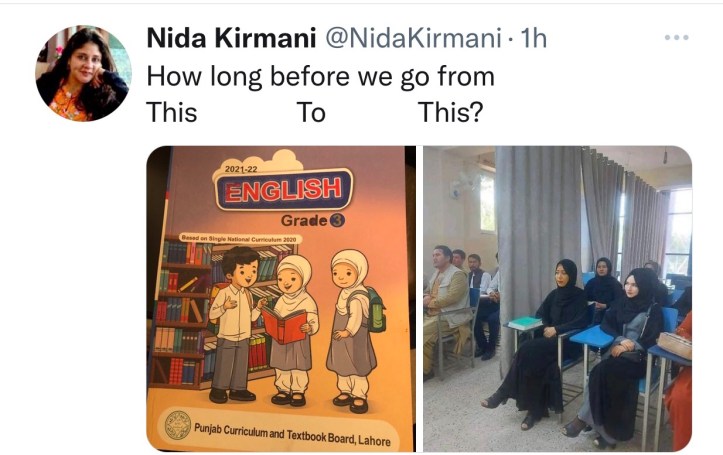
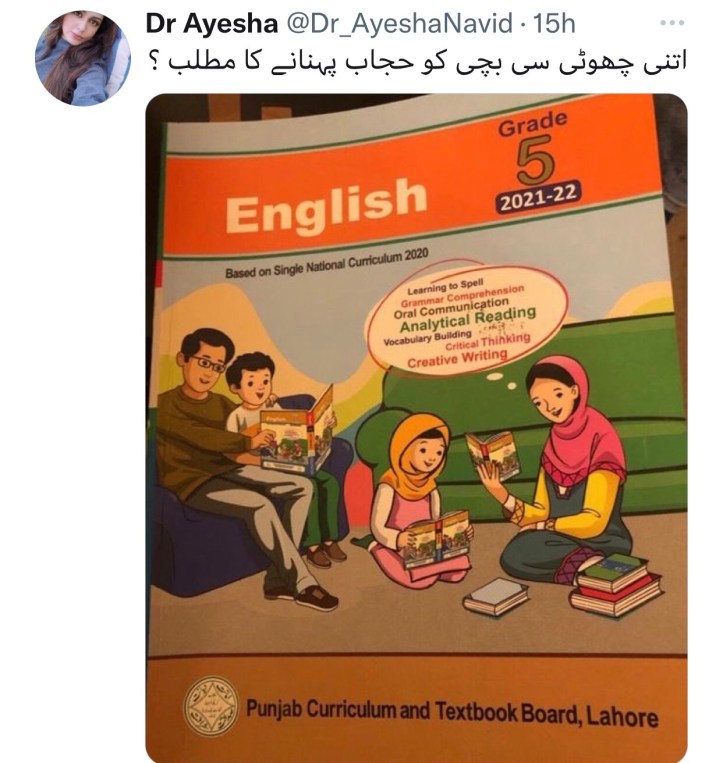
Yesterday morning started with a few tweets that I saw regarding the new Single National Curriculum being introduced in Pakistan. It has generated plenty of discussion and criticism, and rightfully so. The pictures and discussion in these tweets immediately took me back to the day before, when I was in fact going through the pages of Pakistan Quarterly, from the 1950s. I’ve been looking at the formative years of Pakistan and the role played by women, which is far too often side-lined or a footnote in support of the main body.

Below are extracts from two articles, which illustrate some of the discussions that were taking place on the importance of education in the making of a “new Pakistan” and the role of religion (especially girl’s education). Julian Duguid was a journalist, writer and wrote his article while posted in Pakistan. The second article though is by the Vice-Chancellor of Peshawar University, Raziuddin Siddiqi. Dr Siddiqi was born in 1908 and educated in the newly established Osmania University, Hyderabad. Indeed, he was from the first batch that graduated from there and later went on to serve as the Vice-Chancellor of Osmania. In 1950, however, Dr Siddiqi migrated to Karachi and joined Karachi University, at the request of the Government of Pakistan. There was a serious skills shortage in Pakistan following the Partition, and the development of educational institutions and an educated workforce was key to future prosperity.

Lifting of the Veil by Julian Duguid

Pakistan Quarterly, Vol. 2, No. 3, 1952

After hearing the story of the chaos, so bravely met and overcome, I watched with a special interest the young girl students whom it freed. A few still went in burqas, but most of them walked and bicycled as if they’d never heard of purdah. At lunch time, they passed Zam-Zammah, the gun on which Kim used to sit; and in the evenings they did athletics or played tennis. There was nothing whatever to distinguish them from any other healthy young students. Yet, even four years ago, many of them could hardly have dreamt of such freedom.

Of course, liberation on this scale has not gone quite uncriticised. Now and then, a fanatical old mullah, his beard abristle with zeal, will creep behind a girl and cut her hair off to teach her not to be shameless. When this happens, he is taken to the police-station and lectured on the new Pakistan and kept in jail for a few days to cool his ardour. He leaves unconvinced, and muttering; but his generation will pass, and then the veil will be lifted more and more widely among the middle-class city-dwellers as it is among the labouring village people whether in town or country.

It may take many years, but it will come.

Education in Pakistan by Raziuddin Siddiqi, Vice-Chancellor, Peshawar University.

Pakistan Quarterly, Vol. 3, No. 4, 1953.

Immediate steps were, therefore, taken in all Provinces to rehabilitate the old schools and Colleges and establish new ones. Classes were held in several shifts to cope with the enormous increase of students. Adequate measures were adopted for training school teachers in large numbers. Education was given high priority along with defence and law and order in the Central and Provincial budgets. A number of new Universities were established in order to provide suitable teachers for the schools and colleges. Educational materials, such as books, journals and scientific equipment, was imported in a large quantity from Europe and America. Young men and women were sent in considerable numbers for training abroad. A six years Plan was formulated to give effect to considered policy of all-round educational development.

It would not be out of place to give here a short account of our policy in this scheme of educational development. The fundamental aim before the authorities in this matter has been ensure to that each and every individual gets the best and highest education and training commensurate with his capabilities. Islam lays down the acquisition of knowledge as an integral part of the duties of every individual Muslim of either sex. It is a unique and distinguishing feature of this religion, which enjoins its followers to think and know for themselves. It has been explicitly stated in the Holy Quran that “God exalteth and elevates to higher ranks only those who are believers, and who have been accorded knowledge”.

Islam does not allow the sharp division of an individual’s existence into a religious and secular life, as believed necessary by the people following other religions. There is no priest-class among the Muslims. Non-observance of this essential principle of Islam, has been one of the main factors in the deterioration of our condition in the past. On the one hand the general body of Muslims were educated in secular schools, and knew very little of the fundamental principles of their religion. For even a little bit of information about their faith, they were entirely at the mercy of the ‘Mullas’. On the other hand, the ‘Mullas’ studied in religious institutions which were completely divorced from all modern knowledge. This was affecting adversely the national life at both ends. The educated young Muslims were generally absorbing atheistic or agnostic tendencies more and more, and instead of proving a source of strength to the community, were undermining its very existence. The ‘Mullas’ were becoming more and more ignorant, fanatic and narrow minded, thus bringing the religion itself into disrepute and contempt.

It was necessary, therefore, to evolve a new system of education, or rather to revive the older system of the early days of Islam in which all knowledge was one, and there was no artificial distinction between religious and non-religious knowledge. 

The first fossil museum in Pakistan

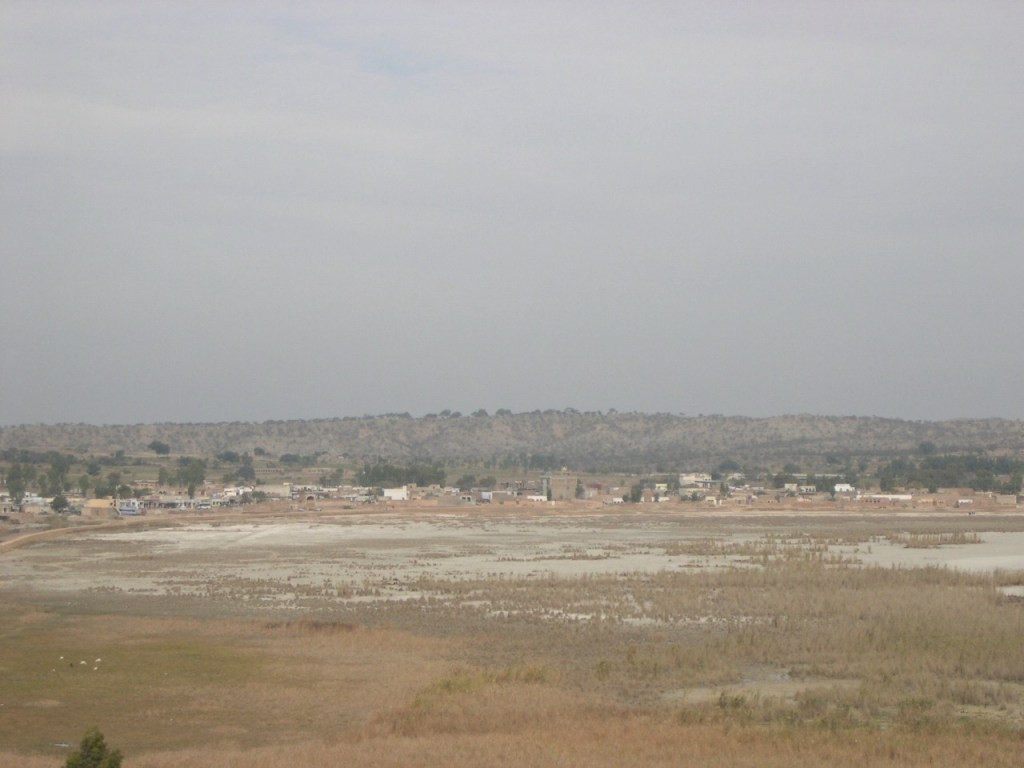
In December 2004, I was traveling from Islamabad to Lahore on the M-2 motorway, which is the first motorway to be created in South Asia and which was inaugurated in 1997. It is also one of the most expensive to be constructed under the Korean company, Daewoo. The journey of 184 km takes one via the magnificent Salt Range and Kallar Kahar, a subdivision of Chakwal District (Punjab) and conveniently located close to the M-2.

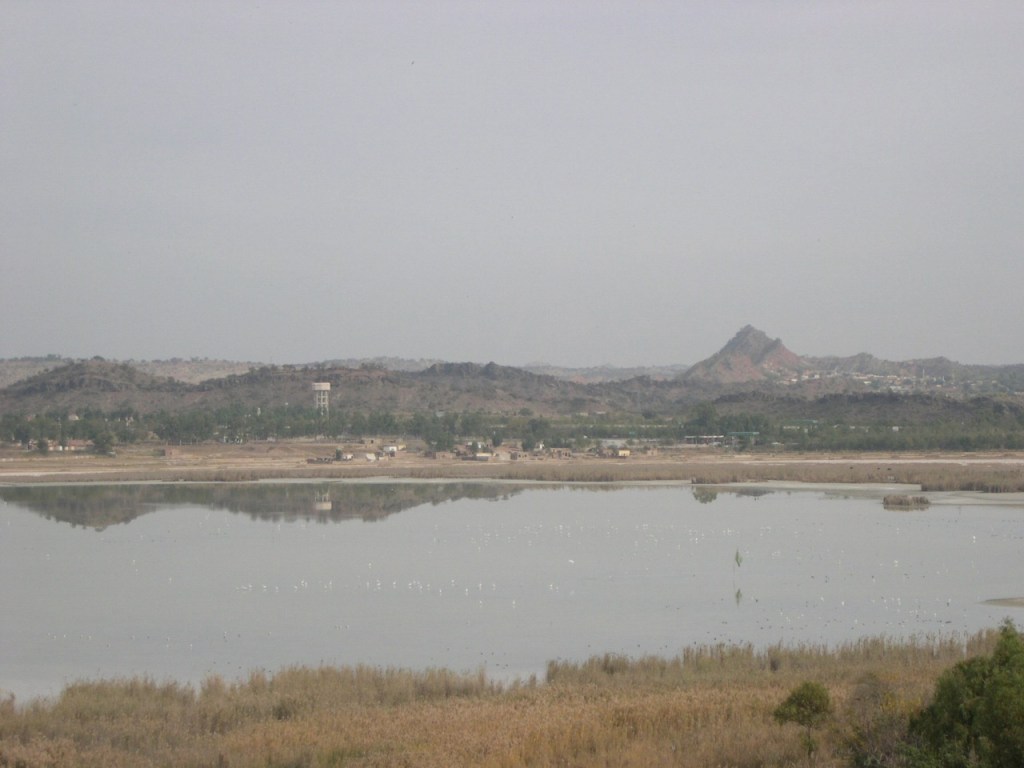
Kallar Kahar is also a popular tourist destination with captivating lakes and the Katas Raj Temple complex, dedicated to Lord Shiva, dating back to 615-950 CE. The founder of the Great Mughal dynasty, Zahir ud-Din Muhammad Babur (1483-1530), stopped here with his army, while en route to north India in 1519. During this stay, a throne was built by cutting a piece of limestone formation to create a raised platform, from where he addressed his army. This throne, known as Takht-e-Babri, was located within the Bagh-i-Safa, the first of many Mughal gardens to be created. Salman Rashid in his book, The Salt Range and the Potohar Plateau (Sang-e-Meel, 2001), mentions how Babar, described the area of Kallar Kahar Lake as a “charming place with good air”.

Read further: “Kallar Kahar: blessed by nature, neglected by rulers” by Nabeel Anwar Dhakku, Dawn, 28 February, 2016. 

“Takht-e-Babri, the first Mughal construction in the subcontinent, is grand only in name” by Haroon Khalid, Dawn, 5 June, 2017.


© 2004 Pippa Virdee 

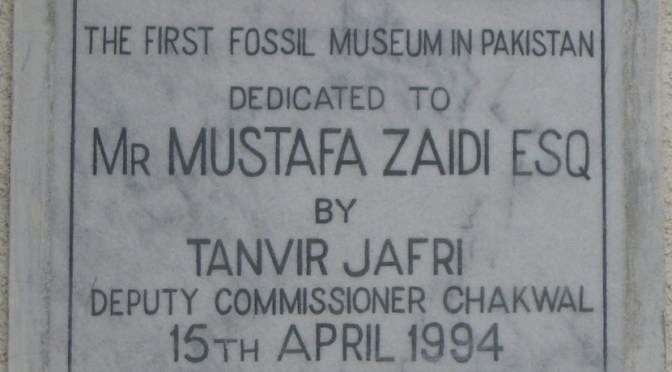
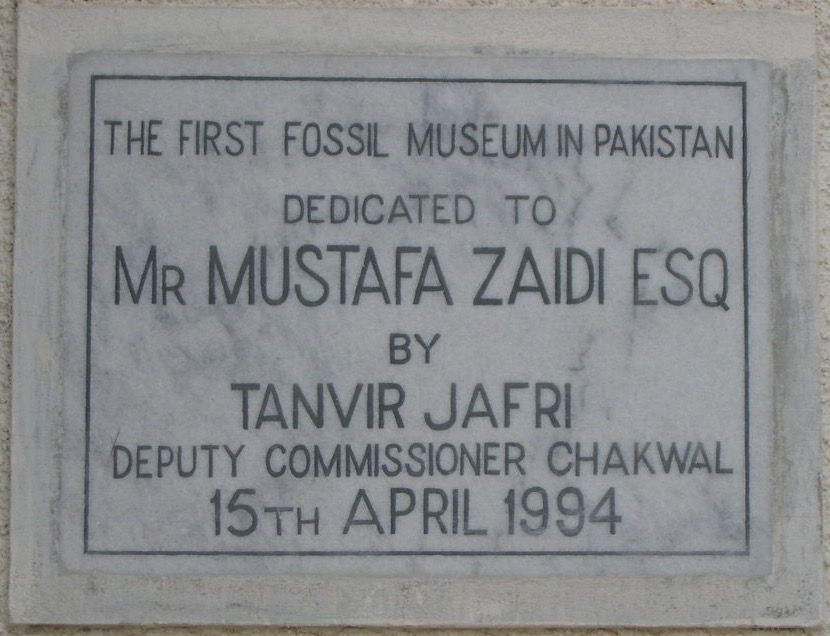
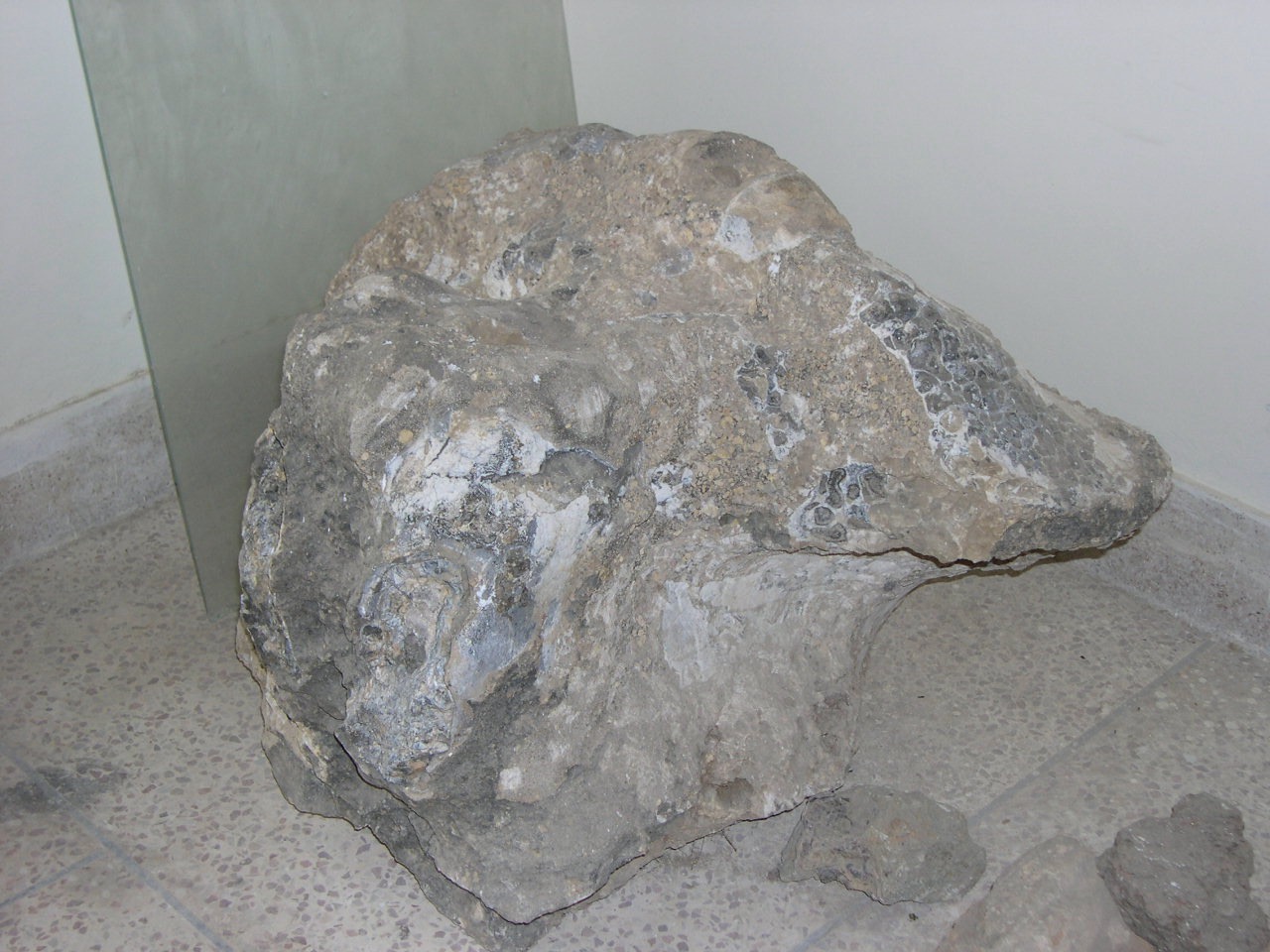
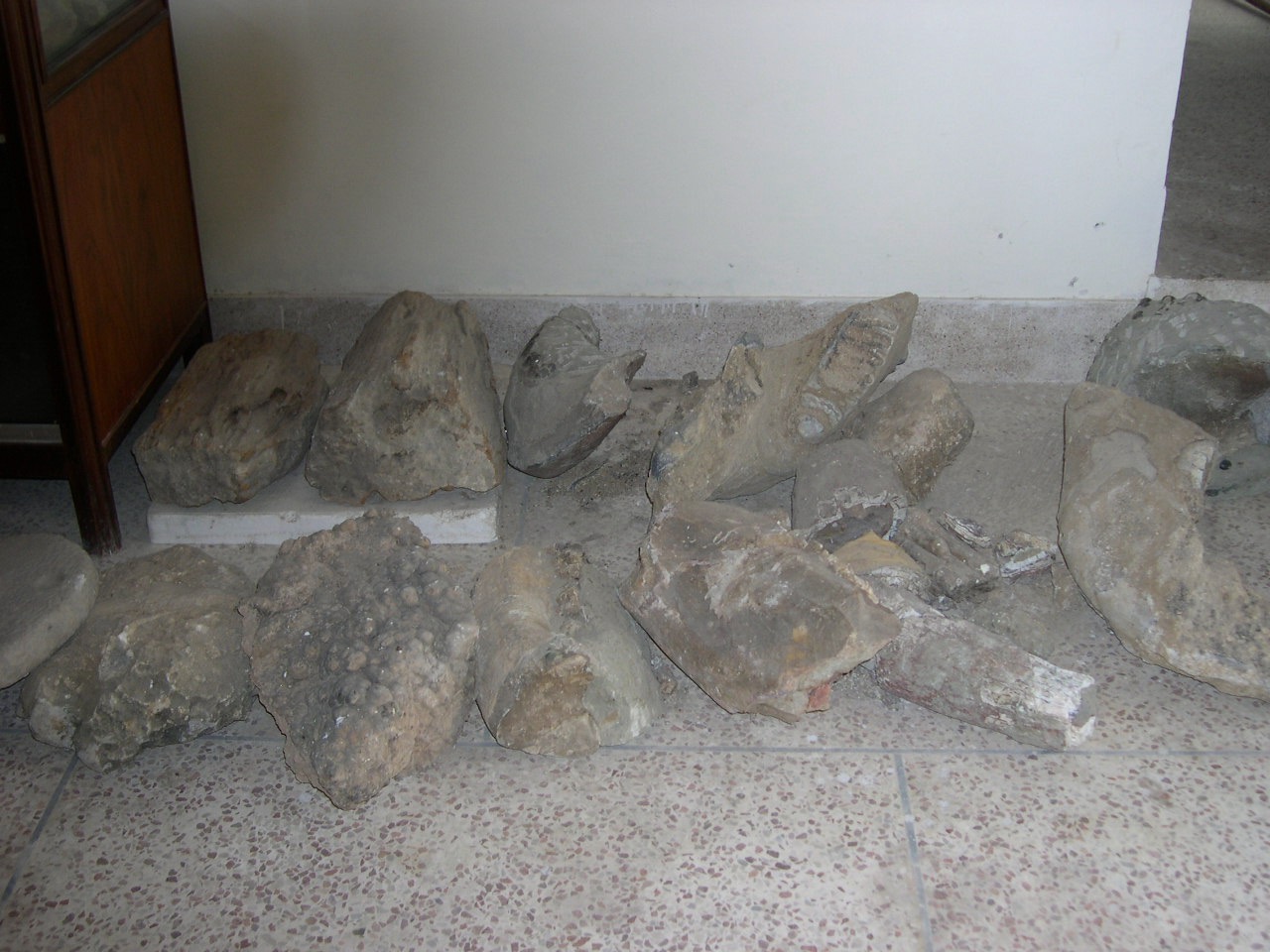
Back in 2004, I also stumbled upon the first fossil museum in Pakistan! Actually, it was less a museum and more a room with a variety of fossils scattered randomly on the floor. Neglected and dusty, they appeared to be of little significance. I recently came across this old photograph, which I had forgotten about.

I was so intrigued by the plaque with this inscription of the first fossil museum that I started doing a little digging about it, with little to show. A search for Mustafa Zaidi throws up a famous poet/civil servant (born 16 October 1930 in Allahabad and died 12 October 1970), while Tanvir Jafri, the then-DC of Chakwal, might still be around with recollections of this fossil museum.

I think the fossil museum is perhaps part of the Kallar Kahar Museum now, which is located opposite the Lake. It was finally inaugurated earlier this year in April, after seven years of its completion. At the time, I remember the caretaker saying that they there was something bigger in the pipeline, to create a better museum space. In South Asia, these matters take time (years), unless there is political mileage in the project. Though I should not have been so dismissive of the fossils, because this region is rich in history and has dinosaur fossils dating back 15 million years. But heritage remains a low priority for the country, whether prehistoric, ancient or modern, and is a simultaneously contested and marginalised space.  

“Kallar Kahar Museum’s doors remain firmly shut” by Nabeel Anwar Dhakku, Dawn, 20 January 2016. https://www.dawn.com/news/1234117
Not a Dhaba

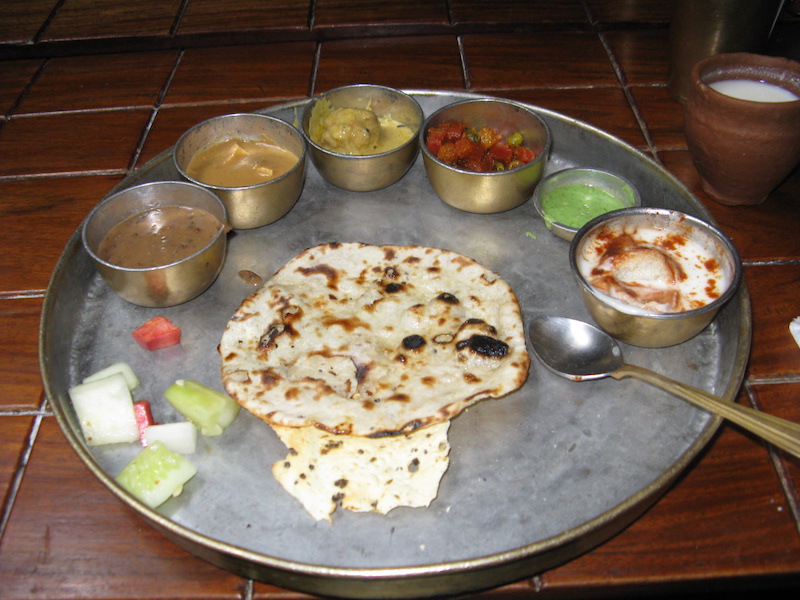
The thali at Haveli, 2009

Recalling trips to Punjab are akin to a trip down memory lane, one which is not merely nostalgic but aromatically so, from straying into family kitchens and stopping at road-side dhabas, especially along the great GT Road. The latter used to be a family space too, i.e., often family-run businesses, little more than fragrant kiosks under corrugated roofs and rather full of the ubiquitous truck drivers transporting goods along this artery of north-east India. Perhaps my earliest memory is stopping at one such a stall in 1989, maybe mid-way between Delhi and Ludhiana. It was my first visit home since being taken to settle down in Nakuru, Kenya in 1977 and thereafter Coventry, England in 1982.

As we alighted from my brother-in-law’s eponymous Maruti, he had driven to the Palam airport to receive my mother and me, I realised that this was a familiar, if not favourite, spot of his; a feature of this road and its foodie milestones for its regular customers. It was the month of August and even as we sat outdoors, the canopy shaded us from the humid sun, on a traditional, slightly saggy manja/charpai, made of wooden posts and cotton rope. Back then dhabas dealt in a few but firm staples, serving either veg or non-veg – a term perhaps peculiar to the subcontinent – and this one gave primacy to the vegetarian fare. We stuck to the most popular of these: dal makhani (usually made with urad/black dal), served with copious amounts of makhan/butter and hot rotis. Accompanying this were a few condiments like pyaz/onions, pickles, dahi/yogurt, and to wash it all down was lassi/yogurt drink or karak cha/masala tea, notably to keep the driver going for the remainder of the journey.

Where there is food, there should be flies, especially in the open air of Naipaulian post-monsoon north India and, as a teenager coming from England, a major part of my memory is the visual fragment of blowing away flies, alternating with every other mouthful! Nothing – and no one (!) – had prepared me for their insolent onslaught. But the lingering after-taste of the dal with its distinctly earthy, buttery-ness has remained with me, as has the breezy, people-watching – or, staring-Indian-style – feeling of watching the traffic and people go by. Chatting, eating, and enjoying the essence of being back home.

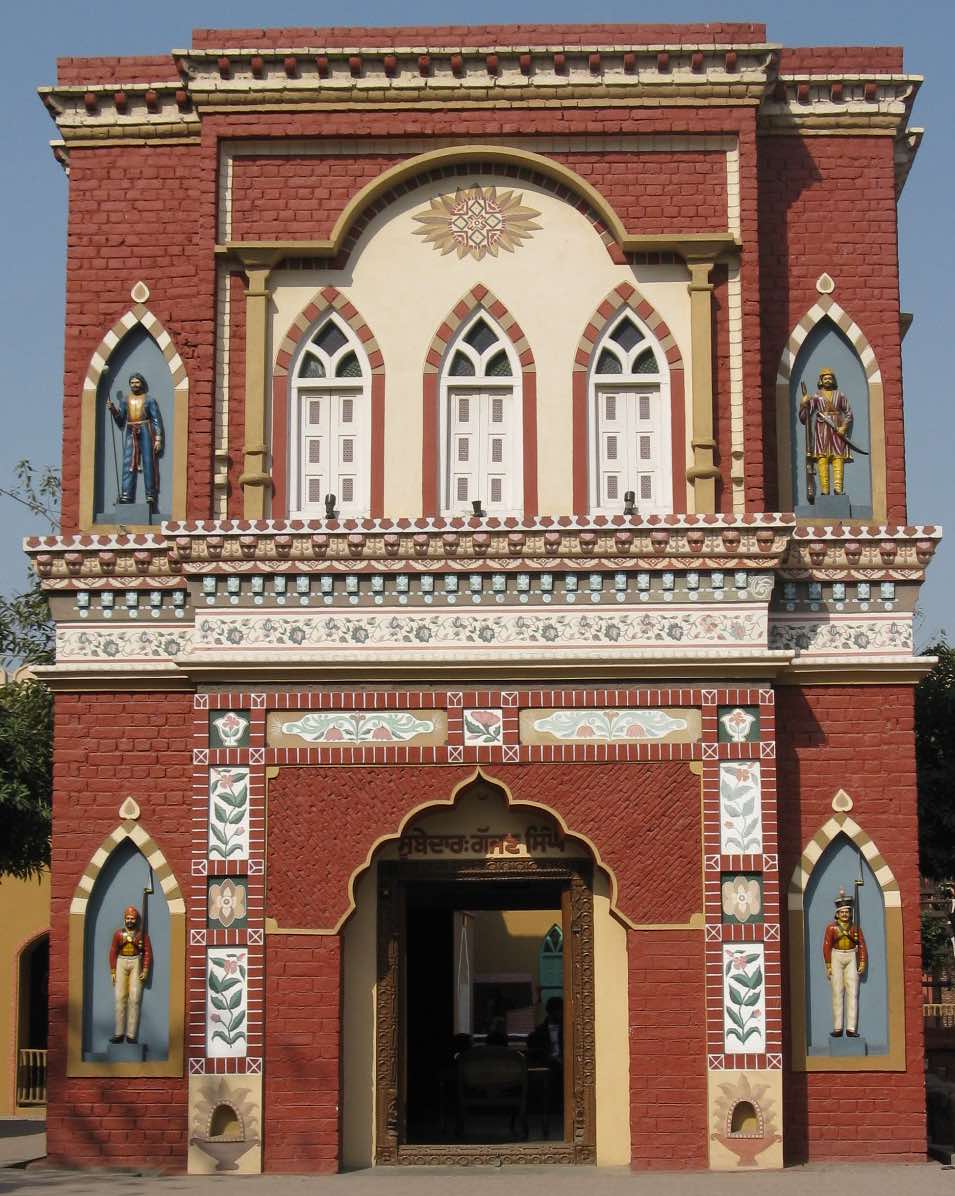
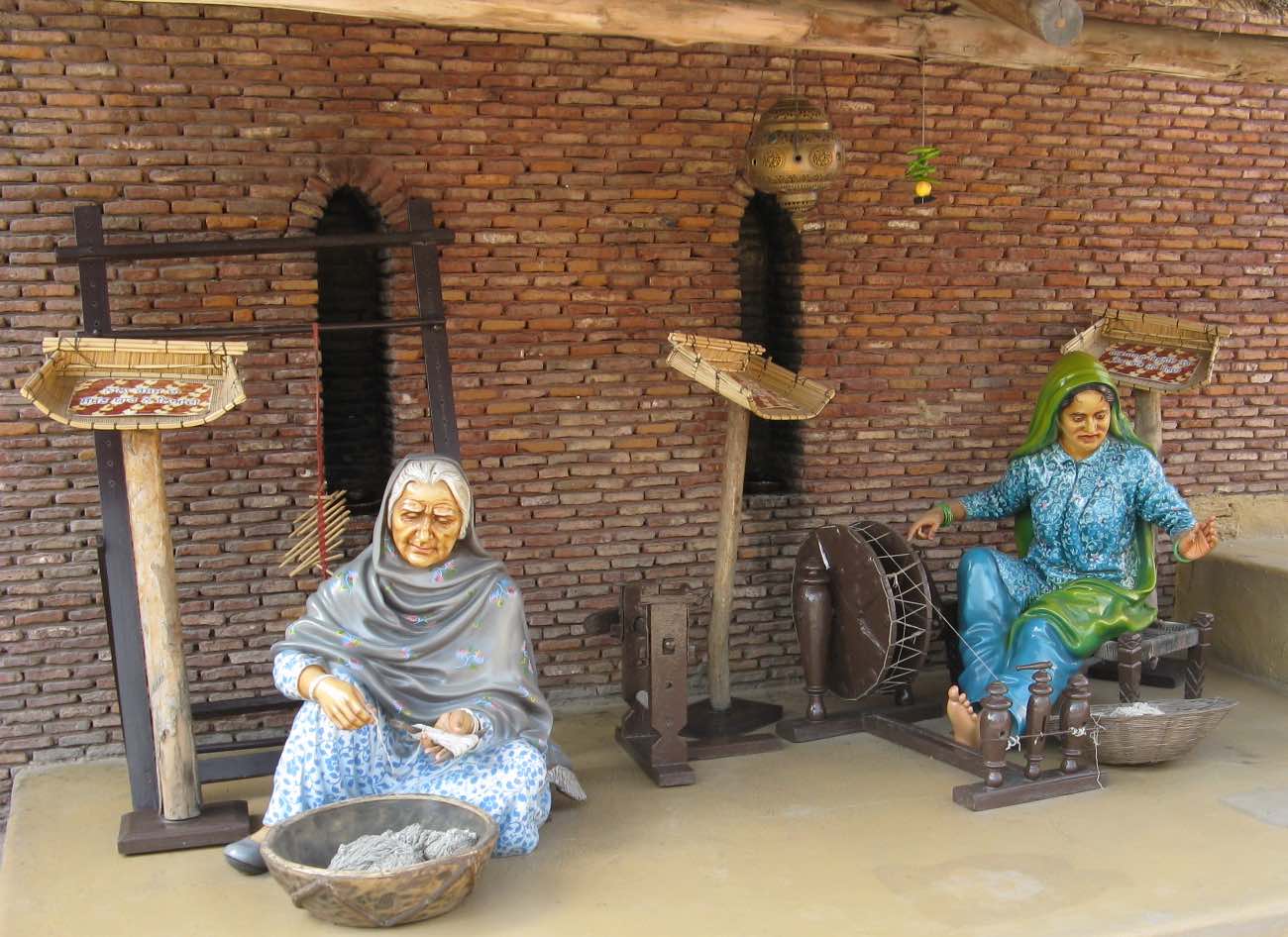
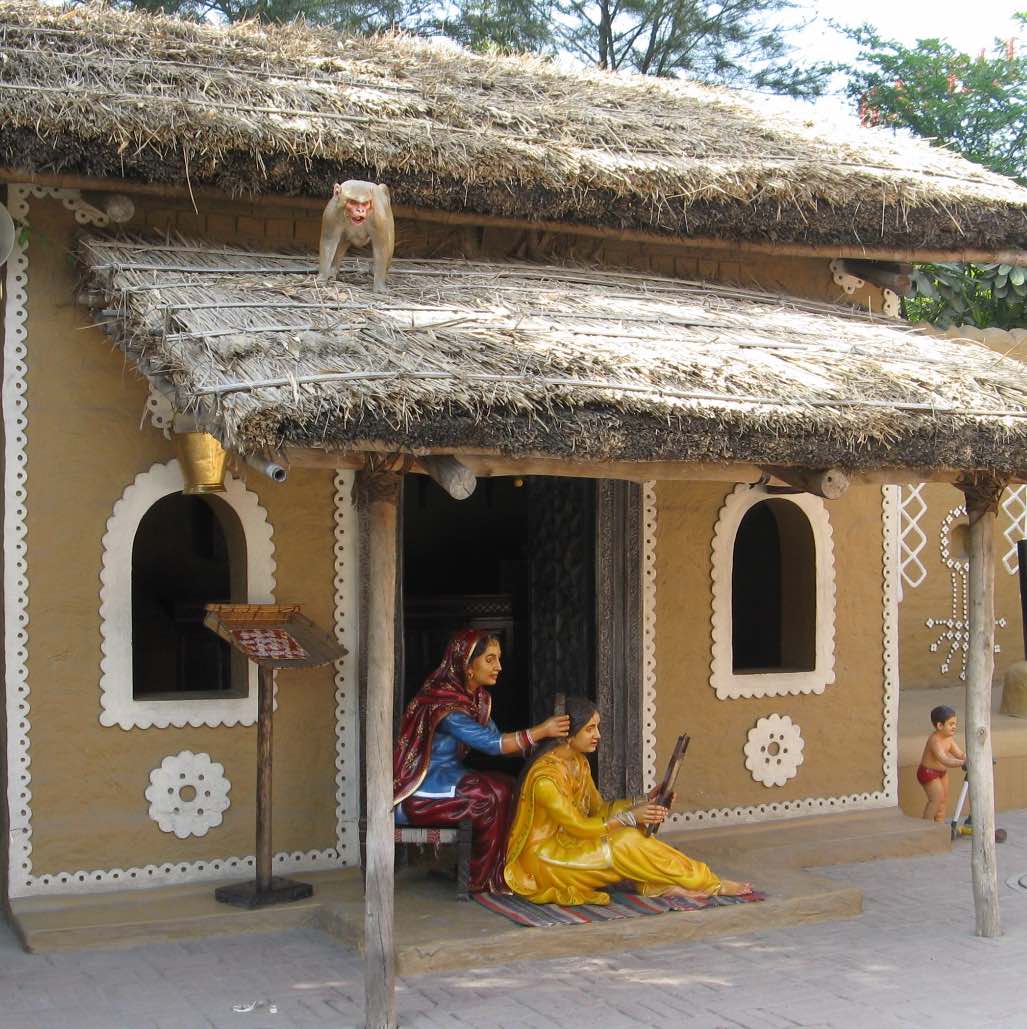
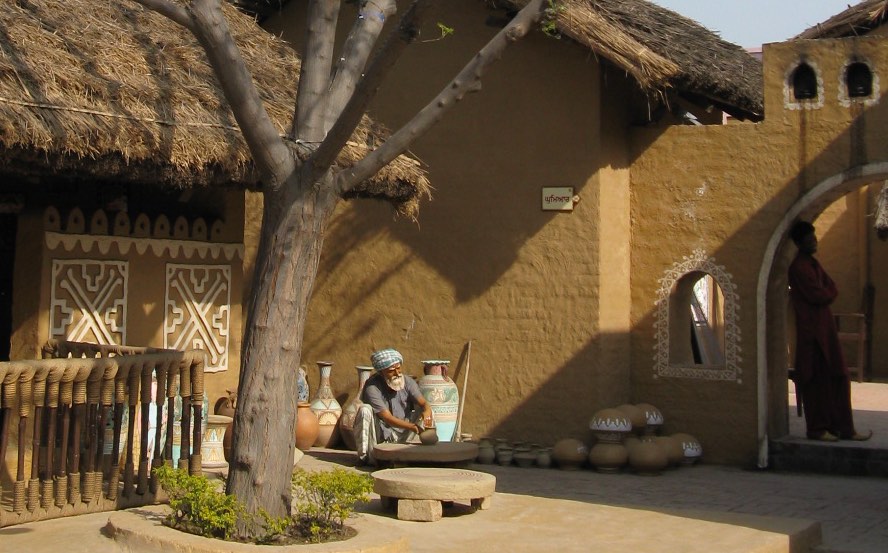
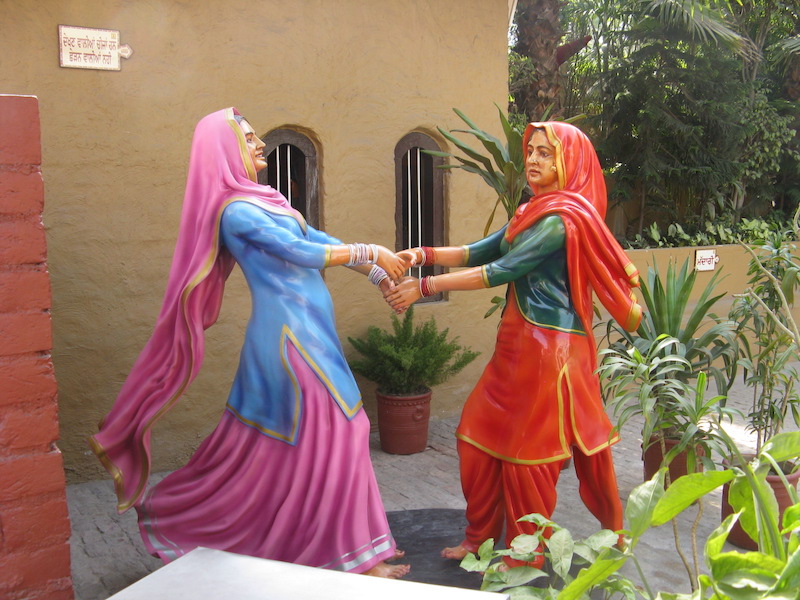
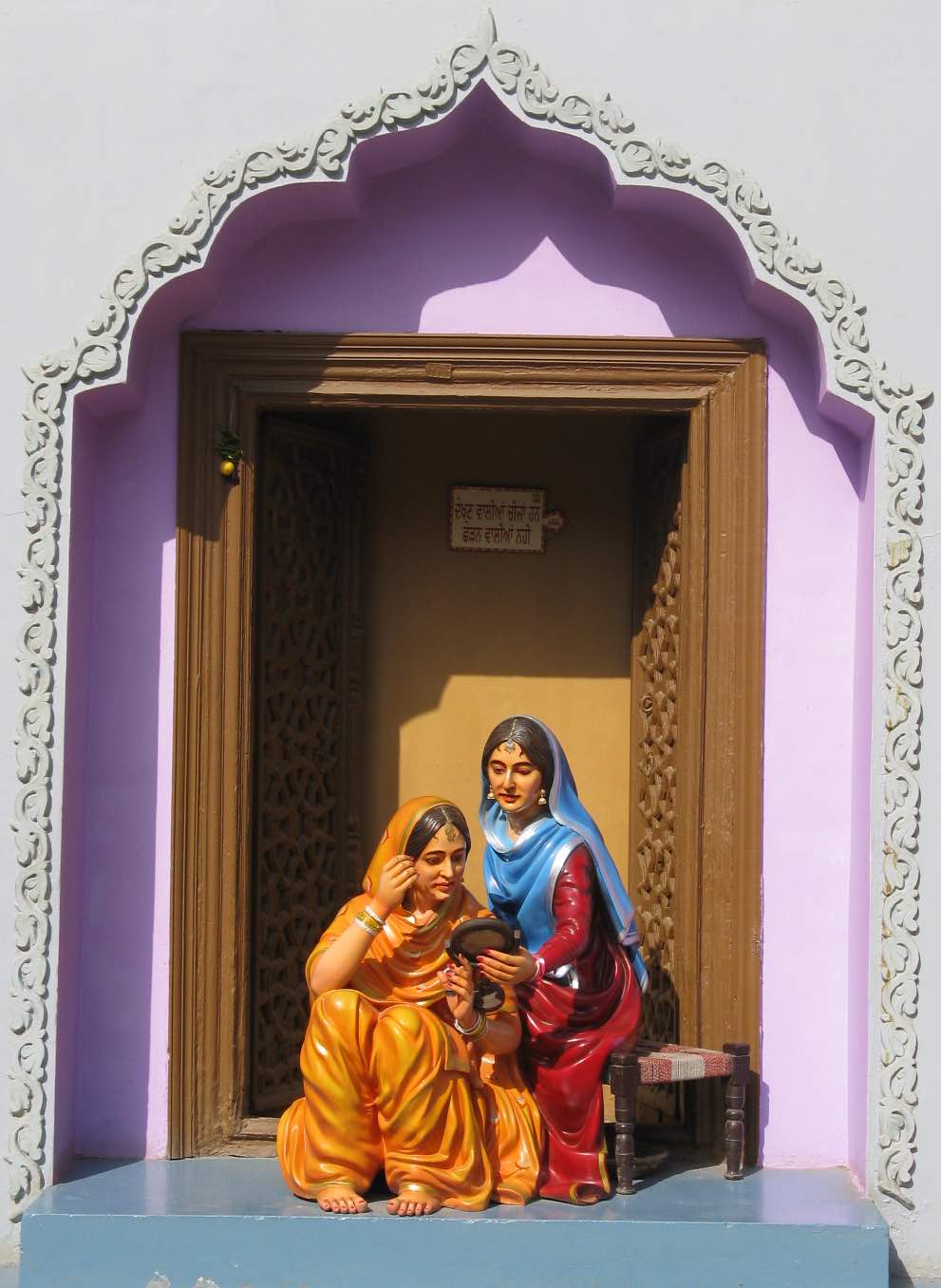
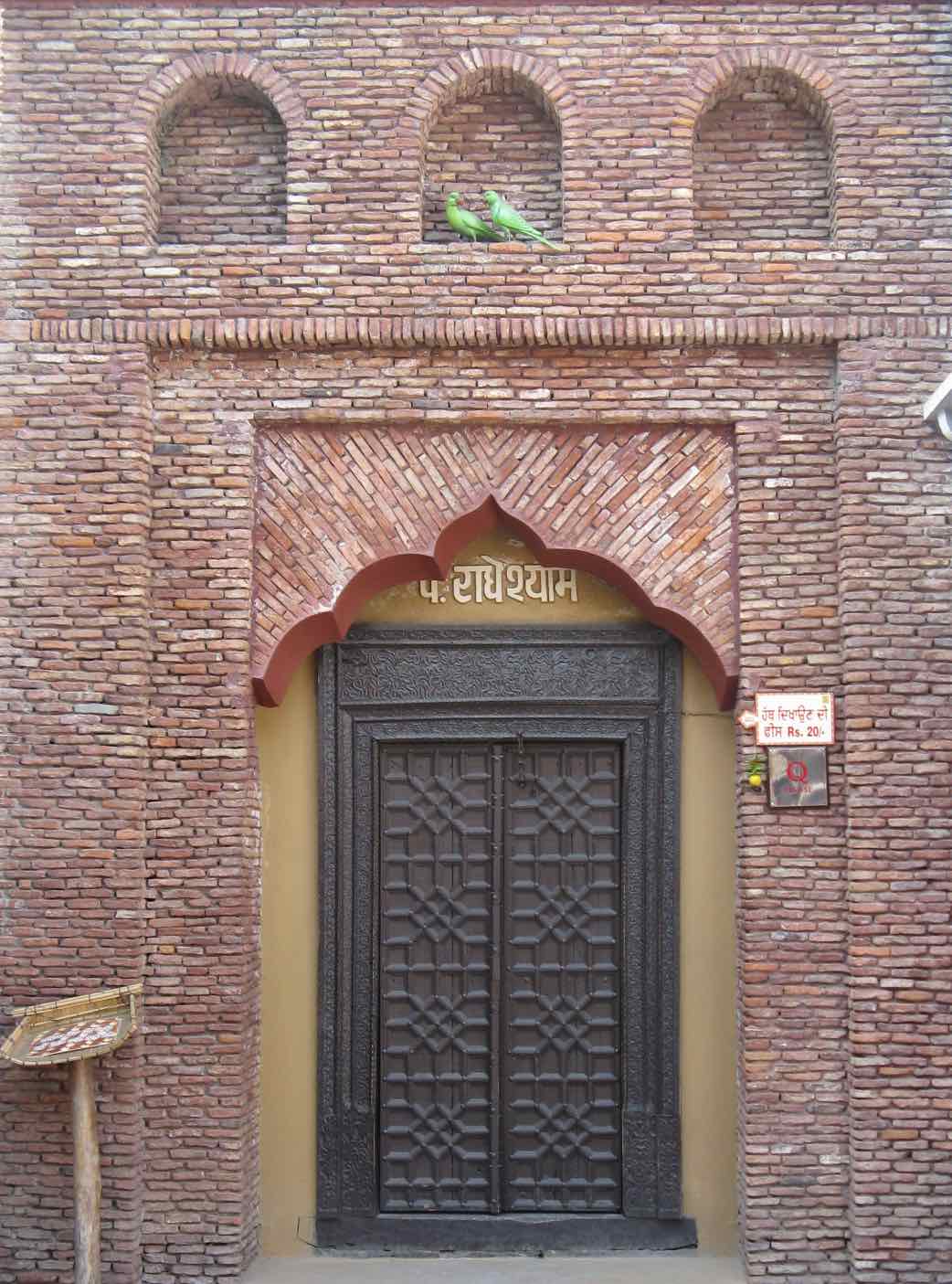
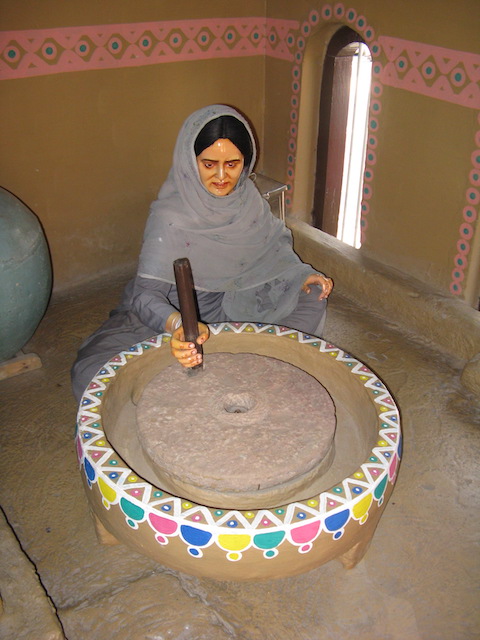
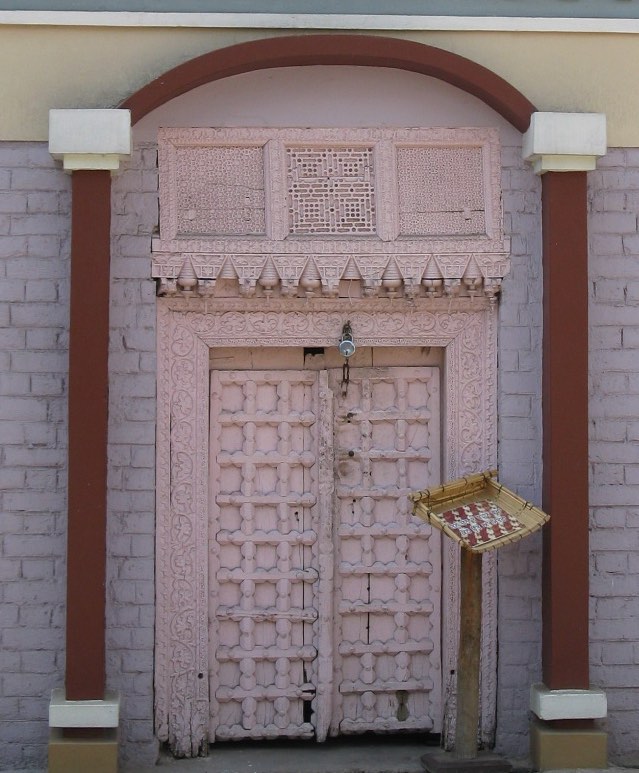
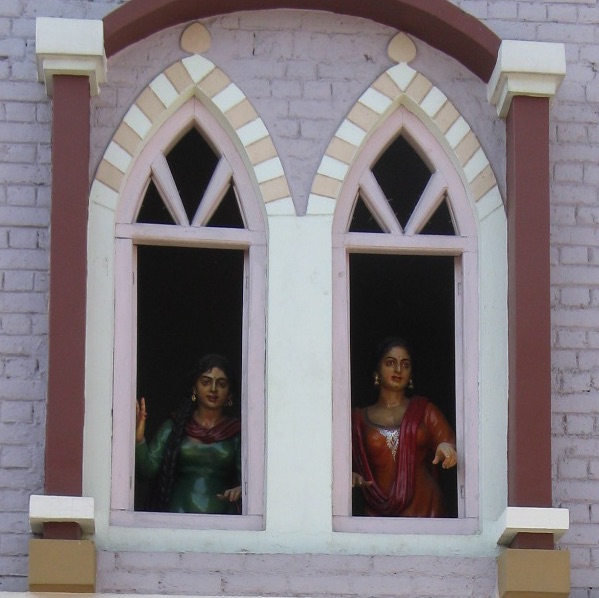
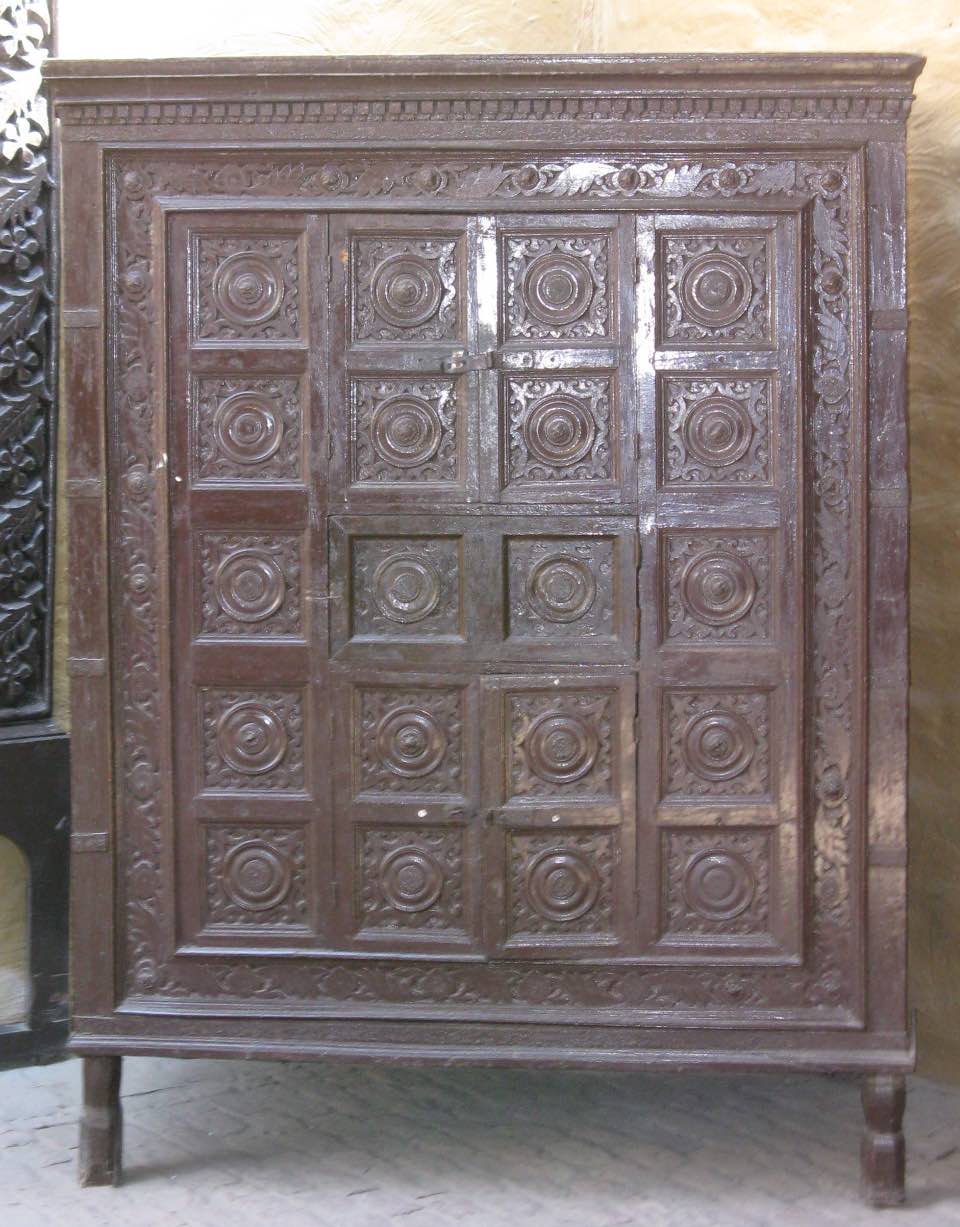
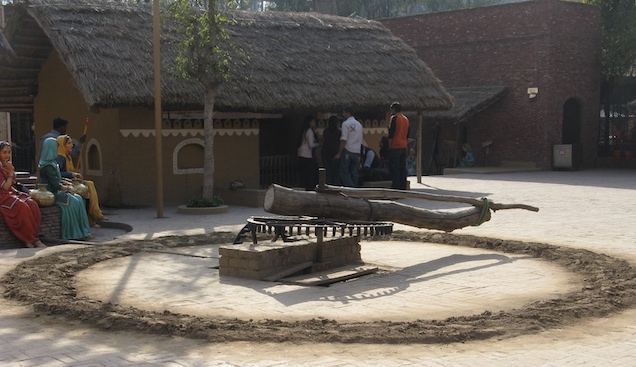
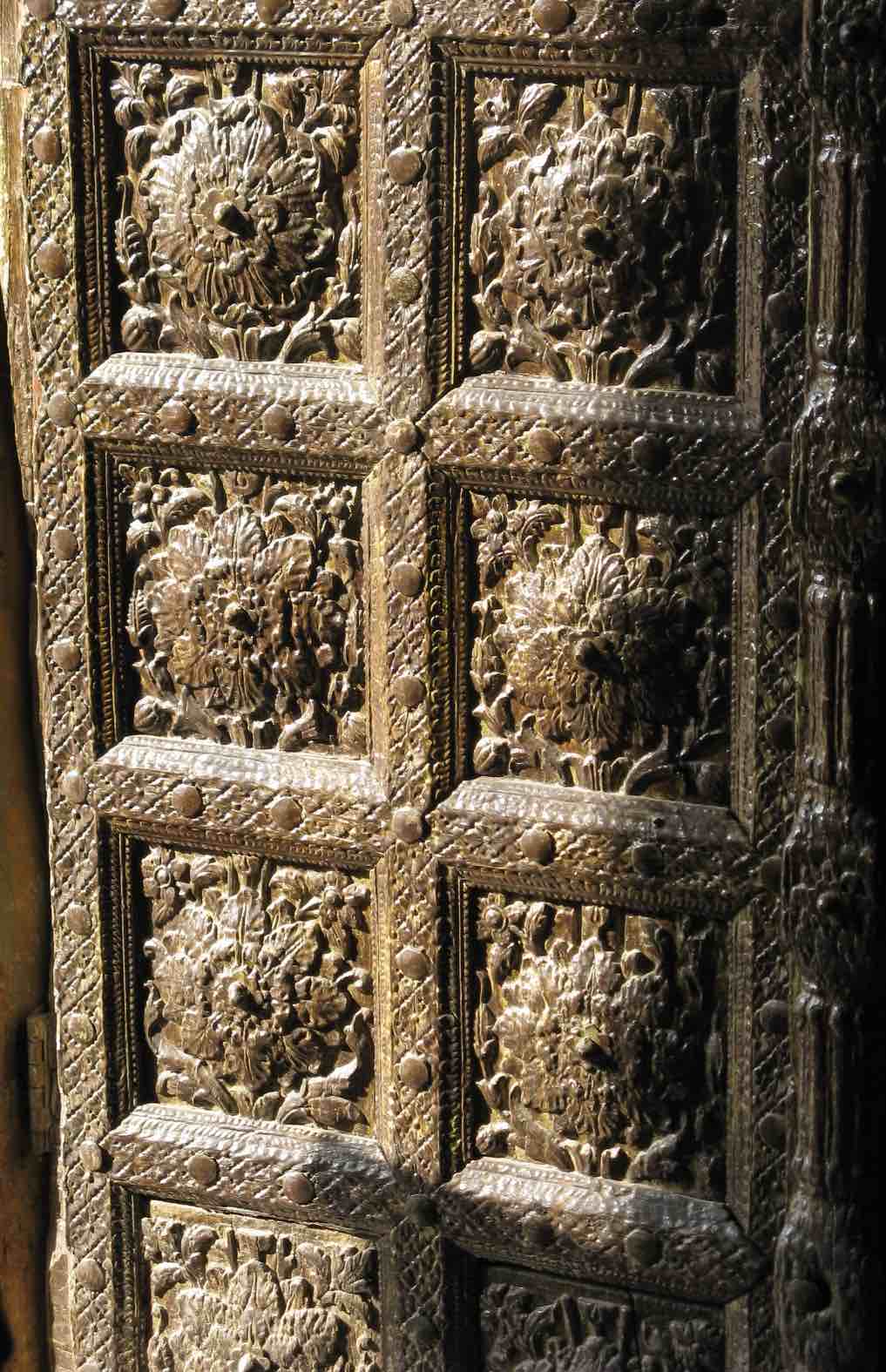
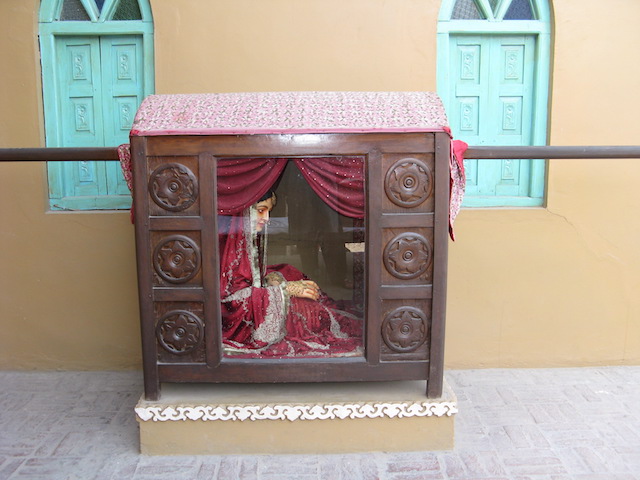
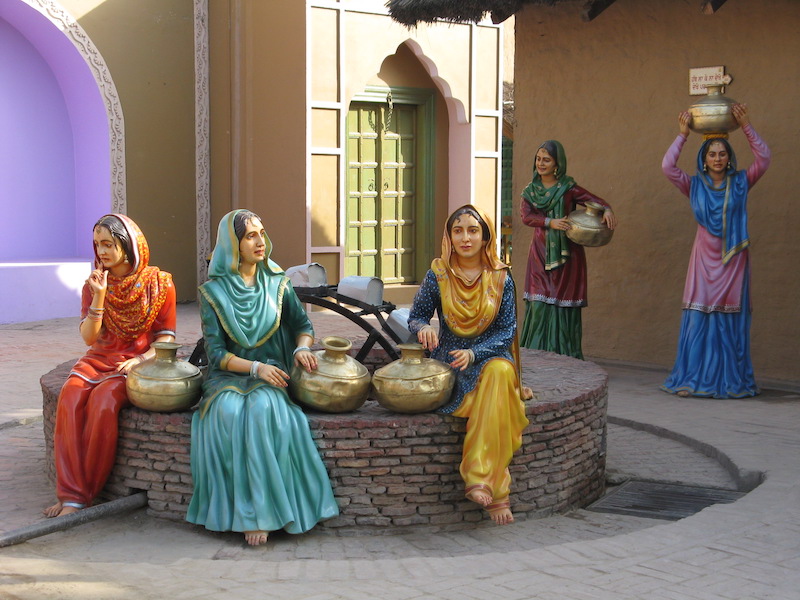
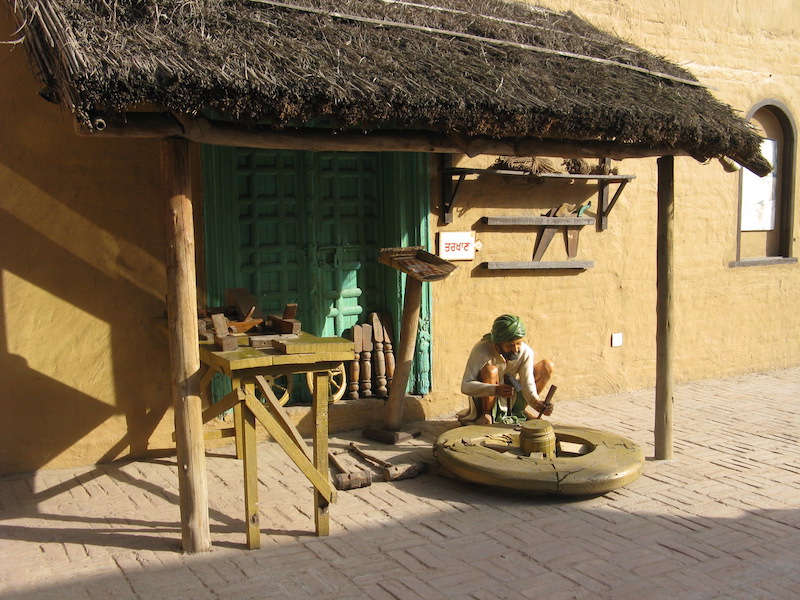
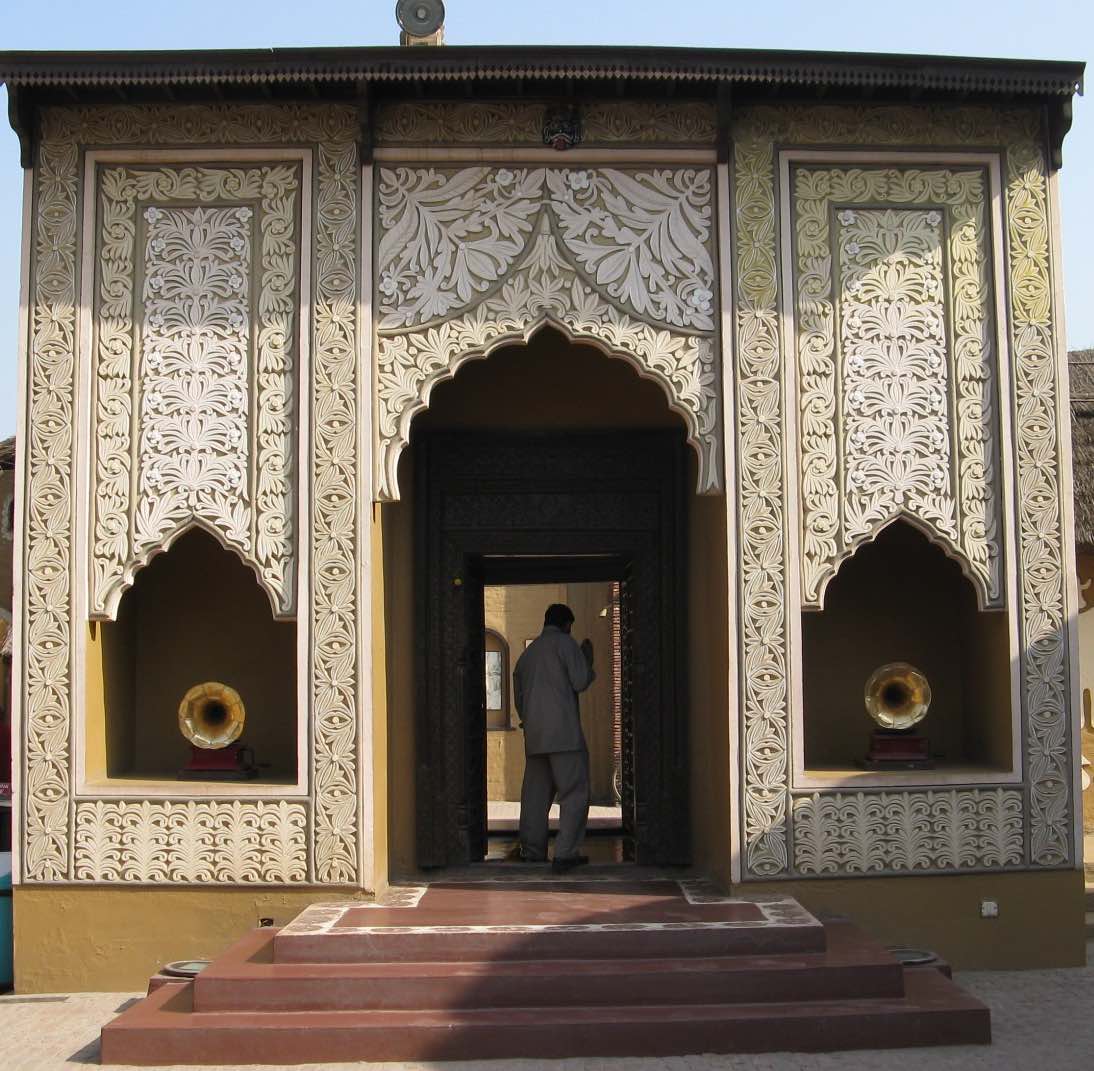
The dhabas not just remain but have metamorphosed into big, loud, air-conditioned restaurants, while being family-friendly; a constant in that ever-changing part of the world. Increasing purchasing power for more in these two-three decades has led to an upward curve in people’s expectations and demands. One of the earliest to step up to (offer) the plate was Haveli, Jalandhar. Its success has led to a number of other branches opening elsewhere, not to mention the imitators and followers. Twenty years after I had first stopped at a dhaba, I first visited the Haveli with my sister, in 2009. I had heard so much about the place in previous conversations. Haveli did not simply serve “traditional” food, it sought to create an “experience” of that traditional age, catering to the wealthy diaspora, who tried hard to reconnect with their roots. Now, therefore nostalgia came at a high price, amidst the sights of a pre-fabricated “themed” restaurant, and accompanied with the Rangla Punjab model village (pictures below from 2009), depicting “typical” village life.

1881: the first full census in British India

As we completed the Census 2021 in the UK today, it made me think back to the first Census that was undertaken in British India in 1881. Actually, the first full census was supposed to take place in 1861 but due to the rebellion of 1857-9 and “due to the sensitivity which the British had developed to what, at least in North India, might be constructed as undue interference in the life of the people, the census was postponed until 1871-2” (Cohn, 324). In 1987, Bernard Cohn was perhaps one of the first to put forward the argument that the colonial census played an important role in constructing identities, thinking about their own numerical strength and the possibilities that this presented in a competitive imperial state.

“The actual taking of the census was a two-step affair. Enumerators were appointed by circle supervisors, who were usually government officials. Supervisors were patwaris, zamindars, schoolteachers, or anyone who was literate. They were given a form with columns on which was to be entered information about every member of a household. The information to be collected was name, religion (e.g., Hindu, Muslim), sect, caste, subdivision of caste, sex, age, marital status, language, birthplace, means of subsistence, education, language in which literate, and infirmities. There was a one-month period before the actual date of the census in which the enumerator was to fill in the forms, and then on the day of the census he was to check the information with the head of the household. As an aid to achieving standardization in the recording of information on caste and subcaste, lists were prepared as early as the 1881 census which gave standard names with variations for the castes. The supervisors were supposed to instruct the enumerators in how to classify responses. The lists of castes were alphabetically arranged giving information on where they were to be found and containing very brief notes” (Cohn, 329).

Cohn notes that the most “complex” and problematic question for the census takers was on the issue of caste. He references the work of Srinivas and Ghurye who raised important questions about the relationship between the census and caste, putting forward the question, why did the British officials record the caste of individuals? Was it perhaps curiosity or part of a design by the British? That is, as some nationalist Indians believed, “to keep alive, if not to exacerbate, the numerous divisions already present in Indian society” (Cohn, 327). The second question is to what extent did the census effect people’s notion of who they were? There arguments and connection have subsequently been advanced by many others about the importance of the census in creating and essentialising identities at a time when communalism was taking root. This period of enormous socio-economic change, and politicisation of identities is further entrenched with the enumeration of people and which religion they belong to. Kenneth Jones, in his work on the socio-religious reform movements in British India, highlights that fact that

“Traditionally, Hinduism lacked a conversion ritual. After the introduction of a decennial census in 1871, religious leaders began to focus their attention on the issue of numerical strength. For Hindus the census reports pictured their community as one in decline, its numbers falling in proportion to those of other religions. Christian success in converting the lower and untouchable castes furthered Hindu fears and led the militant Aryas to develop their own ritual of conversion, shuddhi. Initially shuddhi was employed to purify and readmit Hindus who had converted to Islam or Christianity” (Jones, 100).

Indeed, Gopal Krishan, in his study on the demography of the Punjab, highlights that

“The most fascinating demographic feature of the colonial Punjab was the religious composition of its population. While it represented an evolution of a cultural diversity in history, it became a new and divisive force in polity over time. It was on the basis of religion that the British India was partitioned; and more pertinently the partition was specific to only two provinces, Punjab and Bengal. These two provinces were marked by not only a sensitive composition of the Muslims and non-Muslims (essentially Hindus and Sikhs in the case of Punjab) but also by regional segregation of the two religious’ groups, by and large. In Bengal, the Muslims were in overwhelming majority in the eastern segment and the non-Muslims in its western counterpart; in Punjab, the picture was in reverse, with the Muslims in a large majority in the western wing and the non-Muslims in the eastern” (Krishna, 83).

When it finally came to the Partition in 1947, Sir Cyril Radcliffe was using what are considered to be out-dated figures from the Census conducted during World War Two in 1941. However, the lines between two countries were drawn based on this information.

Bhagat Ram B. ‘Census enumeration, religious identity and communal polarization in India.’ Asian Ethnicity, 2013, 14:4, 434-448, DOI: 10.1080/14631369.2012.710079

Bhagat, Ram B. ‘Census and the Construction of Communalism in India.’ Economic and Political Weekly (2001): 4352-4356.

Bhagat, Ram B. ‘Caste Census: Looking Back, Looking Forward.’ Economic and Political Weekly 42, no. 21 (2007): 1902-905. Accessed March 21, 2021. http://www.jstor.org/stable/4419628.

Cohn, Bernard. ‘The Census, Social Structure and Objectification in South Asia’, in Sarkar, Sumit, and Tanika Sarkar. Caste in Modern India (Orient Blackswan, 2018).

Jones, Kenneth W. Socio-religious reform movements in British India. Vol. 1. Cambridge University Press, 1989.

Krishan, Gopal. ‘Demography of the Punjab (1849-1947).’ Journal of Punjab Studies, 11, no. 1 (2004): 77-89

Singh, Joginder. ‘The Sikhs in the British Census Reports, Punjab.’ Proceedings of the Indian History Congress 46 (1985): 502-06. Accessed March 21, 2021. http://www.jstor.org/stable/44141395.

Yengde, Suraj. ‘Adivasis are not Hindus. Lazy colonial census gave them the label.’ The Print, 9 March 2021.

The 1881 Census is digitized and available via: The Government of India or Digital South Asia Library.

The Incredible Story of Nek Chand Rock Gardens, India

This account has rekindled memories of visiting the Rock Gardens in Chandigarh. I have pre-digital age photographs and will share those on my blog but this is a wonderful piece on the unique history of Nek Chand.

The Nek Chand Rock Gardens had been on our radar for a long time before we finally made it there. Located in the city of Chandigarh, at the foot of …

The Incredible Story of Nek Chand Rock Gardens, India