English Translation by Agha Shahid Ali

It is spring, And the ledger is opened again.
From the abyss where they were frozen,
those days suddenly return, those days
that passed away from your lips, that died
with all our kisses, unaccounted.
The roses return: they are your fragrance;
they are the blood of your lovers.
Sorrow returns. I go through my pain
and the agony of friends still lost in the memory
of moon-silver arms, the caresses of vanished women.
I go through page after page. There are no answers,
and spring has come once again asking
the same questions, reopening account after account.
Listen to Tina Sani and Shabana Azmi’s rendition of the poem.
As everyone is talking about OpenAI, I decided to experiment and try it out for myself and see what it can generate. The speed with which it generates the material is amazing, and below is the request plus response.
Create a blog about South Asian migration to Coventry:
Welcome to the South Asian Migration to Coventry blog! Here, we will explore the history and current state of South Asian migration to Coventry, a city in the West Midlands of England. We will look at the reasons why people from South Asia have chosen to move to Coventry, the challenges they have faced, and the positive impact they have had on the city. We will also discuss the cultural and religious diversity that has been created by the influx of South Asian migrants and how it has enriched the city. We hope that this blog will provide an informative and interesting insight into the history and present of South Asian migration to Coventry. Coventry has a long history of South Asian migration. The first South Asian migrants to the city arrived in the 1950s and 1960s, when people from India, Pakistan, and Bangladesh moved to the city to find work in the car industry. This influx of South Asian migrants continued throughout the 1970s and 1980s, with many migrants settling in the city and bringing their families with them. This created a vibrant and diverse South Asian community in Coventry, which has grown and flourished over the years. Today, Coventry is home to a large and vibrant South Asian community. According to the 2011 census, over 11% of the city’s population is of South Asian origin. This community has had a huge impact on the city, bringing with it a rich cultural and religious diversity. South Asian migrants have also helped to revitalise the city’s economy, with many businesses and organisations being founded by South Asian entrepreneurs. Despite the positive impact that South Asian migrants have had on Coventry, they have also faced many challenges. These include racism and discrimination, as well as difficulties in finding employment and housing. However, the South Asian community in Coventry has remained strong and resilient, and has continued to make a positive contribution to the city. We hope that this blog will provide an interesting and informative insight into the history and present of South Asian migration to Coventry. We welcome your comments and feedback, and look forward to hearing your thoughts and experiences. Thank you for visiting!
Having written a book about South Asian Migration to Coventry, I can see this is a very superficial AI generated response and in places an inaccurate too, however the AI text has provided a brief overview of the community, with some data from the Census too. The first South Asians to settled in Coventry can be traced as far back as the 1930s, albeit in small numbers, but the more significant numbers were in the post-war era when Coventry was being rebuilt. While the AI generated text mentions work, diversity, contributions to the city etc, there are actually very little detail or specific examples. I can see why there has been so much interest in this, and for us who work in the education sector, this has huge repercussions.
AI generated image “South Asian Coventry”
To accompany this AI generated blog post, I decided to source my photos from the Openverse and AI generated images from WordPress. With pictures there are clearly limitations, because presumably there is insufficient source material and thus I can’t find suitable pictures to accompany the theme of my post. This has been an interesting incursion into the world of AI, which I really do not know that much about, but it has provided some food for thought (pun intended!).
Main Tenu Fir Milaan Gi
Kithey? Kis Tarah? Pata Nai
Shayad Terey Takhayul Di Chinag Ban Ke
Terey Canvas Tey Utraan Gi
Ya Khowrey Terey Canvas Dey Utey
Ikk Rahasmayi Lakeer Ban Ke
Khamosh Tenu Tak Di Rawaan Gi

I will meet you yet again
How and where? I know not.
Perhaps I will become a
figment of your imagination
and maybe, spreading myself
in a mysterious line
on your canvas,
I will keep gazing at you.

Yaa Khowrey Sooraj Di Loo Ban Ke
Terey Rangaan Wich Ghulaan Gi
Yaa Rangaan Diyan Bahwaan Wich Baith Ke
Terey Canvas Nuu Walaan Gi
Pata Nai Kiss Tarah? Kithey?
Par Tenu Zaroor Milaan Gi

Perhaps I will become a ray
of sunshine, to be
embraced by your colours.
I will paint myself on your canvas
I know not how and where –
but I will meet you for sure.

Yaa Khowrey Ikk Chashma Bani Howaan Gi
Tey Jeevan Jharneyaan Da Paani Udd-da
Main Paani Diyaan Boondaan
Terey Pindey Tey Malaan Gi
Tey Ikk Thandak Jahi Ban Ke
Teri Chaati Dey Naal Lagaan Gi
Main Hor Kujh Nai Jaandi
Par Aena Jaandi
Ke Waqt Jo Vii Karey Ga
Aey Janam Mairey Naal Turey Ga

Maybe I will turn into a spring,
and rub the foaming
drops of water on your body,
and rest my coolness on
your burning chest.
I know nothing else
but that this life
will walk along with me.

Aey Jism Mukda Hai
Tay Sab Kujh Muk Jaanda
Par Chaityaan Dey Dhaagey
Kaainaati Kana Dey Hundey
Main Onhaan Kana Nuu Chunaan Gi
Dhaageyaan Nuu Walaan Gi
Tey Tenu Main Fair Milaan Gi…

When the body perishes,
all perishes;
but the threads of memory
are woven with enduring specks.
I will pick these particles,
weave the threads,
and I will meet you yet again.

Poetry in Punjabi by Amrita Pritam
Translation in English by Nirupama Dutt
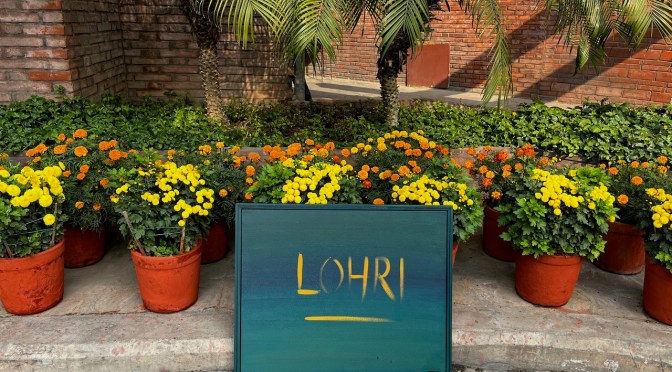
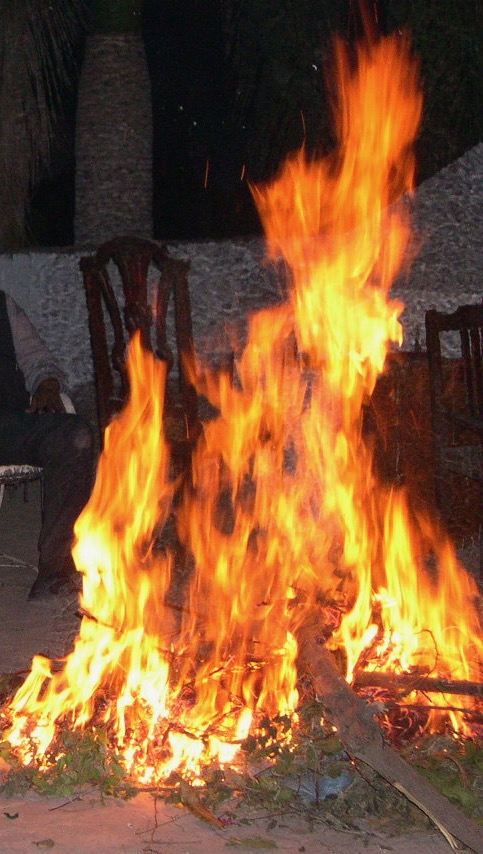
A few days back I was in Punjab and Delhi, which were clouded and submerged in the winter chill and fog. With every passing comment about the cold, there is another reference, “it will only last until lohri, after that the weather will improve”. This points to the passing of the winter solstice and the changes in the season. Many of the popular festivals in Punjab are associated with seasonal changes, these are easy markers and reference points before formal calendars and dates arrived, and in this case the winter festival of lohri means anticipating longer and warmer days.
Growing up, there were always certain foods which we associated with lohri (and associated with the winter harvest). Rewris/revdis, jaggery and sesame-based dishes, and peanuts, are all warming and seasonal foods during the winter days of North India. Sarson da saag and makki di roti is another essential. Jaggery, sesame sweets and peanuts are quite often distributed and exchanged amongst friends and families. Traditionally, this special occasion was reserved for the birth of a son, but thankfully many have started celebrating the birth of a child, regardless of its gender.
In Indian Punjab the festival is public holiday but unfortunately across the border in Pakistan Punjab it is barely recognised. In recent years commentators and activists have been trying to revive it and re-introduce it to the wider public, with limited impact. Lohri is not and was not a religious festival, and yet the division of such festivals is emblematic of Partition, which increasingly entrenched what was deemed to be Hindu/Sikh and what was considered Islamic. In the video above for BBC Urdu, you can hear Mazhar Abbas narrate the history of lohri for a new generation.
Going back to Delhi, I was fortunate enough to meet up with Harinder Singh (1469) who was busy curating his lohri exhibition at the India International Centre. Do go and have a look, if you are around Delhi.
There has been a lot of interest in Leicester over the weekend, following the disturbances around Green Lane Road and Belgrave. I noticed on my Twitter feed that it was picked up by journalists, activists and academic across the globe and especially from those in India. They are of course keenly watching this because of the involvement of what seems to be groups aligned to the RSS and the ruling party in India, the BJP.
I have worked in the city for most of my professional life, I have family living in the area, and I have written about multicultural Leicester as well. There has been a lot of information and misinformation being circulated around via social media, this is inevitable given the way these platforms work. I know Green Lane Road well and the ways in which it has evolved since the 1980s, when I first went there. I will perhaps write about this another time, but I wanted to share some basic facts about multicultural Leicester, and provide a list of some academic work that has been done on the city.
The demographics of Leicester have changed and evolved considerably over the decades. Migration to Leicester was interestingly later than some of the surrounding cities in England. In 1972 the Leicester Mercury headlines expressed fear and concern about the influx of East African Asians into the city following their expulsion by Idi Amin in Uganda. Yet in 2001 when the Cantle Report on Community Cohesion was published, the local press in Leicester was considered ‘very responsible’ and ‘seen to be helping to promote cohesion throughout the community.’ Indeed, only very recently several events and exhibitions have been documenting and commemorating the 50 years since the Ugandan Asians arrived in Leicester.
Area by Birth
1951
1961
1971
1981
1991
2001
India
569
1,827
11,510
18,235
20,841
24,677
Pakistan
49
109
775
1,305
1,155
1,854
Bangladesh
–
–
685
–
–
1,051
East Africa
18
1,630
6,835
18,622
17,168
18,843
Total
636
3,566
19,805
38,162
39,164
46,425
South Asian Migration into Leicester, 1951-2001 according to place of birth (Source: Bonney, 2003 and National Census)
However, as a city, Leicester is today one of the most diverse areas in the UK and perhaps even in Europe. The data from the 2021 census is not available yet, it is hoped more analysis and data will be released later this year. According to the 2011 census, the majority ethnic group is still white at 50.5%. However, the next largest group is of Indian origin – 93,335 (28.3%). The Pakistani population is still quite small at 8,067 (2.5%). However, overall there are more than 60,000 Muslims of different nationalities and ethnicities in Leicester, compared to 50,000 Hindus; the Sikh community is sizeable but small in comparison.
Religion
2001
2011
Christian
125,187
106,872
Buddhist
638
1,224
Hindu
41,248
50,087
Jewish
417
295
Muslim
30,885
61,440
Sikh
11,796
14,457
Other religion
1,179
1,839
No religion
48,789
75,280
Religion not stated
19,782
18,345
Total
279,921
329,839
Religion in the 2001 and 2011 censuses in Leicester.
Rank
Language
Usual residents aged 3+
Proportion
1
English
228,295
72.47%
2
Gujarati
36,347
11.54%
3
Punjabi
7,560
2.40%
4
Polish
6,192
1.97%
5
Urdu
3,376
1.07%
The top-5 languages spoken in Leicester according to the 2011 census.
Below are references for anyone interested in knowing more about migration to the UK and specifically Leicester.
Anwar, M., Between Two Cultures (London: Commission for Racial Equality, 1981)
Ballard, Roger (ed), Desh Pardesh The South Asian Presence in Britain (London: Hurst, 1994)
Bhachu, Parminder. Twice migrants: east African Sikh settlers in Britain. Vol. 31100. Tavistock Publications, 1985.
Bishop, Sue Zeleny. “Inner-city possibilities: using place and space to facilitate inter-ethnic dating and romance in 1960s–1980s Leicester.” Urban History (2021): 1-16.
Bonney, Richard, ‘Understanding and Celebrating Religious Diversity in Britain: A Case Study of Leicester since 1970 making comparison with Flushing, Queens County, New York City’, Encounters, 9, 2, 2003, pp 123-151
Bonney, Richard, and William Le Goff. “Leicester’s cultural diversity in the context of the British debate on multiculturalism.” International Journal of Diversity in Organisations, Communities and Nations 6, no. 6 (2007): 45-58.
Clayton, John. “Living the multicultural city: acceptance, belonging and young identities in the city of Leicester, England.” Ethnic and Racial Studies 35, no. 9 (2012): 1673-1693.
Gunn, Simon, and Colin Hyde. “Post-industrial place, multicultural space: the transformation of Leicester, c. 1970–1990.” International Journal of Regional and Local History 8, no. 2 (2013): 94-111.
Hassen, Inès, and Massimo Giovanardi. “The difference of ‘being diverse’: City branding and multiculturalism in the ‘Leicester Model’.” Cities 80 (2018): 45-52.
Herbert, Joanna, ‘Migration, Memory and Metaphor: Life Stories of South Asian in Leicester’ in Burrell, Kathy and Panayi, Panikos (eds.) Histories and memories: migrants and their history in Britain (London: Tauris Academic, 2006)
Herbert, Joanna, Negotiating Boundaries in the City: Migration, Ethnicity, and Gender in Britain (Aldershot, Ashgate, 2008)
Hussian, Asaf, Haq, Tim and Law, Bill, Introduction by R. Bonney Integrated Cities. Exploring the Cultural Development of Leicester, Leicester, Society for Inter-Cultural Understanding Leicester (University of Leicester, 2003)
Hussian, Asaf, Haq, Tim and Law, Bill, The Intercultural State: Citizenship and National Security (Contact Cultures, 2007)
Law and Haq, Belgrave Memories (Leicester: Contact Cultures, 2007)
Leicester City Council, The Diversity of Leicester – A Demographic Profile (Leicester City Council, 2008)
Mamdani, Mahmood, From Citizen to Refugee: Uganda Asians Come to Britain (London, Pinter Publishers, 1973)
Marret, Valerie, Immigrants Settling in the City (Leicester, Leicester University Press, 1989)
Martin, John and Singh, Gurharpal, Asian Leicester (Gloucestershire: Sutton, 2002)
Panayi, Panikos, ‘The Spicing up of English Provincial Life: The History of Curry in Leicester’ in Kershen, Anne J., Food in the Migrant Experience (Aldershot: Ashgate, 2002)
Polimeni, Beniamino, and Theophilus Shittu. “Impact of migration on architecture and urban landscape: The case of Leicester.” DISEGNARECON 13, no. 25 (2020): 24-1.
Rex, John and Tomlinson, Sally, Colonial Immigrants in a British City: A Class Analysis (Routledge, 1979)
Sato, Kiyotaka. “Divisions among Sikh Communities in Britain and the Role of Caste System: A Case Study of Four Gurdwaras in Multi-Ethnic Leicester.” Journal of Punjab studies 19, no. 1 (2012).
Singh, Gurharpal, ‘Multiculturalism in Contemporary Britain: Reflections on the ‘Leicester Model’’, International Journal on Multicultural Societies, 5, 1, 2003, pp 40-54
Vertovec, Steve, ‘Multiculturalism, multi-Asian, multi-Muslim Leicester: dimensions of social complexity, ethnic organisation and local interface’, Innovations, 7, 3, 1994, pp. 259-76
Virdee, Pippa. “From the Belgrave Road to the Golden Mile: the transformation of Asians in Leicester.” (2009).
Visram, Rozina, Asians in Britain. 400 Years of History (London: Pluto Press, 2002)
Westwood, Sallie, ‘Red Star over Leicester: racism, the politics of identity, and black youth in Britain’ pp101-116 in Werbner, Pnina and Anwar, Muhammad, Black and Ethnic Leaderships in Britain: The Cultural Dimensions of Political Action (Routledge, 1991)
Westwood, Sallie, All Day Everyday. Factory and family in the making of women’s lives (London: Pluto, 1984)
Williams, John, ‘Leicester Nirvana Fighting For a Better Future’ in Asians Can Play Football. A report from the Asians in Football Forum, (2005)
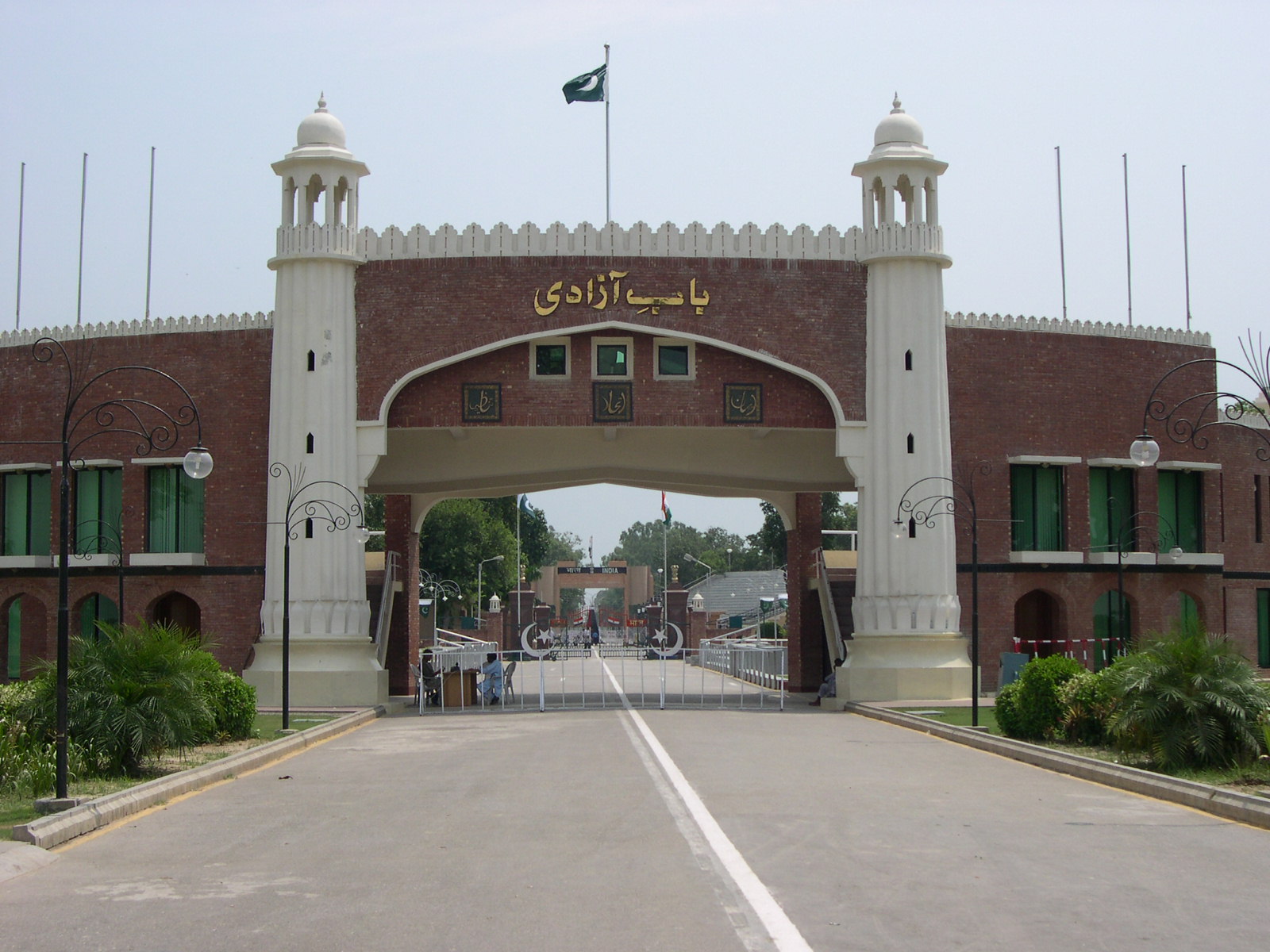
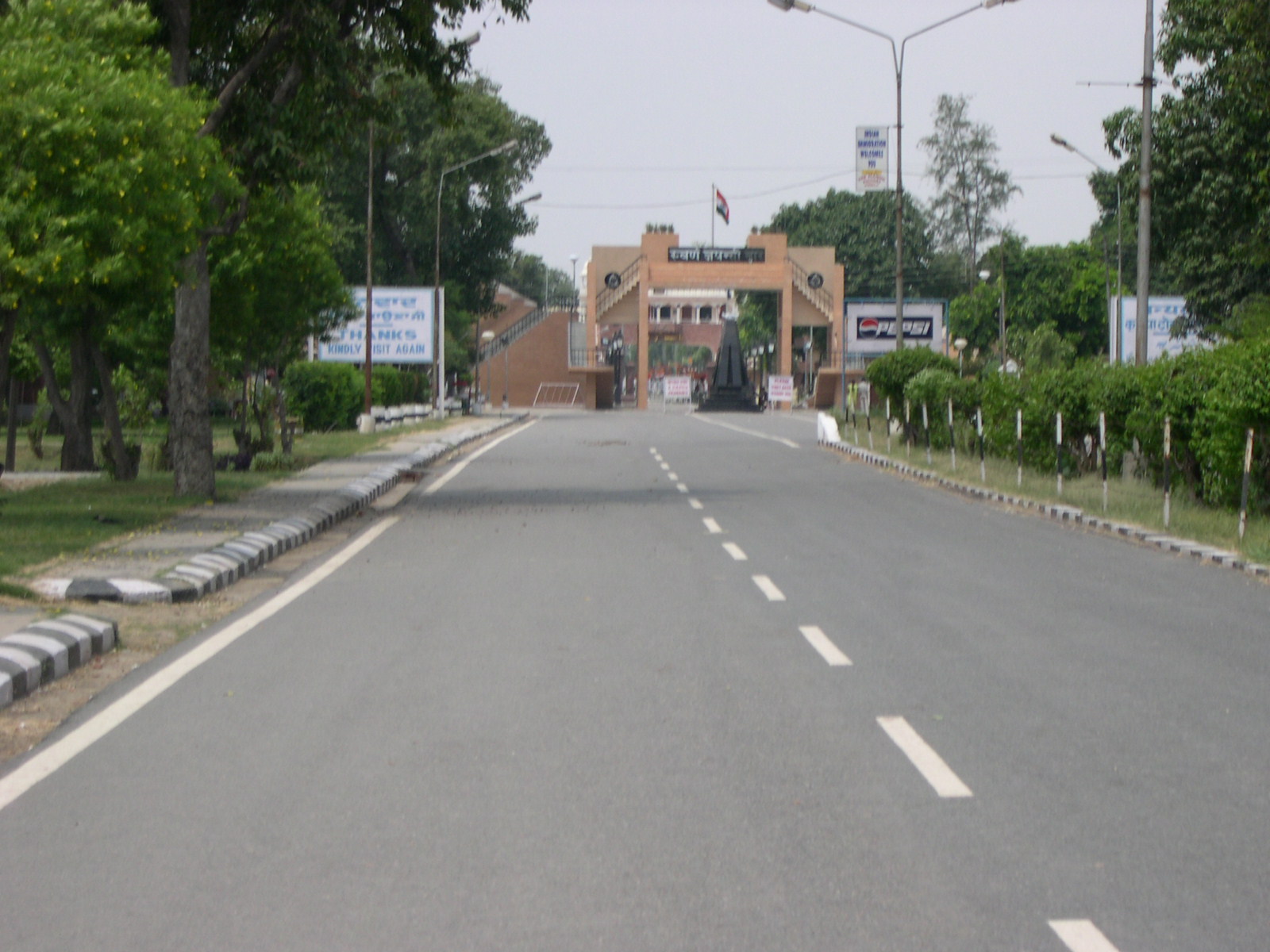
In 2001, I crossed the Wagah-Attari border for the first time. Since then, I have used this official land crossing between India and Pakistan numerous times, in the process seeing the border undergo multiple changes. It used to be the Grand Trunk Road split in half, with a few meters of “no man’s land” to separate them. I could literally walk from one side to the other, while remaining on the GT Road. Then, the authorities decided to uplift, gentrify, and replace the colonial bungalows. Gone was the quaint and informal space with scattered flower beds and plants and in came the flashy buildings, followed by the airport style security, customs, and immigration; culminating eventually in the hideous and expensive battle for who can hoist the largest flag and keep it flying high!
To be fair, the development of the check post at Wagah-Attari was probably a response to the expectation that relations between the two countries would improve, and with that the foot traffic would increase. The bungalows were not equipped to deal with high volumes of people. Hence, they first established the goods/transit depot on one side of the border, so as to divert the trucks carrying the items of import/export. This separated the trade traffic from the people traffic. Whilst the establishment of a goods depot offered signs of improved trade between the two countries, even this was subject to cordial relations.
With numerous crossings since then, I have seen the border change, not just physically but also its ambience and vibes that the place gives. Indeed, the new buildings and transit buses which take passengers from one side to other have functioned to create further distance between the lines of control. These were not there previously, and the cool formality evokes the illusion of being remote and separate. Borders do not have to be harsh and austere.
These moments and emotions are difficult to capture on camera, but they can be felt when encountering the staff and officials. When I first crossed the border, I had the compact Canon Sure Shot AF-7, which was a popular model in the 1990s and gifted to me. I enjoyed taking photographs, but cameras were not cheap then, and the 35mm film was expensive too, both to buy and to develop, so photos were taken sparingly. When I embarked on my doctoral research, taking my camera was essential for my trips to India and Pakistan, as it was an instrument to visually document my journey. I would normally pack 1-3 rolls of ISO 200 (sometimes also ISO 400) speed film, usually 36 EXP, good for general photographs. But one was never entirely sure until the film was taken back home, handed in for developing, which then produced the joy of physically going through the photographs a week later! Time had passed between undergoing the actual trip and now feeling those photographs in my hands, and the images allowed me to recreate and relive those moments again.
Today everything is instant. In a moment I can be taking a photograph at the border, and then share it with the wider public around the world via social media. The only caveat here is that, generally the phone signals are non-existent within 1-2 kilometres of the border area, so you would probably need to wait until you were able to pick up the phone signal. More importantly, this also disrupted any arrangements one had made to meet people on the other side. If I was crossing the border, I might contact my friends/family beforehand and say, I’m crossing at X time (keeping in mind the 30 minutes times difference between the two countries), so I estimate that I will be out at Y time (usually 60 minutes from one side to the other). But if things didn’t go to plan, there is no way of contacting the person to alert them of the delays. And when you did finally make it to the other side, there were always a small number of people anxiously waiting and looking to see when their friends/family will pass through those doors.
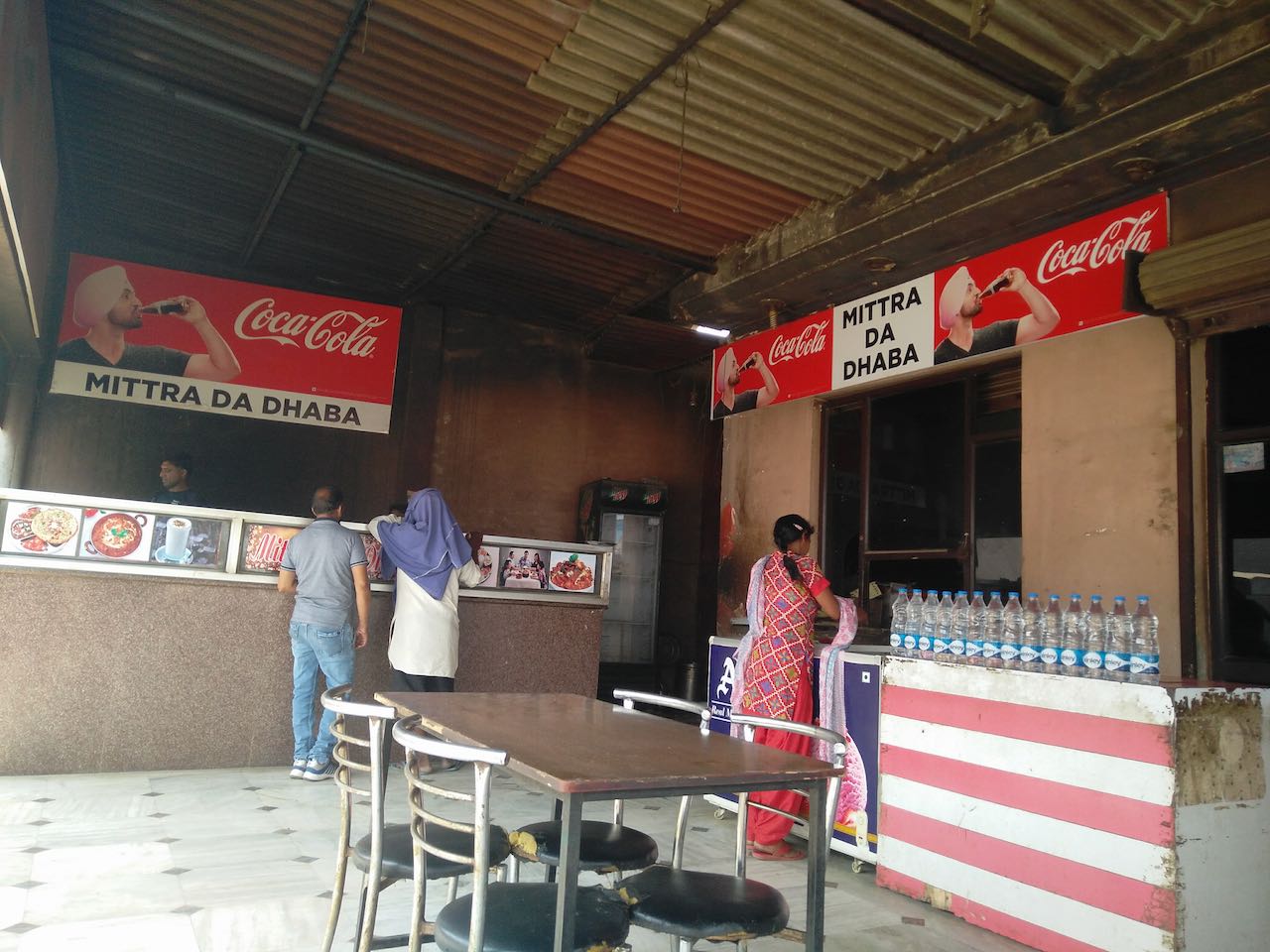
There are many other stories of this rather strange and intriguing no man’s land but to end with a more positive story, I share a picture of a dhaba at Attari, Mittra da dhaba (literal translation – friends’ roadside restaurant) is located close to the entrance to check post, catering to travellers and tourists who come for the daily lowering of the flag ceremony. I have gone there many times, but on one occasion in 2017, I asked the owner to pack some food for me, food which I planned to take across the border and share with my friends in Lahore. He took great care to make it extra special and pack the food tightly, so that it wouldn’t spill. I could see that it also brought him great joy to know that his food would travel to the other side. As we parted, he said come back and tell me if they enjoyed it!
Alas, these stories are in the past tense, and with Covid the border faced further restrictions and closures. I have no idea if my friend is still there, I hope so. We need more friends in these otherwise hostile spaces.
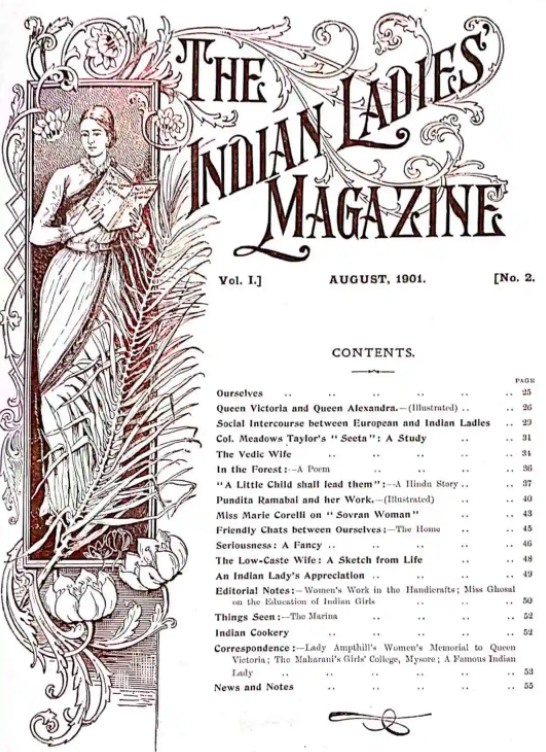
Recently I noticed in several social media forums that people have been sharing details of Rokeya Sakhawat Hossain and her short story, Sultana’s Dream (1905). This story was originally published in The Indian Ladies’ Magazine, Madras, 1905, in English and translated by the author into Bengali. The story takes the form of a dream, set in a futuristic feministic world, in which women through education, opportunity and their innovative ability to use technology have been able to flourish. The science and technology featured in the story is not far off the realities of today and shows immense foresight by the imagination of the author.
The story also highlights how unjust it was, and still is, to deny women education and freedoms, which men have. The imagined place is a generous, green, and friendly environment, in which feminist science has created a space for everyone to thrive and reap the benefits. Although the story was published over a hundred years ago, we are still far from this utopian land.
Rokeya Sakhawat Hossain was born circ. 1880 to an orthodox Bengali Muslim upper-class family in the small village of Pairaband (district Rangpur in Bengal Presidency and present-day Bangladesh). Her father insisted that she learn only Arabic and remain in strict purdah. But with the assistance of her siblings, she learned to read and write Bangla and English. In 1896 her older brother Ibrahim Saber sought to arrange her marriage to a widower in his late 30s. Syed Sakhawat Hossain was the district magistrate in the Bihar region of Bengal Presidency and Ibrahim thought Rokeya would do well under Syed’s open-minded attitude, who had received education in both Bengal and London.
“Rokeya and her husband settled in Bhagalpur, Bihar. None of her children lived. Syed, who was convinced that the education of women was the best way to cure the ills of his society, encouraged his willing wife to write, and set aside 10,000 rupees to start a school for Muslim women.”
After 11 years of marriage, Syed passed away in 1909, leaving Rokeya alone. Soon thereafter she opened a school in Bhagalpur. Later, she moved to Calcutta where she re-opened the Sakhawat Memorial Girls’ School on March 16, 1911. The number of students went from 8 in 1911 to 84 in 1915.
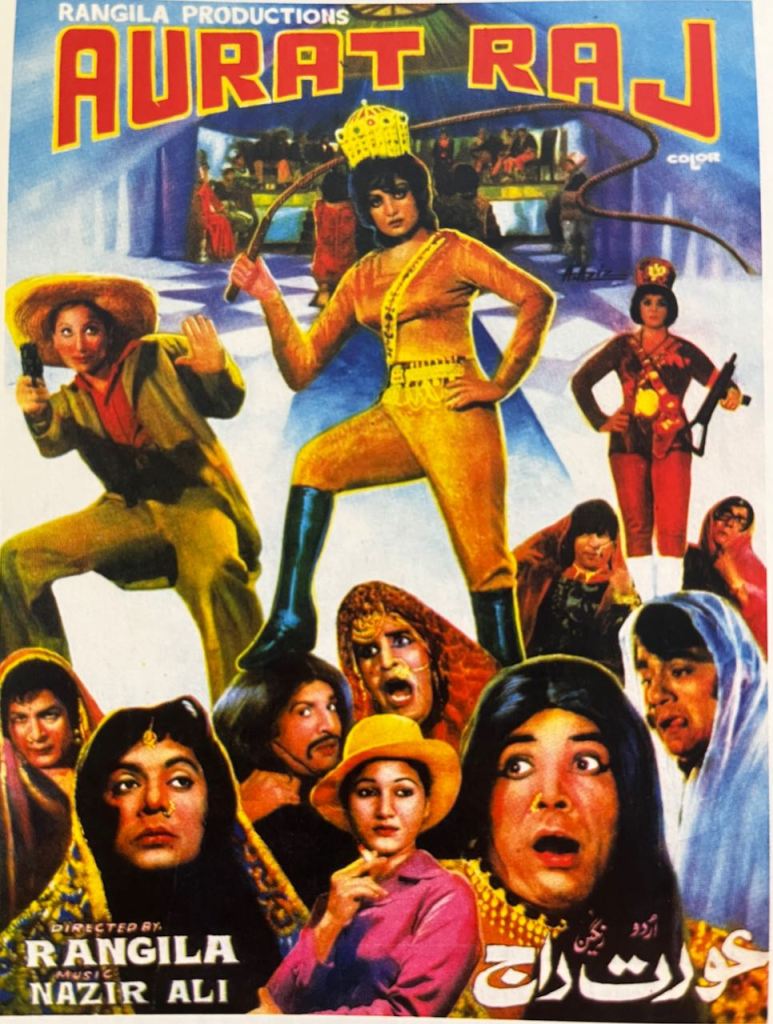
The pioneering concept behind Sultana’s Dream has inevitably inspired other writers and artists to take their cue from a world in which women have the power and men are the submissive other. Aurat Raj, a 1979 Pakistani film, which on the surface appears to be inspired by Rokeya’s work, is also a commentary on the military (and masculine) regime that had come into power, under General Zia. Aurat Raj, is a strange and kitsch interpretation, at whose heart is a social message, centred on exposing the oppression of women. But when the roles are reversed, the women behave in a similar fashion too, unlike Hossain’s short story.
Source: Cinema and Society edited by Ali Khan & Ali Nobil Ahmad (OUP, 2016)
The poster for the film Aurat Raj is equally intriguing as the film itself. It “depicts a woman dressed in a tight-fitting suit and long boots with a crown on her head and a whip in hand, all the more intriguing. She has a commanding, imperious expression on her face. To her right another woman in men’s clothes brandishes a gun. A third woman confidently smokes a cigarette. At the feet of the ‘Empress’ a series of men, including Sultan Rahi, are dressed in women’s clothes. Rahi demurely wears a dupatta on his head, his expression one of effeminate alarm. A subversive and experimental drag movie directed by Rangeela, who had appeared in scores of films in side-comic roles usually playing to the front benchers, Aurat Raj is perhaps Pakistan’s only satire to date and it lampoons not only the naked chauvinism that prevails in Pakistani society but also pokes fun at the way that this attitude pervades the industry. The film targets the machismo of Pakistani men and revels in inverting the gender and power roles, making the women literally wear the pants and leaving the men, including Sultan Rahi and Waheed Murad, wearing frilly frocks and helpless expressions.” Ali Khan, “Film Poster: Reflections of Change in the Pakistani Film Industry” in Cinema and Society: Film and Social Change in Pakistan, edited by Ali Khan & Ali Nobil Ahmad (OUP, 2016), P251.
Despite its well-known star cast of Waheed Murad, Rani, Rangeela and Sultan Rahi, the film was a commercial flop. However, it is certainly worth revisiting, if only as a reminder of the subversive message of the film, which dreams of a more equal society.
















 BAGICHA
Leave a comment