Category Archives: Poetry Corner

Reimagining Punjab Through Ustad Daman’s Poetry

Model Town, Lahore. © 2017 Pippa Virdee

During the writing of my book, “From the Ashes of 1947: Reimagining Punjab,” I endeavoured to incorporate some of the poetry and literature that encapsulated the emotions and sentiments of the aftermath of the Partition of Punjab. My intention was to highlight the contributions of Ustad Daman, a lesser-known figure in certain regions of South Asia but a significant figure for many, particularly in Lahore, the city of his birth. As another year passes and we inch towards the 80 years of the Partition, his work assumes a heightened relevance in the contemporary context.

Ustad Daman, whose real name was Chiragh Din, hailed from Lohari Gate within the historic old city of Lahore. His father was a tailor who owned his own small shop. His elder brother, Feroz Din, joined his father in managing the business, but young Chiragh had no inclination to pursue the family trade. Instead, he harboured aspirations for education and a clerk’s position. He attended school, but this did not result in a clerk’s job. Disappointed, he returned to tailoring and established his own shop. However, his heart was truly captivated by poetry. He would abandon his shop to attend poetry readings. Inspired by his mentor, Ustad Hamdam, he adopted the pseudonym Damdam, but later changed it to Daman. (Source: Apnaorg)

The pivotal moment came when he received his first payment for reciting poetry in a public gathering. This marked the commencement of his journey as a poet. Initially, Daman composed poetry on conventional subjects, such as matters of the heart. However, as the independence movement gained momentum prior to partition, political themes began to permeate his poetry. Daman was a member of a group of traditional Punjabi poets who would recite poetry extemporaneously, while their pupils maintained the records. This tradition earned them the title of Ustads (mentors). (Source: Apnaorg)

Below are some references and material that highlight the significance of Ustad Daman.

Folk Punjab has a digital archive of his poetry including ‘Es mulk di wand kolon yaro’.

Ustad Daman, ‘The Poet Laureate of the Twentieth Century Punjab’ Fowpe Sharma, Revolutionary Democracy

Ustad Daman lived and wrote poetry as someone always on the wrong side of the establishment By Dr. Afzal Mirza, Apanorg.

Rammah, Safir. “West Punjabi Poetry: From Ustad Daman to Najm Hosain Syed.” Jounral of Punjab Studies 13, no. 1&2 (2006): 216.

Below the opening of Chapter 10, Virdee, P., 2018. From the Ashes of 1947. Cambridge University Press.

Leap of faith

It has been a while since I’ve had a chance to post something substantial on my Blog, for the pressures of term-time mean that there are few opportunities to sit down and ponder. However, today was 29th February and I wanted to post something, even if something small. I got my inspiration this morning, when I opened my email to find an editorial on the various Lit.Fests taking place in Pakistan recently, but hidden within this was a lament about women’s position in Pakistan and their battle against “suffocating patriarchy”. On the other hand, here in the UK, I was always told that on the 29th February, women can propose marriage! 

While there are hardly any bars on women proposing marriage on any other day of the year, traditionally this was considered here the “man’s” job/role. To be honest, I had never looked into where this myth came from, until today, when to my surprise, I discovered that this comes from a 5th century Irish tradition, also known as Ladies’ Privilege or Bachelor’s Day. The legend is that Saint Brigid of Kildare complained to Saint Patrick that women sometimes had to wait too long to marry because the men were too slow! In response, Saint Patrick decreed that on the extra day of a leap year, women could propose to men.

As we bid farewell to February, and welcome March, we will also celebrate international women’s day. The lived reality is that wherever you are, there is discrimination, oppression, intolerance, and worse. Take a leap of faith and believe in yourself, be the change you want to see. 

Leap Year Poem
BY MOTHER GOOSE
Thirty days hath September,
April, June and November.
All the rest have thirty-one,
Excepting February alone,
And that has twenty-eight days clear
And twenty-nine in each leap year.

“Hope” is the thing with feathers

“Hope” is the thing with feathers
By Emily Dickinson

“Hope” is the thing with feathers -
That perches in the soul -
And sings the tune without the words -
And never stops - at all -

And sweetest - in the Gale - is heard -
And sore must be the storm -
That could abash the little Bird
That kept so many warm -

I’ve heard it in the chillest land -
And on the strangest Sea -
Yet - never - in Extremity,
It asked a crumb - of me.

Bahar ayee (It Is Spring Again) by Faiz

bahār aa.ī to jaise yak-bār

lauT aa.e haiñ phir adam se

vo ḳhvāb saare shabāb saare

jo tere hoñToñ pe mar-miTe the

jo miT ke har baar phir jiye the

nikhar ga.e haiñ gulāb saare

jo terī yādoñ se mushkbū haiñ

jo tere ushshāq kā lahū haiñ

ubal paḌe haiñ azaab saare

malāl-e-ahvāl-e-dostāñ bhī

ḳhumār-e-āġhosh-e-mah-vashāñ bhī

ġhubār-e-ḳhātir ke baab saare

tire hamāre

savāl saare javāb saare

bahār aa.ī to khul ga.e haiñ

na.e sire se hisāb saare

Source: Rekta.org

English Translation by Agha Shahid Ali

It is spring, And the ledger is opened again.
From the abyss where they were frozen,
those days suddenly return, those days
that passed away from your lips, that died
with all our kisses, unaccounted.
The roses return: they are your fragrance;
they are the blood of your lovers.
Sorrow returns. I go through my pain
and the agony of friends still lost in the memory
of moon-silver arms, the caresses of vanished women.
I go through page after page. There are no answers,
and spring has come once again asking
the same questions, reopening account after account.

Listen to Tina Sani and Shabana Azmi’s rendition of the poem.

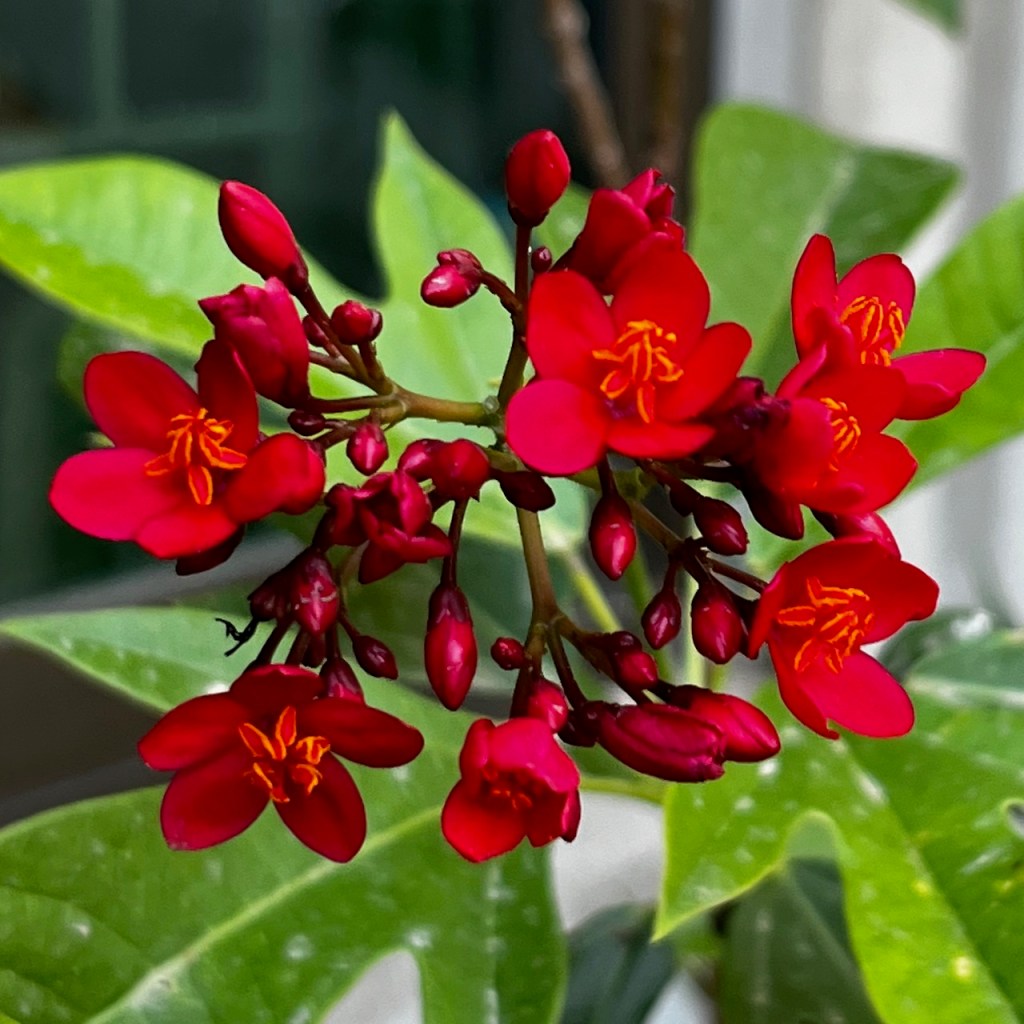
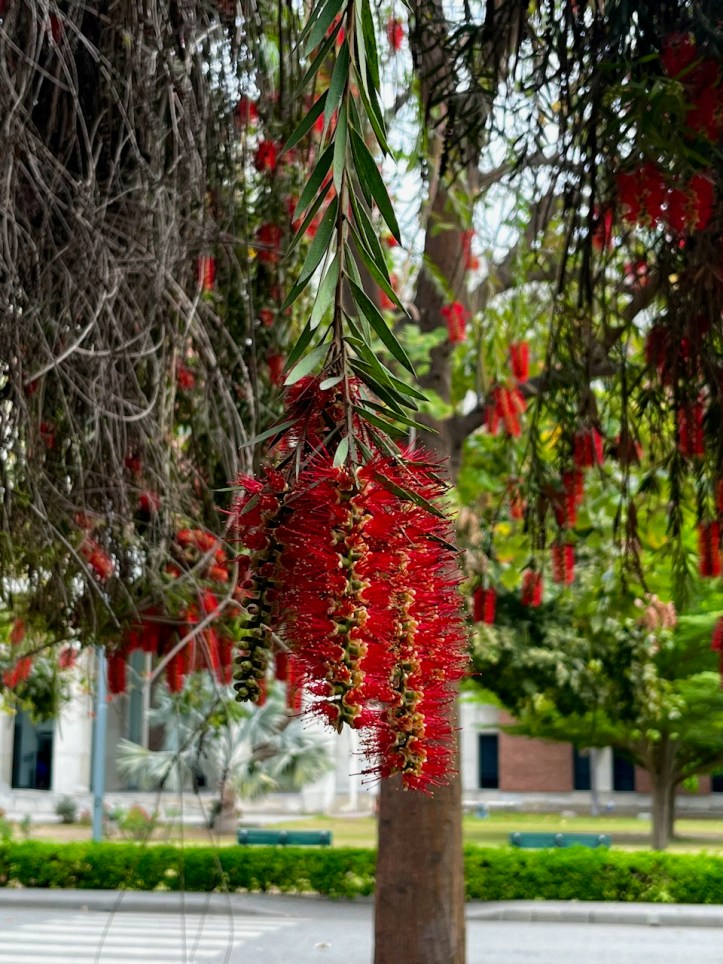
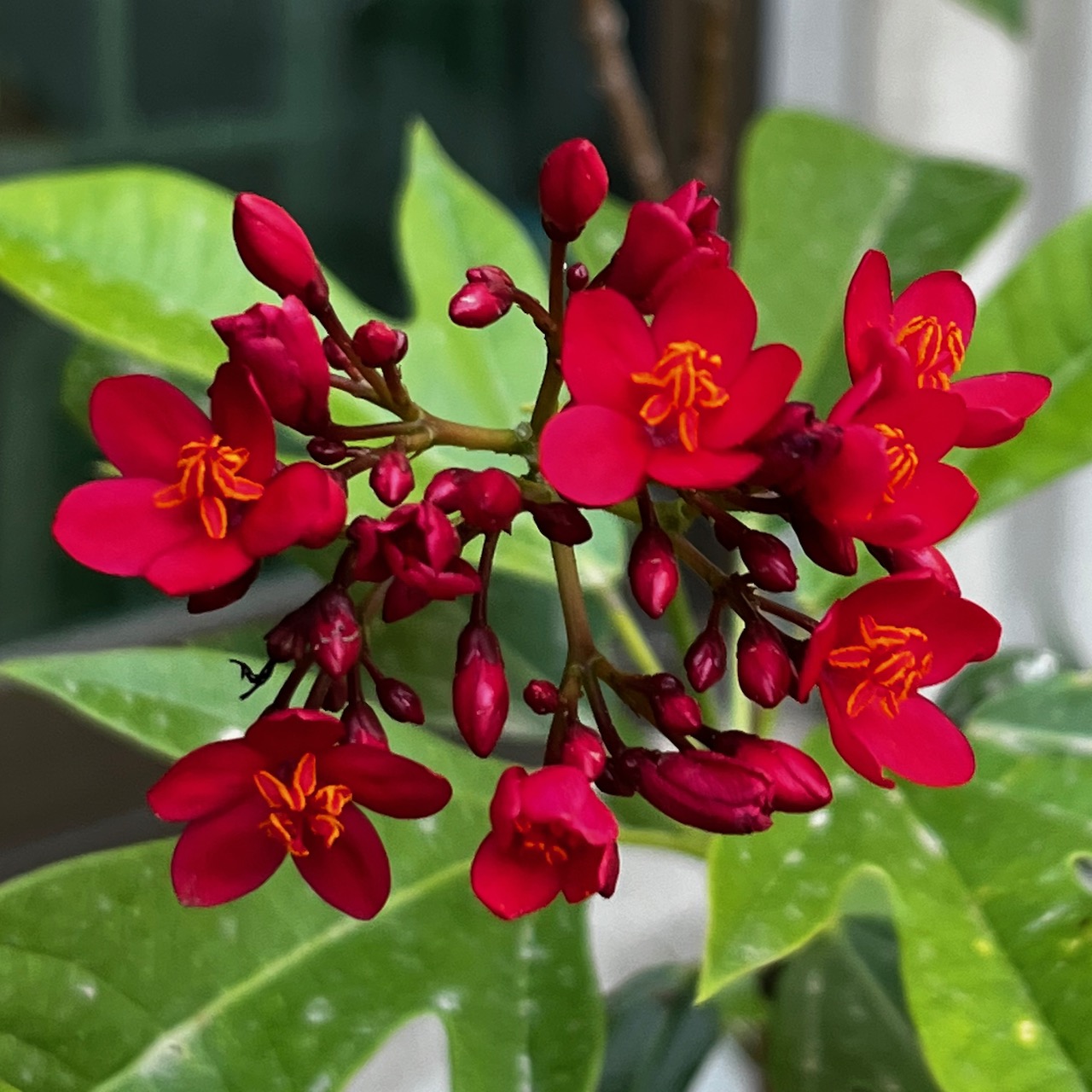
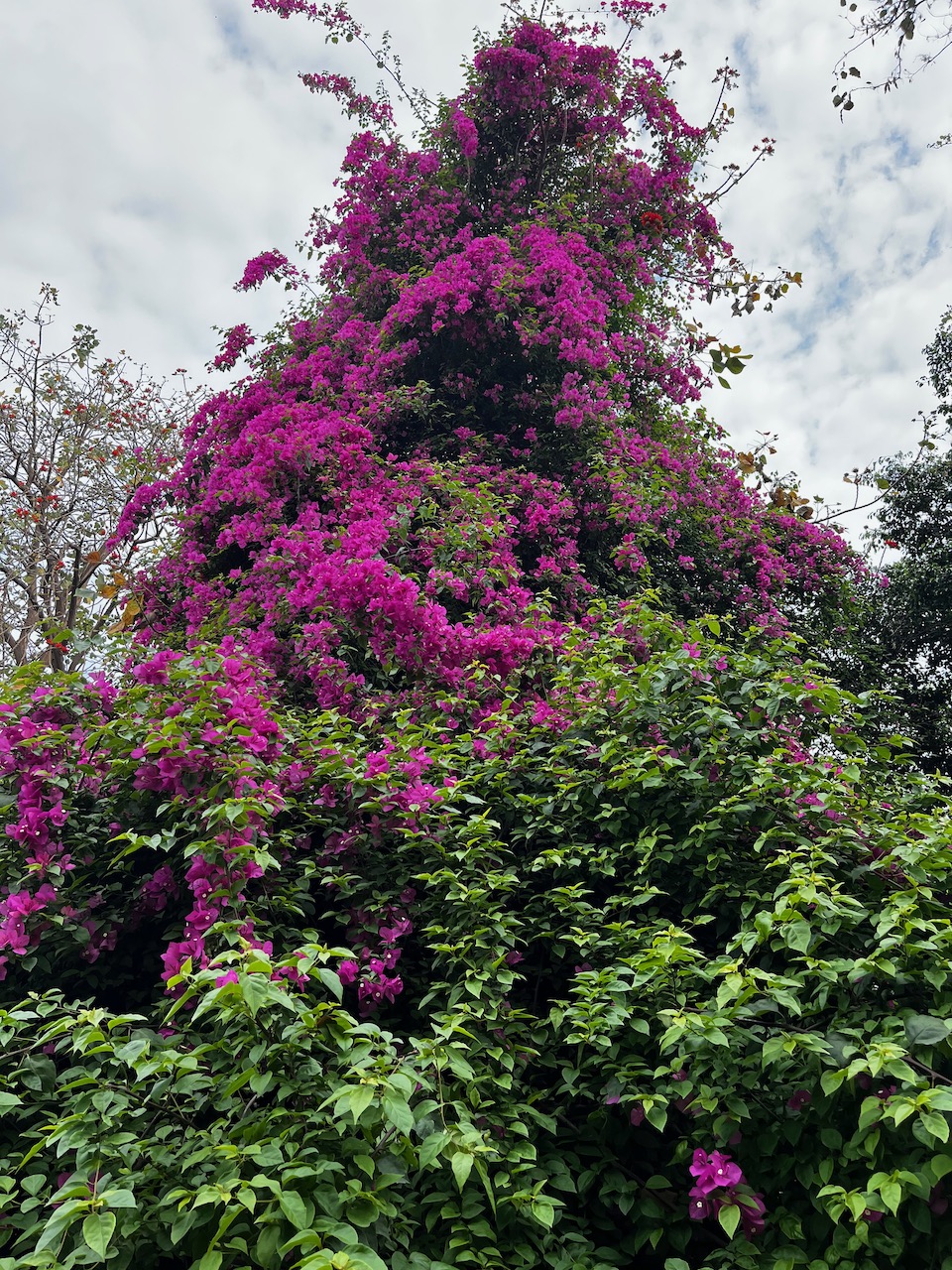
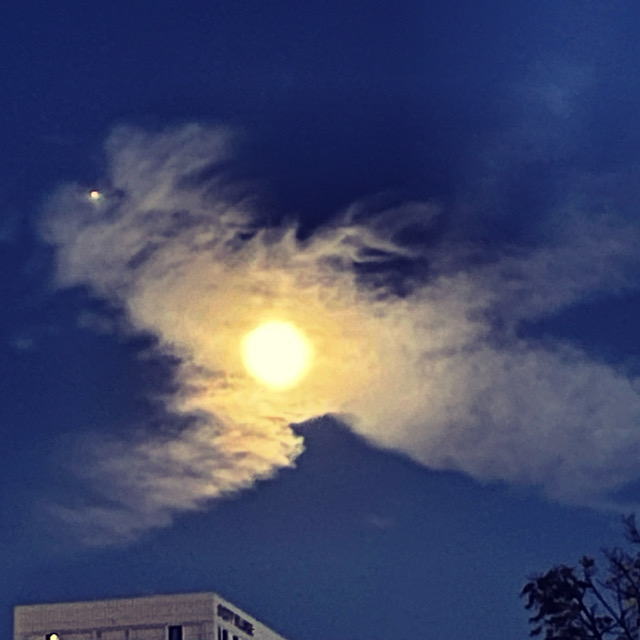
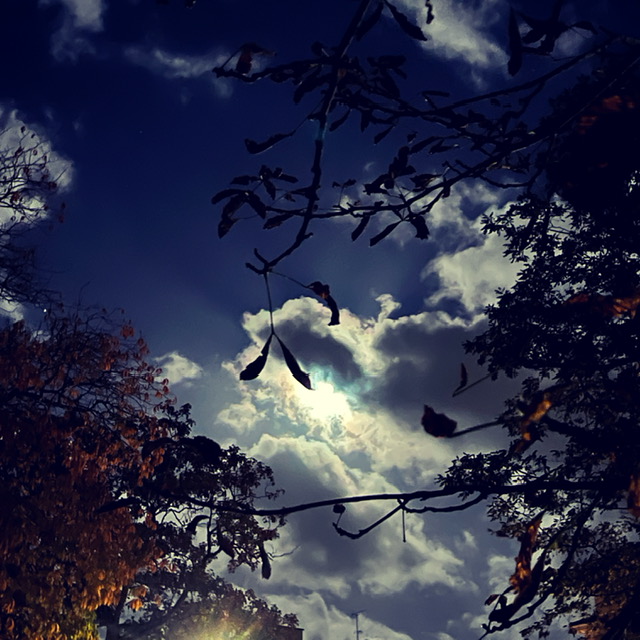
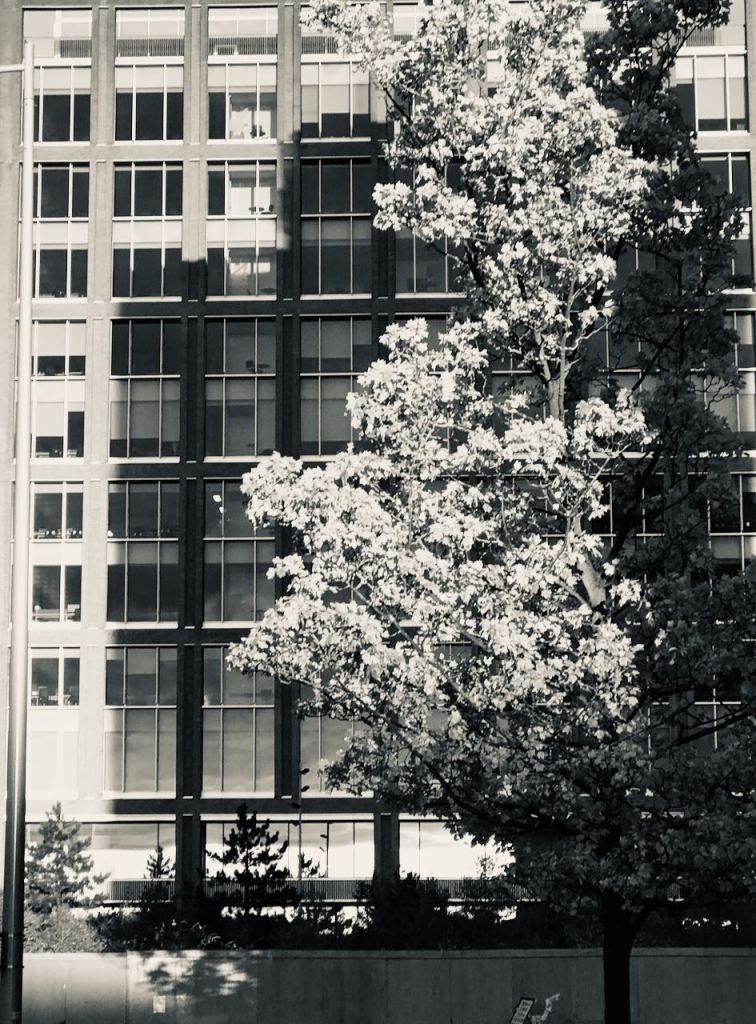
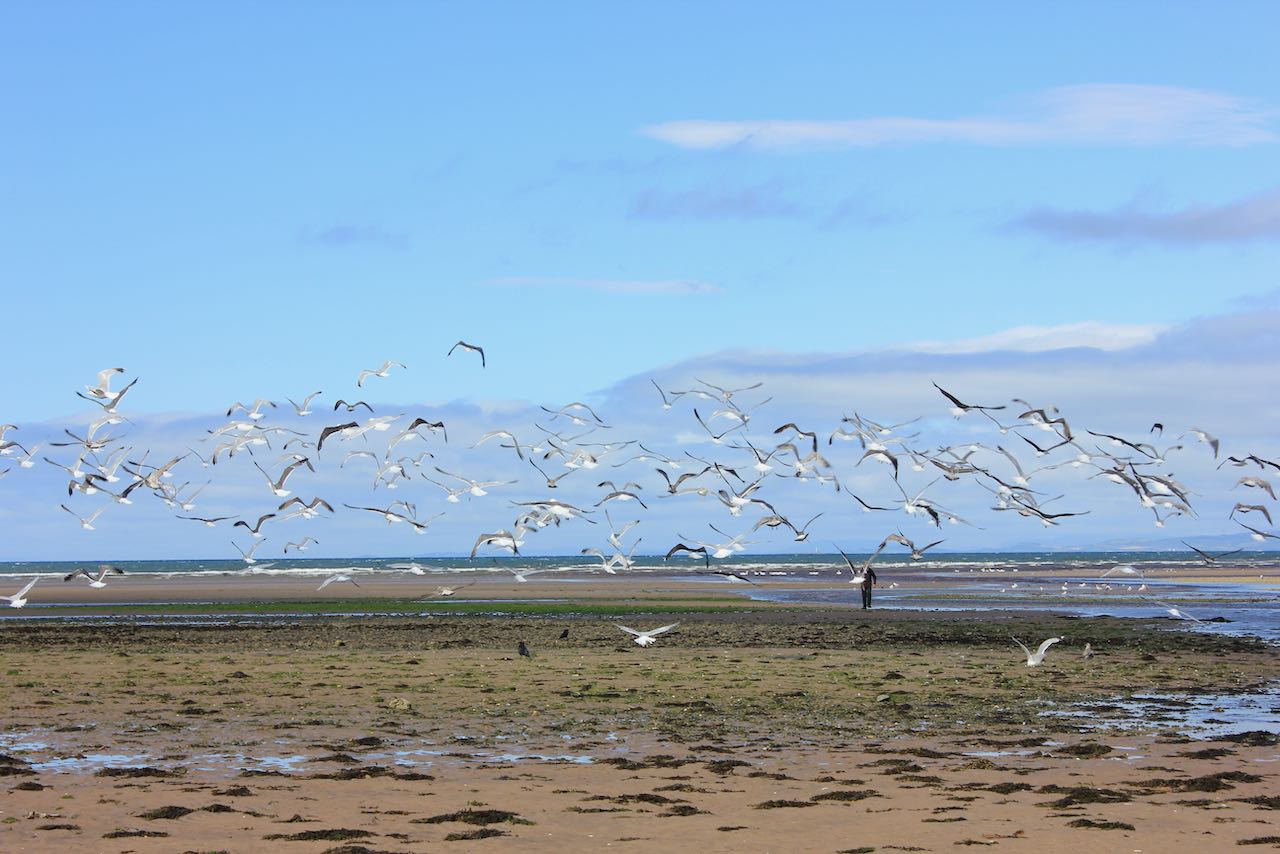
All pictures © Pippa Virdee, Lahore, Spring 2023

Mein Tenu Phir Milangi – I will meet you yet again by Amrita Pritam

Amrita Pritam’s poem recited by Gulzar
Main Tenu Fir Milaan Gi
Kithey? Kis Tarah? Pata Nai
Shayad Terey Takhayul Di Chinag Ban Ke
Terey Canvas Tey Utraan Gi
Ya Khowrey Terey Canvas Dey Utey
Ikk Rahasmayi Lakeer Ban Ke
Khamosh Tenu Tak Di Rawaan Gi

I will meet you yet again
How and where? I know not.
Perhaps I will become a
figment of your imagination
and maybe, spreading myself
in a mysterious line
on your canvas,
I will keep gazing at you.

Yaa Khowrey Sooraj Di Loo Ban Ke
Terey Rangaan Wich Ghulaan Gi
Yaa Rangaan Diyan Bahwaan Wich Baith Ke
Terey Canvas Nuu Walaan Gi
Pata Nai Kiss Tarah? Kithey?
Par Tenu Zaroor Milaan Gi

Perhaps I will become a ray
of sunshine, to be
embraced by your colours.
I will paint myself on your canvas
I know not how and where –
but I will meet you for sure.

Yaa Khowrey Ikk Chashma Bani Howaan Gi
Tey Jeevan Jharneyaan Da Paani Udd-da
Main Paani Diyaan Boondaan
Terey Pindey Tey Malaan Gi
Tey Ikk Thandak Jahi Ban Ke
Teri Chaati Dey Naal Lagaan Gi
Main Hor Kujh Nai Jaandi
Par Aena Jaandi
Ke Waqt Jo Vii Karey Ga
Aey Janam Mairey Naal Turey Ga

Maybe I will turn into a spring,
and rub the foaming
drops of water on your body,
and rest my coolness on
your burning chest.
I know nothing else
but that this life
will walk along with me.

Aey Jism Mukda Hai
Tay Sab Kujh Muk Jaanda
Par Chaityaan Dey Dhaagey
Kaainaati Kana Dey Hundey
Main Onhaan Kana Nuu Chunaan Gi
Dhaageyaan Nuu Walaan Gi
Tey Tenu Main Fair Milaan Gi…

When the body perishes,
all perishes;
but the threads of memory
are woven with enduring specks.
I will pick these particles,
weave the threads,
and I will meet you yet again.

Poetry in Punjabi by Amrita Pritam
Translation in English by Nirupama Dutt

Read further: Mein Tenu Phir Milangi: Remembering Amrita Pritam through Her Life, Love, and Works by Kartikeya Shankar. The Times of India, 17 July 2021

I Come From There by Mahmoud Darwish

I come from there and I have memories
Born as mortals are, I have a mother
And a house with many windows,
I have brothers, friends,
And a prison cell with a cold window.
Mine is the wave, snatched by sea-gulls,
I have my own view,
And an extra blade of grass.
Mine is the moon at the far edge of the words,
And the bounty of birds,
And the immortal olive tree.
I walked this land before the swords
Turned its living body into a laden table.
I come from there. I render the sky unto her mother
When the sky weeps for her mother.
And I weep to make myself known
To a returning cloud.
I learnt all the words worthy of the court of blood
So that I could break the rule.
I learnt all the words and broke them up
To make a single word: Homeland....

Find out more about Mahmoud Darwish

Cornish Light

Cornish Light by Max Hale

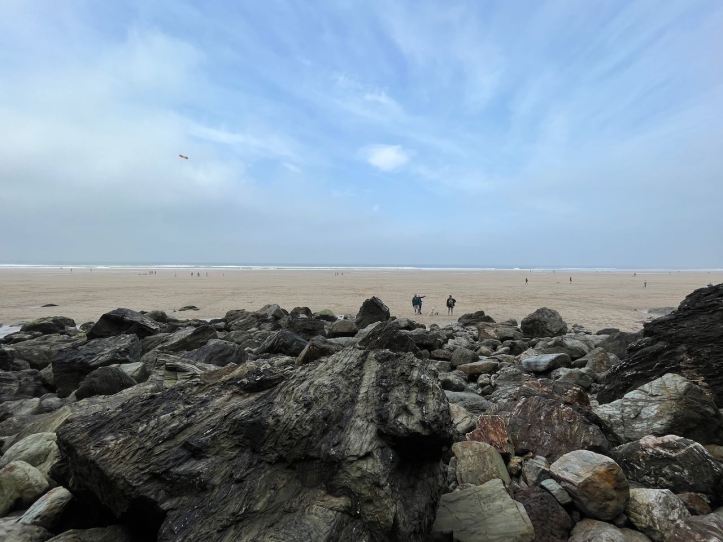
© Pippa Virdee 2022

Cornwall, Cornwall every day
Bright sun and fresh feelings
Simple pleasures by just being here
Forward thinking into old age dotage
All our lives waiting, hoping, wishing

Never believing it could be
Out of mind with secret longing
Filling up with atmospheric  air
Sensing that emotional rush
Deep breaths swallowing cliffs and sea

Wild flowers and cows here
Hedgerows and windblown trees
Lopsided branches pointing inland
As cool salt air combs their twigs
The winding tracks disappear

© Pippa Virdee 2022

Love is here all around, so strong
Heart wrenching and stomach churning
Soul and body filling up with Cornish…
Cornish, as long as it’s Cornish
It’s good!

Give us a chance to stay
Give us the chance to live
Ever on the hard granite pathways
Sounds of mewing gulls and thunder of surf
Beating on the windswept rocks and beaches

Cornish light familiar and so bright
Invading our eyes and warming our hearts
Gently massaging our faces with soothing fingers
Lifting our spirits as breaking through the clouds
It charges us with love

Fulfilled and whole
Our lives and minds gratefully feasting
The armfuls of wonder as we carry our hearts
Together,  through eternity, watching
As the sun sets in a blaze of Cornish light

Ajj Aakhaan Waris Shah Nu By Amrita Pritam

Amrita Pritam (1919-2005) was one the most distinguished Punjabi poets and fiction writers. She was born in Mandi Bahauddin, Punjab and was living in Lahore when in 1947 she, along with the millions others, was forced to migrate during the partition of the Punjab.
Her first collection of poems Amrit Lehrcm was published in 1936 when she was barely 17 years old. Starting as a romantic poet, she matured into a poetess of revolutionary ideas as a result of her involvement with the Progressive Movement in literature.

Ajj Aakhaan Waris Shah Nu (Today I Say unto Waris Shah) is a heartrending poem written during the riot-torn days that followed the partition of the country. (Apnaorg.com). The poem is addressed to Waris Shah, (1706 -1798), a Punjabi poet, best-known for his seminal work Heer Ranjha, based on the traditional folk tale of Heer and her lover Ranjha. Heer is considered one of the quintessential works of classical Punjabi literature.

Her body of work comprised over 100 books of poetry, fiction, biographies, essays, a collection of Punjabi folk songs and an autobiography that were all translated into several Indian and foreign languages

Ajj Aakhaan Waris Shah Nu (Today I Say unto Waris Shah – Ode to Waris Shah)

Translation from the original in Punjabi by Khushwant Singh. Amrita Pritam: Selected Poems. Ed Khushwant Singh. (Bharatiya Jnanpith Publication, 1992)

 To Waris Shah I turn today!

Speak up from the graves midst which you lie!

In our book of love, turn the next leaf.

When one daughter of the Punjab did cry

You filled pages with songs of lamentation,

Today a hundred daughters cry

0 Waris to speak to you.

O friend of the sorrowing, rise and see your Punjab

Corpses are strewn on the pasture,

Blood runs in the Chenab.

Some hand hath mixed poison in our live rivers

The rivers in turn had irrigated the land.

From the rich land have sprouted venomous weeds

flow high the red has spread

How much the curse has bled!

The poisoned air blew into every wood

And turned the flute bamboo into snakes

They first stung the charmers who lost their antidotes

Then stung all that came their way

Their lips were bit, fangs everywhere.

The poison spread to all the lines

All of the Punjab turned blue.

Song was crushed in every throat;

Every spinning wheel’s thread was snapped;

Friends parted from one another;

The hum of spinning wheels fell silent.

All boats lost the moorings

And float rudderless on the stream

The swings on the peepuls’ branches

I lave crashed with the peepul tree.

Where the windpipe trilled songs of love

That flute has been lost

Ranjah and his brothers have lost their art.

Blood keeps falling upon the earth

Oozing out drop by drop from graves.

The queens of love

Weep in tombs.

It seems all people have become Qaidos,

Thieves of beauty and love

Where should I search out

Another Waris Shah.

Waris Shah

Open your grave;

Write a new page

In the book of love.

NOTES

Waris Shah (1706 -1798) was a Punjabi poet, best-known for his seminal work Heer Ranjha, based on the traditional folk tale of Heer and her lover Ranjha. Heer is considered one of the quintessential works of classical Punjabi literature.

Qaido – A maternal uncle of Heer in Heer Ranjha is the villain who betrays the lovers.

The Punjab – the region of the five rivers east of Indus: Jhelum, Chenab, Ravi, Beas, and Sutlej.

When Amrita Pritam called out to Waris Shah in a heartrending ode while fleeing the Partition riots by Nirupama Dutt

I say unto Waris Shah by Amrita Pritam – Poem Analysis

Pritam, Amrita, and Rama Jha. “An Interview with Amrita Pritam.” Indian Literature 25, no. 5 (1982): 183-195.

Butalia, Urvashi. “Looking back on partition.” Contemporary South Asia 26, no. 3 (2018): 263-269.