Category Archives: Misc

“The image, the imagined, the imaginary”

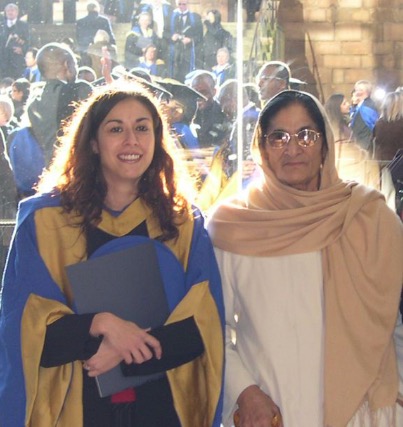
It is coming to 11 years since my mother died at the age of 83. She had great courage and conviction, illustrated in her decision to come to far-off England – and not go to the familiar India – from Kenya, a few years after my father’s untimely death in 1979. In doing so, with two young children, she was adding considerably to the challenges that she had faced hitherto. Alone, in an alien land, with two growing daughters, she drew upon her inner reserves of strength to provide for us. Moreover, what I do today is down to her encouragement and support throughout my life.

This was not always an easy position for her to take because of wider socio-economic pressures, but she saw education as the master-key to unlock many of these. As her youngest child, I was fortunate to be the first to go to university, for my sisters – we were all girls – were capable of more. She would have preferred that I study something “sensible” like law, medicine, finance, or engineering – like my father – but I showed no interest in these. Instead, I was motivated by art and politics as in 1988-90, an increasingly unequal Britain saw a churn and I was intrigued as Margaret Thatcher was losing her grip.

Studying politics and increasingly history was an unusual and therefore difficult step for me, but despite the misgivings, my mother – open to persuasion – supported me. She didn’t always understand my aims, for that matter nor did I, but instinctively it felt the right thing to pursue. I became increasingly aware of my social identity in university – beyond the name-calling in school – because I was one of only two “brown” girls in a cohort of approx. 70. But the rest of the group too came from different backgrounds, especially that of economic class. This introduction to class was a life-lesson in terms of one’s ability to aspire and imagine.

Thirty years on from when I entered university, this social reality has not changed. Rather it has only metamorphosed, and I now see class difference at play in the post-1992 university that I teach, among the students whom I encounter. Sure, the absolute number of black/brown students coming to study history and politics has increased albeit marginally. Anyhow, this post is not on this social phenomenon but the persona that my mother was, who encouraged me to follow my heart. In those days, it was enough, for the state supported education; there were no student fees, and I was eligible for a maintenance grant.

Otherwise, a mother’s goodwill alone would not have paid for my loan-laced BA/MA, which would have been too big a risk to take. I would not have then followed it up by applying for the Penderel Moon studentship for my PhD, at the turn of the century. My mother was incredibly proud when I got my doctorate, even as I was not untouched by an imposter syndrome. But time and its temper waxes and wanes, on gender, on humanities subjects, and on doubts of the two getting together. Today, the UK higher education is a near-total market, like much of the rest of its society and politics.

In which though, there is also some sliver of charity and that is why I write this post. It was at the Myton Hospice in 2012 that my mother spent her last few hours, with my sister and me, and tomorrow I am doing a 6-mile walk to help raise money for them. Simultaneously, I remember my mother, and reflect on her life and how she shaped me. I take great strength from her ability to start from nothing, having faith, and resilience to carry on with whatever life throws at us.  

I share the link for Just Giving for Myton Hospice.
Family, gender and patriarchy

Three very different but interesting films have been released recently. All deal with issues of family, marriage, gender and patriarchy. I’m sharing the trailers here and I hope to explore these themes in more detail in another blog. In the meantime enjoy…

Kitabe aur ta.aliim

“Of all the social sciences, it is history which rouses the greatest interest in the minds of the politicians. There are various reasons for this. It has always had an inventive and purposive use. The line between history and mythology is thought to be thin; the past can be used to lend legitimacy to any aspect of the present….”

R. Mahalakshmi, ‘Communalising history textbooks’

Resource list:

  • Extract published from ‘RSS and School Education’ from the book RSS, School Texts and the Murder of Mahatma Gandhi, written by Aditya Mukherjee, Mridula Mukherjee and Sucheta Mahajan, 2008. Published by Indian History Collective.
  • R. Mahalakshmi, ‘Communalising history textbooks’ Frontline, 2 August 2021
  • Sylvie Guichard. The Construction of History and Nationalism in India. Textbooks, Controversies and Politics. London / New York: Routledge, 2010.
  • Kusha Anand & Marie Lall (2022) The debate between secularism and Hindu nationalism – how India’s textbooks have become the government’s medium for political communication, India Review, 21:1, 77-107, DOI: 10.1080/14736489.2021.2018203
  • Neeladri Bhattacharya, ‘Teaching History in Schools: The Politics of Textbooks in India.’ History Workshop Journal, no. 67 (2009): 99–110. http://www.jstor.org/stable/40646212.
  • Romila Thapar, “The History Debate and School Textbooks in India: A Personal Memoir.” History Workshop Journal, no. 67 (2009): 87–98. http://www.jstor.org/stable/40646211.
  • Sanjay Joshi, Contesting histories and nationalist geographies: A comparison of school textbooks in India and Pakistan. South Asian History and Culture. 1. (2010) 357-377. 10.1080/19472498.2010.485379.
  • Yuji Kuronuma, ‘Hindu nationalism creeping into Indian textbooks’ Asia Nikkei, 25 June 2016.
  • Alex Traub, ‘India’s Dangerous New Curriculum’ The New York Review, 6 December 2018
  • S. S. Dikshit, Nationalism and Indian Education, Sterling Publishers, 1966.
  • Raksha Kumar, ‘Hindu right rewriting Indian textbooks’ Al Jazeera, 4 Nov 2014.
  • Eviane Leidig ‘Rewriting history: The ongoing controversy over textbooks in India’ LSE Blogs 1 June 2016.
  • Aminah Mohammad-Arif, “Textbooks, nationalism and history writing in India and Pakistan.” In Veronique Benei (ed) Manufacturing Citizenship, pp. 143-169. Routledge, 2007.
  • Murali Krishnan, ‘Is the BJP altering textbooks to promote Hindu nationalism?’ DW 25 May 2022.
  • Seema Chishti, ‘Rewriting India’s History Through School Textbooks’ New Lines Magazine, 9 March 2023.
  • Kamala Visweswaran; Michael Witzel; Nandini Manjrekar; Dipta Bhog; Uma Chakravarti, “The Hindutva View of History: Rewriting Textbooks in India and the United States,” Georgetown Journal of International Affairs 10, no. 1 (Winter/Spring 2009): 101-112.
  • Naseem, Mohamed Ayaz, Ratna Ghosh, James McGill, and William C. Mcdonald. “Construction of the ‘other’in history textbooks in India and Pakistan.” In Interculturalism, society and education, pp. 37-44. Brill, 2010. DOI: https://doi.org/10.1163/9789460912498_004
  • Sridhar, M., and Sunita Mishra, eds. Language Policy and Education in India: Documents, contexts and debates. Routledge, 2016.
  • Krishan Kumar, Political agenda of education: A study of colonialist and nationalist ideas. SAGE Publications India, 2005.
  • Sanjay Seth. “Rewriting histories of nationalism: The politics of “moderate nationalism” in India, 1870–1905.” The American Historical Review 104, no. 1 (1999): 95-116. https://doi.org/10.2307/2650182
  • Carey A Watt. “Education for National Efficiency: Constructive Nationalism in North India, 1909–1916.” Modern Asian Studies 31, no. 2 (1997): 339-374. DOI: https://doi.org/10.1017/S0026749X00014335
  • Lars Tore Flåten, Hindu nationalism, history and identity in India: Narrating a Hindu past under the BJP. Taylor & Francis, 2016.
  • Marie Lall, “Educate to hate: The use of education in the creation of antagonistic national identities in India and Pakistan.” Compare: A Journal of Comparative and International Education 38.1 (2008): 103-119. https://doi.org/10.1080/03057920701467834
  • Janaki Nair, “Textbook Controversies and the Demand for a Past: Public Lives of Indian History.” History Workshop Journal. Vol. 82. No. 1, 2016. https://doi.org/10.1093/hwj/dbw023
  • Romila Thapar, “Politics and the rewriting of history in India.” Critical Quarterly 47.1‐2 (2005): 195-203.

Top posts in 2022

As I prepare to wind down for this year, here are 10 of the most popular posts of 2022.

  1. Ajj Aakhaan Waris Shah nu by Amrita Pritam
  2. How the photographs of Margaret Bourke-White became the images of partition
  3. 70 years ago extracts of the Sunderlal report Hyderabad, 1948
  4. The Status of Punjabi after 1947
  5. Sahir Ludhianvi and the anguish of Nehruvian India
  6. Two villages, two nations: Ganda Singh Wala-Hussainiwala
  7. Ludhiana’s Clock Tower (Ghanta Ghar)
  8. The ‘Jingle Trucks’ and the emergence of Truck Art
  9. 1881: the first full census in British India
  10. 23 Sir Ganga Ram mansion – the house of Amrita Sher-Gil

Made of Clay

Before the Great Gama, there was Rahim Bakhsh Pehlvan – a forgotten sports superstar!

Made of Clay

My Body My Choice/Mera Jism Meri Marzi

Facing the waves at an undisclosed location, (c) Pippa Virdee, 2015.

The Evolution of “My Body, My Choice” By Lily Patterson, Voicesofgenz, Jul 27, 2020

An iconic tagline for feminists and activists across the globe, “My Body, My Choice” has packed a powerful punch in the fight for equality and, more specifically, womxn’s rights. Starting in the 1970s, the phrase was unofficially coined as a mantra belonging to the gender equality movement and was commonly heard at protests in a number of countries. Starting in the late 20th century, “My Body, My Choice” became words of empowerment and retaliation, particularly in the battle for reproductive rights and accessible abortions. In response to the oppression facing womxn and their reproductive power, feminists and protestors continue to use this phrase as a battle cry, an expression of the importance of bodily autonomy. Naturally, this response isn’t well-received by everyone, and is particularly opposed by pro-life supporters and government officials with anti-abortion agendas. As you can imagine, it isn’t exactly a popular mantra with sexists either. Regardless, “My Body, My Choice” continues to be an expression of the rights womxn deserve, and it is still consistently used in the battle for gender equality.

These words of strength have found their way around the world, and international chants for reproductive freedom and equality have rung proud. In a number of countries around the world, this tagline is met with brutal criticism. In recent months, womxn in Pakistan have been organizing marches and taking a stand against the injustices facing them in daily life. The phrase “Mera Jism Meri Marzi” (meaning “My Body, My Choice”) has made its home in the streets of Pakistan as activists demanding equality practically shout it from the rooftops. In Pakistan, this mantra holds true to its original intentions and is utilized as a powerful retaliation to sexist societal ideals and the archaic patriarchy. Other countries, including Zambia, England, Austria, Turkey, and more, have recently followed suit in chanting “My Body My Choice” as a bold statement about reproductive rights, gender equality, and other feminist ideals. The original intention of this tagline is described by Rameeza Ahmed, a journalist who covered the marches happening in Pakistan. “Whether she chooses to follow a certain religion or whether she chooses to walk around proudly without any clothes, it is her right to do as she wants and nobody else has a right to prevent her from exercising her choice,” states Ahmed.[Read complete article: https://www.voicesofgenz.com/post-1/the-evolution-of-my-body-my-choice]

my body. my choice written by Samantha Francesca, October 2017

I’ve never felt so much anger before towards anyone.
Have you ever looked someone in the eye and have them tell you that you should’ve kept the child that was planted in you by a stranger who drugged and ****** you?
Have you wiped the tears of a woman in despair because she was ***** and told she wasn’t allowed to get an abortion?
Have you curled up in a ball, trying to figure out who to tell about your personal experience of ****** assault and ****?
Tell me, person who says abortion is a sin and that it is relative to the holocaust, will my ****** support me?
Will my ****** pay for doctors visits?
Will my ****** pay the medicals bills for giving birth?
Will my ****** pay child support?
**** no and don’t tell me that I should always save the child.
Excuse me if I don’t want to carry my ******’s child inside of me.
My body. My choice.
MY BODY. MY CHOICE.

With abortion heading back to the Supreme Court, is it time to retire the ‘my body, my choice’ slogan? By Elizabeth Lanphier in The Conversation, 4 August 2021.

The slogan “my body, my choice” has been a feature of the reproductive rights movement in the U.S. and around the world since at least the 1960s. It’s now shorthand for concepts like bodily autonomy and self-determination. In the context of reproductive rights, “my body, my choice” asserts freedom from external control – specifically government control – over one’s reproductive choices.

It makes sense that “my body, my choice” gained steam in the years leading up to Roe v. Wade – a time when reproductive rights activists were fighting for the government to stay out of abortion decisions. Roe did just that by determining that abortion is a private choice between a pregnant person and their physician.

As a private matter, the Supreme Court determined that the government cannot interfere with one’s right to an abortion prior to fetal viability. In so doing, Roe established what philosophers call a “negative liberty,” or freedom from something. This freedom from interference was a crucial step toward reproductive rights in the U.S.

But in the decades since Roe, various states have taken steps to whittle away at the constitutionally protected right to abortion. “My body, my choice” frequently appears on signs at protests against abortion restrictions and in social media campaigns like #MyBodyMyChoice. [Read complete piece which discusses the philosophical and ethical debates around access and right to health care: https://theconversation.com/with-abortion-heading-back-to-the-supreme-court-is-it-time-to-retire-the-my-body-my-choice-slogan-163770]

Goodbye 2021, Hello 2022

Thank you to all the followers and readers of BagichaBlog. I started this Blog in 2016 and I am so pleased that despite having a full-time job I have managed to keep this Blog going, with the humble aim of posting at least once a month. I hope you have enjoyed reading and viewing some of these posts and pictures. Please do leave a comment. Wishing for a more tolerant and peaceful 2022.

Here are the top 10 posts of 2021:

  1. Ludhiana’s Clock Tower (Ghanta Ghar)
  2. The Status of Punjabi after 1947
  3. 70 years ago: extracts of the Sunderlal Report, Hyderabad 1948
  4. How the Photographs of Margaret Bourke-White became the images of Partition
  5. Fatima Sughra 1931-2017: A Forgotten heroine
  6. Durga Mandir/Juma Masjid
  7. Two Villages, two nations: Ganda Singh Wala-Hussainiwala
  8. 23 Sir Ganga Ram Mansion: The house of Amrita Sher-Gil
  9. Sahir Ludhianvi and the anguish of Nehruvian India
  10. The ‘Jingle Trucks’ and the emergence of Truck Art

City Monument – Masjid Mubarak Begum, Chawri Bazar

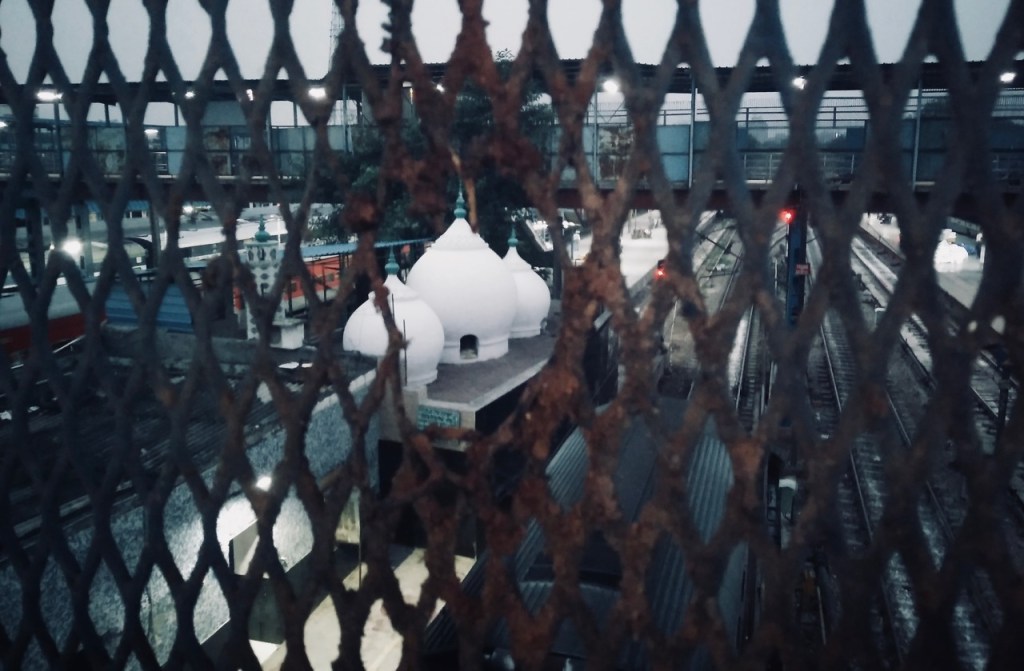
Like a wounded fairy tale. It is among Delhi’s most melancholic souvenirs. One of the domes no longer exists. The missing portion is wrapped in a …

City Monument – Masjid Mubarak Begum, Chawri Bazar