Many times browsing through archives, especially the digital kind, leads you from one place to another. I was scanning the British Newspaper Archive for material related to the North-West Frontier of British India and ended up finding a small snippet in the Public Notices section of TheCoventry Evening Telegraph on an Indian film, Padosi, hosted by the IWA at the Opera House in 1945.
The Coventry Evening Telegraph, Thursday, April 26, 1945
The Indian Workers Association (IWA) was founded in 1938 in Coventry to mobilise for Indian independence amongst the small working-class Indian community living in the UK. Many of its early members were from Sikh and Muslim Punjabi backgrounds. Some of these members were sympathetic to and inspired by the Ghadr Party (est. 1913 in California). The British government naturally kept an eye on their activities; not only for their nationalist motivations but also for their leftist leanings. The extract below is taken from a document on the IWA, dated 14 April 1942.
The Hindi (or Hindustani) Mazdur Sabha, now more usually referred to as the Indian Workers’ Association (or union), has come gradually into being as a result of war conditions. In the two years preceding the outbreak of war a number of disaffected Sikhs – some of them with Ghadr Party contacts – who had come to the United Kingdom to work as pedlars decided to start, if possible, an organisation of Indians which should give all possible aid to the movement for Indian independence. At first the only practical step towards carrying out this decision were the secret collections and remittances to India of sums of money for payment to the dependents of political prisoners. The fund in India which received these sums of money was created by the Ghadr Party in California and there can be little doubt that the Indians in the UK who were chiefly interested in these collections were actuated by motives and by a long-range policy which were identical with these of the Ghadr Party. Some of them were in receipt of the “Hindustan Ghadr” until the close watch of the postal censorship succeeded in imposing an effective check on the entry of the paper into the UK. From the very beginning Coventry was the headquarters of the movement, for it so happened that the Indians chiefly interested were pedlars who sold their goods in the Coventry area. (File no. L/PJ/12/645)
Read further about the IWA:
Gill, Talvinder. “The Indian Workers’ Association Coventry 1938–1990: Political and Social Action.” South Asian History and Culture 4, no. 4 (2013): 554-573. DOI: 10.1080/19472498.2013.824683
Virdee, Pippa. Coming to Coventry: Stories from the South Asian Pioneers. The Herbert, 2006.
Communities in Action: the Indian Workers’ Association – Our Migration Story
The film listed in the Public Notices snippet is “Parosi” (sic). This was a social drama directed by V. Shantaram and was set in the back drop of Hindu-Muslim unity. The Indian national movement was remarkably communalised in its last years, leading to unprecedented violence accompanying the end of British India. In 1941, it was unclear when and how this end would come. Alongside this rising tide of deteriorating inter-communal relations, there were progressive voices in the diversifying public sphere, now including cinema. One of these was the film’s legendary director, Shantaram, who pointedly got a Muslim actor to play a Hindu character and vice versa, to promote harmony between the communities. It is the type of film I imagine the IWA would want to show, as the organisation wished to emphasise class unity over communal politics in the battle against colonialism.
The Opera House in Coventry was opened in 1889. During World War II, the building was damaged by bombing but it was quickly repaired and transformed into a cinema when it re-opened in 1941. The Opera House closed in 1961 and, while there were plans to restore it to a live theatre venue, this never happened.
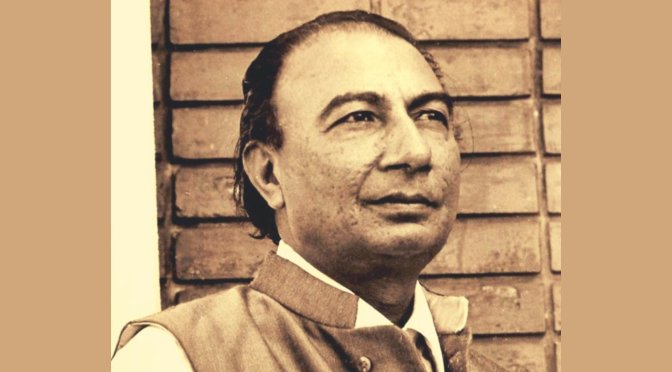
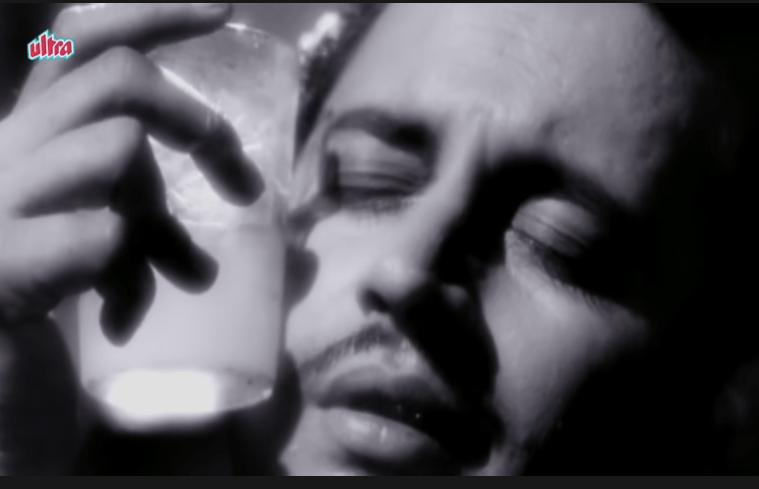
This song/poem written by Sahir Ludhianvi for the film Pyaasa, starring Guru Dutt, has as much relevance today as it did in 1957 at the height of the Nehruvian age. The lyrics and translation below are courtesy of Proud Indians, Are We? – Jinhe Naaz Hai Hind Par – Pyaasa By Deepa.
It is also worth reading the broader article, which is on Guru Dutt, “a man clearly ahead of his time.” Follow link for the song via YouTube. Make sure if you listen to any other versions that it has the last Antara of the song, which has been cut in some versions.
Ye kooche ye nilaam ghar dilkashi ke Ye lutate huye caravan zindagi ke Kahaan hain kahan hain muhafiz khudi ke Jinhe naaz hai hind par wo kahaan hain Kahaan hain kahaan hain kahaan hain
Look at these lanes, alluring houses which are up for sale/auction everyday. Look at these robbed caravans of life. Where are those protectors of self respect and pride? Where are those who say we are proud Indians? What are you exactly proud of?
Ye purpech galiyaan ye badnaam bazaar Ye gumnaam raahi ye sikkon ki jhankaar Ye ismat ke saude ye saudon pe taqraar Jinhe naaz hai hind par wo kahaan hain Kahaan hain kahaan hain kahaan hain
These complicated streets, these defamed, scandalized markets. The unknown pedestrians who walk in anytime with bagful of money. This trade of honour and chastity followed by the bargains of the same. Are we Indians proud for this? Where are those who say this?
Ye sadiyon se bekhauf sehmi si galiyaan Ye masli huyi adhkhili zard kaliyaan Ye bikti huyi khokhli rangraliyaan Jinhe naaz hai hind par wo kahaan hain Kahaan hain kahaan hain kahaan hain
These lanes which for years have been under pressure of fear, distress, angst. This place where the pale half blossomed buds are crushed (referring to young girls who fall prey to the flesh trade). The hollow festivities which are sold in this market. Show all this to those who say, they are proud of this country. Where are those people?
Wo ujle darichon mein paayal ki chhan chhan Thaki haari saanson pe table ki dhandhan Ye berooh kamron mein khaansi ki thanthan Jinhe naaz hai hind par wo kahaan hain Kahaan hain kahaan hain kahaan hain
The sound of the trinkets, anklets which come from the shimmering windows. Those tired, ill heartbeats which try to keep pace with the pace. This soul less room which filled with the unpleasant sound of coughing. For those who say they are proud Indians, please come and see this.
Ye phoolon ke gajre ye pikon ke chhinte Ye bebaak nazrein ye gustaakh fiqrein Ye dhalke badan aur ye bimar chehre Jinhe naaz hai hind par wo kahaan hain Kahaan hain kahaan hain kahaan hain
The flowers, the garlands, the stains of betel juice. The bold stares, the blunt, audacious comments. The deteriorating, decaying bodies and weak faces. Look at them, those who say, they are proud of their country.
Yahan piir bhi aa chuke hain jawaan bhi Tanaumand bete bhi abba miyaan bhi Ye biwi bhi hai aur behan bhi hai maa bhi Jinhe naaz hai hind par wo kahaan hain Kahaan hain kahaan hain kahaan hain
The ambassadors of religion, the young and the old, the sons and the fathers, all are regular visitors to this place. Here you will find someone’s wife, someone’s sister or mother too. Come and have a look at this place. Will this place make you proud?
Madad chaahti hai ye hawwa ki beti Yashoda ki hamjins Radha ki beti Payambar ki ummat Zulaykha ki beti Jinhe naaz hai hind par wo kahaan hain Kahaan hain kahaan hain kahaan hain
The girls, women here need help. They are no different from Eve, Yashoda, Radha, Zulaykha who are seen with regard and respect. Come and help them, they need you.
Zara mulk ke rahbaron ko bulaao Ye kooche ye galiyaan ye manzar dikhaao Jinhe naaz hai hind par unko laao Jinhe naaz hai hind par wo kahaan hain Kahaan hain kahaan hain kahaan hain
Someone please call the so called guides, leaders of the country. Show them these lanes, show them this miserable scene. Call them those who say they are proud of their country. Where are they?
Gupta, Jyotirindra Das, and Jyotirindra Dasgupta. Language conflict and national development: Group politics and national language policy in India. Univ of California Press, First published 1970. PP.46-7
Gupta, Jyotirindra Das, and Jyotirindra Dasgupta. Language conflict and national development: Group politics and national language policy in India. Univ of California Press, First published 1970. PP.46-7
Swaran Singh (Civil Lines, Jullundur City) to Sardar Baldev Singh, 6 March 1951 (Nehru Papers post-47 file 75)
“A very serious situation has arisen in Jullundur district over the language controversy. You must be already aware of the propaganda which was carried on by a certain class of Hindus for persuading the Harijan classes to state at the time of census that Hindi was their mother tongue. Partly as a result of this propaganda and partly on account of the predominance of Hindus amongst the enumerators, a very large section of Harijan population has been recorded as Hindi-speaking population…Illiterate Harijans in the villages who cannot speak or understand even one word of Hindi have been recorded as Hindi-speaking individuals. This has naturally caused resentment in the minds of the Sikhs and they have in a quiet and peaceful manner told the Harijans that the latter have nothing to do with them and a state of peaceful boycott prevails in a fairly large number of villages…The Hindu communalists nakedly in some cases and under the grab of Congress and nationalism in other cases, have fully exploited this situation. They have instigated the Harijans to pick up some quarrel or the other and thus to afford a pretext to the police to make arrests. During the last 3-4 days over 100 persons have already been arrested from villages situated in the different tehsils of the district. Of the arrested persons, about 30-40 so far are the Harijans and the remaining persons are Sikhs, mostly Jats. The action is taken for breach of peace and bails are purposely delayed in order to demoralize the rural people…I had a long talk with [Chief Minister] Dr. Gopi Chand who was on tour at Jullundur yesterday, but as usual he is extremely indecisive. [Some] MLAs are doing their worst to instigate the Harijans and are poisoning the ears of the local officers. Lala Jagat Narain [future founder/editor of Punjab Kesari] has been particularly poisonous in his writings. A very serious situation prevails, and I won’t be surprised if the province is hurled into chaos and if serious effort is not made to straighten out this matter…The self-styled leaders, the press and the local officers should be made to realize that they are playing with fire and the consequence can be extremely disastrous”.
PV Bhaskaran (Deputy Director – Intelligence Bureau) to HVR Iengar (Ministry of Home Affairs), VP Menon (Ministry of States) & Dharma Vira (Pr. PS to PM), 15 March 1951 (Nehru Papers post-47 file 75)
“The bitter animosity which has been witnessed in Punjab and the PEPSU between the Sikhs and the Hindus over the Punjabi-Hindi language controversy in the census has had unpleasant repercussions for the Harijans in many centres of these two states. There have been several complaints of the coercion [arson] and economic boycott [departure] of the Harijans of the PEPSU by the Sikhs, [across villages] in Kapurthala and Patiala district(s). Security proceedings have had to be commenced against Harijans and Sikh Jats…
A deputation of Hindus and Harijans of [some] villages of Kapurthala district, waited on the District Commissioner with complaints of oppression, but were reported to have been told that they had themselves invited this trouble by furnishing Hindi as their language, while living in a Punjabi-speaking area…of Sikh Zamindars. Some of them complained that Akali workers had forcibly obtained their thumb impressions on applications, which sought to have their language changed from Hindi to Punjabi. Some harassment of Harijan women has also been mentioned, [amidst] reported, [en]forced [departures]…Some Harijans, apparently acting under intimidation, actually applied to the DC to alter their language from Hindi to Punjabi in the census returns. In Sangrur district, the Harijans are reported to have been boycotted by the Sikh Zamindars, with the result that they had to march long distance to the town to fetch their food-grains and other daily necessities of life. The districts of Bhatinda and Fatehgarh Saheb were the [other] areas from which such trouble has been reported [with] Harijans of rural areas reported to have moved to town for safety.
In Punjab, Jullundur district has been the worst affected. 98 Jat Sikhs and 45 Harijans have been arrested in this district. A Harijan was murdered by Jat Sikhs…on February 28. Some of the houses of the Harijans who furnished Hindi as their language were reported to have been set on fire…It is reported that the Harijans of these areas have refused to remove the dead bodies of the animals belonging to the Sikhs, and that the latter have boycotted them…Similar complaints have also been made against the Sikhs by the Hindus and the Harijans of some centres of Gurdaspur district…Hoshiarpur and Ferozepur district have also been scenes of similar communal trouble.
The PEPSU Achhut Federation has protested strongly against the “unprovoked high-handedness and injustice” done to Harijans during the census and has demanded their immediate resettlement in their own villages. [There was] a well-attended conference of the depressed classes’ league at Patiala on March 4. A resolution was then accepted, urging the central government to order an independent enquiry on the high-handedness of the Sikhs and the maltreatment of the Harijans of Punjab and the PEPSU in the course of the census operations. [A] speaker warned that the Harijans could cause havoc by staging a week’s hartal of sweepers. [Another] warned the Sikhs not to poison the atmosphere with the language controversy.
The Harijan Sabha of Amritsar convened a meeting on March 6 and warned the Harijans to beware of the tactics of both the Hindus and the Sikhs, and to remain aloof as a separate group. The government was also requested to take the necessary action against the aggressors, failing which, it was warned that a movement of satyagraha would be commenced by refusing to do scavenging and other menial services. The Sweepers Federation of Simla also held a meeting, to deplore the communal tension created by the census operations due to the coercion of the Sikhs. One of the speakers…threatened a strike of sweepers. Resolutions were adopted protesting against the victimisation of the Harijans and demanding the appointment of an enquiry committee consisting of officials drafted from other states.
A refugee camp has been set up at Amritsar by the Hindu Mahasabha and the RSSS, with the assistance of the local Scheduled Castes Federation, to shelter the Harijans who have been migrating from rural areas…There are now only 25 inmates in this camp, but about 245 other Harijans are in shelter in the town with the help of local Hindu hide merchants…This situation was mentioned by NC Chatterjee of the Hindu Mahasabha, at a public meeting at Amritsar on March 11, when he said that the social boycott of the Harijans of Punjab would lead to civil war and anarchy. [A] Punjab Hindu Mahasabha [speaker] advised the Sikhs to stop their oppression of the Harijans in rural areas, warning them that the Sikhs might similarly be victimised in other states of India where they were n a minority.
As is well-known, Master Tara Singh and other leaders of the Shiromani Akali Dal have been bitterly critical of the Hindus and their action in recording Hindi as their language in the census…[Their] visit in Patiala, in the last week of February, gave rise to rumours of impending communal disturbances…Several refugees are reported to have left…Unless firm measures are taken both at official and non-official levels, there may be the danger of the situation getting out of hand”.
Further reading: Singh, Atamjit. “The Language Divide in Punjab.” South Asian Graduate Research Journal 4, no. 1 (1997). Available via Apna.org
Jawaharlal Nehru to Baldev Singh, 23 November 1948 (JN SG File No. 15 Pt.-II):
‘[Your] note about the Sikh position in East Punjab…I was surprised and depressed to read it. I entirely agree with you that we should help the Sikhs wherever possible. But [your] proposals seem to me basically opposed to the very things we proclaim and stand for. Our government as well as the Constituent Assembly have declared themselves to be totally opposed to communalism. We may not be able to put an end to [it], but in all governmental activities we can give it no place…The Constituent Assembly [came] to certain decisions last year in regard to minorities which are applicable to all of them…no government can apply one principle to one community and totally different principle to other communities…This means joint electorates, reservation where desired by the minority, but on the basis of population only and no weightage.
Regarding the carving out of a new province or transfer of Gurgaon district to Delhi, I have been opposing suggestions for provincial redistribution or division…I believe that something of this kind will have to be done but [not] I at this particular time when we are grappling with very difficult problems…Let this matter be considered dispassionately somewhat later. The Punjab, as you remind us, is a frontier province now and we cannot allow the situation in the East Punjab to deteriorate. Nor will it be desirable to think in terms of communal provinces when refashioning our provincial areas…Any untoward development in East Punjab might have serious repercussions on the Kashmir situation…As for the formation of constituencies, any attempt made to gerrymander in favour of this or that group would also lead to bitterness and conflict.
I would very much like to do something to convince the Sikhs that their fears are groundless. Indeed, I do not myself see why a progressive and enterprising community like the Sikhs should be afraid of the future…It would be doing an ill-turn to the Sikhs to treat them as the Muslim League wanted the Muslims to be treated before the Partition. What I have been specially distressed is the strained similarity between the present demands of some of the Sikh leaders and the old Muslim League demands…Can we not learn from bitter experience? You have rightly complained of some articles and cartoons in the few Delhi papers. But whatever these papers may have written, it pales into insignificance before the speeches and statements of Master Tara Singh…extraordinarily irresponsible…open incitement to war and to internal conflict…upset me a great deal’.
Tara Singh (District Jail, Banaras) to Nehru and Patel, 19 April 1949 (JN SG 23 Pt.-I):
‘Since I read in the “Statesman” that the consideration of formation of linguistic provinces in northern India has been indefinitely postponed, I have been deeply thinking how to convince you that the Sikhs are in urgent necessity of maintaining Panthic entity in order to protect their religion…the Sikhs in order to exist, must have a home in the Indian Union where they have some power to practice and advance their culture, religion and language according to their own light…Why should the Congress yield to the communal demand of the Hindus of the Punjab and be a tool in the hands of the communalism of the majority? The vocal section of the Hindus in the East Punjab wish to dominate us and use us as chowkidars…it was the Hindu press which was the first to write that the Hindus cannot live in a province where the Sikhs be in majority…this is the mentality of the so-called nationalists…if the Hindus who have majority in the central government cannot stay in a province where the Sikhs may have majority, how can the Sikhs stay in a Hindu-majority province when they are in hopeless minority in the centre also?…It is of course easy for those in majority to pose as purely nationalists, for best nationalism and worst communalism coincide here…
I feel I am the person responsible for bringing the Sikhs to the present position…In 1929, when [Motilal] Nehru report was published, the Sikhs as a community went out of the Congress…I, with some colleagues, [persuaded] the leaders of the Central Sikh League to come to a settlement…I, with others, came back to the Congress. If the Congress now forgets its promise, I am not going to shirk my responsibility…I may give an example. A [Sikh] deputation met Sardar Patel some time ago and put some demands. He did not agree to any one of them. One of the demands was that while granting certain privileges and concessions to depressed classes, no distinction on religious ground be made…at present, if a Hindu of a depressed class embraces Sikhism, he is deprived of these privileges and if a Sikh of a depressed class embraces Hinduism, he gets the privileges…Congress leaders had [said] that if that distinction was removed, some of the depressed class Hindus would embrace Sikhism. This is how cat was let out of the bag…
Most of the Punjab Hindu leaders [are] communalist at heart…a Sikh protects every religion…Guru Teg Bahadur sacrificed himself to protect Hinduism…so I claim that the Khalsa Panth is not communal…most Hindus do not realise it…independence to them appears Hindu domination…I do believe in the fundamental oneness of the Hindu and Sikh religions, but I do not call myself a Hindu…I wish to save the Khalsa Panth which will prove a pillar of strength of the country, as it did in the past…Sardar Patel does not seem to realise this…my only hope and my only weapon is righteousness of my cause and my faith in Him who saved Prahlad…I make the following two demands: 1) Sikhs and Hindus of the depressed classes should have the same privileges and concessions; 2) a Punjabi-speaking province shall be created so that the bulk of the Sikh population shall not live under Hindu domination on provincial basis…I have never demanded and do not demand now an independent Sikh State…I do demand a self-governing unit within the Indian Union…we are a religious minority in dire need of protection…if my above two demands are not granted, I shall start my fast unto death…Kindly do not enter into technicalities while replying…’
Sharing my piece from a commemorative edition on Gandhi in the National Herald. It revisits my doctoral research on the former Muslim princely state of Malerkotla and recalls attempts at communal harmony by that state, sandwiched between its famous Sikh princely brethren & British Indian apparatus, but on this occasion, more sensible than both.
The role of any democratic country, with a well-defined rule of law, is to protect ALL its citizens, ensuring that their rights and freedoms are safeguarded. It is in fact difficult to imagine these lands without the heterogeneity that forms the essence of being South Asian. It is this vibrancy and diversity that gives it character and strength. To move toward a homogenous culture is not only problematic but also dangerous because it is based on exclusivity.
Extract:
In the midst of the monsoon of August 1947, British India ceased to be and gave way to two independent nations. The logic of this partition being religious and regional, the older and larger India was reinforced as a Hindu majoritarian society, while the newer and smaller Pakistan emerged as an Islamic country. No partitions are total and absolute but this one was especially terrible and ambiguous; it left about a 20 percent religious minority population on both sides. Moreover, it created two wings of Pakistan with a hostile Indian body-politic in the middle.
This event was not entirely of subcontinental making. The British Empire in Asia cracked under the hands of the Japanese army during World War II, most spectacularly with the fall of Singapore in February 1942, and began to crumble in South Asia after the war. Along with India and Pakistan, Burma (today’s Myanmar) and Ceylon (Sri Lanka) also emerged independent (both in 1948) at this time. All this was to bring about many changes, both internally in India and internationally. Europe, the ravaged battlefield of the world wars, ceased to be the center of the Western world, with political and economic power shifting decisively to the Soviet Union and the United States, representing two contrasting and conflicting ideological visions for the post-1945 world.
The end of British rule in South Asia happened alongside the emergence of this conflict, christened the Cold War. The road to freedom and partition of India and the creation of Pakistan was a long one and accompanied with fundamental social, economic, and political changes. From the mutiny of 1857 to the massacre of 1919 in Jallianwala Bagh, Amritsar; from the formation of the Indian National Congress in 1885 to the establishment of the All-India Muslim League in 1906; from fighting for king and country in two world wars to seeking self-rule in the interwar years; and from the development of an elaborate civil and military bureaucratic and infrastructural apparatus and a space for provincial politics – all these were to completely transform Indian society.
This transformation and its underlying tensions ultimately contributed to that final moment, when in the middle of August 1947, Britain finally bid farewell to its prized colony after being there in one form or another as traders, marauders, administrators, and rulers for over 300 years. Weakened by World War II, the British were forced to accept the new realities of a determined nationalist struggle and an emerging new world order in which old-fashioned colonialism no longer seemed feasible. The journey toward this reality was slow and painful.
This year, on August 14 and 15, the Pakistani and Indian state and society, respectively, will mark 70 years of freedom. The bulk of both countries will be in celebratory mode as much of them were in 1947. Neither will want to remember the hard history of this freedom, nor face the harsh realities of it today. Back in 1947, Mohammad Ali Jinnah was in Karachi and Jawaharlal Nehru in Delhi, both welcoming a new dawn of freedom, but also engulfed in the fear and flames of communal violence. The worst of this was in the partitioned province of the Punjab in North India, where from March 1947 onward in Rawalpindi, communal violence and forced migration of people completely changed the landscape. Over the next year, but largely concentrated in August-December 1947, approximately 1 million were massacred and over 10 million were forced to move from one side of the Radcliffe line to the other. Bengal in East India, the other province to be partitioned, experienced similar, if slower, migration but not murder on the same scale. Other provinces, like Sindh, United Province, Bihar, Assam, Bombay, and the North-Western Frontier Province, also saw religious riots and exchanges of refugee populations.
Partitions are never easy; they are fraught with physical uprooting and dislocation, emotional and psychological separations, and, often, bitter memories of enmities. The partition of British India, though, appeared inescapable in early 1947, once constitutional attempts to secure a confederal arrangement for the Muslims in India to live in a post-colonial Hindu-majority country, without fear, collapsed. The movement for a home for Indian Muslims had gained currency in the interwar period, with poet-philosopher Muhammad Iqbal’s presidential address to the 25th session of the All-India Muslim League in December 1930, envisioning “a consolidated, North-West Indian Muslim State” amalgamating “the Punjab, North-West Frontier province, Sind, and Baluchistan” and self-governing “within or without the British Empire.” It culminated, almost 10 years later, in March 1940, in the lawyer- politician Jinnah’s speech at another session of the League. Describing Muslims as a “nation,” not merely a community, Jinnah demanded “homeland, territory, and state” for them.
Full article in The Diplomat, Issue 33, August 2017 or contact me.
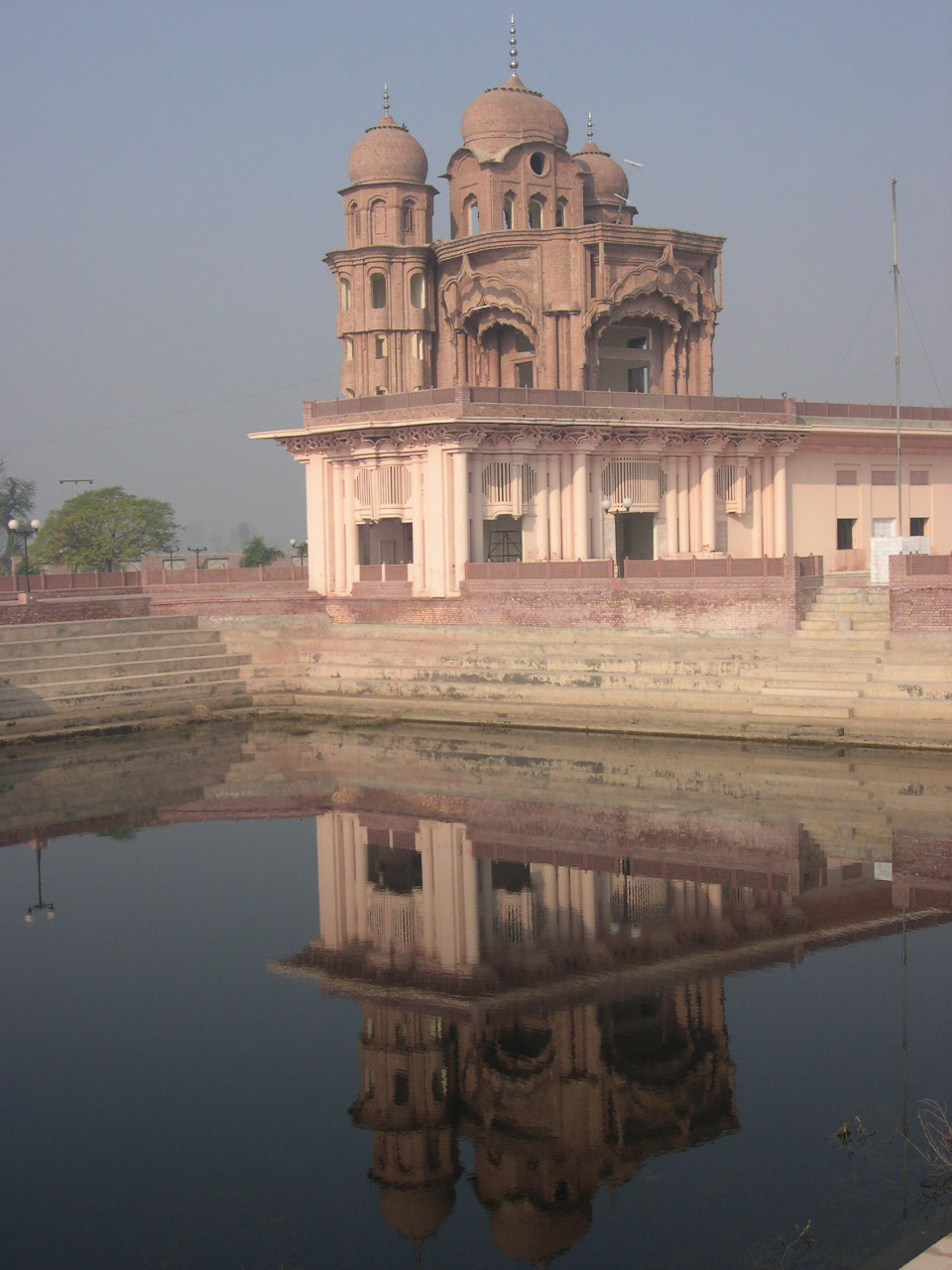
Gurdwara Sri Rori Sahib, Eminabad, Gujranwala (c) 2004 Pippa Virdee
A reflective essay on the lack of women in history writing and Punjab history. This was originally published in The Friday Times, 5 July 2019.
My first visit to Pakistan was in 2002. It was primarily to do research as a PhD student. At that time, I came with the religious baggage of belonging to a Sikh family and venturing into the known unknown. When I finally got my visa, I was very excited about travelling to the ‘near other’; unknown yet somehow familiar. After all, I rationalised, the cultural region of Punjab is, well, Punjab across both sides of the Radcliffe Line. And so, the journey into Pakistan’s history begun, a space in which the personal and the academic intermingled and boundaries became a metaphor for more than just the relationship between India and Pakistan.
The Sikhs in Pakistan are a small community; one of the smallest minorities in Pakistan. Exact numbers are difficult to estimate but they vary from around 6,000 to perhaps 20,000. They are largely concentrated around places like Peshawar, Nankana Sahib and Lahore. The interesting thing is that apart from the ethnic Punjabi Sikhs, many of the Sikhs that remained in Pakistan after 1947 were Pathan Sikhs. The latter were scattered in small numbers across Balochistan, Federally Administered Tribal Areas and Khyber Pakhtunkhwa. Most have been forced to relocate since, often seeking sanctuary in numbers. Though small, the Sikh community over the past few years has come to enjoy some state patronage. In an otherwise ‘Islamic’ milieu, Sikh men are easily identifiable by their turbans. Added to this are the old persistent colonial stereotypes of the Sikhs being a ‘martial’ race (even in Pakistan). And of course, the ‘Khalistani’ Sikhs have the sympathetic ears of the Pakistan establishment since the early 1980s. Thus, in Pakistan today, the medieval shadow of the Sikh-Muslim rivalry of Mughal India, as well as the pall of 1947 have receded to create a strange co-existence and a convenient acceptance of current realpolitik rather than a bitter dwelling in the past. However, this convenient relationship does not necessarily translate easily or well in the Sikh diaspora, especially here in the United Kingdom, where I am based.
While my main purpose for visiting Pakistan in 2002 was for my doctoral research, there was inevitably an interest to visit Sikh Gurdwaras and shrines; those remnants of pre-1947 which still existed. I have subsequently visited Pakistan more times than I can remember and have seen the changes in many of these shrines and their localities. Over the last 15 years, there has been a transformation of many of these shrines; from being small and poorly maintained to now being considered as one of the growing areas for pilgrim tourism in Pakistan. Every year, especially at the time of Vaisakhi and Guru Nanak’s birth anniversary, pilgrims come in their thousands from the UK, USA, Canada, which are home to significant Sikh diaspora communities. Depending on political temperatures, Indian Sikhs also make this pilgrim trip. For instance, this year, the Government of Pakistan issued 2,200 visas to Sikhs pilgrims in India for Vaisakhi. There is much trepidation amongst these of falling under the radar of intelligence agencies on both sides. Beyond the politics of two paranoid and securitised states though, growth in this tourism has benefitted local communities, as infrastructure around the ‘important’ shrines has improved to facilitate foreign tourists. These bring in the much-needed foreign exchange. They travel, stay, eat, drink, shop and thus spend their foreign currencies in Pakistan and, ultimately, some of this does make its way into the local economy. But this development is localised and centred around a handful of shrines, with the majority still largely neglected.
Social media and its ability to connect across borders, has spurred on a handful of people to seek adventure in Pakistan and document the ‘lost’ history of the Sikhs. Conversely, there has been more interest in these forgotten histories within Pakistan too. Combined with increased pilgrim tourism, there is almost a fascination and a sense of lost kinship that many Sikh Punjabis have with Pakistan and Pakistani Punjabis. These complex historicised feelings are under-girded by a common language, culture, biradari connections, and bhaichara. There is an old romantic connection that many have with reaching Lahore (formally Maharaja Ranjit Singh’s capital) captured in the phrase, Jis Lahore Nai Dekhya O Jamyai Nai/ Jine Lahore Nai Vekhya O Jamya Nai, meaning ‘One who has not seen Lahore has not been born’! This has been recited countless times and it helps to maintain the old pluralistic image of colonial Lahore. In this quest then, for the lost history of Sikhs in Pakistan, there has been a profusion of activity which has generated research in universities, fictional/non-fiction literature and pictorial books on Sikhs. These latter easily detract and divert from the difficult issues of politics, while sticking to the sites of nostalgia and neglect. Even the research at Pakistani universities (not exclusively though) is largely focused on the Ranjit Singh period (1801-39). When the bearded young man boasts of Ranjit Singh, of the contribution of the Punjabi (but usually Sikh) soldiers, of the great martial tradition, they rarely give women a thought.
These histories perpetuate and create a myth of the splendour associated with this lost history of the Sikhs. Even hard leftists have a soft spot for an otherwise unelected, unrepresentative, hereditary maharaja. While this greater interest and curiosity amongst scholars and students is welcome, it also serves to reinforce old stereotypes by avoiding the more difficult question of the broader issue of non-Islamic histories of Pakistan. Moreover, the study of history and its periodisation retains much of the colonial interpretations, hardly allowing us to interrogate these boundaries intellectually and dispassionately.
In the quest for academic “impact” and to connect with the general public, many academics in the west have been compelled to promote themselves. Social media again has been the route for this seemingly altruistic self-promotion. Articles, blogs and personal posts on social media, of travelling around Pakistan and bonding with the locals, for people’s immediate consumption and gratification. Moreover, the Punjabis express this in their usual flamboyant style of visiting their ‘lost’ Punjab, bonding with the local Punjabis and then sharing these ‘amazing’ bonding experiences. On closer inspection though, these all have something else in common. They are all invariably shared by men and are about their fraternal experiences. Statistically, we know that on average women are 26 percent less likely to own a mobile than men and 70 percent less likely to use mobile internet. Naturally, this means less women are visible and even when they are, they use it differently. Women largely use social networking to make connections and keep in touch with family or friends, in contrast men use social media to gather information they need to build influence. In South Asia, this discrepancy stems from the fact that men usually have better educational opportunities, have mobile phones, have greater levels of digital literacy, and this advantage over women fuels their privileged status.
Much of this social conditioning starts from the home, through to schools and universities. The social system perpetuates and emboldens men, making them entitled from a young age. As young women, we often have to fight our way to pursue our aspirations and dreams. Wanting to study politics and history at university for me was not easy because this was not considered an appropriate subject for a girl, even though it eventually reaped rewards. Universities themselves are supposed to be some of the most intellectually progressive spaces but actually they are not. They are just a reflection of society itself. They have the same prejudices and reflect the same class, caste, gender biases that society has. This is reflected in the largely male student body in South Asia, and although the number of girls is increasing and often, they perform better, many still see this as way of improving their choice of marriage partners. This is not a criticism of their desire to improve their lives, but rather a reflection of the limited value of education. The staff fraternity also tends to be male-dominated, especially the senior staff. Although this is no better than in the UK where the Royal Historical Society recently published a study on Race, Ethnicity and Equality (2018) and found that there was an over-whelming dominance of white male professors compared to females and the numbers are even smaller for those from Black and Ethnic minorities.
These centres of learning, therefore, do not reflect the voices of everyone because even here, the skewed societal power structures remain intact. Men control the institutions and therefore they control the narrative. They are the gatekeepers of knowledge and learning and without challenging these structures the narrative cannot be changed.
My experiences of being a (Sikh) woman living and working in Pakistan (largely Lahore and the Punjab) has been quite ordinary in many ways and extraordinary in other ways. I have never been given a free taxi ride; unlike the numerous accounts one reads of visiting Sikhs (i.e. Sikh men) who have struck a long-lost kinship with the taxi driver, who then from the kindness of his heart refuses to charge the client. In fact, I have struggled to speak with taxi drivers and men in public spaces in Punjabi because they consider this to be impolite. Unlike men, I am usually compelled to speak in the Urdu, which imposes a certain level of distance and formality to the conversation. While I cannot have my ‘bromances’ with most of those around me, I can, however, quietly enter the zenana spaces. And these, like the history pages that neglect them, are often hidden away.
I have learnt over the years that women, whether in South Asia or in the West, do not boast of their achievements. They work like ants, running around, keeping busy and building structures out of crumbs. The obstacles they encounter en route can be difficult and they are not always successful. More often than not they will encounter men who are in positions of authority and wield substantial power over the lives (and bodies) both in the home and the outside world. And the outside world is designed by men and for the needs of men. They would rarely acknowledge the privileged position they have in the home and the outside world and the freedom this gives them.
While I have spent many years working in Pakistan, on Punjab’s history, I have rarely felt the need to write about my “non-academic” experiences. The motivation has largely come from the fact that despite all these years, there is still not enough progress and even today there are few female historians coming forward. Even today we are judged on how we look, what we wear rather than what we think and write. Intellectually there is a stale and over-bearing concern for constantly writing about conflict, nationalism, religion, battles, and hero-worshipping; a reflection perhaps of an insecure male society that seeks glory from former victories to validate its present. The only way we can get diversity in the way we view and write about our history is to have that diversity in the people who write it. As a society we need to challenge these hyper-masculinised and hyper-nationalised histories that distort our past and shape our future. If we want to be part of the narrative, we have to take responsibility for writing it. As women we need to make ourselves visible in both the past and the present.
Operation Bluestar and 1984 are etched on the memories of most people living in north India. It was the codename given for Indian military action to oust Jarnail Singh Bhindranwale and his followers from the buildings of the Harmandir Sahib, Amritsar by the Indian government. By the beginning of June 1984 it was clear that negotiations between the Indian government and Bhindranwale had failed and the build-up of the Indian Army around the Gurdwara complex meant that a full scale confrontation was imminent. Much like the Tiananmen Square protests of thirty years ago, the abiding memory of Operation Bluestar is of Indian military tanks charging into the holy complex of the Golden Temple. More controversially though has been the recent disclosure of the British government’s assistance to the Indian government prior to this operation.
Many of the documents at The National Archives (UK) pertaining to this period are still closed or retained for 40 years. However, a few of them were released.







 BAGICHA