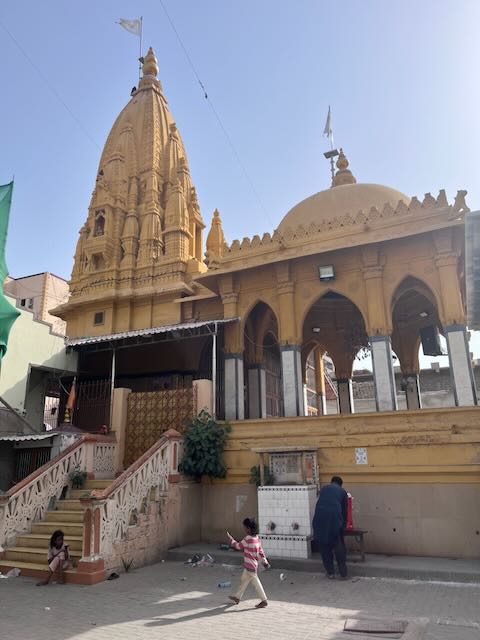
In April 2020, I wrote a blog post on the Swaminarayan Temple in Karachi. Calling it a “blog piece” was something of a stretch, it was really a set of fragments from the archive: letters exchanged between Liaquat Ali Khan, Prime Minister of Pakistan, and Gopalaswami Ayyangar, Minister for Transport and Railways in the Government of India. These letters concerned the Temple and a dispute over the land it sat on, who it belonged to, Hindus or Muslims.
In April 2026, six years later, I finally visited the place I had visited only through those archival documents.
An Impromptu Return
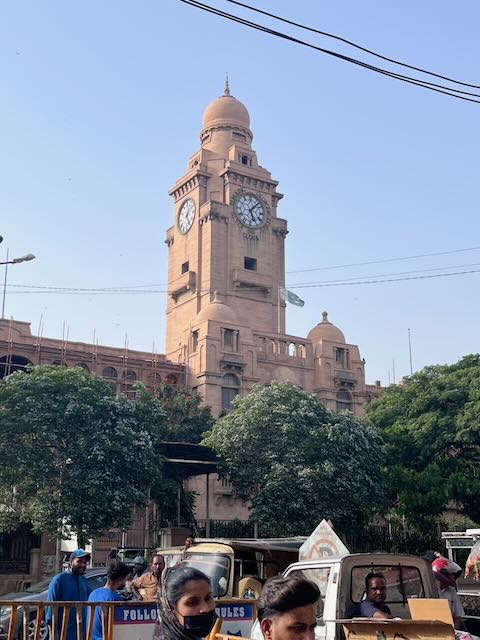
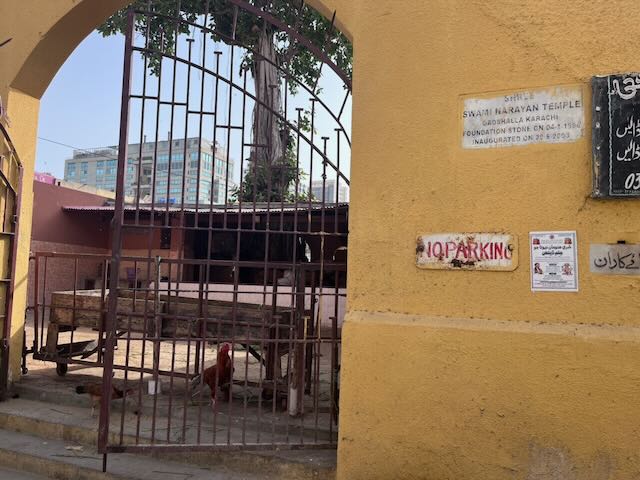
I was in Karachi, visiting the Aga Khan University, but in the back of my mind was a quieter wish: to find the Temple I had read about and see what had happened to it. So, on a day spent exploring the layered history of this remarkably cosmopolitan city, we made an impromptu stop on M. A. Jinnah Road, formerly Bandar Road, a six-kilometre artery running through central Karachi. The location sits at the heart of what was once an old Hindu neighbourhood, not far from the city’s historic civic centre.
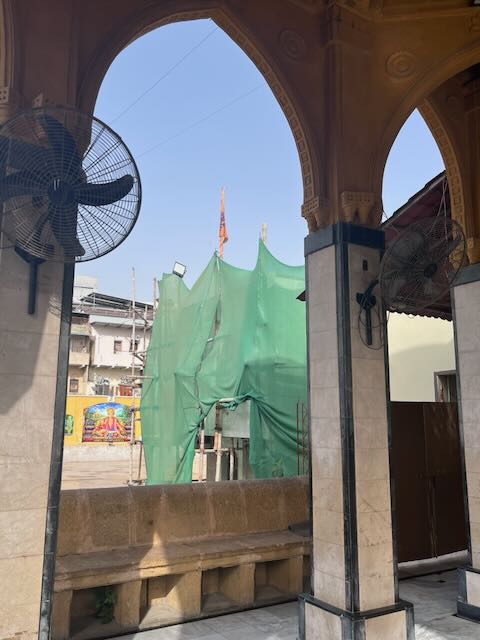
Tucked between the noise and clutter of the bustling commercial road, we found it: a small, unassuming archway, easy to miss unless you were looking for it. This was the entrance to the Temple, with a guard monitoring those entering. For security reasons, the complex doesn’t admit strangers or casual visitors, but after speaking with the staff and learning that I was Sikh, they were satisfied the visit was made in good faith and let us in.
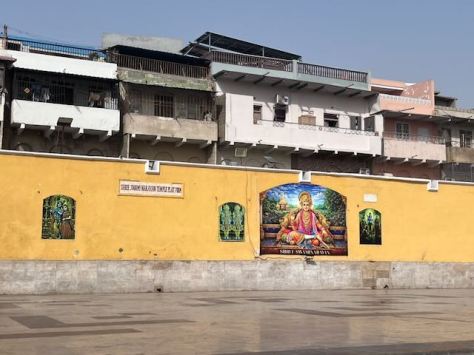
Inside, the complex opened onto a large courtyard, exactly as it had been described in the letters I had read years earlier. At its centre stood the Temple and the Gurdwara, side by side, with homes belonging to Sikh and Hindu families arranged around the courtyard’s edges. This question of residence — who had the right to live there — was precisely what Ayyangar and Khan had argued over in their correspondence, with Ayyangar pressing for the space to be reserved for Hindus.
Karachi Before Partition
Before Partition, Karachi was a major port city, one that had grown from a small fishing village into a vibrant, multi-religious urban centre. Hindus and Sikhs dominated its industrial and commercial life, prominent in banking, education, retail, and local business. Muslims, Christians, and Parsis were equally woven into this cosmopolitan fabric. Traces of all these communities from the pre-Partition era survive today as part of the city’s inherited heritage.
Partition in the Punjab tore the province apart and forced millions to flee from the communal violence. Karachi’s experience was different, and its rupture more drawn out. With limited infrastructure to begin with, the city also became the new capital of Pakistan, and the Muslim League leadership, with its ideological and political roots in Aligarh, relocated there to begin the work of building a homeland for the Muslims of British India.
As the historian Sarah Ansari writes, Sindh was, in relative terms, spared the worst of the violence that convulsed the Punjab. With a population roughly 75% Muslim and 25% Hindu and Sikh, the province “managed to keep a fairly clean record” through the difficult weeks around independence, even as communal sensitivities grew (Ansari, p. 53). Even so, the authorities eventually judged that rising tensions required admitting more refugees into Karachi.
What followed still confounded observers. Unlike the Punjab, where the mass departure of non-Muslims was seen as tragically inevitable, Sindh had been marked by comparatively few communal clashes, thanks to what Ansari calls a “peaceful imprint” in relations between communities, reinforced by the authorities’ firm early efforts to maintain order (Ansari, p. 54). That relative calm did not hold. By January 1948, a serious outbreak of communal violence, instigated by Muslim refugees, first targeting Sikhs travelling through the city and then turning on local Hindus, signalled how far Karachi’s demographic and political character had shifted. By this point, Ansari notes, the city had become heavily “impregnated” with Muslim refugees (Ansari, p. 56).
This violence triggered a rapid exodus of non-Muslims from Karachi, with thousands leaving for India. The economic consequences were immediate. Commercial firms and banks were already short-staffed lost much of their remaining workforce, and, as Ansari puts it, “business virtually ground to a halt” (Ansari, p. 57).
This produced a real dilemma for the provincial government. Ansari records that Sindh’s Chief Minister, Khuhro, and his colleagues recognised that the province’s best interests lay in retaining as many Hindus as possible; Khuhro accordingly moved to cap refugee numbers, with any surplus to be removed from the city (Ansari, p. 57). This put the Sindh government directly at odds with the central Pakistani administration, which was simultaneously trying to resettle the huge inflows of refugees arriving from the Punjab.
At the heart of this stood a genuine contradiction: the instinct of “Sindh for Sindhis,” bound up with a desperate need to preserve Karachi’s economic life, pulled against the equally urgent need to absorb refugees who had uprooted themselves in search of a promised homeland. It was within this contest of high politics that small, local places, like this Temple and the community around it, became caught up in questions far larger than themselves: who could stay, who could leave, and who a piece of land, and the city itself, ultimately belonged to.
The Communities Today
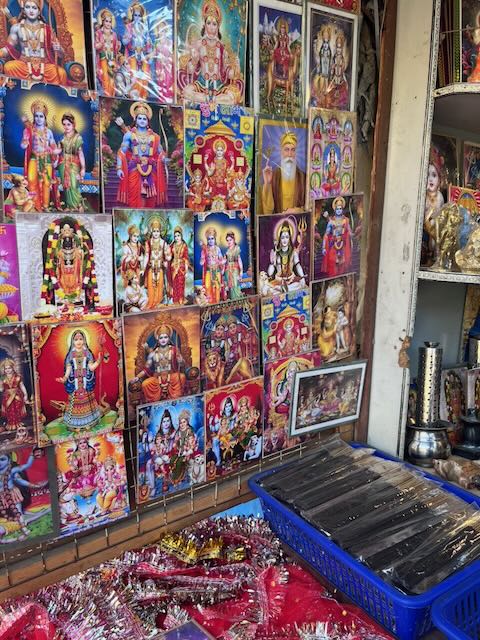
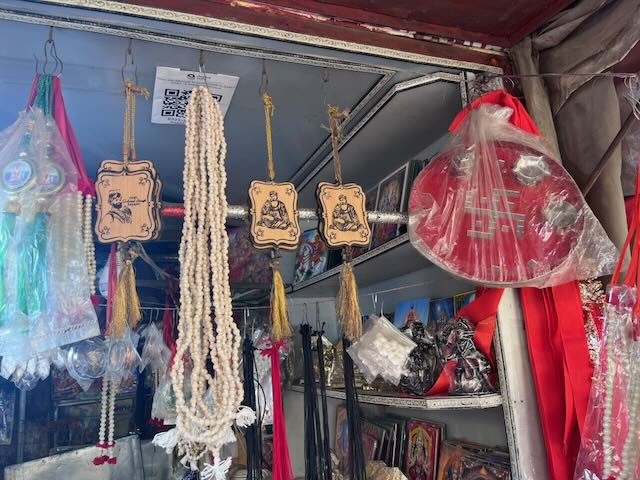
Karachi’s Hindu community is now a small fraction of what it once was. Hindus make up just over 1% of the city’s population today, around 244,689 people, according to the 2023 census, a steep fall from the majority-Hindu city Karachi had been before 1947. Estimates of how many temples remain vary widely, from a handful of prominent citywide institutions to dozens of smaller neighbourhood shrines; what’s clear is that only a fraction of the pre-Partition total survives.
A few, like the Swaminarayan Temple, the Ratneshwar Mahadev Temple, and the Lakshmi Narayan Temple at Native Jetty, remain architecturally and historically significant, while others are modest sites serving small, localised pockets of the community; Tamil Hindu families in Madrasi Para, for instance, still gather to worship the goddess Mariamman. Sindh remains home to the great majority of Pakistan’s Hindus, making the community, alongside Sikhs, one of the last visible threads connecting Karachi’s present to its pre-Partition past.
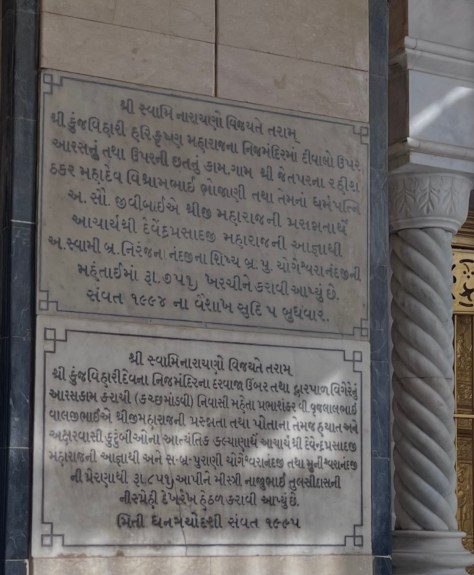
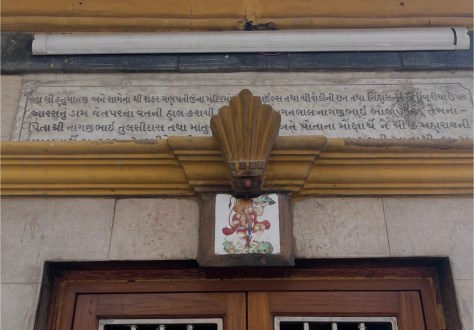
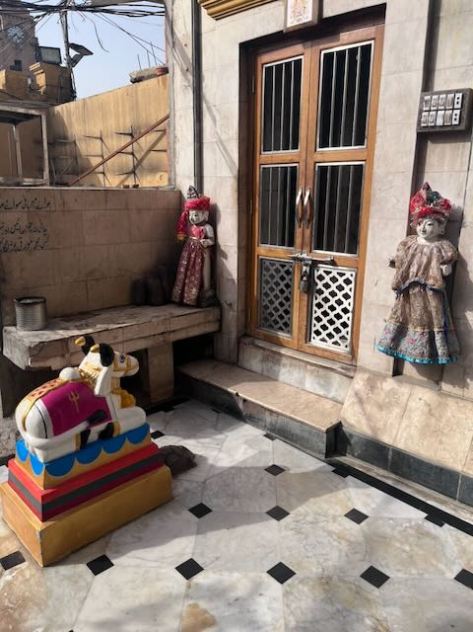
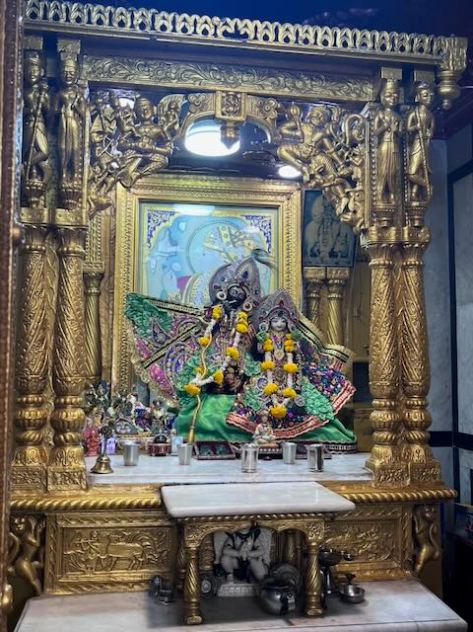
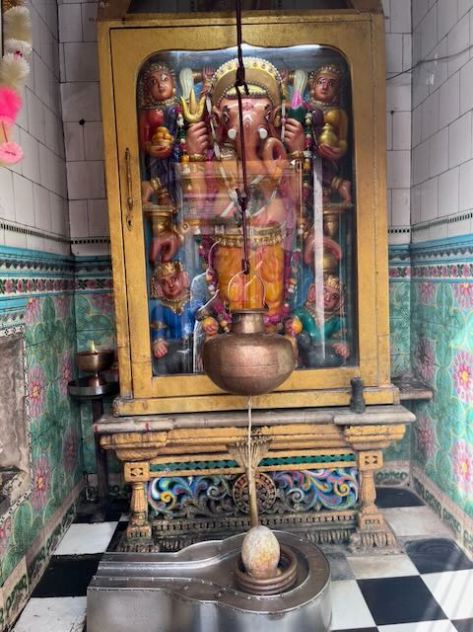
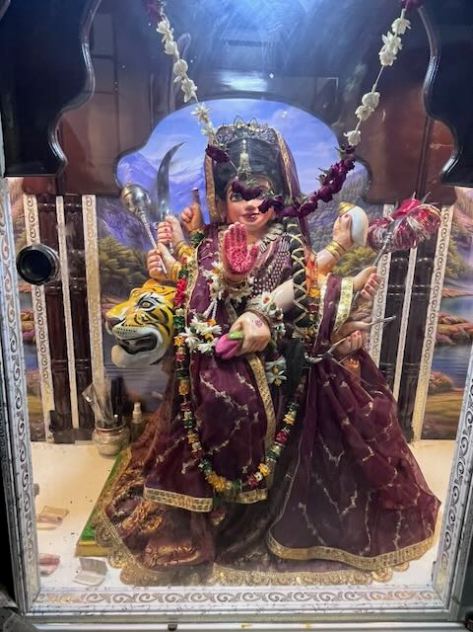
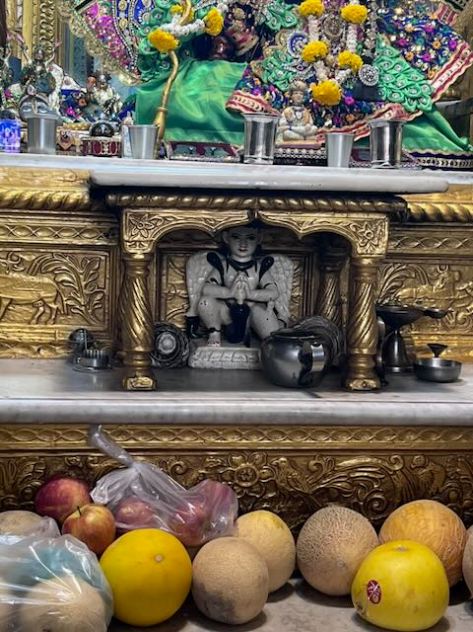
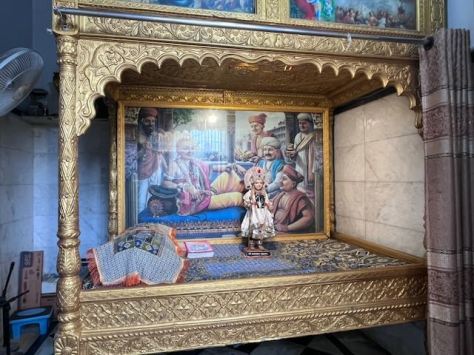
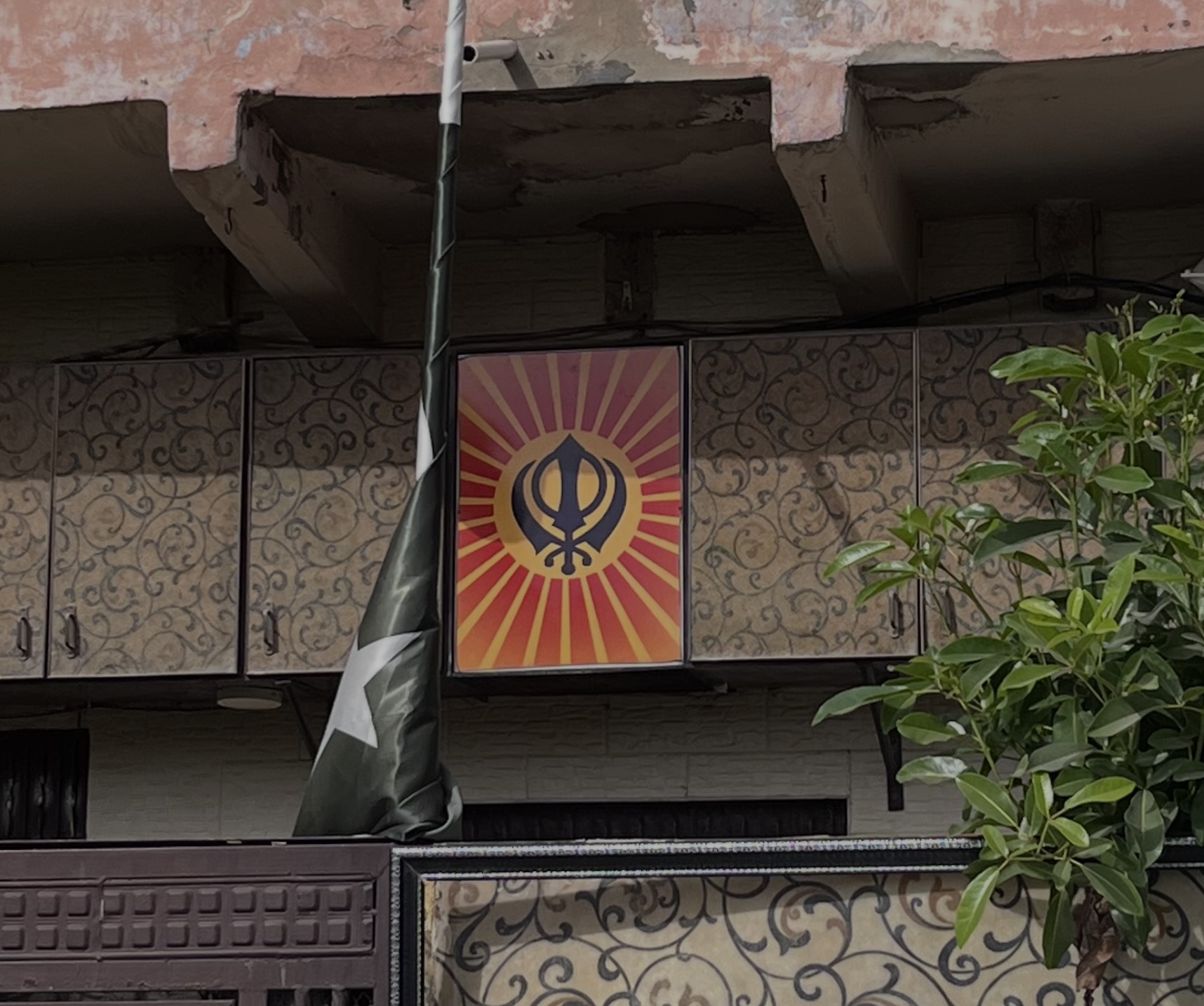
By comparison, Karachi’s Keshdhari Sikh community is smaller still. More prominent are the Nanakpanthis, who live in larger numbers in Thar and practise more syncretic traditions. The Gurdwara, dedicated to Guru Granth Sahib, sits on the ground floor of the complex and, at the time of our visit, was undergoing renovation. It’s a modest, functional space, serving what remains of the city’s Sikh community. There are thought to be around three other gurdwaras in Karachi, together serving a population estimated at somewhere between 2,000 and 4,000 people. The population of the Nanakpanthis, on the other hand, numbers perhaps closer to two million in Sindh Province.
Inside the Complex
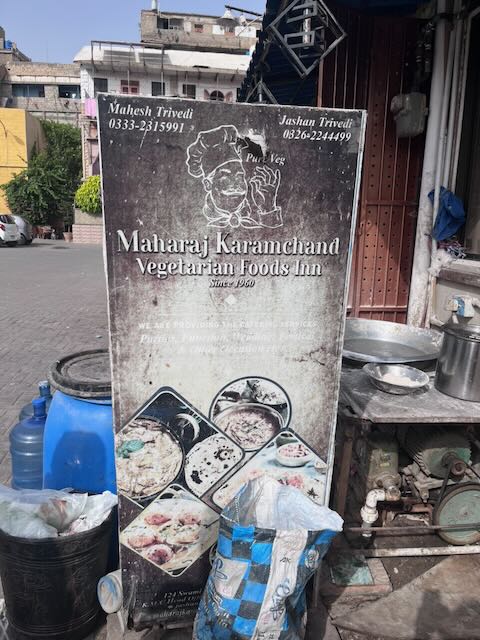
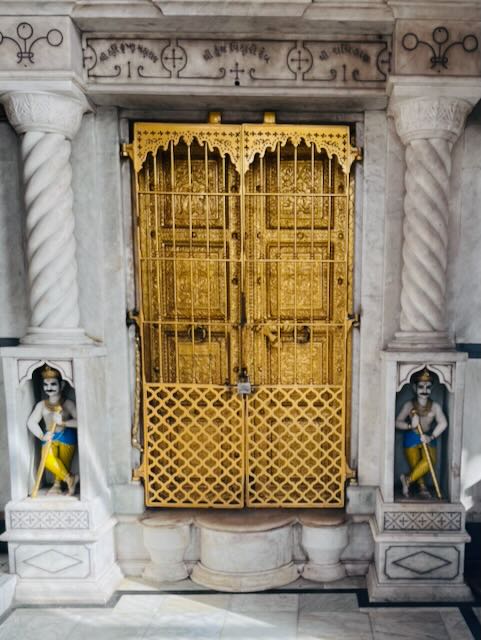
Walking through the complex today, that layered history is still visible, if you know to look for it. There’s a vegetarian restaurant-cum-dhaba, shops selling religious items, and a shared sacred space that houses both Temple and Gurdwara — a small, living trace of the pluralism that once defined the city.
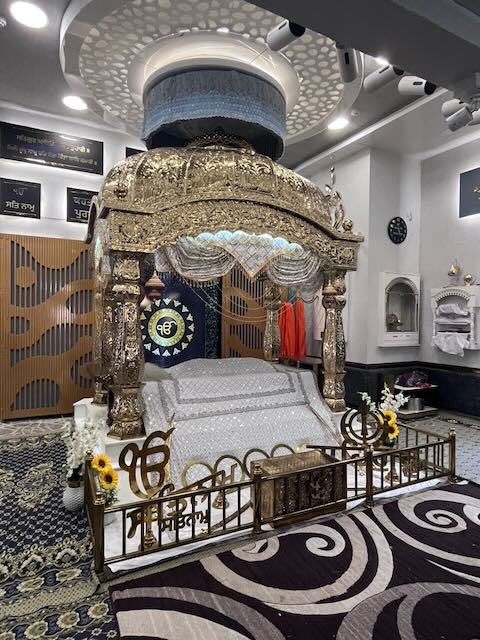
The tour of the Gurdwara and the Temple was a genuine pleasure. It offered a glimpse of what shared sacred space can look like, of coexistence without enmity, worked out not in the abstract but in the daily rhythms of a shared courtyard. And yet that same courtyard is also a haven, in the truest sense: a refuge for residents who now form a minority in a city their communities once helped to build and run. What was once simply home has become something closer to a sanctuary, but it is also a marker of how much has been lost.
Postscript
Reading the Ayyangar–Khan letters in 2020, I saw this Temple only as a set of claims and counter-claims on paper, an argument about land, rights, and belonging, conducted at the level of Prime Ministers and Ministers. Walking into the courtyard in 2026 closed a strange loop: the same space, no longer an abstraction in an archive box, but a living, if diminished, community still holding on, quietly, amid the noise of Jinnah Road.
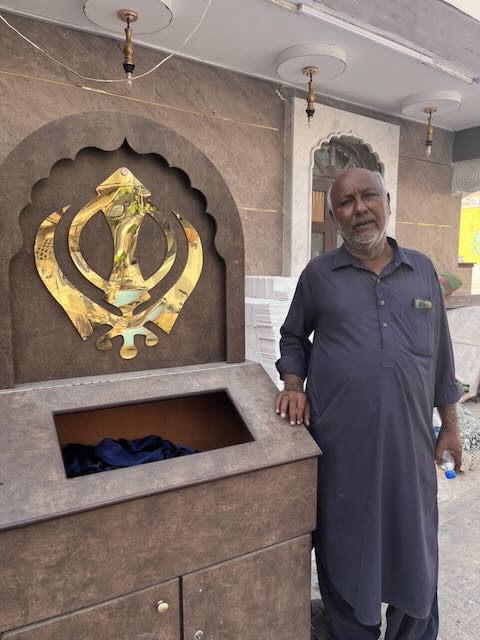
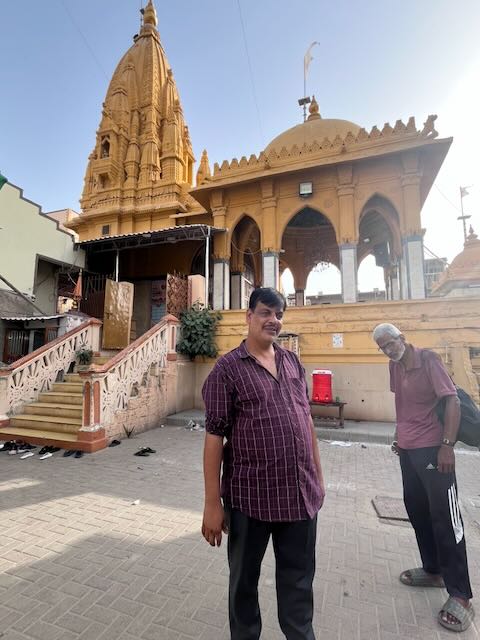
These places of worship survive because of the generosity of those who serve the community.
References:
Sarah Ansari, Life After Partition: Migration, Community and Strife in Sindh, 1947-1962 (OUP, 2005)
Original Post Swaminarayan Temple, Karachi
Discover more from BAGICHA
Subscribe to get the latest posts sent to your email.

