Tag Archives: travel

The first fossil museum in Pakistan

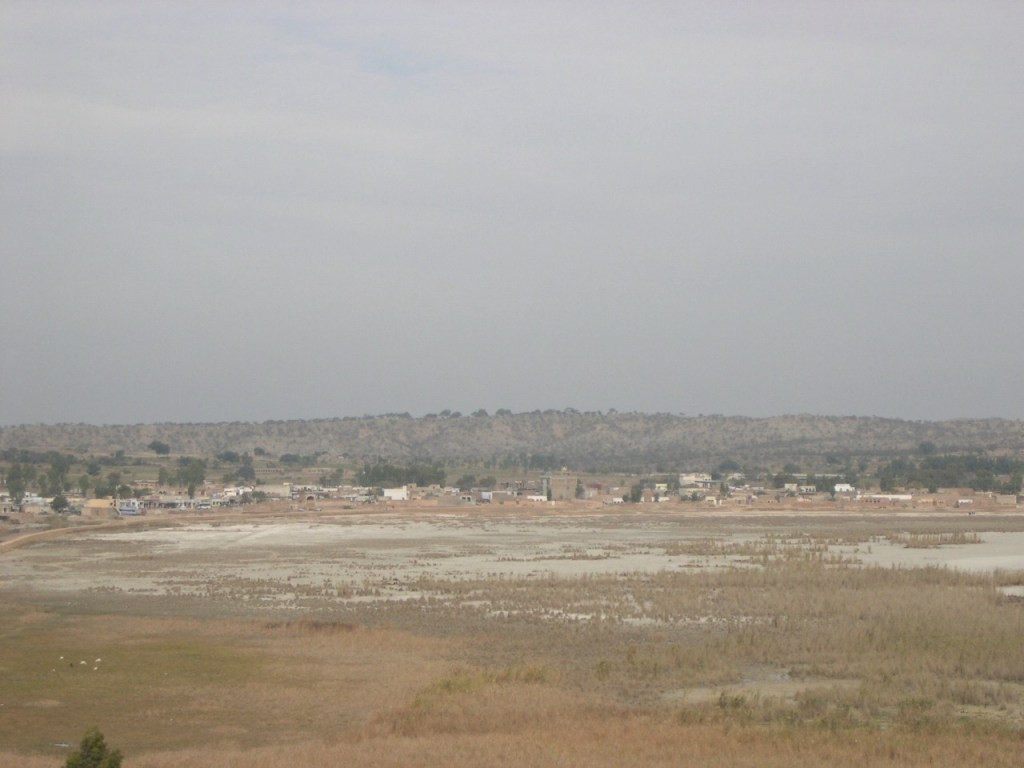
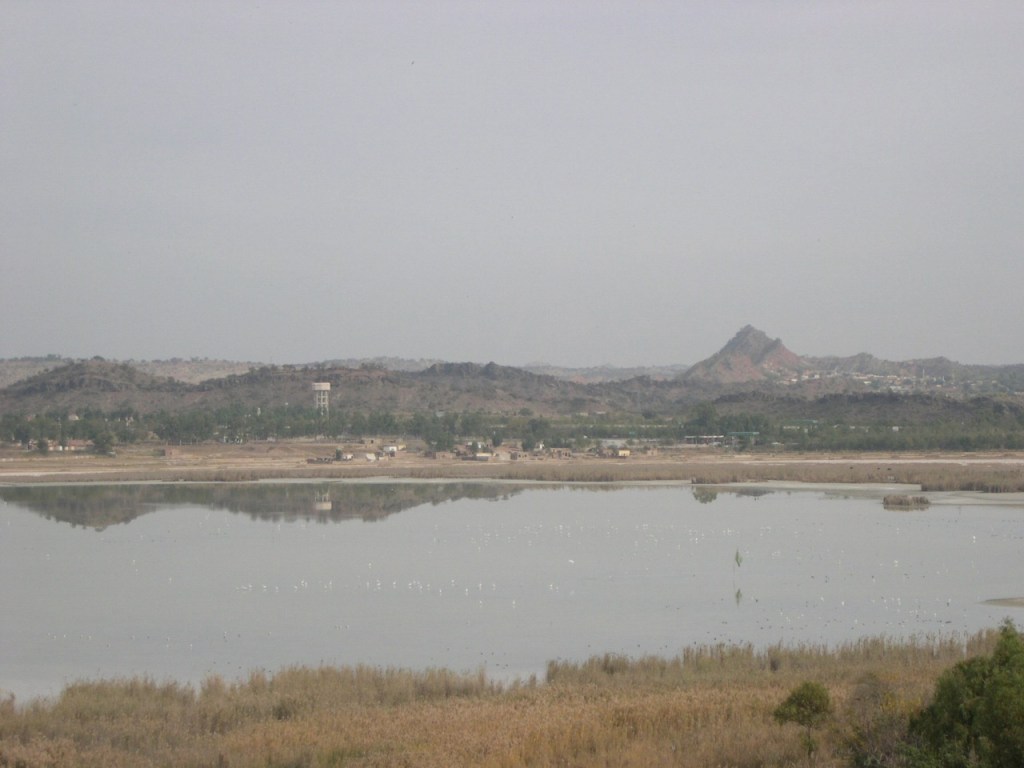
In December 2004, I was traveling from Islamabad to Lahore on the M-2 motorway, which is the first motorway to be created in South Asia and which was inaugurated in 1997. It is also one of the most expensive to be constructed under the Korean company, Daewoo. The journey of 184 km takes one via the magnificent Salt Range and Kallar Kahar, a subdivision of Chakwal District (Punjab) and conveniently located close to the M-2.

Kallar Kahar is also a popular tourist destination with captivating lakes and the Katas Raj Temple complex, dedicated to Lord Shiva, dating back to 615-950 CE. The founder of the Great Mughal dynasty, Zahir ud-Din Muhammad Babur (1483-1530), stopped here with his army, while en route to north India in 1519. During this stay, a throne was built by cutting a piece of limestone formation to create a raised platform, from where he addressed his army. This throne, known as Takht-e-Babri, was located within the Bagh-i-Safa, the first of many Mughal gardens to be created. Salman Rashid in his book, The Salt Range and the Potohar Plateau (Sang-e-Meel, 2001), mentions how Babar, described the area of Kallar Kahar Lake as a “charming place with good air”.

Read further: “Kallar Kahar: blessed by nature, neglected by rulers” by Nabeel Anwar Dhakku, Dawn, 28 February, 2016. 

“Takht-e-Babri, the first Mughal construction in the subcontinent, is grand only in name” by Haroon Khalid, Dawn, 5 June, 2017.


© 2004 Pippa Virdee 

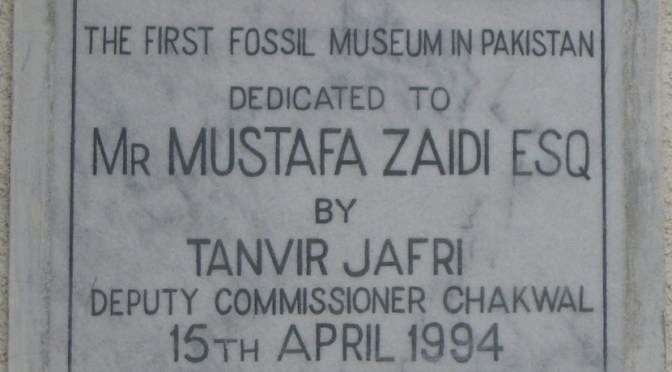
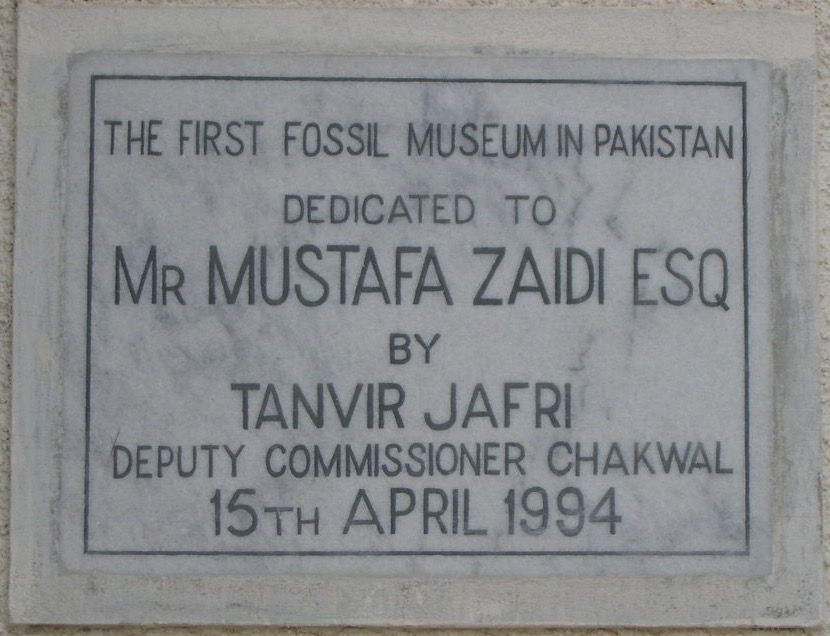
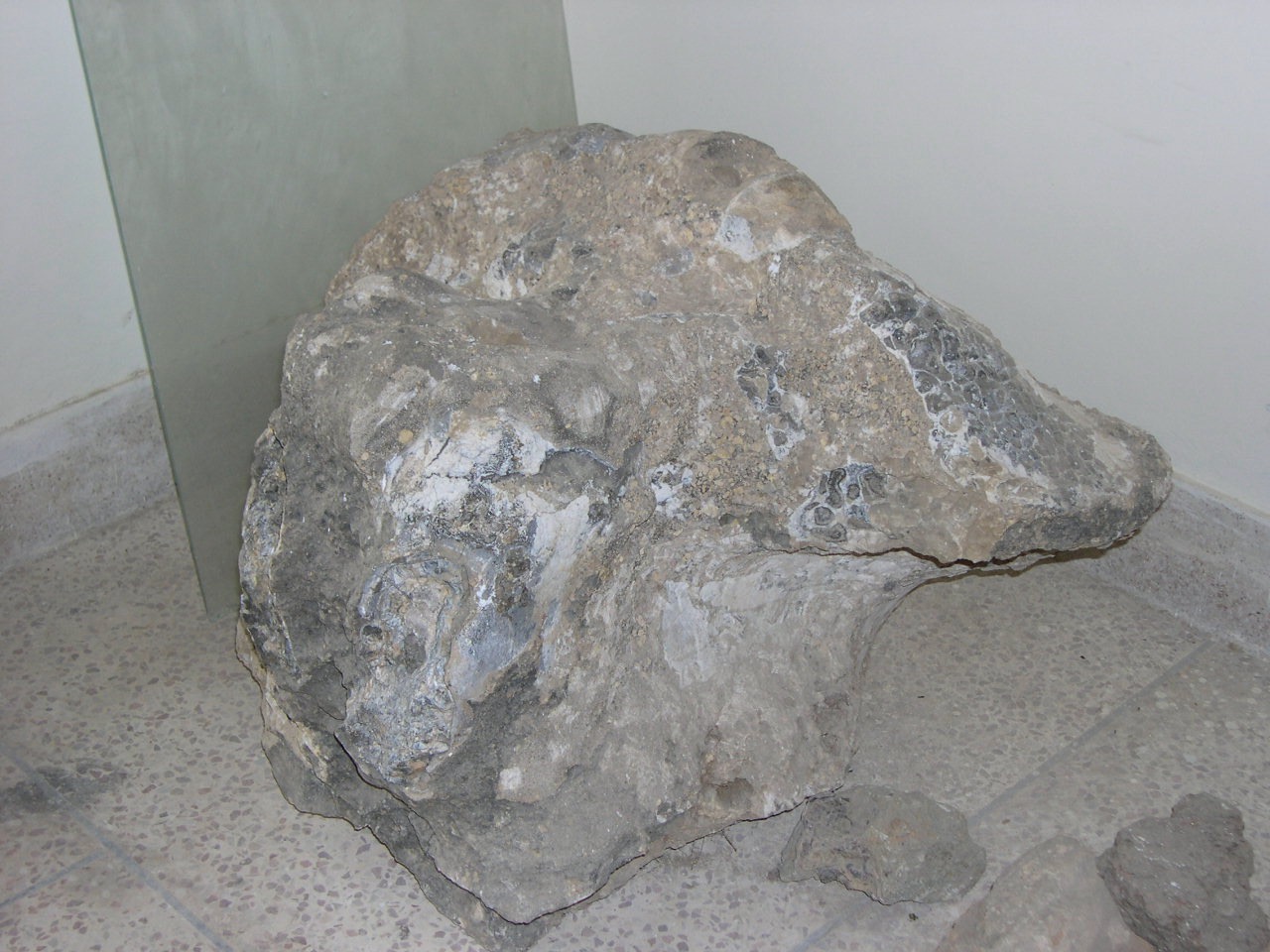
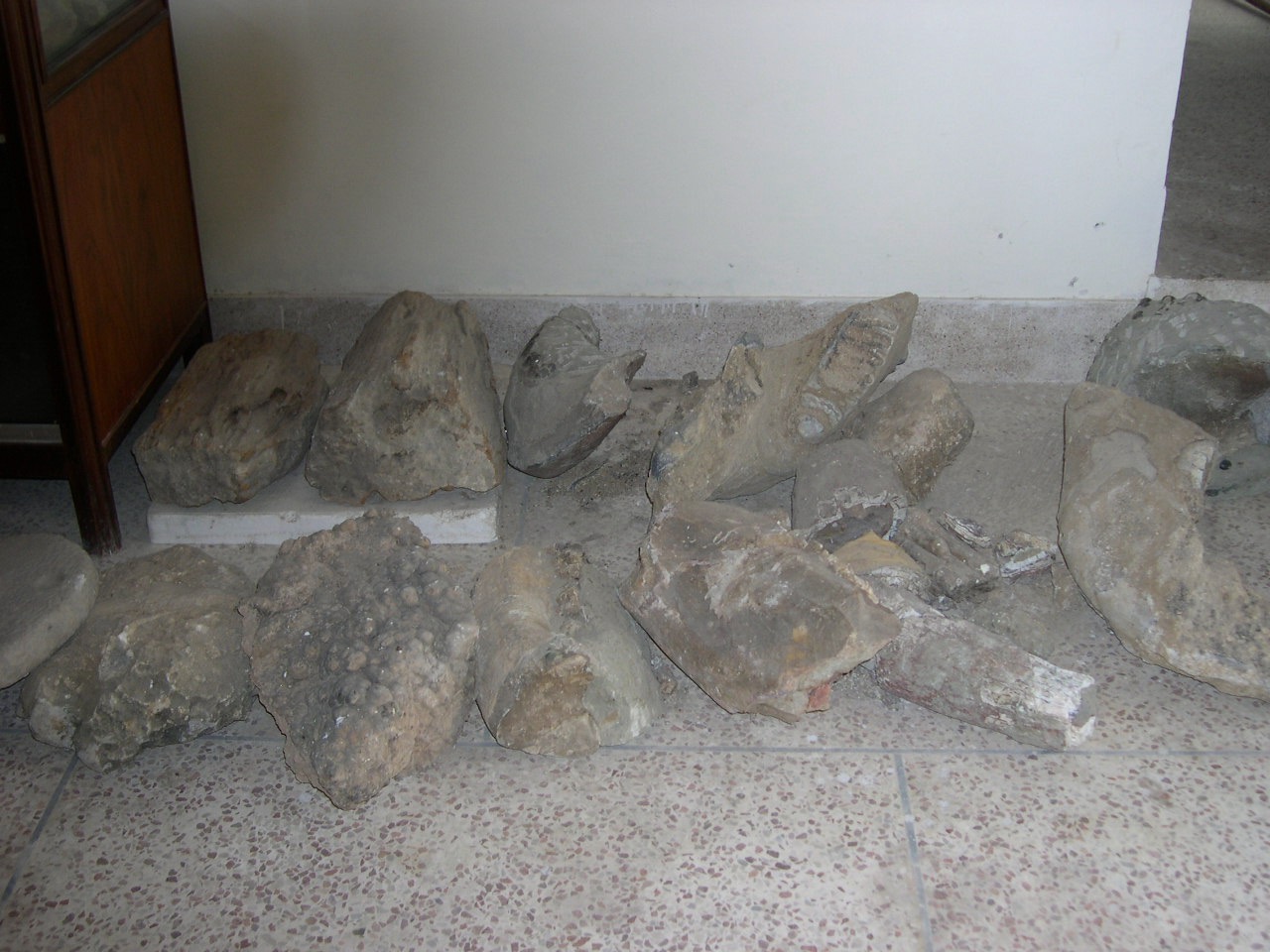
Back in 2004, I also stumbled upon the first fossil museum in Pakistan! Actually, it was less a museum and more a room with a variety of fossils scattered randomly on the floor. Neglected and dusty, they appeared to be of little significance. I recently came across this old photograph, which I had forgotten about.

I was so intrigued by the plaque with this inscription of the first fossil museum that I started doing a little digging about it, with little to show. A search for Mustafa Zaidi throws up a famous poet/civil servant (born 16 October 1930 in Allahabad and died 12 October 1970), while Tanvir Jafri, the then-DC of Chakwal, might still be around with recollections of this fossil museum.

I think the fossil museum is perhaps part of the Kallar Kahar Museum now, which is located opposite the Lake. It was finally inaugurated earlier this year in April, after seven years of its completion. At the time, I remember the caretaker saying that they there was something bigger in the pipeline, to create a better museum space. In South Asia, these matters take time (years), unless there is political mileage in the project. Though I should not have been so dismissive of the fossils, because this region is rich in history and has dinosaur fossils dating back 15 million years. But heritage remains a low priority for the country, whether prehistoric, ancient or modern, and is a simultaneously contested and marginalised space.  

“Kallar Kahar Museum’s doors remain firmly shut” by Nabeel Anwar Dhakku, Dawn, 20 January 2016. https://www.dawn.com/news/1234117

The Incredible Story of Nek Chand Rock Gardens, India

This account has rekindled memories of visiting the Rock Gardens in Chandigarh. I have pre-digital age photographs and will share those on my blog but this is a wonderful piece on the unique history of Nek Chand.

The Nek Chand Rock Gardens had been on our radar for a long time before we finally made it there. Located in the city of Chandigarh, at the foot of …

The Incredible Story of Nek Chand Rock Gardens, India

Laal/Red

“In 1949, while in Lahore, Sahir Ludhianvi wrote a revolutionary poem, ‘Avaaz-e-Adam’ (The Voice of Man), in which ‘hum bhi dekhenge’ remains a memorable phrase. It ended on the optimistic – and one could say provocative – assertion that the red flag of communism would fly high. Pakistan had already decided to become a frontline state in Western attempts to contain Soviet Communism. It was trying desperately to convince the US that it could be a strong ally in its anti-Communism policy. Pakistan also wanted to portray itself as a trusted ally for the West, not just in South Asia but also in the Middle East. But after the poem was published, Sahir was threatened by intelligence agencies and he migrated to India. In effect, ‘hum bhi dekhenge’ came to symbolise Sahir’s farewell to Pakistan, which he felt would be a puppet of the West, and his search for sanctuary in Nehru’s India.” Source: The Wire.

© 2019 Pippa Virdee
aavaaz-e-aadam
Dabegi kab talak aavaaz-e-Aadam hum bhi dekhenge
rukenge kab talak jazbaat-e-barham hum bhi dekhenge
chalo yoonhi sahi ye jaur-e-paiham hum bhi dekhenge

dar-e-zindaan se dekhen ya urooj-e-daar se dekhen
tumhen rusva sar-e-bazaar-e-aalam hum bhi dekhenge
zara dam lo maal-e-shaukat-e-jam hum bhi dekhenge

ye zoam-e-quvvat-e-faulaad-o-aahan dekh lo tum bhi
ba-faiz-e-jazba-e-imaan-e-mohkam hum bhi dekhenge
jabeen-e-kaj-kulaahi ḳhaak par ḳham hum bhi dekhenge

mukaafaat-e-amal tareeḳh-e-insaan ki rivaayat hai
karoge kab talak naavak faraaham hum bhi dekhenge
kahaan tak hai tumhaare zulm mein dam hum bhi dekhenge

ye hangaam-e-vidaa-e-shab hai ai zulmat ke farzando
sahar ke dosh par gulnaar parcham hum bhi dekhenge
tumhen bhi dekhna hoga ye aalam hum bhi dekhenge
The Voice of Man
We too shall see till when one can suppress the voice of Adam
We too shall see till when can be stopped the angry emotion(s)
We too shall see, sure, just like this, the constant oppression.

Whether we view from the door of the dungeon or the elevation of the scaffold
We too shall see you dishonoured in the marketplace of the world
Just take a moment’s breath, we too shall see the consequences of the grandeur of Jamshed.

You too behold this vanity of power
We too shall see this by the kindness of the firm belief’s fervour
We too shall see a bend upon the dusty face that wears the jaunty headgear.

Retribution is a tradition of human history
Till when will you amass the arrows, we too shall see
We too shall see how far will you persist with your tyranny.

O sons of darkness this is the time for departure
We too shall see the morning shoulder the flag of red colour
We too shall see, you too shall have to see this clamour.

Source: ‘We Too Shall See, You Too Will Have to See This Clamour’: A Tribute To Sahir Ludhianvi by Raza Naeem, NayaDaur

Read/listen to Sahir on Rekhta

Sahir Ludhianvi – Making of Dreamer – Freudian Poet of the Indian Cinema by Anil Pundlik Gokhale. CounterCurrents.org

Shoulder to Shoulder

Peshawar 2017
© 2017 Pippa Virdee

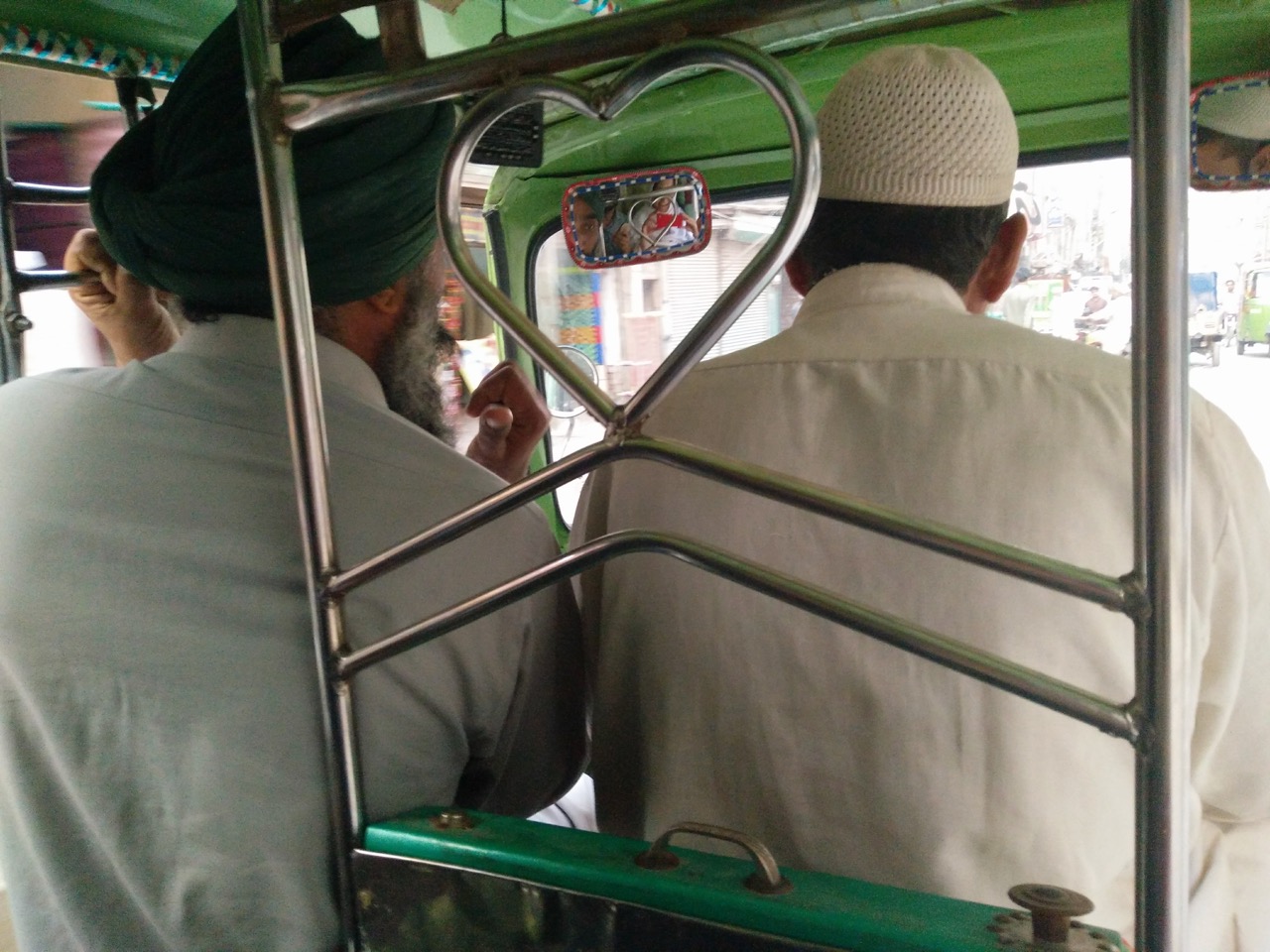
This picture was taken by me during one of the most memorable tuk tuk rides in Peshawar in 2017, when I was exploring the city and trying to find a gurdwara in the narrows lanes of the congested city. Along came this sardar ji who jumped on the tuk tuk and navigated us to Gurdwara Bhai Joga Singh. As the sounds and sights gather momentum around the opening of the Kartarpur corridor, I share this moment that speaks silently for the hopes of many.

“Reversing the Gaze”? Two books, two reviews.

What Made the East India Company So Successful? Analysis Goes Missing in Dalrymple by Rudrangshu Mukherjee, The India Forum, 11 Oct 2019

William Dalrymple’s book on the East India Company is written very well and has a great deal of detail. But the writing of good History needs more. It calls for a consideration of all relevant facts and a comprehensive analysis. This is unfortunately missing.

The Anarchy: The East India Company, Corporate Violence, And The Pillage Of An Empire By William Dalrymple, Bloomsbury, Rs 699.

LSE Blog:  Long Read Book Review: Masala Shakespeare: How a Firangi Writer Became Indian by Jonathan Gil Harris

In Masala Shakespeare: How a Firangi Writer Became Indian by Jonathan Gill Harris, Harish Trivedi (Former Professor of English, Delhi) finds a book that examines the similarities between India and Shakespeare. Taking the author’s understanding of the word masala (in this case meaning something hybrid, mixed or more-than-one), Trivedi explains the problems of such a comparison and literary interpretation of Indian society and culture.

Masala Shakespeare: How a Firangi Writer Became Indian. Jonathan Gil Harris. New Delhi: Aleph, 2018. 282 pp.


Mayo at Cockermouth

This slideshow requires JavaScript.

Richard Southwell Bourke (1822-72), 6th Earl of Mayo, 4th Viceroy of India (1869-72)

Born and educated in Dublin; MP (Conservative Party) for Kildare (1847-52), Coleraine (1852-57) and Cockermouth (1857-68); Chief Secretary for Ireland (1852, 1858, 1866); Assassinated in Andaman Islands by Sher Ali Afridi (1872); Memorial Statue in Cockermouth (1875)

Termed Disraeli’s Viceroy by George Pottinger (1990) and a ‘reckless partisan of Irish landlordism’ by Karl Marx in the New York Daily Tribune (1859) (https://www.irishtimes.com/opinion/letters/lord-mayo-in-a-pickle-1.3777905)

For biography:

Library Ireland: https://www.libraryireland.com/biography/RichardBourkeSouthwell.php

WW Hunter, The Earl of Mayo (Oxford, 1891)   https://www.gutenberg.org/files/35809/35809-h/35809-h.htm

On assassination:

Norman Freeman, “Death of a viceroy – An Irishman’s Diary on the assassination of Lord Mayo”, The Irish Times, 28 Jan 2019.  https://www.irishtimes.com/opinion/death-of-a-viceroy-an-irishman-s-diary-on-the-assassination-of-lord-mayo-1.3773683

Clare Anderson, “The murder of Mayo: why Britain kept quiet about a Viceroy’s assassination” 7 Sep 2011. https://www2.le.ac.uk/news/blog/2011-archive/september/the-murder-of-mayo-why-britain-kept-quiet-about-a-viceroys-assassination

With wider political-cultural context:

Julia Stephens, ‘The Phantom Wahhabi: Liberalism and the Muslim fanatic in mid-Victorian India’, Modern Asian Studies 47: 1 (2013) 22-52

Of legacy:

Mayo College Ajmer (India) (1875): https://mayocollege.com/

Mayo School of Industrial Art Lahore (Pakistan) (1875): http://lahore.city-history.com/places/mayo-school-of-industrial-art-later-national-colle/

It was of course his legacy that is most associated with the city of Lahore, where the Mayo School of Industrial Art was set up in 1875, following his assassination in 1872. The Mayo School later became the National Collage of Arts (NCA) in 1958 and this still remains the premier institution for the Arts in Pakistan.

Lockwood Kipling was appointed the first Principal of Mayo School, alongside his other role of Curator of the Lahore Museum, which was the Ajaib Ghar in Rudyard Kipling’s Kim.

(Inhabiting) the Space between Black and White: Indian/Sikh Community in Kenya

This slideshow requires JavaScript.

Much of my early childhood in the late seventies and early eighties was spent growing up in Kenya (Nakuru and Nairobi), giving me fond memories of a nostalgic past. Having been back a number of times since, it is inevitably not quite the way I have preserved it in my recollections. Childhood memories are filtered, sedate and full of innocence. The contemporary is much more austere, different and distant. The Sikh community in Kenya is small, perhaps only a few thousand. It is close-knit, largely urban based and relatively wealthy. The wider South Asian community originate from a handful of places like Gujarat, Punjab and Goa but it does reflect microcosm of Indian society with its myriad of ethnicities, languages, religion and cuisine but one in which no one community dominates.

There is of course a long history of trade from the west coast of Indian subcontinent to the east coast of Africa from about the second century AD. However, most of the people of Indian origin moved during the British colonial period, initially as indentured labourers, who were brought to Eastern Africa to help with the construction of the Ugandan Railway during 1896 to 1901. The Indian labourers helped with the construction of the line that went from the coast of Mombasa to Kisumu near Lake Victoria (then-known as the Ugandan Railway). They already had experience from constructing the railways in British India, which started much earlier in the 1850s.

The Asian African Heritage Trust notes that:
“In these six years, these labourers and artisans, through difficult terrain, laid 582 miles (931 kilometres) of railway. They built the Salisbury Bridge, over 1,200 feet long, joining Mombasa Island to the mainland, 35 viaducts in the Rift Valley, and 1,280 smaller bridges and culverts. All this was done by hand. No machines were available to them in these massive and technical tasks. 31,983 workers came from India during these years on these contracts. 2,493 died in the construction. That is, four workers died for each mile of line laid; more than 38 dying every month during the entire six years. A further 6,454 workers became invalid. They also built the subsequent railway towns of Nakuru and Kisumu”.  (Asian African Heritage Trust: http://asianafricanheritage.com/index.htm)

Pascale Herzig notes that most of these indentured labourers left after the completion of the project but they were then followed by voluntary migrants (with a large Muslim population, from Gujarat). This second group moved to explore trade opportunities but within this group were also professionals such as teachers, doctors, administrators. And with globalisation, the Kenyan Asians have become much more of a transnational community. Today the petty trader with a small family run business exists alongside the transnational globe-trotter. The former is declining in numbers and latter is adapting with the new business opportunities in an interconnected world.

Many of the Sikhs that came to East Africa were skilled workmen from the Ramgharia community and were associated with the carpentry, blacksmithery and masonry. Quick to adapt and take advantage of these opportunities, they moved into construction and mechanical engineering in order to up-skill themselves. Over subsequent years, the community increased and established its roots in Kenya. The population census of the South Asians (India and Pakistan) below provides a good overview of how the population has grown and declined over a hundred-year period.

Year Population ±% p.a.
1911 11,787
1921 25,253 +7.92%
1931 43,623 +5.62%
1948 97,687 +4.86%
1962 176,613 +4.32%
1969 139,037 −3.36%
1979 78,600 −5.54%
1989 89,185 +1.27%
1999 89,310 +0.01%
2009 81,791 −0.88%

At its height, the Asian population of Nairobi was almost one third Asian in 1962 and 2% of Kenyans were of Asian origin, at the time of Kenya’s independence in 1963. Since then though, the numbers have declined considerably. Within the colonial racial hierarchies, the Indians occupied the spaces between the white and black, a legacy that has been hard to surrender (See further Burton, Brown over Black). They lived, and continue to do so, in their own communities, segregated from the rest which is a source of tension but also emanates from a source of fear. Indians often occupied the middle ranking positions in the colonial period, acting as the buffer between white and black, and, with the top layer gone, the privileged position of the “brown” people became a source of much antagonism and resentment. They were privileged in terms of education, job opportunities and many had established successful businesses. They lived in palatial houses and socially only mixed within their own communities and, thus unsurprisingly, were caught up in the wave of euphoria brought in by African nationalism. The outgoing colonial power however offered a fig-leaf:

“When Kenya received independence in 1963, the Indians were offered the choice of obtaining either British or Kenyan citizenship. Because the painful, post-independence experience of the Congo was still fresh then, and because many Indians felt that the growing demand for position and power from the newly educated African middle class would lead inevitably to their exclusion from the job market, only about 10 percent of the Indian population applied for Kenyan citizenship. The rest chose what later turned out to be “devalued” British passports”. [https://www.nybooks.com/articles/1971/10/07/the-lost-indians-of-kenya/] Ian Sanjay Patel suggests that around 20,000 Kenyan South Asian applied to register for Kenyan citizenship between 1963-1965, out of total population of 176,613. (P.214)

Patel’s recent book, We’re Here Because You Were There (2021) provides an interesting discussion on citizenship and belonging, while focusing on Kenya where his own ancestral roots are. He highlights how Kenyan South Asian British citizens appeared to belong to three different states, as they were resident in Kenya, but some had assumed British citizenship and of course their ancestral roots were in the sub-continent. (Patel p 215). The 1950 Indian Constitution had granted Indian citizenship to persons outside India, if they had parents or grandparents born in India. However, at the same time Apa Pant, the first Indian high commissioner in Nairobi, urged Indians to identify with Kenya rather than India. By 1955, India’s Citizenship Act further removed the possibility of duel nationality. (Patel, p 215).

During the unsuccessful coup attempt in Kenya, against then-President Daniel arap Moi in 1982, many of the Asian shops and homes were also targeted. The fear of violence, looting and nationalisation of business further reinforced the need to remain segregated and aloof in order to survive and preserve their livelihoods. Although many of the Asians fled and relocated, a sizeable Indian diaspora still exists in Kenya, which is quite distinct in character. Old established businesses still exist, and they are still one of the most prosperous communities in Kenya. And interestingly, in 2017, the government announced that the Asian community would be officially recognised as the 44th tribe in Kenya, perhaps an indication of the acceptance that Indians are an integral part of Kenya.

References:

Aiyar, Sana. Indians in Kenya. Harvard University Press, 2015.

Burton, Antoinette M. Brown over black: Race and the politics of postcolonial citation. Three Essays Collective, 2012.

Herzig, Pascale. South Asians in Kenya: Gender, generation and changing identities in diaspora. Vol. 8. LIT Verlag Münster, 2006.

Mangat, Jagjit S. A History of the Asians in East Africa, c. 1886 to 1945. Clarendon Press, 1969.

Onyango Omenya, Gordon. ‘A Global History of Asian’s Presence In Kisumu District of Kenya’s Nyanza Province.’ Les Cahiers d’Afrique de l’Est/The East African Review 51 (2016): 179-207.

Patel, Ian Sanjay. We’re Here Because You Were There. Verso, 2021.

A Pakistani homeland for Buddhism: Buddhist art, Muslim nationalism and global public history

Buddhist iconography is an important element in India’s national flag and national emblem, and Buddhist sites in India, such as the Ajanta Caves and Bodh Gaya are well known. In contrast, Pakistan’s engagement with its own Buddhist heritage has received far less attention. Andrew Amstutz (University of Arkansas, USA) explains his ongoing research that examines…

via Long Read: A Pakistani homeland for Buddhism: Buddhist art, Muslim nationalism and global public history — South Asia @ LSE