
The last three days have been an uncomfortable reminder of how far we have slipped — or perhaps how far we never truly moved — in our relationship with hatred and bigotry. Yet within that discomfort, I also found unexpected moments of beauty and hope, each one a small act of resistance against the noise.
A Sufi Voice in Leamington Spa
On Saturday, I visited the Gurdwara in Leamington Spa to hear Dr Asma Qadri, a scholar of Punjabi language, literature, and culture, speak on Punjabi poetry and the Sufi tradition. Her focus was Baba Farid (1173–1268), a figure of remarkable spiritual and literary stature. In the Guru Granth Sahib — the sacred scripture of Sikhism — there are 112 shaloks (couplets) attributed to Baba Farid, and at their heart is a message of interfaith harmony, compassion, and non-violence. That a Muslim saint’s words were enshrined in a Sikh scripture centuries ago speaks volumes about a pluralism that many today seem intent on dismantling.
Farid, if you are maltreated
Do not react with violence and projection
Visit the Other
And kiss his feet in humility and affection!

Source: Harjeet Singh Gill, Sufi Rhythms, Patiala University, 2007
Baba Farid was born near Multan, his lineage traceable to Kabul, from where his family had migrated to the Indus Valley. He later moved to Delhi, where he received spiritual instruction from Khwaja Qutbuddin Bakhtiar Kaki, a saint of the Chishti Order. He eventually returned to Punjab and settled in Ajodhan (present-day Pakpattan), from where he led the Chishti Order until his death.
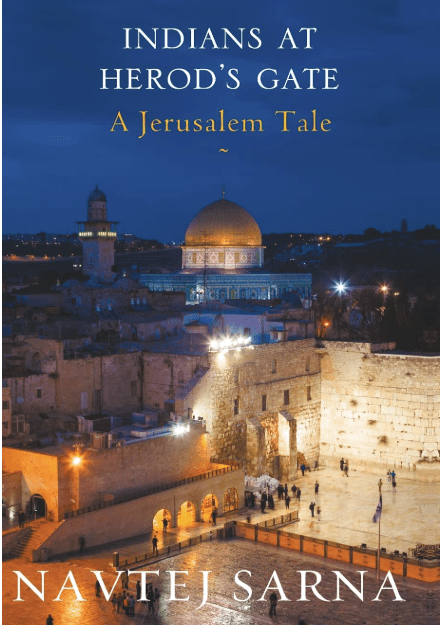
What is perhaps less widely known is that Farid is believed to have travelled to Jerusalem around 1200 CE — not long after Saladin had recaptured the city from the Crusaders. A small shrine there, still accessible, is said to mark his presence. Navtej Sarna, a former Indian Ambassador to Israel (2008–2012), writes about this connection in his book Indians at Herod’s Gate: A Jerusalem Tale (Rupa, 2014) — a quiet, often-overlooked thread linking the Indian subcontinent to the Holy City over eight centuries. Read further: Indians Herods Gate and Jerusalem’s 800-year-old Indian hospice
After the lecture, our group of three — drawn from different faith backgrounds — sat together for langar, the community meal served at Gurdwaras. There is something deceptively simple and profoundly radical about langar. The act of sitting together, regardless of religion, caste, or status, and eating the same food dissolves hierarchies that societies expend enormous energy to maintain. It is a challenge that remains genuinely difficult in parts of India, where communal and caste taboos still govern not just what people eat, but with whom and where. In that shared meal, something ancient and necessary was quietly affirmed.
The Descent into Dystopia
The following day, I made the mistake of listening to a News Agents podcast: Why MAGA Hates Britain. I say mistake not because the journalism was poor — it wasn’t — but because the content was genuinely dispiriting. The podcast drew on interviews conducted at the Conservative Political Action Conference (CPAC), where the blatant hostility toward Muslims was on full display. What struck me was not just the bigotry itself, but the absolute self-assurance with which it was expressed — the sense of a parallel world, hermetically sealed from doubt or nuance, in which hatred had been fully normalised and even celebrated.
It is worth noting that CPAC is not a fringe gathering. It draws senior politicians, media figures, and policymakers, including Britain’s shortest-serving prime minister, Liz Truss, who has found the political validation that eluded her at home in MAGA circles. When hatred is mainstreamed in those spaces, it travels outward with authority and legitimacy. The podcast was a sobering record of that.
A Fragment from 1947
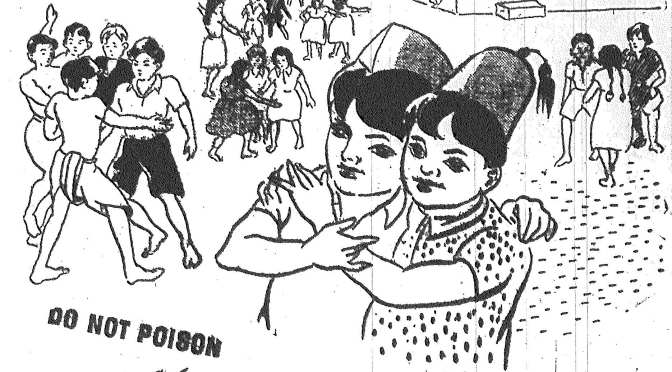
Turning away in revulsion, I returned to my own research — a space in which I can explore the ideas that still feel worth holding onto. Almost serendipitously, I came across an advertisement from September 1947 in the Bombay Chronicle, published just weeks after Partition had carved the subcontinent into India and Pakistan, leaving 1-2 million dead and over 15 million people displaced. The advert’s message was striking in its urgency and its pathos: the violence and bloodshed that had torn communities apart must now be put aside. The “children of God” must be taught how to live together rather than being “poisoned” by the hatred that had consumed the preceding years.
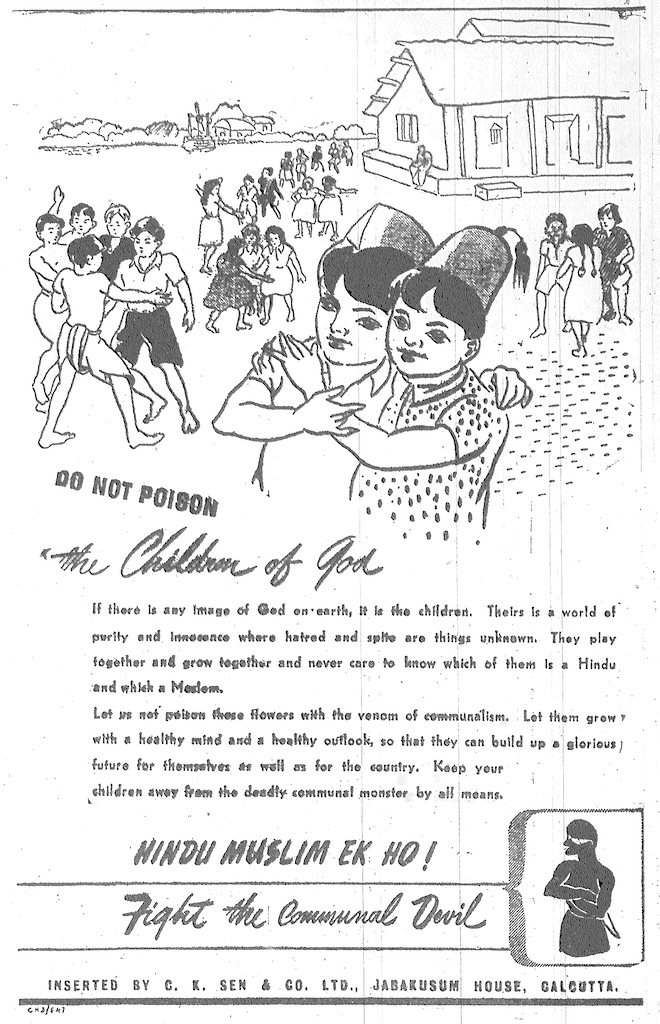
Bombay Chronicle 26 September 1947. Photo taken by Pippa Virdee from NMML, Delhi.
What moved me most was the implicit admission within that language: that society had already been poisoned, and that the antidote required active, deliberate effort. It was a call not to innocence but to conscious repair.
The Distance That Grows
That advertisement also stirred a more melancholic reflection. There was a time, however brief and fragile, when greater openness between India and Pakistan seemed imaginable — when the possibility of travel, communication, and even reconciliation had not yet been foreclosed. The Wagah-Attari border crossing, for decades a symbol of that flickering possibility, remains closed following the Pahalgam attack of April 2025. Yet that closure is not merely a consequence of one incident. It reflects a deeper estrangement — one that has steadily worsened since the BJP came to power in 2014, as the distance between the two countries has grown not just diplomatically but also culturally, emotionally, and imaginatively.
When borders close, it is not only people who are separated. It is stories, families, histories, and the ordinary human exchanges that quietly resist the narratives of enmity.
On Connecting the Moments
What struck me, looking back across these three days, was how tightly these experiences were bound together — the lecture on a 13th-century Sufi poet, the langar table, the CPAC recordings, the 1947 advertisement, the closed border. They form a kind of map of where we are and where we might yet go.
We are constantly surrounded by voices that insist conflict is natural, that difference is danger, that the world is a zero-sum competition between faiths and peoples. But Baba Farid’s couplets, preserved across centuries and across religious traditions, suggest otherwise. The langar meal, served to strangers, suggests otherwise. Even that desperate 1947 advertisement, placed in the shadow of catastrophe, suggests otherwise — because in the middle of all that devastation, they still believed it was worth trying to preserve unity over enmity.
Conflict has never resolved anything. It only plants the seeds for the next generation’s hatred. What endures are the moments when we chose differently — when we visited the Other, and sat with them, and ate.
It remains up to us to remember our neighbours — not as symbols, threats, or abstractions, but as people, first and foremost. This message is a recurring theme in advertising campaigns that, while not so distant in time, feel increasingly remote in spirit. The YouTube clips, from just a decade ago, speak a language of interfaith harmony that the intervening years — and the political choices made within them — have done their best to drown out. That they once existed, and were made for mass audiences, is itself worth remembering.
Hindu Muslim Unity: Best Creative and Inspirational Indian Ads | Part 1 | Creative Ads
Hindu Muslim Unity: Best Creative and Inspirational Indian Ads | Part 2 | Creative Ads
 BAGICHA