
Tag Archives: Punjabi

Embracing Nostalgia Through Music and Gardening

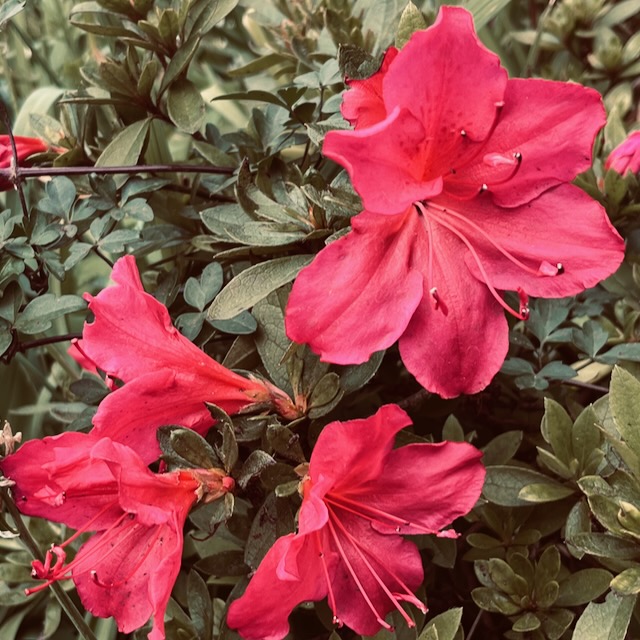
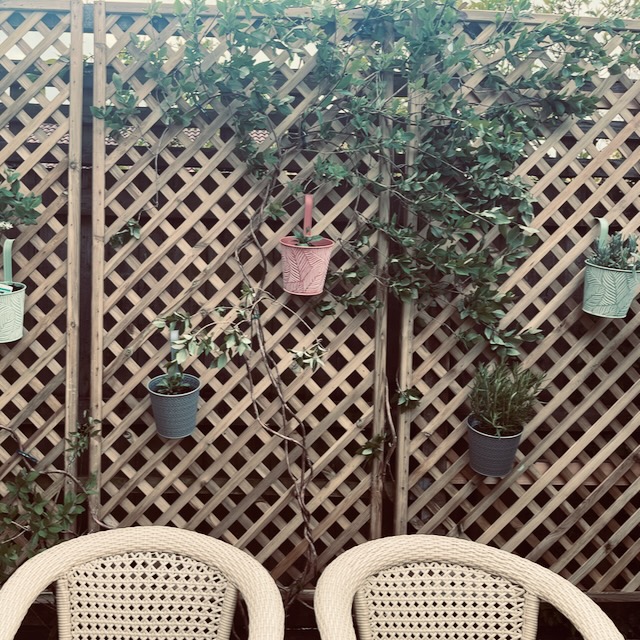
A long weekend spent revamping the garden has left me feeling quietly thankful—grateful not only for the beauty of blooming flowers but the often-overlooked moments that bring small moments of joy to us. These are the everyday miracles that ground us, offering us gentle reminders to be present, and to be grateful for the life and family that support us and get us through difficult times. They act as pillars, always there in the background but without whom we could not exist.

In August 2016, I began this blog as a space to document my experiences during a visiting fellowship in Lahore, as well as to share other events and observations that captured my interest along the way. This has grown into a broader canvas—one where I could share photographs, music, and reflections, often framed with a touch of historical context. Over time, the blog has become not just a repository of memories, but also a means of connecting with others.

When I first considered what to name this space, I wanted something that could symbolise both personal growth and a diversity of ideas. I eventually chose Bagicha—the Urdu and Punjabi word for “garden.” The name felt right, evoking a place where different thoughts, emotions, and inspirations could coexist and bloom. Like any real garden, this blog has required time and care, and though life’s demands have occasionally interrupted the rhythm of posting, I’ve done my best to return and tend to it regularly.

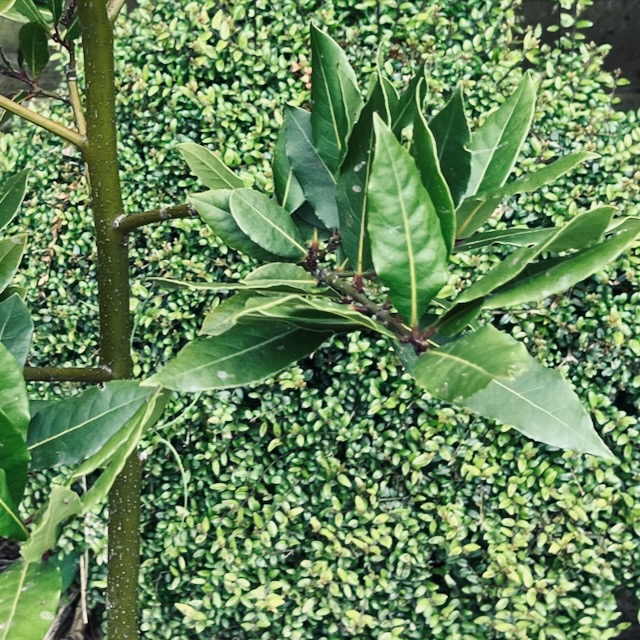
This past weekend, I turned my attention to my actual garden, which had begun to show signs of wear and neglect. I found myself hoping that this act of renewal would also translate into a more productivity for my Blogging and provide inspiration for other writing projects over the coming summer.

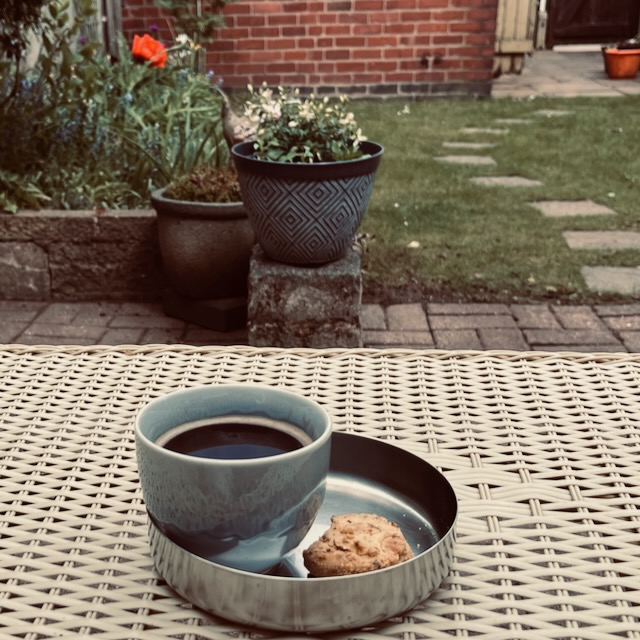
After the work was completed, I treated myself to a quiet moment with a cup of coffee and a Karachi Bakery biscuit, enjoying the fruits of my labour over the long May Bank Holiday weekend. As I unwound, scrolling casually through Instagram, I stumbled upon a deeply nostalgic song: Mai Tenu Yaad Aawan Ga (You Will Remember Me), sung by the legendary Surinder Kaur and Asa Singh Mastana. This version, recorded in Toronto in 1980, is hauntingly melodic—its rich tones and heartfelt lyrics evoke a bygone era.

Surinder Kaur, often hailed as the “Nightingale of Punjab,” remains one of the most celebrated folk singers in South Asian musical history. Her voice, both powerful and tender, became a defining sound of Punjabi folk music in the 20th century. Asa Singh Mastana, her equally iconic counterpart, was known not only for his duets with Kaur but also for his contributions to Bollywood as a playback singer. Both Kaur (born 1929 in Lahore) and Mastana (born 1926 in Sheikhupura) belonged to pre-Partition era and migrated to Delhi after 1947. They continued the musical journeys that had begun in Lahore and helped shape the soundscape of post-Partition Punjab.

Their music carries the weight of memory, migration, and resilience. Listening to them, one feels transported—not just to another time, but to a shared emotional and cultural landscape that continues to resonate deeply.

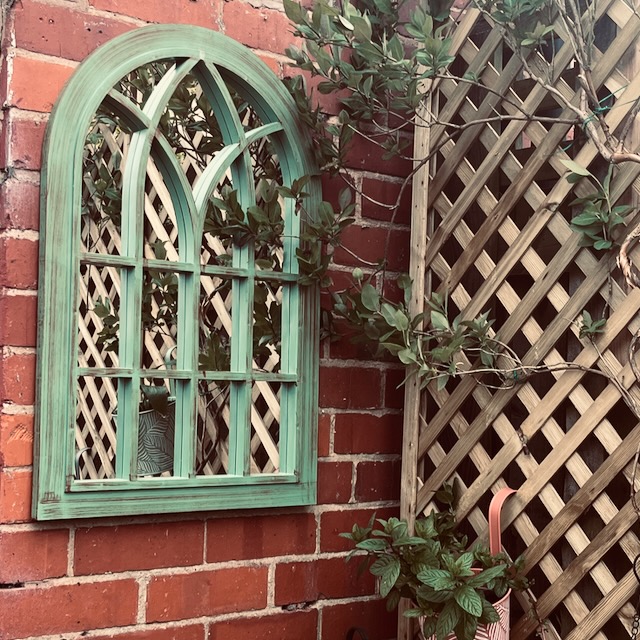
Listen to this timeless song and linger for a while in its emotional undertones. I’ve also included some photographs to accompany the mood—a small attempt to honour the spirit of nostalgia and historical connections that Bagicha has tried to capture.

Notes from Lagos (Portugal): from Punjab to Lagos part 2

On a recent trip to Lagos, Portugal, I was struck by the presence of Indians, particularly young students, some were perhaps tourists and migrants who appeared to be seeking opportunities, others looked more settled and part of the local community.

The Indian diaspora in Portugal is diverse and can be broadly divided into three distinct regional groups:

  1. Gujaratis – The largest group, encompassing both Hindus and Muslims, reflects the deep-rooted trade and migration links between Gujarat and Portugal.
  2. Goans – Predominantly Christian, this group traces its heritage to Portugal’s colonial past, when Goa was under Portuguese rule for over four centuries. This historical connection has shaped their language, culture, and religious practices.
  3. Punjabis – Predominantly Sikhs, this community has migrated more recently, seeking opportunities in industries like hospitality and retail.

While walking around the streets of Lagos came alive with a rich tapestry of languages, including Gujarati, Punjabi, Hindi, Portuguese, and English, mingling seamlessly. This linguistic and cultural interplay highlighted the adaptability and integration of these communities within the Portuguese society.

Historical Roots and Migration Patterns

Historically, Portugal’s connection to India dates to the early 16th century when Vasco da Gama’s expeditions established trade and colonial links. [Read Lagos to Goa Part 1] Goa became a Portuguese territory in 1510, fostering a flow of people, goods, and cultural exchange between the two regions. Even after Goa’s annexation by India in 1961, ties between the two nations have persisted, enabling migration and cross-cultural connections.

Kristina Myrvold notes that significant Indian migration to Portugal began in the 1970s after the collapse of the Portuguese Empire and the 1974 democratic revolution. During this period, many Portuguese-speaking Hindus and Christians from former colonies like Mozambique and Goa migrated to Portugal. Later, in the 1990s, Portugal’s entry into the European Union and Schengen Zone made it an attractive destination for immigrants from India, including those with no prior cultural or linguistic ties to the country.

The Growing Sikh Community

Among the broader Indian diaspora, the growing number of Punjabi Sikhs particularly stood out during my visit. Many Indian restaurants appeared to be run by Sikhs, though ownership could belong to others. Myrvold explains that Sikh migration to Portugal began in the early 1990s, coinciding with a construction boom that created a high demand for labour. Many Sikhs initially worked in construction and agriculture, industries that required significant manpower. Over time, they expanded into other sectors, opening shops and restaurants, particularly in hospitality and retail.

Portugal’s relatively relaxed immigration policies and labour shortages during that period encouraged migration. Many Sikhs used Portugal as a stepping stone to secure residency or citizenship, drawn by the affordable cost of living and accessible legal pathways. This trend has driven the growth of the Sikh community in Portugal, which was estimated at 5,000 in 2007 and doubled to 10,000 by 2010. By 2024, the Indian Embassy in Portugal estimated the Sikh population at 35,000, highlighting their increasing settlement in the country.

Settlement and Challenges

Many Sikhs initially arrived in Portugal via other European countries, attracted by Portugal’s relatively lower cost of living and accessible legal pathways to residency and citizenship. Geographically, the Sikh community is spread across Portugal, with significant populations in major cities such as Lisbon and Porto, as well as in Albufeira and other towns along the Algarve. These regions have not only offered economic opportunities but also served as hubs for community life, where Sikhs have built places of worship, such as gurdwaras, and organized cultural events to preserve their traditions and strengthen community bonds.

The Sikhs community in Portugal is relatively new compared to other Indian groups with longer-established connections with the country. While travelling from Lagos to Faro, I had the chance to speak with a Sikh taxi driver who had been living in Albufeira for over 10 years. Despite the initial linguistic and cultural challenges, according to the taxi driver, the quality of life is much better in Portugal. They maintain their links with family back home in Jullundur but work and home is here.

The work is also seasonal and dependent on tourism, the summer being peak time to work long hours and earn double or triple the earnings to compensate for the winter periods when tourism drops. Looking into the future with rising living costs and increasing restrictions on settlement according to the taxi driver, it will make be harder for future migrants to establish themselves in Portugal.

Sources

Kristina Myrvold, ‘Sikhs in Portugal’ Religious Studies Commentaries, 11 August 2012. https://religionsvetenskapligakommentarer.blogspot.com/2012/08/sikherna-i-portugal.html

Inês Lourenco, From Goans to Gujaratis : a study of the Indian community in Portugal, Migration Policy Centre, CARIM-India Research Report, 2013/01 – https://cadmus.eui.eu/handle/1814/29463

Jennifer McGarrigle, and Eduardo Ascensão. “Emplaced mobilities: Lisbon as a translocality in the migration journeys of Punjabi Sikhs to Europe.” Journal of Ethnic and Migration Studies 44, no. 5 (2018): 809-828.

Pamila Gupta, “The disquieting of history: Portuguese (De) Colonization and Goan migration in the Indian Ocean.” Journal of Asian and African Studies 44, no. 1 (2009): 19-47.

Remembering Partition in the Punjab – podcast

Earlier in the summer I recorded a podcast with Realms of Memory. There are two episodes for those interested in understanding more about the history of Partition, especially how it impacted the Punjab. The talk was based on my book, ‘From the Ashes of 1947: Reimagining Partition’ published by Cambridge University Press (2018). In the podcast I also discuss some of the recent changes that have taken place in the study in Partition.

You can listen to the podcast via most streaming sites, or via Realms of Memory

Remembering Partition in the Punjab: Part 1

Remembering Partition in the Punjab: Part 2

Mein Tenu Phir Milangi – I will meet you yet again by Amrita Pritam

Amrita Pritam’s poem recited by Gulzar
Main Tenu Fir Milaan Gi
Kithey? Kis Tarah? Pata Nai
Shayad Terey Takhayul Di Chinag Ban Ke
Terey Canvas Tey Utraan Gi
Ya Khowrey Terey Canvas Dey Utey
Ikk Rahasmayi Lakeer Ban Ke
Khamosh Tenu Tak Di Rawaan Gi

I will meet you yet again
How and where? I know not.
Perhaps I will become a
figment of your imagination
and maybe, spreading myself
in a mysterious line
on your canvas,
I will keep gazing at you.

Yaa Khowrey Sooraj Di Loo Ban Ke
Terey Rangaan Wich Ghulaan Gi
Yaa Rangaan Diyan Bahwaan Wich Baith Ke
Terey Canvas Nuu Walaan Gi
Pata Nai Kiss Tarah? Kithey?
Par Tenu Zaroor Milaan Gi

Perhaps I will become a ray
of sunshine, to be
embraced by your colours.
I will paint myself on your canvas
I know not how and where –
but I will meet you for sure.

Yaa Khowrey Ikk Chashma Bani Howaan Gi
Tey Jeevan Jharneyaan Da Paani Udd-da
Main Paani Diyaan Boondaan
Terey Pindey Tey Malaan Gi
Tey Ikk Thandak Jahi Ban Ke
Teri Chaati Dey Naal Lagaan Gi
Main Hor Kujh Nai Jaandi
Par Aena Jaandi
Ke Waqt Jo Vii Karey Ga
Aey Janam Mairey Naal Turey Ga

Maybe I will turn into a spring,
and rub the foaming
drops of water on your body,
and rest my coolness on
your burning chest.
I know nothing else
but that this life
will walk along with me.

Aey Jism Mukda Hai
Tay Sab Kujh Muk Jaanda
Par Chaityaan Dey Dhaagey
Kaainaati Kana Dey Hundey
Main Onhaan Kana Nuu Chunaan Gi
Dhaageyaan Nuu Walaan Gi
Tey Tenu Main Fair Milaan Gi…

When the body perishes,
all perishes;
but the threads of memory
are woven with enduring specks.
I will pick these particles,
weave the threads,
and I will meet you yet again.

Poetry in Punjabi by Amrita Pritam
Translation in English by Nirupama Dutt

Read further: Mein Tenu Phir Milangi: Remembering Amrita Pritam through Her Life, Love, and Works by Kartikeya Shankar. The Times of India, 17 July 2021

Top posts in 2022

As I prepare to wind down for this year, here are 10 of the most popular posts of 2022.

  1. Ajj Aakhaan Waris Shah nu by Amrita Pritam
  2. How the photographs of Margaret Bourke-White became the images of partition
  3. 70 years ago extracts of the Sunderlal report Hyderabad, 1948
  4. The Status of Punjabi after 1947
  5. Sahir Ludhianvi and the anguish of Nehruvian India
  6. Two villages, two nations: Ganda Singh Wala-Hussainiwala
  7. Ludhiana’s Clock Tower (Ghanta Ghar)
  8. The ‘Jingle Trucks’ and the emergence of Truck Art
  9. 1881: the first full census in British India
  10. 23 Sir Ganga Ram mansion – the house of Amrita Sher-Gil

Punjabi Khoj Garh (Punjabi Research and Archive).

Punjabi Khoj Garh, © Pippa Virdee, 2014.

Punjabi Khoj Garh is a centre of research, publication and advocacy on the history, culture, literature, music, and art of the Punjab. It was established on 10 March 2001 and Iqbal Qaiser, an independent scholar, has tirelessly built up this institute over the past 20 years. It is maintained by the Punjabi Khoj Garh Trust and individuals who work voluntarily to maintain and upkeep the Centre. They welcome all sorts of researchers with facilities and materials for their work on Punjab.

For further details contact: Iqbal Qaiser, Punjabi Khoj Garh, Lalliyani (Musfafar Abad), District Kasur, Pakistan. Follow them on Facebook.

Read more about PKG: ‘House of Readers’ by Altaf Husain Asad, The News, 23 July, 2017

Live a rebellious life like Amrita Pritam — Maleccha

In her autobiography ਰਸੀਦੀ ਟਿਕਟ, Amrita Pritam, the poet laureate of Punjabi shares an anecdote.It was the time when Amrita left everything behind, even her love for Sahir Ludhianvi. She joined Imroz in Mumbai, they lived a very economical life, working hard and staying within one’s little means.Gurbaksh Singh Preetlari, the aged patriarch of Punjabi […]

Live a rebellious life like Amrita Pritam — Maleccha

The Punjab Peasant: past & present literature

The Trolley Times has been launched recently by a group of four youngsters at the Singhu border. The idea was conceived by Ajaypal Natt from Mansa, along with Surmeet Mavi, Gurdeep Singh and Narinder Bhinder. The YouTube interview provides an insight into how the idea was developed, its purpose of reaching out and communicating with people who do not have smart phones and are not connected to social media. Moreover, telecom signals around protest areas are typically suppressed to slow down exchanges and mainstream electronic/print media in India is better known as “godi media”, not just unsympathetic to the thousands currently protesting against the farmers laws brought in September but simply the government’s voice. The first issue of the Trolley Times “carried Bhagat Singh’s quote on struggle; photographs from the centre of the struggle; story of a woman farmer, Gurmail Kaur, who died during the protest; some works of art and the lead article gave the message of unity, struggle and victory. ” The Tribune

The list below provides some references for reading further about the Punjab peasant in a historical context, focusing on some of its radical moments. The region was one of the last to be annexed by the British in the subcontinent in 1849, and subsequently underwent phenomenal transformation with their development of the canal colonies from 1885 onward. Punjab was divided and sub-divided following the Partition of 1947 but agriculture has remained at the core of Punjabi culture and identity.

  1. Ali, Imran. The Punjab under imperialism, 1885-1947. Vol. 923. Princeton University Press, 2014.
  2. Barrier, Norman G. “The formulation and enactment of the Punjab alienation of land bill.” The Indian Economic & Social History Review 2, no. 2 (1965): 145-165.
  3. Bhardwaj, Ajay. Filmmaker and Artist – http://ajaybhardwaj.in/films/
  4. Chattha, Tohid Ahmad, Abdul Qadir Mushtaq, Sumera Safdar, and Khizar Jawad. “Historical Perspective of Kirti Kisan Party and its Politics in colonial Punjab.” Journal of the Research Society of Pakistan 55, no. 1 (2018).
  5. Chopra, Radhika. Militant and Migrant: The Politics and Social History of Punjab. Routledge, 2012.
  6. Darling, Malcolm Lyall. Punjab peasant in prosperity and debt. Humphrey Milford, London, 1925.
  7. Deol, Amrit. “Workers and Peasants Unite: The Formation of Kirti and the Kirti-Kisan Party and the Lasting Legacy of the Ghadar Movement.” Journal of Sikh and Punjab Studies, 26, no. 1&2: 250.
  8. Gajrani, S. “Role of Kirti Kisan Party in Agrarian Movement (1927-35).” Constitutional Schemes and Political Development in India: Towards Transfer of Power 2 (1994): 463.
  9. Gill, Sucha Singh. “The farmers’ movement and agrarian change in the green revolution belt of North‐West India.” The Journal of Peasant Studies 21, no. 3-4 (1994): 195-211.
  10. Highfield, Jonathan. “Finding the voice of the peasant: Agriculture, neocolonialism and Mulk Raj Anand’s Punjab Trilogy’.” Journal on Interdisciplinary Studies in Humanities 1, no. 2 (2009): 115-133.
  11. Islam, M. Mufakharul. “The Punjab land alienation act and the professional moneylenders.” Modern Asian Studies 29, no. 2 (1995): 271-291.
  12. Jodhka, Surinder S. “Beyond ‘crises’: rethinking contemporary Punjab agriculture.” Economic and Political Weekly (2006): 1530-1537.
  13. Josh, Sohan Singh. Baba Sohan Singh Bhakna: Life of the Founder of the Ghadar Party. New Delhi: People’s Publishing House, 1970.
  14. Kalra, Virinder S., and Shalini Sharma, eds. State of Subversion: Radical Politics in Punjab in the 20th Century. Routledge, Taylor & Francis Group, 2017.
  15. Kalra, Virinder S., and Waqas M. Butt. “‘In one hand a pen in the other a gun’: Punjabi language radicalism in Punjab, Pakistan.” South Asian History and Culture 4, no. 4 (2013): 538-553.
  16. Kessinger, Tom G. Vilyatpur, 1848-1968: Social and Economic Change in a North Indian Village. Vol. 19. University of California Press, 1974.
  17. Mukherjee, Mridula. “Some Aspects of Agrarian Structure of Punjab 1925-47.” Economic and Political Weekly (1980): A46-A58.
  18. Mukherjee, Mridula. “Peasant Protest in Punjab: Forms of Struggle and Mobilization.” In Proceedings of the Indian History Congress, vol. 59, pp. 812-823. Indian History Congress, 1998.
  19. Mukherjee, Mridula. Colonizing agriculture: the myth of Punjab exceptionalism. Sage, 2005. 
  20. Raza, Ali. “Provincializing the International: Communist Print Worlds in Colonial India.” In History Workshop Journal, vol. 89, pp. 140-153. Oxford Academic, 2020.
  21. Sharma, Shalini. Radical Politics in Colonial Punjab: Governance and Sedition. Routledge, 2009.
  22. Singh, Nazer. “The Anti-British Movements from Gadar Lehar to Kirti Kisan Lehar.” PhD Diss., Punjabi University, Patiala, 2011.
  23. Talbot, Ian. “The Punjab Under Colonialism: Order and Transformation in British India.” Journal of Punjab Studies 14, no. 1 (2011): 4.
  24. Tandon, Prakash. Punjabi Saga:1857-2000. Rupa, 2000.

This is not an exhaustive list, so please do share any other references in the comments.