In the literal sense, jugni means female firefly, which is derived from jugnu, meaning firefly. Metaphorically though jugni means much more. Jugni has often been used by singers and writers to share stories, traveling through time and space, to address societal grievances, political messages. She is spiritual and revolutionary. She is able transcend time and transform herself in every generation. But where did she originate from? According to Aashish Kochhar one possibility is:
No…in 1908, when the British were celebrating the golden jubilee of the British Raj, Bishna and Manda, being illiterate couldn’t pronounce ‘Jubilee’, and called it ‘Jugni’ instead. Or so the story goes. That’s how ‘Jugni’ found its way into the world of Punjabi folk music.
The modern version of jugni though is associated with Alam Lohar, the Pakistani Punjabi singer. Born in 1928 in Gujrat to a family of Blacksmiths (Lohar), he started reciting/singing Sufiana Kalaam, a collection of Punjabi stories and poetry from a young age. His son Arif Lohar continued in his footsteps. Below are both versions of Jugni by Alam and Arif Lohar, both spiritual and popular, and both connecting with different generations.
“Ae way Allah waliyan di Jugni Ji

Ae way nabi pak di Jugni Ji

Ae way Maula Ali wali Jugni Ji

Ae way mere peer di Jugni Ji

Ae way saaray saba di Jugni Ji”

(Jugni is the spirit of God

Jugni is the spirit of the Holy Prophet

Jugni is the spirit of Ali and his followers

Jugni is the spirit of my saints

She is the spirit of all His words)
In 2004 the Indian Punjabi singer, Rabbi Shergil released began to blend the Punjabi folk tradition with acoustic rock, offering a new unique style.
In 2008, jugni was reinvented for Hindi film Oye Lucky Lucky Oye. This is one the first modern films to popularise/depict jugni. Others include: Tanu Weds Manu (2011), Saheb Biwi Aur Gangster (2011), Cocktail (2012), Saheb, Biwi Aur Gangster Returns (2013), Queen (2013), Kaatru Veliyidai, (2017).
In 2011 Jugni, a Pakistani Punjabi-language film, was released. The film revolves around the main character of Jugni, and brought folk singer Arif Lohar back on the silver screen after eleven years.
In 2013 the Nooran Sisters performed a powerful rendition at the Nakodar Mela. Sultana Nooran (b. 1992) and Jyoti Nooran (b. 1994) are from Jalandhar and born to family of Sufi musicians. They gained wider popularity through contributions to Bollywood music, craving out a niche space for their strong and distinct style.
One of the latest incarnations is by global Punjabi singer Dailjit Dosanjh featuring Tanzanian artist, Diamond Platnumz, who has a big following in East Africa. The 2022 collaboration is interesting and strategic given the South Asian connections with East Africa. The music/lyrics present a very seamless fusion of Punjabi and Swahili.
There are many other versions, and these are just some of the different incarnations of Jugni in Punjabi popular culture. Read further:
Hasnain Kazmi, Syed Shabihul. “Jugni, dhola and mahiya: Comparing three genres of punjabi folklore.” Pakistan Perspectives 25, no. 2 (2020).
AMIR, MARIA. “Chapter Twelve Generation Jugni: Mapping The Influence Of Folklore.” A Cartographic Journey of Race, Gender and Power: Global Identity 149 (2021).
Parmar, Prabhjot, and Amandeep Kaur. “2 Kisan Protests in Punjab 1907–2021.” Agrarian Reform and Farmer Resistance in Punjab: Mobilization and Resilience (2022).
I was preparing for a forthcoming History conference in Lyallpur when I started browsing and jumped from one rabbit hole to another. Sometimes research is like that, you need to explore and get lost in the lanes of history to find something. I did get the inspiration I wanted but I also ended up with more information than I needed. Amongst all of this is a list of some well-known people who were born in Ludhiana or Lyallpur. I was more interested in the direct links between these cities and the people that migrated between these two, as my I have a long-standing research and personal interest in both cities. However, those links were not always present, but it is still interesting to see the kind of people who emerged from these localities and migrated following the Partition.
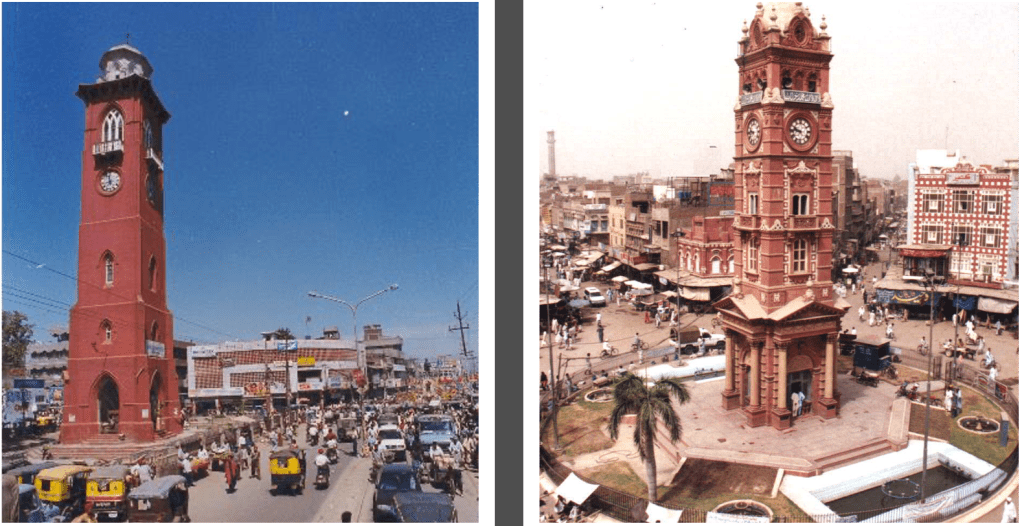
Ludhiana and Lyallpur were in fact only small towns before Partition, and interestingly both have iconic colonial clock towers in the town centre; both are important industrial textile hubs in the region; both had 62% ‘other’ populations prior to 1947 (according to the 1941 census, 62% Muslims lived in Ludhiana and 62% Sikhs/Hindus in Lyallpur); and finally, both function as important diasporic cities in contemporary Punjab(s).
Typically I tried to find women, but sadly the list of people is mostly male bar two! I hope to continue adding to the list as I find more people or please leave a comment if you know any other people with Ludhiana-Lyallpur links.
Note: the source for the information below is mainly through browsing and do not claim it as my own work. I have only selected a people I was interested in and that were born before 1947 and migrated following the Partition.
From Ludhiana…
Abu Anees Muhammad Barkat Ali Ludhianvi (1911 – 1997) was a Muslim Sufi who belonged to the Qadiri spiritual order. He was the founder of the non-political, non-profit, religious organisation, Dar-ul-Ehsan. Abu Anees’s followers spread all around the world and especially in Pakistan. He was born in Ludhiana where his father was a landlord.
Agha Ali Abbas Qizilbash also known as Agha Talish, (1923 –1998) was a Pakistani actor who made his debut in 1947 and was mostly known and recognized in Pakistan for playing character actor or villain roles. Talish was honoured by a Pride of Performance award, by the Government of Pakistan in 1989. Talish was born in Ludhiana, and his breakthrough film in Pakistan was film producer Saifuddin Saif’s Saat Lakh (1957) where his on-screen performance for this popular hit song was widely admired, Yaaro Mujhe Maaf Rakho Mein Nashe Mein Hoon.
Ajaz Anwar (1946-) is a Pakistani painter. He was a gold medalist at Punjab University, and he completed his M.A. in Fine Arts from Punjab University. Later, he went to teach at National College of Arts Lahore. His watercolour paintings show the grandeur of the old buildings and the cultural life in Lahore. Born in Ludhiana in 1946, his father was a cartoonist who apparently had stirred his passion from childhood and from whom he drew his inspiration.
Anwar Ali (1922-2004) was a Pakistani Editorial Newspaper Cartoonist in Pakistan Times based in Lahore. Anwar Ali was the creator of famous character Nanna, was the first newspaper cartoonist associated with The Pakistan Times. He was born in Ludhiana, where he spent his childhood. He did his BA from Government College Ludhiana.
Chaudhary Abdul Hayee Gujjar (1921 – 1980), popularly known by his pen name Sahir Ludhianvi, was an Indian poet who wrote primarily in Urdu in addition to Hindi. He is regarded as one of the greatest film lyricists and poets of twentieth century India. Sahir was born in Karimpura, Ludhiana to a Punjabi Muslim Gujjar family.
Habib-ur-Rehman Ludhianvi (1892 – 1956) was one of the founders of Majlis-e-Ahrar-e-Islam. He belonged to an Arain (tribe) and was a direct lineal descendant of Shah Abdul Qadir Ludhianvi, the freedom fighter against British Colonial rule during the Indian Rebellion of 1857. He chose to stay back in Ludhiana to continue representing the thousands of Muslims still remaining there after the partition in August 1947. The ancestral masjid in Field Ganj still exists today.
Hameed Akhtar (1923 – 2011), was a newspaper columnist, writer, journalist and the secretary-general of the Progressive Writers Association in Pakistan. He was also the father of TV actresses Saba Hameed, Huma Hameed and Lalarukh Hameed. He finished his basic education in Ludhiana and was a childhood friend of renowned poets Sahir Ludhianvi and Ibn-e-Insha
Munawar Sultana (1924- 1995) was born in Ludhiana and was a Pakistani radio and film singer. She is known for vocalizing first ever hit Lollywood songs like, “Mainu Rab Di Soun Tere Naal Piyar Ho Gya” (Film: Pheray 1949), “Wastae Rab Da Tu Jaanvi We Kabootra” (Film: Dulla Bhatti 1956),and “Ae Qaid-e-Azam, Tera Ehsan Hay, Ehsan” (Film: Bedari 1957).
Saadat Hasan Manto (1912 – 1955) was a Pakistani writer, playwright and author who was active in British India and later, after the 1947 partition of India, in Pakistan. Saadat Hassan Manto was born in Paproudi village of Samrala, in Ludhiana district to a Muslim family of barristers. Ethnically the family were Kashmiri.
From Lyallpur
Grahanandan Nandy Singh (1926 – 2014) was an Indian field hockey player who won two gold medals, at the 1948 and 1952 Summer Olympics. There is a documentary film on the team by Bani Singh titled, ‘Taangh/Longing’. Singh began playing hockey while studying at the Government College in Lahore, serving as captain of their hockey team in 1945 and 1946. After the Partition, he moved to Calcutta and played for Bengal when he was selected to the 1948 Indian Olympic team.
Harnam Singh Rawail (1921 – 2004), often credited as H. S. Rawail, was an Indian filmmaker. He debuted as a director with the 1940 Bollywood film Dorangia Daku and is best known for romantic films like Mere Mehboob (1963), Sunghursh (1968), MehboobKi Mehndi (1971) and Laila Majnu (1976). Rawail was born in Lyallpur and moved to Mumbai to become a filmmaker.
Inderjeet Singh (1926 –2023), also known as Imroz, was an Indian visual artist and poet. He was the partner of the poet, novelist, and writer Amrita Pritam, and they lived together until Amrita’s death in 2005. Inderjeet Singh was born in Chak number 36, Lyallpur.
Jagjit Singh Lyallpuri (1917 –2013) was an Indian politician. He was the oldest surviving member of the founding Central Committee of the Communist Party of India (Marxist). Prior to the Partition of India, Lyallpuri’s family owned roughly 150–180 acres in Lyallpur. The family moved to Ludhiana following the Partition.
Jaswant Rai Sharma (1928 –2017), popularly known by his pen name Naqsh Lyallpuri, was an Indian ghazal and Bollywood film lyricist. He is best known for the songs “Rasm-e-Ulfat Ko Nibhayen” (Dil Ki Rahen, 1973), “Ulfat Mein Zamaane Ki” (Call Girl, 1974), “Tumhe Ho Na Ho” (Gharonda, 1977), “Yeh Mulaqaat Ek Bahana Hai ” (Khandaan, 1979), “Pyar Ka Dard Hai” (Dard, 1981), and “Chitthiye Ni Dard Firaaq Vaaliye” (Henna, 1991). He was born in Lyallpur to a Punjabi Brahmin family, where his father was a mechanical engineer.
Lal Chand Yamla Jatt (1910 – 1991) was a noted Indian folk singer in the Punjabi-language. His trademark was his soft strumming of the tumbi and his turban tying style known traditionally as “Turla”. Many consider him to be the pinnacle of the Punjabi music and an artist who arguably laid the foundation of contemporary Punjabi music in India. He was born to Khera Ram and Harnam Kaur in Chak No. 384, Lyallpur. After partition, they relocated to the Jawahar Nagar, Ludhiana.
Prithviraj Kapoor (1906 –1972) was an Indian actor who is also considered to be one of the founding figures of Hindi cinema. He was associated with Indian People’s Theatre Association as one of its founding members and established the Prithvi Theatres in 1944 as a travelling theatre company based in Bombay. He was born in Samundri into a Punjabi Hindu Khatri family. His father, Dewan Basheshwarnath Kapoor, was a police officer in the Indian Imperial Police. His grandfather, Dewan Keshavmal Kapoor, and his great-grandfather, Dewan Murli Mal Kapoor, were Tehsildars in Samundri near Lyallpur.
Romesh Chandra (1919 – 2016) was a leader of the Communist Party of India (CPI). He took part in the Indian independence struggle as student leader of CPI after joining it in 1939. He held various posts within the party. He became president of the World Peace Council in 1977. He was born in Lyallpur and got his degree in Lahore and another one from Cambridge.
S.D. Narang (1918-1986) was born in Lyallpur. He was a director and producer, known for Dilli Ka Thug (1958), Anmol Moti (1969) and Shehnai (1964). He graduated in Biology from Government College, Lahore and did his MBBS from King Medical Collage, Lahore.
Sunder Singh Lyallpuri (1878 – 1969) was a leading Sikh member of the Indian independence movement, a general of the Akali Movement, an educationist, and journalist. Lyallpuri played a key role in the development of the Shiromani Akali Dal, and in the Gurdwara Reform Movement of the early 1920s and also founding member of Central Sikh League.
Teji Harivansh Rai Srivastava Bachchan (1914 – 2007) was an Indian social activist, the wife of Hindi poet Harivansh Rai Bachchan and mother of Bollywood actor Amitabh Bachchan. Teji was Born into a Punjabi Sikh Khatri family in Lyallpur.
Sometime last year I was having dinner at the Punjab restaurant in Covent Garden, considered to the “first and oldest Punjabi, North Indian Restaurant in the UK, serving distinctive homestyle Punjabi cuisine…” It was established by Sardar Gurbachan Singh Maan in 1946, initially in Aldgate, and then shifting to Covent Garden in 1951. Maan came to the UK from Mehsumpur, in the Jalandhar District of Punjab, in what was then British India. The restaurant and café provided the familiar tastes of Punjab to the small number of Indians living in and around 1940s and 1950s London. It has since then become a go to place for many, with queues often forming outside for those hoping to chance a table for the culinary delights offered inside.
The interior is mostly simple and unfussy, but nostalgic pictures cover the wall spaces everywhere in the restaurant. They transport you to a different time and place. Quite often the pictures are of the various royal families of Punjab, whether this is the iconic Ranjit Singh or the Maharaja of Patiala; it doesn’t really matter, they provide the regal, historic and nostalgic backdrop to a bustling Punjabi meeting place in London. In between these opulent people, however, are also everyday images of South Asians and of Punjabis living in the UK.
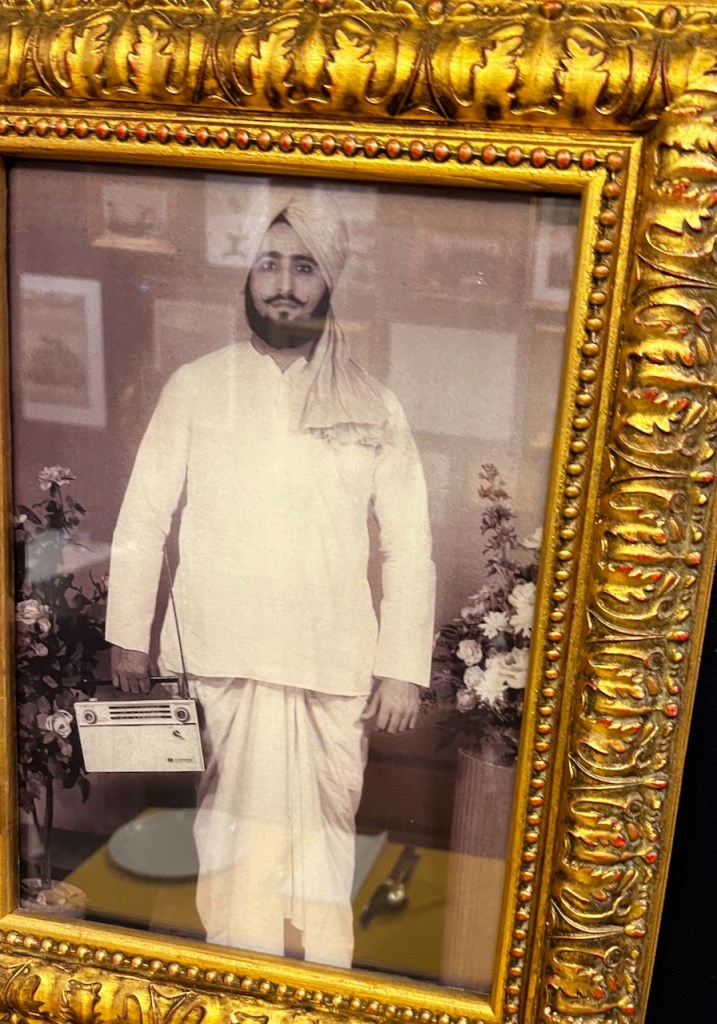
As I sat down, anxiously looking forward to my Punjabi feast, I had already decided I wanted saag, I started to curiously scan the photographs around me. Immediately a picture behind me caught my eye, it looked familiar, very familiar! It was a picture featured in a book that I did many years ago, Coming to Coventry: Stories from the South Asian Pioneers (The Herbert, 2006). The picture was of Gurdail Singh Johal, who had posed for this photograph in a traditional Punjabi kurta and tamba, while holding a transistor radio. It is a beautifully striking image, capturing the need to retain some of the cultural traits of “home”, but adapting and embracing new technologies. Like many other early migrants from Punjab, Johal migrated to Coventry in 1960 from Jalandhar, Punjab.
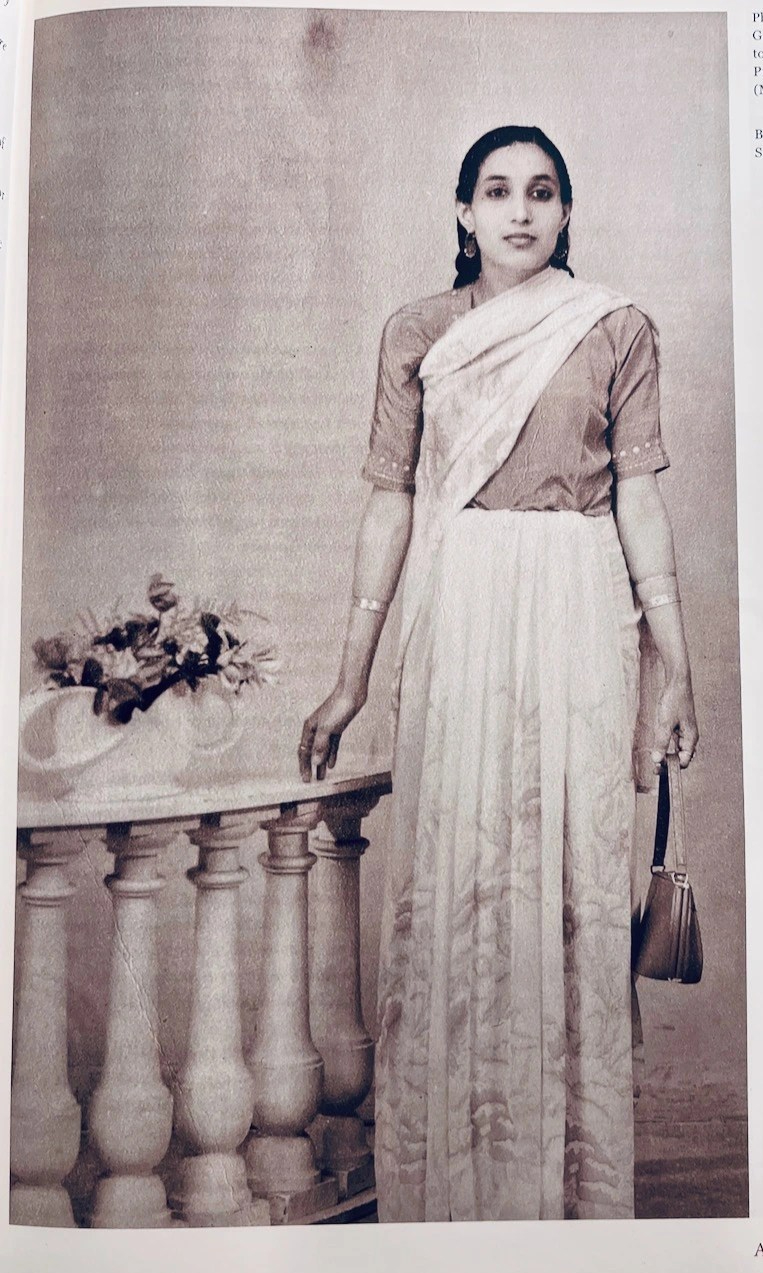
As you turn the page from Johal’s picture on page 17, there is another equally striking image of Gurmeet Kaur on page 19. This one was taken in Studio Taylor on Primrose Hill in 1959. Gurmeet is dressed in a sari, elegantly draped, and accessorised with some simple bangles and small earrings. Like Johal, Gurmeet is also holding something in her hand; the handbag conveys elegance and affluence. Mostly likely it belonged to her rather than being a prop. Both photographs have the ubiquitous floral bouquet in the backdrop, adding texture, colour and framing for the main object. Both images are important in showing how Johal and Kaur seamlessly integrate traditional dress with the modernity around them.
The studio pictures of Johal and Kaur are typical of that era where mass photography was not widespread and ownership of cameras was limited to those with means, and thus the average person could only indulge in the occasional studio photograph. Everyone dressed up and posed for the special occasion; in fact, I have many similar photographs in my own family album. It was an opportunity not only to capture a time and place, but perhaps also to preserve and show how one had progressed and advanced, especially when in a “foreign” land. It was versatile enough to share with family back home as it could be posted, and to show how they had altered their material status and to showcase the fruits of migration. Posing with a material object therefore was not just a prop in a studio picture, it was a statement about them and their class status. For the photographer it enhanced the aesthetic value of the composition, but for the people, it enhanced their status amongst their family and peers.
I hope you have been enjoying the photos and blog pieces from 2023. I hope to more productive in 2024 and look forward to sharing more pieces. Please leave any comments/feedback about the Blog below.
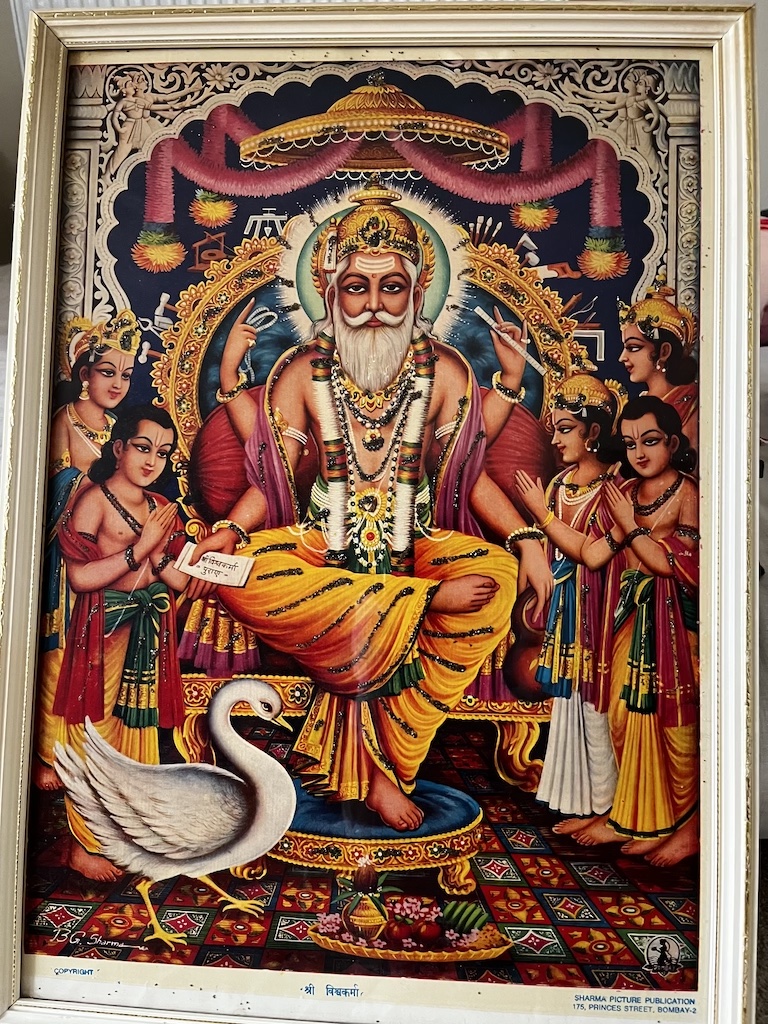
While reading the news from India, the celebrations of Baba Vishwakarma Day caught my imagination. Not least because as I was speaking to my sister earlier on, who had mentioned that the electricity went off due to heavy rains, and the local ‘bijli walla’ won’t come to fix it today. Why I asked? Well because it’s Baba Vishwakarma Day!
The discussion inevitably led us to reminisce about the past and we started talking about Baba Vishwakarma and what it meant to us, especially when growing up. I recall my mother having a photo of Baba Vishwakarma in her prayer room, but the day after Diwali was especially important because this is when we celebrated Vishwakarma Day. She would offer special prayers with prasad (offering) consisting of sweet boondi, that was bought for this purpose. The conversation with my sister prompted me to go and find that picture, which I had kept as a keepsake for many years.
My mother stitched clothes, mostly salwar kameezes, to make ends meet, a talent that she was well-known for in the local community. She was meticulous, everyone who had clothes made by her was aware of her fine cutting and stitching skills, and how well presented her clothes were when she delivered them. I helped when I was able to, but my standards were never high enough! The sewing machine was at the heart of her (our) survival and also how she was able to reinvent herself from a housewife to a single parent with young daughters in a new place.
So why are the Ramgarhia community associated with Vishwakarma? This is because the deity is associated with machinery, technical work, tools and is often described as the God of carpenters, goldsmiths, blacksmiths, and those who work in skilled crafts. The Ramgarhias were originally a community of artisans who worked in these professions, and adapted and upskilled to mechanical work during the 19th century, but the old associations and traditions remain, at least for some.
These stories are now a part of my memory and history, even though the narrative today may be different. My parents belonged to a generation that was more open, less prescriptive and the religious boundaries were more porous. I went to gurdwaras, I took a dip in the Ganges, and we went to Sufi shrines, it was part of the collective identity. Although Punjab witnessed some of the most horrific communal violence in the 1947 Partition, the region is also ironically one of the most pluralistic. For a devout Sikh, my mother was perfectly at ease with the presence of Baba Vishwakarma and indeed Baba Balak Nath in her prayer room, both of whom have a strong presence in Ludhiana amongst the Ramgarhia Sikhs.
So, while doing some research for this post, I came across a PhD from the University of Leeds by Sewa Singh Kalsi (1989). It made interesting reading and I share some key extracts, which provide a glimpse into the history and transformation of the Tarkhan/Ramgarhia Sikhs. Kalsi’s study focused on the city of Leeds (UK) but the extracts below show the emergence and transformation of this small but important community.
“The entry of the Tarkhans into the Sikh Panth can be traced to Bhai Lalo, a carpenter of the village Aimnabad, now in Pakistan. On his first travels (udasi) Guru Nanak stayed with Bhai Lalo where he composed his celebrated hymn enunciating his mission. He addressed this hymn to Bhai Lalo, condemning the mass slaughter by the army of Babur, the first Moghul emperor of India. Commenting on the status of Bhai Lalo within the Sikh Panth, McLeod says that “Even higher in the traditional estimation stands the figure of Bhai Lalo, a carpenter who plays a central part in one of the most popular of all ianam-sakhi (biography) stories about Guru Nanak” (1974:86). Gurdial Singh Reehal in Ramgarhia Itihas (History of the Ramaarhias) (1979) notes the names of seventy two distinguished Punjabi carpenters who worked closely with the Sikh Gurus and made valuable contributions to the development of Sikh tradition. He says that “Bhai Rupa, a prominent Tarkhan Sikh officiated at the wedding of the 10th Guru, Gobind Singh. His descendants known as Bagrian-wale (belonging to the village of Bagrian) were the royal priests of the Sikh rulers of Phulkian states. They administered the royal tilak (coronation ceremony) and officiated on royal weddings” (Reehal 1979:162). It seems plausible that the entry of Tarkhans into the Sikh Panth took place under the leadership of distinguished Tarkhan Sikhs over a long period.” P 104
“Most prominent among the followers of Guru Gobind Singh were two Tarkhan Sikhs, Hardas Singh Bhanwra and his son, Bhagwan Singh, who fought battles under his command. After his death in 1708, both leaders joined forces under Banda Bahadur to lead the Sikh Panth. Commenting on the position of Bhagwan Singh Bhanwra within the Sikh Panth, Gurdial Singh Reehal says that “Bhagwan Singh was appointed governor of Doaba (Jullundar and Hoshiarpur districts) by Banda Singh Bahadur” (1979:209). Jassa Singh Ramgarhia was the eldest son of Bhagwan Singh. He inherited the skills of his father and grandfather and became the leader of Ramgarhia misl (armed band). Jassa Singh built the fort of Ramgarh (this means literally the fort of God) to defend the Golden Temple, Amritsar. McLeod notes that “In 1749, however, he (Jassa Singh) played a critical role in relieving the besieged fort of Ram Rauni outside Amritsar. The fort was subsequently entrusted to his charge, rebuilt and renamed Ramgarh, and it was as governor of the fort that he came to be known as Jassa Singh Ramgarhia” (1974:79). The title of Ramgarhia was bestowed on Jassa Singh by the leaders of the Sikh misls. According to the Dictionary of Punjabi Language (1895), the word “Ramgarrya” means a title of respect applied to a Sikh carpenter. Describing the position held by Jassa Singh among the leaders of Sikh misls, Saberwal in Mobile Men says that “We have noted the part played by Jassa Singh Ramgarhia in the 18th century; though a Tarkhan, by virtue of his military stature he sometimes emerged as a spokesman for all twelve Sikh misls in relation to other centres of power” (1976:99).” P 105
“In order to understand the emergence of Ramgarhia identity, we must locate the processes which have enabled them to move in large numbers from jajmani relationships in the village to urban-industrial entrepreneurship both within India and East Africa. The extension of British rule to the Punjab opened up enormous opportunities for the Punjabi Tarkhans. They channelled their energy and resources into going abroad in search of wealth and towards participating in the urban-industrial growth in India. Their technical skills were harnessed to build railways, canals and administrative towns both in India and East Africa. The Ramgarhias were the majority Sikh group, approximately 90 per cent of the whole Sikh population in East Africa (Bhachu 1985:14; McLeod 1974:87). In East Africa, they established their social and religious institutions like the Ramgarhia associations, Ramgarhia gurdwaras and clubs. By the 1960’s, the Ramgarhias had moved from being skilled artisans, indentured to build the railways, to successful entrepreneurs, middle and high level administrators and technicians. Bhachu argues that “Support structures developed during their stay in East Africa have not only helped manufacture their ‘East Africanness’ but have also aided the perpetuation of their identity as ‘staunch Sikhs’ in the South Asian diaspora, independent of the original country of origin” (1985:13). In East Africa, the Ramgarhias demonstrated a remarkable capacity for maintaining the external symbols of Sikhism, which is a clear indication of their commitment to the Khalsa discipline.” P 107
“The Ramgarhias achieved a noticeable measure of economic success in the urban-industrial sector, both in India and in East Africa. They were able to discard the low status of a village Tarkhan by transforming themselves into wealthy contractors and skilled artisans employed in railway workshops and other industries. In cities they were associated with the Khatri Sikhs, the mercantile group in urban Punjabi society. In the Punjab, the distinctive feature has been the concentration of Ramgarhia Sikhs in particular towns i.e. Phagwara, Kartarpur, Batala, and Goraya. These towns are known for car parts industries, furniture, foundries and agricultural machinery owned by the Ramgarhia Sikhs. This newly achieved economic status was one of the factors which encouraged them to build religious, social and educational institutions belonging to their biradari. In the town of Phagwara, they have built an educational complex which includes a degree college, a teacher training college, a polytechnic, an industrial training institute and several schools.” P 108
And finally, a line from where I take the title of this piece. One of the people interviewed notes: “My spiritual guru is Nanak Dev and my trade guru is Baba Vishvakarma. Many Ramgarhias feel ashamed to be associated with our trade deity.” P 117.
Further references include my own book, in which I discuss the community in relation to the transformation of Ludhiana.
Bhachu, P. (1985). Twice migrants: east African Sikh settlers in Britain (Vol. 31100). Tavistock Publications.
Earlier in the summer I recorded a podcast with Realms of Memory. There are two episodes for those interested in understanding more about the history of Partition, especially how it impacted the Punjab. The talk was based on my book, ‘From the Ashes of 1947: Reimagining Partition’ published by Cambridge University Press (2018). In the podcast I also discuss some of the recent changes that have taken place in the study in Partition.
You can listen to the podcast via most streaming sites, or via Realms of Memory
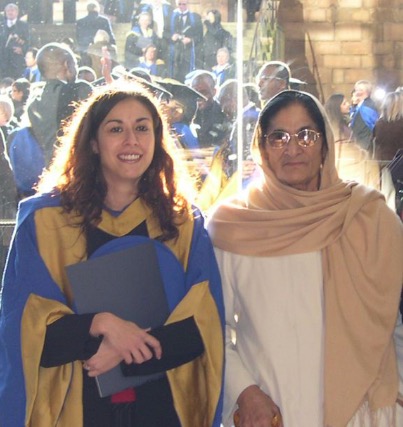
It is coming to 11 years since my mother died at the age of 83. She had great courage and conviction, illustrated in her decision to come to far-off England – and not go to the familiar India – from Kenya, a few years after my father’s untimely death in 1979. In doing so, with two young children, she was adding considerably to the challenges that she had faced hitherto. Alone, in an alien land, with two growing daughters, she drew upon her inner reserves of strength to provide for us. Moreover, what I do today is down to her encouragement and support throughout my life.
This was not always an easy position for her to take because of wider socio-economic pressures, but she saw education as the master-key to unlock many of these. As her youngest child, I was fortunate to be the first to go to university, for my sisters – we were all girls – were capable of more. She would have preferred that I study something “sensible” like law, medicine, finance, or engineering – like my father – but I showed no interest in these. Instead, I was motivated by art and politics as in 1988-90, an increasingly unequal Britain saw a churn and I was intrigued as Margaret Thatcher was losing her grip.
Studying politics and increasingly history was an unusual and therefore difficult step for me, but despite the misgivings, my mother – open to persuasion – supported me. She didn’t always understand my aims, for that matter nor did I, but instinctively it felt the right thing to pursue. I became increasingly aware of my social identity in university – beyond the name-calling in school – because I was one of only two “brown” girls in a cohort of approx. 70. But the rest of the group too came from different backgrounds, especially that of economic class. This introduction to class was a life-lesson in terms of one’s ability to aspire and imagine.
Thirty years on from when I entered university, this social reality has not changed. Rather it has only metamorphosed, and I now see class difference at play in the post-1992 university that I teach, among the students whom I encounter. Sure, the absolute number of black/brown students coming to study history and politics has increased albeit marginally. Anyhow, this post is not on this social phenomenon but the persona that my mother was, who encouraged me to follow my heart. In those days, it was enough, for the state supported education; there were no student fees, and I was eligible for a maintenance grant.
Otherwise, a mother’s goodwill alone would not have paid for my loan-laced BA/MA, which would have been too big a risk to take. I would not have then followed it up by applying for the Penderel Moon studentship for my PhD, at the turn of the century. My mother was incredibly proud when I got my doctorate, even as I was not untouched by an imposter syndrome. But time and its temper waxes and wanes, on gender, on humanities subjects, and on doubts of the two getting together. Today, the UK higher education is a near-total market, like much of the rest of its society and politics.
In which though, there is also some sliver of charity and that is why I write this post. It was at the Myton Hospice in 2012 that my mother spent her last few hours, with my sister and me, and tomorrow I am doing a 6-mile walk to help raise money for them. Simultaneously, I remember my mother, and reflect on her life and how she shaped me. I take great strength from her ability to start from nothing, having faith, and resilience to carry on with whatever life throws at us.
I share the link for Just Giving for Myton Hospice.
English Translation by Agha Shahid Ali

It is spring, And the ledger is opened again.
From the abyss where they were frozen,
those days suddenly return, those days
that passed away from your lips, that died
with all our kisses, unaccounted.
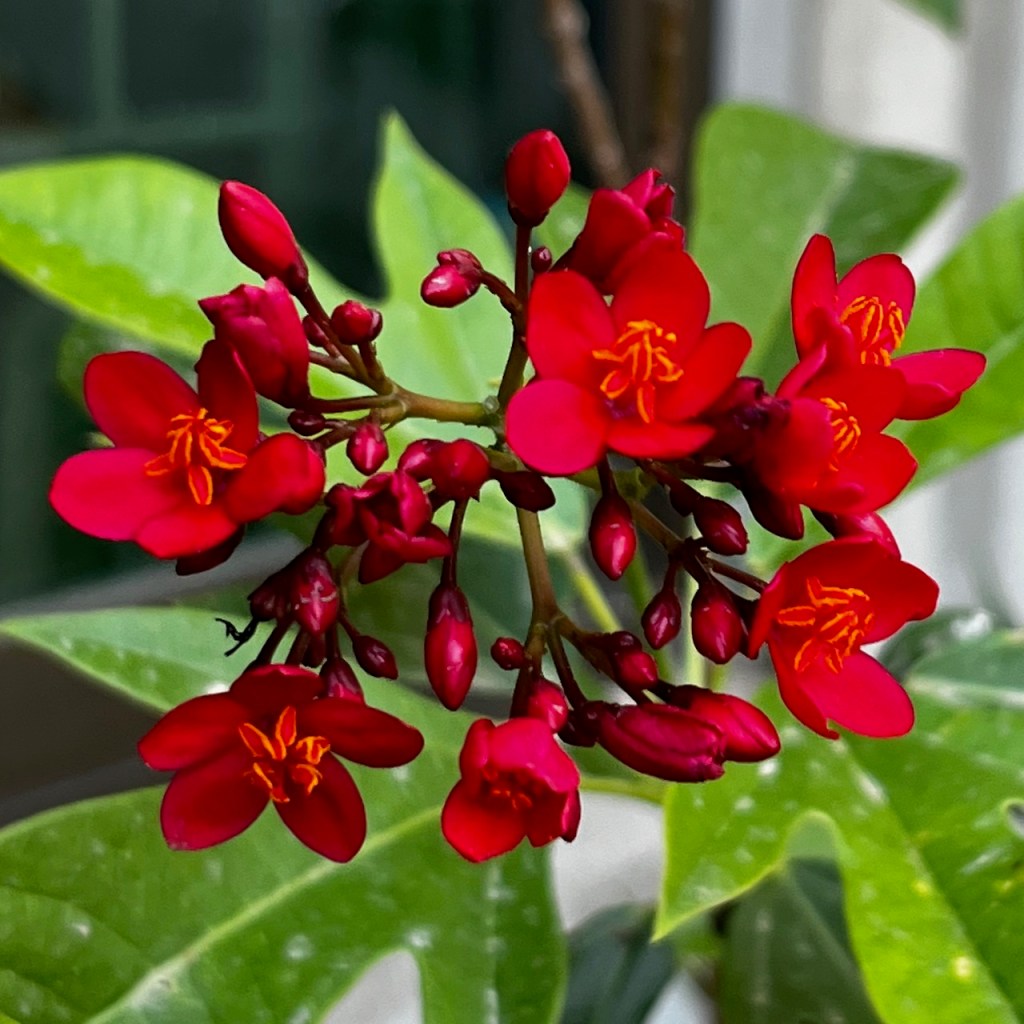
The roses return: they are your fragrance;
they are the blood of your lovers.
Sorrow returns. I go through my pain
and the agony of friends still lost in the memory
of moon-silver arms, the caresses of vanished women.
I go through page after page. There are no answers,
and spring has come once again asking
the same questions, reopening account after account.
Listen to Tina Sani and Shabana Azmi’s rendition of the poem.










 BAGICHA