Tag Archives: people

Facing the Waves

Facing the Waves
© 2015 Pippa Virdee

Women and Sports (in Pakistan).

Screen Shot 2018-07-05 at 16.33.00
Women of Pakistan by Pakistan Publications. (Washington, D.C.: Printed by Gibson Bros., 1949).

Insert reads: Champion athletes of Pakistan photographed with Quaid-i-Azam Mohamed Ali Jinnah, founder and first Governor-General of Pakistan, and is Miss Fatima Jinnah, after the first All-Pakistan Olympic Games held in April, 1948.


Screen Shot 2018-07-05 at 17.36.27
‘A tennis player’ – Women of Pakistan by Pakistan Publications. (Washington, D.C.: Printed by Gibson Bros., 1949).

Trawling through some old archival material I came across Women of Pakistan, published in 1949, it offers a visual feast of material relating to women in early Pakistan. For an official publication, it is illuminating of the time when Pakistan had just been created. There is not much on the individual women themselves but certainly the pictures themselves are great importance. While I try to discover more about this early era of sports history, I would love to know more from those who might know of women who were involved in sports or have any stories to share themselves.


The Chattri

This slideshow requires JavaScript.

Tucked away in the secluded hills of the South Downs, East Sussex, is a lesser known history of the Indian soldiers who fought for the British Empire during World War One. More than 1.5 million Indian soldiers fought for the Allied powers during the four years of the Great War. Among these, over 130,000 served in France. Their major military contribution on the Western Front took place in the very first year of the War. At the end of 1915, a majority of these infantry brigades were withdrawn and sent to the Middle East [https://www.bl.uk/reshelp/findhelpsubject/history/history/asiansinbritain/indiansoldiersinworldwars/indiansoldiers.html]. Approximately 4,500 Indian soldiers served on the Western Front in the first 4-5 months of the War and, in December 1914, hundreds of Indian causalities from there were bought to Brighton to be treated. The Royal Pavilion, Corn Exchange and the Dome therein were all converted into military hospitals and provided over 700 beds. The workhouse on Elm Grove was renamed the Kitchener Hospital (named after the former Commander-in-Chief of the British Indian Army) and also took in patients. Subsequently, by 1916, almost 12,000 Indian soldiers were to be treated in Brighton with 4,306 placed in the famed Pavilion (http://www.eastsussexww1.org.uk/indian-soldiers-east-sussex/). The uniquely recognisable Royal Pavilion in Brighton has since, therefore, become associated with the recovery of the Indian soldiers. Interestingly, King George V had thought that this would be an apt location for the Indian soldiers to be treated and convalesce, given that the Royal Pavilion was built/inspired by the Indo-Saracenic style of architecture. The injured soldiers included a mixture of Muslims, Hindus and Sikhs and great care was taken to respect their religious customs, regional diversity and dietary requirements. Many of the soldiers prior to their admission to hospital would never have been to the UK. And, when 53 Hindu and Sikh soldiers among them died, they were cremated on the South Downs, with their ashes scattered in the nearby English Channel. The first of these cremations took place in December 1914, the last coming a year later. Their similarly ill-fated 19 Muslim counterparts were buried in a purpose built burial ground near the Shahjahan Mosque in Woking. Built in 1889, this mosque is the oldest of its kind in north-west Europe.

However, at times the patients at the Royal Pavilion were also kept purposefully apart from the inhabitants around them. Barbed wire was place around the perimeter of the Pavilion in order to keep the patients in and the residents of Brighton out. Military authorities were particularly concerned about the possibility of the female inhabitants of Brighton contracting a bout of ‘Khaki Fever’ [http://www.eastsussexww1.org.uk/indian-soldiers-east-sussex/]. According to Angela Woollacott, in late 1914 there was an epidemic of ‘Khaki Fever’ across Britain as young women were seemingly so attracted to the men in military uniform that they started to behave immodestly and perhaps even somewhat dangerously! [https://www.jstor.org/stable/260893?seq=1#page_scan_tab_contents]

It was in August 1915 that the idea of a memorial for the dead soldiers was proposed. Sir John Otter, who had been a lieutenant in Indian Medical Service, the then-Mayor of Brighton, proposed this idea to the India Office. Supportive of this idea, the India Office agreed to share the cost of building and erecting the memorial with Brighton Corporation. Construction on the memorial started in August 1920, with a young Indian architect E. C. Henriques being responsible for designing The Chattri (The Umbrella). The memorial was finally unveiled on 1 February 1921 by Edward, Prince of Wales. Unfortunately, it gradually fell into disrepair in the inter-war period and was restored only after the Second World War. The War Office had agreed to pay for the repairs to restore The Chattri and then, from 1951, the Royal British Legion contributed to its upkeep. Since 2000, a Sikh teacher, Davinder Dhillon, has been working hard to host an annual commemoration event, in June.  

The Chattri bears the following inscription in Hindi and English: “To the memory of all the Indian soldiers who gave their lives for their King-Emperor in the Great War, this monument, erected on the site of the funeral pyre where the Hindus and Sikhs who died in hospital at Brighton, passed through the fire, is in grateful admiration and brotherly affection dedicated”.

Breakdown of Deaths of Indians in Brighton Hospitals

Kitchener Hospital

36 deaths: 25 Hindus/Sikhs cremated at Patcham, 11 Mohammedans buried at Woking.

Royal Pavilion

18 deaths: 10 cremated at Patcham, eight buried at Woking.

York Place Hospital

20 deaths: 18 cremated at Patcham, two buried at Woking.

Total cremated on the Downs at Patcham: 53

Total buried at Woking: 21

Total deaths: 74

Source: http://www.chattri.org/indepthHistory/ih5.aspx

Further reading

Ashley, Susan LT. “Acts of heritage, acts of value: memorialising at the Chattri Indian Memorial, UK.” International Journal of Heritage Studies 22, no. 7 (2016): 554-567.

Das, Santanu. “Writing Empire, Fighting War: India, Great Britain and the First World War.” In India in Britain, pp. 28-45. Palgrave Macmillan, London, 2013.

Hyson, Samuel, and Alan Lester. “‘British India on trial’: Brighton Military Hospitals and the politics of empire in World War I.” Journal of Historical Geography 38, no. 1 (2012): 18-34.

Omissi, David, ed. Indian voices of the Great War: soldiers’ letters, 1914–18. Springer, 2016.

Woollacott, Angela. “‘Khaki Fever’ and Its Control: Gender, Class, Age and Sexual Morality on the British Homefront in the First World War.” Journal of Contemporary History 29, no. 2 (1994): 325-347.


The Chattri Memorial Group: http://www.chattri.org/about.aspx

How Brighton Pavilion became a temporary hospital for Indian soldiers in WW1 by Hardeep Singh:

https://www.telegraph.co.uk/history/world-war-one/11026562/How-Brighton-Pavilion-became-a-temporary-hospital-for-Indian-soldiers-in-WW1.html

India’s contribution to the First World War [IOR: L/MIL/17/5/2383]

Report on the Kitchener Indian Hospital, Brighton, 1916 [IOR: L/MIL/17/5/2016]

Visit The Chattri: https://www.brighton-hove.gov.uk/content/leisure-and-libraries/parks-and-green-spaces/chattri-memorial

Indian Soldiers in East Sussex: http://www.eastsussexww1.org.uk/indian-soldiers-east-sussex/

Why the Indian soldiers of WW1 were forgotten: https://www.bbc.co.uk/news/magazine-33317368

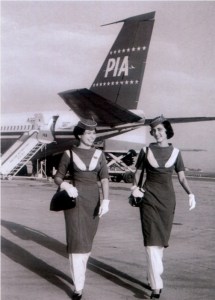
Women and Pakistan International Airlines in Ayub Khan’s Pakistan

pia-airhostesses

Abstract:

This article weaves together several unique circumstances that inadvertently created spaces for women to emerge away from the traditional roles of womanhood ascribed to them in Pakistan. It begins by tracing the emergence of the Pakistan International Airlines (PIA) as a national carrier that provided an essential glue to the two wings of Pakistan. Operating in the backdrop of nascent nationhood, the airline opens an opportunity for the new working women in Pakistan. Based on first-hand accounts provided by former female employees, and supplementing it with official documents, newspaper reports and the advertising used for marketing at the time, it seeks to provide an illuminating insight into the early history of women in Pakistan. While the use of women as markers of modernity and propaganda is not new, here within the context of Cold War and American cultural diplomacy, the ‘modernist’ vision of the Ayub-era in Pakistan (1958-69), and its accompanying jet-age provide a unique lens through which to explore the changing role of women. The article showcases a different approach to understanding the so-called ‘golden age’ of Pakistani history: a neglected area of the international history on Pakistan, which is far too often one-dimensional.

Link to the article: https://doi.org/10.1080/07075332.2018.1472622

The Final Resting Place: Gurdwara Kartarpur Sahib

This slideshow requires JavaScript.

In March 2017, in an impromptu adventure, I had the opportunity to visit Kartarpur Sahib in Pakistan. It came amidst an amazing road trip, which took me from the Radcliffe line to the Durand Line (almost). The trip was full of surprises – monuments (old and new) in situ and people on the move – and their discussion, especially of religious spaces and their historical significance. During one of these conversation, Dr. Yaqoob Khan Bangash (ITU Lahore) asked why the Sikhs never demanded Kartarpur Sahib during the discussions of the 1947 Radcliffe Boundary Commission.

Kartarpur is located in Narowal District in Pakistani Punjab. It is about 120 kms/2 hours away from Lahore and is located only 3 kms from the Indo-Pakistan border by the river Ravi. Indeed, Dera Baba Nanak is located about 1 km from the border, on the other side, east of the river Ravi in Indian Punjab. Both are visible to each other on clear days. The Gurdwara is the historic location where Guru Nanak (1469-1539) settled and assembled the Sikh community after his spiritual travels around the world. It is on the banks of the River Ravi and even today there is a nomadic and unkempt, wilderness feel to the place. Guru Nanak spent eighteen years living in Kartarpur, during which he spent time preaching to a growing congregation; the appeal of Nanak spreading from nearby areas to beyond and drawing the first Sangat to the area. Many devotees remained and settled in Kartarpur, dedicating their lives to the mission of Nanak.

The informal led to the formal, with the establishment of the first Gurdwara (the house of the guru) being built circa 1521-2. Here, free communal dinning (langar) was started, feeding all those that came and the langar remains a defining feature of Sikhism – providing free food to everyone without any prejudice. The food is simple and usually vegetarian. It is not a feast, nor does it offend anyone due to their dietary preferences. Everyone, rich or poor, sits together; equal in the house of the guru.

However, for Sikhs, Kartarpur is an especially significant place, as it marks not only the beginnings of Sikhism but also the final resting place of the first guru. The original Gurdwara complex was washed away by floods of the river Ravi and the present-day building was built with donations from Bhupinder Singh (1891-1938), Maharaja of Patiala. More recently, the Government of Pakistan has been contributing to its maintenance. The most fascinating thing about Kartarpur is the appeal of the Gurdwara to all communities. Baba Nanak is revered as a Pir, Guru and Fakir alike.

My trip to Kartarpur was during the “off-season” period and so, mostly Muslims were visiting the shrine/Gurdwara to offer their duas/prayers. Legend has it that when Guru Nanak died, his Hindu and Muslim devotees disagreed about how his last rites should be performed: cremation or burial? During this ruckus, Nanak appeared as an old man before his devotees and, seemingly, suggested delaying the decision until the following day. The following morning, the shroud covering the body was found with flowers, in place of the body. These flowers were divided, with the Hindus cremating theirs, and the Muslims buried theirs. And so, in the courtyard of the Gurdwara is a shrine to symbolise this story. Outside the Sikh tourism that takes place, which is limited, this shrine is mostly frequented by Muslims.

In August 1947, Kartarpur was in Gurdaspur district, which had all (almost) been delineated to be in Pakistan, until the late, controversial changes to the boundary line, which meant that parts of Gurdaspur went to India. Thus, at the last minute, Kartarpur ended being in close proximity of the international border. After Partition, the Sikhs were negligible in their numbers in Pakistan and Kartarpur remained closed and abandoned for over fifty years. More recently, there have been attempts to get a connecting corridor between the communities in India and Pakistan today, but this has not materialised. Going back to the question of why Kartarpur never figured as a specific request before the Boundary Commission, perhaps part of the answer lies in the fact that Sikhs believe in reincarnation of the soul and, therefore, death of the body is not the end of life’s journey.

‘Corridor connecting India with Kartarpur Sahib Shrine in Pakistan ruled out’ by Ravi Dhaliwal:

http://www.tribuneindia.com/news/punjab/community/-corridor-connecting-india-with-kartarpur-sahib-shrine-in-pak-ruled-out/400962.html

‘Visit to Kartarpur Sahib (Pakistan)’ by Dalvinder Singh Grewal: https://www.sikhphilosophy.net/threads/visit-to-kartarpur-sahib-pakistan.49707/

‘How Nanak’s Muslim followers in Pakistan never abandoned Kartarpur Sahib, his final resting place’ by Haroon Khalid: https://scroll.in/article/857302/how-nanaks-muslim-followers-in-pakistan-never-abandoned-kartarpur-sahib-his-final-resting-place

Everyone’s Guru by Yaqoob Khan Bangash: http://tns.thenews.com.pk/everyones-guru/#.WxAxiakh3OQ

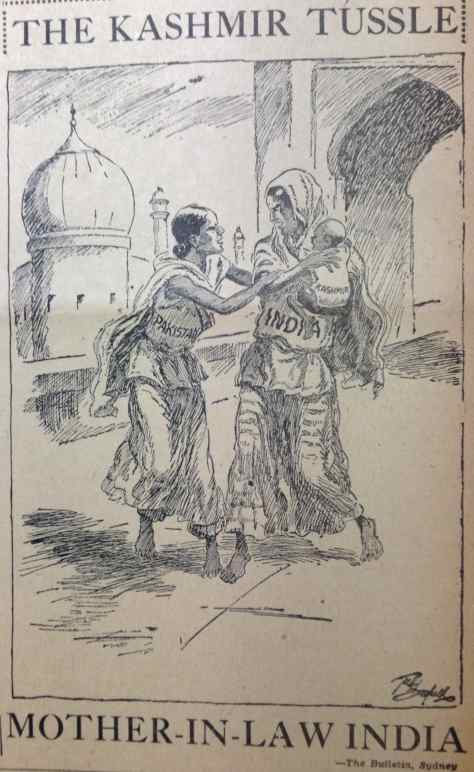
The Kashmir Tussle

The picture says it all, “The Kashmir Tussle” appearing in The Pakistan Times in July 1951.

5561 Kashmir
The Pakistan Times, 15 July 1951.

Two villages, two nations: Ganda Singh Wala-Hussainiwala


This slideshow requires JavaScript.

The villages of Ganda Singh Wala and Hussainiwala are two villages divided by Cyril Radcliffe’s line. Rather counter-intuitively in these times of Hindu/Sikh India and Muslim Pakistan, Ganda Singh Wala is a village in Kasur District in Punjab, Pakistan, while Hussainiwala is its Indian counterpart, located 11 km away from Ferozepur city. Until the early 1970s, this was the primary border crossing between the two countries but it now only functions as a ceremonial border. Like Wagha-Attari, the now-primary border crossing between India and Pakistan, there is a daily Retreat Ceremony with the lowering of the national flag. There are, however, a few differences between the two ceremonies as Ganda Singh-Hussainiwala is generally not open to foreign tourists and is therefore more intimate with fewer attendees coming largely from the local area. The seating, especially on Ganda Singh side, is right next to the Pakistani Rangers and thus provides a spectacular viewing of this daily spectacle.

While restricted to mostly locals, there remains some jingoistic overtures around it; more palpable during tense times between the two countries. The ceremony lasting 40 minutes, is shorter than the Wagha-Attari version and has less of a fanfare and build-up. People loiter around, catching the opportunity to be close to Indian/Pakistani people and take photos of the Rangers and Indian BSF. According to Ferozepur district’s webpage (http://ferozepur.nic.in/html/indopakborder.html), there was no joint parade and retreat ceremony here until 1970. It was apparently, “Inspector General BSF, Ashwani Kumar Sharma, called upon both authorities to have joint retreat ceremony and since than it has become a tradition”. In 2005, there were discussions about opening this border crossing, to no avail. Today it is easy to forget that this was once a thriving check-point. In 1970, Paul Mason, while travelling the sub-continent, excitedly crossed the border from Ganda Singh to Hussainiwala. He recalls this experience in his travelogue, Via Rishikesh: an account of hitchhiking to India in 1970 (2005):

“In the morning we have little difficulty in locating the Ministry of the Interior and are supplied the necessary chits which give permission for us to travel along the restricted road to the border. For the sum of two rupees apiece we obtain bus seats and are soon headed off down the dusty track, but the trip is much longer than I expect and it is mid-afternoon before we arrive at the Pakistani customs of Ganda Singh Wala.

At the customs post on the Indian side of the border, a worryingly intelligent young woman who reminds me much of my elder sister Margaret deals me with. I do my best to conceal my anxiety about the concealed roll of banknotes. She eyes me carefully and exchanges a few words with me before turning to the next in line without first acquainting herself with the contents of my underpants.

We have made it to India! We are here in India! At last! Amazing, amazing, amazing!

I take a look at stamp in my passport; it states simply; ‘ENTRY 16-10-70 Hussainiwala Distt, Ferozepore’ – not even a mention of India! Oh well, we’re here, and that’s all that counts!

We follow the flow of other new arrivals along a path beside a wide still river [Sutlej]. There is also a disused railway track, which presumably used to connect the two countries.”

[See full account: http://www.paulmason.info/viarishikesh/viarishikeshch16.htm]

We see from Mason’s account of the simplicity through which he crossed the border with only a slight mention of Ganda Singh and Hussainiwala printed in his passport (pictures of the entry stamps are available on his website above). Today when crossing via the land route, there is a clear stamp with Attari (India) and Wagha (Lahore) in the passport. Mason also mentions the hundreds of cars left abandoned at the border because it was too costly to take them across. But, this was at least possible to do then; impossible today. Equally, the disused railway track lies there abandoned but remains as a reminder of the two broken halves.

Ferozepur, India is the land of martyrs and Hussainiwala is the site of the National Martyrs Memorial, where Bhagat Singh, Sukhdev and Rajguru were cremated on 23 March 1931. This is also the cremation place of Batukeshwar Dutt, who was also involved in bombing the Central Legislative Assembly with Singh. Bhagat Singh’s mother, Vidyawati, was also cremated here according to her last wishes. Interestingly, the spot of the memorial, which is only 1 km away from Hussainiwala and on the banks of the Sutlej river and built in 1968, was originally part of Pakistan. On 17 January 1961, it was returned to India in exchange for 12 villages near Sulemanki Headworks.

Read ‘Making of a Memorial’ by K. S. Bains, http://www.tribuneindia.com/2007/20070923/spectrum/main2.htm

-, ‘Shaheedon ki dharti’ in The Tribune: http://www.tribuneindia.com/1999/99jul03/saturday/regional.htm#3

See a short clip of the ceremony at Ganda Singh Wala: https://www.youtube.com/watch?v=vZR-eLVYo6s

From before and beyond the international border that divides them, there is a story that connects these villages. Majid Sheikh writes about the ‘Spiritual connect of two villages’ in Dawn and brings out their historic connections. To commemorate a highly decorated soldier, Risaldar Major Ganda Singh Dutt, the British had named this village after him, while the village Hussainiwala derived its name during colonial days from Pir Ghulam Husseini, whose tomb is now in the BSF headquarters. Today they exist as two halves of the same story.

Read ‘Spiritual connect of two villages on both sides of the divide’ by Majid Sheikh: https://www.dawn.com/news/1379906

Ludhiana’s Clock Tower (Ghanta Ghar)

Ghanta Ghar is one of the most iconic landmarks of Ludhiana city. It stands tall amongst the hap-hazard development of the industrial city. Previously it was the pride and the centre piece of the historic area of Chaura Bazaar, which was the hub of economic and political activity in the city. Located at the entrance of the commercial centre, the Clock Tower was and still remains a landmark in the city’s landscape. The railway station is conveniently located a short (walking) distance away from the Clock Tower, allowing for trade activity to flourish easily in the area. Apart from commercial activity Ghanta Ghar also attracts political activities, as it is a convenient location to hold political party protests and dharanas. Today the Clock Tower has receded into the background as a flyover dominates the urban landscape. Although, Ludhiana as a city has grown manifold since the Ghanta Ghar was built, and much of the commercial activity has moved to The Mall Road or Ferozepur Road, Chaura Bazaar still remains popular amongst old and new inhabitants. There is the old charm of the traditional sub-continental bazaar with its nooks and crannies. The narrow lanes, tucked away behind the wide and partial Chaura Bazaar, remain hidden gems for jewellery – gold, silver or artificial. And then there are the scrumptious aloo tikkis, gol guppas and chaats to satisfy the hungry shopper. It is a shame that the Ludhiana Municipal Corporation has not invested more in the city’s historic sites and made more of these places. But, this is part of a wider problem with preservation of heritage and history in the sub-continent.

The history of the Clock Tower, of course, evokes the British colonial heritage: Ghanta Ghar/Clock Tower was designed by the then-Municipal Chief Engineer of Amritsar, John Gordon. The design reflects the traditional European Gothic style and uses an interesting red brick, which is striking even amongst the colourful and vibrant Chaura Bazaar. Although the construction began in 1862, it was not officially inaugurated until 1906 by Sir Charles Montgomery, who was the Lieutenant Governor of Punjab, along with Diwan Tek Chand, Deputy Commissioner of Ludhiana.

Ludhiana actually came under British rule in 1835, when Rajah Sangat Singh died. The Gazetteer of Ludhiana District (Punjab Government, 1888) notes that it was under Sir Claude Wade (1823-38) and his successors that the town increased in its size and importance. Trade expanded, and Ludhiana became a centre for trade in grain, sugar, cloth. The small presence of Kashmiri weavers (approximately 8-10 families) expanded after the famine in 1833 to around 1,500-2,000 Kashmiris, who settled in the town. Following the Sutlej campaign (1845-1847), Ludhiana district was formed, and the civil offices were removed to the cantonment side of the city. In 1854-55, the Grand Trunk Road was metalled and realigned to its present position.

The opening of the Railway from Delhi to Lahore in 1870 undoubtedly gave a great stimulus to trade and commercial activity in Ludhiana. In addition, the number of shops and sarais along the Grand Trunk Road, facing the station were also growing. According to the Gazetteer, the new town to the south of Chaura Bazaar had all the hallmarks of being modern. The streets were wide and straight, and the houses and shops were uniformly designed, giving them a modern appearance. ‘The principal streets, the Chaura Bazaar and the Hazuri Sarak, were designed by Sir Claude Wade himself; and, one of his projects, the Iqbal Ganj, is a standing proof that he was rather too sanguine about the speedy development of the two for which he did so much’ (p. 216).

The population of town was modest compared to the 1.6 million people living in the city today. In 1868 Ludhiana had 39,983 (Males 21,701 and Females 18,282) and in 1881 this rose to, 44,163 (Males 24,685 and Females 19,478)

CENSUS REPORT 1881

Total Population – 44,168

Hindus – 12,969; Sikhs – 1,077; Jains – 752; Muslims – 29,045; and Others – 320

The population of Ludhiana started to grow, most likely with opening of the railway and consequently the establishment of the town a collecting centre for the grain traffic. But in 1878, there was a huge loss of life due to malaria fever following the monsoon season. It was estimated that around 6-7 per cent of the population died especially, ‘half-starved Kashmiris and others of the lower classes not having sufficient stamina’ (p. 217). According to the 1881 census, the town was overwhelming Muslim and indeed even in 1947, Ludhiana was a Muslim majority town. The city today is dominated by the Sikhs but there are still some remnants of a former history scattered around the city, like the Ghanta Ghar and Chaura Bazaar.