Tag Archives: Lahore

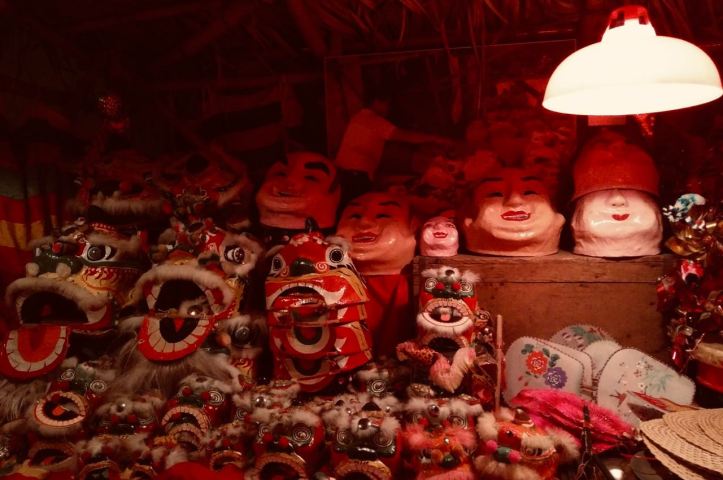
Laal/Red

“In 1949, while in Lahore, Sahir Ludhianvi wrote a revolutionary poem, ‘Avaaz-e-Adam’ (The Voice of Man), in which ‘hum bhi dekhenge’ remains a memorable phrase. It ended on the optimistic – and one could say provocative – assertion that the red flag of communism would fly high. Pakistan had already decided to become a frontline state in Western attempts to contain Soviet Communism. It was trying desperately to convince the US that it could be a strong ally in its anti-Communism policy. Pakistan also wanted to portray itself as a trusted ally for the West, not just in South Asia but also in the Middle East. But after the poem was published, Sahir was threatened by intelligence agencies and he migrated to India. In effect, ‘hum bhi dekhenge’ came to symbolise Sahir’s farewell to Pakistan, which he felt would be a puppet of the West, and his search for sanctuary in Nehru’s India.” Source: The Wire.
© 2019 Pippa Virdee
aavaaz-e-aadam
Dabegi kab talak aavaaz-e-Aadam hum bhi dekhenge
rukenge kab talak jazbaat-e-barham hum bhi dekhenge
chalo yoonhi sahi ye jaur-e-paiham hum bhi dekhenge

dar-e-zindaan se dekhen ya urooj-e-daar se dekhen
tumhen rusva sar-e-bazaar-e-aalam hum bhi dekhenge
zara dam lo maal-e-shaukat-e-jam hum bhi dekhenge

ye zoam-e-quvvat-e-faulaad-o-aahan dekh lo tum bhi
ba-faiz-e-jazba-e-imaan-e-mohkam hum bhi dekhenge
jabeen-e-kaj-kulaahi ḳhaak par ḳham hum bhi dekhenge

mukaafaat-e-amal tareeḳh-e-insaan ki rivaayat hai
karoge kab talak naavak faraaham hum bhi dekhenge
kahaan tak hai tumhaare zulm mein dam hum bhi dekhenge

ye hangaam-e-vidaa-e-shab hai ai zulmat ke farzando
sahar ke dosh par gulnaar parcham hum bhi dekhenge
tumhen bhi dekhna hoga ye aalam hum bhi dekhenge
The Voice of Man
We too shall see till when one can suppress the voice of Adam
We too shall see till when can be stopped the angry emotion(s)
We too shall see, sure, just like this, the constant oppression.

Whether we view from the door of the dungeon or the elevation of the scaffold
We too shall see you dishonoured in the marketplace of the world
Just take a moment’s breath, we too shall see the consequences of the grandeur of Jamshed.

You too behold this vanity of power
We too shall see this by the kindness of the firm belief’s fervour
We too shall see a bend upon the dusty face that wears the jaunty headgear.

Retribution is a tradition of human history
Till when will you amass the arrows, we too shall see
We too shall see how far will you persist with your tyranny.

O sons of darkness this is the time for departure
We too shall see the morning shoulder the flag of red colour
We too shall see, you too shall have to see this clamour.

Source: ‘We Too Shall See, You Too Will Have to See This Clamour’: A Tribute To Sahir Ludhianvi by Raza Naeem, NayaDaur

Read/listen to Sahir on Rekhta

Sahir Ludhianvi – Making of Dreamer – Freudian Poet of the Indian Cinema by Anil Pundlik Gokhale. CounterCurrents.org

Speaking Easy: Allama Iqbal’s Grandson – Yousaf Salahuddin

via Speaking Easy: Allama Iqbal’s Grandson – Yousaf Salahuddin – on his Current Project and the Future of Art and Culture in Pakistan

Originally published 5 Sept 2012 but relevant today.

If you want to read further also see this article in The Friday Times by Muhammad Asif Nawaz, The old world charms of Mian Salli, originally published 25 July 2014.

Faletti’s

Faletti’s Hotel is the oldest colonial hotel in Lahore. It opened in 1880 in the old walled city. Back then, it claimed to be one of the finest hotels. By modern standards, this is not a big place, but it is certainly one of the most sought after. It retains the colonial architecture along with a matching attitude. One of the reasons that Faletti’s continues to attract so much attention is to do with the famous guests that have stayed there, over the years.

Read about the origins and owner, Giovanni Faletti on Faletti’s website.

A fascinating account in Dawn about the owners changing hand:

According to tales recounted by old hotel employees, Faletti’s Hindu clerk, Oberoi, offered to buy some shares, and Faletti was so impressed and delighted that someone whose job was to haul coal for the rooms had saved enough to buy the shares of his hotel that he allowed him to become his trusted employee. When Faletti finally left Pakistan, he gifted Oberoi all his hotels on the condition that he would not change the name of Faletti’s. Oberoi stayed true to his word and earned so much from just Faletti’s alone that he invested in a hotel in Delhi, the famous Oberoi, following which he established more hotels in India…After the 1965 war, Oberoi decided to move to India and sold majority shares of the hotel to PTDC — again on the condition that the hotel name would not be changed.

Everyone from the great Quaid-i-Azam to Hollywood actors have stayed at the hotel. Ava Gardner and Stewart Granger stayed here for three months during the filming of Bhowani Junction, which took place in 1955. The room in which she stayed is now known as the ‘Ava Gardner Suite.’ Marlon Brando stayed here when he was visiting the country on behalf of UNICEF. One of the Chief Justices of Pakistan, A.R. Cornelius, took up residence at Faletti’s and stayed at the hotel for over 40 years until his death in 1991. Whereas Mohammad Ali Jinnah stayed at Faletti’s when he came to Lahore to argue the appeal of Ghazi Ilm-ud-Din Shaheed before the Lahore High Court in July 1929.

Other guests have included the cricketer Sir Garfield Sobers, Jawaharlal Nehru, Dilip Kumar, Raj Kapoor, and Mohammad Rafi.

Mayo at Cockermouth

This slideshow requires JavaScript.

Richard Southwell Bourke (1822-72), 6th Earl of Mayo, 4th Viceroy of India (1869-72)

Born and educated in Dublin; MP (Conservative Party) for Kildare (1847-52), Coleraine (1852-57) and Cockermouth (1857-68); Chief Secretary for Ireland (1852, 1858, 1866); Assassinated in Andaman Islands by Sher Ali Afridi (1872); Memorial Statue in Cockermouth (1875)

Termed Disraeli’s Viceroy by George Pottinger (1990) and a ‘reckless partisan of Irish landlordism’ by Karl Marx in the New York Daily Tribune (1859) (https://www.irishtimes.com/opinion/letters/lord-mayo-in-a-pickle-1.3777905)

For biography:

Library Ireland: https://www.libraryireland.com/biography/RichardBourkeSouthwell.php

WW Hunter, The Earl of Mayo (Oxford, 1891)   https://www.gutenberg.org/files/35809/35809-h/35809-h.htm

On assassination:

Norman Freeman, “Death of a viceroy – An Irishman’s Diary on the assassination of Lord Mayo”, The Irish Times, 28 Jan 2019.  https://www.irishtimes.com/opinion/death-of-a-viceroy-an-irishman-s-diary-on-the-assassination-of-lord-mayo-1.3773683

Clare Anderson, “The murder of Mayo: why Britain kept quiet about a Viceroy’s assassination” 7 Sep 2011. https://www2.le.ac.uk/news/blog/2011-archive/september/the-murder-of-mayo-why-britain-kept-quiet-about-a-viceroys-assassination

With wider political-cultural context:

Julia Stephens, ‘The Phantom Wahhabi: Liberalism and the Muslim fanatic in mid-Victorian India’, Modern Asian Studies 47: 1 (2013) 22-52

Of legacy:

Mayo College Ajmer (India) (1875): https://mayocollege.com/

Mayo School of Industrial Art Lahore (Pakistan) (1875): http://lahore.city-history.com/places/mayo-school-of-industrial-art-later-national-colle/

It was of course his legacy that is most associated with the city of Lahore, where the Mayo School of Industrial Art was set up in 1875, following his assassination in 1872. The Mayo School later became the National Collage of Arts (NCA) in 1958 and this still remains the premier institution for the Arts in Pakistan.

Lockwood Kipling was appointed the first Principal of Mayo School, alongside his other role of Curator of the Lahore Museum, which was the Ajaib Ghar in Rudyard Kipling’s Kim.

The Artisans of the Walled City of Lahore — Harry Johnstone

Perched outside his workshop in Lahore’s Walled City, Mohamed Tahir plays a harmonium while watching the passing melee. The melancholy sounds of the instrument are barely audible over the din of motorbikes and wheel cutters, but still they evoke something of Lahore’s history, a world that lives on beneath the dust and frantic rhythms of […]

via The Artisans of the Walled City of Lahore — harryjohnstone

The Lahore Gymkhana Club


The Lahore Gymkhana Club is a place I have been able to visit on many occasions. It is an exclusive club for the elite in Lahore with a long waiting list for membership. The Club’s website proudly reads:

Gymkhana; A World in its Own

Donning chinos and a polo shirt while sinking a birdie putt on the 15th hole, the retired bureaucrat on the lush pastures of the eclectic golf course continues being oblivious to the disrupting traffic outside the boundary walls, while the eminent 70-year-old writer sketching out a plot for his highly anticipated sequel continues penning down characters originating from his ever so powerful imagination in the same library that he’s been sitting for the last 30 years. A group of ex-service men calmly carry on the tradition of expressing ambivalent opinions on the country’s next elections while making an opening bid in the card room, and some foreign delegates continue analyzing aspects of the much debated foreign policy while sipping their cappuccinos and lattes in the serene view of the golf course.

An idea that took the shape of a property in the 1870’s, is an identity in itself today. The Lahore Gymkhana membership continues to comprise of individuals inhabiting top positions in their respective fields, such as government ministries, armed forces, banks, MNC’s, sports, the judiciary and the media, both nationally and internationally. Together, they ensure the prestige of the club.

The original Gymkhana was actually founded as The Lahore and Mian Mir Institute in 1878 in Lawrence Gardens, opposite the Governor House. The Club was based in the Lawrence and Montgomery Halls (named after Sir John Laird Mair Lawrence, first Chief Commissioner (1853-57) and Viceroy of India (1863-69) and Robert Montgomery, second Lt. Governor of the Punjab (1859-65) respectively).

In 1906, the name changed to the Lahore Gymkhana and in 1972 the two halls were taken over by the Punjab Government and the Gymkhana club was relocated to the newly built facility at The Upper Mall, where it currently stands.

Hobson-Jobson. A Glossary of Colloquial Anglo-Indian Words and Phrases, and of Kindred Terms, Etymological, Historical, Geographical and Discursive, a historical dictionary of Anglo-Indian words and terms from Indian languages that came into use during the British rule of India. It was complied by Henry Yule and Arthur Coke Burnell and first published in 1886; it has been in print ever since. The dictionary takes you into the world of nineteenth century British India and connects provides the reader with a definition and etymology of words/phrases. The Club’s statement on its website and the world of nineteenth century colonial British India are not too dissimilar. The entry for the Gymkhana in Hobson-Jobson reads:

GYM-KHANA, s. This word is quite modern, and was unknown 40 years ago. The first use we can trace is (on the authority of Maior John Trotter) at Rurki in 1861, when a gymkhana was instituted there. It is a factitious word, invented, we believe, in the Bombay Presidency and probably based upon gend-khilna (‘ball-house’) the name usually given in Hind. to an English racket-court. It is applied to a place of public resort at a station, where the needful facilities for athletics and games of sorts are provided, including (when that was in fashion) a skating-rink, a lawn-tennis ground, and so forth. The gym may have been simply a corruption of gend shaped by gymnastics [of which the English public school short form gym passed into Anglo-Indian jargon]. The word is also applied to a meeting for such sports; and in this sense it has travelled already as far as Malta, and has since become common among Englishmen abroad. [The suggestion that the word originated in the P.-H. jamd’at-khana, ‘a place of assemblage,’ is not probable.]

  1. – “Their, proposals are that the Cricket Club should include in their programme the games, &c., proposed by the promoters of a gymkhana Club, so far as not to interfere with cricket, and should join in making a rink and lawn-tennis, and badminton courts, within the cricket-ground enclosure.” – Pioneer Mail, Nov, 3.

  2. – “Mr. A-F- can always be depended on for epigram, but not for accuracy. In his letters from Burma he talks of the Gymkhana at Rangoon as a sort of establissement [sic] where people have pleasant little dinners. In the ‘Oriental Arcadia,’ which Mr. F- tells us is flavoured with naughtiness, people may do strange things, but they do not dine at Gymkhanas.” –lbid. July 2.

  3. – “R. E. Gymkhana at Malta, for Polo and other Ponies, 20th June, 1881.” Heading in Royal Engineer Journal, Aug. 1, p. 159.

  4. – “I am not speaking of Bombay people with their clubs and gymkhanas and other devices for oiling the wheels of existence….” – Tribes on My Frontier, 9.

Read more about the Lahore Gymkhana since 1947.

Visit the Lahore Gymkhana website.

‘It’s a special place’ – the 101-year history of the Indian Gymkhana cricket club in The Guardian.

Impact Of Nationalization On BECO And Pakistan Economic Development

Little known history of CM Latif and Batala Engineering Company (BECO), Lahore.

Anika Khan's avatarRamblings of a Pakistani Woman.

There had been many times in Pakistan’s history when stupid decisions were taken by the government. Nationalization in Bhutto’s era was one of those decisions. 22 Families lost everything that they had worked  for all their lives. BECO (Batala Engineering Company) is one such example.

Late Chaudhry Mohammad Latif was the founder and chairman of the Batala Engineering Company (BECO). After attending a meeting of leading Muslims in Batala, who wanted to establish Muslim industries in the face of Hindu dominance of retail, that he struck upon the idea of forming BECO.The company was established in 1932. , He sold its first 10 shares to a lime merchant for Rs 10. In the early years, he worked almost single-handedly to build up the company from its first workshop in two rooms and a veranda. Over the course of the next forty years, and in spite of losing much of his business…

View original post 864 more words

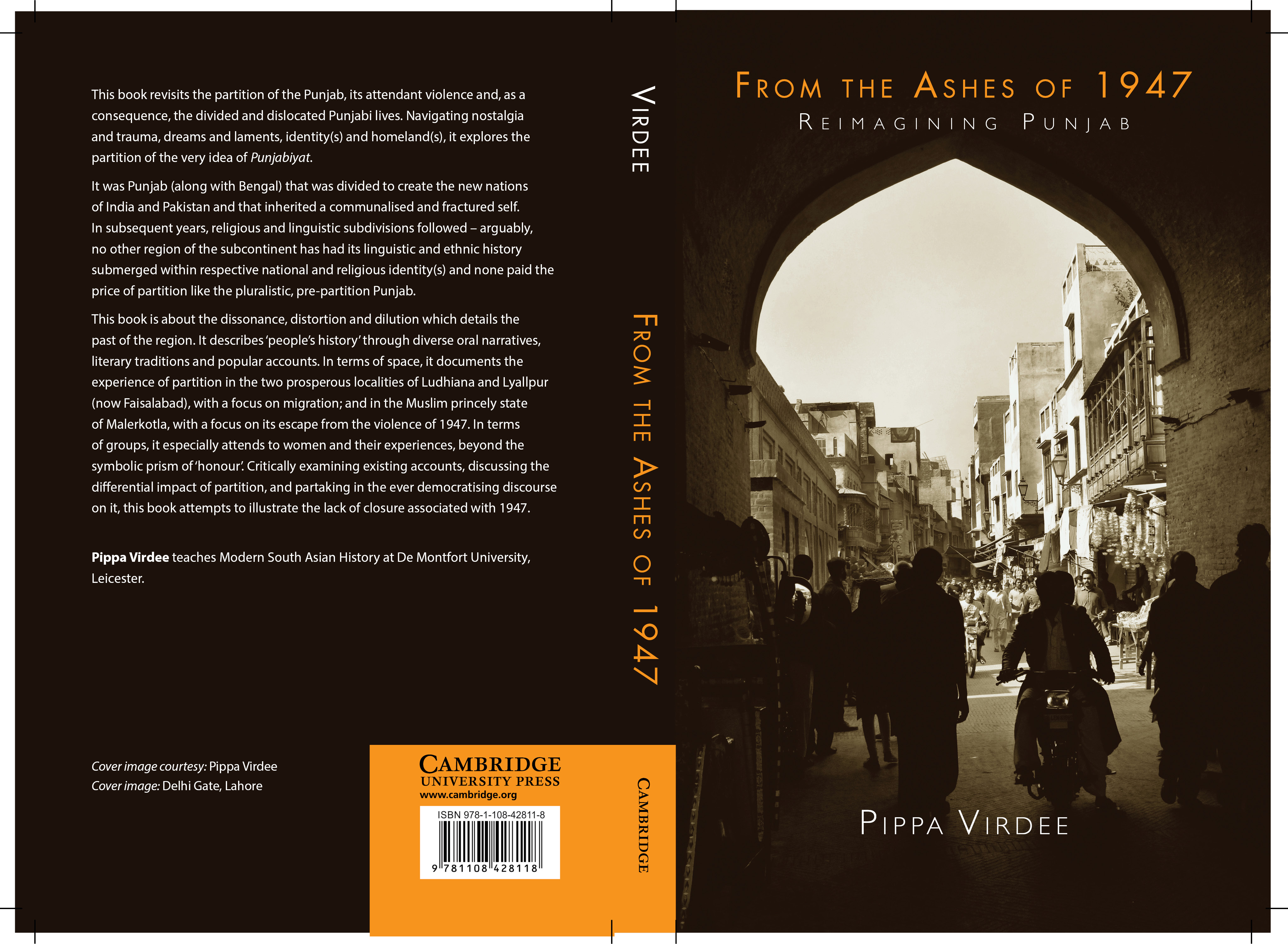
From the Ashes of 1947: Reimagining Punjab

From the Ashes_Full Cover

Full details: From the Ashes of 1947

Watch the panel discussion with Pippa Virdee (De Montfort University, UK), Afzal Saahir (Poet and Radio Host) and Sajid Awan (Quaid-e-Azam University) of my book From the Ashes of 1947 at the Afkar-e-taza, January 2018 Panel Discussion