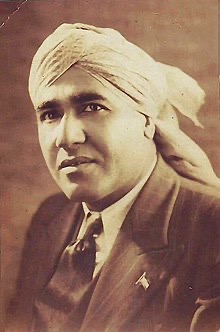
Frank Brazil pays tribute to Indian revolutionary Udham Singh who was executed at London’s Pentonville Prison on 31 July 1940. It follows the 21 years of Udham Singh’s life following the Jallianwallah Bagh massacre in 1919, leading up to the assassination of Michael O’Dwyer and his execution in Pentonville Prison shortly after.
Music and lyrics by The Ska Vengers
India travel to Africa
Africa …travel to America
America link the Gaddar Party
Try and do things far away form home

One day
Travel down to Germany
Italy France and ina Switzerland
1934 I reach England
and get ready for assassination

Judge won’t you hear my plea
Before you open up the court
I don’t care If I spend 99 years in jail
Or you send me to the electric chair

Travel the planet and endure some hardship
Walk the path to meifumado ready to endure hardship
Pan patroll stroll intro my target
One question before we get started
You know what a one way ticket to the morgue is

Body bags stacked up ina cold storage
Crush my culture and said it was garbage
Rule by the cruel rule of the free market
Ask some cracker grandpa what a cat o nine tail scar is

Judge won’t you hear my plea
Before you open up the court
I don’t care If I spend 99 years in jail
Or you send me to the 'lectric chair

Now we combust
Bredrin stay focused and conscious
Company rule is so unjust
Feel the tension of my ancestors in my muscle fiber and now I'm ready to crush

Shot him with my 6 chamber
Zetland by his side
Stood there looking at him
While he wallowed down and died
Now I'm on my journey to a Brixton prison cell
Tell the judge and jury that I did my time well

Judge, judge, lordy judge
Send me to the 'lectric chair

Burn burn
Read further:
Anita Anand, The Patient Assassin: A True Tale of Massacre, Revenge and the Raj (Simon & Schuster, 2020).
David Clark. “Recollections of resistance: Udham Singh and the I WA.” Race & Class 17, no. 1 (1975): 75-77.
Louis Fenech, “Contested Nationalisms; Negotiated Terrains: The Way Sikhs Remember Udham Singh ‘Shahid’ (1899–1940)”. Modern Asian Studies. (2002) 36 (4): 827–870. doi:10.1017/s0026749x02004031
Navtej Singh. “Reinterpreting Shaheed Udham Singh.” Economic and Political Weekly (2007): 21-23.
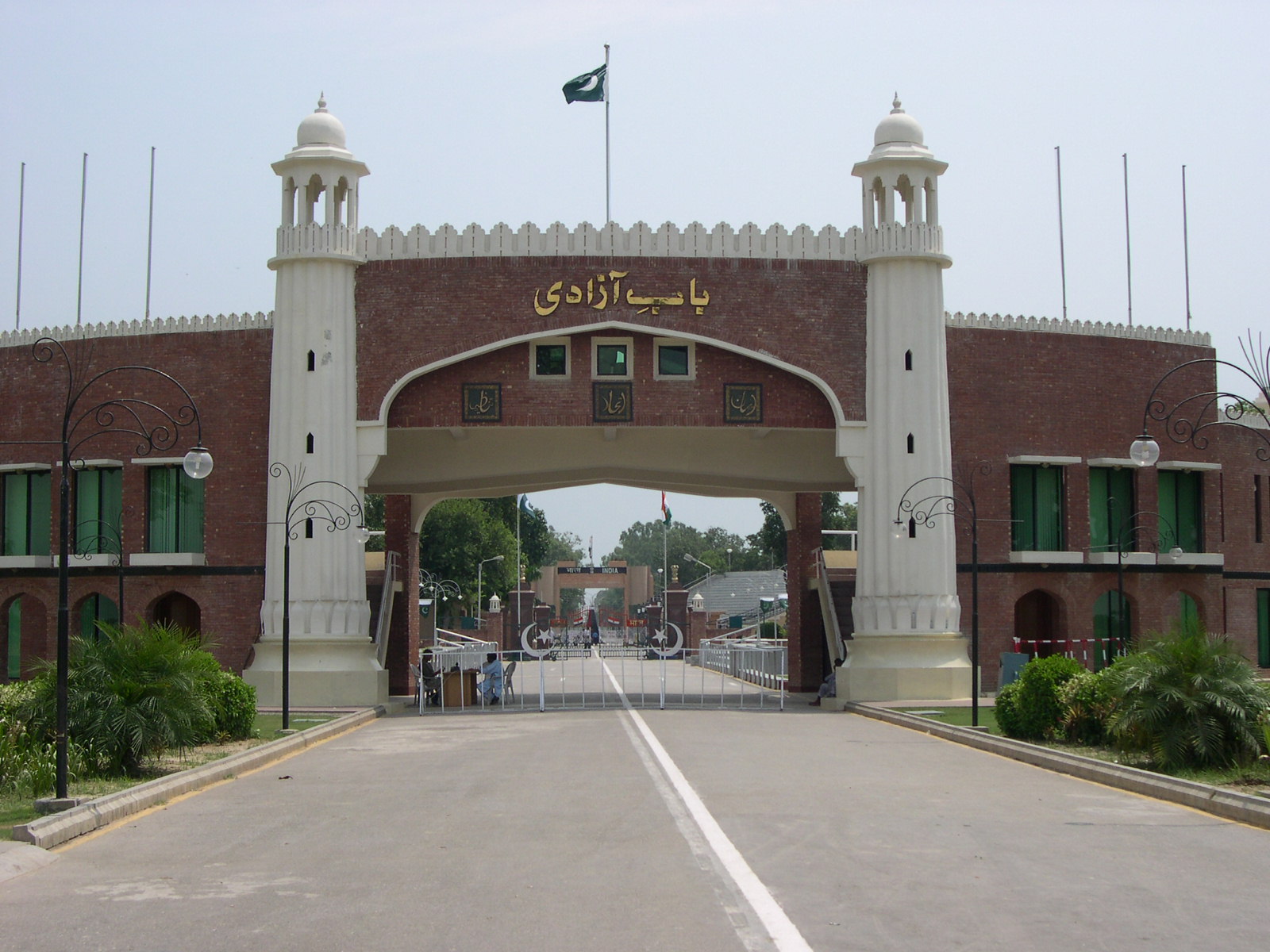
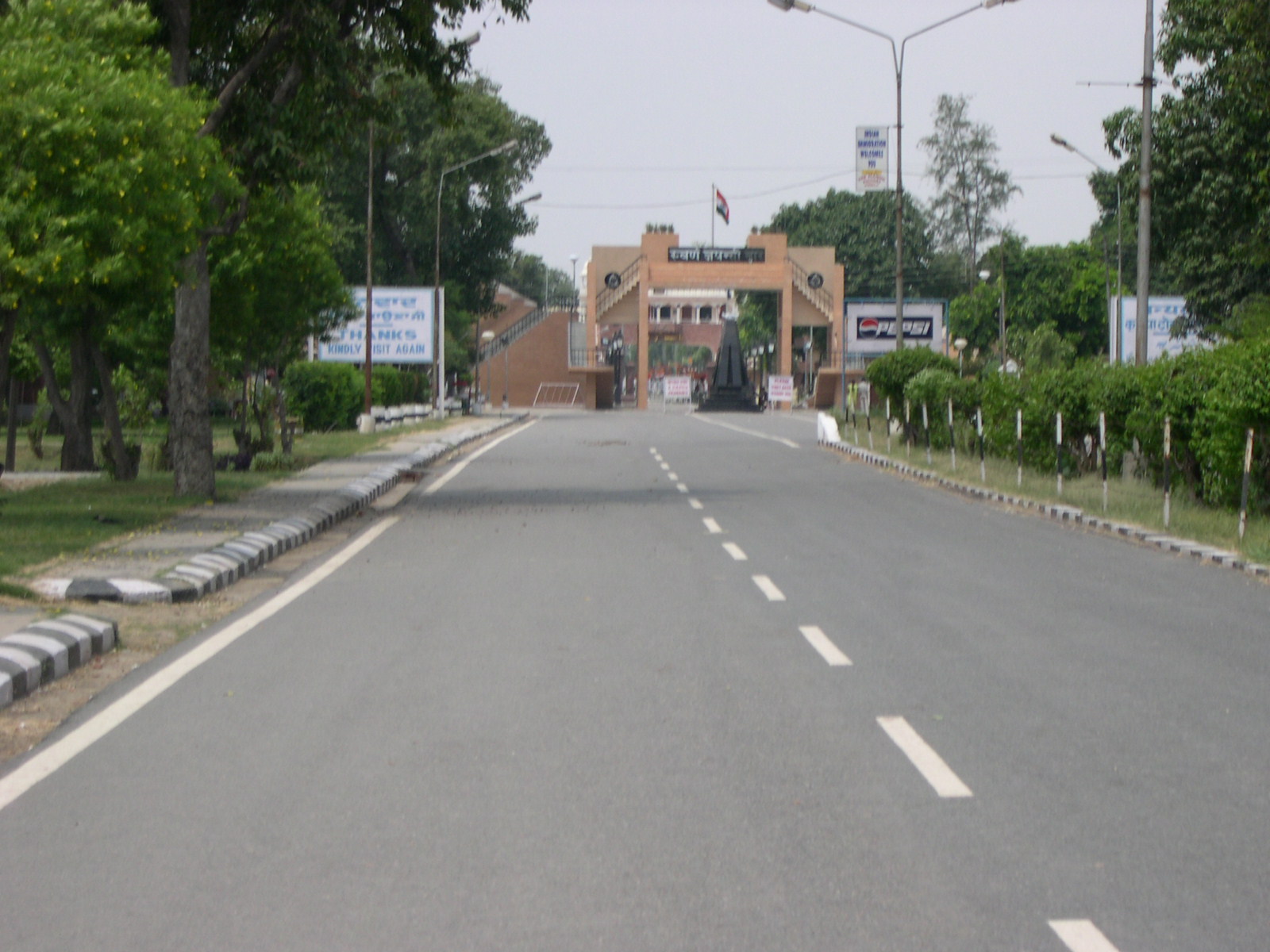
In 2001, I crossed the Wagah-Attari border for the first time. Since then, I have used this official land crossing between India and Pakistan numerous times, in the process seeing the border undergo multiple changes. It used to be the Grand Trunk Road split in half, with a few meters of “no man’s land” to separate them. I could literally walk from one side to the other, while remaining on the GT Road. Then, the authorities decided to uplift, gentrify, and replace the colonial bungalows. Gone was the quaint and informal space with scattered flower beds and plants and in came the flashy buildings, followed by the airport style security, customs, and immigration; culminating eventually in the hideous and expensive battle for who can hoist the largest flag and keep it flying high!
To be fair, the development of the check post at Wagah-Attari was probably a response to the expectation that relations between the two countries would improve, and with that the foot traffic would increase. The bungalows were not equipped to deal with high volumes of people. Hence, they first established the goods/transit depot on one side of the border, so as to divert the trucks carrying the items of import/export. This separated the trade traffic from the people traffic. Whilst the establishment of a goods depot offered signs of improved trade between the two countries, even this was subject to cordial relations.
With numerous crossings since then, I have seen the border change, not just physically but also its ambience and vibes that the place gives. Indeed, the new buildings and transit buses which take passengers from one side to other have functioned to create further distance between the lines of control. These were not there previously, and the cool formality evokes the illusion of being remote and separate. Borders do not have to be harsh and austere.
These moments and emotions are difficult to capture on camera, but they can be felt when encountering the staff and officials. When I first crossed the border, I had the compact Canon Sure Shot AF-7, which was a popular model in the 1990s and gifted to me. I enjoyed taking photographs, but cameras were not cheap then, and the 35mm film was expensive too, both to buy and to develop, so photos were taken sparingly. When I embarked on my doctoral research, taking my camera was essential for my trips to India and Pakistan, as it was an instrument to visually document my journey. I would normally pack 1-3 rolls of ISO 200 (sometimes also ISO 400) speed film, usually 36 EXP, good for general photographs. But one was never entirely sure until the film was taken back home, handed in for developing, which then produced the joy of physically going through the photographs a week later! Time had passed between undergoing the actual trip and now feeling those photographs in my hands, and the images allowed me to recreate and relive those moments again.
Today everything is instant. In a moment I can be taking a photograph at the border, and then share it with the wider public around the world via social media. The only caveat here is that, generally the phone signals are non-existent within 1-2 kilometres of the border area, so you would probably need to wait until you were able to pick up the phone signal. More importantly, this also disrupted any arrangements one had made to meet people on the other side. If I was crossing the border, I might contact my friends/family beforehand and say, I’m crossing at X time (keeping in mind the 30 minutes times difference between the two countries), so I estimate that I will be out at Y time (usually 60 minutes from one side to the other). But if things didn’t go to plan, there is no way of contacting the person to alert them of the delays. And when you did finally make it to the other side, there were always a small number of people anxiously waiting and looking to see when their friends/family will pass through those doors.
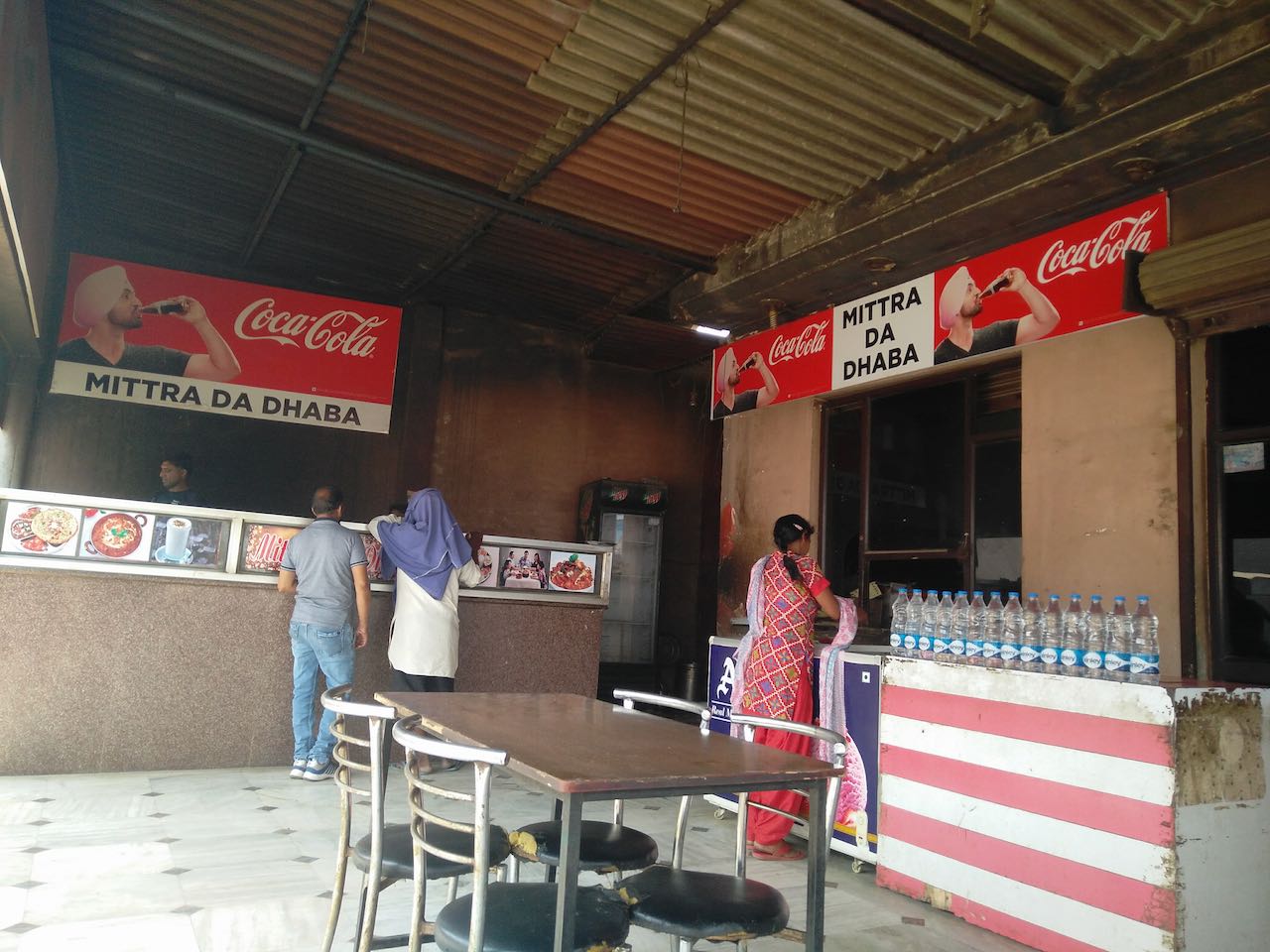
There are many other stories of this rather strange and intriguing no man’s land but to end with a more positive story, I share a picture of a dhaba at Attari, Mittra da dhaba (literal translation – friends’ roadside restaurant) is located close to the entrance to check post, catering to travellers and tourists who come for the daily lowering of the flag ceremony. I have gone there many times, but on one occasion in 2017, I asked the owner to pack some food for me, food which I planned to take across the border and share with my friends in Lahore. He took great care to make it extra special and pack the food tightly, so that it wouldn’t spill. I could see that it also brought him great joy to know that his food would travel to the other side. As we parted, he said come back and tell me if they enjoyed it!
Alas, these stories are in the past tense, and with Covid the border faced further restrictions and closures. I have no idea if my friend is still there, I hope so. We need more friends in these otherwise hostile spaces.
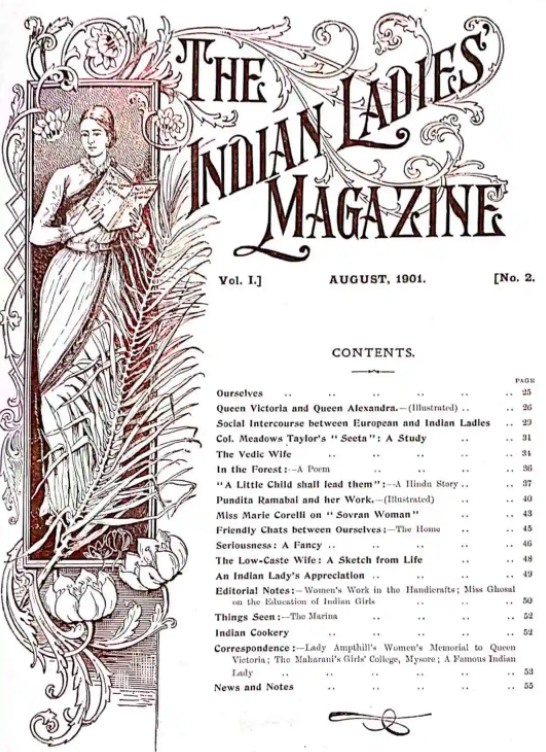
Recently I noticed in several social media forums that people have been sharing details of Rokeya Sakhawat Hossain and her short story, Sultana’s Dream (1905). This story was originally published in The Indian Ladies’ Magazine, Madras, 1905, in English and translated by the author into Bengali. The story takes the form of a dream, set in a futuristic feministic world, in which women through education, opportunity and their innovative ability to use technology have been able to flourish. The science and technology featured in the story is not far off the realities of today and shows immense foresight by the imagination of the author.
The story also highlights how unjust it was, and still is, to deny women education and freedoms, which men have. The imagined place is a generous, green, and friendly environment, in which feminist science has created a space for everyone to thrive and reap the benefits. Although the story was published over a hundred years ago, we are still far from this utopian land.
Rokeya Sakhawat Hossain was born circ. 1880 to an orthodox Bengali Muslim upper-class family in the small village of Pairaband (district Rangpur in Bengal Presidency and present-day Bangladesh). Her father insisted that she learn only Arabic and remain in strict purdah. But with the assistance of her siblings, she learned to read and write Bangla and English. In 1896 her older brother Ibrahim Saber sought to arrange her marriage to a widower in his late 30s. Syed Sakhawat Hossain was the district magistrate in the Bihar region of Bengal Presidency and Ibrahim thought Rokeya would do well under Syed’s open-minded attitude, who had received education in both Bengal and London.
“Rokeya and her husband settled in Bhagalpur, Bihar. None of her children lived. Syed, who was convinced that the education of women was the best way to cure the ills of his society, encouraged his willing wife to write, and set aside 10,000 rupees to start a school for Muslim women.”
After 11 years of marriage, Syed passed away in 1909, leaving Rokeya alone. Soon thereafter she opened a school in Bhagalpur. Later, she moved to Calcutta where she re-opened the Sakhawat Memorial Girls’ School on March 16, 1911. The number of students went from 8 in 1911 to 84 in 1915.
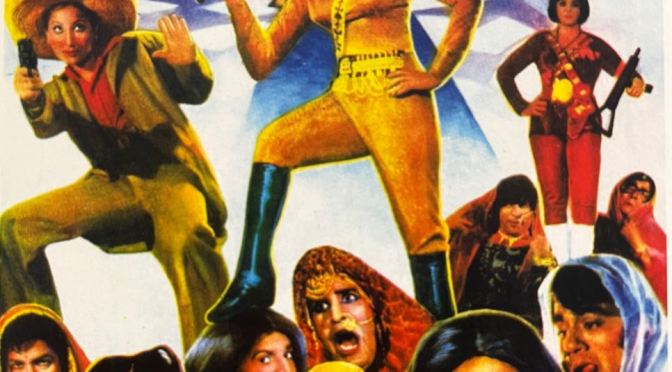
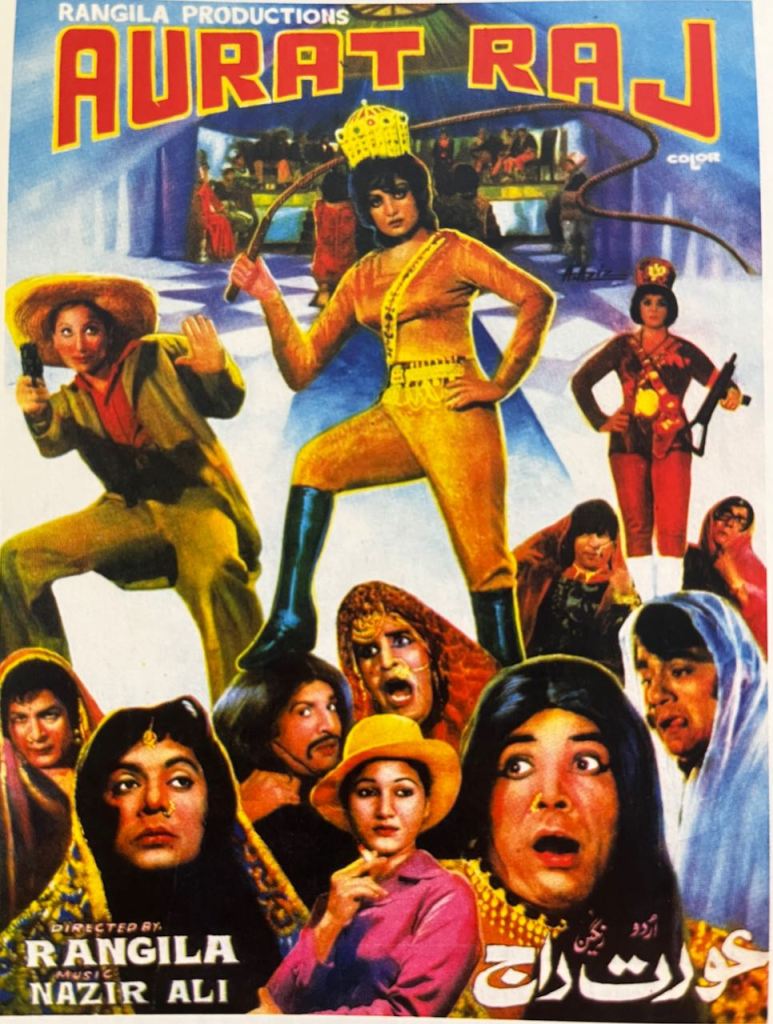
The pioneering concept behind Sultana’s Dream has inevitably inspired other writers and artists to take their cue from a world in which women have the power and men are the submissive other. Aurat Raj, a 1979 Pakistani film, which on the surface appears to be inspired by Rokeya’s work, is also a commentary on the military (and masculine) regime that had come into power, under General Zia. Aurat Raj, is a strange and kitsch interpretation, at whose heart is a social message, centred on exposing the oppression of women. But when the roles are reversed, the women behave in a similar fashion too, unlike Hossain’s short story.
Source: Cinema and Society edited by Ali Khan & Ali Nobil Ahmad (OUP, 2016)
The poster for the film Aurat Raj is equally intriguing as the film itself. It “depicts a woman dressed in a tight-fitting suit and long boots with a crown on her head and a whip in hand, all the more intriguing. She has a commanding, imperious expression on her face. To her right another woman in men’s clothes brandishes a gun. A third woman confidently smokes a cigarette. At the feet of the ‘Empress’ a series of men, including Sultan Rahi, are dressed in women’s clothes. Rahi demurely wears a dupatta on his head, his expression one of effeminate alarm. A subversive and experimental drag movie directed by Rangeela, who had appeared in scores of films in side-comic roles usually playing to the front benchers, Aurat Raj is perhaps Pakistan’s only satire to date and it lampoons not only the naked chauvinism that prevails in Pakistani society but also pokes fun at the way that this attitude pervades the industry. The film targets the machismo of Pakistani men and revels in inverting the gender and power roles, making the women literally wear the pants and leaving the men, including Sultan Rahi and Waheed Murad, wearing frilly frocks and helpless expressions.” Ali Khan, “Film Poster: Reflections of Change in the Pakistani Film Industry” in Cinema and Society: Film and Social Change in Pakistan, edited by Ali Khan & Ali Nobil Ahmad (OUP, 2016), P251.
Despite its well-known star cast of Waheed Murad, Rani, Rangeela and Sultan Rahi, the film was a commercial flop. However, it is certainly worth revisiting, if only as a reminder of the subversive message of the film, which dreams of a more equal society.
Dr. B.R. Ambedkar (born April 14, 1891, Mhow, India—died December 6, 1956, New Delhi), leader of the Dalits (Scheduled Castes; formerly untouchables), chairman of the drafting committee of the Constituent Assembly of India (1946-49) and law minister of the government of India (1947-51).
On his 131st birth anniversary, I share below an excerpt from a paper read by a 25-year-old Ambedkar titled Castes in India: Their Mechanism, Genesis, and Development, at Columbia University, New York, U.S.A. on 9 May 1916:
Subtler minds and abler pens than mine have been brought to the task of unravelling the mysteries of Caste ; but unfortunately it still remains in the domain of the “unexplained”, not to say of the “un-understood” I am quite alive to the complex intricacies of a hoary institution like Caste, but I am not so pessimistic as to relegate it to the region of the unknowable, for I believe it can be known. The caste problem is a vast one, both theoretically and practically. Practically, it is an institution that portends tremendous consequences. It is a local problem, but one capable of much wider mischief, for “as long as caste in India does exist, Hindus will hardly intermarry or have any social intercourse with outsiders; and if Hindus migrate to other regions on earth, Indian castes would become a world problem.”
And pasted below are a slice of the meagre UK newspaper reportage across the first three decades after Ambedkar’s death, when he was not the indispensable icon that he has become in the India since 1990-91:
“Dr Ambedkar”, ‘…had once thought of asking to be received as a Sikh’ – political rather than theological conversion to Buddhism, therefore – opinion is equally divided on whether Untouchability is dying out or whether the caste system is still rigid, though it may take rather new forms’ – ‘the Untouchables would be happier if, without exaggerating their separateness from the main body of Hindus, they can produce more leaders to carry on Ambedkar’s work’.
7 December 1956, The Manchester Guardian, p. 10
“India’s former Untouchables seek arrest” – ‘Harijans all over India have launched an agitation to press their demands…yesterday 500 demonstrators courted arrest…but the Harijans lack the political organisation or the strength within society to raise anything more than a matter of discontent, easily ignored…the Harijan agitation is being directed by the RPI, the descendent of the old SCF, which the late Dr Ambedkar made a political force in the years before independence but which has shrunk in influence [since]…the agitation was launched on Dr Ambedkar’s birthday yesterday in support of a charter of 10 demands placed before the PM two months ago (land, houses, fair distribution of food grains, enforcement of the laws against untouchability and “immediate cessation of harassment” of Harijans)…the Harijans are stirring…stiffening through desperation or anger [as evidenced] by clashes between caste Hindus and “neo-Buddhists” (Harijans who have converted to Buddhism) in Maharashtra’.
8 December 1964, The Times, p. 9
“The timeless untouchable Indian problem” – ‘not a small minority: 20% in UP, WB, Haryana, Punjab; 10% in Gujarat, Maharashtra, Kerala, and Assam… ‘what has happened to [them] in these past 30 years? Very little, according to Mr. Dilip Hiro, The Untouchables of India. [On] the Untouchability (Offences) Act, 1955, ‘if we took this law seriously, said one state police chief, half the population in the state would have to be arrested’. [Reservation] ‘has tended to break up or drain off any kind of movement fighting for untouchable rights…Dr Ambedkar, the first Untouchable leader, believed that their status would be ameliorated only when the caste system itself was ended in India and there are no signs at all of that. Among western anthropologists, this…may be seen as an effective and defensible ordering of society. Nor does it seem likely that Mrs. Gandhi’s new order, powered by the authority of Kashmiri Brahmins, is going to start at the bottom of the Indian social heap’.
23 February 1976, The Times, p. 6
“14 killed as caste violence strikes at Bihar village” – ‘the third serious outbreak of caste violence [against Harijans by middle-ranking caste Hindus] in northern India in just over one month’ – ‘during the Janata rule in Bihar, the middle-ranking so-called “backward” castes seized the advantage over the former upper castes’ – ‘atrocities had increased recently against Harijans and other economically weaker groups…because other communities had become jealous of their advance, according to Mrs. Savita Ambedkar, widow of Mr. B.R. Ambedkar, the prominent Harijan leader who helped to draft the Indian constitution’.
27 February 1980, The Times, p. 9
Postscript:
On 7 August 1990, Vishwanath Pratap Singh, the prime minister at the time, announced that Other Backward Classes (OBCs) would get 27 per cent reservation in jobs in central government services and public sector units. The announcement was made before both Houses of Parliament. The decision was based on a report submitted on 31 December 1980 that recommended reservations for OBCs not just in government jobs but also central education institutions. The recommendation was made by the Mandal Commission, which was set up in 1979 under the Morarji Desai government and chaired by B.P. Mandal (former chief minister of Bihar). 30 years since Mandal Commission recommendations — how it began and its impact today by Revathi Krishnan 7 August 2020, The Print.
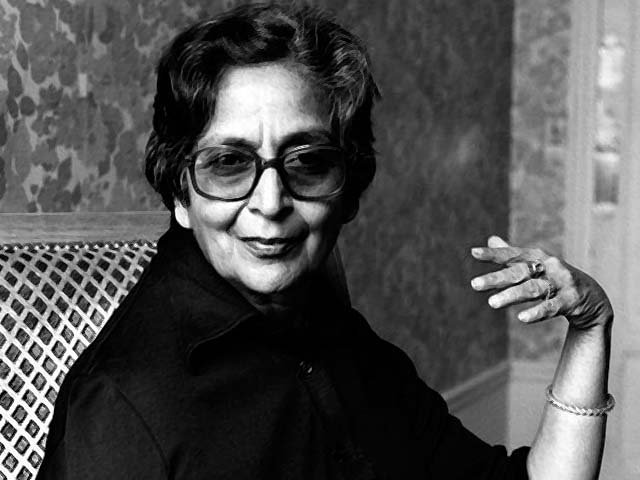
Amrita Pritam (1919-2005) was one the most distinguished Punjabi poets and fiction writers. She was born in Mandi Bahauddin, Punjab and was living in Lahore when in 1947 she, along with the millions others, was forced to migrate during the partition of the Punjab.
Her first collection of poems Amrit Lehrcm was published in 1936 when she was barely 17 years old. Starting as a romantic poet, she matured into a poetess of revolutionary ideas as a result of her involvement with the Progressive Movement in literature.
Ajj Aakhaan Waris Shah Nu (Today I Say unto Waris Shah) is a heartrending poem written during the riot-torn days that followed the partition of the country. (Apnaorg.com). The poem is addressed to Waris Shah, (1706 -1798), a Punjabi poet, best-known for his seminal work Heer Ranjha, based on the traditional folk tale of Heer and her lover Ranjha. Heer is considered one of the quintessential works of classical Punjabi literature.
Her body of work comprised over 100 books of poetry, fiction, biographies, essays, a collection of Punjabi folk songs and an autobiography that were all translated into several Indian and foreign languages
Ajj Aakhaan Waris Shah Nu (Today I Say unto Waris Shah – Ode to Waris Shah)
Translation from the original in Punjabi by Khushwant Singh. Amrita Pritam: Selected Poems. Ed Khushwant Singh. (Bharatiya Jnanpith Publication, 1992)
To Waris Shah I turn today!
Speak up from the graves midst which you lie!
In our book of love, turn the next leaf.
When one daughter of the Punjab did cry
You filled pages with songs of lamentation,
Today a hundred daughters cry
0 Waris to speak to you.
O friend of the sorrowing, rise and see your Punjab
Corpses are strewn on the pasture,
Blood runs in the Chenab.
Some hand hath mixed poison in our live rivers
The rivers in turn had irrigated the land.
From the rich land have sprouted venomous weeds
flow high the red has spread
How much the curse has bled!
The poisoned air blew into every wood
And turned the flute bamboo into snakes
They first stung the charmers who lost their antidotes
Then stung all that came their way
Their lips were bit, fangs everywhere.
The poison spread to all the lines
All of the Punjab turned blue.
Song was crushed in every throat;
Every spinning wheel’s thread was snapped;
Friends parted from one another;
The hum of spinning wheels fell silent.
All boats lost the moorings
And float rudderless on the stream
The swings on the peepuls’ branches
I lave crashed with the peepul tree.
Where the windpipe trilled songs of love
That flute has been lost
Ranjah and his brothers have lost their art.
Blood keeps falling upon the earth
Oozing out drop by drop from graves.
The queens of love
Weep in tombs.
It seems all people have become Qaidos,
Thieves of beauty and love
Where should I search out
Another Waris Shah.
Waris Shah
Open your grave;
Write a new page
In the book of love.
NOTES
Waris Shah (1706 -1798) was a Punjabi poet, best-known for his seminal work Heer Ranjha, based on the traditional folk tale of Heer and her lover Ranjha. Heer is considered one of the quintessential works of classical Punjabi literature.
Qaido – A maternal uncle of Heer in Heer Ranjha is the villain who betrays the lovers.
The Punjab – the region of the five rivers east of Indus: Jhelum, Chenab, Ravi, Beas, and Sutlej.
I came across this picture in The Pakistan Times, it had caught my imagination, and with little thought for how it might fit into my research I just took a picture of it and then, continued to explore the newspaper for stories on, of and by women. This remained in my photographic archive until recently, when I began to go through the material. The picture still does not fit into the wider project, but it remains striking. It is evidently from the Miss Universe competition, but I knew little of the pageant competition, other than then perhaps how it still continues to resonate with people.
Further probing revealed the Indian representative as the-then Madras-born and intriguingly named Indrani Rahman (1930-99). What could be the (fragmentary) story of this Indian beauty queen appearing in the pages of The Pakistan Times, as a participant of the Miss Universe Pageant held on 28 June 1952, at Long Beach, California? Straightaway her name intrigued me, Indrani is a Hindu name and Rahman is Muslim, yet on the pictures from Miss Universe contest, she appears to wear a bindi on her forehead. Her hair is adorned with the traditional scent of the jasmine flower. These are traditionally worn by married women, especially Hindu women. In total thirty women entered the competition, including the 22-year-old, married and mother of two, Indrani. The competition was eventually won by a 17-year-old Armi Kuusela from Finland. This is what the very first Miss Universe pageant looked like 67 years ago.
The title “Miss Universe” was first used by the International Pageant of Pulchritude in 1926. Subsequently the contest was held annually until 1935, when it was interrupted by the Great Depression and then the Second World War. The current competition was established in 1952 by Pacific Knitting Mills, a California-based clothing company and manufacturer of Catalina Swimwear. The company had sponsored the Miss America pageant until 1951, when the winner, Yolande Betbeze, refused to pose for publicity pictures wearing one of their swimsuits. The ubiquitous swimsuit has remained the source of much discussion, with accusations of objectifying women. Finally recognising the shift in wider attitudes, in 2018 the Miss America contest decided to end the Swimsuit element and focus more on the achievements of the contestants. (Miss America Ends Swimsuit Competition, Aiming to Evolve in ‘This Cultural Revolution’ – The New York Times)
Indrani was the daughter of Ramalal Balram Bajpai (1880-1962) and Ragini Devi (1893-1982) (nee Ester Luella Sherman). Ramalal, a chemist by training, had been an Assistant editor of Young India, a magazine established by the Punjabi nationalist politician, Lala Lajpat Rai, and, after India gained independence, he was appointed as Consul General at New York. Ragini on the other hand, became increasingly passionate about Indian classical dance, and championed the revival of Kathakali.
Already then Indrani’s family were unconventional. Few people in India grew up in mixed-race backgrounds, and indeed even in contemporary India. By the age of 15, in 1945 Indrani herself had eloped and married Habib Rahman (1915–1995), a well-known Indian architect. Soon after her son Ram Rahman was born followed by a daughter, Sukanya Rahman. Habib Rahman worked on iconic places such as Delhi Zoological Park, Gandhi Ghat, and Rabindra Bhavan. He studied at MIT and was the first Indian to complete his Masters in Architecture there in 1944. Rahman was the recipient of the Padma Shri (1955) and Padma Bhushan (1974). Likewise, Indrani was awarded the Padma Shri (1969) and the Sangeet Natak Akademi Award (1981).
This upbringing and early experiences show that Indrani grew up in a much more cosmopolitan milieu that was possibly perhaps only for those in positions of power or the privileged class. Her mother, though Ragini by name, would certainly not have discarded her own cultural upbringing in America. This most likely also played a part in Indrani having fewer inhibitions in participating in beauty contests.
Before Indrani entered the Miss Universe contest, she had already been crowned Miss India, 1952. As side-note, the famous actress of Hindi cinema, Nutan, also started out by entering and being crowned Miss India in 1951 and Miss Mussorie in 1952. The first Miss India was Pramila (Esther Victoria Abraham), from Calcutta, who won in 1947, interestingly the same year that India got Independence.
A news report about this appeared on April 5, The New York Times in 1952 reads thus: “Indian traditionalism was further shocked by the fact that a married woman, Mrs. Indrani Rehman [sic] of Calcutta, was chosen as the winner. As Mrs. Rehman is a Moslem, her participation was especially defiant of custom, since old-style Moslem women, particularly wives, are even more secluded than their Hindu sisters. Emphasizing the departure from Indian tradition even further, the first Miss India is half-American,” (Sara Hussain , 21 Jul 2016)
Besides having the accolade of being the first Indian to take part in the Miss Universe, Indrani was and remained an accomplished classical dancer. She travelled with her mother around the world performing and taking the passion of Bharata Natyam, Kuchipudi, Kathakali and Odissi, to the West. A passion which she passed on to her daughter, and indeed, Sukanya Rahman Wicks had also danced on stage with her mother and grandmother.
Further Reading:
Lightfoot, Louise. Louise Lightfoot in Search of India: An Australian Dancer’s Experience. Cambridge Scholars Publishing, 2017.
Hobson-Jobson The Anglo-Indian Dictionary By Henry Yule and A. C. Burnell, Wordsworth Edition, 1996, first published 1886.
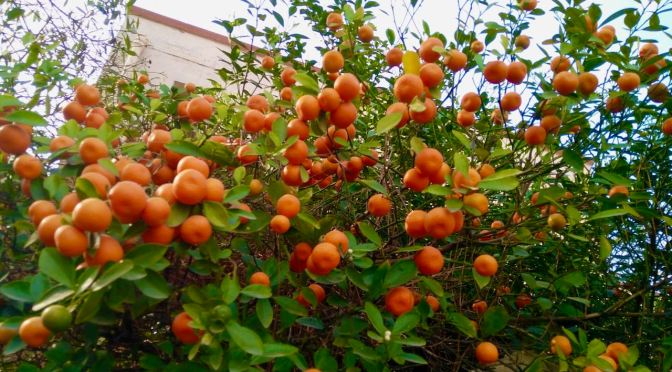
Orange: A good example of plausible but entirely incorrect etymology is that of orange from Lat. aurantium. The latter word is in fact an ingenious medieval fabrication. The word doubtless came from the Arab. naranj, which is again a form of Pers. narang, or narangi, the latter being still a common term of the orange in Hindustan. The Persian indeed may be traced to Skt. nagaranga, and naranga, but of these words no satisfactory etymological explanation has been given, and they have perhaps been Sanscritized from some southern term.
The native country of the orange is believed to be somewhere on the northern border of India. A wild orange, the supposed parent of the cultivated species, both sweet and bitter, occurs in Garhwal and Sikkim, as well as in the Kasia country, the valleys of which last are still abundantly productive of excellent oranges.
For Baber (Autobiog. 328) describes an orange under the name of Sangtarah, which is, indeed a recognised Persian and Hind. word for a species of the fruit.
Color or Fruit? On the Unlikely Etymology of “Orange”By David Scott Kastan with Stephen Farthing. July 27, 2018
Early in the 16th century Portuguese traders brought sweet oranges from India to Europe, and the color takes its name from them. Until they arrived, there was no orange as such in the color spectrum. When the first Europeans saw the fruit they were incapable of exclaiming about its brilliant orange color. They recognized the color but didn’t yet know its name. Often they referred to oranges as “golden apples.” Not until they knew them as oranges did they see them as orange.
The word itself begins as an ancient Sanskrit word, naranga, possibly derived from an even older Dravidian (another ancient language spoken in what is now southern India) root, naru, meaning fragrant. Along with the oranges, the word migrated into Persian and Arabic. From there it was adopted into European languages, as with narancs in Hungarian or the Spanish naranja. In Italian it was originally narancia, and in French narange, though the word in both of these languages eventually dropped the “n” at the beginning to become arancia and orange, probably from a mistaken idea that the initial “n” sound had carried over from the article, una or une. Think about English, where it would be almost impossible to hear any real difference between “an orange” and “a norange.” An “orange” it became, but it probably should really have been a “norange.” Still, orange is better, if only because the initial “o” so satisfyingly mirrors the roundness of the fruit.
The etymological history of “orange” traces the route of cultural contact and exchange—one that ultimately completes the circle of the globe. The word for “orange” in modern-day Tamil, the surviving Dravidian language that gave us the original root of the word, is arancu, pronounced almost exactly like the English word “orange” and in fact borrowed from it.































 BAGICHA