Punjabi Khoj Garh is a centre of research, publication and advocacy on the history, culture, literature, music, and art of the Punjab. It was established on 10 March 2001 and Iqbal Qaiser, an independent scholar, has tirelessly built up this institute over the past 20 years. It is maintained by the Punjabi Khoj Garh Trust and individuals who work voluntarily to maintain and upkeep the Centre. They welcome all sorts of researchers with facilities and materials for their work on Punjab.
For further details contact: Iqbal Qaiser, Punjabi Khoj Garh, Lalliyani (Musfafar Abad), District Kasur, Pakistan. Follow them on Facebook.
The Last Sikhs of Nankana Sahib, October 1947 via @@learnpunjabi
In the days leading up to the Partition of British India, there was a lot of anxiety as to how the drawing of the Radcliffe Line would impact on the ground. This was much more pronounced amongst the Sikh community, whose spiritual homeland would now be divided to make the Partition Plan and its two state solution possible.
Below are two newspaper clips from Select newspaper coverage of the Partition of India (1947), which has been compiled from The Hindu, The Hindustan Times and The Statesman, by Dr. Kirpal Singh, Khalsa College, Amritsar.
AKALI LEADERS CALL TO SIKHS.
NEW DELHI, August 2: Giani Kartar Singh, President, Shiromani Akali Dal in a statement today calls upon Sikhs to observe August 5 as “Nankana Sahib Day.”
He says: Though the ban at Nankana Sahib has been successfully defied and restrictions on holding of our conference withdrawn, the Sikhs have proved once again their determination not to surrender the sacred territory of Nankana Sahib at any cost to the “Pakistanists”.
I call upon all Sikhs to observe August 5 as “Nanakana Sahib Day” hold meetings and send telegrams to the Chairman of the Boundary Commission that unless 85% of our population and colony areas are kept in the East Punjab and due regard is paid to our holy shrines while demarcating its boundaries so as [to] bring in the largest number of these in “Hindustan” we shall not rest content.”
SIKH CAMPAIGN IN BRITAIN:
LONDON, Aug.2. Two hundred Indians, most of them Sikhs in colourful turbans attended a public meeting last night to hear to Sikh Delegates who have come to London to present a Sikh Demand in connection with the division of the Punjab.
Sardar Ganga Singh, Leader of the Delegation, said that he had come to London representing one of the most influential Sikh organisations in the Punjab the Shiromani Akali Dal, to present the demands of the Sikhs regarding the Punjab division.
The river Chenab should be the Boundary Line of the two Punjabs, he said, anything contrary to this would be against the interest of the Sikhs and he hoped that the British Chairman of the Boundary Commission would be fair and impartial. The Sikhs had made contributions during the last war for freedom and democracy and it would be the greatest tragedy if they were deprived of their legitimate demands in their own homeland. Besides, no power on earth can dominate this gallant community.
If the Sikhs were deprived of their legitimate demands, the Punjab would be the land of eternal troubles Mr. Ganga Singh continued.
Dr. Kumria, the Chairman of the meeting, said he was opposed to the division of India, but it seemed that under the circumstances, the leaders of the Indian National Congress were justified in accepting the Mountbatten plan.
“Since we accept the division of India we would like to see that there are fair division of the provinces of the Punjab and Bengal.”
The Chairman emphasised that this division was bound to be temporary and would vanish within a short time.” Reuter.
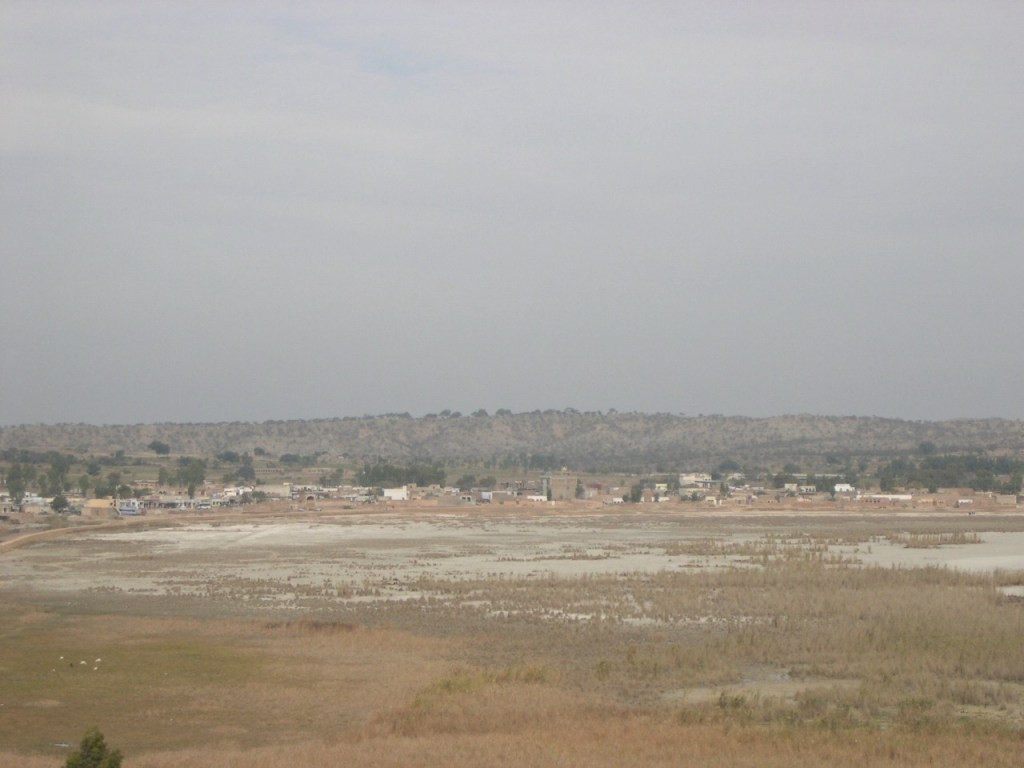
In December 2004, I was traveling from Islamabad to Lahore on the M-2 motorway, which is the first motorway to be created in South Asia and which was inaugurated in 1997. It is also one of the most expensive to be constructed under the Korean company, Daewoo. The journey of 184 km takes one via the magnificent Salt Range and Kallar Kahar, a subdivision of Chakwal District (Punjab) and conveniently located close to the M-2.
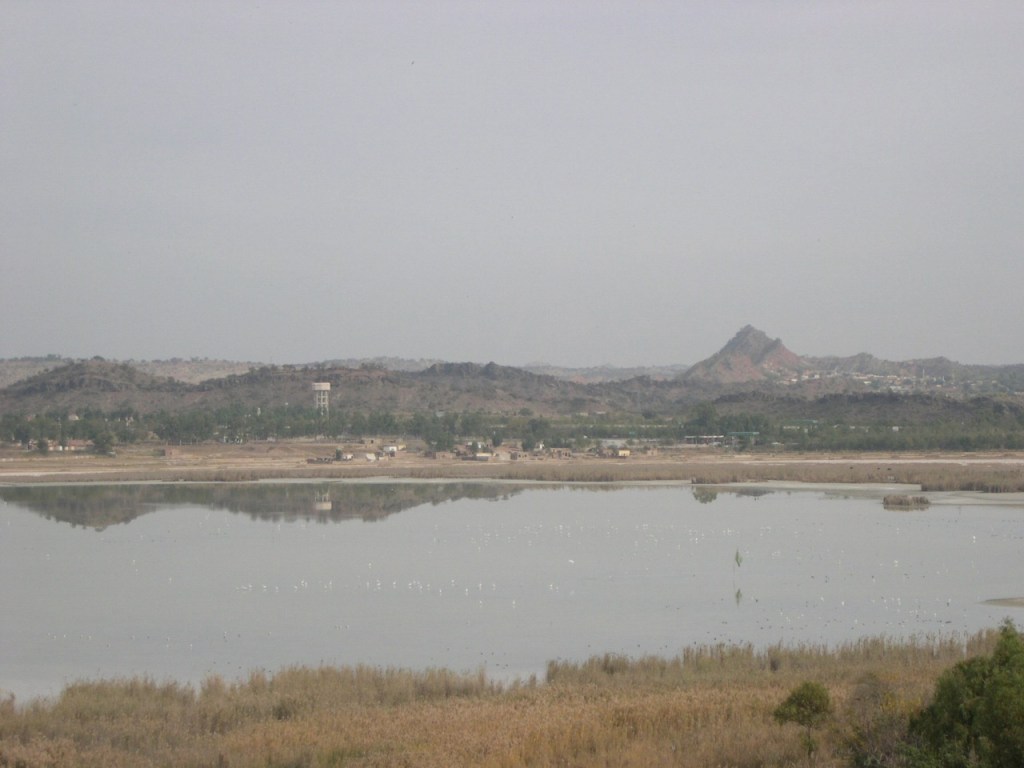
Kallar Kahar is also a popular tourist destination with captivating lakes and the Katas Raj Temple complex, dedicated to Lord Shiva, dating back to 615-950 CE. The founder of the Great Mughal dynasty, Zahir ud-Din Muhammad Babur (1483-1530), stopped here with his army, while en route to north India in 1519. During this stay, a throne was built by cutting a piece of limestone formation to create a raised platform, from where he addressed his army. This throne, known as Takht-e-Babri, was located within the Bagh-i-Safa, the first of many Mughal gardens to be created. Salman Rashid in his book, The Salt Range and the Potohar Plateau (Sang-e-Meel, 2001), mentions how Babar, described the area of Kallar Kahar Lake as a “charming place with good air”.
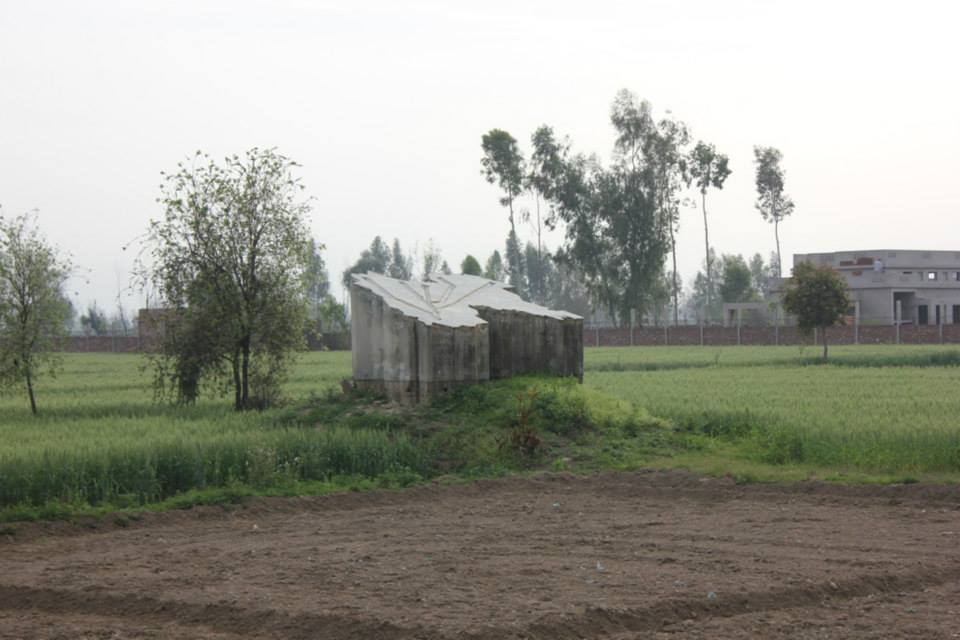
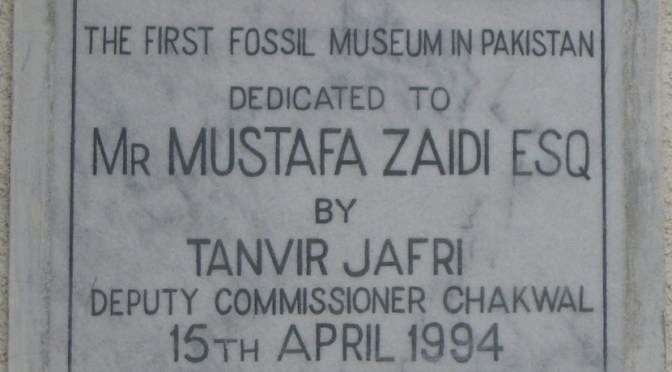
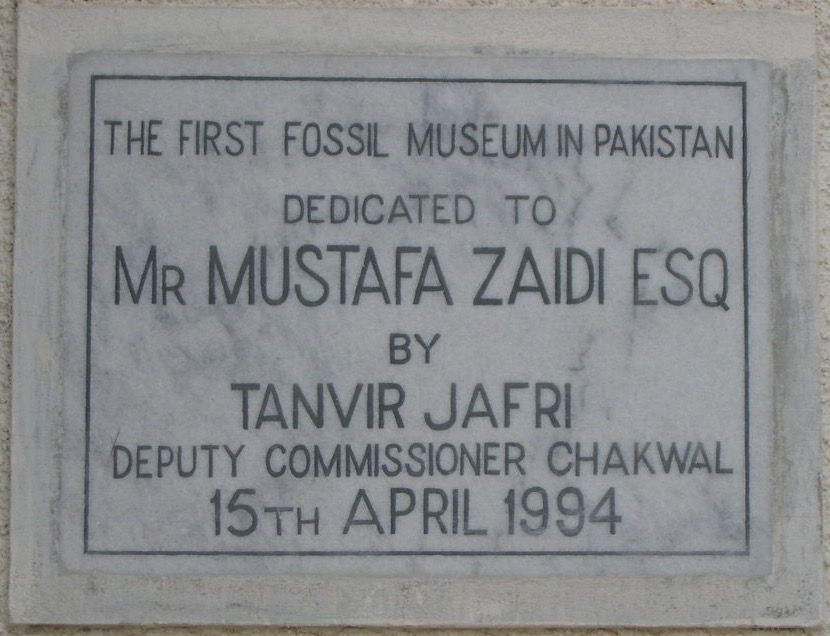
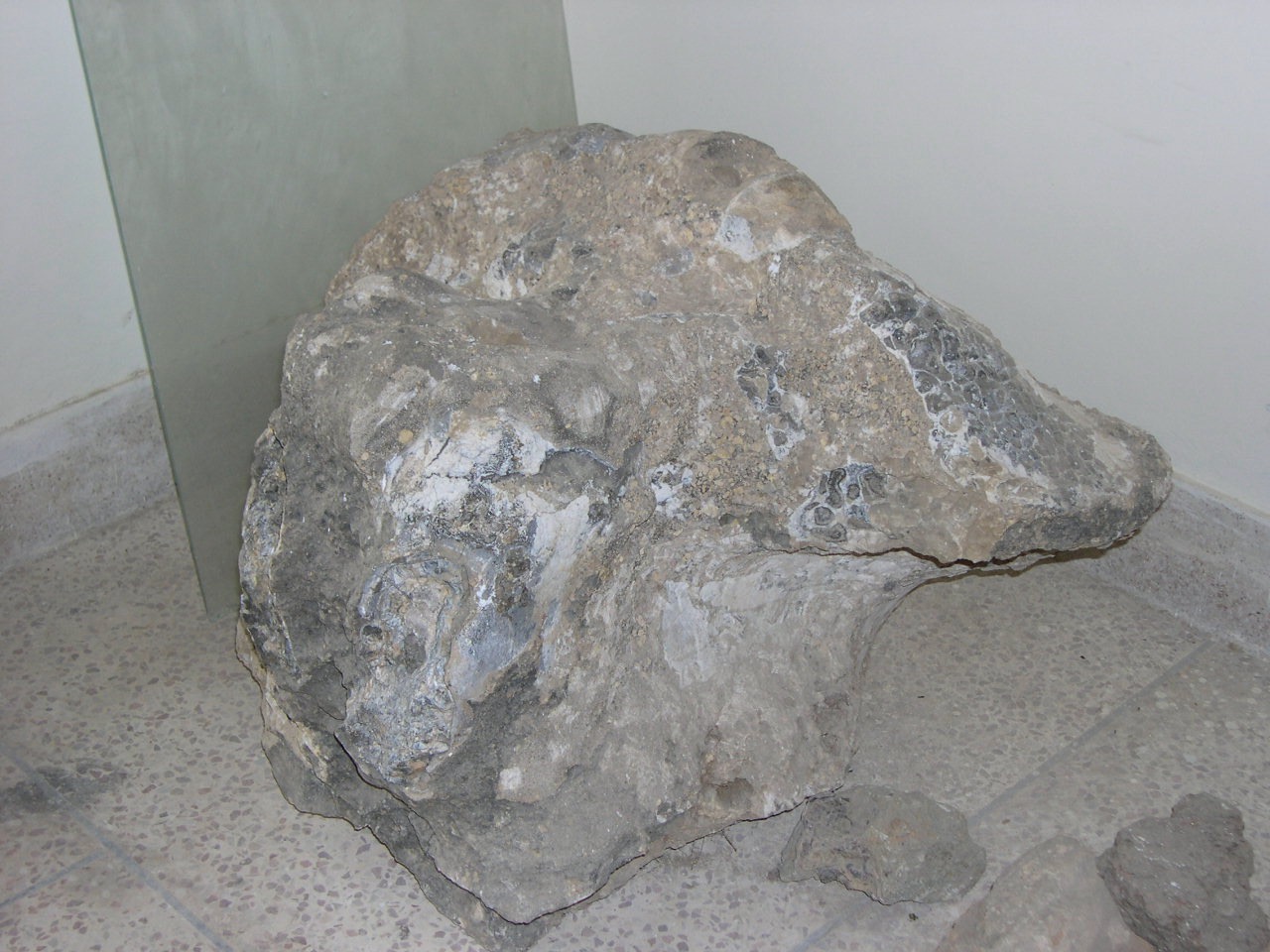
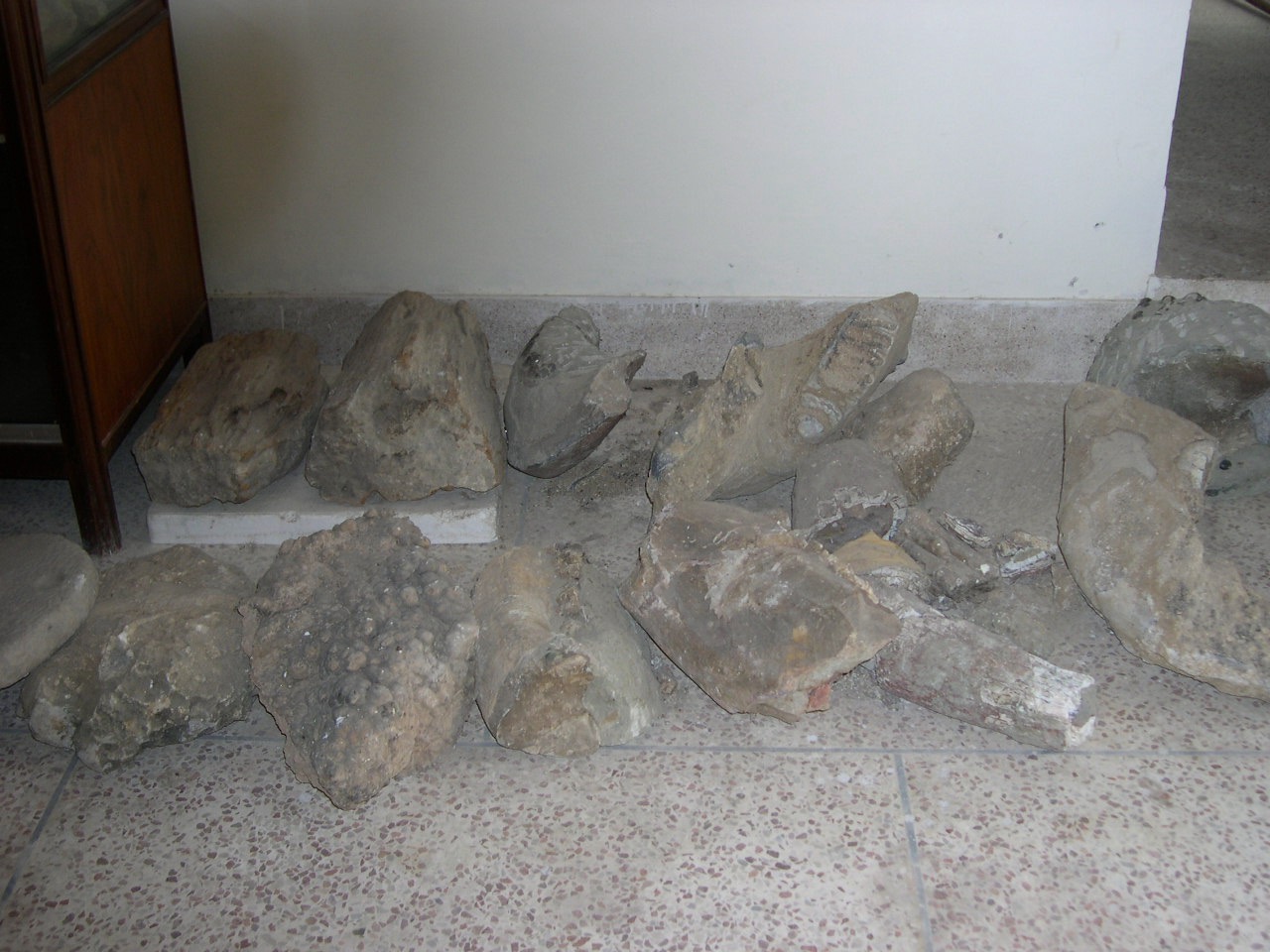
Back in 2004, I also stumbled upon the first fossil museum in Pakistan! Actually, it was less a museum and more a room with a variety of fossils scattered randomly on the floor. Neglected and dusty, they appeared to be of little significance. I recently came across this old photograph, which I had forgotten about.
I was so intrigued by the plaque with this inscription of the first fossil museum that I started doing a little digging about it, with little to show. A search for Mustafa Zaidi throws up a famous poet/civil servant (born 16 October 1930 in Allahabad and died 12 October 1970), while Tanvir Jafri, the then-DC of Chakwal, might still be around with recollections of this fossil museum.
I think the fossil museum is perhaps part of the Kallar Kahar Museum now, which is located opposite the Lake. It was finally inaugurated earlier this year in April, after seven years of its completion. At the time, I remember the caretaker saying that they there was something bigger in the pipeline, to create a better museum space. In South Asia, these matters take time (years), unless there is political mileage in the project. Though I should not have been so dismissive of the fossils, because this region is rich in history and has dinosaur fossils dating back 15 million years. But heritage remains a low priority for the country, whether prehistoric, ancient or modern, and is a simultaneously contested and marginalised space.
It was fifty years ago that Henry Kissinger made a secret trip to Beijing in July 1971. Kissinger, who was President Nixon’s National Security Advisor, flew to Beijing from Pakistan on PIA flight. His meetings there produced an agreement that President Nixon would visit China, which saw the beginning of the U.S.-China effort to discuss the issues that had divided them over the years. Below are some snippets of recent articles that have appeared to mark this moment from Pakistan’s perspective and also some archival material.
FIFTY years ago today, on July 8, 1971, Dr Henry Kissinger as president Nixon’s envoy made a stopover in Rawalpindi to meet president Yahya Khan. Kissinger came from New Delhi, leaving a perplexed prime minister Mrs Indira Gandhi wondering why he had dropped in for such insubstantial talks.
In Rawalpindi that night, Dr Kissinger had dinner with the president, during which they discussed the secret they had shared for two years — the furtive contact between US president Nixon and the Chinese leadership of Chairman Mao Zedong and premier Zhou Enlai.
Dr Kissinger expressed his apprehension over his visit to Beijing, insisting at one stage that president Yahya should accompany him as a guarantor of his safety. Yahya demurred and offered Kissinger a tin hat and a general instead.
In the early hours of July 9, while his ‘double’ (ostensibly with a gastric upset) drove to Nathiagali, Dr Kissinger flew out of Chaklala airport in a PIA aircraft. He spent the next few days in Beijing and returned on July 11.
I dined with former president Yahya Khan four years later, on Aug 2, 1975. He was then in ‘protective custody’ in his Harley Street home. I asked him about Chairman Mao: “Like an ocean”. Zhou Enlai? “Courteous, far-sighted but like a mouse in front of Chairman Mao.” And president Richard Nixon? “A true friend of Pakistan.”
Yahya Khan — the go-between trusted by both the Americans and the Chinese — maintained a confidential record consisting of 49 documents, kept in a loose-leaf folder which his son Ali Yahya hid under his bed. Occasionally, tantalisingly, he would reveal some but not all its contents.
Years later, Ali gave me a full set of the papers. These I was able to convert into a book — From a Head, Through a Head, To a Head: The Secret Channel between the US and China through Pakistan (2000). Later, I discovered a cache of Nixon’s presidential papers stored in the US National Archives, in Washington, D.C. They proved uniquely valuable, because Kissinger had put an embargo on his own papers. Read the full article.
On this particular night in July 1971, we were told to to get ready for a 3 AM departure. Pakistan International Airlines was routinely used for VVIP (Very Very Important Person) travel from its very inception and in the 1960s had developed a security check-list to cover such operations whenever needed. The basics involved securing the aircraft with armed guards during preflight maintenance and ensuring flight operation by a crew that had prior national security clearance.
Being one of the Chief Pursers at the time who had such security clearance, I was asked in July 1971, to proceed to Rawalpindi from Lahore where I was on Vacation. A Boeing 707 crew under the command of Captain M T Baig was assembled in Intercontinental Hotel Rawalpindi without a clue as to the nature of this VVIP operation. We were only told in clear terms that we were not to communicate with anyone and that we would be told to operate a VVIP flight on short notice…
Since it was dark, it was difficult to see the passengers in his car. But as soon as they came out of the car and started to come up the steps, lo and behold! the man following Mr. Khan was none other than Dr. Henry Kissinger, Assistant to the US President for National Security affairs!
I was the first to greet him aboard, introduced myself as Purser in charge. Dr Kissinger then introduced me to the other gentlemen in the party – namely Winston Lord, John Holdridge and Richard Smyser. Mr. Khan got out, the door was closed and departure announced to Peking. I remember having told Captain M.T. Baig, the commander of this flight, as to who exactly our VVIP passengers were. He was as surprised as one might expect. Read the full account.
Another important channel to Beijing was Ambassador Huang Hua, who headed the PRC’s United Nations Mission when it was established in November 1971, a few weeks after the U.N. General Assembly voted to seat Mainland China. Huang and Kissinger began holding secret meetings at a CIA safehouse in the Lower East Side of Manhattan and quickly developed a comfortable relationship across the ideological divide. Although they were able to keep their meetings secret, within months some neighbors began to wonder “what is going on.” Security officials asked that Kissinger “arrive in something other than a large limousine,” arrive on time, and bring a less obtrusive Secret Service detail. (Apparently the agents had “been leaping out of the car and stopping traffic.”)
On 10 December 1971, Kissinger met with Huang Hua to brief him on the U.S. stance toward the South Asian crisis. A week earlier, the Bangladesh crisis had exploded into war when Pakistan launched a surprise attack on India. With the U.S. public generally supporting India and the cause of Bangladeshi independence, Nixon and Kissinger secretly and deceptively tilted policy toward Pakistan, in part because of President Yahya Khan’s important role in facilitating communications with Beijing during 1970 and 1971. Moreover, Nixon and Kissinger saw India as a Soviet proxy and believed incorrectly that Indian prime minister Indira Gandhi aimed to destroy West Pakistan in order to humiliate the government that had helped to forge U.S.-China relations. Kissinger told Huang how the White House was sustaining its tilt toward Karachi with veiled threats to the Soviets, secret requests to Middle Eastern governments to provide military equipment to Karachi, and instructions to send an aircraft carrier fleet through the Straits of Malacca into the Bay of Bengal.
Secretary of State Rogers was furious with White House policy toward Pakistan, although he failed to realize that Nixon was as much its architect as Kissinger. Nixon and Kissinger continued to make key decisions in secret. Only they knew that their naval deployments were to ensure “maximum intimidation” of India and the Soviet Union. Although the Indians were puzzled by U.S. maneuvers, Kissinger later argued that this action had been “the first decision to risk war in the triangular Soviet-Chinese-American relationship.” However, he did not admit in his memoirs that he had counseled Ambassador Huang that if Beijing decided to intervene in the war “to protect its security, the U.S. would oppose efforts of others to interfere with the People’s Republic.” Huang’s rhetoric in the conversation was militant; Kissinger concluded incorrectly that the Chinese were about to join the fighting. Beijing had as little interest in intervening as the Indians had in escalating the fighting. A week after this meeting, on 17 December, the Indians accepted Pakistan’s offer of an unconditional cease-fire.
Getting To Beijing: Henry Kissinger’s Secret 1971 Trip A documentary history of US efforts under Richard Nixon to open discussions with Chinese leaders, an effort that yielded Kissinger’s trip forty years ago this month. Photo: Premier Zhou Enlai and National Security Advisor Henry Kissinger.
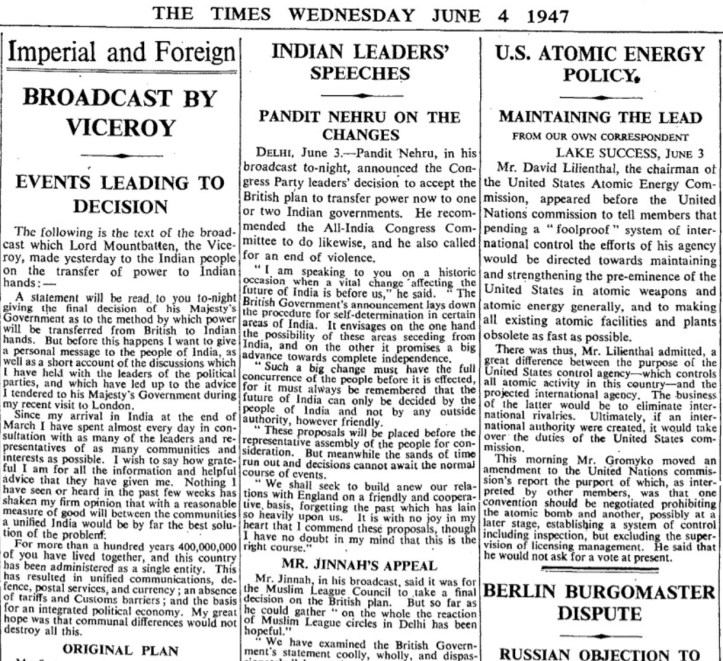
Below is the full transcript of the speech, which was delivered by Lord Mountbatten, the last Viceroy of India. It is followed by statements by Attlee, Nehru, Jinnah and Baldev Singh. The latter’s parting words make for interesting, wishful reading considering that it was the Sikh community that was impacted the most by this Partition Plan. This is also fully acknowledged by Mountbatten in his speech.
BROADCAST BY VICEROY EVENTS LEADING TO DECISION
The following is the text of the broadcast which Lord Mountbatten, the Viceroy, made yesterday to the Indian people on the transfer of power to Indian hands:-
A statement will be read to you tonight giving the final decision of his Majesty’s Government as to the method by which power will be transferred from British to Indian hands. But before this happens I want to give a personal message to the people of India, as well as a short account of the discussions which I have held with the leaders of the political parties, and which have led up to the advice I tendered to His Majesty’s Government during my recent visit to London.
Since my arrival in India at the end of March I have spent almost every day in consultation with as many of the leaders and representatives of as many communities and interests as possible. I wish to say how grateful I am for all the information and helpful advice that they have given me. Nothing I have seen or heard in the past few weeks has shaken my firm opinion that with a reasonable measure of good will between the communities a unified India would be far the best solution of the problem.
For more than a hundred years, 400,000,000 of you have lived together, and this country has been administered as a single entity. This has resulted in unified communications, defence, postal services and currency; an absence of tariffs and Customs Barriers; and the basis for an integrated political economy. My great hope was that communal differences would not destroy this.
ORIGINAL PLAN
My first course, in all my discussions, was therefore to urge the political leaders to accept unreservedly the Cabinet mission plan of May 16, 1946. In my opinion that plan provides the best arrangement that can be devised to meet the interests of all the communities of India. To my great regret it has been impossible to obtain agreement either on the Cabinet mission plan or on any other plan that would preserve the unity of India. But there can be no question of coercing any large areas in which one community has a majority to live against their will under a Government in which another community has a majority—and the only alternative to coercion is partition.
But when the Muslim League demanded the partition of India, Congress used the same arguments for demanding in that event the partition of certain provinces. To my mind this argument is unassailable. In fact neither side proved willing to leave a substantial area in which their community have a majority under the government of the other. I am, of course, just as much opposed to the partition of provinces as I am to the partition of India herself, and for the same basic reasons. For just as I feel there is an Indian consciousness which should transcend communal differences, so I feel there is a Punjabi and Bengali consciousness which has evoked a loyalty to their province. And so I felt it was essential that the people of India themselves should decide this question of partition.
The procedure for enabling them to decide for themselves whether they want the British to hand over power to one or two governments is set out in the statement which will be read to you. But there are one or two points on which 1 should like to add a note of explanation. It was necessary, in order to ascertain the will of the people of the Punjab. Bengal, and part of Assam, to lay down boundaries between the Muslim majority areas and the remaining areas, but I want to make it clear that the ultimate boundaries will be settled by a boundary commission and will almost certainly not be identical with those which have been provisionally adopted.
POSITION OF SIKHS
We have given careful consideration to the position of the Sikhs. This valiant community forms about an eighth of the population of the Punjab, but they are so distributed that any partition of this province would inevitably divide them. All of us who have the good of the Sikh community at heart are very sorry to think that the partition of the Punjab which they themselves desire, cannot avoid splitting them to a greater or lesser extent. The exact degree of the split will be left to the boundary commission on which they will, of course, be represented.
The whole plan may not be perfect: but like all plans its success will depend on the spirit of good will with which it is carried out. I have always-felt that once it was decided in what way to transfer power, the transfer should take place at the earliest possible moment, but the dilemma was that if we waited until a constitutional set-up for all India was agreed, we should have to wait a long time, particularly if partition were decided on, whereas if we handed over power before the Constituent Assemblies had finished their work we should leave the country without a constitution.
The solution to this dilemma, which I put forward, is that his Majesty’s Government should transfer power now to one or two governments of British India each having Dominion status as soon as the necessary arrangements can be made. This I hope will be within the next few months. I am glad to announce that his Majesty’s Government have accepted this proposal and are already having legislation prepared for introduction in Parliament this session. As a result of these decisions the special function of the India Office will no longer have to be carried out, and some other machinery will be set up to conduct future relations between his Majesty’s Government and India.
I wish to emphasize that this legislation will not impose any restriction on the power of India as a whole or of the two new States if there is partition, to decide in the future their relationship to each other and to other member states of the British Commonwealth.
Thus the way is now open to an arrangement by which power can be transferred many months earlier than the most optimistic of us thought possible, and at the same time leave it to the people of British India to decide for themselves on their future, which is the declared policy of his Majesty’s Government.
INDIAN STATES
I have made no mention of the Indian States, since the new decisions of his Majesty’s Government are concerned with the transfer of power in British India.
If the transfer of power is to be effected in a peaceful and orderly manner, every single one of us must bend all his efforts to the task. This is no time for bickering, much less for the continuation in any shape or form of the disorders and lawlessness of the past few months. Do not forget what a narrow margin of food we are all working on. We cannot afford any toleration of violence. All of us are agreed on that.
Whichever way the decision of the Indian people may go, I feel sure any British officials or officers who may be asked to remain for a while will do everything in their power to help implement that decision. His Majesty as well as his Government have asked me to convey to all of you in India their sincere good wishes for your future and the assurance of their continued good will.
I have faith in the future of India and am proud to be with you all at this momentous time. May your decisions be wisely guided and may they be carried out in the peaceful and friendly spirit of the Gandhi-Jinnah appeal.
MR. ATTLEE’S MESSAGE
A recording of the Viceroy’s message to the Indian people was broadcast in this country last night. It was introduced by the Prime Minister who said that the twofold purpose of the plan now put forward was to make possible the maximum degree of harmony and cooperation between the Indian political parties in order that the partition of India, if decided upon, might involve as little loss and suffering as possible, and secondly to enable the British Government to hand over its responsibilities in an orderly and constitutional manner at the earliest opportunity.
“I would make an earnest appeal to everyone to give calm and dispassionate consideration to these proposals,” Mr. Attlee went on. “It is, of course, easy to criticize them, but weeks of devoted work by the Viceroy have failed to find any alternative that is practicable. They have emerged from the hard facts of the situation in India”.
INDIAN LEADERS’ SPEECHES
PANDIT NEHRU ON THE CHANGES
DELHI, June 3.-Pandit Nehru, in his broadcast to-night, announced the Congress Party leaders’ decision to accept the British plan to transfer power now to one or two Indian governments. He recommended the All-India Congress Committee to do likewise, and he also called for an end of violence.
“I am speaking to you on a historic occasion when a vital change ‘affecting the future of India is before us,” he said. The British Government’s announcement lays down the procedure for self-determination in certain areas of India. It envisages on the one hand the possibility of these areas seceding from India, and on the other it promises a big advance towards complete independence.
“Such a big change must have the full concurrence of the people before it is effected, for it must always be remembered that the future of India can only be decided by the people of India and not by any outside authority, however friendly.
“These proposals will be placed before the representative assembly of the people for consideration. But meanwhile the sands of time run out and decisions cannot await the normal course of events.
“We shall seek to build anew our relations with England on a friendly and cooperative, basis, forgetting the past which has lain so heavily upon us. It is with no joy in my heart that I commend these proposals, though I have no doubt in my mind that this is the right course.”
MR. JINNAH’S APPEAL
Mr. Jinnah, in his broadcast, said it was for the Muslim League Council to take a final decision on the British plan. But so far as he could gather “on the whole the reaction of Muslim League circles in Delhi has been hopeful.”
“We have examined the British Government’s statement coolly, wholly, and dispassionately,” he went on. “We have to take momentous decisions, and have very big issues facing us in the solution of this complex political problem. Therefore we must galvanize and concentrate all our energies to see that the transfer of power is effected in a peaceful and orderly manner.
“It is clear that the plan does not meet in some important respects our point of view, and we cannot say or feel that we are satisfied or that we agree with some of the matters dealt with by the plan. It is for us now to consider whether the plan as presented to us by the British Government should be accepted by us as a compromise or a settlement. On this point I do not wish to prejudge the decision of the council of the All-India Muslim League, which has been summoned to meet on Monday. I appeal to every community in India, and especially to the Muslims, to maintain peace and harmony.”
Sardar Baldev Singh, the Sikh leader, said: We have closed a dreary chapter. It would be untrue if I were to say that we are altogether happy. Our common quest for freedom need never have divided and torn us asunder one from the other. This has actually taken place. The shadow of our differences has thrown its gloom over us. We have let ourselves be rent apart.”
The British plan did not please everybody, “not the Sikh community, anyway, but it is certainly something worthwhile. Let us take it at that.
“I believe with all my heart that the divisions that tend to keep us apart now will not last long. The very blueprint of our plans, so soon as we view it with care, will bind us together.”
This post explores the representation of the Hazara community in popular culture, using the examples of a novel The Kite Runner, a TV talent show Sitara-e Afghan (Afghan Star), and a documentary Laila at the Bridge. Rabia Khan discusses the gradual change in perceptions about Hazara identity, especially in terms of community consciousness and individual agency, and highlights the manner in which contemporary depictions of the Hazaras reflect more intricate forms of engagement with the historical, political and social realities of the community.…
The Historical Context of Hazaras
The Hazara community is one of many ethnic groups from Afghanistan, but there are differences of opinion about whether they are of Turko-Mongol heritage, or are an indigenous community from central Afghanistan, an area known locally as Hazarajat. The late 1800s was a particularly turbulent period in Hazara history which saw the community massacred and enslaved at the behest of Abdur Rahman Khan, the Pashtun king at the time, who sought to conquer Hazarajat in order to consolidate his power. He did so by instigating a jihad against Hazaras who were perceived as ‘infidels’, due to their Shia beliefs in a predominately Sunni Muslim state. The insurrection of Hazarajat resulted in Hazaras being at the bottom of the country’s social hierarchy, and they were subsequently sold as the cheapest slaves at the time.
Discrimination against the community continued into the 20th century; however, the 1980s saw a significant reconfiguration of Hazara self-perception and community consciousness in Afghanistan. This was mainly due to the Hizb-e Wahdat-e Islami Afghanistan (Islamic Unity Party of Afghanistan), which was formed in the late 1980s and was led by Abdul Ali Mazari with the aim of representing Hazara political aspirations, resulting in a shift in Hazara visibility in Afghanistan. The first 2 decades of this century have also been pivotal in the community’s history, with their earlier status as peripheral subjects changing markedly in recent years, particularly since the fall of the Taliban regime in 2001. The Hazaras have since made great strides in the fields of politics, sports and music, with the country’s first female provincial governor Dr Habiba Sarabi being Hazara, as is Afghanistan’s first Olympic medalist Rohullah Nikpai, and the renowned singer Elaha Soroor.









 BAGICHA