Tag Archives: Faiz Ahmed Faiz

Bahar ayee (It Is Spring Again) by Faiz

bahār aa.ī to jaise yak-bār

lauT aa.e haiñ phir adam se

vo ḳhvāb saare shabāb saare

jo tere hoñToñ pe mar-miTe the

jo miT ke har baar phir jiye the

nikhar ga.e haiñ gulāb saare

jo terī yādoñ se mushkbū haiñ

jo tere ushshāq kā lahū haiñ

ubal paḌe haiñ azaab saare

malāl-e-ahvāl-e-dostāñ bhī

ḳhumār-e-āġhosh-e-mah-vashāñ bhī

ġhubār-e-ḳhātir ke baab saare

tire hamāre

savāl saare javāb saare

bahār aa.ī to khul ga.e haiñ

na.e sire se hisāb saare

Source: Rekta.org

English Translation by Agha Shahid Ali

It is spring, And the ledger is opened again.
From the abyss where they were frozen,
those days suddenly return, those days
that passed away from your lips, that died
with all our kisses, unaccounted.
The roses return: they are your fragrance;
they are the blood of your lovers.
Sorrow returns. I go through my pain
and the agony of friends still lost in the memory
of moon-silver arms, the caresses of vanished women.
I go through page after page. There are no answers,
and spring has come once again asking
the same questions, reopening account after account.

Listen to Tina Sani and Shabana Azmi’s rendition of the poem.

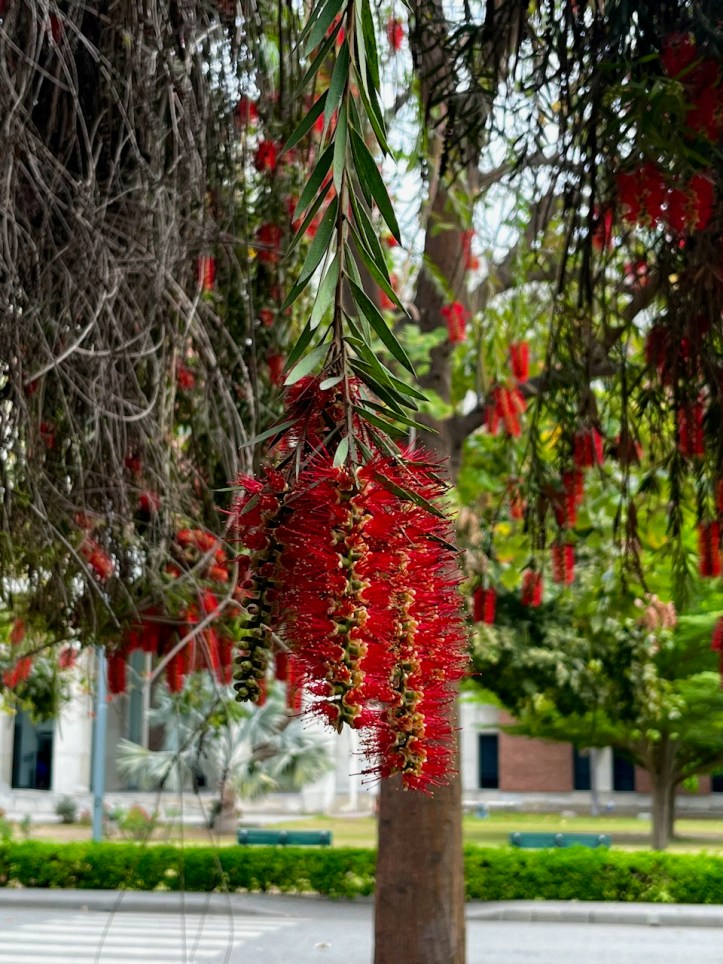
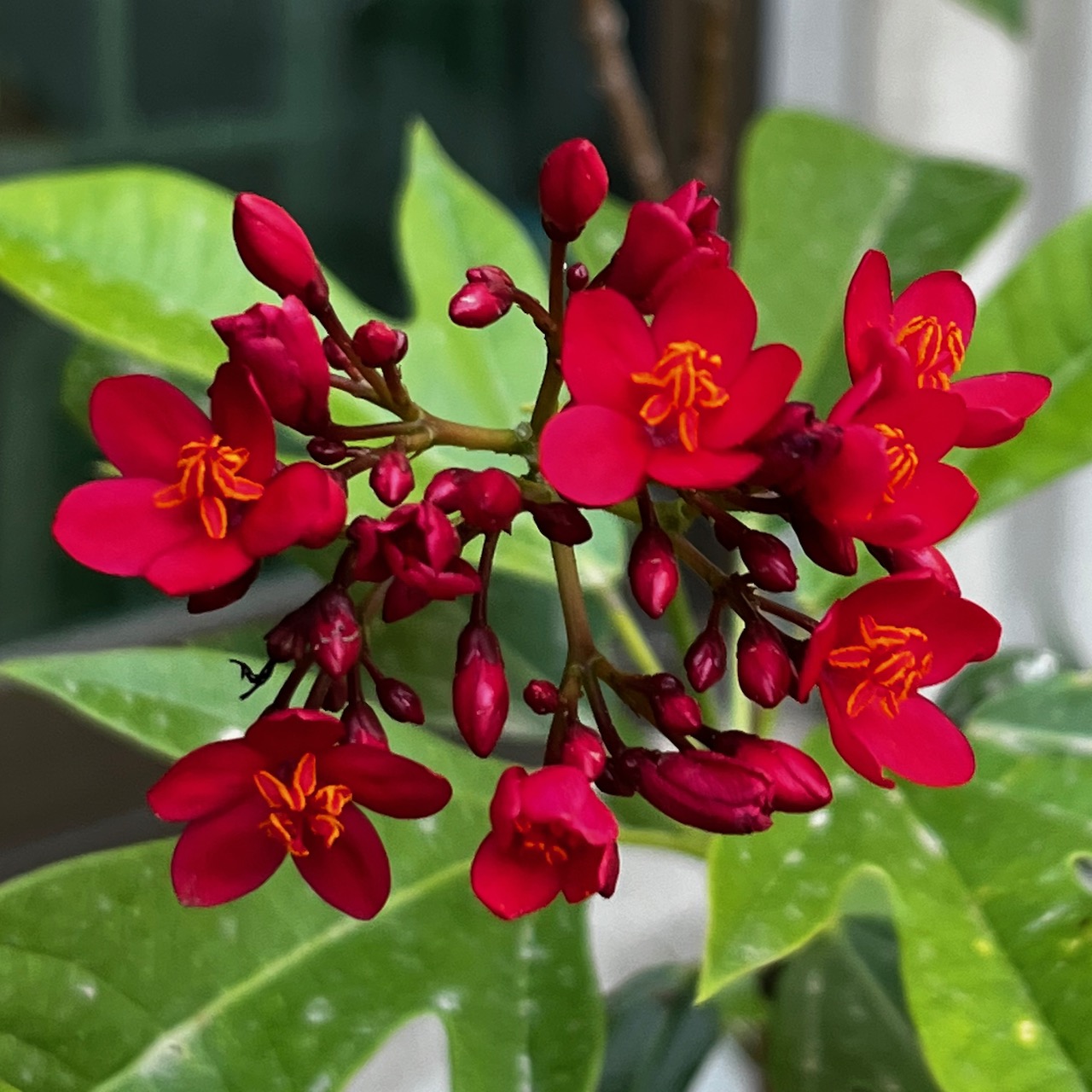
All pictures © Pippa Virdee, Lahore, Spring 2023

Poetry Corner: When Autumn Came

Triggered by a conversation today and dedicated to those who have not come across the work and poetry by Faiz Ahmed Faiz. Normally I would share something in Urdu (with a translation), as most of his work is in Urdu. However, then I came across this piece titled “When Autumn Came”, and I’ve not seen an Urdu version of this. If anyone knows of the the Urdu version please do leave the details in a comment. This poem is included in “The True Subject: Selected Poems by Faiz Ahmed Faiz” by Naomi Lazard (1987).

This is the way that autumn came to the trees:
it stripped them down to the skin,
left their ebony bodies naked.
It shook out their hearts, the yellow leaves,
scattered them over the ground.
Anyone could trample them out of shape
undisturbed by a single moan of protest.

The birds that herald dreams
were exiled from their song,
each voice torn out of its throat.
They dropped into the dust
even before the hunter strung his bow.

Oh, God of May have mercy.
Bless these withered bodies
with the passion of your resurrection;
make their dead veins flow with blood again.

Give some tree the gift of green again.
Let one bird sing.

Read more about Faiz:

Faiz Ahmed Faiz: Life and poetry, Dawn 17 Feb 2011

Profile and work: Rekhta

Jabbar, Abdul. “NAOMI LAZARD’S ‘The True Subject: Selected Poems of Faiz Ahmed Faiz.’” Journal of South Asian Literature 26, no. 1/2 (1991): 156–70. http://www.jstor.org/stable/40873227.

Mottled Dawn – Subh-e Azadi

© 2020 Pippa Virdee

This post is inspired by the sky outside, which immediately reminded me of Manto’s Mottled Dawn. Saadat Hasan Manto, born in Samrala, Ludhiana, is considered one of the most iconic Urdu writers of the twentieth century. He lived in Bombay until 1948 and worked as a successful screenplay writer for the film industry, but even he finally relented and left India for Pakistan. Khalid Hasan writes, “Manto left Bombay, a city that he loved and a city that he yearned for until his dying day, soon after Partition. He felt deeply disturbed by the intolerance and distrust that he found sprouting like poison weed everywhere, even in the world of cinema. He could not accept the fact that suddenly some people saw him not as Saadat Hasan but as a Muslim.” Mottled Dawn: Fifty Sketches and Stories of Partition (Intro. Daniyal Mueenuddin and trans. Khalid Hasan, Penguin Modern classics), brings together stories of dark humour and horror, powerfully capturing the tragedy of Partition. The book begins with the opening lines of Faiz Ahmed Faiz’s Subh-e Azadi – Mottled Dawn.

Below is the full poem by Faiz, courtesy of Penguin.

Subh‐e Azadi
Yeh daagh daagh ujaalaa, yeh shab gazidaa seher
Woh intezaar tha jiska, yeh woh seher to nahin
Yeh woh seher to nahin, jis ki aarzoo lekar
Chale the yaar ki mil jaayegi kahin na kahin
Falak ke dasht mein taaron ki aakhri manzil
Kahin to hogaa shab-e-sust mauj ka saahil
Kahin to jaa ke rukegaa safinaa-e-gham-e-dil
 
Jawaan lahu ki pur-asraar shahraahon se
Chale jo yaar to daaman pe kitne haath pade
Dayaar-e-husn ki besabr kwaabgaahon se
Pukaarti rahi baahein, badan bulaate rahe
Bahut aziz thi lekin rukh-e-seher ki lagan
Bahut qareen tha haseenaa-e-noor ka daaman
Subuk subuk thi tamanna, dabi dabi thi thakan

Suna hai, ho bhi chukaa hai firaaq-e-zulmat-o-noor
Suna hai, ho bhi chukaa hai wisaal-e-manzil-o-gaam
Badal chukaa hai bahut ehl-e-dard ka dastoor
Nishaat-e-wasl halaal, o azaab-e-hijr haraam

Jigar ki aag, nazar ki umang, dil ki jalan
Kisi pe chaaraa-e-hijraan ka kuch asar hi nahin
Kahaan se aayi nigaar-e-sabaa, kidhar ko gayi
Abhi charaag-e-sar-e-raah ko kuch khabar hi nahin
Abhi garaani-e-shab mein kami nahin aayi
Najaat-e-deedaa-o-dil ki ghadi nahin aayi
Chale chalo ki woh manzil abhi nahin aayi
 —Faiz Ahmed Faiz

The Dawn of Freedom, August 1947
This light, smeared and spotted, this night‐bitten dawn
This isn’t surely the dawn we waited for so eagerly
This isn’t surely the dawn with whose desire cradled in our hearts
 
We had set out, friends all, hoping
We should somewhere find the final destination
Of the stars in the forests of heaven
The slow‐rolling night must have a shore somewhere
The boat of the afflicted heart’s grieving will drop anchor somewhere
When, from the mysterious paths of youth’s hot blood
The young fellows moved out
Numerous were the hands that rose to clutch
the hems of their garments,
Open arms called, bodies entreated
From the impatient bedchambers of beauty—
 
But the yearning for the dawn’s face was too dear
The hem of the radiant beauty’s garment was very close
The load of desire wasn’t too heavy
Exhaustion lay somewhere on the margin
 
It’s said the darkness has been cleft from light already
It’s said the journeying feet have found union
with the destination
The protocols of those who held the pain in their
hearts have changed now
Joy of union—yes; agony of separation—forbidden!
 
The burning of the liver, the eyes’ eagerness, the heart’s grief
Remain unaffected by this cure for disunion’s pain;
From where did the beloved, the morning breeze come?
Where did it go?
 
The street‐lamp at the edge of the road has no notion yet
The weight of the night hasn’t lifted yet
The moment for the emancipation of the eyes
and the heart hasn’t come yet
Let’s go on, we haven’t reached the destination yet
—Translated by Baran Farooqui

Remembering Faiz: thirty-five years on…

When Faiz passed away at the age of 73, Dawn described him as:

The greatest Urdu poet of his time, Faiz became a legend in his lifetime for his intrepid struggle against what he himself once described as “the dark and dastardly superstitions of centuries untold”. He understood the agony of the dispossessed and the disinherited and he sang of them and for them to the last.

While these songs and poems need no introduction, he also wrote enduring prose. On his 35th death anniversary, pasted below are some selections:

‘The Role of the Artist’, Ravi (Lahore) 1982:

‘Who are we – we the writer, poets and artists and what can we contribute, if anything, to avert the moral calamities threatening mankind? We are the offspring, in the direct line of descent of the magicians and the sorcerers and music makers of old…They found for the hopes and fears of their people, for their dreams and longings, words and music that the people could not find for themselves. And by blending their collective will to a desired end, they would sometime make the dream come true…In our part of the world through long centuries…the magician of old became the post-mystic or the mystic poet, the forerunner of the modern humanist, who defied both emperor and priest to articulate the ills and afflictions of his fellow beings, to expose the injustices of their masters and their master’s collaborators, who taught them to believe in, and fight for, justice, beauty, goodness and truth, irrespective of personal loss and gain…So that is who we are, inheritors of this magic…And never was the power of this magic more devoutly to be wished than in the world of today when so many powerful agencies are at work to deny the validity of all ethical human values, to obliterate all refinements of human feeling…by extolling cynicism, insensitivity and brutishness as the hallmark of a he-man and a she-woman…’

Source: Coming Back Home: Selected Articles, Editorials and Interviews of Faiz Ahmed Faiz, compiled by Sheema Majeed, introduction by Khalid Hasan, Karachi: OUP, 2008, pp. 40-1.


‘The Writer’s Choice’:

‘Literature like science is a social activity…Literature unfolds in a similar fashion…the unexplored or dimly lit complexities of social reality, the given human situation of a given time. The impact…however, more insidious, more subtle and at the same time more direct…. The writer is directly manipulative and formative of the consciousness of the audience…He cannot plead, therefore, that he is unaware of, or unconcerned with, social implications…A writer may be tempted, coerced or bribed [by] vested interests to ignore, emasculate, or pervert the basic realities of social existence under various specious pretences, ‘pure’ literature, art for art’s sake, ‘pure’ entertainment etc., a mechanistic repudiation of these ‘purities’, however, poses another danger. In creative writing to ignore the demands and essentials of artistic creation can be inexcusable, although perhaps not as reprehensible, as the moral and social imperatives of reality. It is but another form of escapism…There is still considerable confusion in most African and Asian countries regarding the function of literature, the role of the writer and the modalities of literary expression. This confusion is partly a legacy of the colonial past, partly a recent import as a product of neo-colonialism…Whatever his social status, his intellect and education will automatically place him in the ranks of the elite minority…He will be called upon to make a choice of his audience – to write for his own class or to transcend the class barriers…’

Source: Coming Back Home: Selected Articles, Editorials and Interviews of Faiz Ahmed Faiz, compiled by Sheema Majeed, introduction by Khalid Hasan, Karachi: OUP, 2008, pp. 43-4.


‘Decolonizing Literature’:

‘When the process of colonial occupation got underway in Asia and Africa the literature and languages of the subject peoples were among the first victims of foreign cultural aggression. Its impact hit different communities in different ways depending on their level of social and cultural development, thus confronting each one of them with a different set of dilemmas in their quest for identity after liberation…(1) The study of Asian and African literatures should be incorporated in the relevant schemes of higher learning…Even language teaching in European languages need no longer be confined to European authors. (2) …publication and marketing of important Afro-Asian writings in still the monopoly of a few Western publishing houses…such publications are only marginal to their main business interests…The high cost of Western publications is another inhibiting factor…Efforts are needed for a re-orientation of the publication trade in Asian and African countries. (3) For many Asian and African writers, ‘international recognition’ still means some notice by the Western media. Some of them are thus induced to set their sights while writing on Western rather than their national readership…There are enough nations in Asia and Africa to make any writer ‘international’ without any Western certification…This needs some rectification not only in the outlook of the writer, but also of his readers’.

Source: Coming Back Home: Selected Articles, Editorials and Interviews of Faiz Ahmed Faiz, compiled by Sheema Majeed, introduction by Khalid Hasan, Karachi: OUP, 2008, pp. 49-52.




‘The First Step’ editorial by Faiz Ahmed Faiz

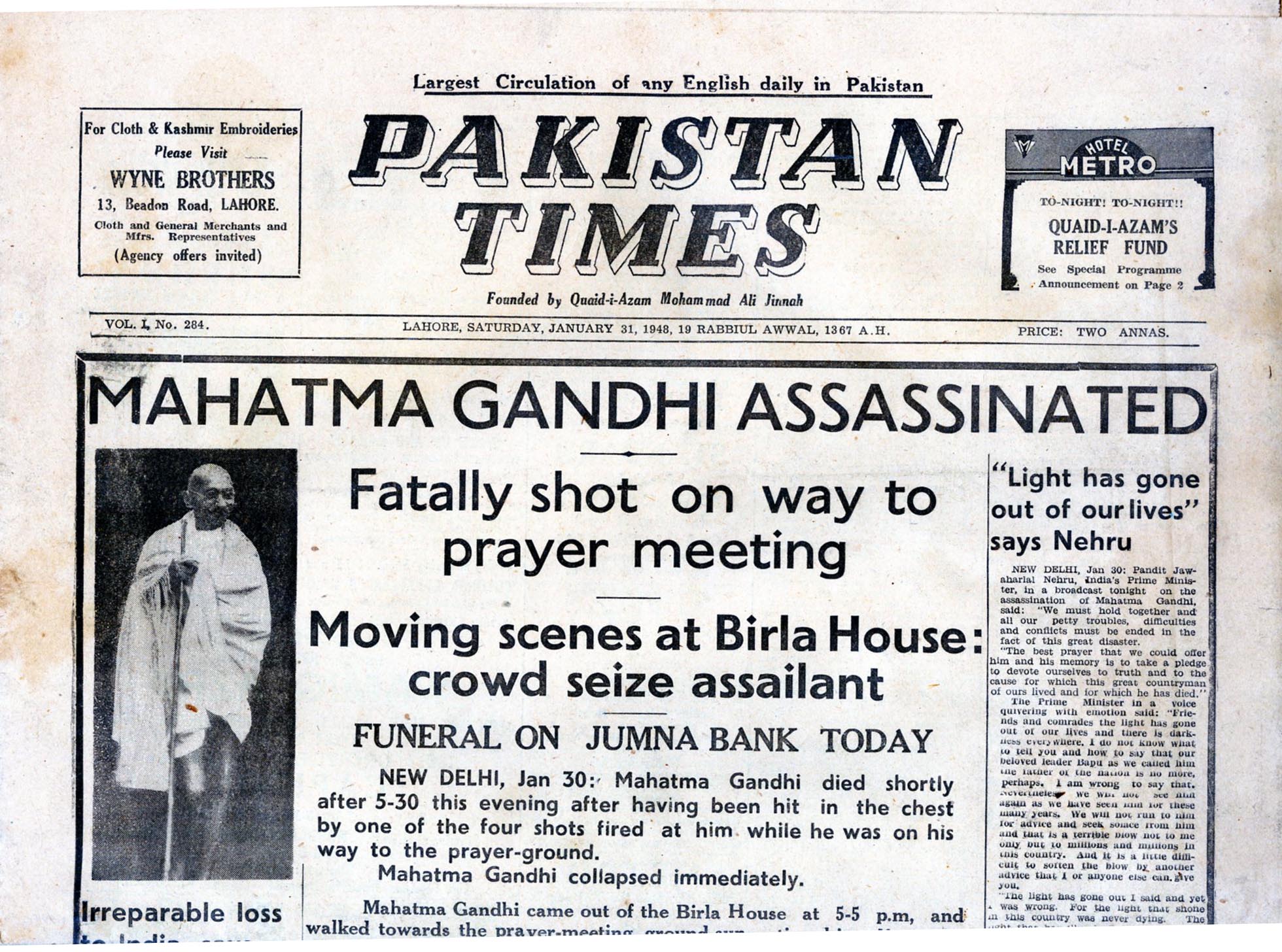
Pakistan-Times-31st-January-1948In 1948 Faiz Ahmed Faiz was the editor of The Pakistan Times. Following the assassination of Gandhi on 30 January 1948, he wrote the following editorial. It is a useful reminder of the challenges still facing India today. The RSS was founded in 1925 and banned on 4 February 1948 following Gandhi’s assassination, this remained in place until 11 July 1948. The ban was lifted once the RSS accepted the sanctity of the Constitution of India and respect towards the National Flag of India, both of which had to be explicit in the Constitution of the RSS.

The Pakistan Times, Lahore. 6 February 1948

Five days after the assassination of Mahatma Gandhi, the Indian Government has taken the first concrete step forward and banned the RSSS throughout the territories of the Indian Dominion. This has followed the resolution adopted by the Indian Cabinet on February 2 which declared the Government’s determination ‘to root out the forces of hate and violence that are at work in our country and imperil the freedom of the nation and darken her fair name.’ The communique issued by the Indian Ministry of Home Affairs announcing the ban further states that the RSSS have been found circulating leaflets exhorting people to resort to terroristic methods, to collect fire arms to create disaffection against the Government and suborn the police and the military. The Rashtriya Swayam Sevak Sangh has been functioning for many years now and under the garb of promoting the spiritual and physical well-being of the Hindus has organised itself as a militant fascist party, preaching hatred and spreading the cult of violence. When the recent phase of communal rioting started the RSSS with its other allies regarded it as an opportune moment to make a bid for power. As blood continued to flow and innocent heads hit the dust, as women were dishonoured and infants mercilessly butchered, the RSSS went from strength to strength. By the end of last year it had spread its tentacles to every Indian city and Province. Its propaganda reached every Hindu; it had not only a considerable mass following but succeeded in making influential friends in the Government in both the services and the Central and Provincial Cabinets. Nor was the Congress organisation free from its corroding influence. The Indian Government were not unaware of the part that the RSSS had played in the Punjab and else where. They were aware of its growing influence and must also have known of the conspiracy against the Central Government, of which the extermination of Indian Muslims and the murder of Mahatma Gandhi were a part. But even as late as November last year, at an All-India conference of Home Ministers, it was decided that no action should be taken against the RSSS as such but only those of its members who infringed the law of the land should be dealt with. This policy of drift and vacillations has taken a heavy toll; not only have thousands of innocent persons been killed and millions rendered homeless but India and the world have lost one of their greatest men. All this need not have been if the leaders in the Government of India had shown a fraction of the courage and vision of Mahatma Gandhi. The question which is agitating the minds of the people, not only in India and Pakistan but throughout the world today, is: what the future who will win? The dregs of Indian society who distributed sweets when the tragic event took place, have not given up the struggle and intend to lie low for some time so that the people’s sorrow is forgotten, their anger vitiated by direct action against a few scape-goats and their demand for a purge of the administration side-tracked by talk of ‘unity in the face of disaster’ and other meaningless slogans. Or will final victory still lie with Mahatma Gandhi and the millions in the country who support his aims and ideals? The first decision of the Government in this connection has received wide welcome. But it is universally felt that only if this decision is regarded by the Nehru Government as the first step in the fight against the forces of evil and darkness, then alone might we see the completion of the noble work for which Mahatma Gandhi died. If, however, it is the only step and after a few weeks or months the RSSS, under some other name, raises its ugly head, and its allies, the Hindu Mahasabha, the Akali party and the Princes are allowed to exist and stage a comeback of their perverted ideology then the future is dark and dismal and the Mahatma has lived and died in vain. The new Nehru-Patel unity, which was trumpeted in the recent meeting of the Congress Party in the Constituent Assembly is likely to lead to confusion, unless it is made clear that it is based on a definite agreement to carry out in toto Gandhiji’s policy and to give no quarter to the rabid communalists who have caused such great disasters. Much, of course, depends on the common people of India who know that their beloved leader’s murder was definitely not the ‘act of a foolish young man’ as Master Tara Singh and his like would have them believe, but a part of the huge conspiracy, which seeks to put in power the worst reactionaries in the land. In this struggle for the ideals for which Mahatma Gandhi stood, we in Pakistan are vitally concerned and have an important part to play. For the future of both peoples and both countries is inextricably linked together, and to the extent that we base our future policies on the last will and testament of Mahatma Gandhi-that without communal amity and without Indo-Pakistan accord there can be neither freedom nor progress for either-to that extent is the future happiness and prosperity of this sub-continent assured.

Editorial available in Faiẓ, Faiẓ Aḥmad, and Sheema Majid. Coming Back Home: Selected Articles, Editorials, and Interviews of Faiz Ahmed Faiz. Oxford University Press, 2008.