Tag Archives: Amritsar

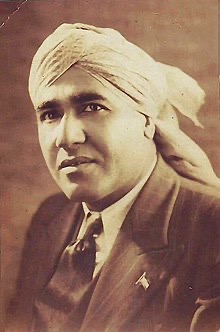
Frank Brazil aka Udham Singh (26 December 1899 — 31 July 1940).

https://www.youtube.com/watch?v=VuYgICoMer8

Frank Brazil pays tribute to Indian revolutionary Udham Singh who was executed at London’s Pentonville Prison on 31 July 1940. It follows the 21 years of Udham Singh’s life following the Jallianwallah Bagh massacre in 1919, leading up to the assassination of Michael O’Dwyer and his execution in Pentonville Prison shortly after.

Music and lyrics by The Ska Vengers

India travel to Africa
Africa …travel to America
America link the Gaddar Party 
Try and do things far away form home

One day
Travel down to Germany
Italy France and ina Switzerland
1934 I reach England
and get ready for assassination

Judge won’t you hear my plea
Before you open up the court
I don’t care If I spend 99 years in jail
Or you send me to the electric chair

Travel the planet and endure some hardship 
Walk the path to meifumado ready to endure hardship
Pan patroll stroll intro my target
One question before we get started
You know what a one way ticket to the morgue is

Body bags stacked up ina cold storage
Crush my culture and said it was garbage
Rule by the cruel rule of the free market
Ask some cracker grandpa what a cat o nine tail scar is

Judge won’t you hear my plea
Before you open up the court
I don’t care If I spend 99 years in jail
Or you send me to the 'lectric chair

Now we combust
Bredrin stay focused and conscious
Company rule is so unjust
Feel the tension of my ancestors in my muscle fiber and now I'm ready to crush

Shot him with my 6 chamber
Zetland by his side
Stood there looking at him 
While he wallowed down and died
Now I'm on my journey to a Brixton prison cell
Tell the judge and jury that I did my time well

Judge, judge, lordy judge
Send me to the 'lectric chair

Burn burn

Read further:

Anita Anand, The Patient Assassin: A True Tale of Massacre, Revenge and the Raj (Simon & Schuster, 2020).

David Clark. “Recollections of resistance: Udham Singh and the I WA.” Race & Class 17, no. 1 (1975): 75-77.

Louis Fenech, “Contested Nationalisms; Negotiated Terrains: The Way Sikhs Remember Udham Singh ‘Shahid’ (1899–1940)”. Modern Asian Studies. (2002) 36 (4): 827–870. doi:10.1017/s0026749x02004031

Navtej Singh. “Reinterpreting Shaheed Udham Singh.” Economic and Political Weekly (2007): 21-23.

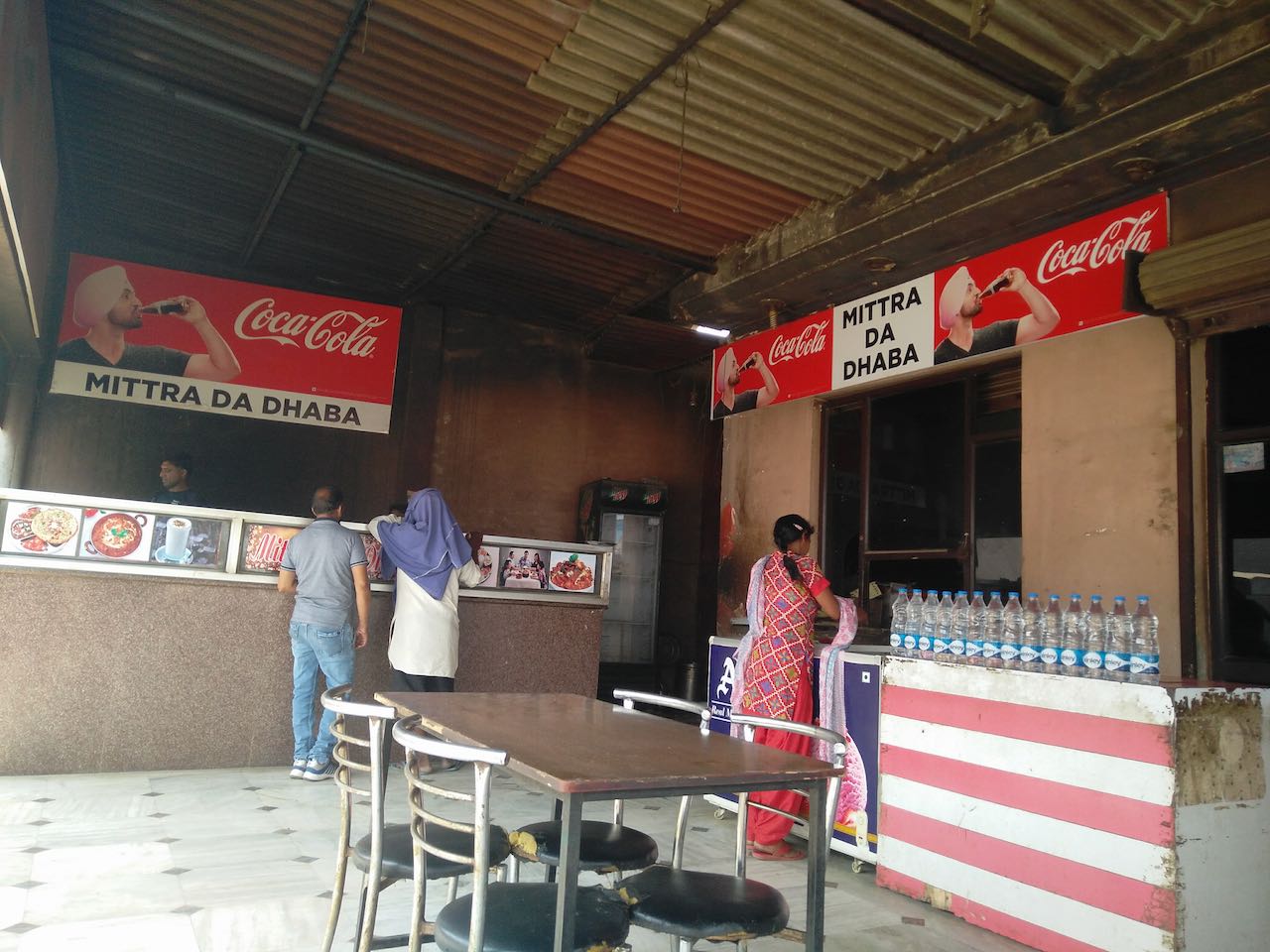
Mittra da Dhaba at the Wagah-Attari border

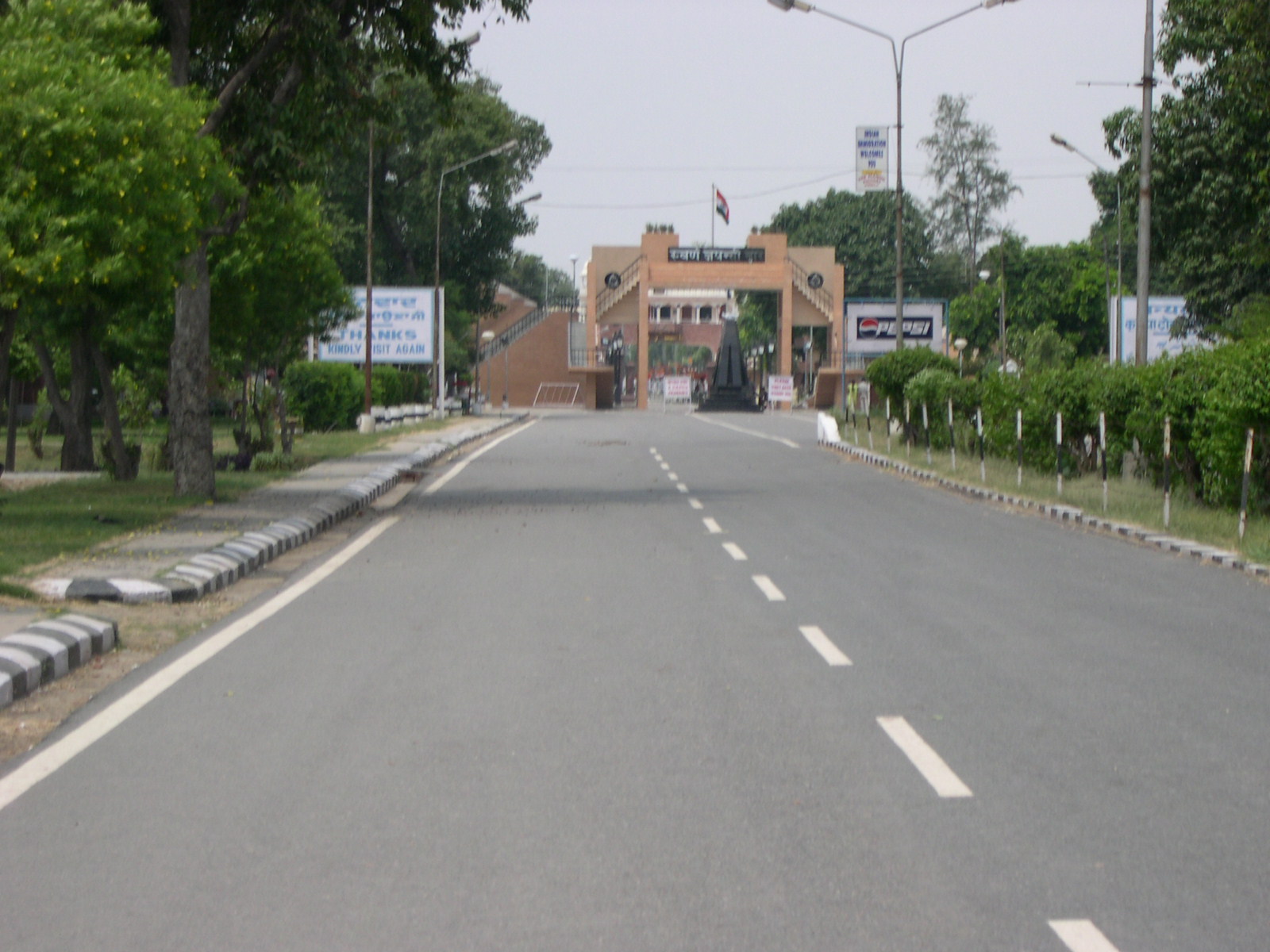
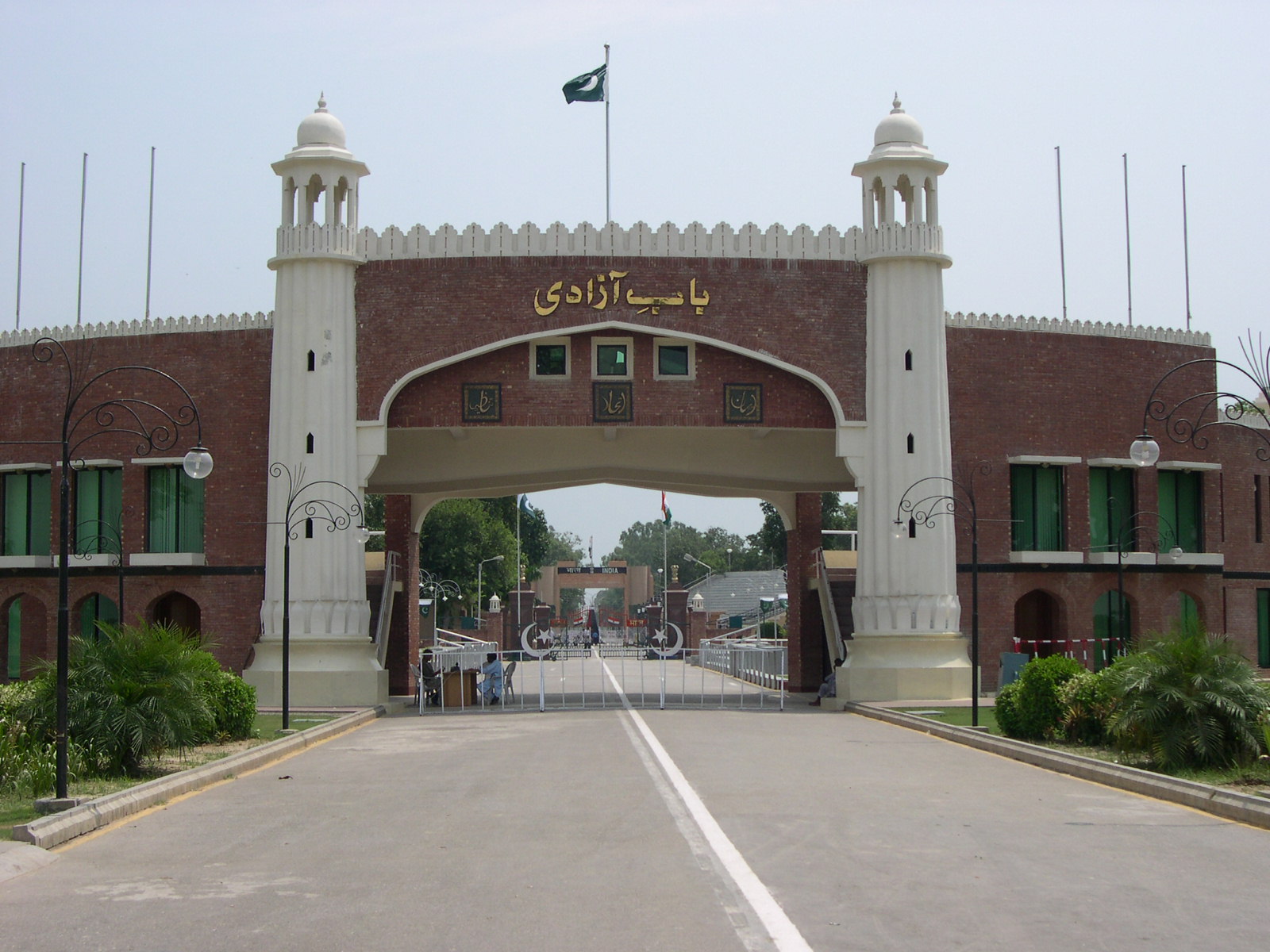
In 2001, I crossed the Wagah-Attari border for the first time. Since then, I have used this official land crossing between India and Pakistan numerous times, in the process seeing the border undergo multiple changes. It used to be the Grand Trunk Road split in half, with a few meters of “no man’s land” to separate them. I could literally walk from one side to the other, while remaining on the GT Road. Then, the authorities decided to uplift, gentrify, and replace the colonial bungalows. Gone was the quaint and informal space with scattered flower beds and plants and in came the flashy buildings, followed by the airport style security, customs, and immigration; culminating eventually in the hideous and expensive battle for who can hoist the largest flag and keep it flying high!

To be fair, the development of the check post at Wagah-Attari was probably a response to the expectation that relations between the two countries would improve, and with that the foot traffic would increase. The bungalows were not equipped to deal with high volumes of people. Hence, they first established the goods/transit depot on one side of the border, so as to divert the trucks carrying the items of import/export. This separated the trade traffic from the people traffic. Whilst the establishment of a goods depot offered signs of improved trade between the two countries, even this was subject to cordial relations.

With numerous crossings since then, I have seen the border change, not just physically but also its ambience and vibes that the place gives. Indeed, the new buildings and transit buses which take passengers from one side to other have functioned to create further distance between the lines of control. These were not there previously, and the cool formality evokes the illusion of being remote and separate. Borders do not have to be harsh and austere.

These moments and emotions are difficult to capture on camera, but they can be felt when encountering the staff and officials. When I first crossed the border, I had the compact Canon Sure Shot AF-7, which was a popular model in the 1990s and gifted to me. I enjoyed taking photographs, but cameras were not cheap then, and the 35mm film was expensive too, both to buy and to develop, so photos were taken sparingly. When I embarked on my doctoral research, taking my camera was essential for my trips to India and Pakistan, as it was an instrument to visually document my journey. I would normally pack 1-3 rolls of ISO 200 (sometimes also ISO 400) speed film, usually 36 EXP, good for general photographs. But one was never entirely sure until the film was taken back home, handed in for developing, which then produced the joy of physically going through the photographs a week later! Time had passed between undergoing the actual trip and now feeling those photographs in my hands, and the images allowed me to recreate and relive those moments again.

Today everything is instant. In a moment I can be taking a photograph at the border, and then share it with the wider public around the world via social media. The only caveat here is that, generally the phone signals are non-existent within 1-2 kilometres of the border area, so you would probably need to wait until you were able to pick up the phone signal. More importantly, this also disrupted any arrangements one had made to meet people on the other side. If I was crossing the border, I might contact my friends/family beforehand and say, I’m crossing at X time (keeping in mind the 30 minutes times difference between the two countries), so I estimate that I will be out at Y time (usually 60 minutes from one side to the other). But if things didn’t go to plan, there is no way of contacting the person to alert them of the delays. And when you did finally make it to the other side, there were always a small number of people anxiously waiting and looking to see when their friends/family will pass through those doors.

There are many other stories of this rather strange and intriguing no man’s land but to end with a more positive story, I share a picture of a dhaba at Attari, Mittra da dhaba (literal translation – friends’ roadside restaurant) is located close to the entrance to check post, catering to travellers and tourists who come for the daily lowering of the flag ceremony. I have gone there many times, but on one occasion in 2017, I asked the owner to pack some food for me, food which I planned to take across the border and share with my friends in Lahore. He took great care to make it extra special and pack the food tightly, so that it wouldn’t spill. I could see that it also brought him great joy to know that his food would travel to the other side. As we parted, he said come back and tell me if they enjoyed it! 

Alas, these stories are in the past tense, and with Covid the border faced further restrictions and closures. I have no idea if my friend is still there, I hope so. We need more friends in these otherwise hostile spaces.
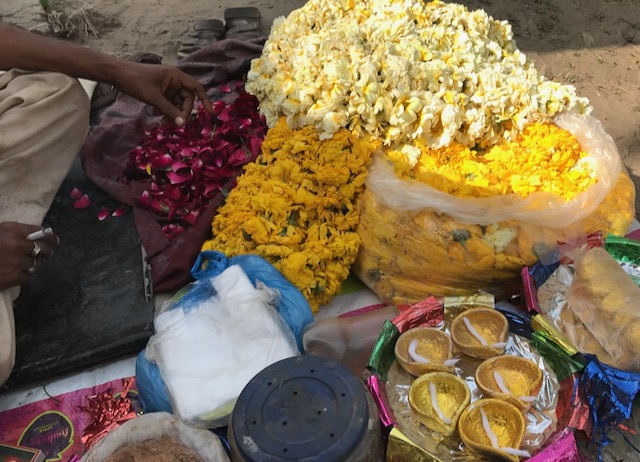
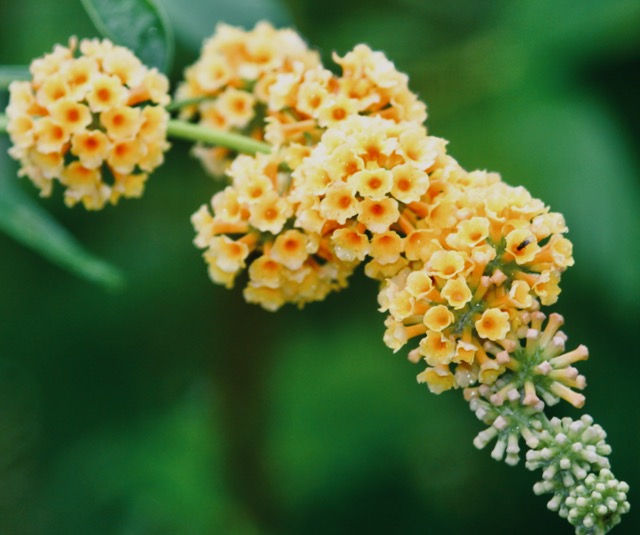
Yellow/Peela

Gold

Nothing is more important than life itself
Nothing is as sacred as love
Thoughts dissolves in the notion of togetherness
The heart of gold shines through

The freshness of first breeze breathe
Simmering white dandelion on thin air of hope
The soul of green grasses,
in the early morning sun
On the mistery music of the forest
The goddess of beauty dances,
arms wide open

Upon heart of trance
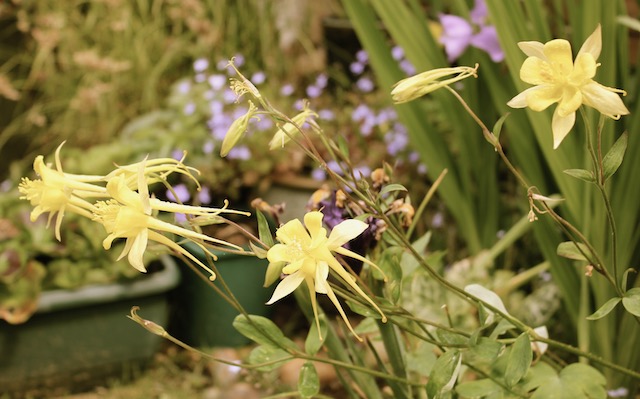
The flower bloosoms Yellow
And the heart shines gold
Heart of gold shines through
And the heart shines gold

Poetry by https://allpoetry.com/Subedisachin

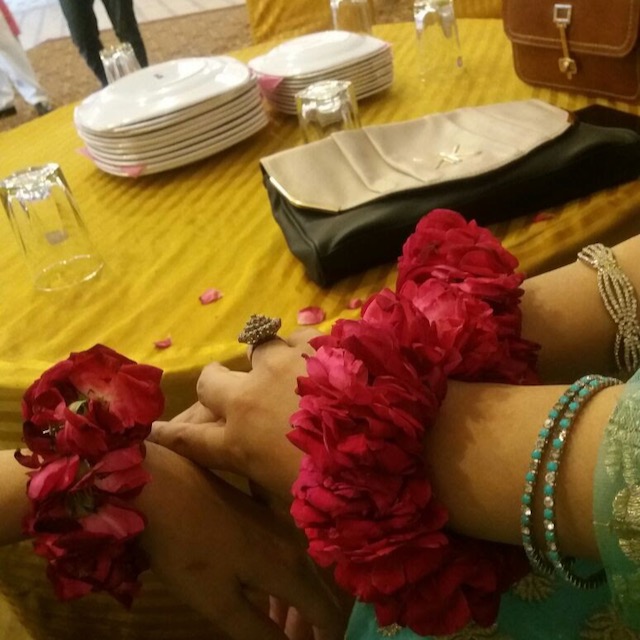
Hara/Green

Habib Jalib was born in 1928 in Hoshiarpur, East Punjab. He migrated to Pakistan after partition and worked as a proof reader in Daily Imroze, Karachi. Read further about him: https://www.letsstartthinking.org/Pakistan/personalities/habib-jalib.php. All his poetry is available via Rekhta. Below is the poem Bagiya Lahoo Luhan-The Garden Is A Bloody Mess. The poem is about the oppression in East Pakistan in 1971 but unfortunately it continues to resonate, even today.
Bagiya Lahoo Luhan
Haryali ko aankhen tarsen bagiya lahoo luhan
Pyar ke geet sunaoon kis ko shehar hue weeran
Bagiya lahoo luhan 

Dasti hain suraj ki kirnen chand jalaye jaan
Pag pag maut ke gehre saye jeewan maut saman
Charon ore hawa phirti hai le kar teer Kaman
Bagiya lahoo luhan 

Chhalni hain kaliyon ke seeney khoon mein lat paat
Aur nahjaney kab tak hogi ashkon ki barsaat
Dunya walon kab beeteinge dukh ke yeh din raat
Khoon se holi khel rahe hain dharti ke balwan
Bagiya lahoo luhan
The Garden Is A Bloody Mess 
Our eyes yearn for greenery
The garden is a bloody mess
For whom should I sing my songs of love
The cities are all a wilderness
The garden is a bloody mess

The rays of the sun, they sting
Moonbeams are a killing field, no less
Deep shadows of death hover at every step
Life wears a skull and bone dress
All around the air is on prowl
With bows and arrows, in full harness
The garden is a bloody mess 

The battered buds are like a sieve
The leaves drenched in blood smears
Who knows, for how long
We’ll have this rain of tears
People how long do we have to bear
These days and nights of sorrow and distress
This oppressor’s blood bath is a frolicsome play
For the mighty of the world, a mark of their prowess
The garden is a bloody mess 

Source: Revolutionary Democracy

1984: Sundown to Bluestar

Golden Temple
© 2009 Pippa Virdee

Operation Bluestar and 1984 are etched on the memories of most people living in north India. It was the codename given for Indian military action to oust Jarnail Singh Bhindranwale and his followers from the buildings of the Harmandir Sahib, Amritsar by the Indian government. By the beginning of June 1984 it was clear that negotiations between the Indian government and Bhindranwale had failed and the build-up of the Indian Army around the Gurdwara complex meant that a full scale confrontation was imminent. Much like the Tiananmen Square protests of thirty years ago, the abiding memory of Operation Bluestar is of Indian military tanks charging into the holy complex of the Golden Temple. More controversially though has been the recent disclosure of the British government’s assistance to the Indian government prior to this operation.

Many of the documents at The National Archives (UK) pertaining to this period are still closed or retained for 40 years. However, a few of them were released.

Correspondence from February 1984 between Brian Fall (FCO) and Robin Butler (No 10). Correspondence Fall and Butler.

There is also a two-page message from PM Indira Gandhi to PM Margaret Thatcher on 14 June 1984. Gandhi to Thatcher.

The following articles are also worth reading around the British Government’s involvement:

British government ‘covered up’ its role in Amritsar massacre in India by Jamie Doward, The Guardian, 29 October 2017.

British special forces advised 1984 Amritsar raid by Phil Miller, Open Democracy, 21 January 2014.

Phile Miller provides more details about the Operation Sundown the covert operation that never happened via his Blog.

Gurdasram Jalebiwala, Amritsar

One of the most famous jalebi shops in the city of Amritsar. This tiny little corner is food heaven for those with a sweet tooth. Nothing beats the freshly made hot, mouth-watering jalebis. Modest price, small portion and full of bliss! Go try them.


A (British) Indian in Lahore

This slideshow requires JavaScript.

As I leave Lahore and arrive in Amritsar there is a feeling, as always, of self-consciousness about crossing over an international border. This is a border that I have crossed many times but surprises me every time. The experiences on the whole have nearly always been courteous. On a personal level the staff, the Pakistani Rangers and the Indian Border Security Force, have been polite, sometimes engaging but nearly always looking at me with some uncertainty, unable to quite place me. Since September 2016, when the Indian security forces were attacked in Uri, relations between India and Pakistan have continued to decline. This inevitably leads to the fall in the foot traffic at the Wagha-Attari border crossing. By default it means the porters have little or no work. It is the ordinary people who are always targeted, unable to get visas due to the strained relationship between the two. The silence at the border was noticeable, hardly anyone crossing the border today. In one short hour I was on the small open train from Wagha to the barely cold AC bus in Attari, India. I did not make much small talk; it was almost all a matter of fact. Sometimes they pull you aside, invite you for chai, and ask inquisitive questions, but not today. Today it was unusually quiet. In the searing summer heat who would want to walk across the border? Moreover, in the hostile lands, who wants to risk crossing the border? The Indian immigration officer, after stamping my passport quips to his friend standing near him that you hardly get any Pakistanis travelling across, I quipped back and said that’s because you don’t give them visas and walked off.

This is a hard and harsh international border; it was imagined in the drawing rooms by the outgoing colonial power but it has been re-imagined by the nation-states today. It is a stark reminder of the animosity and mistrust the two nations have of each other, yet it also conceals other truths. The border is open for all foreigners yet it is the most restrictive for the very citizens of those two nations that it is located in. Indians and Pakistanis are the most scrutinised people at the border. Looking around, one is never quite sure who performs what role; the “secret” agents are always lurking around. The border is harsher and more cumbersome for the ordinary citizens because they lack the right networks and knowledge, others, often elites of both countries, can still manage to cross the border. Thus the reality of this harsh border is dictated by the accessibility to power and while the rhetoric in the media is jingoistic, the lived experiences can be different. This applies also to the staff that regular work at the border. But the silence at the border this time also felt different, the Modi government in India is sending out a different message, a much more aggressive tone is palpable. Jinnah put forward the two-nation theory in 1940 and it seems that seventy years on, he was more perceptive than we imagined.

The Partition Museum, Amritsar

This slideshow requires JavaScript.

The Partition Museum is an attempt to preserve the history and memories of 1947, that saw the creation of India and Pakistan and as a result the partition of Punjab and Bengal. Located in Amritsar the museum deals with mostly the effects of partition on Punjab rather Bengal. It is the initiative of Lady Kishwar Desai and The Arts and Cultural Heritage Trust, along with other organisations. The Partition Museum is in Amritsar’s Town Hall and located in the newly renovated area near Hall Bazaar. The renovation work is a delight in the hustle and bustle of the walled city of Amritsar. The surrounding area all carry remnants from the colonial period and ironically the museum itself is housed in the colonial Town Hall built in the 19th century.

The museum contains mainly pictures, a few artefacts and newspaper clippings from the independence period. It is spread across 3-4 rooms which use multimedia, visual and documentary sources to illustrate and memorialize the Partition. It is therefore a small exhibition and largely provides an overview of what happened.

I wish I could have connected better with the endeavours and intentions of the museum but it left me feeling empty and concerned with the lack of reflection. The museum unfortunately reflects the elite vision with which it was conceptualised. Having spent the last sixteen years working on the history of Partition, I realise that people still need to learn more about this period. But sadly, seventy years on we hardly have any empathy for the collective guilt that we all share in this legacy. The newspapers presented were from the Indian perspective, the horrors of violence were those perpetrated by Muslims against Hindus and Sikhs. Had we been on the other side of the Radcliffe Line, I imagine similar one-sided accounts would be shown of how Muslims were killed at the hands of Hindus and Sikhs. So, when do we move away from this communalized history of partition that still lingers on?

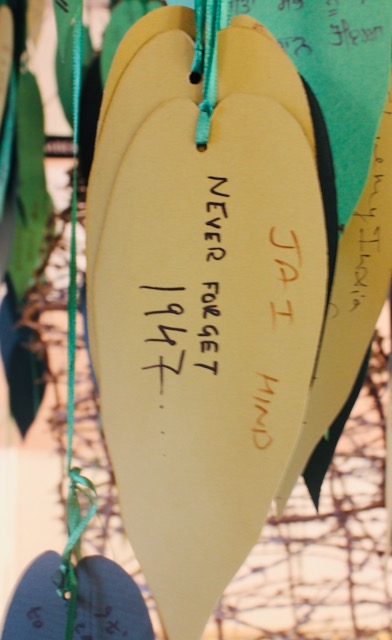
The pictures and voices shared were not of the ordinary people suffering but of prominent people and those who have come to “symbolise” partition history. This is certainly not a people’s history. Even the Tree of Hope presented me with little hope as it was covered in nationalistic and jingoistic slogans written by school children and visitors. Hardly giving secular India hope for the future. Instead the Tree of Hope just reinforces the new powerful and bullish India, unleashed by Modi’s vision.

My main concerns were with the well that has been installed in the museum. It is obviously designed to educate people but what sort of story is it trying to tell us? By simply stating that many women were forced to or rather martyred themselves by jumping into the wells is simplifying a very complex history. Women as the torch bearers of community honour were in some cases (we can hardly guess the numbers) forced to jump into wells by the patriarch of the family or community. Some went willingly but others were more reluctant; afraid of what was expected of them. We can most poignantly see this in the film Kamosh Pani. And so, to show this well in the middle of exhibition represents what exactly? If this was the original location, as in Jallianwala Bagh, it would make sense but to install it for effect is problematic. What kind of history and memory is being preserved by these acts to recreate history selectively? With little intellectual engagement with these selective symbolic fragments from our collective past we can only serve to re-enforce the communalised identities that led to 1947 in the first place.

Visit the website: http://www.partitionmuseum.org/