Triggered by a conversation today and dedicated to those who have not come across the work and poetry by Faiz Ahmed Faiz. Normally I would share something in Urdu (with a translation), as most of his work is in Urdu. However, then I came across this piece titled “When Autumn Came”, and I’ve not seen an Urdu version of this. If anyone knows of the the Urdu version please do leave the details in a comment. This poem is included in “The True Subject: Selected Poems by Faiz Ahmed Faiz” by Naomi Lazard (1987).
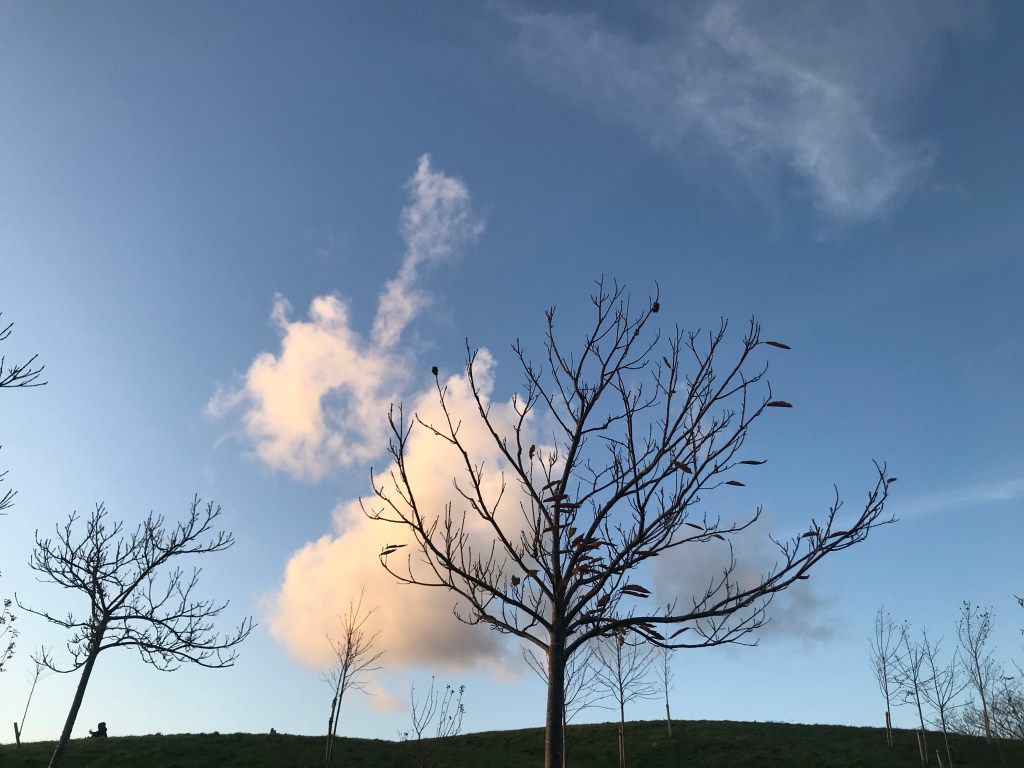
This is the way that autumn came to the trees:
it stripped them down to the skin,
left their ebony bodies naked.
It shook out their hearts, the yellow leaves,
scattered them over the ground.
Anyone could trample them out of shape
undisturbed by a single moan of protest.

The birds that herald dreams
were exiled from their song,
each voice torn out of its throat.
They dropped into the dust
even before the hunter strung his bow.

Oh, God of May have mercy.
Bless these withered bodies
with the passion of your resurrection;
make their dead veins flow with blood again.

Give some tree the gift of green again.
Let one bird sing.
Jabbar, Abdul. “NAOMI LAZARD’S ‘The True Subject: Selected Poems of Faiz Ahmed Faiz.’” Journal of South Asian Literature 26, no. 1/2 (1991): 156–70. http://www.jstor.org/stable/40873227.
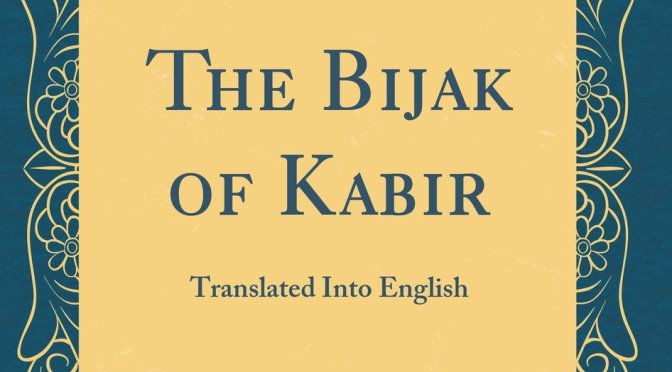
Kabirdas was a 15th century Indian mystic poet and is revered as a saint by many, across regions, communities, castes, and, now, nations. A disciple of Ramananda (in Banaras), his writings fed the syncretic Bhakti movement, which in turn influenced the development of Nanak and his teachings, to the extent that Kabir’s immortal verses are included in Adi Granth. Kabir was critical of all organised, institutionalised, hierarchical faiths, and their rites and rituals, sanctioned by sanctimonious and exploitative clergy. For Kabir, the Truth was not in these trappings, nor in their egoistic traders.
It is generally allowed that of all the great Reformers, Kabir (1440-1518) and Tulsi Dass (1544-1624) have had the greatest influence for good among…Northern and Central India. Kabir has been described…as the Indian Luther (1483-1546)…
Among those who acknowledge their indebtedness to Kabir as a spiritual guide are Nanak Shah (1469-1538) of the Panjab, the founder of the Sikh community; Dadu of Ahmedabad (1544) founder of the Panth that bears his name, and Jag Jiwan Dass of Oudh (1760) the founder of the Sat Nami sect. Among religious teachers whose doctrine is said to be largely based upon the teaching of Kabir are Bribhan, founder of the Sadh community (1658), Baba Lal of Malwa and Shiva Narain of Ghazipur.
In modern days the number of those who have in one way or another come under the influence of Kabir is very great. In the Census Report of 1901, the number of Kabir Panthis alone is returned as 843,171 and the actual number is probably considerably larger, as in the United Provinces many Kabir Panthis seem to have been returned as Ramanandis and the figures for the Panjab are not included.
The hymns of Kabir are still sung by many a wandering minstrel, while his pithy sayings are frequently employed to win the attention of a dreamy audience or to clench a lengthy argument.
Unfortunately, the material for a life of Kabir is miserably scanty. It is admitted by all Kabir Panthis that Kabir was brought up as a child in the house of Niru, a weaver. In the Adi Granth occur these lines: By caste a weaver and patient of mind: utters Kabir with natural ease the excellences of Ram.
It does not need much experience of ascetic literature to recognise that boldness and originality of this attitude in such a time and place. From the point of view of orthodox sanctity, whether Hindu or Mohammedan, Kabir was plainly a heretic; and his frank dislike of all institutional religion, all external observance – which was a thorough and as intense as that of the Quaker themselves – completed, as far as ecclesiastical opinion was concerned, his reputation as a dangerous man. The God whom he proclaimed was “neither in Kaaba nor in Kailash.”
 Mo ko kahan dhunro bande
 O servant, where dost thou see Me?
 Lo! I am beside thee
 I am neither in temple nor in mosque:
 I am neither in Kaaba nor in Kailash:
 Neither am I in rites and ceremonies, nor in Yooga and renunciation.
 If thou art a true seeker, thou shalt at once see Me: thou shalt meet Me in a moment of time.
 Kabir say, “O Sadhu! God is the breath of all breath.”

 Santan jat na pucho nirguniyan
 It is needless to ask of a saint the caste to which he belongs;
 For the priest, the warrior, the tradesman, and all the thirty-six castes, alike are seeking for God.
 It is but folly to ask what the caste of a saint may be;
 The barber has sought God, the washerwoman, and the carpenter –
 Even Raidas was a seek after God.
 The Rishi Swapacha was a tanner by caste.
 Hindus and Moselms alike have achieved that End, where remains no mark of distinction.
HAD ANHAD (Bounded Boundless): Journeys with Ram & Kabir (103 min, English Subtitles) A film by Shabnam Virmani – Kabir was a 15th century mystic poet of north India who defied the boundaries between Hindu and Muslim. He had a Muslim name and upbringing, but his poetry repeatedly invokes the widely revered Hindu name for God – Ram. Who is Kabir’s Ram? This film journeys through song and poem into the politics of religion, and finds myriad answers on both sides of the hostile border between India and Pakistan.
Further Reading see Purushottam Agrawal: Kashi ka Kabir and Akath Kahani Prem Ki: Kabir Ki Kavita Aur Unka Samay (An Ineffable Tale of Love: Kabir’s Poetry and his Times) (Rajkamal Prakshan, 2009).
He is wise who in this season
Clings to the stove like a madman.

Narrating this, my tongue is coated with ice.
My breath, it seems, has frozen to make another tongue.

And when the chill turns chillier still
Like the ear, even the mouth turns still.

The tear which drops from the crying eye
Freezes like the wax dripping down the candle.

All this is known to the wise ant
Which entombs itself when alive.

This winter’s tale I can no longer narrate
For the tongue is now an icicle in my mouth.
Read more about Gani Kashmiri (Mulla Muhammad Tahir Ghani), considered to be one of the greatest Persian writers from the Mughal period. Extract courtesy: Daak
It is the first post of 2021 and I start with the colour white/safed. White is often associated with a sense of peace, purity, innocence, a new beginning, of wiping the slate clean, a blank canvas and opportunity for you to do/write your own acts/words. Some people find white serene, tranquil and pure, while others may feel it is stark and cold; lacking any “colour”. In the occident, the colour white is often associated with weddings, hospitals, and angels and is used to convey a sense of purity and cleanliness. On the other hand, in the orient, white is symbolically linked to a colour of mourning and sadness, but underlying this is also a sense of nothing and renewal.
Here I share the words of poet Benjamin Zephaniah and boxer Mohammad Ali on what happens when you invert black for white…
White Comedy by Benjamin Zephaniah

 I waz whitemailed
 By a white witch,
 Wid white magic
 An white lies,
 Branded by a white sheep
 I slaved as a whitesmith
 Near a white spot
 Where I suffered whitewater fever.
 Whitelisted as a whiteleg
 I waz in de white book
 As a master of white art,
 It waz like white death.

 People called me white jack
 Some hailed me as a white wog,
 So I joined de white watch
 Trained as a white guard
 Lived off the white economy.
 Caught and beaten by de whiteshirts
 I waz condemned to a white mass,
 Don't worry,
 I shall be writing to de Black House.
The moon is a multipurpose muse, at once a symbol of ishq (love), taqwa (piety), tanhaai (loneliness), hairat (wonder), khushi (happiness) and arzoo (longing). In Urdu literature, the moon manifests in all forms: aadha chaand (half moon), poora chaand or chaundhavi ka chaand (full moon) and badli ka chaand (moon hidden in clouds). The moon has also been a symbol of the poet’s promise to the beloved, with “tumhare waste main chaand tod laaunga (I will pluck out the moon for you),” being a familiar refrain.
‘The many moods of the moon; Urdu poetry’s favourite muse’, by Nawaid Anjum, July 22, 2019, The Indian Express
This post is inspired by the sky outside, which immediately reminded me of Manto’s Mottled Dawn. Saadat Hasan Manto, born in Samrala, Ludhiana, is considered one of the most iconic Urdu writers of the twentieth century. He lived in Bombay until 1948 and worked as a successful screenplay writer for the film industry, but even he finally relented and left India for Pakistan. Khalid Hasan writes, “Manto left Bombay, a city that he loved and a city that he yearned for until his dying day, soon after Partition. He felt deeply disturbed by the intolerance and distrust that he found sprouting like poison weed everywhere, even in the world of cinema. He could not accept the fact that suddenly some people saw him not as Saadat Hasan but as a Muslim.” Mottled Dawn: Fifty Sketches and Stories of Partition (Intro. Daniyal Mueenuddin and trans. Khalid Hasan, Penguin Modern classics), brings together stories of dark humour and horror, powerfully capturing the tragedy of Partition. The book begins with the opening lines of Faiz Ahmed Faiz’s Subh-e Azadi – Mottled Dawn.
Below is the full poem by Faiz, courtesy of Penguin.
Subh‐e AzadiYeh daagh daagh ujaalaa, yeh shab gazidaa seherWoh intezaar tha jiska, yeh woh seher to nahinYeh woh seher to nahin, jis ki aarzoo lekarChale the yaar ki mil jaayegi kahin na kahinFalak ke dasht mein taaron ki aakhri manzilKahin to hogaa shab-e-sust mauj ka saahilKahin to jaa ke rukegaa safinaa-e-gham-e-dilJawaan lahu ki pur-asraar shahraahon seChale jo yaar to daaman pe kitne haath padeDayaar-e-husn ki besabr kwaabgaahon sePukaarti rahi baahein, badan bulaate raheBahut aziz thi lekin rukh-e-seher ki laganBahut qareen tha haseenaa-e-noor ka daamanSubuk subuk thi tamanna, dabi dabi thi thakanSuna hai, ho bhi chukaa hai firaaq-e-zulmat-o-noorSuna hai, ho bhi chukaa hai wisaal-e-manzil-o-gaamBadal chukaa hai bahut ehl-e-dard ka dastoorNishaat-e-wasl halaal, o azaab-e-hijr haraamJigar ki aag, nazar ki umang, dil ki jalanKisi pe chaaraa-e-hijraan ka kuch asar hi nahinKahaan se aayi nigaar-e-sabaa, kidhar ko gayiAbhi charaag-e-sar-e-raah ko kuch khabar hi nahinAbhi garaani-e-shab mein kami nahin aayiNajaat-e-deedaa-o-dil ki ghadi nahin aayiChale chalo ki woh manzil abhi nahin aayi —Faiz Ahmed Faiz
The Dawn of Freedom, August 1947
This light, smeared and spotted, this night‐bitten dawn
This isn’t surely the dawn we waited for so eagerly
This isn’t surely the dawn with whose desire cradled in our hearts
We had set out, friends all, hoping
We should somewhere find the final destination
Of the stars in the forests of heaven
The slow‐rolling night must have a shore somewhere
The boat of the afflicted heart’s grieving will drop anchor somewhere
When, from the mysterious paths of youth’s hot blood
The young fellows moved out
Numerous were the hands that rose to clutch
the hems of their garments,
Open arms called, bodies entreated
From the impatient bedchambers of beauty—
But the yearning for the dawn’s face was too dear
The hem of the radiant beauty’s garment was very close
The load of desire wasn’t too heavy
Exhaustion lay somewhere on the margin
It’s said the darkness has been cleft from light already
It’s said the journeying feet have found union
with the destination
The protocols of those who held the pain in their
hearts have changed now
Joy of union—yes; agony of separation—forbidden!
The burning of the liver, the eyes’ eagerness, the heart’s grief
Remain unaffected by this cure for disunion’s pain;
From where did the beloved, the morning breeze come?
Where did it go?
The street‐lamp at the edge of the road has no notion yet
The weight of the night hasn’t lifted yet
The moment for the emancipation of the eyes
and the heart hasn’t come yet
Let’s go on, we haven’t reached the destination yet
—Translated by Baran Farooqui
Shaker, Why don’t you sing? by Maya Angelou (Random House, 1983), p16-17
Caged Bird
The free bird leaps
on the back of the wind
and floats downstream
till the current ends
and dips his wings
in the orange sun rays
and dares to claim the sky.
But a bird that stalks
down his narrow cage
can seldom see through
his bars of rage
his wings are clipped and
his feet are tied
so he opens his throat to sing.
The caged bird sings
with a fearful trill
of things unknown
but longed for still
and his tune is heard
on the distant hill
for the caged bird
sings of freedom
The free bird thinks of another breeze
and the trade winds soft through the sighing trees
and the fat worms waiting on a dawn-bright lawn
and he names the sky his own.
But a caged bird stands on the grave of dreams
his shadow shouts on a nightmare scream
his wings are clipped and his feet are tied
so he opens his throat to sing
The caged bird sings
with a fearful trill
of things unknown
but longed for still
and his tune is heard
on the distant hill
for the caged bird
sings of freedom.



























 BAGICHA