Category Archives: Pakistan

From Blighty to Patna: Objections to the building of railways

Pakistan Quarterly, 1962, 11, 1, Page 23

I came across this fascinating article on ‘The Origin and Growth of Pakistan Railways’ by M. B. K. Malik in Pakistan Quarterly, 1962, Vol 11, No. 1. It provides a brief history of building the railways in British India, especially the motivations and impact this had on the two outer regions of Bengal and Punjab. What captured my interest was actually the objections put forward in the initial days. The first one is from the British perspective, but the second one is from a high-caste Hindu, who obviously envisages multiple problems for those guided by astrologers. Both however, express suspicion and concern at this new system of transport and the wider impact it will have on society and the environment. Of course the railways went on to be built in both Britain and British India, and became pivotal to colonial rule. The economy of empire, with key towns and port cities, coupled with the ability to swiftly move the colonial army from cantonment towns was only made possible because of the railways in British India. But that’s another story. Read below the extract from pages 22-23.

Pakistan Quarterly, 1962, 11, 1, Page 23

The earliest proposals to build railways in India had been made to the East India Company in England in 1844 by Mr. R. M. Stephenson and others. But the time was not propitious. The land had not yet recovered from the effects of the Sind Wars, and the British power and the Sikhs in the Punjab were on the verge of an armed conflict. Nor were the Court of Directors of the East India Company convinced of the feasibility of railways in India. Even in England and Europe railways had met with opposition. In 1835 John Bull had denounced the railways as a menace:

“If they succeed” wrote the paper, “they will give an unnatural impetus to society, destroy all the relations which exist between man and man, over-throw all mercantile regulations, over-turn the metropolitan markets, drain the provinces of all their resources, and create at the peril of life, all sorts of confusion and distress. If they fail, nothing will be left but the hideous memorials of public folly”. It further remarked : “Does anybody mean to say that decent people …. would consent to be hurried along through the air upon a railroad, from which, had a lazy schoolboy left a marble, or wicked one a stone, they would be pitched off their perilous track into the valley beneath; …. being at the mercy of a tin pipe copper boiler, or the accidental dropping of a pebble on the line of way?…. We denounce the mania as destructive of the country in a thousand particulars …. the whole face of the kingdom is to be tattooed with these or a odious deformities …. huge mounds are to intersect our beautiful valleys; the noise and stench of locomotive steam-engines are to disturb the quietude of the peasant, the farmer and the gentleman; and the roaring of the bullocks, the bleating of sheep and the grunting of pigs to keep up one continual uproar through the night along the lines of these most dangerous and disfiguring abominations”.

Objections by Hindus
The orthodox Indians had religious objections. A civilian District Officer, posted in the province of Bihar during the sixties of the last century, has recorded an interesting story showing how orthodox Hindus regarded railway travelling in those days. The officer questioned a nobleman, who had just returned from his first journey by rail, about his views on railway travel. The nobleman replied that it made great noise and that it would be difficult for persons of his high caste to travel at all by such means:

The trains only go at stated times; now I cannot commence a journey except at the minute decided upon by my astrologer as a favourable moment for starting. This makes it very difficult for me to travel at all. Tomorrow I have to go to Muzafferpur, and the astrologer has decided that I must start at 1 A.M. Now my cousin Gadahur went by railway the other day with his wife, and daughter of six years old, and a baby. He started at an unfavourable moment. His wife and two children and a maid-servant were put in a palanquin, which was placed on a truck, which prevented their being seen; and he went in an ordinary carriage. Somehow or other a spark from the engine flew into the palanquin and set fire to some of the linen in which the baby was wrapped; and the servant in her confusion, thinking it was only a bundle of clothes, threw it out. The moment it was done she found out the mistake and they all shrieked. This was only a mile from the Patna station and the train soon stopped. The station master was very kind and did his best, but the palanquin was on fire, and the wife in getting out was seen by many persons. It is not a fit subject even for conversation”.

But all the objections came to naught. England was just entering the age of ‘railway mania’ and it was decided to construct railways in India through Guaranteed British Companies.

Faith in Education

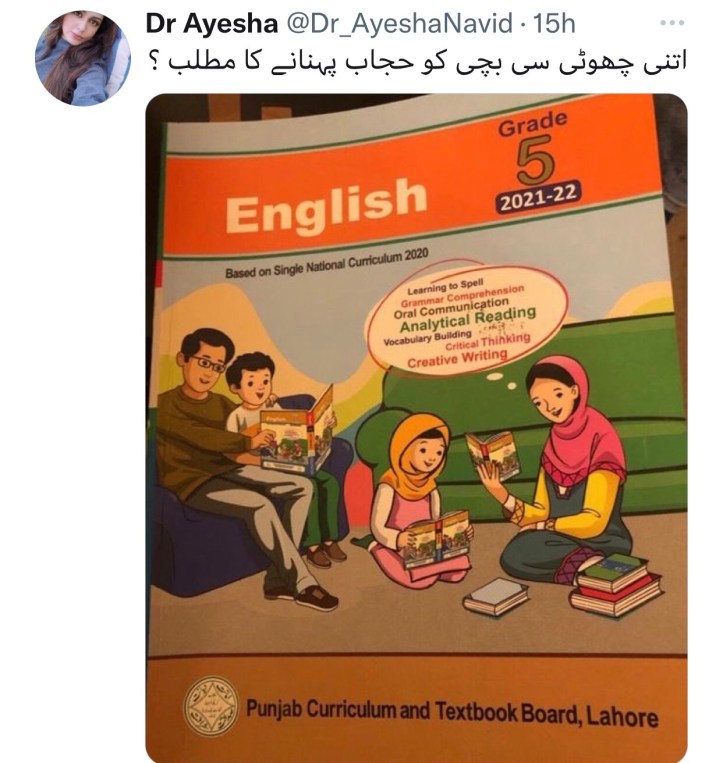
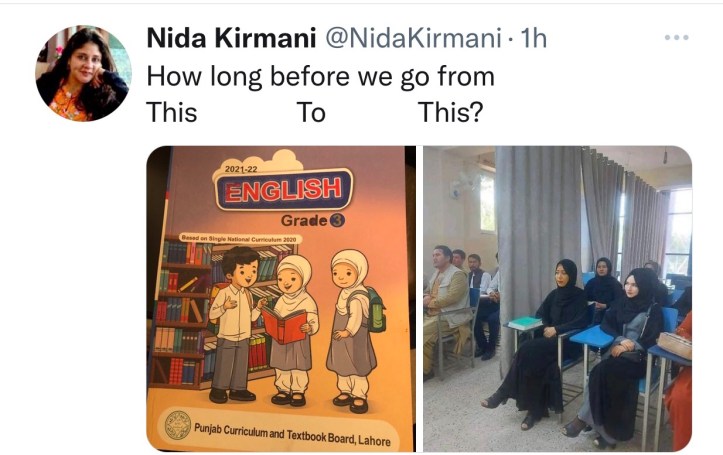
Yesterday morning started with a few tweets that I saw regarding the new Single National Curriculum being introduced in Pakistan. It has generated plenty of discussion and criticism, and rightfully so. The pictures and discussion in these tweets immediately took me back to the day before, when I was in fact going through the pages of Pakistan Quarterly, from the 1950s. I’ve been looking at the formative years of Pakistan and the role played by women, which is far too often side-lined or a footnote in support of the main body.

Below are extracts from two articles, which illustrate some of the discussions that were taking place on the importance of education in the making of a “new Pakistan” and the role of religion (especially girl’s education). Julian Duguid was a journalist, writer and wrote his article while posted in Pakistan. The second article though is by the Vice-Chancellor of Peshawar University, Raziuddin Siddiqi. Dr Siddiqi was born in 1908 and educated in the newly established Osmania University, Hyderabad. Indeed, he was from the first batch that graduated from there and later went on to serve as the Vice-Chancellor of Osmania. In 1950, however, Dr Siddiqi migrated to Karachi and joined Karachi University, at the request of the Government of Pakistan. There was a serious skills shortage in Pakistan following the Partition, and the development of educational institutions and an educated workforce was key to future prosperity.

Lifting of the Veil by Julian Duguid

Pakistan Quarterly, Vol. 2, No. 3, 1952

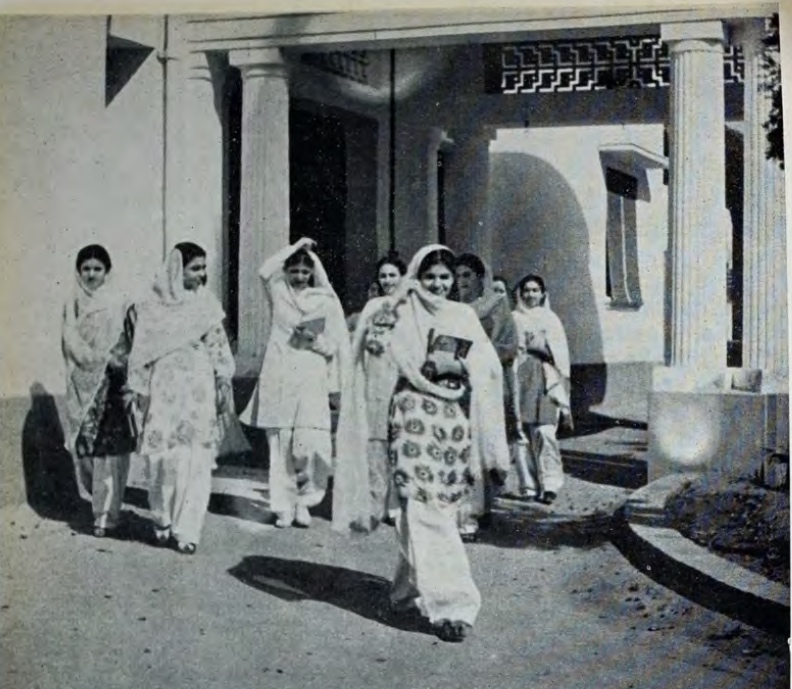
After hearing the story of the chaos, so bravely met and overcome, I watched with a special interest the young girl students whom it freed. A few still went in burqas, but most of them walked and bicycled as if they’d never heard of purdah. At lunch time, they passed Zam-Zammah, the gun on which Kim used to sit; and in the evenings they did athletics or played tennis. There was nothing whatever to distinguish them from any other healthy young students. Yet, even four years ago, many of them could hardly have dreamt of such freedom.

Of course, liberation on this scale has not gone quite uncriticised. Now and then, a fanatical old mullah, his beard abristle with zeal, will creep behind a girl and cut her hair off to teach her not to be shameless. When this happens, he is taken to the police-station and lectured on the new Pakistan and kept in jail for a few days to cool his ardour. He leaves unconvinced, and muttering; but his generation will pass, and then the veil will be lifted more and more widely among the middle-class city-dwellers as it is among the labouring village people whether in town or country.

It may take many years, but it will come.

Education in Pakistan by Raziuddin Siddiqi, Vice-Chancellor, Peshawar University.

Pakistan Quarterly, Vol. 3, No. 4, 1953.

Immediate steps were, therefore, taken in all Provinces to rehabilitate the old schools and Colleges and establish new ones. Classes were held in several shifts to cope with the enormous increase of students. Adequate measures were adopted for training school teachers in large numbers. Education was given high priority along with defence and law and order in the Central and Provincial budgets. A number of new Universities were established in order to provide suitable teachers for the schools and colleges. Educational materials, such as books, journals and scientific equipment, was imported in a large quantity from Europe and America. Young men and women were sent in considerable numbers for training abroad. A six years Plan was formulated to give effect to considered policy of all-round educational development.

It would not be out of place to give here a short account of our policy in this scheme of educational development. The fundamental aim before the authorities in this matter has been ensure to that each and every individual gets the best and highest education and training commensurate with his capabilities. Islam lays down the acquisition of knowledge as an integral part of the duties of every individual Muslim of either sex. It is a unique and distinguishing feature of this religion, which enjoins its followers to think and know for themselves. It has been explicitly stated in the Holy Quran that “God exalteth and elevates to higher ranks only those who are believers, and who have been accorded knowledge”.

Islam does not allow the sharp division of an individual’s existence into a religious and secular life, as believed necessary by the people following other religions. There is no priest-class among the Muslims. Non-observance of this essential principle of Islam, has been one of the main factors in the deterioration of our condition in the past. On the one hand the general body of Muslims were educated in secular schools, and knew very little of the fundamental principles of their religion. For even a little bit of information about their faith, they were entirely at the mercy of the ‘Mullas’. On the other hand, the ‘Mullas’ studied in religious institutions which were completely divorced from all modern knowledge. This was affecting adversely the national life at both ends. The educated young Muslims were generally absorbing atheistic or agnostic tendencies more and more, and instead of proving a source of strength to the community, were undermining its very existence. The ‘Mullas’ were becoming more and more ignorant, fanatic and narrow minded, thus bringing the religion itself into disrepute and contempt.

It was necessary, therefore, to evolve a new system of education, or rather to revive the older system of the early days of Islam in which all knowledge was one, and there was no artificial distinction between religious and non-religious knowledge. 

Punjabi Khoj Garh (Punjabi Research and Archive).

Punjabi Khoj Garh, © Pippa Virdee, 2014.

Punjabi Khoj Garh is a centre of research, publication and advocacy on the history, culture, literature, music, and art of the Punjab. It was established on 10 March 2001 and Iqbal Qaiser, an independent scholar, has tirelessly built up this institute over the past 20 years. It is maintained by the Punjabi Khoj Garh Trust and individuals who work voluntarily to maintain and upkeep the Centre. They welcome all sorts of researchers with facilities and materials for their work on Punjab.

For further details contact: Iqbal Qaiser, Punjabi Khoj Garh, Lalliyani (Musfafar Abad), District Kasur, Pakistan. Follow them on Facebook.

Read more about PKG: ‘House of Readers’ by Altaf Husain Asad, The News, 23 July, 2017

The first fossil museum in Pakistan

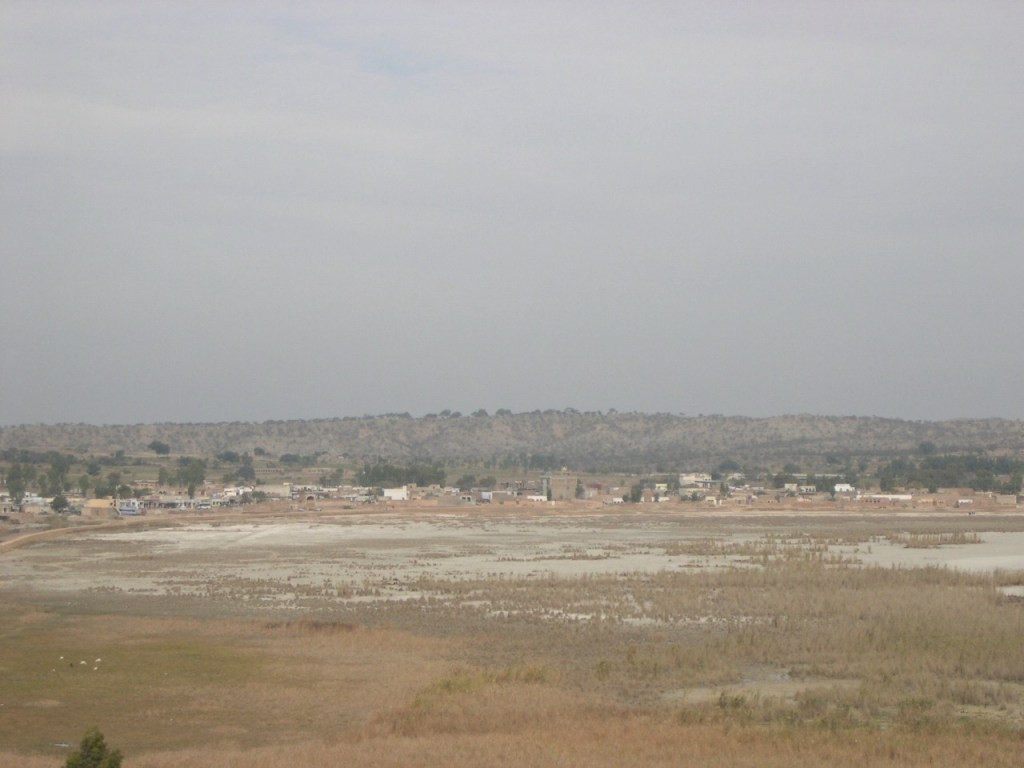
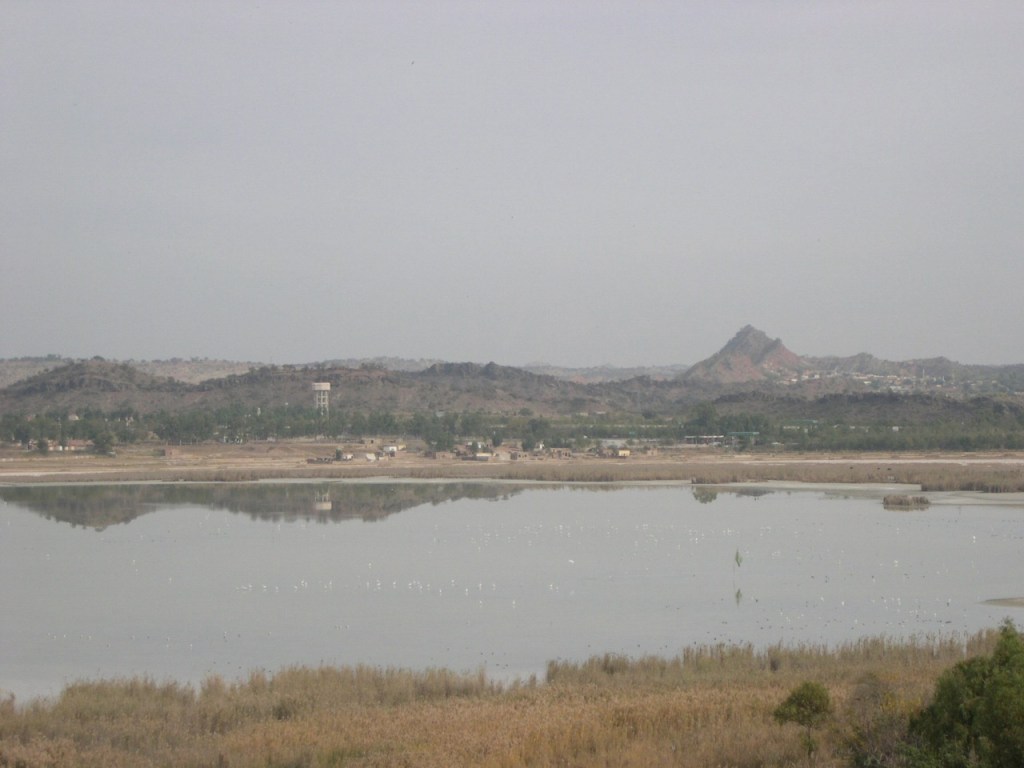
In December 2004, I was traveling from Islamabad to Lahore on the M-2 motorway, which is the first motorway to be created in South Asia and which was inaugurated in 1997. It is also one of the most expensive to be constructed under the Korean company, Daewoo. The journey of 184 km takes one via the magnificent Salt Range and Kallar Kahar, a subdivision of Chakwal District (Punjab) and conveniently located close to the M-2.

Kallar Kahar is also a popular tourist destination with captivating lakes and the Katas Raj Temple complex, dedicated to Lord Shiva, dating back to 615-950 CE. The founder of the Great Mughal dynasty, Zahir ud-Din Muhammad Babur (1483-1530), stopped here with his army, while en route to north India in 1519. During this stay, a throne was built by cutting a piece of limestone formation to create a raised platform, from where he addressed his army. This throne, known as Takht-e-Babri, was located within the Bagh-i-Safa, the first of many Mughal gardens to be created. Salman Rashid in his book, The Salt Range and the Potohar Plateau (Sang-e-Meel, 2001), mentions how Babar, described the area of Kallar Kahar Lake as a “charming place with good air”.

Read further: “Kallar Kahar: blessed by nature, neglected by rulers” by Nabeel Anwar Dhakku, Dawn, 28 February, 2016. 

“Takht-e-Babri, the first Mughal construction in the subcontinent, is grand only in name” by Haroon Khalid, Dawn, 5 June, 2017.


© 2004 Pippa Virdee 

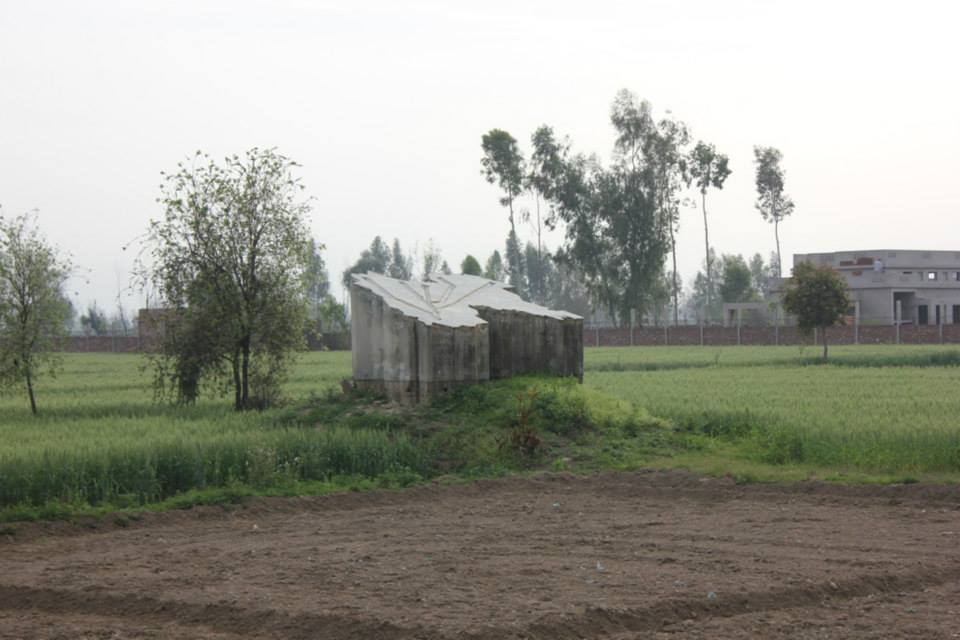
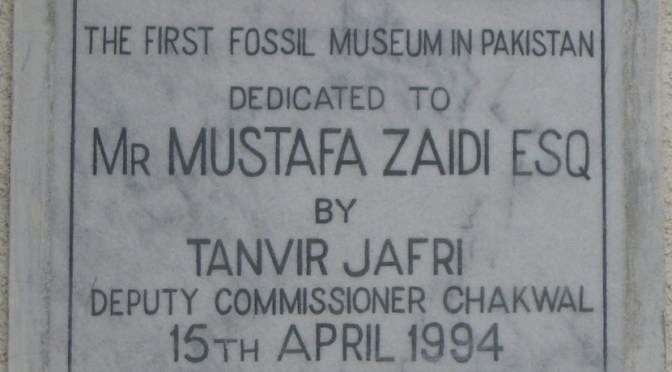
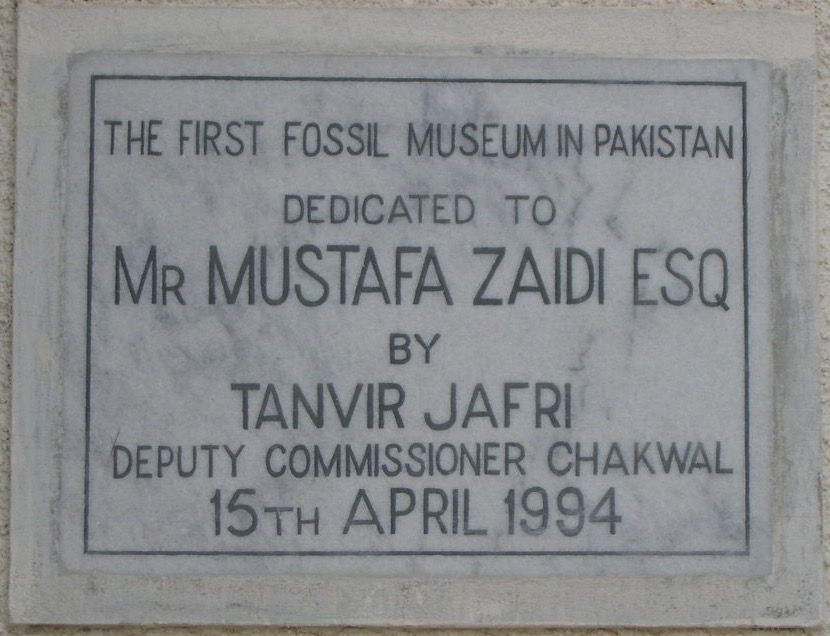
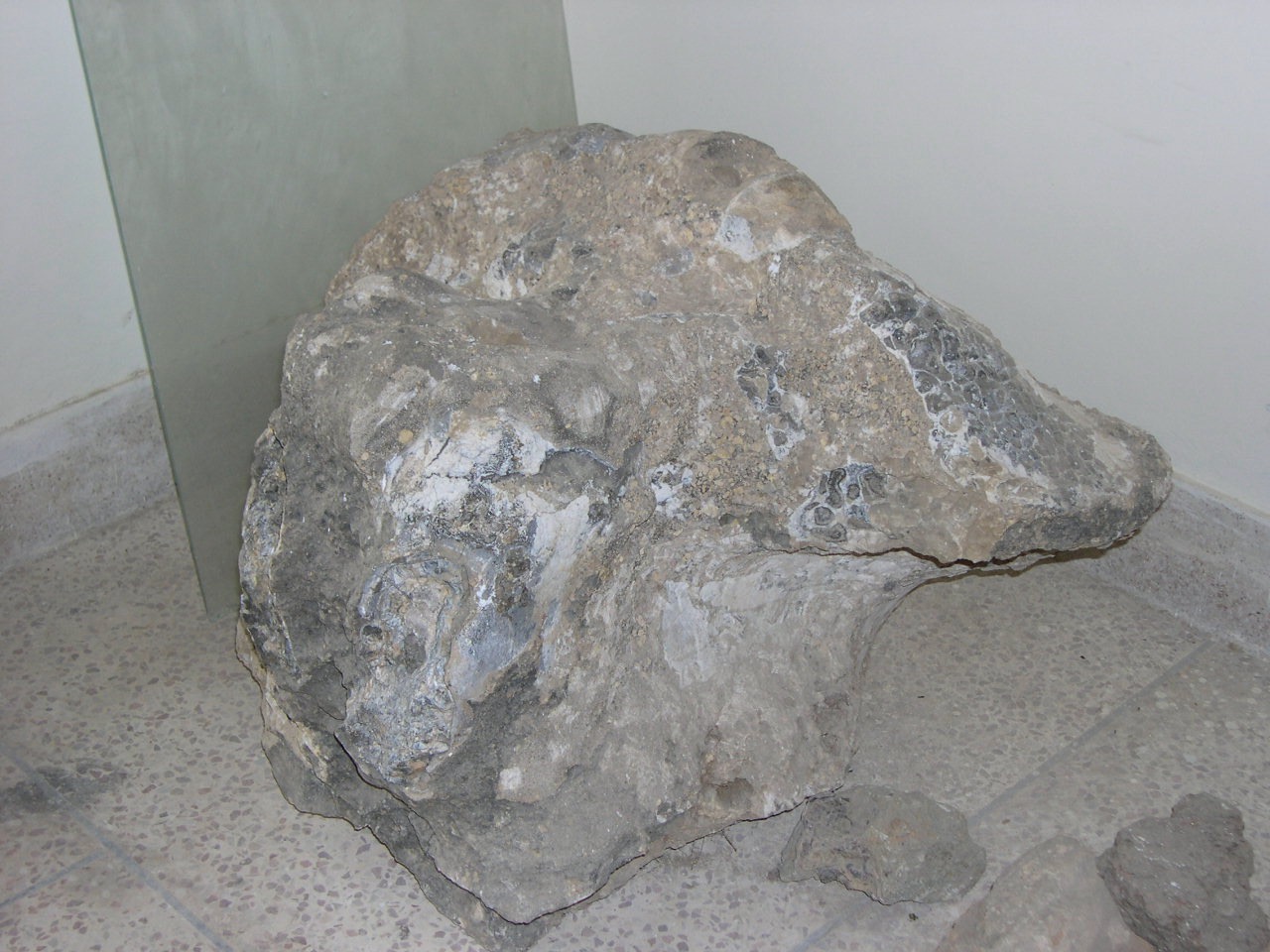
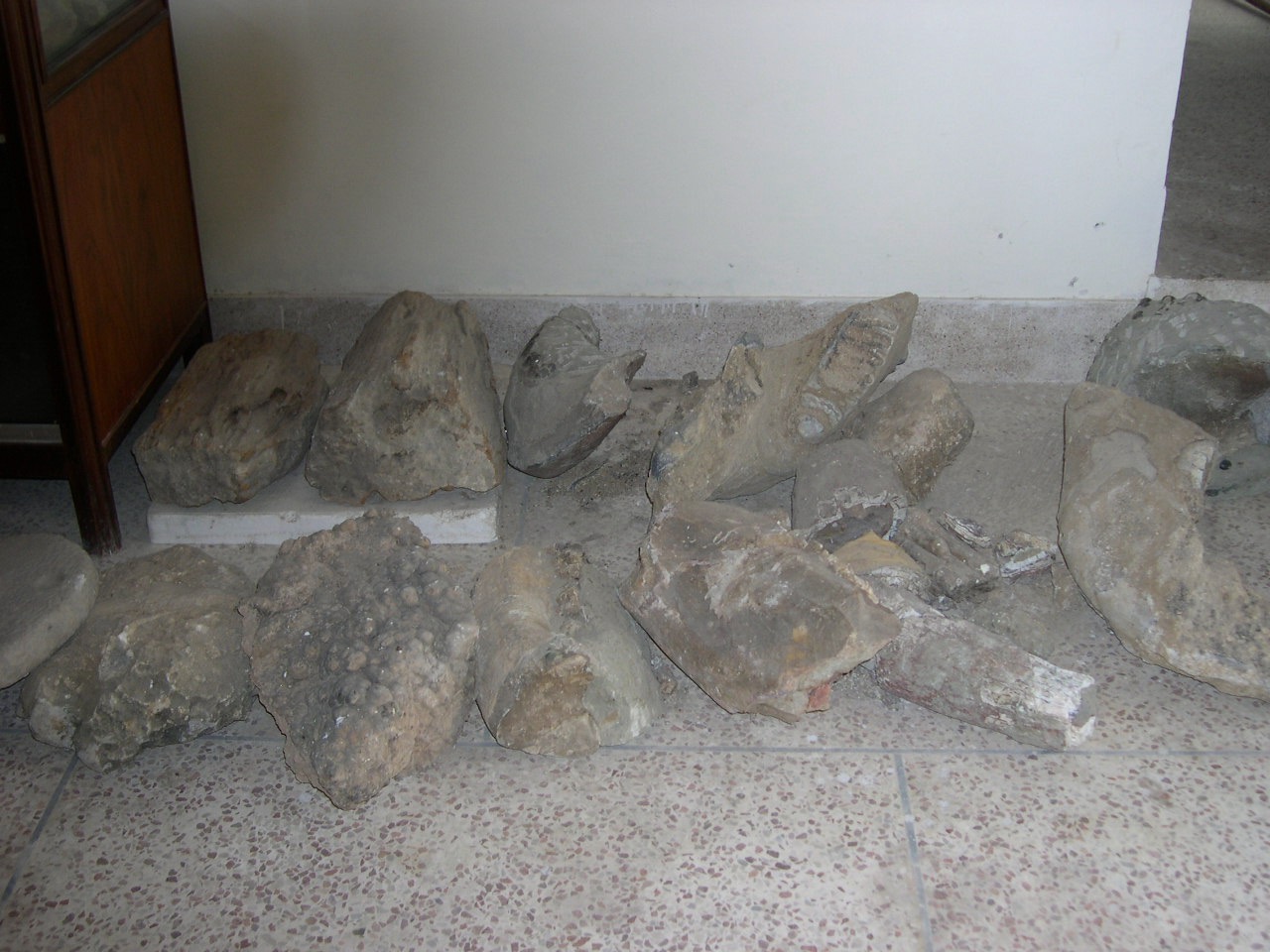
Back in 2004, I also stumbled upon the first fossil museum in Pakistan! Actually, it was less a museum and more a room with a variety of fossils scattered randomly on the floor. Neglected and dusty, they appeared to be of little significance. I recently came across this old photograph, which I had forgotten about.

I was so intrigued by the plaque with this inscription of the first fossil museum that I started doing a little digging about it, with little to show. A search for Mustafa Zaidi throws up a famous poet/civil servant (born 16 October 1930 in Allahabad and died 12 October 1970), while Tanvir Jafri, the then-DC of Chakwal, might still be around with recollections of this fossil museum.

I think the fossil museum is perhaps part of the Kallar Kahar Museum now, which is located opposite the Lake. It was finally inaugurated earlier this year in April, after seven years of its completion. At the time, I remember the caretaker saying that they there was something bigger in the pipeline, to create a better museum space. In South Asia, these matters take time (years), unless there is political mileage in the project. Though I should not have been so dismissive of the fossils, because this region is rich in history and has dinosaur fossils dating back 15 million years. But heritage remains a low priority for the country, whether prehistoric, ancient or modern, and is a simultaneously contested and marginalised space.  

“Kallar Kahar Museum’s doors remain firmly shut” by Nabeel Anwar Dhakku, Dawn, 20 January 2016. https://www.dawn.com/news/1234117

“To Peking for Peace”: Kissinger’s Secret 1971 Trip.

It was fifty years ago that Henry Kissinger made a secret trip to Beijing in July 1971. Kissinger, who was President Nixon’s National Security Advisor, flew to Beijing from Pakistan on PIA flight. His meetings there produced an agreement that President Nixon would visit China, which saw the beginning of the U.S.-China effort to discuss the issues that had divided them over the years. Below are some snippets of recent articles that have appeared to mark this moment from Pakistan’s perspective and also some archival material.

‘Gastric diplomacy’ by F.S. Aijazuddin, Dawn, July 8, 2021

FIFTY years ago today, on July 8, 1971, Dr Henry Kissinger as president Nixon’s envoy made a stopover in Rawalpindi to meet president Yahya Khan. Kissinger came from New Delhi, leaving a perplexed prime minister Mrs Indira Gandhi wondering why he had dropped in for such insubstantial talks.

In Rawalpindi that night, Dr Kissinger had dinner with the president, during which they discussed the secret they had shared for two years — the furtive contact between US president Nixon and the Chinese leadership of Chairman Mao Zedong and premier Zhou Enlai.

Dr Kissinger expressed his apprehension over his visit to Beijing, insisting at one stage that president Yahya should accompany him as a guarantor of his safety. Yahya demurred and offered Kissinger a tin hat and a general instead.

In the early hours of July 9, while his ‘double’ (ostensibly with a gastric upset) drove to Nathiagali, Dr Kissinger flew out of Chaklala airport in a PIA aircraft. He spent the next few days in Beijing and returned on July 11.

I dined with former president Yahya Khan four years later, on Aug 2, 1975. He was then in ‘protective custody’ in his Harley Street home. I asked him about Chairman Mao: “Like an ocean”. Zhou Enlai? “Courteous, far-sighted but like a mouse in front of Chairman Mao.” And president Richard Nixon? “A true friend of Pakistan.”

Yahya Khan — the go-between trusted by both the Americans and the Chinese — maintained a confidential record consisting of 49 documents, kept in a loose-leaf folder which his son Ali Yahya hid under his bed. Occasionally, tantalisingly, he would reveal some but not all its contents.

Years later, Ali gave me a full set of the papers. These I was able to convert into a book — From a Head, Through a Head, To a Head: The Secret Channel between the US and China through Pakistan (2000). Later, I discovered a cache of Nixon’s presidential papers stored in the US National Archives, in Washington, D.C. They proved uniquely valuable, because Kissinger had put an embargo on his own papers. Read the full article.

‘A Flight that Changed the World’ by Abdul Hayee, The Friday Times, July 16, 2021

On this particular night in July 1971, we were told to to get ready for a 3 AM departure. Pakistan International Airlines was routinely used for VVIP (Very Very Important Person) travel from its very inception and in the 1960s had developed a security check-list to cover such operations whenever needed. The basics involved securing the aircraft with armed guards during preflight maintenance and ensuring flight operation by a crew that had prior national security clearance.

Being one of the Chief Pursers at the time who had such security clearance, I was asked in July 1971, to proceed to Rawalpindi from Lahore where I was on Vacation. A Boeing 707 crew under the command of Captain M T Baig was assembled in Intercontinental Hotel Rawalpindi without a clue as to the nature of this VVIP operation. We were only told in clear terms that we were not to communicate with anyone and that we would be told to operate a VVIP flight on short notice…

Since it was dark, it was difficult to see the passengers in his car. But as soon as they came out of the car and started to come up the steps, lo and behold! the man following Mr. Khan was none other than Dr. Henry Kissinger, Assistant to the US President for National Security affairs!

I was the first to greet him aboard, introduced myself as Purser in charge. Dr Kissinger then introduced me to the other gentlemen in the party –  namely Winston Lord, John Holdridge and Richard Smyser. Mr. Khan got out, the door was closed and departure announced to Peking. I remember having told Captain M.T. Baig, the commander of this flight, as to who exactly our VVIP passengers were. He was as surprised as one might expect. Read the full account.

The Kissinger Transcripts. The Top Secret Talks With Beijing and Moscow By William Burr The New Press. Below is a short extract/commentary about America’s support for Pakistan during the war for independence in Bangladesh.

Another important channel to Beijing was Ambassador Huang Hua, who headed the PRC’s United Nations Mission when it was established in November 1971, a few weeks after the U.N. General Assembly voted to seat Mainland China. Huang and Kissinger began holding secret meetings at a CIA safehouse in the Lower East Side of Manhattan and quickly developed a comfortable relationship across the ideological divide. Although they were able to keep their meetings secret, within months some neighbors began to wonder “what is going on.” Security officials asked that Kissinger “arrive in something other than a large limousine,” arrive on time, and bring a less obtrusive Secret Service detail. (Apparently the agents had “been leaping out of the car and stopping traffic.”)

On 10 December 1971, Kissinger met with Huang Hua to brief him on the U.S. stance toward the South Asian crisis. A week earlier, the Bangladesh crisis had exploded into war when Pakistan launched a surprise attack on India. With the U.S. public generally supporting India and the cause of Bangladeshi independence, Nixon and Kissinger secretly and deceptively tilted policy toward Pakistan, in part because of President Yahya Khan’s important role in facilitating communications with Beijing during 1970 and 1971. Moreover, Nixon and Kissinger saw India as a Soviet proxy and believed incorrectly that Indian prime minister Indira Gandhi aimed to destroy West Pakistan in order to humiliate the government that had helped to forge U.S.-China relations. Kissinger told Huang how the White House was sustaining its tilt toward Karachi with veiled threats to the Soviets, secret requests to Middle Eastern governments to provide military equipment to Karachi, and instructions to send an aircraft carrier fleet through the Straits of Malacca into the Bay of Bengal.

Secretary of State Rogers was furious with White House policy toward Pakistan, although he failed to realize that Nixon was as much its architect as Kissinger. Nixon and Kissinger continued to make key decisions in secret. Only they knew that their naval deployments were to ensure “maximum intimidation” of India and the Soviet Union. Although the Indians were puzzled by U.S. maneuvers, Kissinger later argued that this action had been “the first decision to risk war in the triangular Soviet-Chinese-American relationship.” However, he did not admit in his memoirs that he had counseled Ambassador Huang that if Beijing decided to intervene in the war “to protect its security, the U.S. would oppose efforts of others to interfere with the People’s Republic.” Huang’s rhetoric in the conversation was militant; Kissinger concluded incorrectly that the Chinese were about to join the fighting. Beijing had as little interest in intervening as the Indians had in escalating the fighting. A week after this meeting, on 17 December, the Indians accepted Pakistan’s offer of an unconditional cease-fire.

The Beijing- Washington Back-Channel and Henry Kissinger’s Secret Trip to China. September 1970-July 1971. National Security Archive Electronic Briefing Book No. 66. Edited by William Burr, February 27, 2002.

Getting To Beijing: Henry Kissinger’s Secret 1971 Trip A documentary history of US efforts under Richard Nixon to open discussions with Chinese leaders, an effort that yielded Kissinger’s trip forty years ago this month. Photo: Premier Zhou Enlai and National Security Advisor Henry Kissinger.

The shame of work

This morning I came across a newsflash on the BBC about “The risqué business of selling underwear in Pakistan”, which serves as a click bait because the article-proper is titled “Pakistan: The man trying to improve women’s underwear”. Its content immediately resonated with me. The quotes from female workers therein took me back to the research I did on the women, who worked for Pakistan International Airline (PIA) in 1960s. The factory in-focus, where they are making the garments, is based in Faisalabad (Lyallpur), a city I know well because of my own doctoral research, while the business was started by a Leicester born businessman. Leicester/DMU where I work, is city renowned for its garment factories and indeed DMU has long pioneered research in the increasingly sophisticated lingerie industry.

The interesting element is of course that in Pakistan, women’s undergarments are either on full display in congested stalls in busy bazaars, where a majority of women shop (buying, most likely, from a man) or they are curiously hidden (veiled) behind the blackened windows in fancy shopping malls. This stark class disparity is also symbolic of a cultural disparity in a society where working women of the sub-urban informal sector in r-urban areas, rarely have the luxury to be veiled, while the newly middle-class women, of families with the means to be pious, are more prone to and secluded in world of purdah.

The focus of the said article is about comfort and ensuring that women have access to underwear garments that are fit for purpose – and not just for optics. The fact that society treats these necessities in life as taboo, something to be embarrassed about and to snigger at because we are unsure how to respond, is a fine example of how a patriarchal society works to keep women confined in both public and private spaces.

When I was doing my research on PIA, the airline was established in 1955 in part to meet the needs of keeping East and West Pakistan connected, it was obvious that to get it off the ground, it needed staff, male and female. I was intrigued by the women who worked for PIA in the 1950s and 1960s, what motivated them, what their background was, given that in this still-more socially conservative age, women working as “airhostesses” or cabin crew were yet-more objectified, with age/size/marital status being important to the job. So, it was not surprising when such women encountered reluctance from the family members. 

These quotes from the BBC article could have been from the women I spoke with: (1) “We had two people who came back and said their families do not want them to work in an undergarment factory.” (2) “My father instantly refused…I had to ask him to let me go and see for myself and if…I don’t like the atmosphere at the factory, I won’t accept the job.”

Women who wanted to work for PIA endured similar sentiments. Families were reluctant or worse at their sisters/daughters working in this “forward” industry and the potential shame. But this was the 1950s/60s, and many of these women were away from home, flying high and experiencing a completely different world. In their taking off, they were breaking new ground, pioneering and enabling others to work in professions other than the usual “respectable” teaching/medicine. And so, to read these quotes from women today, 60 years later and working for a factory that is making undergarments is emblematic of how Pakistan has rolled on the road of more piety and rituals, as a ruse for rule; cover for control.

Faisalabad/Lyallpur is the third largest city in Pakistan, after Karachi and Lahore, and is the hub of the textile industry. It is often referred to as the Manchester of Pakistan. Following the Partition of British India, the city witnessed mass movement of people, both those who left for India and the large number of refugees that transformed this colonial town into the city that it is today. When I was doing my research on the city in the early-2000s, it was a conservative city despite the vast wealth being generated in its bazaars; 20 years on, it continues to be so, perhaps because of the new capital and its renewed performance of customs and commodification of shame.

Read further:

Pippa Virdee, ‘Women and Pakistan International Airlines in Ayub Khan’s Pakistan’, The International History Review, 2019, 41:6, 1341-1366, DOI: 10.1080/07075332.2018.1472622

Saher Baloch, ‘Pakistan: The man trying to improve women’s underwear’, BBC News, 13 June 2021. https://www.bbc.co.uk/news/world-asia-57268691.

UKAFF 2021 Review: Zindagi Tamasha — Filme Shilmy

Filme Shilmy reviews the controversial Pakistani film Zindagi Tamasha by Sarmad Khoosat – premiering at the UK Asian Film Festival.

UKAFF 2021 Review: Zindagi Tamasha — Filme Shilmy

Do read the review above and also try to watch the film if it is showing anywhere nearby. It was premiered at the Belgrade Theatre yesterday and an absolute treat to watch. It transports you into Lahore and a parallel world of state and society, and much, much more.

M.A. Jinnah: official biography as scholarly history?

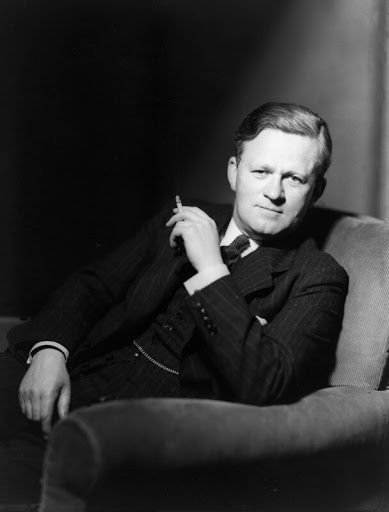
Hector Bolitho’s Jinnah: Creator of Pakistan is how it ended, in 1954; below is how it started, in 1951-2:

Hotel Metropole (Karachi), 4 February 1952, Bolitho to S.M. Ikram (Ministry of Information & Broadcasting, Government of Pakistan)

‘I have just returned from a conversation with Miss Jinnah [who had ‘issued a statement that she neither knew about, nor had anything to do with, Bolitho’s assignment’] and I feel that time has come for us to review the circumstances in which I have attempted to write the official biography of Quaid-i-Azam.

I have now been in Pakistan for almost one month [government had to issue a press note explaining the decision to engage ‘a foreigner’, in response to ‘a section of Pakistan Press’ raising a controversy], and I feel that, in the present circumstances, it would be dishonest and impossible for me to write a biography that would be worthy of the subject or acceptable to any reputable firm of publishers.

Since I have been engaged on my task, which began on October 22nd [the cabinet of Liaquat Ali Khan had approved minister I.H. Qureshi’s proposal to commission Bolitho on June 20, 1951], I have been refused all help from those officials who knew Quaid-i-Azam personally. K.H. Khurshid, his secretary, now in London, has expressed his regrets that he will not help. M.H. Saiyid, sent to me by you, has also refused to co-operate.

[Khurshid would later publish his Memories of Jinnah (1990, 2001). Saiyid would also publish A Political Study of Jinnah (1953, 1962), titled The Sound of Fury (1981)]

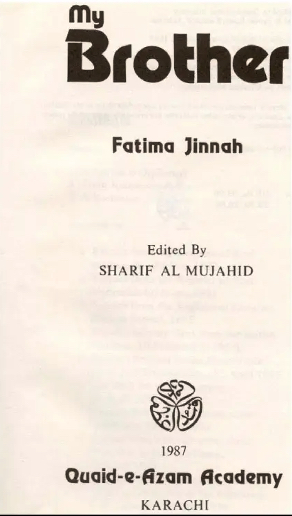
Mazhar Ahmad, A.D.C. to the Quaid, whom you promised as my helper, has not been made available. Prof. Mahmud Brelvi [?], appointed to help me, has not appeared for six days. Although he has been scrupulous in his courtesy, your office has ignored my situation, and has offered no explanation of Prof. Brelvi’s withdrawal. Nor has anyone been deputed to take his place. Nor, in this past month, have I been given even one of the promised documents relating to the Quaid. Nor has Miss Jinnah been approached by the Government. I have taken legal advice, and I find that Miss Jinnah owns the copyright of all her brother’s documents. She has stated to me that these are being used for the biography on which she is now engaged [Ghazanfar Ali Khan (then Pakistan’s Ambassador in Iran) had given a statement ‘welcoming Miss Jinnah’s decision’, adding that ‘she “should have been the first person to be consulted by the Government”’. I.H. Qureshi had been ‘seeking the assistance of his colleagues acquainted with Miss Jinnah to approach her, but these efforts failed’. Her book My Brother (1955) came out in 1987.]

As an indication of the frustration and discouragement I have endured from your department, I would draw your attention to my letter of January 19th. There I mentioned the Aga Khan’s offer to help me. His collaboration would be almost as valuable as that of Miss Jinnah. Sixteen days have passed since I wrote this, without the courtesy of a reply from you.

All this suggests that the Government is apparently unable, or unwilling, to abide by our contract. I consider that I have been deceived in this matter of documents, and the promised help of “members of the family” of the Quaid. I am wondering, therefore, if it would not be best for us to terminate our contract, under terms which I shall made as reasonable as possible. I propose:

  1. That the sum of [2000] guineas – the remainder of my fee – be immediately paid into the office of my solicitors in London (Messrs Shirley Woolmer & Co.) with instructions to them to hold the money until the contract between us is formally cancelled.
  2. That, as compensation for the loss of income from the sales of the English-language book rights in England, America, and the Sub-continent, I be compensated to the extent of [5000] guineas.
  3. According to my contract, I am entitled to hotel accommodation for myself and [researcher] Captain Peel for [4] months. As my house in London is let, I shall require hotel accommodation for myself, and I shall have to compensate Captain Peel, until June 2nd. I therefore propose that the Pakistan Government pay me the sum of GBP 80 per week (based on last week’s bill) from the date of my leaving Pakistan until the period of [4] months is up.
  4. All sum to be free from any deductions of income tax or other dues, and paid in full in London.
  5. That 1st-class sea passage, to be approved by me, for myself and Captain Peel, be provided, as soon as possible, to England.

I am anxious to conclude this matter as soon as possible, because it is desirable for both of us that the story should not become distorted in the world press. I have already been approached to make a statement to a New York newspaper, and to an Indian newspaper.

I have no wish to see the Government embarrassed, and I am sure that we could come to an arrangement. I ask only for speed. Although our agreement was made in London, and, therefore, any legal action would no doubt have to be taken there, I trust that we can close the matter amicably, thus avoiding publicity unpalatable.

[The agreement text spoke of ‘not less than 90, 000 words’ biography for ‘the fee’ of 1000 GBP ‘on the signing of this contract’, 1000 GBP ‘on delivery of the finished manuscript to the publisher’ and, 1000 GBP ‘on publication in England or America (whichever first) + 1st class return sea passages, rail fares, travelling facilities and hotel accommodation for a period of 4 months, a liaison officer and all ‘reasonable assistance and facilities for the purpose of obtaining information, examining documents and interviewing government officials and members of the family’]

A disgruntled Bolitho, before writing the above letter, gave an interview to the Sind Observer, without warning to the government, published on 29 January 1952, in which he ‘hinted at the possibility of his giving up the assignment and seeking compensation because he had put all his work aside to fulfil this request which came first from Liaquat Ali Khan’.

Source: File No. 3 (6) – PMS/52 (Government of Pakistan, Prime Minister’s Secretariat)

What happened in-between, recalled In Quest of Jinnah: Diary, Notes and Correspondence of Hector Bolitho, edited by Sharif al Mujahid, 2007.

Hector Bolitho of New Zealand (1897-1974); author of 59 (!) books & biographer of George VI, Victoria & Albert and Edward VIII). Further Bio details.