Category Archives: Pakistan

UKAFF 2021 Review: Zindagi Tamasha — Filme Shilmy

Filme Shilmy reviews the controversial Pakistani film Zindagi Tamasha by Sarmad Khoosat – premiering at the UK Asian Film Festival.

UKAFF 2021 Review: Zindagi Tamasha — Filme Shilmy

Do read the review above and also try to watch the film if it is showing anywhere nearby. It was premiered at the Belgrade Theatre yesterday and an absolute treat to watch. It transports you into Lahore and a parallel world of state and society, and much, much more.

M.A. Jinnah: official biography as scholarly history?

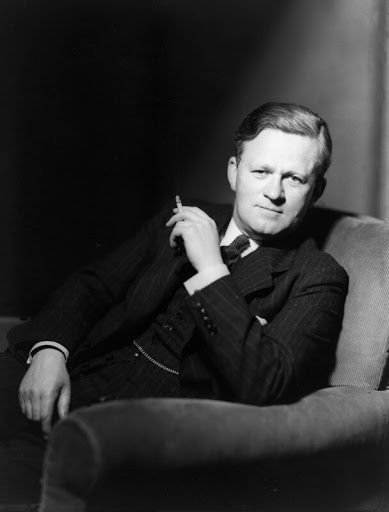
Hector Bolitho’s Jinnah: Creator of Pakistan is how it ended, in 1954; below is how it started, in 1951-2:

Hotel Metropole (Karachi), 4 February 1952, Bolitho to S.M. Ikram (Ministry of Information & Broadcasting, Government of Pakistan)

‘I have just returned from a conversation with Miss Jinnah [who had ‘issued a statement that she neither knew about, nor had anything to do with, Bolitho’s assignment’] and I feel that time has come for us to review the circumstances in which I have attempted to write the official biography of Quaid-i-Azam.

I have now been in Pakistan for almost one month [government had to issue a press note explaining the decision to engage ‘a foreigner’, in response to ‘a section of Pakistan Press’ raising a controversy], and I feel that, in the present circumstances, it would be dishonest and impossible for me to write a biography that would be worthy of the subject or acceptable to any reputable firm of publishers.

Since I have been engaged on my task, which began on October 22nd [the cabinet of Liaquat Ali Khan had approved minister I.H. Qureshi’s proposal to commission Bolitho on June 20, 1951], I have been refused all help from those officials who knew Quaid-i-Azam personally. K.H. Khurshid, his secretary, now in London, has expressed his regrets that he will not help. M.H. Saiyid, sent to me by you, has also refused to co-operate.

[Khurshid would later publish his Memories of Jinnah (1990, 2001). Saiyid would also publish A Political Study of Jinnah (1953, 1962), titled The Sound of Fury (1981)]

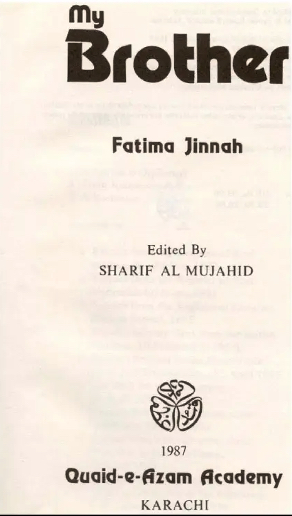
Mazhar Ahmad, A.D.C. to the Quaid, whom you promised as my helper, has not been made available. Prof. Mahmud Brelvi [?], appointed to help me, has not appeared for six days. Although he has been scrupulous in his courtesy, your office has ignored my situation, and has offered no explanation of Prof. Brelvi’s withdrawal. Nor has anyone been deputed to take his place. Nor, in this past month, have I been given even one of the promised documents relating to the Quaid. Nor has Miss Jinnah been approached by the Government. I have taken legal advice, and I find that Miss Jinnah owns the copyright of all her brother’s documents. She has stated to me that these are being used for the biography on which she is now engaged [Ghazanfar Ali Khan (then Pakistan’s Ambassador in Iran) had given a statement ‘welcoming Miss Jinnah’s decision’, adding that ‘she “should have been the first person to be consulted by the Government”’. I.H. Qureshi had been ‘seeking the assistance of his colleagues acquainted with Miss Jinnah to approach her, but these efforts failed’. Her book My Brother (1955) came out in 1987.]

As an indication of the frustration and discouragement I have endured from your department, I would draw your attention to my letter of January 19th. There I mentioned the Aga Khan’s offer to help me. His collaboration would be almost as valuable as that of Miss Jinnah. Sixteen days have passed since I wrote this, without the courtesy of a reply from you.

All this suggests that the Government is apparently unable, or unwilling, to abide by our contract. I consider that I have been deceived in this matter of documents, and the promised help of “members of the family” of the Quaid. I am wondering, therefore, if it would not be best for us to terminate our contract, under terms which I shall made as reasonable as possible. I propose:

  1. That the sum of [2000] guineas – the remainder of my fee – be immediately paid into the office of my solicitors in London (Messrs Shirley Woolmer & Co.) with instructions to them to hold the money until the contract between us is formally cancelled.
  2. That, as compensation for the loss of income from the sales of the English-language book rights in England, America, and the Sub-continent, I be compensated to the extent of [5000] guineas.
  3. According to my contract, I am entitled to hotel accommodation for myself and [researcher] Captain Peel for [4] months. As my house in London is let, I shall require hotel accommodation for myself, and I shall have to compensate Captain Peel, until June 2nd. I therefore propose that the Pakistan Government pay me the sum of GBP 80 per week (based on last week’s bill) from the date of my leaving Pakistan until the period of [4] months is up.
  4. All sum to be free from any deductions of income tax or other dues, and paid in full in London.
  5. That 1st-class sea passage, to be approved by me, for myself and Captain Peel, be provided, as soon as possible, to England.

I am anxious to conclude this matter as soon as possible, because it is desirable for both of us that the story should not become distorted in the world press. I have already been approached to make a statement to a New York newspaper, and to an Indian newspaper.

I have no wish to see the Government embarrassed, and I am sure that we could come to an arrangement. I ask only for speed. Although our agreement was made in London, and, therefore, any legal action would no doubt have to be taken there, I trust that we can close the matter amicably, thus avoiding publicity unpalatable.

[The agreement text spoke of ‘not less than 90, 000 words’ biography for ‘the fee’ of 1000 GBP ‘on the signing of this contract’, 1000 GBP ‘on delivery of the finished manuscript to the publisher’ and, 1000 GBP ‘on publication in England or America (whichever first) + 1st class return sea passages, rail fares, travelling facilities and hotel accommodation for a period of 4 months, a liaison officer and all ‘reasonable assistance and facilities for the purpose of obtaining information, examining documents and interviewing government officials and members of the family’]

A disgruntled Bolitho, before writing the above letter, gave an interview to the Sind Observer, without warning to the government, published on 29 January 1952, in which he ‘hinted at the possibility of his giving up the assignment and seeking compensation because he had put all his work aside to fulfil this request which came first from Liaquat Ali Khan’.

Source: File No. 3 (6) – PMS/52 (Government of Pakistan, Prime Minister’s Secretariat)

What happened in-between, recalled In Quest of Jinnah: Diary, Notes and Correspondence of Hector Bolitho, edited by Sharif al Mujahid, 2007.

Hector Bolitho of New Zealand (1897-1974); author of 59 (!) books & biographer of George VI, Victoria & Albert and Edward VIII). Further Bio details.

Manto, The Short Story Writer Who Chronicled India’s Partition — The Liberating Whispers

Saadat Hasan Manto (1912–1955), one of the greatest storytellers of the 20th century that South Asia has produced. Writing mainly in the Urdu language, he produced 22 collections of short stories, a novel, five series of radio plays, three collections of essays and two collections of personal sketches. His best short stories are held in high […]

Manto, The Short Story Writer Who Chronicled India’s Partition — The Liberating Whispers

The Lost Empire: Gujranwala — Noor Rathore

Just discovered this Blog by Noor Rathore, beautiful mix of text and pictures.

A story that was passed on from generation to generation, almost lost through the passage of time gets a modern retelling.

The Lost Empire: Gujranwala — Noor Rathore

Nation, State and Education

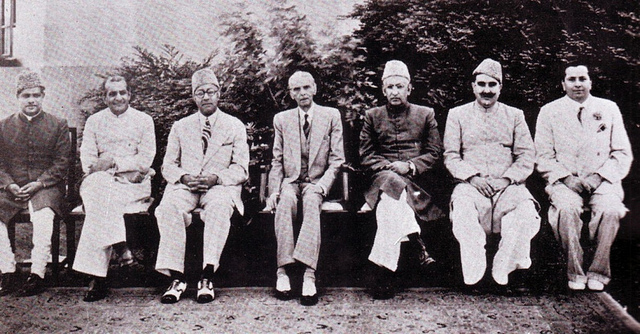
Fazlur Rehman, Ghulam Muhammad, Liaquat Ali Khan, M A Jinnah, Ibrahim Ismail Chundrigar, Abdul Rab Nishtar and Abdul Sattar Pirzada.
Picture credit, Dr. Ghulam Nabi Kazi

In this year of 2020, as debates are generated around Government of Pakistan’s new single national curriculum and its comparison with Government of India’s new national education policy, mind goes back to the first attempts made by a different Government of Pakistan, ‘to evolve a comprehensive national plan in accord with the Objectives Resolution’ of March 1949 (File No. 3 (4)-PMS/50, GoP, PMS).

Fazlur Rahman, then-Minister for Commerce & Education, was born in then-Dacca and was a lawyer-politician of the Bengal Provincial Muslim League, who had served as Revenue Minister of the pre-partitioned province. On 14 September 1949, he sent a 14-page letter (F. No. 14-313/49-Est) to Prime Minister Liaquat Ali Khan, in which he set out his trenchant comments and an accompanying template for the ‘two-fold task’ confronting them namely (1) ‘to lay the foundations of an educational system based on “Islam”’ and (2) to imbue children ‘with an international outlook’.

Recalling the first Pakistan Educational Conference of November 1947 and its resultant educational ideology and institutions – ‘the Advisory Board of Education, the Council of Technical Education and the Inter-University Board’ – he felt that the time had come to overcome ‘the existing system of education, with its alien background, Hindu and Christian ideas, foreign to our ideology’, for as long as it continued, it could not be expected ‘to produce men and women who would realise the value of the Islamic way of life and would make loyal and zealous citizens of Pakistan’.

For the successful achievement of this task, two things were essential: (i) text-books and (ii) teachers. As far as text-books were concerned, the need for Rahman was ‘to draw up the syllabus for every subject on the basis of Islamic ideology (as distinct from instruction in Islamic theology) and get text-books written by competent authors’. He wanted ‘Urdu readers – fundamentally the same all over Pakistan’, necessitating ‘a change in the existing system of publication – whose sole motive is profit-making’. Thus, ‘the Central Government should have them written under supervision’.

There was also the matter of ‘compiling a national history as a kind of reference book’ comprising researched topics like (a) ‘Islamic history and civilisation, (b) the rise and fall of Muslim states all over the world and (c) the contribution made by Muslims to the Indo-Pakistan sub-continent’. For the adoption of Islamic ideology, it was ‘essential to establish a Research Institute in Islamiyat’. As regards teachers and their training, ‘a number of Central Training Institutions’ were needed. These two were ‘fundamental problems which exclusively concerned the Central Government’.

While education was constitutionally the responsibility of the provinces – like in India – their ‘limited resources’ and its ‘all-Pakistan character’ made it ‘incumbent on the Central Government’ to take the lead – ‘from adult to university education’. For ‘democracy and illiteracy go ill together. The illiteracy percentage for India [before 1947] was nearly 90, but with the establishment of Pakistan and the exodus of non-Muslims (educationally more advanced) and the influx of Muslim refugees (to a large extent illiterate)’, there was an increased mass illiteracy in Pakistan. 

Adult education, however, was not ‘mere imparting of literacy’ but included ‘spiritual, civic and vocational motives’ for the creation of a patriotic and productive citizenry. This involved infrastructure, implements, literature, teachers and audio-visual aids, for the provision of which, ‘the Central Government must assume certain powers’. Equally important was ‘the provision of free, universal, compulsory primary education’, involving a vast expenditure. ‘Free, compulsory secondary education’ was ‘unfeasible and must be left to future’.

Anyhow, the Central Government had the ‘clear responsibility’ to produce ‘patriotic citizens not warped by narrow provincialism or alien cultural elements as the Hindu influence in East Bengal’. National solidarity therefore required ‘the speedy revision of curricula and syllabi and re-writing of textbooks’. Another problem was the ‘place of Urdu in national life’. As Jinnah had made it ‘abundantly clear’ that Urdu was to be ‘the national language’ and as, by adopting Hindi in Devanagari script, India had ‘dealt a blow’ to Urdu – ‘the cultural heritage of Indian Muslims’.

For Rahman, language was a ‘potent means’ to maintain ‘cultural ascendancy and a separate political consciousness’. Urdu with its Persian and Arabic words was ‘alien in spirit to Hindu culture’, essentialising its ‘elimination from Indian national life’.  Conversely, in Pakistan it was ‘a matter of vital necessity to have Urdu in Arabic declared forthwith as state language, a compulsory subject in schools’ overcoming the ‘narrow provincialism’ and ‘parochial mentality’ of East Bengal and Sind and resistance of West Punjab and NWFP ‘to assimilate the vocabulary and culture of these two’.

It was a no-brainer for ‘all employees of the Central Government be required to know Urdu’ and a Bureau of Translation be set up for all technical-scientific terms. In this connection, it is important to remember that in 1949, the Hindu community in East Bengal constituted one third of its population, among whom were ‘the caste Hindus – wedded to the Bengali language – the hard-core of resistance’. Rahman was concerned about their potential for ‘an anti-national mentality’ without ‘a pro-Islamic outlook’; ‘dependable citizens of Pakistan with due regard to their religious rights’.

His suggestion was to ‘reconstruct the Bengali language’ with ‘the Arabic script’ thereby ‘putting an end to the disruptive activity being carried in the name of the common culture of the two Bengals’. Moreover, the ‘present Bengali language with its Sanskrit script’ was ‘steeped in Hindu influence, full of Sanskrit words, Hindu mythology and [thus] anti-Islamic’. The Arabic script would ‘eliminate Hindu influence, facilitate adult education, link up East and West Pakistan [and] ensure East Bengal’s willing acceptance of Urdu as a national language’.

In technical education, Pakistan then had only 3 ‘engineering colleges’, like its 3 universities, for a population of 80 million, ‘impaired by the exodus of non-Muslim teachers’. A ‘Grants Committee’ for both was needed. Here, the ‘main obstacle’ was ‘the attitude of the Ministry of Finance’, to which education was a ‘provincial responsibility’. Rahman had forged the establishment of a History Board, Adult Education Centres in East Bengal, a Central Syllabus Committee with its Bengali sub-committee, a Committee of adopting Arabic script and a Committee on Technical Education.

His future proposals were less piece-meal and included the Central Government assuming ‘direct responsibility for the general planning and coordination of education’, a central-provincial sharing of adult education expenditure, central financial assistance for free, compulsory primary education in provinces, Urdu as state language, Arabic script for regional languages and centres for translation, Islamiyat, teachers’ training and a University Grants Committee. 


First Cabinet of Pakistan – Ministers of Liaquat Ali Khan & Muhammad Ali Jinnah in 1947

Special report: The founding fathers 1947-1951. The season of light… By Dr Syed Jaffar Ahmed, Dawn.

History and History Writing

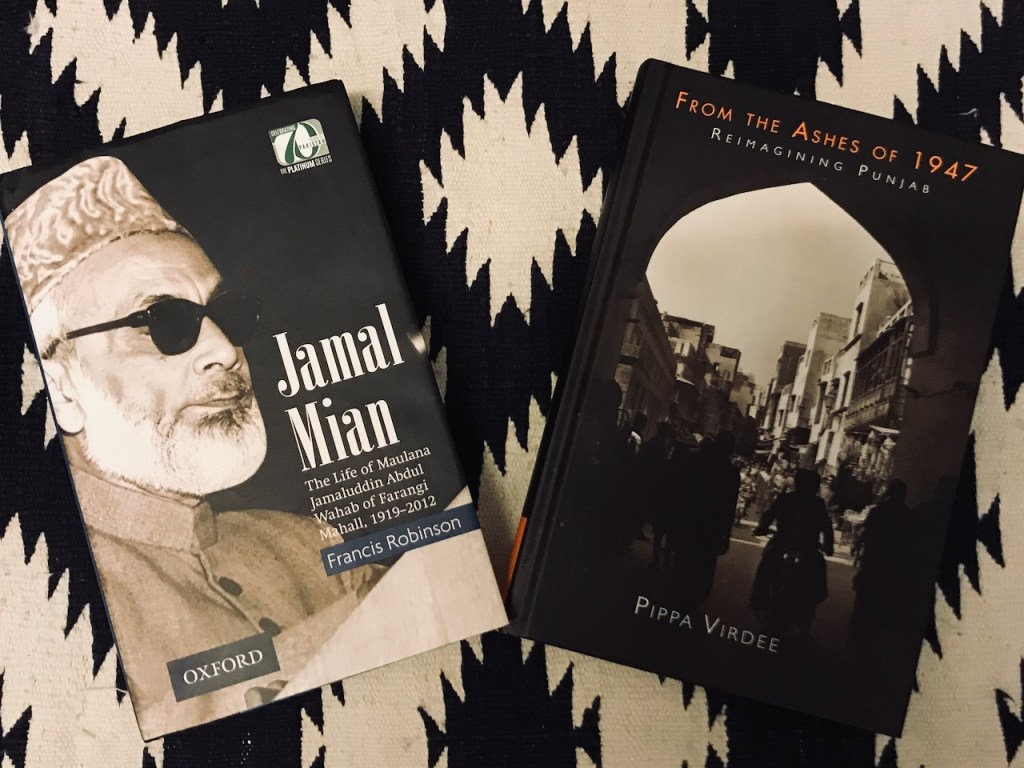
TWO books reviewed of A time BYGONE

The two books are placed on a traditional handmade dhurrie/dari by my mother.

ONE is the biography of Jamal Mian (1919-2012), a life across British India, independent India, East Pakistan and Pakistan. The kind of life, which would be unimaginable to most people of the subcontinent today. At the core, this is a detailed history of the changing political landscape of North India told through the life and times of an extraordinary life. The story unfolds with authority and simplicity, the kind of old-fashioned narrative history writing that barely exists. Stories and history writing are barely written like like because they do not command the short-term impact and they take years, generations to unfold through the relationship of the historian and his subject. But importantly it brings together the life and times of an individual and his milieu – showcasing the kind of “Hindustan” that no longer exists, other than in history books.

Pippa Virdee, FRANCIS ROBINSON. Jamal Mian: The Life of Maulana Jamaluddin Abdul Wahab of Farangi Mahall, 1919–2012, The English Historical Review, ceaa186, https://doi.org/10.1093/ehr/ceaa186

TWO is an account of the province(s) of Punjab; rising From the Ashes of 1947 but simultaneously being reimagined. This too is about a political landscape that has been transformed and only exists in the history books, kinder memories and sepia imaginations of some of its people. It is about the shorter, shocking and longer, hardening consequences of dividing the land of five rivers. It too has been written over a long period and reveals the changing nature of my understanding of Partition, from the beginning of my doctoral work in 2000, to the point of this publication in 2017. It has changed further still because history is about engaging with the past through the unfolding present and “reveals how far nostalgia combined with the lingering aftershocks of trauma and displacement have shaped memories and identities in the decades since 1947.”

Sarah Ansari, PIPPA VIRDEE. From the Ashes of 1947: Reimagining Punjab, The American Historical Review, Volume 125, Issue 2, April 2020, Pages 635–636, https://doi.org/10.1093/ahr/rhz695

Swaminarayan Temple, Karachi: Past and Present

Shri Swaminarayan Mandir. Source: https://www.discover-pakistan.com/shri-swaminarayan-mandir.html.

Pities of Partition: Fragmented archives, claims and counter-claims, ‘actual facts’ & contested-truths, sacred and scarce, state against society, naya Pakistan & naya Bharat.

1. 31 January 1950, N. Gopalaswami Ayyangar (Minister for Transport & Railways, Govt. of Ind.) to N. Liaquat Ali Khan (Prime Minister, Govt. of Pak.):

‘I have been distressed about the action taken by the Pakistan authorities in relation to the Swaminarayan Temple at Karachi. When an allotment of a portion of the Swaminarayan Temple building was first made to a Muslim, our High-Commissioner at Karachi in December 1948, requested the Administrator, Karachi, to ensure that, for reasons of the sanctity of the temple and security of Hindus living in the temple precincts, the temple building should be reserved for the exclusive use of Hindus. By January 1949, the Administrator, Karachi, confirmed…that the Muslim allottee would be fixed up elsewhere… Later a committee of Hindus was also appointed to allot accommodation within the precincts of the temple. Lately the Administrator has abolished this committee and has withdrawn the previous assurance that the temple would be reserved for the exclusive use of Hindus. Meanwhile, further tenements in the precincts of the temple have been occupied by Muslims. The temple has not only catered for the religious and social needs of Hindus at Karachi but has also been used for accommodating Hindu refugees in transit to India…The Governments of India and Pakistan have undertaken to maintain the sanctity of the religious shrines within their territories. It is contrary to this agreement to disturb the sanctity of this temple, which is one of the important ones in Sind, particularly as Hindus in Karachi still continue to offer worship in the temple. I would strongly urge your taking suitable action in the matter…

2. 20 February 1950, N. Liaquat Ali Khan to N. Gopalaswami Ayyangar (in reply):

‘I made inquiries…The temple is surrounded by a big courtyard; all around the courtyard there are a number of tenements used as residential flats by Hindus, Muslims and others, but most of the flats do not open in the temple courtyard. A number of Muslims lived in these flats even before Pakistan was established. However, the sanctity of the temple is as well maintained as before. In order to obviate all chances of misapprehension on the part of the Hindu minority, the Administrator was willing to reserve all the flats around the temple exclusively for Hindus. Therefore, a committee of Hindus was appointed by him to recommend allotment of accommodation…It was however found that the committee took no interest in the work and allowed a number of flats to remain unoccupied. At the same time, it came to notice that the intending Hindu evacuees were transferring possession of the flats, with or without the connivance of the committee on pugree money. In view of the acute shortage of accommodation in Karachi and the recurring complaints of corruption, the Administrator had to dissolve the committee and resume the practice of making allotments direct…Preference is always given to Hindus, but when they are not available, residential accommodation cannot be allowed to remain vacant in the present-day conditions. I would reiterate that so far as the temple is concerned, its sacred position is fully maintained and the Hindus of Karachi continue to offer worship in it without let or hindrance. The High Commissioner for India recently held some of his Independence Day celebrations at the temple, which goes to show that he considered the premises exclusive enough…As regards the allocation of this whole area as a transit camp for Hindus, it is regretted that in view of the present acute shortage of accommodation, it is not possible to reserve any area in the city for this purpose. An offer is however being made to the High Commissioner for India, for allotment of sufficient land just outside Karachi for maintaining a regular transit camp…’

3. 16 March 1950, N. Gopalaswami Ayyangar to N. Liaquat Ali Khan (in reply):

‘I write to acknowledge your letter…Before replying, I had necessarily to obtain full information from our High Commissioner at Karachi in respect of the specific points you have raised…This information has since been received…You will find from [it] that the information given to you – such as that a number of Muslims lived in the flats even before Pakistan was established, that the committee of Hindus set up for advising on the allotment of accommodation took no interest in the work, that possession of some of the flats had been transferred with or without the connivance of the committee on pugree money etc. – is not in accordance with actual facts. I trust you will agree that the temple and its precincts together with the flats physically connected with it, should, for obvious reasons, be allowed to be occupied exclusively by Hindus for residential purposes and for serving as a transit camp for Hindus who pass through Karachi on their way to and back from India. You will appreciate, I am sure, the Hindu sentiment in regard to this…temple… [which] has been used as such a transit camp for over two years…I understand that our High Commissioner has been offered land at Malir for locating a transit camp. Malir is 14 miles away and the inconveniences of locating a transit camp at such a place are obvious…It is impossible for us to accept the offer and I do hope that you will be good enough to reconsider the whole matter…’

Source: File No. 12 (4)-PMS/50 (Government of Pakistan, Prime Minister’s Secretariat)

4. 12 January 2014, ‘City Faith – Shri Swaminarayan temple’, The Karachi Walla:

‘A…landmark on M.A. Jinnah Road…the temple is 200 years old according to the priest in-charge…The priest was originally from Thar. The architecture of temple is very similar to those of Jain temples in Karoonjhar range…The temple is built in the honour of Shri Swaminarayan who…lived his life in Gujrat…Naturally a link has been established between this temple and those in Gujrat and every few years, priests from both sides visit each other. The compound accommodates a Sikh Gurdwara as well. There is a sacred cowshed at the back and a gate, which leads to a neighbourhood with those fabulous balconies from yore. It is the biggest temple in Karachi and naturally a centre of celebrations during…festivals. There’s a significant Hindu population living around the temple…’

5. ‘The Shri Swaminarayan Mandir…:

‘…was built in 1849…over 32,306 square yards…on the M. A. Jinnah Road in Karachi city. The temple celebrated its anniversary of 150 years in April 2004. The temple is located at the centre of a Hindu neighbourhood in Karachi, and it is believed that not only Hindus but also adherents of Islam visit the temple…There is a sacred cowshed within the premises of this temple. [It] became a refugee camp in 1947…People who wished to settle in India from all over Sindh awaited their departure to India by ship at this temple, where they were also visited by Muhammad Ali Jinnah, during this period. In 1989, for the first time since 1947, a group of sadhus from the Shri Swaminarayan Mandir, Ahmedabad (India) visited the temple. Since then, small groups…visit every few years in a pilgrimage’.

A bouquet of five flowers and the Battle for Pakistan

Picture taken from ‘The Battle for Pakistan’ pamphlet

I recently came across Golam Mostofa and his rather state-centric as opposed to peoples-oriented 20-page pamphlet on The Battle for Pakistan, which examines the entangled questions of state-language and the basis of Pakistan. Mostofa was the secretary of the East Bengal Government’s Language Reform Committee, while being a strong proponent of the two-nation theory and an advocate for Urdu as the national language for Pakistan.

As the ideological imagination, and its linguistic articulation, in early-Pakistan was taking shape, Firoz Khan Noon (Governor of East Pakistan) had his vision of converting Bengalis into Urdu speakers by using religion to play on their sentiments (Jalal 2014, 87). Urdu was deemed the only language that could strengthen national unity over ethnic groups. Noon commissioned various argumentative material to this end, including Mostofa’s pamphlet that presented a case for adopting Urdu in East Pakistan. Below are some extracts from the pamphlet, which was published c. 1952.

The Ideology of Pakistan

An unwarranted bitterness has been created over the question, of whether Urdu or Bengali should be the State-language of Pakistan. This sort of domestic quarrel at this nascent stage of Pakistan is really very sad…Long before the announcement of the Quaid-i-Azam, I said at a public meeting in Dacca that Urdu should be the State-language of Pakistan, though, of course, Bengali should not be discarded. The following extract from the report of the Hindustan Standard will bear me out:

“Poet Gholam Mustafa said that those who wanted to make Bengali as the State-language of Pakistan were looking at a narrow angle of geographical limits; but if they consider Pakistan as a dynamic unifying force in the world, they could not brush aside Urdu. He was inclined to the view that Bengali language was responsible for the decline of the Bengali Muslims as that language reflects the idea of non-Muslims”. (12-11-1947)

Significance of State-Language

The very expression “State-language” pre-supposes the existence of a State. The State-language of a State should therefore be that language by which the interests of the State can be served best. [emphasized in original] …The question of the safety and integrity of the State therefore comes first in determining a State-language. If we quarrel amongst ourselves over this issue and the ‘State’ disappears as a result thereof, what shall we do with the ‘language’ left behind? Language is a means to an end, not an end in itself. When the British conquered this country, they made English the State-language, not for our convenience, but for the interests and ideals of their State. The same principle will apply equally to Pakistan.

Our Problems

The argument of those who say that Bengali should be the State-language of Pakistan because of the numerical superiority of the Bengali Muslims has no leg to stand upon. Had numerical strength been the only determining factor in solving national problems like this, surely, we could not get Pakistan in India, as the Hindus commanded an overwhelming majority over us…Ideals cannot be judged by votes alone.

Pakistan is one State. It is, as it were, a bouquet of five flowers, none of which can be separate from the others. There is no such thing as Eastern Pakistan and Western Pakistan…The different provinces are to the Pakistan State what the limbs are to the body. If the limbs fall out and do not co-operate with one another, the body cannot exist…Pakistan is still beset with various dangers and difficulties…If Bengali and Urdu are both given the status of two State-languages, one for the East, the other for the West, it will only serve the purpose of the enemies. It will give rise to narrow provincialism among us, culminating in the ultimate separation between the two wings.

The demand for Bengali as the State-language of Pakistan therefore signified the triumph of Hindu culture and, as such, is in itself a strong symptom for the intravenous injection of Urdu in the cultural life of the Bengali Muslims. It is really very amazing that the Bengali Muslims are unwilling to accept Urdu for fear of Punjabi domination, but are quite agree-
able to be slaves of Bengali culture which is dominated by the Hindus.

On analysis, it will be found that the ‘Bengali for Bengal’ movement owes its origin to the borrowed idea of nationalism. Bengali Muslims are a separate unit having distinct culture of their own – this territorial patriotism has prompted the agitators to go in for Bengali. But they do not perhaps know that there is no such nationalism in Islam. Islam is preacher of internationalism or extra-territorialism.

Conclusion

We have got Pakistan. But real Pakistan is still far away…It is a thorny path and, as such, we have got to sacrifice much before we reach our goal. We must not be satisfied with our geographical Pakistan. Pakistan is an ideal…Islam is appearing in a new historic role and Pakistan will be the stage board of that great episode. For that ultimate goal, the entire Muslim World should first of all unite under one banner. Egypt, Arabia, Iran, Syria, Afghanistan, Pakistan, Indonesia: all the Muslim States of the world are therefore combining together to form a “Sixth Continent”. Will the Muslims of East Pakistan lag behind?

Following biographical details are provided on Wikipedia: Golam Mostofa (1897 – 13 October 1964): “Mostofa started teaching at Barakpore Government School in 1920. He retired as headmaster of Faridpur Zila School in 1949…His book Biswanabi (1942), a biography based on the life of the Prophet Muhammad, provided him with recognition.”

Other references

Jalal, Ayesha. The Struggle for Pakistan. Harvard University Press, 2014.

‘Remembering poet Golam Mostofa’: https://www.observerbd.com/2014/10/16/48987.php

Poem Hunter: https://www.poemhunter.com/golam-mostafa/biography/.