During the writing of my book, “From the Ashes of 1947: Reimagining Punjab,” I endeavoured to incorporate some of the poetry and literature that encapsulated the emotions and sentiments of the aftermath of the Partition of Punjab. My intention was to highlight the contributions of Ustad Daman, a lesser-known figure in certain regions of South Asia but a significant figure for many, particularly in Lahore, the city of his birth. As another year passes and we inch towards the 80 years of the Partition, his work assumes a heightened relevance in the contemporary context.
Ustad Daman, whose real name was Chiragh Din, hailed from Lohari Gate within the historic old city of Lahore. His father was a tailor who owned his own small shop. His elder brother, Feroz Din, joined his father in managing the business, but young Chiragh had no inclination to pursue the family trade. Instead, he harboured aspirations for education and a clerk’s position. He attended school, but this did not result in a clerk’s job. Disappointed, he returned to tailoring and established his own shop. However, his heart was truly captivated by poetry. He would abandon his shop to attend poetry readings. Inspired by his mentor, Ustad Hamdam, he adopted the pseudonym Damdam, but later changed it to Daman. (Source: Apnaorg)
The pivotal moment came when he received his first payment for reciting poetry in a public gathering. This marked the commencement of his journey as a poet. Initially, Daman composed poetry on conventional subjects, such as matters of the heart. However, as the independence movement gained momentum prior to partition, political themes began to permeate his poetry. Daman was a member of a group of traditional Punjabi poets who would recite poetry extemporaneously, while their pupils maintained the records. This tradition earned them the title of Ustads (mentors). (Source: Apnaorg)
Below are some references and material that highlight the significance of Ustad Daman.
Folk Punjab has a digital archive of his poetry including ‘Es mulk di wand kolon yaro’.
Ustad Daman, ‘The Poet Laureate of the Twentieth Century Punjab’ Fowpe Sharma, Revolutionary Democracy
Ustad Daman lived and wrote poetry as someone always on the wrong side of the establishment By Dr. Afzal Mirza, Apanorg.
Rammah, Safir. “West Punjabi Poetry: From Ustad Daman to Najm Hosain Syed.” Jounral of Punjab Studies 13, no. 1&2 (2006): 216.
Today’s daily prompt on WordPress was “What makes you feel nostalgic?” I of course immediately started thinking and letting my mind wonder into the past. The past that is often nostalgic and romantic; it is after all the 31 December! Immediately one memory came back like a flash.
I recall the numerous times that I went to visit Pran Nevile at his home in Gurgaon, where we would have meet, chat, drink and eat. And almost always there would be music playing in the background, the kind of music that transports you to a bygone era, along with the conversation. These “Carefree Days” are no more, but those precious memories remain.
Beyond the nostalgia I remember I wrote a tribute for Pran, which was supposed to have been published but I suspect it never was. I most likely didn’t follow up because of work distractions. Upon a keyword search (thank goodness for that!) I found the tribute on my laptop straightaway. I sat there with the melodic voice of Begum Akhtar in the background and re-read the piece, feeling sad but happy to have met someone like Pran at the beginning of my own journey. It makes a fitting post for today’s prompt, as I will always associate Pran with the nostalgia of a pre-partitioned Punjab that is no more.
Pran Nevile (1922-2018): A Tribute
I first met Pran Nevile in 2001, when I embarked on a new journey in my life of pursuing a PhD. He was recommended to me by my supervisor, Prof. Ian Talbot. We met, like on many subsequent occasions, at his favourite place in New Delhi, the India International Centre (IIC). I was beginning my research into the impact Partition had on Punjab, exploring this through first-hand accounts of people, who were forced to abandon their homes and leave during that tumultuous and violent time. Pran was born in Lahore in 1922 and thus could recollect stories from the colonial period thereby contextualising this impact on Punjab following Partition. At the time I didn’t know much about Pran, beyond that he had written a book on Lahore and that he had a previous career in the Indian Foreign Service. In many ways, I was an outsider to both the intellectual Delhi circle and academia, more generally. We sat in the café at the IIC and had tea, while chatting about an array of subjects. Almost straightaway we bonded as he radiated with an old-school genteel charm that belongs to a by-gone era; certainly not of the India and Pakistan today. He paid me a wonderful/witty compliment, by saying that when I speak in Punjabi, I sound like a Punjaban and when I speak in English, I am a mem. He would repeat this on numerous occasions. This was the beginning a friendship, which endured until he passed away on 11 October 2018. He was my connection to the pre-partitioned Punjab, and I was his connection to Lahore, exchanging notes and comparing the-then and now.
Growing up in Lahore
Pran’s family lived in Nisbet Road in the walled city of Lahore, where his father had migrated to in the early 1910s from their ancestral village of Vairowal, in neighbouring Amritsar district. Following his education at the DAV School, he was successful in getting a scholarship and got admission to the prestigious Government College Lahore, from where he graduated in 1943 in MA Economics. He recollects many of his early memories of growing up in Lahore in his autobiography, Carefree Days (2016), recounting the days of “pastimes, fairs and festivals”, which would keep them amused all year round. His favourite pastime though was kite flying, as he writes: “I cannot recall anything more thrilling than kite flying in my boyhood” (pp. 10-11). Pran, like many others, lamented the later ban on kite flying in Lahore, which has seen the demise of the popular Basant festival.
Writing Lahore: A Sentimental Journey (1992), a book that instantly resonated with many Lahoris, enabled Pran to visit the city of his childhood. He was one of the lucky ones because he was able to visit Lahore with ease, a romance that he rekindled with this tribute to the city of his birth. He often recited, Jine Lahore nahin Vekhya oh Jamya hi Nahin (One who has not seen Lahore is as good as not having been born at all) (p. 193). Like many other people who left their ancestral homes (thinking they would be back), he had a photographic imprint of the city in his mind, remembering every nook and cranny of the congested Androon Shehr. Professor Tahir Kamran organised a two-day conference at GC University on ‘Punjab and the Raj’ in 2006 and Pran was invited to speak at this conference. I distinctly remember a moment from then, when another friend from Lahore, Bilal Ahmed was driving the car, and Pran was seated in the front and me in the back. We were in the walled city, trying to locate a venue and unsure about the exact location. Immediately, Pran started to navigate and provide directions. He said he can never forget the streets of his Lahore, despite all the changes since his he was a student in the city. It was a heart-warming and amusing moment we never forgot.
Never-ending Retirement
Pran graduated during the political and international upheaval of World War Two. His desire was topursue a PhD at the London School of Economics, but the uncertainty of that period prompted him to take up an opportunity at the Bureau of Public Information in 1944 as an assistant journalist. After a series of different posts, he was selected for the Indian Foreign Service Board in 1955 as second secretary (commercial) (Carefree Days, p. 46). He joined the Ministry of External Affairs as an attaché in March 1959 and subsequently was posted in Warsaw (1962), Belgrade (1966) and Moscow (1969). By 1974, he was back at the Ministry of Commerce as deputy secretary (East Europe). After that came the opportunity to go to Chicago in 1977, which he recalls ended his “eventful official link with the socialist world of East Europe” (p. 148). During this period, he also had a short stint in Geneva which allowed him to develop his links with the UNDP, which ultimately paved the way for a second career. Soon after in May 1979, he took premature retirement, leaving after 35 years of professional life. He was now the programme coordinator for the UNCTAD, based in Geneva and this allowed him to rekindle his relationship with East Europe until 1985, when he returned back to India. One of the highlights of this stint surely was when he took on the role of a priest and performed the marriage rites for one of his friends in Geneva; a story he often shared with relish.
For a conventional diplomat, Pran was more austere and radical in his personal life. As he recalls in his autobiography, he developed an “abhorrence for this ostentatious tamasha and meaningless jubilation” (p. 49) that surrounded elaborate engagements and wedding ceremonies. In this endeavour, he developed a friendship with Savitri (daughter of an uncle who was married to Pran’s father’s first cousin!), often acting as her mentor and encouraging her towards the pursuit of knowledge and education. He first noticed her in July 1941, as a young man discovering his own self, and by January 1947, they had eloped and had a civil ceremony in Delhi. Early reservations against this marriage were put aside by their families, and he remained with Savitri until she died in 2013. A spark in him went after that.
The Last Calling
After his retirement from work, he decided to embark on yet another career, but this time, it started as an unplanned script. It was in 1987, when he first started making frequent trips to the IIC, spending his days in the library and often using this as office space for his writing. Initially, he only ventured towards his expertise area and wrote on economic matters, but it was not long before his real passion emerged and he turned his gaze towards other subjects, which included his hometown Lahore, nautch girls, dance and music. Feedback from these early forays in small articles gave him confidence to continue with this newfound passion; although one of his earliest writings dates back to 1949, when he wrote ‘Problem of the Mother-in-Law’ which was published in Caravan magazine. His first full-length literary work was inevitably on Lahore, as he recalls: “My desire was to take the reader on a pilgrimage to my Lahore of a bygone era of peace and plenty” (p. 171). The idea for the book was actually conceived way back in 1963 in Hotel Astoria, Geneva. On his seventieth birthday he received the advance copy from the publisher of his first book, Lahore: A Sentimental Journey.
This journey led him to write prolifically on the era of the British Raj. Being a product of that era, he imbued the character of the Brown Sahib and carved out a niche for himself, focusing on the social and cultural history of the British Raj. His fascination for visual and performing arts led him to unearth a vivid and richer history, which he energised many around him with. During the last few years of his life, he reserved his love for K.L. Saigal, the “immortal singer and superstar” (p. 189). My own recollections of Pran were always of visiting him in Gurgaon, chatting at length while nibbling on namkeens, and with the nostalgia of 1940s and 1950s music playing in the background. Those days are no more nor are those, which is his own words read:
“I belong to the vanishing generation of pre-partition days who were forced to leave their homeland but carried ‘Lahore’ in their hearts like the memory of a first love. Overpowered by nostalgia, we still recall the days when Lahore had attained the reputation of being the ‘Paris of the East’ where people of different communities live in harmony in the sunshine of their common heritage, historic bonds and flamboyant Punjabi culture.” (Carefree Days, p. 194).
I was preparing for a forthcoming History conference in Lyallpur when I started browsing and jumped from one rabbit hole to another. Sometimes research is like that, you need to explore and get lost in the lanes of history to find something. I did get the inspiration I wanted but I also ended up with more information than I needed. Amongst all of this is a list of some well-known people who were born in Ludhiana or Lyallpur. I was more interested in the direct links between these cities and the people that migrated between these two, as my I have a long-standing research and personal interest in both cities. However, those links were not always present, but it is still interesting to see the kind of people who emerged from these localities and migrated following the Partition.
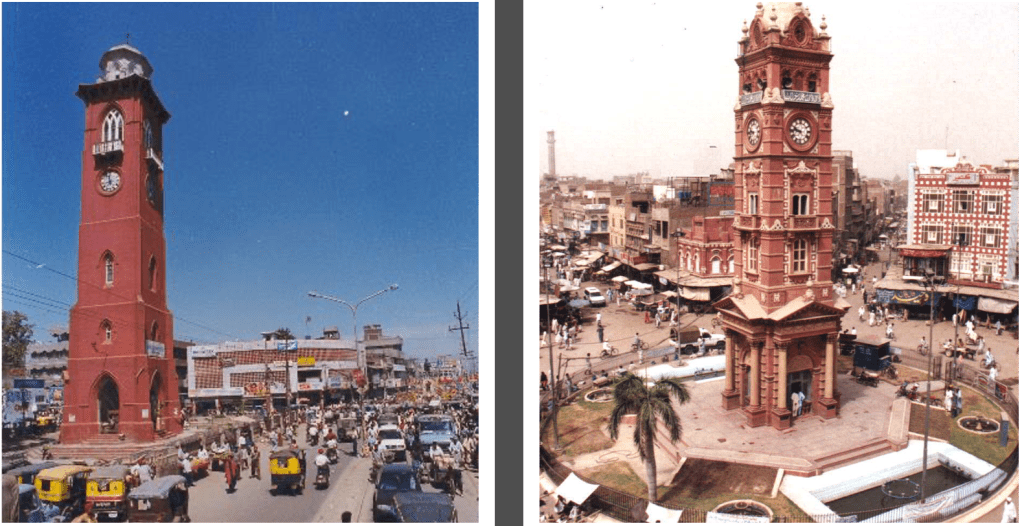
Ludhiana and Lyallpur were in fact only small towns before Partition, and interestingly both have iconic colonial clock towers in the town centre; both are important industrial textile hubs in the region; both had 62% ‘other’ populations prior to 1947 (according to the 1941 census, 62% Muslims lived in Ludhiana and 62% Sikhs/Hindus in Lyallpur); and finally, both function as important diasporic cities in contemporary Punjab(s).
Typically I tried to find women, but sadly the list of people is mostly male bar two! I hope to continue adding to the list as I find more people or please leave a comment if you know any other people with Ludhiana-Lyallpur links.
Note: the source for the information below is mainly through browsing and do not claim it as my own work. I have only selected a people I was interested in and that were born before 1947 and migrated following the Partition.
From Ludhiana…
Abu Anees Muhammad Barkat Ali Ludhianvi (1911 – 1997) was a Muslim Sufi who belonged to the Qadiri spiritual order. He was the founder of the non-political, non-profit, religious organisation, Dar-ul-Ehsan. Abu Anees’s followers spread all around the world and especially in Pakistan. He was born in Ludhiana where his father was a landlord.
Agha Ali Abbas Qizilbash also known as Agha Talish, (1923 –1998) was a Pakistani actor who made his debut in 1947 and was mostly known and recognized in Pakistan for playing character actor or villain roles. Talish was honoured by a Pride of Performance award, by the Government of Pakistan in 1989. Talish was born in Ludhiana, and his breakthrough film in Pakistan was film producer Saifuddin Saif’s Saat Lakh (1957) where his on-screen performance for this popular hit song was widely admired, Yaaro Mujhe Maaf Rakho Mein Nashe Mein Hoon.
Ajaz Anwar (1946-) is a Pakistani painter. He was a gold medalist at Punjab University, and he completed his M.A. in Fine Arts from Punjab University. Later, he went to teach at National College of Arts Lahore. His watercolour paintings show the grandeur of the old buildings and the cultural life in Lahore. Born in Ludhiana in 1946, his father was a cartoonist who apparently had stirred his passion from childhood and from whom he drew his inspiration.
Anwar Ali (1922-2004) was a Pakistani Editorial Newspaper Cartoonist in Pakistan Times based in Lahore. Anwar Ali was the creator of famous character Nanna, was the first newspaper cartoonist associated with The Pakistan Times. He was born in Ludhiana, where he spent his childhood. He did his BA from Government College Ludhiana.
Chaudhary Abdul Hayee Gujjar (1921 – 1980), popularly known by his pen name Sahir Ludhianvi, was an Indian poet who wrote primarily in Urdu in addition to Hindi. He is regarded as one of the greatest film lyricists and poets of twentieth century India. Sahir was born in Karimpura, Ludhiana to a Punjabi Muslim Gujjar family.
Habib-ur-Rehman Ludhianvi (1892 – 1956) was one of the founders of Majlis-e-Ahrar-e-Islam. He belonged to an Arain (tribe) and was a direct lineal descendant of Shah Abdul Qadir Ludhianvi, the freedom fighter against British Colonial rule during the Indian Rebellion of 1857. He chose to stay back in Ludhiana to continue representing the thousands of Muslims still remaining there after the partition in August 1947. The ancestral masjid in Field Ganj still exists today.
Hameed Akhtar (1923 – 2011), was a newspaper columnist, writer, journalist and the secretary-general of the Progressive Writers Association in Pakistan. He was also the father of TV actresses Saba Hameed, Huma Hameed and Lalarukh Hameed. He finished his basic education in Ludhiana and was a childhood friend of renowned poets Sahir Ludhianvi and Ibn-e-Insha
Munawar Sultana (1924- 1995) was born in Ludhiana and was a Pakistani radio and film singer. She is known for vocalizing first ever hit Lollywood songs like, “Mainu Rab Di Soun Tere Naal Piyar Ho Gya” (Film: Pheray 1949), “Wastae Rab Da Tu Jaanvi We Kabootra” (Film: Dulla Bhatti 1956),and “Ae Qaid-e-Azam, Tera Ehsan Hay, Ehsan” (Film: Bedari 1957).
Saadat Hasan Manto (1912 – 1955) was a Pakistani writer, playwright and author who was active in British India and later, after the 1947 partition of India, in Pakistan. Saadat Hassan Manto was born in Paproudi village of Samrala, in Ludhiana district to a Muslim family of barristers. Ethnically the family were Kashmiri.
From Lyallpur
Grahanandan Nandy Singh (1926 – 2014) was an Indian field hockey player who won two gold medals, at the 1948 and 1952 Summer Olympics. There is a documentary film on the team by Bani Singh titled, ‘Taangh/Longing’. Singh began playing hockey while studying at the Government College in Lahore, serving as captain of their hockey team in 1945 and 1946. After the Partition, he moved to Calcutta and played for Bengal when he was selected to the 1948 Indian Olympic team.
Harnam Singh Rawail (1921 – 2004), often credited as H. S. Rawail, was an Indian filmmaker. He debuted as a director with the 1940 Bollywood film Dorangia Daku and is best known for romantic films like Mere Mehboob (1963), Sunghursh (1968), MehboobKi Mehndi (1971) and Laila Majnu (1976). Rawail was born in Lyallpur and moved to Mumbai to become a filmmaker.
Inderjeet Singh (1926 –2023), also known as Imroz, was an Indian visual artist and poet. He was the partner of the poet, novelist, and writer Amrita Pritam, and they lived together until Amrita’s death in 2005. Inderjeet Singh was born in Chak number 36, Lyallpur.
Jagjit Singh Lyallpuri (1917 –2013) was an Indian politician. He was the oldest surviving member of the founding Central Committee of the Communist Party of India (Marxist). Prior to the Partition of India, Lyallpuri’s family owned roughly 150–180 acres in Lyallpur. The family moved to Ludhiana following the Partition.
Jaswant Rai Sharma (1928 –2017), popularly known by his pen name Naqsh Lyallpuri, was an Indian ghazal and Bollywood film lyricist. He is best known for the songs “Rasm-e-Ulfat Ko Nibhayen” (Dil Ki Rahen, 1973), “Ulfat Mein Zamaane Ki” (Call Girl, 1974), “Tumhe Ho Na Ho” (Gharonda, 1977), “Yeh Mulaqaat Ek Bahana Hai ” (Khandaan, 1979), “Pyar Ka Dard Hai” (Dard, 1981), and “Chitthiye Ni Dard Firaaq Vaaliye” (Henna, 1991). He was born in Lyallpur to a Punjabi Brahmin family, where his father was a mechanical engineer.
Lal Chand Yamla Jatt (1910 – 1991) was a noted Indian folk singer in the Punjabi-language. His trademark was his soft strumming of the tumbi and his turban tying style known traditionally as “Turla”. Many consider him to be the pinnacle of the Punjabi music and an artist who arguably laid the foundation of contemporary Punjabi music in India. He was born to Khera Ram and Harnam Kaur in Chak No. 384, Lyallpur. After partition, they relocated to the Jawahar Nagar, Ludhiana.
Prithviraj Kapoor (1906 –1972) was an Indian actor who is also considered to be one of the founding figures of Hindi cinema. He was associated with Indian People’s Theatre Association as one of its founding members and established the Prithvi Theatres in 1944 as a travelling theatre company based in Bombay. He was born in Samundri into a Punjabi Hindu Khatri family. His father, Dewan Basheshwarnath Kapoor, was a police officer in the Indian Imperial Police. His grandfather, Dewan Keshavmal Kapoor, and his great-grandfather, Dewan Murli Mal Kapoor, were Tehsildars in Samundri near Lyallpur.
Romesh Chandra (1919 – 2016) was a leader of the Communist Party of India (CPI). He took part in the Indian independence struggle as student leader of CPI after joining it in 1939. He held various posts within the party. He became president of the World Peace Council in 1977. He was born in Lyallpur and got his degree in Lahore and another one from Cambridge.
S.D. Narang (1918-1986) was born in Lyallpur. He was a director and producer, known for Dilli Ka Thug (1958), Anmol Moti (1969) and Shehnai (1964). He graduated in Biology from Government College, Lahore and did his MBBS from King Medical Collage, Lahore.
Sunder Singh Lyallpuri (1878 – 1969) was a leading Sikh member of the Indian independence movement, a general of the Akali Movement, an educationist, and journalist. Lyallpuri played a key role in the development of the Shiromani Akali Dal, and in the Gurdwara Reform Movement of the early 1920s and also founding member of Central Sikh League.
Teji Harivansh Rai Srivastava Bachchan (1914 – 2007) was an Indian social activist, the wife of Hindi poet Harivansh Rai Bachchan and mother of Bollywood actor Amitabh Bachchan. Teji was Born into a Punjabi Sikh Khatri family in Lyallpur.
English Translation by Agha Shahid Ali

It is spring, And the ledger is opened again.
From the abyss where they were frozen,
those days suddenly return, those days
that passed away from your lips, that died
with all our kisses, unaccounted.
The roses return: they are your fragrance;
they are the blood of your lovers.
Sorrow returns. I go through my pain
and the agony of friends still lost in the memory
of moon-silver arms, the caresses of vanished women.
I go through page after page. There are no answers,
and spring has come once again asking
the same questions, reopening account after account.
Listen to Tina Sani and Shabana Azmi’s rendition of the poem.
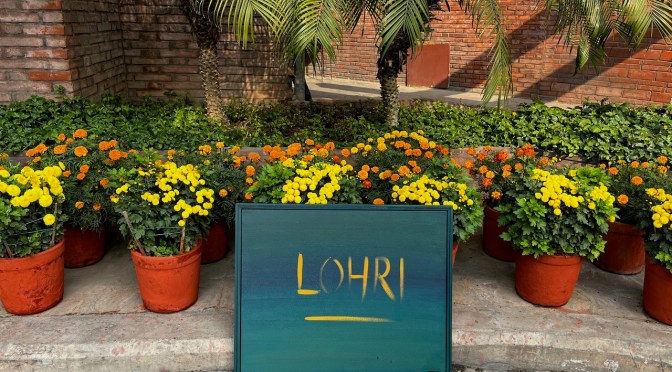
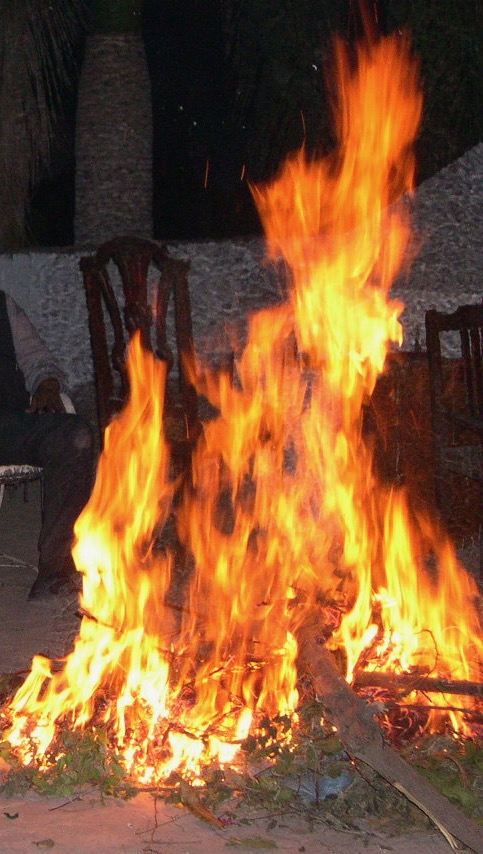
A few days back I was in Punjab and Delhi, which were clouded and submerged in the winter chill and fog. With every passing comment about the cold, there is another reference, “it will only last until lohri, after that the weather will improve”. This points to the passing of the winter solstice and the changes in the season. Many of the popular festivals in Punjab are associated with seasonal changes, these are easy markers and reference points before formal calendars and dates arrived, and in this case the winter festival of lohri means anticipating longer and warmer days.
Growing up, there were always certain foods which we associated with lohri (and associated with the winter harvest). Rewris/revdis, jaggery and sesame-based dishes, and peanuts, are all warming and seasonal foods during the winter days of North India. Sarson da saag and makki di roti is another essential. Jaggery, sesame sweets and peanuts are quite often distributed and exchanged amongst friends and families. Traditionally, this special occasion was reserved for the birth of a son, but thankfully many have started celebrating the birth of a child, regardless of its gender.
In Indian Punjab the festival is public holiday but unfortunately across the border in Pakistan Punjab it is barely recognised. In recent years commentators and activists have been trying to revive it and re-introduce it to the wider public, with limited impact. Lohri is not and was not a religious festival, and yet the division of such festivals is emblematic of Partition, which increasingly entrenched what was deemed to be Hindu/Sikh and what was considered Islamic. In the video above for BBC Urdu, you can hear Mazhar Abbas narrate the history of lohri for a new generation.
Going back to Delhi, I was fortunate enough to meet up with Harinder Singh (1469) who was busy curating his lohri exhibition at the India International Centre. Do go and have a look, if you are around Delhi.
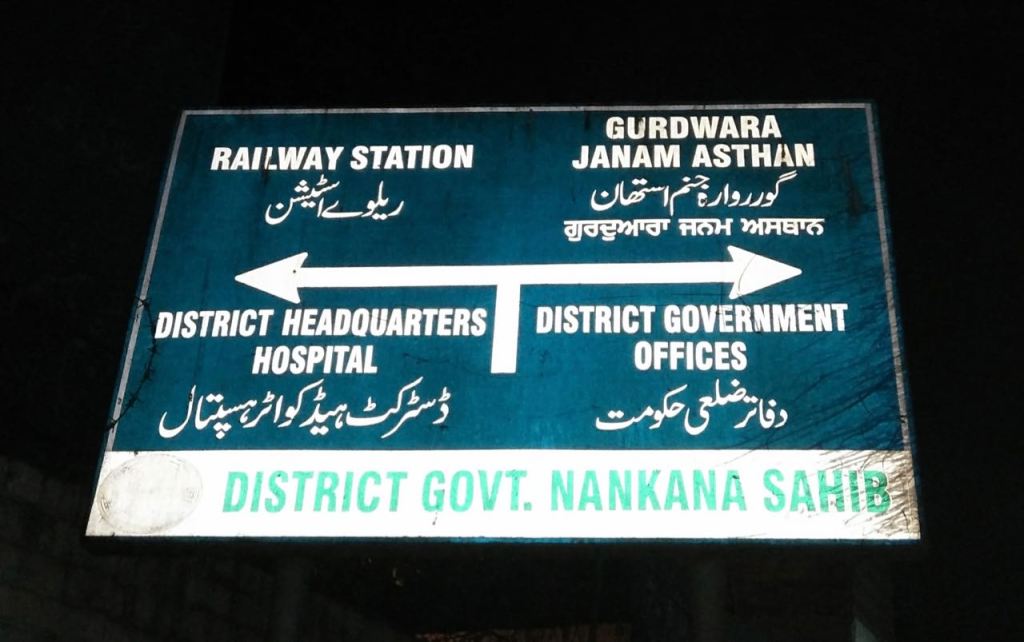
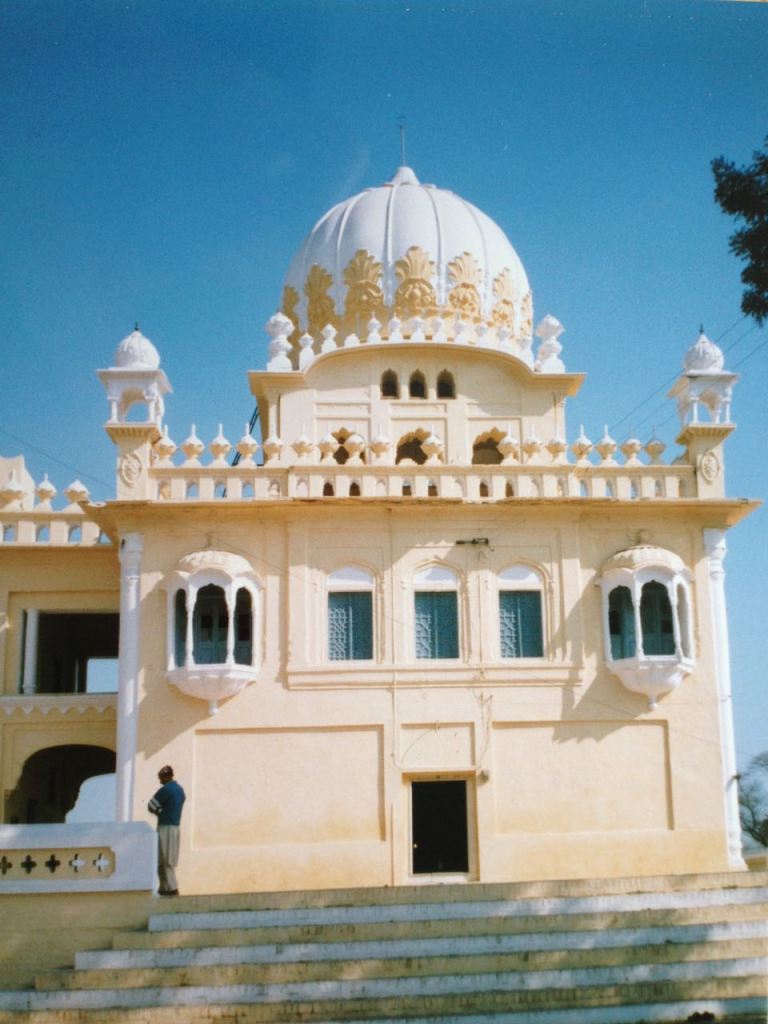
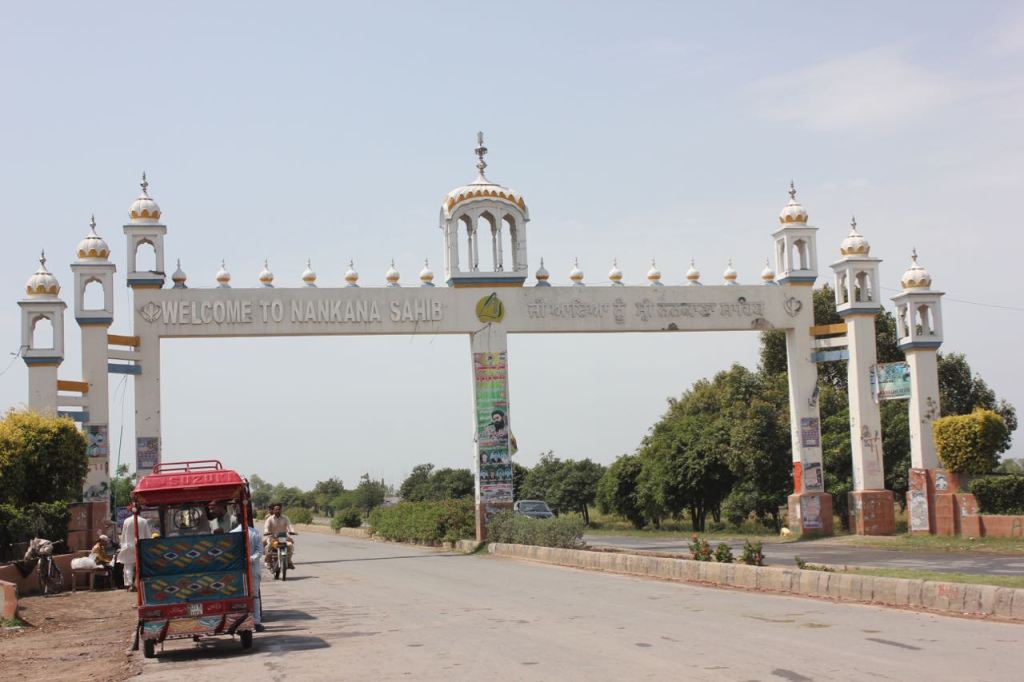
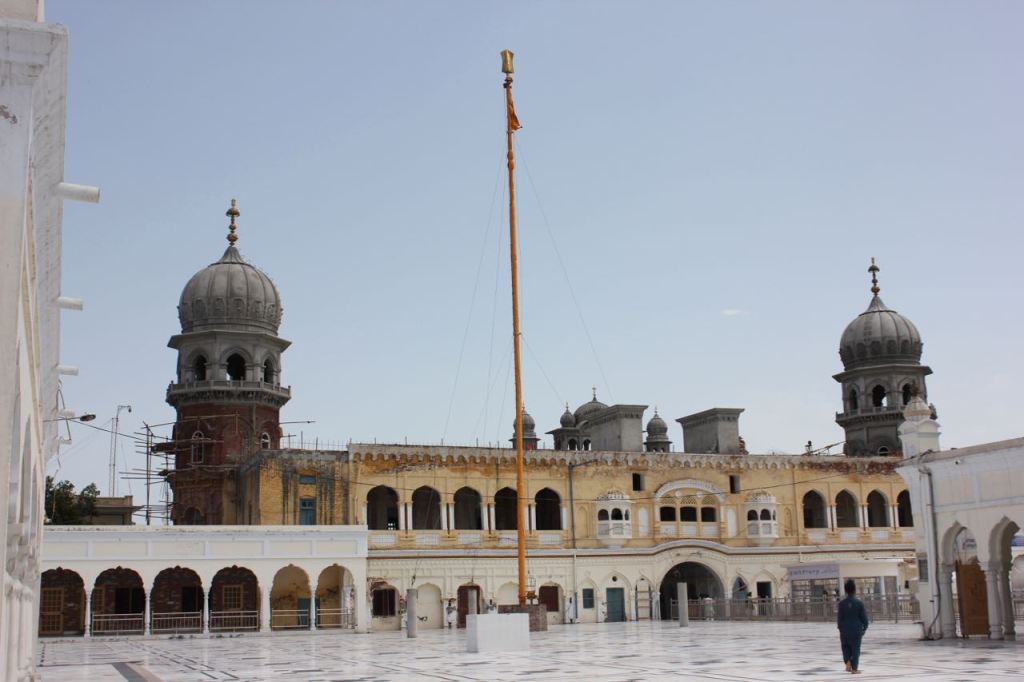
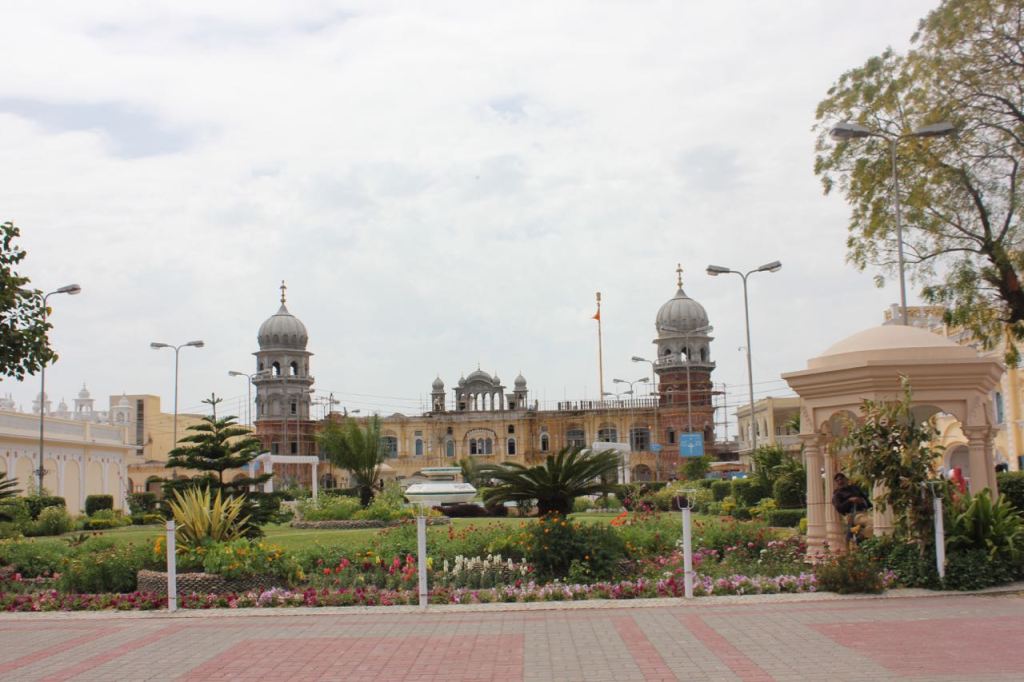
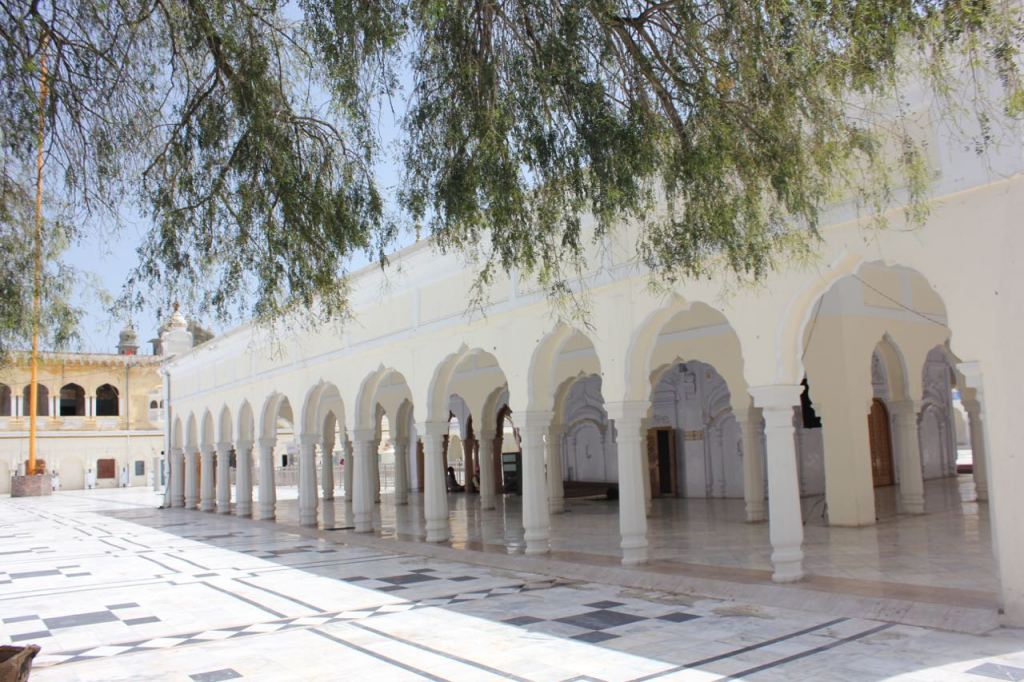
Nankana Sahib is the Birthplace of Guru Nanak. This town was originally known as Talwandi of Rai (Rai Bhoi di Talwandi) and today it forms the core of the small Sikh community in Pakistan. Every year on Guru Nanak’s birthday (Gurpurab), Sikhs (and others) gather around Nankana Sahib to remember the founder of the Sikh faith. Over the years the Gurdwara complex has grown considerable. I first went there in 2003 when it was a small gurdwara with a largely Pathan Sikh community of about 50 families who lived there. The last time I went there was on Gurpurab in 2016, and the small town was transformed into a mela of 20-30,000 people from around Pakistan, including the Nanak Panthis (mostly from Sindh) and Sikhs from around the globe (including India). The area now has district status and attracts the Sikh diaspora, who come here in huge numbers on pilgrim visas. The growth in the pilgrims and tourism is one of the main reasons for the growing investment in places like this and hence the transformation of this area.
I leave you with the voice of Nusrat Fateh Ali Khan – born in Lyallpur (Pakistan) with ancestral roots in Jalandhar (India) – who is performing/reciting Koi Bole Ram Ram Koi Khuda (Some call the Lord ‘Ram, Ram’, and some ‘Khuda’) at the Ramgarhia Sabha Gurdwara (Slough, UK) for the Sikh Diaspora in 1989 – many of whom appear to be from East Africa. But the words of the Guru and music know no borders.
Ustad Nusrat Fateh Ali Khan Live in Slough Gurdawara, 1989 by Oriental Star Agency
If you are interested more in the shabad, the translation and the meaning, please click here.
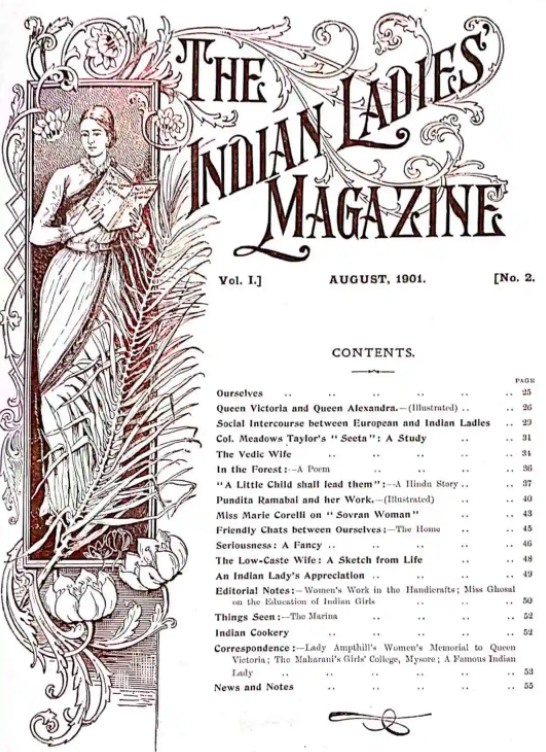
Recently I noticed in several social media forums that people have been sharing details of Rokeya Sakhawat Hossain and her short story, Sultana’s Dream (1905). This story was originally published in The Indian Ladies’ Magazine, Madras, 1905, in English and translated by the author into Bengali. The story takes the form of a dream, set in a futuristic feministic world, in which women through education, opportunity and their innovative ability to use technology have been able to flourish. The science and technology featured in the story is not far off the realities of today and shows immense foresight by the imagination of the author.
The story also highlights how unjust it was, and still is, to deny women education and freedoms, which men have. The imagined place is a generous, green, and friendly environment, in which feminist science has created a space for everyone to thrive and reap the benefits. Although the story was published over a hundred years ago, we are still far from this utopian land.
Rokeya Sakhawat Hossain was born circ. 1880 to an orthodox Bengali Muslim upper-class family in the small village of Pairaband (district Rangpur in Bengal Presidency and present-day Bangladesh). Her father insisted that she learn only Arabic and remain in strict purdah. But with the assistance of her siblings, she learned to read and write Bangla and English. In 1896 her older brother Ibrahim Saber sought to arrange her marriage to a widower in his late 30s. Syed Sakhawat Hossain was the district magistrate in the Bihar region of Bengal Presidency and Ibrahim thought Rokeya would do well under Syed’s open-minded attitude, who had received education in both Bengal and London.
“Rokeya and her husband settled in Bhagalpur, Bihar. None of her children lived. Syed, who was convinced that the education of women was the best way to cure the ills of his society, encouraged his willing wife to write, and set aside 10,000 rupees to start a school for Muslim women.”
After 11 years of marriage, Syed passed away in 1909, leaving Rokeya alone. Soon thereafter she opened a school in Bhagalpur. Later, she moved to Calcutta where she re-opened the Sakhawat Memorial Girls’ School on March 16, 1911. The number of students went from 8 in 1911 to 84 in 1915.
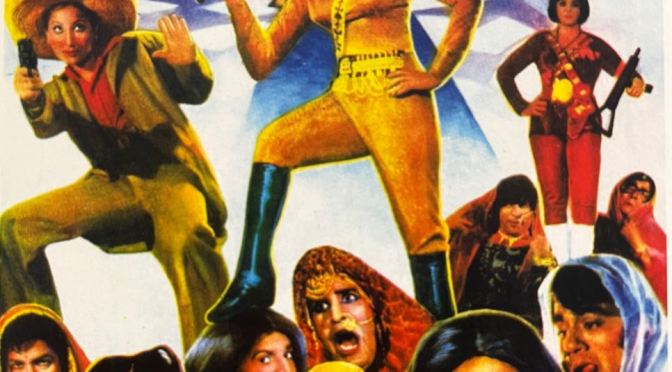
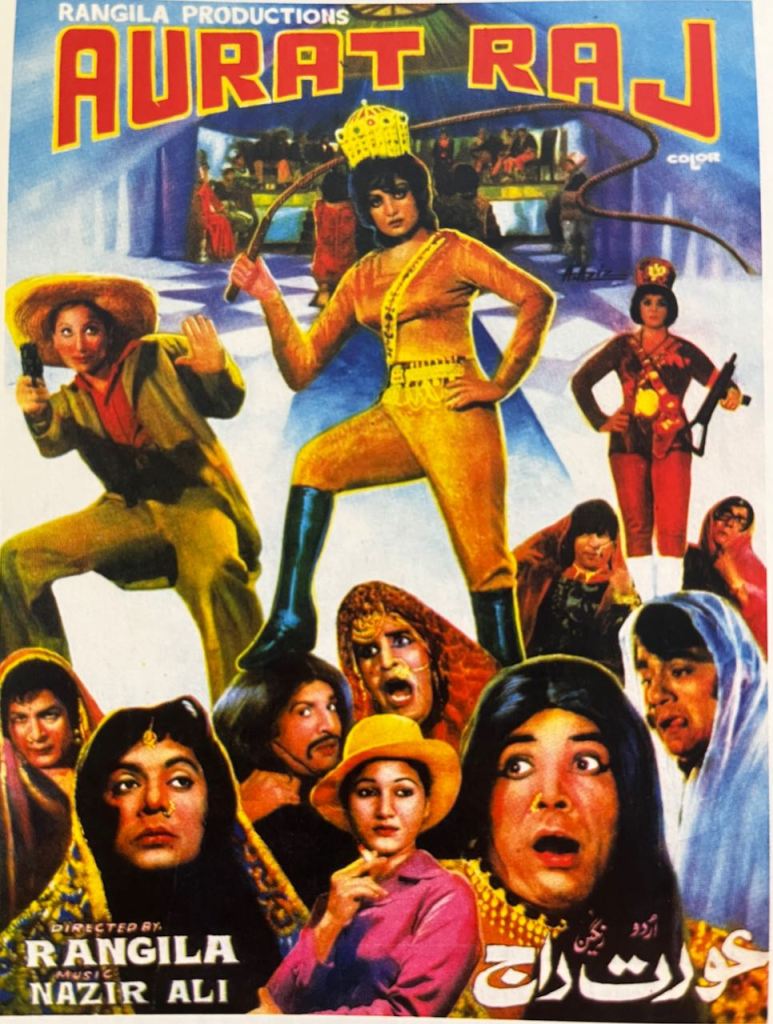
The pioneering concept behind Sultana’s Dream has inevitably inspired other writers and artists to take their cue from a world in which women have the power and men are the submissive other. Aurat Raj, a 1979 Pakistani film, which on the surface appears to be inspired by Rokeya’s work, is also a commentary on the military (and masculine) regime that had come into power, under General Zia. Aurat Raj, is a strange and kitsch interpretation, at whose heart is a social message, centred on exposing the oppression of women. But when the roles are reversed, the women behave in a similar fashion too, unlike Hossain’s short story.
Source: Cinema and Society edited by Ali Khan & Ali Nobil Ahmad (OUP, 2016)
The poster for the film Aurat Raj is equally intriguing as the film itself. It “depicts a woman dressed in a tight-fitting suit and long boots with a crown on her head and a whip in hand, all the more intriguing. She has a commanding, imperious expression on her face. To her right another woman in men’s clothes brandishes a gun. A third woman confidently smokes a cigarette. At the feet of the ‘Empress’ a series of men, including Sultan Rahi, are dressed in women’s clothes. Rahi demurely wears a dupatta on his head, his expression one of effeminate alarm. A subversive and experimental drag movie directed by Rangeela, who had appeared in scores of films in side-comic roles usually playing to the front benchers, Aurat Raj is perhaps Pakistan’s only satire to date and it lampoons not only the naked chauvinism that prevails in Pakistani society but also pokes fun at the way that this attitude pervades the industry. The film targets the machismo of Pakistani men and revels in inverting the gender and power roles, making the women literally wear the pants and leaving the men, including Sultan Rahi and Waheed Murad, wearing frilly frocks and helpless expressions.” Ali Khan, “Film Poster: Reflections of Change in the Pakistani Film Industry” in Cinema and Society: Film and Social Change in Pakistan, edited by Ali Khan & Ali Nobil Ahmad (OUP, 2016), P251.
Despite its well-known star cast of Waheed Murad, Rani, Rangeela and Sultan Rahi, the film was a commercial flop. However, it is certainly worth revisiting, if only as a reminder of the subversive message of the film, which dreams of a more equal society.
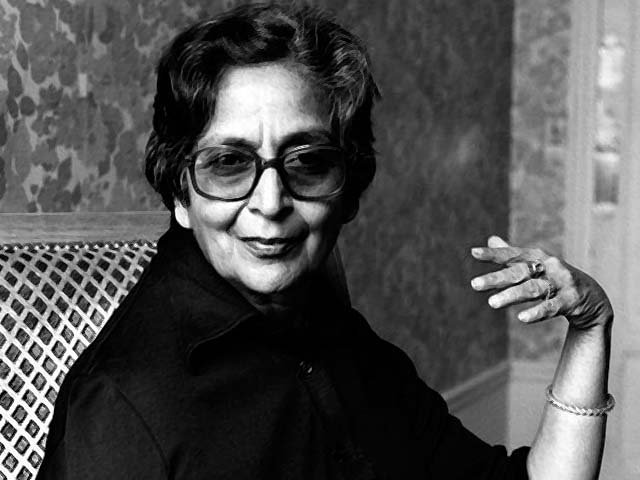
Amrita Pritam (1919-2005) was one the most distinguished Punjabi poets and fiction writers. She was born in Mandi Bahauddin, Punjab and was living in Lahore when in 1947 she, along with the millions others, was forced to migrate during the partition of the Punjab.
Her first collection of poems Amrit Lehrcm was published in 1936 when she was barely 17 years old. Starting as a romantic poet, she matured into a poetess of revolutionary ideas as a result of her involvement with the Progressive Movement in literature.
Ajj Aakhaan Waris Shah Nu (Today I Say unto Waris Shah) is a heartrending poem written during the riot-torn days that followed the partition of the country. (Apnaorg.com). The poem is addressed to Waris Shah, (1706 -1798), a Punjabi poet, best-known for his seminal work Heer Ranjha, based on the traditional folk tale of Heer and her lover Ranjha. Heer is considered one of the quintessential works of classical Punjabi literature.
Her body of work comprised over 100 books of poetry, fiction, biographies, essays, a collection of Punjabi folk songs and an autobiography that were all translated into several Indian and foreign languages
Ajj Aakhaan Waris Shah Nu (Today I Say unto Waris Shah – Ode to Waris Shah)
Translation from the original in Punjabi by Khushwant Singh. Amrita Pritam: Selected Poems. Ed Khushwant Singh. (Bharatiya Jnanpith Publication, 1992)
To Waris Shah I turn today!
Speak up from the graves midst which you lie!
In our book of love, turn the next leaf.
When one daughter of the Punjab did cry
You filled pages with songs of lamentation,
Today a hundred daughters cry
0 Waris to speak to you.
O friend of the sorrowing, rise and see your Punjab
Corpses are strewn on the pasture,
Blood runs in the Chenab.
Some hand hath mixed poison in our live rivers
The rivers in turn had irrigated the land.
From the rich land have sprouted venomous weeds
flow high the red has spread
How much the curse has bled!
The poisoned air blew into every wood
And turned the flute bamboo into snakes
They first stung the charmers who lost their antidotes
Then stung all that came their way
Their lips were bit, fangs everywhere.
The poison spread to all the lines
All of the Punjab turned blue.
Song was crushed in every throat;
Every spinning wheel’s thread was snapped;
Friends parted from one another;
The hum of spinning wheels fell silent.
All boats lost the moorings
And float rudderless on the stream
The swings on the peepuls’ branches
I lave crashed with the peepul tree.
Where the windpipe trilled songs of love
That flute has been lost
Ranjah and his brothers have lost their art.
Blood keeps falling upon the earth
Oozing out drop by drop from graves.
The queens of love
Weep in tombs.
It seems all people have become Qaidos,
Thieves of beauty and love
Where should I search out
Another Waris Shah.
Waris Shah
Open your grave;
Write a new page
In the book of love.
NOTES
Waris Shah (1706 -1798) was a Punjabi poet, best-known for his seminal work Heer Ranjha, based on the traditional folk tale of Heer and her lover Ranjha. Heer is considered one of the quintessential works of classical Punjabi literature.
Qaido – A maternal uncle of Heer in Heer Ranjha is the villain who betrays the lovers.
The Punjab – the region of the five rivers east of Indus: Jhelum, Chenab, Ravi, Beas, and Sutlej.















 BAGICHA