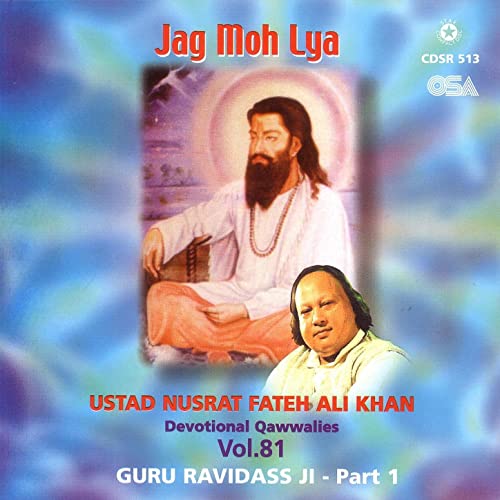
Guru Ravidas was a mystic poet-sant and belonged to the reformist Bhakti movement. Thought to have been born circ. 1450 CE and a contemporary of Guru Nanak (founder of the Sikh faith); some scholars think the two even met. He is revered as a Guru/Bhagat/Sant and is well-known and respected as a social reformer who was keen to see the erasure of caste and gender inequalities. He was born a Chamar (untouchable/dalit) and his fight against social oppression has elevated him as an icon for the Dalit community in contemporary society. His devotional versus are also included in the Guru Granth Sahib but his influence is wide-ranging, spanning across much of northern and central India.
I tired hard to find an English translation of ‘Guru Ravidas’ by Nusrat Fateh Ali Khan but so far I haven’t been successful. It was recorded under the Oriental Star Agency label, circ. 1992 If anyone knows of a translation, please do share it because I think the lyrics, sentiments are just heart rendering. They deserve a much wider audience. While I can follow most of the qawwali myself, I am not able to translate it and do justice to the lyrics. Two lines near the end provide a good sense of the what is being conveyed. The translation is difficult because the word “prayer” does not capture the sentiment sufficiently, because Pooja is performed by Hindus, paath is associated with Sikhs and the azaan with Muslims. There is no direct translation.
na pooja paath azaanan vich (the Lord does not reside in the prayer [of Hindus, Sikhs, Muslim]) rabb wasda e insaanan vich (the Lord resides in humanity)
It is sentiments like these that make Nusrat completely transnational and appealing to people across all faiths.
ravidaas bhagwaan da roop laike aaya jag de dukh niwaarne nu gote khaandi sansaar di aap bedi bhawsaagar ton paar utaarne nu unch neech da fark mitaun khaatir ravidas insaaf da pakad daaman kasam rabb di rabb da roop laike aaya satgur sach satkaarne nu
ravidas guru ravidas guru ravidas guru ravidas guru
dukhiyan di sunne ardaas guru kar sab di poori ardaas guru ravidas guru ravidas guru
kite raajeyan anni paayi si har paase machi duhayi si kite kambdi payi khudayi si kite jaan laban te aayi si insaan si dushman insaan da har dil vich peerh sawaayi si panditan di puththiyan reetan ne sagon hor chavati naayi si oh daur si zaalim kehran da mee wareya pyasi zehran da amrit baani naal jadon si sab di bujhaayi pyas guru ravidas guru ravidas guru
eh raaja ki te parja ki hath bandi wala darja ki eh mandir ki te masjid ki eh puja ki te sharda ki bhala es khuda di dharti te bandeyan da jhutha kabja ki sabb os khuda de bande ne eh wadda ki te chchota ki eh dharm karam da jhagda ki eh deen dharam da jhagda ki hai raazik sabhda oh khaalik nukta samjhaaya khaas guru ravidas guru ravidas guru
us daur di ajab kahaani si har paase daur shaitaani si haq sach te kalme di kidre na kadar kise ne jaani si sab kojiyan bharman di ravidas ne ramz pachchani si harbhajan dillan vich dard bade koi meera sur di rani si oh rahbar kaamal akmal si dil andar naal koi wal chchal si inj hoka de sacheyayi da sab kite kaaraj raas guru ravidas guru ravidas guru
gaya murshid kaamil ki aakhan os swarg bana ke duniya nu bedaar banake duniya nu gulzaar banake duniya nu paigaam sunake amlan da gaflat chon jaga ke duniya nu ujdi hoyi sunji dharti te khud aap wasa ke duniya nu na pooja paath azaanan vich rabb wasda e insaanan vich chauhaan khuda nu yaad karo oh har dam wasda paas guru ravidas guru ravidas guru
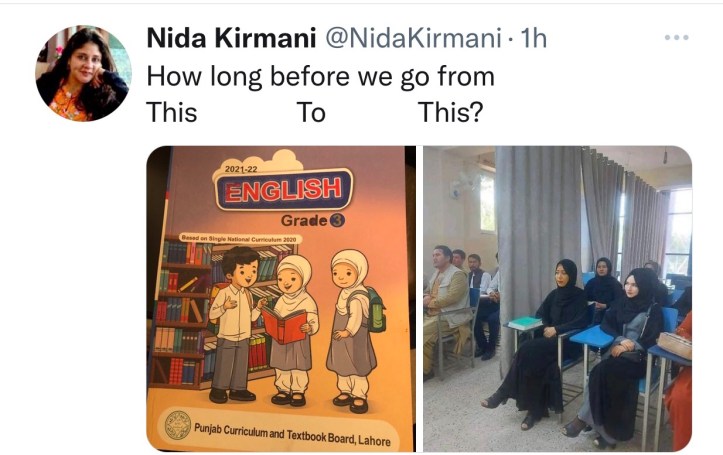
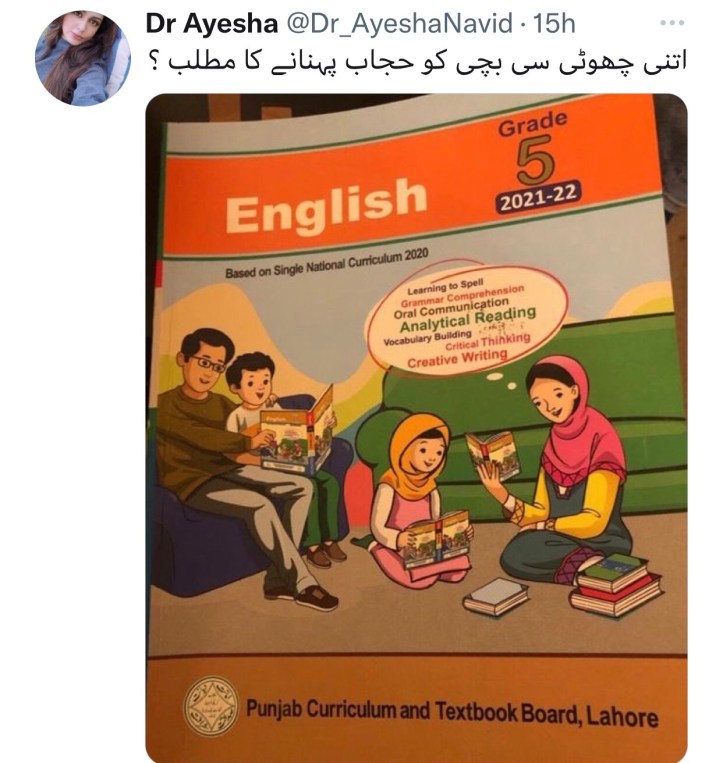
Yesterday morning started with a few tweets that I saw regarding the new Single National Curriculum being introduced in Pakistan. It has generated plenty of discussion and criticism, and rightfully so. The pictures and discussion in these tweets immediately took me back to the day before, when I was in fact going through the pages of Pakistan Quarterly, from the 1950s. I’ve been looking at the formative years of Pakistan and the role played by women, which is far too often side-lined or a footnote in support of the main body.
Below are extracts from two articles, which illustrate some of the discussions that were taking place on the importance of education in the making of a “new Pakistan” and the role of religion (especially girl’s education). Julian Duguid was a journalist, writer and wrote his article while posted in Pakistan. The second article though is by the Vice-Chancellor of Peshawar University, Raziuddin Siddiqi. Dr Siddiqi was born in 1908 and educated in the newly established Osmania University, Hyderabad. Indeed, he was from the first batch that graduated from there and later went on to serve as the Vice-Chancellor of Osmania. In 1950, however, Dr Siddiqi migrated to Karachi and joined Karachi University, at the request of the Government of Pakistan. There was a serious skills shortage in Pakistan following the Partition, and the development of educational institutions and an educated workforce was key to future prosperity.
Lifting of the Veil by Julian Duguid
Pakistan Quarterly, Vol. 2, No. 3, 1952
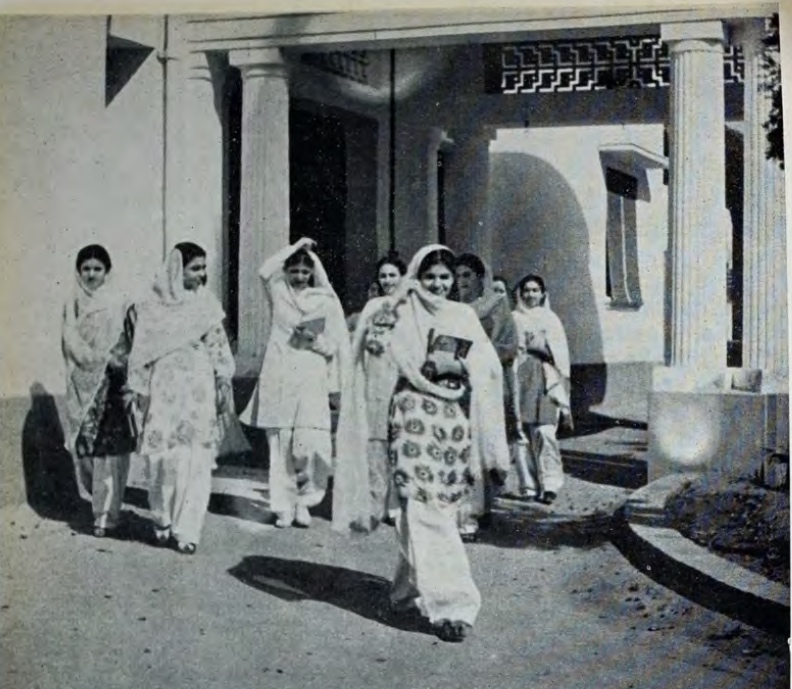
After hearing the story of the chaos, so bravely met and overcome, I watched with a special interest the young girl students whom it freed. A few still went in burqas, but most of them walked and bicycled as if they’d never heard of purdah. At lunch time, they passed Zam-Zammah, the gun on which Kim used to sit; and in the evenings they did athletics or played tennis. There was nothing whatever to distinguish them from any other healthy young students. Yet, even four years ago, many of them could hardly have dreamt of such freedom.
Of course, liberation on this scale has not gone quite uncriticised. Now and then, a fanatical old mullah, his beard abristle with zeal, will creep behind a girl and cut her hair off to teach her not to be shameless. When this happens, he is taken to the police-station and lectured on the new Pakistan and kept in jail for a few days to cool his ardour. He leaves unconvinced, and muttering; but his generation will pass, and then the veil will be lifted more and more widely among the middle-class city-dwellers as it is among the labouring village people whether in town or country.
It may take many years, but it will come.
Education in Pakistan by Raziuddin Siddiqi, Vice-Chancellor, Peshawar University.
Pakistan Quarterly, Vol. 3, No. 4, 1953.
Immediate steps were, therefore, taken in all Provinces to rehabilitate the old schools and Colleges and establish new ones. Classes were held in several shifts to cope with the enormous increase of students. Adequate measures were adopted for training school teachers in large numbers. Education was given high priority along with defence and law and order in the Central and Provincial budgets. A number of new Universities were established in order to provide suitable teachers for the schools and colleges. Educational materials, such as books, journals and scientific equipment, was imported in a large quantity from Europe and America. Young men and women were sent in considerable numbers for training abroad. A six years Plan was formulated to give effect to considered policy of all-round educational development.
It would not be out of place to give here a short account of our policy in this scheme of educational development. The fundamental aim before the authorities in this matter has been ensure to that each and every individual gets the best and highest education and training commensurate with his capabilities. Islam lays down the acquisition of knowledge as an integral part of the duties of every individual Muslim of either sex. It is a unique and distinguishing feature of this religion, which enjoins its followers to think and know for themselves. It has been explicitly stated in the Holy Quran that “God exalteth and elevates to higher ranks only those who are believers, and who have been accorded knowledge”.
Islam does not allow the sharp division of an individual’s existence into a religious and secular life, as believed necessary by the people following other religions. There is no priest-class among the Muslims. Non-observance of this essential principle of Islam, has been one of the main factors in the deterioration of our condition in the past. On the one hand the general body of Muslims were educated in secular schools, and knew very little of the fundamental principles of their religion. For even a little bit of information about their faith, they were entirely at the mercy of the ‘Mullas’. On the other hand, the ‘Mullas’ studied in religious institutions which were completely divorced from all modern knowledge. This was affecting adversely the national life at both ends. The educated young Muslims were generally absorbing atheistic or agnostic tendencies more and more, and instead of proving a source of strength to the community, were undermining its very existence. The ‘Mullas’ were becoming more and more ignorant, fanatic and narrow minded, thus bringing the religion itself into disrepute and contempt.
It was necessary, therefore, to evolve a new system of education, or rather to revive the older system of the early days of Islam in which all knowledge was one, and there was no artificial distinction between religious and non-religious knowledge.
For the seventh issue of Chapati Mystery Roundtable (CMRT), we are delighted to host a conversation on Pippa Virdee’s From the Ashes of 1947: Reimagining Punjab. The CMRT is a series that presents multiple, in-depth reviews of an exciting new book. We thank each of our distinguished panelists for engaging in this public dialogue. We especially thank Abraham Akhter Murad for convening and introducing this Round Table.
Punjabi Khoj Garh is a centre of research, publication and advocacy on the history, culture, literature, music, and art of the Punjab. It was established on 10 March 2001 and Iqbal Qaiser, an independent scholar, has tirelessly built up this institute over the past 20 years. It is maintained by the Punjabi Khoj Garh Trust and individuals who work voluntarily to maintain and upkeep the Centre. They welcome all sorts of researchers with facilities and materials for their work on Punjab.
For further details contact: Iqbal Qaiser, Punjabi Khoj Garh, Lalliyani (Musfafar Abad), District Kasur, Pakistan. Follow them on Facebook.
The Last Sikhs of Nankana Sahib, October 1947 via @@learnpunjabi
In the days leading up to the Partition of British India, there was a lot of anxiety as to how the drawing of the Radcliffe Line would impact on the ground. This was much more pronounced amongst the Sikh community, whose spiritual homeland would now be divided to make the Partition Plan and its two state solution possible.
Below are two newspaper clips from Select newspaper coverage of the Partition of India (1947), which has been compiled from The Hindu, The Hindustan Times and The Statesman, by Dr. Kirpal Singh, Khalsa College, Amritsar.
AKALI LEADERS CALL TO SIKHS.
NEW DELHI, August 2: Giani Kartar Singh, President, Shiromani Akali Dal in a statement today calls upon Sikhs to observe August 5 as “Nankana Sahib Day.”
He says: Though the ban at Nankana Sahib has been successfully defied and restrictions on holding of our conference withdrawn, the Sikhs have proved once again their determination not to surrender the sacred territory of Nankana Sahib at any cost to the “Pakistanists”.
I call upon all Sikhs to observe August 5 as “Nanakana Sahib Day” hold meetings and send telegrams to the Chairman of the Boundary Commission that unless 85% of our population and colony areas are kept in the East Punjab and due regard is paid to our holy shrines while demarcating its boundaries so as [to] bring in the largest number of these in “Hindustan” we shall not rest content.”
SIKH CAMPAIGN IN BRITAIN:
LONDON, Aug.2. Two hundred Indians, most of them Sikhs in colourful turbans attended a public meeting last night to hear to Sikh Delegates who have come to London to present a Sikh Demand in connection with the division of the Punjab.
Sardar Ganga Singh, Leader of the Delegation, said that he had come to London representing one of the most influential Sikh organisations in the Punjab the Shiromani Akali Dal, to present the demands of the Sikhs regarding the Punjab division.
The river Chenab should be the Boundary Line of the two Punjabs, he said, anything contrary to this would be against the interest of the Sikhs and he hoped that the British Chairman of the Boundary Commission would be fair and impartial. The Sikhs had made contributions during the last war for freedom and democracy and it would be the greatest tragedy if they were deprived of their legitimate demands in their own homeland. Besides, no power on earth can dominate this gallant community.
If the Sikhs were deprived of their legitimate demands, the Punjab would be the land of eternal troubles Mr. Ganga Singh continued.
Dr. Kumria, the Chairman of the meeting, said he was opposed to the division of India, but it seemed that under the circumstances, the leaders of the Indian National Congress were justified in accepting the Mountbatten plan.
“Since we accept the division of India we would like to see that there are fair division of the provinces of the Punjab and Bengal.”
The Chairman emphasised that this division was bound to be temporary and would vanish within a short time.” Reuter.
In December 2004, I was traveling from Islamabad to Lahore on the M-2 motorway, which is the first motorway to be created in South Asia and which was inaugurated in 1997. It is also one of the most expensive to be constructed under the Korean company, Daewoo. The journey of 184 km takes one via the magnificent Salt Range and Kallar Kahar, a subdivision of Chakwal District (Punjab) and conveniently located close to the M-2.
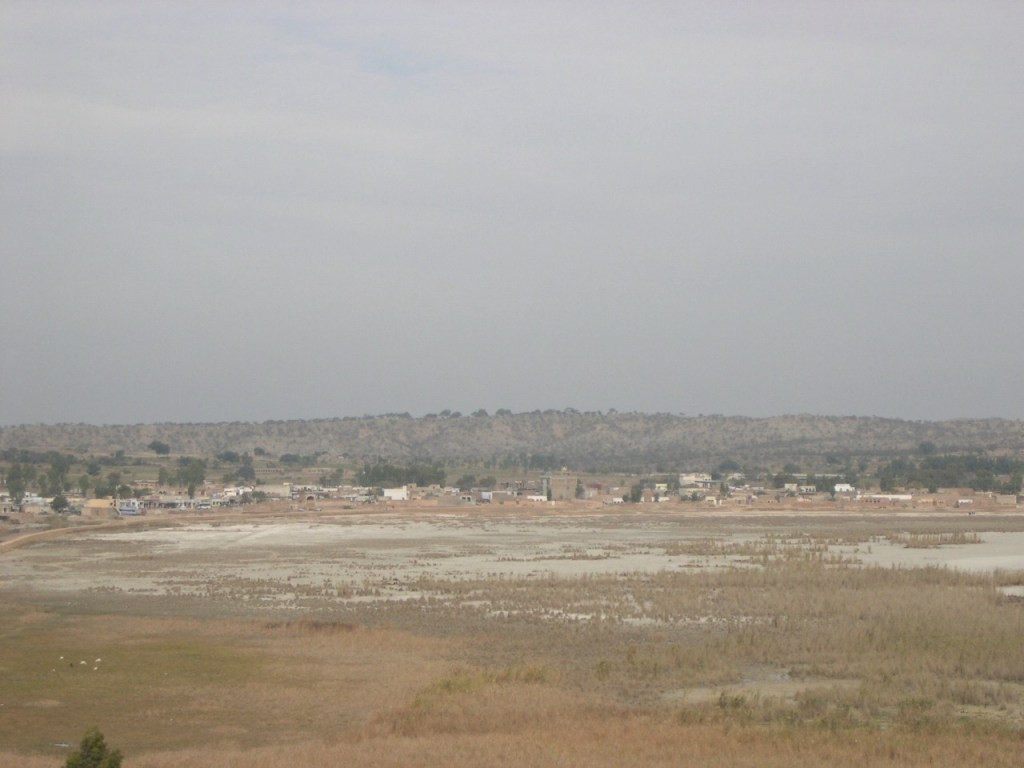
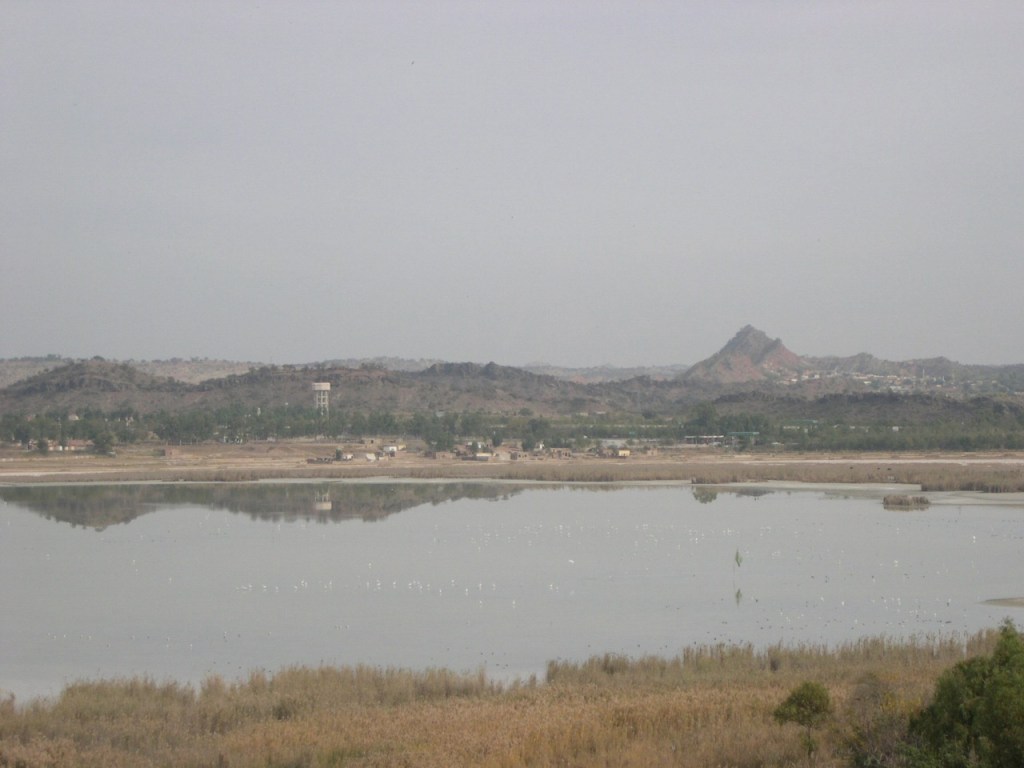
Kallar Kahar is also a popular tourist destination with captivating lakes and the Katas Raj Temple complex, dedicated to Lord Shiva, dating back to 615-950 CE. The founder of the Great Mughal dynasty, Zahir ud-Din Muhammad Babur (1483-1530), stopped here with his army, while en route to north India in 1519. During this stay, a throne was built by cutting a piece of limestone formation to create a raised platform, from where he addressed his army. This throne, known as Takht-e-Babri, was located within the Bagh-i-Safa, the first of many Mughal gardens to be created. Salman Rashid in his book, The Salt Range and the Potohar Plateau (Sang-e-Meel, 2001), mentions how Babar, described the area of Kallar Kahar Lake as a “charming place with good air”.
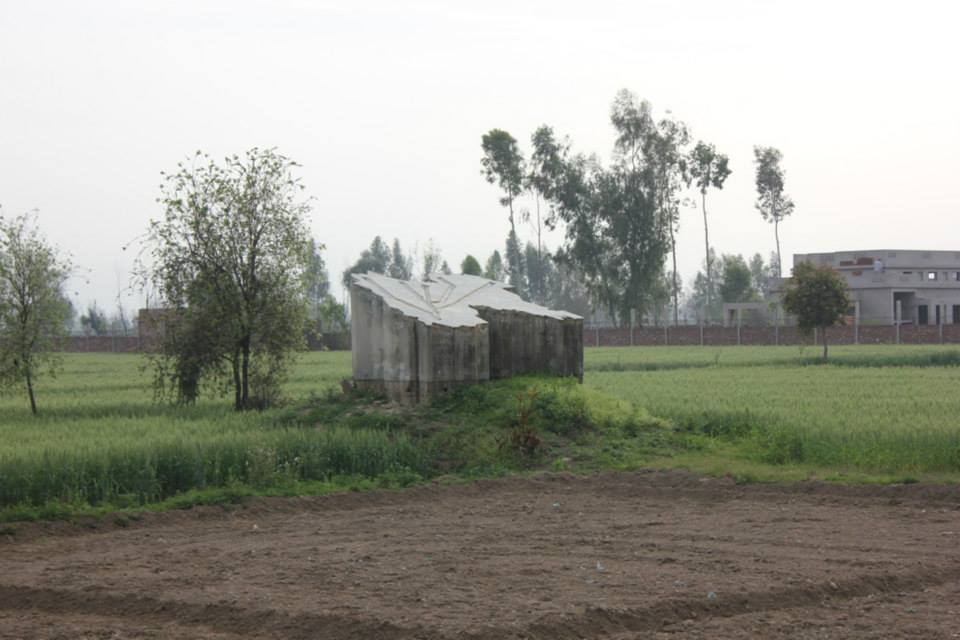
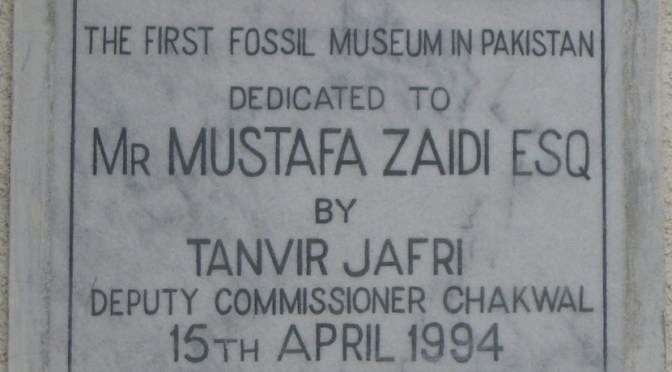
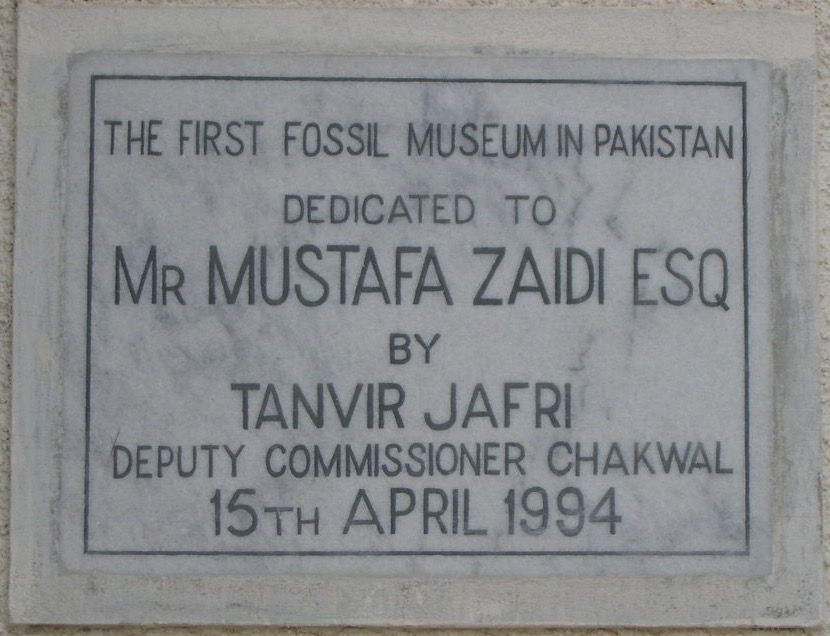
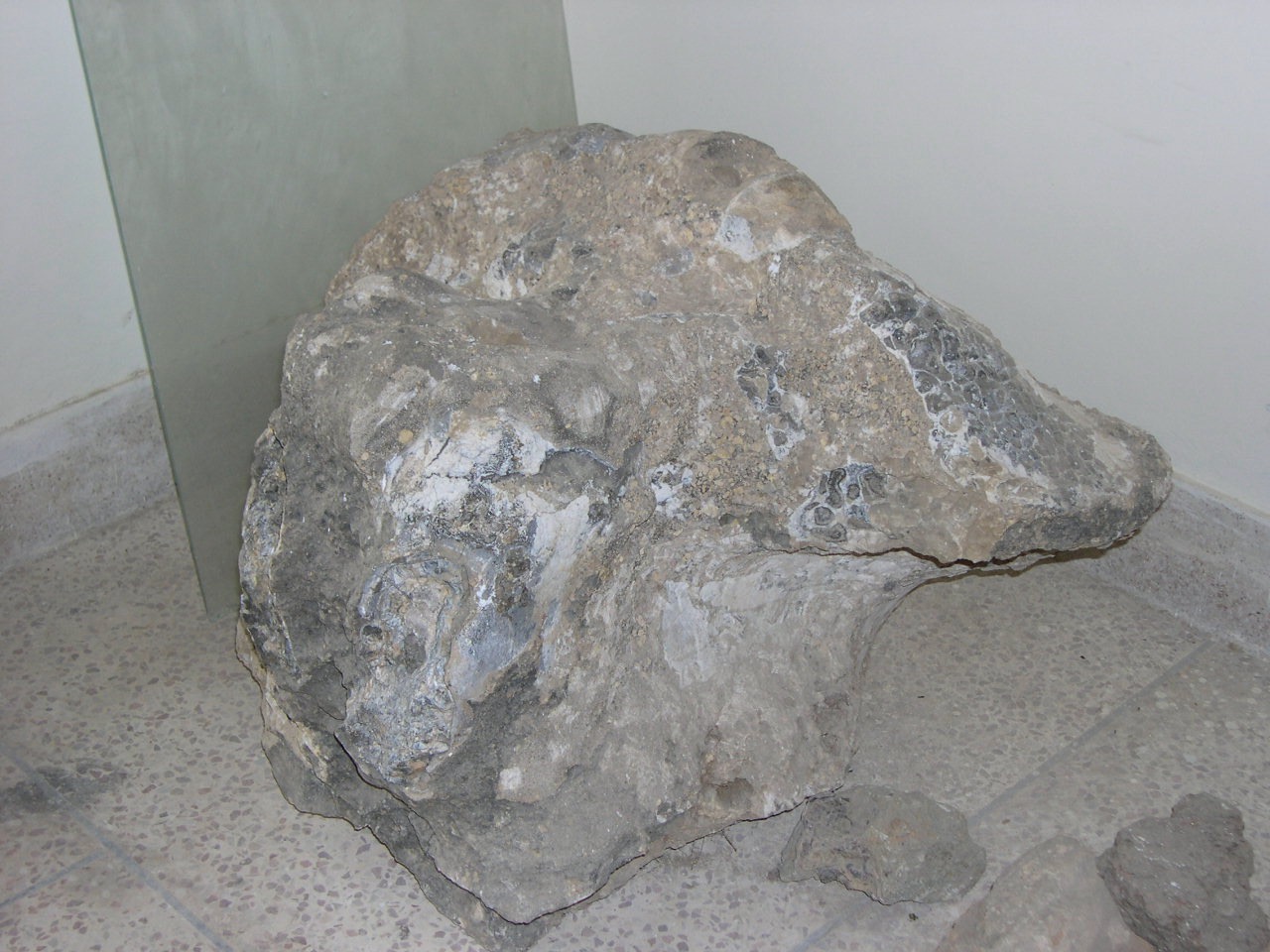
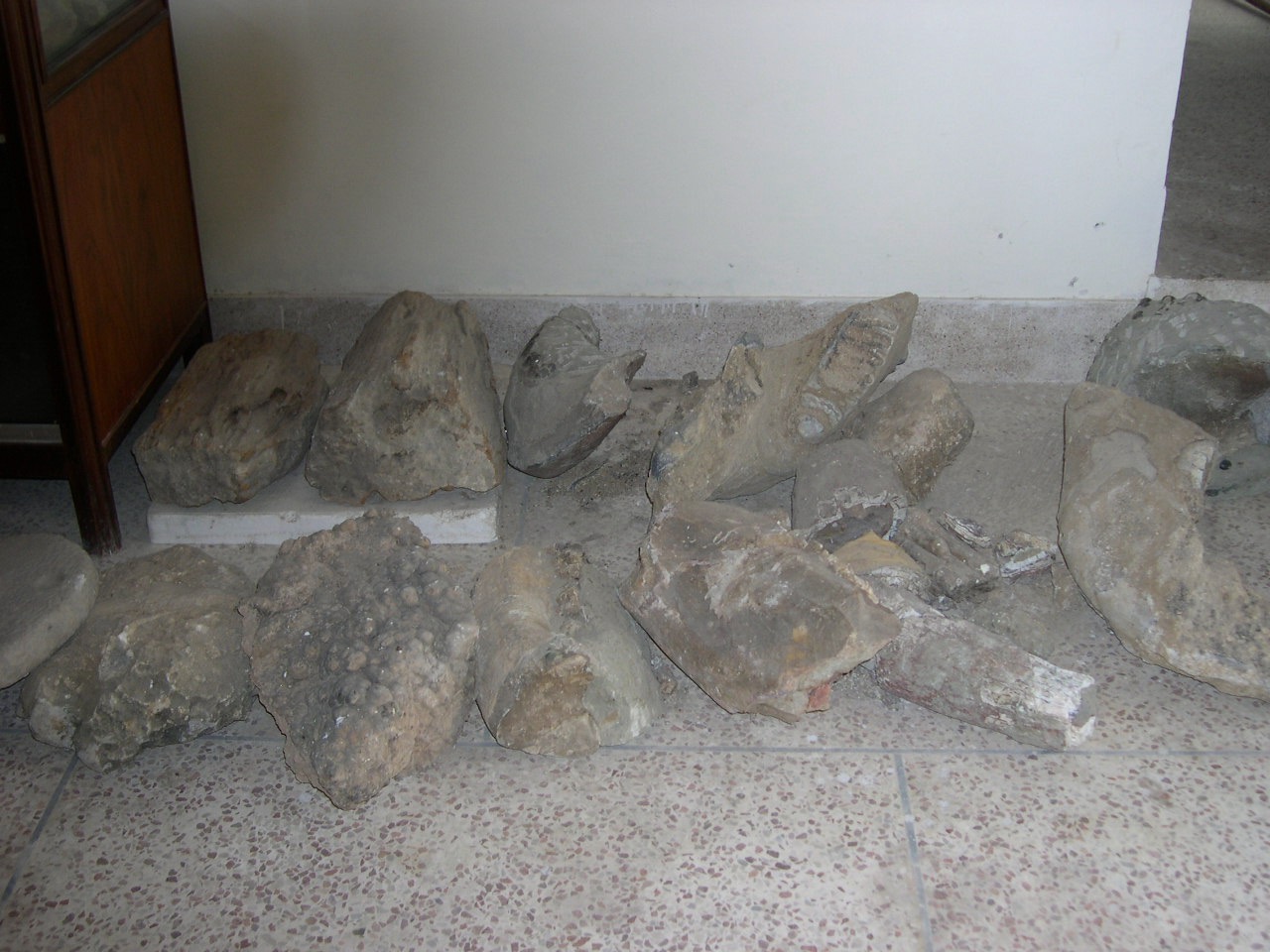
Back in 2004, I also stumbled upon the first fossil museum in Pakistan! Actually, it was less a museum and more a room with a variety of fossils scattered randomly on the floor. Neglected and dusty, they appeared to be of little significance. I recently came across this old photograph, which I had forgotten about.
I was so intrigued by the plaque with this inscription of the first fossil museum that I started doing a little digging about it, with little to show. A search for Mustafa Zaidi throws up a famous poet/civil servant (born 16 October 1930 in Allahabad and died 12 October 1970), while Tanvir Jafri, the then-DC of Chakwal, might still be around with recollections of this fossil museum.
I think the fossil museum is perhaps part of the Kallar Kahar Museum now, which is located opposite the Lake. It was finally inaugurated earlier this year in April, after seven years of its completion. At the time, I remember the caretaker saying that they there was something bigger in the pipeline, to create a better museum space. In South Asia, these matters take time (years), unless there is political mileage in the project. Though I should not have been so dismissive of the fossils, because this region is rich in history and has dinosaur fossils dating back 15 million years. But heritage remains a low priority for the country, whether prehistoric, ancient or modern, and is a simultaneously contested and marginalised space.
It was fifty years ago that Henry Kissinger made a secret trip to Beijing in July 1971. Kissinger, who was President Nixon’s National Security Advisor, flew to Beijing from Pakistan on PIA flight. His meetings there produced an agreement that President Nixon would visit China, which saw the beginning of the U.S.-China effort to discuss the issues that had divided them over the years. Below are some snippets of recent articles that have appeared to mark this moment from Pakistan’s perspective and also some archival material.
FIFTY years ago today, on July 8, 1971, Dr Henry Kissinger as president Nixon’s envoy made a stopover in Rawalpindi to meet president Yahya Khan. Kissinger came from New Delhi, leaving a perplexed prime minister Mrs Indira Gandhi wondering why he had dropped in for such insubstantial talks.
In Rawalpindi that night, Dr Kissinger had dinner with the president, during which they discussed the secret they had shared for two years — the furtive contact between US president Nixon and the Chinese leadership of Chairman Mao Zedong and premier Zhou Enlai.
Dr Kissinger expressed his apprehension over his visit to Beijing, insisting at one stage that president Yahya should accompany him as a guarantor of his safety. Yahya demurred and offered Kissinger a tin hat and a general instead.
In the early hours of July 9, while his ‘double’ (ostensibly with a gastric upset) drove to Nathiagali, Dr Kissinger flew out of Chaklala airport in a PIA aircraft. He spent the next few days in Beijing and returned on July 11.
I dined with former president Yahya Khan four years later, on Aug 2, 1975. He was then in ‘protective custody’ in his Harley Street home. I asked him about Chairman Mao: “Like an ocean”. Zhou Enlai? “Courteous, far-sighted but like a mouse in front of Chairman Mao.” And president Richard Nixon? “A true friend of Pakistan.”
Yahya Khan — the go-between trusted by both the Americans and the Chinese — maintained a confidential record consisting of 49 documents, kept in a loose-leaf folder which his son Ali Yahya hid under his bed. Occasionally, tantalisingly, he would reveal some but not all its contents.
Years later, Ali gave me a full set of the papers. These I was able to convert into a book — From a Head, Through a Head, To a Head: The Secret Channel between the US and China through Pakistan (2000). Later, I discovered a cache of Nixon’s presidential papers stored in the US National Archives, in Washington, D.C. They proved uniquely valuable, because Kissinger had put an embargo on his own papers. Read the full article.
On this particular night in July 1971, we were told to to get ready for a 3 AM departure. Pakistan International Airlines was routinely used for VVIP (Very Very Important Person) travel from its very inception and in the 1960s had developed a security check-list to cover such operations whenever needed. The basics involved securing the aircraft with armed guards during preflight maintenance and ensuring flight operation by a crew that had prior national security clearance.
Being one of the Chief Pursers at the time who had such security clearance, I was asked in July 1971, to proceed to Rawalpindi from Lahore where I was on Vacation. A Boeing 707 crew under the command of Captain M T Baig was assembled in Intercontinental Hotel Rawalpindi without a clue as to the nature of this VVIP operation. We were only told in clear terms that we were not to communicate with anyone and that we would be told to operate a VVIP flight on short notice…
Since it was dark, it was difficult to see the passengers in his car. But as soon as they came out of the car and started to come up the steps, lo and behold! the man following Mr. Khan was none other than Dr. Henry Kissinger, Assistant to the US President for National Security affairs!
I was the first to greet him aboard, introduced myself as Purser in charge. Dr Kissinger then introduced me to the other gentlemen in the party – namely Winston Lord, John Holdridge and Richard Smyser. Mr. Khan got out, the door was closed and departure announced to Peking. I remember having told Captain M.T. Baig, the commander of this flight, as to who exactly our VVIP passengers were. He was as surprised as one might expect. Read the full account.
Another important channel to Beijing was Ambassador Huang Hua, who headed the PRC’s United Nations Mission when it was established in November 1971, a few weeks after the U.N. General Assembly voted to seat Mainland China. Huang and Kissinger began holding secret meetings at a CIA safehouse in the Lower East Side of Manhattan and quickly developed a comfortable relationship across the ideological divide. Although they were able to keep their meetings secret, within months some neighbors began to wonder “what is going on.” Security officials asked that Kissinger “arrive in something other than a large limousine,” arrive on time, and bring a less obtrusive Secret Service detail. (Apparently the agents had “been leaping out of the car and stopping traffic.”)
On 10 December 1971, Kissinger met with Huang Hua to brief him on the U.S. stance toward the South Asian crisis. A week earlier, the Bangladesh crisis had exploded into war when Pakistan launched a surprise attack on India. With the U.S. public generally supporting India and the cause of Bangladeshi independence, Nixon and Kissinger secretly and deceptively tilted policy toward Pakistan, in part because of President Yahya Khan’s important role in facilitating communications with Beijing during 1970 and 1971. Moreover, Nixon and Kissinger saw India as a Soviet proxy and believed incorrectly that Indian prime minister Indira Gandhi aimed to destroy West Pakistan in order to humiliate the government that had helped to forge U.S.-China relations. Kissinger told Huang how the White House was sustaining its tilt toward Karachi with veiled threats to the Soviets, secret requests to Middle Eastern governments to provide military equipment to Karachi, and instructions to send an aircraft carrier fleet through the Straits of Malacca into the Bay of Bengal.
Secretary of State Rogers was furious with White House policy toward Pakistan, although he failed to realize that Nixon was as much its architect as Kissinger. Nixon and Kissinger continued to make key decisions in secret. Only they knew that their naval deployments were to ensure “maximum intimidation” of India and the Soviet Union. Although the Indians were puzzled by U.S. maneuvers, Kissinger later argued that this action had been “the first decision to risk war in the triangular Soviet-Chinese-American relationship.” However, he did not admit in his memoirs that he had counseled Ambassador Huang that if Beijing decided to intervene in the war “to protect its security, the U.S. would oppose efforts of others to interfere with the People’s Republic.” Huang’s rhetoric in the conversation was militant; Kissinger concluded incorrectly that the Chinese were about to join the fighting. Beijing had as little interest in intervening as the Indians had in escalating the fighting. A week after this meeting, on 17 December, the Indians accepted Pakistan’s offer of an unconditional cease-fire.
Getting To Beijing: Henry Kissinger’s Secret 1971 Trip A documentary history of US efforts under Richard Nixon to open discussions with Chinese leaders, an effort that yielded Kissinger’s trip forty years ago this month. Photo: Premier Zhou Enlai and National Security Advisor Henry Kissinger.













 BAGICHA