All posts by Pippa

The Status of Punjabi after 1947

Reorg of Punjab 1966
Reorganisation of East Punjab after 1966. © Pippa Virdee 

Punjabi is an Indo-European (or Aryan) language and is the native language of Punjab, a land divided between India and Pakistan. It has approximately 100 million speakers, largely in north India and Pakistan but it is also widely spoken amongst the Punjabi diaspora around the world.

The Partition in 1947 not only divided the province of Punjab but it also divided the language, and this has been the source of much tension in post-47 in both India and Pakistan. Being a phonetic language, Punjabi was/is written largely in three different scripts: the Persian script (sometimes referred as Shahmukhi) is used mostly in Pakistan; Sikhs use the Gurmukhi script and less common is the Devanagari script which is associated with Hindu Punjabis. Punjabi interestingly was never given official state patronage; this is true for the Mughal period, Ranjit Singh’s reign and also under the British. The preferred state or official language was Persian and Urdu. Farina Mir argues that part of the problem under the British colonial period was the plurality of the scripts used to write Punjabi; all three scripts (Indo-Persian, Gurmukhi, and Devanagari) were used but none of them dominated (Farina Mir, The Social Space of Language: Vernacular Culture in British Colonial Punjab, London: University of California Press, 2010).

It is not until after 1947 that Punjabi begins to get official state patronage, at least in India that is. It is officially recognised as one of the 22 official state languages in India. In West Punjab (Pakistan), Punjabi is confined largely to an informal language with no official status despite being spoken by the majority of people. And even though the number of Punjabi speakers in Pakistan has been declining over the decades, Punjabi is still the most widely spoken language. East Punjab after the Partition in 1947 was a fragmented province of its former self. It consisted of territory that was an amalgamation of divided Punjab, Patiala and East Punjab States Union (the former princely states), and the Hill States to the north of the province. By the 1950s, a Punjabi Suba (province) movement had started which hoped to create a Punjabi-language state, taking inspiration from the linguistic reorganisation taking place in other parts of India. This is eventually achieved in 1966, with the Punjab Reorganisation Act that created a new state of Haryana and also transferred territory (such as the Hill States) to Himachal Pradesh.

Leading up to this though was of course an enormous amount of discussion and political agitation, so, it is interesting to see some of the initial correspondence between Bhim Sen Sachar, Chief Minister of East Punjab and Jawaharlal Nehru, the Prime Minister of India and Nehru to Vallabhbhai Patel, the Deputy Prime Minister on the question of introducing Punjabi as the medium of instruction in schools. 

BS Sachar to Nehru, 9 July 1949 (JN SG 26-I):

‘In my letter [of] 13 May, I referred to the two outstanding demands of the Sikhs, namely (I) representation in services, and (II) Punjabi in Gurmukhi script as the medium of instruction and court language…No compromise on them was considered possible…since then, I have had informal discussions on the language controversy with the Governor, my colleagues, various leaders of public opinion and the general view of government is as below. Before the Partition, Ambala division, excepting Ropar and Kharar tehsils of the Ambala district, spoke Hindustani, while Punjabi was spoken in the rest of the Punjab, barring Kangra district. After it, nearly a million displaced persons from the West Punjab moved into the Ambala division and, therefore, it cannot now be said that all the people [there] speak Hindustani. Nevertheless, the distinction which held good before exists even now, to a lesser a degree. With the gradual elimination of English and Urdu from the province, the question [of] their [replacement] has assumed great importance…the present controversy is not over the language [Punjabi] spoken but the script [Devanagari or Gurmukhi] in which it should be written…The unanimous demand of the Sikhs is that Punjabi in Gurmukhi should be adopted all over the province as medium of instruction, as the official and court language. This would not be acceptable to Hindus in general and especially to the Hindustani-speaking region of the Ambala division and Kangra district of the Jullundur division. It will be unfair to force it on them…The best solution would be to recognise the province as consisting of two distinct linguistic regions, Punjabi and non-Punjabi. Government would agree to the following: (i) Punjabi in Gurmukhi should be the medium of instruction in the Punjabi-speaking region of the province, up to and including the 5th class; (ii) In the Punjabi-speaking region, Hindi should be compulsorily taught as a second language from the 4th class; (iii) Reversal of the same arrangement in the non-Punjabi region; (iv) English and Urdu should for the present continue as the official and court languages. There are differences of opinion on two points: (i) whether girls’ schools should be allowed the option; (ii) whether the existing boundaries of the Jullundur and Ambala divisions should be regarded as correctly [representative]. The Sikhs would not agree to distinguish girls’ schools from boys’ schools…whereas Hindus should be in favour of it…The Sikhs would include the whole of Jullundur division and the whole of Ambala district in the Punjabi-speaking region whereas Hindus would like to exclude Kangra district and three tehsils, Ambala, Naraingarh and Jagadhari, of the Ambala district from it…No agreement on [these] appears to be possible…would be grateful [for your] decision on them’.

Nehru to Patel, 22 July 1949 (JN SG 26-II):

‘Giani Kartar Singh came to see me this morning…on the language issue in East Punjab…I told him that there is no point in our considering the [matter] unless we knew that the parties concerned would abide by our decision…He said that an agreement had been arrived at between the Hindu and Sikh Ministers and the Governor agreed…(1) Punjabi in Gurmukhi, (2) two linguistic areas, (3) Punjabi compulsory from 1st-5th standard in Punjabi area, Hindi vice-versa, (4) from 4th standard upwards, the other language should be compulsory…There was no agreement on the delimitation of linguistic areas. More especially, the Pahari Ilaqa – Sikhs considered as Punjabi areas…another point was Hindus wanted option to be exercised in regard to languages, the Sikhs did not…I made it quite clear that our general policy was against compulsion in regard to choice of the mother-tongue…I further pointed that Bengali, Marathi, Gujarati were well-developed languages…He confessed that Punjabi was not suited for higher education [but] should be used up to the Matriculation… [But] that there was a great deal of feeling behind the Sikh demand…I think some facts have to be obtained about the linguistic divisions of the province but the issue is quite clear…If the Punjabis want two linguistic divisions, they might have them but I just do not see how we can do away with the option of a parent to decide which shall be the mother-tongue…’

These two letters provide a glimpse into the discussions taking place in 1949. However, the two letters from 1951 provide a different lens, especially the DAV College correspondence which is clear that the medium of instruction should be Hindi, despite the considerations of the State Language Policy. 

Jullundur City, 3 May 1951, DAV College Managing Committee (Bal Raj, President) To the managers of all the schools in the Punjab under the control of the DAV College Managing Committee (JN SG 92 II):

Please refer to the Punjab Education Department on the State Language Policy in the schools: it is [an] ill-conceived policy…I am to convey to you in very unmistakable language the views of the DAV College Managing Committee vis-a-vis this policy. Our schools should go ahead in their work undeterred by considerations of State Language Policy. To us, teaching of Hindi in our schools is a matter of supreme importance and on this point, there is to be no compromise. We would much rather let our schools face the consequences than submit to any direction from the Education Department, that weakens the position of Hindi in them. In case there is any trouble on this score from Education Department, the schools affected can rely on our fullest support, and we shall see to it that they do not suffer.

In our schools, Hindi will be the medium of instruction for all classes and Punjab will start as optional vernacular from V in place of IV as laid down by the Education Department because we consider its teaching in IV class too early. It should be clearly understood that Punjabi from V class will be optional i.e. only for those students, who would like to learn it. Provision should, however, be made for teaching in Punjabi medium for students coming from outside, and effort should be made to switch them on to Hindi medium as early as possible.

It is just possible that the Local Bodies’ Schools or Khalsa Schools might not make provisions for teaching in Hindi medium on grounds of non-availability of suitable Hindi teaching personnel or lack of demand for Hindi medium on part of students or that Hindi students might be persuaded to receive instruction in Punjabi rather than in Hindi. Proper vigilance will have to be exercised over these schools, and in case they do not implement the state policy, they should be brought to our notice to be reported to the Education Department.

A strong public opinion will have to be created in your area in favour of Hindi, so that students wishing to be taught in Hindi medium declare fearlessly their desire to be taught in this medium, undeterred by the local influence or pressure from teachers, not well disposed towards this medium.

Amritsar, 21 July 1951, The Shiromani Gurdwara Parbanbhak Committee (Kartar Singh, Publicity Secretary) To Prime Minister Jawaharlal Nehru JN SG 92 (II)

Enclose herewith a copy of the [above] letter…A perusal of this document will reveal to you which way the wind blows in those quarters. On the one hand, the Hindu schools are exhorted to go ahead in their work of shutting their doors to Panjabi “undeterred by considerations of State Language Policy” and not to “submit to any direction from the Education Department”. On the other hand, the Local Bodies’ Schools and the Khalsa Schools are to be compelled to make all arrangements for the teaching of Hindi in accordance with the State Language Policy. The attitude…is not only one of flagrant defiance of the government’s orders, but is also calculated to accentuate communal bitterness and vitiate the general atmosphere in the province. Due notice be taken of such anti-national and subversive attitude and activity as is being exhibited by these people.

The Lahore Gymkhana Club


The Lahore Gymkhana Club is a place I have been able to visit on many occasions. It is an exclusive club for the elite in Lahore with a long waiting list for membership. The Club’s website proudly reads:

Gymkhana; A World in its Own

Donning chinos and a polo shirt while sinking a birdie putt on the 15th hole, the retired bureaucrat on the lush pastures of the eclectic golf course continues being oblivious to the disrupting traffic outside the boundary walls, while the eminent 70-year-old writer sketching out a plot for his highly anticipated sequel continues penning down characters originating from his ever so powerful imagination in the same library that he’s been sitting for the last 30 years. A group of ex-service men calmly carry on the tradition of expressing ambivalent opinions on the country’s next elections while making an opening bid in the card room, and some foreign delegates continue analyzing aspects of the much debated foreign policy while sipping their cappuccinos and lattes in the serene view of the golf course.

An idea that took the shape of a property in the 1870’s, is an identity in itself today. The Lahore Gymkhana membership continues to comprise of individuals inhabiting top positions in their respective fields, such as government ministries, armed forces, banks, MNC’s, sports, the judiciary and the media, both nationally and internationally. Together, they ensure the prestige of the club.

The original Gymkhana was actually founded as The Lahore and Mian Mir Institute in 1878 in Lawrence Gardens, opposite the Governor House. The Club was based in the Lawrence and Montgomery Halls (named after Sir John Laird Mair Lawrence, first Chief Commissioner (1853-57) and Viceroy of India (1863-69) and Robert Montgomery, second Lt. Governor of the Punjab (1859-65) respectively).

In 1906, the name changed to the Lahore Gymkhana and in 1972 the two halls were taken over by the Punjab Government and the Gymkhana club was relocated to the newly built facility at The Upper Mall, where it currently stands.

Hobson-Jobson. A Glossary of Colloquial Anglo-Indian Words and Phrases, and of Kindred Terms, Etymological, Historical, Geographical and Discursive, a historical dictionary of Anglo-Indian words and terms from Indian languages that came into use during the British rule of India. It was complied by Henry Yule and Arthur Coke Burnell and first published in 1886; it has been in print ever since. The dictionary takes you into the world of nineteenth century British India and connects provides the reader with a definition and etymology of words/phrases. The Club’s statement on its website and the world of nineteenth century colonial British India are not too dissimilar. The entry for the Gymkhana in Hobson-Jobson reads:

GYM-KHANA, s. This word is quite modern, and was unknown 40 years ago. The first use we can trace is (on the authority of Maior John Trotter) at Rurki in 1861, when a gymkhana was instituted there. It is a factitious word, invented, we believe, in the Bombay Presidency and probably based upon gend-khilna (‘ball-house’) the name usually given in Hind. to an English racket-court. It is applied to a place of public resort at a station, where the needful facilities for athletics and games of sorts are provided, including (when that was in fashion) a skating-rink, a lawn-tennis ground, and so forth. The gym may have been simply a corruption of gend shaped by gymnastics [of which the English public school short form gym passed into Anglo-Indian jargon]. The word is also applied to a meeting for such sports; and in this sense it has travelled already as far as Malta, and has since become common among Englishmen abroad. [The suggestion that the word originated in the P.-H. jamd’at-khana, ‘a place of assemblage,’ is not probable.]

  1. – “Their, proposals are that the Cricket Club should include in their programme the games, &c., proposed by the promoters of a gymkhana Club, so far as not to interfere with cricket, and should join in making a rink and lawn-tennis, and badminton courts, within the cricket-ground enclosure.” – Pioneer Mail, Nov, 3.

  2. – “Mr. A-F- can always be depended on for epigram, but not for accuracy. In his letters from Burma he talks of the Gymkhana at Rangoon as a sort of establissement [sic] where people have pleasant little dinners. In the ‘Oriental Arcadia,’ which Mr. F- tells us is flavoured with naughtiness, people may do strange things, but they do not dine at Gymkhanas.” –lbid. July 2.

  3. – “R. E. Gymkhana at Malta, for Polo and other Ponies, 20th June, 1881.” Heading in Royal Engineer Journal, Aug. 1, p. 159.

  4. – “I am not speaking of Bombay people with their clubs and gymkhanas and other devices for oiling the wheels of existence….” – Tribes on My Frontier, 9.

Read more about the Lahore Gymkhana since 1947.

Visit the Lahore Gymkhana website.

‘It’s a special place’ – the 101-year history of the Indian Gymkhana cricket club in The Guardian.

India News Review 82

Produced by the Films Division, Ministry of Information & Broadcasting, these short news reviews by the Government of India give us a glimpse of old India. Produced one-year after Partition/Independence, the review shows Pandit Nehru in Karachi, messages of inter-communal harmony, tolerance and equality at the Urs of Ajmer Sharif Dargah, elephant diplomacy in the US, dance, theatre and hockey matches.


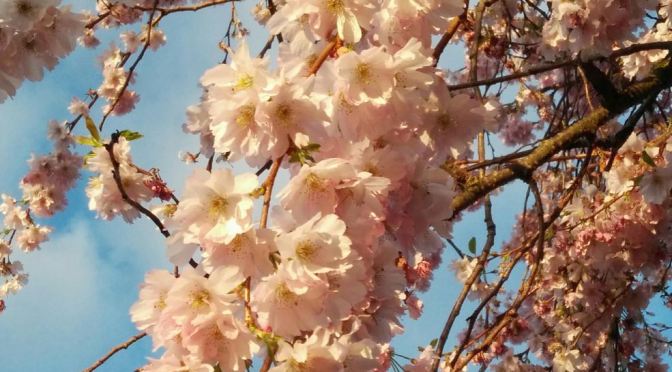
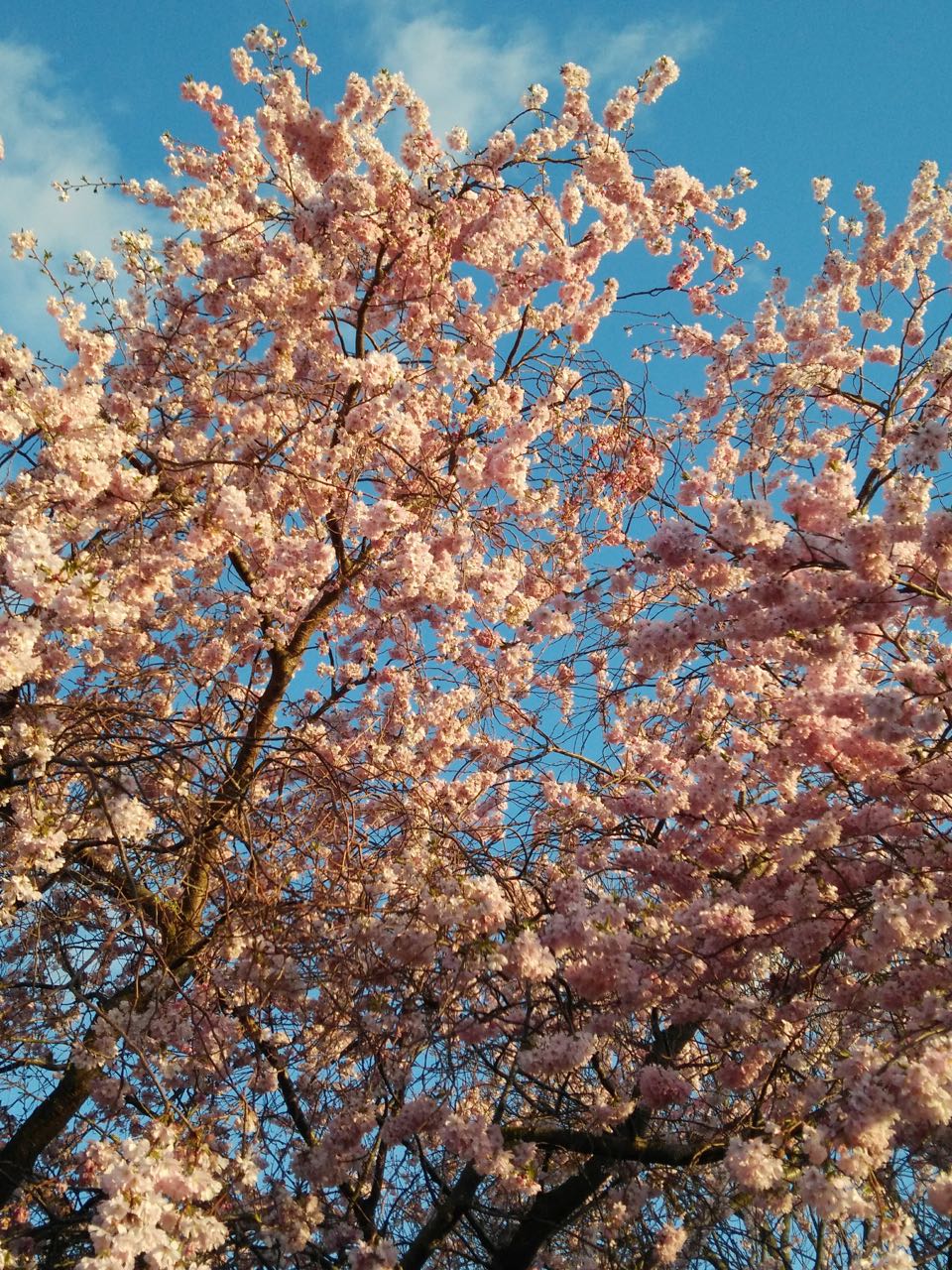
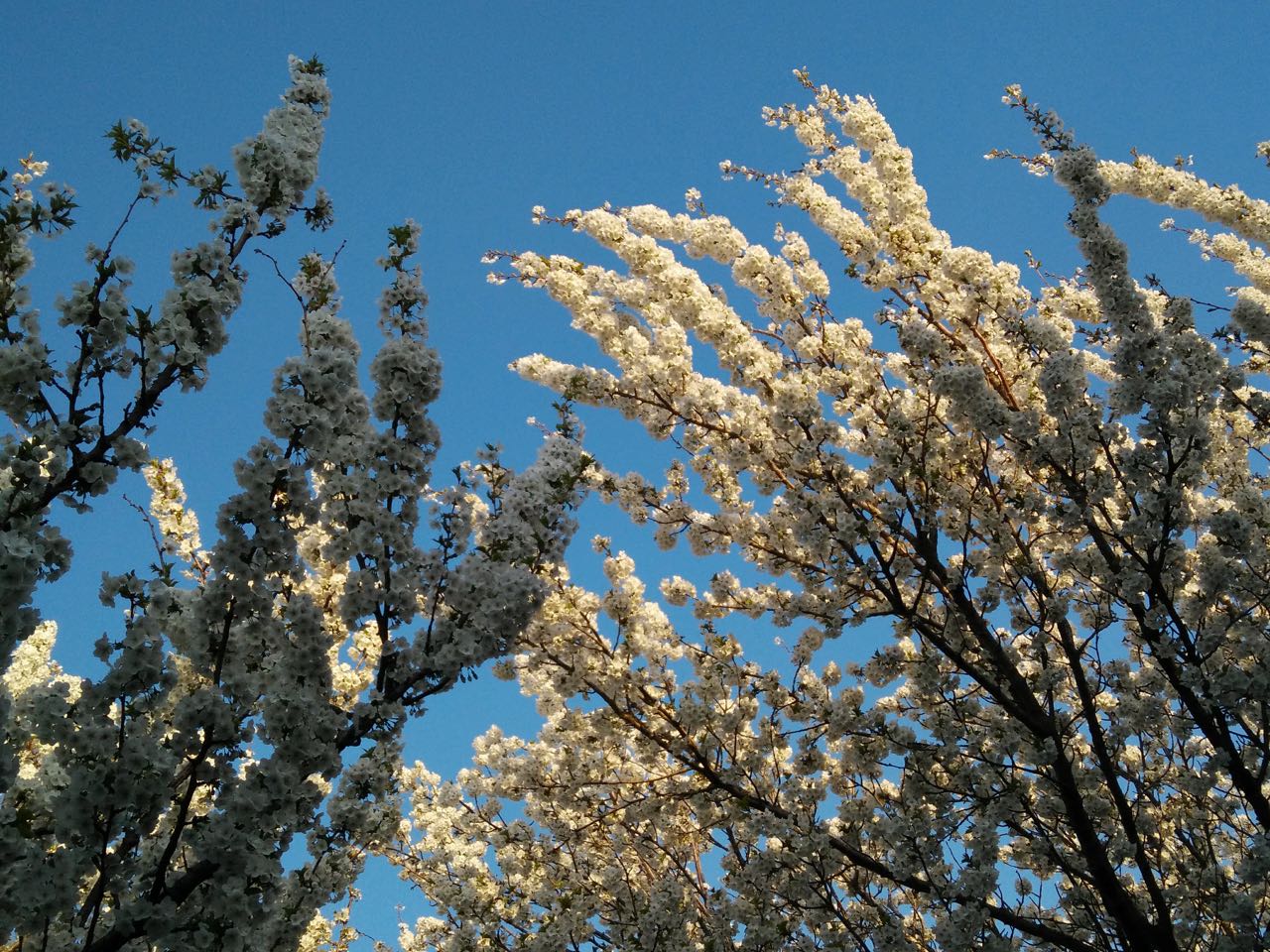
Cherry Blossom Season

Cherry Blossom

Pink Cherry blossom falling,

I often wonder why,

a beauty slowly taken

like branches now forsaken

I am the tree

that learned to cry.

Farewell my love,

to fallen love,

the wind became

your words,

the emptiness

between us,

the silent petals

upon the earth.

By Michael Faudet

Gurdasram Jalebiwala, Amritsar

One of the most famous jalebi shops in the city of Amritsar. This tiny little corner is food heaven for those with a sweet tooth. Nothing beats the freshly made hot, mouth-watering jalebis. Modest price, small portion and full of bliss! Go try them.


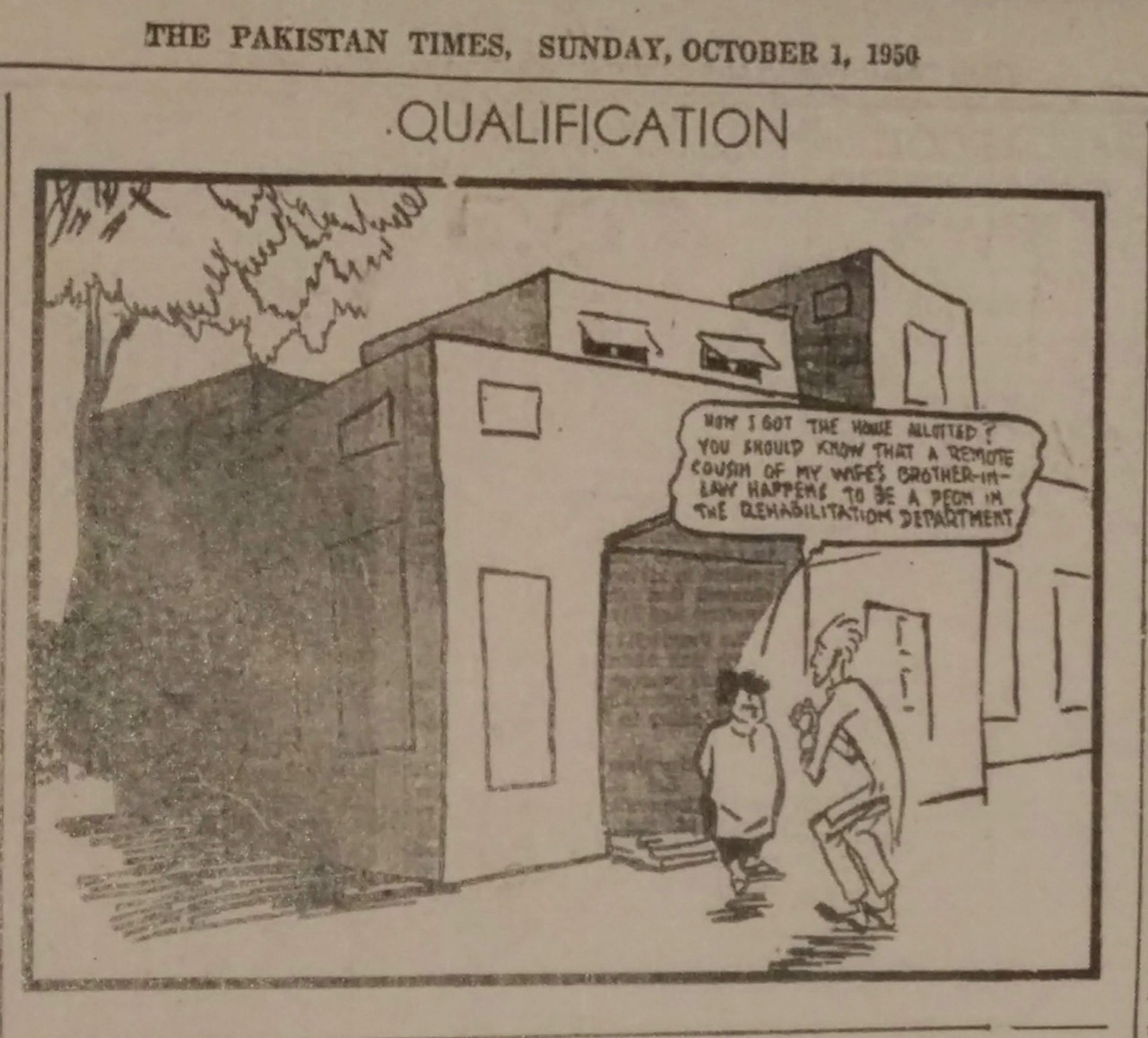
Roti, Communist aur Makaan

The Pakistan Times, 1 October, 1950. Qualification. “How I got the house allotted? You should know that a remote cousin of my wife’s brother-in-law happens to be a peon in the Rehabilitation Department.”

Qualification PT
© 2019 Pippa Virdee


The Pakistan Times, 16 September 1950, “They were demanding bread.” “Communists–Aren’t They?”

Communist PT
© 2019 Pippa Virdee

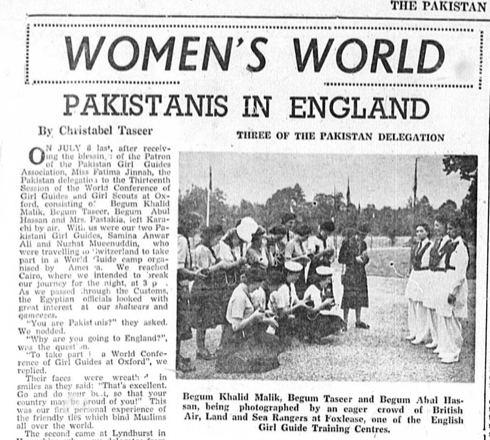
“Women’s World: Pakistanis in England”

pt 10 sep 1950Women’s World in The Pakistan Times, Sunday September 10, 1950.

Pakistanis in England by Christabel Taseer

On July last, after receiving the blessings of the Patron of the Pakistan Girl Guides Association, Miss Fatima Jinnah, the Pakistan delegation to the Thirteenth Session of the World Conference of Girl Guides and Girl Scouts at Oxford consisting of Begum Khalid Malik, Begum Taseer, Begum Abul Hassan and Mrs Pastakia, left Karachi by air. With us were our two Pakistani Girl Guides, Samina Anwar Ali and Nuzhat Mueenuddin, who were travelling to Switzerland to take part in a World Guide Camp organised by America. We reached Cairo, where we intended to break our journey for the night. As we passed through the Customs the Egyptian officials looked with great interest at our shalwars and qameezes.
“You are Pakistanis?” they asked.
We nodded.

Why are you going to England?” was the question.

“To take part in a ‘World Conference of Girl Guides at Oxford”, we replied.

Their faces were wreathing in smiles as they sald: “That’s excellent. Go and do your best, so that your country may be proud of you!” This was our first personal experience of the friendly ties which bind Muslims all over the world.

The second came at Lyndhurst in Hampshire, when we delegates from different countries were attending demonstrations of British Guiding, One day, (just after Eid), we were walking across the grass to a Ranger camp, wearing our white and green Guide uniforms, when a young woman dressed English Guide uniform came running quickly towards us.
“Tell me, are you Pakistani Muslims?” she cried,
We answered “yes” and looked at her eager face In surprise.

“I, too, am a Muslim, a Turkish Muslim from Cyprus,” she replied, “and I am here for Guide training. I am so very happy to see you, particularly because you are Muslims like myself. Here I am the only Muslim in the camp. Yesterday was Eid and there was no one with whom to share the happiness of that day.”

We all embraced with enthusiasm and sat down to talk about our respective counties and about Guiding, there. We parted with regret at the end of our stay, but again at Oxford, at the wind-up of our ten days’ Conference, when we had a huge Camp Fire of 10,000 Girl Guides from all over England, there, as all the delegates from the twenty-four countries represented marched slowly across the huge field to their respective places, there in front of everybody, leaning across the ropes, waiting to shake our hands in friendship, was our Turkish friend from Cyprus, Hatlee Tahsin!

From the moment we Pakistani delegates appeared in uniform in English, whether in London of Lyndhurst or Oxford, we attracted attention. People had become used to the dark-blue Guide uniforms of the British, the green of the Americans, the khaki of the Greeks, even to the dark-blue saris of the Indians – but spotless while starched shalwars and qameezes, with folded dark green dupattas and green ties and white shoes, were something quite out of the ordinary. Wherever we went we were surrounded by photographers and Girl Guides, and questioned by people – “How do you keep your uniforms so clean?” “Do you really wear such clothes in your country?” By the time we had been in England for two weeks, wherever we went, whether we were in uniform or wearing silk salwar and qameez or garara, people knew that ours was the dress of Pakistan.

But we found that many people, particularly the Guide delegates from the smaller European countries, still did not know where Pakistan was, and we often had to bring out a map and point out our country to them. We had to answer many questions about our food and general living habits, social customs, education, position of women, the meaning of purdah. People were tremendously interested in us as a country and full of admiration for the progress we had made in the last three years. Many people said that it must be a wonderful experience to be in a new country, where everything has to be built up by one’s own efforts.

GREAT EXPERIENCE

The Conference itself which took place in St Hugh’s College, Oxford, was a great experience. Here in the Conference Hall were hung the flags of the twenty-four nations represented at the Conference, whose delegates, of faiths as divergent as Protestant, Catholic, Jewish, Muslim, Hindu, Parsee, had met because they were united by a common purpose, viz, to work for the girl and women of the world. Think of the magnitude of the of the movement stated in 1910, which is such that a girl from Pakistan or Egypt can stop a girl who is wearing the Guide badge on the street in America or England, shake her by the hand, call her sister, and at once be friends with her. Our two Pakistani Girl Guides, who had never been abroad before, were received in London with affection and friendship, because they were Girl Guides and they were able to travel on to Switzerland with American, English and Australian Guides whom they had never seen before, but with whom they at once felt at ease.

11 LANGUAGES

In our Conference Hall, women used to chat in eleven different languages, there were women from seven countries who knew more French than English, we had an American Chairman, an English Vice-Chairman, a Belgian translator, and so on, but we were all one. For ten days at Oxford we sat and discussed subjects as diverse as training programmes, camping, finances, public relations, constitution, future policy, – sometimes in English, sometimes in French,- we were entertained in castles and palaces and country homes, we were received in Buckingham Palace by Her Majesty the Queen, we listened to concerts, saw pageants and displays of dancing, and ended a very full fifteen days’ programmes with the gigantic Camp Fire programme at Oxford, on the 29th July, which was attended by 10,000 Guides from all parts of England and which was presided over by Princess Margaret. The Camp Fire was a stupendous sight. An enormous field filled with a sea of faces, all cheering lustily as the delegates from the twenty-four countries marched slowly across the field. Over 10,000girls and women were singing the songs which are known to the two and a half million Guides all over the world, all friendly and united because they were all Guides who had taken the same promised of service to mankind and who all lived recording to the precepts of the ten Guide laws. There they all were – over 10,000 of them, representing the two and a half million Guides in the jungles of Africa, the mountains of Switzerland, the forest of Canada, the Philippine Islands, the plains of Pakistan – Guides from large towns and tiny villages, of different races and creeds and cultures, all different, but nevertheless all one.

Anarkali: the myth, legend and public history.

Located in the heart of the Punjab civil secretariat, Lahore, the octagonal shaped building is a legacy of Emperor Jehangir. The grandeur of the Mughal-era building and the tomb inside is a marvel. After numerous incarnations, the tomb today is home to the Punjab Archives and is more popularly known as simply Anarkali. Taking the name from the celebrated relationship between Prince Saleem (Jahangir) and Anarkali (Sharif un-Nissa aka Nadira Begum), a courtesan in the court of Emperor Akbar. There are many different accounts of this relationship and the death of Anarkali, with little history authenticity. Whether she died naturally or under more mysterious circumstances or whether Akbar ordered her to be buried alive in a wall. We may never know the truth, but the legend and the myth of the passionate affair between Saleem and Anarkali has inspired many.

Anarkali: myth, mystery and history

The Film: 60 years on, Mughal-E-Azam continues to make waves

The drama: Alain Desoulieres, Historical Fiction and Style: The Case of Anarkali, The Annual of Urdu Studies 

The many incarnations of the tomb:

‘The tomb of Anarkali is one of the most significant buildings of the Mughal period. It is an ingeniously planned octagonal building. Circular in shape and roofed by a lofty dome, the tomb once surrounded a garden, called Anarkali Garden, but during the last couple of hundred years it has been put to several uses. Under the Sikhs, the mausoleum was occupied by Kharak Singh. Later it served as the residence of General Ventura, the Italian General of Ranjit Singh’s army. Under the British, the tomb was converted into Church (a protestant Church) in 1851 right after 2 years of British Control on Lahore. Few years later, it was converted to St. James’ Church in 1857 till 1891. Since then, it has been used as Punjab Archives Museum with an amazing treasure for those interested in the history of British Punjab.’ Story of Anarkali and her Tomb at Lahore.

An extract on the Tomb Anarkali from R.E.M Wheeler, Five Thousand Years of Pakistan: An Archaeological outline. With a Preface by Fazlur Rahman. Royal Book Company, first published in 1950. Page 84.

Anarkali or “Pomegranate Blossom” was the nickname of an attractive girl who was brought up in Abkar’s harem and was suspected by the emperor of carrying on an intrigue with prince Salim, afterwards the emperor Jahangir. The story is variously told, but it would appear that the girl was barbarously executed in the year A.D. 1599. When Salim came to the throne, he strove to make some amends for the tragedy by building a large tomb over her grave. This tomb stands in the ground of the Punjab Secretariat to the south of the old city, and has passed through vicissitudes which have concealed all its original decoration. It is hexagonal on plan, with a domed octagonal tower at each corner, and is crowned by a central dome on a tall cylindrical drum. After 1851 it was used as a Christian church, and for this purpose the arched openings in the eight sides were wholly or partially walled in, a gallery (now removed) was constructed in the interior with an external staircase, and the whole structure was whitewashed internally and externally. The large monolithic marble gravestone had already been moved out of the building in the Sikh period, when the tomb was turned into a residence, amongst the occupants being General Ventura, the famous Italian officer of the Sikh Government. The stone was subsequently replaced by the British within the tomb, but in one of the side bays, not in its original central position. It has been stated that the actual grave was also moved to the present site of the gravestone, but digging in 1940 in the middle of the building revealed the former still intact five feet below the present floor, in its proper place. From accounts of the discovery, the grave would appear to be of plastered brickwork. The building is now used as the Punjab Record Office.

The gravestone bears well-cut inscriptions which include the date of the death of Anarkali with the words “In Lahore” and the date of the construction of the tomb (A.D. 1615). It also bears the ninety-nine attributes of God, and a poignant couplet,
obviously composed by Jahangir himself, which may be translated thus:

“Ah, could I behold the face of my beloved once more,
I would give thanks unto my God until the day of resurrection.”

Elsewhere on the marble are the words: ” The profoundly enamoured Salim, son of Akbar.”

It is for these inscriptions, and for the vast size of the building which reinforces their
sincerity, that the tomb is noteworthy, rather than for any special architectural quality.

Today the documents belong to the people of Punjab at the Punjab Archives are being digitised for posterity, and will hopefully allow historians to view untapped accounts and records. This is a mammoth task but at least the process itself has started. See the project website: http://dap.itu.edu.pk/