In her autobiography ਰਸੀਦੀ ਟਿਕਟ, Amrita Pritam, the poet laureate of Punjabi shares an anecdote.It was the time when Amrita left everything behind, even her love for Sahir Ludhianvi. She joined Imroz in Mumbai, they lived a very economical life, working hard and staying within one’s little means.Gurbaksh Singh Preetlari, the aged patriarch of Punjabi […]
Live a rebellious life like Amrita Pritam — Maleccha
All posts by Pippa
The Making of the Indian Middle-Class
Nothing has captured contemporary adjectives around India more than its seemingly inevitable and irresistible MIDDLE-CLASS; a cursory survey yields an expansive collection of studies on the subject. The key question in them often is how to define this broad category.


According to Abhijit Roy and based on data by “the World Bank and the Organization for the Economic Cooperation and Development (OECD), for those in the middle classes, the earnings typically lie in the range of US $10 to $100 per day, as expressed in the 2015 purchasing power parities”. Using the India Human Development Survey II (2011–12), Maryam Aslany reveals significant findings about the Indian middle class:
“(1) It calculates the size of the middle class to be 28.05% of the urban and rural population. (2) It demonstrates that despite the occupational diversity that exists, a large proportion of the middle class are salaried employees. (3) It demonstrates that contrary to common assumptions, a considerable segment of the Indian middle class resides in rural areas. (4) The fastest growth is in the lower middle classes, who spend between US $4 and $6 per day. This group includes carpenters, street vendors, decorators and drivers”.
Statistical evidence aside, one of the key elements of a middle class is how this class shifts from need to want – a key component of the capitalist model, which creates the desire to consume something, even when it is not required. This is an aspirational desire and in India, the strong connection to society/samaaj ensures that this “want and desire” has a strong market, from whose epicentre – Bombay/Mumbai – economists have defined the middle class as “consumers spending from US $2 to $10 per capita per day. By this definition, approximately half of India’s population of 1.3 billion is in the middle class” (Roy).
Employable education is often seen as one of the key routes to this upward mobility. But once successful, there is also potentially a “tussle between individuality and community: seeking novel self-expression in new jobs and leisure or taking risks with autonomy (the divorce rate is growing, from a low base), but also attempting to keep a sense of community, with dutiful support of parents (a high number of IT professionals buy cars for their parents) and strenuous attempts at maintaining a social circle (oriented around alcohol, movies, resorts and restaurants)” (Ram-Prasad).
One of the challenges with understanding how class works in India is the overlaps with caste. It is often difficult to disaggregate the two. “Upper-caste elites have, in recent decades, become used to those below them in the hierarchy accruing economic power, especially since liberalisation in the early 1990s. The new middle class argues that since it had no help from older elites, its success is self-made and ought to be the model for the poor. But the poor are still usually from castes traditionally lower than those of the new middle class—and this acts as an obstacle to their advancement” (Ram-Prasad).
One of the key things that I have observed over my three decades of travelling to India is the shift in people’s attitude after the liberalisation of the economy. Over a period of time, an airy sense of arrogance, importance and arrival at the global stage has replaced the grounded humility, self-reflection and non-aggression that had wider traction. In part, these attitudes can be traced back to the freedom movement and it is interesting to reflect back to when India had only recently gained independence.
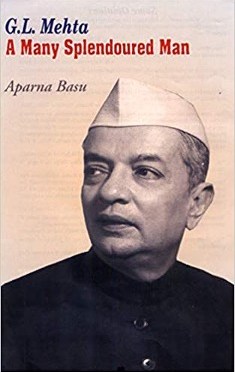
The following extracts from G. L. Mehta, a long-serving Indian Ambassador to America in the mid-1950s, highlight the then- “numerical insignificance” of this ubiquitous group of the middle classes:
“In India, government officials, professional men like lawyers and doctors, technicians and teachers, shop-keepers and clerks are all part of the inchoate group, which goes by the name of “middle classes”. Although merchant classes and officials in medieval India were a group, the middle classes are of a comparatively recent origin. In a society, where caste and status determined the social structure, the middle-income group did not wield any political power nor did they enjoy any social prestige…
…the rise of the middle classes has been due as much to the advent of foreign rule as to the impact of economic forces…There is no gainsaying the fact that our national movement has had its origin and impulse from the middle class. Indeed, the leaders of the labour movement have also been drawn mostly from the middle classes. These classes have largely helped to make India what it is, both in its strength and in its weaknesses…
…the striking fact, however, is their numerical insignificance. An examination of the income-tax statistics shows that in the Indian Union, the numbers of those earning between Rs. 300/- and Rs. 2000/- per month add up to only a little over 3 lakhs. Allowing for 5 dependents to every income earner, it would appear from this that the core of the middle classes in India consists of less than 2 million out of 350 million people…
…in 1938-39, their share of the national income was roughly 5%; today their share is more 3 ½-4%. While the rising prices of the last decade have created higher incomes and pushed up people, it is only a few in the upper income groups, who have stood to gain. Those earning between Rs. 500/- and Rs. 1000/- per month had an annual income of Rs. 80 crores in 1948-49 compared to Rs. 50 crores in 1938-39 but those in Rs. 1000/- and Rs. 2000/- group had Rs. 100 crores in 1948-49 compared to Rs. 30 crores in 1938-39 and those with incomes of Rs. 2000/- per month shared nearly Rs. 160 crores in 1948-49 compared to Rs. 30 crores in 1938-39…
…these distributional changes, together with the general stagnation in the economy, have created a situation of great stress and strain. The middle classes have, on the whole, stopped recruiting from below. Unless the middle classes can improve their economic condition in pace with the growth in their numbers, they are bound to suffer frustration and disillusionment, in proportion with unemployment and inflation. As the London Economist said recently commenting on the situation in India, “when the shop-keeper flourishes and the clerk starves, revolution is round the corner, for the educated middle class will tolerate only so much” (!)…
…but the future of a class, which is not allied to any special interest in uncertain. Equally, if the middle classes are to maintain their leadership, they should avoid freezing into a static group. They will have, therefore, to absorb continuously waves of people ascending from the ranks of peasants, artisans and labourers. At the other end they would have also to discard those whose stakes in the system are so great that they become an impediment to change…because the middle class, and its professional core in particular, can check the acquisitive instincts of the Economic Man. Perhaps it may be the role of the middle-class, to show us the middle way between freedom and order, enterprise and social security”.
References:
Above extracts from an All-India Radio talk, 14 January 1951 by G.L. Mehta (A Many Splendoured Man, Aparna Basu, 2001)
Maryam Aslany, ‘The Indian middle class, its size, and urban-rural variations’, Contemporary South Asia, 2019, 27:2, 196-213, DOI: 10.1080/09584935.2019.1581727
Abhijit Roy, ‘The Middle Class in India: From 1947 to the Present and Beyond’, Spring 2018. https://www.asianstudies.org/publications/eaa/archives/the-middle-class-in-india-from-1947-to-the-present-and-beyond/
Ram-Prasad Chakravarthi, ‘India’s middle-class failure’, 30 September 2007. https://www.prospectmagazine.co.uk/magazine/indias-middle-class-failure
Brant Moscovitch, ‘A Liberal Ghost? The Left, Liberal Democracy and the Legacy of Harold Laski’s Teaching,’ The Journal of Imperial and Commonwealth History, 2018, 46:5, 935-957, DOI: 10.1080/03086534.2018.1519245
The Punjab Peasant: past & present literature
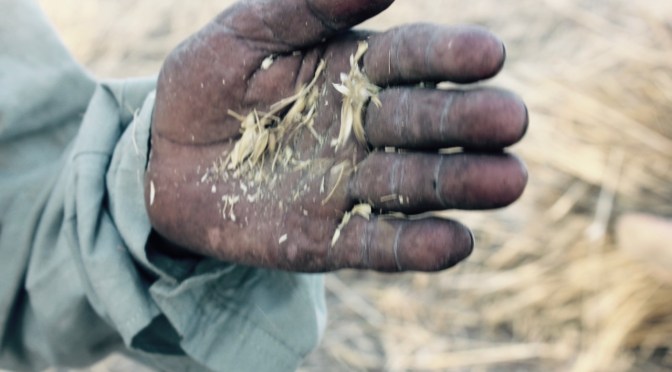
The Trolley Times has been launched recently by a group of four youngsters at the Singhu border. The idea was conceived by Ajaypal Natt from Mansa, along with Surmeet Mavi, Gurdeep Singh and Narinder Bhinder. The YouTube interview provides an insight into how the idea was developed, its purpose of reaching out and communicating with people who do not have smart phones and are not connected to social media. Moreover, telecom signals around protest areas are typically suppressed to slow down exchanges and mainstream electronic/print media in India is better known as “godi media”, not just unsympathetic to the thousands currently protesting against the farmers laws brought in September but simply the government’s voice. The first issue of the Trolley Times “carried Bhagat Singh’s quote on struggle; photographs from the centre of the struggle; story of a woman farmer, Gurmail Kaur, who died during the protest; some works of art and the lead article gave the message of unity, struggle and victory. ” The Tribune
The list below provides some references for reading further about the Punjab peasant in a historical context, focusing on some of its radical moments. The region was one of the last to be annexed by the British in the subcontinent in 1849, and subsequently underwent phenomenal transformation with their development of the canal colonies from 1885 onward. Punjab was divided and sub-divided following the Partition of 1947 but agriculture has remained at the core of Punjabi culture and identity.
- Ali, Imran. The Punjab under imperialism, 1885-1947. Vol. 923. Princeton University Press, 2014.
- Barrier, Norman G. “The formulation and enactment of the Punjab alienation of land bill.” The Indian Economic & Social History Review 2, no. 2 (1965): 145-165.
- Bhardwaj, Ajay. Filmmaker and Artist – http://ajaybhardwaj.in/films/
- Chattha, Tohid Ahmad, Abdul Qadir Mushtaq, Sumera Safdar, and Khizar Jawad. “Historical Perspective of Kirti Kisan Party and its Politics in colonial Punjab.” Journal of the Research Society of Pakistan 55, no. 1 (2018).
- Chopra, Radhika. Militant and Migrant: The Politics and Social History of Punjab. Routledge, 2012.
- Darling, Malcolm Lyall. Punjab peasant in prosperity and debt. Humphrey Milford, London, 1925.
- Deol, Amrit. “Workers and Peasants Unite: The Formation of Kirti and the Kirti-Kisan Party and the Lasting Legacy of the Ghadar Movement.” Journal of Sikh and Punjab Studies, 26, no. 1&2: 250.
- Gajrani, S. “Role of Kirti Kisan Party in Agrarian Movement (1927-35).” Constitutional Schemes and Political Development in India: Towards Transfer of Power 2 (1994): 463.
- Gill, Sucha Singh. “The farmers’ movement and agrarian change in the green revolution belt of North‐West India.” The Journal of Peasant Studies 21, no. 3-4 (1994): 195-211.
- Highfield, Jonathan. “Finding the voice of the peasant: Agriculture, neocolonialism and Mulk Raj Anand’s Punjab Trilogy’.” Journal on Interdisciplinary Studies in Humanities 1, no. 2 (2009): 115-133.
- Islam, M. Mufakharul. “The Punjab land alienation act and the professional moneylenders.” Modern Asian Studies 29, no. 2 (1995): 271-291.
- Jodhka, Surinder S. “Beyond ‘crises’: rethinking contemporary Punjab agriculture.” Economic and Political Weekly (2006): 1530-1537.
- Josh, Sohan Singh. Baba Sohan Singh Bhakna: Life of the Founder of the Ghadar Party. New Delhi: People’s Publishing House, 1970.
- Kalra, Virinder S., and Shalini Sharma, eds. State of Subversion: Radical Politics in Punjab in the 20th Century. Routledge, Taylor & Francis Group, 2017.
- Kalra, Virinder S., and Waqas M. Butt. “‘In one hand a pen in the other a gun’: Punjabi language radicalism in Punjab, Pakistan.” South Asian History and Culture 4, no. 4 (2013): 538-553.
- Kessinger, Tom G. Vilyatpur, 1848-1968: Social and Economic Change in a North Indian Village. Vol. 19. University of California Press, 1974.
- Mukherjee, Mridula. “Some Aspects of Agrarian Structure of Punjab 1925-47.” Economic and Political Weekly (1980): A46-A58.
- Mukherjee, Mridula. “Peasant Protest in Punjab: Forms of Struggle and Mobilization.” In Proceedings of the Indian History Congress, vol. 59, pp. 812-823. Indian History Congress, 1998.
- Mukherjee, Mridula. Colonizing agriculture: the myth of Punjab exceptionalism. Sage, 2005.
- Raza, Ali. “Provincializing the International: Communist Print Worlds in Colonial India.” In History Workshop Journal, vol. 89, pp. 140-153. Oxford Academic, 2020.
- Sharma, Shalini. Radical Politics in Colonial Punjab: Governance and Sedition. Routledge, 2009.
- Singh, Nazer. “The Anti-British Movements from Gadar Lehar to Kirti Kisan Lehar.” PhD Diss., Punjabi University, Patiala, 2011.
- Talbot, Ian. “The Punjab Under Colonialism: Order and Transformation in British India.” Journal of Punjab Studies 14, no. 1 (2011): 4.
- Tandon, Prakash. Punjabi Saga:1857-2000. Rupa, 2000.
This is not an exhaustive list, so please do share any other references in the comments.
How British brought knitting to Punjab by Jasvinder Kaur

Read this fascinating article by Jasvinder Kaur in The Tribune on the history of knitting in Punjab.
It is hard to believe that knitting, a favourite pastime of women in the subcontinent during winter, came to India only during the British Raj. Christian missionaries helped in spreading this skill as girls were taught knitting in schools. Gradually, it became popular among women and replaced spinning as more people starting wearing hand-knitted sweaters and socks.
In the 19th century, people in Punjab were not in the habit of wearing sweaters, even when it was really cold in the winter. The wealthy preferred Pashmina shawls and the poor used woollen lois — for wrapping around oneself, as well as for bedding. Baden Powell (in 1872) writes, ‘It is a remarkable fact that in the plains during the cold weather natives do not like woollen goods, it is only the poorer class that resorts to kambal or blanket. Everyone who could afford it, much prefers wearing several thicknesses of cotton cloth and coats padded with cotton wool are universally worn.’
Sir George Watt and Percy Brown also expressed similar thoughts in 1904 that, in general, cotton, rather than wool, was preferred throughout India. This has also been corroborated by other writers and gazetteers of the period. Hand-spun khaddar was thicker and warmer than mill-made cotton and women used it to stitch their suits. Men often used a khes as a wrap instead of a warm chaddar. This practice was common in Punjab even in the 1990s and might still be prevalent at certain places by the older generation.
Read full article: https://www.tribuneindia.com/news/punjab/how-british-brought-knitting-to-punjab-177371
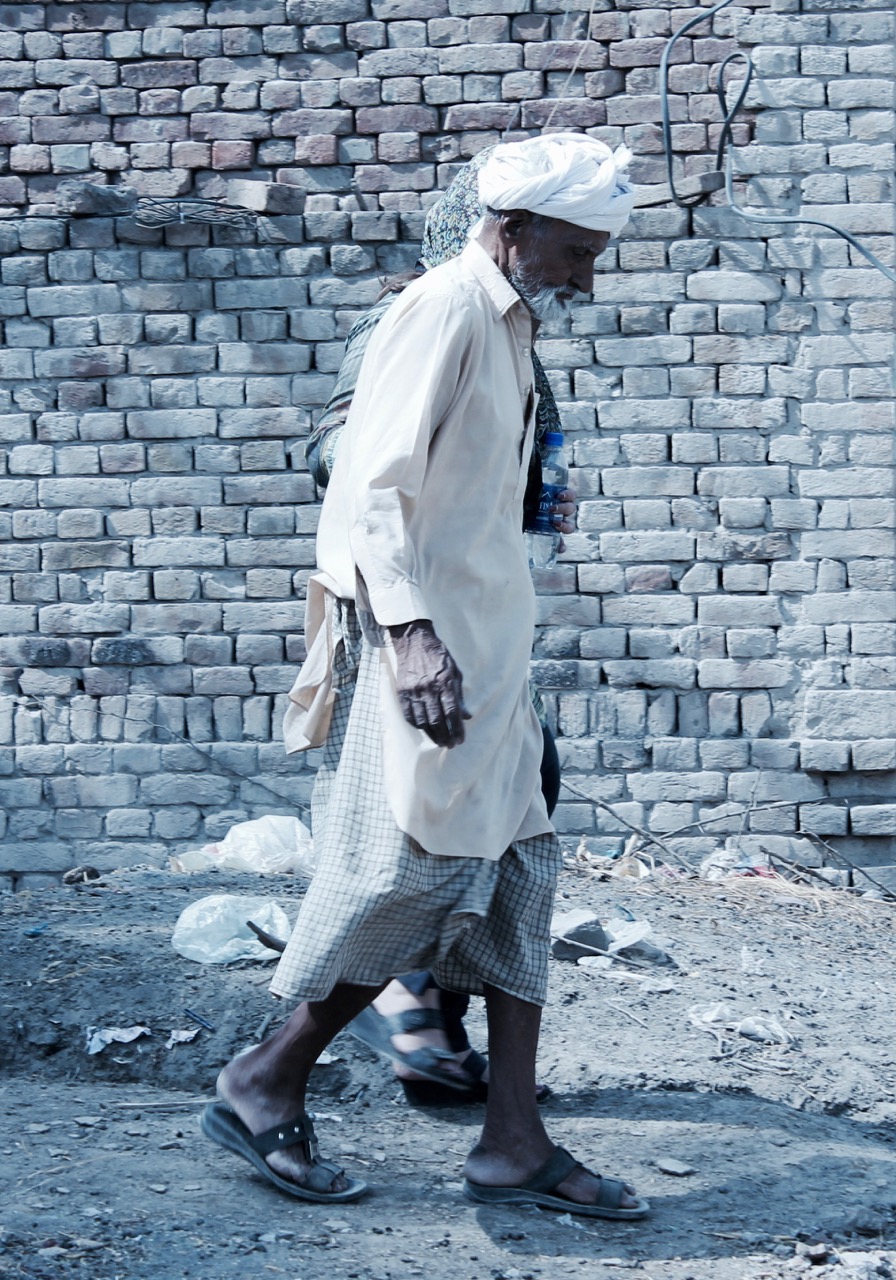
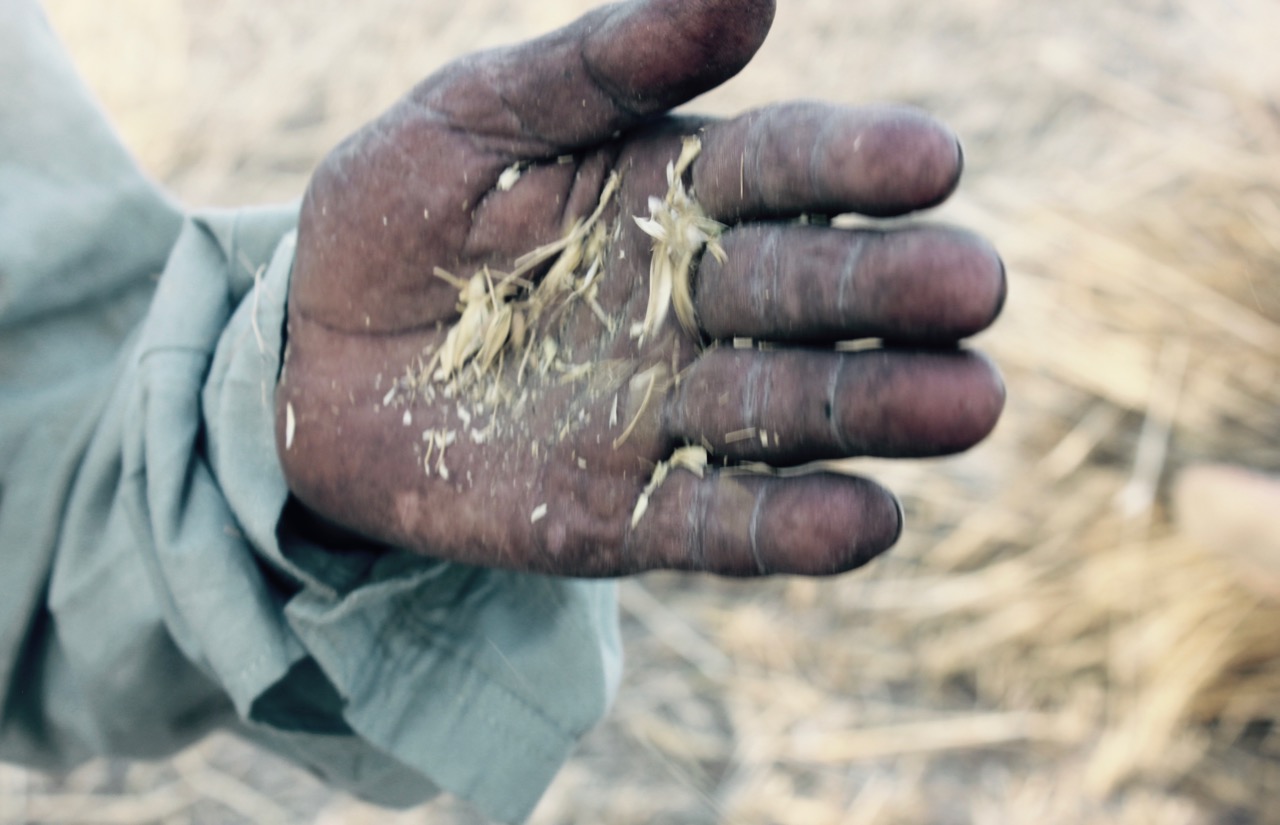
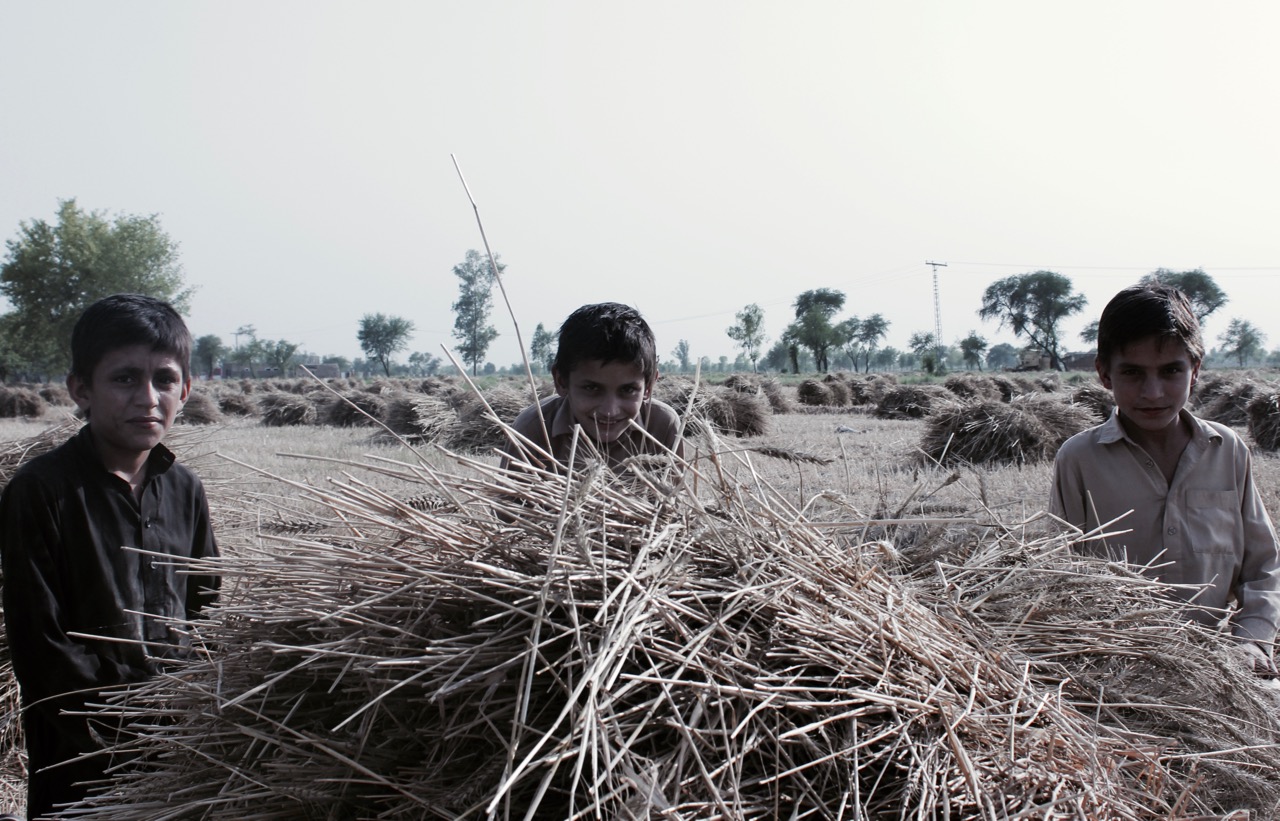
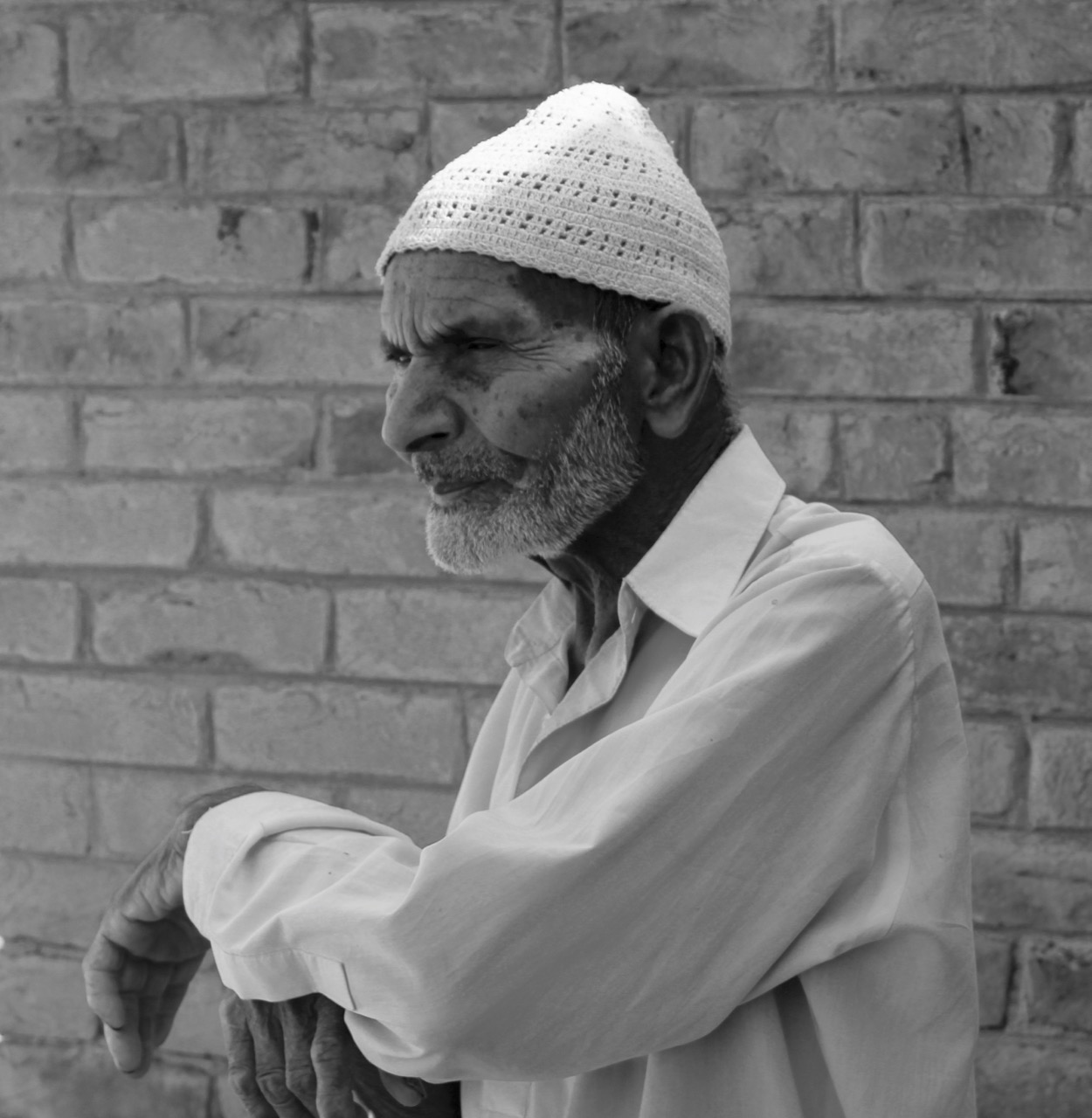
Kisaan Di Kahaani







A Little Cloud by Ruby Archer
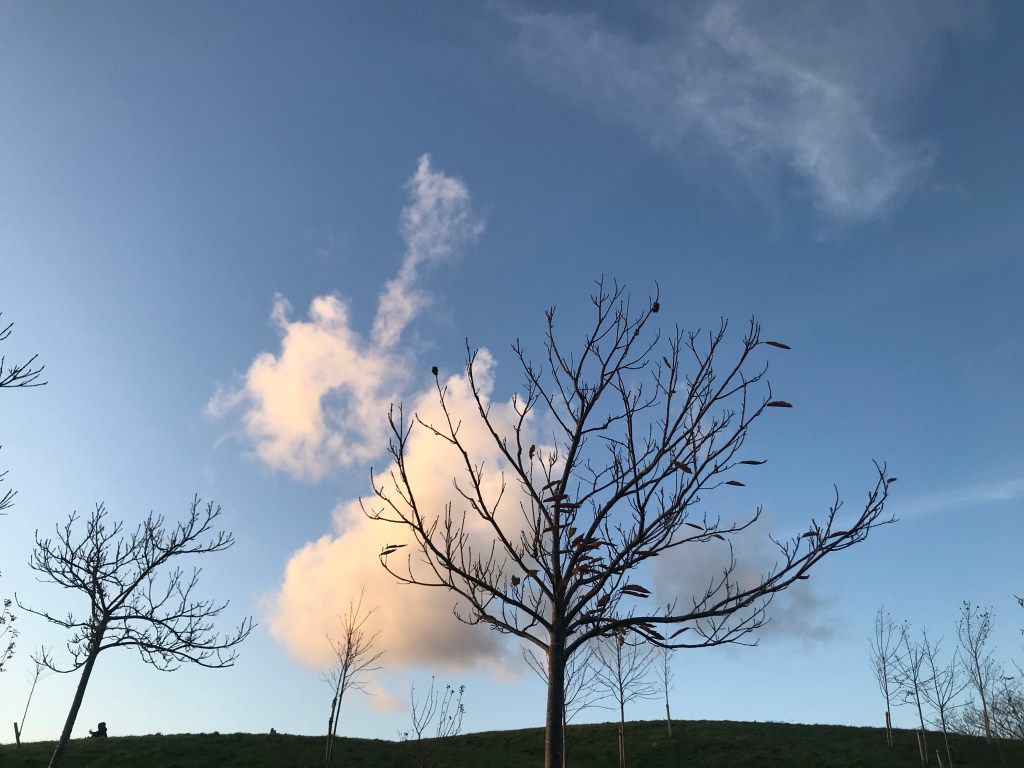
A little cloud stood lonely
Amid the evening sky;
Doubting and fearful waiting there,—
No other cloudlet nigh.

Poor faint and weakling timid lamb
Far wandered from the fold,
The shepherd never missed at all,—
Forgotten in the cold.

My cloudlet wavered on the blue,
The heaven-meadow scanned
For hope of any cloudy friend
With misty, beckoning hand;

A moment longer waited,
Abandoned by the day;
Then, like a little spirit cloud,
He faded quite away.

M.A. Jinnah: official biography as scholarly history?

Hector Bolitho’s Jinnah: Creator of Pakistan is how it ended, in 1954; below is how it started, in 1951-2:
Hotel Metropole (Karachi), 4 February 1952, Bolitho to S.M. Ikram (Ministry of Information & Broadcasting, Government of Pakistan)
‘I have just returned from a conversation with Miss Jinnah [who had ‘issued a statement that she neither knew about, nor had anything to do with, Bolitho’s assignment’] and I feel that time has come for us to review the circumstances in which I have attempted to write the official biography of Quaid-i-Azam.
I have now been in Pakistan for almost one month [government had to issue a press note explaining the decision to engage ‘a foreigner’, in response to ‘a section of Pakistan Press’ raising a controversy], and I feel that, in the present circumstances, it would be dishonest and impossible for me to write a biography that would be worthy of the subject or acceptable to any reputable firm of publishers.

Since I have been engaged on my task, which began on October 22nd [the cabinet of Liaquat Ali Khan had approved minister I.H. Qureshi’s proposal to commission Bolitho on June 20, 1951], I have been refused all help from those officials who knew Quaid-i-Azam personally. K.H. Khurshid, his secretary, now in London, has expressed his regrets that he will not help. M.H. Saiyid, sent to me by you, has also refused to co-operate.
[Khurshid would later publish his Memories of Jinnah (1990, 2001). Saiyid would also publish A Political Study of Jinnah (1953, 1962), titled The Sound of Fury (1981)]
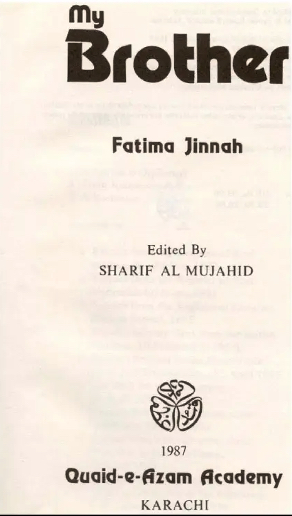
Mazhar Ahmad, A.D.C. to the Quaid, whom you promised as my helper, has not been made available. Prof. Mahmud Brelvi [?], appointed to help me, has not appeared for six days. Although he has been scrupulous in his courtesy, your office has ignored my situation, and has offered no explanation of Prof. Brelvi’s withdrawal. Nor has anyone been deputed to take his place. Nor, in this past month, have I been given even one of the promised documents relating to the Quaid. Nor has Miss Jinnah been approached by the Government. I have taken legal advice, and I find that Miss Jinnah owns the copyright of all her brother’s documents. She has stated to me that these are being used for the biography on which she is now engaged [Ghazanfar Ali Khan (then Pakistan’s Ambassador in Iran) had given a statement ‘welcoming Miss Jinnah’s decision’, adding that ‘she “should have been the first person to be consulted by the Government”’. I.H. Qureshi had been ‘seeking the assistance of his colleagues acquainted with Miss Jinnah to approach her, but these efforts failed’. Her book My Brother (1955) came out in 1987.]
As an indication of the frustration and discouragement I have endured from your department, I would draw your attention to my letter of January 19th. There I mentioned the Aga Khan’s offer to help me. His collaboration would be almost as valuable as that of Miss Jinnah. Sixteen days have passed since I wrote this, without the courtesy of a reply from you.
All this suggests that the Government is apparently unable, or unwilling, to abide by our contract. I consider that I have been deceived in this matter of documents, and the promised help of “members of the family” of the Quaid. I am wondering, therefore, if it would not be best for us to terminate our contract, under terms which I shall made as reasonable as possible. I propose:
- That the sum of [2000] guineas – the remainder of my fee – be immediately paid into the office of my solicitors in London (Messrs Shirley Woolmer & Co.) with instructions to them to hold the money until the contract between us is formally cancelled.
- That, as compensation for the loss of income from the sales of the English-language book rights in England, America, and the Sub-continent, I be compensated to the extent of [5000] guineas.
- According to my contract, I am entitled to hotel accommodation for myself and [researcher] Captain Peel for [4] months. As my house in London is let, I shall require hotel accommodation for myself, and I shall have to compensate Captain Peel, until June 2nd. I therefore propose that the Pakistan Government pay me the sum of GBP 80 per week (based on last week’s bill) from the date of my leaving Pakistan until the period of [4] months is up.
- All sum to be free from any deductions of income tax or other dues, and paid in full in London.
- That 1st-class sea passage, to be approved by me, for myself and Captain Peel, be provided, as soon as possible, to England.
I am anxious to conclude this matter as soon as possible, because it is desirable for both of us that the story should not become distorted in the world press. I have already been approached to make a statement to a New York newspaper, and to an Indian newspaper.
I have no wish to see the Government embarrassed, and I am sure that we could come to an arrangement. I ask only for speed. Although our agreement was made in London, and, therefore, any legal action would no doubt have to be taken there, I trust that we can close the matter amicably, thus avoiding publicity unpalatable.
[The agreement text spoke of ‘not less than 90, 000 words’ biography for ‘the fee’ of 1000 GBP ‘on the signing of this contract’, 1000 GBP ‘on delivery of the finished manuscript to the publisher’ and, 1000 GBP ‘on publication in England or America (whichever first) + 1st class return sea passages, rail fares, travelling facilities and hotel accommodation for a period of 4 months, a liaison officer and all ‘reasonable assistance and facilities for the purpose of obtaining information, examining documents and interviewing government officials and members of the family’]
A disgruntled Bolitho, before writing the above letter, gave an interview to the Sind Observer, without warning to the government, published on 29 January 1952, in which he ‘hinted at the possibility of his giving up the assignment and seeking compensation because he had put all his work aside to fulfil this request which came first from Liaquat Ali Khan’.
Source: File No. 3 (6) – PMS/52 (Government of Pakistan, Prime Minister’s Secretariat)

What happened in-between, recalled In Quest of Jinnah: Diary, Notes and Correspondence of Hector Bolitho, edited by Sharif al Mujahid, 2007.
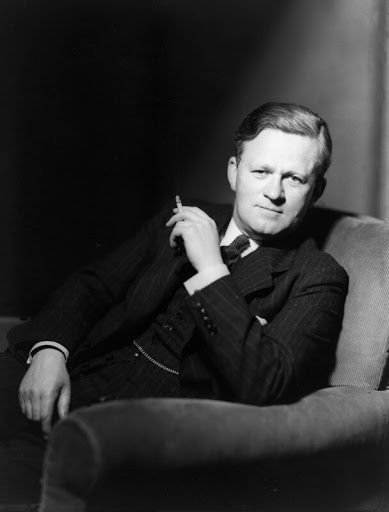
Hector Bolitho of New Zealand (1897-1974); author of 59 (!) books & biographer of George VI, Victoria & Albert and Edward VIII). Further Bio details.
Mottled Dawn – Subh-e Azadi
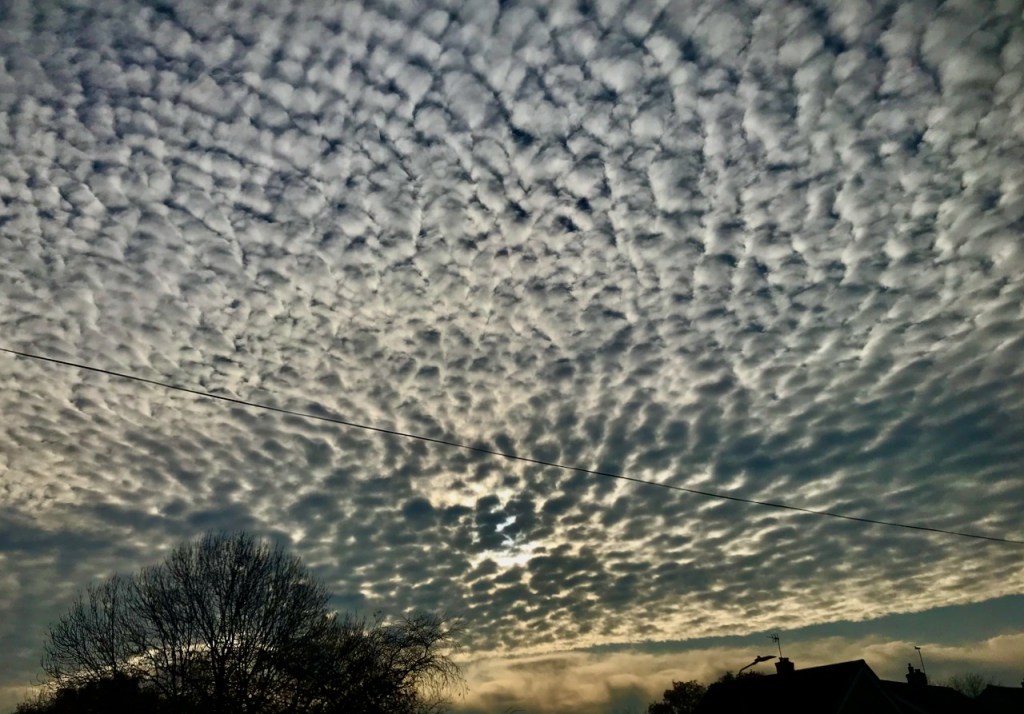
This post is inspired by the sky outside, which immediately reminded me of Manto’s Mottled Dawn. Saadat Hasan Manto, born in Samrala, Ludhiana, is considered one of the most iconic Urdu writers of the twentieth century. He lived in Bombay until 1948 and worked as a successful screenplay writer for the film industry, but even he finally relented and left India for Pakistan. Khalid Hasan writes, “Manto left Bombay, a city that he loved and a city that he yearned for until his dying day, soon after Partition. He felt deeply disturbed by the intolerance and distrust that he found sprouting like poison weed everywhere, even in the world of cinema. He could not accept the fact that suddenly some people saw him not as Saadat Hasan but as a Muslim.” Mottled Dawn: Fifty Sketches and Stories of Partition (Intro. Daniyal Mueenuddin and trans. Khalid Hasan, Penguin Modern classics), brings together stories of dark humour and horror, powerfully capturing the tragedy of Partition. The book begins with the opening lines of Faiz Ahmed Faiz’s Subh-e Azadi – Mottled Dawn.
Below is the full poem by Faiz, courtesy of Penguin.
Subh‐e Azadi
Yeh daagh daagh ujaalaa, yeh shab gazidaa seher
Woh intezaar tha jiska, yeh woh seher to nahin
Yeh woh seher to nahin, jis ki aarzoo lekar
Chale the yaar ki mil jaayegi kahin na kahin
Falak ke dasht mein taaron ki aakhri manzil
Kahin to hogaa shab-e-sust mauj ka saahil
Kahin to jaa ke rukegaa safinaa-e-gham-e-dil

Jawaan lahu ki pur-asraar shahraahon se
Chale jo yaar to daaman pe kitne haath pade
Dayaar-e-husn ki besabr kwaabgaahon se
Pukaarti rahi baahein, badan bulaate rahe
Bahut aziz thi lekin rukh-e-seher ki lagan
Bahut qareen tha haseenaa-e-noor ka daaman
Subuk subuk thi tamanna, dabi dabi thi thakan

Suna hai, ho bhi chukaa hai firaaq-e-zulmat-o-noor
Suna hai, ho bhi chukaa hai wisaal-e-manzil-o-gaam
Badal chukaa hai bahut ehl-e-dard ka dastoor
Nishaat-e-wasl halaal, o azaab-e-hijr haraam

Jigar ki aag, nazar ki umang, dil ki jalan
Kisi pe chaaraa-e-hijraan ka kuch asar hi nahin
Kahaan se aayi nigaar-e-sabaa, kidhar ko gayi
Abhi charaag-e-sar-e-raah ko kuch khabar hi nahin
Abhi garaani-e-shab mein kami nahin aayi
Najaat-e-deedaa-o-dil ki ghadi nahin aayi
Chale chalo ki woh manzil abhi nahin aayi
 —Faiz Ahmed Faiz

The Dawn of Freedom, August 1947
This light, smeared and spotted, this night‐bitten dawn
This isn’t surely the dawn we waited for so eagerly
This isn’t surely the dawn with whose desire cradled in our hearts

We had set out, friends all, hoping
We should somewhere find the final destination
Of the stars in the forests of heaven
The slow‐rolling night must have a shore somewhere
The boat of the afflicted heart’s grieving will drop anchor somewhere
When, from the mysterious paths of youth’s hot blood
The young fellows moved out
Numerous were the hands that rose to clutch
the hems of their garments,
Open arms called, bodies entreated
From the impatient bedchambers of beauty—

But the yearning for the dawn’s face was too dear
The hem of the radiant beauty’s garment was very close
The load of desire wasn’t too heavy
Exhaustion lay somewhere on the margin

It’s said the darkness has been cleft from light already
It’s said the journeying feet have found union
with the destination
The protocols of those who held the pain in their
hearts have changed now
Joy of union—yes; agony of separation—forbidden!

The burning of the liver, the eyes’ eagerness, the heart’s grief
Remain unaffected by this cure for disunion’s pain;
From where did the beloved, the morning breeze come?
Where did it go?

The street‐lamp at the edge of the road has no notion yet
The weight of the night hasn’t lifted yet
The moment for the emancipation of the eyes
and the heart hasn’t come yet
Let’s go on, we haven’t reached the destination yet
—Translated by Baran Farooqui
 BAGICHA