All posts by Pippa

1881: the first full census in British India

As we completed the Census 2021 in the UK today, it made me think back to the first Census that was undertaken in British India in 1881. Actually, the first full census was supposed to take place in 1861 but due to the rebellion of 1857-9 and “due to the sensitivity which the British had developed to what, at least in North India, might be constructed as undue interference in the life of the people, the census was postponed until 1871-2” (Cohn, 324). In 1987, Bernard Cohn was perhaps one of the first to put forward the argument that the colonial census played an important role in constructing identities, thinking about their own numerical strength and the possibilities that this presented in a competitive imperial state.

“The actual taking of the census was a two-step affair. Enumerators were appointed by circle supervisors, who were usually government officials. Supervisors were patwaris, zamindars, schoolteachers, or anyone who was literate. They were given a form with columns on which was to be entered information about every member of a household. The information to be collected was name, religion (e.g., Hindu, Muslim), sect, caste, subdivision of caste, sex, age, marital status, language, birthplace, means of subsistence, education, language in which literate, and infirmities. There was a one-month period before the actual date of the census in which the enumerator was to fill in the forms, and then on the day of the census he was to check the information with the head of the household. As an aid to achieving standardization in the recording of information on caste and subcaste, lists were prepared as early as the 1881 census which gave standard names with variations for the castes. The supervisors were supposed to instruct the enumerators in how to classify responses. The lists of castes were alphabetically arranged giving information on where they were to be found and containing very brief notes” (Cohn, 329).

Cohn notes that the most “complex” and problematic question for the census takers was on the issue of caste. He references the work of Srinivas and Ghurye who raised important questions about the relationship between the census and caste, putting forward the question, why did the British officials record the caste of individuals? Was it perhaps curiosity or part of a design by the British? That is, as some nationalist Indians believed, “to keep alive, if not to exacerbate, the numerous divisions already present in Indian society” (Cohn, 327). The second question is to what extent did the census effect people’s notion of who they were? There arguments and connection have subsequently been advanced by many others about the importance of the census in creating and essentialising identities at a time when communalism was taking root. This period of enormous socio-economic change, and politicisation of identities is further entrenched with the enumeration of people and which religion they belong to. Kenneth Jones, in his work on the socio-religious reform movements in British India, highlights that fact that

“Traditionally, Hinduism lacked a conversion ritual. After the introduction of a decennial census in 1871, religious leaders began to focus their attention on the issue of numerical strength. For Hindus the census reports pictured their community as one in decline, its numbers falling in proportion to those of other religions. Christian success in converting the lower and untouchable castes furthered Hindu fears and led the militant Aryas to develop their own ritual of conversion, shuddhi. Initially shuddhi was employed to purify and readmit Hindus who had converted to Islam or Christianity” (Jones, 100).

Indeed, Gopal Krishan, in his study on the demography of the Punjab, highlights that

“The most fascinating demographic feature of the colonial Punjab was the religious composition of its population. While it represented an evolution of a cultural diversity in history, it became a new and divisive force in polity over time. It was on the basis of religion that the British India was partitioned; and more pertinently the partition was specific to only two provinces, Punjab and Bengal. These two provinces were marked by not only a sensitive composition of the Muslims and non-Muslims (essentially Hindus and Sikhs in the case of Punjab) but also by regional segregation of the two religious’ groups, by and large. In Bengal, the Muslims were in overwhelming majority in the eastern segment and the non-Muslims in its western counterpart; in Punjab, the picture was in reverse, with the Muslims in a large majority in the western wing and the non-Muslims in the eastern” (Krishna, 83).

When it finally came to the Partition in 1947, Sir Cyril Radcliffe was using what are considered to be out-dated figures from the Census conducted during World War Two in 1941. However, the lines between two countries were drawn based on this information.

Bhagat Ram B. ‘Census enumeration, religious identity and communal polarization in India.’ Asian Ethnicity, 2013, 14:4, 434-448, DOI: 10.1080/14631369.2012.710079

Bhagat, Ram B. ‘Census and the Construction of Communalism in India.’ Economic and Political Weekly (2001): 4352-4356.

Bhagat, Ram B. ‘Caste Census: Looking Back, Looking Forward.’ Economic and Political Weekly 42, no. 21 (2007): 1902-905. Accessed March 21, 2021. http://www.jstor.org/stable/4419628.

Cohn, Bernard. ‘The Census, Social Structure and Objectification in South Asia’, in Sarkar, Sumit, and Tanika Sarkar. Caste in Modern India (Orient Blackswan, 2018).

Jones, Kenneth W. Socio-religious reform movements in British India. Vol. 1. Cambridge University Press, 1989.

Krishan, Gopal. ‘Demography of the Punjab (1849-1947).’ Journal of Punjab Studies, 11, no. 1 (2004): 77-89

Singh, Joginder. ‘The Sikhs in the British Census Reports, Punjab.’ Proceedings of the Indian History Congress 46 (1985): 502-06. Accessed March 21, 2021. http://www.jstor.org/stable/44141395.

Yengde, Suraj. ‘Adivasis are not Hindus. Lazy colonial census gave them the label.’ The Print, 9 March 2021.

The 1881 Census is digitized and available via: The Government of India or Digital South Asia Library.

The Incredible Story of Nek Chand Rock Gardens, India

This account has rekindled memories of visiting the Rock Gardens in Chandigarh. I have pre-digital age photographs and will share those on my blog but this is a wonderful piece on the unique history of Nek Chand.

The Nek Chand Rock Gardens had been on our radar for a long time before we finally made it there. Located in the city of Chandigarh, at the foot of …

The Incredible Story of Nek Chand Rock Gardens, India

Mujibur Rahman’s First Secret Meeting with an Indian Officer — Me

In January 1972, Sheikh Mujibur Rahman — released from prison in Pakistan — flew to independent Bangladesh from Rawalpindi (Pakistan) via London and …

Mujibur Rahman’s First Secret Meeting with an Indian Officer — Me

Looking for Kabir

Kabirdas was a 15th century Indian mystic poet and is revered as a saint by many, across regions, communities, castes, and, now, nations. A disciple of Ramananda (in Banaras), his writings fed the syncretic Bhakti movement, which in turn influenced the development of Nanak and his teachings, to the extent that Kabir’s immortal verses are included in Adi Granth. Kabir was critical of all organised, institutionalised, hierarchical faiths, and their rites and rituals, sanctioned by sanctimonious and exploitative clergy. For Kabir, the Truth was not in these trappings, nor in their egoistic traders.

chadariya jheeni re jhini (Kabir)

Read this wonderful explanation and translation: https://www.petervis.com/gallery/web/bollywood-translations/chadariya-jhini-re-jhini-english-translation.html

Kabir and The Kabir Panth by Rev. G.H. Westcott, Fellow of Allahabad University (Cawnpore, 1907) https://archive.org/details/KabirAndTheKabirPanth_466/mode/2up Page 1-5

It is generally allowed that of all the great Reformers, Kabir (1440-1518) and Tulsi Dass (1544-1624) have had the greatest influence for good among…Northern and Central India. Kabir has been described…as the Indian Luther (1483-1546)…

Among those who acknowledge their indebtedness to Kabir as a spiritual guide are Nanak Shah (1469-1538) of the Panjab, the founder of the Sikh community; Dadu of Ahmedabad (1544) founder of the Panth that bears his name, and Jag Jiwan Dass of Oudh (1760) the founder of the Sat Nami sect. Among religious teachers whose doctrine is said to be largely based upon the teaching of Kabir are Bribhan, founder of the Sadh community (1658), Baba Lal of Malwa and Shiva Narain of Ghazipur.

In modern days the number of those who have in one way or another come under the influence of Kabir is very great. In the Census Report of 1901, the number of Kabir Panthis alone is returned as 843,171 and the actual number is probably considerably larger, as in the United Provinces many Kabir Panthis seem to have been returned as Ramanandis and the figures for the Panjab are not included.

The hymns of Kabir are still sung by many a wandering minstrel, while his pithy sayings are frequently employed to win the attention of a dreamy audience or to clench a lengthy argument.

Unfortunately, the material for a life of Kabir is miserably scanty. It is admitted by all Kabir Panthis that Kabir was brought up as a child in the house of Niru, a weaver. In the Adi Granth occur these lines: By caste a weaver and patient of mind: utters Kabir with natural ease the excellences of Ram.

One Hundred Poems of Kabir, translated by Rabindranath Tagore, assisted by Evelyn Underhill (Macmillan, 1915) https://archive.org/details/OneHundredPoems/mode/2up?q=kaaba Page XV

It does not need much experience of ascetic literature to recognise that boldness and originality of this attitude in such a time and place. From the point of view of orthodox sanctity, whether Hindu or Mohammedan, Kabir was plainly a heretic; and his frank dislike of all institutional religion, all external observance – which was a thorough and as intense as that of the Quaker themselves – completed, as far as ecclesiastical opinion was concerned, his reputation as a dangerous man. The God whom he proclaimed was “neither in Kaaba nor in Kailash.”

 Mo ko kahan dhunro bande
 O servant, where dost thou see Me?
 Lo! I am beside thee
 I am neither in temple nor in mosque:
 I am neither in Kaaba nor in Kailash:
 Neither am I in rites and ceremonies, nor in Yooga and renunciation.
 If thou art a true seeker, thou shalt at once see Me: thou shalt meet Me in a moment of time.
 Kabir say, “O Sadhu! God is the breath of all breath.” 

 Santan jat na pucho nirguniyan
 It is needless to ask of a saint the caste to which he belongs;
 For the priest, the warrior, the tradesman, and all the thirty-six castes, alike are seeking for God.
 It is but folly to ask what the caste of a saint may be;
 The barber has sought God, the washerwoman, and the carpenter –
 Even Raidas was a seek after God.
 The Rishi Swapacha was a tanner by caste.
 Hindus and Moselms alike have achieved that End, where remains no mark of distinction.  

HAD ANHAD (Bounded Boundless): Journeys with Ram & Kabir (103 min, English Subtitles) A film by Shabnam Virmani – Kabir was a 15th century mystic poet of north India who defied the boundaries between Hindu and Muslim. He had a Muslim name and upbringing, but his poetry repeatedly invokes the widely revered Hindu name for God – Ram. Who is Kabir’s Ram? This film journeys through song and poem into the politics of religion, and finds myriad answers on both sides of the hostile border between India and Pakistan.

Further Reading see Purushottam Agrawal: Kashi ka Kabir and Akath Kahani Prem Ki: Kabir Ki Kavita Aur Unka Samay (An Ineffable Tale of Love: Kabir’s Poetry and his Times) (Rajkamal Prakshan, 2009).

Ghani Kashmiri (c. 1630 – c. 1669)

He is wise who in this season
Clings to the stove like a madman.
 
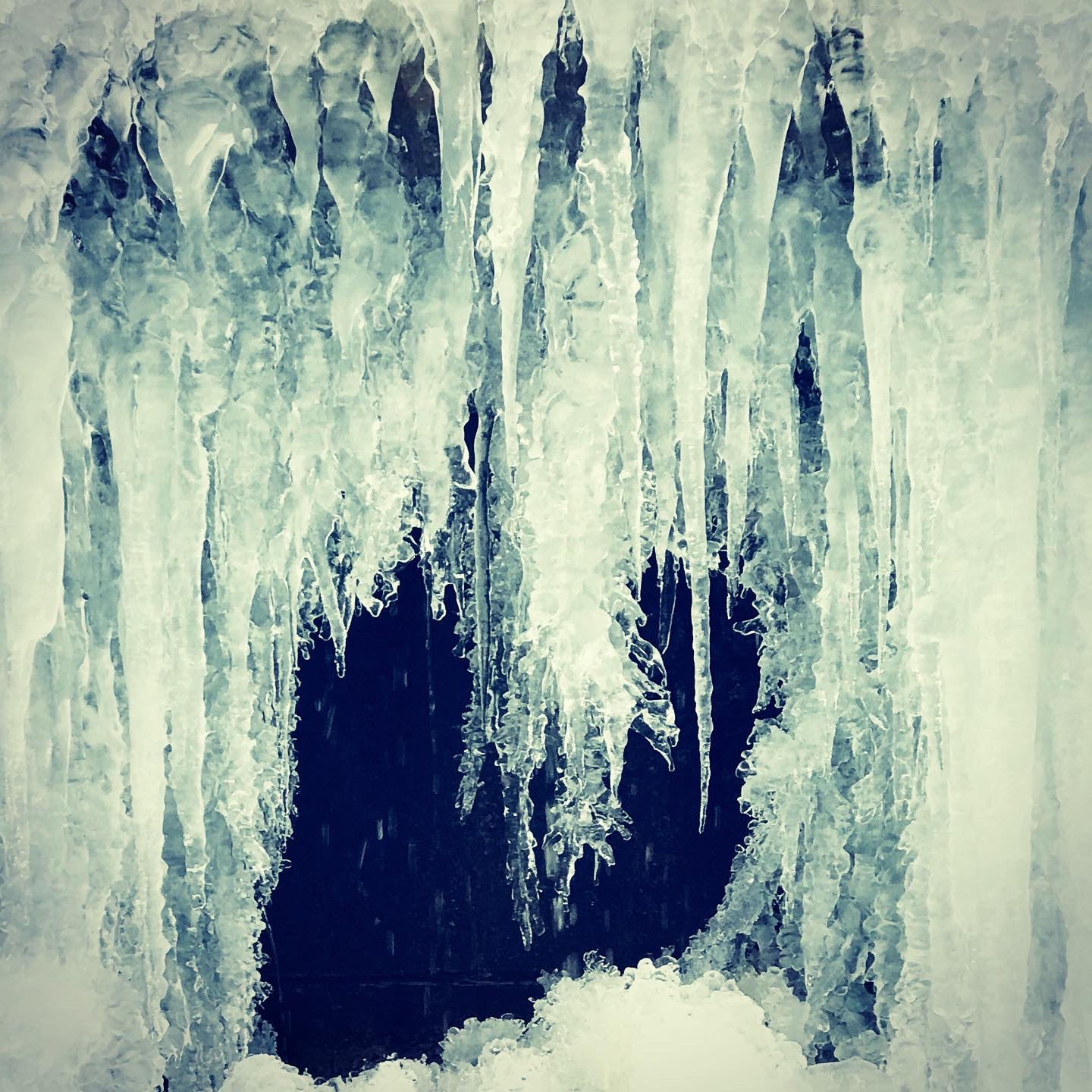
Narrating this, my tongue is coated with ice.
My breath, it seems, has frozen to make another tongue.
 
And when the chill turns chillier still
Like the ear, even the mouth turns still.
 
The tear which drops from the crying eye
Freezes like the wax dripping down the candle.
 
All this is known to the wise ant
Which entombs itself when alive.
 
This winter’s tale I can no longer narrate 
For the tongue is now an icicle in my mouth.

Read more about Gani Kashmiri (Mulla Muhammad Tahir Ghani), considered to be one of the greatest Persian writers from the Mughal period. Extract courtesy: Daak

Source: Tahir Ghani, The Captured Gazelle, Penguin

Trans: Mufti Mudassir Farooqi and Nusrat Bazaz

Revolution in their blood

Harinder Bindu and Sonia Mann have become prominent faces at the ongoing farmers’ movement. Both Bindu and Mann’s fathers were gunned down by Khalistanis during the militancy in Punjab, in the early 1990s. “What does this society think of women? This society’s Manusmriti, its religious institutions, and its other institutions, they think that ‘Women have no wisdom. They should be kept under our shoes,’” Bindu said. “But we say ‘No.’ Women are equal to men and they too have the right to struggle. For a life of equality, for a good life, they should fight.” “They [the government] are the ones operating like terrorists,” Mann said. “They are the ones shooting cold water [from water canons] at us and our elders, throwing tear gas at them, and hurting them [elders].” Shahid Tantray reports. Camera by CK Vijayakumar and Tantray. #FarmersProtest

Safed/White

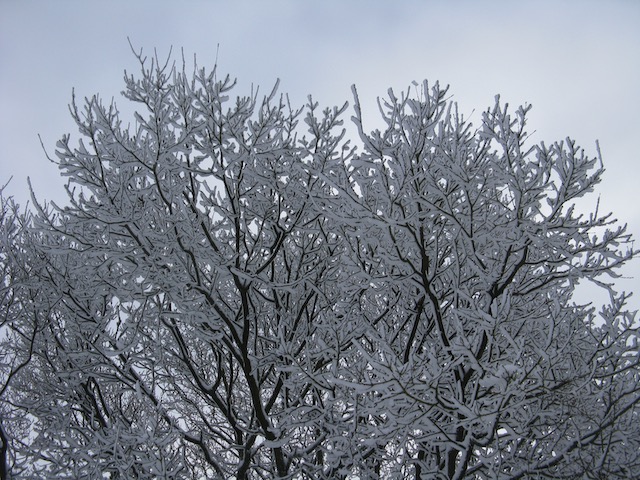
It is the first post of 2021 and I start with the colour white/safed. White is often associated with a sense of peace, purity, innocence, a new beginning, of wiping the slate clean, a blank canvas and opportunity for you to do/write your own acts/words. Some people find white serene, tranquil and pure, while others may feel it is stark and cold; lacking any “colour”. In the occident, the colour white is often associated with weddings, hospitals, and angels and is used to convey a sense of purity and cleanliness. On the other hand, in the orient, white is symbolically linked to a colour of mourning and sadness, but underlying this is also a sense of nothing and renewal.

Here I share the words of poet Benjamin Zephaniah and boxer Mohammad Ali on what happens when you invert black for white…

White Comedy by Benjamin Zephaniah
  
 I waz whitemailed
 By a white witch,
 Wid white magic
 An white lies,
 Branded by a white sheep
 I slaved as a whitesmith
 Near a white spot
 Where I suffered whitewater fever.
 Whitelisted as a whiteleg
 I waz in de white book
 As a master of white art,
 It waz like white death.
  
 People called me white jack
 Some hailed me as a white wog,
 So I joined de white watch
 Trained as a white guard
 Lived off the white economy.
 Caught and beaten by de whiteshirts
 I waz condemned to a white mass,
 Don't worry,
 I shall be writing to de Black House.
   

Under the frozen moon

The moon is a multipurpose muse, at once a symbol of ishq (love), taqwa (piety), tanhaai (loneliness), hairat (wonder), khushi (happiness) and arzoo (longing). In Urdu literature, the moon manifests in all forms: aadha chaand (half moon), poora chaand or chaundhavi ka chaand (full moon) and badli ka chaand (moon hidden in clouds). The moon has also been a symbol of the poet’s promise to the beloved, with “tumhare waste main chaand tod laaunga (I will pluck out the moon for you),” being a familiar refrain.

‘The many moods of the moon; Urdu poetry’s favourite muse’, by Nawaid Anjum, July 22, 2019, The Indian Express