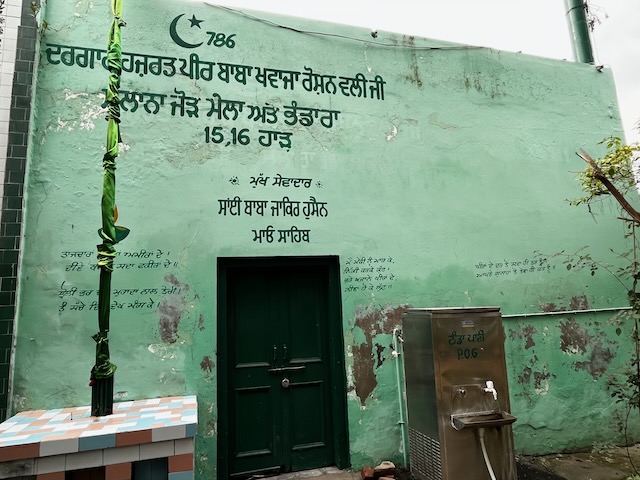
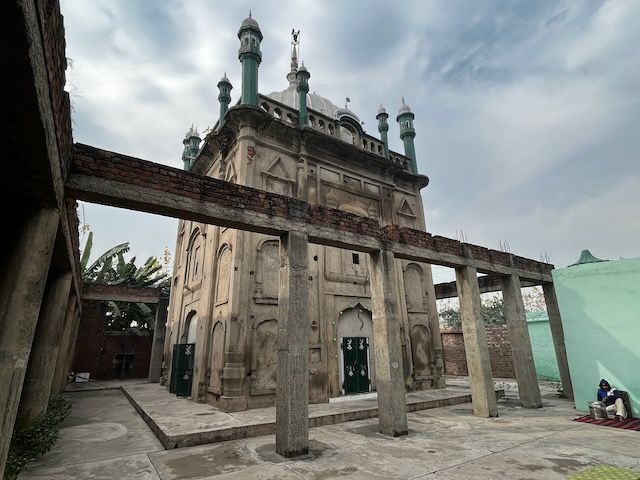

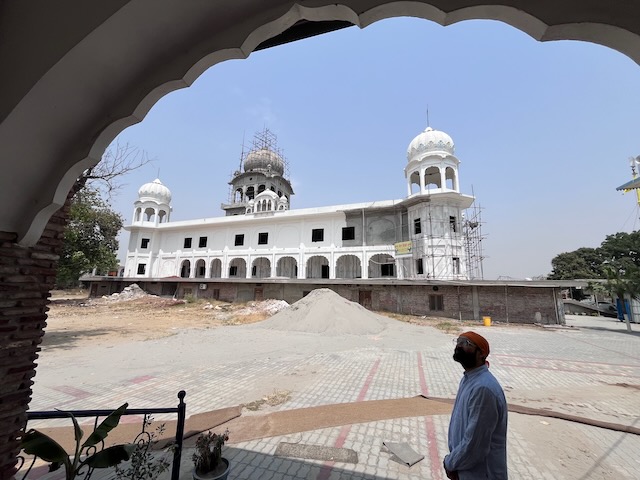
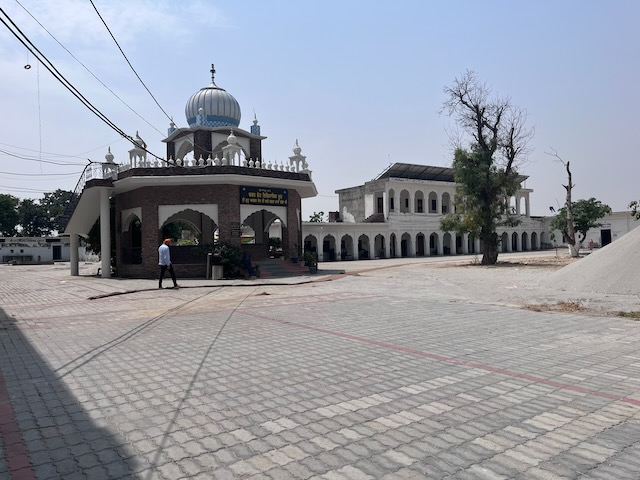
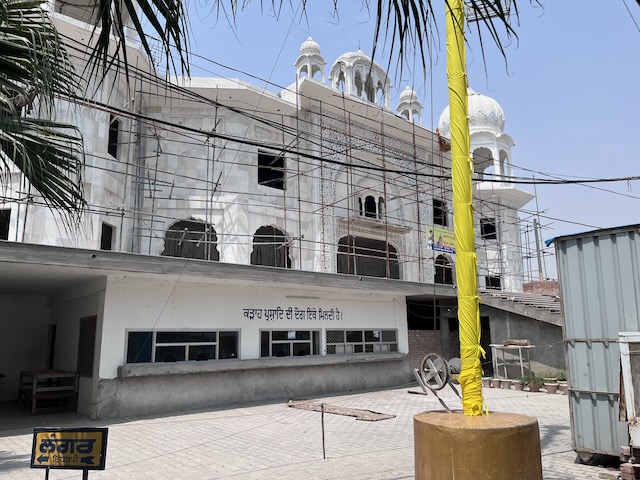
I recently visited Mau Sahib, my father’s ancestral village, located about 10 km from Phillaur in the Jalandhar district of Punjab. The village is home to a historic gurdwara associated with Guru Arjan Dev Ji, who was married to Mata Ganga there. Although we no longer have family residing in Mau Sahib, my sister and I continue to feel a deep spiritual connection to the place. It offers us a profound sense of warmth and belonging—a tether to our roots. Being older, my sister holds many more memories of life in Mau Sahib; by the time I was born, we had already moved to Ludhiana.
In recent years, the gurdwara has undergone extensive renovations after being taken over by the Shiromani Gurdwara Parbandhak Committee (SGPC), the central organisation established in 1920 to manage Sikh places of worship. For us, the gurdwara had always been a serene space—an anchor of peace and devotion, quietly resonating with those who visited and lived nearby. But with ongoing development, it has transformed into a large and imposing complex, drawing increasing public attention. This seems to reflect the growing trend of spiritual tourism, which, regardless of faith tradition, continues to expand.
Mau Sahib is also well known for its annual mela (fair) commemorating the marriage of Guru Arjan Dev Ji. Yet the mela carries a meaning that transcends the religious—imbued with secular and humanistic values, it is a story I was raised with and continue to cherish deeply.
The tale recounts that when Guru Arjan Dev Ji arrived in Mau Sahib to marry Mata Ganga, who was born there, a local leader opposed the union and imposed a condition that had to be met for the marriage to proceed. In fulfilling this demand, the Guru’s horse tragically died. As the newlywed couple prepared to depart, a local Muslim saint, Khwaja Roshan Wali, generously offered his own horse to Guru Arjan Dev Ji. Touched by this act of kindness, the Guru declared that anyone seeking blessings in Mau Sahib should first pay their respects at the dargah (shrine) of Khwaja Roshan Wali before visiting the gurdwara. To this day, the mela reflects this legacy: it begins at the dargah on the 15th and 16th in the month of Harh and continues at the gurdwara on the 21st, 22nd, and 23rd.
This tradition shaped my understanding of faith, coexistence, and the values of mutual respect. Growing up, it was always natural for us to visit both the shrine and the gurdwara when seeking blessings. However, I have noticed that in recent years, the narrative surrounding the shrine has become increasingly marginalised. At a time when populism and division are gaining ground, it is more important than ever to remember the spirit of those earlier times—when pluralism was not just accepted, but celebrated, and when communities of different faiths coexisted in mutual respect and harmony.


See and hear more about this in the following two short videos on the Gurdwara and the Shrine.

Discover more from BAGICHA
Subscribe to get the latest posts sent to your email.
 BAGICHA
Enjoyed this post as always, Pippa, but particularly the concluding sentiments. Thank you. Gerard
LikeLike
Thank you Gerard, I’m touched that you still read my blog😊
LikeLike