Tag Archives: UK

Padosi (1941) – Neighbour

Many times browsing through archives, especially the digital kind, leads you from one place to another. I was scanning the British Newspaper Archive for material related to the North-West Frontier of British India and ended up finding a small snippet in the Public Notices section of The Coventry Evening Telegraph on an Indian film, Padosi, hosted by the IWA at the Opera House in 1945.

The Coventry Evening Telegraph, Thursday, April 26, 1945

The Indian Workers Association (IWA) was founded in 1938 in Coventry to mobilise for Indian independence amongst the small working-class Indian community living in the UK. Many of its early members were from Sikh and Muslim Punjabi backgrounds. Some of these members were sympathetic to and inspired by the Ghadr Party (est. 1913 in California). The British government naturally kept an eye on their activities; not only for their nationalist motivations but also for their leftist leanings. The extract below is taken from a document on the IWA, dated 14 April 1942.

The Hindi (or Hindustani) Mazdur Sabha, now more usually referred to as the Indian Workers’ Association (or union), has come gradually into being as a result of war conditions. In the two years preceding the outbreak of war a number of disaffected Sikhs – some of them with Ghadr Party contacts – who had come to the United Kingdom to work as pedlars decided to start, if possible, an organisation of Indians which should give all possible aid to the movement for Indian independence. At first the only practical step towards carrying out this decision were the secret collections and remittances to India of sums of money for payment to the dependents of political prisoners. The fund in India which received these sums of money was created by the Ghadr Party in California and there can be little doubt that the Indians in the UK who were chiefly interested in these collections were actuated by motives and by a long-range policy which were identical with these of the Ghadr Party. Some of them were in receipt of the “Hindustan Ghadr” until the close watch of the postal censorship succeeded in imposing an effective check on the entry of the paper into the UK. From the very beginning Coventry was the headquarters of the movement, for it so happened that the Indians chiefly interested were pedlars who sold their goods in the Coventry area. (File no. L/PJ/12/645)

Read further about the IWA:

Gill, Talvinder. “The Indian Workers’ Association Coventry 1938–1990: Political and Social Action.” South Asian History and Culture 4, no. 4 (2013): 554-573. DOI: 10.1080/19472498.2013.824683

Virdee, Pippa. Coming to Coventry: Stories from the South Asian Pioneers. The Herbert, 2006.

Communities in Action: the Indian Workers’ Association – Our Migration Story

Indian Workers’ Association – Making Britain

The film listed in the Public Notices snippet is “Parosi” (sic). This was a social drama directed by V. Shantaram and was set in the back drop of Hindu-Muslim unity. The Indian national movement was remarkably communalised in its last years, leading to unprecedented violence accompanying the end of British India. In 1941, it was unclear when and how this end would come. Alongside this rising tide of deteriorating inter-communal relations, there were progressive voices in the diversifying public sphere, now including cinema. One of these was the film’s legendary director, Shantaram, who pointedly got a Muslim actor to play a Hindu character and vice versa, to promote harmony between the communities. It is the type of film I imagine the IWA would want to show, as the organisation wished to emphasise class unity over communal politics in the battle against colonialism.
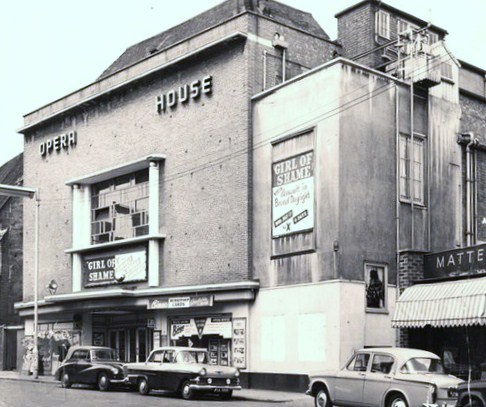
The Opera House, Hales Street, Coventry. Picture Source: http://cinematreasures.org/theaters/37902

The Opera House in Coventry was opened in 1889. During World War II, the building was damaged by bombing but it was quickly repaired and transformed into a cinema when it re-opened in 1941. The Opera House closed in 1961 and, while there were plans to restore it to a live theatre venue, this never happened.

Read more about the former cinemas in Coventry.

Across Three Continents with a Sewing Machine in Tow


© Pippa Virdee

A fragment of my personal history in celebration of International Women’s Day and in memory of my own mother, who played such an important part in shaping my ideas. Visit the Indian Memory Project to read the full piece which I wrote in 2013.

“The Magic Spell Of A Book”

This slideshow requires JavaScript.

Today is Mohandas Karamchand Gandhi’s (1869-1948) 150th birth anniversary. In his autobiography, “My Experiments With Truth“, published in the late-1920s, Gandhi devoted a section under the sub-title “The Magic Spell of a Book” to John Ruskin (1819-1900) and his book, “Unto this Last”, published in 1860.
Henry Polak, Gandhi’s friend, gave him the book to keep him company on a train journey in South Africa, in the early-1900s. To take the story forward in Gandhi’s words:
“The book was impossible to lay aside, once I had begun it. It gripped me. Johannesburg to Durban was a twenty-four hours’ journey. The train reached there in the evening. I could not get any sleep that night. I determined to change my life in accordance with the ideals of the book.
This was the first book of Ruskin I had ever read. During the days of my education I had read practically nothing outside text-books, and after I launched into active life I had very little time for reading. I cannot therefore claim much book knowledge. However, I believe I have not lost much because of this enforced restraint. On the contrary, the limited reading may be said to have enabled me thoroughly to digest what I did read. Of these books, the one that brought about an instantaneous and practical transformation in my life was Unto This Last. I translated it later into Gujarati, entitling it Sarvodaya (the welfare of all).
I believe that I discovered some of my deepest convictions reflected in this great book of Ruskin, and that is why it so captured me and made me transform my life. A poet is one who can call forth the good latent in the human breast. Poets do not influence all alike, for everyone is not evolved in an equal measure. The teachings of Unto This Last I understood to be:
1. That the good of the individual is contained in the good of all.2. That a lawyer’s work has the same value as the barber’s, inasmuch as all have the same right of earning their livelihood from their work.

3. That a life of labour, i.e., the life of the tiller of the soil and the handicraftsman, is the life worth living.

The first of these I knew. The second I had dimly realized. The third had never occurred to me. Unto This Last made it as clear as daylight for me that the second and the third were contained in the first. I arose with the dawn, ready to reduce these principles to practice.
Photos: John Ruskin lived the last decades and more of his life at Brantwood, Coniston (Lake District).

Mayo at Cockermouth

This slideshow requires JavaScript.

Richard Southwell Bourke (1822-72), 6th Earl of Mayo, 4th Viceroy of India (1869-72)

Born and educated in Dublin; MP (Conservative Party) for Kildare (1847-52), Coleraine (1852-57) and Cockermouth (1857-68); Chief Secretary for Ireland (1852, 1858, 1866); Assassinated in Andaman Islands by Sher Ali Afridi (1872); Memorial Statue in Cockermouth (1875)

Termed Disraeli’s Viceroy by George Pottinger (1990) and a ‘reckless partisan of Irish landlordism’ by Karl Marx in the New York Daily Tribune (1859) (https://www.irishtimes.com/opinion/letters/lord-mayo-in-a-pickle-1.3777905)

For biography:

Library Ireland: https://www.libraryireland.com/biography/RichardBourkeSouthwell.php

WW Hunter, The Earl of Mayo (Oxford, 1891)   https://www.gutenberg.org/files/35809/35809-h/35809-h.htm

On assassination:

Norman Freeman, “Death of a viceroy – An Irishman’s Diary on the assassination of Lord Mayo”, The Irish Times, 28 Jan 2019.  https://www.irishtimes.com/opinion/death-of-a-viceroy-an-irishman-s-diary-on-the-assassination-of-lord-mayo-1.3773683

Clare Anderson, “The murder of Mayo: why Britain kept quiet about a Viceroy’s assassination” 7 Sep 2011. https://www2.le.ac.uk/news/blog/2011-archive/september/the-murder-of-mayo-why-britain-kept-quiet-about-a-viceroys-assassination

With wider political-cultural context:

Julia Stephens, ‘The Phantom Wahhabi: Liberalism and the Muslim fanatic in mid-Victorian India’, Modern Asian Studies 47: 1 (2013) 22-52

Of legacy:

Mayo College Ajmer (India) (1875): https://mayocollege.com/

Mayo School of Industrial Art Lahore (Pakistan) (1875): http://lahore.city-history.com/places/mayo-school-of-industrial-art-later-national-colle/

It was of course his legacy that is most associated with the city of Lahore, where the Mayo School of Industrial Art was set up in 1875, following his assassination in 1872. The Mayo School later became the National Collage of Arts (NCA) in 1958 and this still remains the premier institution for the Arts in Pakistan.

Lockwood Kipling was appointed the first Principal of Mayo School, alongside his other role of Curator of the Lahore Museum, which was the Ajaib Ghar in Rudyard Kipling’s Kim.

The Chattri

This slideshow requires JavaScript.

Tucked away in the secluded hills of the South Downs, East Sussex, is a lesser known history of the Indian soldiers who fought for the British Empire during World War One. More than 1.5 million Indian soldiers fought for the Allied powers during the four years of the Great War. Among these, over 130,000 served in France. Their major military contribution on the Western Front took place in the very first year of the War. At the end of 1915, a majority of these infantry brigades were withdrawn and sent to the Middle East [https://www.bl.uk/reshelp/findhelpsubject/history/history/asiansinbritain/indiansoldiersinworldwars/indiansoldiers.html]. Approximately 4,500 Indian soldiers served on the Western Front in the first 4-5 months of the War and, in December 1914, hundreds of Indian causalities from there were bought to Brighton to be treated. The Royal Pavilion, Corn Exchange and the Dome therein were all converted into military hospitals and provided over 700 beds. The workhouse on Elm Grove was renamed the Kitchener Hospital (named after the former Commander-in-Chief of the British Indian Army) and also took in patients. Subsequently, by 1916, almost 12,000 Indian soldiers were to be treated in Brighton with 4,306 placed in the famed Pavilion (http://www.eastsussexww1.org.uk/indian-soldiers-east-sussex/). The uniquely recognisable Royal Pavilion in Brighton has since, therefore, become associated with the recovery of the Indian soldiers. Interestingly, King George V had thought that this would be an apt location for the Indian soldiers to be treated and convalesce, given that the Royal Pavilion was built/inspired by the Indo-Saracenic style of architecture. The injured soldiers included a mixture of Muslims, Hindus and Sikhs and great care was taken to respect their religious customs, regional diversity and dietary requirements. Many of the soldiers prior to their admission to hospital would never have been to the UK. And, when 53 Hindu and Sikh soldiers among them died, they were cremated on the South Downs, with their ashes scattered in the nearby English Channel. The first of these cremations took place in December 1914, the last coming a year later. Their similarly ill-fated 19 Muslim counterparts were buried in a purpose built burial ground near the Shahjahan Mosque in Woking. Built in 1889, this mosque is the oldest of its kind in north-west Europe.

However, at times the patients at the Royal Pavilion were also kept purposefully apart from the inhabitants around them. Barbed wire was place around the perimeter of the Pavilion in order to keep the patients in and the residents of Brighton out. Military authorities were particularly concerned about the possibility of the female inhabitants of Brighton contracting a bout of ‘Khaki Fever’ [http://www.eastsussexww1.org.uk/indian-soldiers-east-sussex/]. According to Angela Woollacott, in late 1914 there was an epidemic of ‘Khaki Fever’ across Britain as young women were seemingly so attracted to the men in military uniform that they started to behave immodestly and perhaps even somewhat dangerously! [https://www.jstor.org/stable/260893?seq=1#page_scan_tab_contents]

It was in August 1915 that the idea of a memorial for the dead soldiers was proposed. Sir John Otter, who had been a lieutenant in Indian Medical Service, the then-Mayor of Brighton, proposed this idea to the India Office. Supportive of this idea, the India Office agreed to share the cost of building and erecting the memorial with Brighton Corporation. Construction on the memorial started in August 1920, with a young Indian architect E. C. Henriques being responsible for designing The Chattri (The Umbrella). The memorial was finally unveiled on 1 February 1921 by Edward, Prince of Wales. Unfortunately, it gradually fell into disrepair in the inter-war period and was restored only after the Second World War. The War Office had agreed to pay for the repairs to restore The Chattri and then, from 1951, the Royal British Legion contributed to its upkeep. Since 2000, a Sikh teacher, Davinder Dhillon, has been working hard to host an annual commemoration event, in June.  

The Chattri bears the following inscription in Hindi and English: “To the memory of all the Indian soldiers who gave their lives for their King-Emperor in the Great War, this monument, erected on the site of the funeral pyre where the Hindus and Sikhs who died in hospital at Brighton, passed through the fire, is in grateful admiration and brotherly affection dedicated”.

Breakdown of Deaths of Indians in Brighton Hospitals

Kitchener Hospital

36 deaths: 25 Hindus/Sikhs cremated at Patcham, 11 Mohammedans buried at Woking.

Royal Pavilion

18 deaths: 10 cremated at Patcham, eight buried at Woking.

York Place Hospital

20 deaths: 18 cremated at Patcham, two buried at Woking.

Total cremated on the Downs at Patcham: 53

Total buried at Woking: 21

Total deaths: 74

Source: http://www.chattri.org/indepthHistory/ih5.aspx

Further reading

Ashley, Susan LT. “Acts of heritage, acts of value: memorialising at the Chattri Indian Memorial, UK.” International Journal of Heritage Studies 22, no. 7 (2016): 554-567.

Das, Santanu. “Writing Empire, Fighting War: India, Great Britain and the First World War.” In India in Britain, pp. 28-45. Palgrave Macmillan, London, 2013.

Hyson, Samuel, and Alan Lester. “‘British India on trial’: Brighton Military Hospitals and the politics of empire in World War I.” Journal of Historical Geography 38, no. 1 (2012): 18-34.

Omissi, David, ed. Indian voices of the Great War: soldiers’ letters, 1914–18. Springer, 2016.

Woollacott, Angela. “‘Khaki Fever’ and Its Control: Gender, Class, Age and Sexual Morality on the British Homefront in the First World War.” Journal of Contemporary History 29, no. 2 (1994): 325-347.


The Chattri Memorial Group: http://www.chattri.org/about.aspx

How Brighton Pavilion became a temporary hospital for Indian soldiers in WW1 by Hardeep Singh:

https://www.telegraph.co.uk/history/world-war-one/11026562/How-Brighton-Pavilion-became-a-temporary-hospital-for-Indian-soldiers-in-WW1.html

India’s contribution to the First World War [IOR: L/MIL/17/5/2383]

Report on the Kitchener Indian Hospital, Brighton, 1916 [IOR: L/MIL/17/5/2016]

Visit The Chattri: https://www.brighton-hove.gov.uk/content/leisure-and-libraries/parks-and-green-spaces/chattri-memorial

Indian Soldiers in East Sussex: http://www.eastsussexww1.org.uk/indian-soldiers-east-sussex/

Why the Indian soldiers of WW1 were forgotten: https://www.bbc.co.uk/news/magazine-33317368

Living in Coventry: from Thatcher to May

Screen Shot 2017-12-11 at 15.18.21This week Coventry successfully won the bid to be the city of culture in 2021. Subsequently, there have been numerous articles about Coventry in the media, reflecting both the history and lived experiences of the city. The response has also been mixed in the sense that some people have continued to dwell on the lack of culture and “beauty” in the city, and in part this is true. The more optimistic see this as an opportunity to revive the glorious past with renewed energy.

As I reflect on the city’s bid to become the city of culture, I remember an oral history project, which I did in 2005-6, Coming to Coventry. It was funded by the HLF and supported by The Herbert and documented the migration of South Asians to Coventry from the 1940-60s. We collected over fifty oral accounts of people, who migrated here and, through these testimonies and the beautiful pictures that people shared with us, we documented their journeys to Coventry in search of a better life. Many of the early migrants had intended to go back home but gradually, some of them made Coventry their home. They contributed to the growth and development of the city in the heyday of the post-war years. The 1970s were, of course, to bring about change and the consequent downturn was not kind to Coventry.
The time through the duration of the project gave me an insight into the city, which I did not fully comprehend before. It made me reflect on my own experiences of migrating to it. Coventry is a city that I came to, not out of choice but as a child accompanying my mother. At the time, I had no preconceptions of the city and my response was only that of a child, who could not quite understand the upheaval of migration and dislocation to a “foreign” land. It could have been anywhere and I suspect the response would have been the same. Nonetheless, Coventry became my home while growing up in 1980s Britain: a challenge in itself. In the backdrop were Thatcher’s Britain, the Falkland’s war, the vibrant music of the 80s, racism and the declining car industry in Coventry. Gradually the former car plants gave way for housing and retail parks. The city changed and adapted, as did I. But the years of the Thatcher administration left its mark on me, especially when I was beginning to see and understand the society around me, even though the Prime Minister would have us believe that there was no such thing as society. Studying politics, sociology and art seemed to me a perfect combination in response to the excesses of Thatcherism.
The pursuit of knowledge led me to University and I had two choices, University of Warwick or the newly created Coventry University. Despite having a place at the former, due to personal circumstances, I chose the latter. I had felt out of place at a visit to the former and besides, something caught my eye on the courses offered at Coventry University, namely, the opportunity to study the history of India and Pakistan – from where I and my parents originally came from. As that has become my life’s calling, I have stayed in Coventry, despite subsequent other opportunities. There is something quite strong and resilient in the city, which has kept me here, in my adopted home of over three decades. It is, as many have pointed out not the most attractive city and lacks many amenities, yet, there is a subaltern robustness and romance to Coventry. The city, for all its drawbacks, is standing, attempting to reinvent and reimagine itself. For me, it provides my base, which is provincial, on-the-margins and of the under-dog; these feed the spirit and space to keep hoping and doing.