Today’s daily prompt on WordPress was “What makes you feel nostalgic?” I of course immediately started thinking and letting my mind wonder into the past. The past that is often nostalgic and romantic; it is after all the 31 December! Immediately one memory came back like a flash.
I recall the numerous times that I went to visit Pran Nevile at his home in Gurgaon, where we would have meet, chat, drink and eat. And almost always there would be music playing in the background, the kind of music that transports you to a bygone era, along with the conversation. These “Carefree Days” are no more, but those precious memories remain.
Beyond the nostalgia I remember I wrote a tribute for Pran, which was supposed to have been published but I suspect it never was. I most likely didn’t follow up because of work distractions. Upon a keyword search (thank goodness for that!) I found the tribute on my laptop straightaway. I sat there with the melodic voice of Begum Akhtar in the background and re-read the piece, feeling sad but happy to have met someone like Pran at the beginning of my own journey. It makes a fitting post for today’s prompt, as I will always associate Pran with the nostalgia of a pre-partitioned Punjab that is no more.
Pran Nevile (1922-2018): A Tribute
I first met Pran Nevile in 2001, when I embarked on a new journey in my life of pursuing a PhD. He was recommended to me by my supervisor, Prof. Ian Talbot. We met, like on many subsequent occasions, at his favourite place in New Delhi, the India International Centre (IIC). I was beginning my research into the impact Partition had on Punjab, exploring this through first-hand accounts of people, who were forced to abandon their homes and leave during that tumultuous and violent time. Pran was born in Lahore in 1922 and thus could recollect stories from the colonial period thereby contextualising this impact on Punjab following Partition. At the time I didn’t know much about Pran, beyond that he had written a book on Lahore and that he had a previous career in the Indian Foreign Service. In many ways, I was an outsider to both the intellectual Delhi circle and academia, more generally. We sat in the café at the IIC and had tea, while chatting about an array of subjects. Almost straightaway we bonded as he radiated with an old-school genteel charm that belongs to a by-gone era; certainly not of the India and Pakistan today. He paid me a wonderful/witty compliment, by saying that when I speak in Punjabi, I sound like a Punjaban and when I speak in English, I am a mem. He would repeat this on numerous occasions. This was the beginning a friendship, which endured until he passed away on 11 October 2018. He was my connection to the pre-partitioned Punjab, and I was his connection to Lahore, exchanging notes and comparing the-then and now.
Growing up in Lahore
Pran’s family lived in Nisbet Road in the walled city of Lahore, where his father had migrated to in the early 1910s from their ancestral village of Vairowal, in neighbouring Amritsar district. Following his education at the DAV School, he was successful in getting a scholarship and got admission to the prestigious Government College Lahore, from where he graduated in 1943 in MA Economics. He recollects many of his early memories of growing up in Lahore in his autobiography, Carefree Days (2016), recounting the days of “pastimes, fairs and festivals”, which would keep them amused all year round. His favourite pastime though was kite flying, as he writes: “I cannot recall anything more thrilling than kite flying in my boyhood” (pp. 10-11). Pran, like many others, lamented the later ban on kite flying in Lahore, which has seen the demise of the popular Basant festival.
Writing Lahore: A Sentimental Journey (1992), a book that instantly resonated with many Lahoris, enabled Pran to visit the city of his childhood. He was one of the lucky ones because he was able to visit Lahore with ease, a romance that he rekindled with this tribute to the city of his birth. He often recited, Jine Lahore nahin Vekhya oh Jamya hi Nahin (One who has not seen Lahore is as good as not having been born at all) (p. 193). Like many other people who left their ancestral homes (thinking they would be back), he had a photographic imprint of the city in his mind, remembering every nook and cranny of the congested Androon Shehr. Professor Tahir Kamran organised a two-day conference at GC University on ‘Punjab and the Raj’ in 2006 and Pran was invited to speak at this conference. I distinctly remember a moment from then, when another friend from Lahore, Bilal Ahmed was driving the car, and Pran was seated in the front and me in the back. We were in the walled city, trying to locate a venue and unsure about the exact location. Immediately, Pran started to navigate and provide directions. He said he can never forget the streets of his Lahore, despite all the changes since his he was a student in the city. It was a heart-warming and amusing moment we never forgot.
Never-ending Retirement
Pran graduated during the political and international upheaval of World War Two. His desire was topursue a PhD at the London School of Economics, but the uncertainty of that period prompted him to take up an opportunity at the Bureau of Public Information in 1944 as an assistant journalist. After a series of different posts, he was selected for the Indian Foreign Service Board in 1955 as second secretary (commercial) (Carefree Days, p. 46). He joined the Ministry of External Affairs as an attaché in March 1959 and subsequently was posted in Warsaw (1962), Belgrade (1966) and Moscow (1969). By 1974, he was back at the Ministry of Commerce as deputy secretary (East Europe). After that came the opportunity to go to Chicago in 1977, which he recalls ended his “eventful official link with the socialist world of East Europe” (p. 148). During this period, he also had a short stint in Geneva which allowed him to develop his links with the UNDP, which ultimately paved the way for a second career. Soon after in May 1979, he took premature retirement, leaving after 35 years of professional life. He was now the programme coordinator for the UNCTAD, based in Geneva and this allowed him to rekindle his relationship with East Europe until 1985, when he returned back to India. One of the highlights of this stint surely was when he took on the role of a priest and performed the marriage rites for one of his friends in Geneva; a story he often shared with relish.
For a conventional diplomat, Pran was more austere and radical in his personal life. As he recalls in his autobiography, he developed an “abhorrence for this ostentatious tamasha and meaningless jubilation” (p. 49) that surrounded elaborate engagements and wedding ceremonies. In this endeavour, he developed a friendship with Savitri (daughter of an uncle who was married to Pran’s father’s first cousin!), often acting as her mentor and encouraging her towards the pursuit of knowledge and education. He first noticed her in July 1941, as a young man discovering his own self, and by January 1947, they had eloped and had a civil ceremony in Delhi. Early reservations against this marriage were put aside by their families, and he remained with Savitri until she died in 2013. A spark in him went after that.
The Last Calling
After his retirement from work, he decided to embark on yet another career, but this time, it started as an unplanned script. It was in 1987, when he first started making frequent trips to the IIC, spending his days in the library and often using this as office space for his writing. Initially, he only ventured towards his expertise area and wrote on economic matters, but it was not long before his real passion emerged and he turned his gaze towards other subjects, which included his hometown Lahore, nautch girls, dance and music. Feedback from these early forays in small articles gave him confidence to continue with this newfound passion; although one of his earliest writings dates back to 1949, when he wrote ‘Problem of the Mother-in-Law’ which was published in Caravan magazine. His first full-length literary work was inevitably on Lahore, as he recalls: “My desire was to take the reader on a pilgrimage to my Lahore of a bygone era of peace and plenty” (p. 171). The idea for the book was actually conceived way back in 1963 in Hotel Astoria, Geneva. On his seventieth birthday he received the advance copy from the publisher of his first book, Lahore: A Sentimental Journey.
This journey led him to write prolifically on the era of the British Raj. Being a product of that era, he imbued the character of the Brown Sahib and carved out a niche for himself, focusing on the social and cultural history of the British Raj. His fascination for visual and performing arts led him to unearth a vivid and richer history, which he energised many around him with. During the last few years of his life, he reserved his love for K.L. Saigal, the “immortal singer and superstar” (p. 189). My own recollections of Pran were always of visiting him in Gurgaon, chatting at length while nibbling on namkeens, and with the nostalgia of 1940s and 1950s music playing in the background. Those days are no more nor are those, which is his own words read:
“I belong to the vanishing generation of pre-partition days who were forced to leave their homeland but carried ‘Lahore’ in their hearts like the memory of a first love. Overpowered by nostalgia, we still recall the days when Lahore had attained the reputation of being the ‘Paris of the East’ where people of different communities live in harmony in the sunshine of their common heritage, historic bonds and flamboyant Punjabi culture.” (Carefree Days, p. 194).
It was the winter solstice recently, the shortest day of the year. I find these short winter days difficult, with tiredness and an inability to function beyond sunset. To escape the grey, dull, and wet winters that dominates England now, like many others there, I too like to escape to more sunny pastures.
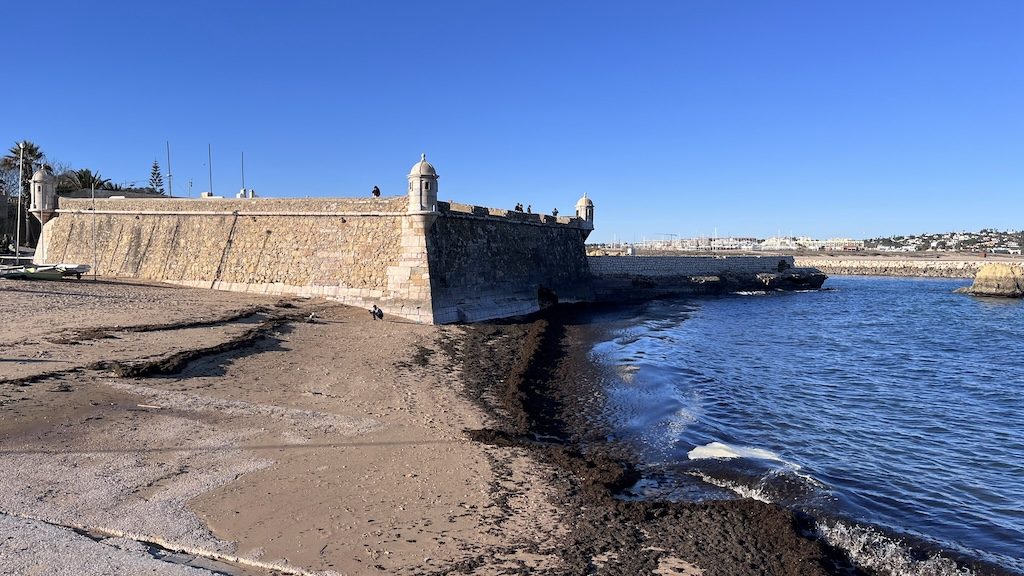
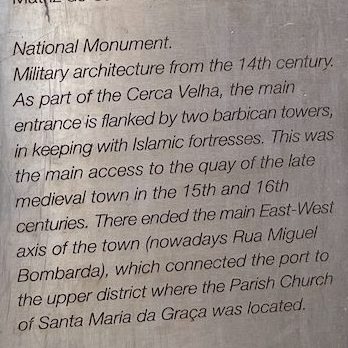
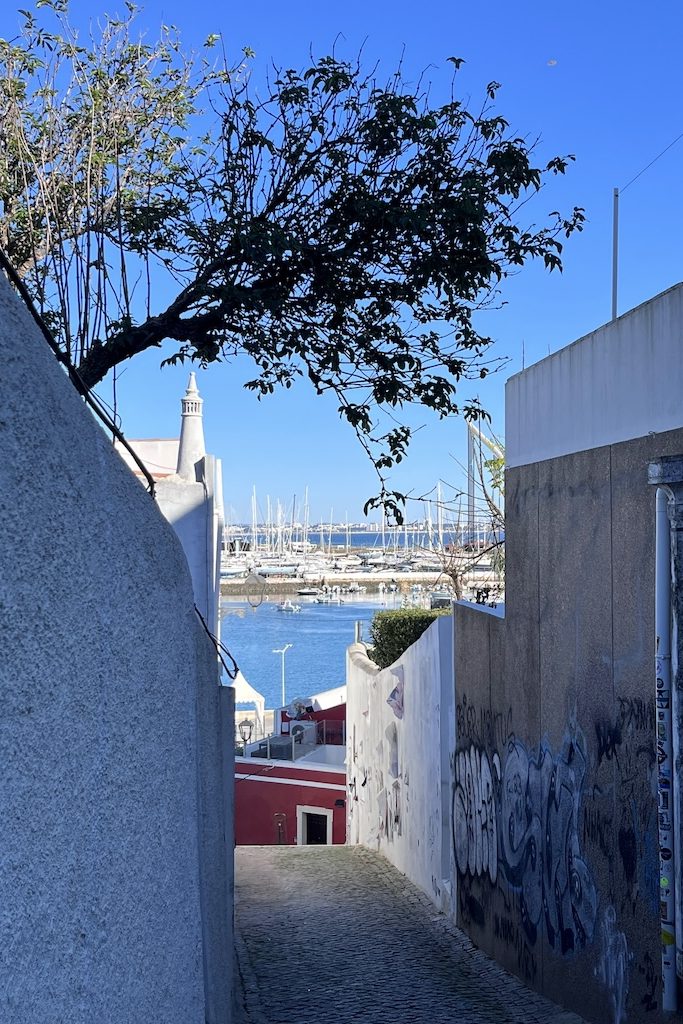
Between 1576 and 1755, Lagos served as the capital of the Algarve region, a time when it stood as a bustling Portuguese city. Unfortunately, the devastating earthquake of 1755, followed by a tsunami, brought widespread destruction, reshaping the city’s character. Today, only fragments of the 16th c. walls and structures remain, such as the Governor’s Castle (Castelo dos Governadores), offering a glimpse into its illustrious past. Much of the Lagos we see today, with its charming streets and architecture, dates from the 17th c. and later, reflecting its rebirth after the calamity.
The Age of Discovery: Lagos’ Golden Era
D. Henrique looking towards the Atlantic (C) Pippa Virdee 2024
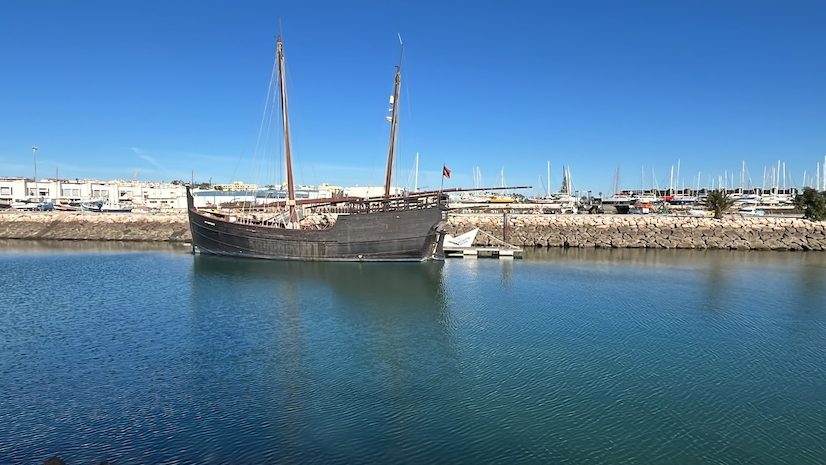
The history of Lagos is intertwined with one of Portugal’s most celebrated periods, the so-called “Age of Discovery”. During the 15th c., under the direction of Infante Henry the Navigator—the third son of King John I—Lagos became the hub of Portuguese exploration. From this strategic coastal city, expeditions were launched to Morocco and the western coast of Africa, setting the stage for a new era of global trade and navigation. The harbour bustled with activity, as shipbuilders crafted caravels—sleek, fast ships ideal for exploration—and sailors prepared to navigate uncharted waters.
Lagos and the European Slave Trade
While the Age of Discovery brought economic prosperity and technological advancements, it also marked a darker chapter in history. Lagos became a central hub for the European slave trade. In 1444, the first African slaves arrived in Lagos, sparking a grim trade that would expand throughout Europe and beyond. The Mercado de Escravos (Slave Market), now a museum, stands as a sobering reminder of this era, preserving the memory of those who suffered under the system of slavery. Beyond the slave trade, Lagos thrived as a centre for goods such as spices, textiles, and gold, turning it into a key player in Europe’s burgeoning global economy. The city’s rich maritime heritage is still celebrated today. Monuments, such as the striking statue of Infante Henry, honour Lagos’ historical significance, while museums delve into its role in the expansion of Portugal’s empire.
Vasco da Gama and the Portuguese Monopoly on the Indian Ocean
The voyages of Vasco da Gama marked a defining moment in global exploration and trade. His expeditions (1497–99, 1502–03, and 1524) were the first to successfully connect Europe with Asia via the Cape of Good Hope. This cemented Portugal’s dominance in maritime exploration and also laid the foundation for a century-long monopoly in the Indian Ocean.
In 1497, Vasco da Gama set sail from Lisbon with a fleet of four ships through the Atlantic Ocean to reach the Indian subcontinent in 1498. His arrival in Calicut (Kozhikode) marked the beginning of direct European trade with Asia, giving Portugal access to highly sought-after goods like spices, textiles, and precious stones. This sea route transformed global trade, while boosting Portugal’s economy and influence.
The success of Vasco da Gama’s voyages encouraged further Portuguese expansion into Asia, with trading posts and colonies established along the coasts of Africa, the Middle East, and India. By 1500, Portugal had become a maritime powerhouse, dominating European trade in the Indian Ocean and establishing itself as a global empire.
Réplica da Caravela Boa Esperanca (C) Pippa Virdee 2024
The Strategic Importance of Goa
While Portuguese explorers visited various parts of India, it was Goa that became the jewel in their colonial crown. Acquired in 1510 by Afonso de Albuquerque, Goa offered a strategically defensible location and excellent harbour facilities on both sides of the island. Its position on the west coast of India allowed the Portuguese to control maritime trade routes and establish a stronghold for further expansion into Asia. Goa quickly grew into a bustling hub of commerce, blending Portuguese and Indian cultures.
The Portuguese monopoly in the Indian Ocean lasted until the late-16th c., when other European powers like the Dutch and the English began challenging their dominance. However, the impact of Vasco da Gama’s voyages and the establishment of Portuguese colonies in Asia cannot be understated. These ventures not only reshaped global trade but also led to a lasting exchange of cultures, technologies, and ideas.
Afonso de Albuquerque’s Vision for Goa
When Afonso de Albuquerque captured Goa, he envisioned it not as a mere fortified trading station, but as a full-fledged colony and naval base. Unlike the temporary establishments the Portuguese had built along other Indian coastal cities, Goa was meant to be permanent. Albuquerque encouraged his men to integrate with the local population, fostering intermarriage with local women and encouraging settlement. This strategy was instrumental in creating a privileged Eurasian class, whose descendants formed the backbone of Goa’s colonial society.
Goa quickly grew into a flourishing hybrid settlement, a hub for trade, agriculture, and artisanship, with the influence of the Roman Catholic Church introducing a new dimension to the region. Old Goa, often called the “Rome of the East,” was adorned with magnificent churches, including the Basilica of Bom Jesus and Se Cathedral, reflecting the grandeur of Portuguese architecture.
The Decline of Portuguese Rule
By the mid-20th c., the Portuguese control over India was becoming increasingly untenable. While British rule ended in 1947 and French territories were gradually integrated into India by 1954, Portugal resisted relinquishing its hold. Tensions escalated as Indian nationalists campaigned for the incorporation of Goa and other territories. In 1961, the situation came to a head.
Dadra and Nagar Haveli had already been absorbed into India by August of that year, and on December 19, Indian forces launched “Operation Vijay,” a military invasion of Goa. The operation swiftly ended Portuguese rule, and Goa, along with Damão and Diu, was incorporated into the Republic of India. The fall of Goa marked the end of nearly 450 years of Portuguese presence in India.
Watch this video by BBC News India with accounts of those who fought for independence from Portugal.
A Lasting Legacy
Despite the end of colonial rule, Portugal’s influence remains deeply ingrained in Goan culture. Four and a half centuries of intermarriage, religious conversion, and linguistic exchange created a distinct identity. Catholicism continues to be a major religion in Goa, and the Konkani language still carries traces of Portuguese vocabulary. The architecture of Old Goa, with its grand churches and baroque facades, stands as a testament to this shared history.
The cultural legacy of Portuguese rule can also be seen in Goan cuisine, music, and festivals, which blend Indian and European traditions in a way that is uniquely Goan. From the spicy vindaloo curry to the lively strains of fado music, the echoes of Portugal are impossible to miss. Ironically both Lagos and Goa are today known more as tourist destinations with their bustling beaches and vibrant nightlife; their connected past remains in fragments, scattered and visible to those who seek.
To follow…Notes from Lagos (Portugal): from Punjab to Lagos (Part 2)
In the literal sense, jugni means female firefly, which is derived from jugnu, meaning firefly. Metaphorically though jugni means much more. Jugni has often been used by singers and writers to share stories, traveling through time and space, to address societal grievances, political messages. She is spiritual and revolutionary. She is able transcend time and transform herself in every generation. But where did she originate from? According to Aashish Kochhar one possibility is:
No…in 1908, when the British were celebrating the golden jubilee of the British Raj, Bishna and Manda, being illiterate couldn’t pronounce ‘Jubilee’, and called it ‘Jugni’ instead. Or so the story goes. That’s how ‘Jugni’ found its way into the world of Punjabi folk music.
The modern version of jugni though is associated with Alam Lohar, the Pakistani Punjabi singer. Born in 1928 in Gujrat to a family of Blacksmiths (Lohar), he started reciting/singing Sufiana Kalaam, a collection of Punjabi stories and poetry from a young age. His son Arif Lohar continued in his footsteps. Below are both versions of Jugni by Alam and Arif Lohar, both spiritual and popular, and both connecting with different generations.
“Ae way Allah waliyan di Jugni Ji

Ae way nabi pak di Jugni Ji

Ae way Maula Ali wali Jugni Ji

Ae way mere peer di Jugni Ji

Ae way saaray saba di Jugni Ji”

(Jugni is the spirit of God

Jugni is the spirit of the Holy Prophet

Jugni is the spirit of Ali and his followers

Jugni is the spirit of my saints

She is the spirit of all His words)
In 2004 the Indian Punjabi singer, Rabbi Shergil released began to blend the Punjabi folk tradition with acoustic rock, offering a new unique style.
In 2008, jugni was reinvented for Hindi film Oye Lucky Lucky Oye. This is one the first modern films to popularise/depict jugni. Others include: Tanu Weds Manu (2011), Saheb Biwi Aur Gangster (2011), Cocktail (2012), Saheb, Biwi Aur Gangster Returns (2013), Queen (2013), Kaatru Veliyidai, (2017).
In 2011 Jugni, a Pakistani Punjabi-language film, was released. The film revolves around the main character of Jugni, and brought folk singer Arif Lohar back on the silver screen after eleven years.
In 2013 the Nooran Sisters performed a powerful rendition at the Nakodar Mela. Sultana Nooran (b. 1992) and Jyoti Nooran (b. 1994) are from Jalandhar and born to family of Sufi musicians. They gained wider popularity through contributions to Bollywood music, craving out a niche space for their strong and distinct style.
One of the latest incarnations is by global Punjabi singer Dailjit Dosanjh featuring Tanzanian artist, Diamond Platnumz, who has a big following in East Africa. The 2022 collaboration is interesting and strategic given the South Asian connections with East Africa. The music/lyrics present a very seamless fusion of Punjabi and Swahili.
There are many other versions, and these are just some of the different incarnations of Jugni in Punjabi popular culture. Read further:
Hasnain Kazmi, Syed Shabihul. “Jugni, dhola and mahiya: Comparing three genres of punjabi folklore.” Pakistan Perspectives 25, no. 2 (2020).
AMIR, MARIA. “Chapter Twelve Generation Jugni: Mapping The Influence Of Folklore.” A Cartographic Journey of Race, Gender and Power: Global Identity 149 (2021).
Parmar, Prabhjot, and Amandeep Kaur. “2 Kisan Protests in Punjab 1907–2021.” Agrarian Reform and Farmer Resistance in Punjab: Mobilization and Resilience (2022).
I was preparing for a forthcoming History conference in Lyallpur when I started browsing and jumped from one rabbit hole to another. Sometimes research is like that, you need to explore and get lost in the lanes of history to find something. I did get the inspiration I wanted but I also ended up with more information than I needed. Amongst all of this is a list of some well-known people who were born in Ludhiana or Lyallpur. I was more interested in the direct links between these cities and the people that migrated between these two, as my I have a long-standing research and personal interest in both cities. However, those links were not always present, but it is still interesting to see the kind of people who emerged from these localities and migrated following the Partition.
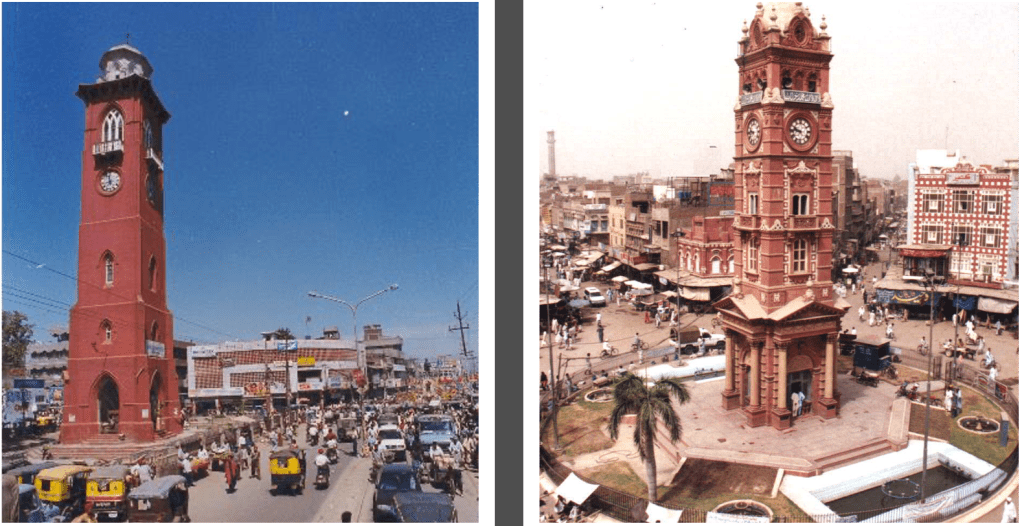
Ludhiana and Lyallpur were in fact only small towns before Partition, and interestingly both have iconic colonial clock towers in the town centre; both are important industrial textile hubs in the region; both had 62% ‘other’ populations prior to 1947 (according to the 1941 census, 62% Muslims lived in Ludhiana and 62% Sikhs/Hindus in Lyallpur); and finally, both function as important diasporic cities in contemporary Punjab(s).
Typically I tried to find women, but sadly the list of people is mostly male bar two! I hope to continue adding to the list as I find more people or please leave a comment if you know any other people with Ludhiana-Lyallpur links.
Note: the source for the information below is mainly through browsing and do not claim it as my own work. I have only selected a people I was interested in and that were born before 1947 and migrated following the Partition.
From Ludhiana…
Abu Anees Muhammad Barkat Ali Ludhianvi (1911 – 1997) was a Muslim Sufi who belonged to the Qadiri spiritual order. He was the founder of the non-political, non-profit, religious organisation, Dar-ul-Ehsan. Abu Anees’s followers spread all around the world and especially in Pakistan. He was born in Ludhiana where his father was a landlord.
Agha Ali Abbas Qizilbash also known as Agha Talish, (1923 –1998) was a Pakistani actor who made his debut in 1947 and was mostly known and recognized in Pakistan for playing character actor or villain roles. Talish was honoured by a Pride of Performance award, by the Government of Pakistan in 1989. Talish was born in Ludhiana, and his breakthrough film in Pakistan was film producer Saifuddin Saif’s Saat Lakh (1957) where his on-screen performance for this popular hit song was widely admired, Yaaro Mujhe Maaf Rakho Mein Nashe Mein Hoon.
Ajaz Anwar (1946-) is a Pakistani painter. He was a gold medalist at Punjab University, and he completed his M.A. in Fine Arts from Punjab University. Later, he went to teach at National College of Arts Lahore. His watercolour paintings show the grandeur of the old buildings and the cultural life in Lahore. Born in Ludhiana in 1946, his father was a cartoonist who apparently had stirred his passion from childhood and from whom he drew his inspiration.
Anwar Ali (1922-2004) was a Pakistani Editorial Newspaper Cartoonist in Pakistan Times based in Lahore. Anwar Ali was the creator of famous character Nanna, was the first newspaper cartoonist associated with The Pakistan Times. He was born in Ludhiana, where he spent his childhood. He did his BA from Government College Ludhiana.
Chaudhary Abdul Hayee Gujjar (1921 – 1980), popularly known by his pen name Sahir Ludhianvi, was an Indian poet who wrote primarily in Urdu in addition to Hindi. He is regarded as one of the greatest film lyricists and poets of twentieth century India. Sahir was born in Karimpura, Ludhiana to a Punjabi Muslim Gujjar family.
Habib-ur-Rehman Ludhianvi (1892 – 1956) was one of the founders of Majlis-e-Ahrar-e-Islam. He belonged to an Arain (tribe) and was a direct lineal descendant of Shah Abdul Qadir Ludhianvi, the freedom fighter against British Colonial rule during the Indian Rebellion of 1857. He chose to stay back in Ludhiana to continue representing the thousands of Muslims still remaining there after the partition in August 1947. The ancestral masjid in Field Ganj still exists today.
Hameed Akhtar (1923 – 2011), was a newspaper columnist, writer, journalist and the secretary-general of the Progressive Writers Association in Pakistan. He was also the father of TV actresses Saba Hameed, Huma Hameed and Lalarukh Hameed. He finished his basic education in Ludhiana and was a childhood friend of renowned poets Sahir Ludhianvi and Ibn-e-Insha
Munawar Sultana (1924- 1995) was born in Ludhiana and was a Pakistani radio and film singer. She is known for vocalizing first ever hit Lollywood songs like, “Mainu Rab Di Soun Tere Naal Piyar Ho Gya” (Film: Pheray 1949), “Wastae Rab Da Tu Jaanvi We Kabootra” (Film: Dulla Bhatti 1956),and “Ae Qaid-e-Azam, Tera Ehsan Hay, Ehsan” (Film: Bedari 1957).
Saadat Hasan Manto (1912 – 1955) was a Pakistani writer, playwright and author who was active in British India and later, after the 1947 partition of India, in Pakistan. Saadat Hassan Manto was born in Paproudi village of Samrala, in Ludhiana district to a Muslim family of barristers. Ethnically the family were Kashmiri.
From Lyallpur
Grahanandan Nandy Singh (1926 – 2014) was an Indian field hockey player who won two gold medals, at the 1948 and 1952 Summer Olympics. There is a documentary film on the team by Bani Singh titled, ‘Taangh/Longing’. Singh began playing hockey while studying at the Government College in Lahore, serving as captain of their hockey team in 1945 and 1946. After the Partition, he moved to Calcutta and played for Bengal when he was selected to the 1948 Indian Olympic team.
Harnam Singh Rawail (1921 – 2004), often credited as H. S. Rawail, was an Indian filmmaker. He debuted as a director with the 1940 Bollywood film Dorangia Daku and is best known for romantic films like Mere Mehboob (1963), Sunghursh (1968), MehboobKi Mehndi (1971) and Laila Majnu (1976). Rawail was born in Lyallpur and moved to Mumbai to become a filmmaker.
Inderjeet Singh (1926 –2023), also known as Imroz, was an Indian visual artist and poet. He was the partner of the poet, novelist, and writer Amrita Pritam, and they lived together until Amrita’s death in 2005. Inderjeet Singh was born in Chak number 36, Lyallpur.
Jagjit Singh Lyallpuri (1917 –2013) was an Indian politician. He was the oldest surviving member of the founding Central Committee of the Communist Party of India (Marxist). Prior to the Partition of India, Lyallpuri’s family owned roughly 150–180 acres in Lyallpur. The family moved to Ludhiana following the Partition.
Jaswant Rai Sharma (1928 –2017), popularly known by his pen name Naqsh Lyallpuri, was an Indian ghazal and Bollywood film lyricist. He is best known for the songs “Rasm-e-Ulfat Ko Nibhayen” (Dil Ki Rahen, 1973), “Ulfat Mein Zamaane Ki” (Call Girl, 1974), “Tumhe Ho Na Ho” (Gharonda, 1977), “Yeh Mulaqaat Ek Bahana Hai ” (Khandaan, 1979), “Pyar Ka Dard Hai” (Dard, 1981), and “Chitthiye Ni Dard Firaaq Vaaliye” (Henna, 1991). He was born in Lyallpur to a Punjabi Brahmin family, where his father was a mechanical engineer.
Lal Chand Yamla Jatt (1910 – 1991) was a noted Indian folk singer in the Punjabi-language. His trademark was his soft strumming of the tumbi and his turban tying style known traditionally as “Turla”. Many consider him to be the pinnacle of the Punjabi music and an artist who arguably laid the foundation of contemporary Punjabi music in India. He was born to Khera Ram and Harnam Kaur in Chak No. 384, Lyallpur. After partition, they relocated to the Jawahar Nagar, Ludhiana.
Prithviraj Kapoor (1906 –1972) was an Indian actor who is also considered to be one of the founding figures of Hindi cinema. He was associated with Indian People’s Theatre Association as one of its founding members and established the Prithvi Theatres in 1944 as a travelling theatre company based in Bombay. He was born in Samundri into a Punjabi Hindu Khatri family. His father, Dewan Basheshwarnath Kapoor, was a police officer in the Indian Imperial Police. His grandfather, Dewan Keshavmal Kapoor, and his great-grandfather, Dewan Murli Mal Kapoor, were Tehsildars in Samundri near Lyallpur.
Romesh Chandra (1919 – 2016) was a leader of the Communist Party of India (CPI). He took part in the Indian independence struggle as student leader of CPI after joining it in 1939. He held various posts within the party. He became president of the World Peace Council in 1977. He was born in Lyallpur and got his degree in Lahore and another one from Cambridge.
S.D. Narang (1918-1986) was born in Lyallpur. He was a director and producer, known for Dilli Ka Thug (1958), Anmol Moti (1969) and Shehnai (1964). He graduated in Biology from Government College, Lahore and did his MBBS from King Medical Collage, Lahore.
Sunder Singh Lyallpuri (1878 – 1969) was a leading Sikh member of the Indian independence movement, a general of the Akali Movement, an educationist, and journalist. Lyallpuri played a key role in the development of the Shiromani Akali Dal, and in the Gurdwara Reform Movement of the early 1920s and also founding member of Central Sikh League.
Teji Harivansh Rai Srivastava Bachchan (1914 – 2007) was an Indian social activist, the wife of Hindi poet Harivansh Rai Bachchan and mother of Bollywood actor Amitabh Bachchan. Teji was Born into a Punjabi Sikh Khatri family in Lyallpur.
During a recent trip to Doha, I found myself intrigued by the history of pearl diving. I must admit I knew little about this and it turned out to be one of the oldest professions in Qatar, dating back to around 4,600 BCE. Before the discovery of oil and gas, the inhabitants of the Gulf’s Arab coast relied on diving for natural pearls as their economic livelihood. Pearls from the Gulf were traded to India, Persia, and the Ottoman Empire. In the mid-19th century, the pearl industry rapidly expanded to meet the global demand as pearls became a precious and much sought-after luxury item.
It was typically the male member of the family who would go out during the pearling season, which was usually during the four summer months. The women stayed back, managing the household and all the associated work. The boats departed from ports like Manama, Doha, Dubai, and Abu Dhabi. Divers, sailors, and “pullers” (who brought divers up from the seabed) participated. Advances were often given to crews by boat captains (nakhudas), who financed the season. Pearl merchants (tawawish) paid nakhudas upon pearl delivery.
The work itself was perilous and dangerous; it was technical and incredibly hard work, where some of the divers never made it back home. The pearl divers endured many obstacles, from the burning sun to the treacherous waters. Many men would stay in one ship cramped together for months to sustain their families. During their dives, they would hold their breaths with the help of a nose peg for up to two minutes at a depth of up to 18 metres. This is no mean feat!
Interestingly the museums made some comparison of this work with the discovery of oil. Both relied heavily on labour who were separated from their families for long periods. It was hard and arduous, gruelling in the summer heat, but necessary to sustain livelihoods and family life in the desert where there few other alternatives. The beneficiaries typically were a handful of people, whether this was from the pearl industry or “black gold.” From the 1920s, with the discovery of oil, pearl diving itself began to decline and led many divers to leave the profession.
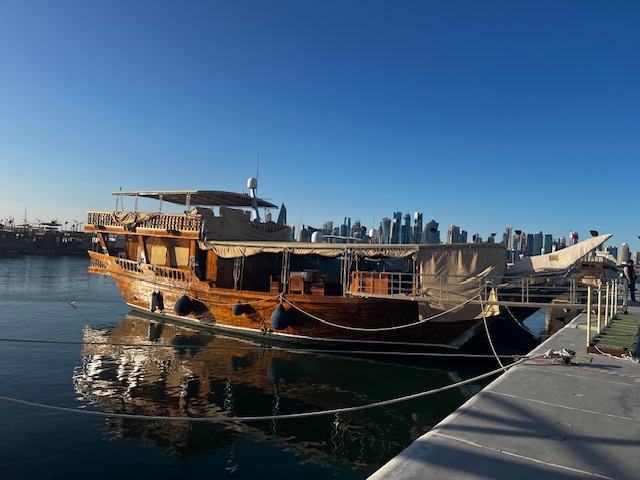
At the same time, countries such as Japan, began cultivating pearls, leading to a decline in the Arabian trade. These cultured pearls became more abundant and affordable than the Gulf-harvested pearls. The pearl fishing fleets shrank, and towns’ populations dwindled. But despite this, it remains an integral part of Qatar’s national heritage. If you ever visit Doha, you will you’ll find nods to Qatar’s pearl diving past throughout the capital city, including the dhow boats at the harbour, traditionally used for collecting pearls; the pearl sculpture at Corniche which is an open oyster shell statue with a pearl inside; or then the artificially built Pearl Island which exudes modernity, technological advancement, while paying homage to the past.
The preservation of this heritage can also be gleaned from the traditional pearl diving songs. The songs blend elements from Bedouin, East African, Persian and Indian styles, creating a rich and diverse musical heritage. They evoke the spirit of the sea, resilience, and the camaraderie of pearl divers. It is often through this orality that one can still get a sense and appreciate the past.
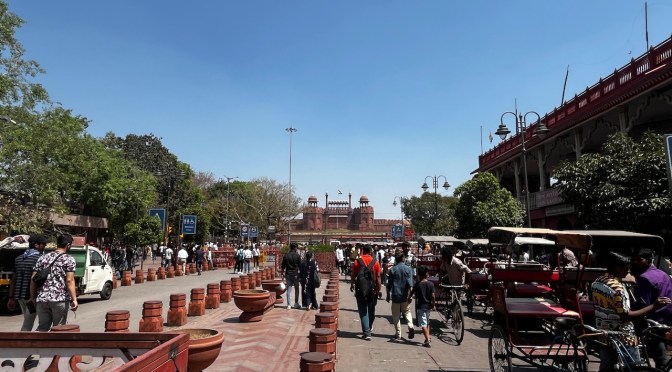
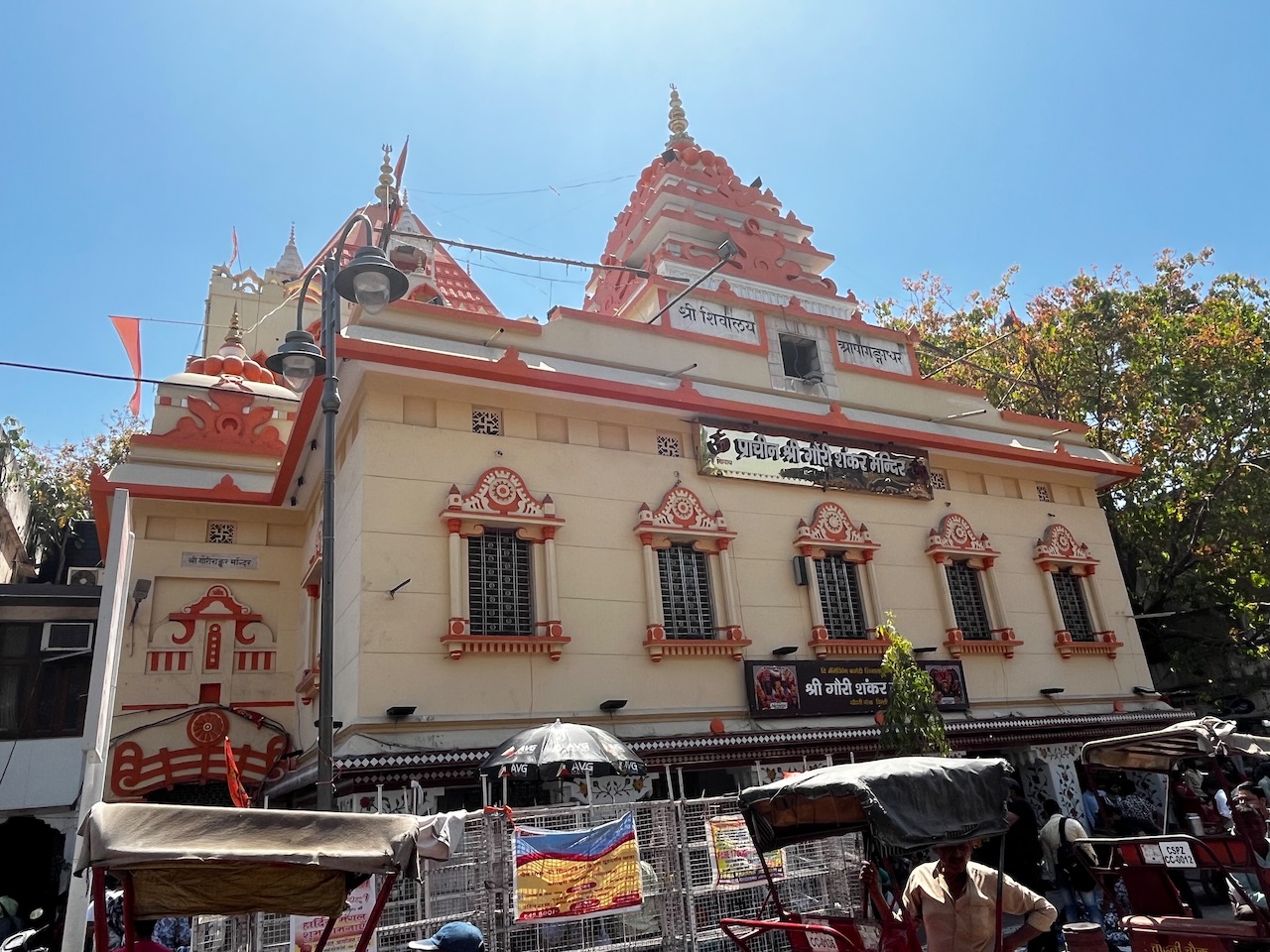
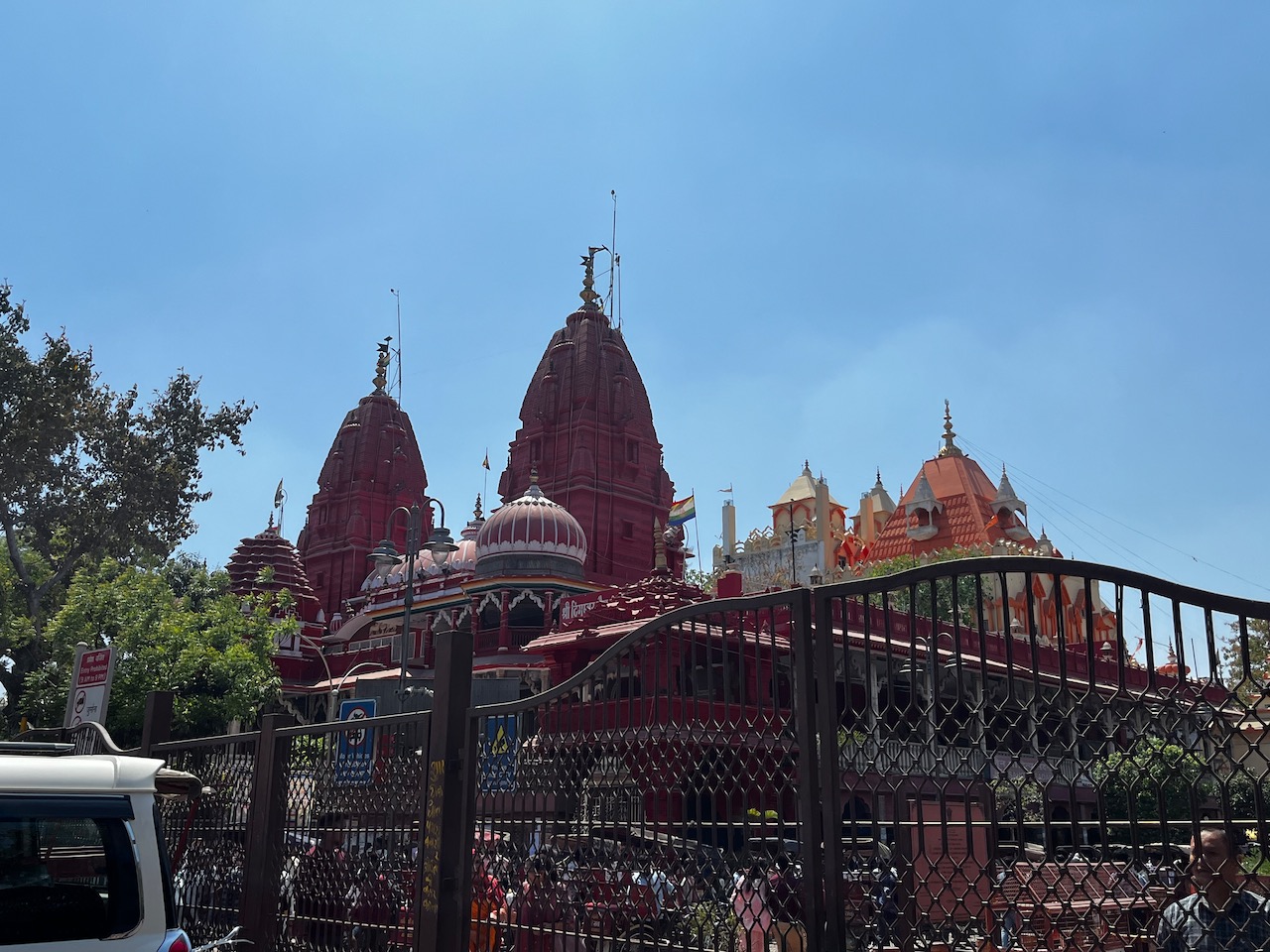
I recently had the opportunity to revisit an old favourite place of mine, Purani Dilli, with a friend. Old Delhi, despite the wider socio-economic and political changes emanating from neighbouring New Delhi, retains much of its previous charm of being a vibrant and colourfully diverse locality. The constellations around Chandni Chowk and the labyrinth of narrow lanes overflowing with people, trade, and character, fill the hearts and bellies of locals and tourists alike. There are of course signs of change where the old meets the new, and reinvention is indeed necessary for survival. In this endeavour, the main thoroughfare has been pedestrianised, but cycle rickshaws and people continue to jostle for space. You can buy almost anything from here, it is a complete eco-system of co-existence.
History of the area
It was Shahjahan (r. 1628 –1658), the fifth great Mughal, who ordered his famous chief architect Ustad Ahmad Lahori (who also designed the Taj Mahal) to build this then-walled city between 1638 and 1649, which contained the imposing red sandstone fortress of Lal Qila and the Chandni Chowk, the main street. Shahjahanabad (abode of Shah Jahan), or as it is more popularly known as Purani Dilli/Old Delhi, refers to that walled city where the Mughal court, army, and household moved from Fatehpur Sikri in 1648, which then become the heartbeat and commercial centre of the empire.
Biswas (2018) notes that the city developed along an “organic street pattern…with signature characteristics such as different activities and trades, clusters of houses based on closeness and common interests and social ties, which it still depicts today. The lanes and the streets were designed for an easy movement of pedestrians and animal driven vehicles, which today have been taken over by two- wheelers, electronic and manual rickshaws…”
It remained the capital of the Mughals in India until the Revolt of 1857, by when the East India Company and afterwards the British Crown Rule had shifted the seat of power to Calcutta, only to return back to Delhi in 1911, where they too commenced with the construction of a new modern administrative headquarters designed by Edwin Lutyens and Herbert Baker, which was formally inaugurated in 1931. To distinguish between these two empires and spaces, the older city became Old Delhi and New Delhi become the new citadel with its palatial bungalows and manicured wide streets. Since 2019, the current BJP Government has commenced another phase of construction with the Central Vista Project led by a team under Bimal Patel. We can therefore see layer upon layer, phase after phase of architectural stamping, ushering in its own ideological imprint.
The Walled City
For nostalgia, a bygone era and character, especially for a historian, nothing matches Purani Dilli. The walled city brings with it rich heritage, historic buildings and the intimate liveliness of a small community.
Jain (2004) observes that “The Red Fort, Jama masjid and Chandni Chowk have been jewels in the crown of Shahjahanabad. Chandni Chowk is the centrepiece and dominant axis of the Walled City. The original Chandni Chowk had octagonal chowks with a water channel running through the centre. Its wide boulevard with prestigious buildings and bazar created a vista between the magnificent Red Fort and Fatehpuri Mosque. With the passage of time there has been an all-round degradation and deterioration of this glorious boulevard, which can be attributed to several reasons, like over-crowding, markets, wholesale trade, rickshaws and traffic, unauthorised constructions, conversion of heritage buildings, over-riding commercial interests and private motives, coupled with lack of controls.”
Composite culture
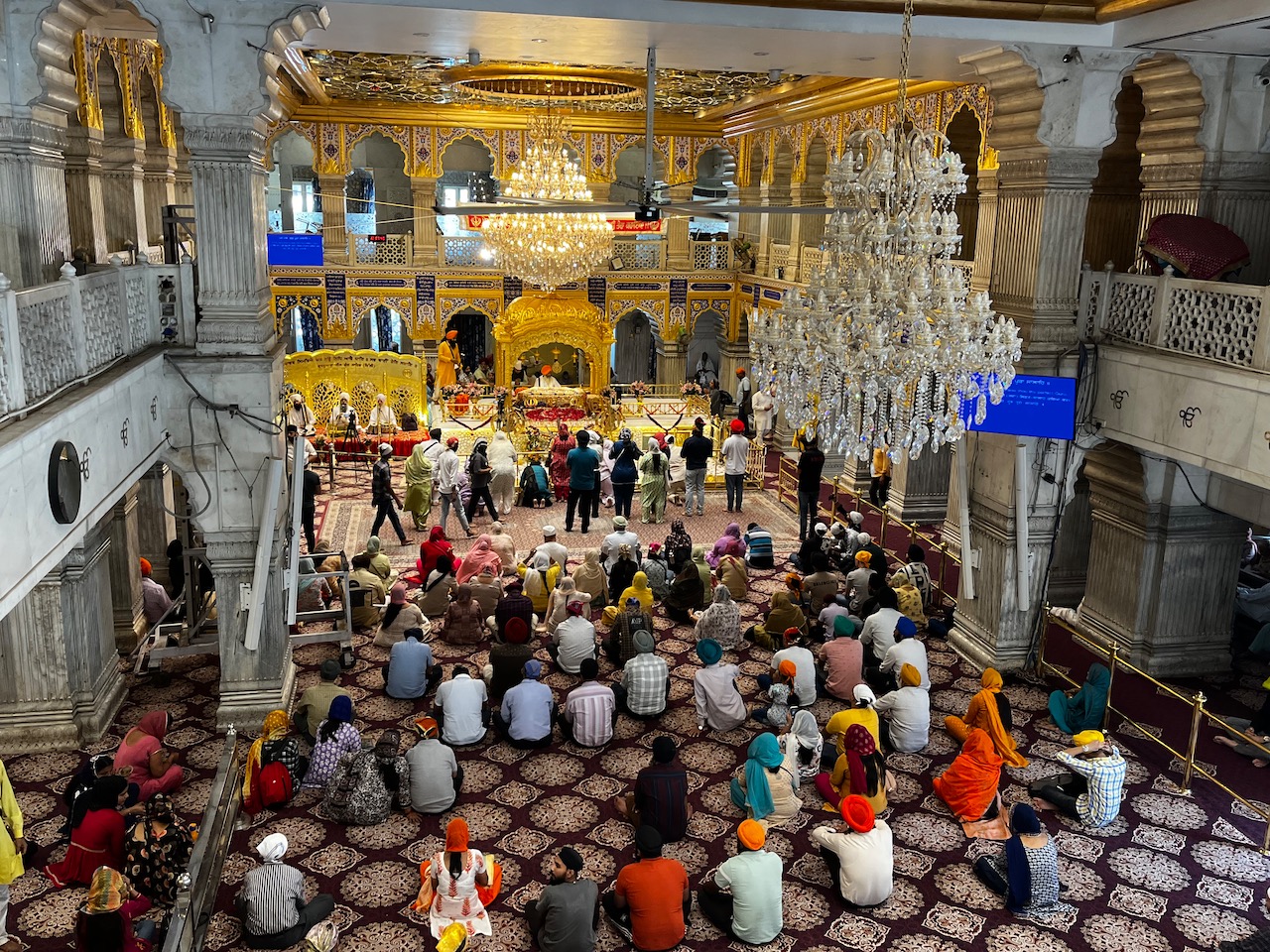
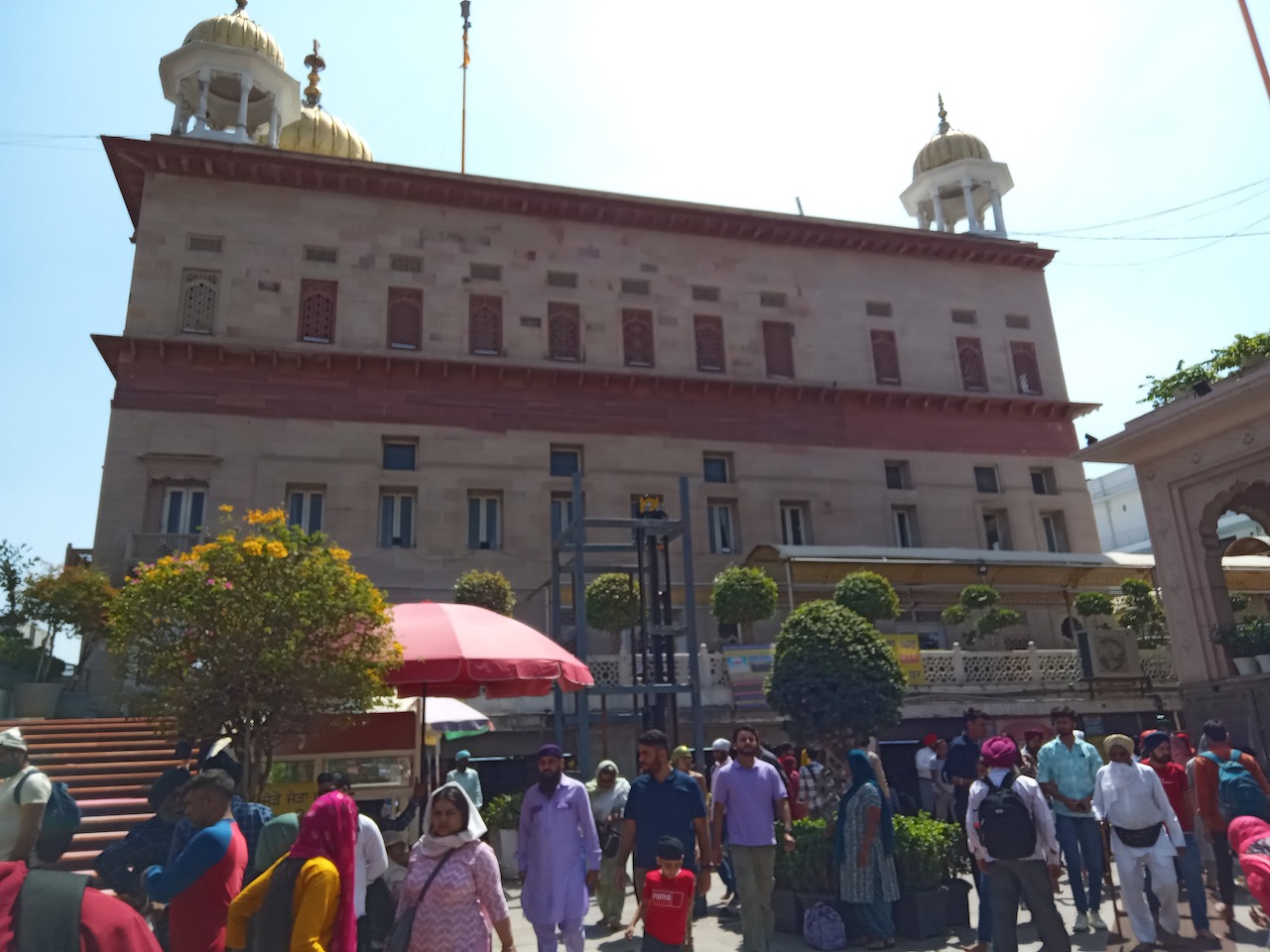
There are plenty of people who organise various walking tours of Old Delhi, as it attracts tourists from abroad and locals via the metro that has opened up the space that perhaps looked challenging before. My visit was an impromptu trip, I had some time and thought it would be nice to revisit this area after many years. I had planned to visit the Gurdwara, the Masjid and the Parathe wali gali! As I burnt off the parathas, the striking multi-faith milieu mingling into multi-cuisine eateries, left the heart warmed.
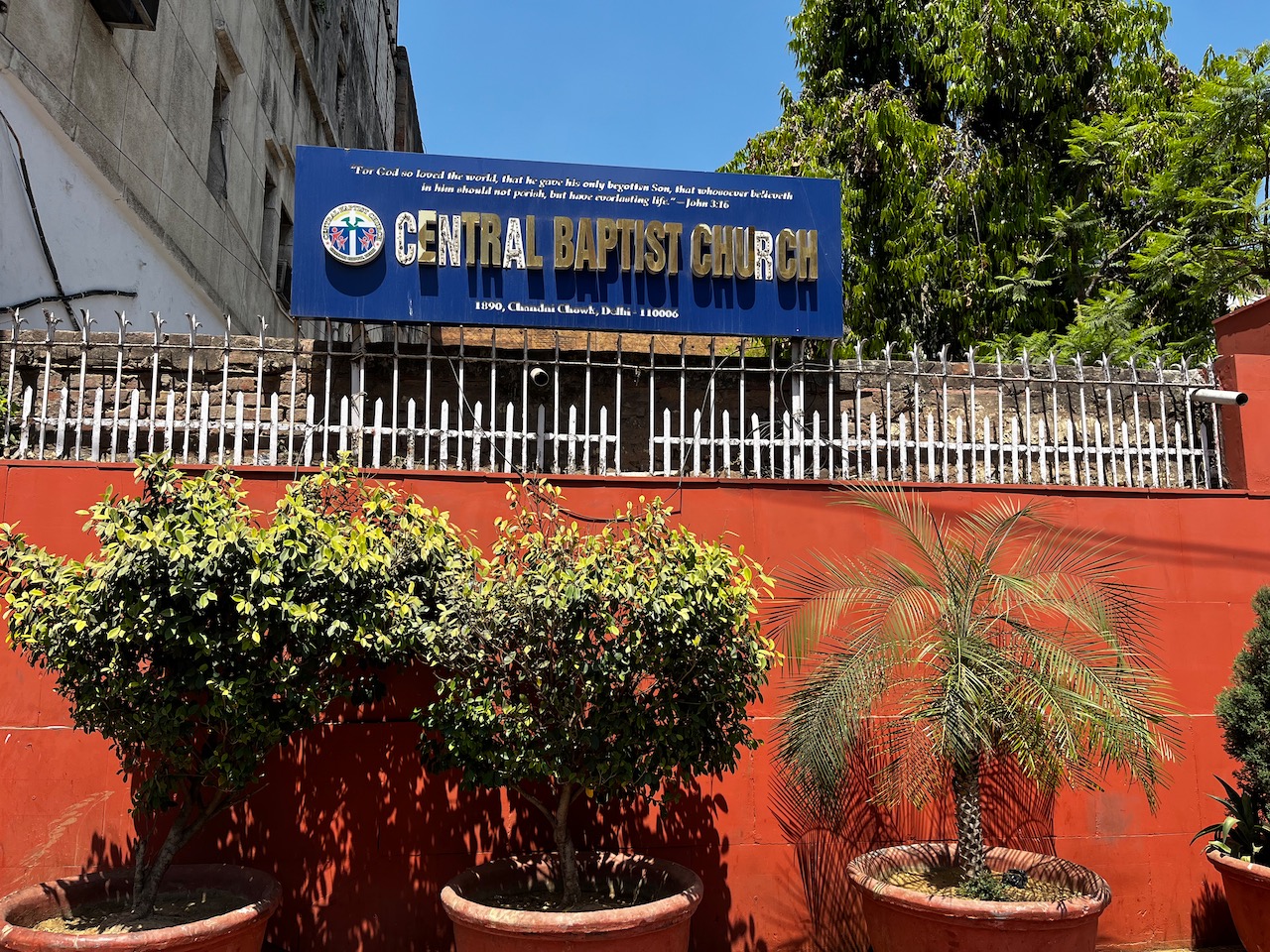
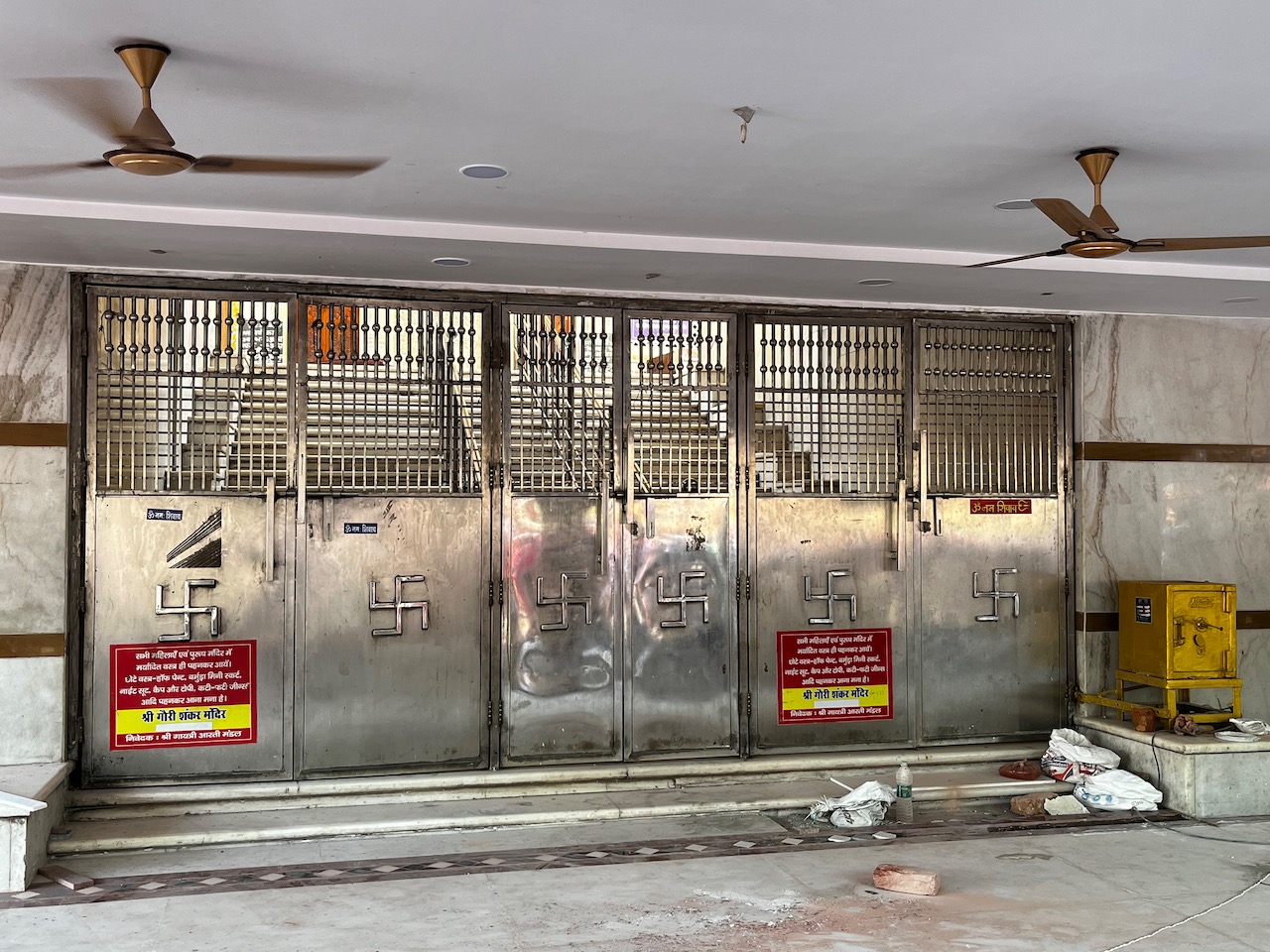
Biswas (2018) provides a detailed summary of the rich diversity present in Chandni Chowk. “In the northern sphere of the city, are the St. James’ Church (the oldest church in the city of Delhi), St. Mary’s Church, remains of Kashmiri Gate, Dara Shikoh’s library, the Lahori gate. In the southern part of the city, the key highlights are the Kalan Masjid, Ajmeri Gate, Holy Trinity Church, Razia Sultan’s grave, Turkman Gate, Havelis of Kucha Pati Ram, Anglo-Arabic School. With these divisions, the centre of the walled city is adorned with the harmonious street of Chandni Chowk, where the sacred spaces or the worship places of all major religions are located and co-exist amicably…The built heritage of the walled city comprises the grand Jama Masjid, the glorious Red Fort and many beautiful Jain temples of the two sects, numerous Hindu temples devoted to a multitude of gods, the Gurudwaras, the churches, the madrassas, the havelis of the Mughal and the post- Mughal era, still survive [ing] against their slaughter at the hands of the modernity.”
Undoubtedly the area has undergone change during the past 400 years, with each reign adding and leaving new layers. The walled city with the Qila and Masjid was the centre piece of the Mughal court, until the British transformed the former into military barracks. The British period marked by the revolt of 1857 saw vast areas being razed to the ground, some places only surviving due to the resultant outrage. With the birth of independent India in 1947, there was again vast destruction, loss of life and mass migration of people. The new contemporary socio-political anxieties mean we are perhaps less sure about the role of these places as they are confined to the past, while we celebrate and sell their associated heritage in the present. The Delhi Government is trying to beautify and make this a tourist hub, but that too must compete with conflicting agendas of the future. But for now, the spirit and roots of the Ganga-Jamuna Tehzeeb are quietly visible.
References and further reading:
Rana Safvi, Shahjahanabad: The Living City of Old Delhi, (HarperCollins India, 2020)
Swapna Liddle, Chandni Chowk: The Mughal City of Old Delhi, (Speaking Tiger, 2017)
Payushi Goel, Foram Bhavsar ‘Evaluating the Vitality of an Indian Market Street: The Case of Chandni Chowk, Delhi’ in Utpal Sharma, R. Parthasarathy, Dr Aparna (eds), Future is Urban: Liveability, Resilience & Resource Conservation (Routledge, 2023)
Sometime last year I was having dinner at the Punjab restaurant in Covent Garden, considered to the “first and oldest Punjabi, North Indian Restaurant in the UK, serving distinctive homestyle Punjabi cuisine…” It was established by Sardar Gurbachan Singh Maan in 1946, initially in Aldgate, and then shifting to Covent Garden in 1951. Maan came to the UK from Mehsumpur, in the Jalandhar District of Punjab, in what was then British India. The restaurant and café provided the familiar tastes of Punjab to the small number of Indians living in and around 1940s and 1950s London. It has since then become a go to place for many, with queues often forming outside for those hoping to chance a table for the culinary delights offered inside.
The interior is mostly simple and unfussy, but nostalgic pictures cover the wall spaces everywhere in the restaurant. They transport you to a different time and place. Quite often the pictures are of the various royal families of Punjab, whether this is the iconic Ranjit Singh or the Maharaja of Patiala; it doesn’t really matter, they provide the regal, historic and nostalgic backdrop to a bustling Punjabi meeting place in London. In between these opulent people, however, are also everyday images of South Asians and of Punjabis living in the UK.
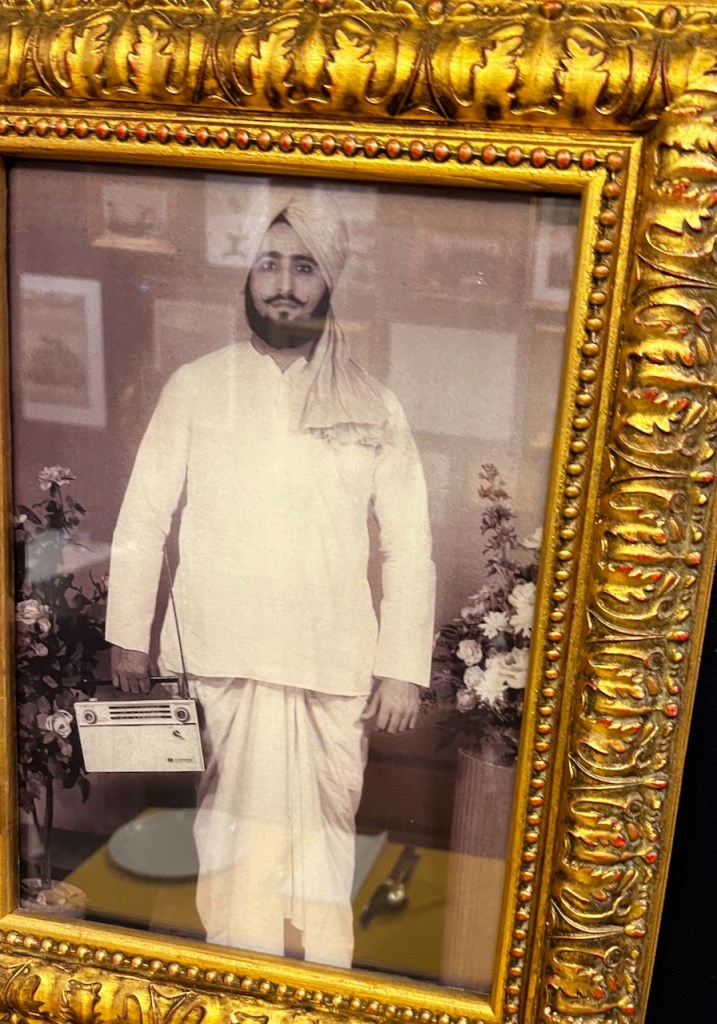
As I sat down, anxiously looking forward to my Punjabi feast, I had already decided I wanted saag, I started to curiously scan the photographs around me. Immediately a picture behind me caught my eye, it looked familiar, very familiar! It was a picture featured in a book that I did many years ago, Coming to Coventry: Stories from the South Asian Pioneers (The Herbert, 2006). The picture was of Gurdail Singh Johal, who had posed for this photograph in a traditional Punjabi kurta and tamba, while holding a transistor radio. It is a beautifully striking image, capturing the need to retain some of the cultural traits of “home”, but adapting and embracing new technologies. Like many other early migrants from Punjab, Johal migrated to Coventry in 1960 from Jalandhar, Punjab.
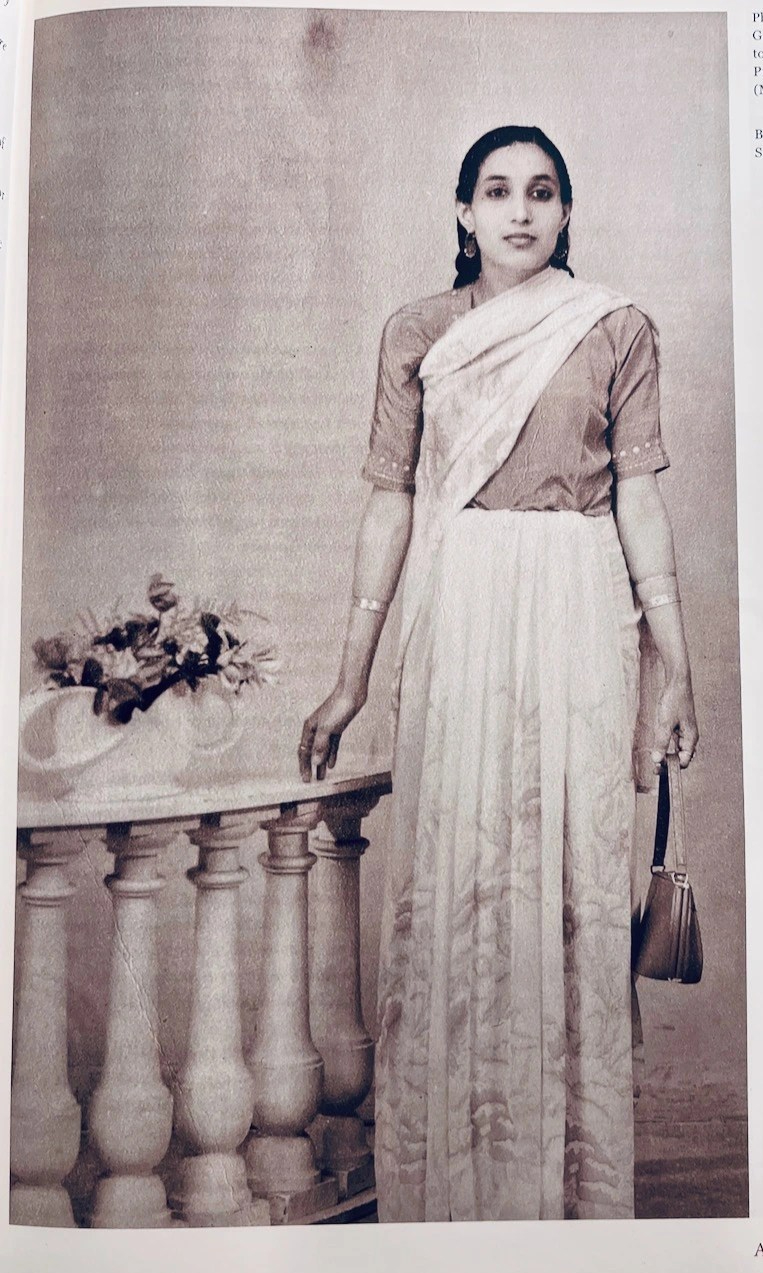
As you turn the page from Johal’s picture on page 17, there is another equally striking image of Gurmeet Kaur on page 19. This one was taken in Studio Taylor on Primrose Hill in 1959. Gurmeet is dressed in a sari, elegantly draped, and accessorised with some simple bangles and small earrings. Like Johal, Gurmeet is also holding something in her hand; the handbag conveys elegance and affluence. Mostly likely it belonged to her rather than being a prop. Both photographs have the ubiquitous floral bouquet in the backdrop, adding texture, colour and framing for the main object. Both images are important in showing how Johal and Kaur seamlessly integrate traditional dress with the modernity around them.
The studio pictures of Johal and Kaur are typical of that era where mass photography was not widespread and ownership of cameras was limited to those with means, and thus the average person could only indulge in the occasional studio photograph. Everyone dressed up and posed for the special occasion; in fact, I have many similar photographs in my own family album. It was an opportunity not only to capture a time and place, but perhaps also to preserve and show how one had progressed and advanced, especially when in a “foreign” land. It was versatile enough to share with family back home as it could be posted, and to show how they had altered their material status and to showcase the fruits of migration. Posing with a material object therefore was not just a prop in a studio picture, it was a statement about them and their class status. For the photographer it enhanced the aesthetic value of the composition, but for the people, it enhanced their status amongst their family and peers.













 BAGICHA