Tag Archives: Quaid-i-Azam

M.A. Jinnah: official biography as scholarly history?

Hector Bolitho’s Jinnah: Creator of Pakistan is how it ended, in 1954; below is how it started, in 1951-2:

Hotel Metropole (Karachi), 4 February 1952, Bolitho to S.M. Ikram (Ministry of Information & Broadcasting, Government of Pakistan)

‘I have just returned from a conversation with Miss Jinnah [who had ‘issued a statement that she neither knew about, nor had anything to do with, Bolitho’s assignment’] and I feel that time has come for us to review the circumstances in which I have attempted to write the official biography of Quaid-i-Azam.

I have now been in Pakistan for almost one month [government had to issue a press note explaining the decision to engage ‘a foreigner’, in response to ‘a section of Pakistan Press’ raising a controversy], and I feel that, in the present circumstances, it would be dishonest and impossible for me to write a biography that would be worthy of the subject or acceptable to any reputable firm of publishers.

Since I have been engaged on my task, which began on October 22nd [the cabinet of Liaquat Ali Khan had approved minister I.H. Qureshi’s proposal to commission Bolitho on June 20, 1951], I have been refused all help from those officials who knew Quaid-i-Azam personally. K.H. Khurshid, his secretary, now in London, has expressed his regrets that he will not help. M.H. Saiyid, sent to me by you, has also refused to co-operate.

[Khurshid would later publish his Memories of Jinnah (1990, 2001). Saiyid would also publish A Political Study of Jinnah (1953, 1962), titled The Sound of Fury (1981)]
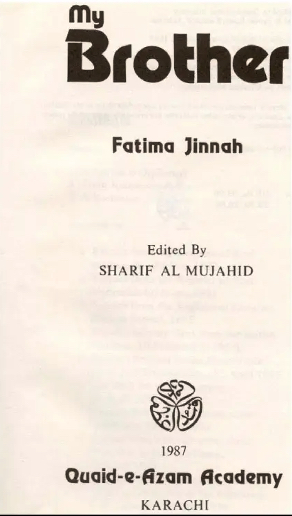
Mazhar Ahmad, A.D.C. to the Quaid, whom you promised as my helper, has not been made available. Prof. Mahmud Brelvi [?], appointed to help me, has not appeared for six days. Although he has been scrupulous in his courtesy, your office has ignored my situation, and has offered no explanation of Prof. Brelvi’s withdrawal. Nor has anyone been deputed to take his place. Nor, in this past month, have I been given even one of the promised documents relating to the Quaid. Nor has Miss Jinnah been approached by the Government. I have taken legal advice, and I find that Miss Jinnah owns the copyright of all her brother’s documents. She has stated to me that these are being used for the biography on which she is now engaged [Ghazanfar Ali Khan (then Pakistan’s Ambassador in Iran) had given a statement ‘welcoming Miss Jinnah’s decision’, adding that ‘she “should have been the first person to be consulted by the Government”’. I.H. Qureshi had been ‘seeking the assistance of his colleagues acquainted with Miss Jinnah to approach her, but these efforts failed’. Her book My Brother (1955) came out in 1987.]

As an indication of the frustration and discouragement I have endured from your department, I would draw your attention to my letter of January 19th. There I mentioned the Aga Khan’s offer to help me. His collaboration would be almost as valuable as that of Miss Jinnah. Sixteen days have passed since I wrote this, without the courtesy of a reply from you.

All this suggests that the Government is apparently unable, or unwilling, to abide by our contract. I consider that I have been deceived in this matter of documents, and the promised help of “members of the family” of the Quaid. I am wondering, therefore, if it would not be best for us to terminate our contract, under terms which I shall made as reasonable as possible. I propose:

  1. That the sum of [2000] guineas – the remainder of my fee – be immediately paid into the office of my solicitors in London (Messrs Shirley Woolmer & Co.) with instructions to them to hold the money until the contract between us is formally cancelled.
  2. That, as compensation for the loss of income from the sales of the English-language book rights in England, America, and the Sub-continent, I be compensated to the extent of [5000] guineas.
  3. According to my contract, I am entitled to hotel accommodation for myself and [researcher] Captain Peel for [4] months. As my house in London is let, I shall require hotel accommodation for myself, and I shall have to compensate Captain Peel, until June 2nd. I therefore propose that the Pakistan Government pay me the sum of GBP 80 per week (based on last week’s bill) from the date of my leaving Pakistan until the period of [4] months is up.
  4. All sum to be free from any deductions of income tax or other dues, and paid in full in London.
  5. That 1st-class sea passage, to be approved by me, for myself and Captain Peel, be provided, as soon as possible, to England.

I am anxious to conclude this matter as soon as possible, because it is desirable for both of us that the story should not become distorted in the world press. I have already been approached to make a statement to a New York newspaper, and to an Indian newspaper.

I have no wish to see the Government embarrassed, and I am sure that we could come to an arrangement. I ask only for speed. Although our agreement was made in London, and, therefore, any legal action would no doubt have to be taken there, I trust that we can close the matter amicably, thus avoiding publicity unpalatable.

[The agreement text spoke of ‘not less than 90, 000 words’ biography for ‘the fee’ of 1000 GBP ‘on the signing of this contract’, 1000 GBP ‘on delivery of the finished manuscript to the publisher’ and, 1000 GBP ‘on publication in England or America (whichever first) + 1st class return sea passages, rail fares, travelling facilities and hotel accommodation for a period of 4 months, a liaison officer and all ‘reasonable assistance and facilities for the purpose of obtaining information, examining documents and interviewing government officials and members of the family’]

A disgruntled Bolitho, before writing the above letter, gave an interview to the Sind Observer, without warning to the government, published on 29 January 1952, in which he ‘hinted at the possibility of his giving up the assignment and seeking compensation because he had put all his work aside to fulfil this request which came first from Liaquat Ali Khan’.

Source: File No. 3 (6) – PMS/52 (Government of Pakistan, Prime Minister’s Secretariat)

What happened in-between, recalled In Quest of Jinnah: Diary, Notes and Correspondence of Hector Bolitho, edited by Sharif al Mujahid, 2007.
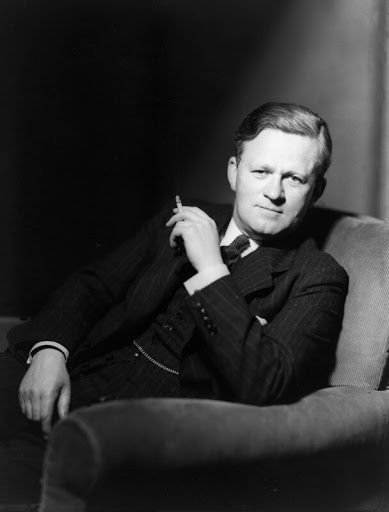
Hector Bolitho of New Zealand (1897-1974); author of 59 (!) books & biographer of George VI, Victoria & Albert and Edward VIII). Further Bio details.
The Bengali Language Movement: Noon to Nazimuddin, 1952

When Pakistan was created in August 1947, it was made up of two wings, East and West. In 1951, when its first census took place, the combined population of both wings was 76 million; 34 million in West and 42 million in East. The Bengalis made up the majority of the population of East and this made Bengali/Bangla the language spoken by the numerical majority of Pakistan. But Urdu was seen as the national language, while being the mother tongue of barely 5 per cent of the population then. However, it was more than a language; it was attached to the very core of the Pakistan Movement as the Quaid-i-Azam Mohd. Ali Jinnah declared in Dacca (Dhaka) in 1948. Yet, soon thereafter, the fractures and fissures between the two wings began to open up, due to the discriminatory and step-brotherly treatment of the East Pakistanis; not just in the language sphere.

By 1952, there were large-scale demonstrations and unrest centred around the University of Dhaka and on 21 February 1952, these ended in violence, in which the police clamped down on the protestors resulting in numerous casualties. Since 2000, the United Nations has observed 21 February as the International Mother Language Day. Bengali/Bangla was eventually recognised as an official language of Pakistan (alongside Urdu) in article 214(1), when the first constitution of Pakistan was enacted on 29 February 1956. Longer term though, this parity in the Constitution failed to address the underpinning problems and East Pakistan eventually became Bangladesh following the civil war of 1971.

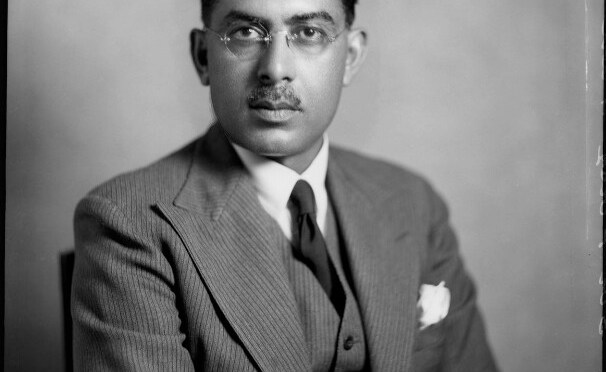
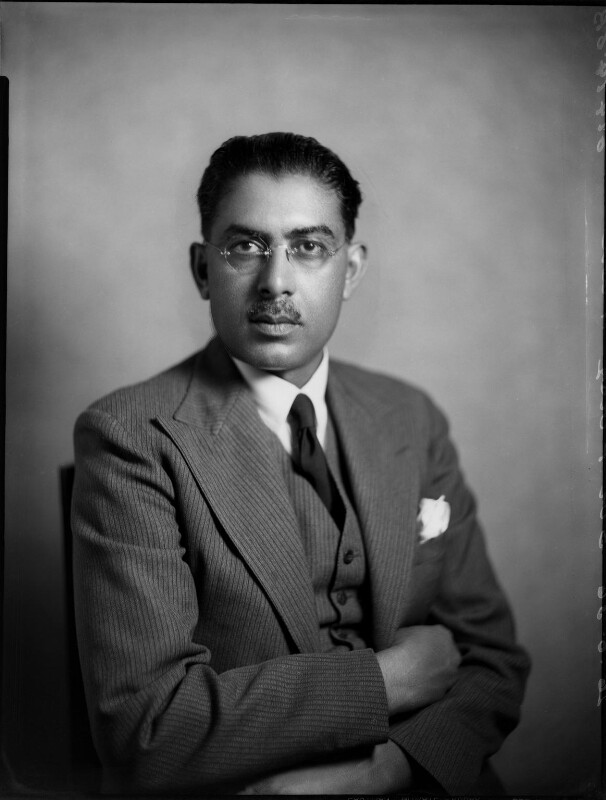
The letter below, sent a week after these protests, from Malik Firoz Khan Noon, a prominent landowning Punjabi and future PM (1957-58) of Pakistan, then-Governor, East Bengal Governor to Sir Khwaja Nazimuddin, an aristocrat Bengali and Jinnah’s successor as Governor-General (1948-51) of Pakistan, then-PM (1951-53), shows the failure to recognise the legitimate grievances of the language movement.

Noon to Nazimuddin, 28 February 1952

The Vice-Chancellor and other members of the Executive Committee have closed the University. Some students are leaving: others will try to hang on in Dacca. Out in the districts no untoward incidents have taken place except this that students have been trying to make themselves a nuisance at railway stations and in the cities, and the papers who write explaining true facts are not allowed by the students to be distributed by the hawkers in the district headquarter towns. The Government are now planning to drop pamphlets from the air throughout the province. I do not think that the Muslim League Ministers or other leaders can go out into the province as yet for three or four weeks to explain their point of view, but our propaganda has been very weak: almost non-existent. The Government point of view has not had the chance to go before the public yet.

I feel that both in Western Pakistan and in East Pakistan our propaganda machine should be put into full force and the true situation exposed to the public, viz. that this was a conspiracy between the communists and some of the caste Hindus of Calcutta, and certain political elements in East Pakistan who wanted to replace the Ministry: the students were made the cat’s paw. Their idea was to set up a puppet Ministry here, with Fazlul Huq as the Chief Minister, and then negotiations were to start for the unification of the two Bengals. I feel that it is most important that this true position must be exposed to the public who should realise the danger that we still continue to face in this province. The language question was only a subterfuge very cleverly exploited. In this province we are doing what we can to put forth our point of view, and Mr Fazl-i-Karim – Education Secretary – who has just returned from abroad has been asked to take charge of this work.

The second point to which I should like to draw your attention is that during the coming session of the Central Legislature, this Bengali language question must be settled once for all, and I do not think that you can get out of it without accepting Bengali as one of the state languages, but it must be Bengali written in the Arabic script. The sooner this resolution is passed the sooner will this controversy be settled. I have no doubt that the Hindus will create trouble about the script, but no Muslim will be able to raise his voice against the Arabic script, because in this way we shall have all the Provincial languages written in the same Arabic script, and this is most essential from the national point of view. I am told that during the time of Shaista Khan, Bengali was written in the Arabic script: there are some books in the museum here written in that script. If Bengali were written in the Arabic script – 85 % of the words being common between Urdu and Arabic if properly pronounced soon a new and richer language will emerge which may be called ‘Pakistani’. But something has to be done in this matter. We cannot let matters adrift.

The Arabic script will be the biggest disappointment to the Hindus who have been at the bottom of it, and that is the real crux of the whole question. The Jamiat ul Ulama-i-Islam in this province under the presidency of Pir Sahib of Sarsina and Secretary-ship of Maulana Raghib Asan have already passed a resolution demanding the writing of Bengali in the Arabic script, and no Muslim M.L.A. – either in Karachi or here – will be able to oppose the Arabic script. As a matter of fact, the Muslim League Party here last year went to the extent of passing a resolution saying that Arabic should be the national language of Pakistan. The object really was to do away with Urdu, but it is certainly a point which may be used by you in your speech, if necessary. The Aga Khan has written a very good pamphlet on this subject. It was going to be published but unfortunately it has been burnt with the Jubilee Press. The Aga Khan has promised his followers to be provided with a revised copy and I will try and let you have one as soon as it becomes available.

One of the main points the Aga Khan brought out was this that Persia changed their script from the old Pehlvi script into the Arabic script and in that way their literature became richer than ever, and by changing the script the Persian language did not lose anything nor would the Bengali language. He also tried and impressed that by enforcing the Arabic script the Bengali literature will be available to all other Muslim countries who will be able to appreciate the work of the Bengali authors. Similarly, the literature of all other Muslim countries will be open to Bengali Musalmans who know the Arabic script. He also pointed out in his pamphlet that every Musalman has to learn Arabic in any case because the boys and girls must read the holy Quran, and if they are conversant with the Arabic script why should this Dev Nagri script be thrust on them unnecessarily. It will be conceded on all hands that if in the schools in East Bengal boys and parents were given the option for children to learn Bengali either in the Arabic script or in the Dev Nagri script, they would all choose the Arabic script.

Quite a large amount of money is being earned by Calcutta Hindu authors who have the monopoly of all our school text books and it is they who are spending money in support of the Bengali language and would even spend money in support of the Dev Nagri Script. It should not be forgotten that people in West Bengal themselves have not asked for Bengali language to be accepted as a State language in Bharat: they have accepted Hindi as their national language.

Further Reading:

Rahman, Tariq. ‘Language and ethnicity in Pakistan‘ Asian Survey 37, no. 9 (1997): 833-839.

S.M. Shamsul Alam (1991) ‘Language as political articulation: East Bengal in 1952’, Journal of Contemporary Asia, 21:4, 469-487, DOI: 10.1080/00472339180000311

Tarun Rahman, ‘The Bengali Story Behind International Mother Language Day‘, Medium, 11 February 2016

Salman Al-Azami, ‘The Bangla Language Movement and Ghulam Azam‘, Open Democracy, 21 February 2013