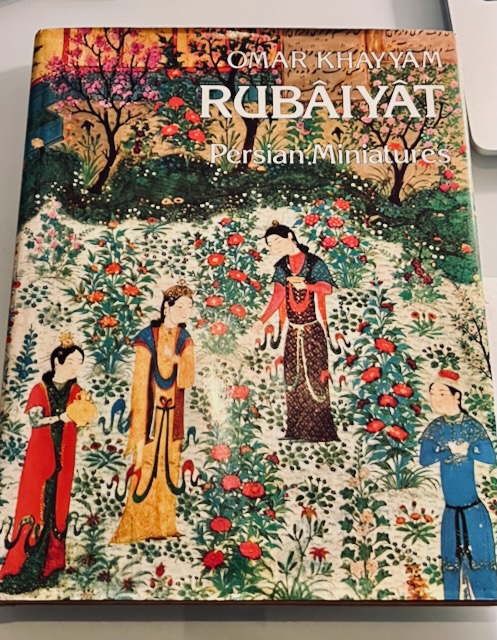
Some time back, while browsing a second-hand bookshop — the name and place now lost to memory — I stumbled upon a copy of Omar Khayyam’s Rubaiyat, translated from Persian by Edward FitzGerald. Published in 1981, it is a beautifully illustrated edition, adorned with miniature paintings. Time-worn as it is, the book carries a warm and inviting feel, and I always thought I would one day find the right words to write about it. It usually sits on the bookshelf directly in front of my desk, front cover on full display — a small splash of colour and beauty against what can otherwise be rather dry academic reading. The richness of the text and the miniature paintings breathe both life and warmth into the room and, on occasion, inspire me to write.
Omar Khayyam (1048–1131) was a Persian poet and polymath of remarkable range — a mathematician, astronomer, and philosopher as much as a literary figure. Born in Nishapur in present-day Iran, he flourished during the Seljuk era, a world away in time and place from the Crusades unfolding to the west. Though celebrated in his own time for his scientific and philosophical work, it is his poetry that secured his enduring fame in the modern world — largely thanks to Edward FitzGerald’s celebrated English translation, first published in 1859. FitzGerald’s Rubaiyat of Omar Khayyam is a loose but inspired rendering of quatrains drawn from the Bodleian manuscript, and its success was extraordinary: a bibliography compiled in 1929 listed over 300 separate editions, with many more appearing in the century since.
There is, of course, much to be said about FitzGerald and the liberties — and brilliance — of his translation, but that is a conversation for another time. For now, it was the events of the past few days that compelled me to lift the book from the shelf and turn its pages. Two quatrains, in particular, stopped me in my tracks.
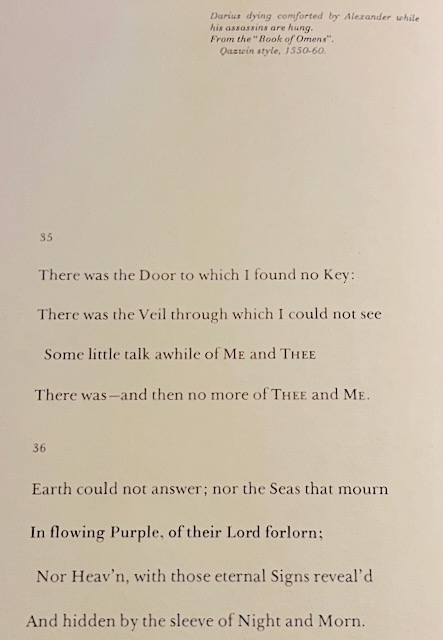
35
There was the Door to which I found no Key;
There was the Veil through which I could not see
Some little talk awhile of ME and THEE
There was—and then no more of THEE and ME.
36
Earth could not answer; nor the Seas that mourn
In flowing Purple, of their Lord forlorn;
Nor Heav'n, with those eternal Signs reveal'd
And hidden by the sleeve of Night and Morn
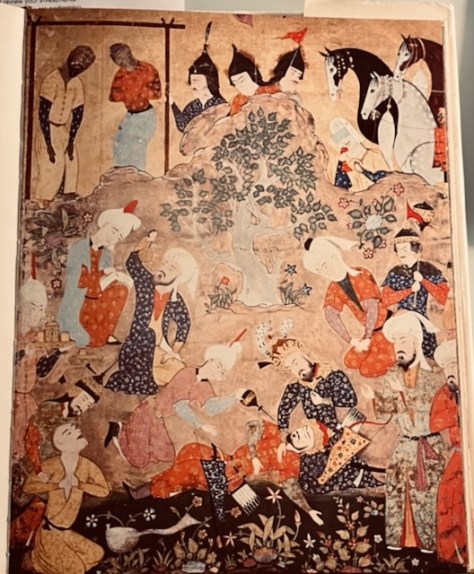
Darius dying comforted by Alexander while his assassins are hung. From the “Book of Omens.” Qazwin style, 1550-60
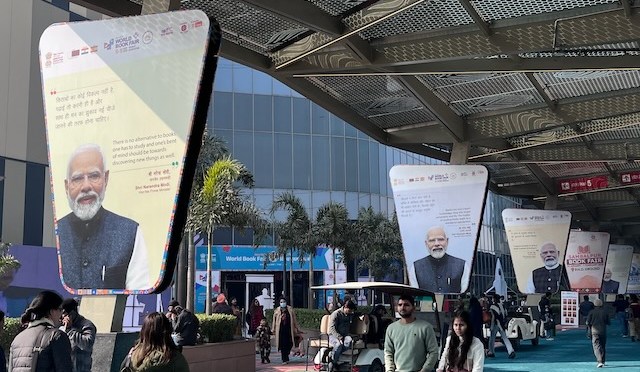
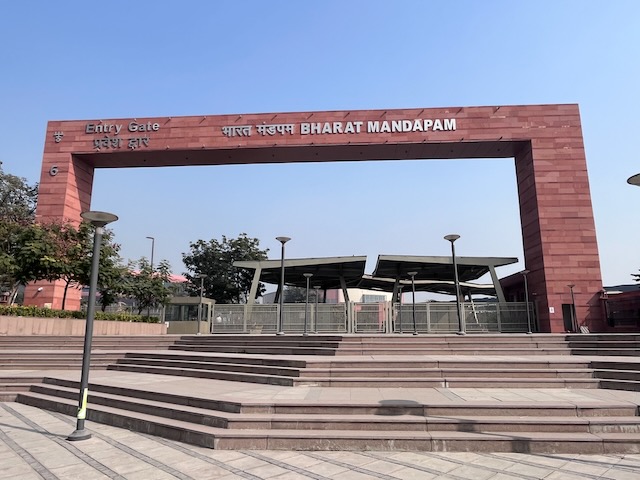
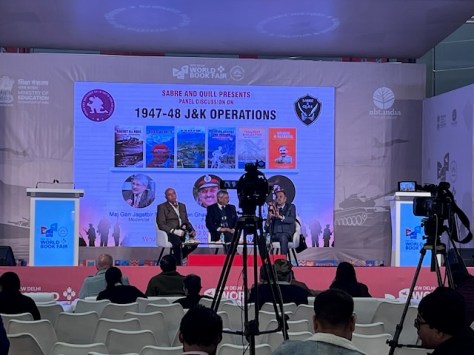
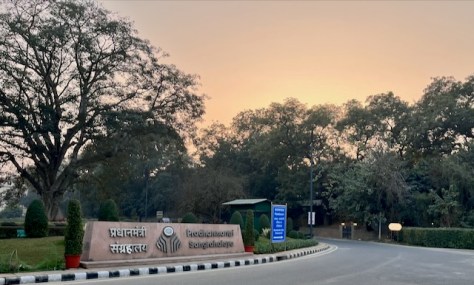
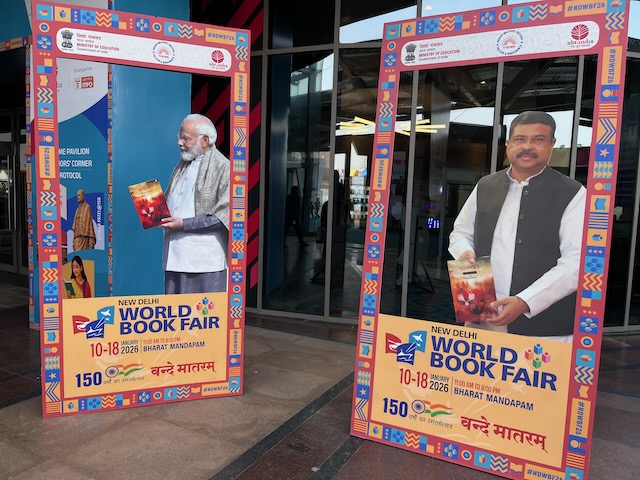
My latest visit to Delhi luckily coincided with the World Book Fair, held from January 10-18 at the Bharat Mandapam Convention Centre (Pragati Maidan), which was unveiled in 2023 ahead of the G20 summit. The book fair has been held for over half a century, and I was looking forward to it, as it was going to be my first time. Once there, I felt a suitable sense of awe, amidst the sets of huge halls and the throbbing atmosphere around them.
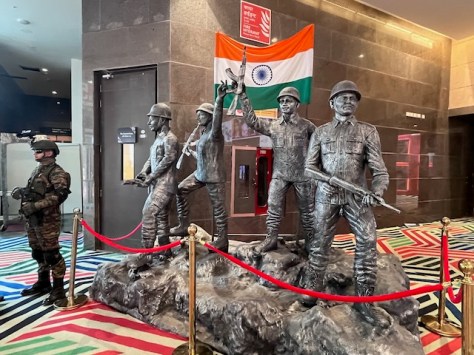
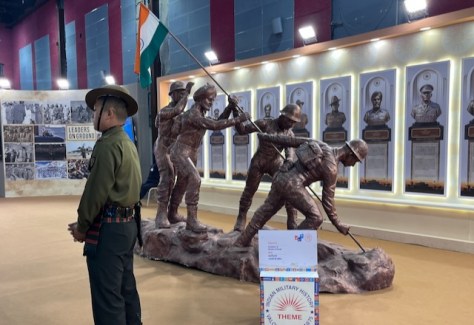
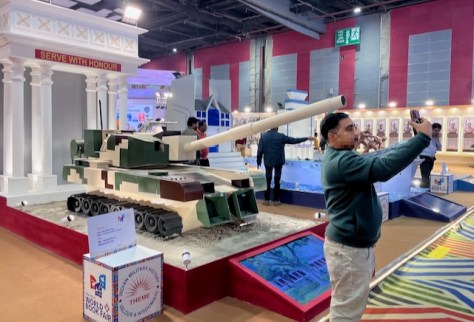
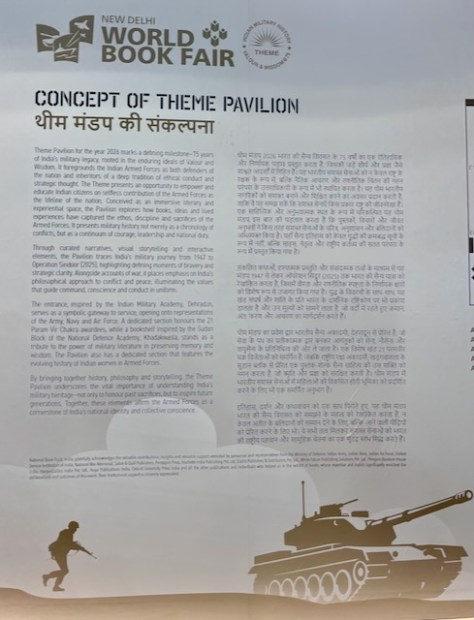
I was told this was the first time the fair had ‘free entry’, and the crowds were substantial, particularly around the stalls of major publishing houses. Secondly, this year’s theme was ‘Indian Military History: Valour and Wisdom@75.’ Book fairs are especially popular with schoolchildren and university students, and these young visitors were enthusiastically taking selfies with statues, exhibits and soldiers positioned there.
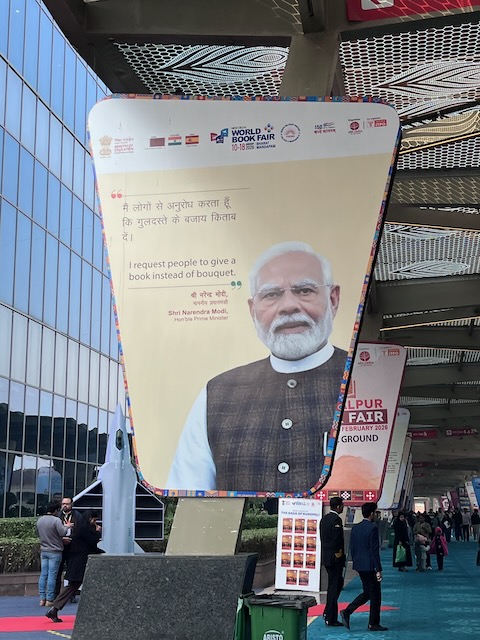
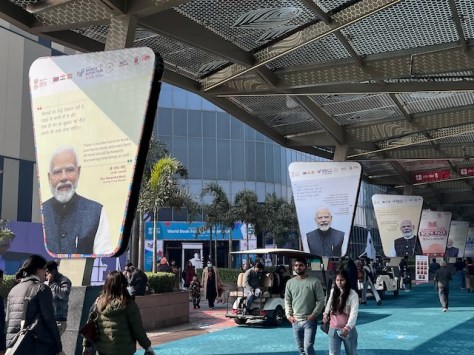
As I approached the entrance to the main hall, I was greeted by large posters encouraging young people to read and urging people to gift books, as the Fair is organised by the National Book Trust (Ministry of Education, Government of India) and the India Trade Promotion Organisation. Once inside, the presence of the military was immediately noticeable, as were the recent conflicts with neighbouring countries.
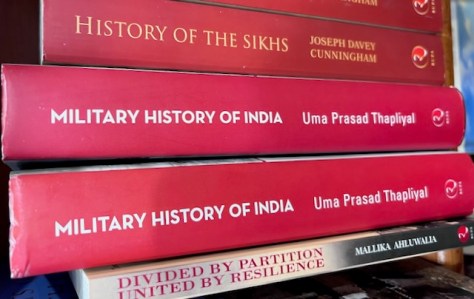
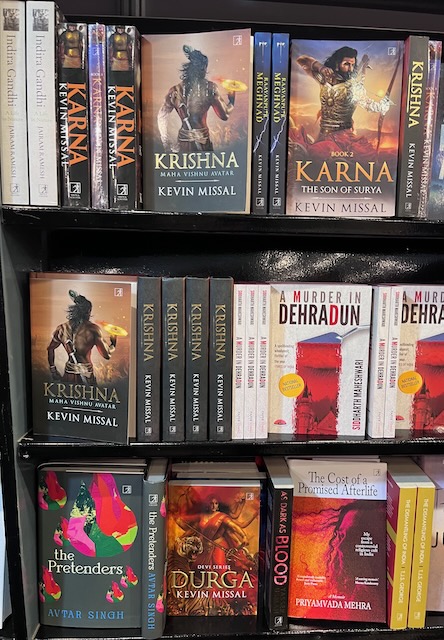
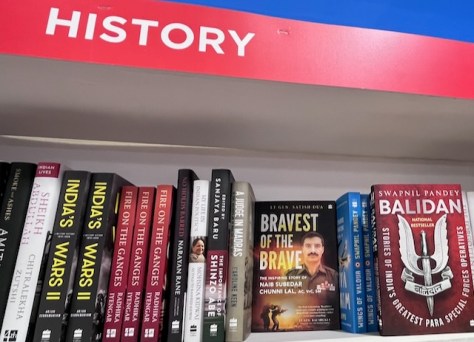
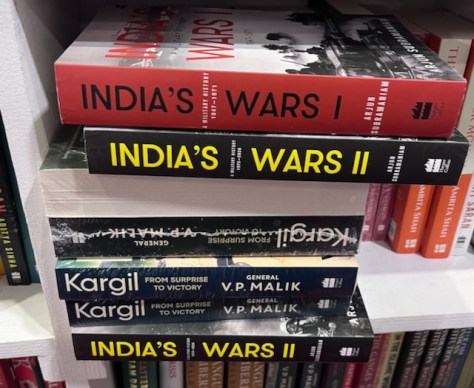
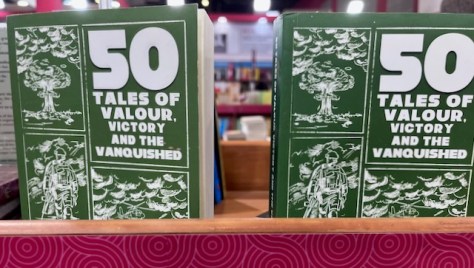
Having visited several bookshops in Delhi and Chandigarh on the trip, what had come into sharp focus was an abundance of material on military history and security studies by retired military personnel, commentators, and journalists. Popular history writing and their shelves in bookshops were never so narrowly dominated as they appeared to be now. Trends come and go, of course, and perhaps this is simply that, or perhaps something more.
The Machinery of Nationalist Discourse
In his seminal work, Imagined Communities: Reflections on the Origin and Spread of Nationalism (1983), Benedict Anderson argued that nations are socially constructed communities, imagined by people who perceive themselves as part of a group despite never meeting most of their fellow members. For our purpose here, Anderson also demonstrated how ‘print capitalism’ fuelled the rise of nationalism.
For instance, are publishers actively creating a market for narratives of conflict and war, or merely responding to demand for them? The reality is likely a mixture of both impulses. Print capitalism works by maximising circulation, leading publishers to print books designed to reach the broadest possible audience. The current surge in military history books and nationalist themes is neither coincidental nor has it emerged in a vacuum.
This trend is especially clear in India’s publishing scene. Since the 2010s, nationalist-revisionist history-writing, reshaping historical narratives, and revising textbooks have been major themes. The bookstores I visited showed this change: where history sections once had a variety of socio-cultural views on India’s multi-layered past, they are now filled with books highlighting post-1947 military bravery and intelligence activities.
Alongside my visit to the book fair, I attended a seminar at the PMML/NMML (Teen Murti), which also featured a spirited assertion of nationalism, while confining narratives of peace to nostalgic readings of the past. It was argued that these readings offer little evidence to support these sentiments, in this case regarding the Partition’s impact in Bengal. These discussions align with a global rise in populist nationalism, which privileges narratives of conflict.
Cinema as Nationalist Pedagogy
The Book Fair and the seminar are part of the same cultural milieu as the current hit film Dhurandhar. A review in The Caravan magazine has argued that the film exemplifies what happens when public discourse is consistently fed propagandist narratives. The review noted that if the goal is to serve nationalist propaganda to the masses, few mediums work better than a slickly produced, multi-starrer, action-packed spy thriller.
Conversely, an alternative to this swashbuckling sensationalism is the film Ikkis. Writing on the Scroll website, the reviewer noted that the film is based on Arun Khetarpal, who was posthumously awarded India’s highest gallantry award, the Param Vir Chakra, for his actions during the 1971 war. As Khetarpal’s deeds are well documented, Ikkis aims higher, seeking to understand what unites men sworn to kill each other.
The review added that the film eschews any vengeance-fuelled hyperbole, with scene after scene revealing the director’s efforts to resist jingoism. This sensitive reading of conflict and war has not resonated with audiences in the same way as Dhurandhar, which already has a sequel in the works. The Indian Express, describes Ikkis as a thoughtful exploration of masculinity and bravery that avoids Dhurandhar’s stylised machismo.
What do the divergent fortunes of these two films reveal, if anything important or long-term, about contemporary India’s cultural moment? Just as the book fair collection and the PMML/NMML discussion suggest a renewed contest over complex, layered narratives of identity, these two films capture two sides of the same coin. They represent the mixture of giving people what they want and offering them what their makers want them to want!
The Missing Voices
If Anderson’s ‘print capitalism’ helps us understand how mass media manufactures and disseminates narratives that shape national consciousness, it also reveals what is missing here: where are the voices of those who speak for peace and friendship? The current publishing industry, mirroring the broader political trend, seems to suggest that conflict is not only inevitable but desirable, a necessary component of national identity.
Yet surely, we do not all consider conflict the solution to our problems? When families feud, we try to keep talking and reach some form of amicable coexistence. Why should the same not apply to the family of nations? Instead, the religious-nationalist approach to history and politics, leisure and entertainment, which has gained prominence since the 1990s, aims to reduce content to a commodity and sentiment to profit.
The book fair’s public relations emphasis on military history and policy, then, reflects not only the sidelining or suppression of multiple voices but also an element of advertising to buyers and sellers of different kinds, enhancing familiarity and enabling involvement and investment. When every other book celebrates civilisational value and military valour against perennial ‘others’, alternative voices are drowned out not only by outrage and censorship but also by business.
A Reimagined Community
What I witnessed at the World Book Fair, across bookshops, at the Teen Murti seminar, and what I read about the contrasting fates of Dhurandhar and Ikkis show a nation-state actively reimagining itself. If nations are ‘imagined communities’, shaped by those who control the means of communication, then, as that act of imagining is never neutral, it can always be reimagined as well. They are shaped by choices, and those choices remain ours to make.
The question facing urban, middle India today is which version of itself it will choose to recall and reimagine: one defined primarily by categories, conflicts, and eternal revenge, or one that acknowledges complexities, accepts diversities, and accommodates differences. The contested marketplace of bookshops, cinemas, and talking shops (and their digital counterparts) will play a determining role in answering that question.
References:
Benedict Anderson, Imagined Communities: Reflections on the origin and spread of nationalism, Verso Books, 1983.
Nandini Ramnath, ‘‘Ikkis’ review: In tribute to a war hero, a rare plea for peace and empathy’, Scroll, 1 January 2026
Surabhi Kanga, ‘The Mob Comes For Film Critics’, The Caravan, 1 January 2026
Marie Lall and Kusha Anand. Bridging Neoliberalism and Hindu Nationalism: the role of education in bringing about contemporary India. Policy Press, 2022.
As we approach another year-end in this season of merriment and reflection, and on the shortest day of the year, when daylight is most precious, many of us find time to catch up on projects long left pending. For me, this has meant returning to research into the city of Coventry.
While working on a chapter that uses photographic history to explore migration patterns, I’ve been reading Life and Labour in a 20th Century City: The Experience of Coventry, edited by Bill Lancaster and Tony Mason (1986). The chapter on ‘Migration into Twentieth Century Coventry’ revealed two significant threads: the presence and influence of the Irish Catholic community, and Coventry’s emergence as home to a South Asian community. At the same time, it also revealed the prevalence of racism then, which is comparable to the anxieties that are expressed today. Pages 71-76 are particularly illuminating in linking the political discourse and public fears of the post-war generation to contemporary shifts in British society.
The Myth of 1930s Cosmopolitanism
Coventry in the 1930s was often described as cosmopolitan, but this characterisation was somewhat misleading. Although the population was mixed, with migrants rising to 40% by 1935, most of these newcomers came from other UK regions. This trend continued throughout the war and the immediate post-war period. By 1951, while the overwhelming majority of Coventry’s citizens were of UK origin, some change was also evident.
Lancaster and Mason, page 71
The Irish Presence
The 9,993 Irish residents counted in the 1951 census marked a significant new wave of migration after the war. Although Irish regiments were often stationed at Coventry barracks and contributed labour during the early 20th century, the local Irish community remained small—only 2,057 in 1931. Nevertheless, this population grew rapidly during the construction boom of the 1930s.
Lancaster and Mason, page73
By the end of the Second World War, the streets around St. Osburg’s and St. Mary’s churches had taken on a unique Irish character. These inner-city neighbourhoods, filled with lodging houses and multiple-tenant buildings, and close to Roman Catholic churches, became popular stopping points for itinerant construction workers or individuals looking for factory jobs.
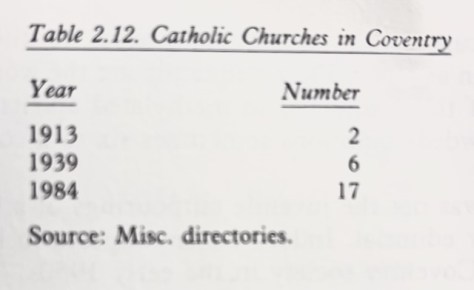
The growth of Catholicism in Coventry during the 20th century reflects both the expansion of the Irish community and their commitment to preserving their religious identity. Interestingly, two current Catholic churches in Coventry cater specifically to European congregations: the Polish and Ukrainian communities.
The South Asian Community and Racial Prejudice
By 1954, the small wartime Indian community had grown to about 4,000 people. Described as a “quiet, peace-loving ethnic minority,” they mainly settled in the older, rundown housing around Foleshill Road. Like many other migrants, they sought to preserve their culture and identity. In October 1952, Muslim members of the community submitted a request to the Planning and Redevelopment Committee for dedicated burial grounds and land to build a mosque.
Although small in numbers, Coventry’s Indian community was nonetheless affected by the growing racial prejudice across Britain. In October 1954, reports emerged that local estate agents were enforcing a colour bar. The week prior, the Coventry Standard published a troubling editorial — not the work of a biased junior reporter, but the newspaper’s primary editorial position:
The presence of so many coloured people in Coventry is becoming a menace. Hundreds of black people are pouring into the larger cities of Britain, including Coventry, and are lowering the standard of life. They live on public assistance and occupy common lodging houses to the detriment of suburban areas. They are frequently the worse for liquor, many of them addicted to methylated spirits, and live in overcrowded conditions, sometimes six to a room.
Lancaster and Mason observe that by the early 1950s, this racism had spread across a wide range of Coventry society. The Standard also reported that a branch of the AEU had contacted Elaine Burton, Labour MP for Coventry South, about the issue. This hostility is particularly notable given that the “coloured minority” made up less than 1.5% of Coventry’s population and, as Stephen Tolliday demonstrates elsewhere in the book, did not threaten the employment of local factory workers.
A City of Newcomers
By 1951, Coventry was mainly a city of recent arrivals, with estimates suggesting that only 30-35% of its population were born there. Many of the newcomers quickly left due to difficulties in finding housing or employment. A study noted that in 1949, 18,000 new residents moved to Coventry, while 17,000 people left.
Moreover, Coventry was hardly a melting pot. In addition to racial prejudice, residents were often unwelcoming to newcomers. Friendships and social networks usually aligned with regional and ethnic backgrounds, with clubs, pubs, and religious groups serving specific migrant communities. Ironically, Coventry’s long-standing identity as a migrant city since the early century may have reinforced the aloofness of the remaining native population – the latter is still palpable in the city’s streets and people.
Lancaster and Mason, page 75
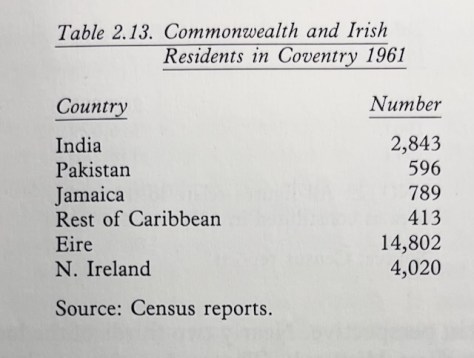
The 1961 census revealed that the 1954 estimate of Asians in Coventry was inflated. New Commonwealth migrants made up only 1.5% of the population, whereas 6.1% was from Eire and Northern Ireland. The flow of migrants from the new Commonwealth was minimal rather than overwhelming. However, between the 1961 census and the so-called mini-census of 1966, significant shifts in migration into Coventry occurred, shifts that would help shape the political rhetoric around immigration for decades to come.
Lancaster and Mason, page 75
Echoes of the Past
Reading the 1954 Coventry Standard editorial today, with its language about people “pouring in” and becoming a “menace,” makes it impossible not to hear echoes that resonate in British political discourse. Just fourteen years later, on April 20, 1968, Enoch Powell, Conservative MP for Wolverhampton South West, gave his infamous “Rivers of Blood” speech at a meeting of the Conservative Political Centre in Birmingham nearby. Powell heavily relied on letters and anecdotes from the West Midlands, predicting that communities would be “foaming with much blood” because of Commonwealth immigration. His apocalyptic language gained traction in a region that was experiencing real demographic change, even though the scale was often exaggerated by fear and prejudice.
Coventry’s history shows a striking pattern: a persistent disconnect between perception and reality regarding migration. In 1954, ‘coloured’ migrants made up less than 1.5% of Coventry’s population and were described as a menace and a threat to living standards. By 1961, the actual numbers were even lower than the overestimated figures. Despite this, anti-immigrant sentiment gained strength, reaching a peak with Powell’s speech, which appeared to validate fears that years of evidence had shown to be unfounded.
This kind of hostile and often racist political rhetoric continues to thrive today. When Nigel Farage displayed his “Breaking Point” poster in 2016, depicting a line of refugees, or when he claims to feel “like a foreigner in my own country” and warns that migration levels are “unsustainable,” he uses a similar approach: heightening anxiety about cultural change while often distorting the scale and effects. Words such as invasion, being “overwhelmed,” and threats to “our way of life”—these expressions form a continuous thread from that 1954 editorial through Powell to Farage.
Coventry’s historical record is particularly valuable because it allows us to compare predictions with actual outcomes. The threat predicted in 1954 never came true. There was no bloodshed or violence. Despite the panic, racial barriers, and inflammatory editorials, and despite migrants constituting less than 1.5% of the population, Coventry’s diverse communities—Irish, South Asian, Polish, Ukrainian, and others—became an integral part of the city. They did not pose the threats to jobs or living standards that were claimed. Indeed, the post-war boom would not have been possible without this labour migration into the city.
Coventry’s history shows that demographic change is neither easy nor without real challenges. However, the most provocative rhetoric often surfaces during times of economic uncertainty. The true story of Coventry, a city that has been profoundly shaped by migration as it continues to evolve and develop.
As we enter the new year, with migration remaining one of the most contentious political issues in Britain, Coventry’s history offers a lesson worth heeding: our fears of newcomers have consistently proved more destructive than the newcomers themselves. How can we learn from the past without repeating the same anxieties and prejudices?
References:
Ewart, H. (2011). “Coventry Irish”: Community, Class, Culture and Narrative in the Formation of a Migrant Identity, 1940–1970. Midland History, 36(2), 225–244.
Lancaster, Bill and Mason, Tony (eds), Life and Labour in a Twentieth Century City: The Experience of Coventry. Coventry: Cryfield Press, 1986.
Virdee, Pippa. Coming to Coventry: Stories from the South Asian Pioneers. The Herbert, 2006.
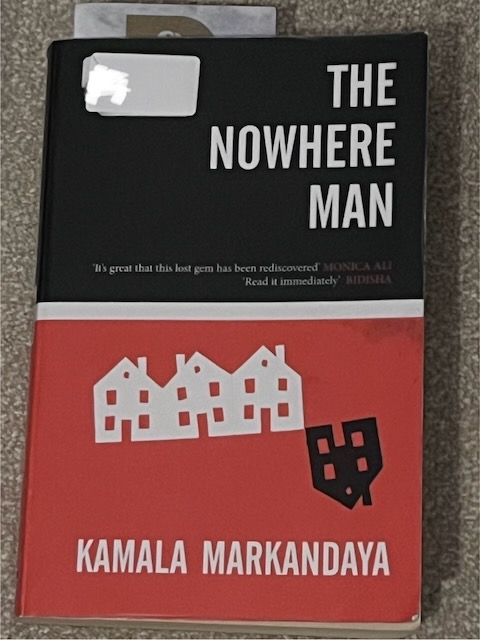
Kamala Markandaya (23 June 1924–16 May 2004), pseudonym of Kamala Purnaiya, married name Kamala Taylor, occupies a distinctive position in the landscape of South Asian literature. Born into a prominent Brahmin family in Mysore, India, she graduated from Madras University and established herself as a significant voice through short stories published in Indian newspapers. In 1948, shortly after independence, she uprooted herself and moved to London with literary ambitions, and thus straddled between two worlds – East and West – and also the transitional era from the colonial to the post-colonial.
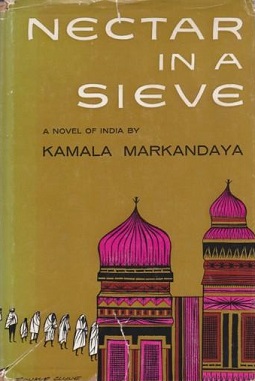
Her first novel, Nectar in a Sieve (1954), introduced readers to her unflinching examination of rural poverty and resilience and became a bestseller. The title of the novel is taken from the 1825 poem ‘Work Without Hope’, by Samuel Taylor Coleridge”
Work without hope draws nectar in a sieve,
And hope without an object cannot live.
This epigraph establishes a thematic preoccupation that would recur throughout Markandaya’s work: the question of what sustains individuals when hope seems futile, when effort appears wasted, and when displacement renders purpose elusive.
A Voice of the Indian Diaspora
According to Sunita Rani’s critical assessment, ‘Kamala Markandaya, a pioneer member of the Indian Diaspora occupies an outstanding place among the Indian women novelists writing in English… In a wider context, she comes under the umbrella of third world post-colonial writers.’ This positioning is crucial to understanding Markandaya’s unique contribution: she wrote from the margins, giving voice to experiences of displacement, cultural alienation, and the psychological toll of migration long before diaspora literature became a recognised genre.
Writing at a time when British literature was still predominantly white and male, and when post-colonial voices were only beginning to emerge, Markandaya carved out a space to explore the immigrant experience with psychological depth and nuance. Her attention to the internal lives of her characters, their negotiations between cultures, and their struggles for dignity in hostile environments marked her as a writer of considerable sophistication and empathy.
The Story of Srinivas
The Nowhere Man tells the story of Srinivas, who embodies the rootless existence its title suggests. After spending two-thirds of his life in England—during which he sacrificed a son to war—this Indian immigrant finds himself heckled by racist hoodlums and ultimately driven to his death. The tragedy of his situation is compounded by temporal irony: he has lived in England for thirty years, yet remains perpetually “foreign,” a restless, rootless individual stripped of both his Indian heritage and denied full acceptance into British society.
As Rani observes, ‘He is bewildered as to where he belongs: he has lived in England for thirty years and yet became a rootless, restless individual disposed of India and disowned by England. He represents millions of men who, for some reason or other leave their own roots and fail to strike roots in alien soil and die as rootless, restless individuals.’
Srinivas’s predicament speaks to the fundamental existential crisis of the immigrant: the loss of one identity without the gain of another, the perpetual state of being in-between. His thirty years in England count for nothing in the eyes of the racist youths who torment him; his decades of contribution, his sacrifice of a son to Britain’s war effort, cannot purchase him belonging. Markandaya captures with devastating clarity how racism reduces a lifetime of lived experience to nothing more than the colour of one’s skin.
Cultural Neglect and Critical Oversight
What makes the novel’s obscurity particularly striking is that it addresses themes that should have resonated powerfully in 1970s Britain. As Emma Garman writes in the introduction to the new reprinted edition, ‘writing ahead of one’s time risks cultural neglect, and The Nowhere Man was all but ignored on its publication.’ The novel confronted uncomfortable truths about race, belonging, and British society’s treatment of immigrants at a crucial historical moment – an era marked by increasing racial tension, the rise of far-right politics, and heated debates about immigration.
The 1970s saw the growth of the National Front, the implementation of increasingly restrictive immigration laws, and incidents of racial violence across Britain. The Nowhere Man spoke directly to these realities, yet British readers and critics seemed unwilling or unable to engage with its challenging portrait of their society. Perhaps the novel was too close to the bone, too unflattering in its depiction of British racism and xenophobia.
Garman picks up the inter-generational tension in Markandaya’s work, when newly-wed Laxman brings his wife Pat to stay at Srinivas’s home for a week, he feels embarrassed by his parents’ perceived lack of sophistication—their appearance, dress, and English. His father’s valiant attempts to fit into an awkward social environment reveal the painful immigrant experience that Markandaya captured so effectively. Garman notes how the ‘conflict and sense of separation that can arise between first and second immigrant generations would, thirty years later, be explored to great effect in Zadie Smith’s White Teeth and Jhumpa Lahiri’s The Namesake. But at the time Markandaya was writing, it was a subject few novelists had confronted.’ Yet her pioneering work went largely unrecognised, until perhaps its re-discovery through the new edition in 2019.
A Precursor to Contemporary Voices
Perhaps the most intriguing element of The Nowhere Man‘s neglect is how its outsider perspective—particularly its diagnosis of British society through the eyes of ‘a woman and a foreigner’—felt disconcerting to 1970s readers. Garman asks whether this dual marginalization could help explain the novel’s commercial and critical neglect?
Better known for her American success, Markandaya found her adopted home, Britain, a tougher market, yet she remained committed to exploring themes of cultural displacement. Garman shows how Markandaya ‘blamed the inevitable snobbishness towards an author from a former, and very recent, British colony.’ Again suggesting someone who was ahead of her time and working on the edges. And ‘perhaps discouraged by the reaction – or rather the lack of reaction – to her harrowing portrait of modern Britian, Markandaya returned to India for the setting of her subsequent four novels.’
Historically, Markandaya occupies a fascinating position: falling between the canonical generation of V.S. Naipaul (b.1932) and later Salman Rushdie (b.1947), and those who came before her such as R.K. Narayan (b.1906) and Mulk Raj Anand (b.1905). It was perhaps Ruth Praver Jhabvala (b.1927) that remained her most literary contemporary.
Her work on diaspora and displacement anticipated the themes that would define the later writers. Her work, particularly The Nowhere Man, deserves recognition as a precursor to contemporary diaspora literature—a pioneering exploration of identity, displacement, and the meaning of home that speaks with renewed urgency to our current moment.
And given the political rhetoric around nationalism in contemporary Britian, this makes for pertinent reading as a story which is set in 1968, the year of Enoch Powell’s ‘River of Blood’ speech, should resonate so much with our times today. Srinivas’s story remains tragically relevant, a reminder that the struggles for acceptance and dignity faced by immigrants are neither new nor resolved.
References and further reading:
Nasta S, Stein MU, eds. Disappointed Citizens: The Pains and Pleasures of Exile. In: The Cambridge History of Black and Asian British Writing. Cambridge University Press; 2020:193-310.
Nasta S. 1940s–1970s. In: Osborne D, ed. The Cambridge Companion to British Black and Asian Literature (1945–2010). Cambridge Companions to Literature. Cambridge University Press; 2016:23-39.
Rani, Sunita. “Probing Identities Amid Racial and Cultural Conflicts: Kamala Markandaya’s The Nowhere Man and Some Inner Fury.” Literature & Aesthetics 20, no. 1 (2010).
Harrex, S. C. (1971). A Sense of Identity: The Novels of Kamala Markandaya. The Journal of Commonwealth Literature, 6(1), 65-78. https://doi.org/10.1177/002198947100600108 (Original work published 1971)
Manoj Kumar Hemane and Mahindra Kumar H Fulzele. Endurance and Displacement: The Ethical Vision in Kamala Markandaya’s Novels. International Journal Research Engish. 2025;7(1):415-417. DOI: 10.33545/26648717.2025.v7.i1g.365
During the writing of my book, “From the Ashes of 1947: Reimagining Punjab,” I endeavoured to incorporate some of the poetry and literature that encapsulated the emotions and sentiments of the aftermath of the Partition of Punjab. My intention was to highlight the contributions of Ustad Daman, a lesser-known figure in certain regions of South Asia but a significant figure for many, particularly in Lahore, the city of his birth. As another year passes and we inch towards the 80 years of the Partition, his work assumes a heightened relevance in the contemporary context.
Ustad Daman, whose real name was Chiragh Din, hailed from Lohari Gate within the historic old city of Lahore. His father was a tailor who owned his own small shop. His elder brother, Feroz Din, joined his father in managing the business, but young Chiragh had no inclination to pursue the family trade. Instead, he harboured aspirations for education and a clerk’s position. He attended school, but this did not result in a clerk’s job. Disappointed, he returned to tailoring and established his own shop. However, his heart was truly captivated by poetry. He would abandon his shop to attend poetry readings. Inspired by his mentor, Ustad Hamdam, he adopted the pseudonym Damdam, but later changed it to Daman. (Source: Apnaorg)
The pivotal moment came when he received his first payment for reciting poetry in a public gathering. This marked the commencement of his journey as a poet. Initially, Daman composed poetry on conventional subjects, such as matters of the heart. However, as the independence movement gained momentum prior to partition, political themes began to permeate his poetry. Daman was a member of a group of traditional Punjabi poets who would recite poetry extemporaneously, while their pupils maintained the records. This tradition earned them the title of Ustads (mentors). (Source: Apnaorg)
Below are some references and material that highlight the significance of Ustad Daman.
Folk Punjab has a digital archive of his poetry including ‘Es mulk di wand kolon yaro’.
Ustad Daman, ‘The Poet Laureate of the Twentieth Century Punjab’ Fowpe Sharma, Revolutionary Democracy
Ustad Daman lived and wrote poetry as someone always on the wrong side of the establishment By Dr. Afzal Mirza, Apanorg.
Rammah, Safir. “West Punjabi Poetry: From Ustad Daman to Najm Hosain Syed.” Jounral of Punjab Studies 13, no. 1&2 (2006): 216.
Earlier this year, I visited Ludhiana, Punjab, a place I try to make time for whenever I have an opportunity or a slight reason. As is often the case, no visit feels complete without visiting Mau Sahib, my father’s ancestral village near Phillaur. Although no immediate family members live there anymore, Mau Sahib holds a special place in our hearts, especially for my sister. She remembers it with warmth and nostalgia, as a place of her childhood.
Our visits have become something of a ritual—paying respects at the historic Gurudwara, partaking in the langar, and then visiting the nearby Sufi shrine. It’s a quiet pilgrimage that connects us with both our heritage and the memory of those who came before us.
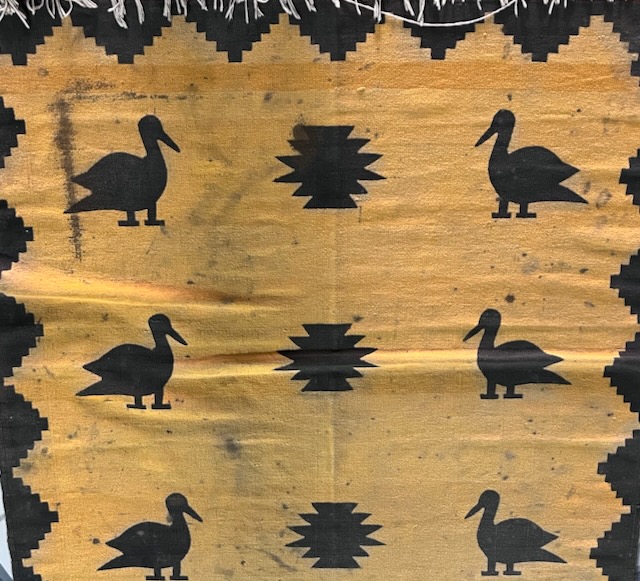
During this visit, the Gurdwara was undergoing renovations. Amid the scaffolding and signs of change, we made our way to the basement area; a large, echoing hall that was mostly empty and only partially completed. The Guru Granth Sahib rested there with solemn grace in the middle of the hall, surrounded by an assortment of vibrant dhurries scattered across the floor. The scene was simple yet striking. I couldn’t help but take photos of the colourful, handwoven patterns.
In that quiet moment, surrounded by these beautiful pieces of craft, I was instantly transported to my study back home. There, in the middle of my room, lies a black-and-white dhurrie—a treasured piece handmade by my mother. The rug, is now a relic and a reminder of her remarkable talent, one of many handcrafted creations she lovingly produced over the years.
At the time, I must admit, I didn’t fully appreciate the time, effort, and skill that went into these works of art. But today, that dhurrie is a cherished heirloom. It reminds me not only of her hands at work but also of the deeper cultural traditions that she carried within her.
For those unfamiliar, a dhurrie is a handwoven rug or flat-weave carpet, traditionally made in India and Pakistan. They were mostly made from cotton or jute and thus accessible for all. Dhurries are often lighter, reversible, more versatile and useful for everyday use; they can be used as floor coverings, bedding, or even wall hangings. In rural Punjabi households, you often find these dhurries spread out for meals, prayers, weddings, and community gatherings, making them silent witnesses to the everyday rituals and rhythms of life.
What makes them so striking are the geometric patterns, vivid stripes, or sometimes floral designs, each inspired by the region and culture from which they originate. The bold designs are usually in bright colours such as red, blue, yellow, as well as using black and white.
Historically, dhurrie weaving was a thriving cottage industry in rural India. But it was also something more intimate and symbolic, especially for women. Young brides-to-be were often taught the art from a young age. Many dhurries formed part of a woman’s dowry, and their patterns weren’t just decorative. They carried stories—symbols of personal, familial, and spiritual identity, passed down through generations, like a family recipe.
In many villages, it was common to see women sitting on charpoys under the shade, rhythmically working on pit looms while chatting about daily life. Though machine-made textiles are now more common, the tradition of handwoven dhurries survives in some artisan clusters, supported by cultural preservation efforts and a renewed appreciation for handmade goods.
As I stood in that hall, looking at the scattered dhurries beneath my feet, I realised how deeply woven this craft is into the fabric of our collective memory. These are not just utilitarian objects; they are vessels of heritage, art, and emotion. Each thread, each motif, tells a story.
In many ways, my mother’s dhurrie now tells mine. And you may well be wondering about the one I have? This was prized away from my sister my years ago. She had a number of them, given to her when she got married, and I convinced her to part with one which then travelled with me to England!
As we experience yet another heatwave, I found myself lacking the energy for any activity beyond a brief evening walk. Yet, the need to move—both physically and emotionally—compelled me to step outside, hoping to release the tensions accumulated over the day. On my return, I was met with a striking view: the sun had dipped firmly below the horizon, casting a serene glow across the bridge in front of me. This image prompted a moment of contemplation—particularly on the symbolic significance of bridges.
Bridges, in their physical form, connect distant places and facilitate movement between separate points. Metaphorically, however, they represent much more. They embody transition, decision-making, and the effort required to reconcile division—whether internal or external. Though intended to unite, bridges can also signal challenge, especially when we are compelled to “bridge the gap” in our own lives.
At present, I find myself standing on such a metaphorical bridge. The path ahead exists, but it is shrouded in uncertainty. I cannot clearly see what lies beneath or what awaits on the far side. What is certain, however, is that bridges inherently require a departure from the familiar. They demand forward motion and ask us to focus not on what lies behind, but on what we must face ahead.
The magnitude of the bridge often correlates with the magnitude of the challenge. Its instability—its rattling and trembling—can mirror our own internal doubts. Nevertheless, retreat is frequently not an option. Thus, we commit to the crossing. We proceed with trust in our steps and with faith in our own convictions, accepting that uncertainty is an intrinsic part of all meaningful transition.
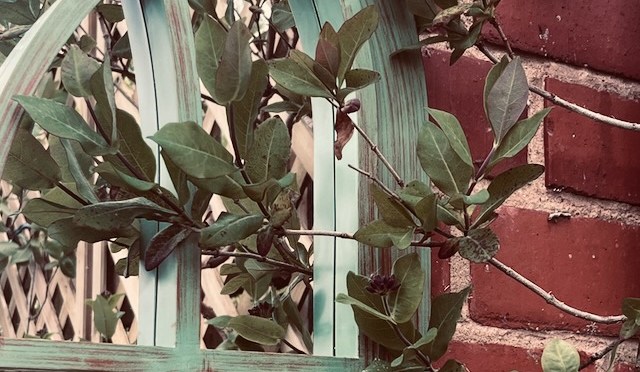
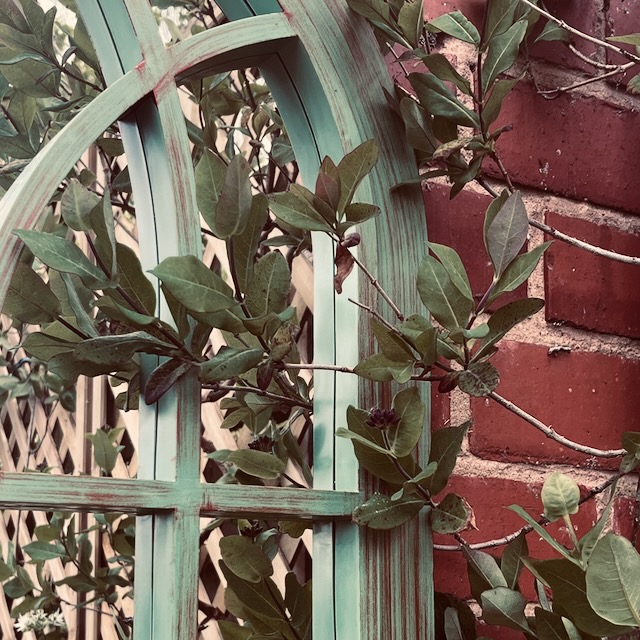
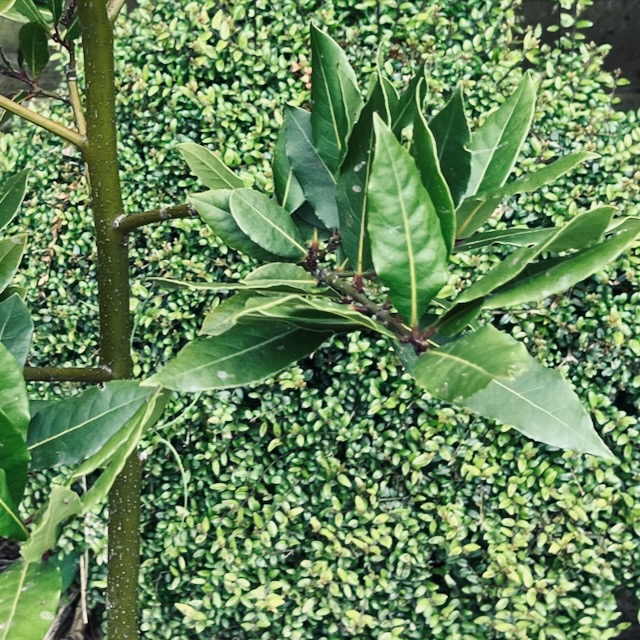
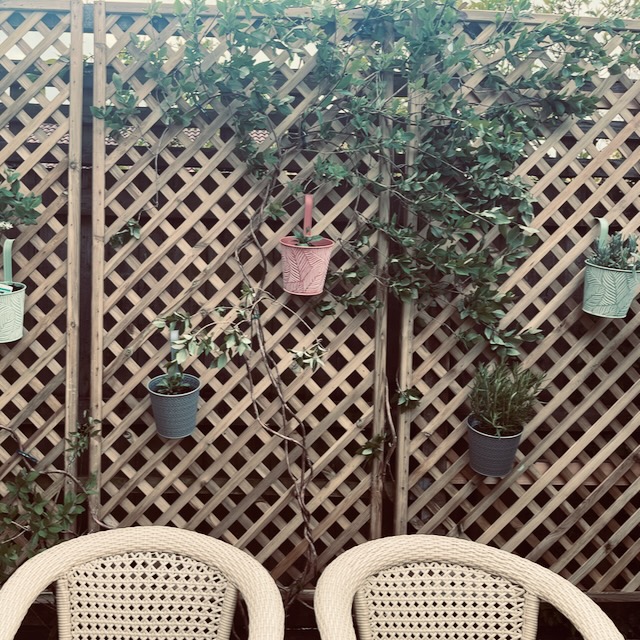
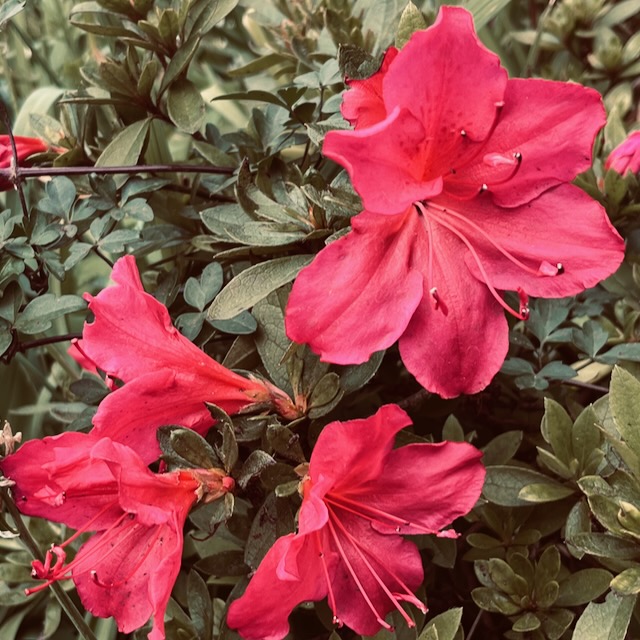
A long weekend spent revamping the garden has left me feeling quietly thankful—grateful not only for the beauty of blooming flowers but the often-overlooked moments that bring small moments of joy to us. These are the everyday miracles that ground us, offering us gentle reminders to be present, and to be grateful for the life and family that support us and get us through difficult times. They act as pillars, always there in the background but without whom we could not exist.
In August 2016, I began this blog as a space to document my experiences during a visiting fellowship in Lahore, as well as to share other events and observations that captured my interest along the way. This has grown into a broader canvas—one where I could share photographs, music, and reflections, often framed with a touch of historical context. Over time, the blog has become not just a repository of memories, but also a means of connecting with others.
When I first considered what to name this space, I wanted something that could symbolise both personal growth and a diversity of ideas. I eventually chose Bagicha—the Urdu and Punjabi word for “garden.” The name felt right, evoking a place where different thoughts, emotions, and inspirations could coexist and bloom. Like any real garden, this blog has required time and care, and though life’s demands have occasionally interrupted the rhythm of posting, I’ve done my best to return and tend to it regularly.
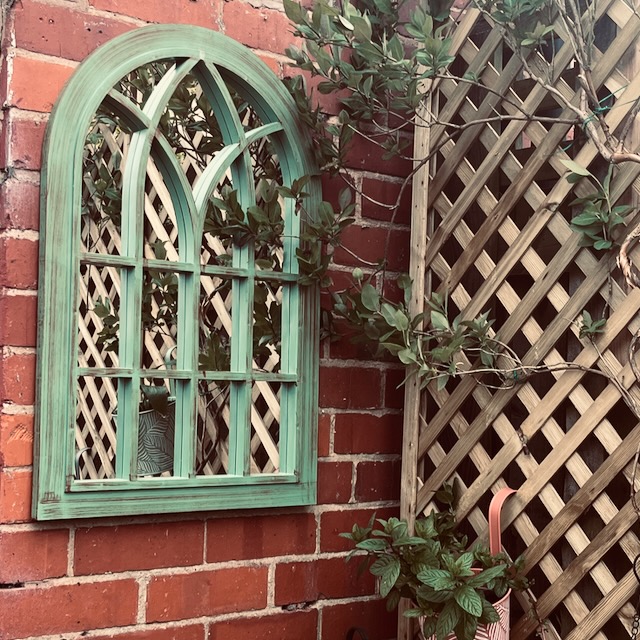
This past weekend, I turned my attention to my actual garden, which had begun to show signs of wear and neglect. I found myself hoping that this act of renewal would also translate into a more productivity for my Blogging and provide inspiration for other writing projects over the coming summer.
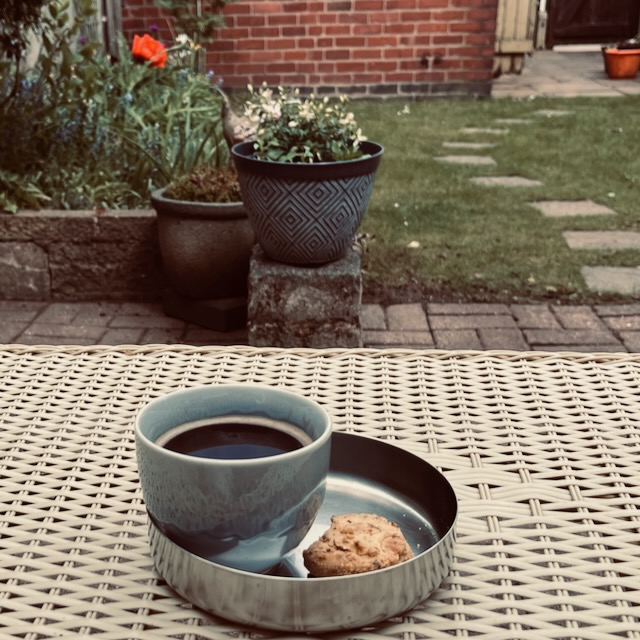
After the work was completed, I treated myself to a quiet moment with a cup of coffee and a Karachi Bakery biscuit, enjoying the fruits of my labour over the long May Bank Holiday weekend. As I unwound, scrolling casually through Instagram, I stumbled upon a deeply nostalgic song: Mai Tenu Yaad Aawan Ga (You Will Remember Me), sung by the legendary Surinder Kaur and Asa Singh Mastana. This version, recorded in Toronto in 1980, is hauntingly melodic—its rich tones and heartfelt lyrics evoke a bygone era.
Surinder Kaur, often hailed as the “Nightingale of Punjab,” remains one of the most celebrated folk singers in South Asian musical history. Her voice, both powerful and tender, became a defining sound of Punjabi folk music in the 20th century. Asa Singh Mastana, her equally iconic counterpart, was known not only for his duets with Kaur but also for his contributions to Bollywood as a playback singer. Both Kaur (born 1929 in Lahore) and Mastana (born 1926 in Sheikhupura) belonged to pre-Partition era and migrated to Delhi after 1947. They continued the musical journeys that had begun in Lahore and helped shape the soundscape of post-Partition Punjab.
Their music carries the weight of memory, migration, and resilience. Listening to them, one feels transported—not just to another time, but to a shared emotional and cultural landscape that continues to resonate deeply.
Listen to this timeless song and linger for a while in its emotional undertones. I’ve also included some photographs to accompany the mood—a small attempt to honour the spirit of nostalgia and historical connections that Bagicha has tried to capture.






















 BAGICHA