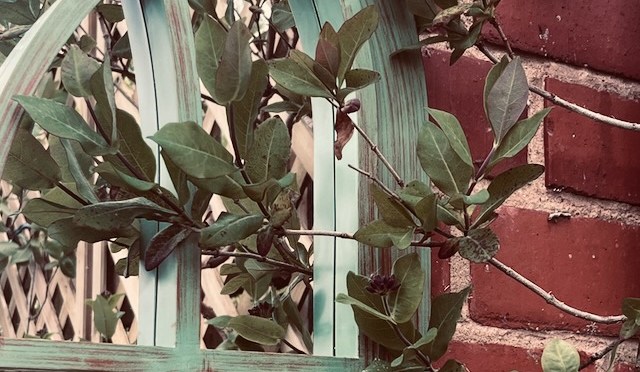
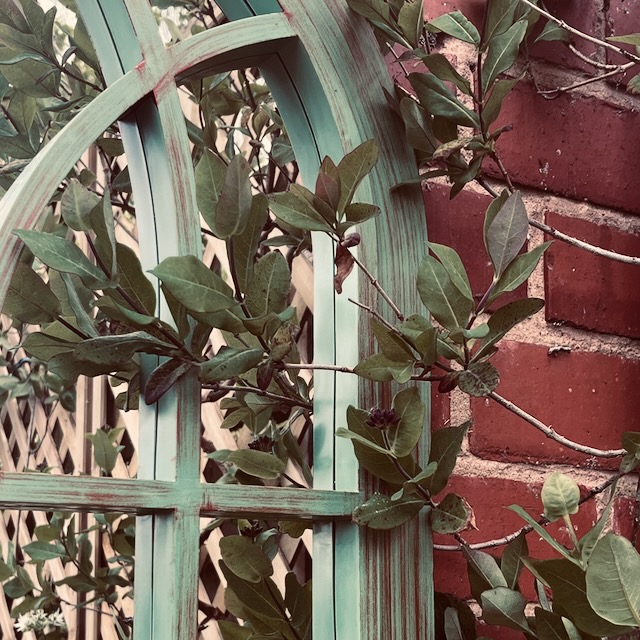
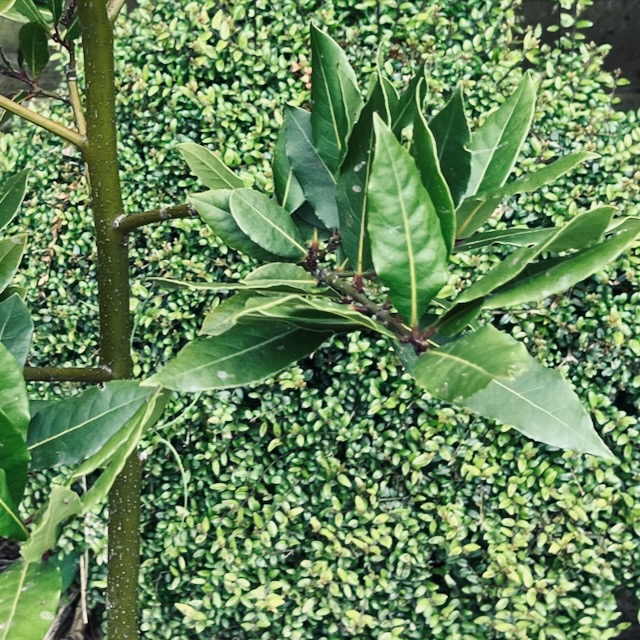
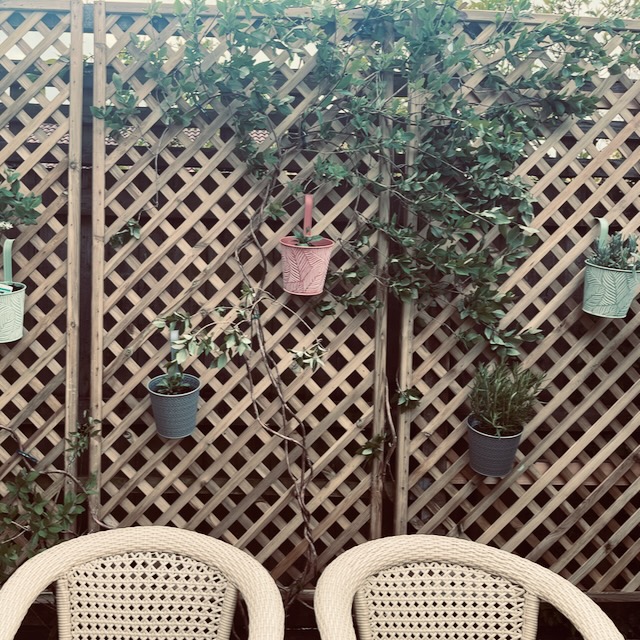
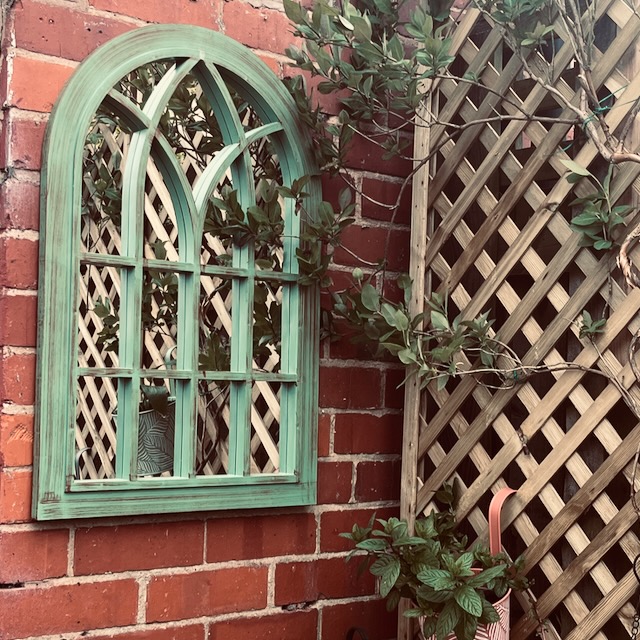
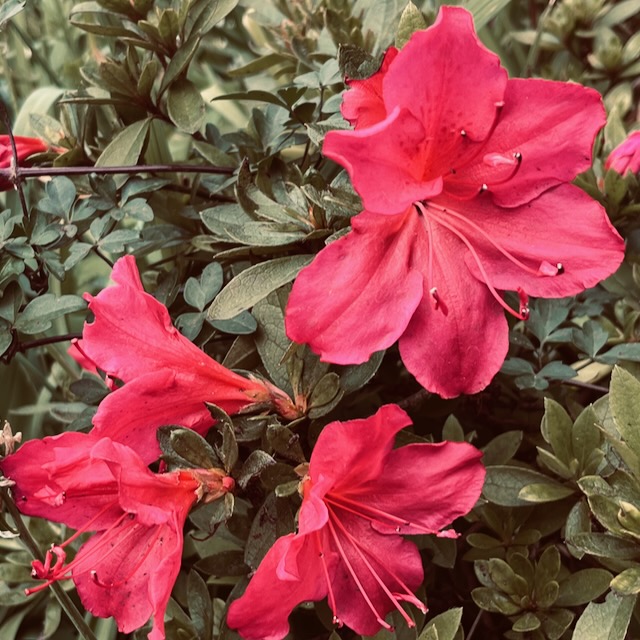
A long weekend spent revamping the garden has left me feeling quietly thankful—grateful not only for the beauty of blooming flowers but the often-overlooked moments that bring small moments of joy to us. These are the everyday miracles that ground us, offering us gentle reminders to be present, and to be grateful for the life and family that support us and get us through difficult times. They act as pillars, always there in the background but without whom we could not exist.
In August 2016, I began this blog as a space to document my experiences during a visiting fellowship in Lahore, as well as to share other events and observations that captured my interest along the way. This has grown into a broader canvas—one where I could share photographs, music, and reflections, often framed with a touch of historical context. Over time, the blog has become not just a repository of memories, but also a means of connecting with others.
When I first considered what to name this space, I wanted something that could symbolise both personal growth and a diversity of ideas. I eventually chose Bagicha—the Urdu and Punjabi word for “garden.” The name felt right, evoking a place where different thoughts, emotions, and inspirations could coexist and bloom. Like any real garden, this blog has required time and care, and though life’s demands have occasionally interrupted the rhythm of posting, I’ve done my best to return and tend to it regularly.
This past weekend, I turned my attention to my actual garden, which had begun to show signs of wear and neglect. I found myself hoping that this act of renewal would also translate into a more productivity for my Blogging and provide inspiration for other writing projects over the coming summer.
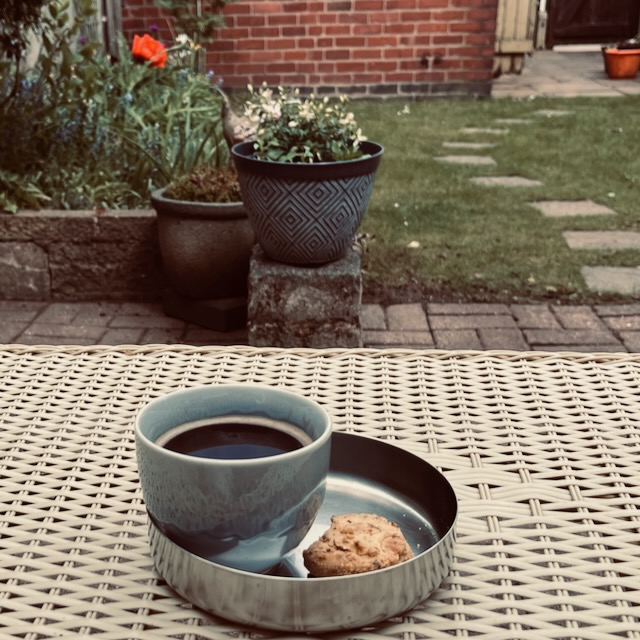
After the work was completed, I treated myself to a quiet moment with a cup of coffee and a Karachi Bakery biscuit, enjoying the fruits of my labour over the long May Bank Holiday weekend. As I unwound, scrolling casually through Instagram, I stumbled upon a deeply nostalgic song: Mai Tenu Yaad Aawan Ga (You Will Remember Me), sung by the legendary Surinder Kaur and Asa Singh Mastana. This version, recorded in Toronto in 1980, is hauntingly melodic—its rich tones and heartfelt lyrics evoke a bygone era.
Surinder Kaur, often hailed as the “Nightingale of Punjab,” remains one of the most celebrated folk singers in South Asian musical history. Her voice, both powerful and tender, became a defining sound of Punjabi folk music in the 20th century. Asa Singh Mastana, her equally iconic counterpart, was known not only for his duets with Kaur but also for his contributions to Bollywood as a playback singer. Both Kaur (born 1929 in Lahore) and Mastana (born 1926 in Sheikhupura) belonged to pre-Partition era and migrated to Delhi after 1947. They continued the musical journeys that had begun in Lahore and helped shape the soundscape of post-Partition Punjab.
Their music carries the weight of memory, migration, and resilience. Listening to them, one feels transported—not just to another time, but to a shared emotional and cultural landscape that continues to resonate deeply.
Listen to this timeless song and linger for a while in its emotional undertones. I’ve also included some photographs to accompany the mood—a small attempt to honour the spirit of nostalgia and historical connections that Bagicha has tried to capture.
Today’s daily prompt on WordPress was “What makes you feel nostalgic?” I of course immediately started thinking and letting my mind wonder into the past. The past that is often nostalgic and romantic; it is after all the 31 December! Immediately one memory came back like a flash.
I recall the numerous times that I went to visit Pran Nevile at his home in Gurgaon, where we would have meet, chat, drink and eat. And almost always there would be music playing in the background, the kind of music that transports you to a bygone era, along with the conversation. These “Carefree Days” are no more, but those precious memories remain.
Beyond the nostalgia I remember I wrote a tribute for Pran, which was supposed to have been published but I suspect it never was. I most likely didn’t follow up because of work distractions. Upon a keyword search (thank goodness for that!) I found the tribute on my laptop straightaway. I sat there with the melodic voice of Begum Akhtar in the background and re-read the piece, feeling sad but happy to have met someone like Pran at the beginning of my own journey. It makes a fitting post for today’s prompt, as I will always associate Pran with the nostalgia of a pre-partitioned Punjab that is no more.
Pran Nevile (1922-2018): A Tribute
I first met Pran Nevile in 2001, when I embarked on a new journey in my life of pursuing a PhD. He was recommended to me by my supervisor, Prof. Ian Talbot. We met, like on many subsequent occasions, at his favourite place in New Delhi, the India International Centre (IIC). I was beginning my research into the impact Partition had on Punjab, exploring this through first-hand accounts of people, who were forced to abandon their homes and leave during that tumultuous and violent time. Pran was born in Lahore in 1922 and thus could recollect stories from the colonial period thereby contextualising this impact on Punjab following Partition. At the time I didn’t know much about Pran, beyond that he had written a book on Lahore and that he had a previous career in the Indian Foreign Service. In many ways, I was an outsider to both the intellectual Delhi circle and academia, more generally. We sat in the café at the IIC and had tea, while chatting about an array of subjects. Almost straightaway we bonded as he radiated with an old-school genteel charm that belongs to a by-gone era; certainly not of the India and Pakistan today. He paid me a wonderful/witty compliment, by saying that when I speak in Punjabi, I sound like a Punjaban and when I speak in English, I am a mem. He would repeat this on numerous occasions. This was the beginning a friendship, which endured until he passed away on 11 October 2018. He was my connection to the pre-partitioned Punjab, and I was his connection to Lahore, exchanging notes and comparing the-then and now.
Growing up in Lahore
Pran’s family lived in Nisbet Road in the walled city of Lahore, where his father had migrated to in the early 1910s from their ancestral village of Vairowal, in neighbouring Amritsar district. Following his education at the DAV School, he was successful in getting a scholarship and got admission to the prestigious Government College Lahore, from where he graduated in 1943 in MA Economics. He recollects many of his early memories of growing up in Lahore in his autobiography, Carefree Days (2016), recounting the days of “pastimes, fairs and festivals”, which would keep them amused all year round. His favourite pastime though was kite flying, as he writes: “I cannot recall anything more thrilling than kite flying in my boyhood” (pp. 10-11). Pran, like many others, lamented the later ban on kite flying in Lahore, which has seen the demise of the popular Basant festival.
Writing Lahore: A Sentimental Journey (1992), a book that instantly resonated with many Lahoris, enabled Pran to visit the city of his childhood. He was one of the lucky ones because he was able to visit Lahore with ease, a romance that he rekindled with this tribute to the city of his birth. He often recited, Jine Lahore nahin Vekhya oh Jamya hi Nahin (One who has not seen Lahore is as good as not having been born at all) (p. 193). Like many other people who left their ancestral homes (thinking they would be back), he had a photographic imprint of the city in his mind, remembering every nook and cranny of the congested Androon Shehr. Professor Tahir Kamran organised a two-day conference at GC University on ‘Punjab and the Raj’ in 2006 and Pran was invited to speak at this conference. I distinctly remember a moment from then, when another friend from Lahore, Bilal Ahmed was driving the car, and Pran was seated in the front and me in the back. We were in the walled city, trying to locate a venue and unsure about the exact location. Immediately, Pran started to navigate and provide directions. He said he can never forget the streets of his Lahore, despite all the changes since his he was a student in the city. It was a heart-warming and amusing moment we never forgot.
Never-ending Retirement
Pran graduated during the political and international upheaval of World War Two. His desire was topursue a PhD at the London School of Economics, but the uncertainty of that period prompted him to take up an opportunity at the Bureau of Public Information in 1944 as an assistant journalist. After a series of different posts, he was selected for the Indian Foreign Service Board in 1955 as second secretary (commercial) (Carefree Days, p. 46). He joined the Ministry of External Affairs as an attaché in March 1959 and subsequently was posted in Warsaw (1962), Belgrade (1966) and Moscow (1969). By 1974, he was back at the Ministry of Commerce as deputy secretary (East Europe). After that came the opportunity to go to Chicago in 1977, which he recalls ended his “eventful official link with the socialist world of East Europe” (p. 148). During this period, he also had a short stint in Geneva which allowed him to develop his links with the UNDP, which ultimately paved the way for a second career. Soon after in May 1979, he took premature retirement, leaving after 35 years of professional life. He was now the programme coordinator for the UNCTAD, based in Geneva and this allowed him to rekindle his relationship with East Europe until 1985, when he returned back to India. One of the highlights of this stint surely was when he took on the role of a priest and performed the marriage rites for one of his friends in Geneva; a story he often shared with relish.
For a conventional diplomat, Pran was more austere and radical in his personal life. As he recalls in his autobiography, he developed an “abhorrence for this ostentatious tamasha and meaningless jubilation” (p. 49) that surrounded elaborate engagements and wedding ceremonies. In this endeavour, he developed a friendship with Savitri (daughter of an uncle who was married to Pran’s father’s first cousin!), often acting as her mentor and encouraging her towards the pursuit of knowledge and education. He first noticed her in July 1941, as a young man discovering his own self, and by January 1947, they had eloped and had a civil ceremony in Delhi. Early reservations against this marriage were put aside by their families, and he remained with Savitri until she died in 2013. A spark in him went after that.
The Last Calling
After his retirement from work, he decided to embark on yet another career, but this time, it started as an unplanned script. It was in 1987, when he first started making frequent trips to the IIC, spending his days in the library and often using this as office space for his writing. Initially, he only ventured towards his expertise area and wrote on economic matters, but it was not long before his real passion emerged and he turned his gaze towards other subjects, which included his hometown Lahore, nautch girls, dance and music. Feedback from these early forays in small articles gave him confidence to continue with this newfound passion; although one of his earliest writings dates back to 1949, when he wrote ‘Problem of the Mother-in-Law’ which was published in Caravan magazine. His first full-length literary work was inevitably on Lahore, as he recalls: “My desire was to take the reader on a pilgrimage to my Lahore of a bygone era of peace and plenty” (p. 171). The idea for the book was actually conceived way back in 1963 in Hotel Astoria, Geneva. On his seventieth birthday he received the advance copy from the publisher of his first book, Lahore: A Sentimental Journey.
This journey led him to write prolifically on the era of the British Raj. Being a product of that era, he imbued the character of the Brown Sahib and carved out a niche for himself, focusing on the social and cultural history of the British Raj. His fascination for visual and performing arts led him to unearth a vivid and richer history, which he energised many around him with. During the last few years of his life, he reserved his love for K.L. Saigal, the “immortal singer and superstar” (p. 189). My own recollections of Pran were always of visiting him in Gurgaon, chatting at length while nibbling on namkeens, and with the nostalgia of 1940s and 1950s music playing in the background. Those days are no more nor are those, which is his own words read:
“I belong to the vanishing generation of pre-partition days who were forced to leave their homeland but carried ‘Lahore’ in their hearts like the memory of a first love. Overpowered by nostalgia, we still recall the days when Lahore had attained the reputation of being the ‘Paris of the East’ where people of different communities live in harmony in the sunshine of their common heritage, historic bonds and flamboyant Punjabi culture.” (Carefree Days, p. 194).
Sometime last year I was having dinner at the Punjab restaurant in Covent Garden, considered to the “first and oldest Punjabi, North Indian Restaurant in the UK, serving distinctive homestyle Punjabi cuisine…” It was established by Sardar Gurbachan Singh Maan in 1946, initially in Aldgate, and then shifting to Covent Garden in 1951. Maan came to the UK from Mehsumpur, in the Jalandhar District of Punjab, in what was then British India. The restaurant and café provided the familiar tastes of Punjab to the small number of Indians living in and around 1940s and 1950s London. It has since then become a go to place for many, with queues often forming outside for those hoping to chance a table for the culinary delights offered inside.
The interior is mostly simple and unfussy, but nostalgic pictures cover the wall spaces everywhere in the restaurant. They transport you to a different time and place. Quite often the pictures are of the various royal families of Punjab, whether this is the iconic Ranjit Singh or the Maharaja of Patiala; it doesn’t really matter, they provide the regal, historic and nostalgic backdrop to a bustling Punjabi meeting place in London. In between these opulent people, however, are also everyday images of South Asians and of Punjabis living in the UK.
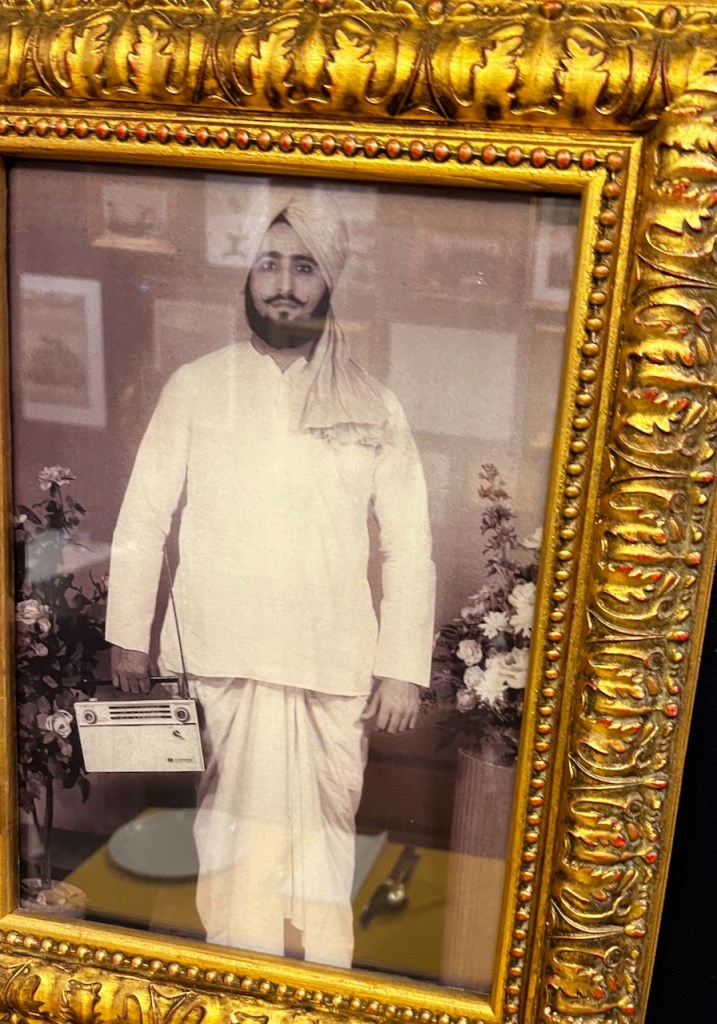
As I sat down, anxiously looking forward to my Punjabi feast, I had already decided I wanted saag, I started to curiously scan the photographs around me. Immediately a picture behind me caught my eye, it looked familiar, very familiar! It was a picture featured in a book that I did many years ago, Coming to Coventry: Stories from the South Asian Pioneers (The Herbert, 2006). The picture was of Gurdail Singh Johal, who had posed for this photograph in a traditional Punjabi kurta and tamba, while holding a transistor radio. It is a beautifully striking image, capturing the need to retain some of the cultural traits of “home”, but adapting and embracing new technologies. Like many other early migrants from Punjab, Johal migrated to Coventry in 1960 from Jalandhar, Punjab.
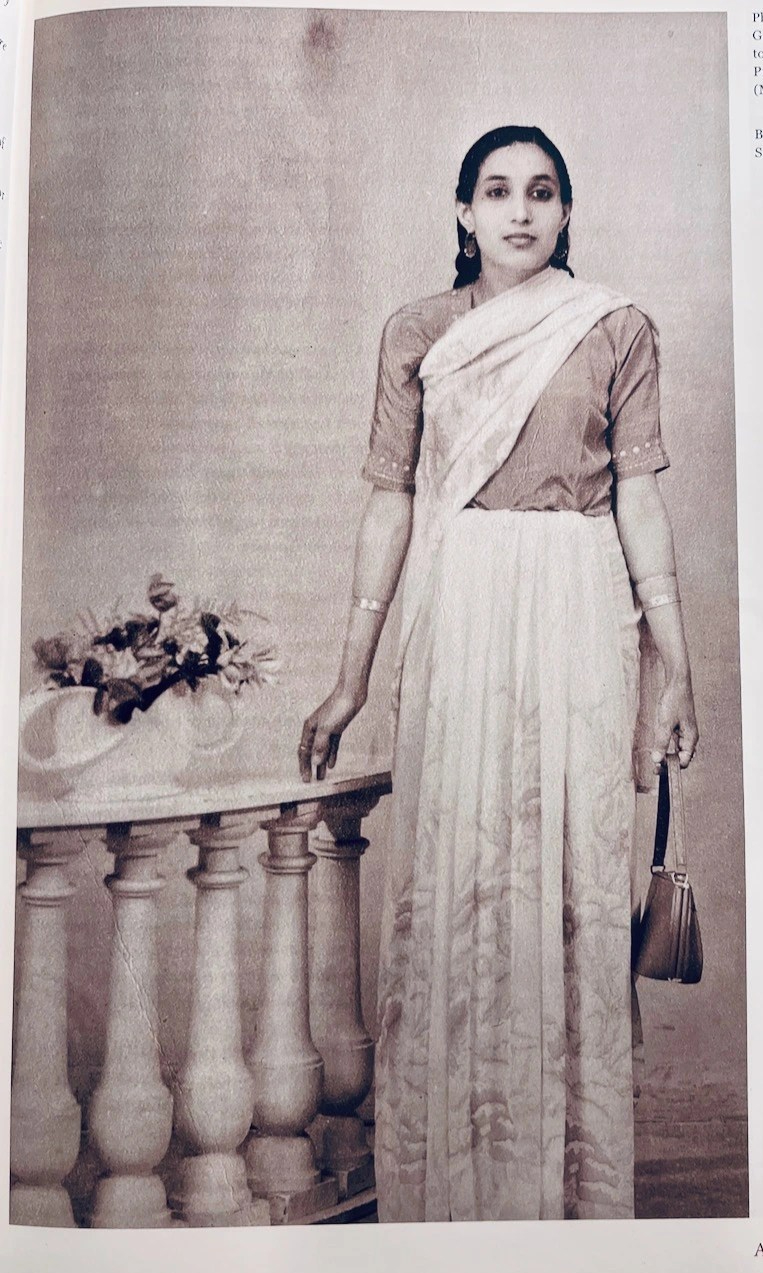
As you turn the page from Johal’s picture on page 17, there is another equally striking image of Gurmeet Kaur on page 19. This one was taken in Studio Taylor on Primrose Hill in 1959. Gurmeet is dressed in a sari, elegantly draped, and accessorised with some simple bangles and small earrings. Like Johal, Gurmeet is also holding something in her hand; the handbag conveys elegance and affluence. Mostly likely it belonged to her rather than being a prop. Both photographs have the ubiquitous floral bouquet in the backdrop, adding texture, colour and framing for the main object. Both images are important in showing how Johal and Kaur seamlessly integrate traditional dress with the modernity around them.
The studio pictures of Johal and Kaur are typical of that era where mass photography was not widespread and ownership of cameras was limited to those with means, and thus the average person could only indulge in the occasional studio photograph. Everyone dressed up and posed for the special occasion; in fact, I have many similar photographs in my own family album. It was an opportunity not only to capture a time and place, but perhaps also to preserve and show how one had progressed and advanced, especially when in a “foreign” land. It was versatile enough to share with family back home as it could be posted, and to show how they had altered their material status and to showcase the fruits of migration. Posing with a material object therefore was not just a prop in a studio picture, it was a statement about them and their class status. For the photographer it enhanced the aesthetic value of the composition, but for the people, it enhanced their status amongst their family and peers.
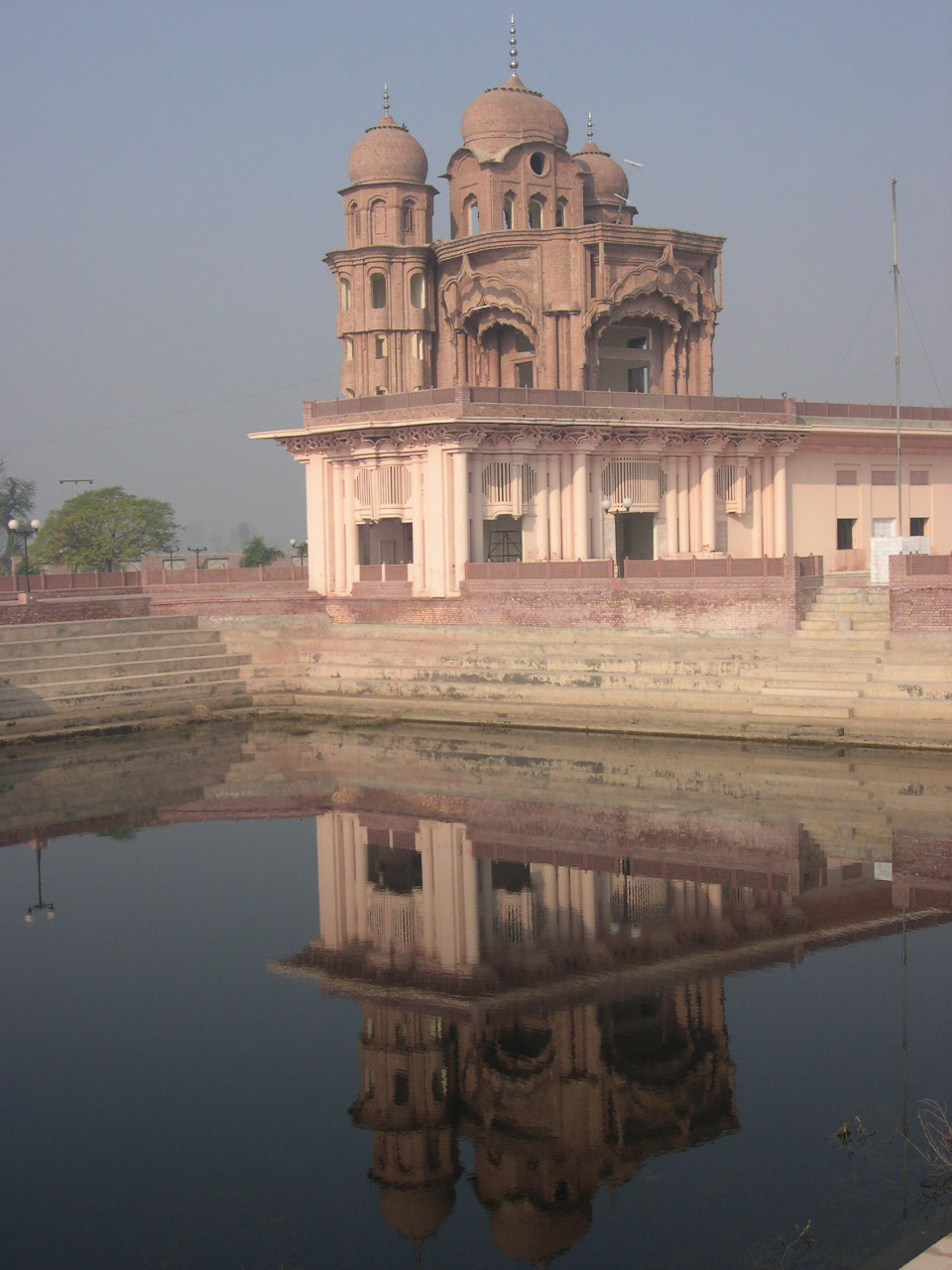
Gurdwara Sri Rori Sahib, Eminabad, Gujranwala (c) 2004 Pippa Virdee
A reflective essay on the lack of women in history writing and Punjab history. This was originally published in The Friday Times, 5 July 2019.
My first visit to Pakistan was in 2002. It was primarily to do research as a PhD student. At that time, I came with the religious baggage of belonging to a Sikh family and venturing into the known unknown. When I finally got my visa, I was very excited about travelling to the ‘near other’; unknown yet somehow familiar. After all, I rationalised, the cultural region of Punjab is, well, Punjab across both sides of the Radcliffe Line. And so, the journey into Pakistan’s history begun, a space in which the personal and the academic intermingled and boundaries became a metaphor for more than just the relationship between India and Pakistan.
The Sikhs in Pakistan are a small community; one of the smallest minorities in Pakistan. Exact numbers are difficult to estimate but they vary from around 6,000 to perhaps 20,000. They are largely concentrated around places like Peshawar, Nankana Sahib and Lahore. The interesting thing is that apart from the ethnic Punjabi Sikhs, many of the Sikhs that remained in Pakistan after 1947 were Pathan Sikhs. The latter were scattered in small numbers across Balochistan, Federally Administered Tribal Areas and Khyber Pakhtunkhwa. Most have been forced to relocate since, often seeking sanctuary in numbers. Though small, the Sikh community over the past few years has come to enjoy some state patronage. In an otherwise ‘Islamic’ milieu, Sikh men are easily identifiable by their turbans. Added to this are the old persistent colonial stereotypes of the Sikhs being a ‘martial’ race (even in Pakistan). And of course, the ‘Khalistani’ Sikhs have the sympathetic ears of the Pakistan establishment since the early 1980s. Thus, in Pakistan today, the medieval shadow of the Sikh-Muslim rivalry of Mughal India, as well as the pall of 1947 have receded to create a strange co-existence and a convenient acceptance of current realpolitik rather than a bitter dwelling in the past. However, this convenient relationship does not necessarily translate easily or well in the Sikh diaspora, especially here in the United Kingdom, where I am based.
While my main purpose for visiting Pakistan in 2002 was for my doctoral research, there was inevitably an interest to visit Sikh Gurdwaras and shrines; those remnants of pre-1947 which still existed. I have subsequently visited Pakistan more times than I can remember and have seen the changes in many of these shrines and their localities. Over the last 15 years, there has been a transformation of many of these shrines; from being small and poorly maintained to now being considered as one of the growing areas for pilgrim tourism in Pakistan. Every year, especially at the time of Vaisakhi and Guru Nanak’s birth anniversary, pilgrims come in their thousands from the UK, USA, Canada, which are home to significant Sikh diaspora communities. Depending on political temperatures, Indian Sikhs also make this pilgrim trip. For instance, this year, the Government of Pakistan issued 2,200 visas to Sikhs pilgrims in India for Vaisakhi. There is much trepidation amongst these of falling under the radar of intelligence agencies on both sides. Beyond the politics of two paranoid and securitised states though, growth in this tourism has benefitted local communities, as infrastructure around the ‘important’ shrines has improved to facilitate foreign tourists. These bring in the much-needed foreign exchange. They travel, stay, eat, drink, shop and thus spend their foreign currencies in Pakistan and, ultimately, some of this does make its way into the local economy. But this development is localised and centred around a handful of shrines, with the majority still largely neglected.
Social media and its ability to connect across borders, has spurred on a handful of people to seek adventure in Pakistan and document the ‘lost’ history of the Sikhs. Conversely, there has been more interest in these forgotten histories within Pakistan too. Combined with increased pilgrim tourism, there is almost a fascination and a sense of lost kinship that many Sikh Punjabis have with Pakistan and Pakistani Punjabis. These complex historicised feelings are under-girded by a common language, culture, biradari connections, and bhaichara. There is an old romantic connection that many have with reaching Lahore (formally Maharaja Ranjit Singh’s capital) captured in the phrase, Jis Lahore Nai Dekhya O Jamyai Nai/ Jine Lahore Nai Vekhya O Jamya Nai, meaning ‘One who has not seen Lahore has not been born’! This has been recited countless times and it helps to maintain the old pluralistic image of colonial Lahore. In this quest then, for the lost history of Sikhs in Pakistan, there has been a profusion of activity which has generated research in universities, fictional/non-fiction literature and pictorial books on Sikhs. These latter easily detract and divert from the difficult issues of politics, while sticking to the sites of nostalgia and neglect. Even the research at Pakistani universities (not exclusively though) is largely focused on the Ranjit Singh period (1801-39). When the bearded young man boasts of Ranjit Singh, of the contribution of the Punjabi (but usually Sikh) soldiers, of the great martial tradition, they rarely give women a thought.
These histories perpetuate and create a myth of the splendour associated with this lost history of the Sikhs. Even hard leftists have a soft spot for an otherwise unelected, unrepresentative, hereditary maharaja. While this greater interest and curiosity amongst scholars and students is welcome, it also serves to reinforce old stereotypes by avoiding the more difficult question of the broader issue of non-Islamic histories of Pakistan. Moreover, the study of history and its periodisation retains much of the colonial interpretations, hardly allowing us to interrogate these boundaries intellectually and dispassionately.
In the quest for academic “impact” and to connect with the general public, many academics in the west have been compelled to promote themselves. Social media again has been the route for this seemingly altruistic self-promotion. Articles, blogs and personal posts on social media, of travelling around Pakistan and bonding with the locals, for people’s immediate consumption and gratification. Moreover, the Punjabis express this in their usual flamboyant style of visiting their ‘lost’ Punjab, bonding with the local Punjabis and then sharing these ‘amazing’ bonding experiences. On closer inspection though, these all have something else in common. They are all invariably shared by men and are about their fraternal experiences. Statistically, we know that on average women are 26 percent less likely to own a mobile than men and 70 percent less likely to use mobile internet. Naturally, this means less women are visible and even when they are, they use it differently. Women largely use social networking to make connections and keep in touch with family or friends, in contrast men use social media to gather information they need to build influence. In South Asia, this discrepancy stems from the fact that men usually have better educational opportunities, have mobile phones, have greater levels of digital literacy, and this advantage over women fuels their privileged status.
Much of this social conditioning starts from the home, through to schools and universities. The social system perpetuates and emboldens men, making them entitled from a young age. As young women, we often have to fight our way to pursue our aspirations and dreams. Wanting to study politics and history at university for me was not easy because this was not considered an appropriate subject for a girl, even though it eventually reaped rewards. Universities themselves are supposed to be some of the most intellectually progressive spaces but actually they are not. They are just a reflection of society itself. They have the same prejudices and reflect the same class, caste, gender biases that society has. This is reflected in the largely male student body in South Asia, and although the number of girls is increasing and often, they perform better, many still see this as way of improving their choice of marriage partners. This is not a criticism of their desire to improve their lives, but rather a reflection of the limited value of education. The staff fraternity also tends to be male-dominated, especially the senior staff. Although this is no better than in the UK where the Royal Historical Society recently published a study on Race, Ethnicity and Equality (2018) and found that there was an over-whelming dominance of white male professors compared to females and the numbers are even smaller for those from Black and Ethnic minorities.
These centres of learning, therefore, do not reflect the voices of everyone because even here, the skewed societal power structures remain intact. Men control the institutions and therefore they control the narrative. They are the gatekeepers of knowledge and learning and without challenging these structures the narrative cannot be changed.
My experiences of being a (Sikh) woman living and working in Pakistan (largely Lahore and the Punjab) has been quite ordinary in many ways and extraordinary in other ways. I have never been given a free taxi ride; unlike the numerous accounts one reads of visiting Sikhs (i.e. Sikh men) who have struck a long-lost kinship with the taxi driver, who then from the kindness of his heart refuses to charge the client. In fact, I have struggled to speak with taxi drivers and men in public spaces in Punjabi because they consider this to be impolite. Unlike men, I am usually compelled to speak in the Urdu, which imposes a certain level of distance and formality to the conversation. While I cannot have my ‘bromances’ with most of those around me, I can, however, quietly enter the zenana spaces. And these, like the history pages that neglect them, are often hidden away.
I have learnt over the years that women, whether in South Asia or in the West, do not boast of their achievements. They work like ants, running around, keeping busy and building structures out of crumbs. The obstacles they encounter en route can be difficult and they are not always successful. More often than not they will encounter men who are in positions of authority and wield substantial power over the lives (and bodies) both in the home and the outside world. And the outside world is designed by men and for the needs of men. They would rarely acknowledge the privileged position they have in the home and the outside world and the freedom this gives them.
While I have spent many years working in Pakistan, on Punjab’s history, I have rarely felt the need to write about my “non-academic” experiences. The motivation has largely come from the fact that despite all these years, there is still not enough progress and even today there are few female historians coming forward. Even today we are judged on how we look, what we wear rather than what we think and write. Intellectually there is a stale and over-bearing concern for constantly writing about conflict, nationalism, religion, battles, and hero-worshipping; a reflection perhaps of an insecure male society that seeks glory from former victories to validate its present. The only way we can get diversity in the way we view and write about our history is to have that diversity in the people who write it. As a society we need to challenge these hyper-masculinised and hyper-nationalised histories that distort our past and shape our future. If we want to be part of the narrative, we have to take responsibility for writing it. As women we need to make ourselves visible in both the past and the present.
Imagine the nostalgia of jumping into a 4×4, on a rainy Friday morning in Islamabad, driven around by a German academic, only to discover several music cassettes by Indian singers tucked between the two seats. On close inspection, I discover the music of Lata Mangeshkar – the nightingale of Indian music. Sadly, there was no cassette player in the 4×4 but in that moment, I was transported to the 1980s, listening to popular Bollywood music on the small cassette players, an essential gadget in any household. The numerous compilations in the car were all of music belonging to the golden era of Bollywood music, Mukesh, Rafi and Lata.
Pakistan is not a place I immediately associate with music, you don’t often hear music in people’s houses, nor the streets or even the restaurants and cafés. When I do hear music it often registers in my mind, the sound of music to me is universal and without borders. The melodic sounds can reach out to anyone and everyone and so for me, music is like a breath of air. Growing up, we were always surrounded by music, whether this was religious music or popular music on the radio. Early childhood memories are filled with different genres of music but each one them is associated with a time and place, with the power to transport you back to that time and place.
I can’t exactly remember the last time I might have played something on the compact cassette. I know the earliest interviews I did were all recorded on cassettes, usually on the 60 minute tapes. This was as late 2002, only fifteen years ago. The cassette quickly disappeared after the micro discs and then eventually digital recordings which ended the reign of the cassettes. Digital recordings have been far more versatile, especially when traveling around and not knowing how long the interviews might last. But the cassette, despite its flaws and ability to get stuck in the cassette player, still has the power to evoke emotional memories associated with a bygone era.
In recent years there have been a number of articles which have explored the visual representation of a so-called “golden-era” of Pakistan. Nadeem F. Paracha[i] has been at the forefront with his attempts to show a Pakistan which many would struggle to recognise today. Just recently there was an article by Ally Adnan in The Friday Times which explored the history of Eid greeting cards via the writer’s own experiences;[ii] a more compelling and detailed account of vintage Eid greeting cards and their origin has been done by Yousuf Saeed.[iii] And then there was a short pictorial essay by Amna Khawar[iv] on vintage travel posters capturing the romantic side of Pakistani tourism. Many of these images relate to the 1950s and 1960s.
As a historian I have been thinking about these articles along with my own research, which has been exploring women’s representation in public spaces in the formative years of Pakistani history, especially the women who worked for PIA. I have been fascinated with the role of nostalgia and how this has been shaping the popular imagination in recent years. The pictures collectively evoke a period that is seen as being more liberal, tolerant of ‘others’, modern, sassy, energetic, optimistic and laced with a sprinkling of the colonial hangover. An early example of this is an ad by PIA from 1960, with the tag line “Move with the times.”[v] PIA was one of the leading brand ambassadors for Pakistan and combined with the emergence of the jet-age there was a growing tourism industry that is virtually non-existent now.
More broadly, and used a source, these images also depict the changes that have taken place in Pakistan and how these are reflected in society. While much has been written about the history of Pakistan, this has largely tended to focus on the political issues, ideological debates, economic concerns or the political leadership. Rarely do we get to glimpse history through the prism of the societal and cultural changes taking place. The ordinary lived experiences of people, especially women, rarely get coverage in the official histories, which are more concerned with the high politics. Yet, if we start to scratch around the pages of old newspapers, magazines, folklore, literature, and personal narratives, there are many untold stories waiting to be explored and unearthed.
So why this fascination now? There are a number of factors converging at the moment which are in many ways compelling commentators and writers to re-visit this history. The political changes and gradual encroachment of religious conservatism in Pakistan makes us want to explore alternative national histories. This is almost a reaction to the current political climate, which has rendered many helpless in their attempt to preserve a more secular and liberal vision of Pakistan, which was seen to be more prevalent in the early years of Pakistani history.
The distortion of history, both intentionally and now as a default position because the effect has been so pervasive, has helped to re-write how we understand and analyse the early history of Pakistan. This has been a gradual process but I would argue something that started especially after the break-up of Pakistan in 1971. The reaction, to the split was an attempt to force greater unity amongst the people and consequently more religiosity was prescribed to keep the nation from further fragmentation. This rather dogmatic approach meant a more exclusive understanding of Pakistani identity which frowned upon anything that deviated from the acceptable norms of the state-view.
The 1970s were also importantly a watershed for Pakistan because a number of factors converge together. The power of the petro-dollars and Saudi Arabia, the state-sponsored Islamisation during the Zia period, the rise of the pan-Islamic identity, the Russian invasion of Afghanistan, American interests in Pakistan, coupled with the break-up of Pakistan at the start of the decade result in a nation that was seeking a new identity. The response was almost an attempt to finally break away from the shackles of imperialism and create a new post-colonial nation. The replacement however, has seen this being replaced by a different form of colonialism, one that relies heavily on Saudi Arabia and ironically a dichotomous relationship with America.
Pakistan has thus undergone vast amount of change during the past forty years. Within all this change, which has been confused and contradictory at times, there is sentimentality and nostalgia for a period that seems so distant. The era of the 1950s and 1960s when, women were optimistic of their role in the nation-building project, and were visible in public spaces; economic prosperity offered hope for the future; a young nation looking and embracing internationalism; and the buoyancy and optimism of independence still reverberating. The reality may have been different but memory is quite subjective and revisionist. But sixty-eight years on, the optimism and expectations have somewhat dampened and have been replaced by cynicism, lack of faith in the state apparatus to deliver the basic needs for its people and an religious-ideological schism which is pulling people apart.
So it is within this context that increasingly there is a re-evaluation of trying to understand that period. It is in a sense a desperate attempt to hang on to a past that will be familiar to many but more radically it offers a space in which a nation is still trying to define itself. These cultural and social spaces are powerful, just as the margins are; so within these confines there is an opportunity to construct and revise a history that has become so distorted. Indeed History is never static; it is continually changing and is shaped by the present. Similarly, memory is equally revisionist and it is the fragility of the present, which compels many to seek answers in the past and contextualise this history in the present. By exploring these alternative spaces and histories of our collective past, we can perhaps better understand and hope for a more compassionate future.









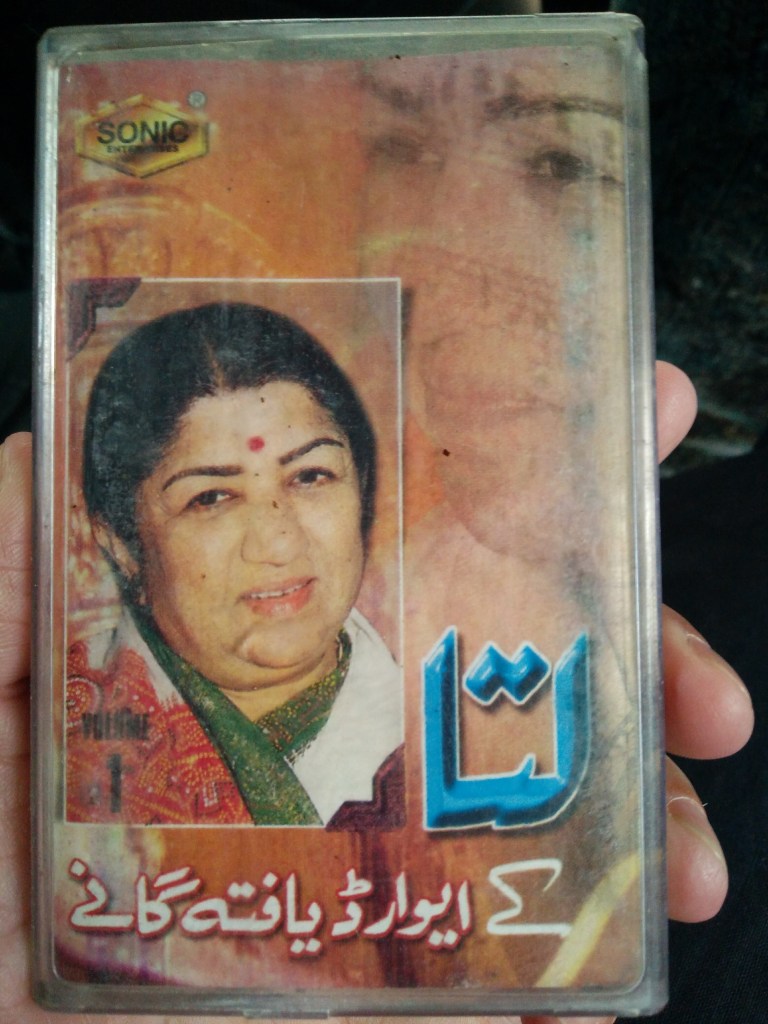 Imagine the nostalgia of jumping into a 4×4, on a rainy Friday morning in Islamabad, driven around by a German academic, only to discover several music cassettes by Indian singers tucked between the two seats. On close inspection, I discover the music of Lata Mangeshkar – the nightingale of Indian music. Sadly, there was no cassette player in the 4×4 but in that moment, I was transported to the 1980s, listening to popular Bollywood music on the small cassette players, an essential gadget in any household. The numerous compilations in the car were all of music belonging to the golden era of Bollywood music, Mukesh, Rafi and Lata.
 BAGICHA