Tag Archives: migration

Chandni Chowk: the spirit of the Ganga-Jumna Tehzeeb

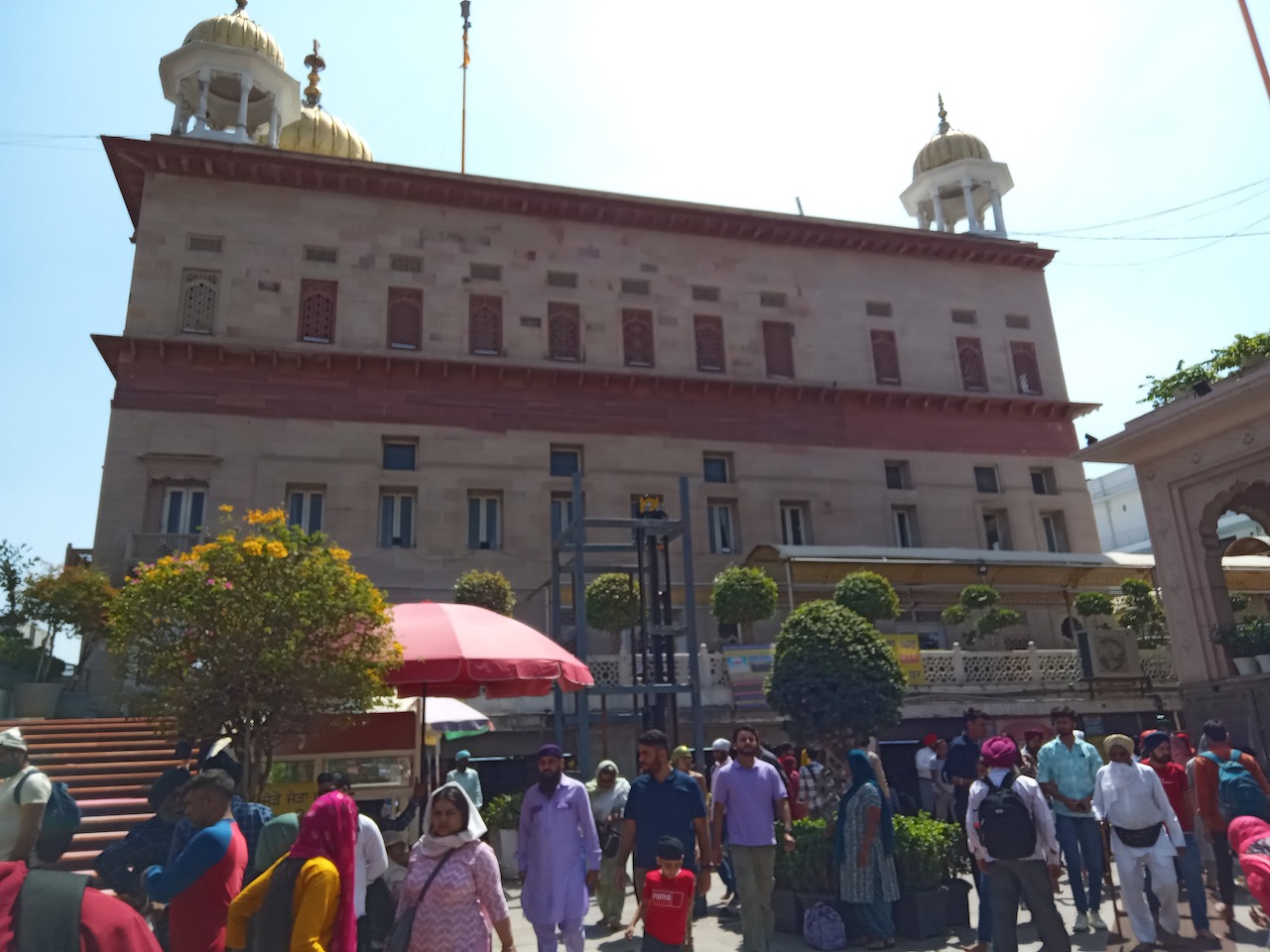
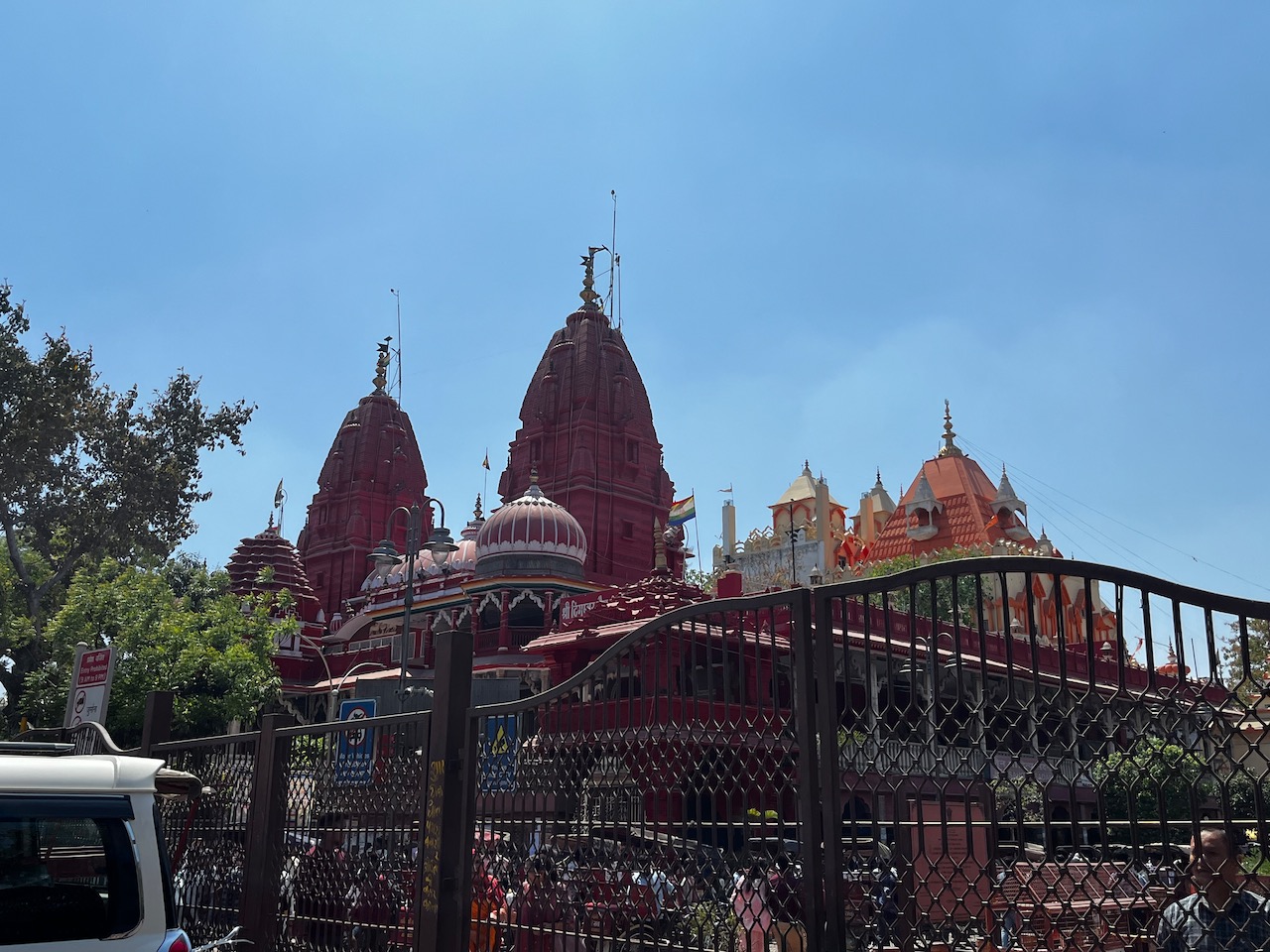
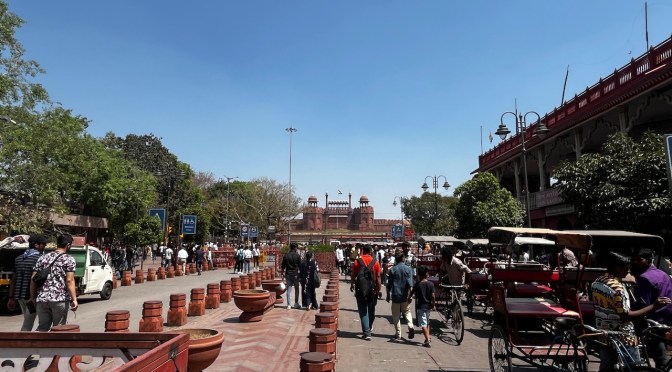
I recently had the opportunity to revisit an old favourite place of mine, Purani Dilli, with a friend. Old Delhi, despite the wider socio-economic and political changes emanating from neighbouring New Delhi, retains much of its previous charm of being a vibrant and colourfully diverse locality. The constellations around Chandni Chowk and the labyrinth of narrow lanes overflowing with people, trade, and character, fill the hearts and bellies of locals and tourists alike. There are of course signs of change where the old meets the new, and reinvention is indeed necessary for survival. In this endeavour, the main thoroughfare has been pedestrianised, but cycle rickshaws and people continue to jostle for space. You can buy almost anything from here, it is a complete eco-system of co-existence.

History of the area

It was Shahjahan (r. 1628 –1658), the fifth great Mughal, who ordered his famous chief architect Ustad Ahmad Lahori (who also designed the Taj Mahal) to build this then-walled city between 1638 and 1649, which contained the imposing red sandstone fortress of Lal Qila and the Chandni Chowk, the main street. Shahjahanabad (abode of Shah Jahan), or as it is more popularly known as Purani Dilli/Old Delhi, refers to that walled city where the Mughal court, army, and household moved from Fatehpur Sikri in 1648, which then become the heartbeat and commercial centre of the empire.

Biswas (2018) notes that the city developed along an “organic street pattern…with signature characteristics such as different activities and trades, clusters of houses based on closeness and common interests and social ties, which it still depicts today. The lanes and the streets were designed for an easy movement of pedestrians and animal driven vehicles, which today have been taken over by two- wheelers, electronic and manual rickshaws…”

It remained the capital of the Mughals in India until the Revolt of 1857, by when the East India Company and afterwards the British Crown Rule had shifted the seat of power to Calcutta, only to return back to Delhi in 1911, where they too commenced with the construction of a new modern administrative headquarters designed by Edwin Lutyens and Herbert Baker, which was formally inaugurated in 1931. To distinguish between these two empires and spaces, the older city became Old Delhi and New Delhi become the new citadel with its palatial bungalows and manicured wide streets. Since 2019, the current BJP Government has commenced another phase of construction with the Central Vista Project led by a team under Bimal Patel. We can therefore see layer upon layer, phase after phase of architectural stamping, ushering in its own ideological imprint.

The Walled City

For nostalgia, a bygone era and character, especially for a historian, nothing matches Purani Dilli. The walled city brings with it rich heritage, historic buildings and the intimate liveliness of a small community.

Jain (2004) observes that “The Red Fort, Jama masjid and Chandni Chowk have been jewels in the crown of Shahjahanabad. Chandni Chowk is the centrepiece and dominant axis of the Walled City. The original Chandni Chowk had octagonal chowks with a water channel running through the centre. Its wide boulevard with prestigious buildings and bazar created a vista between the magnificent Red Fort and Fatehpuri Mosque. With the passage of time there has been an all-round degradation and deterioration of this glorious boulevard, which can be attributed to several reasons, like over-crowding, markets, wholesale trade, rickshaws and traffic, unauthorised constructions, conversion of heritage buildings, over-riding commercial interests and private motives, coupled with lack of controls.”

Composite culture
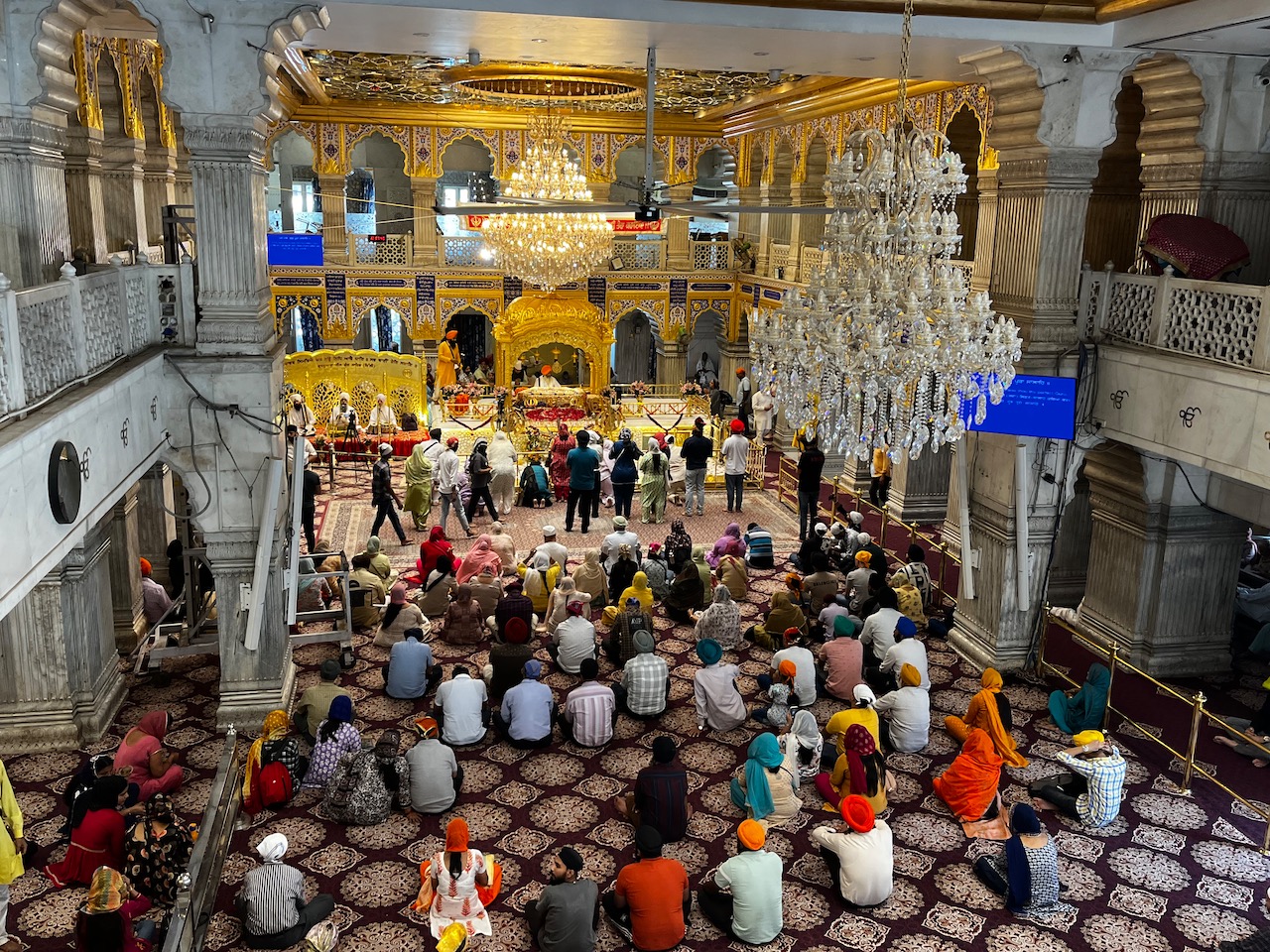
There are plenty of people who organise various walking tours of Old Delhi, as it attracts tourists from abroad and locals via the metro that has opened up the space that perhaps looked challenging before. My visit was an impromptu trip, I had some time and thought it would be nice to revisit this area after many years. I had planned to visit the Gurdwara, the Masjid and the Parathe wali gali! As I burnt off the parathas, the striking multi-faith milieu mingling into multi-cuisine eateries, left the heart warmed.

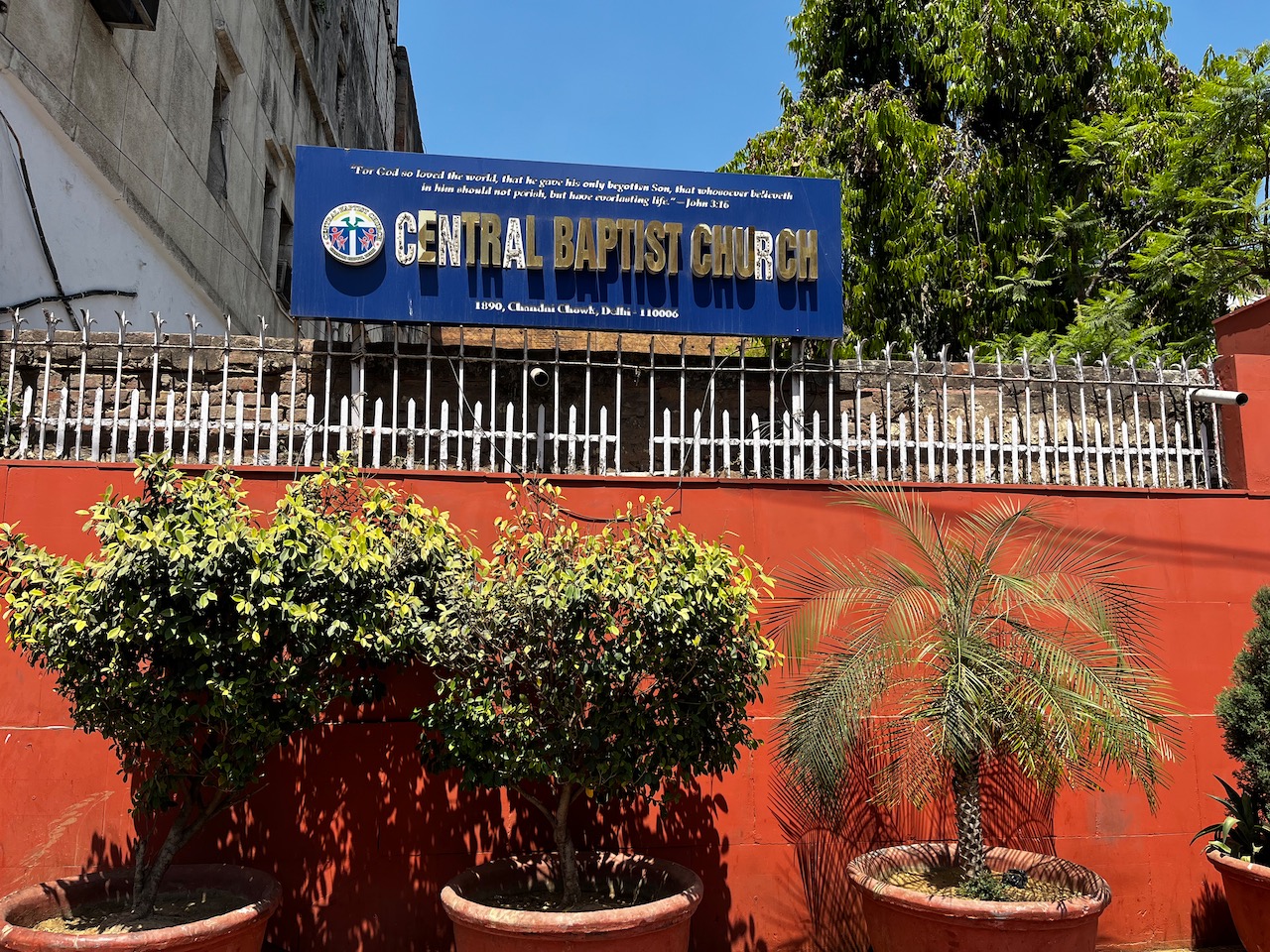
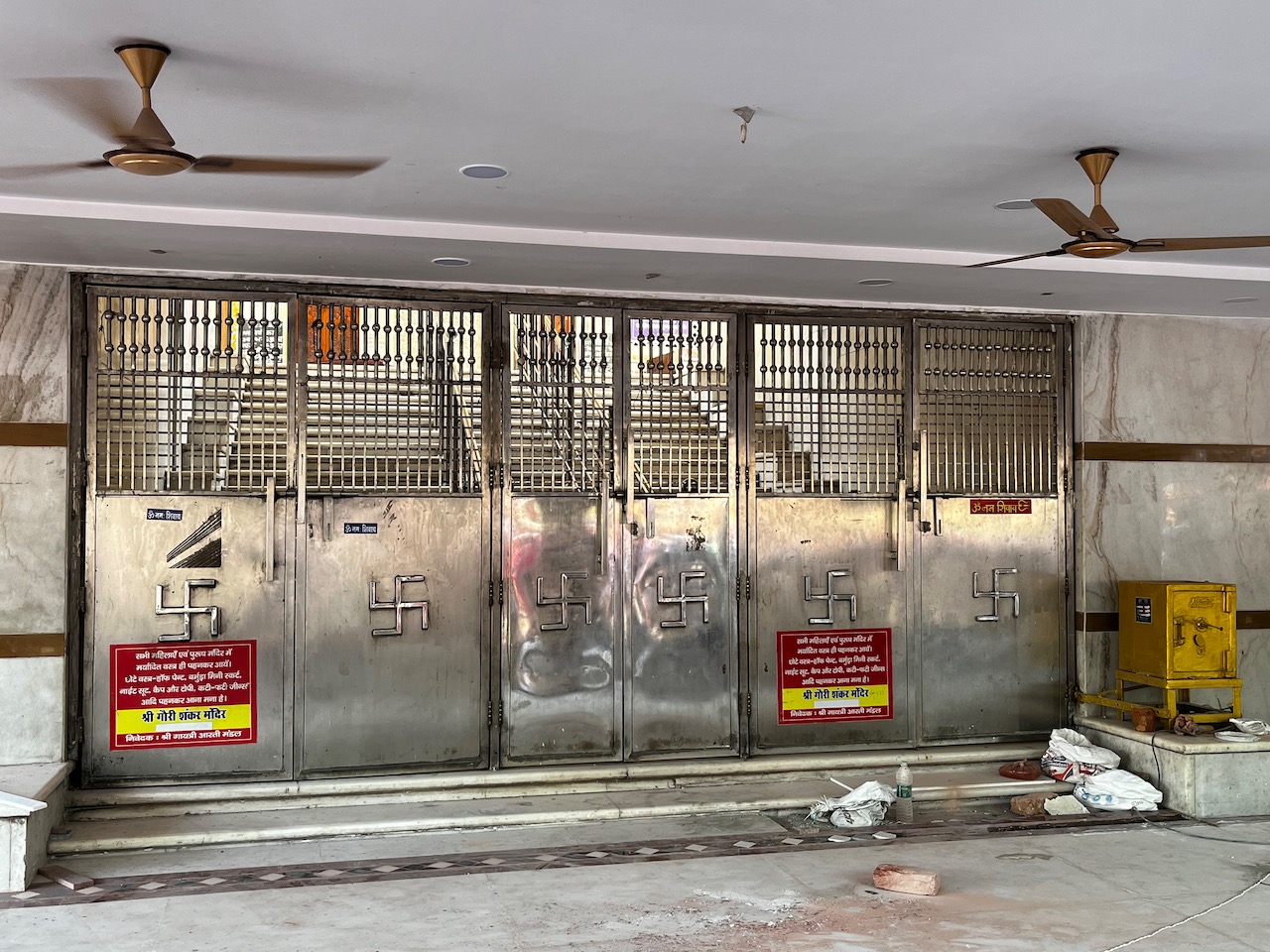
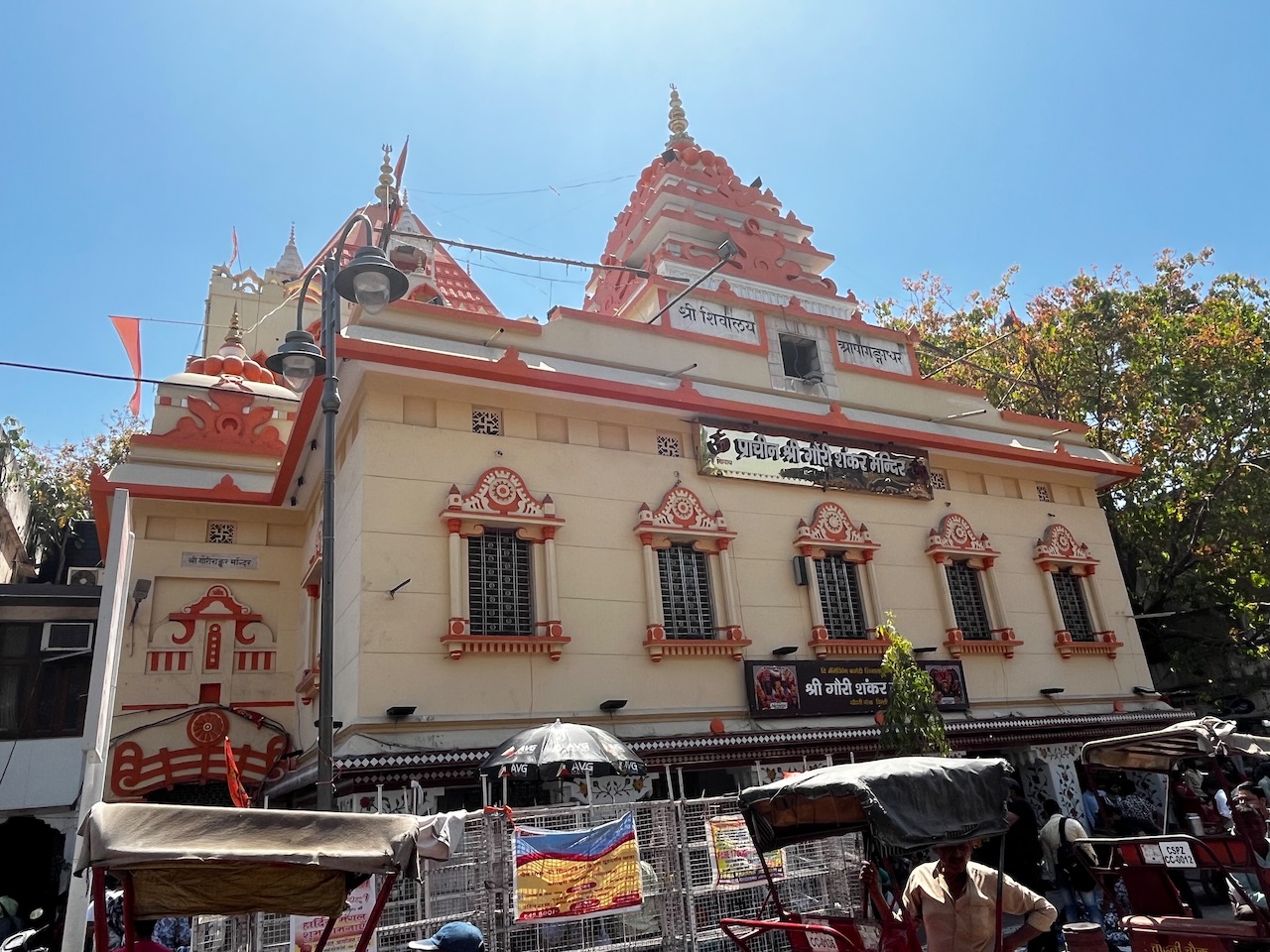
Biswas (2018) provides a detailed summary of the rich diversity present in Chandni Chowk. “In the northern sphere of the city, are the St. James’ Church (the oldest church in the city of Delhi), St. Mary’s Church, remains of Kashmiri Gate, Dara Shikoh’s library, the Lahori gate. In the southern part of the city, the key highlights are the Kalan Masjid, Ajmeri Gate, Holy Trinity Church, Razia Sultan’s grave, Turkman Gate, Havelis of Kucha Pati Ram, Anglo-Arabic School. With these divisions, the centre of the walled city is adorned with the harmonious street of Chandni Chowk, where the sacred spaces or the worship places of all major religions are located and co-exist amicably…The built heritage of the walled city comprises the grand Jama Masjid, the glorious Red Fort and many beautiful Jain temples of the two sects, numerous Hindu temples devoted to a multitude of gods, the Gurudwaras, the churches, the madrassas, the havelis of the Mughal and the post- Mughal era, still survive [ing] against their slaughter at the hands of the modernity.”

Undoubtedly the area has undergone change during the past 400 years, with each reign adding and leaving new layers. The walled city with the Qila and Masjid was the centre piece of the Mughal court, until the British transformed the former into military barracks. The British period marked by the revolt of 1857 saw vast areas being razed to the ground, some places only surviving due to the resultant outrage. With the birth of independent India in 1947, there was again vast destruction, loss of life and mass migration of people. The new contemporary socio-political anxieties mean we are perhaps less sure about the role of these places as they are confined to the past, while we celebrate and sell their associated heritage in the present. The Delhi Government is trying to beautify and make this a tourist hub, but that too must compete with conflicting agendas of the future. But for now, the spirit and roots of the Ganga-Jamuna Tehzeeb are quietly visible.

References and further reading:

Rana Safvi, Shahjahanabad: The Living City of Old Delhi, (HarperCollins India, 2020)

Swapna Liddle, Chandni Chowk: The Mughal City of Old Delhi, (Speaking Tiger, 2017)

Payushi Goel, Foram Bhavsar ‘Evaluating the Vitality of an Indian Market Street: The Case of Chandni Chowk, Delhi’ in Utpal Sharma, R. Parthasarathy, Dr Aparna (eds), Future is Urban: Liveability, Resilience & Resource Conservation (Routledge, 2023)

A.K. Jain, ‘Regeneration And Renewal Of Old Delhi (Shahjahanabad)’ ITPI Journal 1: 2 (2004) 29-38

Anukriti Gupta, ‘The Revolutionaries of Chandni Chowk’, 3 July 2021

Chitralekha, ‘In Paintings: Chandni Chowk of Delhi’, 21 January 2021

Jyoti Pandey Sharma, ‘Spatialising Leisure: Colonial Punjab’s Public Parks as a Paradigm of Modernity’, Tekton 1: 1 (2014) 14-30

Olivia Biswas ‘A Heart City: Celebrating The Pulsating Lifestyles Of The Walled City Of Delhi’ The 2018 WEI International Academic Conference Proceedings, Niagara Falls, Canada

Delhi Heritage Walks https://blog.delhiheritagewalks.com/category/heritage-walks/chandni-chowk-heritage-walks/

Studio Photography and Diasporic Identities

Sometime last year I was having dinner at the Punjab restaurant in Covent Garden, considered to the “first and oldest Punjabi, North Indian Restaurant in the UK, serving distinctive homestyle Punjabi cuisine…” It was established by Sardar Gurbachan Singh Maan in 1946, initially in Aldgate, and then shifting to Covent Garden in 1951. Maan came to the UK from Mehsumpur, in the Jalandhar District of Punjab, in what was then British India. The restaurant and café provided the familiar tastes of Punjab to the small number of Indians living in and around 1940s and 1950s London. It has since then become a go to place for many, with queues often forming outside for those hoping to chance a table for the culinary delights offered inside.

The interior is mostly simple and unfussy, but nostalgic pictures cover the wall spaces everywhere in the restaurant. They transport you to a different time and place. Quite often the pictures are of the various royal families of Punjab, whether this is the iconic Ranjit Singh or the Maharaja of Patiala; it doesn’t really matter, they provide the regal, historic and nostalgic backdrop to a bustling Punjabi meeting place in London. In between these opulent people, however, are also everyday images of South Asians and of Punjabis living in the UK.

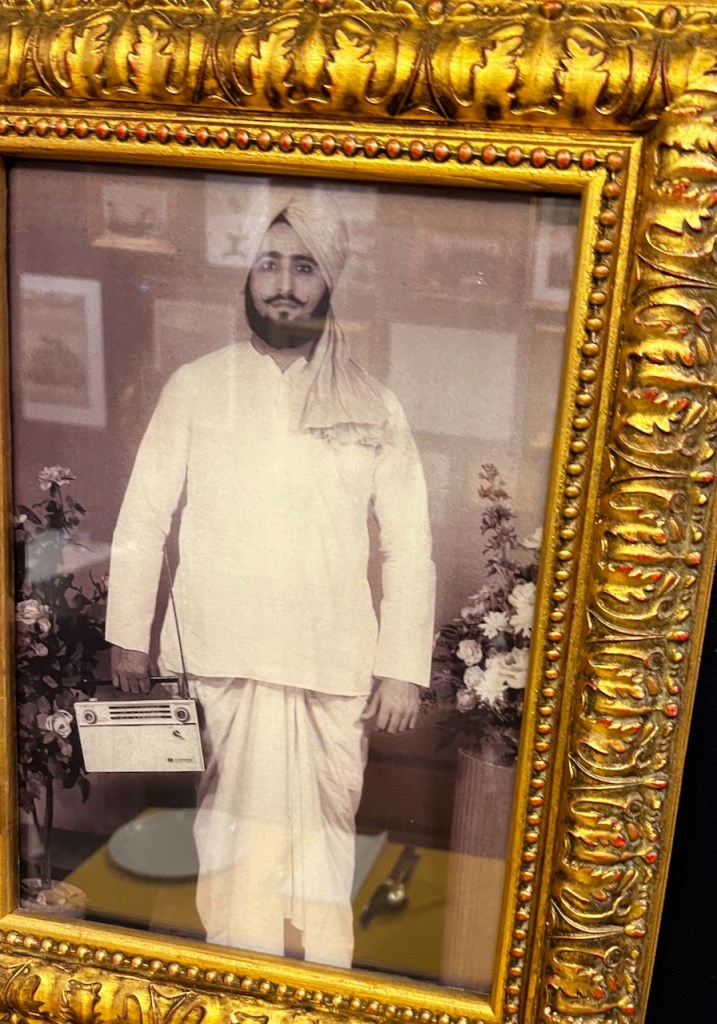
As I sat down, anxiously looking forward to my Punjabi feast, I had already decided I wanted saag, I started to curiously scan the photographs around me. Immediately a picture behind me caught my eye, it looked familiar, very familiar! It was a picture featured in a book that I did many years ago, Coming to Coventry: Stories from the South Asian Pioneers (The Herbert, 2006). The picture was of Gurdail Singh Johal, who had posed for this photograph in a traditional Punjabi kurta and tamba, while holding a transistor radio. It is a beautifully striking image, capturing the need to retain some of the cultural traits of “home”, but adapting and embracing new technologies. Like many other early migrants from Punjab, Johal migrated to Coventry in 1960 from Jalandhar, Punjab.

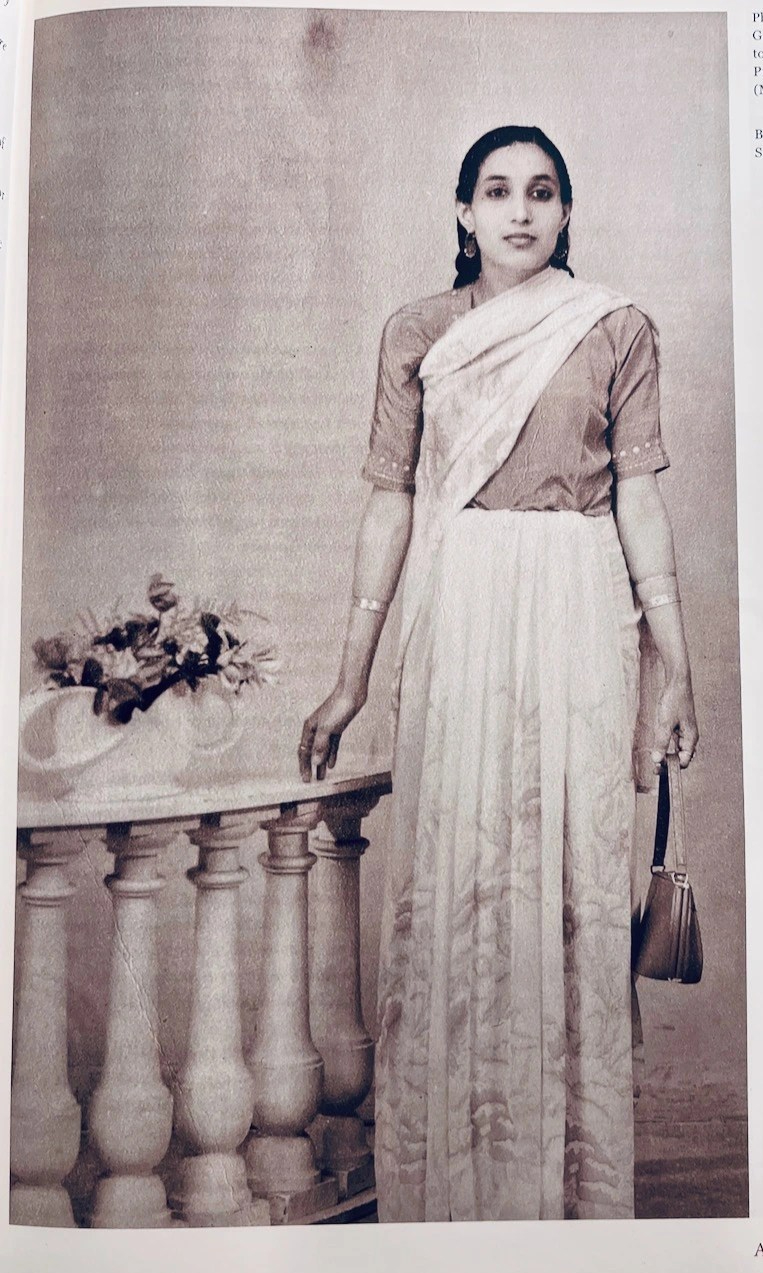
As you turn the page from Johal’s picture on page 17, there is another equally striking image of Gurmeet Kaur on page 19. This one was taken in Studio Taylor on Primrose Hill in 1959. Gurmeet is dressed in a sari, elegantly draped, and accessorised with some simple bangles and small earrings. Like Johal, Gurmeet is also holding something in her hand; the handbag conveys elegance and affluence. Mostly likely it belonged to her rather than being a prop. Both photographs have the ubiquitous floral bouquet in the backdrop, adding texture, colour and framing for the main object. Both images are important in showing how Johal and Kaur seamlessly integrate traditional dress with the modernity around them.

The studio pictures of Johal and Kaur are typical of that era where mass photography was not widespread and ownership of cameras was limited to those with means, and thus the average person could only indulge in the occasional studio photograph. Everyone dressed up and posed for the special occasion; in fact, I have many similar photographs in my own family album. It was an opportunity not only to capture a time and place, but perhaps also to preserve and show how one had progressed and advanced, especially when in a “foreign” land. It was versatile enough to share with family back home as it could be posted, and to show how they had altered their material status and to showcase the fruits of migration. Posing with a material object therefore was not just a prop in a studio picture, it was a statement about them and their class status. For the photographer it enhanced the aesthetic value of the composition, but for the people, it enhanced their status amongst their family and peers.

Top Post in 2023

I hope you have been enjoying the photos and blog pieces from 2023. I hope to more productive in 2024 and look forward to sharing more pieces. Please leave any comments/feedback about the Blog below.

  1. Ajj Aakhaan Waris Shah Nu By Amrita Pritam
  2. Poetry Corner: Lahore
  3. Mein Tenu Phir Milangi – I will meet you yet again by Amrita Pritam
  4. How the Photographs of Margaret Bourke-White became the Images of Partition.
  5. 1881: the first full census in British India
  6. The Status of Punjabi after 1947
  7. 70 years ago: extracts of the Sunderlal Report, Hyderabad 1948.
  8. I Come From There by Mahmoud Darwish
  9. Two villages, two nations: Ganda Singh Wala-Hussainiwala
  10. Sahir Ludhianvi and the anguish of Nehruvian India

“My spiritual guru is Nanak Dev and my trade guru is Baba Vishvakarma”

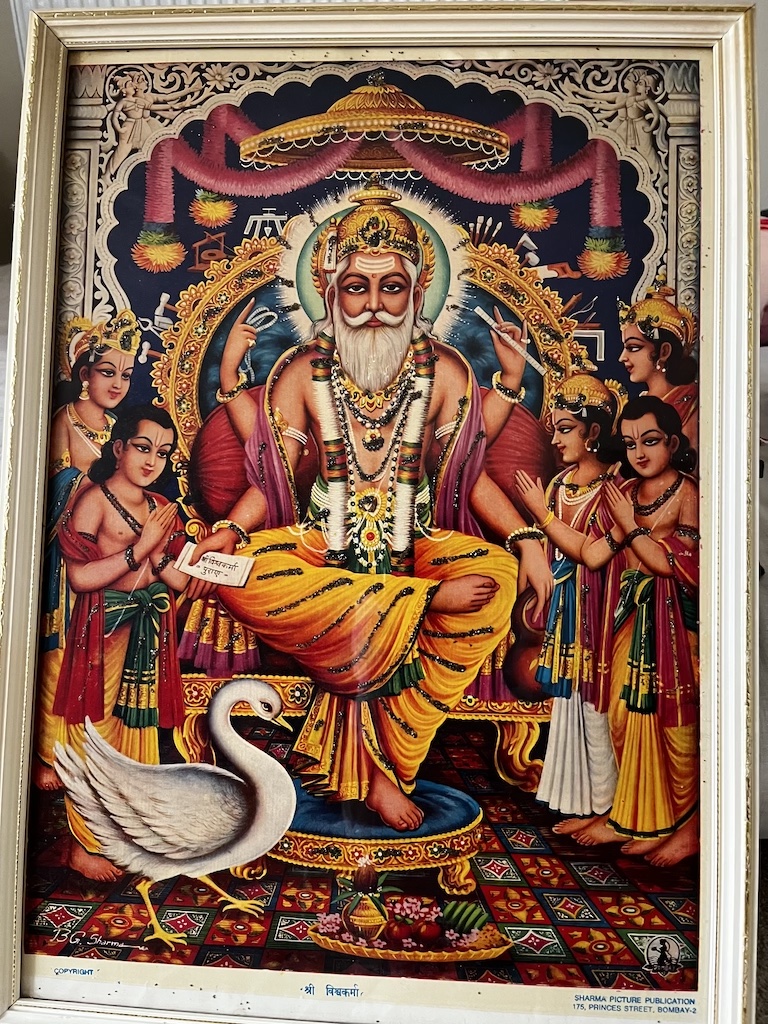
While reading the news from India, the celebrations of Baba Vishwakarma Day caught my imagination. Not least because as I was speaking to my sister earlier on, who had mentioned that the electricity went off due to heavy rains, and the local ‘bijli walla’ won’t come to fix it today. Why I asked? Well because it’s Baba Vishwakarma Day!

The discussion inevitably led us to reminisce about the past and we started talking about Baba Vishwakarma and what it meant to us, especially when growing up. I recall my mother having a photo of Baba Vishwakarma in her prayer room, but the day after Diwali was especially important because this is when we celebrated Vishwakarma Day. She would offer special prayers with prasad (offering) consisting of sweet boondi, that was bought for this purpose. The conversation with my sister prompted me to go and find that picture, which I had kept as a keepsake for many years.

My mother stitched clothes, mostly salwar kameezes, to make ends meet, a talent that she was well-known for in the local community. She was meticulous, everyone who had clothes made by her was aware of her fine cutting and stitching skills, and how well presented her clothes were when she delivered them. I helped when I was able to, but my standards were never high enough! The sewing machine was at the heart of her (our) survival and also how she was able to reinvent herself from a housewife to a single parent with young daughters in a new place.

So why are the Ramgarhia community associated with Vishwakarma? This is because the deity is associated with machinery, technical work, tools and is often described as the God of carpenters, goldsmiths, blacksmiths, and those who work in skilled crafts. The Ramgarhias were originally a community of artisans who worked in these professions, and adapted and upskilled to mechanical work during the 19th century, but the old associations and traditions remain, at least for some.

These stories are now a part of my memory and history, even though the narrative today may be different. My parents belonged to a generation that was more open, less prescriptive and the religious boundaries were more porous. I went to gurdwaras, I took a dip in the Ganges, and we went to Sufi shrines, it was part of the collective identity. Although Punjab witnessed some of the most horrific communal violence in the 1947 Partition, the region is also ironically one of the most pluralistic. For a devout Sikh, my mother was perfectly at ease with the presence of Baba Vishwakarma and indeed Baba Balak Nath in her prayer room, both of whom have a strong presence in Ludhiana amongst the Ramgarhia Sikhs.  

So, while doing some research for this post, I came across a PhD from the University of Leeds by Sewa Singh Kalsi (1989). It made interesting reading and I share some key extracts, which provide a glimpse into the history and transformation of the Tarkhan/Ramgarhia Sikhs. Kalsi’s study focused on the city of Leeds (UK) but the extracts below show the emergence and transformation of this small but important community.

“The entry of the Tarkhans into the Sikh Panth can be traced to Bhai Lalo, a carpenter of the village Aimnabad, now in Pakistan. On his first travels (udasi) Guru Nanak stayed with Bhai Lalo where he composed his celebrated hymn enunciating his mission. He addressed this hymn to Bhai Lalo, condemning the mass slaughter by the army of Babur, the first Moghul emperor of India. Commenting on the status of Bhai Lalo within the Sikh Panth, McLeod says that “Even higher in the traditional estimation stands the figure of Bhai Lalo, a carpenter who plays a central part in one of the most popular of all ianam-sakhi (biography) stories about Guru Nanak” (1974:86). Gurdial Singh Reehal in Ramgarhia Itihas (History of the Ramaarhias) (1979) notes the names of seventy two distinguished Punjabi carpenters who worked closely with the Sikh Gurus and made valuable contributions to the development of Sikh tradition. He says that “Bhai Rupa, a prominent Tarkhan Sikh officiated at the wedding of the 10th Guru, Gobind Singh. His descendants known as Bagrian-wale (belonging to the village of Bagrian) were the royal priests of the Sikh rulers of Phulkian states. They administered the royal tilak (coronation ceremony) and officiated on royal weddings” (Reehal 1979:162). It seems plausible that the entry of Tarkhans into the Sikh Panth took place under the leadership of distinguished Tarkhan Sikhs over a long period.” P 104

“Most prominent among the followers of Guru Gobind Singh were two Tarkhan Sikhs, Hardas Singh Bhanwra and his son, Bhagwan Singh, who fought battles under his command. After his death in 1708, both leaders joined forces under Banda Bahadur to lead the Sikh Panth. Commenting on the position of Bhagwan Singh Bhanwra within the Sikh Panth, Gurdial Singh Reehal says that “Bhagwan Singh was appointed governor of Doaba (Jullundar and Hoshiarpur districts) by Banda Singh Bahadur” (1979:209). Jassa Singh Ramgarhia was the eldest son of Bhagwan Singh. He inherited the skills of his father and grandfather and became the leader of Ramgarhia misl (armed band). Jassa Singh built the fort of Ramgarh (this means literally the fort of God) to defend the Golden Temple, Amritsar. McLeod notes that “In 1749, however, he (Jassa Singh) played a critical role in relieving the besieged fort of Ram Rauni outside Amritsar. The fort was subsequently entrusted to his charge, rebuilt and renamed Ramgarh, and it was as governor of the fort that he came to be known as Jassa Singh Ramgarhia” (1974:79). The title of Ramgarhia was bestowed on Jassa Singh by the leaders of the Sikh misls. According to the Dictionary of Punjabi Language (1895), the word “Ramgarrya” means a title of respect applied to a Sikh carpenter. Describing the position held by Jassa Singh among the leaders of Sikh misls, Saberwal in Mobile Men says that “We have noted the part played by Jassa Singh Ramgarhia in the 18th century; though a Tarkhan, by virtue of his military stature he sometimes emerged as a spokesman for all twelve Sikh misls in relation to other centres of power” (1976:99).” P 105

“In order to understand the emergence of Ramgarhia identity, we must locate the processes which have enabled them to move in large numbers from jajmani relationships in the village to urban-industrial entrepreneurship both within India and East Africa. The extension of British rule to the Punjab opened up enormous opportunities for the Punjabi Tarkhans. They channelled their energy and resources into going abroad in search of wealth and towards participating in the urban-industrial growth in India. Their technical skills were harnessed to build railways, canals and administrative towns both in India and East Africa. The Ramgarhias were the majority Sikh group, approximately 90 per cent of the whole Sikh population in East Africa (Bhachu 1985:14; McLeod 1974:87). In East Africa, they established their social and religious institutions like the Ramgarhia associations, Ramgarhia gurdwaras and clubs. By the 1960’s, the Ramgarhias had moved from being skilled artisans, indentured to build the railways, to successful entrepreneurs, middle and high level administrators and technicians. Bhachu argues that “Support structures developed during their stay in East Africa have not only helped manufacture their ‘East Africanness’ but have also aided the perpetuation of their identity as ‘staunch Sikhs’ in the South Asian diaspora, independent of the original country of origin” (1985:13). In East Africa, the Ramgarhias demonstrated a remarkable capacity for maintaining the external symbols of Sikhism, which is a clear indication of their commitment to the Khalsa discipline.” P 107

“The Ramgarhias achieved a noticeable measure of economic success in the urban-industrial sector, both in India and in East Africa. They were able to discard the low status of a village Tarkhan by transforming themselves into wealthy contractors and skilled artisans employed in railway workshops and other industries. In cities they were associated with the Khatri Sikhs, the mercantile group in urban Punjabi society. In the Punjab, the distinctive feature has been the concentration of Ramgarhia Sikhs in particular towns i.e. Phagwara, Kartarpur, Batala, and Goraya. These towns are known for car parts industries, furniture, foundries and agricultural machinery owned by the Ramgarhia Sikhs. This newly achieved economic status was one of the factors which encouraged them to build religious, social and educational institutions belonging to their biradari. In the town of Phagwara, they have built an educational complex which includes a degree college, a teacher training college, a polytechnic, an industrial training institute and several schools.” P 108

And finally, a line from where I take the title of this piece. One of the people interviewed notes: “My spiritual guru is Nanak Dev and my trade guru is Baba Vishvakarma. Many Ramgarhias feel ashamed to be associated with our trade deity.” P 117.

Further references include my own book, in which I discuss the community in relation to the transformation of Ludhiana.

Bhachu, P. (1985). Twice migrants: east African Sikh settlers in Britain (Vol. 31100). Tavistock Publications.

Kalsi, Sewa Singh (1989) The Sikhs and caste : a study of the Sikh community in Leeds and Bradford. PhD thesis, University of Leeds.

Kaur, P. (2017) The dynamics of urbanisation in Ludhiana city. International Journal of Advanced Research and Development, Volume 2; Issue 6, 547-550.

McLeod, W.H. (1974) Ahluwalias and Ramgarhias: Two Sikh castes, South Asia: Journal of South Asian Studies, 4:1, 78-90, DOI: 10.1080/00856407408730689

Virdee, P. (2018). From the Ashes of 1947. Cambridge University Press.

Remembering Partition in the Punjab – podcast

Earlier in the summer I recorded a podcast with Realms of Memory. There are two episodes for those interested in understanding more about the history of Partition, especially how it impacted the Punjab. The talk was based on my book, ‘From the Ashes of 1947: Reimagining Partition’ published by Cambridge University Press (2018). In the podcast I also discuss some of the recent changes that have taken place in the study in Partition.

You can listen to the podcast via most streaming sites, or via Realms of Memory

Remembering Partition in the Punjab: Part 1

Remembering Partition in the Punjab: Part 2

“The image, the imagined, the imaginary”

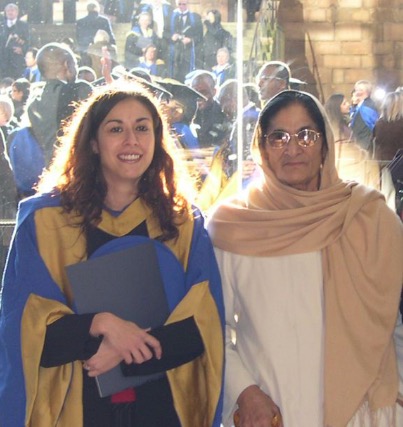
It is coming to 11 years since my mother died at the age of 83. She had great courage and conviction, illustrated in her decision to come to far-off England – and not go to the familiar India – from Kenya, a few years after my father’s untimely death in 1979. In doing so, with two young children, she was adding considerably to the challenges that she had faced hitherto. Alone, in an alien land, with two growing daughters, she drew upon her inner reserves of strength to provide for us. Moreover, what I do today is down to her encouragement and support throughout my life.

This was not always an easy position for her to take because of wider socio-economic pressures, but she saw education as the master-key to unlock many of these. As her youngest child, I was fortunate to be the first to go to university, for my sisters – we were all girls – were capable of more. She would have preferred that I study something “sensible” like law, medicine, finance, or engineering – like my father – but I showed no interest in these. Instead, I was motivated by art and politics as in 1988-90, an increasingly unequal Britain saw a churn and I was intrigued as Margaret Thatcher was losing her grip.

Studying politics and increasingly history was an unusual and therefore difficult step for me, but despite the misgivings, my mother – open to persuasion – supported me. She didn’t always understand my aims, for that matter nor did I, but instinctively it felt the right thing to pursue. I became increasingly aware of my social identity in university – beyond the name-calling in school – because I was one of only two “brown” girls in a cohort of approx. 70. But the rest of the group too came from different backgrounds, especially that of economic class. This introduction to class was a life-lesson in terms of one’s ability to aspire and imagine.

Thirty years on from when I entered university, this social reality has not changed. Rather it has only metamorphosed, and I now see class difference at play in the post-1992 university that I teach, among the students whom I encounter. Sure, the absolute number of black/brown students coming to study history and politics has increased albeit marginally. Anyhow, this post is not on this social phenomenon but the persona that my mother was, who encouraged me to follow my heart. In those days, it was enough, for the state supported education; there were no student fees, and I was eligible for a maintenance grant.

Otherwise, a mother’s goodwill alone would not have paid for my loan-laced BA/MA, which would have been too big a risk to take. I would not have then followed it up by applying for the Penderel Moon studentship for my PhD, at the turn of the century. My mother was incredibly proud when I got my doctorate, even as I was not untouched by an imposter syndrome. But time and its temper waxes and wanes, on gender, on humanities subjects, and on doubts of the two getting together. Today, the UK higher education is a near-total market, like much of the rest of its society and politics.

In which though, there is also some sliver of charity and that is why I write this post. It was at the Myton Hospice in 2012 that my mother spent her last few hours, with my sister and me, and tomorrow I am doing a 6-mile walk to help raise money for them. Simultaneously, I remember my mother, and reflect on her life and how she shaped me. I take great strength from her ability to start from nothing, having faith, and resilience to carry on with whatever life throws at us.  

I share the link for Just Giving for Myton Hospice.

Family, gender and patriarchy

Three very different but interesting films have been released recently. All deal with issues of family, marriage, gender and patriarchy. I’m sharing the trailers here and I hope to explore these themes in more detail in another blog. In the meantime enjoy…

Going Digital…South Asian migration to Coventry

As everyone is talking about OpenAI, I decided to experiment and try it out for myself and see what it can generate. The speed with which it generates the material is amazing, and below is the request plus response.

Create a blog about South Asian migration to Coventry:

Welcome to the South Asian Migration to Coventry blog! Here, we will explore the history and current state of South Asian migration to Coventry, a city in the West Midlands of England. We will look at the reasons why people from South Asia have chosen to move to Coventry, the challenges they have faced, and the positive impact they have had on the city. We will also discuss the cultural and religious diversity that has been created by the influx of South Asian migrants and how it has enriched the city. We hope that this blog will provide an informative and interesting insight into the history and present of South Asian migration to Coventry. Coventry has a long history of South Asian migration. The first South Asian migrants to the city arrived in the 1950s and 1960s, when people from India, Pakistan, and Bangladesh moved to the city to find work in the car industry. This influx of South Asian migrants continued throughout the 1970s and 1980s, with many migrants settling in the city and bringing their families with them. This created a vibrant and diverse South Asian community in Coventry, which has grown and flourished over the years. Today, Coventry is home to a large and vibrant South Asian community. According to the 2011 census, over 11% of the city’s population is of South Asian origin. This community has had a huge impact on the city, bringing with it a rich cultural and religious diversity. South Asian migrants have also helped to revitalise the city’s economy, with many businesses and organisations being founded by South Asian entrepreneurs. Despite the positive impact that South Asian migrants have had on Coventry, they have also faced many challenges. These include racism and discrimination, as well as difficulties in finding employment and housing. However, the South Asian community in Coventry has remained strong and resilient, and has continued to make a positive contribution to the city. We hope that this blog will provide an interesting and informative insight into the history and present of South Asian migration to Coventry. We welcome your comments and feedback, and look forward to hearing your thoughts and experiences. Thank you for visiting!

Having written a book about South Asian Migration to Coventry, I can see this is a very superficial AI generated response and in places an inaccurate too, however the AI text has provided a brief overview of the community, with some data from the Census too. The first South Asians to settled in Coventry can be traced as far back as the 1930s, albeit in small numbers, but the more significant numbers were in the post-war era when Coventry was being rebuilt. While the AI generated text mentions work, diversity, contributions to the city etc, there are actually very little detail or specific examples. I can see why there has been so much interest in this, and for us who work in the education sector, this has huge repercussions.

south asian coventry
AI generated image “South Asian Coventry”

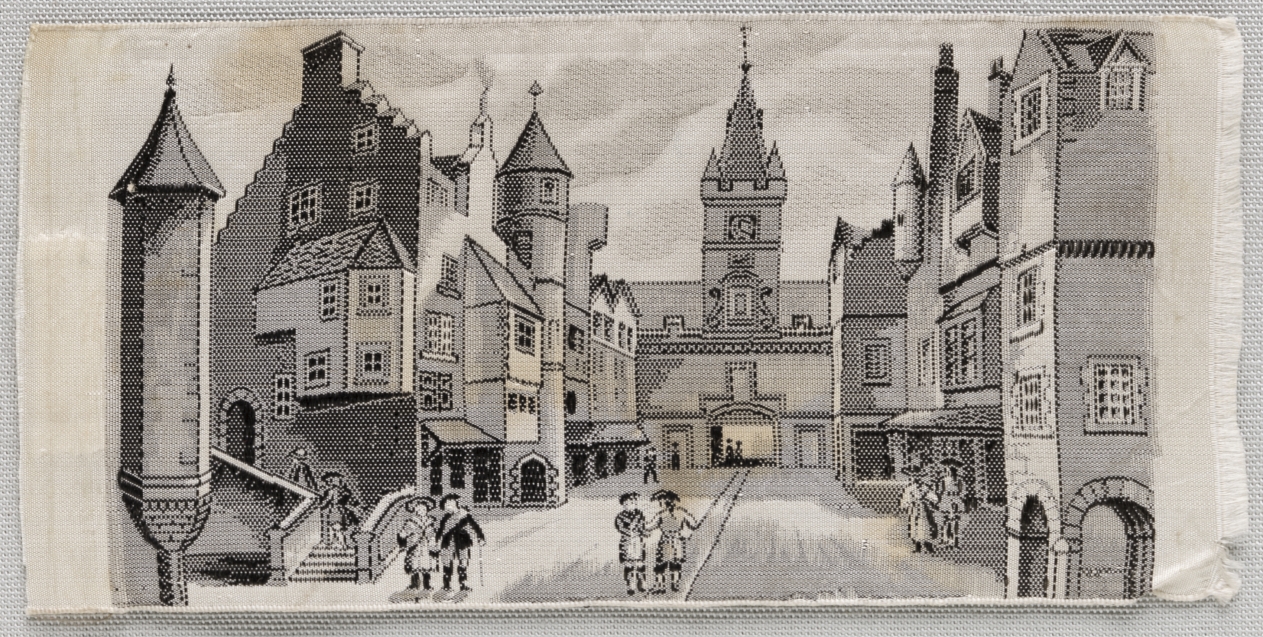
To accompany this AI generated blog post, I decided to source my photos from the Openverse and AI generated images from WordPress. With pictures there are clearly limitations, because presumably there is insufficient source material and thus I can’t find suitable pictures to accompany the theme of my post. This has been an interesting incursion into the world of AI, which I really do not know that much about, but it has provided some food for thought (pun intended!).

Please leave any comments or feedback.

Leave a comment