Tag Archives: migration

Coventry: A Migrant City in the Making

St Osburg’s Church, Coventry

As we approach another year-end in this season of merriment and reflection, and on the shortest day of the year, when daylight is most precious, many of us find time to catch up on projects long left pending. For me, this has meant returning to research into the city of Coventry.

While working on a chapter that uses photographic history to explore migration patterns, I’ve been reading Life and Labour in a 20th Century City: The Experience of Coventry, edited by Bill Lancaster and Tony Mason (1986). The chapter on ‘Migration into Twentieth Century Coventry’ revealed two significant threads: the presence and influence of the Irish Catholic community, and Coventry’s emergence as home to a South Asian community. At the same time, it also revealed the prevalence of racism then, which is comparable to the anxieties that are expressed today. Pages 71-76 are particularly illuminating in linking the political discourse and public fears of the post-war generation to contemporary shifts in British society.

The Myth of 1930s Cosmopolitanism

Coventry in the 1930s was often described as cosmopolitan, but this characterisation was somewhat misleading. Although the population was mixed, with migrants rising to 40% by 1935, most of these newcomers came from other UK regions. This trend continued throughout the war and the immediate post-war period. By 1951, while the overwhelming majority of Coventry’s citizens were of UK origin, some change was also evident.

Lancaster and Mason, page 71

The Irish Presence

The 9,993 Irish residents counted in the 1951 census marked a significant new wave of migration after the war. Although Irish regiments were often stationed at Coventry barracks and contributed labour during the early 20th century, the local Irish community remained small—only 2,057 in 1931. Nevertheless, this population grew rapidly during the construction boom of the 1930s.
Lancaster and Mason, page73

By the end of the Second World War, the streets around St. Osburg’s and St. Mary’s churches had taken on a unique Irish character. These inner-city neighbourhoods, filled with lodging houses and multiple-tenant buildings, and close to Roman Catholic churches, became popular stopping points for itinerant construction workers or individuals looking for factory jobs.

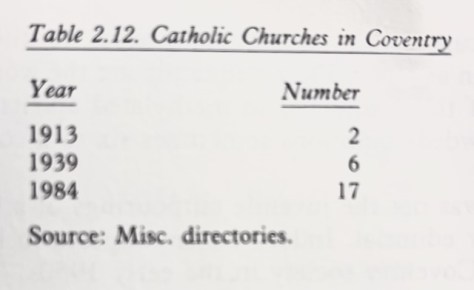
The growth of Catholicism in Coventry during the 20th century reflects both the expansion of the Irish community and their commitment to preserving their religious identity. Interestingly, two current Catholic churches in Coventry cater specifically to European congregations: the Polish and Ukrainian communities.

The South Asian Community and Racial Prejudice

By 1954, the small wartime Indian community had grown to about 4,000 people. Described as a “quiet, peace-loving ethnic minority,” they mainly settled in the older, rundown housing around Foleshill Road. Like many other migrants, they sought to preserve their culture and identity. In October 1952, Muslim members of the community submitted a request to the Planning and Redevelopment Committee for dedicated burial grounds and land to build a mosque.

Although small in numbers, Coventry’s Indian community was nonetheless affected by the growing racial prejudice across Britain. In October 1954, reports emerged that local estate agents were enforcing a colour bar. The week prior, the Coventry Standard published a troubling editorial — not the work of a biased junior reporter, but the newspaper’s primary editorial position:

The presence of so many coloured people in Coventry is becoming a menace. Hundreds of black people are pouring into the larger cities of Britain, including Coventry, and are lowering the standard of life. They live on public assistance and occupy common lodging houses to the detriment of suburban areas. They are frequently the worse for liquor, many of them addicted to methylated spirits, and live in overcrowded conditions, sometimes six to a room.

Lancaster and Mason observe that by the early 1950s, this racism had spread across a wide range of Coventry society. The Standard also reported that a branch of the AEU had contacted Elaine Burton, Labour MP for Coventry South, about the issue. This hostility is particularly notable given that the “coloured minority” made up less than 1.5% of Coventry’s population and, as Stephen Tolliday demonstrates elsewhere in the book, did not threaten the employment of local factory workers.

A City of Newcomers

By 1951, Coventry was mainly a city of recent arrivals, with estimates suggesting that only 30-35% of its population were born there. Many of the newcomers quickly left due to difficulties in finding housing or employment. A study noted that in 1949, 18,000 new residents moved to Coventry, while 17,000 people left.

Moreover, Coventry was hardly a melting pot. In addition to racial prejudice, residents were often unwelcoming to newcomers. Friendships and social networks usually aligned with regional and ethnic backgrounds, with clubs, pubs, and religious groups serving specific migrant communities. Ironically, Coventry’s long-standing identity as a migrant city since the early century may have reinforced the aloofness of the remaining native population – the latter is still palpable in the city’s streets and people.
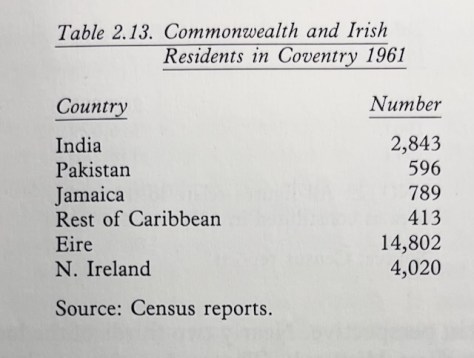
Lancaster and Mason, page 75

The 1961 census revealed that the 1954 estimate of Asians in Coventry was inflated. New Commonwealth migrants made up only 1.5% of the population, whereas 6.1% was from Eire and Northern Ireland. The flow of migrants from the new Commonwealth was minimal rather than overwhelming. However, between the 1961 census and the so-called mini-census of 1966, significant shifts in migration into Coventry occurred, shifts that would help shape the political rhetoric around immigration for decades to come.

Lancaster and Mason, page 75

Echoes of the Past

Reading the 1954 Coventry Standard editorial today, with its language about people “pouring in” and becoming a “menace,” makes it impossible not to hear echoes that resonate in British political discourse. Just fourteen years later, on April 20, 1968, Enoch Powell, Conservative MP for Wolverhampton South West, gave his infamous “Rivers of Blood” speech at a meeting of the Conservative Political Centre in Birmingham nearby. Powell heavily relied on letters and anecdotes from the West Midlands, predicting that communities would be “foaming with much blood” because of Commonwealth immigration. His apocalyptic language gained traction in a region that was experiencing real demographic change, even though the scale was often exaggerated by fear and prejudice.

Coventry’s history shows a striking pattern: a persistent disconnect between perception and reality regarding migration. In 1954, ‘coloured’ migrants made up less than 1.5% of Coventry’s population and were described as a menace and a threat to living standards. By 1961, the actual numbers were even lower than the overestimated figures. Despite this, anti-immigrant sentiment gained strength, reaching a peak with Powell’s speech, which appeared to validate fears that years of evidence had shown to be unfounded.

This kind of hostile and often racist political rhetoric continues to thrive today. When Nigel Farage displayed his “Breaking Point” poster in 2016, depicting a line of refugees, or when he claims to feel “like a foreigner in my own country” and warns that migration levels are “unsustainable,” he uses a similar approach: heightening anxiety about cultural change while often distorting the scale and effects. Words such as invasion, being “overwhelmed,” and threats to “our way of life”—these expressions form a continuous thread from that 1954 editorial through Powell to Farage.

Coventry’s historical record is particularly valuable because it allows us to compare predictions with actual outcomes. The threat predicted in 1954 never came true. There was no bloodshed or violence. Despite the panic, racial barriers, and inflammatory editorials, and despite migrants constituting less than 1.5% of the population, Coventry’s diverse communities—Irish, South Asian, Polish, Ukrainian, and others—became an integral part of the city. They did not pose the threats to jobs or living standards that were claimed. Indeed, the post-war boom would not have been possible without this labour migration into the city.

Coventry’s history shows that demographic change is neither easy nor without real challenges. However, the most provocative rhetoric often surfaces during times of economic uncertainty. The true story of Coventry, a city that has been profoundly shaped by migration as it continues to evolve and develop.

As we enter the new year, with migration remaining one of the most contentious political issues in Britain, Coventry’s history offers a lesson worth heeding: our fears of newcomers have consistently proved more destructive than the newcomers themselves. How can we learn from the past without repeating the same anxieties and prejudices?

References:

Ewart, H. (2011). “Coventry Irish”: Community, Class, Culture and Narrative in the Formation of a Migrant Identity, 1940–1970. Midland History36(2), 225–244.

Lancaster, Bill and Mason, Tony (eds), Life and Labour in a Twentieth Century City: The Experience of Coventry. Coventry: Cryfield Press, 1986.

Virdee, Pippa. Coming to Coventry: Stories from the South Asian Pioneers. The Herbert, 2006.
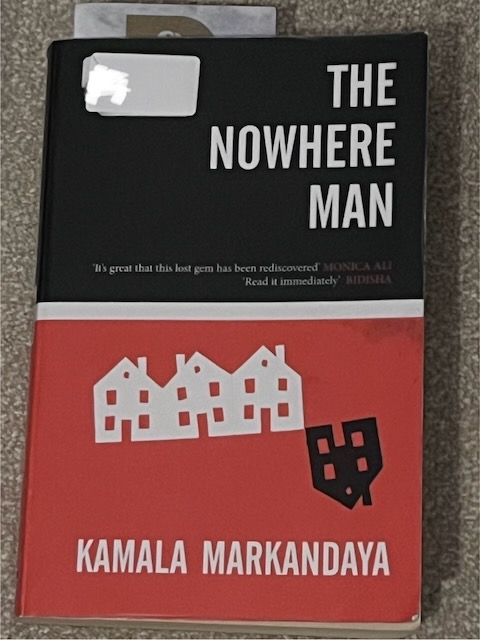
Rediscovering Kamala Markandaya’s ‘The Nowhere Man’

Kamala Markandaya (23 June 1924–16 May 2004), pseudonym of Kamala Purnaiya, married name Kamala Taylor, occupies a distinctive position in the landscape of South Asian literature. Born into a prominent Brahmin family in Mysore, India, she graduated from Madras University and established herself as a significant voice through short stories published in Indian newspapers. In 1948, shortly after independence, she uprooted herself and moved to London with literary ambitions, and thus straddled between two worlds – East and West – and also the transitional era from the colonial to the post-colonial.  

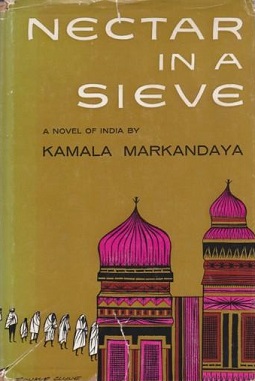
Her first novel, Nectar in a Sieve (1954), introduced readers to her unflinching examination of rural poverty and resilience and became a bestseller. The title of the novel is taken from the 1825 poem ‘Work Without Hope’, by Samuel Taylor Coleridge”

Work without hope draws nectar in a sieve,
And hope without an object cannot live.

This epigraph establishes a thematic preoccupation that would recur throughout Markandaya’s work: the question of what sustains individuals when hope seems futile, when effort appears wasted, and when displacement renders purpose elusive.

A Voice of the Indian Diaspora

According to Sunita Rani’s critical assessment, ‘Kamala Markandaya, a pioneer member of the Indian Diaspora occupies an outstanding place among the Indian women novelists writing in English… In a wider context, she comes under the umbrella of third world post-colonial writers.’ This positioning is crucial to understanding Markandaya’s unique contribution: she wrote from the margins, giving voice to experiences of displacement, cultural alienation, and the psychological toll of migration long before diaspora literature became a recognised genre.

Writing at a time when British literature was still predominantly white and male, and when post-colonial voices were only beginning to emerge, Markandaya carved out a space to explore the immigrant experience with psychological depth and nuance. Her attention to the internal lives of her characters, their negotiations between cultures, and their struggles for dignity in hostile environments marked her as a writer of considerable sophistication and empathy.

The Story of Srinivas

The Nowhere Man tells the story of Srinivas, who embodies the rootless existence its title suggests. After spending two-thirds of his life in England—during which he sacrificed a son to war—this Indian immigrant finds himself heckled by racist hoodlums and ultimately driven to his death. The tragedy of his situation is compounded by temporal irony: he has lived in England for thirty years, yet remains perpetually “foreign,” a restless, rootless individual stripped of both his Indian heritage and denied full acceptance into British society.

As Rani observes, ‘He is bewildered as to where he belongs: he has lived in England for thirty years and yet became a rootless, restless individual disposed of India and disowned by England. He represents millions of men who, for some reason or other leave their own roots and fail to strike roots in alien soil and die as rootless, restless individuals.’

Srinivas’s predicament speaks to the fundamental existential crisis of the immigrant: the loss of one identity without the gain of another, the perpetual state of being in-between. His thirty years in England count for nothing in the eyes of the racist youths who torment him; his decades of contribution, his sacrifice of a son to Britain’s war effort, cannot purchase him belonging. Markandaya captures with devastating clarity how racism reduces a lifetime of lived experience to nothing more than the colour of one’s skin.

Cultural Neglect and Critical Oversight

What makes the novel’s obscurity particularly striking is that it addresses themes that should have resonated powerfully in 1970s Britain. As Emma Garman writes in the introduction to the new reprinted edition, ‘writing ahead of one’s time risks cultural neglect, and The Nowhere Man was all but ignored on its publication.’ The novel confronted uncomfortable truths about race, belonging, and British society’s treatment of immigrants at a crucial historical moment – an era marked by increasing racial tension, the rise of far-right politics, and heated debates about immigration.

The 1970s saw the growth of the National Front, the implementation of increasingly restrictive immigration laws, and incidents of racial violence across Britain. The Nowhere Man spoke directly to these realities, yet British readers and critics seemed unwilling or unable to engage with its challenging portrait of their society. Perhaps the novel was too close to the bone, too unflattering in its depiction of British racism and xenophobia.

Garman picks up the inter-generational tension in Markandaya’s work, when newly-wed Laxman brings his wife Pat to stay at Srinivas’s home for a week, he feels embarrassed by his parents’ perceived lack of sophistication—their appearance, dress, and English. His father’s valiant attempts to fit into an awkward social environment reveal the painful immigrant experience that Markandaya captured so effectively. Garman notes how the ‘conflict and sense of separation that can arise between first and second immigrant generations would, thirty years later, be explored to great effect in Zadie Smith’s White Teeth and Jhumpa Lahiri’s The Namesake. But at the time Markandaya was writing, it was a subject few novelists had confronted.’ Yet her pioneering work went largely unrecognised, until perhaps its re-discovery through the new edition in 2019.

A Precursor to Contemporary Voices

Perhaps the most intriguing element of The Nowhere Man‘s neglect is how its outsider perspective—particularly its diagnosis of British society through the eyes of ‘a woman and a foreigner’—felt disconcerting to 1970s readers. Garman asks whether this dual marginalization could help explain the novel’s commercial and critical neglect?

Better known for her American success, Markandaya found her adopted home, Britain, a tougher market, yet she remained committed to exploring themes of cultural displacement. Garman shows how Markandaya ‘blamed the inevitable snobbishness towards an author from a former, and very recent, British colony.’ Again suggesting someone who was ahead of her time and working on the edges. And ‘perhaps discouraged by the reaction – or rather the lack of reaction – to her harrowing portrait of modern Britian, Markandaya returned to India for the setting of her subsequent four novels.’

Historically, Markandaya occupies a fascinating position: falling between the canonical generation of V.S. Naipaul (b.1932) and later Salman Rushdie (b.1947), and those who came before her such as R.K. Narayan (b.1906) and Mulk Raj Anand (b.1905). It was perhaps Ruth Praver Jhabvala (b.1927) that remained her most literary contemporary.

Her work on diaspora and displacement anticipated the themes that would define the later writers. Her work, particularly The Nowhere Man, deserves recognition as a precursor to contemporary diaspora literature—a pioneering exploration of identity, displacement, and the meaning of home that speaks with renewed urgency to our current moment.

And given the political rhetoric around nationalism in contemporary Britian, this makes for pertinent reading as a story which is set in 1968, the year of Enoch Powell’s ‘River of Blood’ speech, should resonate so much with our times today. Srinivas’s story remains tragically relevant, a reminder that the struggles for acceptance and dignity faced by immigrants are neither new nor resolved.

References and further reading:

Nasta S, Stein MU, eds. Disappointed Citizens: The Pains and Pleasures of Exile. In: The Cambridge History of Black and Asian British Writing. Cambridge University Press; 2020:193-310.

Nasta S. 1940s–1970s. In: Osborne D, ed. The Cambridge Companion to British Black and Asian Literature (1945–2010). Cambridge Companions to Literature. Cambridge University Press; 2016:23-39.

Rani, Sunita. “Probing Identities Amid Racial and Cultural Conflicts: Kamala Markandaya’s The Nowhere Man and Some Inner Fury.” Literature & Aesthetics 20, no. 1 (2010).

Harrex, S. C. (1971). A Sense of Identity: The Novels of Kamala Markandaya. The Journal of Commonwealth Literature, 6(1), 65-78. https://doi.org/10.1177/002198947100600108 (Original work published 1971)

Manoj Kumar Hemane and Mahindra Kumar H Fulzele. Endurance and Displacement: The Ethical Vision in Kamala Markandaya’s Novels. International Journal Research Engish. 2025;7(1):415-417. DOI: 10.33545/26648717.2025.v7.i1g.365

Embracing Nostalgia Through Music and Gardening

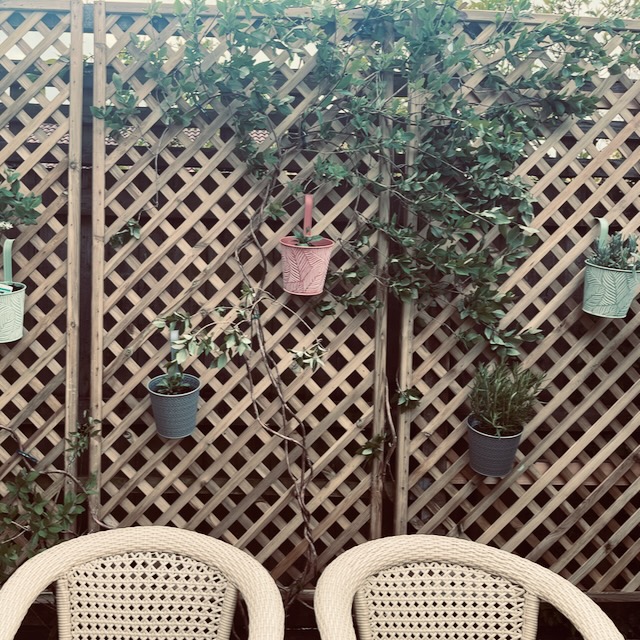
A long weekend spent revamping the garden has left me feeling quietly thankful—grateful not only for the beauty of blooming flowers but the often-overlooked moments that bring small moments of joy to us. These are the everyday miracles that ground us, offering us gentle reminders to be present, and to be grateful for the life and family that support us and get us through difficult times. They act as pillars, always there in the background but without whom we could not exist.

In August 2016, I began this blog as a space to document my experiences during a visiting fellowship in Lahore, as well as to share other events and observations that captured my interest along the way. This has grown into a broader canvas—one where I could share photographs, music, and reflections, often framed with a touch of historical context. Over time, the blog has become not just a repository of memories, but also a means of connecting with others.

When I first considered what to name this space, I wanted something that could symbolise both personal growth and a diversity of ideas. I eventually chose Bagicha—the Urdu and Punjabi word for “garden.” The name felt right, evoking a place where different thoughts, emotions, and inspirations could coexist and bloom. Like any real garden, this blog has required time and care, and though life’s demands have occasionally interrupted the rhythm of posting, I’ve done my best to return and tend to it regularly.

This past weekend, I turned my attention to my actual garden, which had begun to show signs of wear and neglect. I found myself hoping that this act of renewal would also translate into a more productivity for my Blogging and provide inspiration for other writing projects over the coming summer.

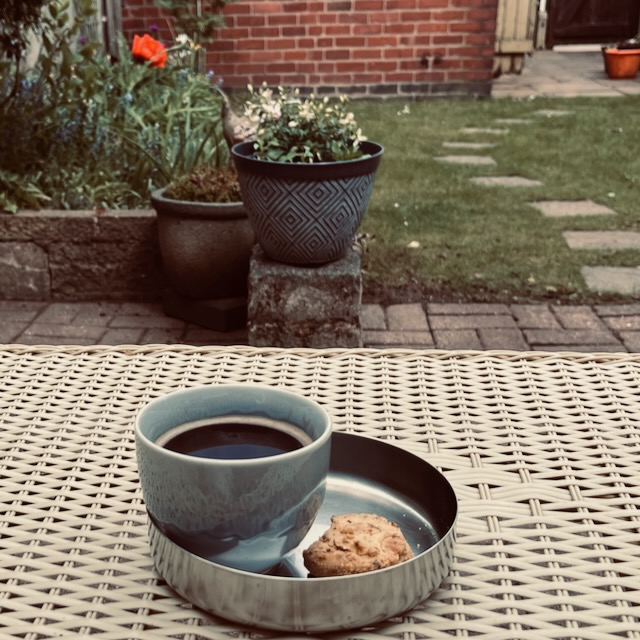
After the work was completed, I treated myself to a quiet moment with a cup of coffee and a Karachi Bakery biscuit, enjoying the fruits of my labour over the long May Bank Holiday weekend. As I unwound, scrolling casually through Instagram, I stumbled upon a deeply nostalgic song: Mai Tenu Yaad Aawan Ga (You Will Remember Me), sung by the legendary Surinder Kaur and Asa Singh Mastana. This version, recorded in Toronto in 1980, is hauntingly melodic—its rich tones and heartfelt lyrics evoke a bygone era.

Surinder Kaur, often hailed as the “Nightingale of Punjab,” remains one of the most celebrated folk singers in South Asian musical history. Her voice, both powerful and tender, became a defining sound of Punjabi folk music in the 20th century. Asa Singh Mastana, her equally iconic counterpart, was known not only for his duets with Kaur but also for his contributions to Bollywood as a playback singer. Both Kaur (born 1929 in Lahore) and Mastana (born 1926 in Sheikhupura) belonged to pre-Partition era and migrated to Delhi after 1947. They continued the musical journeys that had begun in Lahore and helped shape the soundscape of post-Partition Punjab.

Their music carries the weight of memory, migration, and resilience. Listening to them, one feels transported—not just to another time, but to a shared emotional and cultural landscape that continues to resonate deeply.

Listen to this timeless song and linger for a while in its emotional undertones. I’ve also included some photographs to accompany the mood—a small attempt to honour the spirit of nostalgia and historical connections that Bagicha has tried to capture.

Notes from Lagos (Portugal): from Punjab to Lagos part 2

On a recent trip to Lagos, Portugal, I was struck by the presence of Indians, particularly young students, some were perhaps tourists and migrants who appeared to be seeking opportunities, others looked more settled and part of the local community.

The Indian diaspora in Portugal is diverse and can be broadly divided into three distinct regional groups:

  1. Gujaratis – The largest group, encompassing both Hindus and Muslims, reflects the deep-rooted trade and migration links between Gujarat and Portugal.
  2. Goans – Predominantly Christian, this group traces its heritage to Portugal’s colonial past, when Goa was under Portuguese rule for over four centuries. This historical connection has shaped their language, culture, and religious practices.
  3. Punjabis – Predominantly Sikhs, this community has migrated more recently, seeking opportunities in industries like hospitality and retail.

While walking around the streets of Lagos came alive with a rich tapestry of languages, including Gujarati, Punjabi, Hindi, Portuguese, and English, mingling seamlessly. This linguistic and cultural interplay highlighted the adaptability and integration of these communities within the Portuguese society.

Historical Roots and Migration Patterns

Historically, Portugal’s connection to India dates to the early 16th century when Vasco da Gama’s expeditions established trade and colonial links. [Read Lagos to Goa Part 1] Goa became a Portuguese territory in 1510, fostering a flow of people, goods, and cultural exchange between the two regions. Even after Goa’s annexation by India in 1961, ties between the two nations have persisted, enabling migration and cross-cultural connections.

Kristina Myrvold notes that significant Indian migration to Portugal began in the 1970s after the collapse of the Portuguese Empire and the 1974 democratic revolution. During this period, many Portuguese-speaking Hindus and Christians from former colonies like Mozambique and Goa migrated to Portugal. Later, in the 1990s, Portugal’s entry into the European Union and Schengen Zone made it an attractive destination for immigrants from India, including those with no prior cultural or linguistic ties to the country.

The Growing Sikh Community

Among the broader Indian diaspora, the growing number of Punjabi Sikhs particularly stood out during my visit. Many Indian restaurants appeared to be run by Sikhs, though ownership could belong to others. Myrvold explains that Sikh migration to Portugal began in the early 1990s, coinciding with a construction boom that created a high demand for labour. Many Sikhs initially worked in construction and agriculture, industries that required significant manpower. Over time, they expanded into other sectors, opening shops and restaurants, particularly in hospitality and retail.

Portugal’s relatively relaxed immigration policies and labour shortages during that period encouraged migration. Many Sikhs used Portugal as a stepping stone to secure residency or citizenship, drawn by the affordable cost of living and accessible legal pathways. This trend has driven the growth of the Sikh community in Portugal, which was estimated at 5,000 in 2007 and doubled to 10,000 by 2010. By 2024, the Indian Embassy in Portugal estimated the Sikh population at 35,000, highlighting their increasing settlement in the country.

Settlement and Challenges

Many Sikhs initially arrived in Portugal via other European countries, attracted by Portugal’s relatively lower cost of living and accessible legal pathways to residency and citizenship. Geographically, the Sikh community is spread across Portugal, with significant populations in major cities such as Lisbon and Porto, as well as in Albufeira and other towns along the Algarve. These regions have not only offered economic opportunities but also served as hubs for community life, where Sikhs have built places of worship, such as gurdwaras, and organized cultural events to preserve their traditions and strengthen community bonds.

The Sikhs community in Portugal is relatively new compared to other Indian groups with longer-established connections with the country. While travelling from Lagos to Faro, I had the chance to speak with a Sikh taxi driver who had been living in Albufeira for over 10 years. Despite the initial linguistic and cultural challenges, according to the taxi driver, the quality of life is much better in Portugal. They maintain their links with family back home in Jullundur but work and home is here.

The work is also seasonal and dependent on tourism, the summer being peak time to work long hours and earn double or triple the earnings to compensate for the winter periods when tourism drops. Looking into the future with rising living costs and increasing restrictions on settlement according to the taxi driver, it will make be harder for future migrants to establish themselves in Portugal.

Sources

Kristina Myrvold, ‘Sikhs in Portugal’ Religious Studies Commentaries, 11 August 2012. https://religionsvetenskapligakommentarer.blogspot.com/2012/08/sikherna-i-portugal.html

Inês Lourenco, From Goans to Gujaratis : a study of the Indian community in Portugal, Migration Policy Centre, CARIM-India Research Report, 2013/01 – https://cadmus.eui.eu/handle/1814/29463

Jennifer McGarrigle, and Eduardo Ascensão. “Emplaced mobilities: Lisbon as a translocality in the migration journeys of Punjabi Sikhs to Europe.” Journal of Ethnic and Migration Studies 44, no. 5 (2018): 809-828.

Pamila Gupta, “The disquieting of history: Portuguese (De) Colonization and Goan migration in the Indian Ocean.” Journal of Asian and African Studies 44, no. 1 (2009): 19-47.

Top Posts in 2024

I hope you have been enjoying the photos and blog pieces from 2024 and rather belatedly I’m sharing the top posts from last year.

  1. Mein Tenu Phir Milangi – I will meet you yet again by Amrita Pritam

2. Ajj Aakhaan Waris Shah Nu By Amrita Pritam

3. Sahir Ludhianvi and the anguish of Nehruvian India

4. Poetry Corner: Lahore

5. “My spiritual guru is Nanak Dev and my trade guru is Baba Vishvakarma”

6. 23 Sir Ganga Ram Mansion: The house of Amrita Sher-Gil

7. 70 years ago: extracts of the Sunderlal Report, Hyderabad 1948

8. (Inhabiting) the Space between Black and White: Indian/Sikh Community in Kenya

9. How the Photographs of Margaret Bourke-White became the Images of Partition.

10. 1881: the first full census in British India

What makes you feel nostalgic?

Carefree Days with Pran Nevile, April 2016. © Pippa Virdee

Today’s daily prompt on WordPress was “What makes you feel nostalgic?” I of course immediately started thinking and letting my mind wonder into the past. The past that is often nostalgic and romantic; it is after all the 31 December! Immediately one memory came back like a flash.

I recall the numerous times that I went to visit Pran Nevile at his home in Gurgaon, where we would have meet, chat, drink and eat. And almost always there would be music playing in the background, the kind of music that transports you to a bygone era, along with the conversation. These “Carefree Days” are no more, but those precious memories remain.

Beyond the nostalgia I remember I wrote a tribute for Pran, which was supposed to have been published but I suspect it never was. I most likely didn’t follow up because of work distractions. Upon a keyword search (thank goodness for that!) I found the tribute on my laptop straightaway. I sat there with the melodic voice of Begum Akhtar in the background and re-read the piece, feeling sad but happy to have met someone like Pran at the beginning of my own journey. It makes a fitting post for today’s prompt, as I will always associate Pran with the nostalgia of a pre-partitioned Punjab that is no more.

Pran Nevile (1922-2018): A Tribute

I first met Pran Nevile in 2001, when I embarked on a new journey in my life of pursuing a PhD. He was recommended to me by my supervisor, Prof. Ian Talbot. We met, like on many subsequent occasions, at his favourite place in New Delhi, the India International Centre (IIC). I was beginning my research into the impact Partition had on Punjab, exploring this through first-hand accounts of people, who were forced to abandon their homes and leave during that tumultuous and violent time. Pran was born in Lahore in 1922 and thus could recollect stories from the colonial period thereby contextualising this impact on Punjab following Partition. At the time I didn’t know much about Pran, beyond that he had written a book on Lahore and that he had a previous career in the Indian Foreign Service. In many ways, I was an outsider to both the intellectual Delhi circle and academia, more generally. We sat in the café at the IIC and had tea, while chatting about an array of subjects. Almost straightaway we bonded as he radiated with an old-school genteel charm that belongs to a by-gone era; certainly not of the India and Pakistan today. He paid me a wonderful/witty compliment, by saying that when I speak in Punjabi, I sound like a Punjaban and when I speak in English, I am a mem. He would repeat this on numerous occasions. This was the beginning a friendship, which endured until he passed away on 11 October 2018. He was my connection to the pre-partitioned Punjab, and I was his connection to Lahore, exchanging notes and comparing the-then and now. 

Growing up in Lahore

Pran’s family lived in Nisbet Road in the walled city of Lahore, where his father had migrated to in the early 1910s from their ancestral village of Vairowal, in neighbouring Amritsar district. Following his education at the DAV School, he was successful in getting a scholarship and got admission to the prestigious Government College Lahore, from where he graduated in 1943 in MA Economics. He recollects many of his early memories of growing up in Lahore in his autobiography, Carefree Days (2016), recounting the days of “pastimes, fairs and festivals”, which would keep them amused all year round. His favourite pastime though was kite flying, as he writes: “I cannot recall anything more thrilling than kite flying in my boyhood” (pp. 10-11). Pran, like many others, lamented the later ban on kite flying in Lahore, which has seen the demise of the popular Basant festival.

Writing Lahore: A Sentimental Journey (1992), a book that instantly resonated with many Lahoris, enabled Pran to visit the city of his childhood. He was one of the lucky ones because he was able to visit Lahore with ease, a romance that he rekindled with this tribute to the city of his birth. He often recited, Jine Lahore nahin Vekhya oh Jamya hi Nahin (One who has not seen Lahore is as good as not having been born at all) (p. 193). Like many other people who left their ancestral homes (thinking they would be back), he had a photographic imprint of the city in his mind, remembering every nook and cranny of the congested Androon Shehr. Professor Tahir Kamran organised a two-day conference at GC University on ‘Punjab and the Raj’ in 2006 and Pran was invited to speak at this conference. I distinctly remember a moment from then, when another friend from Lahore, Bilal Ahmed was driving the car, and Pran was seated in the front and me in the back. We were in the walled city, trying to locate a venue and unsure about the exact location. Immediately, Pran started to navigate and provide directions. He said he can never forget the streets of his Lahore, despite all the changes since his he was a student in the city. It was a heart-warming and amusing moment we never forgot.  

Never-ending Retirement

Pran graduated during the political and international upheaval of World War Two. His desire was topursue a PhD at the London School of Economics, but the uncertainty of that period prompted him to take up an opportunity at the Bureau of Public Information in 1944 as an assistant journalist. After a series of different posts, he was selected for the Indian Foreign Service Board in 1955 as second secretary (commercial) (Carefree Days, p. 46). He joined the Ministry of External Affairs as an attaché in March 1959 and subsequently was posted in Warsaw (1962), Belgrade (1966) and Moscow (1969). By 1974, he was back at the Ministry of Commerce as deputy secretary (East Europe). After that came the opportunity to go to Chicago in 1977, which he recalls ended his “eventful official link with the socialist world of East Europe” (p. 148). During this period, he also had a short stint in Geneva which allowed him to develop his links with the UNDP, which ultimately paved the way for a second career. Soon after in May 1979, he took premature retirement, leaving after 35 years of professional life. He was now the programme coordinator for the UNCTAD, based in Geneva and this allowed him to rekindle his relationship with East Europe until 1985, when he returned back to India. One of the highlights of this stint surely was when he took on the role of a priest and performed the marriage rites for one of his friends in Geneva; a story he often shared with relish.

For a conventional diplomat, Pran was more austere and radical in his personal life. As he recalls in his autobiography, he developed an “abhorrence for this ostentatious tamasha and meaningless jubilation” (p. 49) that surrounded elaborate engagements and wedding ceremonies. In this endeavour, he developed a friendship with Savitri (daughter of an uncle who was married to Pran’s father’s first cousin!), often acting as her mentor and encouraging her towards the pursuit of knowledge and education. He first noticed her in July 1941, as a young man discovering his own self, and by January 1947, they had eloped and had a civil ceremony in Delhi. Early reservations against this marriage were put aside by their families, and he remained with Savitri until she died in 2013. A spark in him went after that.

The Last Calling

After his retirement from work, he decided to embark on yet another career, but this time, it started as an unplanned script. It was in 1987, when he first started making frequent trips to the IIC, spending his days in the library and often using this as office space for his writing. Initially, he only ventured towards his expertise area and wrote on economic matters, but it was not long before his real passion emerged and he turned his gaze towards other subjects, which included his hometown Lahore, nautch girls, dance and music. Feedback from these early forays in small articles gave him confidence to continue with this newfound passion; although one of his earliest writings dates back to 1949, when he wrote ‘Problem of the Mother-in-Law’ which was published in Caravan magazine. His first full-length literary work was inevitably on Lahore, as he recalls: “My desire was to take the reader on a pilgrimage to my Lahore of a bygone era of peace and plenty” (p. 171). The idea for the book was actually conceived way back in 1963 in Hotel Astoria, Geneva. On his seventieth birthday he received the advance copy from the publisher of his first book, Lahore: A Sentimental Journey.

This journey led him to write prolifically on the era of the British Raj. Being a product of that era, he imbued the character of the Brown Sahib and carved out a niche for himself, focusing on the social and cultural history of the British Raj. His fascination for visual and performing arts led him to unearth a vivid and richer history, which he energised many around him with. During the last few years of his life, he reserved his love for K.L. Saigal, the “immortal singer and superstar” (p. 189). My own recollections of Pran were always of visiting him in Gurgaon, chatting at length while nibbling on namkeens, and with the nostalgia of 1940s and 1950s music playing in the background. Those days are no more nor are those, which is his own words read:   

“I belong to the vanishing generation of pre-partition days who were forced to leave their homeland but carried ‘Lahore’ in their hearts like the memory of a first love. Overpowered by nostalgia, we still recall the days when Lahore had attained the reputation of being the ‘Paris of the East’ where people of different communities live in harmony in the sunshine of their common heritage, historic bonds and flamboyant Punjabi culture.” (Carefree Days, p. 194).

Women, Violence and the Silences: 1984

© Pippa Virdee 2024

Forty years ago, Delhi witnessed some of the worst violence since 1947. It was the events of October-November 1984, that prompted Urvashi Butalia to revisit the Partition of 1947 and to excavate the history of the violence that was perpetrated towards women. Both 1947 and 1984 have left indelible scars on the people and region. The opening in her book, The Other Side of Silence (1998), is worth quoting detail:

“Then, in October 1984 the prime minister, Indira Gandhi, was assassinated by her security guards, both Sikhs. For days afterwards Sikhs all over India were attacked in an orgy of violence and revenge. Many homes were destroyed and thousands died. In the outlying suburbs of Delhi more than three thousand were killed, often by being doused in kerosene and then set alight. They died horrible, macabre deaths. Black burn marks on the ground showed where their bodies had lain. The government – now headed by Mrs Gandhi’s son Rajiv remained indifferent, but several citizens’ groups came together to provide relief, food and shelter. I was among the hundreds of people who worked in these groups. Every day, while we were distributing food and blankets, compiling lists of the dead and missing, and helping with compensation claims, we listened to the stories of the people who had suffered. Often older people, who had come to Delhi as refugees in 1947, would remember that they had been through a similar terror before. ‘We didn’t think it could happen to us in our own country,’ they would say. This is like Partition again.” (Page 4-5) “It took 1984 to make me understand how ever-present Partition was in our lives too, to recognize that it could not be so easily put away inside the covers of history books. I could no longer pretend that this was a history that belonged to another time, to someone else.” (page 6)

But history keeps repeating itself, again and again. In 1984, people still had fresh memories of 1947, and so those three days of carnage evoked the spectre of Partition once again. Yet each time this happens, there is collective amnesia and each time there is no justice for the “chief sufferers”, the women who bear the brunt of political-communal violence. Below are a selection of articles and abstracts available on the subject and organised chronologically. At the end, there is a recent documentary by The Quint on “The Kaurs of 1984” which brings to the fore the accounts of the women who endured this and who have continued their fight for justice. .

The Justice G.T. Nanavati commission was a one-man commission, a retired Judge of the Supreme Court of India, appointed by the National Democratic Alliance (NDA) government in May 2000, to investigate the “killing of innocent Sikhs” during the 1984 anti-Sikh riots. The report was finally published in 2005.

Mander, Harsh. “Conflict and Suffering: Survivors of Carnages in 1984 and 2002.” Economic and Political Weekly (2010): 57-65. Even through these were separated by 18 years of history, there is tragically a great deal in common between the communal massacres that played out on the streets of Delhi in 1984 and in settlements and bye-lanes across Gujarat in 2002. This paper documents some of the findings of the research conducted with survivors of these two major pogroms over more than a year in the widows’ colony established by the Delhi government in Tilak Vihar and in four of the worst-hit district of Gujarat. It examines the paths of suffering, renegotiation and healing separately for the direct victims and the vicariously affected.

Kaur, Ravinder. “Wound, Waste, History Rereading 1984.” Economic and Political Weekly (2014): 34-38. Wounds are expected to heal. Our very conception of victims and victimhood is based on this hopeful axiom. But not all wounds heal, some remain in a constant state of decay, degenerate, and ultimately risk turning into waste too. It is this possibility of waste that this article explores. The 1984 violence is one of those historical wounds that has neither faded from public memory nor fully healed. At the heart of this unhealing wound is the question of justice that has long been denied to the victims. The judicial affidavits prepared in early 1985 not only narrate the violence that unfolded systematically, but three decades later testify to the inability of the state apparatus to help heal its wounded citizens

Saluja, Anshu. 2015. “Engaging with Women’s Words and Their Silences: Mapping 1984 and Its Aftermath.” Sikh Formations 11 (3): 343–65. doi:10.1080/17448727.2015.1102554. In studying the 1984 pogrom and its aftermath, I have attempted to capture the voices of women of succeeding generations of the victim families and to gauge some sense of the arduous path which these women have had to tread on. In the present paper, I have examined and assessed the ways and means which women survivors of the 1984 pogrom have relied on to cope with their sense of trauma and hurt, and to negotiate everyday existence. In accounts seeking to document and map the experiences of trauma survivors, the themes which they raise and the issues that they speak of are taken into cognisance, while the gaps in their speech often remain unnoticed and unexplained. But these silences and gaps need to be recognised and highlighted as much as the speech of the survivors. Women survivors of 1984 also do not speak of their own agency, leaving it mostly unarticulated in words. Gauging a sense of this requires going beyond the words that are spoken and attempting, even if tentatively, to unravel and interpret the silences.

Kaur, Ishmeet. “Narrating the Experience: Oral Histories and Testimonies of the 1984 anti-Sikh Carnage Victims.” Journal of Punjab Studies 23 (2016). http://giss.org/jsps_vol_23/6_kaur.pdf This essay attempts to understand the word “testimony” and asks how oral histories can also become testimonial. It considers how new histories can unfold from oral accounts of the victims in the context of 1984 anti-Sikh carnage in Delhi. It argues that formal testimonies may misrepresent events by diminishing the gravity of the violence experienced by the victims, while oral narrations may be considered useful historical sources. As a case study, we consider selected affidavits submitted to Nanavati Commission in 2000, as well as oral narratives of the survivors recorded during a field visit to the Tilak Vihar widow’s colony in April 2015.

Arora, Kamal. “Legacies of violence: Sikh women in Delhi’s” Widow Colony”.” PhD diss., University of British Columbia, 2017. https://open.library.ubc.ca/soa/cIRcle/collections/ubctheses/24/items/1.0343994 This dissertation examines how Sikh women who survived the anti-Sikh massacre in 1984 in Delhi, India, cope with the long-term legacies of violence and trauma amid the backdrop of the urban space of the city. After the assassination of then Prime Minister Indira Gandhi by her Sikh bodyguards, approximately thirty-five hundred Sikh men were killed in October and November 1984. Many of the survivors, Sikh widows and their families, were relocated shortly after to the “Widow Colony,” a designated slum also known as Tilak Vihar, within the boundary of Tilak Nagar in West Delhi, as a means of rehabilitation and compensation. The work arises from fieldwork carried out between December 2012 and March 2014. I begin by discussing in depth the space of the Widow Colony and its relation to the rest of the city of Delhi. I then analyze the events of the 1984 massacre through the narratives of Sikh widows and how they remember their experiences of violence. I discuss how violence can have long-term ramifications for everyday life in arenas such as kinship networks, economic stability, health and wellness, and social life. These experiences are further amplified by gender, caste, and class. I also examine the impact of the stigma of widowhood in this community. This research seeks to interrogate how memories of violence inform, and are constituted by, embodied, affective practices carried out in a gendered space produced by the state. I argue that Sikh widows cope with long-term trauma by creating new forms of sociality and memory through their everyday lives and religious practices in the Widow Colony. The memory of the 1984 violence figures heavily among the Sikh diaspora. Thus, I also explore the relationship between the Widow Colony and Sikhs in the transnational arena.

Arora, Kamal, ““I Get Peace:” Gender and Religious Life in a Delhi Gurdwara” Religions 11, no. 3: 135 2020. https://doi.org/10.3390/rel11030135 In October and November of 1984, after the assassination of Prime Minister Indira Gandhi by her Sikh bodyguards, approximately 3500 Sikh men were killed in Delhi, India. Many of the survivors—Sikh widows and their kin—were relocated thereafter to the “Widow Colony”, also known as Tilak Vihar, within the boundary of Tilak Nagar in West Delhi, as a means of rehabilitation and compensation. Within this colony lies the Shaheedganj Gurdwara, frequented by widows and their families. Based on ethnographic fieldwork, I explore the intersections between violence, widowhood, and gendered religious practice in this place of worship. Memories of violence and experiences of widowhood inform and intersect with embodied religious practices in this place. I argue that the gurdwara is primarily a female place; although male-administered, it is a place that, through women’s practices, becomes a gendered counterpublic, allowing women a place to socialize and heal in an area where there is little public space for women to gather. The gurdwara has been re-appropriated away from formal religious practice by these widows, functioning as a place that enables the subversive exchange of local knowledges and viewpoints and a repository of shared experiences that reifies and reclaims gendered loss.

Agarwal, Yamini. Urban Marginalization, Exclusion and Education-the Widows’ Colony in Delhi. Bonn: Max-Weber-Stiftung-Deutsche Geisteswissenschaftliche Institute im Ausland, 2020. This paper examines the many exclusions and marginalities experienced in urban neighbourhoods which are formed as a result of communal violence. It draws on an ethnographic study of Tilak Vihar, also known as the Colony of Widows, where the survivors of the 1984 anti-Sikh violence were resettled. By examining their life histories, the paper explores how women survivors have been caught up in a vicious circle of poverty and lack of educational and occupational opportunities due to their location in a highly stigmatized and gendered space. This has affected the education of their children, as reflected in limited school choices and poverty forcing young people to drop out of schools to fend for their families. The paper also looks into the role of community groups in Tilak Vihar, which have become the main source of support for families given the retreat of the state from this space. The paper underscores the everyday violence that survivors experience due to their gender and spatial location.

Saluja, Anshu. “Gendered Erasures in Memory: Silencing of Cases of Sexual Violence in 1984.” Sikh Formations 20 (3): 149–63, 2024. doi:10.1080/17448727.2024.2384843. In this paper, I have addressed the issue of sexual violence in the specific context of the 1984 anti-Sikh carnage in Delhi. Though a significant number of cases of sexual assault took place in Delhi in November 1984, they have largely remained shrouded in obscurity. I have attempted to analyse the reasons, prompting a near total silence on these instances. In undertaking this inquiry, the paper reflects on the selective, and often disempowering, nature of memory-making and preservation. It goes on to ask the critical question: what constitutes legitimate memory?

Kaur, Jasleen, and Vinita Mohindra. “Spectral Wounds of 1984: Sikh Massacre in Harpreet Kaur’s The Widow Colony: India’s Unsettled Settlement.” Sikh Formations, March, 1–11, 2024. doi:10.1080/17448727.2024.2321416. In 1984, Sikhs were massacred following the assassination of Prime Minister Indira Gandhi. Cultural expressions attempt to foreground the haunting legacies of this genocide. This paper explores Harpreet Kaur’s documentary, The Widow Colony- India’s Unsettled Settlement which unfolds as trauma testimony of the understudied conflict, contextualizing the spectral wounds of Sikh widows and their struggle for survival. Using hauntology and postmemory as critical lens, this article examines the spectral wounds of 1984 Sikh genocide. It also focuses on the gendered dimensions of violence against Sikh women by enunciating their doubly victimized sensibility through their experiences of shame, trauma and suffering.

Kaur, Jasleen, and Vinita Mohindra. “(Un)Dead Past of 1984 Sikh Massacre in Jaspreet Singh’s Helium.” Sikh Formations, September, 1–19, 2024. doi:10.1080/17448727.2024.2408859. Prime Minister Indira Gandhi’s assassination followed the 1984 state-sanctioned massacre of Sikhs. This historical violence haunts survivors, and its mediation in cultural texts reshapes the interplay between history and memory, voicing forgotten narratives. However, the complex historical agency and collective silences on the 1984 Sikh genocide leave its cultural and literary representations undertheorized. Jaspreet Singh’s Helium (2013), serving as a cultural archive, delves into the haunting legacies of this genocide, highlighting its role in memorializing historical loss. Applying hauntology and Agamben’s homo sacer, this article investigates how spectral wounds reveal dystopic violence, excluding Sikhs from legal protection.

The Kaurs of 1984. Quint Documentary.

Ludhiana and Lyallpur: A tale of two cities

I was preparing for a forthcoming History conference in Lyallpur when I started browsing and jumped from one rabbit hole to another. Sometimes research is like that, you need to explore and get lost in the lanes of history to find something. I did get the inspiration I wanted but I also ended up with more information than I needed. Amongst all of this is a list of some well-known people who were born in Ludhiana or Lyallpur. I was more interested in the direct links between these cities and the people that migrated between these two, as my I have a long-standing research and personal interest in both cities. However, those links were not always present, but it is still interesting to see the kind of people who emerged from these localities and migrated following the Partition.

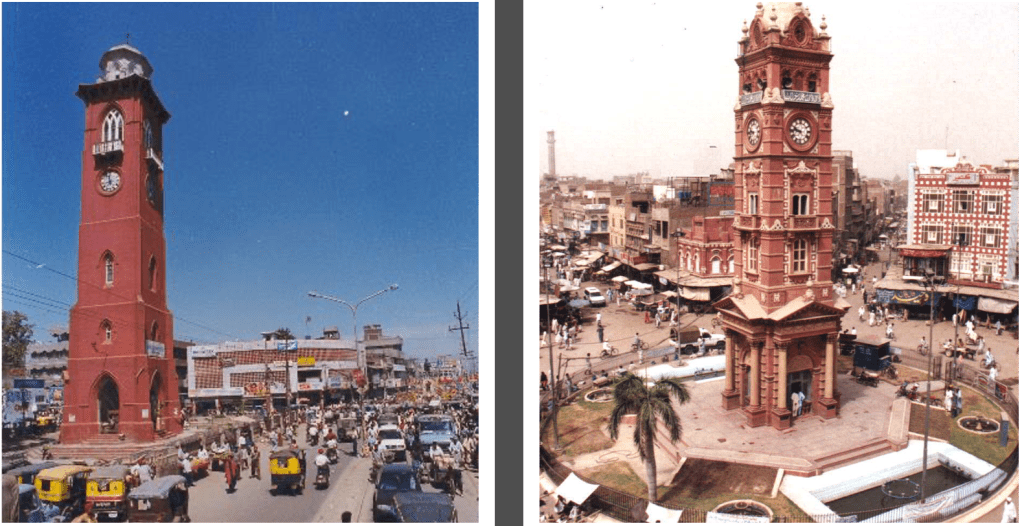
Ludhiana and Lyallpur were in fact only small towns before Partition, and interestingly both have iconic colonial clock towers in the town centre; both are important industrial textile hubs in the region; both had 62% ‘other’ populations prior to 1947 (according to the 1941 census, 62% Muslims lived in Ludhiana and 62% Sikhs/Hindus in Lyallpur); and finally, both function as important diasporic cities in contemporary Punjab(s).

Typically I tried to find women, but sadly the list of people is mostly male bar two! I hope to continue adding to the list as I find more people or please leave a comment if you know any other people with Ludhiana-Lyallpur links.

Note: the source for the information below is mainly through browsing and do not claim it as my own work. I have only selected a people I was interested in and that were born before 1947 and migrated following the Partition.

From Ludhiana…

Abu Anees Muhammad Barkat Ali Ludhianvi (1911 – 1997) was a Muslim Sufi who belonged to the Qadiri spiritual order. He was the founder of the non-political, non-profit, religious organisation, Dar-ul-Ehsan. Abu Anees’s followers spread all around the world and especially in Pakistan. He was born in Ludhiana where his father was a landlord.

Agha Ali Abbas Qizilbash also known as Agha Talish, (1923 –1998) was a Pakistani actor who made his debut in 1947 and was mostly known and recognized in Pakistan for playing character actor or villain roles. Talish was honoured by a Pride of Performance award, by the Government of Pakistan in 1989. Talish was born in Ludhiana, and his breakthrough film in Pakistan was film producer Saifuddin Saif’s Saat Lakh (1957) where his on-screen performance for this popular hit song was widely admired, Yaaro Mujhe Maaf Rakho Mein Nashe Mein Hoon.

Ajaz Anwar (1946-) is a Pakistani painter. He was a gold medalist at Punjab University, and he completed his M.A. in Fine Arts from Punjab University. Later, he went to teach at National College of Arts Lahore. His watercolour paintings show the grandeur of the old buildings and the cultural life in Lahore. Born in Ludhiana in 1946, his father was a cartoonist who apparently had stirred his passion from childhood and from whom he drew his inspiration.

Anwar Ali (1922-2004) was a Pakistani Editorial Newspaper Cartoonist in Pakistan Times based in Lahore. Anwar Ali was the creator of famous character Nanna, was the first newspaper cartoonist associated with The Pakistan Times. He was born in Ludhiana, where he spent his childhood. He did his BA from Government College Ludhiana.

Chaudhary Abdul Hayee Gujjar (1921 – 1980), popularly known by his pen name Sahir Ludhianvi, was an Indian poet who wrote primarily in Urdu in addition to Hindi. He is regarded as one of the greatest film lyricists and poets of twentieth century India. Sahir was born in Karimpura, Ludhiana to a Punjabi Muslim Gujjar family.

Habib-ur-Rehman Ludhianvi (1892 – 1956) was one of the founders of Majlis-e-Ahrar-e-Islam. He belonged to an Arain (tribe) and was a direct lineal descendant of Shah Abdul Qadir Ludhianvi, the freedom fighter against British Colonial rule during the Indian Rebellion of 1857. He chose to stay back in Ludhiana to continue representing the thousands of Muslims still remaining there after the partition in August 1947. The ancestral masjid in Field Ganj still exists today.

Hameed Akhtar (1923 – 2011), was a newspaper columnist, writer, journalist and the secretary-general of the Progressive Writers Association in Pakistan. He was also the father of TV actresses Saba Hameed, Huma Hameed and Lalarukh Hameed. He finished his basic education in Ludhiana and was a childhood friend of renowned poets Sahir Ludhianvi and Ibn-e-Insha

Munawar Sultana (1924- 1995) was born in Ludhiana and was a Pakistani radio and film singer. She is known for vocalizing first ever hit Lollywood songs like, “Mainu Rab Di Soun Tere Naal Piyar Ho Gya” (Film: Pheray 1949), “Wastae Rab Da Tu Jaanvi We Kabootra” (Film: Dulla Bhatti 1956),and “Ae Qaid-e-Azam, Tera Ehsan Hay, Ehsan” (Film: Bedari 1957).

Saadat Hasan Manto (1912 – 1955) was a Pakistani writer, playwright and author who was active in British India and later, after the 1947 partition of India, in Pakistan. Saadat Hassan Manto was born in Paproudi village of Samrala, in Ludhiana district to a Muslim family of barristers. Ethnically the family were Kashmiri.

From Lyallpur

Grahanandan Nandy Singh (1926 – 2014) was an Indian field hockey player who won two gold medals, at the 1948 and 1952 Summer Olympics. There is a documentary film on the team by Bani Singh titled, ‘Taangh/Longing’. Singh began playing hockey while studying at the Government College in Lahore, serving as captain of their hockey team in 1945 and 1946. After the Partition, he moved to Calcutta and played for Bengal when he was selected to the 1948 Indian Olympic team.

Harnam Singh Rawail (1921 – 2004), often credited as H. S. Rawail, was an Indian filmmaker. He debuted as a director with the 1940 Bollywood film Dorangia Daku and is best known for romantic films like Mere Mehboob (1963), Sunghursh (1968), Mehboob Ki Mehndi (1971) and Laila Majnu (1976). Rawail was born in Lyallpur and moved to Mumbai to become a filmmaker.

Inderjeet Singh (1926 –2023), also known as Imroz, was an Indian visual artist and poet. He was the partner of the poet, novelist, and writer Amrita Pritam, and they lived together until Amrita’s death in 2005. Inderjeet Singh was born in Chak number 36, Lyallpur.

Jagjit Singh Lyallpuri (1917 –2013) was an Indian politician. He was the oldest surviving member of the founding Central Committee of the Communist Party of India (Marxist). Prior to the Partition of India, Lyallpuri’s family owned roughly 150–180 acres in Lyallpur. The family moved to Ludhiana following the Partition.

Jaswant Rai Sharma (1928 –2017), popularly known by his pen name Naqsh Lyallpuri, was an Indian ghazal and Bollywood film lyricist. He is best known for the songs “Rasm-e-Ulfat Ko Nibhayen” (Dil Ki Rahen, 1973), “Ulfat Mein Zamaane Ki” (Call Girl, 1974), “Tumhe Ho Na Ho” (Gharonda, 1977), “Yeh Mulaqaat Ek Bahana Hai ” (Khandaan, 1979), “Pyar Ka Dard Hai” (Dard, 1981), and “Chitthiye Ni Dard Firaaq Vaaliye” (Henna, 1991). He was born in Lyallpur to a Punjabi Brahmin family, where his father was a mechanical engineer.

Lal Chand Yamla Jatt (1910 – 1991) was a noted Indian folk singer in the Punjabi-language. His trademark was his soft strumming of the tumbi and his turban tying style known traditionally as “Turla”. Many consider him to be the pinnacle of the Punjabi music and an artist who arguably laid the foundation of contemporary Punjabi music in India. He was born to Khera Ram and Harnam Kaur in Chak No. 384, Lyallpur. After partition, they relocated to the Jawahar Nagar, Ludhiana.

Prithviraj Kapoor (1906 –1972) was an Indian actor who is also considered to be one of the founding figures of Hindi cinema. He was associated with Indian People’s Theatre Association as one of its founding members and established the Prithvi Theatres in 1944 as a travelling theatre company based in Bombay. He was born in Samundri into a Punjabi Hindu Khatri family. His father, Dewan Basheshwarnath Kapoor, was a police officer in the Indian Imperial Police. His grandfather, Dewan Keshavmal Kapoor, and his great-grandfather, Dewan Murli Mal Kapoor, were Tehsildars in Samundri near Lyallpur.

Romesh Chandra (1919 – 2016) was a leader of the Communist Party of India (CPI). He took part in the Indian independence struggle as student leader of CPI after joining it in 1939. He held various posts within the party. He became president of the World Peace Council in 1977. He was born in Lyallpur and got his degree in Lahore and another one from Cambridge.

S.D. Narang (1918-1986) was born in Lyallpur. He was a director and producer, known for Dilli Ka Thug (1958), Anmol Moti (1969) and Shehnai (1964). He graduated in Biology from Government College, Lahore and did his MBBS from King Medical Collage, Lahore.

Sunder Singh Lyallpuri (1878 – 1969) was a leading Sikh member of the Indian independence movement, a general of the Akali Movement, an educationist, and journalist. Lyallpuri played a key role in the development of the Shiromani Akali Dal, and in the Gurdwara Reform Movement of the early 1920s and also founding member of Central Sikh League.

Teji Harivansh Rai Srivastava Bachchan (1914 – 2007) was an Indian social activist, the wife of Hindi poet Harivansh Rai Bachchan and mother of Bollywood actor Amitabh Bachchan. Teji was Born into a Punjabi Sikh Khatri family in Lyallpur.