Tag Archives: Lake District

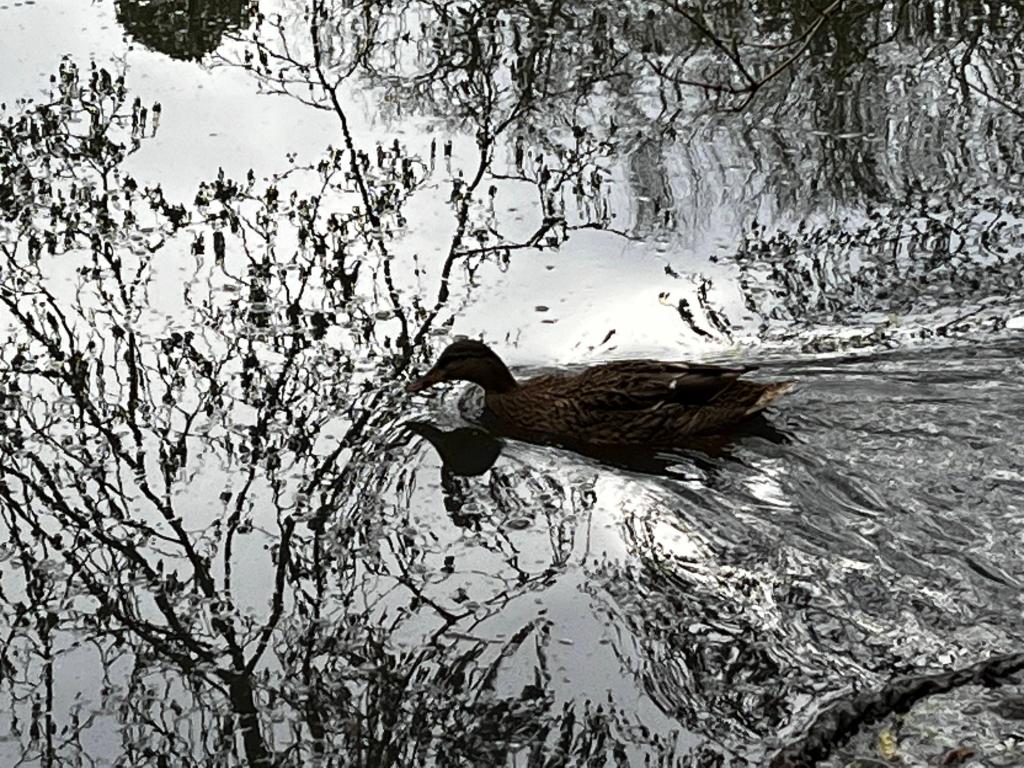
“Hope” is the thing with feathers

“Hope” is the thing with feathers
By Emily Dickinson

“Hope” is the thing with feathers -
That perches in the soul -
And sings the tune without the words -
And never stops - at all -

And sweetest - in the Gale - is heard -
And sore must be the storm -
That could abash the little Bird
That kept so many warm -

I’ve heard it in the chillest land -
And on the strangest Sea -
Yet - never - in Extremity,
It asked a crumb - of me.

“The Magic Spell Of A Book”

This slideshow requires JavaScript.

Today is Mohandas Karamchand Gandhi’s (1869-1948) 150th birth anniversary. In his autobiography, “My Experiments With Truth“, published in the late-1920s, Gandhi devoted a section under the sub-title “The Magic Spell of a Book” to John Ruskin (1819-1900) and his book, “Unto this Last”, published in 1860.
Henry Polak, Gandhi’s friend, gave him the book to keep him company on a train journey in South Africa, in the early-1900s. To take the story forward in Gandhi’s words:
“The book was impossible to lay aside, once I had begun it. It gripped me. Johannesburg to Durban was a twenty-four hours’ journey. The train reached there in the evening. I could not get any sleep that night. I determined to change my life in accordance with the ideals of the book.
This was the first book of Ruskin I had ever read. During the days of my education I had read practically nothing outside text-books, and after I launched into active life I had very little time for reading. I cannot therefore claim much book knowledge. However, I believe I have not lost much because of this enforced restraint. On the contrary, the limited reading may be said to have enabled me thoroughly to digest what I did read. Of these books, the one that brought about an instantaneous and practical transformation in my life was Unto This Last. I translated it later into Gujarati, entitling it Sarvodaya (the welfare of all).
I believe that I discovered some of my deepest convictions reflected in this great book of Ruskin, and that is why it so captured me and made me transform my life. A poet is one who can call forth the good latent in the human breast. Poets do not influence all alike, for everyone is not evolved in an equal measure. The teachings of Unto This Last I understood to be:
1. That the good of the individual is contained in the good of all.2. That a lawyer’s work has the same value as the barber’s, inasmuch as all have the same right of earning their livelihood from their work.

3. That a life of labour, i.e., the life of the tiller of the soil and the handicraftsman, is the life worth living.

The first of these I knew. The second I had dimly realized. The third had never occurred to me. Unto This Last made it as clear as daylight for me that the second and the third were contained in the first. I arose with the dawn, ready to reduce these principles to practice.
Photos: John Ruskin lived the last decades and more of his life at Brantwood, Coniston (Lake District).

Mayo at Cockermouth

This slideshow requires JavaScript.

Richard Southwell Bourke (1822-72), 6th Earl of Mayo, 4th Viceroy of India (1869-72)

Born and educated in Dublin; MP (Conservative Party) for Kildare (1847-52), Coleraine (1852-57) and Cockermouth (1857-68); Chief Secretary for Ireland (1852, 1858, 1866); Assassinated in Andaman Islands by Sher Ali Afridi (1872); Memorial Statue in Cockermouth (1875)

Termed Disraeli’s Viceroy by George Pottinger (1990) and a ‘reckless partisan of Irish landlordism’ by Karl Marx in the New York Daily Tribune (1859) (https://www.irishtimes.com/opinion/letters/lord-mayo-in-a-pickle-1.3777905)

For biography:

Library Ireland: https://www.libraryireland.com/biography/RichardBourkeSouthwell.php

WW Hunter, The Earl of Mayo (Oxford, 1891)   https://www.gutenberg.org/files/35809/35809-h/35809-h.htm

On assassination:

Norman Freeman, “Death of a viceroy – An Irishman’s Diary on the assassination of Lord Mayo”, The Irish Times, 28 Jan 2019.  https://www.irishtimes.com/opinion/death-of-a-viceroy-an-irishman-s-diary-on-the-assassination-of-lord-mayo-1.3773683

Clare Anderson, “The murder of Mayo: why Britain kept quiet about a Viceroy’s assassination” 7 Sep 2011. https://www2.le.ac.uk/news/blog/2011-archive/september/the-murder-of-mayo-why-britain-kept-quiet-about-a-viceroys-assassination

With wider political-cultural context:

Julia Stephens, ‘The Phantom Wahhabi: Liberalism and the Muslim fanatic in mid-Victorian India’, Modern Asian Studies 47: 1 (2013) 22-52

Of legacy:

Mayo College Ajmer (India) (1875): https://mayocollege.com/

Mayo School of Industrial Art Lahore (Pakistan) (1875): http://lahore.city-history.com/places/mayo-school-of-industrial-art-later-national-colle/

It was of course his legacy that is most associated with the city of Lahore, where the Mayo School of Industrial Art was set up in 1875, following his assassination in 1872. The Mayo School later became the National Collage of Arts (NCA) in 1958 and this still remains the premier institution for the Arts in Pakistan.

Lockwood Kipling was appointed the first Principal of Mayo School, alongside his other role of Curator of the Lahore Museum, which was the Ajaib Ghar in Rudyard Kipling’s Kim.