Tag Archives: India

The State of Statelessness

All photos from Banksy’s temporary “bemusement” park installation in Weston-Super-Mare, 2015.

It appears that the new political landscape across the globe is colliding with old ideas of liberty, freedom and basic human rights. This is particularly palpable in the movement of people; what is heart wrenching is the curtailment of that freedom to flee from persecution, have the chance to live your life without fear and to seek sanctuary. Those who are forced to flee do not do this out of choice; they are forced to do so for a reason. Basic humanity means under the circumstance most of us would readily help those in need. But in a “globalised” world, it seems that goods and trade have more freedom to travel the world than humans. We want the benefits of living in an integrated global community but actually in reality we cannot cope with the consequences, which also bring cultures and people together. It brings about change and impacts local communities and threatens the very notions of what make a nation-state.

A few snippets that appeared in the last 12 hours to highlight the uncertainty of moving towards hard borders.

banksy

Banksy uses Steve Jobs to highlight the refugee crisis. Jobs was the son of a Syrian migrant who came to America after the Second World War and Apple is number one brand that has connected people across borders with the revolutionary smart phones.

https://www.theguardian.com/artanddesign/2015/dec/11/banksy-uses-steve-jobs-artwork-to-highlight-refugee-crisis

Precarious Trajectories: Understanding the human cost of the migrant crisis in the central Mediterranean. The film by Dr Simon Parker is set on location in Libya, Italy and Greece during 2015-2016, at the height of the Mediterranean migration crisis. It focuses on the perilous sea crossings that hundreds of thousands of refugees have undertaken in recent years in order to arrive at what they hope will be the safer shores of Europe through the eyes of Ruha from Syria and Ahmed from Somalia. See project website: https://precarioustrajectories.wordpress.com/

Equally compelling was the 3-part documentary by the BBC, Exodus. This is a compelling and powerful journey across the deadly Mediterranean Sea. Read a review of it in the Guardian: https://www.theguardian.com/tv-and-radio/2016/jul/12/exodus-our-journey-europe-review-bbc-documentary-bbc

Link to the programme: http://www.bbc.co.uk/programmes/b07ky6ft


Pakistan’s Stepchildren – an in-depth and powerful analysis of the plight of millions of Afghans who sought sanctuary in Pakistan, but they remain “refugees” despite the vast majority who were born in Pakistan.

Citizenship for Afghan refugees and migrants, or their descendants has long been a contentious issue. According to the Pakistan Citizenship Act 1951, anyone born in Pakistan is a national by birth, except those whose parents are ‘aliens’ — someone “who is not citizen of Pakistan”.

Furthermore, Pakistan is not a signatory to the 1951 Convention Relating to the Status of Refugees, nor to its 1967 additional protocol. As such, according to the Pakistani government, it is not obligated to “facilitate the assimilation and naturalisation of refugees.”

Read the full article: http://www.dawn.com/in-depth/afghan-refugees/


Prisoner of war

‘The Chinese man trapped in India for half a century’ is the tragic story of Wang Qi who was a Chinese army surveyor in 1963 following the Sino-Indian war; but he ended up on the wrong side of the border by accident. The story highlights the plight of Wang Qi, who is now settled in India and has a family but he does not have any legal rights in India. He is caught up in the quagmire of legalities surrounding his rights and citizenship. [Read full article: http://www.bbc.co.uk/news/world-asia-india-38715056%5D The story is reminiscent of the many people who have been trapped for months and years on the wrong side of the border between the futile politics of India and Pakistan. Though more worrying is the current trend, in not just Trump’s America but in Modi’s India. India is also making discrimination against Muslims a key ingredient of its refugee and immigration policy. The following is a small extract from the article, ‘Indians Angry at Trump’s Ban on Muslim Refugees should look at what Modi is doing,’ highlights the current mood of India’s current government:

The Citizenship (Amendment) Bill proposes a redefinition of “illegal immigrant”:

“Provided that persons belonging to minority communities, namely, Hindus, Sikhs, Buddhists, Jains, Parsis and Christians from Afghanistan, Bangladesh and Pakistan, who have been exempted by the Central Government by or under clause (c) of sub-section (2) of section 3 of the Passport (Entry into India) Act, 1920 or from the application of the provisions of the Foreigners Act, 1946 or any order made there under, shall not be treated as illegal migrants for the purposes of this Act.”

This effectively means that persons from minority religious communities from our neighbouring Muslim majority countries shall not be considered as illegal migrants and subjected to prosecution.

Trump’s executive order cleverly does not use the word ‘Muslim’ in the ban it imposes on those seeking to enter the US. India’s Citizenship (Amendment) Bill, on the other hand, by identifying explicitly and arbitrarily the intended beneficiaries of its refugee policy, directly excludes Muslim communities which may or do face persecution in India’s Muslim-majority neighbours (eg. Ahmadis, Hazaras, Shias) as well as Muslims who are in a minority elsewhere, like Myanmar or China.

Read the full article:https://thewire.in/104236/indians-angry-trumps-new-travel-ban-muslims-look-modi/

Dividing Punjab, 1947

Map of Punjab. Scale 1:16 Miles.

Muslim majority Tehsils and contiguous majority areas of Muslims.

Available in the National Documentation Wing, Islamabad.

By the summer of 1947, it was obvious that a one-state solution for British departure from India was not a possibility and so serious discussions were necessary regarding the division of British India. Above is one of the maps used by the Punjab Muslims League, Boundary Commission Office to make its case about how to divide the Punjab.

The 3 June Plan, or as it was more popularly known as the Mountbatten Plan, was accepted by the main leaders, Nehru, Jinnah and the Sikh leader Sardar Baldev Singh. According to the Plan, the areas of Bengal and the Punjab would be divided between Muslim and non-Muslim districts. The Commission consisted of four judges, Justice Din Muhammad and Justice Muhammad Munir (both Muslim) and Justice Mehr Chand Mahajan (Hindu) and Justice Teja Singh (Sikh). The Commission chairman was the British barrister, Sir Cyril Radcliffe. During the public sittings, all the parties were allowed to present their cases to the Commission.

The Muslim case largely rested on the basis that their population majority in contested areas should be considered a major consideration in demarcation of the boundary line. Amongst the numerous documents used by the Commission, the map above highlights the Muslim majority tehsils and contiguous majority areas of Muslims. The yellow area in the middle is around Amritsar in central Punjab. Punjab generally and more specifically this area was incredibly complex and mixed in terms of communal composition and so immediately it is obvious that the dividing up people and land would be no easy task. How would they undo hundreds of years of people living together, co-existing and now being forced into accepting a new nation state? In addition to looking at the distribution of different communities, the Boundary Commission also examined the existing boundary lines of the tehsils, the location of the railway lines, the Grand Trunk Road (which is the main artery of the Punjab and indeed North India, connecting Kabul right through to Calcutta), the rivers and canals, the irrigation system, natural boundaries etc and some of these are marked on the map. Of course each community further made a case before the judges to make recommendations about where the line should be. This is particularly pertinent in areas where we see the concentration or pockets of the “other” community. Justice Mehr Chand Mahajan in his report makes an interesting point about the city of Lahore, which historically and at the time of partition was claimed by all communities. The city has a rich history and was once the seat of power under Ranjit Singh. The Justice says:

“The town of Lahore in my view stands on a special footing. It has been metropolis of the Punjab for several hundred years. Both east and west have contributed to its prosperity. Its economic life has mainly been developed by the enterprise of the non-Muslims. In truth both the Muslims and non-Muslims can legitimately claim Lahore as their own town thought on different grounds…. If I could, I would have suggested that this town should be left in the joint management of both the communities as a free city, it freedom being guaranteed by the two Dominions with a suitable constitution in which one community may not dominate over the other.” (Kirpal Singh (ed), Select Documents on Partition of Punjab 1947 India and Pakistan (Delhi: National Book Shop, 1991, p333-4).

See some of the documents related to Indian independence at British Library: http://www.bl.uk/reshelp/findhelpregion/asia/india/indianindependence/indiapakistan/index.html

Read commentary and analysis by Lucy Chester, ‘The 1947 Partition: Drawing the Indo-Pakistani Boundary’. http://www.unc.edu/depts/diplomat/archives_roll/2002_01-03/chester_partition/chester_partition.html

Poetry Corner: Transience

12742844_10154060423823128_7084941959373216862_n

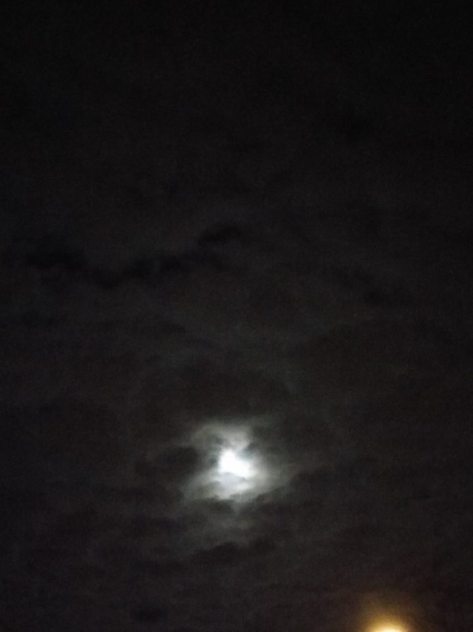
Transience by Sarojini Naidu and a glimpse of the moon to compliment her words.

Nay, do not grieve tho’ life be full of sadness,
Dawn will not veil her splendour for your grief,
Nor spring deny their bright, appointed beauty
To lotus blossom and ashoka leaf.

Nay, do not pine, tho’ life be dark with trouble,
Time will not pause or tarry on his way;
To-day that seems so long, so strange, so bitter,
Will soon be some forgotten yesterday.

Nay, do not weep; new hopes, new dreams, new faces,
The unspent joy of all the unborn years,
Will prove your heart a traitor to its sorrow,
And make your eyes unfaithful to their tears.

Borders and Boundaries

As an academic my main pre-occupation has been centred around the partition of India and creation of Pakistan in 1947. I have been fortunate enough to have been able to spend time on both sides of the border, comparing the impact of this division on the people of Punjab; the area that has been severely affected by the decision taken in 1947. From being the bread basket of British India and the major recruiting ground for the colonial Indian army, East Punjab becomes the hostile border with Pakistan and West Punjab, while politically dominate, recedes culturally. The culturally, linguistically and economically rich land of Punjab is Balkanised after 1947 and now exists as a mere skeleton of its former self. The land has been reconfigured along religious identities which evaporate the pluralistic history; it tries to re-imagine itself for the new global order but lacks the former strength it had.

For the past 14 years I have crossed the official border crossing at Wagha/Attari between India and Pakistan numerous times; I’m lucky because I don’t have a green or blue passport, both of which immediately open you up tedious amounts of scrutiny. By virtue of being “foreign” and at the same time a “desi”, you get to experience this place in a different manner. Although I have Indian heritage, the Indians are on the whole sterner, matter of fact during the immigration and customs. Sometimes I will strike a conversation and there is rare chance to get their views. For example, during my last trip, the Indian official wanted me to recommend some history books to read, especially those that were impartial. On the Pakistan side, there are of course always questions, inquisitions about what, why, who…but there appears to be more “conversation”. There is always intrigue and sometimes joy that a “foreigner” would want to spend time in Pakistan. I have also been unlucky enough to be stuck on both sides of the border just as it is about to close for crossing. And both sides have blamed the other, “madam ji, we will let you go through but the Indians/Pakistanis will not accept you”. Both behave in this rather childish and tit for tat manner. It is a shame then that politics is also conducted in this manner. While Delhi and Islamabad exchange words of war, the ordinary people suffer, as they have suffered in the past 69 years.

The new global trend for hyper nationalism, as seen in the impact Trump is having in America, the growing influence, both emotionally and politically, of right wing politics can also be seen in the UK, France, Denmark, Sweden, and so socially progressive countries which are now retracting and adopting more defensive policies. While in India, the impact of Modi and his cosy relationship with RSS has unleashed and legitimatised a form of nationalism and patriotism which makes it difficult to question governments and their policies. In the name of showing loyalty to the state, Indianess/Hinduness and the armed forces, it has become unpatriotic to say anything which may offend. Have we become so insecure that we cannot even tolerate any scrutiny? Surely we need reflect on our past and how we face the challenges of an increasingly globalised society. We cannot live in isolation, putting up barriers, preventing the movement of people and creating homogenous spaces. India and Pakistan did this in 1947 and we live with the legacies of that today. Homogenous (religiously or ethnically) societies does not equate with security, peace and harmony. Look at the challenges Pakistan has faced since it was founded as a country for the Muslims of India. Working together for a solution is the only option. But amongst this raft of change has also been the enormous disconnect between the politicians and the people and this is a global challenge.

It is therefore staggering to think that as we approach 70 years of independence, little has been gained and little has been achieved in our relationship with our closest neighbour. We cannot deny that we were once attached together and there are many cultural, ethnic, linguistic commonalities that unite us, yet we are determined to focus on the differences and maintain the status quo of a sibling rivalry. Unfortunately, there is no parent who can step in try to patch up things, we have to be mature enough to do that ourselves. Otherwise, this rivalry will remain for the next 70 years. People away from border states like Punjab and especially Kashmir cannot comprehend the negative impact this rivalry has had on the mind-set and livelihoods of the people. They live in the shadows of this rivalry, even though there is much more which unites them than divides them. They also have a right to live in peace and aspire for prosperity, we should not be so selfish to deny them this.

Golgappas/Panipuri

Golgappas have to be one of the most popular street foods in India. For me it’s a ritual, when I go to Ludhiana, I have to have golgappas. It is a simple hollow, fired puri, made with flour or semolina. The flour ones are more crispy and more popular. A small hole is inserted and then filled with any combination of chickpeas, onions, potatoes and then filled with flavoured water. The water is what makes the golgappa; from simple tamarind based pani, the street vendor now has multiple flavours. Sweet, tangy, spicy to appeal to all taste buds. Affordable by all and enjoyed by all, this is the simple attraction that keeps bringing me back to India.