Tag Archives: Hindi

Notes from Lagos (Portugal): from Punjab to Lagos part 2

On a recent trip to Lagos, Portugal, I was struck by the presence of Indians, particularly young students, some were perhaps tourists and migrants who appeared to be seeking opportunities, others looked more settled and part of the local community.

The Indian diaspora in Portugal is diverse and can be broadly divided into three distinct regional groups:

  1. Gujaratis – The largest group, encompassing both Hindus and Muslims, reflects the deep-rooted trade and migration links between Gujarat and Portugal.
  2. Goans – Predominantly Christian, this group traces its heritage to Portugal’s colonial past, when Goa was under Portuguese rule for over four centuries. This historical connection has shaped their language, culture, and religious practices.
  3. Punjabis – Predominantly Sikhs, this community has migrated more recently, seeking opportunities in industries like hospitality and retail.

While walking around the streets of Lagos came alive with a rich tapestry of languages, including Gujarati, Punjabi, Hindi, Portuguese, and English, mingling seamlessly. This linguistic and cultural interplay highlighted the adaptability and integration of these communities within the Portuguese society.

Historical Roots and Migration Patterns

Historically, Portugal’s connection to India dates to the early 16th century when Vasco da Gama’s expeditions established trade and colonial links. [Read Lagos to Goa Part 1] Goa became a Portuguese territory in 1510, fostering a flow of people, goods, and cultural exchange between the two regions. Even after Goa’s annexation by India in 1961, ties between the two nations have persisted, enabling migration and cross-cultural connections.

Kristina Myrvold notes that significant Indian migration to Portugal began in the 1970s after the collapse of the Portuguese Empire and the 1974 democratic revolution. During this period, many Portuguese-speaking Hindus and Christians from former colonies like Mozambique and Goa migrated to Portugal. Later, in the 1990s, Portugal’s entry into the European Union and Schengen Zone made it an attractive destination for immigrants from India, including those with no prior cultural or linguistic ties to the country.

The Growing Sikh Community

Among the broader Indian diaspora, the growing number of Punjabi Sikhs particularly stood out during my visit. Many Indian restaurants appeared to be run by Sikhs, though ownership could belong to others. Myrvold explains that Sikh migration to Portugal began in the early 1990s, coinciding with a construction boom that created a high demand for labour. Many Sikhs initially worked in construction and agriculture, industries that required significant manpower. Over time, they expanded into other sectors, opening shops and restaurants, particularly in hospitality and retail.

Portugal’s relatively relaxed immigration policies and labour shortages during that period encouraged migration. Many Sikhs used Portugal as a stepping stone to secure residency or citizenship, drawn by the affordable cost of living and accessible legal pathways. This trend has driven the growth of the Sikh community in Portugal, which was estimated at 5,000 in 2007 and doubled to 10,000 by 2010. By 2024, the Indian Embassy in Portugal estimated the Sikh population at 35,000, highlighting their increasing settlement in the country.

Settlement and Challenges

Many Sikhs initially arrived in Portugal via other European countries, attracted by Portugal’s relatively lower cost of living and accessible legal pathways to residency and citizenship. Geographically, the Sikh community is spread across Portugal, with significant populations in major cities such as Lisbon and Porto, as well as in Albufeira and other towns along the Algarve. These regions have not only offered economic opportunities but also served as hubs for community life, where Sikhs have built places of worship, such as gurdwaras, and organized cultural events to preserve their traditions and strengthen community bonds.

The Sikhs community in Portugal is relatively new compared to other Indian groups with longer-established connections with the country. While travelling from Lagos to Faro, I had the chance to speak with a Sikh taxi driver who had been living in Albufeira for over 10 years. Despite the initial linguistic and cultural challenges, according to the taxi driver, the quality of life is much better in Portugal. They maintain their links with family back home in Jullundur but work and home is here.

The work is also seasonal and dependent on tourism, the summer being peak time to work long hours and earn double or triple the earnings to compensate for the winter periods when tourism drops. Looking into the future with rising living costs and increasing restrictions on settlement according to the taxi driver, it will make be harder for future migrants to establish themselves in Portugal.

Sources

Kristina Myrvold, ‘Sikhs in Portugal’ Religious Studies Commentaries, 11 August 2012. https://religionsvetenskapligakommentarer.blogspot.com/2012/08/sikherna-i-portugal.html

Inês Lourenco, From Goans to Gujaratis : a study of the Indian community in Portugal, Migration Policy Centre, CARIM-India Research Report, 2013/01 – https://cadmus.eui.eu/handle/1814/29463

Jennifer McGarrigle, and Eduardo Ascensão. “Emplaced mobilities: Lisbon as a translocality in the migration journeys of Punjabi Sikhs to Europe.” Journal of Ethnic and Migration Studies 44, no. 5 (2018): 809-828.

Pamila Gupta, “The disquieting of history: Portuguese (De) Colonization and Goan migration in the Indian Ocean.” Journal of Asian and African Studies 44, no. 1 (2009): 19-47.

Nation, State and Education

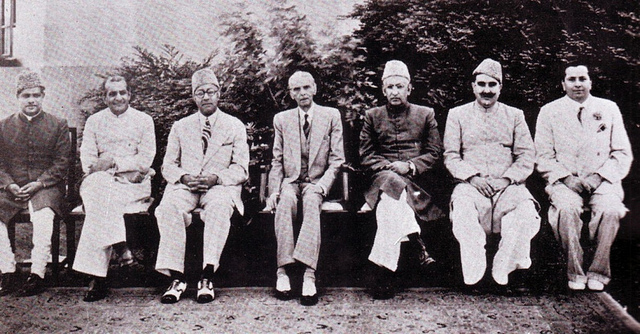
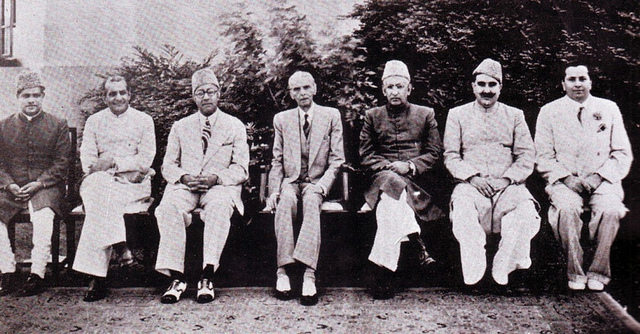
Fazlur Rehman, Ghulam Muhammad, Liaquat Ali Khan, M A Jinnah, Ibrahim Ismail Chundrigar, Abdul Rab Nishtar and Abdul Sattar Pirzada.
Picture credit, Dr. Ghulam Nabi Kazi

In this year of 2020, as debates are generated around Government of Pakistan’s new single national curriculum and its comparison with Government of India’s new national education policy, mind goes back to the first attempts made by a different Government of Pakistan, ‘to evolve a comprehensive national plan in accord with the Objectives Resolution’ of March 1949 (File No. 3 (4)-PMS/50, GoP, PMS).

Fazlur Rahman, then-Minister for Commerce & Education, was born in then-Dacca and was a lawyer-politician of the Bengal Provincial Muslim League, who had served as Revenue Minister of the pre-partitioned province. On 14 September 1949, he sent a 14-page letter (F. No. 14-313/49-Est) to Prime Minister Liaquat Ali Khan, in which he set out his trenchant comments and an accompanying template for the ‘two-fold task’ confronting them namely (1) ‘to lay the foundations of an educational system based on “Islam”’ and (2) to imbue children ‘with an international outlook’.

Recalling the first Pakistan Educational Conference of November 1947 and its resultant educational ideology and institutions – ‘the Advisory Board of Education, the Council of Technical Education and the Inter-University Board’ – he felt that the time had come to overcome ‘the existing system of education, with its alien background, Hindu and Christian ideas, foreign to our ideology’, for as long as it continued, it could not be expected ‘to produce men and women who would realise the value of the Islamic way of life and would make loyal and zealous citizens of Pakistan’.

For the successful achievement of this task, two things were essential: (i) text-books and (ii) teachers. As far as text-books were concerned, the need for Rahman was ‘to draw up the syllabus for every subject on the basis of Islamic ideology (as distinct from instruction in Islamic theology) and get text-books written by competent authors’. He wanted ‘Urdu readers – fundamentally the same all over Pakistan’, necessitating ‘a change in the existing system of publication – whose sole motive is profit-making’. Thus, ‘the Central Government should have them written under supervision’.

There was also the matter of ‘compiling a national history as a kind of reference book’ comprising researched topics like (a) ‘Islamic history and civilisation, (b) the rise and fall of Muslim states all over the world and (c) the contribution made by Muslims to the Indo-Pakistan sub-continent’. For the adoption of Islamic ideology, it was ‘essential to establish a Research Institute in Islamiyat’. As regards teachers and their training, ‘a number of Central Training Institutions’ were needed. These two were ‘fundamental problems which exclusively concerned the Central Government’.

While education was constitutionally the responsibility of the provinces – like in India – their ‘limited resources’ and its ‘all-Pakistan character’ made it ‘incumbent on the Central Government’ to take the lead – ‘from adult to university education’. For ‘democracy and illiteracy go ill together. The illiteracy percentage for India [before 1947] was nearly 90, but with the establishment of Pakistan and the exodus of non-Muslims (educationally more advanced) and the influx of Muslim refugees (to a large extent illiterate)’, there was an increased mass illiteracy in Pakistan. 

Adult education, however, was not ‘mere imparting of literacy’ but included ‘spiritual, civic and vocational motives’ for the creation of a patriotic and productive citizenry. This involved infrastructure, implements, literature, teachers and audio-visual aids, for the provision of which, ‘the Central Government must assume certain powers’. Equally important was ‘the provision of free, universal, compulsory primary education’, involving a vast expenditure. ‘Free, compulsory secondary education’ was ‘unfeasible and must be left to future’.

Anyhow, the Central Government had the ‘clear responsibility’ to produce ‘patriotic citizens not warped by narrow provincialism or alien cultural elements as the Hindu influence in East Bengal’. National solidarity therefore required ‘the speedy revision of curricula and syllabi and re-writing of textbooks’. Another problem was the ‘place of Urdu in national life’. As Jinnah had made it ‘abundantly clear’ that Urdu was to be ‘the national language’ and as, by adopting Hindi in Devanagari script, India had ‘dealt a blow’ to Urdu – ‘the cultural heritage of Indian Muslims’.

For Rahman, language was a ‘potent means’ to maintain ‘cultural ascendancy and a separate political consciousness’. Urdu with its Persian and Arabic words was ‘alien in spirit to Hindu culture’, essentialising its ‘elimination from Indian national life’.  Conversely, in Pakistan it was ‘a matter of vital necessity to have Urdu in Arabic declared forthwith as state language, a compulsory subject in schools’ overcoming the ‘narrow provincialism’ and ‘parochial mentality’ of East Bengal and Sind and resistance of West Punjab and NWFP ‘to assimilate the vocabulary and culture of these two’.

It was a no-brainer for ‘all employees of the Central Government be required to know Urdu’ and a Bureau of Translation be set up for all technical-scientific terms. In this connection, it is important to remember that in 1949, the Hindu community in East Bengal constituted one third of its population, among whom were ‘the caste Hindus – wedded to the Bengali language – the hard-core of resistance’. Rahman was concerned about their potential for ‘an anti-national mentality’ without ‘a pro-Islamic outlook’; ‘dependable citizens of Pakistan with due regard to their religious rights’.

His suggestion was to ‘reconstruct the Bengali language’ with ‘the Arabic script’ thereby ‘putting an end to the disruptive activity being carried in the name of the common culture of the two Bengals’. Moreover, the ‘present Bengali language with its Sanskrit script’ was ‘steeped in Hindu influence, full of Sanskrit words, Hindu mythology and [thus] anti-Islamic’. The Arabic script would ‘eliminate Hindu influence, facilitate adult education, link up East and West Pakistan [and] ensure East Bengal’s willing acceptance of Urdu as a national language’.

In technical education, Pakistan then had only 3 ‘engineering colleges’, like its 3 universities, for a population of 80 million, ‘impaired by the exodus of non-Muslim teachers’. A ‘Grants Committee’ for both was needed. Here, the ‘main obstacle’ was ‘the attitude of the Ministry of Finance’, to which education was a ‘provincial responsibility’. Rahman had forged the establishment of a History Board, Adult Education Centres in East Bengal, a Central Syllabus Committee with its Bengali sub-committee, a Committee of adopting Arabic script and a Committee on Technical Education.

His future proposals were less piece-meal and included the Central Government assuming ‘direct responsibility for the general planning and coordination of education’, a central-provincial sharing of adult education expenditure, central financial assistance for free, compulsory primary education in provinces, Urdu as state language, Arabic script for regional languages and centres for translation, Islamiyat, teachers’ training and a University Grants Committee. 


First Cabinet of Pakistan – Ministers of Liaquat Ali Khan & Muhammad Ali Jinnah in 1947

Special report: The founding fathers 1947-1951. The season of light… By Dr Syed Jaffar Ahmed, Dawn.

The Status of Punjabi after 1947

Reorg of Punjab 1966
Reorganisation of East Punjab after 1966. © Pippa Virdee 

Punjabi is an Indo-European (or Aryan) language and is the native language of Punjab, a land divided between India and Pakistan. It has approximately 100 million speakers, largely in north India and Pakistan but it is also widely spoken amongst the Punjabi diaspora around the world.

The Partition in 1947 not only divided the province of Punjab but it also divided the language, and this has been the source of much tension in post-47 in both India and Pakistan. Being a phonetic language, Punjabi was/is written largely in three different scripts: the Persian script (sometimes referred as Shahmukhi) is used mostly in Pakistan; Sikhs use the Gurmukhi script and less common is the Devanagari script which is associated with Hindu Punjabis. Punjabi interestingly was never given official state patronage; this is true for the Mughal period, Ranjit Singh’s reign and also under the British. The preferred state or official language was Persian and Urdu. Farina Mir argues that part of the problem under the British colonial period was the plurality of the scripts used to write Punjabi; all three scripts (Indo-Persian, Gurmukhi, and Devanagari) were used but none of them dominated (Farina Mir, The Social Space of Language: Vernacular Culture in British Colonial Punjab, London: University of California Press, 2010).

It is not until after 1947 that Punjabi begins to get official state patronage, at least in India that is. It is officially recognised as one of the 22 official state languages in India. In West Punjab (Pakistan), Punjabi is confined largely to an informal language with no official status despite being spoken by the majority of people. And even though the number of Punjabi speakers in Pakistan has been declining over the decades, Punjabi is still the most widely spoken language. East Punjab after the Partition in 1947 was a fragmented province of its former self. It consisted of territory that was an amalgamation of divided Punjab, Patiala and East Punjab States Union (the former princely states), and the Hill States to the north of the province. By the 1950s, a Punjabi Suba (province) movement had started which hoped to create a Punjabi-language state, taking inspiration from the linguistic reorganisation taking place in other parts of India. This is eventually achieved in 1966, with the Punjab Reorganisation Act that created a new state of Haryana and also transferred territory (such as the Hill States) to Himachal Pradesh.

Leading up to this though was of course an enormous amount of discussion and political agitation, so, it is interesting to see some of the initial correspondence between Bhim Sen Sachar, Chief Minister of East Punjab and Jawaharlal Nehru, the Prime Minister of India and Nehru to Vallabhbhai Patel, the Deputy Prime Minister on the question of introducing Punjabi as the medium of instruction in schools. 

BS Sachar to Nehru, 9 July 1949 (JN SG 26-I):

‘In my letter [of] 13 May, I referred to the two outstanding demands of the Sikhs, namely (I) representation in services, and (II) Punjabi in Gurmukhi script as the medium of instruction and court language…No compromise on them was considered possible…since then, I have had informal discussions on the language controversy with the Governor, my colleagues, various leaders of public opinion and the general view of government is as below. Before the Partition, Ambala division, excepting Ropar and Kharar tehsils of the Ambala district, spoke Hindustani, while Punjabi was spoken in the rest of the Punjab, barring Kangra district. After it, nearly a million displaced persons from the West Punjab moved into the Ambala division and, therefore, it cannot now be said that all the people [there] speak Hindustani. Nevertheless, the distinction which held good before exists even now, to a lesser a degree. With the gradual elimination of English and Urdu from the province, the question [of] their [replacement] has assumed great importance…the present controversy is not over the language [Punjabi] spoken but the script [Devanagari or Gurmukhi] in which it should be written…The unanimous demand of the Sikhs is that Punjabi in Gurmukhi should be adopted all over the province as medium of instruction, as the official and court language. This would not be acceptable to Hindus in general and especially to the Hindustani-speaking region of the Ambala division and Kangra district of the Jullundur division. It will be unfair to force it on them…The best solution would be to recognise the province as consisting of two distinct linguistic regions, Punjabi and non-Punjabi. Government would agree to the following: (i) Punjabi in Gurmukhi should be the medium of instruction in the Punjabi-speaking region of the province, up to and including the 5th class; (ii) In the Punjabi-speaking region, Hindi should be compulsorily taught as a second language from the 4th class; (iii) Reversal of the same arrangement in the non-Punjabi region; (iv) English and Urdu should for the present continue as the official and court languages. There are differences of opinion on two points: (i) whether girls’ schools should be allowed the option; (ii) whether the existing boundaries of the Jullundur and Ambala divisions should be regarded as correctly [representative]. The Sikhs would not agree to distinguish girls’ schools from boys’ schools…whereas Hindus should be in favour of it…The Sikhs would include the whole of Jullundur division and the whole of Ambala district in the Punjabi-speaking region whereas Hindus would like to exclude Kangra district and three tehsils, Ambala, Naraingarh and Jagadhari, of the Ambala district from it…No agreement on [these] appears to be possible…would be grateful [for your] decision on them’.

Nehru to Patel, 22 July 1949 (JN SG 26-II):

‘Giani Kartar Singh came to see me this morning…on the language issue in East Punjab…I told him that there is no point in our considering the [matter] unless we knew that the parties concerned would abide by our decision…He said that an agreement had been arrived at between the Hindu and Sikh Ministers and the Governor agreed…(1) Punjabi in Gurmukhi, (2) two linguistic areas, (3) Punjabi compulsory from 1st-5th standard in Punjabi area, Hindi vice-versa, (4) from 4th standard upwards, the other language should be compulsory…There was no agreement on the delimitation of linguistic areas. More especially, the Pahari Ilaqa – Sikhs considered as Punjabi areas…another point was Hindus wanted option to be exercised in regard to languages, the Sikhs did not…I made it quite clear that our general policy was against compulsion in regard to choice of the mother-tongue…I further pointed that Bengali, Marathi, Gujarati were well-developed languages…He confessed that Punjabi was not suited for higher education [but] should be used up to the Matriculation… [But] that there was a great deal of feeling behind the Sikh demand…I think some facts have to be obtained about the linguistic divisions of the province but the issue is quite clear…If the Punjabis want two linguistic divisions, they might have them but I just do not see how we can do away with the option of a parent to decide which shall be the mother-tongue…’

These two letters provide a glimpse into the discussions taking place in 1949. However, the two letters from 1951 provide a different lens, especially the DAV College correspondence which is clear that the medium of instruction should be Hindi, despite the considerations of the State Language Policy. 

Jullundur City, 3 May 1951, DAV College Managing Committee (Bal Raj, President) To the managers of all the schools in the Punjab under the control of the DAV College Managing Committee (JN SG 92 II):

Please refer to the Punjab Education Department on the State Language Policy in the schools: it is [an] ill-conceived policy…I am to convey to you in very unmistakable language the views of the DAV College Managing Committee vis-a-vis this policy. Our schools should go ahead in their work undeterred by considerations of State Language Policy. To us, teaching of Hindi in our schools is a matter of supreme importance and on this point, there is to be no compromise. We would much rather let our schools face the consequences than submit to any direction from the Education Department, that weakens the position of Hindi in them. In case there is any trouble on this score from Education Department, the schools affected can rely on our fullest support, and we shall see to it that they do not suffer.

In our schools, Hindi will be the medium of instruction for all classes and Punjab will start as optional vernacular from V in place of IV as laid down by the Education Department because we consider its teaching in IV class too early. It should be clearly understood that Punjabi from V class will be optional i.e. only for those students, who would like to learn it. Provision should, however, be made for teaching in Punjabi medium for students coming from outside, and effort should be made to switch them on to Hindi medium as early as possible.

It is just possible that the Local Bodies’ Schools or Khalsa Schools might not make provisions for teaching in Hindi medium on grounds of non-availability of suitable Hindi teaching personnel or lack of demand for Hindi medium on part of students or that Hindi students might be persuaded to receive instruction in Punjabi rather than in Hindi. Proper vigilance will have to be exercised over these schools, and in case they do not implement the state policy, they should be brought to our notice to be reported to the Education Department.

A strong public opinion will have to be created in your area in favour of Hindi, so that students wishing to be taught in Hindi medium declare fearlessly their desire to be taught in this medium, undeterred by the local influence or pressure from teachers, not well disposed towards this medium.

Amritsar, 21 July 1951, The Shiromani Gurdwara Parbanbhak Committee (Kartar Singh, Publicity Secretary) To Prime Minister Jawaharlal Nehru JN SG 92 (II)

Enclose herewith a copy of the [above] letter…A perusal of this document will reveal to you which way the wind blows in those quarters. On the one hand, the Hindu schools are exhorted to go ahead in their work of shutting their doors to Panjabi “undeterred by considerations of State Language Policy” and not to “submit to any direction from the Education Department”. On the other hand, the Local Bodies’ Schools and the Khalsa Schools are to be compelled to make all arrangements for the teaching of Hindi in accordance with the State Language Policy. The attitude…is not only one of flagrant defiance of the government’s orders, but is also calculated to accentuate communal bitterness and vitiate the general atmosphere in the province. Due notice be taken of such anti-national and subversive attitude and activity as is being exhibited by these people.