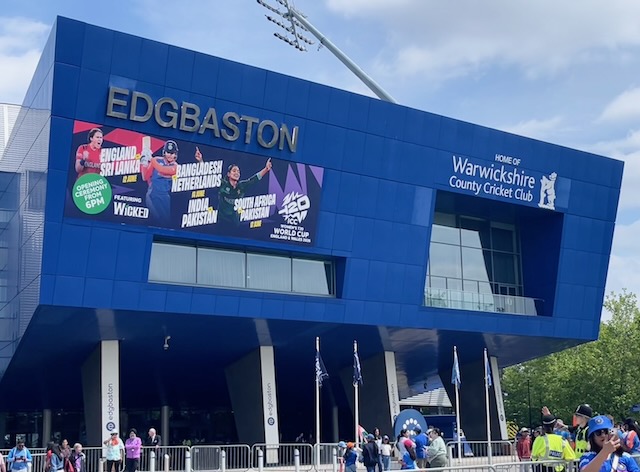
Last week, I indulged in some cricket. Not just any cricket match, but a South Asian feast at Edgbaston, for women’s T20. The morning match, like the morning itself, was relatively mild in temperature, and resulted in Bangladesh winning against the orange army, the Netherlands. But by the afternoon, the temperature was considerably higher during India’s match against Pakistan.
I’ll be honest — I’ve only been to one “proper” cricket match before, which was last year when India were playing England. The prospect of watching this old rivalry play out on the cricket pitch was enticing and irresistible, despite knowing how heated and at times even how ugly the audiences can be. It was also women’s cricket, which has come a long way, and determined to show some gender solidarity, I went along to the historic grounds.
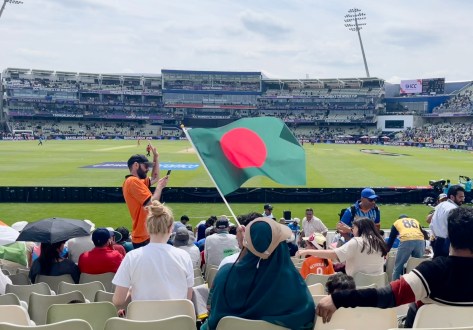
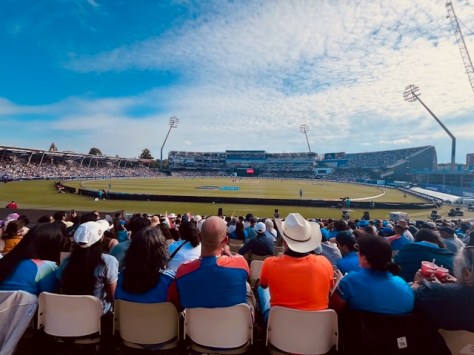
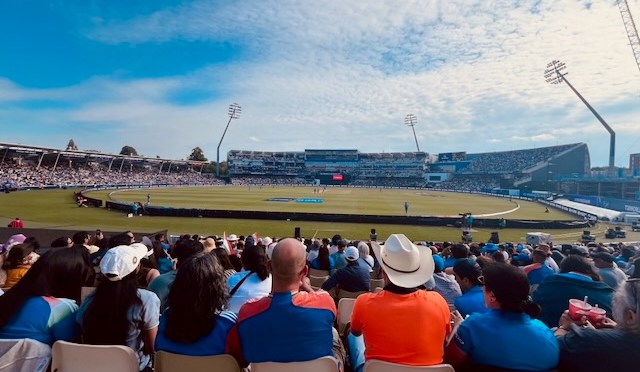
As I arrived at the ground, I could already sense that this match was going to draw large crowds. Indian blue dominated the space, with a few patches of green. Inside, I caught the tail end of the morning match and was in time to see Bangladesh seal victory against the Netherlands. The atmosphere was pleasant and inviting, reflecting the sportsmanship we associate with sport at its best. The Dutch team was incredibly obliging, posing for selfies and engaging warmly with supporters despite their loss.
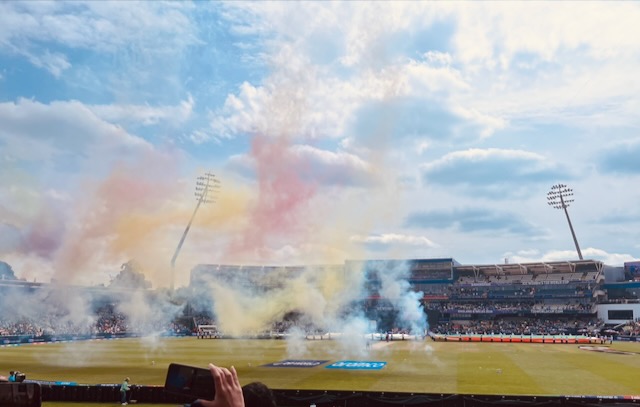
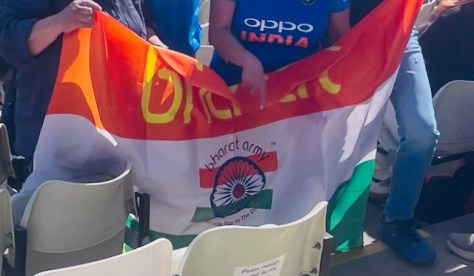
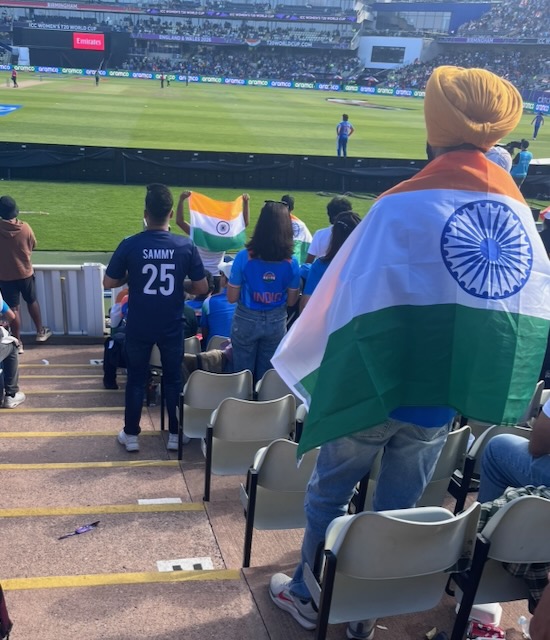
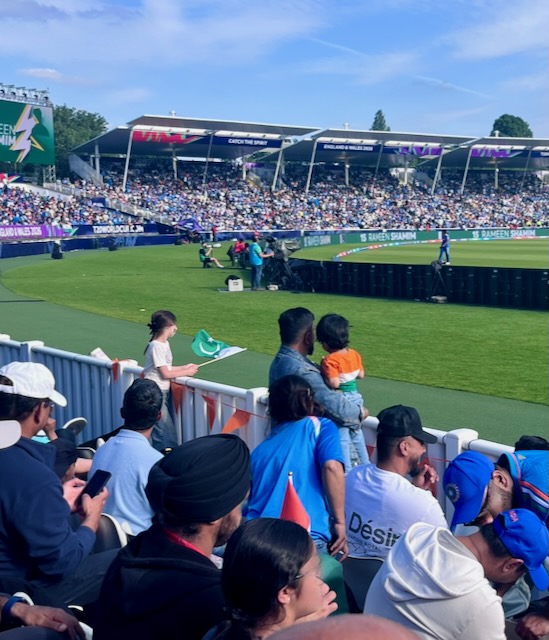
As the ground transformed between matches, the audience shifted, the tension changed, and crowds began to fill their seats. The ICC T20 match began without a handshake — mirroring the precedent set by the men’s teams and undeniably bringing politics into the sporting arena. As national flags were unfurled across the pitch and audiences rose for the anthems, I noticed the people in the row behind me did not stand for Pakistan’s anthem. From their mutterings, it was clear this was a deliberate decision. I was intrigued and irritated in equal measure. The crowd itself was multi-racial and British-born (Gujarati and East African heritages), yet they chose to imbibe and perform a fierce subcontinental nationalism thousands of miles away from home. This stood in sharp contrast to the joy of Bangladesh’s victorious chase against the Netherlands with the sudden, sharp shift in gravity when India and Pakistan took the field.
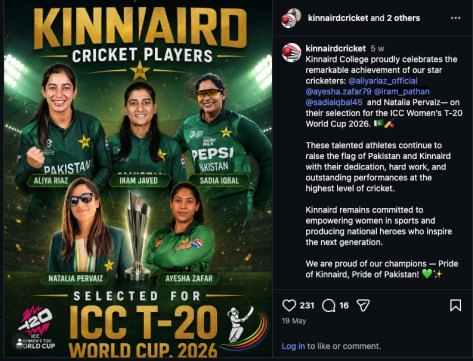
I had also been warned not to expect much from the Pakistan team, given how significantly India has invested in women’s cricket in recent years. I therefore found I was decidedly with the underdog; no one really likes a one-sided affair. Also, some years ago, I spent time at Kinnaird College for Women in Lahore for research, and while there, I was impressed by how important an institution it was, as many fine female cricketers have emerged from there. Five players in the current Pakistan squad have ties to the college, including Aliya Riaz, Ayesha Zafar, Iram Javed, Sadia Iqbal and Natalia Pervaiz.
However, despite a few glimpses of determination from the Pakistani side, the match was largely dominated by India’s women. The crowd was loud, raucous and seemingly oblivious to the fact that this one-sided contest was itself displaying the more unattractive face of nationalism. The problem with sport, of course, is that it forces you to pick a side — there is very little room to sit on the fence. As spectators, the crowd creates its own dynamic within the stadium.
Despite the crowd being very multi-racial and multi-religious, the vibe and the chants were distinctly Hindu, with the most popular in my vicinity being ‘Ganpati Bappa Morya’. This was among the sold-out crowd of 18,814, setting a new Women’s T20 World Cup attendance record for a group-stage double-header. While historic rivalries like these are great for drawing crowds and promoting women’s cricket, the flip side is that the political rivalry is imported as well.
I slipped out of Edgbaston before the final ball was bowled, once it was clear that Pakistan’s fate was sealed. The Pakistani supporters were also gradually slipping away, as they were outnumbered by the Indian supporters and defeat was certain. I wanted to avoid the crowds, who were already in high spirits — literally and metaphorically. And yet, leaving early also meant carrying away a cleaner impression of the day. Because for all the noise in the stands, the tribalism, the political point-scoring, the refusal to stand for another nation’s anthem, it was the earlier match that offered a different story. The Dutch women who smiled and posed for photos despite their loss. The Bangladesh crowds pleasantly mingling with the Dutch spectators. The Pakistani team who played with dignity in front of a crowd that had largely already written them off.