Tag Archives: Calcutta

Chandni Chowk: the spirit of the Ganga-Jumna Tehzeeb

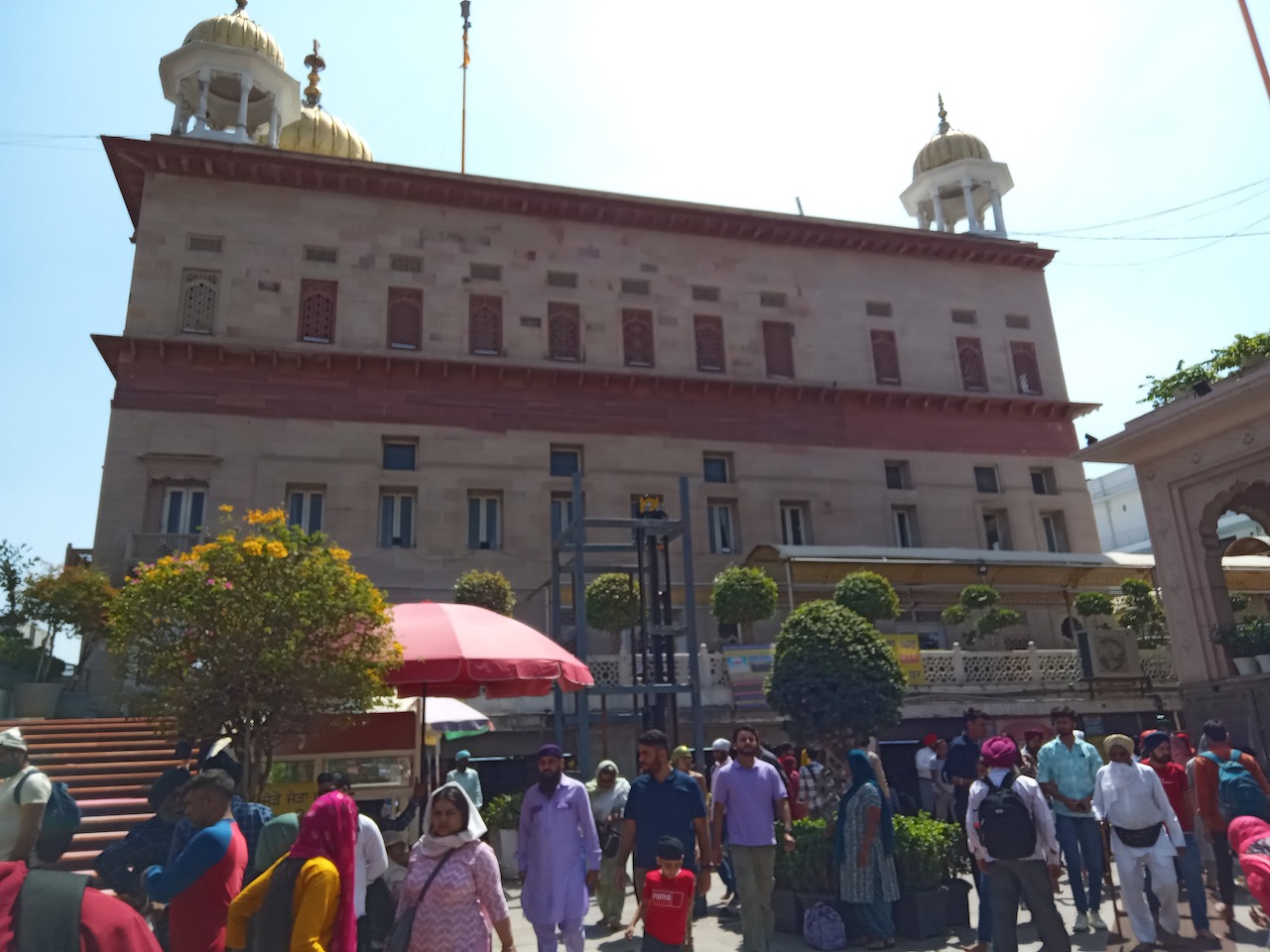
I recently had the opportunity to revisit an old favourite place of mine, Purani Dilli, with a friend. Old Delhi, despite the wider socio-economic and political changes emanating from neighbouring New Delhi, retains much of its previous charm of being a vibrant and colourfully diverse locality. The constellations around Chandni Chowk and the labyrinth of narrow lanes overflowing with people, trade, and character, fill the hearts and bellies of locals and tourists alike. There are of course signs of change where the old meets the new, and reinvention is indeed necessary for survival. In this endeavour, the main thoroughfare has been pedestrianised, but cycle rickshaws and people continue to jostle for space. You can buy almost anything from here, it is a complete eco-system of co-existence.

History of the area

It was Shahjahan (r. 1628 –1658), the fifth great Mughal, who ordered his famous chief architect Ustad Ahmad Lahori (who also designed the Taj Mahal) to build this then-walled city between 1638 and 1649, which contained the imposing red sandstone fortress of Lal Qila and the Chandni Chowk, the main street. Shahjahanabad (abode of Shah Jahan), or as it is more popularly known as Purani Dilli/Old Delhi, refers to that walled city where the Mughal court, army, and household moved from Fatehpur Sikri in 1648, which then become the heartbeat and commercial centre of the empire.

Biswas (2018) notes that the city developed along an “organic street pattern…with signature characteristics such as different activities and trades, clusters of houses based on closeness and common interests and social ties, which it still depicts today. The lanes and the streets were designed for an easy movement of pedestrians and animal driven vehicles, which today have been taken over by two- wheelers, electronic and manual rickshaws…”

It remained the capital of the Mughals in India until the Revolt of 1857, by when the East India Company and afterwards the British Crown Rule had shifted the seat of power to Calcutta, only to return back to Delhi in 1911, where they too commenced with the construction of a new modern administrative headquarters designed by Edwin Lutyens and Herbert Baker, which was formally inaugurated in 1931. To distinguish between these two empires and spaces, the older city became Old Delhi and New Delhi become the new citadel with its palatial bungalows and manicured wide streets. Since 2019, the current BJP Government has commenced another phase of construction with the Central Vista Project led by a team under Bimal Patel. We can therefore see layer upon layer, phase after phase of architectural stamping, ushering in its own ideological imprint.

The Walled City

For nostalgia, a bygone era and character, especially for a historian, nothing matches Purani Dilli. The walled city brings with it rich heritage, historic buildings and the intimate liveliness of a small community.

Jain (2004) observes that “The Red Fort, Jama masjid and Chandni Chowk have been jewels in the crown of Shahjahanabad. Chandni Chowk is the centrepiece and dominant axis of the Walled City. The original Chandni Chowk had octagonal chowks with a water channel running through the centre. Its wide boulevard with prestigious buildings and bazar created a vista between the magnificent Red Fort and Fatehpuri Mosque. With the passage of time there has been an all-round degradation and deterioration of this glorious boulevard, which can be attributed to several reasons, like over-crowding, markets, wholesale trade, rickshaws and traffic, unauthorised constructions, conversion of heritage buildings, over-riding commercial interests and private motives, coupled with lack of controls.”

Composite culture
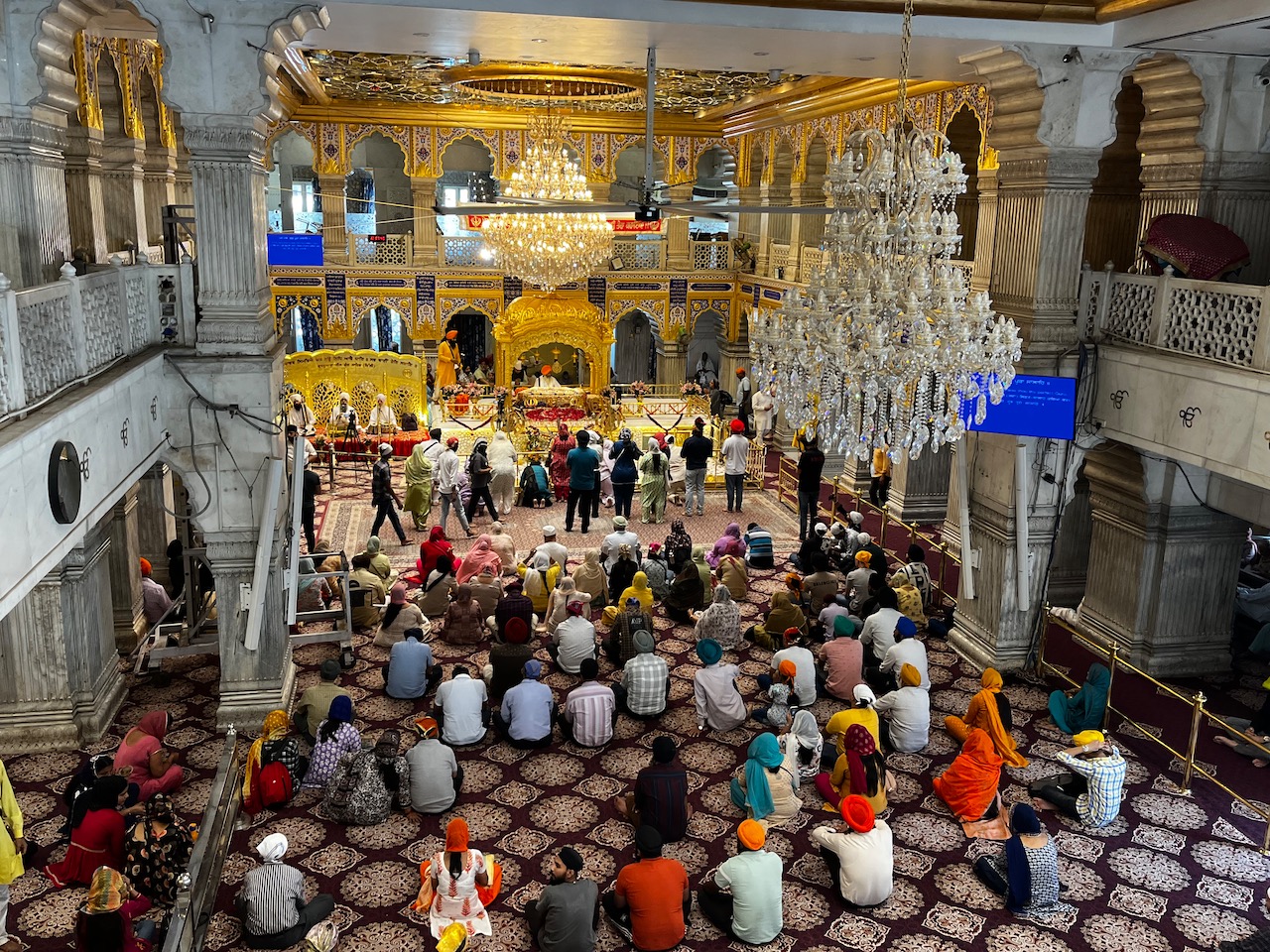
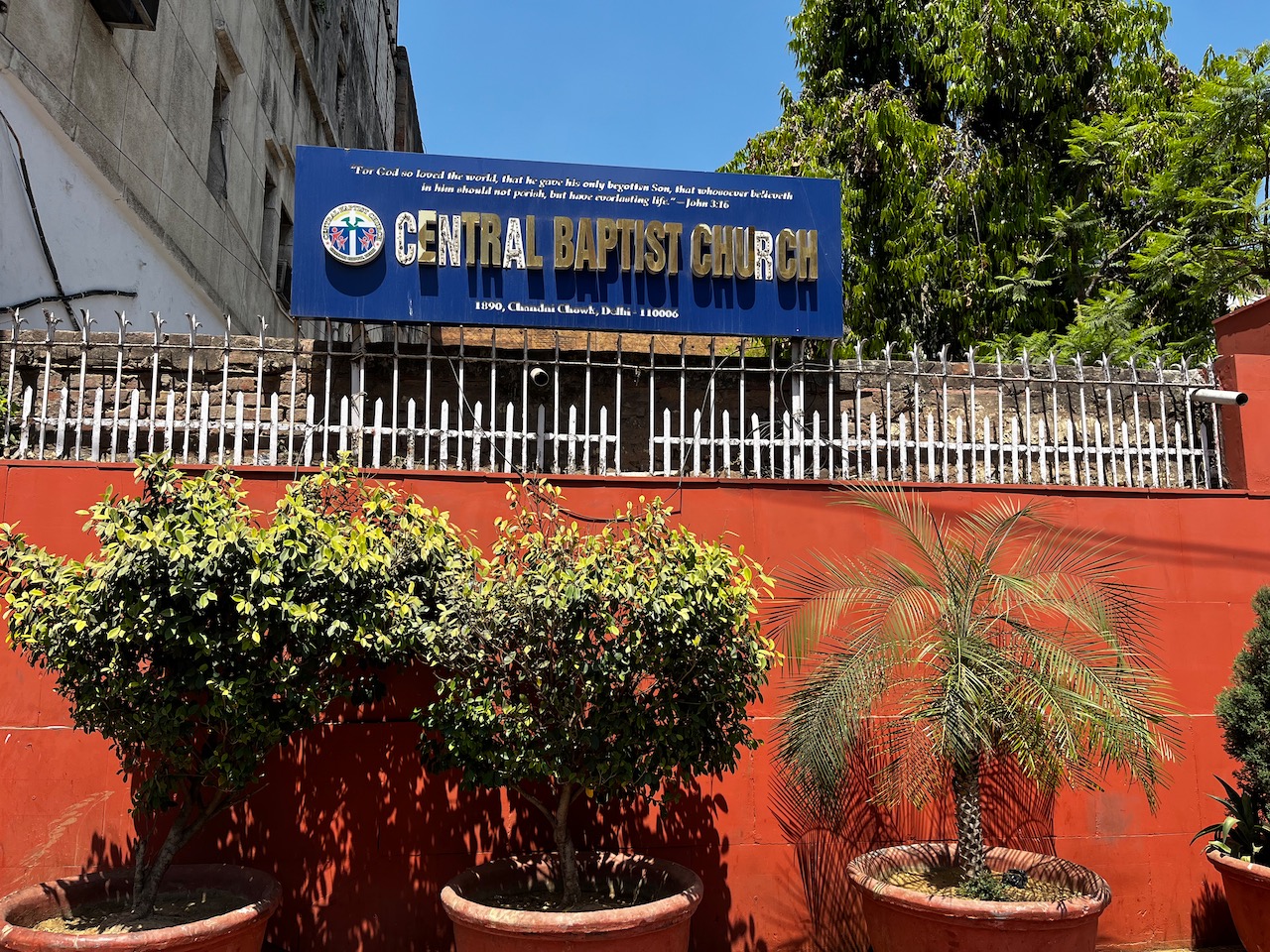
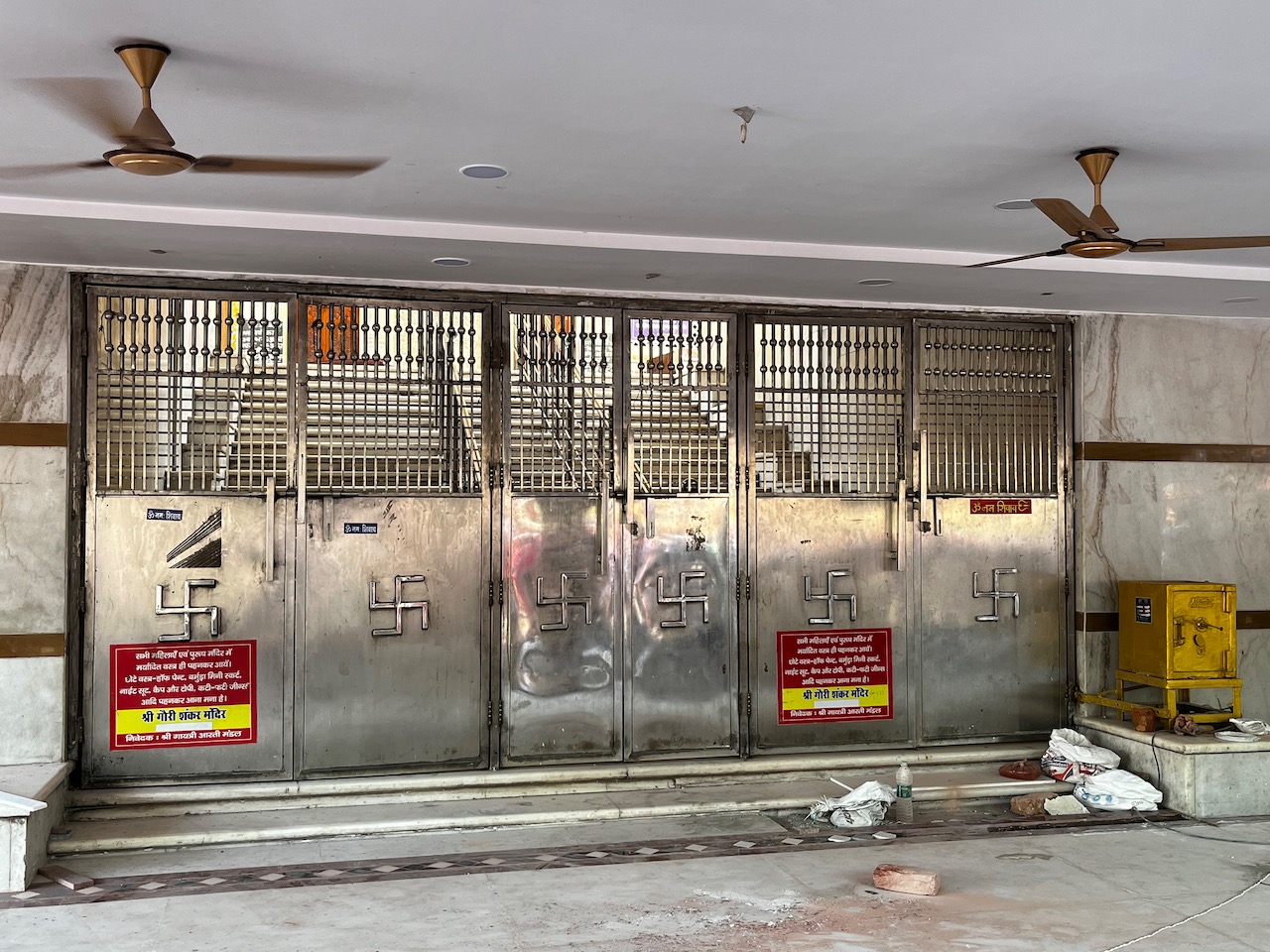
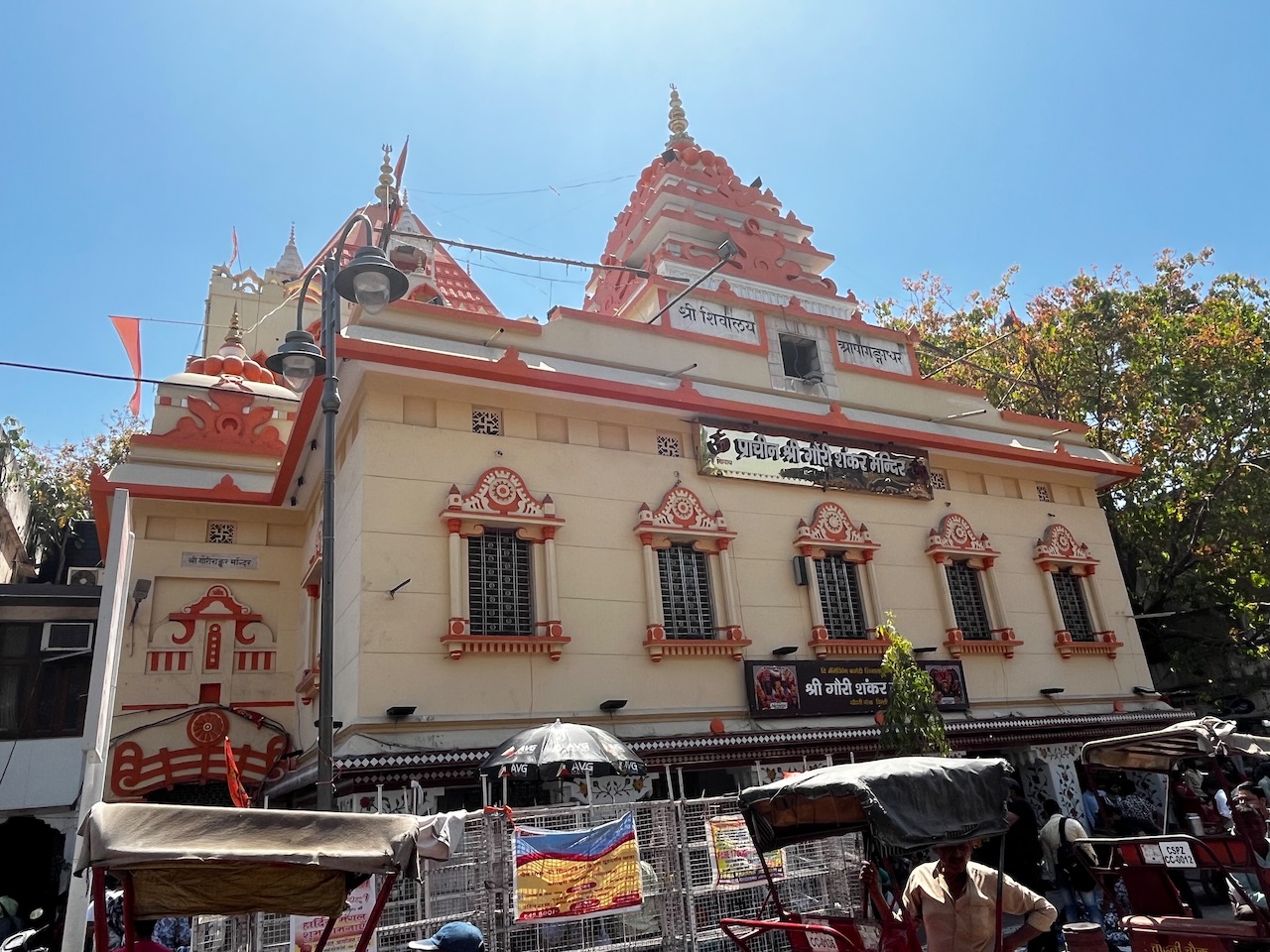
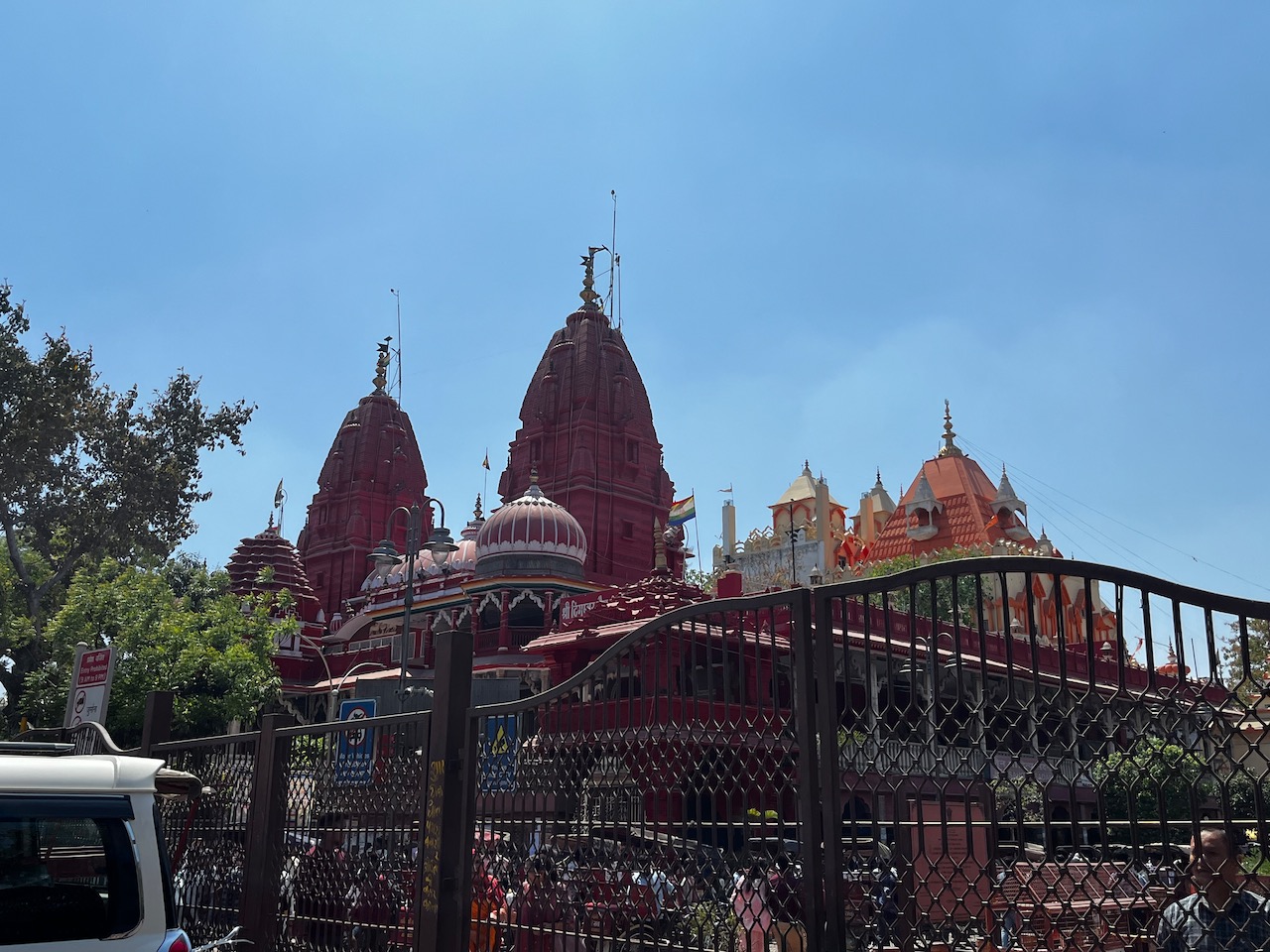
There are plenty of people who organise various walking tours of Old Delhi, as it attracts tourists from abroad and locals via the metro that has opened up the space that perhaps looked challenging before. My visit was an impromptu trip, I had some time and thought it would be nice to revisit this area after many years. I had planned to visit the Gurdwara, the Masjid and the Parathe wali gali! As I burnt off the parathas, the striking multi-faith milieu mingling into multi-cuisine eateries, left the heart warmed.

Biswas (2018) provides a detailed summary of the rich diversity present in Chandni Chowk. “In the northern sphere of the city, are the St. James’ Church (the oldest church in the city of Delhi), St. Mary’s Church, remains of Kashmiri Gate, Dara Shikoh’s library, the Lahori gate. In the southern part of the city, the key highlights are the Kalan Masjid, Ajmeri Gate, Holy Trinity Church, Razia Sultan’s grave, Turkman Gate, Havelis of Kucha Pati Ram, Anglo-Arabic School. With these divisions, the centre of the walled city is adorned with the harmonious street of Chandni Chowk, where the sacred spaces or the worship places of all major religions are located and co-exist amicably…The built heritage of the walled city comprises the grand Jama Masjid, the glorious Red Fort and many beautiful Jain temples of the two sects, numerous Hindu temples devoted to a multitude of gods, the Gurudwaras, the churches, the madrassas, the havelis of the Mughal and the post- Mughal era, still survive [ing] against their slaughter at the hands of the modernity.”

Undoubtedly the area has undergone change during the past 400 years, with each reign adding and leaving new layers. The walled city with the Qila and Masjid was the centre piece of the Mughal court, until the British transformed the former into military barracks. The British period marked by the revolt of 1857 saw vast areas being razed to the ground, some places only surviving due to the resultant outrage. With the birth of independent India in 1947, there was again vast destruction, loss of life and mass migration of people. The new contemporary socio-political anxieties mean we are perhaps less sure about the role of these places as they are confined to the past, while we celebrate and sell their associated heritage in the present. The Delhi Government is trying to beautify and make this a tourist hub, but that too must compete with conflicting agendas of the future. But for now, the spirit and roots of the Ganga-Jamuna Tehzeeb are quietly visible.

References and further reading:

Rana Safvi, Shahjahanabad: The Living City of Old Delhi, (HarperCollins India, 2020)

Swapna Liddle, Chandni Chowk: The Mughal City of Old Delhi, (Speaking Tiger, 2017)

Payushi Goel, Foram Bhavsar ‘Evaluating the Vitality of an Indian Market Street: The Case of Chandni Chowk, Delhi’ in Utpal Sharma, R. Parthasarathy, Dr Aparna (eds), Future is Urban: Liveability, Resilience & Resource Conservation (Routledge, 2023)

A.K. Jain, ‘Regeneration And Renewal Of Old Delhi (Shahjahanabad)’ ITPI Journal 1: 2 (2004) 29-38

Anukriti Gupta, ‘The Revolutionaries of Chandni Chowk’, 3 July 2021

Chitralekha, ‘In Paintings: Chandni Chowk of Delhi’, 21 January 2021

Jyoti Pandey Sharma, ‘Spatialising Leisure: Colonial Punjab’s Public Parks as a Paradigm of Modernity’, Tekton 1: 1 (2014) 14-30

Olivia Biswas ‘A Heart City: Celebrating The Pulsating Lifestyles Of The Walled City Of Delhi’ The 2018 WEI International Academic Conference Proceedings, Niagara Falls, Canada

Delhi Heritage Walks https://blog.delhiheritagewalks.com/category/heritage-walks/chandni-chowk-heritage-walks/

How the Photographs of Margaret Bourke-White became the Images of Partition.

When we visualise India’s Partition of 1947, we almost always do so through the images of Margaret Bourke-White. For the past seven decades, her images have saturated the cover of numerous books, newspaper articles, magazine features, documentaries et al related to Partition. She was, of course, one of the most iconic photographers of the last century. Born in 1904 (d. 1971) in New York City and raised in rural New Jersey, she was the daughter of Joseph White (who was of Jewish descent from Poland) and Minnie Bourke, an Irish Orthodox Catholic. Joseph was an inventor and engineer and perhaps thus an early influence on his daughter’s eventual interest.

This interest matched the tenor of those times, as Henry R Luce, the publisher tycoon realising the potential of photography, felt that America was ready for a magazine that documented events the through photographs. In 1936, Luce bought Life magazine and relaunched it, with Bourke-White becoming one of the first photojournalist to be offered a berth there (Kapoor: 13). America then was in the midst of the Great Depression and Bourke-White ‘took to documentary photography in order to disseminate the idea of inconvenient truth’ for a readership of 2.86 million people (Bhullar: 301).

In India, she is primarily known for her photographs that captured the Partition-related violence and migration, as it ushered in the new dawn of independence. Her photographic essay, The Great Migration: Five Million Indians Flee for Their Lives, was published in Life magazine on 3 November 1947. It had commissioned her to cover the exchange of populations that was taking place across the plains of the divided Punjab and she writes thus what she saw: “All roads between India and Pakistan were choked with streams of refugees. In scenes reminiscent of the Biblical times, hordes of displaced people trudged across the newly created borders to an uncertain future” (Kapoor: 14).

Recently, in 2010, Pramod Kapoor published Witness to life and freedom: Margaret Bourke-White in India & Pakistan with a reprint of over 100 of her photographs. Kapoor wrote about them thus: “They offer a kind of stately, classical view of misery, of humanity at its most wretched, yet somehow noble, somehow beautiful”. His book gives us into a glimpse beyond the frames. Bourke-White had arrived in India in March 1946 and travel around documenting low life and high people: “She was there to photograph Gandhi at his spinning wheel. She was there to photograph Jinnah with his fez. And soon after, both men were to meet their Maker” (Kapoor: 14). Her frames on them served to reinforce their pervading stereotypes of the saint and shrewd. Kapoor details:

“Margaret photographed Gandhi many times afterward. He called her, fondly, she thought, ‘the torturer’. His inconsistencies puzzled her rational mind; it was not until she saw his self-sacrificing bravely in the face of India’s convulsive violence that she began to think him akin to the saint she made him out to be with her camera. She also photographed Mohammed Ali Jinnah; whose features were as sharp as the creases in his western business suits. Jinnah would almost single-handedly bring about the partition of India and the creation of Pakistan”.

Bourke-White documented the aftermath of the so-called Direct-Action Day in August 1946, which was announced by Jinnah following the failure of the Cabinet Mission Plan. Her photographs of the riots in Calcutta then are sometimes confused with the images she took following the Partition, a year later. The article ‘The Vultures of Calcutta’ featured in the 9 September 1946 issue of Life, showing vultures waiting to prey on the bodies of dead victims was later, intermittently and inaccurately, used for depicting the carnage in August 1947.

Vicki Goldberg, the biographer of Bourke-White, writes that when she heard about the Calcutta Riots, Bourke-White immediately flew to Calcutta, and “badgered photographer Max Desfor (1913-2018), the first foreigner to photograph the aftermath of the riots, to tell her where to find the most carnage. While others were sickened by the sight of the bodies, Bourke-White kept working and wrote the scene reminded her of concentration camps in Germany: “the ultimate result of racial and religious prejudice” (Forbes: 7). Desfor’s images were not published by the Associated Press because they were “too revolting for its readers”. Bourke-White’s comrade was Lee Eitingon, a Life reporter based in India, in whose words, “Both of us were whatever the female equivalent of macho is. The smells were so terrible, the officers accompanying us would have handkerchiefs over their faces. We would not…that was part of the time and the period. Being women, we had to be tougher” (Kapoor: 27).

Much of Bourke-White’s archive are housed in Syracuse University’s Bird Library Special Collections section. Here “one can find some of the original photos that include the British soldiers who accompanied Bourke-White and Lee Eitingon” but, as Forbes notes, “the soldiers were cropped from the published pictures”, which dramatically changes the visual narrative (12). It now appears that Bourke-White staged photographs: “Eitingon wrote about her directing a group of starving Sikh refugees…to go back again and again”. She adds, “they were too frightened to say no. They were dying”. When Eitingon protested, Bourke-White told her “to give them money!” (Forbes: 11-12). Even Patrick French writes about how some of these images were staged. When the contact sheets were discovered, they provided an insight into the wider context in which these photographs were being taken. Some of this approach of a pushy, zealous and ambitious American, has been noted in the writing of Claude Cookman. In his examination of how Bourke-White and her French counterpart Henry Cartier-Bresson (1908-2004) approached the coverage of Gandhi’s funeral he notes:

“Flash had become a contentious issue in Bourke-White’s coverage of Gandhi. She had used a flash bulb to make her famous portrait of Gandhi by his spinning wheel. Gandhi…tolerated the technique, but his inner circle never did. They thought flash was disrespectful, and they feared the bright light would harm his sensitive eyes. Flash became a serious liability for Bourke-White in her coverage of Gandhi’s funeral. With her camera concealed, she slipped into the room, where his body lay surrounded by grieving relatives, supporters and government officials. It was about 6:30 p.m.…When she ignited a flash bulb to make her exposure, his followers became enraged by her violation of their privacy and grief. They seized her camera and threatened to destroy it. Hannah Sen intervened, calming the group. After Bourke-White’s film was removed and exposed to the light, Mrs. Sen escorted her from the room. She returned the camera with the understanding that Bourke-White would leave Birla House and not return. Not one to give up after one rebuff, she reloaded her camera and tried to re-enter the room to get another picture. Eventually, Bourke-White yielded to Mrs. Sen’s pleas to honour her promise and left empty-handed. The stereotype of the rude, aggressive American news photographer, who would trample on anybody’s toes or sensitivities to get the picture was a commonplace during the 1940s…Cartier-Bresson deplored this rough-and-tumble approach to photo-journalism: ‘We are bound to arrive as intruders’, he wrote, ‘it is essential, therefore, to approach the subject on tiptoe. It’s no good jostling or elbowing’. As part of his approach, he rejected artificial lighting: ‘And no photographs taken with the aid of flashlight either, if only out of respect…Unless a photographer observes such conditions as these, he may become an intolerably aggressive character’. When Cartier-Bresson wrote this rejection of flash in 1952, he may well have been recalling Bourke-White’s experience at Gandhi’s wake four years earlier” (Cookman: 200).

Geraldine Forbes also notes the differences between Cartier-Bresson and Bourke-White. The former is less known but his images exude a sensitivity, absent in the work of Bourke-White. Upon receiving a photography award, Bourke-White claimed, “The photographer must know. It is his sacred duty to look on two sides of a question and find the truth”. And she cited her work to reference this point (Kapoor: 26). However, when we look at her work, we rarely observe that her work, almost entirely based on the Punjab migration, has yet been made to stand for Independence/Partition exclusively, without acknowledging the vast and diverse range of experiences. The visual record which is taken as “the truth” is rarely explored critically or contextually, while less said so of the racial-ethnic cultural capital of a white American female to travel freely to photograph this momentous carnage at the end of empire. These were foreign journalists writing for a predominately American and western audience, yet these photographs have come to represent Partition.

References:

Dilpreet Bhullar, ‘The Partition of the Indian Subcontinent Seen through Margaret Bourke-White’s Photographic Essay: ‘The Great Migration: Five Million Indians Flee for their Lives’, Indian Journal of Human Development, (2012) 6 (2): 299-307.  

Claude Cookman, ‘Margaret Bourke-White and Henri Cartier-Bresson: Gandhi’s funeral’, History of Photography 22, no. 2 (1998): 199-209.

Geraldine Forbes, ‘Margaret Bourke-White: Partition for Western Consumption’, In Reappraising the Partition of India edited by K. Mitra and S. Gangopadhyay (Readers Service, 2019), pp. 3-16.

Patrick French, ‘A New Way of Seeing Indian Independence and the Brutal ‘Great Migration’, Time, 14 August 2016.

Vicki Goldberg, A Biography. New York: Harper & Row. 1986.

Pramod Kapoor, Witness to Life and Freedom: Margaret Bourke-White in India & Pakistan. New Delhi: Roli & Janssen. 2010. 

Asma Naeem, ‘Partition and the Mobilities of Margaret Bourke-White and Zarina’, American Art 31, no. 2 (2017): 81-88.

Pramod K. Nayar, ‘The Trailblazing Lens of Photojournalist Margaret Bourke-White’, The Wire, 28 Sept 2019.

Bio/profile/work:

Alan Taylor, ‘The Photography of Margaret Bourke-White’, The Atlantic, 28 August 2019.

The Pioneering Photography of Margaret Bourke-White by Google Arts & Culture

The Life Picture Collection

Original Life Magazines

2 Nov 84.

BBC Details Incidents. London BBC World Service 0015 2 Nov 84

[From “Radio Newsreel” program]

The outburst of anger against the Sikh community in India following the assassination of Mrs Gandhi by two Sikhs of her bodyguards has claimed about 150 lives and left more than 1,000 people injured. Mob vengeance took its tool in a number of centres and curfews have been imposed, including one in the capital, Delhi. Tim Llewelyn saw the violence there.

It was the worst day of violence in Delhi’s recent history. No area was spared – rich, poor, residential, commercial. Angry youths acting without apparent organisation gathered on the streets attacking Sikh stores, taxis, homes, and Sikhs themselves. Usually, they burned or looted whatever they could lay their hand on, twice Sikhs themselves and in one case, lynching two adults near a Sikh temple, then setting the corpses alight. Cars were attacked and burned because the mob in India identifies the Sikhs with the car and the taxi. Sometimes – but not always – the police intervened, and I watched the security forces with bayonets fixed rescue the man whose house was being put to the torch by the angry crowds of youths. A number of Sikh temples were surrounded and threatened but mostly escaped damage. They were often defended by Sikhs themselves brandishing their medieval weapons – swords and staves and spears. The prime minster, Rajiv Gandhi, has ordered that the violence must not be repeated. There are indefinite curfews in 30 towns and cities, including Delhi and parts of Calcutta.


52 Killed in Bihar. Paris AFP 0759 2 Nov 84

At least 52 people were today reported killed in Bihar state, bringing the nationwide death toll in the anti-Sikh violence sparked by Prime Minister Indira Gandhi’s murder by two Sikh bodyguards to about 200.

The PTI said the 52 deaths took place in Bokaro, in the northeastern state of Bihar, where police fired on rioters. Security forces were under order to shoot on sight anyone committing violence.

PTI said another 50 people were wounded in Bokaro.

Meanwhile in New Delhi, a dozen bodies were found in an express train which arrived from Ludhiana in the predominantly Sikh of Punjab early today, station officials reported. They gave no further details.


Death Toll Reaches 227. Paris AFP 1005 GMT 2 Nov 84

Fresh outbreak of sectarian violence rocked New Delhi and other Indian towns today as the death toll in the anti-Sikh backlash sparked by the assassination of Prime Minister Indira Gandhi soared to 227.

In East Delhi, Hindu mobs defied shoot-on-sight orders and Army and paramilitary troops to set fire to a cinema, police said. They also reported mob violence in two localities in south Delhi.

Police confirmed that 70 people had been killed in the capital since Mrs Gandhi was gunned down outside her home on Wednesday by two Sikh members of her bodyguard.

Bihar in the north-east, Uttar Pradesh in the north and Madhya Pradesh in central India were reported to be the worst hit among a dozen states reeling under the wave of violence, despite repeated calls by Prime Minister Rajiv Gandhi over the radio for calm.

The reports said that 92 people had so far been killed in Bihar, with 35 dead in Uttar Pradesh and 30 dead in Madhya Pradesh. Other casualties were reported in the western coastal state of Maharashtra.

The worst incidents occurred in Bihar state, where at least 52 people were killed as Hindus sought to revenge Mrs. Gandhi’s murder, the PTI reported.

The incidents took place in the steel town of Bokaro, PTI said, adding that the state authorities had issued security forces with shoot-on-sight orders to quell further violence. PTI said another 50 people were wounded.

Police Deputy Inspector-General Y.N. Srivastava told PTI that police in Bokaro opened fire on rival Sikh and Hindu mobs, killing one person and injuring two. Riot police were patrolling the streets.

Newspapers earlier reported other slayings in the industrial town of Ranchi as well as Hazaribagh, Arrah and Daltongaj, also in Bihar state.

An indefinite curfew was reportedly imposed on Ujjain in the central Indian state of Madhya Pradesh following a number of cases of arson and looting, while angry mobs violated curfew restrictions in nearby [words indistinct].

Trains arriving here from the Punjab reportedly carried bodies of people believed to have been lynched by crowds en route to the capital for Mrs Gandhi’s funeral tomorrow,

Eye witnesses and railway officials said they saw six bodies lying on New Delhi railway platform.

Other eye witnesses said that as many as 18 bodies were found in a train that ran between two Punjabi towns of Bhatinda and Ferozepur.

Prime Minister Rajiv Gandhi broadcast repeated radio calls for an end to the orgy of violence, but with little effect.


Death Toll Climbs. Paris AFP 1308 2 Nov 84

Thirty more people were killed in inter communal violence in New Delhi today, officials said, as the [word indistinct] nationwide death toll in violence sparked by the murder of Indira Gandhi climbed past 300.

A total of 100 people, including some reportedly burned alive in [word indistinct] New Delhi, have been killed in the capital since the prime minister was gunned down by Sikh bodyguards on Wednesday.

Police reportedly opened fire to separate Hindus and Sikhs clashing in a village in west Delhi. The groups exchanged fire, leaving some people dead before police intervened.

A toll compiled from official and unofficial sources and quoted by Indian news agencies put the dead at more than 300 nationwide.


Source: all daily reports are from the Foreign Broadcast Information Service Archive.

Reportage: 1 Nov 84

Army Controls Kanpur. Paris AFP 0628 GMT 1 Nov 84

Army troops took control of the industrial city of Kanpur in northern Uttar Pradesh state early today following violence triggered by Prime Minister Indira Gandhi’s assassination by two Sikh members of her security guard yesterday.

Earlier, authorities clamped an indefinite curfew on four districts of the city or nearly four million people, PTI said.

PTI, quoting official sources, also reported a number of cases of arson and looting, but no further details were available.

Sikhs came under attack from angry Hindu crowds in several Indian cities, including New Delhi, yesterday as news of Mrs. Gandhi’s assassination spread.


Sporadic Violence in Country. Delhi Domestic Service 0837 GMT 1 Nov 84

There are reports of sporadic violence in some parts of the country following the assassination of Mrs Gandhi.

In Delhi, arson and violence have been reported from several areas. According to agency reports, curfew has been imposed in some places including Jammu, Kanpur, Patna, Sagar, Varanasi, and Raipur.

In Bombay, shops and business establishments have closed down as a mark of respect to the departed leader. In Trivandrum, people are wearing black badges to mourn the passing away of Mrs Gandhi.


AFP on Violence, Arrests. Paris AFP 0936 GMT 1 Nov 84

The authorities today imposed a curfew on the Indian capital as angry Hindus went on a rampage of burning and looting, seeking fresh revenge for the murder of Prime Minister Indira Gandhi by Sikh gunmen yesterday

A police announcement said the decision was made to stop the violence which last night left at least three Sikhs dead, according to eyewitnesses, and 200 injured, according to police.

Army troops patrolled the streets, amid reports of sporadic gunfire between police and unidentified gunmen holed up on rooftops.

Prime Minister Rajiv Gandhi, son of assassinated leader Mrs. Gandhi, held an emergency Cabinet meeting to review the situation. officials said.

In other parts of India, the Army reportedly took control of the industrial city of Kanpur in Uttar Pradesh while police in Bihar State were under orders to shoot troublemakers on sight.

Curfews were in force in most states.

Para-military forces fanned out across this city of six million people today as mobs armed with choppers and clubs set fire to houses, cars and other properties belonging to minority Sikhs in retaliation for Prime Minister Gandhi’s assassination, eyewitnesses said

“It is terrible, they are setting fire to houses, stopping vehicles and looking for Sikhs… it appears that we are in a jungle”, said a panicky resident from the southern district, where foreigners generally live.

One Sikh was found dead here, police said, but witnesses said they saw at least two bodies near the one recovered by police.

Police sources also said 200 people, mostly Sikhs, were injured and half of them were admitted to hospitals here as buses, trucks, cars, scooters, shops and Sikh temples were set on fire last night by outraged Hindus.

Security was tightened around New Delhi’s Sikh temples, which had come under attack yesterday.

Authorities banned the assembly of more than five people in public places were, but there was no report of any arrest.

There were no reports of any new casualties, as Sikhs here appeared to have gone underground for fear of reprisals.

Police this morning also reported cases of arson and looting in Ahmednagar, in the western coastal state of Maharashtra, where police had to open fire to disperse rioters, injuring three of them.

A total of 64 people were arrested following the incidents, in which about 30 shops and 13 vehicles were burned, police sources added.

In the central city of Jabalpur, police also burst tear gas shells to disperse looters and arsonists and similar incidents were reported in other localities, press reports said.


BBC on Worsening ‘Violence’. London BBC World Service 1200 GMT 1 Nov 84

Dispatch by correspondent Tim Llewelyn

There is no doubt that this worsening violence and uncontrollable anger is aimed at the Sikh community. Even as the Army took to the streets, backing up the police and paramilitary security units, large tracts of Delhi were the preserve of the mob. I saw taxis, taxi ranks, smart stores, and small shops and kiosks – almost exclusively Sikh-owned – set alight and burning furiously. Crowds besieged Sikh temples, though the police and Sikhs themselves mostly managed to prevent casualties or damage, the Sikhs brandishing their swords and clubs.

The violence has spread all over the city – residential areas as well as working class and commercial. Casualty figures are vague, but we know of at least five dead in Delhi over the past day, two of the policemen in an exchange of shots involving a mob outside a Sikh temple, and two Sikhs burned alive by frenzied attackers. In one incident, I watched a crowd surrounding a house and finally stuffing blazing wicker chairs to the windows to act as fire torches. Eventually the Army showed up, bayonets fixed, the crowd evaporated.

It is not just Delhi by any means. A similar pattern of anger harassment, and then burning and stealing has brought the Army out onto the streets in at least five other towns – Calcutta, Allahabad, Indore, Varanasi, and Kanpur. Curfews are being imposed in uncountable towns and districts in north and central India.

Sikhs I talked to in Delhi are not satisfied with the protection offered in the capital, and it did look in some incidents as if the police could have done more.


‘Large Scale Violence’ Reported. Paris AFP 1603 GMT 1 Nov 84

At least 65 people were killed, several hundred injured, and thousands rendered homeless today in an orgy of violence that swamped India in the wake of yesterday’s assassination of Prime Minister Indira Gandhi by two Sikh members of her security guard, local news agencies reported.

Large-scale violence hit 18 towns across India, forcing the administration to call out the Army and impose an indefinite curfew in certain parts of the capital. Curfews were also imposed in most other states.

The PTI news agency said that as many as 65 people, mostly Sikhs, died in the clashes. UNI put the death toll at 60.

An official government spokesman put the nationwide toll at 10.

In two cities of Kanpur and Patna police were given shoot at sight orders after Hindu mob violence against Sikh communities erupted. Earlier similar shoot-at-sight orders were issued in eastern Bihar State.

Source: all daily reports are from the Foreign Broadcast Information Service Archive.