Tag Archives: Attari

Remembering Partition in the Punjab – podcast

Earlier in the summer I recorded a podcast with Realms of Memory. There are two episodes for those interested in understanding more about the history of Partition, especially how it impacted the Punjab. The talk was based on my book, ‘From the Ashes of 1947: Reimagining Partition’ published by Cambridge University Press (2018). In the podcast I also discuss some of the recent changes that have taken place in the study in Partition.

You can listen to the podcast via most streaming sites, or via Realms of Memory

Remembering Partition in the Punjab: Part 1

Remembering Partition in the Punjab: Part 2

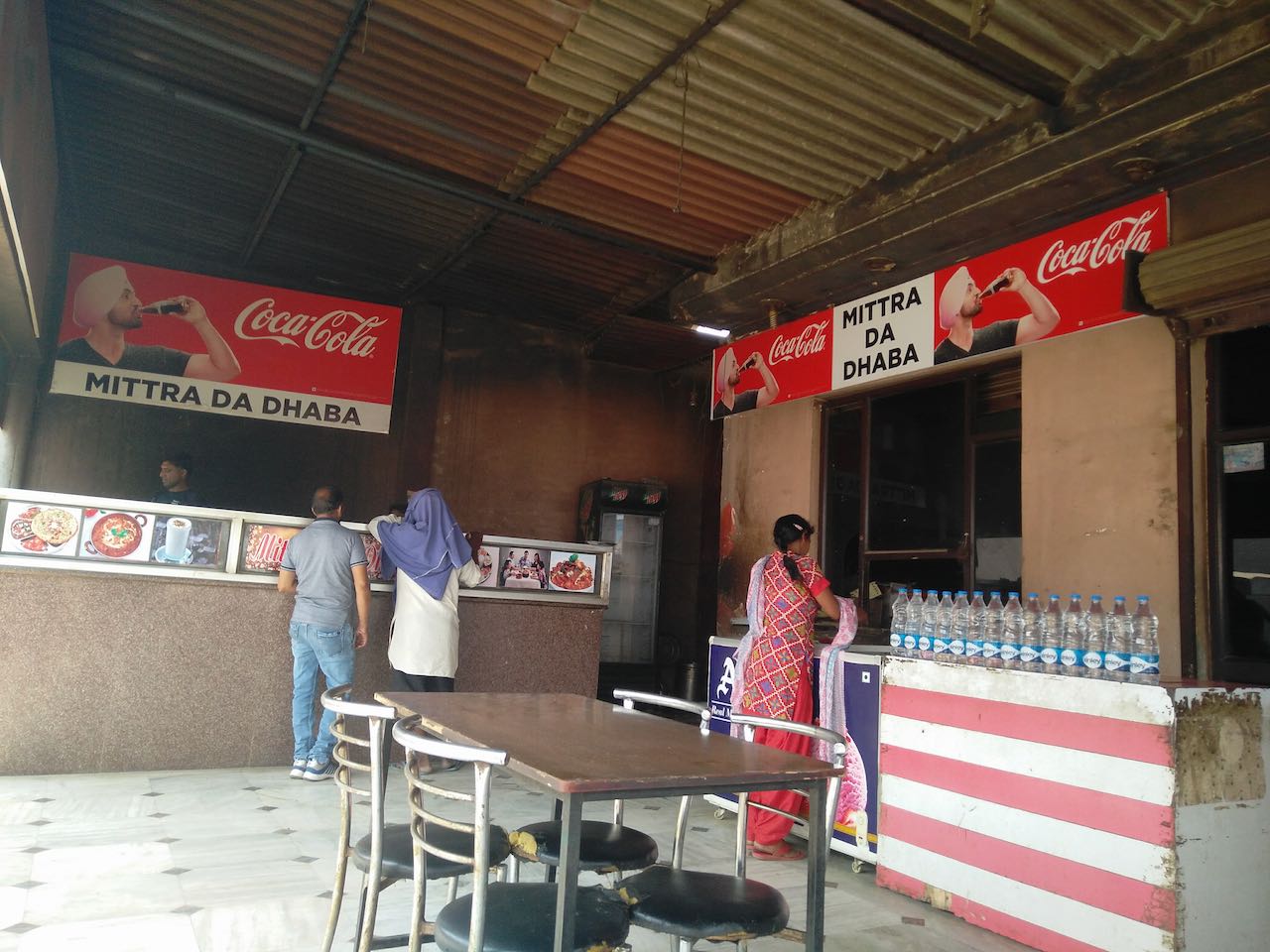
Mittra da Dhaba at the Wagah-Attari border

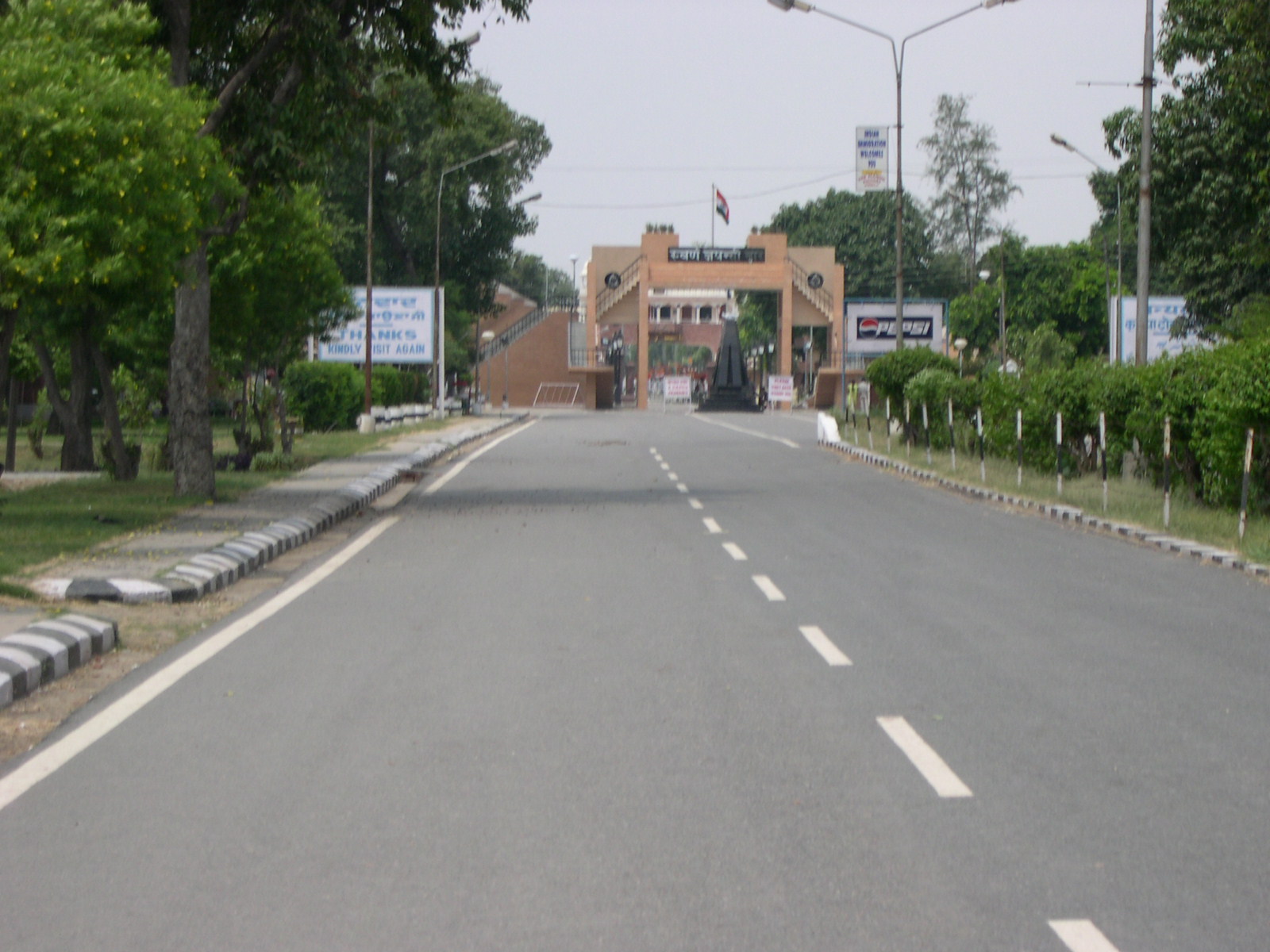
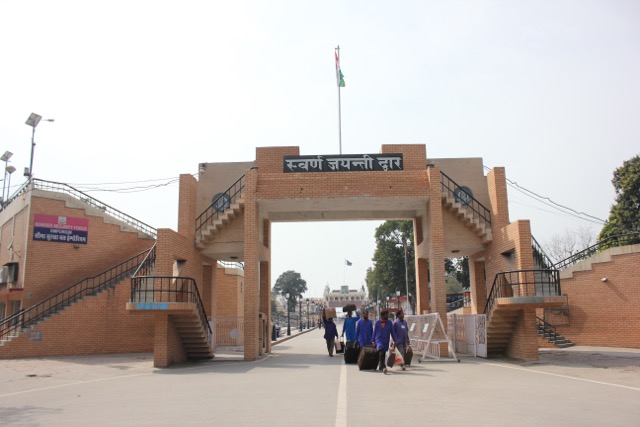
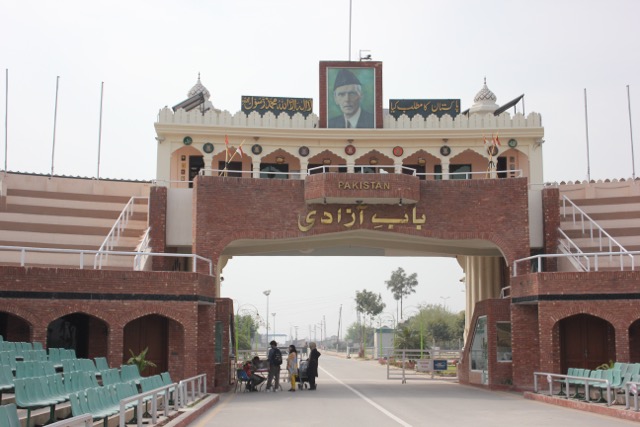
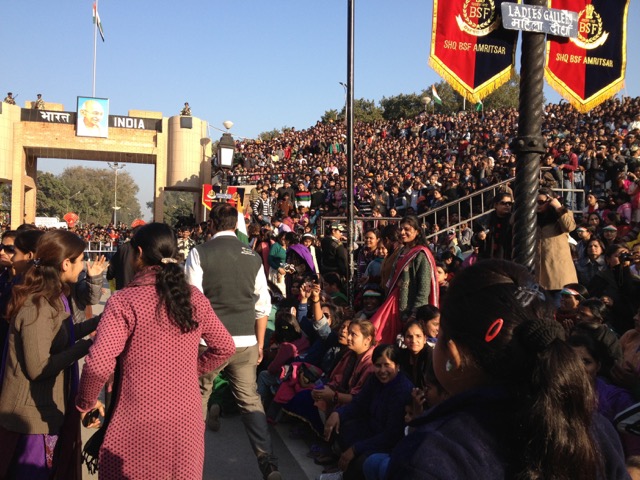
In 2001, I crossed the Wagah-Attari border for the first time. Since then, I have used this official land crossing between India and Pakistan numerous times, in the process seeing the border undergo multiple changes. It used to be the Grand Trunk Road split in half, with a few meters of “no man’s land” to separate them. I could literally walk from one side to the other, while remaining on the GT Road. Then, the authorities decided to uplift, gentrify, and replace the colonial bungalows. Gone was the quaint and informal space with scattered flower beds and plants and in came the flashy buildings, followed by the airport style security, customs, and immigration; culminating eventually in the hideous and expensive battle for who can hoist the largest flag and keep it flying high!

To be fair, the development of the check post at Wagah-Attari was probably a response to the expectation that relations between the two countries would improve, and with that the foot traffic would increase. The bungalows were not equipped to deal with high volumes of people. Hence, they first established the goods/transit depot on one side of the border, so as to divert the trucks carrying the items of import/export. This separated the trade traffic from the people traffic. Whilst the establishment of a goods depot offered signs of improved trade between the two countries, even this was subject to cordial relations.

With numerous crossings since then, I have seen the border change, not just physically but also its ambience and vibes that the place gives. Indeed, the new buildings and transit buses which take passengers from one side to other have functioned to create further distance between the lines of control. These were not there previously, and the cool formality evokes the illusion of being remote and separate. Borders do not have to be harsh and austere.

These moments and emotions are difficult to capture on camera, but they can be felt when encountering the staff and officials. When I first crossed the border, I had the compact Canon Sure Shot AF-7, which was a popular model in the 1990s and gifted to me. I enjoyed taking photographs, but cameras were not cheap then, and the 35mm film was expensive too, both to buy and to develop, so photos were taken sparingly. When I embarked on my doctoral research, taking my camera was essential for my trips to India and Pakistan, as it was an instrument to visually document my journey. I would normally pack 1-3 rolls of ISO 200 (sometimes also ISO 400) speed film, usually 36 EXP, good for general photographs. But one was never entirely sure until the film was taken back home, handed in for developing, which then produced the joy of physically going through the photographs a week later! Time had passed between undergoing the actual trip and now feeling those photographs in my hands, and the images allowed me to recreate and relive those moments again.

Today everything is instant. In a moment I can be taking a photograph at the border, and then share it with the wider public around the world via social media. The only caveat here is that, generally the phone signals are non-existent within 1-2 kilometres of the border area, so you would probably need to wait until you were able to pick up the phone signal. More importantly, this also disrupted any arrangements one had made to meet people on the other side. If I was crossing the border, I might contact my friends/family beforehand and say, I’m crossing at X time (keeping in mind the 30 minutes times difference between the two countries), so I estimate that I will be out at Y time (usually 60 minutes from one side to the other). But if things didn’t go to plan, there is no way of contacting the person to alert them of the delays. And when you did finally make it to the other side, there were always a small number of people anxiously waiting and looking to see when their friends/family will pass through those doors.

There are many other stories of this rather strange and intriguing no man’s land but to end with a more positive story, I share a picture of a dhaba at Attari, Mittra da dhaba (literal translation – friends’ roadside restaurant) is located close to the entrance to check post, catering to travellers and tourists who come for the daily lowering of the flag ceremony. I have gone there many times, but on one occasion in 2017, I asked the owner to pack some food for me, food which I planned to take across the border and share with my friends in Lahore. He took great care to make it extra special and pack the food tightly, so that it wouldn’t spill. I could see that it also brought him great joy to know that his food would travel to the other side. As we parted, he said come back and tell me if they enjoyed it! 

Alas, these stories are in the past tense, and with Covid the border faced further restrictions and closures. I have no idea if my friend is still there, I hope so. We need more friends in these otherwise hostile spaces.

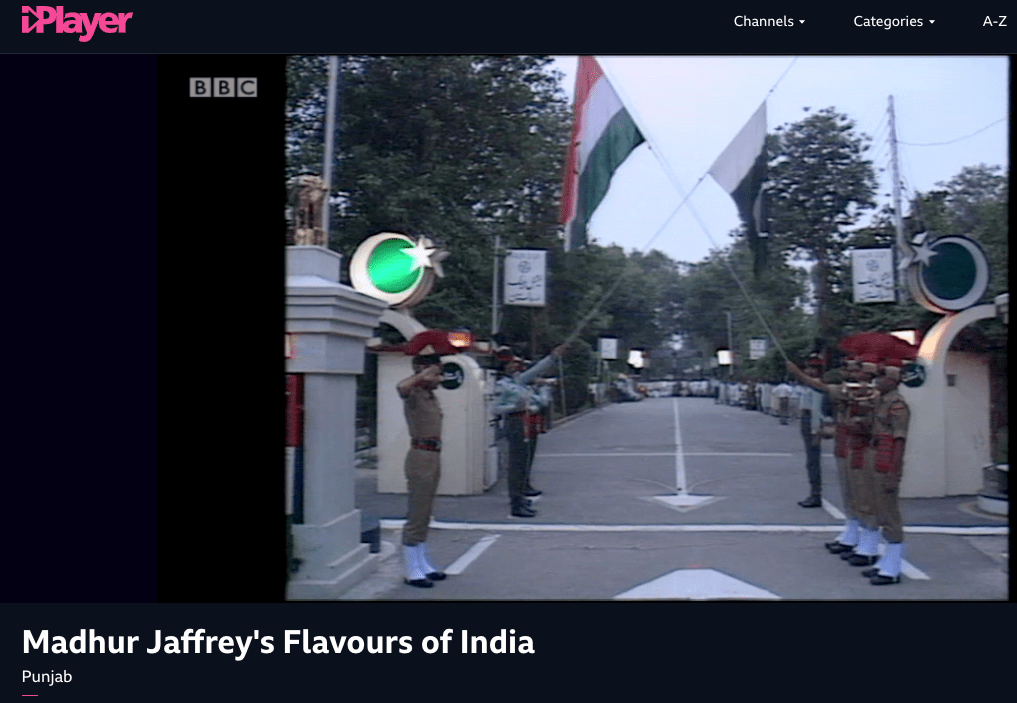
Flavours of India – Punjab

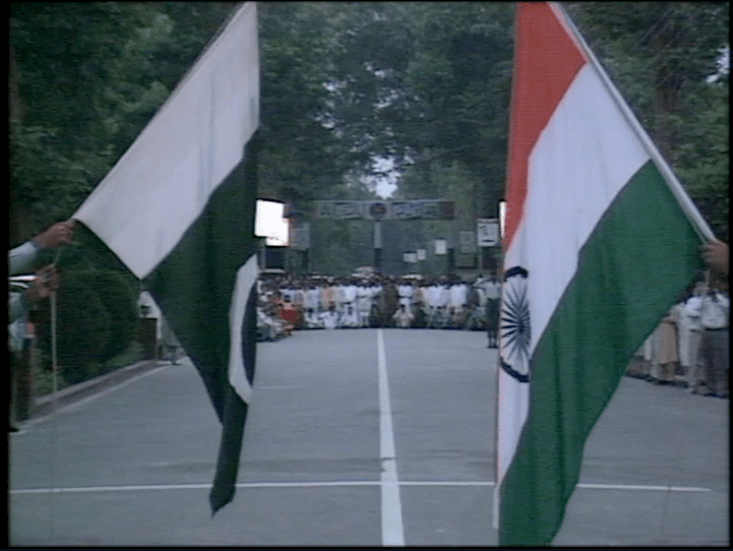
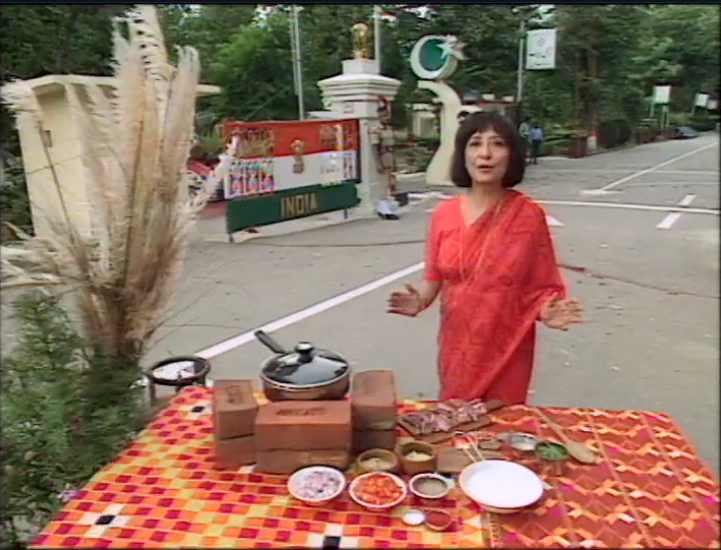
I accidentally stumbled across Madhur Jaffrey’s Flavour of India, which is being repeated on BBC iPlayer. I remember watching this when there were hardly any Indian chefs or Indian cooking on mainstream TV, so I decided to watch some of these again…it is a Sunday morning! As I sat through the episode on Punjab, near the end of the programme I was amazed to see her making lamb chops on the Wagah-Attari border. I have crossed this border numerous of times and I have also seen now much it has changed from a leafy road with colonial bungalows acting as the immigration/custom points to a harsh border with a daily dose of jingoism and national pride on full display. These few minutes have just reminded me how much India (and Pakistan) has changed since 1995. I wonder where the BSF walla tasting the lamb chop is today…

Other posts on Wagah-Attari:

The Spectre of Partition

No Mans Land: the Wagah-Attari Border

Borders and Boundaries

The Spectre of Partition

IMG_20170811_162942
Wagha-Attari Border. © 2017 Pippa Virdee

Sharing a screen grab from the last page of my book From the Ashes of 1947Balraj Sahni captured the human tragedy of Partition in this poem, the spectre of which still continues to haunt us everyday. We seem to be unable to be human first.

Screenshot 2020-02-26 at 10.31.46

Two villages, two nations: Ganda Singh Wala-Hussainiwala


This slideshow requires JavaScript.

The villages of Ganda Singh Wala and Hussainiwala are two villages divided by Cyril Radcliffe’s line. Rather counter-intuitively in these times of Hindu/Sikh India and Muslim Pakistan, Ganda Singh Wala is a village in Kasur District in Punjab, Pakistan, while Hussainiwala is its Indian counterpart, located 11 km away from Ferozepur city. Until the early 1970s, this was the primary border crossing between the two countries but it now only functions as a ceremonial border. Like Wagha-Attari, the now-primary border crossing between India and Pakistan, there is a daily Retreat Ceremony with the lowering of the national flag. There are, however, a few differences between the two ceremonies as Ganda Singh-Hussainiwala is generally not open to foreign tourists and is therefore more intimate with fewer attendees coming largely from the local area. The seating, especially on Ganda Singh side, is right next to the Pakistani Rangers and thus provides a spectacular viewing of this daily spectacle.

While restricted to mostly locals, there remains some jingoistic overtures around it; more palpable during tense times between the two countries. The ceremony lasting 40 minutes, is shorter than the Wagha-Attari version and has less of a fanfare and build-up. People loiter around, catching the opportunity to be close to Indian/Pakistani people and take photos of the Rangers and Indian BSF. According to Ferozepur district’s webpage (http://ferozepur.nic.in/html/indopakborder.html), there was no joint parade and retreat ceremony here until 1970. It was apparently, “Inspector General BSF, Ashwani Kumar Sharma, called upon both authorities to have joint retreat ceremony and since than it has become a tradition”. In 2005, there were discussions about opening this border crossing, to no avail. Today it is easy to forget that this was once a thriving check-point. In 1970, Paul Mason, while travelling the sub-continent, excitedly crossed the border from Ganda Singh to Hussainiwala. He recalls this experience in his travelogue, Via Rishikesh: an account of hitchhiking to India in 1970 (2005):

“In the morning we have little difficulty in locating the Ministry of the Interior and are supplied the necessary chits which give permission for us to travel along the restricted road to the border. For the sum of two rupees apiece we obtain bus seats and are soon headed off down the dusty track, but the trip is much longer than I expect and it is mid-afternoon before we arrive at the Pakistani customs of Ganda Singh Wala.

At the customs post on the Indian side of the border, a worryingly intelligent young woman who reminds me much of my elder sister Margaret deals me with. I do my best to conceal my anxiety about the concealed roll of banknotes. She eyes me carefully and exchanges a few words with me before turning to the next in line without first acquainting herself with the contents of my underpants.

We have made it to India! We are here in India! At last! Amazing, amazing, amazing!

I take a look at stamp in my passport; it states simply; ‘ENTRY 16-10-70 Hussainiwala Distt, Ferozepore’ – not even a mention of India! Oh well, we’re here, and that’s all that counts!

We follow the flow of other new arrivals along a path beside a wide still river [Sutlej]. There is also a disused railway track, which presumably used to connect the two countries.”

[See full account: http://www.paulmason.info/viarishikesh/viarishikeshch16.htm]

We see from Mason’s account of the simplicity through which he crossed the border with only a slight mention of Ganda Singh and Hussainiwala printed in his passport (pictures of the entry stamps are available on his website above). Today when crossing via the land route, there is a clear stamp with Attari (India) and Wagha (Lahore) in the passport. Mason also mentions the hundreds of cars left abandoned at the border because it was too costly to take them across. But, this was at least possible to do then; impossible today. Equally, the disused railway track lies there abandoned but remains as a reminder of the two broken halves.

Ferozepur, India is the land of martyrs and Hussainiwala is the site of the National Martyrs Memorial, where Bhagat Singh, Sukhdev and Rajguru were cremated on 23 March 1931. This is also the cremation place of Batukeshwar Dutt, who was also involved in bombing the Central Legislative Assembly with Singh. Bhagat Singh’s mother, Vidyawati, was also cremated here according to her last wishes. Interestingly, the spot of the memorial, which is only 1 km away from Hussainiwala and on the banks of the Sutlej river and built in 1968, was originally part of Pakistan. On 17 January 1961, it was returned to India in exchange for 12 villages near Sulemanki Headworks.

Read ‘Making of a Memorial’ by K. S. Bains, http://www.tribuneindia.com/2007/20070923/spectrum/main2.htm

-, ‘Shaheedon ki dharti’ in The Tribune: http://www.tribuneindia.com/1999/99jul03/saturday/regional.htm#3

See a short clip of the ceremony at Ganda Singh Wala: https://www.youtube.com/watch?v=vZR-eLVYo6s

From before and beyond the international border that divides them, there is a story that connects these villages. Majid Sheikh writes about the ‘Spiritual connect of two villages’ in Dawn and brings out their historic connections. To commemorate a highly decorated soldier, Risaldar Major Ganda Singh Dutt, the British had named this village after him, while the village Hussainiwala derived its name during colonial days from Pir Ghulam Husseini, whose tomb is now in the BSF headquarters. Today they exist as two halves of the same story.

Read ‘Spiritual connect of two villages on both sides of the divide’ by Majid Sheikh: https://www.dawn.com/news/1379906

No Man’s land: the Wagah-Attari Border

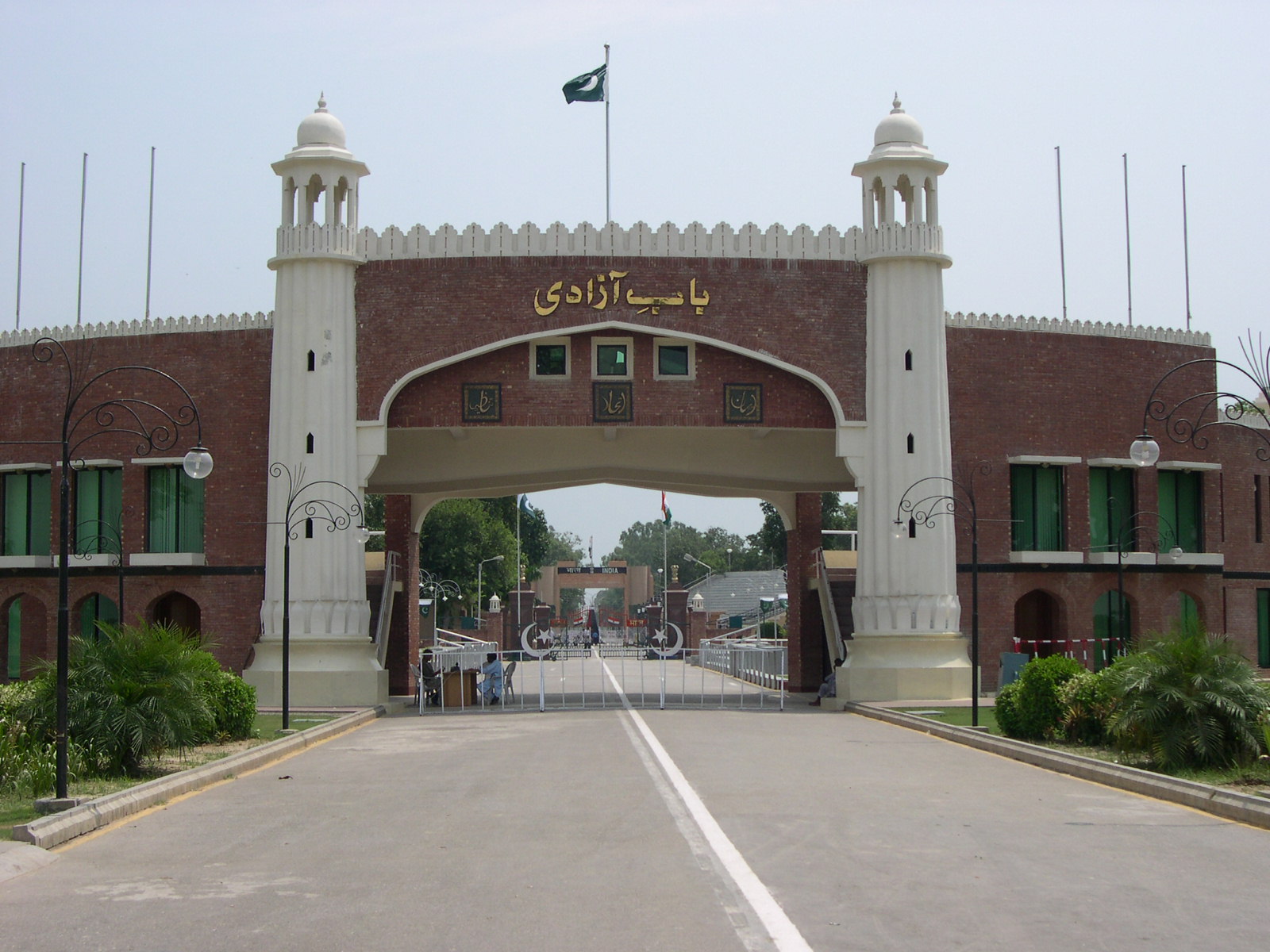
Located at a short distance of 24 kilometers from Lahore, Wagah is a small village in Pakistan and placed strategically on the Grand Trunk Road and serves as the main goods and railway station between India and Pakistan. The Indian counterpart is Attari and both serve as the only official land border crossing between India and Pakistan. The Radcliffe Line that divides them was the scene of both immense horror and gratitude for those fleeing to the “promised lands” in August 1947. Poignantly for writers such as Sadat Hasan Manto, many migrants were torn between the two spaces of no man’s land. This legacy continues today for those divided by this border.

The Wagah-Attari border is more accessible to foreigners who cross the border rather than the citizens of India and Pakistan. Having used this route numerous times, it brings up all sorts of surprises every time. There is always a sense of uncertainty about the political climate between the two countries, which can change at short notice. When relations are good between them, the border seems a little more open and less hostile, there is generally more traffic of people, especially people with green and blue passports. Otherwise, there are hardly that many people using the border only the diplomats, foreigners and the select few. I am one of the privileged few. The Pakistani’s always ask me if I’ve enjoyed my stay and have I faced any problems? I always reassure them that I’ve had a wonderful time. The Indians it has to be said are less talkative, though on occasions I have been “treated” to cups of chai.

There is usually plenty of dramatic material for the writers, artists, and peaceniks etc that want to spend time here for inspiration. There is sadness as people (de)part, despair as people fail to crossover due to lack of proper paperwork, there are covert (or not so covert) spies keeping an eye on passengers, and then there are security/customs people who are keen to show their power and within the ordinary, there are the money changers and inquisitive coolies working hard, often in the full sun. But there are always people wondering about the “other”.

When I first crossed this border, over fifteen years ago, the border was a basic set-up in old colonial bungalows. You could literally walk across from one side to the other. Today, both have made this border into an airport style, elaborate process with scanners and plenty of formalities and paperwork. Previously the coolies were employed to help carry people’s luggage to the international boundary that divides the two countries and they would also exchange goods that were permissible under trade agreements; the two carried on side by side. Now trade is exchanged more formally via the goods and transit terminal and the coolies make their livelihoods through the meagre travellers passing through. Most of the coolies belong to Wagah and Attari and come from a generation of families who have lived and worked in this border area. It is unlike any other place in India or Pakistan. They have seen many changes and have many tales to share, often from divided migrant families themselves.

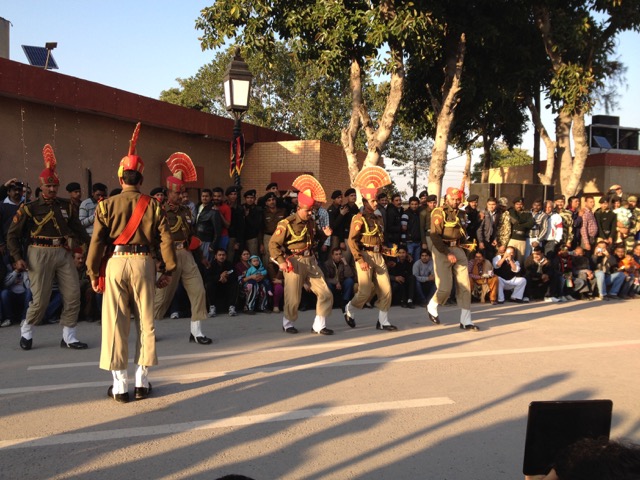
The Indian Border Security Force and the Pakistani Rangers have their daily ritual of lowering of the flag ceremony at the end of the day before sunset. Immaculately dressed, in Indian khaki and Pakistani Black, the soldiers walk and strut in their fast paced and intimidating style. Michael Palin, during his travels around the world, compared this to the Ministry of Silly Walks from the Monty Python sketches; this is not too far-fetched. Often referred to as the strut of the peacocks, this is a show of prowess, power, and pride of the most superficial nature. Hundreds of Indians and Pakistanis flock to see this spectacle of jingoistic and patriotic display. Few would wonder about how this well choreographed ceremony actually happens. It is in many ways an obscene drama that takes time to practice and perfect, and requires the two forces to work together. They do this away from the public gaze, so as to not taint the public image. This tradition started back in the 1950s has evolved now to only provoke the nationalist desire to fuel this antagonistic relationship between the two countries. It has continued to grow, attracting foreign as well as local tourists and the seating arrangements at the border are yet again being upgraded and expanded to accommodate the demand. Large crowds chant “Pakistan Zindabad!” or “Jai Hind!” to show their patriotism, waving their flags with unwavering allegiance to the idea of India and Pakistan. It is now nearly seventy years when the Radcliffe Line was drawn, and if anything, it seems this border has become even harder than previously.

Some useful links:

Peacock at Sunset by Frank Jacobs: https://opinionator.blogs.nytimes.com/2012/07/03/peacocks-at-sunset/

The Wagah border ceremony in India: https://adventuresofagoodman.com/wagha-india-pakistan-border-history/

A (British) Indian in Lahore

This slideshow requires JavaScript.

As I leave Lahore and arrive in Amritsar there is a feeling, as always, of self-consciousness about crossing over an international border. This is a border that I have crossed many times but surprises me every time. The experiences on the whole have nearly always been courteous. On a personal level the staff, the Pakistani Rangers and the Indian Border Security Force, have been polite, sometimes engaging but nearly always looking at me with some uncertainty, unable to quite place me. Since September 2016, when the Indian security forces were attacked in Uri, relations between India and Pakistan have continued to decline. This inevitably leads to the fall in the foot traffic at the Wagha-Attari border crossing. By default it means the porters have little or no work. It is the ordinary people who are always targeted, unable to get visas due to the strained relationship between the two. The silence at the border was noticeable, hardly anyone crossing the border today. In one short hour I was on the small open train from Wagha to the barely cold AC bus in Attari, India. I did not make much small talk; it was almost all a matter of fact. Sometimes they pull you aside, invite you for chai, and ask inquisitive questions, but not today. Today it was unusually quiet. In the searing summer heat who would want to walk across the border? Moreover, in the hostile lands, who wants to risk crossing the border? The Indian immigration officer, after stamping my passport quips to his friend standing near him that you hardly get any Pakistanis travelling across, I quipped back and said that’s because you don’t give them visas and walked off.

This is a hard and harsh international border; it was imagined in the drawing rooms by the outgoing colonial power but it has been re-imagined by the nation-states today. It is a stark reminder of the animosity and mistrust the two nations have of each other, yet it also conceals other truths. The border is open for all foreigners yet it is the most restrictive for the very citizens of those two nations that it is located in. Indians and Pakistanis are the most scrutinised people at the border. Looking around, one is never quite sure who performs what role; the “secret” agents are always lurking around. The border is harsher and more cumbersome for the ordinary citizens because they lack the right networks and knowledge, others, often elites of both countries, can still manage to cross the border. Thus the reality of this harsh border is dictated by the accessibility to power and while the rhetoric in the media is jingoistic, the lived experiences can be different. This applies also to the staff that regular work at the border. But the silence at the border this time also felt different, the Modi government in India is sending out a different message, a much more aggressive tone is palpable. Jinnah put forward the two-nation theory in 1940 and it seems that seventy years on, he was more perceptive than we imagined.

Borders and Boundaries

As an academic my main pre-occupation has been centred around the partition of India and creation of Pakistan in 1947. I have been fortunate enough to have been able to spend time on both sides of the border, comparing the impact of this division on the people of Punjab; the area that has been severely affected by the decision taken in 1947. From being the bread basket of British India and the major recruiting ground for the colonial Indian army, East Punjab becomes the hostile border with Pakistan and West Punjab, while politically dominate, recedes culturally. The culturally, linguistically and economically rich land of Punjab is Balkanised after 1947 and now exists as a mere skeleton of its former self. The land has been reconfigured along religious identities which evaporate the pluralistic history; it tries to re-imagine itself for the new global order but lacks the former strength it had.

For the past 14 years I have crossed the official border crossing at Wagha/Attari between India and Pakistan numerous times; I’m lucky because I don’t have a green or blue passport, both of which immediately open you up tedious amounts of scrutiny. By virtue of being “foreign” and at the same time a “desi”, you get to experience this place in a different manner. Although I have Indian heritage, the Indians are on the whole sterner, matter of fact during the immigration and customs. Sometimes I will strike a conversation and there is rare chance to get their views. For example, during my last trip, the Indian official wanted me to recommend some history books to read, especially those that were impartial. On the Pakistan side, there are of course always questions, inquisitions about what, why, who…but there appears to be more “conversation”. There is always intrigue and sometimes joy that a “foreigner” would want to spend time in Pakistan. I have also been unlucky enough to be stuck on both sides of the border just as it is about to close for crossing. And both sides have blamed the other, “madam ji, we will let you go through but the Indians/Pakistanis will not accept you”. Both behave in this rather childish and tit for tat manner. It is a shame then that politics is also conducted in this manner. While Delhi and Islamabad exchange words of war, the ordinary people suffer, as they have suffered in the past 69 years.

The new global trend for hyper nationalism, as seen in the impact Trump is having in America, the growing influence, both emotionally and politically, of right wing politics can also be seen in the UK, France, Denmark, Sweden, and so socially progressive countries which are now retracting and adopting more defensive policies. While in India, the impact of Modi and his cosy relationship with RSS has unleashed and legitimatised a form of nationalism and patriotism which makes it difficult to question governments and their policies. In the name of showing loyalty to the state, Indianess/Hinduness and the armed forces, it has become unpatriotic to say anything which may offend. Have we become so insecure that we cannot even tolerate any scrutiny? Surely we need reflect on our past and how we face the challenges of an increasingly globalised society. We cannot live in isolation, putting up barriers, preventing the movement of people and creating homogenous spaces. India and Pakistan did this in 1947 and we live with the legacies of that today. Homogenous (religiously or ethnically) societies does not equate with security, peace and harmony. Look at the challenges Pakistan has faced since it was founded as a country for the Muslims of India. Working together for a solution is the only option. But amongst this raft of change has also been the enormous disconnect between the politicians and the people and this is a global challenge.

It is therefore staggering to think that as we approach 70 years of independence, little has been gained and little has been achieved in our relationship with our closest neighbour. We cannot deny that we were once attached together and there are many cultural, ethnic, linguistic commonalities that unite us, yet we are determined to focus on the differences and maintain the status quo of a sibling rivalry. Unfortunately, there is no parent who can step in try to patch up things, we have to be mature enough to do that ourselves. Otherwise, this rivalry will remain for the next 70 years. People away from border states like Punjab and especially Kashmir cannot comprehend the negative impact this rivalry has had on the mind-set and livelihoods of the people. They live in the shadows of this rivalry, even though there is much more which unites them than divides them. They also have a right to live in peace and aspire for prosperity, we should not be so selfish to deny them this.