Category Archives: Videos

Jugni in Music

In the literal sense, jugni means female firefly, which is derived from jugnu, meaning firefly. Metaphorically though jugni means much more. Jugni has often been used by singers and writers to share stories, traveling through time and space, to address societal grievances, political messages. She is spiritual and revolutionary. She is able transcend time and transform herself in every generation. But where did she originate from? According to Aashish Kochhar one possibility is:

No…in 1908, when the British were celebrating the golden jubilee of the British Raj, Bishna and Manda, being illiterate couldn’t pronounce ‘Jubilee’, and called it ‘Jugni’ instead. Or so the story goes. That’s how ‘Jugni’ found its way into the world of Punjabi folk music.

The modern version of jugni though is associated with Alam Lohar, the Pakistani Punjabi singer. Born in 1928 in Gujrat to a family of Blacksmiths (Lohar), he started reciting/singing Sufiana Kalaam, a collection of Punjabi stories and poetry from a young age. His son Arif Lohar continued in his footsteps. Below are both versions of Jugni by Alam and Arif Lohar, both spiritual and popular, and both connecting with different generations.

“Ae way Allah waliyan di Jugni Ji

Ae way nabi pak di Jugni Ji

Ae way Maula Ali wali Jugni Ji

Ae way mere peer di Jugni Ji

Ae way saaray saba di Jugni Ji”

(Jugni is the spirit of God

Jugni is the spirit of the Holy Prophet

Jugni is the spirit of Ali and his followers

Jugni is the spirit of my saints

She is the spirit of all His words)

In 2004 the Indian Punjabi singer, Rabbi Shergil released began to blend the Punjabi folk tradition with acoustic rock, offering a new unique style.

In 2008, jugni was reinvented for Hindi film Oye Lucky Lucky Oye. This is one the first modern films to popularise/depict jugni. Others include: Tanu Weds Manu (2011), Saheb Biwi Aur Gangster (2011), Cocktail (2012), Saheb, Biwi Aur Gangster Returns (2013), Queen (2013), Kaatru Veliyidai, (2017).

In 2011 Jugni, a Pakistani Punjabi-language film, was released. The film revolves around the main character of Jugni, and brought folk singer Arif Lohar back on the silver screen after eleven years.

In 2013 the Nooran Sisters performed a powerful rendition at the Nakodar Mela. Sultana Nooran (b. 1992) and Jyoti Nooran (b. 1994) are from Jalandhar and born to family of Sufi musicians. They gained wider popularity through contributions to Bollywood music, craving out a niche space for their strong and distinct style.

One of the latest incarnations is by global Punjabi singer Dailjit Dosanjh featuring Tanzanian artist, Diamond Platnumz, who has a big following in East Africa. The 2022 collaboration is interesting and strategic given the South Asian connections with East Africa. The music/lyrics present a very seamless fusion of Punjabi and Swahili.

There are many other versions, and these are just some of the different incarnations of Jugni in Punjabi popular culture. Read further:

  • Aashish Kochar, ‘Jugni: A Punjabi Folk Narrative Lives On’, Peepul Tree Stories, 30 September 2020
  • Hasnain Kazmi, Syed Shabihul. “Jugni, dhola and mahiya: Comparing three genres of punjabi folklore.” Pakistan Perspectives 25, no. 2 (2020).
  • AMIR, MARIA. “Chapter Twelve Generation Jugni: Mapping The Influence Of Folklore.” A Cartographic Journey of Race, Gender and Power: Global Identity 149 (2021).
  • Parmar, Prabhjot, and Amandeep Kaur. “2 Kisan Protests in Punjab 1907–2021.” Agrarian Reform and Farmer Resistance in Punjab: Mobilization and Resilience (2022).

Family, gender and patriarchy

Three very different but interesting films have been released recently. All deal with issues of family, marriage, gender and patriarchy. I’m sharing the trailers here and I hope to explore these themes in more detail in another blog. In the meantime enjoy…

Mein Tenu Phir Milangi – I will meet you yet again by Amrita Pritam

Amrita Pritam’s poem recited by Gulzar
Main Tenu Fir Milaan Gi
Kithey? Kis Tarah? Pata Nai
Shayad Terey Takhayul Di Chinag Ban Ke
Terey Canvas Tey Utraan Gi
Ya Khowrey Terey Canvas Dey Utey
Ikk Rahasmayi Lakeer Ban Ke
Khamosh Tenu Tak Di Rawaan Gi

I will meet you yet again
How and where? I know not.
Perhaps I will become a
figment of your imagination
and maybe, spreading myself
in a mysterious line
on your canvas,
I will keep gazing at you.

Yaa Khowrey Sooraj Di Loo Ban Ke
Terey Rangaan Wich Ghulaan Gi
Yaa Rangaan Diyan Bahwaan Wich Baith Ke
Terey Canvas Nuu Walaan Gi
Pata Nai Kiss Tarah? Kithey?
Par Tenu Zaroor Milaan Gi

Perhaps I will become a ray
of sunshine, to be
embraced by your colours.
I will paint myself on your canvas
I know not how and where –
but I will meet you for sure.

Yaa Khowrey Ikk Chashma Bani Howaan Gi
Tey Jeevan Jharneyaan Da Paani Udd-da
Main Paani Diyaan Boondaan
Terey Pindey Tey Malaan Gi
Tey Ikk Thandak Jahi Ban Ke
Teri Chaati Dey Naal Lagaan Gi
Main Hor Kujh Nai Jaandi
Par Aena Jaandi
Ke Waqt Jo Vii Karey Ga
Aey Janam Mairey Naal Turey Ga

Maybe I will turn into a spring,
and rub the foaming
drops of water on your body,
and rest my coolness on
your burning chest.
I know nothing else
but that this life
will walk along with me.

Aey Jism Mukda Hai
Tay Sab Kujh Muk Jaanda
Par Chaityaan Dey Dhaagey
Kaainaati Kana Dey Hundey
Main Onhaan Kana Nuu Chunaan Gi
Dhaageyaan Nuu Walaan Gi
Tey Tenu Main Fair Milaan Gi…

When the body perishes,
all perishes;
but the threads of memory
are woven with enduring specks.
I will pick these particles,
weave the threads,
and I will meet you yet again.

Poetry in Punjabi by Amrita Pritam
Translation in English by Nirupama Dutt

Read further: Mein Tenu Phir Milangi: Remembering Amrita Pritam through Her Life, Love, and Works by Kartikeya Shankar. The Times of India, 17 July 2021

Frank Brazil aka Udham Singh (26 December 1899 — 31 July 1940).

https://www.youtube.com/watch?v=VuYgICoMer8

Frank Brazil pays tribute to Indian revolutionary Udham Singh who was executed at London’s Pentonville Prison on 31 July 1940. It follows the 21 years of Udham Singh’s life following the Jallianwallah Bagh massacre in 1919, leading up to the assassination of Michael O’Dwyer and his execution in Pentonville Prison shortly after.

Music and lyrics by The Ska Vengers

India travel to Africa
Africa …travel to America
America link the Gaddar Party 
Try and do things far away form home

One day
Travel down to Germany
Italy France and ina Switzerland
1934 I reach England
and get ready for assassination

Judge won’t you hear my plea
Before you open up the court
I don’t care If I spend 99 years in jail
Or you send me to the electric chair

Travel the planet and endure some hardship 
Walk the path to meifumado ready to endure hardship
Pan patroll stroll intro my target
One question before we get started
You know what a one way ticket to the morgue is

Body bags stacked up ina cold storage
Crush my culture and said it was garbage
Rule by the cruel rule of the free market
Ask some cracker grandpa what a cat o nine tail scar is

Judge won’t you hear my plea
Before you open up the court
I don’t care If I spend 99 years in jail
Or you send me to the 'lectric chair

Now we combust
Bredrin stay focused and conscious
Company rule is so unjust
Feel the tension of my ancestors in my muscle fiber and now I'm ready to crush

Shot him with my 6 chamber
Zetland by his side
Stood there looking at him 
While he wallowed down and died
Now I'm on my journey to a Brixton prison cell
Tell the judge and jury that I did my time well

Judge, judge, lordy judge
Send me to the 'lectric chair

Burn burn

Read further:

Anita Anand, The Patient Assassin: A True Tale of Massacre, Revenge and the Raj (Simon & Schuster, 2020).

David Clark. “Recollections of resistance: Udham Singh and the I WA.” Race & Class 17, no. 1 (1975): 75-77.

Louis Fenech, “Contested Nationalisms; Negotiated Terrains: The Way Sikhs Remember Udham Singh ‘Shahid’ (1899–1940)”. Modern Asian Studies. (2002) 36 (4): 827–870. doi:10.1017/s0026749x02004031

Navtej Singh. “Reinterpreting Shaheed Udham Singh.” Economic and Political Weekly (2007): 21-23.

The Aurat Raj of Sultana’s Dream

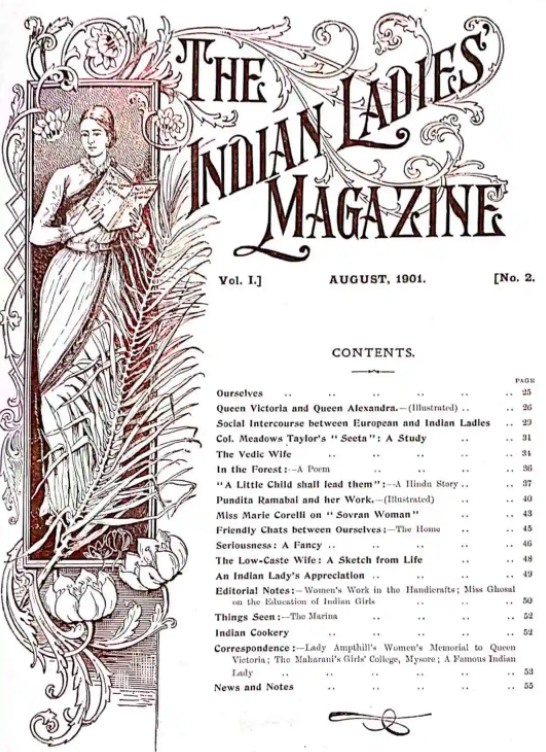
Recently I noticed in several social media forums that people have been sharing details of Rokeya Sakhawat Hossain and her short story, Sultana’s Dream (1905). This story was originally published in The Indian Ladies’ Magazine, Madras, 1905, in English and translated by the author into Bengali. The story takes the form of a dream, set in a futuristic feministic world, in which women through education, opportunity and their innovative ability to use technology have been able to flourish. The science and technology featured in the story is not far off the realities of today and shows immense foresight by the imagination of the author.

The story also highlights how unjust it was, and still is, to deny women education and freedoms, which men have. The imagined place is a generous, green, and friendly environment, in which feminist science has created a space for everyone to thrive and reap the benefits. Although the story was published over a hundred years ago, we are still far from this utopian land.

Rokeya Sakhawat Hossain was born circ. 1880 to an orthodox Bengali Muslim upper-class family in the small village of Pairaband (district Rangpur in Bengal Presidency and present-day Bangladesh). Her father insisted that she learn only Arabic and remain in strict purdah. But with the assistance of her siblings, she learned to read and write Bangla and English. In 1896 her older brother Ibrahim Saber sought to arrange her marriage to a widower in his late 30s. Syed Sakhawat Hossain was the district magistrate in the Bihar region of Bengal Presidency and Ibrahim thought Rokeya would do well under Syed’s open-minded attitude, who had received education in both Bengal and London.

“Rokeya and her husband settled in Bhagalpur, Bihar. None of her children lived. Syed, who was convinced that the education of women was the best way to cure the ills of his society, encouraged his willing wife to write, and set aside 10,000 rupees to start a school for Muslim women.”

After 11 years of marriage, Syed passed away in 1909, leaving Rokeya alone. Soon thereafter she opened a school in Bhagalpur. Later, she moved to Calcutta where she re-opened the Sakhawat Memorial Girls’ School on March 16, 1911. The number of students went from 8 in 1911 to 84 in 1915.

[Source: Hossain, Rokeya Sakhawat – Postcolonial Studies (emory.edu)]

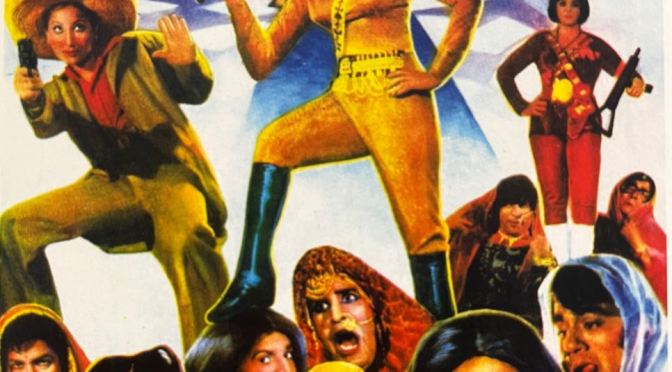
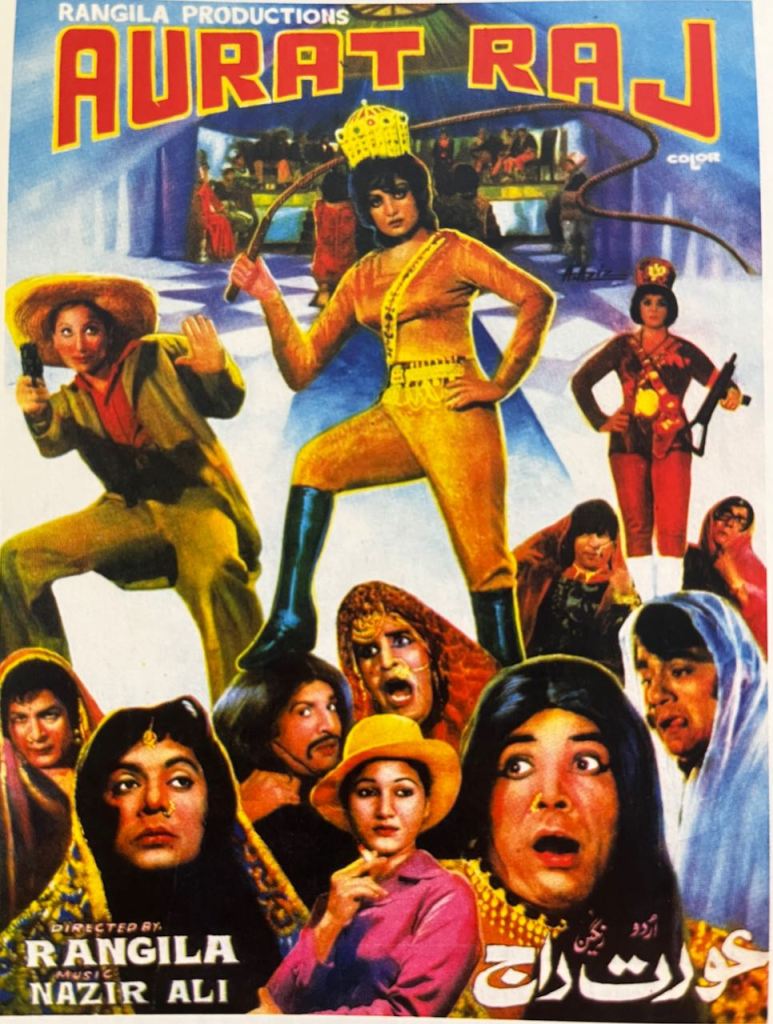
The pioneering concept behind Sultana’s Dream has inevitably inspired other writers and artists to take their cue from a world in which women have the power and men are the submissive other. Aurat Raj, a 1979 Pakistani film, which on the surface appears to be inspired by Rokeya’s work, is also a commentary on the military (and masculine) regime that had come into power, under General Zia. Aurat Raj, is a strange and kitsch interpretation, at whose heart is a social message, centred on exposing the oppression of women. But when the roles are reversed, the women behave in a similar fashion too, unlike Hossain’s short story.

Source: Cinema and Society edited by Ali Khan & Ali Nobil Ahmad (OUP, 2016)

The poster for the film Aurat Raj is equally intriguing as the film itself. It “depicts a woman dressed in a tight-fitting suit and long boots with a crown on her head and a whip in hand, all the more intriguing. She has a commanding, imperious expression on her face. To her right another woman in men’s clothes brandishes a gun. A third woman confidently smokes a cigarette. At the feet of the ‘Empress’ a series of men, including Sultan Rahi, are dressed in women’s clothes. Rahi demurely wears a dupatta on his head, his expression one of effeminate alarm. A subversive and experimental drag movie directed by Rangeela, who had appeared in scores of films in side-comic roles usually playing to the front benchers, Aurat Raj is perhaps Pakistan’s only satire to date and it lampoons not only the naked chauvinism that prevails in Pakistani society but also pokes fun at the way that this attitude pervades the industry. The film targets the machismo of Pakistani men and revels in inverting the gender and power roles, making the women literally wear the pants and leaving the men, including Sultan Rahi and Waheed Murad, wearing frilly frocks and helpless expressions.” Ali Khan, “Film Poster: Reflections of Change in the Pakistani Film Industry” in Cinema and Society: Film and Social Change in Pakistan, edited by Ali Khan & Ali Nobil Ahmad (OUP, 2016), P251.

Despite its well-known star cast of Waheed Murad, Rani, Rangeela and Sultan Rahi, the film was a commercial flop. However, it is certainly worth revisiting, if only as a reminder of the subversive message of the film, which dreams of a more equal society.

Read further:

Sound of Lollywood: When men turned into dupatta-covered minions in ‘Aurat Rar’ by Nate Rabe, 15 April 2017. 

Online edition available to read: Sultana’s Dream. (upenn.edu) 

The manless world of Rokeya Sakhawat Hossain – DAWN.COM by Rafia Zakaria, 13 December 2013. 

Rokeya Sakhawat Hossain — a pioneer of women’s education who strove for a feminist utopia (theprint.in) by Taran Deol, 9 December 2020.

Watch the animation of Sultana’s Dream by WOW Festival Pakistan:

WOW POP-UP: Sultana’s Dream – animated featurette
Aurat Raj 1979 | Rani | Waheed Murad | Sultan Rahi | Rangeela | Pakistani Classic Film

“Zameen nahi, per zameen hai”

Guru Ravidas

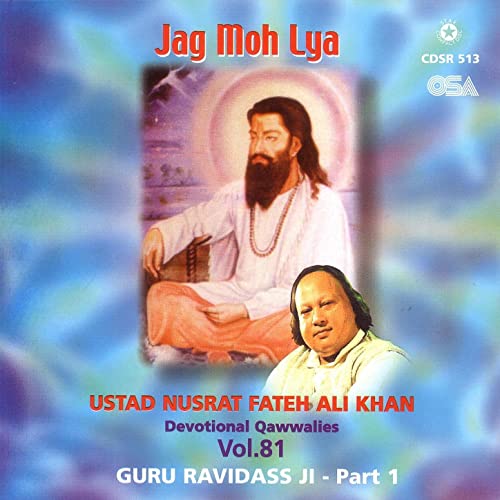
Guru Ravidas was a mystic poet-sant and belonged to the reformist Bhakti movement. Thought to have been born circ. 1450 CE and a contemporary of Guru Nanak (founder of the Sikh faith); some scholars think the two even met. He is revered as a Guru/Bhagat/Sant and is well-known and respected as a social reformer who was keen to see the erasure of caste and gender inequalities. He was born a Chamar (untouchable/dalit) and his fight against social oppression has elevated him as an icon for the Dalit community in contemporary society. His devotional versus are also included in the Guru Granth Sahib but his influence is wide-ranging, spanning across much of northern and central India.

I tired hard to find an English translation of ‘Guru Ravidas’ by Nusrat Fateh Ali Khan but so far I haven’t been successful. It was recorded under the Oriental Star Agency label, circ. 1992 If anyone knows of a translation, please do share it because I think the lyrics, sentiments are just heart rendering. They deserve a much wider audience. While I can follow most of the qawwali myself, I am not able to translate it and do justice to the lyrics. Two lines near the end provide a good sense of the what is being conveyed. The translation is difficult because the word “prayer” does not capture the sentiment sufficiently, because Pooja is performed by Hindus, paath is associated with Sikhs and the azaan with Muslims. There is no direct translation.

na pooja paath azaanan vich (the Lord does not reside in the prayer [of Hindus, Sikhs, Muslim])
rabb wasda e insaanan vich (the Lord resides in humanity)

It is sentiments like these that make Nusrat completely transnational and appealing to people across all faiths.

Source for the lyrics: http://lyricification.blogspot.com/2015/08/ravidas-guru.html

ravidaas bhagwaan da roop laike
aaya jag de dukh niwaarne nu
gote khaandi sansaar di aap bedi
bhawsaagar ton paar utaarne nu
unch neech da fark mitaun khaatir
ravidas insaaf da pakad daaman
kasam rabb di rabb da roop laike
aaya satgur sach satkaarne nu

ravidas guru ravidas guru

dukhiyan di sunne ardaas guru
kar sab di poori ardaas guru
ravidas guru ravidas guru

kite raajeyan anni paayi si
har paase machi duhayi si
kite kambdi payi khudayi si
kite jaan laban te aayi si
insaan si dushman insaan da
har dil vich peerh sawaayi si
panditan di puththiyan reetan ne
sagon hor chavati naayi si
oh daur si zaalim kehran da
mee wareya pyasi zehran da
amrit baani naal jadon
si sab di bujhaayi pyas guru
ravidas guru ravidas guru

eh raaja ki te parja ki
hath bandi wala darja ki
eh mandir ki te masjid ki
eh puja ki te sharda ki
bhala es khuda di dharti te
bandeyan da jhutha kabja ki
sabb os khuda de bande ne
eh wadda ki te chchota ki
eh dharm karam da jhagda ki
eh deen dharam da jhagda ki
hai raazik sabhda oh khaalik
nukta samjhaaya khaas guru
ravidas guru ravidas guru

us daur di ajab kahaani si
har paase daur shaitaani si
haq sach te kalme di kidre
na kadar kise ne jaani si
sab kojiyan bharman di
ravidas ne ramz pachchani si
harbhajan dillan vich dard bade
koi meera sur di rani si
oh rahbar kaamal akmal si
dil andar naal koi wal chchal si
inj hoka de sacheyayi da
sab kite kaaraj raas guru
ravidas guru ravidas guru

gaya murshid kaamil ki aakhan
os swarg bana ke duniya nu
bedaar banake duniya nu
gulzaar banake duniya nu
paigaam sunake amlan da
gaflat chon jaga ke duniya nu
ujdi hoyi sunji dharti te
khud aap wasa ke duniya nu
na pooja paath azaanan vich
rabb wasda e insaanan vich
chauhaan khuda nu yaad karo
oh har dam wasda paas guru
ravidas guru ravidas guru

Punjabi Khoj Garh (Punjabi Research and Archive).

Punjabi Khoj Garh, © Pippa Virdee, 2014.

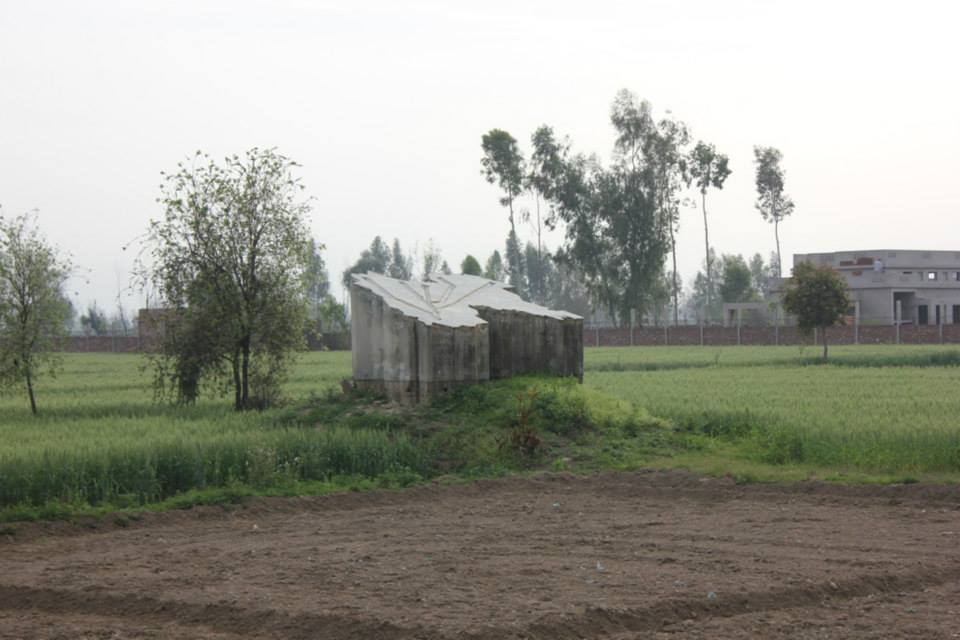
Punjabi Khoj Garh is a centre of research, publication and advocacy on the history, culture, literature, music, and art of the Punjab. It was established on 10 March 2001 and Iqbal Qaiser, an independent scholar, has tirelessly built up this institute over the past 20 years. It is maintained by the Punjabi Khoj Garh Trust and individuals who work voluntarily to maintain and upkeep the Centre. They welcome all sorts of researchers with facilities and materials for their work on Punjab.

For further details contact: Iqbal Qaiser, Punjabi Khoj Garh, Lalliyani (Musfafar Abad), District Kasur, Pakistan. Follow them on Facebook.

Read more about PKG: ‘House of Readers’ by Altaf Husain Asad, The News, 23 July, 2017